European Union

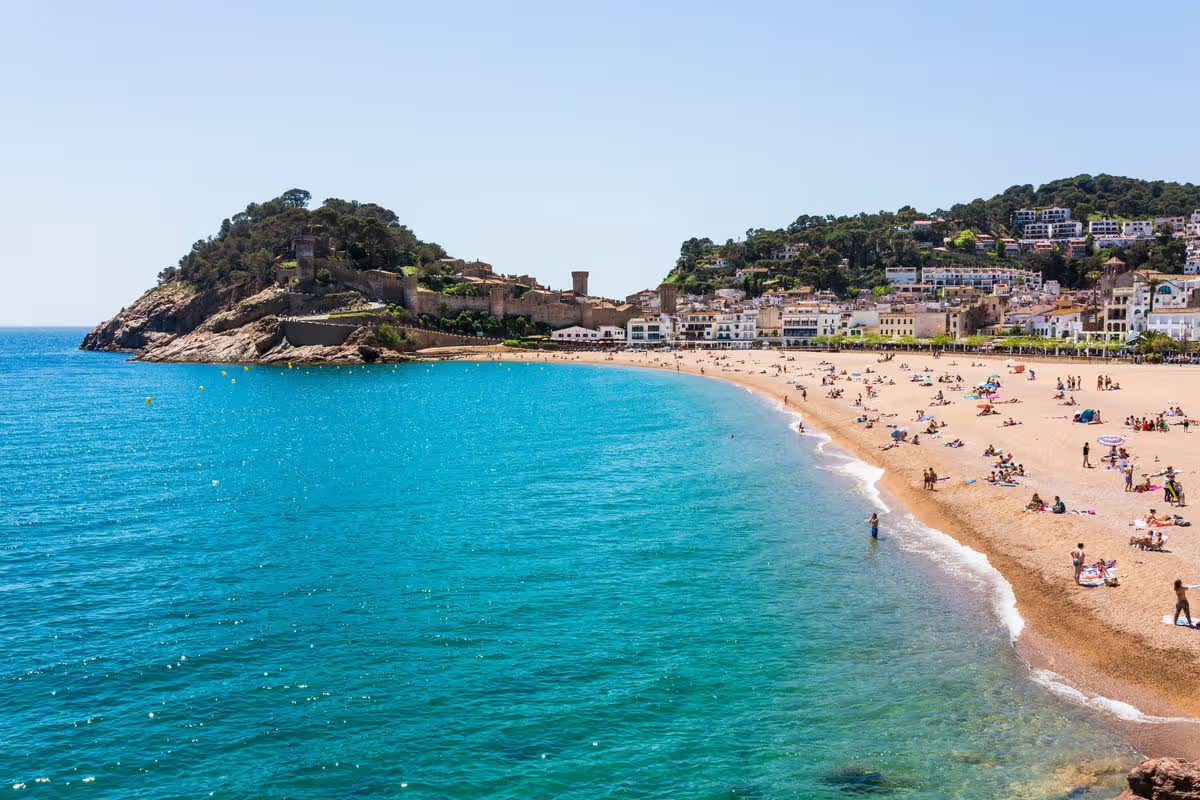
European hotspot Greece given UK tourist travel update amid Iran conflict

Brits heading to Greece have been urged to check the latest travel advice as tensions linked to the Iran conflict raise wider security concerns across the region

Brits planning a Mediterranean getaway are being urged to check official travel guidance before heading abroad. Experts say no trip can ever be guaranteed completely safe amid growing tensions linked to the Iran conflict.

The latest reminder comes from the Foreign, Commonwealth & Development Office, which publishes travel advice for British holidaymakers. Its guidance for Greece stresses that travellers should read all advice carefully before departure.

On the UK Government travel advice website, officials warn: “No travel can be guaranteed safe.” It urges visitors to research destinations carefully and make sure they have comprehensive travel insurance before travelling.

The guidance also highlights passport rules that travellers must meet before entering the country. Greece follows Schengen Area rules, meaning passports must have been issued within the last 10 years and remain valid for at least three months after leaving the region.

British tourists can visit Greece without a visa for short trips. According to the government, travellers can stay in the Schengen area for up to 90 days within any 180-day period for tourism, family visits or business meetings.

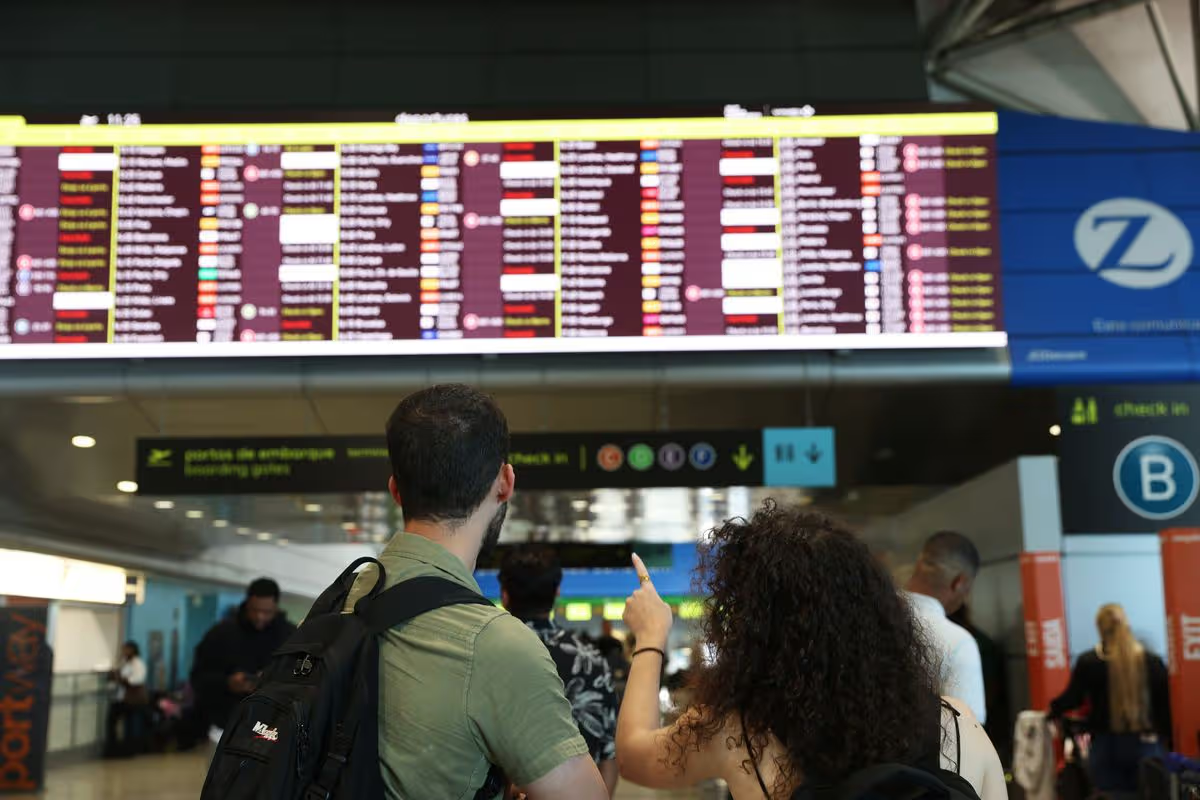
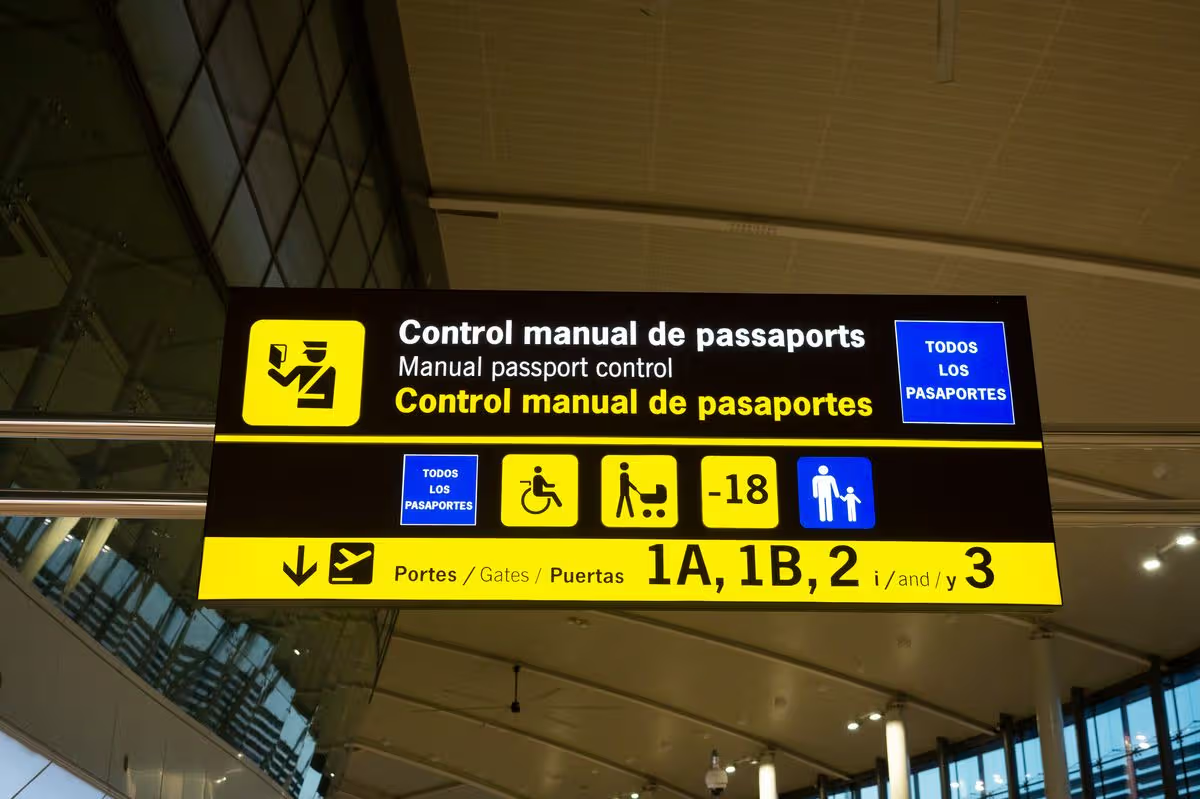
However, new border procedures are also on the horizon for travellers heading to Europe. The European Union is introducing its Entry/Exit System, which will require visitors to register biometric details such as fingerprints or a photo when entering the bloc.

The system is expected to become fully operational from April 10. Officials warn the process could add several minutes to border checks for each passenger.

It comes as tensions continue to grow in the Middle East following the ongoing conflict involving Iran. The crisis has raised wider regional security concerns across parts of the eastern Mediterranean.

Neighbouring Cyprus, which lies roughly 800km from mainland Greece and around 300km from parts of the Middle East, has already been monitoring the situation closely. The island has previously served as an evacuation hub for foreign nationals during regional crises.

According to reports cited by international media and the United Nations, the latest escalation has fuelled fears of broader instability across the region. Military exchanges between Iran and its rivals have already heightened security alerts across several neighbouring countries.

The UK has also stepped up its military presence in the region. The HMS Dragon has been deployed to Cyprus as a precautionary measure. The Royal Navy says vessels may be deployed to support British nationals and regional security as required.

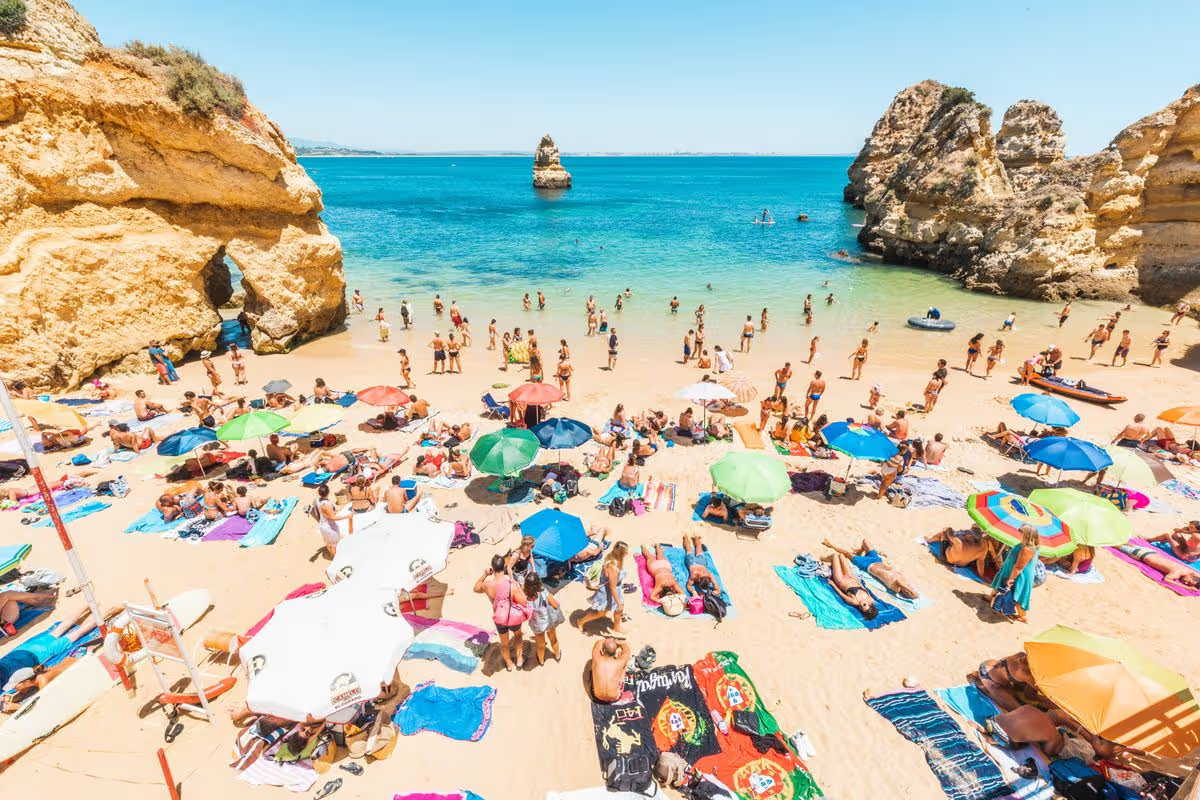
Despite the geopolitical tensions, Greece remains one of Europe’s most popular holiday destinations. Data from the Greek National Tourism Organisation shows the country welcomed more than 36 million international visitors in 2024.

Officials say the key message for travellers is to stay informed. Checking the latest government advice and ensuring documents meet entry requirements can help avoid problems when travelling abroad.

Source link

Ryanair passengers queue 90 minutes then look out window and are left horrified

A group of 24 passengers watched in disbelief as their plane took off after spending over an hour navigating airport security delays at Tours Airport in France

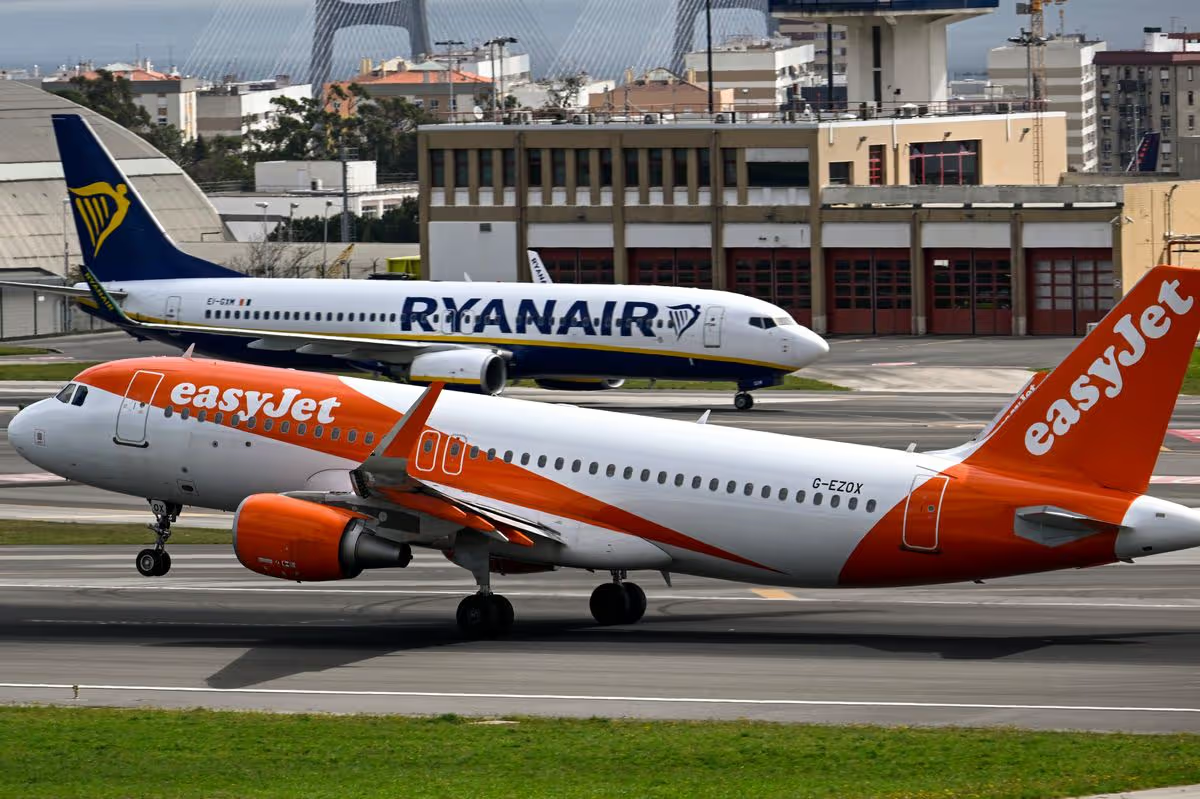
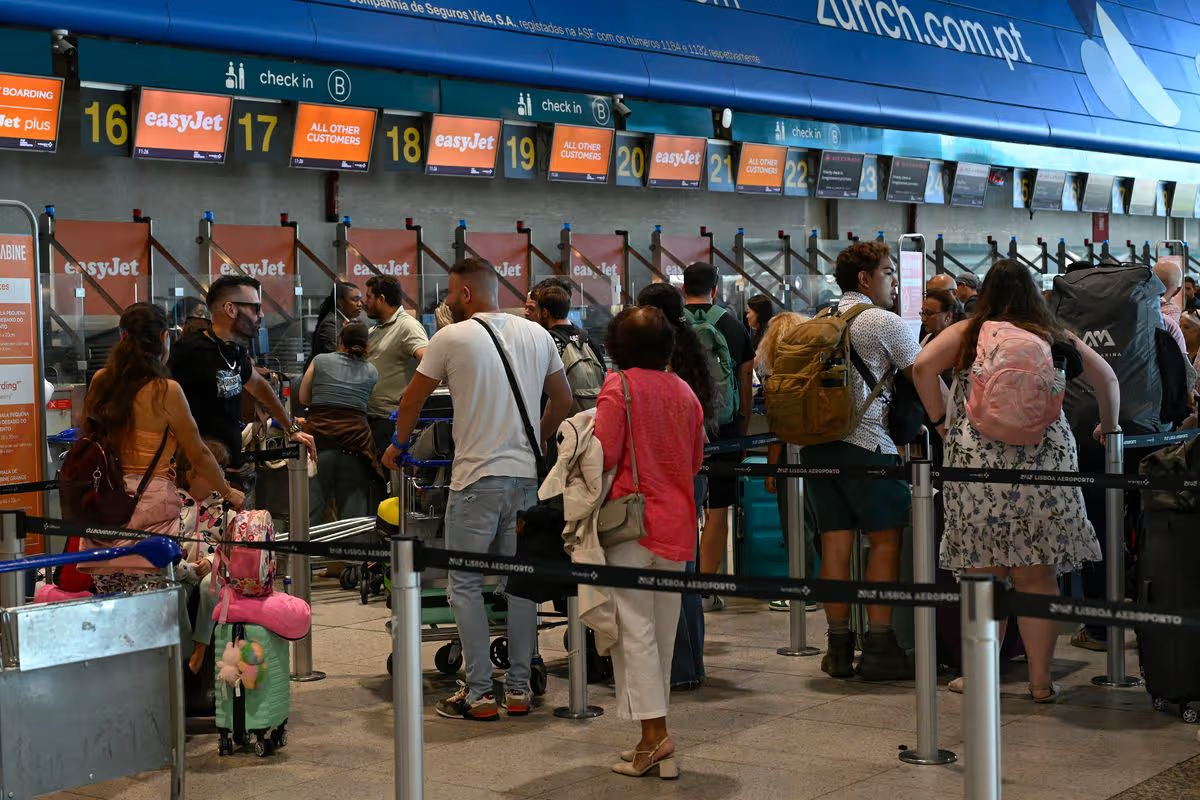
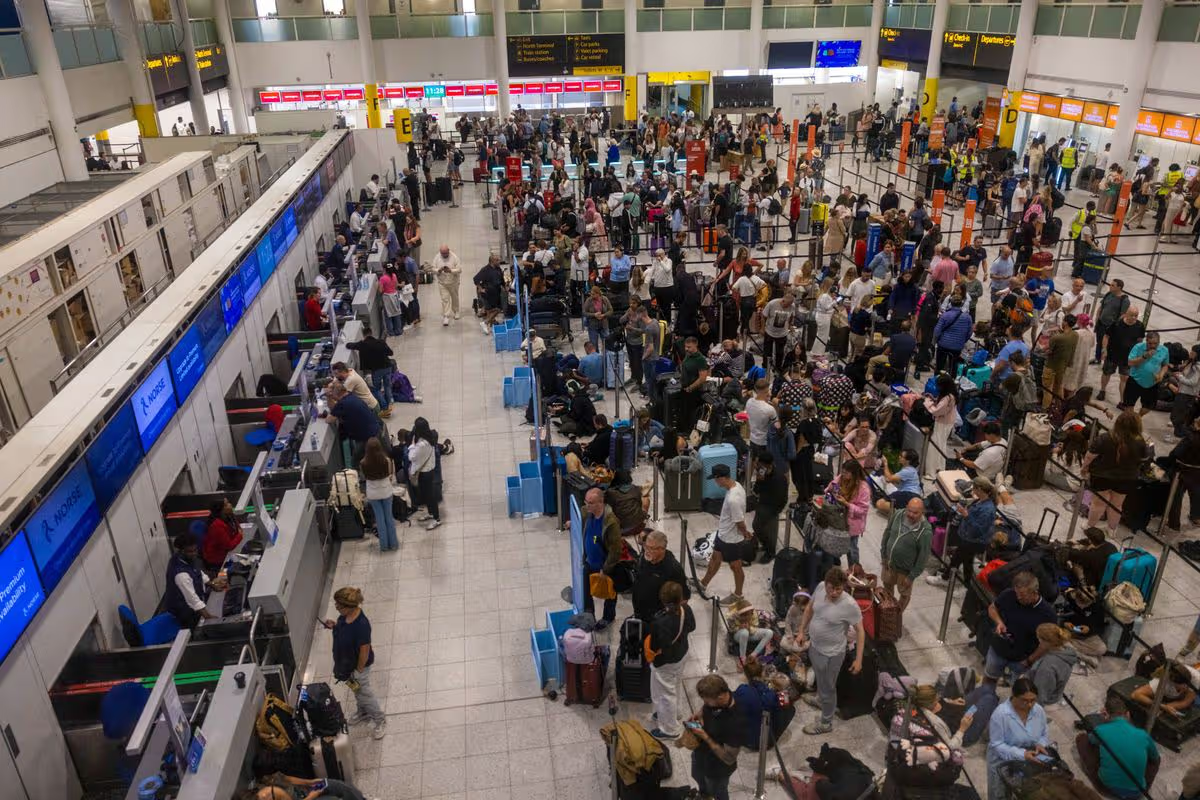
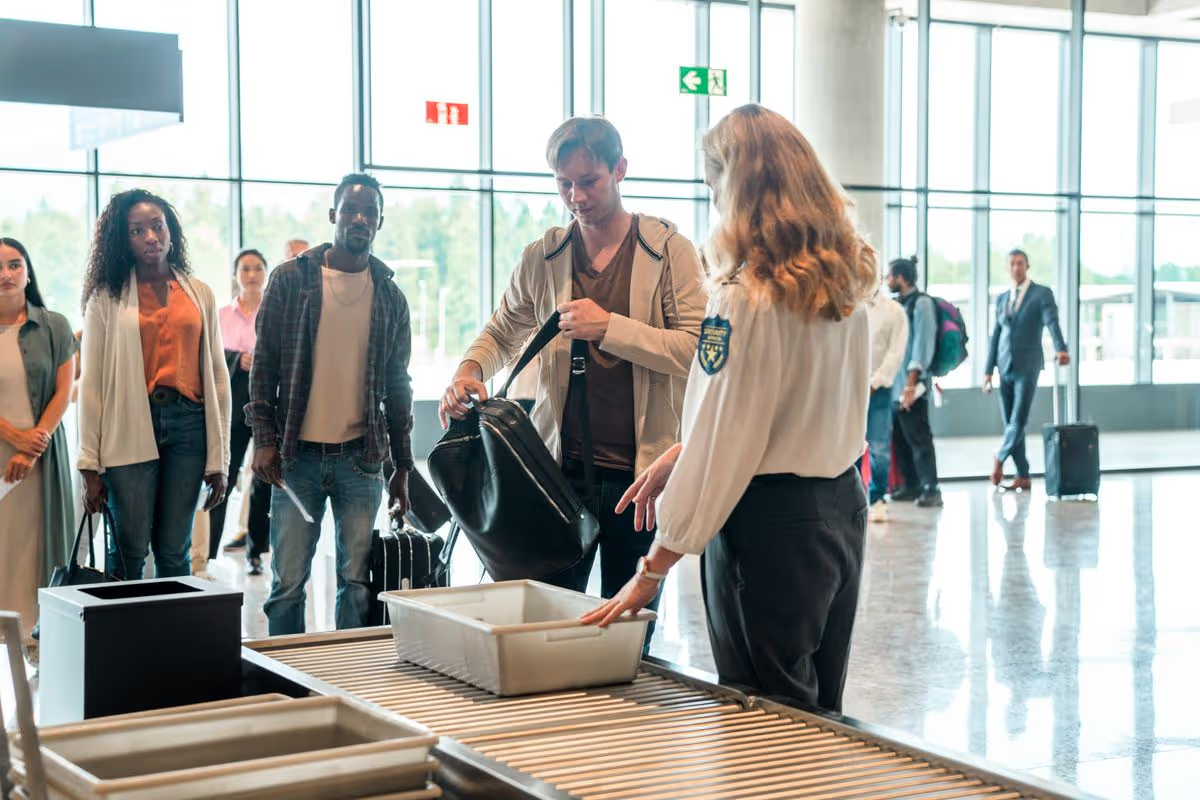
Ryanair passengers were left stunned when they glanced out the window after enduring 90 minutes queuing through security. A group of 24 travellers watched in complete disbelief as the aircraft they were supposed to be boarding departed without them whilst they remained stranded in the terminal.

The service, departing from Tours Airport in France, was scheduled to fly to Marrakech in Morocco at 12.15pm on Wednesday, 11 March. With just 15 minutes remaining before departure, the pilot took the decision to shut the doors and proceed as planned, leaving a quarter of his passengers behind.

According to Ici, the pilot instructed that the passengers’ luggage be offloaded from the aircraft in order to keep to his timetable. And whilst he acknowledges the carrier is perfectly entitled to take such action, French holidaymaker Maxime says he was left absolutely astonished when he discovered what had occurred.

The 37-yea-old maintains he turned up at the airport nearly two hours ahead of his scheduled take-off time. He said: “It’s a completely crazy situation.

“Going through customs and security took ages. We spent over an hour and a half there. At one point, we realised the pilot had decided to take off without us, knowing that our suitcases were already on the Ryanair plane.”

Maxime claims his baggage stayed on the tarmac as the aircraft departed at 12.57pm, 42 minutes beyond its scheduled take-off. He branded it a “completely absurd situation”.

Louis Chaumont, director of Tours Airport, described the circumstances as “regrettable”. He clarified that pilots are permitted to depart during their allocated take-off slot to prevent having to wait for another to become available.

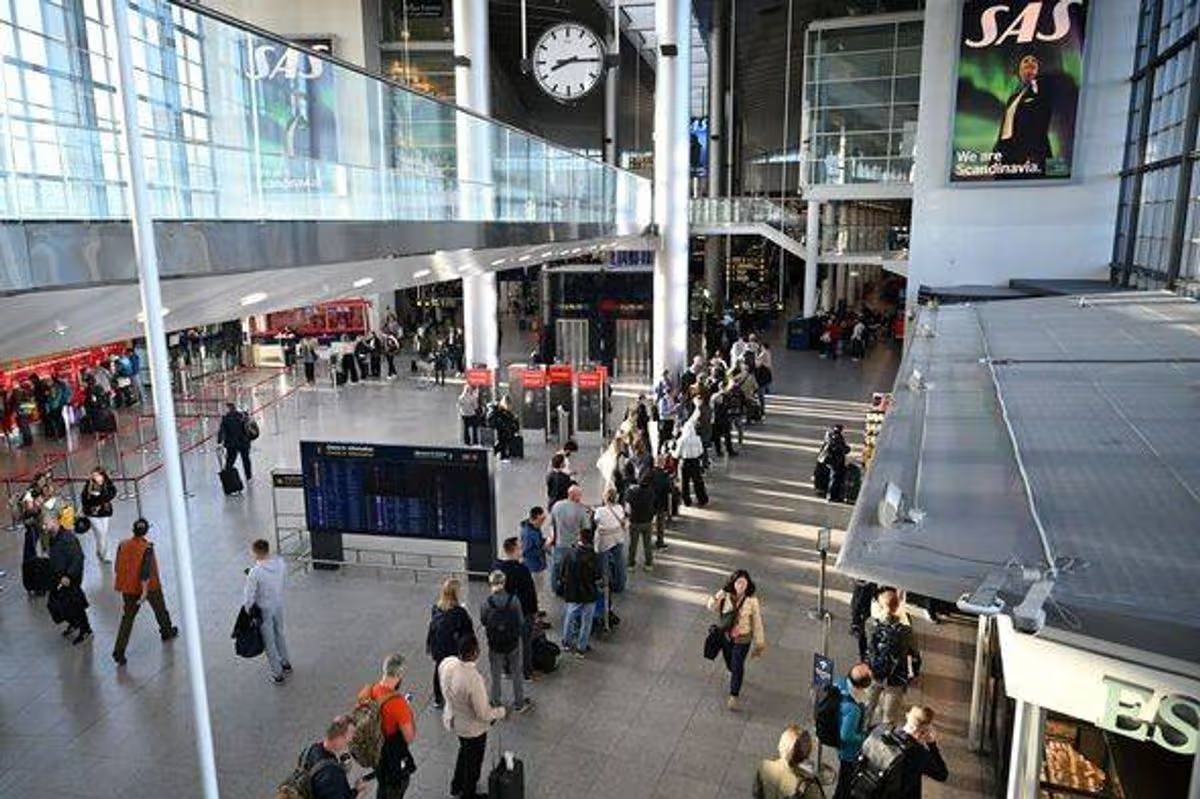
He indicated this was one of three key factors that resulted in the passengers missing their flight. He stated: “The first was an unannounced inspection by the gendarmerie brigade across the entire airport. The second is the introduction of a new measure, the ESS (Entry/Exit System).

“This is a measure introduced by the EU which requires customs checks on all passengers entering and leaving the Schengen area, so passengers travelling to Marrakech are affected.

“Previously, the screening rate was 10%, and it takes time to implement this measure, which takes three to four minutes per passenger. Added to this is the third factor: the pilot of this flight had a designated take-off slot. If he doesn’t comply, he has no idea when he’ll be able to get another one to fly. So he’s perfectly within his rights to close the doors of his plane and take his slot.”

Whilst the director stopped short of promising full refunds for passengers, he confirmed compensation claims will be evaluated individually. He indicated the airport “will investigate what happened and determine who is responsible.”

In a statement to French media outlets, Ryanair maintained its policy is to guarantee a “punctual departure”. The airline asserted the delays within the airport were “entirely beyond our control”.

A spokesman informed ICI: “Had these passengers arrived on time, they would have boarded this Tours–Marrakech flight alongside the 155 other passengers who arrived at the gate on time. We regret that these delays, caused by security checks at Tours Val de Loire Airport-which are entirely beyond our control-resulted in some passengers missing this flight.”

Source link

EU’s largest economies push for faster capitals market integration in joint letter

The EU’s six largest economies are urging Brussels to accelerate the long-awaited integration of capital markets to “strengthen Europe’s growth potential”, according to a letter sent on Tuesday to the Eurogroup boss and several EU commissioners.


ADVERTISEMENT


ADVERTISEMENT

The finance ministers of France, Germany, Italy, the Netherlands, Poland and Spain say that making tangible progress on the rebranded “Savings and Investment Union” has become an “urgent necessity,” pledging to push “this important project forward”, in a letter addressed to EU economy chief Valdis Dombrovskis and Eurogroup President.

“Deeper and more integrated capital markets would strengthen Europe’s growth potential, enhance its economic sovereignty and provide a stronger foundation for financing common priorities,” the letter said.

In particular, the ministers call on EU institutions to reach an agreement among member states by summer on one of the key elements of the capital markets integration agenda: the Market Integration and Supervision Package (MISP).

The MISP is a set of legislative proposals by the European Commission aimed at strengthening the supervision of financial market infrastructures across the bloc and improving how they operate.

“A central purpose of the package is to remove national barriers and to improve cross border distribution of investment funds, so investors have better access to the EU capital markets and companies benefit from deeper pools of capital”, the letter says.

The six countries also ask the EU to advance its digital payments agenda, specifically by promoting private pan-European payment networks that can compete with US-based Visa and Mastercard, and by accelerating the adoption of the digital euro.

Agreement by the summer

Capital markets allow companies and governments to raise funds by selling assets such as shares or bonds to investors.

To strengthen and integrate these markets across the EU, the European Commission has proposed a series of legislative measures under the Savings and Investment Union package.

In recent months, EU countries and institutions have signalled a more ambitious goal, aiming for an agreement among co-legislators on most of the SIU legislation by June.

However, EU countries are not fully aligned on the technical aspects of capital markets integration, causing delays to the broader strategic agenda.

Another key legislative proposal is the revisions of the securitisation framework, which are EU rules introduced in 2019 with the objective of ensuring safer market practices, to avoid other financial crisis such as the 2008 global shock.

The revision, which aims to simplify certain requirements and reduce high operational costs, is to be approved by autumn 2026, according to signatories.

Digital payments

The six EU countries also support the development of additional pan-European private digital payment solutions, viewed as a key pillar of the EU’s strategic autonomy, since most digital payments are currently processed through US-based infrastructures.

According to 2025 European Central Bank data, Mastercard and Visa account for 61% of card payments and nearly 100% of cross-border ones.

In this context, the six countries are also calling for an accelerated rollout of a public digital payment solution: the digital euro. Currently under negotiation, it would be an electronic form of cash issued by the European Central Bank, serving as an additional payment option alongside cash and bank-issued cards.

The project is facing significant delays in the European Parliament. In particular, the leading rapporteur on the file, the Spanish centre-right MEP Fernando Navarrete, is pushing to reduce the scope of the digital euro to offline payments only, in order to avoid competing with other private infrastructure, such as Visa and Mastercard.

“We push for swift conclusions of the legislative process of the digital euro and we invite the European Parliament to follow the Council’s approach to establish the digital euro (in both its online and offline modalities) as a comprehensive, interoperable and sovereign European payment solution for European citizens”, the six countries wrote in the letter.

The co-legislators initially aimed for full adoption of the digital euro by the end of 2026. However, due to delays in the parliament, the six countries have not set a specific adoption deadline.

Source link