This beautiful city offers a quieter alternative to the UK’s busiest festive destinations, with a magnificent medieval cathedral, riverside walks and traditional pubs to warm up in.
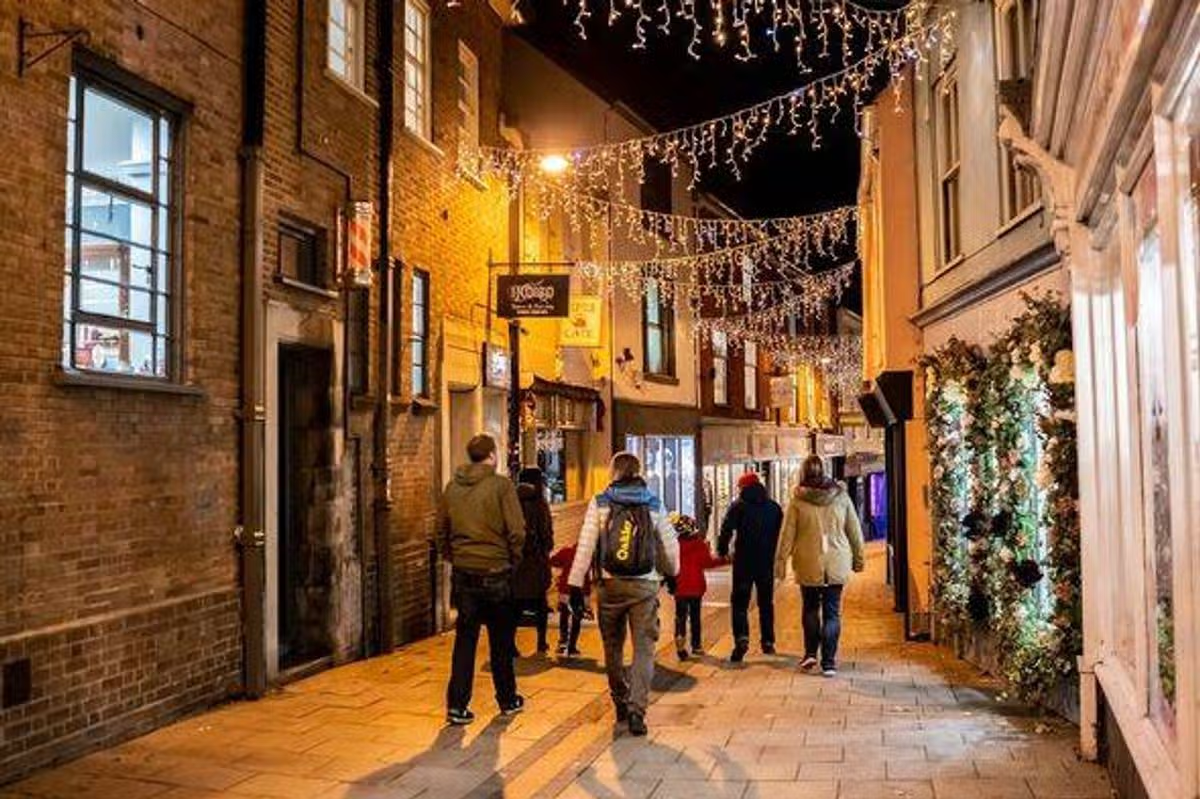
Beautiful city in England is a ‘cosy’ destination for a winter staycation(Image: Yackers1 via Getty Images)
Christmas markets might put Bath, York and Edinburgh high on your winter travel wish list, but Norwich has plenty to tempt anyone seeking a quieter staycation.
With its medieval landmarks, independent shops and welcoming pubs, the city combines festive atmosphere with opportunities to slow down and explore. Spend a day browsing for gifts, strolling beside the river or admiring the cathedral before settling in somewhere cosy.
Norwich is Britain’s only city located within a national park — one of its major draws.
Norwich was among the leading UK staycation destinations picked by specialists at StressFreeCarRental.com in 2024. The company’s CEO, John Charnock, said: “As the nights draw in and the temperatures plummet, it’s inevitable that many of us start to feel a little down at this time of year.
“The picturesque Broads National Park has miles and miles of footpaths for visitors to truly feel at one with nature and help to keep active. Norwich is a great city to connect with the outdoors and practice ecotherapy.”
Back in the city, Norwich Cathedral is a highlight for visitors drawn to its medieval architecture. Its appeal extends beyond the building itself, with Christmas services, concerts and a light show adding to the festive experience.
On TripAdvisor, one recent visitor to the cathedral said: “Visited early on a Friday morning as the Cathedral was being prepared for the weekend with Flower arrangers busy creating displays. We had a lovely chat with one of the volunteers.
“A lovely building made of Caen Stone. We visited the grave of brave Edith Cavell. There is small gift shop if you wish to purchase something. Beautiful grounds around the building.”
While another recent visitor added: “An outstanding cathedral. Well worth visiting. Entry fee is a suggested £5. Wonderful cloisters and some very interesting and historic graves and monuments. I would definitely go back as there is so much to see.”
For Christmas shopping, Norwich offers a mix of independent retailers and familiar high street names. Its bustling marketplace, shopping centres and Norwich Lanes provide plenty of places to hunt for gifts and keepsakes.
Rather than one huge Christmas market, the city has a collection of smaller festive events showcasing local creativity. There are also multiple Christmas markets and late-night shopping on Thursdays in the run-up to Christmas.
Seasonal lights and decorations brighten the streets, while historic venues including The Assembly House and The Maids Head Hotel add to the celebrations.
When it’s time for a break from browsing, the decorated Norwich Lanes make an inviting setting for a leisurely wander. Alternatively, head out from Norwich railway station for a walk beside the River Wensum.
Along the riverside, sights include Pull’s Ferry, Cow Tower and Norwich Cathedral, with pubs such as the Compleat Angler and The Red Lion offering somewhere to stop for a drink.
For a longer dose of history, try the city’s circular walking route, which follows the Wensum and crosses ancient bridges. Medieval city walls, the imposing castle and churches are among the landmarks to look out for.
Norwich’s oldest pub, The Adam and Eve, is conveniently placed along the route. And after a day spent exploring in the winter air, one of the city’s traditional pubs with a crackling fire could be just the place to finish.
PADDLING kayaks through the serene 8,000-year-old bog, we’re about to enter the “second maze”, according to our guide Elina.
Locals call it this because the small islands of shrubs, moss and reeds we’re navigating are constantly shifting above the mineral-rich water, making the route through ever-changing.
The cobbled streets and colourful art nouveau buildings of Latvia’s capital, RigaCredit: Shutterstock / Altug GalipYou’ll find lush landscapes at Kemeri National ParkCredit: Alamy Stock Photo
If you want a moment to really pause, Latvia’s the place.
Over half of the country, which is a quarter of the UK’s size, is covered in forest, and with a population of fewer than 2 million, it’s not hard to find a stunning spot all to yourself – even in the height of summer.
Sign up for the Travel newsletter
Thank you!
We return to the shore to find Elina’s mother-in-law cooking up a feast on a portable stove.
Slices of ham and bread are served alongside a huge flask of coffee, helpings of traditional grey pea and bacon broth, and piles of fresh pancakes, both savoury potato and apple, which are demolished by my kids Poppy, seven, and Raffy, five.
It’s a brunch made from simple ingredients, but it is utterly delicious, especially when devoured in the vivid green landscape of Kemeri National Park.
Kayaking tours cost from £21.50 per person (Boardsyou.lv).
Ravishing Riga
Suite digs at Hotel Grand Poet By SemarahCredit: Supplied
The starting point for our trip is the cobbled streets and colourful art nouveau buildings of Latvia’s capital.
Riga sits little more than half an hour from the white sandy beaches of the Baltic coast (with a sea warmer than Cornwall’s come summer, FYI) and an abundance of nature, like those ancient bogs.
We arrive during celebrations for the city’s 825th anniversary and to streets alive with brass bands and artistic performances.
Even at its busiest, though, Riga still feels gloriously uncrowded, despite striking architecture and sculptures at every turn – the black felines perched on the turrets of Cat House and the Bremmen Town Musicians Statue of four animals balancing upon each other (said to bring luck if you rub their noses) our favourites.
Hotel Grand Poet By Semarah, with its flamboyant interiors, lies opposite pretty Bastejkalna Park, just a short stroll from the beautifully kept Old Town.
Its spa – where kids are welcome throughout the day – is home to a swimming pool, whirlpool, steam room and two saunas, and we even spot TV chef Prue Leith at the breakfast buffet one morning.
The black felines perched on the turrets of Cat House are said to bring luck if you rub their noseCredit: Alamy Stock Photo
One of Riga’s most popular weekend spots, Mežaparks, is set on alluring Lake Kišezers, where pedalos, rowing boats and SUPs are for hire, and swimming from its sandy shore is a breeze.
Cabo, with its hammocks and swinging seats, is an idyllic spot for sipping a rhubarb spritz, £7.70, while the kids splash about, and we hire a four-seater pedal kart to whizz around the forest trails, £17 per hour (Cabo.lv).
It would be easy to while away a whole day shoreside, but with Riga Zoo also here, we soon find ourselves giggling at the swaggering chief gelada (similar to a baboon), then wide-eyed at the glow-in-the-dark scorpions in the tropical house.
Another morning well spent is at Marupe Wake Park – its inflatable water obstacle course is one of Europe’s largest, with slides, swings, zip wires and climbing challenges.
As we hop across a giant panda and unicorn, the kids’ confidence grows with each leap, before we all revive ourselves in the sauna overlooking the lake, chuckling about our most spectacular splash landings.
Later, among vibrant Mediterranean-inspired wall murals, we find a meal worthy of any great city.
We’re at Italissimo, where the little ones tuck into proper lasagne, £4, and pasta in butter broth with parmesan, £3, glugging down home-made berry lemonades, £3.70, while I dig into sublime truffled burrata with parma ham and wine-poached pear, £13.50, and tiger prawn ravioli with asparagus and a creamy bisque sauce, £14.50.
Cocktails, such as the Malfy Sour – a limoncello and citrus gin blend, £9 – are also excellent.
We soon clock children disappearing downstairs and discover a pastel playroom with a giant ball pit and interactive games screen, much to the kids’ glee (Facebook.com/restaurant.italissimo).
Going medieval
Turaida Castle towers over Gauja National ParkCredit: Alamy Stock Photo
Restaurant Rozengrals, meanwhile, is a celebration of Riga’s medieval roots.
One lunchtime, we descend the steep steps and follow torch-lit tunnels to an underground dining hall for a huge platter of oven-baked duck with cherry-onion jam on a bed of pulses, £25, and pastry parcels stuffed with spinach and cheese, £7.20.
Sea buckthorn with honey, £4, is quickly declared a hit by all and we finish off by sharing Countess Amelia’s Caprice – tiny iced cakes encased in filo pastry, made from another 15th-century recipe, £6 (Rozengrals.lv).
Nearby, we discover GunsnLasers, an entertainment arcade tucked away in Galerija Centrs shopping centre, where e-karting proves to be a blast for kids and we all tear around the interactive Pixels Room, trying to avoid stepping on the ever-moving red squares of a giant light-up grid.
Donning VR headsets for family challenges is also a lot of fun for everyone.
Expect al dente deliciousness at ItalissimoCredit: Italissimo Restaurant/Instagram
Still, we’re here to explore Latvia’s stunning landscapes, and an hour’s drive from Riga is Gauja National Park, the home of Turaida Castle – a reconstructed medieval fortress in lush grounds dotted with sculptures.
The kids love spotting ancient weapons and climbing the main tower with its views of the Gauja river.
Later, after venison stew with figs, £17.50, at quaint Kungu Riga (Kungurija.lv), we check out adventure park Tarzans.
Here, alongside the thrills of high-rope obstacle courses, tubing and bungee trampolining, there are activities such as a downhill hamster wheel, giant catapult and a toboggan track that hurtles us through the trees.
Packages cost £26 per child, £30 per adult (Tarzans.lv).
It all makes for a cracking afternoon – just as Latvia makes for a cracking summer adventure.
As close to the sea as you can get without setting sail, this newly renovated cottage is moored up between a little shingle beach and the village of Moelfre, with its lifeboat station, pub, fish and chip shop, cafe and parlour serving locally made ice-cream. A former fisher’s cottage, it’s decorated in nautical blues and whites, their cool tones warmed by antique chests and an inglenook fireplace once used for smoking herring. An unusual circular garden spins out towards the sea; hop over its low stone wall and you’re right on the Anglesey Coastal Path, soaking up cinematic views of Puffin Island, and Eryri beyond. Sleeps eight, two nights from £746, boltholesandhideaways.co.uk
Heronden Lodge
Eastry, Kent
Photograph: Nathan Shepherd
This doll’s house-like, red-brick cottage sits sheltered by trees in a quiet corner of the Kent countryside, 10 minutes’ drive from Sandwich and 20 from Deal. Newly spruced up, it’s restfully low-key, with buttermilk walls and wooden floors. Upstairs are two bedrooms (one a king, the other a twin) and a bathroom with a tub: perfect for dunking mud-splattered children after days at the beach or trailing along footpaths. Downstairs, there’s a simple country kitchen, a double-windowed dining room and a sitting room with an open fireplace. Walks lead straight into the surrounding farmland and to the village pub, 20 minutes’ away. There are also two farm shops within 10 minutes’ drive. Sleeps four, two nights from £472, keeperscottages.co.uk
Ty Bach
Beulah, Powys
Photograph: Kayleigh Doyle
Mid Wales is at its moody best in the autumn, the hillsides glowing auburn beneath squally skies. If your walking boots are calling, this recently launched holiday cottage just north of Llanwrtyd Wells is a good base for exploring the trails of the Cambrian Mountains or the Bannau Brycheiniog (Brecon Beacons). The smaller of two cottages on a site that was once a busy village school, it had been empty for more than three decades when the current owners took it on. It took them eight years to restore it, and now it’s a vision of flagstone-floored, putty-walled, slate-roofed comfort, cosied up with a plush raspberry sofa and copper kitchen appliances. This is a place for being rather than doing. Add-ons range from gourmet grazing boards to massage treatments. Sleeps four, two nights from £260, tosholidayhomes.co.uk
Basecamp North Lakes
Troutbeck, Lake District
Photograph: Ruth Burgess
A few miles west of Penrith, this farm shop, cafe, community garden and wetland restoration site juggles more plates than a Barcelona tapas bar on a Saturday night. It’s also home to a charitable enterprise, Alpacaly Ever After, which rescues llamas and alpacas and offers meets, walks and even camping experiences with them, accessible to all. This summer it added one more item to the menu, launching seven smart new cabins beside the site’s lake. Kitted out with glossy green-tiled shower rooms, galley kitchens, wood-burning stoves and private outdoor baths, they each have one bedroom but can sleep two more on a sofa bed in the lounge. Sleeps four, two nights from £300, basecampnorthlakes.co.uk
Peatlands Retreat
Ballybogey, County Antrim
Photograph: Gareth Andrews
Sitting in the countryside between Ballymoney and Portrush, the two restful shepherds’ huts here come with en suite shower rooms and king-size beds. You’re within easy reach of Old Bushmills Distillery, the Giant’s Causeway, Dunluce Castle and a string of some of the most stunning sandy beaches in the UK, but many guests don’t venture beyond the site’s gardens, meadow and woodland, staying to spot resident hares and light wood-burning stoves. The owners also run an artisan micro-bakery on site; Saturday sourdough workshops can be booked (£90pp), bakery breakfasts can be delivered to your door (£16pp) and twice a week there’s a hyper-local pizza-to-hut delivery service (£15 each). Sleeps two, two nights from £320 (discounts for solo stays), peatlandscausewaycoast.com
Pippin Cottage
Bude, Cornwall
Run by a former Vogue producer, her chef partner and their farming family, Pippin is one of three cottages set on a working orchard outside Bude. Mixing heirloom pieces with Studio Ore taps and Hay lighting, it’s a lesson in understated, soulful style. Works by local artists cheer the walls (many are for sale) and in the kitchen you’ll find apple juice pressed straight from the orchard’s trees. This autumn, the site has opened a new custom-built sauna and cold plunge, and guests can book add-on wellness experiences such as yoga and sauna sessions that end with hot cocoa around a fire pit. Sleeps four, two nights from £256, cannorchard.com
Montagu Cottage
Drumlanrig, Dumfries and Galloway
Photograph: Alix McIntosh Photography
Built in the 19th-century as the laundry for the Queensberry estate, Montagu Cottage has been scrubbed up for modern-day guests. A peppermint cream colour scheme cosies up its lofty living area and three bedrooms, there’s a clawfoot bath for post-hike soaks and a double-aspect wood burner blazes in the cottage’s heart. Drumlanrig Castle is easily reached on foot (guests get free access to the gardens and adventure playground until the end of October); spectacular woodland and valley walks lead out from the door; and you’re close to the village of Thornhill for pubs, bakeries, shops, cafes and, if you time it right, a live gig or film screening at the Old School. Sleeps six, three nights from £750, drumlanrigcastle.co.uk
Molly’s Cabin
Sutton Bonington, Nottinghamshire
Tucked into the field-woven gap between Nottingham and Leicester, beneath the approach to East Midlands airport, Bonington Farm’s four distinctive holiday cottages include a blackened timber cabin with sociable, dorm-style bedrooms, a circular grain store, a pretty brick farmhouse and a corrugated former hay barn. The latter, Molly’s Cabin, is a gallery-walled, salvage-speckled hideaway that’s about to undergo a gentle refurb. Single-night Sunday stays include a private movie night in the farm’s cute grain silo cinema. Or, stay for the whole weekend and go leaf-crunching along the trails of The Outwoods, a 110-acre woodland around 20 minutes’ drive away. Sleeps two, one nightfrom £200, boningtonfarm.com
Fjord
Ullapool, the Highlands
Photograph: Lukas Rambousek
A minimalist counterpoint to the rugged maximalist scenery beyond, Fjord is one half of Corylus Retreats, the twin self-catering apartments opened just outside Ullapool in May. Conceived and run by the team behind nearby Ecotone Cabins, it was designed sustainably with stripped-back timber walls, and floor-to-ceiling windows maximise natural light and have views of neighbouring Loch Broom. On clement days, the pretty harbour and restaurants of Ullapool are easily reached, and there are craggy hikes around Assynt, Coigach and the Summer Isles. If it rains, hunker down inside, enjoying the luxury of underfloor heating or curling up on the covered deck to watch scudding clouds. Sleeps four, three nights from £661, premiercottages.co.uk
Hafod Gwyllt
Cwmystwyth, Ceredigion
Photograph: Lou Archell
Its name translates as “wild summer dwelling” but this renovated cottage deep in the Cambrian mountains is equally good for an autumn escape. On the Hafod Estate, deep in the Ystwyth valley, it has no neighbours besides ponies, and has easy access to hiking and wild swimming. Newly available as a holiday rental, it’s stylishly understated inside, with whitewashed walls, slate and wood floors and a collection of ruffled lampshades, tapestry blankets and old pine dressers in soothingly subdued shades. Outside, there’s a wood-fired hot tub with rugged mountain views and the owners can arrange dark skies photography sessions or visits to local potters. Sleeps four, three nights from £690, sandandstoneescapes.com
Cae’n y Bwlch
Talsarnau, Eryri (Snowdonia)
Photograph: Polly Lovegrove
Getting away from it all is a given at this newly launched cottage in a secluded mountain setting north-east of Harlech. Owned by a ceramicist and an artist, its slate floors and limewashed walls are warmed by glowing fires and a colourful collection of antique dressers, jaunty art, textiles and carved wooden love spoons. While you could drive down the hillside for a windswept walk along the beach at Black Rock Sands, or to explore the legacy of Clough Williams-Ellis at Portmeirion and Plas Brondanw, it would also be tempting to arrive fully supplied and squirrel yourselves away, soaking up the views or hiking straight out into the rugged wilds of Eryri national park. Sleeps six, three nights from £509, underthethatch.co.uk
Riders Lodge
Ballycastle, County Antrim
Stay Lagom is a small estate set around a Georgian rectory on the fringes of Ballycastle. With bike hire on site and a new programme of add-on wellness experiences (think yoga and seaside saunas), it’s popular with visitors coming to hike, surf or cycle the Causeway Coast. Hotel-style bedrooms and boutique dorms can be booked and there are two self-catering cottages, including Riders Lodge, where a sofa-bed stretches capacity to six. Popular with families and small groups of friends, it’s a sociable space with surfboards and bikes suspended on the walls, its own courtyard hot tub and a stash of board games for evenings around the wood burner. Sleeps six, two nights from £524, staylagom.com
Hoolet Bothy
Beauly, the Highlands
If Mrs Tiggy-Winkle retrained as an architect, she might come up with something like Hoolet Bothy. A remote, off-grid farm cottage in the hills above Beauly, 12 miles west of Inverness, it’s the epitome of cosy, with timber-panelled walls, a log-burning stove, a double bed tucked into the eaves and a wood-fired Rayburn for cooking and supplying hot water to a small cast iron bath. Guests have access to a fridge and a charging point down at the farm, three minutes’ walk away, and a cool box is supplied for essentials, but there’s no electricity on site so hunker down for days of walking among deer-speckled hills and red kite-dotted skies, and evenings spent storytelling by candlelight. Sleeps two, three nights from £477, airbnb.co.uk
Labour in Vain Cottage
West Bexington, Dorset
Photograph: National Trust
Set back from the 18-mile swoosh of shingle along Chesil Beach, this semi-detached rental (there’s another next door for holidaying apart together) has been newly renovated by the National Trust. Its name, like the lane beside it, is thought to refer to a year of crop failures in the middle ages – but there won’t be much labouring, in vain or otherwise, while staying here. Hike a stretch of the South West Coast Path, go swimming or fossil-hunting, watch the skies for migratory brent geese and head into nearby Bridport for shops, cafes and pubs. As well as a snug ground-floor lounge, the attic has been converted into a games room with a TV, telescope and space to spread out jigsaws or toys. Sleeps four, two nights from £561, nationaltrust.org.uk
Thornfalcon Winery
Taunton, Somerset
Photograph: Felicity Millward
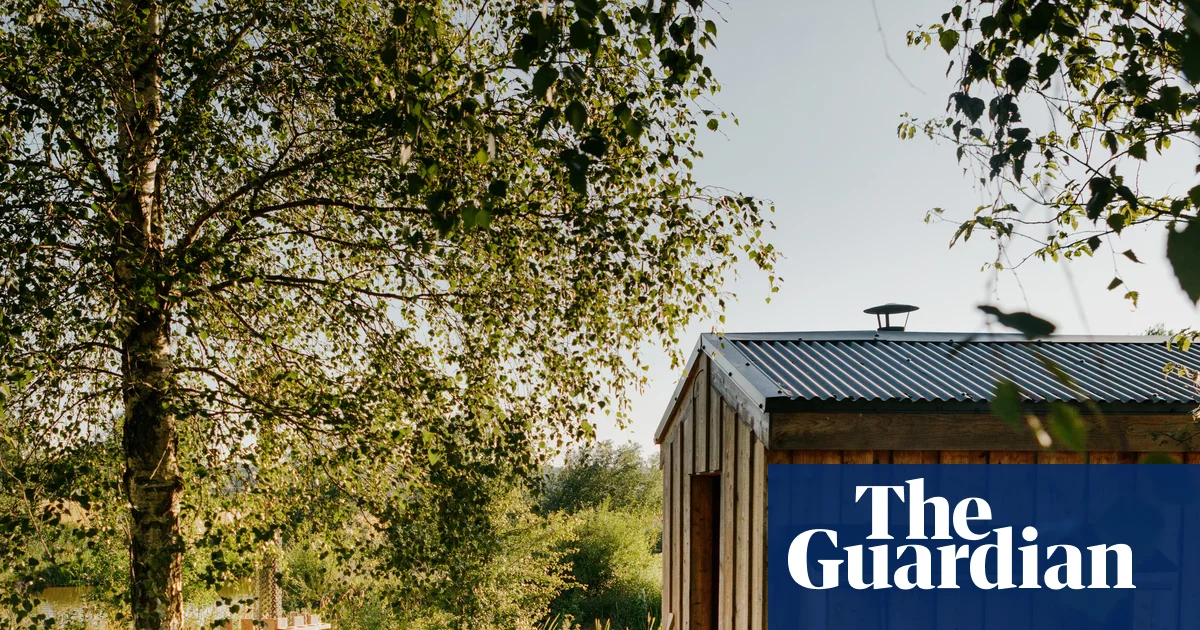
One of two wooden cabins on a working vineyard (there’s also a more spacious barn conversion suitable for families), the Vine Hut blends rustic timber walls with apple green paintwork and a red gingham sofa to give a cheery, gingerbread cottage feel. It comes with its own outdoor copper bathtub and firepit, plus access to the neighbouring swimming lake and Finnish sauna (pictured). Earlier this year the owners of Thornfalcon renovated a barn on site and have launched a wine school there, plus a series of monthly supper clubs, pairing the vineyard’s wines and juices with seasonal menus; October’s is a culinary caper through the hedgerows, fields and waves via pheasant, hake, mussels, squash, radicchio, puntarelle and quince (from £65pp). Sleeps two, two nights from £340, thornfalcon.com
Prices are for October-November and were correct at time of publication
According to the Daily Telegraph, talks about the future of the Elgin marbles have collapsed, external. Greece reopened negotiations with the British Museum in 2021 as part of efforts to repatriate the ancient sculptures. But the paper says “it is understood negotiations are effectively over” as Greek representatives are frustrated by a lack of progress.
The Times says mounted cavalry might have an advantage in modern warfare, external, a century on after tanks replaced horses on the battlefield. Last year, a Ukrainian infantry company in Donetsk reported that Russian forces had started to use horses and donkeys to carry soldiers and supplies to avoid detection by drones. And the paper says the UK’s Household Mounted Cavalry regiment conducted trials over the summer, with officials saying in some situations, such as woodland, there’s a better chance of getting from A to B with a horse, than with a Challenger 2 tank.
The village has been crowned the finest seaside destination by Which? and is a must-visit for anyone seeking a peaceful autumn break in the UK
15:31, 16 Sep 2026Updated 15:33, 16 Sep 2026
One spot is perfect for getting away during the cooler autumn months(Image: Getty Images)
As the summer crowds begin to thin out, late September offers the perfect chance to explore the UK’s stunning coastline, with quieter beaches, milder temperatures and spectacular coastal paths just waiting to be discovered. Tucked away on the north Devon coast, one spot is a picture-postcard seaside village where the East and West Lyn rivers meet the Bristol Channel.
A charming seaside village tucked between dramatic hillsides and the Bristol Channel has been named Devon’s best seaside destination by Which?, cementing its status as an essential stop for a quintessential West Country getaway. Lynmouth sits beneath its hilltop neighbour, Lynton, with both forming part of the spectacular Exmoor National Park.
Sitting on the edge of Exmoor National Park, it is surrounded by stunning landscapes and is frequently likened to “Little Switzerland”.
At the heart of the village is its harbour, a reminder of Lynmouth’s roots as a small fishing settlement. Its history stretches back centuries, with records dating to at least the 13th century.
One of the area’s most famous attractions is the Lynton & Lynmouth Cliff Railway, which connects the seaside village with Lynton high above. The historic railway is powered by water and offers visitors a memorable way to travel between the two communities while taking in the surrounding scenery, reports the Express.
Today, Lynmouth offers a winning combination of harbour views, rushing rivers, wooded valleys and dramatic coastline. With Exmoor’s walking trails right on its doorstep, it is an appealing destination for anyone looking to escape the crowds and enjoy a peaceful slice of the Devon coast.
Visitors can follow the River Lyn upstream towards Watersmeet, a magnificent tree-lined gorge managed by the National Trust, complete with riverside walkways and a charming tea garden.
For those looking for a spectacular group getaway, the area is also home to Lynhurst, an impressive and distinguished property just a short walk from the historic village of Lynton.
Tucked within stunning gardens and natural woodland, it features a games room with a slate pool table and dartboard, as well as an outdoor table tennis table to keep guests thoroughly entertained.
For couples in search of a romantic getaway, River View is a second-floor apartment set right on the riverbank in Lynmouth. The property features a furnished balcony overlooking the bay, and on a clear day, guests may even spot the Welsh coastline in the distance.
Inside the apartment, visitors will find a cosy open-plan living and kitchen area, fully kitted out for a hassle-free self-catering break. A king-size master bedroom with an en-suite shower room offers a peaceful retreat in which to unwind after a day exploring the local coastline.
The balcony is a particularly lovely spot to savour a morning coffee or an evening drink, with sweeping views across the river and the picturesque village below. With plenty of cafés and restaurants nearby serving breakfast, lunch and dinner, there’s absolutely no pressure to cook every meal either.
For a change of scenery, Ilfracombe lies fewer than 20 miles away, well known for its diverse dining scene and historic harbour. Visitors can also take in Damien Hirst’s iconic ‘Verity’ statue at the harbour entrance before heading back to the tranquil surroundings of Lynmouth.
Previous guests at River View have been fulsome in their praise online. One visitor wrote: “Lovely apartment. Perfectly situated with everything we needed. A real ‘home from home’. We love Lynmouth and will be back.”
Another noted: “A wonderful location for walkers as several spectacular river and coastal walks from the door. Great for visitors with dogs, close to the promenade for walks and meeting lots of other dogs.”
One particularly detailed review read: “A small but well-equipped and comfortable flat with beautiful views over the river to the sea. Good location to explore the area. Luckily found a temporary parking spot initially on Riverside Road in order to unpack, as the flat entrance is on a pedestrianised street.
“Parking permit was £25 for the week at the nearby Upper Lyndale car park. Tesco delivered groceries without difficulty. Walks locally and some National Trust properties made it a very enjoyable week in a lovely location.”
One guest noted that “the two flights of steep stairs would need to be taken into consideration by anybody perhaps not a 100% fit”, while another savoured the surroundings, remarking: “We had the door open all the time and could listen to the water and the wildlife, which we really enjoyed.”
River View can be booked through Holiday Cottages, with a four-night stay in September starting from £449.
Tyler Shough threw an incomplete pass in the end zone on a two-point conversion attempt, allowing the Lions to escape with a 31-30 win in overtime over the New Orleans Saints in Detroit on Sunday.
Saints coach Kellen Moore chose to go for the win instead of tying the game with 1:34 left in overtime after his team came back from a three-touchdown deficit in the third quarter and allowed a touchdown on the opening possession of the extra period.
Jared Goff threw two touchdown passes to Amon-Ra St. Brown, the second score a five-yard throw early in overtime, and Jahmyr Gibbs ran for two touchdowns.
New Orleans rallied from a 21-0 deficit and pulled into a 24-all tie on Shough’s nine-yard touchdown pass to Juwan Johnson with 1:07 left in the game.
Detroit went three-and-out on offense, giving the Saints the ball with a chance to win it and Ryan Wright missed a 62-yard field-goal attempt as time expired.
Gibbs had a career-high 29 carries for 156 yards. He also had five catches for 30 yards.
Goff was 26 of 39 for 206 yards without a turnover.
at Bengals 33, Buccaneers 27: Cincinnati’s new-look defense forced four turnovers — including its first fumble recovery for a touchdown since 2022 — and Joe Burrow passed for 254 yards and a touchdown during a victory over Tampa Bay. Bucs quarterback Baker Mayfield surrendered three fumbles during the loss.
Jets 23, at Titans 10: Breece Hall ran for 102 yards and a touchdown, Geno Smith threw for 215 yards and New York defeated Tennessee. The Jets never trailed and held the ball for just over 38 minutes. Cam Ward was 19 of 32 passing for 140 yards and a late touchdown toss.
Ravens 41, at Colts 23: Derrick Henry ran for three touchdowns to move into third on the NFL’s career list, Lamar Jackson threw for 324 yards and a TD and rushed for a score and Baltimore beat Indianapolis. Jesse Minter won his debut as the Ravens’ coach.
at Steelers 20, Falcons 13: T.J. Watt returned an interception of Cooper Rush 35 yards for a touchdown to help Pittsburgh secure a win over visiting Atlanta. Quarterback Aaron Rodgers passed for 221 yards and a touchdown. Rush, who was filling in for the injured Tua Tagovailoa, threw for a touchdown and a pair of interceptions that Pittsburgh turned into scores.
Bears 59, at Panthers 37: Caleb Williams threw for 269 yards and two touchdowns and ran for 65 yards and two more scores as Chicago defeated Carolina in the highest-scoring season opener in NFL history.
at Jaguars 34, Browns 10: Trevor Lawrence threw for 245 yards and four touchdowns, helping Jacksonville spoil the debut of new Cleveland coach Todd Monken. Cleveland’s Deshaun Watson threw an interception on the opening drive.
Bills 36, at Texans 31: Josh Allen threw a 34-yard touchdown pass to Joshua Palmer with 1:36 remaining to lift Buffalo past host Houston during a back-and-forth season opener. Allen had 334 yards passing with two touchdowns and ran for two more scores. The Texans had a chance to win in the closing seconds, but Greg Rousseau earned his second strip sack of the day, taking down C.J. Stroud at the Buffalo 28.
at Eagles 24, Commanders 22: Jalen Hurts passed for 203 yards and three touchdowns, helping Philadelphia edge Washington. Jayden Daniels passed for 164 yards and two touchdowns, but the Philadelphia defense stuffed a late Commanders two-point conversion attempt to seal the win.
at Vikings 39, Packers 22: Kyler Murray suffered a hit to the head on a run play in the first quarter and was placed in concussion protocol. Carson Wentz replaced Murray and passed for three touchdowns and Jordan Mason and Aaron Jones Sr. added two more rushing scores to help the Vikings beat the Packers.
at Raiders 27, Dolphins 13: Kirk Cousins passed for 160 yards and three touchdowns, helping Las Vegas beat Miami. Both teams were scoreless in the fourth quarter, with the Raiders doing just enough to overcome two Cousins interceptions.
If you want the perfect staycation weekend, this is one of the best
This article contains affiliate links, we will receive a commission on any sales we generate from it. Learn more
If you want the perfect staycation weekend, this is one of the best
England is beautiful in the autumn, the leaves come alight with colour, and the many cobbled lanes and cosy pubs scattered across the country begin to beckon to eager tourists. However, there is one place where the magic of autumn shines brightest of all.
It’s jam packed with heritage, atmosphere and charm and perfect for a weekend getaway. The historic city of York is one of the best places to see the seasons change.
Hazel Rickett, travel expert at small-group tour operator Rabbie’ssaid: “There’s something about York in autumn that’s hard to put into words.
“As the temperature drops and the evenings grow darker, the city takes on a wonderfully atmospheric quality, with its narrow cobbled streets, ancient walls and glowing pub windows creating the perfect backdrop for a seasonal escape.”
One of the best things about York is that it’s small and walkable – you don’t need to worry about how you’re going to get around, you can just wrap up warm and wander through its streets, soaking up the history.
York has got history in spades, from the towering Gothic Cathedral of York Minster to the beautifully preserved medieval lanes of The Shambles.
The Shambles are an iconic part of the city. This lane is flanked by timber-framed buildings, leaning so dramatically that they almost touch overhead. It’s packed with independent cafes, shops and boutiques, making it a fabulous place to get lost.
On its outskirts, there’s the city walls which encircle the city and date back to medieval times.
Hazel said: “York is encircled by the longest and most complete medieval city walls in England, tracing a roughly two-mile route around the historic centre. The walls offer a raised walk that takes in some of the city’s finest views.
“Visitors can stroll the ramparts between the historic gateways, known as bars, and look out over the Minster, the rooftops and the surrounding countryside as the trees turn shades of amber and gold.
“It’s one of the most rewarding ways to see the city and appreciate just how much history is packed into its streets.”
For the brave, the city comes alive after dark. Famously one of the most haunted places in Europe, the city is packed with spooky tales of ghosts. Those looking for a paranormal experience can join one of the many ghost tours offered in the city and learn more about the legends said to stalk its streets.
It’s not too late to soak up the sun and book a last-minute getaway, with a stunning European country offering 28C weather in September and beaches that compare to the Maldives
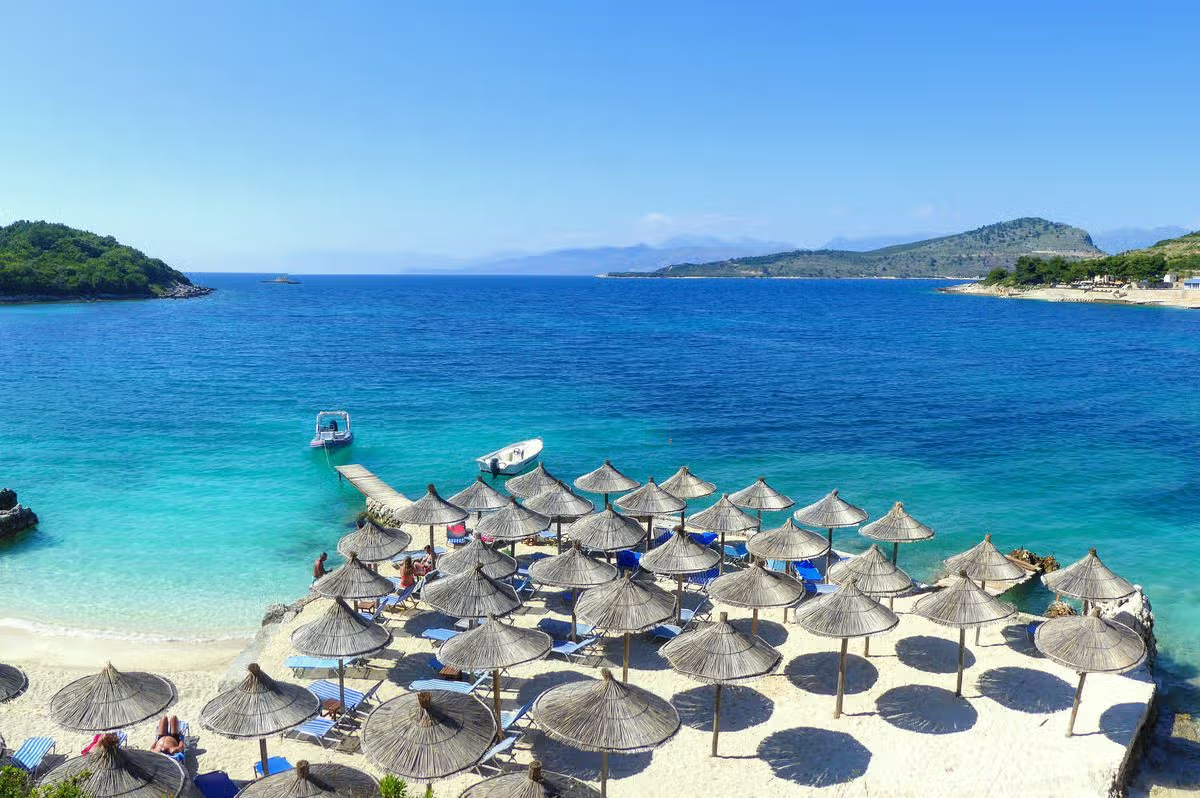
The European country offers stretches of unspoilt white sand beaches and azure waters(Image: Getty Images)
A beautiful European destination is emerging as a new holiday hotspot, with balmy temperatures in September. It’s even been hailed as a cheap alternative to the Maldives, thanks to its azure waters and sugar-white sand beaches.
If you’re looking for a September escape at a budget price and without the crowds, Albania should be top of your list. Data from TripAdvisor revealed that Albania saw a 60% increase in interest during the first half of the year, emerging as a fast-rising destination in Europe. And it’s particularly beautiful in September, with sun-soaked rays of up to 28C and an unspoilt collection of beaches.
Albania’s coastline stretches along both the Adriatic and Ionian seas, with some of its stunning shores found along the Albanian Riviera in the south, offering crystal-clear turquoise waters and unspoilt white sand. They’ve been celebrated among the finest in Europe, with the Ksamil Islands a standout.
Dhërmi and Jale Beach are another exceptional spot for sun-seekers looking to bask on the beach, complete with lively beach parties and buzzing bars. But it’s not just the southern coast that impresses; the northern shores provide a more peaceful alternative, with pristine beaches tucked away amongst bays and hidden coves.
Aside from its beaches, there’s plenty to explore in Albania, including its vibrant capital, Tiranë (Tirana), where visitors can ride the Dajti Ekspres cable car for breathtaking views, or admire its unique architecture, vibrant street art and sprawling green parks. There are also its famed underground bunkers, Bunk’Art 1 and Bunk’Art 2, which are now history and art museums, as well as nearby walking trails through the dramatic scenery of the Albanian Alps.
And that’s not all. Albania remains one of Europe’s most budget-friendly destinations, with a three-star hotel stay in the walkable city of Tiranë costing just £41.72 per night, research from Hoppa revealed. Meanwhile, a draft beer in the city can cost just £2.41, and a meal can start from a mere £7.27. What’s more, flights in September start from just £15 one-way, according to Skyscanner.
The European country has even been recommended by the professionals, as Adam Hodge, who has worked as Wizz Air cabin crew for eight years, said it starkly resembles the Maldives. “Albania has similarities to the Maldives, especially with its beachy vibes, lovely sun loungers, and its aquamarine waters,” he previously told the Mirror. “If you want to do a city break, it’s brilliant, or if you want to do a beach getaway along the coast, and towards the top, you have the European destination alternative to the Maldives.”
Adam added: “Albania is definitely one of my favourite destinations, and I’d say that it’s one to watch out for. Plus, it’s good to try somewhere lesser-known. It’s got everything which is great, and it’s very good value for money. Some of the destinations we fly to are not using the euro currency, so actually you do get a little bit more value for money with the destinations out of the euro currency as well, when it comes to eating out, drinks and destination activity trips.”
Do you have a travel story to share? Email webtravel@reachplc.com