Energy

Asia’s stock markets surge, oil falls on hopes for US-Iran talks | Financial Markets News

Relief for global markets comes after Trump says Iranian officials are keen on a deal.

Asia’s main stock markets have surged, and oil prices have declined amid renewed hopes for ceasefire talks between the United States and Iran.

The relief for global markets on Tuesday came after US President Donald Trump said overnight that Iranian officials had reached out to his administration and expressed their openness to a deal.

Recommended Stories

list of 4 itemsend of list

“We’ve been called by the other side, and they would like to make a deal very badly,” Trump said in remarks at the White House.

Japan’s benchmark Nikkei 225 rose as much as 2.5 percent on Tuesday, while South Korea’s KOSPI gained about 3.7 percent.

Singapore’s Straits Times Index climbed about 0.6 percent.

In Hong Kong, the Hang Seng Index was up about 0.4 percent in the early afternoon, while the SSE Composite Index in Shanghai was about 0.5 percent higher.

The rally in Asia followed gains on Wall Street, with the benchmark S&P 500 finishing up 1 percent overnight.

Brent crude, the benchmark for global oil prices, dipped nearly 1.5 percent, falling below $98 a barrel.

The positive turn for markets came despite the US following through on its threat to impose a naval blockade on Iranian ports, a move that analysts warn is likely to exacerbate the energy shortage that is roiling the global economy.

Brent had surged above $103 per barrel after Trump on Sunday threatened to impose a blockade on the Strait of Hormuz, a conduit for about one-fifth of global oil and natural gas supplies.

The US military later clarified that the blockade would only apply to vessels entering and exiting Iranian ports, in an apparent scaling back of Trump’s threat to fully close the waterway.

Iran has effectively halted shipping through the strait since the start of the war on February 28, throwing the global energy market into a tailspin.

Only 21 vessels transited the strait on Sunday, according to maritime intelligence provider Windward, compared with roughly 130 daily transits before the start of the conflict.

Source link

South Korea boosts military fuel readiness amid energy risks

President Lee Jae Myung (3-L, rear) attends a meeting of top commanders of the Army, Air Force and Navy at the defense ministry in Seoul, South Korea, 27 March 2026. Photo by YONHAP / EPA

April 13 (Asia Today) — South Korea’s Defense Ministry said Monday it is strengthening fuel procurement and management to ensure military readiness as global energy supply uncertainty rises.

Vice Minister of Defense Lee Doo-hee visited an Army corps unit to inspect fuel storage operations and energy conservation measures, urging tighter management of military fuel reserves.

The visit came as concerns grow over global energy disruptions linked to the Middle East conflict, prompting the government to emphasize stable fuel supplies as a key element of military preparedness.

Lee said effective fuel management is essential to maintaining operational capability in both peacetime and wartime, calling on units to ensure they can carry out missions immediately under any circumstances.

He also stressed the need to strengthen safety management and emergency response systems at military fuel storage facilities.

The government recently raised its resource security alert level for crude oil from “caution” to “alert,” reflecting heightened concerns over supply stability.

Lee urged commanders to improve efficiency in unit operations and promote energy-saving practices across military bases to conserve resources.

— Reported by Asia Today; translated by UPI

© Asia Today. Unauthorized reproduction or redistribution prohibited.

Original Korean report: https://www.asiatoday.co.kr/kn/view.php?key=20260413010003913

Source link

Energy prices rise despite Jones Act suspension by Trump | Shipping News

Shipping costs have increased by more than 10 percent in the past month due to the US-Israel war on Iran.

Shipping and oil costs have continued to surge a month after United States President Donald Trump issued a waiver for the Jones Act, a maritime law that bars foreign-flagged vessels from transporting goods between US ports.

The 60-day waiver came into effect on March 18, as the movement of energy supplies through the Strait of Hormuz, a strategic waterway that carries roughly 20 percent of the world’s oil and liquefied natural gas supply, was choked off on account of the US-Israel war on Iran.

Recommended Stories

list of 4 itemsend of list

Under the Jones Act, goods shipped between US ports must be carried on vessels that are US-built, US-flagged and mostly US-owned, limiting the number of tankers available for domestic shipments.

The Trump administration argued that the temporary waiver of the law would lower energy costs. As the waiver approaches the 30-day mark, it has had little impact on oil prices.

“It is estimated that it’s going to be about 3 cents on the East Coast and it might go up on the Gulf Coast, but these changes are so small that they’re overshadowed by the spikes in oil prices, and the oil prices keep going up,” Usha Haley, a professor of management at the Wichita State University, told Al Jazeera.

“It is minuscule, a drop in the bucket compared to the rise in oil prices.”

Oil prices have continued to rise amid the ongoing conflict, which is disrupting transit through the Strait of Hormuz.

Brent crude futures rose 4 percent on the day amid a US blockade of Iranian ports, reaching $98.91 after hitting $101.03 earlier in the day. US West Texas Intermediate (WTI) crude rose $2.53, or 2.6 percent, to $99.10.

The US Navy imposed a blockade of Iranian ports on Monday to prevent the movement of oil to and from Iran after talks between US and Iranian negotiators failed to reach an agreement.

The strain is also hitting consumers at the petrol pump in the US. The American Automobile Association reports that the average price of gas is $4.125 per gallon (3.78 litres), compared with $3.63 at this time last month.

Meanwhile, shippers have adapted their routes, with more than 34,000 ships diverting from the strait over the past month.

The Containerized Freight Index, the benchmark for shipping container costs, jumped more than 10 percent over the last month, and is up more than 35 percent from this time last year, amid pressure on the market to find alternative shipping strategies.

In March, Maersk and Hapag-Lloyd suspended vessel routes through the strait, a waterway connecting the Gulf of Oman and the Gulf.

Also in March, within days of the start of the US-Israel war on Iran, several major vessel insurers cancelled war risk coverage for ships travelling through the waterway, including Norwegian insurers Gard and Skuld, as well as the United Kingdom’s NorthStandard, dissuading ship owners from going through the Gulf.

Since then, even though maritime insurance has become available – at 10 times the price as before the war on Iran – fuel prices are expected to normalise only once traffic through the strait goes back to pre-war levels, experts have said.

Source link

U.S. Navy to blockade Iranian ports on both sides of Hormuz Strait

April 13 (UPI) — The U.S. military said it will begin blocking all ships from leaving or entering Iran’s ports on Monday morning in line with a maritime blockade ordered by U.S. President Donald Trump to cut off Iranian oil exports.

U.S. Central Command said in a news release Sunday that the blockade would be enforced equitably against vessels of all nations sailing to or from Iranian ports, including all those on the Persian Gulf and Gulf of Oman, but stressed vessels serving ports in neighboring countries would be left alone.

“CENTCOM forces will not impede freedom of navigation for vessels transiting the Strait of Hormuz to and from non-Iranian ports,” said the news release, which instructs the masters of all ships to monitor “Notice to Mariners” broadcasts and make radio contact with U.S. naval forces on bridge-to-bridge channels in Gulf of Oman and Strait of Hormuz approaches.

The blockade would effectively cut off Iran’s international trade by preventing it from importing or exporting anything by sea, in particular its energy exports on which it is reliant for hard currency.

Further details would be communicated in a formal notice that would be provided to commercial ships and operators prior to the start of the blockade, due to come into force at 10 a.m. EDT, CENTCOM said.

The statement clarified comments by Trump early Sunday in which he appeared to announce a total blockade of the Strait of Hormuz in response to the failure of peace talks in Pakistan at the weekend.

Trump had said the U.S. Navy “will begin the process of BLOCKADING any and all Ships trying to enter, or leave, the Strait of Hormuz.”

On Saturday, CENTCOM announced that the U.S. Navy guided-missile destroyers USS Frank E. Peterson USS Michael Murphy had transited the Strait of Hormuz and operated in the Persian Gulf, preparatory to clearing Iranian mines and reopening the shipping route to commercial vessels.

Tehran responded to the development with unspecified threats against the ports of its neighbors and raised the specter of widening the conflict to the Red Sea, the other sea passage in the region that is critical to the global economy.

“Security in the Persian Gulf and the Sea of Oman is either for everyone or for NO ONE. If Iran’s ports are threatened, NO PORT in the region will be safe,” the Iranian military’s central command said in a statement carried by state-run broadcaster IRIB.

“Naval blockade of Iran? Bab al-mandeb Coming soon?!,” IRIB said earlier in a post referencing the narrow strait at the southern entrance to the Red Sea, which leads to the Suez Canal, where Iran-backed Houthi rebels attacked around 100 commercial ships November 2023 through September 2025.

Oil prices rose in response to the developments while stock markets retreated.

The benchmark Brent crude and West Texas Intermediate both climbed back above $100 a barrel with the Brent contract for June delivery changing hands at $102.31 per barrel in mid-morning trade in London while the WTI contract for May was trading at $104.44.

The FTSE 100 in London was down 0.33%, the DAX in Frankfurt fell almost 1.2% and France’s CAC 40 was off by almost 1%.

Former U.S. special envoy to the region David Satterfield expressed concerns over the blockade, warning that if shipping continued to be affected current supply disruption would widen beyond oil, with serious implications for Gulf countries’ exports of many other critical materials from aluminum and helium to polymers and fertilizer feed stocks.

“The Gulf is a critical global supply point, far beyond hydrocarbons — and the impact if this goes on for several more weeks is going to become quite profound, beyond just the cost of petrol and diesel at the pump,” Satterfield told the BBC.

Secretary of Defense Pete Hegseth speaks during a press briefing at the Pentagon on Wednesday. Yesterday, the United States and Iran agreed to a two-week ceasefire, with the U.S. suspending bombing in Iran for two weeks if the country reopens the Straight of Hormuz. Photo by Bonnie Cash/UPI | License Photo

Source link

Oil prices surge past $103 a barrel after US announces blockade of Iran | Oil and Gas News

Asian stocks fall as naval blockade threat injects new turmoil into financial markets.

Oil prices have risen sharply following US President Donald Trump’s announcement of a naval blockade of Iran.

Brent crude, the international benchmark, rose more than 8 percent on Sunday to top $103 a barrel.

Recommended Stories

list of 4 itemsend of list

It was the first time the benchmark rose above the psychologically important threshold of $100 since Tuesday, when prices surpassed $111 a barrel.

Trump announced on Sunday that the US Navy would block all ships from entering or exiting the Strait of Hormuz, following the collapse of ceasefire talks between US and Iranian officials over the weekend.

US Central Command said in a later statement that it would only block vessels travelling to and from Iran and that other traffic would not be impeded, in an apparent scaling back of Trump’s threat to impose a full blockade.

The command said the blockade would take effect on Monday at 10am Eastern Time (14:00 GMT).

Oil prices have been a rollercoaster since US-Israeli strikes on Iran prompted Tehran to impose a de facto blockade of the Strait of Hormuz, a conduit for about one-fifth of global oil and natural gas supplies.

After topping $119 last month, Brent fell below $92 a barrel last week after the US and Iran announced a two-week ceasefire following more than six weeks of war.

While Iran has allowed a limited number of ships to transit the waterway, subject to prior vetting and authorisation, traffic has been reduced to a trickle compared with peacetime levels.

Despite Washington and Tehran’s fragile truce officially remaining in place until April 22, only 17 vessels crossed the strait on Saturday, according to maritime intelligence firm Windward, down from roughly 130 daily transits before the war.

Major stock markets in Asia opened lower on Monday as Trump’s blockade threat stoked uncertainty on trading floors.

Japan’s benchmark Nikkei 225 fell 0.9 percent in morning trading, while South Korea’s KOSPI dropped more than 1 percent.

US stock futures, which are traded outside of regular market hours, also fell, with those tied to the benchmark S&P 500 down about 0.8 percent.

Source link

Libya approves first unified budget in more than a decade | Energy News

Libya shows it is ‘capable of overcoming its differences’ with rare budget deal, central bank says.

Libya’s rival legislative bodies have approved a unified state budget for the first time in more than a decade, in a rare moment of cooperation in a country fractured by years of conflict.

The Central Bank of Libya confirmed on Saturday that both chambers had endorsed the budget, describing the move as a step towards restoring financial stability after prolonged division.

Recommended Stories

list of 3 itemsend of list

Governor Naji Issa said the agreement showed the country could overcome internal rifts.

“This is a clear declaration that Libya is capable of overcoming its differences when a unified vision for its future is forged,” he said during a signing ceremony in Tripoli.

Libya has remained split since the 2014 civil war, which created rival administrations in the east and west. The last time the country operated under a single national budget was in 2013.

The deal brings together the eastern-based House of Representatives (HoR) and the Tripoli-based High Council of State, two institutions that have long competed for authority.

Representatives from both sides signed the agreement in the capital, where the internationally recognised Government of National Unity is based under Prime Minister Abdul Hamid Dbeibah.

Despite the breakthrough, political divisions remain entrenched. In the east, forces loyal to Khalifa Haftar maintain control over large parts of the country, including key oil-producing regions.

His self-styled Libyan National Army dominates major export terminals along the northeastern coast, as well as significant oil fields in the south and southeast.

The timing of the agreement underscores Libya’s growing importance in global energy markets. Demand for its crude has increased amid disruptions linked to the Israel-US war on Iran and the blockade of the Strait of Hormuz.

Libya’s geographic position offers a critical advantage. Oil shipments from its ports reach European refineries quickly and avoid the risks associated with Gulf routes, including military escorts and high insurance costs.

Its light, sweet crude also meets the needs of European refiners facing ongoing supply challenges.

Previous attempts to stabilise Libya’s energy sector have relied on informal arrangements rather than institutional agreements. In 2022, during another period of energy crisis triggered by the war in Ukraine, key figures from rival factions struck a deal to keep oil flowing.

The new budget agreement signals a shift towards more formal cooperation, even as Libya’s political fragmentation persists.

Source link

Energy prices may take ‘months’ to normalise, despite ceasefire: Analysts | US-Israel war on Iran News

Even though a fragile ceasefire between Iran and the United States and Israel has been announced, it’s going to be a long time before prices of oil and gas come back to pre-war levels, experts say.

In response to the US-Israeli attacks, Iran choked off the Strait of Hormuz, the narrow channel linking the Gulf to the Gulf of Oman, through which roughly 20 percent of the world’s oil and gas exports pass from the Middle East, mainly to Asia and also to Europe.

Recommended Stories

list of 4 itemsend of list

It also attacked energy infrastructure in several Gulf countries, leading to soaring prices of not just energy but also of byproducts like helium, used in a range of products like tiles used in homes and semiconductor equipment. Fertilisers that rely on some of these inputs were hit too, impacting sowing seasons.

As a result, consumers the world over, but particularly in developing countries of Asia and Africa, have felt the brunt of those shortages and soaring prices. The question on many minds: Now that there is a ceasefire in place, how quickly will prices normalise?

“Anyone who tells you they know the answer to that question is lying,” said Rockford Weitz, professor of practice in maritime studies at The Fletcher School at Tufts University. “It’s too early to tell when we return to normal.”

There needs to be a predictable and stable flow of cargo through the strait before markets can stabilise, experts say.

“What we’re seeing is the biggest disruption in the history of global oil markets,” said Weitz.

Before this conflict, approximately 120-140 ships passed through the Strait of Hormuz every day. On Wednesday, only five vessels crossed the strait, while seven passed through the waterway on Thursday.

That shows why “to get back to normal is going to be a while”, Weitz told Al Jazeera. “And it’s too complicated to know at this stage when that will happen, as it requires collaboration with the great powers [US, China and Russia], but also regional powers [UAE, Saudi Arabia, India and Pakistan]. It’s hard to say when it will end, as there are so many parties who can make it not happen.”

There is also some concern that developments, like Iran charging a toll fee to allow ships to pass through and skyrocketing insurance fees, will keep oil prices high.

“There are reports that Iran is charging fees to tankers going through the Hormuz Strait,” US President Donald Trump wrote on TruthSocial Thursday.

“They better not be and, if they are, they better stop now.”

But experts agree that those fees, rumoured to be about $2m per vessel, are not enough to move the needle on oil prices.

“What is causing oil prices to rise is not insurance. It’s about getting tankers through. Tolls won’t be the cost driver,” said Weitz.

‘Signs of strain’

Some of that reality was on display with the reopening of the strait, showing “signs of strain just hours after the ceasefire was announced”, said Usha Haley, W Frank Barton Distinguished Chair in international business at Wichita State University.

Compounding that problem was the fact that some countries, including Iraq, had shut down production because of limited storage capacity, further taking oil supplies offline.

“That will take weeks and months to reopen,” Haley added.

“It’s going to be a contested reopening … LNG [liquefied natural gas] will take months to rebalance because of the hits to infrastructure, and can take three to six months to normalise if everything else remains normal. And it’s not.”

INTERACTIVE - Strait of Hormuz - March 2, 2026-1772714221

Slower growth

On Thursday, International Monetary Fund managing director Kristalina Georgieva warned that the fund will downgrade its forecast for the world economy next week from the current expectation of 3.3 percent. “Growth will be slower – even if the new peace is durable,’’ Georgieva said.

While the war has hit most economies, “it hasn’t really affected the two primary [US] targets – Russia and China. Russia, in fact, has benefitted enormously, and Chinese ships have been allowed to go through,” said Haley.

The US has hit Russia with multiple sanctions for its war on Ukraine, including capping sales of Russian oil to undercut its income stream. Similarly, the first Trump administration put tariffs on China and curbed US exports of certain high-end technology, measures that were held up under the administration of former US President Joe Biden and further ratcheted up by Trump last year with his tariffs blitz.

But amid the war on Iran and the effective closure of the Strait of Hormuz, the US temporarily eased some sanctions on Russian oil, and countries desperate for crude have since paid far higher prices to Moscow than the subsidised energy that President Vladimir Putin’s government was previously offering them.

“We [the US] really need to decide what we want to do long-term, who our targets are. There’s got to be some coherence to what we want to do.”

For now, “an overhang of greater risk premium of supplies out of the Gulf means oil prices will remain higher than what they were before the attack started”, said Rachel Ziemba, adjunct senior fellow at the Center for a New American Security.

While it’s possible that some of the blocked oil and oil products could be released soon, providing a short boost of supplies in the coming days and weeks, “that would be a temporary support” and is still conditional on the ceasefire holding and converting to a broader deal, said Ziemba.

For now, she’s keeping an eye on Iraq to see if it strikes a side deal with Iran. Iraq, long a proxy battleground between the US and Iran, can produce at least 3.5 million barrels of oil per day, production that it had shut off because of limited storage capacity, said Ziemba.

Should that come back online, it will help oil flows and, eventually, prices. But the uncertainty of the truce and the history of attacks on Iraq mean that the future of the country’s oil production remains unclear. “In that environment, who wants to invest in scaling up production?” Ziemba wondered.

Source link

Mexico’s Sheinbaum defends energy shift to cut reliance on U.S. gas

“Mexico must guarantee its sovereignty. And a fundamental part of sovereignty is energy sovereignty,” Mexican President Claudia Sheinbaum has reiterated. Photo by Isaac Esquivel/EPA

April 9 (UPI) — Mexican President Claudia Sheinbaum signaled a major shift in the country’s energy policy aimed at reducing its dependence on natural gas imports from the United States, including a possible reopening of hydraulic fracturing under stricter controls.

“Mexico must guarantee its sovereignty. And a fundamental part of sovereignty is energy sovereignty,” Sheinbaum said Thursday during a press conference.

The president said her administration is exploring new domestic production pathways, including using fracking, a technique she previously opposed due to environmental concerns.

Sheinbaum described the move as a “responsible decision” to be carried out under “strict scientific oversight” with the support of a specialized committee.

The proposal centers on creating a technical and scientific panel of experts from the National Autonomous University of Mexico and the National Polytechnic Institute.

The group will have two months to develop a protocol for extracting unconventional reserves, while minimizing environmental impact and prioritizing using treated or non-potable water.

The initiative marks a departure from the policy of former President Andrés Manuel López Obrador, who maintained a strict ban on fracking on environmental grounds.

Mexico currently imports about 75% of the natural gas it consumes, mostly from Texas, exposing the country to price volatility and geopolitical risks that could affect the National Electric System.

“We cannot achieve energy sovereignty if we depend on a valve that can be shut outside our borders,” Sheinbaum said.

Government projections estimate gas demand could rise by about 30% by the end of the administration, driven by new power plants, industrial expansion, petrochemicals and fertilizer production, according to local media reports.

Energy Secretary Luz Elena González Escobar outlined a plan Wednesday to strengthen energy security by increasing domestic gas production and reducing reliance on imports.

She also said the government will accelerate its energy transition plan, aiming for renewable sources to account for 38% of electricity generation by 2030 while reducing the share of fossil fuels.

The strategy envisions starting unconventional extraction by late 2027, with a goal of increasing production to more than 8 billion cubic feet per day by 2035 from about 2.3 billion cubic feet.

The administration has invited private sector participation in renewable energy projects and combined-cycle power plants under a mixed model in which the state, through the Federal Electricity Commission and Pemex, retains 54% of generation and strategic control, leaving 46% to private investment.

Officials say the model is designed to attract capital for storage and extraction infrastructure that the public sector cannot fully finance in the short term.

Energy analysts say the policy shift responds in part to nearshoring trends, as multinational companies relocating operations to Mexico require reliable and affordable electricity supply.

The proposal has drawn criticism from environmental groups, which called it a “green setback” and warned that fracking could threaten aquifers in regions already facing severe water stress.

Source link

What is Iran’s Strait of Hormuz protocol and will other nations accept it? | US-Israel war on Iran News

The Strait of Hormuz, which links the Gulf to the Gulf of Oman, has held global attention since Israel and the US began their war on Iran in February.

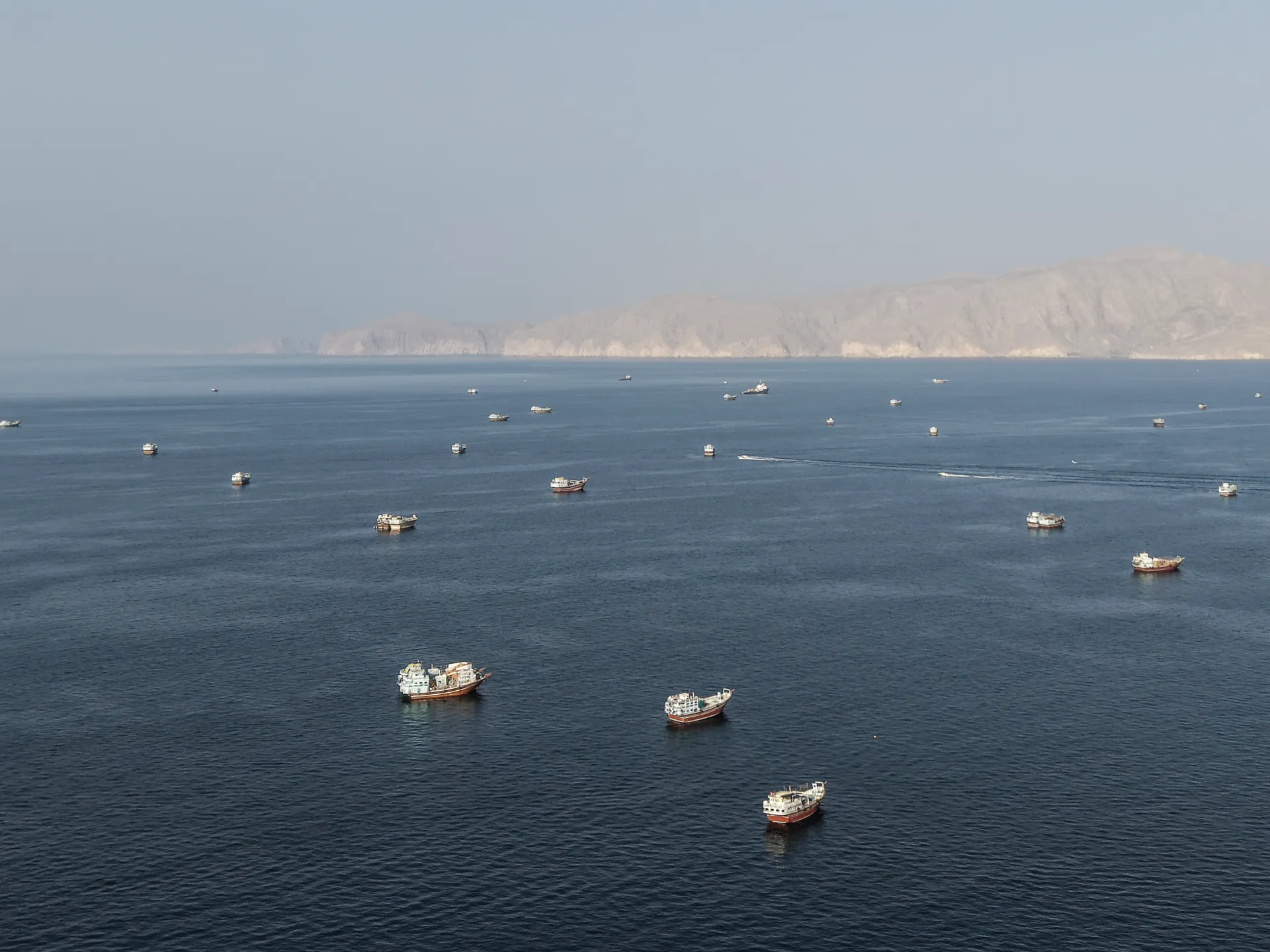
Until fighting began, the narrow channel, through which 20 per cent of the world’s oil and liquefied natural gas (LNG) supplies are shipped from Gulf producers in peacetime, remained toll-free and safe for vessels. The strait is shared by Iran and Oman and does not fall into the category of international waters.

Recommended Stories

list of 4 itemsend of list

After the US and Israel began strikes, Iran retaliated by attacking “enemy” merchant ships in the strait, effectively halting passage for all, stranding shipping, and creating one of the worst-ever global energy distribution crises.

Tehran continued to refuse to re-open the strait to all traffic at the start of this week, despite US President Donald Trump’s threats to bomb Iran’s power plants and bridges if it did not relent. Trump backed away from his threat on Tuesday night when a two-week ceasefire, brokered by Pakistan, was declared.

That followed a 10-point peace proposal from Iran that Trump described as a “workable” basis on which to negotiate a permanent end to hostilities.

As part of the truce, Tehran has now issued official terms it says will guide its control of the Strait going forward. The US has not directly acknowledged the terms ahead of talks set to begin in Islamabad on Friday. However, analysts say Tehran’s continued control will be unpopular with Washington, as well as other countries.

During the crisis, only a few ships from specific countries deemed friendly to Iran and those which pay a toll have been granted safe passage. At least two tolls for ships are believed to have been paid in Chinese yuan, in what appears to be a strategy to weaken the US dollar, but also to avoid US sanctions. China, which buys 80 percent of Iran’s oil, already pays Tehran in yuan.

Here’s what we know about how shipments will work from now on:

INTERACTIVE - Strait of Hormuz - March 2, 2026-1772714221
(Al Jazeera)

Who is controlling the strait now?

On Tuesday, Iran’s Foreign Minister Abbas Aragchi said Iran would grant safe passage through the strait during the ceasefire in “coordination with Iran’s Armed Forces and with due consideration of technical limitations”.

On Wednesday, the Islamic Revolutionary Guard Corps (IRGC) released a map of the strait showing a safe route for ships to follow. The map appears to direct ships further north towards the Iranian coast and away from the traditional route closer to the coast of Oman.

In a statement, the IRGC said all vessels must use the new map for navigation due to “the likelihood of the presence of various types of anti-ship mines in the main traffic zone”.

Alternative routes through the Strait of Hormuz have been announced by Iran's Islamic Revolutionary Guard Corps (IRGC), providing new entry and exit pathways for maritime traffic.
Alternative routes through the Strait of Hormuz have been announced by Iran’s Islamic Revolutionary Guard Corps (IRGC), providing new entry and exit pathways for maritime traffic [Screen grab/ Al Jazeera]

It is unclear whether Iran is collecting toll fees during the ceasefire period.

However, Trump said on Tuesday the US would be “helping with the traffic buildup” in the strait and that the US army would be “hanging around” as the negotiations go on.

The Strait will be “OPEN & SAFE” he posted on his Truth Social media site on Thursday, adding that US troops would not leave the area, and threatening to resume attacks if the talks don’t go well.

It’s not known to what extent US troops are directing what happens in the strait now.

Delhi-based maritime analyst C Uday Bhaskar told Al Jazeera that there is a lot of “uncertainty” about who can sail through the strait, and that only between three and five ships have transited since the war was paused.

How does Iran’s 10-point plan affect the Strait?

Among Tehran’s main demands listed on its 10-point plan are that the US and Israel permanently cease all attacks on Iran and its allies – particularly Lebanon – lift all sanctions, and allow Iran to retain control over Hormuz. The plan has not been fully published but is understood to be a starting point for talks.

Iranian media say Iran is considering a plan to charge up to $2m per vessel to be shared with Oman on the opposite side of the strait. Other reports suggest Iran could charge $1 per barrel of oil being shipped.

Revenues raised would be used to rebuild military and civilian infrastructure damaged by US-Israeli strikes, Tehran said.

Oman has rejected the idea. Transport minister Said Al-Maawali said on Wednesday that the Omanis previously “signed all international maritime transport agreements” which bar taking fees.

Interactive_Iran_US_Ceasefire_April8_2026

What does international law say about tolls on shipping?

Critics of Iran’s plan to charge tolls say it violates international law guiding safe maritime passage, and should not be part of a final ceasefire agreement.

The United Nations Convention on the Law of the Sea (UNCLOS) says levies cannot be charged on ships sailing through international straits or territorial seas.

The law allows coastal states to collect fees for services rendered, such as navigation assistance or port use, but not for passage itself.

Neither the US nor Iran has ratified that particular convention, however.

Even if they had, there could be ways to get around this law anyway. Analyst Bhaskar told Al Jazeera that if Iran instead charged fees to de-mine the strait and make it safe for passage again, that could be allowable under maritime laws.

There is no precedent in recent history of countries officially taxing passage through international straits or waterways.

In October 2024, a United Nations Security Council report alleged that the Iran-backed Houthis in Yemen were collecting “illegal fees” from shipping companies to allow vessels to pass through the Red Sea and the Bab-el-Mandeb strait, where it was targeting ships linked to Israel during the Gaza war.

Last week, a top adviser to Supreme Leader Mojtaba Khamenei suggested the Houthis could shut the Bab al-Mandeb shipping route again in light of the war on Iran.

INTERACTIVE - Bab al-Mandeb strait red sea map route shipping map-1774773769
(Al Jazeera)

How might countries react to a Hormuz toll?

Tolls for passage through the Strait of Hormuz would likely most affect oil and gas-producing countries in the Gulf, but ripple effects will spread to others as well, as the current supply shocks have shown.

Gulf countries, which issued statements calling for the reopening of the passage and praising the ceasefire on Wednesday, would also face a continuing degree of uncertainty, analysts say, as Iran could again disrupt flows in the future.

Before the ceasefire was announced, Bahrain had already proposed a resolution at the UN Security Council calling on member states to coordinate and jointly reopen the passage by “all necessary means”. It was backed by Qatar, the UAE, Saudi Arabia, Kuwait and Jordan. On April 7, 11 of 15 UNSC members voted in favour of that resolution.

But Russia and China vetoed the resolution, saying it was biased against Iran and did not address the initial strikes on Iran by the US and Israel.

Beyond the region, observers say the US is unlikely to accept indefinite toll demands by Iran as part of the negotiations expected to begin on Friday.

A toll to pass through the Strait of Hormuz “is not going to go down well with President Trump and his expectations that the strait should be open for everyone”, Amin Saikal, a professor at the Australian National University, said.

Other major powers have also voiced opposition. Ahead of the ceasefire, Britain had begun discussions with 40 other countries to find a way to reopen the strait.

Practical realities in the strait might see a different scenario play out with ship owners losing millions each day their vessels remain stranded seeking to get them out quickly and undamaged experts say. They are more likely to comply with Iran, at least for now.

“If I were the owner of a VLCC [very large crude carrier] which weighs about 300,000 tonnes, whose value could be a quarter billion dollars…I would believe the Iranians if they said we have laid mines,” Bhaskar said.

Source link

Oil prices poised to breach $100 level as Iran cease-fire fears mount

Fuel prices a gas station in Prague after the government of the Czech Republic responded to soaring oil prices with a cap on fuel distributors’ margins and a cut in diesel excise duty. A daily cap on maximum diesel and petrol prices which retailers must adhere to was due to follow. Photo by Martin Divisek/EPA

April 9 (UPI) — Oil prices were on the rise again on Thursday amid concerns a “fragile” cease-fire between the United States, Iran and Israel could unravel over continued fighting in Lebanon and few signs the Strait of Hormuz was about to reopen to shipping.

The Brent crude and West Texas Intermediate international benchmarks were both trading around 4% higher at $98.62 and $99.94 a barrel respectively in early afternoon trade on Thursday, after prices plunged Wednesday on the announcement of a two-week cessation of hostilities.

Share prices in Asia also fell overnight with the Nikkei 225 in Tokyo giving up some of the gains made on Wednesday with European stocks following suit when exchanges opened Thursday morning.

The market reacted to warnings from both sides that they were prepared to resume military action if the other did not adhere to truce terms neither party accepts are the same, with Tehran saying Israeli strikes on Lebanon were a “grave violation” and Washington saying Iran must comply with the “real” agreement.

There was also growing concern over the reopening of the Hormuz Strait, a key term of the agreement which must be implemented to ease the disruption to global oil supply that has sent prices soaring.

Iranian Deputy Foreign Minister Saeed Khatibzadeh told BBC Radio on Thursday that Iran would “provide security for safe passage” through the sea lane via which around a fifth of the world’s oil and gas is exported, but only “after the United States withdraws this aggression” — an apparent reference to the Israeli strikes in Lebanon.

He stressed that while the 21-mile wide strait had been “open for millennia” prior to the war, it was not international waters and that shipping only transited on the goodwill of Iran and Oman” — the sovereign countries on either side of the channel.

Khatibzadeh dodged questioning over how safe vessels would be and whether they would be required to pay tolls, saying Tehran wanted a “peaceful” arrangement, but that it would not permit “misuse” of the Gulf by warships.

However, London-headquartered shipping brokerage SSY Global said the Iranian navy had issued a warning to ships in the Persian Gulf that any vessels attempting to transit the Strait of Hormuz without permission “will be targeted and destroyed.”

Announcing the cease-fire on Tuesday, U.S. President Donald Trump said the deal hinged on the “complete, immediate, and safe opening” of the strait, a point pressed home on Wednesday by U.S. Vice President JD Vance, who said while there were signs the process was starting Iran was required to fully open the strait.

“The president is very, very clear the deal is a cease-fire, a negotiation. That’s what we give, and what they give is that straits are going to be reopened. If we don’t see that happening, the president is not going to abide by our terms if the Iranians are not abiding by their terms.”

The White House announced Wednesday that Vance would lead the U.S. negotiating team at talks due to get underway in Islamabad, Pakistan, on Saturday.

Khatibzadeh said Mohammad Bagher Ghalibaf, speaker of the Iranian parliament, would head up the Iranian side.

The talks will try to reconcile two very different visions of the way forward — a 15-point U.S. plan and a 10-point Iranian plan — with Iran’s nuclear program which the Americans want totally scrapped but Iran insists on retaining for civilian energy purposes — topping the agenda.

Secretary of Defense Pete Hegseth speaks during a press briefing at the Pentagon on Wednesday. Yesterday, the United States and Iran agreed to a two-week ceasefire, with the U.S. suspending bombing in Iran for two weeks if the country reopens the Straight of Hormuz. Photo by Bonnie Cash/UPI | License Photo

Source link

Oil prices plunge after cease-fire, Hormuz Strait reopening announced

A gas station in London, England, displays the latest price for a liter of regular unleaded on Wednesday morning hours after crude oil prices fell sharply on news disruption to the global supply of oil caused by the Iran war may be about to ease. Photo by Andy Rain/EPA

April 8 (UPI) — Global oil prices tumbled after the United States, Israel and Iran agreed to a Pakistan-brokered two-week cease-fire deal that included reopening the Strait of Hormuz to international shipping.

The Brent crude and West Texas Intermediate benchmarks saw double-digit percentage falls following U.S. President Donald Trump‘s announcement of the breakthrough Tuesday evening, and have since stabilized, changing hands at $95.51 and $96.48 a barrel in early trade on Wednesday.

The market reacted to the prospect that oil tankers trapped in the Persian Gulf would be finally be able to transit the 21-mile-wide body of water between Iran and the UAE and Oman, easing major disruption to global supply caused by Iran’s effective blockade of the strait.

However, oil remained well above its $72 a barrel level on Feb. 27, the day before the United States and Israel unleashed their airborne offensive against Iran, amid uncertainty over the mechanism for the resumption of maritime traffic in the strait and the ongoing impact of war damage to energy infrastructure in Gulf countries.

There was also confusion over whether the cease-fire extended to Israel’s military offensive against Hezbollah in Lebanon. Pakistan said it did, but Israel said it did not and that its operations would continue.

Financial markets in Europe rallied Wednesday morning, following very significant gains in Asia, where the Nikkei 225 in Tokyo ended up 5.42%, Korea’s KOSPI surged almost 7% higher and Hong Kong’s Hang Seng Index closed up more than 3%.

Out-of-hours futures transactions in the United States suggested equities would also rally very strongly there when stock exchanges open in a few hours.

Jay Woods, chief market strategist at Freedom Capital Markets in New York, expressed skepticism.

“It wasn’t much of a surprise that there was an announced reprieve in the Iranian conflict. The concern now is if this all too familiar ‘two-week’ timeframe is going to lead to a resolution,” said Woods.

A statement from Iran’s Supreme National Security Council posted on X by the Iranian foreign minister said safe passage of ships through Hormuz Strait would be possible for the duration of the cease-fire, but that it would have to be “via coordination with Iran’s Armed Forces.”

In a post on his Truth Social platform in the early hours of Wednesday hailing the cease-fire, Trump pledged U.S. assistance with the logistical problems.

“The United States will be helping with the traffic buildup in the Strait of Hormuz. There will be lots of positive action! Big money will be made. Iran can start the reconstruction process. We’ll be loading up with supplies of all kinds, and just ‘hangin around’ in order to make sure that everything goes well. I feel confident that it will. Just like we are experiencing in the U.S., this could be the Golden Age of the Middle East!!!” Trump wrote.

MST Marquee analyst Saul Kavonic told the BBC that while the number of ships getting through the Hormuz Strait would increase from a trickle, a return to normal levels of energy production in the region was unlikely without a permanent end to the conflict and warning that repairs to damaged infrastructure could take many months.

Acting Attorney General Todd Blanche speaks during a press conference on the Trump Administration’s efforts to combat fraud at the Department of Justice Headquarters on Tuesday. Last week, President Donald Trump fired Attorney General Pam Bondi over her handling of the Epstein files and the lack of investigation into individuals he felt should face criminal charges. Blanche, a former personal lawyer to Trump, will lead the Justice Department temporarily. Photo by Bonnie Cash/UPI | License Photo

Source link

Ukraine strikes Russian energy targets again — here’s what’s been hit

Ukraine has intensified its attacks on Russian energy facilities recently, as peace talks show no signs of progress. Several key facilities have been impacted:

NORSI, Russia’s fourth-largest oil refinery, owned by Lukoil, halted operations on April 5 due to a Ukrainian drone attack. This refinery, which processes 16 million metric tons of oil per year (around 320,000 barrels daily), is also Russia’s second-largest gasoline producer.

The Kirishi oil refinery may restart partial operations within a month after sustaining damage from drone attacks in late March that caused fires. Sources indicate that three of its four main units will resume operations, representing about 60% of its capacity. Last year, Kirishi produced 2 million tons of gasoline, 7.1 million tons of diesel, 6.1 million tons of fuel oil, and 600,000 tons of bitumen.

Novatek’s Ust-Luga processing plant suspended gas condensate processing and naphtha exports after drone strikes caused fires. The complex features three processing units, each with a capacity of 3 million tons per year, processing stable gas condensate into various fuels. In 2025, it processed 8 million tons.

Ukraine’s military reported hitting Russia’s Bashneft-Novoil oil refinery, located over 1,400 km (870 miles) from the border, which can process more than 7 million tons of oil annually.

The Saratov refinery was attacked on March 21, which led to the shutdown of its crude distillation unit. In 2024, it processed 5.8 million metric tons of oil, representing 2.2% of Russia’s refining capacity.

A fire at the Ilsky refinery occurred on February 17 due to drone attacks, with the blaze fully extinguished the next day. The refinery’s annual capacity is 6.6 million tons.

The Volgograd refinery was completely shut down on February 11 from drone strikes, affecting its primary processing unit, which accounts for 40% of its operations, with a processing figure of 13.7 million tons of oil in 2024.

A fire at the Ukhta refinery on February 12, caused by a drone attack, affected its primary oil processing unit, which processes 6,000 tons per day. In 2025, it processed around 3 million tons of oil.

The Afipsky refinery experienced a fire on January 21 due to drone attacks, focusing mainly on exports and processing 7.2 million metric tons of crude oil in 2024.

Additionally, a recent attack by Ukraine damaged facilities at the maritime transhipment complex in Novorossiysk, affecting oil product reservoirs. The damage did not disrupt CPC oil exports via the Black Sea, and U. S. oil major Chevron confirmed that crude oil exports from Tengiz remained stable. Ukrainian drones also caused fires at the Sheskharis oil terminal and damaged an oil pipeline at Primorsk, which saw significant storage capacity losses from drone attacks last month.

With information from Reuters

Source link

Iran attempting cyber attacks against U.S. critical infrastructure, officials say

U.S. intelligence agencies are “urgently warning” private sector companies throughout the nation that Iranian actors “are conducting exploitation activity” that has resulted in “disruptions across several U.S. critical infrastructure,” according to a government notice reviewed by The Times.

The Iranian cyberactivity comes as President Trump is threatening to target Iran’s critical infrastructure in the coming hours, particularly its bridges and power plants.

Iran’s attack targeted products by Rockwell Automation’s Allen-Bradley, one of the most widely used industrial automation brands, according to the notice, which said that cyber actors affiliated with Iran were exploiting “programmable logic controllers across U.S. critical infrastructure.”

Tehran’s targeting campaigns against U.S. organizations “have recently escalated, likely in response to hostilities between Iran,” the notice warned.

“Iran-affiliated advanced persistent threat (APT) actors are conducting exploitation activity targeting internet-facing operational technology (OT) devices, including programmable logic controllers (PLCs) manufactured by Rockwell Automation/Allen-Bradley,” the notice reads.

“U.S. organizations should urgently review the tactics, techniques, and procedures (TTPs) and indicators of compromise (IOCs) in this advisory for indications of current or historical activity on their networks,” it continues.

The advisory was issued Tuesday jointly by the FBI, the Cybersecurity and Infrastructure Security Agency, the National Security Agency, the Environmental Protection Agency, the Department of Energy, and Cyber Command.

Top executives from companies at the core of the nation’s ability to function — those leading America’s largest energy, water, transportation, and communications corporations — had already been taking it upon themselves to increase their vigilence over potential attacks, concerned that Trump’s willingness to target Iran’s critical infrastructure inadvertently put a mark on their backs.

Some fear Iran’s ability to conduct cyber operations that could take down transformers or power inverters, if not a wide-scale power system. Others are concerned by threats to brick and mortar sites from proxies of Tehran — physical attacks against facilities such as nuclear plants, or power management systems, the crown jewels of the sector.

Larger, even more capable actors, particularly Russia and China, may also take advantage of the fog of war to launch strikes themselves.

“There remains concern about Iranian cyber capabilities and retaliation if the U.S. carries through on threats to attack their infrastructure,” said Ernest Moniz, former U.S. secretary of energy under President Obama who helped negotiate the 2015 nuclear deal with Iran. “There may already be backdoors, Trojan horses and malware hidden in our infrastructure.”

“I have to believe that the government cyber experts — or what’s left of them — are working closely and indeed overtime with the power companies and other infrastructure operators on cyber defense and intrusion detection and warning,” Moniz added.

Iran has demonstrated an ability to penetrate networks tied to critical U.S. infrastructure before.

In 2015, Iran-backed hackers accessed data associated with Calpine Corp., one of California’s largest power producers, obtaining detailed engineering diagrams and credentials related to power plant systems. Some were labeled “mission critical.” U.S. officials feared at the time that the breach would allow Tehran to initiate blackouts nationwide.

Since that time, companies at the center of the U.S. energy and telecommunications sectors have markedly improved their defenses. But Iran’s offensive capabilities have improved, as well.

Large players in the energy sector are operating with “a watchful eye and an elevated posture right now,” said Pedro J. Pizarro, president and chief executive officer of Edison International, the parent company of Southern California Edison, one of the nation’s largest electric utilities.

Companies like Edison have been operating under persistent threat for over a decade. In 2024, a pair of devastating cyberespionage attacks targeting U.S. critical infrastructure attributed to Chinese hackers, Volt Typhoon and Salt Typhoon, were discovered after avoiding detection for at least three years.

The threat of a similarly latent attack — where malware lies dormant in critical infrastructure systems, waiting for a signal to activate — is a real cause for concern in the sector, despite its best efforts and technological advances, experts and insiders said.

“The threat of cyber and physical attacks targeting critical infrastructure is not new,” said Jennifer DeCesaro, senior vice president of industry operations at the Edison Electric Institute, “which is why we partner with the government through the Electricity Subsector Coordinating Council to share actionable intelligence and prepare to respond to incidents that could affect our ability to provide electricity safely and reliably.”

The ESCC works closely with the National Security Council and its intelligence arms, particularly the intelligence agencies and CISA, to coordinate regular briefings on safety standards, best practices and intelligence tips.

The CIA declined to comment. A spokesperson with CISA, listed as out of office due to the ongoing federal funding hiatus for the Department of Homeland Security, could not be reached for comment.

Last summer, announcing a 40% cut to the workforce of her office, Director of National Intelligence Tulsi Gabbard eliminated the Cyber Threat Intelligence Integration Center, previously seen as a critical fusion hub of information by private sector partners.

Asked to respond to the potential of retaliatory attacks against U.S. infrastructure, Karoline Leavitt, the White House press secretary, repeated the president’s threats.

“The Iranian regime has until 8PM Eastern Time to meet the moment and make a deal with the United States,” she said. “Only the president knows where things stand and what he will do.”

Trump has threatened to destroy every bridge and power plant in Tehran if they fail to come to an agreement that ends its control over the Strait of Hormuz.

Ultimately, corporate executives shoulder much of the burden as the first line of defense for the country’s critical infrastructure, roughly 85% of which is owned by private sector companies.

Tom Fanning, former CEO of Southern Co. and now executive committee chairman at the Alliance for Critical Infrastructure, said the threat from Iran is “credible.”

“I have not seen what I would describe as the existential threat, to take down a wide-ranging power system,” Fanning said. “Could those things be turned on? Sure. Is the United States critical infrastructure prepared to act? I think so.”

Last month, early on in the war, the Los Angeles Metro transit system was forced to shut down a portion of its network due to a hack. Authorities say it is still unclear who was behind the breach, but a source told The Times that Iran-backed hackers are being investigated as the potential culprit.

The transportation agency said its security team had “discovered unauthorized activity,” and were making sure its roughly 1,400 servers were secure before bringing them back online. The agency has emphasized the hack did not impact passengers’ commute time.

The FBI said it was aware of the hack. DHS is working with local partners “to address cyber threats to critical infrastructure,” an official said.

“The reality is that the threats are here and now,” Fanning added. “The truth is, the bad guys are already here.”

Times staff writers Kevin Rector, Richard Winton and Rebecca Ellis, in Los Angeles, contributed to this report.

Source link

From 9pm shutdowns to remote work: Egypt cuts fuel amid power crisis | US-Israel war on Iran News

The US-Israel war on Iran has sparked a global fuel crisis as thousands of tankers carrying crucial deliveries of oil and liquefied natural gas (LNG) remain stranded on either side of the Strait of Hormuz, currently under a blockade imposed by Iran.

On Saturday, Egypt’s government said it is among the “best-performing” countries in tackling the crisis because of the measures it has implemented to save on fuel.

Here is what we know about the steps Egypt is taking and whether other countries are doing the same.

Why has the Iran war caused an energy crisis?

Pressure on oil and gas markets is mounting due to the almost complete halt to shipping through the Strait of Hormuz as well as air strikes on and around key energy facilities in the Gulf as the United States-Israel war on Iran enters its sixth week.

One-fifth of the world’s oil and LNG is shipped from producers in the Gulf through the Strait of Hormuz in peacetime. This is the only route from the Gulf to the open ocean.

On March 2, two days after the US and Israel began strikes on Iran, Ebrahim Jabari, a senior adviser to the commander in chief of Iran’s Islamic Revolutionary Guard Corps (IRGC), announced that the strait was “closed”. If any vessels tried to pass through, he said, the IRGC and the navy would “set those ships ablaze”. Since then, traffic through the strait, carrying cargoes including 20 million barrels of oil each day, has plunged by more than 95 percent.

Now, Tehran is allowing just a handful of tankers through after reaching agreements with some countries to do so.

Besides this, energy infrastructure in the Middle East has suffered damage over the course of the war.

On March 24, QatarEnergy declared force majeure on some of ⁠its long-term LNG supply contracts after an Iranian attack on Qatar’s Ras Laffan LNG facility – the largest in the world – wiped out about ⁠17 percent of the country’s LNG export capacity, causing an estimated $20bn in lost annual revenue and threatening supplies to Europe and ⁠Asia.

All of this disruption has sent energy prices soaring. On Tuesday, global oil benchmark Brent crude was around $109 per barrel, compared to around $65 per barrel right before the war started.

How is Egypt tackling the energy crisis?

Egypt’s Petroleum Ministry has announced rises in fuel prices ranging from 14 percent to 30 percent.

On March 28, Egyptian Prime Minister Mostafa Madbouly’s office told a press conference that the country’s energy import bill had increased from $1.2bn in January to $2.5bn in March.

Egypt is both one of the region’s largest energy importers and among its most heavily indebted economies. While domestic gas and oil account for the majority of its total energy supply, the country still relies on imported fuels, especially refined oil products and some natural gas, from Israel and the Gulf states.

Madbouly announced measures Egypt is taking to mitigate this and preserve state energy resources.

  • From March 28, shops, malls and restaurants are closing at 9pm (19:00 GMT) every day for one month, except Thursdays and Fridays.
  • On Thursdays and Fridays, the closing time will be 10pm (20:00 GMT).
  • Fuel allocations for government vehicles will be reduced by 30 percent.
  • Street lighting and street advertisement lighting will be cut by 50 percent.
  • From April 1, eligible employees will work remotely on Sundays, the first day of the working week. Some essential services, such as pharmacies, grocery stores and tourist facilities, will be exempted from this.

Which other countries have introduced energy conservation measures?

Besides Egypt, other countries are also taking steps to save energy.

Last week, Malaysia ordered civil servants to work from home to save energy in government offices.

In mid-March, it was revealed that government offices in the Philippines had moved to a four-day work week, officials in Thailand and Vietnam were being encouraged to work from home and limit travel, and Myanmar’s government had imposed alternating driving days.

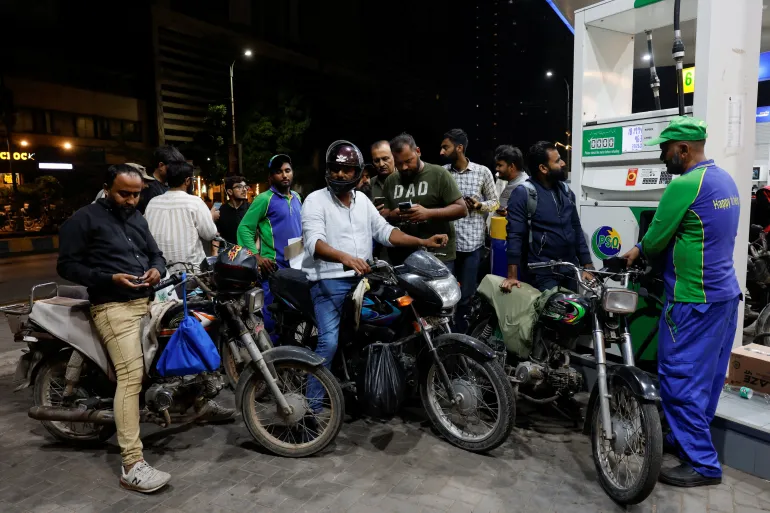
Pakistan, which imports about 80 percent of its energy from the Gulf, announced on Monday of this week that markets and shopping malls would close at 8pm (15:00 GMT) across the country, except in Sindh province. The government’s statement added that food outlets would close at 10pm (17:00 GMT), which is also when marriage ceremonies at private properties and houses must end.

Bangladesh has reduced working hours for government and private workers and banking services hours in a bid to conserve electricity.

In Sri Lanka and Slovenia, authorities have introduced fuel rationing and purchase limits to manage shortages and soaring costs.

Source link

2 U.S. lawmakers visiting Cuba denounce island’s ‘economic bombing’ under energy blockade

Two U.S lawmakers called for a permanent solution to Cuba’s crises after witnessing the effects of a U.S. energy blockade during an official visit to the island.

Democratic Reps. Pramila Jayapal of Washington and Jonathan Jackson of Illinois met with Cuban President Miguel Díaz-Canel, Foreign Minister Bruno Rodríguez and members of Parliament during a five-day trip that ended Sunday.

Díaz-Canel wrote on X Monday that upon meeting with Jayapal and Jackson, he “denounced the criminal damage caused by the #blockade, particularly the consequences of the energy embargo imposed by the current US administration and its threats of even more aggressive actions.”

Díaz-Canel added: “I reiterated our government’s willingness to engage in serious and responsible bilateral dialogue and find solutions to our existing differences.”

Both the U.S. and Cuba have acknowledged recently that talks are ongoing at the highest level, but no details have been disclosed.

Jayapal told reporters she believes that recent steps taken by Cuba, such as opening the economy to certain investments by Cuban Americans living abroad; the recent announcement that more than 2,000 prisoners would be pardoned; and the arrival of an FBI team to collaborate in the investigation of a fatal shooting involving a U.S.-flagged boat, “indicate that the moment is here for us to have a real negotiation between the two countries and to reverse the failed U.S. policy of decades, a Cold War remnant that no longer serves the American people or the Cuban people.”

Cuba’s government has released the pardoned prisoners who were accused of a variety of crimes, although none so far appear to be political prisoners.

In late January, President Trump threatened to impose tariffs on any country that would sell or provide oil to Cuba, although he made an exception for a Russian ship that reached the island last week with 730,000 barrels of crude oil. It was the first petroleum shipment in three months to dock in Cuba, which produces only 40% of the oil it needs.

“This is cruel collective punishment — effectively an economic bombing of the infrastructure of the country — that has produced permanent damage. It must stop immediately,” Jayapal and Jackson said in a statement released Sunday.

Critical oil shipments from Venezuela were halted after the U.S. attacked the South American country in early January and arrested its leader, Nicolas Maduro.

Cubans already suffering from five years of economic crisis have acutely felt the impact of the fuel shortage: national blackouts, gasoline shortages and rationing, lack of public transport, cuts in working hours, paralyzed hospitals and surgeries, and suspension of flights, among other things.

Russia has promised a second delivery of petroleum, although it’s not clear when it might arrive. Experts have said that the first shipment could produce about 180,000 barrels of diesel, enough to feed Cuba’s daily demand for nine or 10 days.

Jayapal said that while such shipments are critical, they are only temporary solutions: “We need a longer, permanent solution for the Cuban people and the American people.”

Meanwhile, Jackson compared the blocking of the Strait of Hormuz off Iran’s coast to the oil blockade in Cuba, adding that the island “is the most sanctioned part of Earth.”

“Our government is fighting to keep the Strait of Hormuz open so there is a free flow of oil around the world. We want, for humanitarian reasons, a free flow of oil, fuel, and energy in our own hemisphere,” he said.

Jackson and Jayapal said they would prepare a report and continue to work on initiatives proposed by fellow members of the U.S. House of Representatives to lift sanctions against Cuba to alleviate the ongoing humanitarian crisis.

Mesquita and Rodríguez write for the Associated Press.

Source link

Ukraine strikes Russian Black Sea energy hub Novorossiysk | Russia-Ukraine war News

Ukraine has increased attacks on Russian energy infrastructure in bid to disrupt financing of its war.

The Ukrainian military reported that it has struck a Russian ⁠warship and ‌a drilling rig in the Black Sea.

Kyiv’s drone forces ⁠commander Robert Brovdi said on Monday that the attack targeted ⁠the Admiral Makarov missile carrier in ⁠the port of Novorossiysk, which is Russia’s largest oil exporting outlet on the Black Sea. Ukraine has increased its attacks on Russian energy infrastructure in a bid to disrupt export revenues that feed into Moscow’s war chest.

Recommended Stories

list of 3 itemsend of list

Russian authorities said at least eight people, including two children, were injured in Novorossiysk, without specifying whether the port was struck.

Videos posted on Telegram and verified by Al Jazeera’s verification unit showed a fire at one of the oil port’s docks in the city.

Novorossiysk’s Mayor Andrei Kravchenko said debris from drones had fallen on two locations in the city, including a residential area.

Russia’s military said in the early morning that air defence units had downed 148 Ukrainian drones over a three-hour period. It added that officials said emergency crews were restoring power to nearly half a million households in ⁠outages linked to air attacks.

Attack on Russian ship
Ukraine has concentrated drone attacks around the port of Novorossiysk throughout the war, but has raised its efforts to halt Russian energy exports recently (File: Reuters)

The area of the port of Novorossiysk is also a location for the Caspian Pipeline Consortium’s (CPC) terminal, which exports oil from Kazakhstan and whose shareholders include US majors such as Chevron and ExxonMobil.

Ukraine has significantly intensified attacks on Russia’s energy facilities, including the largest oil exporting hubs ‌both on the Baltic and Black Seas, as it seeks to reduce Moscow’s revenues from the sales of oil, the lifeblood of its economy.

The Kremlin has attempted to boost its exports after US President Donald Trump gave it a temporary waiver from sanctions to ease supply constraints, as the US-Israeli war on Iran upends oil markets following the effective closure of the Strait of Hormuz.

Kyiv officials complain that Russia will use the additional revenue on new weapons to hit Ukraine harder.

Later on Monday, Russia reported that Ukrainian drones had attacked the CPC terminal. The export facility, which handles 1.5 percent of global oil supply, reported damage to mooring, loading, and storage infrastructure, the Reuters news agency reported.

“The Kyiv regime deliberately attacked facilities of the international oil transportation company Caspian Pipeline Consortium in order to inflict maximum economic damage on ⁠its largest shareholders – energy companies from the United States and Kazakhstan,” ⁠the defence ministry said in a statement.

The Black Sea strikes come a day after Ukrainian drones struck Russia’s Baltic Sea port of Primorsk – one of Russia’s main oil exporting outlets – and the NORSI oil refinery in the central Nizhny Novgorod region.

Alexander Drozdenko, governor of Russia’s northwestern Leningrad region, said a fuel reservoir in the Primorsk port area leaked when it was hit by shrapnel.

Ukrainian drones also repeatedly struck ⁠Russia’s Baltic Sea port of Ust-Luga last month, damaging several buildings in the sprawling ⁠complex of oil-processing facilities and export terminals.

epa12734232 Ukrainian people survey the site of the overnight Russian attack on the residential area in Odesa, Ukraine, 13 February 2026, amid the ongoing Russian invasion. At least one person was killed, and six others were injured during the Russian attack in Odesa, according to the State Emergency Service. EPA/IGOR MASLOV 110091
Odesa has been targeted numerous times by Russian strikes (EPA)

In Ukraine, a Russian overnight drone attack on the southern port city of Odesa on Monday killed two women and a toddler, authorities said.

Ukrainian President Volodymyr Zelenskyy said in a post on X that 16 people were wounded, including a pregnant woman and two children.

Russia’s overnight strikes also hit energy infrastructure in the Chernihiv, Sumy, Kharkiv and Dnipro regions, Zelenskyy said.

More than 300,000 households were without electricity in the northern Chernihiv region after distribution facilities were damaged in attacks, according to the regional power utility.

The Ukrainian leader said that over the past week, Russia launched at Ukraine more than 2,800 attack drones, nearly 1,350 powerful glide bombs and more than 40 missiles of various types.

Source link

OPEC agrees on another oil production boost as Strait remains blocked

OPEC+ members announced Sunday they would modestly boost production as worldwide oil supplies tighten and prices spike amid the American-Israeli war on Iran. File Photo by Olivier Matthys/EPA

April 5 (UPI) — Members of the Organization of the Petroleum Exporting Countries said Sunday they will again modestly boost oil production as war rages in Iran and the Persian Gulf, although the move is largely symbolic as the Strait of Hormuz remains closed.

As first they did in March, the eight OPEC+ countries — Saudi Arabia, Russia, Iraq, United Arab Emirates, Kuwait, Kazakhstan, Algeria and Oman — on Sunday agreed to a 206,000 barrel-per-day production increase amid attacks by Iran on the oil and gas facilities of several of its members in the Persian Gulf.

Iran has blocked the key Strait of Hormuz shipping lane in response to the American and Israel attacks that started on Feb. 28.

Since then the global price of oil has shot up by close to 60% while gas prices at the pump in the United States have surpassed $4 per gallon.

Although the waterway remains choked off, the OPEC+ move indicated producers will likely ramp up production to help alleviate the worldwide oil shock once the Strait is reopened and production facilities in the Gulf states are secured from Iranian drones and missiles.

U.S. President Donald Trump on Sunday continued to threaten Iran with destruction of civilian and military infrastructure by Tuesday unless Tehran loosens its grip on the Strait.

But Iran has remained defiant, continuing to launch drone attacks against OPEC members who host U.S. military facilities, particularly targeting Kuwait, Bahrain and the UAE, where critical infrastructure again came under attack on Sunday.

Damage was sustained at civilian facilities in all three countries, officials reported.

The Kuwait Petroleum Corp. announced “significant material losses” after Iranian drone attacks on several of its facilities, the KUNA news agency reported.

Meanwhile, Kuwaiti Interior Ministry spokesman Brig. Gen. Nasser Bousleib said officials had registered nine reports of falling shrapnel during the preceding 24 hours, boosting the total of such incidents since the beginning of the Iranian aggression to 678.

An Iranian flag stands amid the destruction in Enghelab Square following the attacks carried out by the United States and Israel on Tehran, Iran, on March 4, 2026. Photo by Nahal Farzaneh/UPI | License Photo

Source link

Vietnam’s gig workers slammed by rising fuel costs amid fallout of Iran war | Business and Economy News

Ho Chi Minh City, Vietnam – After a long day of ferrying passengers to and fro recently, e-hailing driver Nguyen was dejected to find he had spent half of his earnings on fuel.

“I drove for around seven or eight hours, making around 240,000 Vietnamese dong [$9.11] and then I paid 120,000 Vietnamese dong [$4.56] on petrol,” Nguyen, a motorcyclist who connects with passengers via the locally developed super-app Be, told Al Jazeera, asking not to be identified by his real name.

Recommended Stories

list of 4 itemsend of list

“I can’t survive with this amount of money in the city.”

In Vietnam, the ripples of the US-Israel war on Iran are hitting many gig workers hard.

The Southeast Asian country normally sources about 80 percent of its crude oil from Kuwait, but shipments have dried up amid Iran’s effective blockade of the Strait of Hormuz, driving up fuel prices.

Diesel prices have more than doubled, while petrol prices have risen almost 30 percent, making getting from point A to point B an increasingly expensive proposition in cities such as Ho Chi Minh City, home to more than 7 million motorcycles.

“Because the petrol price is so high, so many drivers are turning off the app, going home and just not working,” Nguyen said.

“After today, I will turn off the app and stop working for a few days to see if the price goes down or if the government is helping in any way.”

Govi
A Be driver picks up a passenger at Thu Duc Metro Station in Ho Chi Minh City, Vietnam, on March 30, 2026 [Govi Snell/Al Jazeera]

Vietnam’s government has rolled out a series of emergency measures to cushion the blow for citizens.

Prime Minister Pham Minh Chinh last month announced that an environmental tax on diesel, petrol, and aviation fuel would be suspended until April 15 to help stabilise prices.

Nguyen Khac Giang, a Vietnamese-born visiting fellow at the ISEAS-Yusof Ishak Institute in Singapore, said authorities had been forced to act to stave off rising disgruntlement among citizens.

“There are a lot of complaints and frustrations about rising living costs, because gas prices are everything in Vietnam,” Giang told Al Jazeera.

“It’s not only necessary in terms of making the population feel relief about the rise of gas prices, but at the same time, it will keep the macroeconomic stability intact, given the turbulence outside Vietnam.”

Despite the government sacrificing an estimated $273m in revenue via the tax cut, signs of strain are mounting across the economy.

Public transportation is stretched to capacity in major cities, while domestic carriers such as Vietnam Airlines and Vietjet Air have slashed flights.

“As a very, very open economy, Vietnam is super vulnerable to international shocks,” Giang said.

Gig workers have been particularly exposed due to the double whammy of heavy fuel consumption and minimal labour protections.

“Their income is changeable due to factors beyond their control,” Do Hai Ha, a research fellow at the University of Melbourne who has studied Vietnam’s gig platforms, told Al Jazeera.

“They have no chance to negotiate with the platforms.”

Many drivers have had no choice but to work longer hours as they are “excluded from labour protection, so there’s no guarantee in terms of minimum wages or overtime pay”, Do said.

A commuter refuels at a Ho Chi Minh City petrol station on March 27. Govi Snell _ Al Jazeera_-1775367397
A commuter refuels at a petrol station in  Ho Chi Minh City, Vietnam, on March 27 [Govi Snell/Al Jazeera]

Companies, too, are feeling the crunch.

Anh Dao, who collects fares on Ho Chi Minh City’s bus route 13, said the bus operator has been losing money due to the surge in diesel prices, despite raising ticket prices by 3,000 Vietnamese dong ($0.11).

“As we already signed the contract, we cannot just stop running the buses,” Ahn told Al Jazeera.

For one fisherman in the coastal region of Binh Thuan, about 200km (124 miles) from Ho Chi Minh City, rising fuel costs have prompted a frantic search for cheaper options to power his basket boat.

“Now that fuel prices are rising, it’s having a big impact,” the fisherman told Al Jazeera, asking not to be identified by name. The middlemen he does business with have been citing weak demand to justify offering lower prices for his catch, he said.

“What I was usually able to sell for 800,000 Vietnamese dong [$30] is now only selling for 650,000 Vietnamese dong [$24],” he said.

Families kept apart

For some low-income families, the rising costs are reshaping daily life in other ways.

After a weeklong trip to the Mekong Delta region, Uyen Pham, a communications manager for the Saigon Children’s Charity, said she has seen the strain firsthand.

“Several parents noted that the cost of bottled cooking gas has nearly doubled,” Pham told Al Jazeera.

“Most of our beneficiary families have always relied on wood-fired stoves or a hybrid of wood and gas to save money. With the recent price hike, they are now strictly limiting their gas usage even further, relying almost entirely on wood to cut every possible expense.”

For many parents, the rising fuel costs have also meant less time with family.

“Many parents in remote areas must leave their children with grandparents to work in cities,” Pham said.

“Rising fuel prices directly increase their commuting costs, while manual labour wages remain stagnant. This pinches their take-home pay and, in some cases, reduces how often they can afford to travel home to see their children.”

For the government in Hanoi, the price volatility has intensified the focus on greater energy independence, Giang, the visiting fellow, said.

“The longer-term question this crisis has enacted is a very important question about the strategic autonomy of Vietnam in terms of energy dependencies, especially when we are a net importer of oil,” he said.

Policymakers will need to “more aggressively accelerate Vietnam’s energy independence by building more refineries,” Giang said, “because now we only have two refineries, which is not enough for the Vietnamese market.”

With long-term solutions likely to take years to come to fruition, authorities are scrambling for short-term fixes.

Commuters wait for the train at Thu Duc metro station. Govi Snell_ Al Jazeera. 30_03_-1775367388
Commuters wait for the train at Thu Duc Metro Station, in Ho Chi Minh City, Vietnam, on March 30, 2026 [Govi Snell/Al Jazeera]

Late last month, Vietnam’s prime minister and a delegation from the Ministry of Industry and Trade visited on the Nghi Son Refinery and Petrochemical Complex, the country’s largest refinery, in Thanh Hoa, a coastal city about 1,500km (932 miles) north of Ho Chi Minh City.

During their visit, officials said the refinery, which supplies about 40 percent of Vietnam’s petrol needs, would urgently need to find alternative sources of crude, as current supplies were expected to run out by the end of May.

The war on Iran also appears to be reshaping at least some domestic investment.

Vingroup, Vietnam’s largest conglomerate, last month informed authorities that it wanted to halt plans to build the country’s largest liquefied gas-fired power plant and put the funds towards a renewable energy project instead, according to a letter reported by the Bloomberg and Reuters news agencies.

In the letter, the company cited “the significant risk of high fuel prices for LNG power projects” due to the war.

In the meantime, Duy, who works at a cafe tucked behind a Ho Chi Minh City petrol station, is feeling some relief after the government’s fuel tax cut, which authorities projected would reduce petrol prices by about one-quarter and diesel prices by about 5 percent.

“I usually pay 100,000 Vietnamese dong [$3.80] a week on gas, but at the peak of the high prices a few days ago, it was almost double that,” she told Al Jazeera.

“It affected my income.”

Additional reporting by Nguyen Hao Thanh Thao

Source link

Iran says Iraqi ships can pass Strait of Hormuz as transits tick up | US-Israel war on Iran News

Tehran says Iraq will face no restrictions in waterway, praising country’s ‘struggle’ against the US.

Iran has announced that Iraqi ships are free to pass the Strait of Hormuz, the latest sign of Tehran easing its stranglehold on the critical conduit for global energy supplies.

Iraq will be exempt from all restrictions in the strait, with controls only applying to “enemy countries”, Iran’s Khatam al-Anbiya Central Headquarters said in a statement on Saturday.

Recommended Stories

list of 4 itemsend of list

“We hold profound respect for Iraq’s national sovereignty,” the military command said in the statement carried by the semi-official Tasnim News Agency.

“You are a nation that bears the scars of American occupation, and your struggle against the US is worthy of praise and admiration.”

Iran’s announcement came as US President Donald Trump reiterated his demands for Tehran to make a deal or relinquish control of the waterway, warning in a social media post that “all hell” would rain down within 48 hours otherwise.

Iran’s Khatam al-Anbiya Central Headquarters rejected Trump’s demand, calling his threat a “helpless, nervous, unbalanced and stupid action”.

Iran has effectively blockaded the strait, which usually carries about one-fifth of global oil and liquified natural gas supplies, since the US and Israel launched their war on the country on February 28.

While maritime traffic has ticked up in recent weeks under a de facto toll booth system imposed by Tehran, it is still down more than 90 percent from normal levels, according to ship tracking data.

According to Lloyd’s List Intelligence, there were 53 transits through the strait last week, up from 36 the previous week and the most since the war began.

The collapse of shipping in the waterway has thrown a wrench in global energy markets, pushing up fuel prices and prompting authorities in many countries to roll out emergency energy conservation measures.

Brent crude, the international benchmark, has hovered above $109 a barrel in recent days, with many analysts predicting prices to surge much higher if the waterway is not unblocked soon.

Iraq’s oil production, which provides most of Baghdad’s revenues, has been hit especially hard by the war.

Iraq’s oil ministry announced last month that production had fallen to 1.2 million barrels a day, down from 4.3 million barrels, amid declining crude shortage capacity due to the effective halt of exports through the strait.

Iraq was the world’s six-biggest oil producer in 2023, accounting for 4 percent of global supply, according to the US Energy Information Administration.

Source link

Trump gives Iran 48 hours to open Strait of Hormuz or face ‘hell’

April 4 (UPI) — President Donald Trump on Saturday reminded Iran that his 10-day deadline for it to reopen the Strait of Hormuz is 48 hours away and “all Hell will reign down” if the trade route is not made passable.

Trump said on March 26 that he had given Iran 10 days to start allowing ships to transit the Strait of Hormuz, through which roughly 20% of the world’s oil and gas supply travels, or he would direct the U.S. military to attack the nations energy sites.

Iran on Wednesday requested a ceasefire in the war launched in February by the United States and Israel, which Trump said he would consider when the Strait is “open, free and clear.”

Saturday morning, in a post on Truth Social, Trump reiterated his expected time frame for the Strait to open, the deadline for which is April 6.

“Remember when I gave Iran ten days to MAKE A DEAL or OPEN UP THE HORMUZ STRAIT,” Trump said. “Time is running out — 48 hours before all Hell will reign [sic] down on them. Glory be to GOD!”

U.S. Sen. Lindsey Graham, R-S.C., said later Saturday after speaking with Trump that he is “convinced that he will use overwhelming military force against the regime if they continue to impede the Strait of Hormuz and refuse a diplomatic solution to achieve our military objectives,” Axios reported.

Iran’s Gen. Ali Abdollah Aliabadi in a statement reportedly called Trump’s post “a helpless, nervous, unbalanced and stupid action,” and then Aliabadi returned Trump’s threat that “the gates of hell will open for you.”

In indirect negotiations, Iran has said that it would not accept a temporary ceasefire, and instead wants an end to the war and promises that the United States and Israel will not stage future attacks against it.

President Donald Trump delivers a prime-time address to the nation from the Cross Hall in the White House on Wednesday. President Trump used the address to update the public on the month-long war in Iran. Pool photo by Alex Brandon/UPI | License Photo

Source link