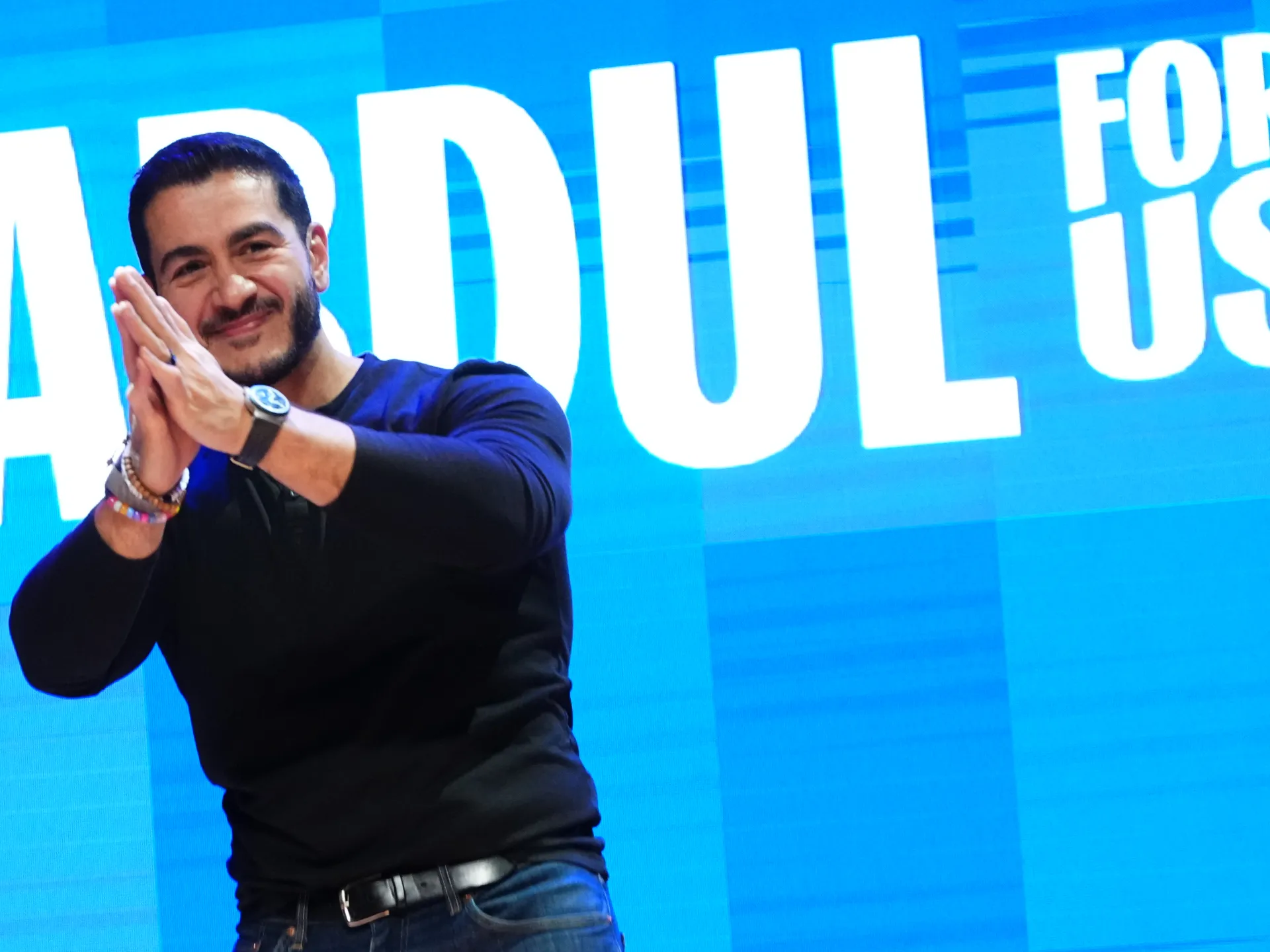
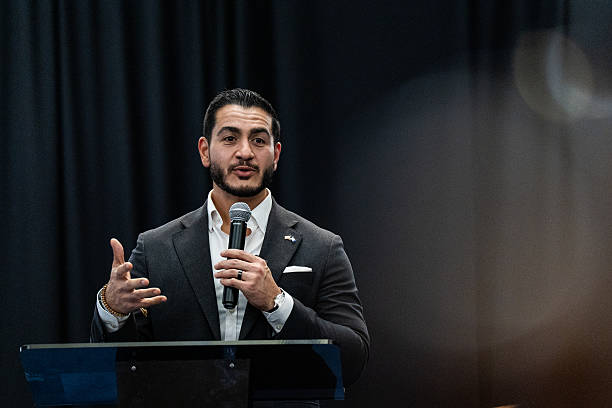
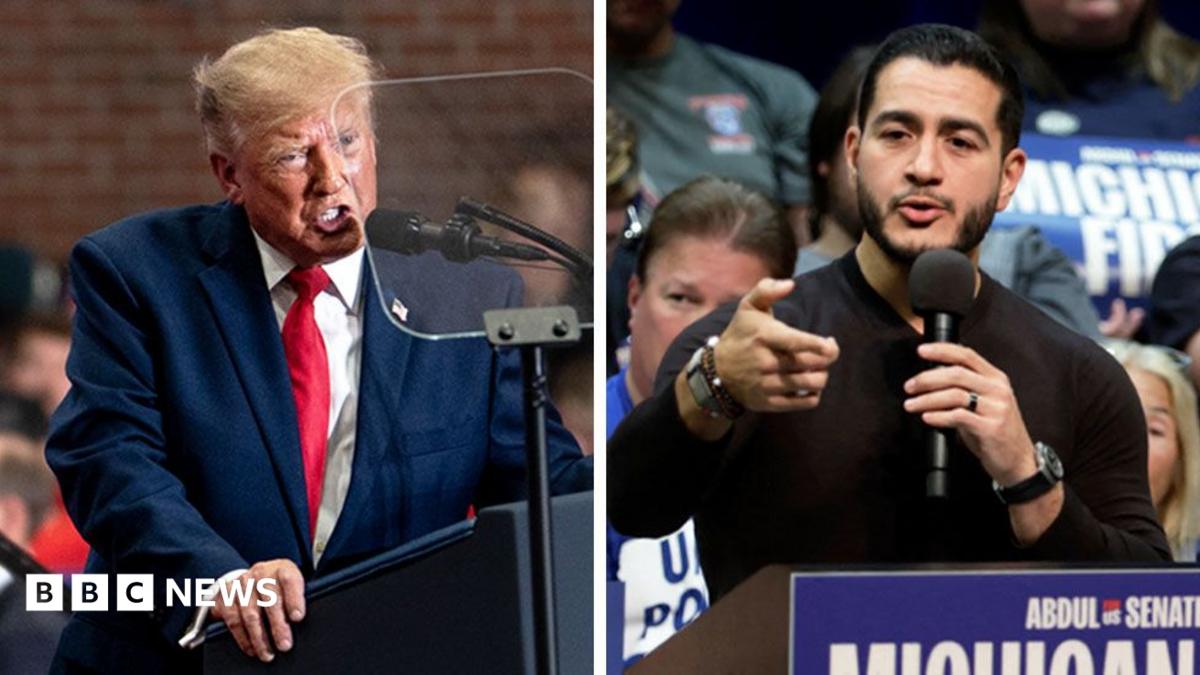
Michigan Senator-elect Abdul El-Sayed has criticised Trump’s trade war with Canada, warning that US consumers pay the price through higher costs on Canadian goods. Speaking on Pod Save America, he mocked the tariffs days after becoming the first Muslim elected to the US Senate.
Messages popped up on my WhatsApp account from New York, Gaza, Pakistan and Australia. Friends and colleagues were following Michigan’s Senate race, talking excitedly about Abdul El-Sayed. As the results from Wayne County sealed his victory on Tuesday, I felt something I had rarely felt before in American politics: not a muted relief that someone had lost but genuine joy and hope that someone had won.
El-Sayed, a physician and former Detroit health director, defeated Republican Mike Rogers. He will be the first Muslim ever elected to the United States Senate. As a Muslim American from Michigan, this hit home.
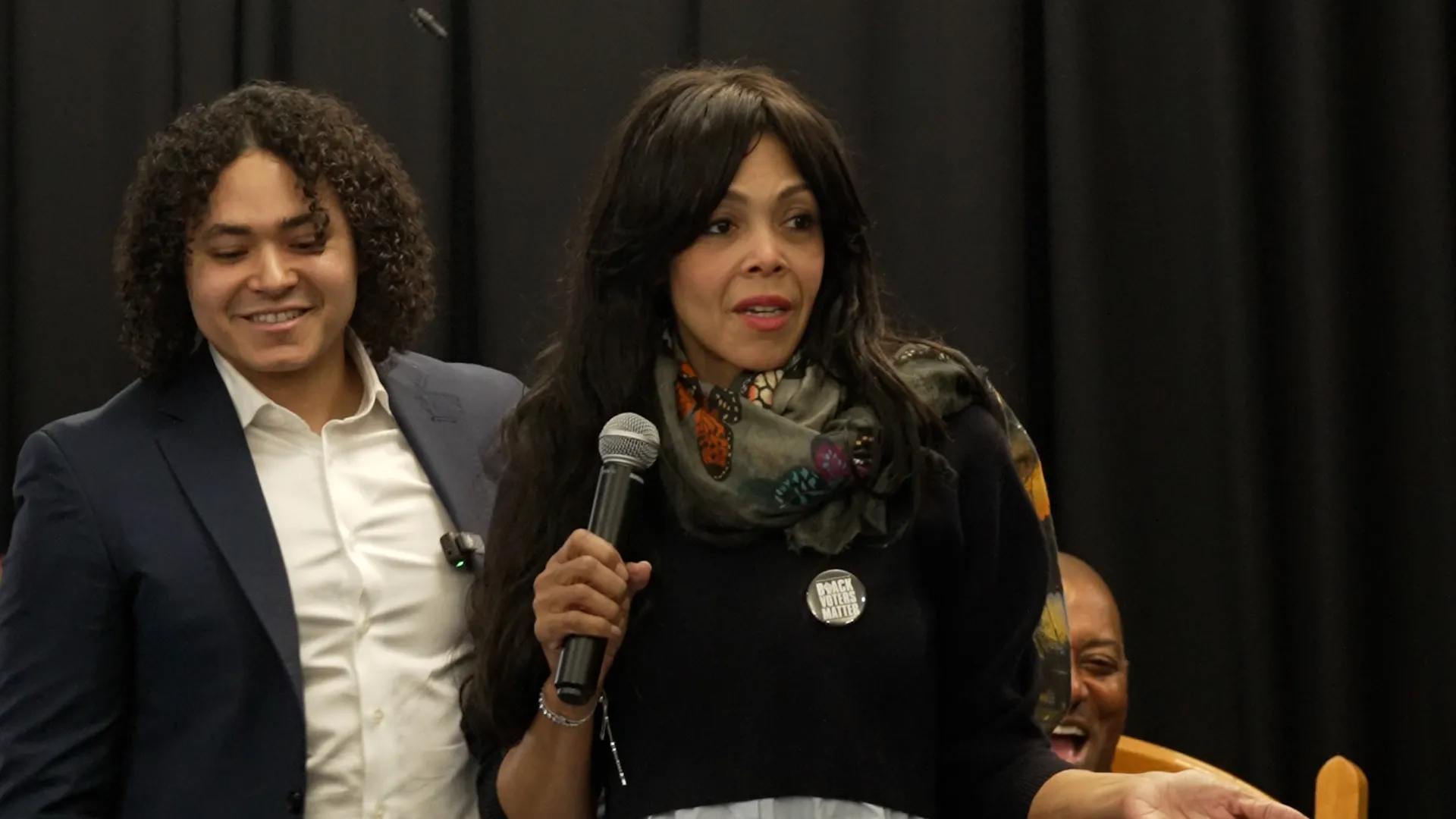
Like many in Michigan’s Muslim community, I knew of Abdul long before he became a fixture in national headlines, from his 2018 gubernatorial campaign to his Friday sermons in local mosques. As Ramadan began this year, I attended one of his town halls for Muslim constituents. Before a few dozen community members and leaders, Abdul pledged to fight for all Michiganders. His sincerity and commitment to that pledge remained evident even as the pressures of the campaign intensified. I have seen him attend funerals for community members near my home and watched him go from person to person, greeting people with kindness. Even in the final days of an exhausting campaign, he responded personally to messages from the community, including mine.
We attended the same university, the University of Michigan, where he once helped lead the Muslim Students’ Association. I later served as a college student body president there. Just days before the election, Muslim alumni (including me) invited him to a football tailgate party with students, parents and graduates. His former teachers and students have spoken to me with pride about the person they knew.
Muslim Americans are often asked to celebrate any politician who occasionally says “salaam” or appears in a mosque before Election Day. Abdul was not an outsider to our community coming to court us. He belonged to it.
During the campaign, I welcomed hundreds of local Muslim community members, out-of-state political candidates canvassing for him and members of his staff into my home. People heard from those closest to him what this race could mean for Muslim Americans. The enthusiasm felt different from the familiar, dispiriting bargain of voting mainly to stop someone worse.
Two years ago, I wrote about why I would vote against genocide in the 2024 presidential election. That decision was shaped by my work with Palestinian healthcare workers, by witnessing the realities in Palestine firsthand and by outrage at the Biden-Harris administration’s complicity in the genocide in Gaza. Neither I nor many of Michigan’s Muslims have forgotten. But this time, the ballot offered something other than just a protest vote: a candidate who had opposed Israel’s genocide against Palestinians from the outset while also caring about the range of issues affecting Michiganders.
His willingness to speak truth to power attracted immense hostility from Washington’s elites. President Donald Trump repeatedly mocked Abdul’s name, treating “Muhammad” – his middle name, meaning “the praised one” – as an insult. Political opponents and even some voters insinuated that his faith alone made him suspect, recycling unsubstantiated allegations tying him to groups and movements he did not belong to.
Abdul responded with dignity and directness. When critics made his name the issue, he spoke about groceries, housing, healthcare and affordability. When challenged over his opposition to genocide, he questioned the premise that wanting children to live free of bombs was somehow hateful. He did not accept the proposition that a Muslim must disown his community or Palestine to qualify for public office.
And most importantly, he fought back. Many Muslim voters I spoke to felt they had found someone willing to fight for them, to challenge the presumptions and racism of journalists, pundits and media outlets rather than accept their unjust framing.
His victory speech began with the words his opponents had tried to weaponise: “My name is Abdulrahman Mohamed El-Sayed.” He recalled having said “inshallah” – “God willing” – whenever he was asked about winning. Now, he said, it was time for “alhamdulillah”, or “Praise be to God.”
That moment was electric, not because Arabic phrases alone are a sign of solidarity – even former President Joe Biden said “inshallah” in a debate before proceeding to commit genocide against Palestinians and aid the bombing of mosques and burning of Qurans – but because his Muslim identity had survived a countrywide effort by special interest groups and racists to make it disqualifying. His faith, Islam, is a value system he actively chooses every day, a commitment he strives to live out in public life. His being Muslim mattered to me more than his Arab ethnicity or ancestral origins, a simple happenstance of birth.
There was money behind the attempt to stop him too. The American Israel Public Affairs Committee’s (AIPAC’s) affiliated super PAC spent roughly $30m in Michigan’s Democratic primary, an extraordinary investment to defeat someone who openly opposed US support for Israel’s genocide and apartheid. In his victory speech, Abdul thanked AIPAC for the chance to beat it twice. One loss will not dissolve the lobbying group’s power. But Michigan demonstrated that AIPAC spending need not amount to a veto over who can win.
After Mayor Zohran Mamdani’s victory in New York, sceptics suggested that a Muslim candidate outspoken about Palestine could only win in a liberal metropolis, not a state that Trump carried in 2024. El-Sayed travelled from small towns and villages to industrial cities and suburbs, visiting churches and mosques, and he won statewide.
Michigan has long been a centre of Muslim American life, from Dearborn’s famous Arab restaurants and coffee houses to Hamtramck, the first Muslim-majority city in the US. Generations have built mosques, schools, businesses and institutions while enduring suspicion and discrimination. There is irony in Michigan electing a Muslim alumnus of the University of Michigan, which has faced legal challenges over its treatment of antigenocide protesters. Some of the voices that were treated as dangerous on campus found a home at the ballot box for the first time.
Other Muslims across the country made history too. My mentor, friend and colleague Adam Hamawy, with whom I served on a medical mission in Palestine documenting harm to people’s health, won his congressional race in New Jersey and travelled to Michigan to support Abdul. Darializa Avila Chevalier, Aber Kawas, Nabeela Syed and so many others won seats in Congress and state legislatures across the country, refusing to accept that their silence on human rights abuses is the price of participation.
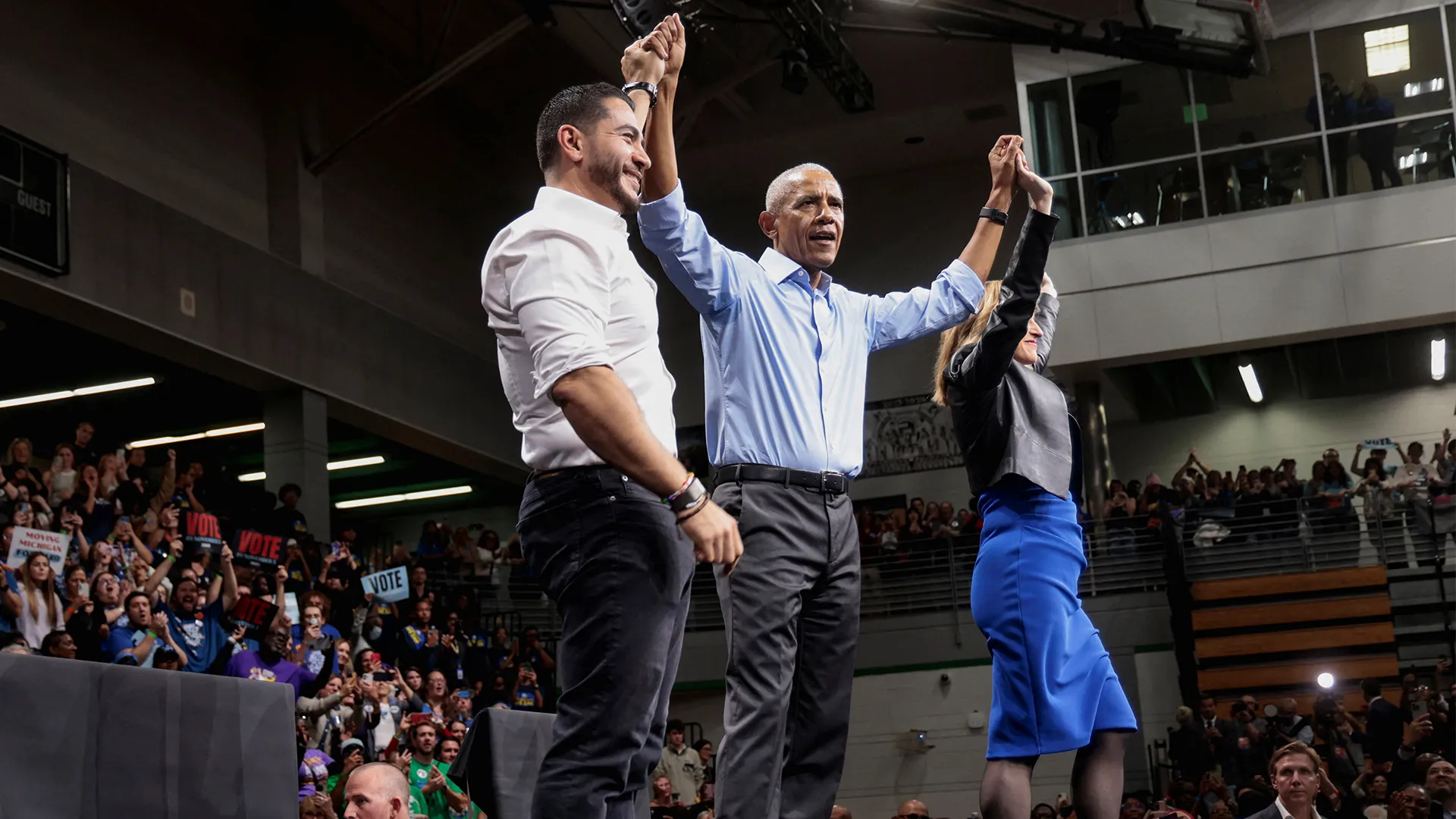
Yet our celebration does not mean we have suspended all judgement. Some Muslims I spoke with vehemently opposed Abdul’s decision to campaign alongside former Vice President Kamala Harris and former President Barack Obama. Their administrations’ policies, from facilitating the genocide in Gaza to conducting drone strikes against civilians in multiple Muslim-majority countries, remain at the forefront of people’s minds. I understood their anger and shared their apprehensions about normalising the killers of children. Yet many of us still voted for Abdul because we believed in his sincerity and because he had repeatedly made clear that he did not agree with every policy of those backing his campaign. I am under no illusion that one senator alone will end the systems and structures of exploitation that fund war machines abroad and fail their own communities at home. Muslim representation risks becoming hollow if mistaken for the only tool for liberation.
And that is precisely why the substance of his campaign matters. Abdul connected the fight against endless war to the fight for healthcare, clean water and a liveable wage. He spoke of a mother trying to keep her children on lifesaving medication and a worker fighting for a union. He insisted that the money spent destroying someone else’s children has a cost for children in the US too. His politics asked whether Americans could both recognise their own self-interest and show humanity towards others.
His election does not make US government policies any more just overnight. It does not bring back a single Palestinian child. It does not absolve the Democrats, Washington or any of us of complicity. And it certainly does not entitle Abdul to six years in the Senate without scrutiny.
But it destroys one convenient lie: that Muslim Americans must choose between being unapologetically Muslim and belonging fully to American public life.
For years, we were told to lower our voices, soften our names and reconsider what we advocate for if we wanted to succeed. On Tuesday, Michigan delivered its verdict. The man they tried to make unelectable will now sit in the US Senate. Alhamdulillah, he does not need to become less Muslim to serve his state – and the rest of us do not need to police who we are to demand a better future for ourselves and the generations to come.
The views expressed in this article are the author’s own and do not necessarily reflect Al Jazeera’s editorial stance.
When it came to which candidate weathered the most overtly racist attacks, in a midterm election full of the most overtly racist campaign attacks in modern memory, there was no contest.
Michigan’s Democratic Senate nominee, Abdul El-Sayed, was called a “jihadist” by the president. Labeled a representative of “terrible evil” by the vice president. Smeared as an “extremist” by his Republican opponent. They all intentionally mispronounced his name as if it was a poison on the tongue that needed to be expelled.
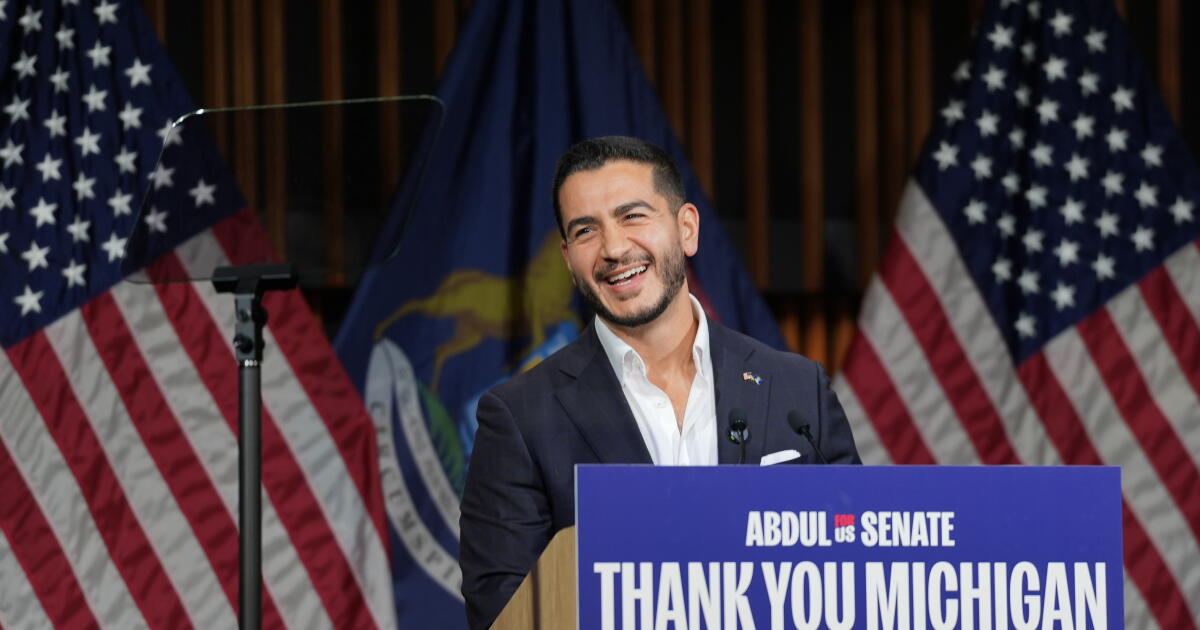
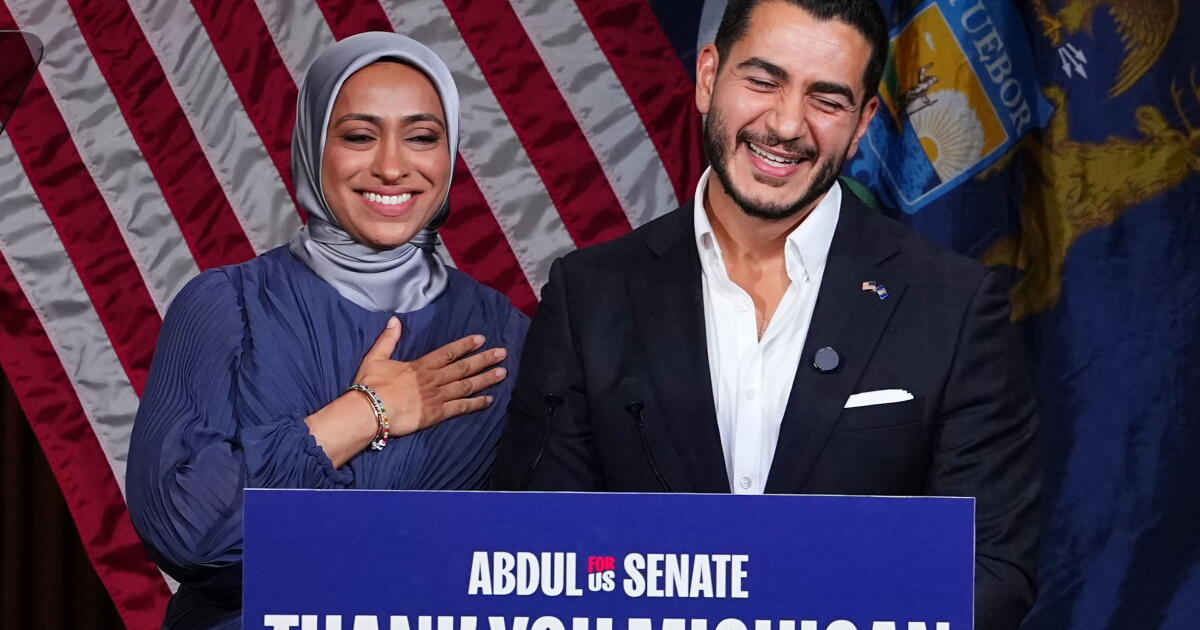
But the hate offensive didn’t work. El-Sayed, 42, stepped up to the mic late Tuesday and delivered his victory speech as the first Muslim elected to the U.S. Senate.
“My name,” he said, pointedly using full, guttural Arabic pronunciation, “is Abdulrahman Mohamed El-Sayed.”
It was a clarifying moment for Muslims and for millions of others appalled by the normalization of bigotry handed down from the White House. There is an Allah, after all.
The son of Egyptian immigrants, El-Sayed prevailed over former Rep. Mike Rogers by seven percentage points in one of the most closely watched races of the midterms.
His victory was one among several historic wins scored by the Democrats as they elected more governors and flipped the House and Senate — including the triumphs of America’s first openly gay senator (Chris Pappas of New Hampshire) and first female Native American governor (Deb Haaland of New Mexico), as well as Texas’ first Latina governor (Gina Hinojosa).
But beyond the political implications, El-Sayed speaks for those of us who have been othered by our “foreign” heritage, the color of our skin, the food we eat, our accents or the way we pray.
He embodies what it means to face blistering attacks on your background and faith, and to come out the other side as more American in your ideals and resolve than your slur-slinging detractors.
If that sounds dramatic, so be it. It’s been a brutal decade for Muslims, Arabs or anyone associated with groups maligned, targeted or in many cases deported by the Trump administration. We needed this win to prove to ourselves, and perhaps the rest of the world, that this is not a nation dominated by narrow-minded exclusionists, despite what MAGA has wrought.
El-Sayed kept his cool on the campaign trail, sticking to Michelle Obama’s motto of “When they go low, we go high.” But he showed Tuesday how to have fun poking at the opposition with one hand while holding an olive branch in the other.
“Donald, I know you struggle with my name, so after JD swears me in in January, you can go on and call me Senator,” he said, rubbing in his victory while calling out President Trump for his brazen, Islamophobic rants.
The senator-elect also indirectly responded to JD Vance’s low blows against him and his campaign, which included the vice president calling him a “psychopath” and claiming he trafficked in “anti-white racial hatred.”
In doing so, El-Sayed addressed Vance with a widely used Arabic word meaning “my love.” Why? Because when deploying it against a detractor, it’s the equivalent of sarcastically calling them “sweetheart.”
“JD, habibi, there is this delicious irony in the fact that you’re constitutionally obligated to swear me in in January,” said El-Sayed before throwing a college sports rivalry barb at the Ohio native: “Wolverines 1, Buckeyes 0.”
And as he has always done publicly, El-Sayed openly embraced his Muslim faith while addressing the American people.
He reminded us of the times during his campaign when he said “inshallah” (or “God willing”) to describe his hopes for winning the seat.
“Today, tonight, we can turn that ‘inshallah’ into an ‘alhamdulillah,’” meaning “praise be to God.”
It wasn’t long ago when such words uttered by a Muslim might strike fear in Americans who interpreted them as the calling card of terrorists just before they pulled the pin, flipped the switch or lobbed the bomb (thanks, Hollywood). Now, those words are part of a future senator’s speech to the millions of Americans he’s vowed to represent.
El-Sayed may just be making Arabic halal for the masses. And as the midterm results show, we’re ready for it.
Voters sent a message to Washington rebuking MAGA’s war on DEI, immigrants and the LGBTQ+ community. The Trump-era culture war against folks who look like El-Sayed has not quelled inflation, made housing cheaper, caused gas prices to drop or rendered health insurance affordable. But it may have helped us see each other again, as fellow citizens struggling to keep up.
“As I was campaigning, some of you would come up and ask, ‘How come you don’t hit back? How come you don’t call them racist or hateful?’” El-Sayed said during his victory speech. “They weren’t just attacking me. They were targeting and attacking you. They were targeting and attacking the very idea of America.”
It is about all of us, of course. But Muslim Americans who never thought they’d see the day are basking in El-Sayed’s win.
“We knew that the attacks on Abdul’s Muslim background were a big bull’s-eye for Rogers,” said Salam Al-Marayati, president of the Los Angeles-based Muslim Public Affairs Council. “What was heartening was to see it backfire.”
I’m not naive enough to think that the racist sentiment used by some Republicans to energize facets of their electorate is now a thing of the past. It’s always there. But you know what else is always there? People who choose progress instead of fear.
“Thank you. You took a chance on the unlikeliest of candidates,” El-Sayed said during his victory speech.
WASHINGTON — U.S. Sen.-elect Abdul El-Sayed said on Wednesday that Michigan voters had rejected “a hateful, spiteful campaign” after months of Republican attacks on his Muslim identity in one of the nation’s most closely watched Senate races.
In an interview with the Associated Press, El-Sayed said he was “running on adrenaline and caffeine” after his race with Republican Mike Rogers was called early Wednesday, giving Democrats another significant victory in a premier swing state as they won a substantial majority in the Senate in Tuesday’s midterms.
Throughout the cycle, Republicans sought to demonize El-Sayed, who was born in the U.S. after his parents emigrated from Egypt. President Trump repeatedly called him a “jihadist” who was “on the side of the terrorists.”
“Michigan proved just how big we are. Rejected a hateful, spiteful campaign that had nothing to say about the issues and only wanted to point to my name and my face,” El-Sayed said. “Michiganders rejected that. Every single county, every single one, pushed against that.”
In a sign of how combative the race had become, Rogers and El-Sayed had not spoken as of Wednesday afternoon, even after Rogers issued a statement conceding the race. In 2024, Rogers called then-Rep. Elissa Slotkin to concede on Wednesday morning, before the AP had even called the race.
El-Sayed, who will become the nation’s first Muslim senator, told the AP by phone that the morning was “a moment of reflection,” including about what his victory would mean to his two young daughters. His 3-year-old, he said, has no idea what happened, while his 8-year-old understands but sees it as normal.
“Now, this is something they read about in the history books,” he said.
With approximately 97% of the vote in, El-Sayed held a lead of 7 percentage points over Rogers. Every county in the state shifted toward Democrats compared with 2024, according to AP voting data.
The AP Voter Poll, an expansive survey of more than 4,500 voters in Michigan, showed that Michigan Senate voters were roughly split on whether El-Sayed’s views were “too extreme,” with about half saying they were.
El-Sayed rose from a double-digit defeat eight years ago in the state’s Democratic gubernatorial election to an upset victory of an establishment-backed candidate in the primary after being outspent by tens of millions of dollars. He said his campaign proved that “old-fashioned politics can work if you’re willing to do the work.”
El-Sayed quickly pivoted, though, toward the future, saying his victory is “not the success” and that “the success is what you’re able to do with the seat.”
He would not commit to supporting Senate Democratic Leader Chuck Schumer of New York for another term, saying he did not yet know who else might run. Schumer is expected to retain the leadership position.
“I do believe we need new leadership and I think people are hungry for it,” El-Sayed added.
Cappelletti writes for the Associated Press. AP reporter Linley Sanders contributed to this report.
Democrat Abdul El-Sayed has won Michigan’s closely watched U.S. Senate race, defeating Republican Mike Rogers and becoming the country’s first Muslim senator.
His victory comes as Democrats secured control of the upper chamber on Tuesday, giving the party a decisive Senate majority.
Michigan voters are casting their ballots in a charged, closely watched race that could make Democrat Abdul El-Sayed the first Muslim in the United States Senate and help decide control of the chamber.
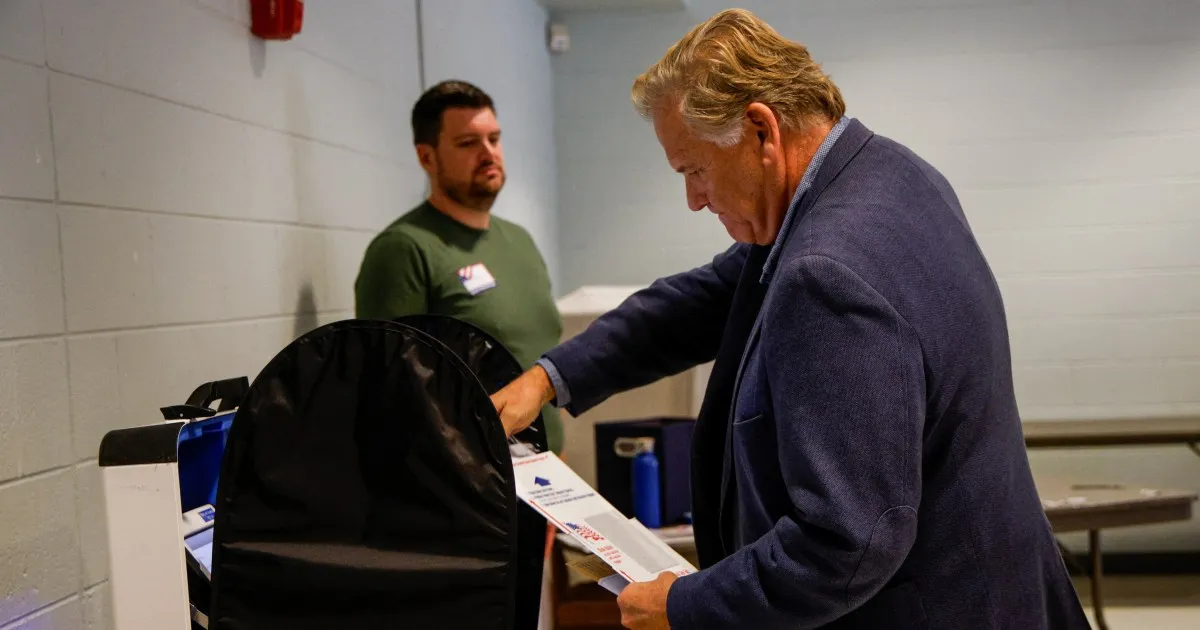
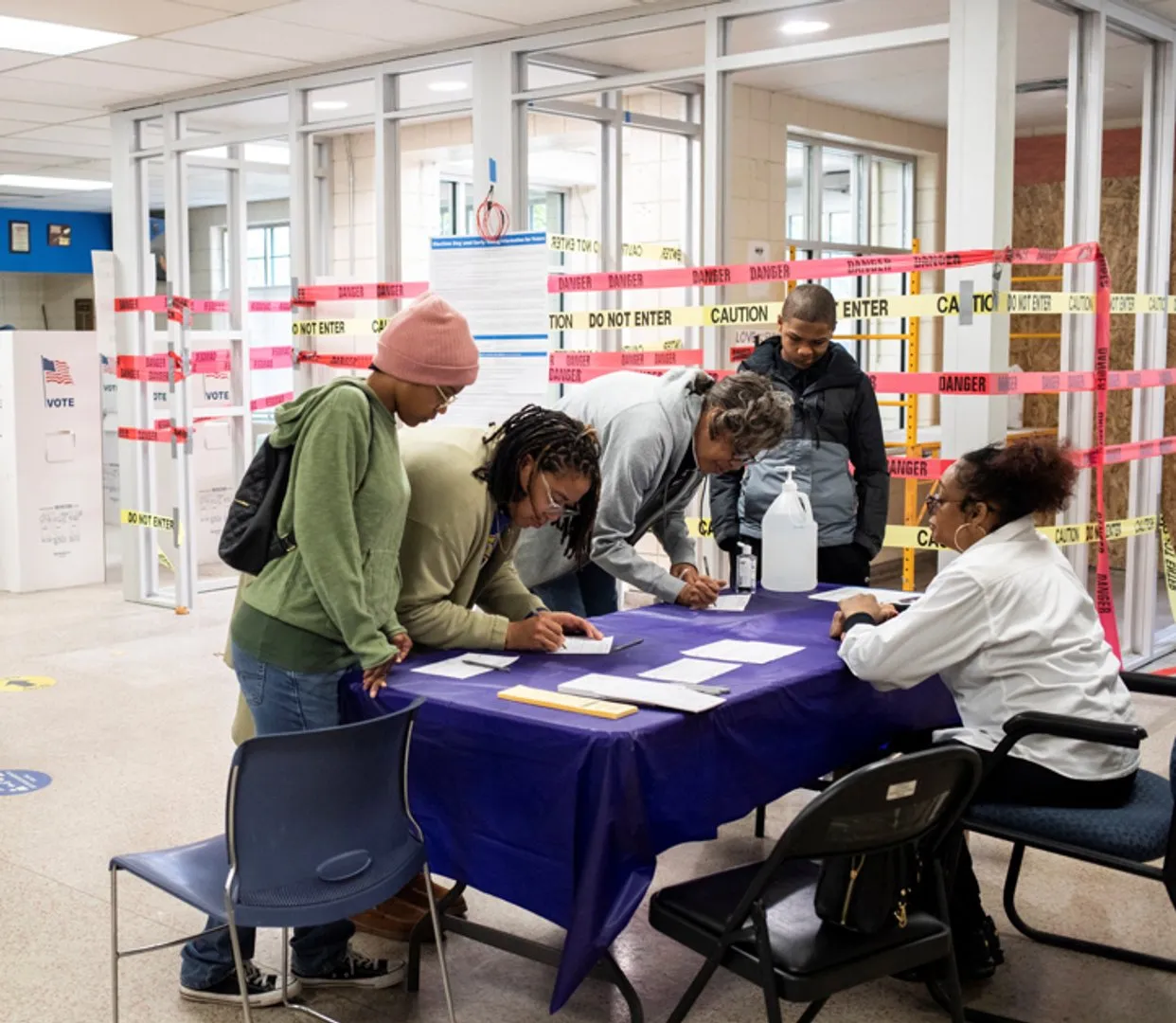
Mike Rogers, his Republican opponent, cast his ballot at a polling station in White Lake, Michigan hours after polls opened. El-Sayed had already had his vote submitted and counted through an absentee ballot before Election Day.
Recommended Stories
list of 3 itemsend of list
The two candidates seek to fill the seat of retiring Democratic Senator Gary Peters. A final New York Times/Siena poll placed El-Sayed 11 points ahead of Rogers going into the election.
Polls opened at 7am local time (12:00 GMT) and close at 8pm (01:00 GMT on Wednesday). If the race is close, it may not be called until later on Wednesday. The US Department of Justice has announced that election monitors will be present at the polls in Michigan and all 50 other states, a first in US history.
El-Sayed, a Muslim born to Egyptian parents, is the former head of Detroit’s health department and has campaigned on progressive policies such as Medicare for All.
Rogers, a former congressman and close ally of US President Donald Trump, is seeking to come back after a narrow loss to a Democrat in a 2024 Senate race.
Democrats need to gain four seats in Tuesday’s midterm elections to wrest back the Senate from Republicans and rein in Trump. The race is also seen as a test of whether a progressive who openly criticises Israel can win in a swing state.
Both candidates made a final push on social media as voting got under way.
“It’s time. It’s up to us to show the country what’s possible. The world is watching,” El-Sayed wrote, sharing an upbeat campaign video that features former US President Barack Obama.
Rogers posted a video that featured interviews with supporters, one of whom called El-Sayed an “extremist”.
“We have a state to save”, the post read.
Democratic Senate Minority Leader Chuck Schumer gave a firm endorsement of El-Sayed after casting his own ballot in New York’s race.
“There are millions of Michiganders whose number one issue is getting their costs down,” said Schumer.
“Abdul El-Sayed is … talking to the people about those issues and doing things about them … He is going to win tonight because he’s talking about what Michiganders care about.”
‘One vote’
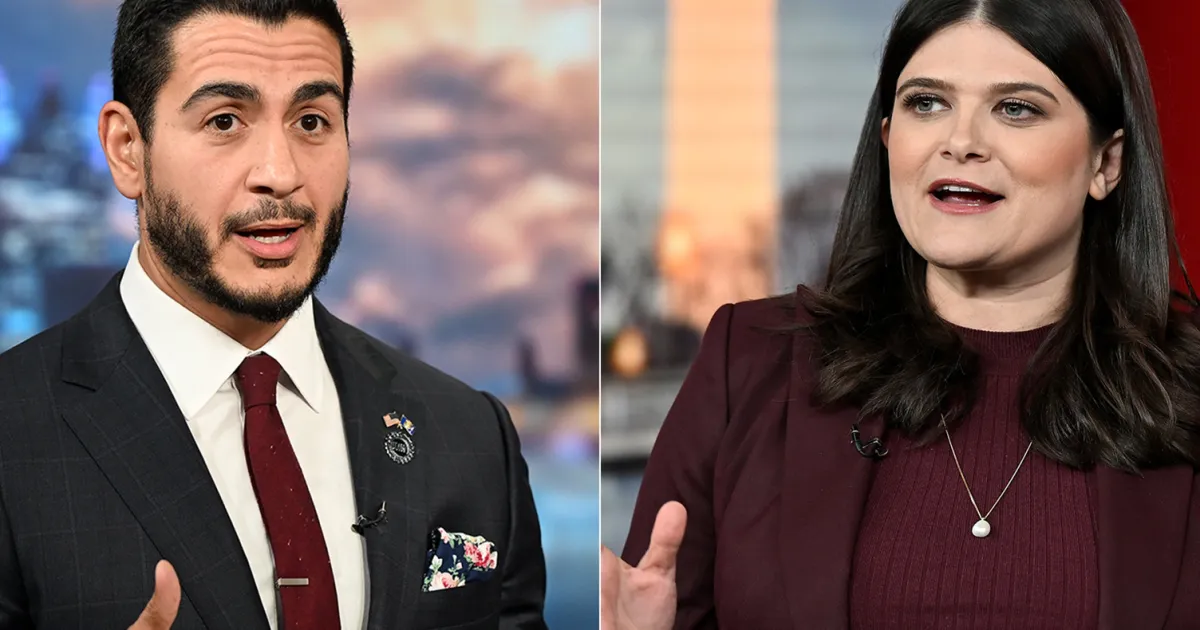
The El-Sayed campaign’s final days were overshadowed by a rift with Congresswoman Haley Stevens, a fellow Democrat whom El-Sayed narrowly defeated in a primary election in August.
On Sunday, Stevens endorsed Rogers, saying she was “choosing country over hate” and capping off a weeks-long row about El-Sayed’s opposition to US support for Israel.
Stevens is a staunch supporter of Israel, and the pro-Israel lobbying group the American Israel Public Affairs Committee (AIPAC) spent more than $30m backing her against El-Sayed. A majority of her large donors lined up to support Rogers after her loss, channeling $9m into a Republican group that supports him, according to The New York Times.
El-Sayed, by contrast, has accused Israel of genocide in Gaza and argued that US aid to Israel would be better spent at home.
Asked by NewsNation on her way in to vote for Rogers whether her change in support was worth it, Stevens replied: “Absolutely. Voting is always worth it, right?”
Senate leader Schumer, who had initially backed Stevens, was asked whether her defection could hand the election to Republicans. “Haley Stevens is one vote,” he replied.
Islamophobic attacks
El-Sayed, the Michigan-born son of Egyptian immigrants, has faced persistent attacks on his faith. Republican Party ads have sought to link him to “terrorism” and radicalism, with Trump joining in the inflammatory rhetoric.
The US president has repeatedly called El-Sayed a “jihadist” and a “nasty guy”, mocking his name and repeating an unfounded, widely circulated Republican claim that he belongs to the Muslim Brotherhood.
Hours before polls opened, Trump once again took aim at El-Sayed, this time in a post on his Truth Social platform.
“Abdul El-Sayed Hates Jews and Hates Blacks. Don’t feel bad, he also Hates Whites. Only fools would vote for him in the Michigan race for the U.S. Senate! He will, 100%, do you in! VOTE FOR MIKE ROGERS,” Trump wrote.
The US president also mentioned El-Sayed in a Fox News interview early on Election Day, when he said annual US financial aid to Israel should stop at the end of 2026.
“Why should we suffer the slings from lunatics like an El-Sayed when they [Israel] don’t need it?” he said.
With one day to go before the United States midterm elections, campaigning has reached a fever pitch with Democratic and Republican leaders pulling out all the stops to mobilise voters.
Democrats are hoping to flip control of both chambers of Congress, which is currently controlled by US President Donald Trump’s Republican Party.
Recommended Stories
list of 3 itemsend of list
All 435 seats in the House of Representatives and 35 of the Senate’s 100 seats are up for grabs on Tuesday. Voting will also be held to elect governors in 36 of the 50 US states.
With the cost-of-living crisis, exacerbated by the US-Israel war on Iran, becoming one of the key talking points of these elections, here’s where things stand as of Monday:
What’s happened on the campaign trail in the past 24 hours?
In a dramatic political development on Sunday, Democratic Congresswoman Haley Stevens threw her support behind Republican Senate candidate Mike Rogers over her own party’s nominee, Abdul El-Sayed, in Michigan – one of the most closely watched races of the US midterm elections. Stevens had lost Michigan’s Democratic Senate primary in August to El-Sayed.
Her announcement followed weeks of tension with El-Sayed over US support to Israel, which has been accused of committing genocide in Gaza. El-Sayed has opposed military support to Israel, arguing that Prime Minister Benjamin Netanyahu pushed the US into the Iran war. Stevens has accused El-Sayed of anti-Semitism for his criticism of Israeli actions in Gaza.
El-Sayed said a vote for his rival Rogers “is going to be a vote for Donald Trump” as his campaign reportedly saw a fundraising surge after Stevens crossed party lines.
Democratic leaders have rallied behind El-Sayed, who has faced Islamophobic attacks during the campaign.
The chairman of the Democratic Party in Michigan criticised Stevens. “She does not speak for that larger community,” Curtis Hertel said in an interview with CNN.
The leader of the Democrats in the Senate, Chuck Schumer, slammed Stevens over her endorsement of the Republican candidate.
“This is a despicable betrayal from Representative Stevens,” he posted on X.
“Senate Democrats are united in our support for Abdul El-Sayed, because we know he will fight for the economic interests of working families in Michigan, unlike Mike Rogers, who is a tool of Donald Trump and billionaire donors.”
Meanwhile, the advocacy group Michigan Jews for Democracy has backed El-Sayed.
“Haley Stevens does not speak for Michigan’s Jewish community,” it said in a statement, which rejected her “attempt to divide our community” two days before the election.
While Democrats have been angered by Stevens’s action, Trump celebrated her decision.
During a rally in Iowa later on Sunday, the US president said he would “love” it if Stevens joined the Republican Party. “Haley said what few people are willing to say,” Trump added. “It’s a thing called bravery.”
The question now is whether Stevens’s endorsement could persuade some of her supporters to back Rogers or discourage them from voting altogether.
Polling suggested El-Sayed has largely consolidated Democratic support, according to the Reuters news agency.
Judge dismisses Trump’s Alaska election lawsuit
Meanwhile, a federal judge has thrown out a Trump administration lawsuit seeking to block Alaska from certifying a loss by Republican Senator Dan Sullivan. The administration has argued that a rival on the ballot with the same name could change the outcome.
Sullivan pledged to accept the election outcome, days after the US Department of Justice filed a lawsuit seeking to decertify the results of the Senate race if he loses.
“I’m going to accept the election results,” Sullivan, an ally of Trump, told CNN on Sunday.
Alaska’s Senate race is one of seven key toss-up races that will likely decide whether Republicans keep their majority in the upper chamber of the US Congress.
How many Americans have already voted?
This year, out of about 210 million registered voters, 54.5 million had voted early as of 10am US East Coast time (15:00 GMT) on Sunday, according to a University of Florida analysis. This includes 30 million in-person votes and 24 million mail-in ballots.
In the 2022 midterm elections, 46 million people voted early.
Early voting enthusiasm has been higher among Democrats this year with more than 11 million registered Democrats having voted early, compared with about 8 million registered Republicans, according to the university’s analysis.
Early voting has particularly surged in the state of Texas, a key battleground, where more than 7.7 million people have voted early.
According to an Associated Press polling analysis, in South Carolina, where Trump won by nearly 18 percentage points in 2024, early voting has surged 83 percent compared with the same point in 2022. The state has open races for governor and US Senate this year.
Kansas, Michigan and Maine have also seen a surge in early voting.
Early turnout figures, however, don’t show which candidates voters have chosen or what the final results will be.
The daughter of the late champion boxer Muhammad Ali, and her son, have endorsed Abdul El-Sayed’s runs for the US Senate at church service in Detroit. Khalilah Ali and her son, Jacob Ali-Wertheimer said El-Sayed is part of Muhammad Ali’s legacy.
US Democrat Haley Stevens from Michigan was heckled as a ‘traitor’, after endorsing Republican Mike Rogers in the US Senate contest against her party’s candidate Abdul El-Sayed. Stevens lost to El-Sayed in the Democratic primary contest.
Speaking at a campaign rally, Donald Trump told voters to send Michigan’s Abdul El-Sayed ‘back to where he came from’. El-Sayed is running as a Democrat candidate against Republican Mike Rogers. El-Sayed was born and raised in Michigan.
Dearborn, Michigan – Jake Lang, a far-right provocateur in a bulletproof vest, shouts anti-Muslim obscenities on a bullhorn outside a rally featuring former US President Barack Obama in Detroit.
His associates, wearing crusader-themed accessories – including a tin shield featuring a black cross – hold campaign signs for Mike Rogers, the Republican Senate candidate in Michigan, who is in a close race with Democrat Abdul El-Sayed.
Recommended Stories
list of 4 itemsend of list
If it weren’t for the bigoted slogans, the people lining up around them to attend the campaign event for El-Sayed and other Democrats could have mistakenly thought the protesters were in Halloween costumes.
“Get the f*** out, Muslims,” Lang shouted. “The crusade is coming. Self-deport.”
Lang may appear like a fringe agitator. But Muslim American activists say the bigotry he is spreading is going mainstream, especially in the context of the Senate race in Michigan.
Anti-Muslim attacks against El-Sayed have been perpetuated at the highest level of the US government, including by President Donald Trump and his cabinet members.
Suehaila Amen, a prominent Arab and Muslim advocate in the Detroit area, said bigotry against her community is reaching an all-time high.
“They make immediately post 9/11 look like a walk in the park for us. This has been absolutely disgusting to witness,” Amen told Al Jazeera.
One of Lang’s allies, Pastor Lorenzo Sewell, is an official faith adviser to the Rogers campaign.
Sewell helped Lang organise an anti-Muslim march in the Detroit suburb of Dearborn – home to a large Arab and Muslim community – in August.
Muslim American activist Suehaila Amen in Dearborn, Michigan, on October 26 [Ali Harb/Al Jazeera]
Abdullah Hammoud, the mayor of Dearborn, said the city – which has long been a target for anti-Muslim provocateurs – has been receiving an increased number of threats in recent months.
“The general public is unaware of how many threats are aimed towards the city of Dearborn on a daily basis, via social [media], via our dispatch when they’re calling 911 or calling our call centre, and lobbing these threats against the residents of the city each and every single day,” Hammoud told Al Jazeera.
“That does worry me.”
Escalating attacks
While the Rogers campaign did not respond to Al Jazeera’s request for comment about the Republican candidate’s links to Sewell, Rogers defended his focus on El-Sayed’s background, saying it was for national security.
“This is not about the way you pray; it’s the way you think,” Rogers told reporters after his debate with El-Sayed earlier this month.
Local leaders say their community is not cowering in the face of such threats and Trump’s near-daily attacks, and is pushing back through civic engagement and rallying around the El-Sayed campaign.
“Trump is a fascist,” Hammoud told Al Jazeera. “I think the best thing we can do, the best response, is to send Abdul to the US Senate, somebody who’s got two doctorates, someone who is a son of this country, a son of the state, someone who is the captain of his high school team … I think that that’s the best response that we can give fascism.”
Trump has repeatedly mocked El-Sayed’s name, misrepresenting it as Mohammed, and called the Democratic candidate a “jihadist”.
Amen said Arab and Muslim Americans are used to being targeted for their names, but when the president does it, it legitimises bigotry and racism.
“It’s not just some loser that lives around the block who may call you a racist expletive; it’s the loser who lives in the White House,” she said.
Amen added that Arab and Muslim communities are going about their daily lives and organising politically despite the escalating attacks, stressing that they reject attempts to cast them as foreigners or outsiders.
“We are an integral part of the fabric of this nation, whether people like it or not,” she told Al Jazeera.
Republicans across US target El-Sayed
As the Senate race intensifies, Rogers has been baselessly accusing El-Sayed of ties to the Muslim Brotherhood, Hamas, Hezbollah and Iran.
Last month, Rogers went as far as agreeing with a social media post calling El-Sayed, a doctor and former public health official, a “terrorist”.
Trump has suggested that El-Sayed would be a physical threat to the Capitol, saying that he would want him to go through a metal detector.
At an event in western Michigan earlier this week, Health and Human Services Secretary Robert F Kennedy Jr incorrectly claimed that Arabs do not produce literature or science and “don’t win Nobel Prizes”. He argued that the Muslim Brotherhood – which only briefly held power in Egypt between 2012 and 2013 – has destroyed Arab civilisation.
Texas Senator Ted Cruz joined in on such attacks, describing El-Sayed as a “jihadist leprechaun”.
Cruz warned that El-Sayed, a Michigan-born and raised father of two with a medical degree and a doctorate in public health, could end up on the Senate Intelligence Committee and endanger national security.
“If I am correct that he is a passionate supporter of the Muslim Brotherhood, there is a very real risk that Americans will die as a result,” he said.
On Wednesday, Ohio Republican gubernatorial candidate Vivek Ramaswamy invoked Dearborn – one of the safest and fastest-growing cities in Michigan – to drum up fear of immigration.
“Look at what’s happening in Dearborn, Michigan, for God’s sake. We’re not going to let that come to our state of Ohio,” he said.
Dearborn Mayor Abdullah Hammoud, October 28 [Ali Harb/Al Jazeera]
Trump supporters weigh in
El-Sayed, who is of Egyptian descent, has avoided focusing on the attacks, calling them “deflections and deceptions”.
It’s not clear how attacks linked to El-Sayed’s Muslim faith and Arab heritage will affect the race.
About 38 percent of respondents in a survey of potential voters conducted by Michigan State University said a candidate being a Muslim would make them less likely to offer support to their campaign.
After a Trump rally for Rogers in Port Huron, northeast of Detroit, where the president spent most of his nearly two-hour speech attacking El-Sayed, some attendees appeared to agree that El-Sayed may be a threat to national security.
As the US president spoke, shouts of “traitor”, referring to El-Sayed, erupted from the crowd.
Trump supporter David Beamer, whose son died in the 9/11 attacks in 2001, spoke at the event and questioned El-Sayed’s American identity.
“Abdul has a birth certificate. The birth certificate says he’s a citizen of America. You know what? A birth certificate doesn’t make you an American,” Beamer said.
Al Jazeera asked Duane Crempa, a 72-year-old Republican in a Batman mask who attended the Trump speech on Sunday, whether he believes that El-Sayed is a “jihadist” as Trump claims.
Crempa said he is a good judge of character. “Yeah, there is something not right with him. That’s all I’ll say; there’s definitely something not right,” he added.
Jermaine Miller, who also was at the rally, told Al Jazeera he hopes El-Sayed is not a “terrorist”.
“But I mean, it sounds convincing, but it is believable,” he said of Trump’s allegations that the Democratic candidate is a “jihadist”.
‘It’s awful to live this way’
In the Detroit area, Arab and Muslim advocates say the issue is bigger than a Senate seat, arguing that such rhetoric endangers their communities and risks ripping the social fabric of the state.
“We’ve seen the increase in hate marches and hate speech and people being very comfortable sharing their hateful views online and coming into our city and harassing people for no reason – people who are just trying to live and function in this country,” Amen said.
“It’s been tremendously heartbreaking to watch our community constantly have to question why people are maliciously maligning them in public.”
Earlier this year, two gunmen killed three people outside a mosque complex in San Diego in southern California in what authorities said was a hate crime.
Congresswoman Rashida Tlaib, who represents Dearborn and parts of Detroit, said she fears for her two Muslim boys, Adam and Yousif, amid the rise of hate with the election campaign.
“Yesterday, we were all watching the football game, and we literally had to turn off the ads every time in between [plays] because we didn’t want our babies to see these awful, racist ads,” Tlaib told Al Jazeera.
“It’s awful to live this way right now.”
With petrol in Michigan nearing record highs, Arab and Muslim advocates say their communities are being scapegoated to cover up the shortcomings of the Trump administration, including the war in Iran.
Abdelhalim Abdelrahman, communication director for American Muslims for Palestine (AMP), said the attacks against El-Sayed amount to “disgusting Islamophobia” that serves as a distraction.
“Abdul El-Sayed’s name is a visibly Muslim name, and it’s being treated as inherently suspicious, as if a Muslim American cannot willfully execute their duties as an active member of Congress to protect the American people,” Abdelrahman told Al Jazeera.
At the Trump rally in Port Huron, one of Trump’s allies appeared to weigh El-Sayed’s candidacy against petrol prices.
Brian Pannebecker, a retiree from an auto manufacturing company Trump invited to the stage on Sunday, stressed that Michiganders need to vote for the Republican ticket.
“I don’t care if they’re paying a buck and a half more a gallon for gasoline. That is no excuse to vote for a socialist Islamist for the US Senate,” Pannebecker said.
El-Sayed’s opponents have sought to link him to the Muslim Brotherhood, an Islamist organisation that was founded in Egypt. Trump designated certain chapters of it as Foreign Terrorist Organisations earlier this year.
Some of the scrutiny of the affiliations of El-Sayed and his family members relates to their writings from more than a decade ago.
A social media post, external in 2012 by El-Sayed’s half-sister, Eman Abdelhadi, appeared to refer to the movement, saying “my family has long been MB”. El-Sayed’s team have previously distanced him from other comments by Abdelhadi.
Critics have also pointed to an opinion piece El-Sayed wrote in Huffington Post in 2011, external about pro-democracy protesters in Egypt. In it, he acknowledged concerns that “supporting democracy in Egypt might allow the country to fall to the hands of the Muslim Brotherhood”.
A year later he also allegedly signed an open letter by Egyptian Americans. In it, the group urged Mohamed Morsi, Egypt’s first democratically elected president and a leader of the Muslim Brotherhood, to “purge the media and police” following the toppling of the authoritarian regime in the Arab Spring. This letter has not been discussed by El-Sayed.
El-Sayed has previously denied any connection to the Muslim Brotherhood and has stressed his loyalty to the United States. Asked recently at a town hall event whether he would disavow the organisation, he responded: “Absolutely.”
Also in 2012, El-Sayed’s current opponent Rogers, who was then a US representative and chairing the House Intelligence Committee, appeared to call for cautious engagement with the Muslim Brotherhood, telling Reuters, external: “Do I think there are moderate Muslim Brotherhood individuals we are going to have to reach out to and talk to? Yes but we are going to have to watch it carefully.”
HA Hellyer, senior associate fellow at the Royal United Services Institute (RUSI) and an expert on Egypt, says the row has more to do with Islamophobia on the political right in the US than with the Trump administration’s actual position on the Muslim Brotherhood.
“If the accusation is to be taken sincerely, then [Trump] should surely have a problem with engaging with any government that has engaged positively with the Brotherhood or with groups that are even more to the right of the Brotherhood,” Hellyer told the BBC. “He clearly has not done that.”
The Democratic candidate for the US Senate has been the subject of Islamophobic attacks from Trump.
Published On 26 Oct 202626 Oct 2026
Detroit, Michigan – Democratic Senate candidate Abdul El-Sayed has dismissed United States President Donald Trump’s anti-Muslim attacks against him, saying that they are an attempt to move the attention away from the president’s own record.
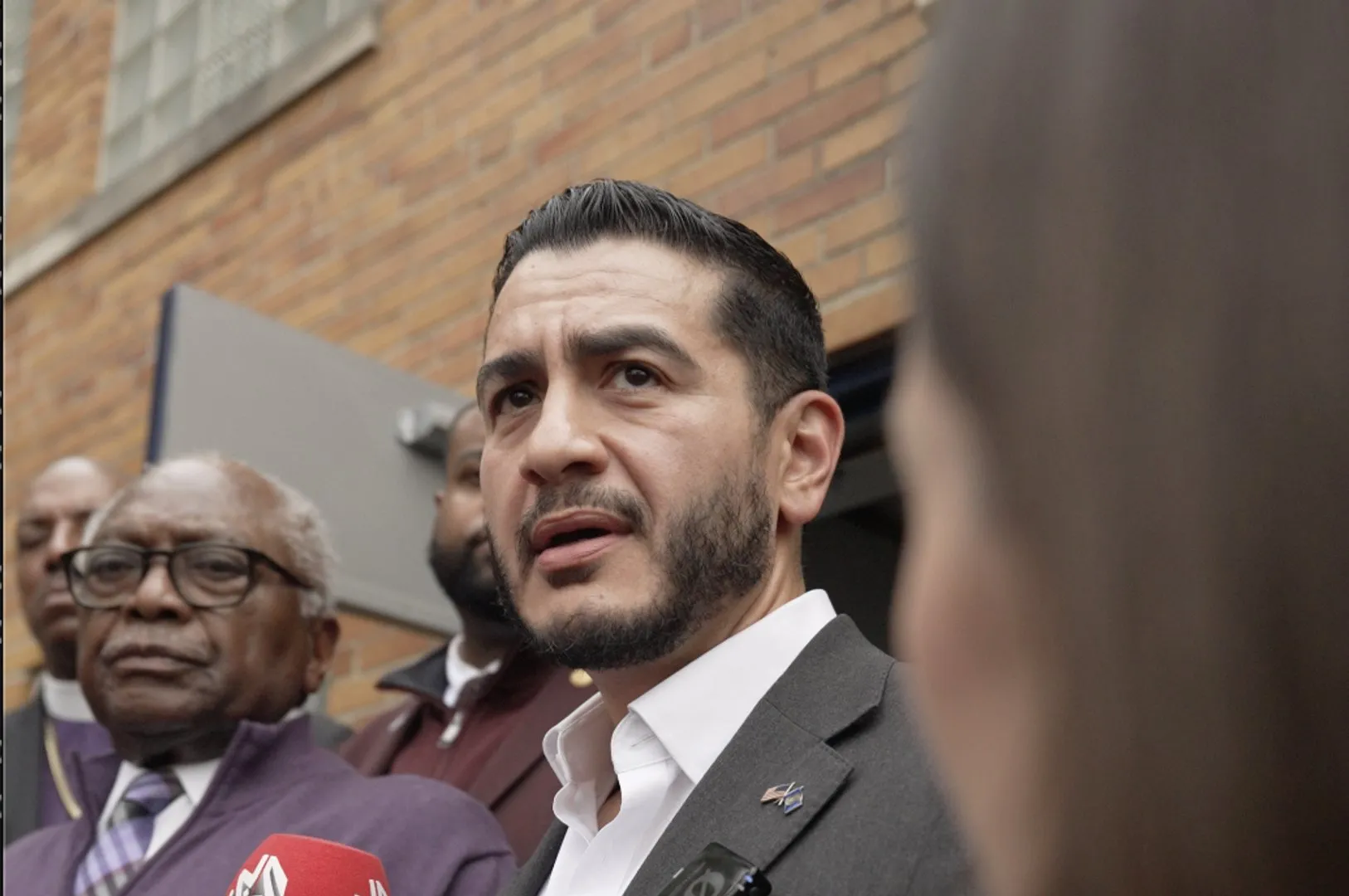
At a news conference in Detroit on Monday, El-Sayed said Trump is trying to distract from issues that matter to Americans – including petrol prices and the war on Iran – by accusing the Democratic candidate of being a “jihadist”.
Recommended Stories
list of 3 itemsend of list
El-Sayed called the attacks “deflections and deceptions based on no evidence”.
“They have nothing to say about solving the problems in your life. They’re not talking about you,” the Democratic candidate said of Republicans.
“They’re not talking about your gas or your groceries … They’re not talking about clean air or clean water. They’re not talking about any of the things that the government is actually supposed to solve. Why? Because Donald Trump has created those problems.”
At a rally in Michigan on Sunday, Trump unleashed repeated baseless claims against El-Sayed, accusing the Democrat of wanting to impose “Sharia law” on the country.
“He would be the only senator that will have to go through a metal detector before he’s allowed to go into the Senate,” Trump said. “I want him to have a metal detector.”
El-Sayed laughed off the suggestion that he may personally be a physical threat to Congress. “He knows I got those Wolverine claws,” he said, a reference to the sports teams of his alma mater, the University of Michigan.
The progressive Democrat and former public health official is locked in a close race with former Republican Congressman Mike Rogers, a contest that could decide the Senate majority for the next two years.
Rogers has made unfounded allegations linking El-Sayed to the Muslim Brotherhood, Hamas and Hezbollah a central point of his campaign.
On Monday, El-Sayed said most Americans reject such attacks.
“There are always a few small people who want to make America small like that. You see them; they’re very loud, and they bark,” El-Sayed said.
“The vast majority of folks in this state believe in a big America. They’re open-minded. They’re big-hearted. And the story of America is those who believe in big America, overcoming the deception, the distraction, the sad attempts of the small-minded to make us small.”
He added that “Michiganders are a lot bigger than that”.
El-Sayed also addressed Trump’s statements mocking his name and misrepresenting it as “Mohamed”.
“My name and my faith are not the reason you can’t afford your gas – not the reason you can’t afford your groceries, not the reason you can’t pay your rent, your mortgage, not the reason you can’t see a doctor,” he said.
A new political campaign ad in support of Democratic US Senate candidate Abdul El-Sayed is generating conversation online. Released by Cenk Uygur’s Rebellion PAC, the video highlights US foreign aid to Israel as Americans struggle with rising living costs.
Former US President Barack Obama joined Michigan Senate candidate Abdul El-Sayed at a Detroit rally ahead of key midterms. With Black residents making up about 75% of Detroit’s population, Obama denounced attempts to portray candidates as un-American over their faith or background.
Michigan’s Democratic candidate for the U.S. Senate, Abdul El-Sayed, is many things to many people.
He represents change, part of a new generation of outspoken leaders who aren’t afraid to challenge the status quo.
He represents possibility: As the son of Egyptian immigrants, his trajectory is the American dream realized.
And he represents a threat to those who fear that his Muslim faith means he can’t possibly love America. El-Sayed is a handy bogeyman for Republican politicians who seek to scare their constituents into voting for them instead of the foreboding Arab name on the ballot.
But for people like me — American Muslims, or anyone with roots in the Middle East, North Africa, South Asia or other Muslim-majority regions — El-Sayed embodies the exhausting experience of having to explain yourself over, and over, and over …
We know what’s truly going on when someone discovers our lineage, then apropos of nothing asks, “How do you feel about the Oct. 7 Hamas attack?” In previous eras it was, “What are your thoughts about 9/11? The Iranian hostage crisis? The PLO?”
Regardless of the decade, the underlying question was the same: How American are you, really?
For generations, the insinuation has been that your loyalty lies somewhere else and that you have a predisposed soft spot for groups such as ISIS or Al Qaeda. Beneath that Taylor Swift-loving exterior, there must be a Bin Laden fighting to get out.
It was disappointing but hardly surprising when El-Sayed was asked at a recent town hall in Caro, Mich., if he would “disavow the Muslim Brotherhood.”
The questioner, who identified himself only as Tommy, was referring to a century-old Islamist movement with branches that have been designated as terrorist organizations by various countries and U.S. administrations.
It’s worth noting that El-Sayed was born and raised in Detroit, not Egypt or Jordan. He attended the University of Michigan medical school, not a radical madrassa, and received a Rhodes Scholarship to Oriel College, Oxford, where he completed a doctor of philosophy in public health (not bomb making).
El-Sayed answered the question without hesitation. “Sure, yeah, absolutely,” he said, then swiftly turned the tables and began interrogating the motives of his interrogator.
“You’re asking the question because implicitly, you assume that I’ll have dual loyalties, right?” El-Sayed said. “You assume that I wouldn’t disavow, or that I’ll have some higher order allegiance than to the Constitution, correct? Tommy, is that what you imply?”
The candidate spent four to five minutes laying bare the political motives behind what was clearly designed to be a “gotcha” moment.
His opponent in next month’s election, former Rep. Mike Rogers, has claimed without evidence that the Muslim Brotherhood funds El-Sayed’s campaign and that his family members have terrorist links. The attacks are on brand with a wider Republican strategy around sinking El-Sayed. Fearing a blue tsunami might flip the crucial swing state, Rogers and his allies have leaned heavily into Islamophobic attacks against the progressive Democrat.
It’s a campaign tactic endorsed at the highest levels. President Trump has referred to El-Sayed as a “radical jihadist” and claimed he is associated with the Muslim Brotherhood, mispronounced his name, infused it with nonsensical babble and called him “Muhammad Al-Fayad.” Trump has defended his racism by stating: “I’m the president. I can call him whatever the hell I want.”
El-Sayed preferred to talk about another president while addressing Tommy’s question at the town hall. He recalled that John F. Kennedy faced similar scrutiny during his 1960 presidential campaign when asked whether his Catholic faith would make him loyal to the pope and Vatican rather than the U.S.
“His answer, famously, was that he was not running to be a Catholic president,” El-Sayed said. “He was running to be president that happened to be Catholic. I’m not running to be a Muslim senator. I’m running for the U.S. Senate and happen to be Muslim.”
The standoff between El-Sayed and Tommy (who has since been outed as Thomas Teepell, the son of a Republican strategist and a former staffer to Republican Sen. Josh Hawley) has gone viral and is now being referred to as a 2026 election Rorschach test because both the right and left believe they prevailed.
It’s unclear to me how anyone might see El-Sayed’s evisceration of Teepell’s means-to-an-end question as a victory for the right. Perhaps it comes from eight years of watching Barack Obama weather insidious and overt racist attacks with the patience of a Shaolin monk. El-Sayed reacted, therefore they won?
On the left, El-Sayed’s articulate defense was widely applauded, but there were still criticisms that he may have come off as condescending. Liberal podcasters and influencers opined that El-Sayed should have just let it slide — for the 1,000th time.
Such an easy solution when it comes from those outside the sphere of suspicion.
But the reason we’re even having this conversation is because El-Sayed is challenging the norm. His rise to a formidable candidate who is willing to publicly dismantle loaded questions like Tommy’s represents progress wrought by successive generations of immigrants who’ve had to explain themselves ad nauseam.
Our parents and grandparents went out of their way to avoid those kinds of questions by taming their accents, changing their hard-to-pronounce names or eating their “ethnic” lunches outside the break room. The hope was that they’d melt into the proverbial pot with as little friction as possible.
My father, who emigrated from Iraq, did what all his Arab friends did here in L.A. — fit in. They used Brylcreem to tame their thick hair, listened to Johnny Cash and used terms like “guys and gals” as if they’d just stepped out of an Elvis movie.
As the next generation, I made it a point to openly embrace what my dad often downplayed — that we are Arab and Muslim. But given the post-9/11 climate, it came buffered with calming disclaimers: We are not a threat. Al Qaeda does not speak for Islam. And dolma is delicious, dammit.
El-Sayed’s refusal to brush off questions aligning him with terrorists may or may not cost him the election, but it’s a victory for all of us who’ve been defusing suspicion since we were kids.
The clip from the town hall ends with El-Sayed asking Thomas if he’s a Christian who has tried to live by Christian doctrine. Thomas affirmed. Then El-Sayed asked, “Do you disavow any attempt to read any religious doctrine into the laws of our country?” Thomas responded, “I do not.”
El-Sayed replied, “I think it’s you who needs to understand the Constitution, not me.”
Less than two weeks before the midterm elections, some Michigan voters are still deciding between Republican Mike Rogers and Democrat Abdul El-Sayed in the race for a US Senate seat. At an event in Detroit this week, one voter questioned why El-Sayed won’t say his ‘real name.’
President Donald Trump says Michigan Senate candidate Abdul El-Sayed is a member of the Muslim Brotherhood. The organisation has wide support across the Middle East for its charitable work, but is designated a terrorist organisation by the US. El-Sayed denies ties to the group.
PORT HURON, Mich. — Abdul El-Sayed, holding a microphone and wearing his signature V-neck black T-shirt, slowly shook his head as a woman at his town hall described how she burned through her savings after undergoing emergency brain surgery.
“I’m really sorry for your experience, and I hope that you’re on the mend,” said El-Sayed, the Democratic nominee for U.S. Senate in Michigan, after outlining proposals for guaranteed healthcare and paid leave.
Later that night, while talking to reporters in the basement below the theater, his tone was far different. El-Sayed called his Republican opponent, Mike Rogers, a “coward” and said President Trump was “afraid” to visit the state, and he dismissed as “dumb” a question about whether Iran or Israel posed a greater threat to the United States.
The exchanges captured two sides of a candidate who is the central figure in one of the nation’s most consequential Senate races. El-Sayed would be the country’s first Muslim senator, and he’s crisscrossing the state to counter a Republican effort, fueled by tens of millions of dollars, to portray him as a dangerous radical. But he has also embraced his confrontational side by mocking and taunting Trump and Rogers.
“If they want to make me the main character in the midterms, I’m not shying away from it,” El-Sayed said in an interview. “Run against me. See how well that works out for you.”
El-Sayed’s resolute confidence rubbed some Democrats the wrong way during a divisive primary against Rep. Haley Stevens. The former public health official has shown little interest in toning it down, defending his progressive agenda and adversarial approach toward Republicans, emboldening supporters who believe he’s the right candidate for an angry electorate that has lost faith in the political establishment.
But his doubters fear he’ll cost Democrats control of the Senate by failing to unite his party’s disparate factions ahead of November.
“If you want their votes, you have to make nice with those people, and he’s not really doing that,” said Michigan political strategist Adrian Hemond, who supported Stevens. “Maybe he doesn’t have to. The entire theory of this candidacy has been he can remake what the electorate looks like.”
A Republican target
Even though Michigan backed Trump twice in his three presidential campaigns, no Republican has won a Senate race in the state since 1994.
The political landscape is no friendlier this year. Trump started an unpopular war with Iran, leading to higher gas prices and related inflation. Rogers has opted for a low-key campaign with fewer public events than El-Sayed as he tries to make the race all about his Democratic opponent.
As of Saturday, Republicans had outspent Democrats by $78 million to $63 million in the Michigan Senate race, according to AdImpact, which tracks political advertising. Around $40 million in Republican spending has gone toward negative advertisements, compared with around $20 million from Democrats.
The ads portray El-Sayed as “dangerously radical” and “too extreme,” highlighting his past calls to defund the police and relax immigration enforcement. Others tie him to Hasan Piker, a popular online streamer with whom El-Sayed has appeared and who has drawn criticism for past comments, including saying that “America deserved 9/11.”
On Friday, Rogers appeared alongside Louisiana Sen. John Kennedy, who told reporters that El-Sayed “sleeps in a Bin Laden jersey.” Rogers laughed.
Vice President JD Vance has called El-Sayed “evil.” In one social media post, Trump shared a photo of himself with First Lady Melania Trump alongside a photo of El-Sayed and his wife, who wears a hijab, with the caption: “Two VERY DIFFERENT America’s.”
Late Wednesday, Trump referred to El-Sayed as “Mohammed” and said he “goes back to the days of the Jihad.”
El-Sayed has hardly backed down. At the campaign stop in Port Huron, he taunted Trump and invited him to visit Michigan, suggesting Rogers and other Republicans were afraid the president would hurt their chances.
“Donald, if you’re watching, don’t wuss out, man,” El-Sayed said.
And he responded to Kennedy’s attack by suggesting the Republican is in the Ku Klux Klan.
“That’s rich coming from someone who wears his bed sheets out at night,” El-Sayed posted on social media.
A personal touch with voters
Before the Port Huron town hall, El-Sayed worked his way down a line of people who couldn’t fit inside the theater, shaking hands, taking photos and stopping for conversations.
Jeff Petrucella and his wife, Alice, traveled from Macomb County to see El-Sayed. They described themselves as politically “middle of the road” and said they had voted Republican in the past.
“I’m pretty done with the Republicans right now,” Jeff said.
Alice said she was “looking for a change that is better for my granddaughters,” pointing to El-Sayed’s support for Medicare for All. Nor was she put off by his more confrontational appearances on Fox News.
“I think he expresses himself well. You can tell he’s a well-spoken, educated man,” she said.
Pat Kreiner was among those who waited nearly an hour to see El-Sayed. Her children had persuaded her to support him in the Democratic primary.
“My son said to me, ‘I have been living with this trickle-down economy since the day I was born,’” Kreiner said. “‘It doesn’t work for me.’”
Kreiner also expressed anger about Trump’s trade war with Canada, just across the river from Port Huron.
“We are heartsick about our neighbors,” she said. “They used to come over a lot. We don’t see them now.”
Visiting smaller towns such as Port Huron has become central to El-Sayed’s campaign, with his team recently saying he’s held more than 500 events in over 100 cities across the state.
“Go everywhere. Talk to everyone. That’s what we do,” El-Sayed said in an interview.
The personal approach has not erased all the skepticism surrounding El-Sayed, including within his party.
His criticism of Israel and association with Piker have raised concerns among some Jewish Democrats. El-Sayed has held a series of private gatherings with undecided Jewish voters as he works to win their support.
He has also sought to strengthen his standing with Black voters. In the Democratic primary, Stevens drew more support in Wayne County, home to Detroit and its large Black population.
Ahead of Thursday’s debate, El-Sayed attended two events with Black leaders before stopping at a Black barbershop, where he moved from chair to chair talking with customers. He stopped at one point to speak with a pregnant woman, congratulating her and asking when her baby was due.
“November 8th? Make sure you vote early, huh?” the candidate joked.
A race about more than just Michigan
While El-Sayed has spent much of his campaign trying to win over Michigan voters, his candidacy has taken on significance far beyond the state. Republicans have made him a symbol of what they say is an increasingly radical Democratic Party, while progressives see his campaign as a chance to prove their politics can win in a closely divided state.
At a New York City fundraiser on Oct. 5, Rep. Alexandria Ocasio-Cortez cast his campaign as a test for progressives nationwide.
“If Abdul can win in Michigan, anybody can win anywhere,” said the New York Democrat, a potential presidential candidate.
Ocasio-Cortez plans to campaign with El-Sayed in Michigan this week, followed by former President Obama on Oct. 24.
The national stakes have also drawn renewed opposition. United Democracy Project, a super PAC affiliated with the pro-Israel group AIPAC, disclosed an initial $94,000 expenditure against El-Sayed on Friday, after spending nearly $30 million to oppose him in the Democratic primary.
And El-Sayed, while maintaining that the election should focus on Michigan voters and their economic struggles, has also embraced the larger implications of his candidacy.
“I am grateful for your support,” he told the audience at the New York fundraiser, according to remarks obtained by the Associated Press. He said he had two goals: “pick up a U.S. Senate seat” and “change the nature of our politics for the better.”
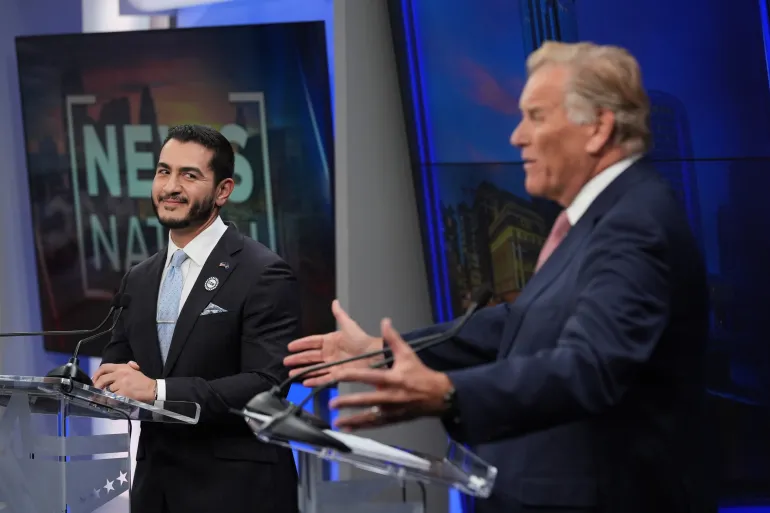
The leading candidates in Michigan’s heated Senate race have faced off in their first televised debate, with less than a month remaining before the United States midterm elections.
Thursday’s hour-long debate was a microcosm of how tense the toss-up race has become.
Recommended Stories
list of 3 itemsend of list
Democratic nominee Abdul El-Sayed, formerly the health director for Wayne County, repeatedly sought to paint his Republican adversary Mike Rogers as a yacht-owning millionaire out of touch with ordinary voters.
For his part, Rogers, a former member of the US House of Representatives, lobbed accusations at El-Sayed that he was soft on “terrorism” and had foreign sympathies.
The Michigan-born El-Sayed has repeatedly faced Islamophobic attacks while on the campaign trail, with Republican President Donald Trump labelling him an “extremist, terrorist sympathizer” whose history “goes back to the days of the Jihad”. If elected, El-Sayed would be the first Muslim member of the US Senate.
The two candidates spent much of their hour onstage together speaking over one another, as they exchanged pointed barbs.
“He can’t condemn a terrorist act that happened on our soil in the state of Michigan. He can’t bring himself to condemn –,” Rogers began, referencing a March attack on a synagogue.
“I did condemn it,” El-Sayed said, jumping in. “No, you did not,” Rogers replied, with El-Sayed quickly responding, “You make stuff up. You make stuff up.”
The Senate race in Michigan is considered key to the battle for control of the US Senate. Democrats are seeking to flip both chambers of Congress, but shifting control of the Senate will be a tougher prospect, given that only a third of its 100 seats are on the November 3 ballot.
Host Rick Albin at times struggled to keep the debate on track, as tensions rose.
“We’ve got dozens of questions we want to get to. You can’t litigate all of these with 14 different rebuttals, so please work with me,” Albin told the two candidates at one point.
Here are the key takeaways from the evening’s debate.
Republican nominee Mike Rogers, right, speaks during a televised debate with Democratic nominee Abdul El-Sayed [Paul Sancya/Pool via AP Photo]
Rogers insinuates El-Sayed family ties to ‘terrorism watch list’
The ferocity of the debate was underscored by the high volume of ad hominem attacks the candidates deployed against each other.
But Rogers repeatedly pushed a series of attacks that seemed to centre on El-Sayed’s identity as a Muslim.
In response to a question about healthcare, Rogers said that El-Sayed has “taken money from individuals on his campaign who openly support Hamas, Hezbollah, al-Qaeda”.
Later, when asked about his position on surveillance by Flock cameras, Rogers argued that such technology has helped catch people suspected of terrorism. He then implied that El-Sayed’s concerns about the cameras were suggestive.
“Why would that bother you?” Rogers asked El-Sayed. “Well, if you have somebody in your family that might be on the terrorism watch list …”
El-Sayed interjected, seeming to dare Rogers to continue his thought.
“Are you going to go ahead and say that I’m a – go ahead and say it,” El-Sayed said. “You’ve been tiptoeing about it the whole time. Just say it. Just say it. Go ahead and say it.”
Muslim and Arab candidates in the US have frequently been subjected to Islamophobic attacks on the campaign trail, accusing them of support for “terrorism” and Islamic fundamentalism.
Republican Mike Rogers insinuated El-Sayed may have family on the ‘terrorism watch list’ [Paul Sancya/Pool via AP Photo]
Both sides agree on ending the Iran war
There were issues, however, on which both candidates found a measure of common ground.
Both Rogers and El-Sayed agreed the US-Israeli war against Iran should end, but they had opposite views on Washington’s relationship with Israel and its role in the conflict.
High gasoline prices and inflation, El-Sayed said, were directly caused by the Iran war, and he blamed the Trump administration for Iran’s decision to shut down the Strait of Hormuz, a critical trade route.
“This is what happens when you start wars you never should be fighting,” El-Sayed said. “We literally taught the Iranian regime that they have a choke on the Strait of Hormuz, and now we’re living in that reality.”
Rogers agreed that “we need [the war] to come to an end”, but he also justified the conflict, saying that Iran’s uranium enrichment programme had been “set back twenty years”, echoing a frequent White House talking point.
The Trump administration has argued that the war was necessary to prevent Iran from creating a nuclear weapon, a goal Tehran has long denied.
Rogers’s position led El-Sayed to accuse him of “cheerleading” for the war and the Trump administration.
Democratic nominee Abdul El-Sayed pushed for an end to unconditional support for Israel [Paul Sancya/Pool via AP Photo]
Rogers backs continued Israel aid, El-Sayed calls for end
As part of the debate about US foreign policy, the candidates were also pressed on their positions about the US alliance with Israel.
The country is considered the largest overall recipient of US aid since World War II. From the start of Israel’s genocidal war on Gaza in October 2023 through September 2025, experts estimate that Israel received nearly $21.7bn in military aid.
El-Sayed has openly called for ending aid to Israel, and he has repeatedly denounced the conflict in Gaza as a genocide, in line with evaluations from United Nations experts and human rights watchdogs.
During the debate, he indicated he preferred US taxpayer dollars to be spent on domestic concerns like education and healthcare, rather than Israeli aid.
“He wants unconditional support for a foreign government,” El-Sayed said of Rogers. “I want unconditional support for kids in our schools, unconditional support for our healthcare, childcare.”
He also blamed Israel for the US military action in Iran. “I don’t want to be pushed into war by Israel, and I don’t want to be in war with Iran,” El-Sayed said.
Rogers, meanwhile, has joined most of his fellow Republicans in continuing to support aid for Israel. He argued that the country had “the right to defend itself in a very difficult neighbourhood”.
“Is there anything Israel could do that would lose your support?” the debate host asked.
“Listen, if they’re talking about using nuclear weapons, they would definitely lose my support,” Rogers replied.
Abdul El-Sayed, right, and Mike Rogers shake hands prior to their debate [Paul Sancya/Pool via AP Photo]
Another hot-button issue during the debate was Trump’s crackdown on immigration.
The Republican leader has pledged to carry out the largest mass deportation effort in US history, and his campaign has spurred human rights concerns.
When asked how they would approach the crackdown, both Rogers and El-Sayed agreed on tempering the militarised nature of the campaign.
In several cities, including Minneapolis, Minnesota, immigration authorities have been accused of racial profiling and using excessive force against immigrants and protesters, as well as violating their rights to due process.
Multiple fatal shootings have occurred during immigration enforcement operations, including the deaths of Renee Good and Alex Pretti in January.
Rogers indicated he would not have supported such confrontational operations, but he repeated a Trump claim that the raids were taking dangerous criminals off the streets.
“I think the public efforts in Minnesota were probably not appropriate,” Rogers said. “You always want to go in quiet, get the bad guy, get out of the neighbourhood for less problems. So that, to me, was something that they could have done differently.”
He later claimed that, under Trump, the country had seen “the largest decrease in murders ever recorded”.
El-Sayed, meanwhile, has previously voiced support for abolishing Immigration and Customs Enforcement (ICE), a key agency in Trump’s deportation campaign. He defended that stance on the debate stage.
“ICE right now is not about immigration enforcement. ICE is about terrorising our streets,” he said.
Mike Rogers speaks to reporters in the spin room after the debate on October 8, 2026 [Jim Vondruska/Reuters]
Candidates debate Canada trade war and tariffs
Donald Trump’s trade war with Canada, felt acutely in neighbouring Michigan, was another key topic of conversation.
El-Sayed depicted Rogers as an uncritical backer of Trump and his tariffs and tied him to past free trade deals such as the North American Free Trade Agreement (NAFTA), which paved the way for companies to shift manufacturing facilities out of the US – though Rogers did not enter Congress until 2001, eight years after NAFTA passed.
“You did that, man. That was your policy. NAFTA, that was your policy,” said El-Sayed.
Rogers sought to distance himself from the current trade war but expressed support for a deal with Canada that would loosen some of Ottawa’s tariffs on US goods.
“I would like to see the deal made,” said Rogers, adding that high Canadian tariffs for US goods “should be eliminated”.
Both candidates tried to strike a balance between criticism of the economic fallout of the trade war and qualifying their support for more selective tariffs, favoured by some industries and labour unions as a means of protecting domestic jobs.