ElSayed

As Abdul El-Sayed breaks a barrier, anti-Muslim vitriol surges on multiple fronts

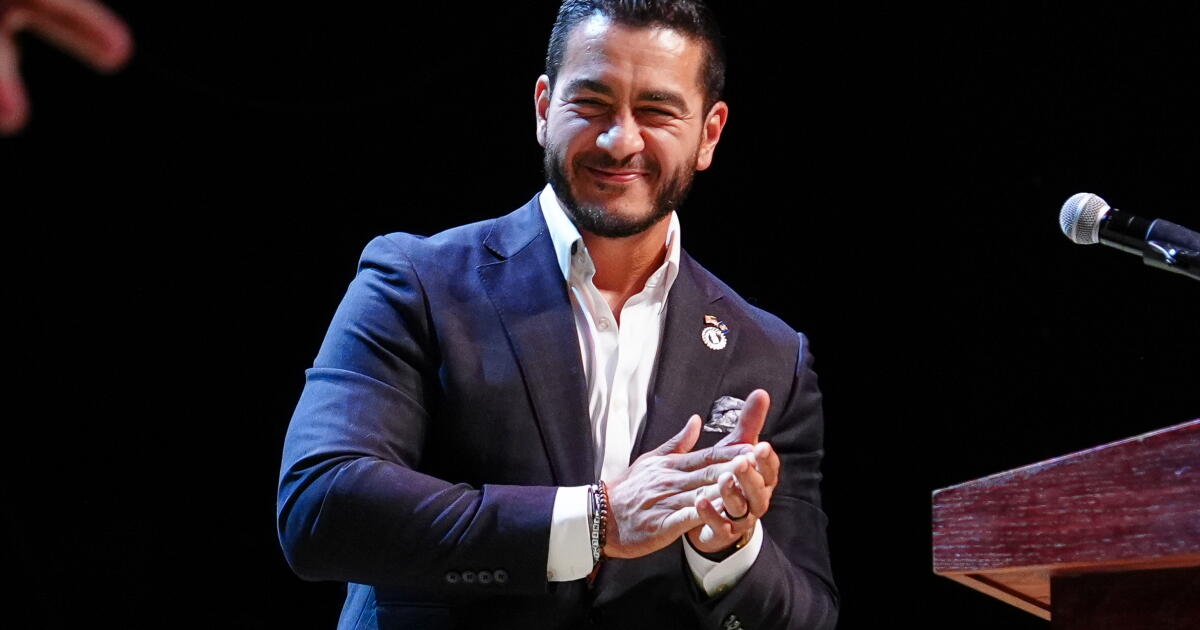
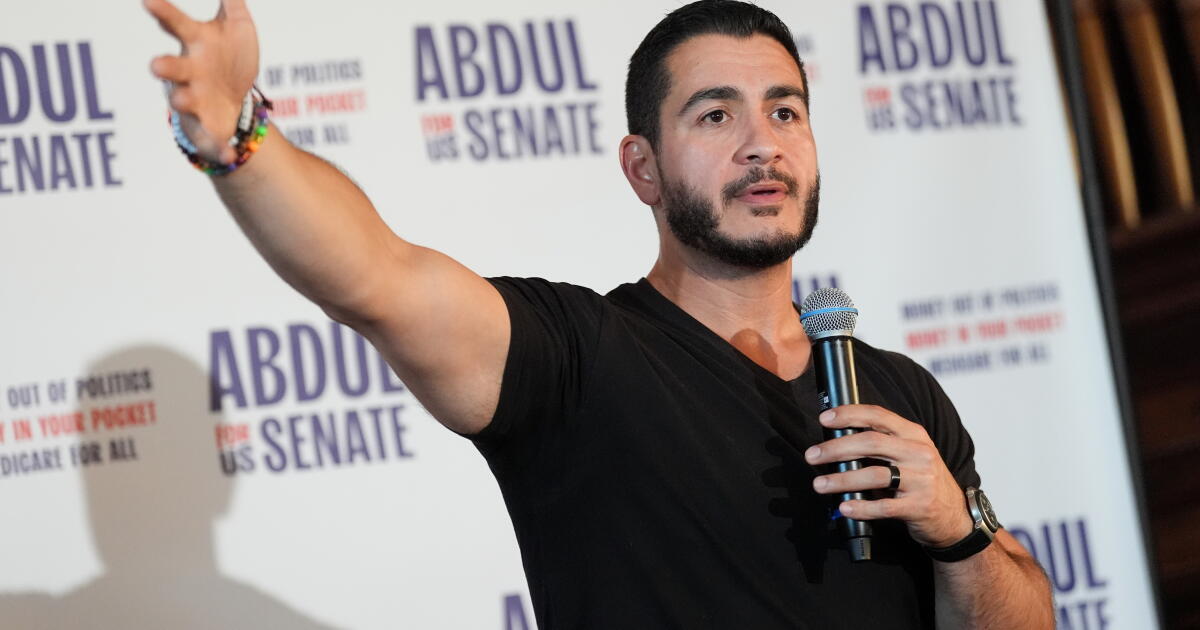
Abdul El-Sayed made history this month in Michigan by becoming the first Muslim nominated by the Democratic Party to run for the U.S. Senate. But elation among many of his fellow Muslim Americans was tempered by awareness of persisting and widespread anti-Muslim sentiment across much of the nation.

Some Republicans, including President Trump, swiftly began referring to the nominee by his full name, Abdulrahman Mohamed El-Sayed, while depicting him as a danger to America. “Every single Muslim holding public office in America is a Trojan horse, and a threat to both national security and our republic,’’ said U.S. Rep. Nancy Mace, R-S.C., in a post on X.

El-Sayed says such attacks betray a weakness in those who launch them.

“We all pray for the same things. … We want what’s good for our kids and our families,” he told MS NOW after his primary victory. “They’re going to use Islamophobia, because their ideas are tired.”

The vitriol extends far beyond the political class. Tensions related to anti-Muslim sentiment have heightened in several communities around the country, where some residents have bitterly opposed proposals to build new mosques.

“American Muslims have made incredible political and societal progress in recent years,” said Edward Ahmed Mitchell, national deputy director of the Council on American-Islamic Relations, or CAIR. He cited increased visibility in entertainment and sports and the election of Democrat Zohran Mamdani as New York City’s first Muslim mayor.

“But there also is a very concerted backlash to this progress,” Mitchell said. “You’ve seen this in the resurgence of anti-Muslim hate and rhetoric, the targeting of mosques.”

A Dallas suburb is a flashpoint

McKinney, Texas, a large suburb in the Dallas-Fort Worth area, is one of the flashpoints. Despite angry anti-Islam remarks at a heated city council meeting on Aug. 4, the council voted unanimously to approve a site plan for the McKinney Islamic Association’s proposed new mosque, classroom building and gym.

Among those urging the council to give the plan fair treatment was George Fuller, a former mayor of McKinney, a nonpartisan position. Opponents of the mosque project booed him, and some shouted “traitor” as he left the council chamber. One woman could be seen on video physically accosting him.

“I have never witnessed so much hate, anger and lack of humanity in our beautiful community gathered in one place as I did today at City Hall,” Fuller later wrote on Facebook.

During the hearing, which lasted more than four hours, the speakers included U.S. Rep. Keith Self, a Republican whose district includes McKinney. To loud applause, he urged the council to reject the mosque proposal.

“I know you’re in the accommodation phase, but the intimidation phase follows quickly,” Self said. “Child marriage. Honor killings. Don’t tell me it can’t happen here.”

Fuller also went to the microphone, evoking the broader phenomenon of divisive political rhetoric.

“Sadly, we live in a time when some have discovered that the easiest way to gain attention or win elections is not by offering solutions but by manufacturing fear, dividing communities, demonizing neighbors and turning misinformation into a political strategy,” he said.

In North Carolina, anger flares over approval for a new mosque

The scenario was similar in Mooresville, North Carolina, when town commissioners held a public comment session on Aug. 3 about a proposed mosque that had already been approved, with early phases of construction underway.

Angry residents at the meeting voiced hostility to Islam and assailed the commissioners for not being more forthcoming about the project as it took shape over previous months. One speaker cited violence in Nigeria by Islamist extremists as a reason for concern in Mooresville. Another depicted Islam as “a political regime with the ultimate goal of takeover in regions and nations.”

CAIR’s regional manager, Al Rieder, issued a statement denouncing “the hateful and conspiratorial anti-Muslim rhetoric” that surfaced at the meeting and expressed concern about the safety of Muslims in the area about 25 miles north of Charlotte.

“Muslims are your neighbors, your doctors, your teachers, your local politicians, your police,” he said.

A few hours after the public meeting, the town commissioners released a summary of the mosque project, which calls for a two-building Islamic center on a parcel acquired in 2019 by a local Muslim organization.

The commissioners said that the parcel is in an area zoned to allow religious assembly and that the mosque proposal was handled the same way as a proposal for a new church.

“All decisions must be based on adopted ordinances, objective standards and legal requirements, which do not allow for different rules for different religious groups,” the commissioners said. “We encourage all members of our community to remain respectful in their discussions and interactions as this project moves through the appropriate processes.”

In Oklahoma, Muslim leaders fight against the rebuff of a new mosque

A mosque controversy has been raging for many months in Broken Arrow, Oklahoma, Tulsa’s largest suburb.

Back in January, at a stormy meeting attended by hundreds of people, the city council voted 4-1 to reject a rezoning proposal by the region’s Islamic Society to build Broken Arrow’s first mosque. Before the vote, dozens of residents voiced anti-Muslim views while opposing the project.

Council members who rejected the mosque had raised concerns about its potential impact on infrastructure such as roads, sewers and flood plain management.

But the Islamic Society is persisting with its quest. On Aug. 3, it filed a lawsuit against the mayor and four councilors, alleging that the vote reflected “a wave of bigoted opposition from members of the community and local politicians.” The lawsuit contends that the council violated state and federal laws governing religious land use, treating the mosque proposal differently from other comparable rezoning requests.

“They did not want a mosque in their city. They did not want Muslims here,” said Meghan Murphy, an attorney with CAIR’s Legal Defense Fund, at a news conference announcing the lawsuit. ”So they made up a reason, and in doing so they violated the law.”

Some see a terrorism threat while others see baseless scaremongering

Opposition to mosque construction isn’t a new phenomenon: In Murfreesboro, Tennessee, an effort launched in 2010 to block a mosque project dragged on for more than three years. The mosque was built anyway as the case moved through the courts, but members of the Muslim community faced public protests, vandalism, arson and a bomb threat during that span.

The latest anti-mosque campaigns coincide with a broad wave of anti-Muslim rhetoric from Republican officeholders over the past year. In Congress, several bills were introduced targeting sharia, the moral and spiritual framework that guides Muslims in prayer and ethical conduct. Some Republicans say they’re concerned about growing Muslim populations in major cities and potential ties to terrorism — fears that CAIR and other civil rights groups say are unfounded and being exploited for political purposes.

Republican governors in Texas and Florida have endorsed efforts to shut down CAIR, saying it has ties to terrorism. CAIR has denied the allegations and filed lawsuits calling the governors’ efforts unconstitutional.

Muslim American leaders view the vitriol as political scaremongering.

“Every election year, we expect a rise in anti-Muslim hate,” said CAIR’s Mitchell. “It’s been worse this year than it has been in years.”

Crary writes for the Associated Press.

Source link

Trump attacks El-Sayed as ‘hater of Jews’ after Michigan win | Donald Trump

NewsFeed

US President Donald Trump attacked Michigan’s Democratic Senate candidate Abdul El-Sayed, repeatedly calling him a ‘hater of Jews’ and ‘a hater of Israel.’ El-Sayed won the Democratic nomination on Tuesday, overcoming millions in campaign spending from pro-Israel lobbying groups.

Source link

AIPAC spends $30m but fails to stop El-Sayed in Michigan – Middle East Monitor

The American Israel Public Affairs Committee (AIPAC) has suffered a major electoral defeat after Dr Abdul El-Sayed won Michigan’s Democratic Senate primary, crushing pro-Israel congresswoman Haley Stevens despite an unprecedented spending campaign on her behalf.

AIPAC’s super political action committee, the United Democracy Project, spent more than $30 million promoting Stevens and attacking El-Sayed, according to Federal Election Commission filings analysed by the New York Times. NBC News projected El-Sayed as the winner on Wednesday, dealing a major blow to the pro-Israel lobby’s efforts to determine the outcome of one of the most closely watched Democratic contests in the country.

El-Sayed campaigned against US military assistance to Israel and repeatedly highlighted AIPAC’s intervention in the race. Stevens, by contrast, received the backing of AIPAC and the Democratic Party establishment.

The result is seen as providing some of the clearest evidence yet that association with Israel and its powerful lobby groups is becoming a political liability among Democratic voters as opposition grows to Israel’s genocide in Gaza and the unconditional support it receives from Washington.

A New York Times investigation published before the primary result was announced revealed the scale of AIPAC’s transformation from a traditional lobbying organisation into one of the largest spenders in US elections.

Spending by AIPAC-affiliated political action committees on campaign advertising and voter outreach has more than doubled in less than five years, rising from $29.3 million to $67.2 million. Much of the money has been directed towards Democratic primaries, where the lobby has sought to defeat candidates who criticise Israel or question US military assistance to the occupation state.

However, the investigation uncovered a striking feature of AIPAC’s campaign strategy: it rarely reveals its connection to Israel.

Between April 2022 and the end of July, AIPAC-funded groups produced 109 television and digital adverts. Only six mentioned Israel. Instead, the adverts focused on issues such as abortion rights, the economy and the cost of living, despite being financed specifically to elect politicians who support Israel.

AIPAC’s reluctance to mention Israel is seen as a reflection of a deeper political problem: open association with the Israeli government has become increasingly toxic following the mass killing, displacement and starvation of Palestinians in Gaza.

The lobby is effectively asking voters to support Israel’s preferred candidates without making Israel itself part of the public argument.

AIPAC has also channelled approximately $22 million into five smaller super PACs with innocuous names that make no reference to Israel. These include Elect Chicago Women, Affordable Chicago Now!, Voters for Responsive Government and Blue Wave Action.

Read: Pro-Israel cash goes undercover as US voters turn against Israel

The Michigan contest became the lobby’s largest gamble. United Democracy Project spent more than $10 million promoting Stevens and over $20 million attacking El-Sayed through advertising and voter outreach.

Nevertheless, El-Sayed prevailed.

El-Sayed’s victory is thought to be particularly significant because Michigan is home to one of the largest Arab-American populations in the US and became the centre of the “Uncommitted” movement, which challenged former President Joe Biden’s support for Israel’s assault on Gaza.

Signs of the political backlash were already visible in April when Stevens and another AIPAC-backed politician were booed during the Michigan Democratic Party Convention. El-Sayed and his former primary rival, Mallory McMorrow, had both pledged to reject AIPAC funding.

AIPAC has previously succeeded in removing several prominent critics of Israel, spending millions of dollars to defeat former Democratic representatives Jamaal Bowman and Cori Bush. It has also targeted Republicans who questioned US military support for Israel.

However, the lobby has faced a growing number of defeats. Summer Lee survived repeated AIPAC-funded attempts to remove her, while candidates in Illinois and New Jersey successfully used their opponents’ links to the lobby against them.

Polls have also documented a rapid decline in support for Israel. A majority of Americans now oppose providing economic and military assistance to Israel, while Democratic voters have become increasingly critical of both Israel’s conduct in Gaza and the influence of pro-Israel lobbying organisations.

Source link

Abdul El-Sayed wins Michigan Democratic primary for Senate, NBC projects | US Midterm Elections 2026 News

BREAKING,

Progressive advocate overcomes more than $60m in spending to defeat pro-Israel Congresswoman Haley Stevens.

Abdul El-Sayed, a progressive public health advocate, has won the Democratic nomination for the United States Senate, overcoming more than $60m in campaign spending, mostly from pro-Israel groups, NBC has projected.

The result on Tuesday represents an enormous blow to the American Israel Public Affairs Committee (AIPAC), which led the way in the effort to defeat the pro-Palestinian El-Sayed, backing his opponent, US Congresswoman Haley Stevens, with more than $30m.

Recommended Stories

list of 3 itemsend of list

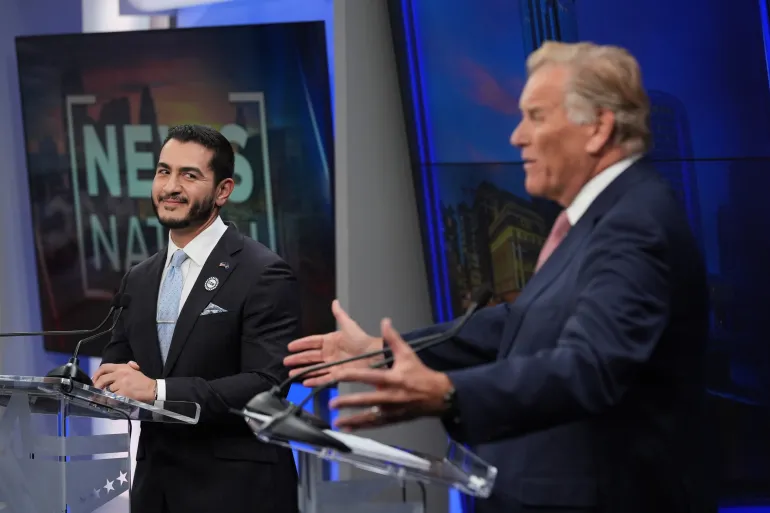
El-Sayed will face former Republican Congressman Mike Rogers in November. The race is considered one of a handful of competitive Senate contests in the November midterms and could determine which party controls the chamber for the rest of President Donald Trump’s term.

If El-Sayed – who is of Egyptian descent – wins in November, he would become the first Muslim senator in US history.

Tuesday’s result in Michigan – a swing state that voted for Trump in 2024 – will have major implications for the Democrats’ policies on conflicts in the Middle East.

El-Sayed recognises Israel’s atrocities in Gaza as a genocide and argues that money spent on conflicts that benefit Israel should be invested in local communities in the US to address healthcare, housing and infrastructure problems.

More to come…

Source link

Democrats Abdul El-Sayed, Rep. Haley Stevens face off in Michigan Senate primary

Aug. 4 (UPI) — The Democratic primary for Michigan’s Senate seat between Abdul El-Sayed and Rep. Haley Stevens is just one of Tuesday’s key races to watch.

Michigan is one of five states holding primaries on Tuesday, along with Virginia, Missouri, Kansas and Washington.

El-Sayed and Stevens are running for the seat left open by retiring Sen. Gary Peters. El-Sayed has received endorsements from Rep. Alexandria Ocasio-Cortez, D-N.Y., and Sen. Bernie Sanders, I-Vt., while Stevens has the endorsement of Michigan Gov. Gretchen Whitmer.

Stevens represents a more moderate wing of the Democratic Party while El-Sayed is the more progressive candidate.

Mike Rogers, a former Republican congressman, is running unopposed in the Republican primary. Rogers lost a tight race against Sen. Elissa Slotkin, D-Mich., in 2024. Rogers is endorsed by President Donald Trump.

Whitmer’s endorsement of Stevens is among the last endorsements she will make as sitting governor. She has reached her term limit, leaving the governor’s seat up for grabs.

For the Democratic Party, Secretary of State Jocelyn Benson is running against Genesee County Sheriff Chris Swanson. For the Republican Party, Rep. John James is running against businessman Perry Johnson. James is endorsed by Trump.

The Democratic Party is focused on flipping House seats in Virginia after the state’s Supreme Court struck down a congressional redistricting plan pushed by Democrats. The proposed map would have favored Democrats in 10 of 11 congressional districts.

Instead, Democrats are hoping to flip several Republican-held seats, including that of Rep. Jen Kiggans, R-Va. Elaine Luria, a former congresswoman, is running to take on Kiggans, who defeated her in 2024. She is one of four Democrats vying for the party’s nomination.

Seven Democrats are running for the opportunity to challenge Republican Rep. Rob Wittmann in the Williamsburg and suburban Richmond district. The Democratic Party has supported prosecutor Shannon Taylor’s primary campaign. Taylor was the first Democrat to be elected Henrico Commonwealth attorney in 40 years.

A Republican-led redistricting in Missouri has altered the makeup of the state’s congressional districts. Rep. Emanuel Cleaver, D-Mo., who represents Kansas City, is running unopposed in a district that suddenly is more Republican-leaning than it has been in recent elections. The Republican primary to challenge Cleaver includes six candidates.

Former Rep. Cori Bush, D-Mo., is seeking a return to Congress after losing her seat to Rep. Wesley Bell, D-Mo. Bush and Bell are running in a firmly Democratic district in St. Louis. The district voted 80% for Vice President Kamala Harris in 2024.

In the state of Washington, nonpartisan primaries will see the top two vote getters on the ballot in November regardless of party. Rep. Marie Gluesenkamp Perez, D-Wash., is running for re-election against eight candidates in Washington’s District 3.

The Kansas gubernatorial election is an open race with Democratic Gov. Laura Kelly reaching her term limit this year. Three Democrats and seven Republicans are running for her seat in a state that favored Trump by 16 points in 2024.

President Donald Trump announces a program to allow veterans to expedite a career in commercial trucking on Thursday. Known as the Freedom Haulers program, the initiative would allow any veterans who drove heavy equipment to be automatically eligible for a commercial trucking license. Photo by Jim Lo Scalzo/UPI | License Photo

Source link

From Trump to El-Sayed: US Arabs in Michigan centre Palestine in politics | US Midterm Elections 2026 News

Dearborn, Michigan – Yemeni-American activist Samraa Luqman has no regrets about voting for President Donald Trump in 2024.

While the United States president has been a disappointment to Arab Americans in Michigan with his pro-war and anti-immigration policies, she stressed that it was untenable for the community to vote for Democrats as Israel’s genocide unfolded in Gaza.

Recommended Stories

list of 3 itemsend of list

“There had to be accountability for the genocide. We’re OK with what we voted for,” Luqman told Al Jazeera.

“I said from the beginning, I’m willing to live through another four years of Trump, that we expected him to be bad on our issues, but it was a pill we were willing to swallow in order to hold the Democratic Party accountable.”

Luqman is not alone.

Despite Trump’s staunchly pro-Israel policies and unpopular war on Iran, many say supporting Democratic nominee Kamala Harris in 2024 was out of the question, and it was the right choice for the community to break with the Democratic Party.

“I could not – with a good heart, good conscience – tell someone to vote for Kamala Harris or Donald Trump”, but the approach of “lesser of two evils” no longer works to sway Arab voters, Hussein Dabajeh, a prominent political strategist in the Detroit area, home to large Arab and Muslim communities, told Al Jazeera.

Democrats’ popularity amongst Arab Americans nosedived in 2024 as President Joe Biden ignored calls to compel a ceasefire in Gaza and continued to provide Israel with weapons and military aid as it killed tens of thousands in Palestine and Lebanon.

Then, Vice President Harris refused even to consider an arms embargo against Israel.

As a result of these policies, many Arab Americans, who had been reliable Democratic voters for years, ditched the party and refused to support Harris in her presidential bid.

Trump swept in, presented himself as a “peace” candidate, and his campaign forged ties with Arab community advocates.

Trump’s policies

At a rally in Michigan ahead of the 2024 vote, Trump brought local Muslim imams to the stage and praised the community.

The Republican leader also visited the predominantly Arab and Muslim Detroit suburb of Dearborn ahead of the election.

Trump ended up winning Michigan as many Arab voters in the Dearborn area refused to back Harris. Some voted for him, while others voted for a third party, left the top of the ticket blank, or skipped the election altogether.

According to an Al Jazeera analysis of election results in heavily Arab precincts in east Dearborn, about 45 percent of the votes went to Trump, 29 percent to Green Party candidate Jill Stein, and 16 percent to Harris.

As president, Trump allowed Israel to continue its attacks on Gaza and Lebanon and launched an unprovoked war against Iran that has sent petrol prices soaring.

He has also intensified the crackdown on Palestinian rights advocacy at home with a campaign to deport noncitizen student activists critical of Israel.

In February, he also terminated immigration protections for Yemeni nationals, sowing fear and uncertainty in a community where many leaders had endorsed him in 2024.

Asked how Arab Americans feel about Trump now, Dabajeh said: “They hate him. There’s no other way of putting it. I don’t think there is a single person I know that voted for Trump from the Arab and Muslim community specifically that looks at what Trump is doing and is happy with what he’s doing, or what he’s done.”

‘The genocide matured us’

Many Arab Americans stress that withholding support for Harris in 2024 was not out of love for Trump.

“No one understands the horrors of Trump’s policy more than us. We were his first victims in 2017,” said Amer Zahr, a comedian and Dearborn Board of Education trustee.

Shortly after starting his first term in 2017, Trump implemented a travel ban on several Muslim-majority countries.

“No one is more aware of the harm that Trump can cause than we are,” Zahr added. “But the genocide matured us in a way that we finally got to the point where we were willing to tell politicians ‘no’.”

As the election season returns to Michigan, Arab Americans once again find themselves at a political crossroads.

The community is rallying behind Democratic Senate candidate Abdul El-Sayed – who had previously endorsed Harris – but some are keeping their political options open.

Luqman, the Yemeni activist, said she will certainly vote for El-Sayed and Congresswoman Rashida Tlaib – who are outspoken critics of Israel – in the Democratic primary on Tuesday and in the general elections in November.

Luqman said Democratic voters’ support for progressive candidates will help the party regain credibility with Arab voters.

“Those are things that do bring the Democratic Party a little bit of relevance and credibility within our community,” Luqman told Al Jazeera.

“It has kind of brought the community back to centre, whereas they were kind of swinging to the right by a large margin.”

Political strategist Hussein Dabajeh says many Arab Americans in Michigan ‘hate’ Trump and his policies
Political strategist Hussein Dabajeh says many Arab Americans in Michigan ‘hate’ Trump and his policies [Ali Harb/Al Jazeera]

Palestine or bust

While some political commentators have been questioning why US support for Israel has become a decisive issue in US politics, particularly Democratic primaries, the answer in the Arab community is clear.

Advocates say domestic policy takes a backseat when their loved ones are being killed, and their hometowns are being wiped out by their own tax dollars via military aid to Israel.

“Gaza and Palestine and Middle Eastern issues have now become the forefront, the top of everybody’s issues, and it’s become a red line for my community,” Luqman said.

“So if you’re a Republican or Democrat and you hate AIPAC and you value Palestinians’ rights to self-determination, then you’re going to be getting our vote, regardless of what party you’re in,” she said, referencing the powerful American Israel Public Affairs Committee lobby group.

Zahr echoed that message.

“People want us not to be single-issue voters. In other words, they want us to forgo our main issue, get screwed on it, watch our families die because Trump’s bad, and accept all that,” he said.

“Well, we said ‘no’. The blood of the children of Gaza had to mean something.”

Zahr emphasised that Arab Americans are not alone in centring Palestine in their electoral choices, pointing to the defeats that pro-Israel incumbents have suffered across the map in this primary season.

“You’ve gotten to a point where if somebody says, ‘Stop bombing hospitals’, everyone knows you’re talking about Israel. That’s because of Israel. That’s not because of us. That’s because of what Israel did,” he told Al Jazeera.

“And so, people are keying into the truth. And when you learn the truth, something that comes along with that is you learn that you’ve been lied to, and you get angry. A lot of righteous anger is pushing a lot of this.”

Dabajeh, the political strategist, said that while Arab voters care about the economy, affordability and infrastructure – like all Americans – they cannot overlook US policy on Israel.

“Are we supposed to call our family members overseas and be like, ‘Listen, khalto [auntie], this guy over here that’s running for office might kill some of your neighbours, might kill some of your kids, but don’t worry about it, he’s going to take care of the flooding in our homes’?”

“It’s not going to work. We can’t do that.”

Islamophobia and racism

Republicans tried to court Arab and Muslim voters in 2024 and capitalise on the discontent over Gaza policies, but now, many conservatives have returned to demonising the community as an electoral strategy.

Weeks after he was elected, Trump endorsed Randy Fine, a Florida politician with a history of anti-Muslim statements, for Congress. Fine would go on to win and call for the “destruction” of all Muslims.

Meanwhile, Republican governors in Florida and Texas have designated the Council on American-Islamic Relations (CAIR) as a “terrorist” group.

In Michigan, Republican Congressman John James, who is running for governor, has also pledged to blacklist the group.

Luqman said James had spoken to community members and promised to engage voters in Dearborn before that announcement.

“There was a really big opportunity for the Republican Party to solidify the swing of the pendulum, if you will, and they lost that option. They really missed that opportunity,” she said.

Source link