earthquakes

Survivors and bodies still being pulled from rubble days after twin quakes | Earthquakes

NewsFeed

International aid teams have played a key part in Venezuela’s ‘miracle rescues’, days after twin earthquakes struck, but now they’re preparing to leave. Thousands of people are still searching for their relatives amid the rubble, as frustration continues to build towards the government response.

Source link

Sports stadium becomes home for victims of the Venezuela earthquakes | Newsfeed

NewsFeed

A sports stadium in La Guaira state has been turned into a makeshift home and logistics centre for thousands of victims of the Venezuela earthquakes. As Al Jazeera’s Zein Basravi reports aid organizations are planning to make this a model for other shelters.

Source link

How a son rescued his father from the rubble of Venezuela’s earthquakes | Earthquakes News

At first, Jesus did not believe it was possible, but then he heard his father shouting out from the rubble, saying: “Don’t leave me here.”

“I said, ‘Trust me: Stay calm. Keep the kids calm over there. I’m not leaving here without you,'” Jesus recalled.

Jose had been trapped for more than an hour by that point, unsure of his fate. He and his two younger sons had survived the collapse with relatively minor injuries, but dangers remained. The debris could still shift and crush them.

“The first thing I thought of was my children. I had the little one right here,” Jose recalled, lifting his hands to his chest. “And I still had the other one. He was right next to me but buried. I couldn’t see his face; I could only see one foot and one hand.”

Still, Jose put on a brave face for his boys. A friendly voice had pierced the rubble: Jesus’s friend, the firefighter.

He had been shouting for survivors. He had also brought Jesus’s old firefighting equipment to the site.

Jesus Garcia looks at the remains of the Ritasol Palace apartment complex
Jesus Garcia looks at the remains of the Ritasol Palace apartment complex [Alfie Pannell]

After finding out his father and brothers were alive, Jesus began desperately trying to get them out. But he realised he would have to wait until the next day for the sun to come up and, crucially, to get his hands on a jackhammer that could drill through the floors of rubble separating him from his family.

Finally, the next morning, a specialist squad from the police arrived with the gear they needed to carry out the rescue.

With the help of his firefighting team from La Guaira, who showed up to help their old comrade, Jesus was able to pull his father and two younger brothers from the rubble at about 3:30pm on June 25, more than 20 hours after the earthquakes.

He quickly swept Diego and Santiago into his arms.

“When I saw them, I hugged them, gave them a kiss, and said, ‘I love you, brother,'” Jesus recalled. “Then I stepped away for a moment and started crying.”

Jose is still shaken from the experience, which has changed his life forever. “I am someone who will be grateful for the rest of my life that I was given this opportunity. Not just me, but my two young children.”

Source link

Venezuelan leader marks Independence Day with message of ‘no social unrest’ | Earthquakes News

Venezuela has marked its 215th Independence Day as citizens continue to grapple with grief following a pair of deadly earthquakes on June 24.

On Sunday, interim President Delcy Rodriguez sought to project strength during a military service in honour of the annual holiday.

Recommended Stories

list of 3 itemsend of list

“There will be no social unrest here,” Rodriguez said. “What we have here is deep social solidarity.”

But Rodriguez’s government has faced backlash since the twin earthquakes struck, hitting Venezuela with magnitudes of 7.2 and 7.5, respectively.

On Sunday, Venezuela’s Ministry of Communication and Information announced that it had recorded 3,342 deaths as a result of the earthquakes, with more expected. Thousands of people remain missing.

In addition, some 16,470 people are injured, while 17,345 have been left without homes.

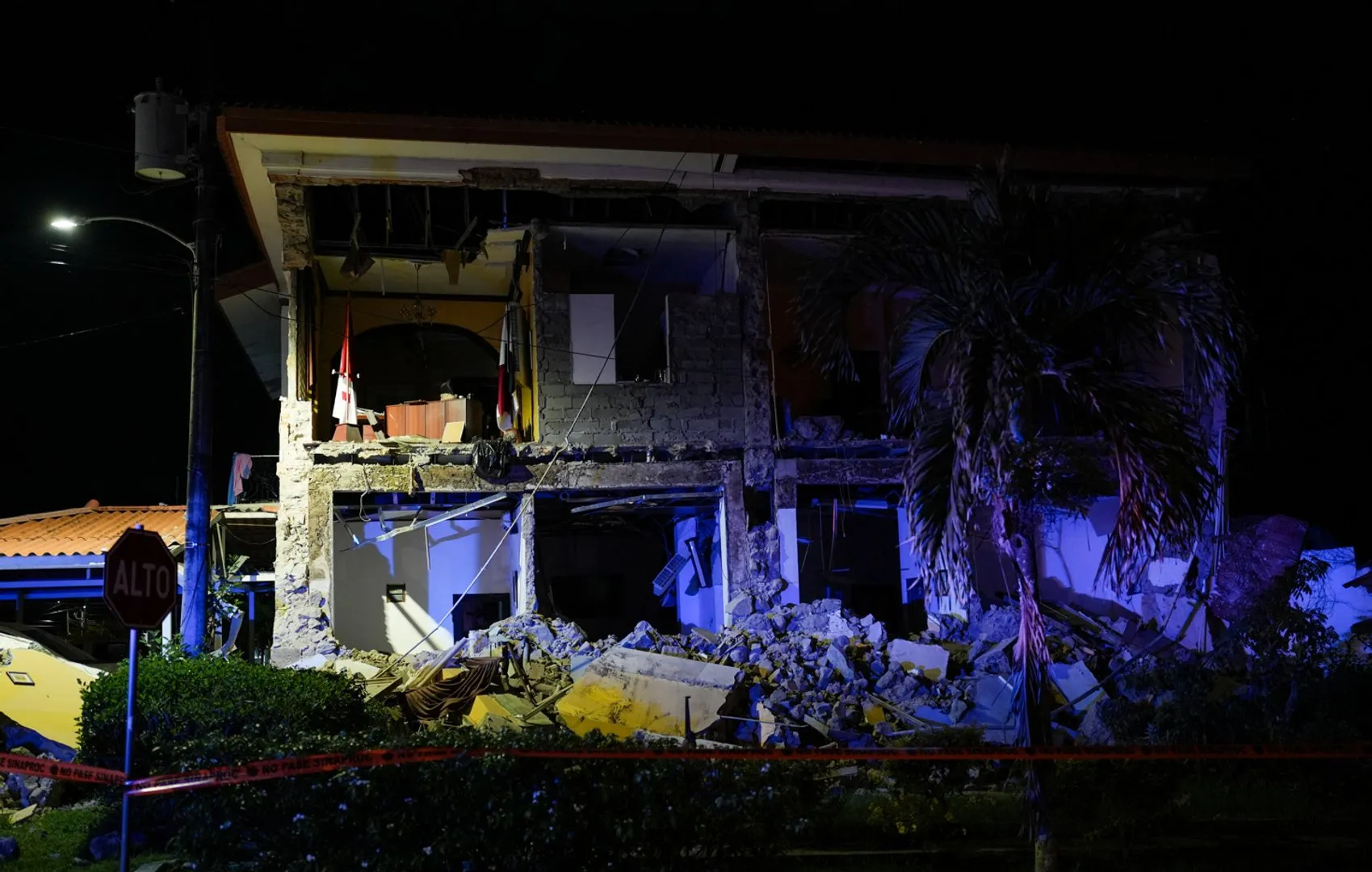
The powerful seismic activity levelled buildings along Venezuela’s northern coastline, damaging regions like La Guaira and the Caracas metropolitan area.

Critics have accused the United Socialist Party of Venezuela, which has led the country since 2007, of chronic mismanagement and corruption.

That, they say, has left Venezuela incapable of handling a crisis of the current scale. The June 24 earthquakes are the deadliest in a century for the country, and they represent the most catastrophic natural disaster Venezuela has weathered since the flash floods of 1999.

After the earthquakes, residents reported that government aid was slow to reach the most affected areas. Some accused the government of impeding the flow of foreign assistance.

In Sunday’s remarks, Rodriguez accused critics of seeking to stir “hatred” against the state.

“Attempts are being made today to attack Venezuelan institutions,” Rodriguez said. “There can be no room for any kind of conspiracy, internal or external, from whatever source it may come.”

The earthquakes are the first major disaster the Rodriguez government has had to contend with.

Rodriguez was sworn in as acting president in January, after serving as vice president under then-President Nicolas Maduro.

But on January 3, the United States launched a military operation to abduct and imprison Maduro on drug- and weapons-related charges. He is currently facing trial in New York.

Since taking power, Rodriguez has sought to work within the demands of US President Donald Trump. Her government has overseen reforms, for example, to its nationalised mining and fuel industries allowing more foreign investment.

The Trump administration, meanwhile, has stood by Rodriguez, even amid the outpouring of criticism following the earthquakes.

Media reports have emerged that the US has repeatedly rejected requests from Venezuela’s main opposition leader, Maria Corina Machado, to help her return to the country.

Machado had been living in hiding under Maduro for fear she would be arrested for her politics. In December, shortly before Maduro’s abduction, she secretly left Venezuela to collect a Nobel Peace Prize for promoting democracy.

But Machado has yet to return, though she has said she wants to be in the country to help with disaster relief efforts.

Her political coalition, Vente Venezuela, has been organising its own volunteer effort to collect donations and distribute supplies.

In a message to mark Venezuela’s Independence Day, Machado sought to draw a parallel between the US and her country.

“Yesterday, the people of the United States celebrated the 250th anniversary of their Declaration of Independence. Mere hours separate these commemorations, reflecting far more than a coincidence of history,” she wrote.

“They remind us that our nations are bound by the same republican ideals and by a shared commitment to the defense of the free world.”

In January, Machado presented Trump with her Nobel Peace Prize medal, in what was widely seen as an attempt to curry favour with the US president.

She has repeatedly pushed for new elections in Venezuela, claiming that her party has had a mandate to lead since the 2024 presidential race.

That election saw Maduro claim a third term as president, despite published vote tallies indicating he lost the race to the opposition candidate, Edmundo Gonzalez, an ally of Machado.

“We have built an unshakable democratic legitimacy, we have defeated the regime’s lies with the truth, and we have peacefully mobilized an entire nation that today is outraged and desperate for change,” Machado wrote in her Independence Day message.

“Enduring alliances are built on truth and trust. Now is the time to move forward with determination and to carry out, with unwavering resolve, the decisive chapter of our shared strategy.”

Source link

Disaster Capitalism in Haiti Gives a Glimpse Into the Imperialist Shock Doctrine That Could Rattle Venezuela Long After the Earthquakes

A UN peacekeeping truck in Haiti following the 2010 Earthquake. (Wikimedia Commons)

The U.S. has attacked Venezuela through various means for decades and kidnapped President Maduro but is now claiming to assist with earthquake relief. If it’s role in Haiti is any guide, that so-called aid from the U.S. is a Trojan Horse bringing more plunder and control.

For decades, the U.S. has waged a carefully planned and unrelenting attack on Venezuela’s economy using unilateral coercive measures, commonly known as economic sanctions, to destabilize and destroy the country’s socialist Bolivarian government. Though the earthquakes that devastated the nation were not caused by the U.S., the destabilization of the Venezuelan government, economy, and infrastructure was. The damage from those sanctions was so pervasive that any natural disaster large enough would be catastrophic, leading to foreign aid being used not only to produce enormous capitalist profits for foreign interests but also to bring the country more firmly under U.S. control. This is the situation Venezuela faces today.

George W. Bush imposed the first coercive measures against Venezuela in 2006. Democratically elected President Hugo Chávez had the nerve to criticize the U.S. for its bloodthirsty response to 9/11 and refused to support or participate in the U.S. sham counterterrorism efforts. Chávez did so in a very public and embarrassing way for Bush, as he declared from the lectern at the United Nations that George W. Bush was the devil, and that the podium that Bush had just delivered his own remarks from still smelled like sulfur. Bush responded by declaring Venezuela a state sponsor of terror along with Cuba and Iran (notice a pattern here). Bush also claimed that Venezuela refused to adhere to international counternarcotics agreements, breathing life into the claim that the Bolivarian government was a sponsor of narcoterrorism. But even before that, in 2004, Bush restricted non-humanitarian aid to the country, claiming they weren’t doing enough to stop human trafficking. Bush did all of this after the failed U.S.-backed coup against Chávez in 2002 that was tied to his administration. 

The aggression toward Venezuela did not end with the Bush presidency. In December 2014, Obama signed the Venezuela Defense of Human Rights and Civil Society Act after U.S. intelligence agencies and the Department of State claimed that the Venezuelan government was committing human rights abuses against government opposition members. This was done in response to the Maduro government charging opposition members with engaging in conspiracies to overthrow him. Obama imposed sanctions on seven Venezuelan officials, and in  March 2015, he issued an Executive Order implementing these sanctions and expanded them to block their visas and freeze the U.S. property of the targets. Obama publicly declared Venezuela an “…extraordinary threat to the national security of the United States.” 

In response, President Maduro said in a nationally televised speech, “President Barack Obama, representing the U.S. imperialist elite, has personally decided to take on the task of defeating my government and intervening in Venezuela to control it.” One of the impacted Venezuelan officials, Diosdado Cabello, said, “What is being planned are attacks against our land, against our country, military attacks.” It took the U.S. a few years, but…

President Donald Trump imposed more, wider-reaching economic coercive measures in 2017 during his first term. In addition to recognizing unelected opposition figure Juan Guaido as president of Venezuela, Trump also sanctioned the state-run oil company PDVSA, denying the government access to U.S. financial markets. He froze PDVSA’s assets and finally imposed a near-complete economic embargo on the country. And in 2020, the Trump Justice Department indicted President Maduro on charging the president and 14 others with narcoterrorism, conspiracy to import cocaine, and gun charges. It also accused him of coordinating with the leftist guerrilla peasant militia Fuerzas Armadas Revolucionarias de Colombia (FARC), or Revolutionary Armed Forces of Colombia. Founded as the military wing of the Colombian Communist Party, which sought to redistribute land and resources that the Colombian government denied to the desperately poor peasants in rural areas. After years of fighting with the government, FARC was officially dissolved in the 2016 Peace Accord with the Colombian government. They are now a legal left-wing political party, initially called the Common Alternative Revolutionary Force and later renamed the Comunes (Commons). Trump then issued a $15 million bounty for information leading to Maduro’s arrest. Not to be outdone in attempting to enact regime change in Venezuela, President Joe Biden doubled the bounty to $25 million, with no additional indictments added.

The measures barred Venezuela from importing equipment, spare parts, and industrial chemicals to maintain its oil production facilities and shipping capabilities. Oil infrastructure across the country deteriorated, and oil production was driven far below the previous 3 billion barrels a day at its 2008 height to barely above 300,000 barrels a day.  

While many people accurately note that the U.S. is after control of Venezuela’s enormous oil reserves, the country’s mineral wealth is also crucial to the U.S. and much of the world, as it includes bauxite and rare earth minerals critical for weapons systems, satellite manufacturing, and AI technologies. When we consider the struggle we are engaging in to stop the proliferation of these technologies from being used to violate our privacy, whatever freedom we have left, our environment, and our very lives, consider that the U.S. pursuit of these materials has already directly caused the instability, suffering, worsened health outcomes, and deaths of tens of thousands of Venezuelans.

Venezuela relies largely on oil exports to fund its public sector commitments; the collapse of oil exports crippled its primary source of public revenue, making it impossible to import essential goods like food and medicine. The Center for Economic and Policy Research (CEPR) estimated that 40,000 Venezuelans died due to economic coercive measures between 2018 and 2019 alone. Former U.S. Special Rapporteur Alfred de Zayas estimated the deaths to have been over 100,000 by 2020. But this is neither unexpected nor unwanted by the U.S. government. Economic sanctions are designed to cause so much hardship for the people of a country that they will rise up in frustration and anger at their own government. U.S. officials understood that imposing economic sanctions on the country would prevent it from importing not just materials to maintain the oil sector but also necessities for the Venezuelan people, such as food, medicine, fuel, and even toilet paper. But public infrastructure, from hospitals and office buildings to apartment buildings and water systems, also fell into disrepair as materials needed to maintain it could not be imported due to sanctions. With the physical buildings weakened, the country was far more vulnerable to disasters like the June 2026 earthquakes than it would have been had the sanctions not been in place.

By the time Trump returned to the White House in 2024, despite the immense damage already done to the country’s economy and infrastructure, they had not done what successive U.S. presidents wanted: to bring about the collapse of the Bolivarian government in Venezuela. Trump imposed more measures after his return to office, doubled Biden’s bounty increase on Maduro to $50 million, and eventually carried out the violent kidnapping of President Nicholas Maduro and First Combatant Cilia Flores in the pre-dawn hours of January 3, 2026, with the help of the Navy and Marines of the Southern US Command (SOUTHCOM), which also carried out the indiscriminate murders of Caribbean fisherfolk in the months prior to the kidnapping. The bounty was never paid to anyone. He also added to the original 2020 indictment against Maduro by adding his now-kidnapped wife and National Assemblywoman Flores, and adding charges of “…narco-terrorism conspiracy, cocaine importation conspiracy, possession of machine guns and destructive devices, and conspiracy to possess machine guns and destructive devices against the United States.” They are both held in separate solitary confinement cells in the Metropolitan Detention Center (MDC) in Brooklyn, NY, awaiting their sham trials.

It is an obscenity that the same SOUTHCOM is now deploying forces to Caracas to provide post-disaster air traffic and airport support. But it is a greater crime that the U.S. has positioned itself and its interests to finally get what it wants – control of Venezuela’s oil and minerals sectors and eventual privatization of public services that define the Socialist Bolivarian government – even if it is a natural disaster that provides them the perfect opportunity to achieve it. This, after expropriating Venezuela’s oil industry and profiting from selling the stolen crude, Trump sending a measly $150 million in “aid” to the country he stole their sovereign materials from is a settler colonial level insult.

This is “disaster capitalism,” popularized by Naomi Klein in her book The Shock Doctrine, but a well-documented aspect of imperialist plunder. In the process of imposing economic shocks through sanctions by an external entity or through the implementation of neoliberal policies internally, Klein explains how governments and corporations exploit the shock of an unplanned, catastrophic event to impose radical, wholesale austerity and control. Disaster response becomes the vehicle for enormous foreign investment and development, foreign control of that development, and ultimately the usurpation of the existing but weakened state in favor of the foreign governments and corporate interests behind the aid money. Economic policies that would be rejected under normal circumstances are more easily imposed on an already vulnerable state when that state and its people are rendered desperate by a natural disaster. 

The use of disaster relief as a Trojan Horse for neoliberal plunder and control after the 2010 earthquake in Haiti may give us a terrifying vision of what could be in store for Venezuela today.

The earthquake in Haiti was used as a pretext for the US to assert near-total control over the country’s recovery, if not the country itself, along with its foreign allies in the UN-imposed Core Group that governs the island nation. Aid and reconstruction, and the billions of dollars for it, were directed by those and other foreign governments and contractors, bypassing the Haitian state under then-president René Préval. International entities justified this by claiming Haiti was hopelessly corrupt. What they were, however, was in disarray after the earthquake destroyed much of the government’s infrastructure, including the National Assembly and the National Palace, and years of imperialist control usurped its sovereignty. 

But this excuse was needed to justify the Haitian government seeing very little of the billions of dollars pledged for relief and reconstruction. The Associated Press reported in 2013 that CEPR found that out of the $1.15 billion pledged, only 1% went to Haitian companies. They found instead that “…the ‘vast majority’ of the money it could follow went straight to U.S. companies or organizations, more than half in the Washington area alone.” And what was constructed was for the benefit of foreign corporate and Haitian comprador interests, who had the protection of the United States government to bend Haiti to all of their will.  

The $224 million Caracol Industrial Park, built with reconstruction funds allocated through the recovery mission co-chaired by former U.S. President Bill Clinton, is a continuing example of disaster capitalism and the nefarious ways that Western imperialists profit from natural and human catastrophe.

In 2011, scores of farmers and other residents were evicted from their fertile agricultural land, far from the impact zone, to make way for its construction. They were given little notice to leave and insufficient compensation. They fought for years to secure a reparations agreement with the Haitian government and the Inter-American Development Bank (IDB) in 2018, which included new land, jobs, equipment, and other compensation. Many finally received reimbursement in 2020, but not all, and not nearly enough for what was taken from them by the U.S., the IDB, and USAID, who were the major funders of the project. 

The park was designed to attract foreign garment companies with tax exemptions and cheap labor, as wages were promised to be kept as low as $1.75 a day. The garment companies did come, and the Clintons promised hundreds of thousands of jobs. But fewer than 10,000 were produced, and they were at the same low rate of less than $2.00 a day that Haitians had been fighting to raise for years before the earthquake against a small group of Haitian manufacturing, import/export, and political elites controlling the country’s existing manufacturing industries with the backing of the U.S. government. When the Haitian government passed a law in 2009 to raise the country’s minimum wage for garment workers to $3 a day and $5 a day for other sectors due to the people’s agitation, foreign companies and the Haitian elite colluded with the U.S. State Department and, with a study from USAID that said raising the minimum wage would make the garment sector economically unviable, successfully blocked the legislation. 

While Bill and Hillary Clinton have never admitted involvement in suppressing Haitian wages, Hillary Clinton was Secretary of State under President Barack Obama when the State Department cables that WikiLeaks published revealed the covert wage-suppression scheme that resulted in legislation being passed in the U.S. to favor the Haitian elite and foreign investors: the Haitian Hemispheric Opportunity through Partnership Encouragement (HOPE) Acts I & II. There was no way the Clintons were not involved, as it was the Clinton Foundation through which they did much of their work in Haiti, and Haitians hold them responsible for the abysmal outcome.

By the end of 2011, one year after the earthquake, most of the promised aid had not been disbursed, and what was went to projects unrelated to housing, feeding, or providing any aid or support to the displaced, like the Caracol Industrial Park.  The scandal was compounded by revelations that some major aid organizations achieved very little with the funds they received, so no one could really account for where the billions of dollars went, other than into the pockets of non-Haitians. 

Today, Haiti is still among the poorest countries in the world. Haitians have continued to protest not just against the minimum wage, but also the lack of sovereignty and human dignity imposed upon them as they endure a rise in U.S.-fueled gang violence, attacks on Haitian immigrants from this administration, continued control from the UN-appointed Core Group with no elected leadership chosen by them, and another UN invasion/intervention to quell unrest. 

This is the future that the U.S. wants for Venezuela. To make Venezuela like Haiti or something close to it, at least in the manner of creating a dismantled state that the U.S. can swoop into, plunder, and control. Although Haiti and Venezuela may not be perfectly similar in many ways, but the use of an earthquake to further imperialist takeover of a country already weakened by relentless Western hegemony in response to the successful liberation struggle of largely Afro-descendent and Indigenous peasantry to free themselves from European settler colonial domination and capitalist exploitation are complementary examples of how a natural disaster is be used to deepen imperialist control under the guise of aid, instead of the most powerful and wealthiest country in the world using that power and money to help suffering human beings. And then the same country calls those states failed, and demonizes the government and the people as immature, unable to govern themselves, and an example of the failures of socialism or communism.

As U.S. officials are on the ground in Venezuela openly “coordinating” with the Interim President Delcy Rodriguez, it must be understood that this is done with the threat of her own indictment and imprisonment on bogus charges of narcotrafficking, human rights abuses, corruption, or grave robbing, depending on how amusing the U.S. wants to be with the sham accusations over her head. 

And now, the U.S. is poised to use this unbelievably tragic disaster as an even bigger cudgel to force the Venezuelan state to concede much, much more, seizing this opportunity to tighten its control over the country’s oil and mineral resources, effectively absorbing it into the U.S. sphere of influence, to be used as a weapon against the rest of the U.S.’s designated enemies, Cuba, China, and Russia. Venezuela has had friendly relations with all of these countries, and all countries that the U.S. is also softening up with sanctions, embargoes, and threats of worse treatment. 

We must expand and deepen the struggle against the U.S. re-colonization of the Western Hemisphere and join our struggling brothers and sisters in the Global South for an end to imperialist aggression, hegemony, and gangsterism, and we must target the enemy in whose camp we reside with clarity and purpose.

Because natural disasters will never stop happening. But disaster capitalism never has to happen again.

Not if we destroy capitalism and the empires that are erected upon it.

Jacqueline Luqman is a radical activist based in Washington, D.C., as well as a co-founder of Luqman Nation, an independent Black media outlet available on YouTube (here and here) and Facebook.

The views expressed in this article are the author’s own and do not necessarily reflect those of the Venezuelanalysis editorial staff.

Source: Black Agenda Report

Source link

Ronaldo sends message to Venezuelan earthquake survivor | World Cup 2026

NewsFeed

Cristiano Ronaldo has sent a message to a young Venezuelan earthquake survivor, who is recovering in hospital after having his leg amputated. Andres Mieles, who was also orphaned in the June 24 disaster, had requested a Ronaldo trading card to keep his spirits up – but the superstar himself had other ideas.

Source link

Venezuela’s Rodriguez blames ‘propaganda’ for quake response backlash | Earthquakes

NewsFeed

Venezuela’s acting president Delcy Rodriguez, whose 180-day mandate ends Friday, dismissed criticism of the government’s earthquake response, saying rescue crews were deployed immediately with adequate equipment. Residents have said they were on their own for the first 48 hours.

Source link

Venezuela’s Rodriguez blames ‘propaganda’ for quake response backlash | Earthquakes

NewsFeed

Venezuela’s acting president Delcy Rodriguez, whose 180-day mandate ends Friday, dismissed criticism of the government’s earthquake response, saying rescue crews were deployed immediately with adequate equipment. Residents have said they were on their own for the first 48 hours.

Source link

Delcy Rodriguez responds to public anger at government response | Environment

NewsFeed

Interim President of Venezuela, Delcy Rodriguez, says 80% of the buildings that collapsed in back-to-back earthquakes were privately developed. She also confirmed that more than 2,500 people are dead and that search and rescue operations still continue.

Source link

‘Miracle’: Trapped man rescued eight days after Venezuela earthquakes | Earthquakes News

A man has been rescued from a collapsed building eight days after twin earthquakes devastated Venezuela.

The rescue on Thursday came as attention has begun to shift from finding survivors under the rubble to addressing the humanitarian needs of the thousands of residents displaced.

Recommended Stories

list of 3 itemsend of list

An estimated 60,000 buildings were damaged or destroyed in last week’s earthquakes, which hit magnitudes of 7.2 and 7.5, respectively. An estimated 13,000 people have been left homeless.

In its last official update, Venezuela’s government said that at least 2,295 people have been confirmed killed, with 11,000 injured. The death toll was expected to rise, with about 50,000 people reported missing.

But in a rare ray of hope, rescue workers were able to reach 43-year-old security guard Hernan Gil on Thursday, after days of trying to retrieve him from a collapsed seven-storey building where he worked in the hard-hit coastal area of Catia La Mar.

Gil had been located three days earlier. Rescue teams from seven countries, including Venezuela, Chile, the United States, Portugal, Costa Rica, El Salvador and Mexico, worked to free him.

“This is truly a miracle,” Gil’s wife, Gusbimar Gonzalez, told the news agency AFP.

Cristian Vera, the leader of the Chilean rescue team, told AFP that rescuers eventually were able to dig a three-metre (9.8-foot) tunnel to extract Gil. They had been able to provide him water via a hose and oxygen tube in recent days.

“It wasn’t easy to reach the exact spot where the victim was located,” he said.

Reporting from the state of La Guaira, Al Jazeera correspondent Zein Basravi said that, while Gil’s recovery has given some families hope, countless rescue attempts across the country have ended in tragedy.

Many of the collapsed buildings in La Guaira, located north of Caracas, have already been marked with the letter D for “deceased”, signalling no signs of life could be detected.

“One search-and-rescue expert we spoke to on the ground said the footprint of this disaster is so big, there are 58,000 buildings that have been destroyed or damaged, there’s so much area to search, and so many days into the aftermath of this earthquake, it is less and less likely that anyone can be found alive,” Basravi said.

He added that the emergency response is set to “move away from rescue and recovery into a very different phase of this disaster, which will see more relief work, more humanitarian work needed on the ground”.

Risks of health crisis

Humanitarian workers have warned that the aftermath of the earthquake could lead to a health crisis, as understaffed medical centres are likely to face cases of untreated injuries and infectious disease.

For years, the country’s health system has been strained by shortages of critical medical equipment, highly trained staff and electrical power.

The World Food Programme has appealed for $50m to feed some 500,000 people for three months. The United Nations Development Programme has put the estimated cost for the physical damage at $6.7bn, based on satellite imagery.

Several countries and regional blocs have pledged funding to help with relief efforts.

That has included $300m from the US, according to the Department of State. The administration of US President Donald Trump, who abducted Venezuelan leader Nicolas Maduro earlier this year, has continued to support the country’s interim President Delcy Rodriguez despite criticism over a lack of preparedness.

Reporting for Al Jazeera from Caracas, journalist Noris Soto said that international aid will be “more than necessary” in the months and weeks ahead.

“Venezuela has been struggling with economic hardships for the past two decades. So, if you add this disaster to that economic crisis that Venezuelans were already suffering, they will need help for years to come,” she said.

Source link

‘A war zone’: Venezuela aid workers fear health crisis after earthquakes | Earthquakes News

Medical experts fear the aftermath of Venezuela’s devastating twin earthquakes could trigger a widening health crisis marked by untreated injuries, infectious diseases, and a healthcare system already on the brink of collapse.

Thousands of displaced Venezuelans are sleeping in crowded temporary shelters or outside without access to clean water amid dismal sanitary conditions following the June 24 earthquakes, which officials said on Wednesday killed at least 2,295 people and left more than 11,000 injured.

Recommended Stories

list of 3 itemsend of list

“The issue we foresee just around the corner is the infections that patients who have been exposed to the disaster for the longest time might bring,” said Eugenio Cova, the head of the trauma unit at Hospital Jose Gregorio Hernandez in Caracas.

“We’ve already gone through a period of complex trauma – which will continue to occur – but now, it’s complicated by infections,” Cova said.

Aid workers also warn that the extensive damage to infrastructure could fuel outbreaks of diseases in the hardest-hit communities.

“There’s been lots of reports among the population here with diarrhoea and other diseases,” said Al Jazeera’s correspondent Teresa Bo, reporting from a shelter site in the region of La Guaira.

“They’re asking, for example, for portable toilets, and also help from the government to try to reorganise this place to try to prevent overcrowding, but also the spread of disease,” Bo said.

LA GUAIRA, VENEZUELA - JULY 01: Children play under a tent after the earthquakes that struck Venezuela and other regions in the Caribbean, on July 1, 2026 in La Guaira, Venezuela. According to the U.S. Geological Survey (USGS), the main earthquake on June 24, 2026 was followed by a 7.5-magnitude aftershock less than a minute later. The number of fatal victims increased to 2295, while the number of injured people exceeded 10,000. More than 70,000 people are reported missing. (Photo by Edilzon Gamez/Getty Images)
Children shelter under a tent after the earthquakes in La Guaira, Venezuela [Edilzon Gamez/Getty Images]

US military deploys 900 personnel to aid Venezuela

The United States has deployed some 900 military personnel on the ground in Venezuela to support relief and rescue operations as of Wednesday, Steven McLoud, a spokesperson for the US military’s Southern Command (SOUTHCOM), told The Associated Press news agency.

According to McLoud, the US military has repaired an earthquake-damaged runway at Venezuela’s main international airport, which serves Caracas, to allow for the arrival of humanitarian assistance, and has stationed naval vessels off the country’s coast to assist in the aid operation.

An additional 100 people from the US Department of State have been sent to support the efforts, McLoud said.

So far, the administration of US President Donald Trump has offered Venezuela $300m in assistance channelled through aid groups and the United Nations.

That contribution is just a fraction of the post-earthquake aid the country needs, with material damage from the devastating quakes estimated at more than $6.7bn, according to satellite analysis by the UN Development Programme.

Vietnamese rescuers searches a building that collapsed during back-to-back earthquakes in Catia La Mar, Venezuela, Wednesday, July 1, 2026. (AP Photo/Fernando Vergara)
A rescue team from Vietnam searches a building that collapsed during back-to-back earthquakes in Catia La Mar, Venezuela [Fernando Vergara/AP]

About 50 other international aid teams have arrived in the country in recent days to help with search-and-rescue operations, including from Ecuador and Israel, which do not have diplomatic relations with Venezuela.

Against the odds, rescuers continue to find a small number of survivors, including on Tuesday, a toddler who had been trapped for six days beneath the rubble.

Kevin Simm, a volunteer aid worker, told Al Jazeera the scale of the destruction was akin to armed conflict.

“This obviously brings to mind the current situations that are going on across Gaza and Ukraine,” Simm said.

“It’s like a scene from a movie or from a war zone… We have never seen this in peacetime.”

Venezuela’s crisis-stricken hospitals dealt another blow

Long before the earthquakes, Venezuela’s public hospitals were strained by shortages of water, energy, critical medical equipment, and highly trained staff, according to reports.

More than 7.7 million Venezuelans have left the country since its economic crisis began in 2013 under then-President Nicolas Maduro, who was abducted by US forces in a military raid, along with his wife, earlier this year.

Many specialised doctors and nurses were among those who departed, with Venezuela’s medical association estimating that about one-third of its 60,000 registered physicians have left the country.

Huniades Urbina, a member of the board of Venezuela’s paediatrics association, said that a 2025 national survey of public hospitals revealed shortages of more than 30 percent of emergency supplies, and more than 70 percent of supplies in operating rooms.

Laboratories are “all practically closed or do the basic things only”, Urbina said.

The earthquakes “once again highlight the Venezuelan government’s inability to provide an adequate healthcare system that meets the needs of the Venezuelan people”, he added.

Source link

As Venezuela responds to earthquake devastation, volunteers take charge | Earthquakes News

Catia la Mar, Venezuela – Andreina Velasquez looks up at her multistorey apartment block overlooking Catia la Mar, a coastal city in the Venezuelan state of La Guaira. The concrete slabs that once separated each floor are now stacked on top of each other.

“They fell like a pack of cards,” she said, pointing to where she used to live on the sixth floor.

Velasquez feels lucky. She left her apartment a couple of hours before a pair of deadly earthquakes shook Venezuela on June 24, reaching magnitudes of 7.2 and 7.5, respectively.

She had gone to get a new key cut and was at the beach when the first quake struck.

Her neighbours did not make it. She remembers one as a gentle, retired man, another as a woman with a young daughter who had just moved in. They had been overjoyed with their view of the sea.

Velasquez is still struggling to process what she has lost. Her state was among the hardest hit by the earthquakes.

But despite her grief, she has started to hand out face masks to passersby, hoping to shield them from the gusts of dust drifting from the collapsed buildings and the stench rising from the rubble.

“I’ve been here every day. Other people came to help, but they don’t have helmets, they don’t have gloves, they don’t have masks. That’s why I’m helping,” she said.

More than 2,295 people have been killed and 11,000 injured in the twin earthquakes, according to Venezuela’s National Assembly. The United Nations has warned the death toll could rise to 10,000.

As Venezuela continues to confront the destruction, experts say recovery efforts have been driven largely by volunteers and neighbours like Velasquez.

Hospitals are overwhelmed, and government aid has been slow to reach some of the worst-affected areas.

Carolina Jimenez, the president of the Washington Office on Latin America (WOLA), a research and advocacy group, told Al Jazeera that the result has been growing anger towards the state.

“In a government in any other country, the first responder should be the state,” she said. “In the case of Venezuela, the state has been the last responder.”

In places like Catia la Mar, north of Caracas, authorities still haven’t arrived or are lacking.

Velasquez and other locals say that help from the federal government only arrived on Sunday — three days after the earthquakes hit the country. In some parts of La Guaira, such assistance has yet to arrive at all.

“[The] response has come from citizens, from civil society, from humanitarian workers, from volunteers — but not from the government,” Jimenez said.

Source link

Families hold out hope for survivors five days after Venezuela earthquakes | Earthquakes

NewsFeed

Search and rescue operations continue in Caracas, Venezuela nearly five days after the devastating double earthquakes. Al Jazeera’s Noris Soto speaks with a family member who remains hopeful their loved one is still alive beneath the rubble.

Source link

Venezuela rescuers race against the clock to find more survivors | Earthquakes News

NewsFeed

Rescue teams and volunteers are working around the clock in search for survivors trapped beneath the rubble in Venezuela, as families cling to hope days after the June 24 twin earthquakes, with tens of thousands of people still missing. Zein Basravi reports from Caracas.

Source link

Wife, kids of Dodgers’ Miguel Rojas survive Venezuela earthquakes

Less than two hours before the Dodgers took the field in Minneapolis on Wednesday, a pair of powerful earthquakes rattled Venezuela, where the wife and two kids of Dodgers shortstop Miguel Rojas were visiting and where his sister lives.

The successive magnitude 7.2 and 7.5 earthquakes left the country’s northern coastal state of La Guaira in ruins, collapsing more than 770 buildings and killing at least 1,450 people, local authorities said Sunday.

All of Rojas’ family members were OK, the Venezuelan native told reporters ahead of Friday’s game against the Padres in San Diego.

“Literally two blocks away from where my family was, two buildings collapsed — the whole building,” he said. “I’m lucky, to be honest with you guys. I’m really lucky to have my family still alive and with me. I’m not taking this for granted.”

Rojas’ wife and kids were in Venezuela’s capital, Caracas, which is only about six miles south of the destruction along the coast. His wife was there to renew her passport, and the kids were going to try to get Venezuelan citizenship. His sister was in Los Teques, Rojas’ hometown about 17 miles south of the coastal destruction.

Rescue workers search through rubble on Saturday in Catia La Mar following the devastating double earthquakes.

Rescue workers search through rubble on Saturday in Catia La Mar following the devastating double earthquakes.

(Fernando Vergara / Associated Press)

“It’s really tough to see teammates of mine and players that I played with at some point in my career to lose family members, to lose kids,” said Rojas, who had spent years playing baseball in La Guaira. “It’s really devastating. It’s been really hard for me to go to sleep at night.”

Rojas, on Friday, said he was talking daily with his family members, who were still in Venezuela. He hoped to bring them back to the United States as soon as possible. Aftershocks continued to rattle the country into Sunday morning.

As the Dodgers and Padres started their series in Petco Park on Friday, both teams wore caps with the letters “VZ” embroidered on the side to honor the people of Venezuela as the road to recovery begins.

“That means a lot because both teams will be doing it — it means a lot, because it brings awareness,” Rojas said.

“We are on one of the biggest stages in sports, and I really appreciate what the Dodgers do to support us,” he added. “It’s not just what happens now, it’s what’s going to happen in the future. It’s going to take a long time for people to recover.”

Times staff writer Maddie Lee contributed to this report.

Source link

The aftermath of Venezuela’s deadly earthquake | Earthquakes News

The search for survivors continues in Venezuela after a powerful earthquake left hundreds dead and thousands missing. Al Jazeera’s Teresa Bo reports from one of the country’s worst-hit areas where many residents have lost their homes and are now sleeping outdoors.

Source link

Drone captures ongoing rescue efforts after Venezuela earthquakes | Earthquakes

NewsFeed

Drone footage from Catia La Mar in Venezuela’s La Guaira shows widespread destruction after twin 7.2 and 7.5 magnitude earthquakes devastated the region. Authorities say at least 1,430 people have been killed, more than 3,200 injured and over 50,000 remain unaccounted for as rescue teams continue searching collapsed buildings for survivors.

Source link

Stories of survivors of Venezuela’s earthquakes | Earthquakes

NewsFeed

Rescuers in Venezuela are racing against time to find survivors after twin earthquakes left thousands missing. International teams have pulled several people from the rubble alive, including 11-year-old boy Moises rescued after a six-hour operation and a newborn reunited with their family.

Source link

Anger grows in Venezuela as citizens blocked from aiding earthquake rescue | Earthquakes

NewsFeed

Anger is mounting in Venezuela after the military barred citizens from entering zones devastated by Wednesday’s twin earthquakes. As Teresa Bo explains, thousands of people have travelled to help rescue victims, not trusting the government to save survivors in time.

Source link

How the Earthquakes Reshape Venezuela’s Economic Future

Originally published in Spanish on Asdrúbal’s personal Substack

There are weeks that change a government. And there are weeks that change a country. This is one of them.

Until just a few days ago, the economic debate regarding Venezuela revolved around how much we would grow this year. Around whether the figure would be 4% or 6%, and at what point that growth would materialize in people’s daily lives: exchange rate stabilization, the reestablishment of relations with multilateral organizations, and the possibility of slowly beginning a recovery process.

On the morning of June 24th, a Financial Times scoop centered the discussion on the actual size of our foreign debt. That was the horizon. Today, the horizon no longer looks like that. The earthquakes that struck this week not only leave a human tragedy of dimensions still difficult to quantify; they also profoundly alter the country’s economic outlook. International evidence shows that a major earthquake can generate losses equivalent to between 3% and 10% of GDP, depending not only on physical damage but on the State’s capacity to respond.

Anyone who thinks the problem is limited to the cost of rebuilding highways, hospitals, or housing is seeing only a part of the picture. Earthquakes destroy infrastructure, but they also destroy productivity, employment, tax revenues, logistical chains, and confidence. Thousands of businesses interrupt operations, families postpone consumption and investment decisions, and economic activity loses momentum for months or even years. The expectations and decisions of economic agents are disrupted by a widespread sense of loss and uncertainty.

The economic literature is quite consistent on this point. Studies by the World Bank, the IMF, and numerous academic papers conclude that the impact of a natural disaster depends far less on the intensity of the phenomenon itself than on the institutional strength of the affected nation. Economies with solid States tend to absorb the initial shock and recover relatively quickly. Conversely, in fragile States, a natural disaster often mutates into a prolonged economic crisis because institutional weakness amplifies the damage and delays reconstruction.

The economic agenda will no longer be dominated exclusively by growth, but by reconstruction. We need to prevent the disaster from destroying a large part of Venezuela’s remaining physical and human capital.

That is precisely Venezuela’s primary challenge. Over the years, the country lost fiscal, technical, and operational capacity. This is not a political assessment, but an observable fact. The State’s capacity to design public policy has been significantly reduced. The prolonged economic crisis and hyperinflation led us to a state of “save yourself if you can.”

The difficulties in maintaining basic infrastructure, public utilities, or the hospital network were already evident before the earthquake. Rebuilding cities like La Guaira demands far more than financial resources: it requires planning, engineering, contracting capacity, technical supervision, and a public administration capable of coordinating thousands of projects simultaneously. Today, the Venezuelan State lacks a good portion of those capabilities.

Our recent history shows how society has demonstrated resilience where the State has lost capacity. The private sector, non-governmental organizations, churches, universities, and multiple civil society initiatives have, through years of crisis, developed a remarkable ability to organize, mobilize resources, and respond swiftly to emergencies. We saw it during the pandemic, during the landslides in Las Tejerías, and in so many other humanitarian crises. And we are seeing it now. This accumulated experience will be one of the most critical assets in confronting this tragedy, though on its own, it remains insufficient to undertake a reconstruction of this magnitude.

It would be a mistake to turn international aid into a battleground for confrontation. Venezuela doesn’t need speeches on sovereignty, but engineers, heavy machinery, hospitals, drinking water, electricity, and the capacity to rebuild.

That is why I maintain that this earthquake completely changes the economic conversation. Just a few weeks ago, we were discussing how to accelerate growth, attract investment, or deepen reforms. We argued that institutional reform was necessary for Venezuela to achieve sustained and inclusive growth. Today, the priority has shifted to preventing the disaster from destroying a large part of the country’s remaining physical and human capital. The economic agenda will no longer be dominated exclusively by growth, but by reconstruction.

An inevitable conclusion emerges from this: Venezuela cannot face this challenge alone. This is not merely a matter of securing financing. It will be indispensable to mobilize technical assistance, specialized teams, field hospitals, temporary infrastructure, fast-access credit, and international coordination mechanisms. International cooperation will cease to be a mere complement and will become a necessary condition for recovery.

There’s some good news, however: for the first time in many years, the conditions exist for such cooperation to be possible. The reestablishment of relations with international financial institutions opens a window that until a few months ago seemed firmly shut. It would be a mistake to turn this aid into a new battleground for political confrontation. Countries do not need speeches on sovereignty after an earthquake. They need engineers, heavy machinery, hospitals, drinking water, electricity, and the capacity to rebuild.

The country needs to design a roadmap to achieve broad political agreements, leading to a democratically elected government able to drive the necessary reforms.

Economic history demonstrates that major disasters can become turning points. Some countries seized these tragedies to modernize their infrastructure, strengthen their institutions, and build more resilient economies. Others remained trapped for decades in a cycle of destruction and precariousness. The difference was never solely the magnitude of the earthquake, but the quality of the collective response.

Beyond the immediate emergency, this tragedy also leaves a political lesson that is impossible to ignore. The reconstruction of Venezuela demands more than financial resources or international assistance. It requires leadership with democratic legitimacy and the capacity to build consensus. The country needs to design a roadmap to achieve broad political agreements, leading to a democratically elected government and providing it with the necessary backing to drive the economic and institutional reforms that recovery demands. No reconstruction program will be sustainable unless it rests upon legitimate institutions, clear rules, and a political pact that offers stability, generates trust, and allows for the mobilization of support from the international community and private investment.

That is why I believe this earthquake has not only moved the earth. It shifted Venezuela’s economic horizon. The projections we made just a week ago likely no longer describe the country we will have at the close of this year. The Venezuelan economy has just entered a new phase, and the speed with which we manage to combine the efforts of the State, the proven capacity of the private sector and civil society, and the decisive support of the international community will determine not only the economic performance of 2026, but the real possibilities for recovery over the next decade.

Source link