

Duffy

Streaming’s best new comedy? The Trump administration’s response to cyber and FAA outages.

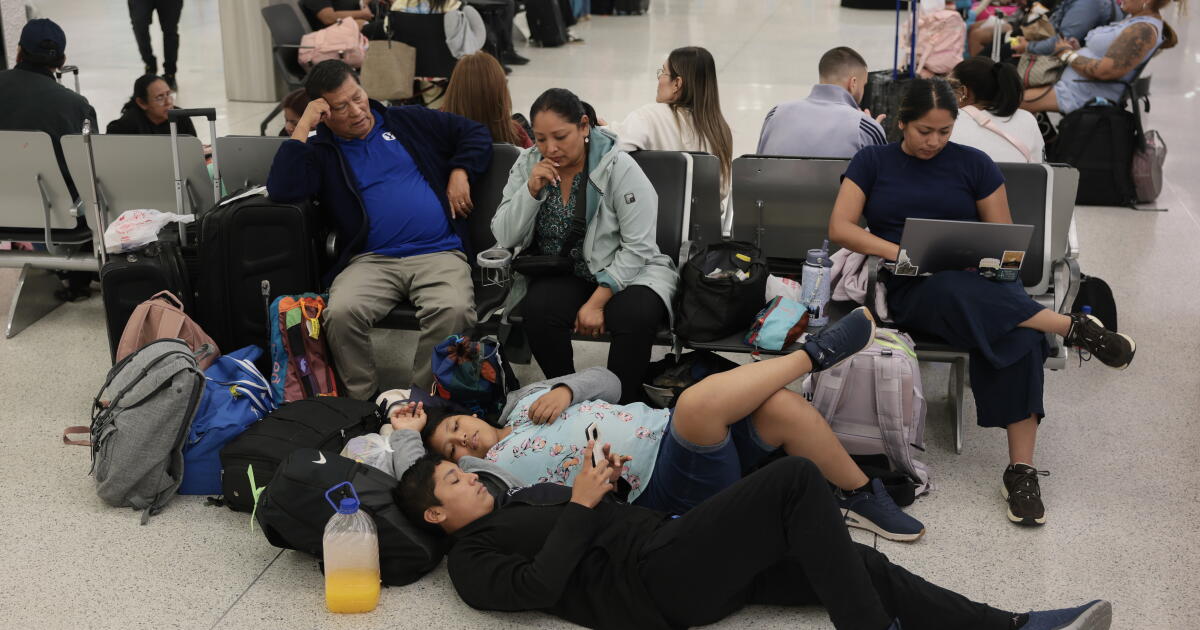
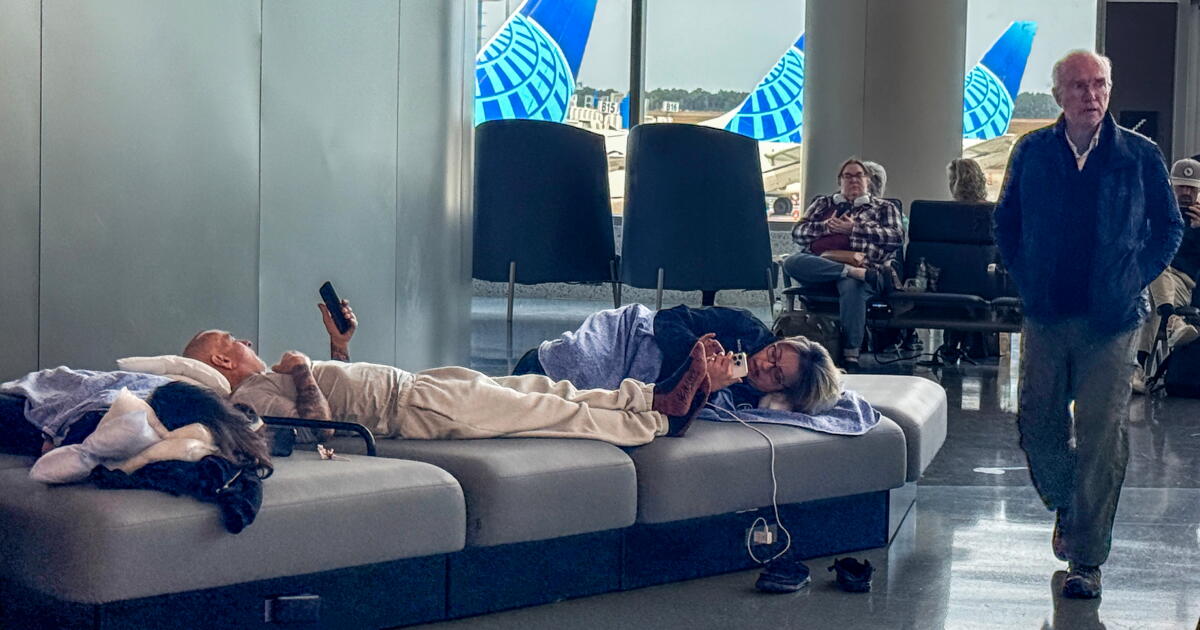
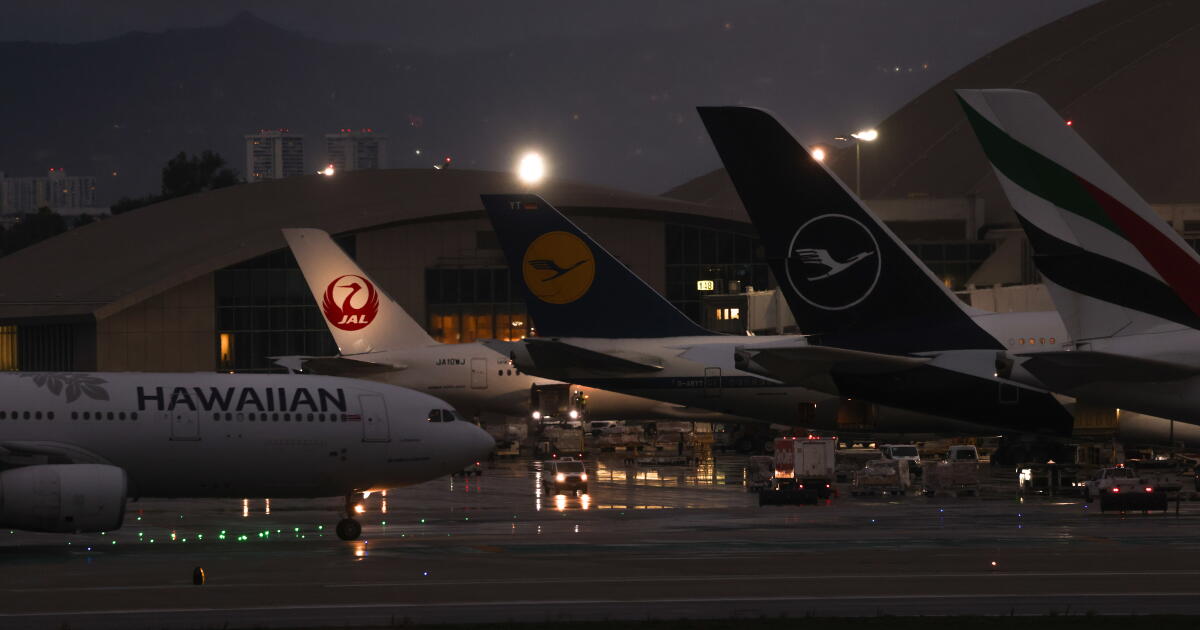
There’s plenty of sharp, fresh scripted comedies to watch over the Thanksgiving break. There’s “Dig” or “Youth,” but nothing beats the tragic hilarity of the Trump administration’s ongoing response to a cascade of cyber outages and a nationwide ground stop of flights last week that is still wreaking havoc for travelers.

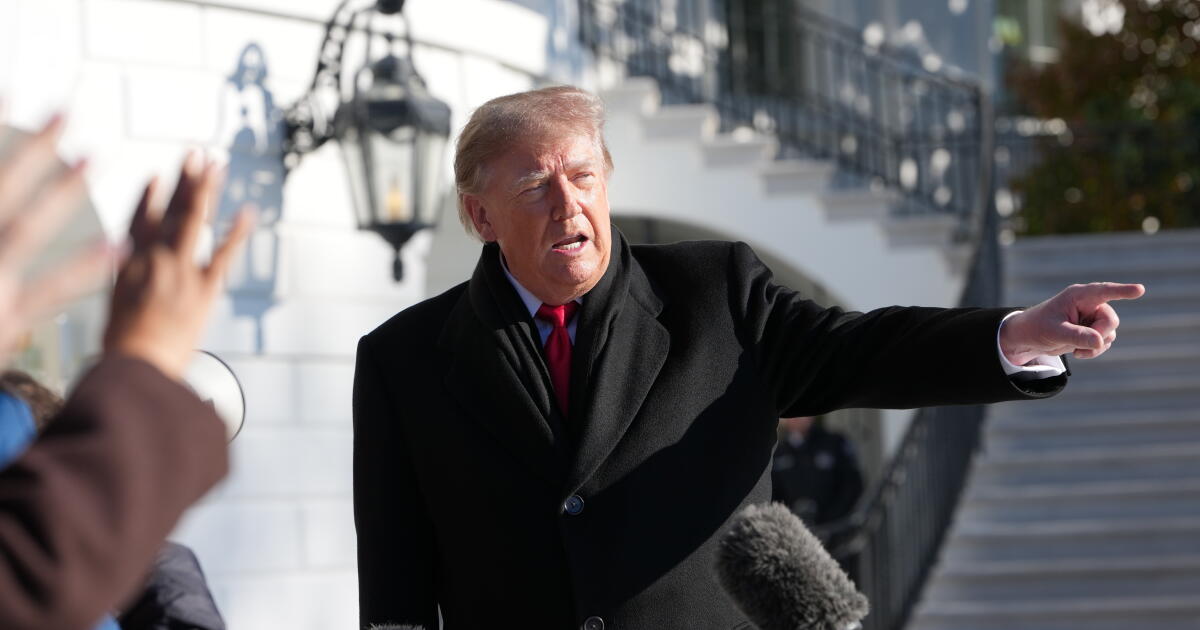
“What you saw Friday was very, very old equipment that had a heart attack,” the president said Monday, inspiring a font of material for political satirists while saying absolutely nothing about what actually caused the systemwide failure.

The palpitations started last Thursday when Microsoft services crashed, causing a two-day disruption of Outlook, Teams and other applications that have kept us connected since calling one another and meeting in person were rendered obsolete.

Then on Monday, after the systemwide FAA communications collapse, four major U.S. banks reported tech problems, and United Airlines’ computers went down. By Tuesday, the National Security Agency’s internal communications network went offline, and Apple services were interrupted.

It’s Wednesday as I write this. We’ll see if we make it to the end of the day without another terrifying incident that confirms humanity’s worst fears about AI: that it’s done serving us and we’re now the main dish.

Reassuring the American public that we’re in good hands, Trump continued, “I don’t take any responsibility. They [his administration] did a great job … they acted incredibly. Everybody was safe, nobody was hurt, no crashes, no nothing.”

The president then laid out what he plans to do to fix America’s crumbling infrastructure: “The equipment is very old, in some cases 50 years old, and we essentially want to blow it up and put new [equipment] in.”

Blowing anything up in reference to aviation safety doesn’t seem like the best choice of words. Luckily Homeland Security Secretary Markwayne Mullin had already put minds at ease Friday when he suggested the grounding “isn’t another 9/11,” but possibly a more modern form of infrastructure-crippling sabotage.

“As we investigate what caused this, you always got to assume that, as many cyberattacks that take place, that you make that assumption,” Mullin said. “But as of right now, that’s not known.”

Seek comfort in the unknown, he seemed to say, and in the blind guidance of your leaders.

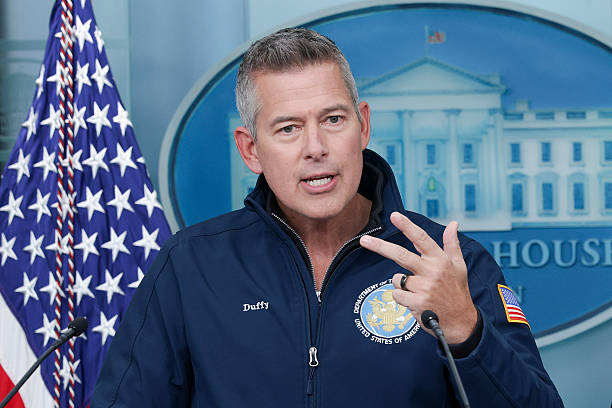
Another expert in the field, Department of Transportation Secretary Sean Duffy, was also on watch. He explained over the weekend that the outage was “likely” due to a router being replaced — in rural Arkansas.

Definitely maybe they pinpointed the issue.

When United Airlines reported its own flight-disrupting outage Monday that lasted more than 90 minutes and forced the airline to delay departing flights, Duffy was there again to make us laugh. Chatting on air with Sean Hannity of Fox News, he said, “It’s a head-scratcher, right? You’ve got Microsoft, we’ve got banking issues, but as of right now, I don’t know what the root cause of United is.”

Laughter truly is the best medicine. Safe airspace is merely a bonus.

And despite Duffy’s pleas of ignorance, he probably knows something about United’s system hiccup given his tight relationship with the airline. Duffy, a former “Real World” star, recently funded his own reality TV series, “Great American Road Trip” (YouTube), with donations from corporate sponsors like United and other businesses that Duffy and his department are supposed to regulate. They also include Boeing and Royal Caribbean. May we all benefit from this stunning and not-at-all dangerous conflict of interest.

Mullin testified Wednesday before the House Committee on Homeland Security in a hearing titled “Worldwide Threats to the Homeland: 25 Years After 9/11.”

Ranking Member Bennie G. Thompson (D-Miss.) raised concerns over DHS oversight, accountability and the response to recent disruptions. He also questioned Mullin about his decision to fly to the LSU-Texas football game Saturday when millions of travelers were still stranded at airports. Mullin is required to fly in a government aircraft.

Mullin said he took the trip in part to “not send a conflicting message one day after all flights in the United States were temporarily stopped.” And there was a family component too. “I wanted to be a good uncle and take my little niece who’s never been to an LSU game, and she’s a huge LSU fan, to a game,” he said.

His trip was selfless act, meant to show those with canceled flights, who’d missed weddings, funerals and birthdays, that safe travel was possible for others with government jets at their disposal.

Lawmakers also separately questioned Mullin about his seating in a private suite at Tiger Stadium alongside Ben Bordelon, the chief executive of Bollinger Shipyards — a company holding a $2.2-billion DHS contract. Mullin claimed that LSU officials placed him in the suite without his prior knowledge.

But enough about potential graft. Let’s get back to the other crisis.

Duffy said on Sunday that the failures began during a routine router upgrade at a radio facility in El Dorado, Ark. Agency officials also identified a second issue at a radar facility in Amarillo, Texas, that had been upgraded weeks before. The FAA has been replacing its older copper-wire-based system with fiber-optic cable, which was what workers were upgrading in Arkansas at the time of the network crash.

The two facilities were taken offline, but they’d already overwhelmed the aging system by pinging the communications network hundreds of times per second. It caused failures in other areas of the communications network, and officials issued the ground stop.

Speaking to reporters at the White House on Monday, Trump said he was having meetings at the time of the ground stop, which is why he did not publicly comment on the FAA ground stop until Sunday morning — more than a day and a half after the outage began.

He then lumbered aboard the new Air Force One, a converted Boeing 747-8 gifted by Qatar, and flew off without delay. Comedy genius.

Source link

Trump attributes nationwide grounding of planes to old technology, Biden administration

Seung Min Kim and Mike Catalini

President Trump on Monday laid the blame for the nationwide grounding of all planes last week on old technology as well as his Democratic predecessor Joe Biden.

“What you saw on Friday was very, very old equipment that had a heart attack,” Trump said Monday outside the White House ahead of his trip to Asia.

He added: “The Biden administration hooked up a lot of copper into glass and copper.”

Trump’s comments came after a rare nationwide grounding of airplanes Friday because of a router issue in the aging air traffic control system. The Republican president hadn’t spoken publicly or commented on the flight grounding until Sunday, when he posted on social media blasting his Democratic predecessor and asking for more money to cover the cost of system improvements.

Trump’s blame-shifting and congressional Democratic finger-pointing underscore political divisions that could widen when Democrats take control of Congress in January, with scrutiny of his administration accelerating.

Transportation Secretary Sean Duffy, who made the decision Friday to ground the planes, also pushed Congress for billions more dollars to upgrade a system he said had been neglected for decades.

Duffy said the problem began when a federal contractor was replacing a section of old copper wire with new fiber wire, causing the system to overload.

The Federal Aviation Administration said in a statement that “excessive data” was flooding the system “at a rate of 1,000 connection attempts every 4 to 5 seconds.” That deluge created instability with “aircraft communications and radar feeds,” the agency said.

Duffy said on Sunday that billions of dollars are needed to build new architecture for the network and said companies — including AT&T, Verizon and Lumen — are ready to deploy it as soon as the money is there.

Upgrading the nation’s air transportation system is an effort that Congress has dedicated significant sums to in recent years.

Under Trump’s immediate predecessor, President Joe Biden, Congress approved a massive infrastructure bill that included $25 billion over five years for airport and air traffic control infrastructure improvements. Much of that money went to airport projects like new runways and taxiways and updated terminals.

Under Trump, a Republican-led Congress approved $12.5 billion in 2025 to modernize the FAA’s air traffic system.

The Trump administration said the money would provide critical updates to outdated radar systems and traffic control centers, some dating back to the 1960s. Republicans used the same bill to allocate $170 billion for Trump’s immigration crackdown, for more border security and immigration enforcement.

Kim and Catalini write for the Associated Press. Catalini reported from Morrisville, Pa.

Source link

What to know about flights after the U.S. nationwide ground stop

U.S. air travel was recovering smoothly Sunday after a nationwide ground stop, though some passengers were weary and wary after repeated flight delays and cancellations.

Just over 1,300 of the more than 26,000 flights scheduled for Sunday were canceled, according to Cirium, an aviation analytics firm. That amounts to about 5.2% of scheduled flights. Before Friday’s ground stop, the average cancellation rate for U.S. departures was 3.4%.

The four-hour stoppage was the longest in 25 years. It caused massive travel disruptions, but officials said they expected airline schedules to fully recover by late Sunday or early Monday.

“As we look to the end of the day and into tomorrow, we should be running at full capacity,” Transportation Secretary Sean Duffy said Sunday. “We’re well on our way.”

At Nashville International Airport, Lona Ivers, Will Ahern and their children were trying to get home to Minnesota after vacationing in Tennessee. They made it from Knoxville to Nashville with no problems Saturday, only to have their flight to Minnesota canceled.

“We thought we were safe, but we weren’t,” Ivers said.

Instead, they spent the night in a hotel and were rebooked on a flight not scheduled to leave Nashville until late Sunday night.

“I already hate flying, so this just makes me hate it more,” said 14-year-old Bella Ahern. “Everything about this sucks. I already hated airports, and now I’m stuck here.”

Here’s what to know:

Flights resume, but disruption continues

In New Jersey, Ashley Lynn Qua said she arrived at Newark Liberty International Airport three hours early for her Sunday flight with all her essentials in her carry-on and armed with “an extra ounce of kindness.”

“I’m not blaming anybody like the pilots, the flight attendants, the guy who’s serving me my third coffee of the morning. Those are not the people I’m upset with,” she said. “As I interact with everybody at the airport today, I know it’s not their fault.”

Qua, 32, a clean energy researcher, was on her way to a conference in Las Vegas. Although her flight was expected to be on time, some of her colleagues were dealing with delays and cancellations.

Pete Alfieris, 60, was hoping to return home to Florida after attending a wedding in New York.

“Our flight has been delayed an hour or so so far, so fingers crossed that we can get out of here and go back to sun in Florida,” he said. “It’s just too cold up here.”

Alfieris, a facilities manager, said the entire travel system should be revamped.

“Honestly, it’s very perplexing,” he said. “We are in 2026, 2027. You know, we should have better infrastructure.”

2 potential problem sites

The Federal Aviation Administration on Sunday described a radar site in Amarillo, Texas, and a radio communications site in El Dorado, Ark., as potential sources of the problem, which involved excess data flooding the air traffic control system and causing intermittent disruptions to communications and radar feeds.

Duffy said that after a contractor replaced old copper wire with new fiber wire at the Arkansas site and the router was turned on, a problem then cropped up in Texas, cascading into the ground stop.

“We didn’t think that should or would happen,” he told ABC’s “This Week” on Sunday.

In multiple appearances on Sunday news shows, Duffy continued to press Congress for billions of dollars for upgrades to the air traffic control infrastructure.

“I can’t apologize for what was passed on to us. And I can’t blame Republicans or Democrats, because it’s all of them. It goes back 20, 25, 30 years of a lack of investment,” he told NBC’s “Meet the Press.”

The air traffic control modernization began last year after Congress approved $12.5 billion of funding. Duffy and the White House are pushing for $30 billion more to complete the work. About 70% of copper wire has been switched to fiber already, officials said Saturday.

Microsoft outage unrelated to stoppage

Secretary of Homeland Security Markwayne Mullin said there was no indication the failure was related to a cyberattack and no lives were at risk.

Microsoft said Saturday that services were fully restored after its own massive outage last week. There was no indication the FAA ground stop was related to the service disruption that took Microsoft services offline Thursday, according to federal officials and a company spokesperson.

More than 430 million people use Microsoft 365 apps, Microsoft said on its website. Users reported Microsoft 365 services including Outlook, Teams and AI assistant Copilot were interrupted.

Source link

Airport nightmares continue as FAA struggles to pinpoint blame for historic meltdown

The U.S. Department of Transportation was working Saturday to determine whether Friday’s air traffic control system meltdown resulted from human error or equipment failure as travelers across the nation continued to grapple with a cascade of flight delays and cancellations.

Transportation Secretary Sean Duffy said the crisis began when a contractor was performing routine maintenance at a remote FAA location to switch telecommunication lines from 1980s-era copper wire to a fiber line.

The new equipment began flooding other routers in the air traffic control system — sending more than 1,000 connection attempts every four to five seconds — causing radar and communications disruptions, he said. As a safety measure, the FAA decided to ground all planes for more than four hours.

It is currently unclear whether the contractor, L3 Harris, or the piece of new equipment itself was at fault.

“This was an FAA system that didn’t meet the moment,” said Duffy. “A contractor didn’t meet the moment or the equipment didn’t meet the moment — and it caused the outages.” L3 Harris could not be immediately reached for comment.

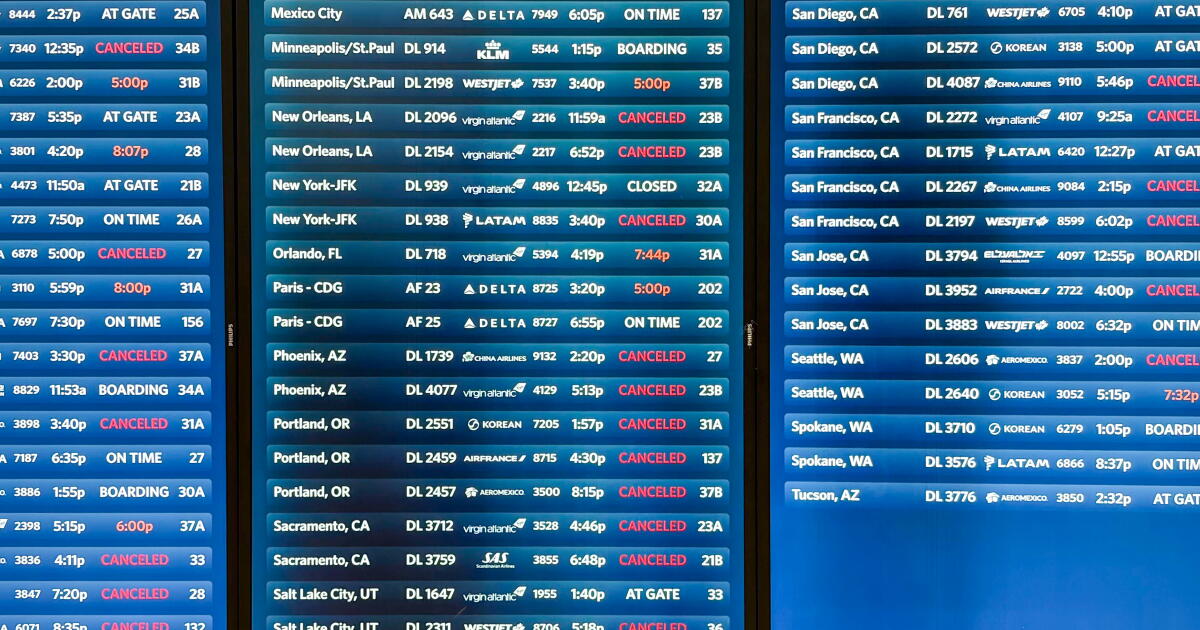
On Saturday morning, thousands of planes were back in American airspace, but airlines warned it would take several days to recover and urged passengers to change their flights to later dates where possible. On Friday, there were more than 7,400 flight delays within, into, or out of the United States and more than 9,000 cancellations, according to flight-tracking website FlightAware.

The incident sparked barbed political discourse over who is to blame for failing to fix the aging infrastructure and frustrations over the initial lack of clear communication from White House officials.

“The Transportation and Homeland Security leaders were slow to provide updates, and when they did speak, they didn’t have good explanations about what was happening, nor whether it would happen again,” Rep. George Whitesides (D-Santa Clarita) said in a statement on X.

Whitesides, who was himself stuck in an airport for seven hours Friday, criticized the president for installing a Transportation Secretary with “basically no professional transportation experience in one of the most crucial jobs we have as a country.” Duffy is a former sports television personality, prosecutor, congressmember and CNN political contributor.

Trump, who rarely shies away from the spotlight, has not publicly commented on the unprecedented telecommunications outage. He had posted on social media about other issues, including criticism of Gavin Newsom, but nothing yet on the airspace issue.

When asked about the president’s silence at a Friday evening news conference, Duffy said that Trump was “fully engaged” behind the scenes.

Duffy praised Trump for pushing to modernize the FAA’s infrastructure and securing $12.5 billion through his 2025 “Big Beautiful Bill” — a sprawling collection of tax breaks, spending cuts and other Republican priorities — to upgrade the nation’s air traffic control and airspace systems. Duffy called on Congress to approve up to an additional $50 billion in funding to fully modernize the nation’s aviation infrastructure.

Friday’s stoppage marks the second full ground stop since the Sept. 11, 2001, terrorist attack on the World Trade Center in New York. The most recent full ground stop, which lasted about 90 minutes, was in 2023 when a pilot notification system went down.

Times staff writer Ana Ceballos contributed to this report.

Source link

What caused the national ground stop? Here is what we know

For more than four hours, a ground stop of virtually all aircraft in the United States brought unprecedented chaos and delays that are expected to last days.

Here is what we know about what went wrong.

What caused the stop?

Secretary of Transportation Sean Duffy said switches and routers on the Federal Aviation Administration’s analog air traffic control system became overloaded with data, causing inconsistencies in communication with airlines. As a result, the decision was made to shut the system down shortly after 12:30 p.m.

“We have old, old switches, old routers, we use 1980s little copper lines,” he said. “It’s an old system that went down and went down everywhere.”

The ground stop ended around 5:15 p.m. Duffy said the FAA was able to deploy fixes to reduce the overloading and bring its towers and air traffic control facilities known as TRACONs back online.

Duffy said the problem was with the TDM — time-division multiplexing — a dated, still mostly copper-wire technology used to transmit air traffic control voice and radar data. He said there was no evidence to suggest a cyberattack or the involvement of foreign adversaries.

What problems did this cause?

The technological breakdown led to intermittent communication and radar, but not a complete blackout, Duffy said.

“We were able to keep some of those communications going, but when you have issues and you can’t immediately communicate and immediately see where aircraft are at — that’s a risk that we’re unwilling to tolerate,” he said.

What do we know about the technology?

Duffy lambasted the aging infrastructure that the FAA relies on and said that President Trump is pushing for the funding needed to update the equipment.

“None of your networks run on 1980 technology,” he said to the gaggle of reporters at a Friday evening news conference. “You have all got fiber, state-of-the-art, high-speed networks that cover all of your stations, but not the FAA.”

He said the FAA was in the process of upgrading its air traffic control system thanks to $12.5 billion in funding secured through Trump’s Big Beautiful Bill, but called on Congress to approve an additional $50 billion to complete the modernization of the system.

“I believe that should be a priority,” he said. “America, Congress, let’s make this system more safe.”

Homeland Security Secretary Markwayne Mullin noted that the communications failure was caused as the FAA was performing upgrades.

“That new equipment, new technology — It was overwhelming the older system,” he said. “The patchwork doesn’t work. We need one complete system.”

What is the impact?

There were more than 3,500 airplanes flying across America when the decision to close the airspace was made, Duffy said.

Tens of thousands of travelers were left stranded and FEMA was mobilized to ensure lifesaving medication was not being missed by passengers, said Mullin. Some college football teams were left scrambling to find alternative transportation to this weekend’s games.

Duffy said that air traffic control would try to move as many planes as possible Friday night, but noted that this will depend on the availability of flight crews and pilots.

Source link

Who is Rachel Duffy in This City is Ours and does she die?

This City is Ours fans are worried for Rachel Duffy as she becomes more powerful following her deal with Jamie.

This City is Ours fans are concerned about the body count in the latest season.

This City is Ours continues to air on BBC One and the second season sees Rachel Duffy (played by Laura Aikman) start to take control having been ignored by the men in the business for years. The first season saw Rachel start to earn her seat at the table, only to be pushed aside again.

This all changed following her little side deal with Jamie (Jack McMullen) and now, the pair are becoming more and more powerful. Ahead of the new season, which is full of shocking death twists, actress Aikman shared: “This whole series is about shifting power, both in the business and in people’s relationships. We’re going to see Michael (James Nelson-Joyce) more powerless than we’ve seen him before, and Rachel more powerful than we’ve ever seen her. But as is true to the show, power is always up for grabs.”

She added: “For Rachel, I desperately wanted for her to get more power, it felt like she was so unheard, and pent up with anger at being ignored, so that starting to happen for Rachel in series two was all of my dreams coming true for her.” Here is all you need to know about who Rachel is and what happens to her.

WARNING: THIS STORY CONTAINS SPOILERS

Who is Rachel Duffy in This City is Ours?

Rachel Duffy is Jamie’s cousin and the gang’s accountant in the series, and she is married to Robert “Bobby” Duffy (Kevin Harvey), a senior gang member. In the second season Rachel does a business deal behind her husband’s back and she is shunned by the rest of the gang.

Actress Aikman shared the storyline: “There’s a scene between Kevin and myself where Rachel questions if her actions would be judged so harshly if she was a man. That scene was really satisfying and makes you examine who you’re rooting for and why.

“I think the viewers all root for Michael, as do I, when I’m watching the series. This is a man who we saw murder his best friend (Ronnie, Sean Bean), and at no point do we think Diana should leave him. We want Michael to win. But when Rachel does something far less catastrophic, she is judged harshly.”

Actress Aikman, 40, is otherwise known for her roles in The Mysti Show, Casualty, The Job Lot and Waterloo Road. She also played Sonia in Gavin & Stacey. The star has been married to actor Matt Kennard since 2019, with the pair having met when she joined the final season of Bluestone 42.

Ensure our latest This City is Ours stories always appear at the top of your Google Search by making us a Preferred Source. Click here to activate or add us as Preferred Source in your Google search settings

Does Rachel Duffy die in This City is Ours?

Sadly for fans of Rachel, she does meet her demise in the second season of This City is Ours and she was seen being taken away in a body bag, having last been seen dancing at a nightclub. Multiple suspects are questioned about the shooting, including her husband, and new antagonist Ozzie Thompson (Shaun Evans) questions Freddie (Adam Abbou) about his involvement.

Ozzie attempted to help a vulnerable Freddie escape to Ireland, with Michael Kavanagh (James Nelson-Joyce) knowing that it was Freddie who shot Rachel. Once Michael had located Freddie, Freddie did the right thing and confessed to the murder, giving himself up to the police.

Ozzie got his comeuppance in the end after it was discovered he had manipulated Freddie into killing Rachel. Plenty of people wanted Ozzie dead after it was discovered he had coaxed Freddie into carrying the gun that eventually killed her.

At the end of the series Michael, Jamie, Bobby, and Banksey (Mike Noble) killed Ozzie by shooting him four times – one bullet each. Ozzie had ultimately used Freddie to target the Phelan family’s circle, setting off a chain of violent, vengeful acts across the season.

This City is Ours is streaming on BBC iPlayer, with episodes airing weekly on BBC One on Sundays and Mondays

Source link