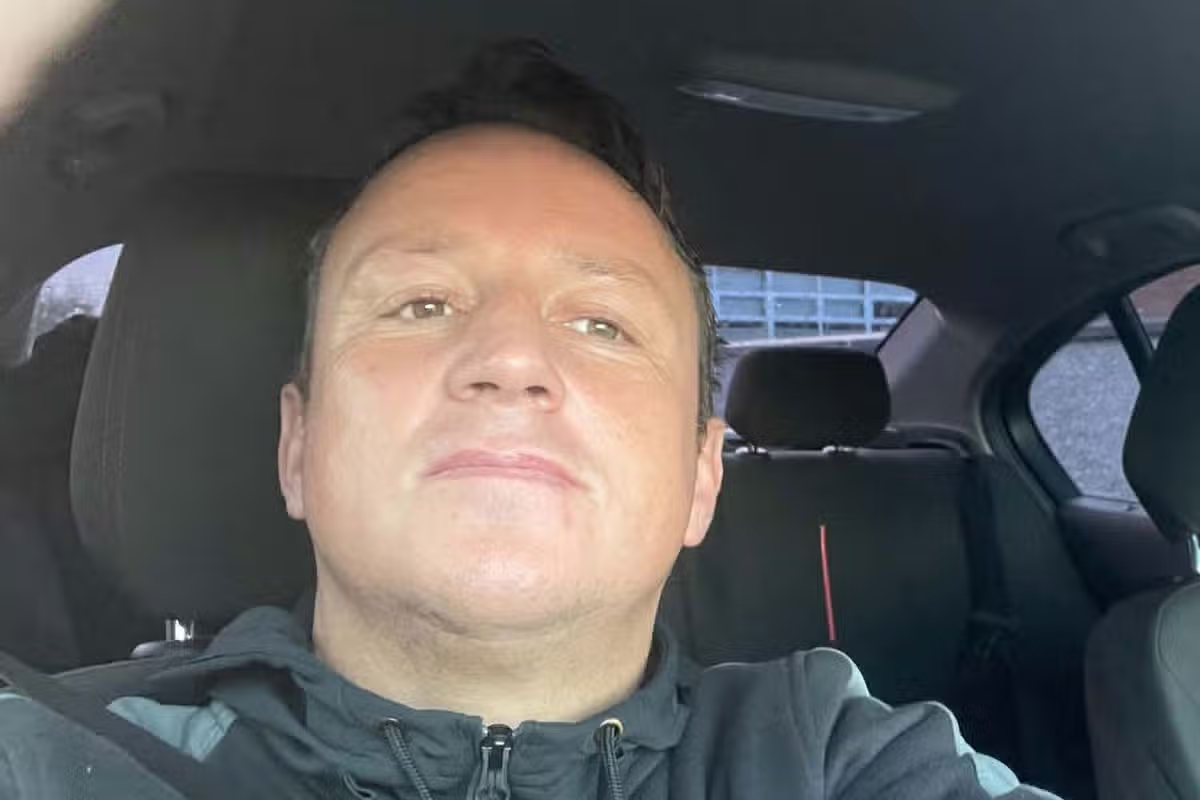
‘I’m absolutely disgusted by how we were treated’

Edward Stokes says he is ‘disgusted’ with the way he was treated
A Ryanair passenger says he is ‘absolutely disgusted’ with the airline after travelling for a family funeral. Edward Stokes had flown to London Stansted with his son to pay his respects at the funeral of his cousin’s wife.
What should have been an emotional family occasion allegedly descended into a travel nightmare when the 49 year old said he ran into difficulties with his booking on the journey home last week. Edward claims he and his son were each hit with a £46 (€55) charge after missing the online check-in window by just three minutes for their outbound flight.
“I’m absolutely disgusted by how we were treated,” said Edward. “I’ve been a loyal Ryanair customer for years.
“In fact, Ryanair is practically the only airline my family and I ever use. But after what happened to me this week, I am absolutely shocked and disgusted.
“We were three minutes late checking in online on Tuesday morning and were charged €55 each, €110 in total. Fair enough, we were late.
“We accepted responsibility, paid the money and moved on. But what happened on the way home was a completely different story.”
Edward alleges he was then refused boarding on his homeward flight to Dublin due to a mix-up over the name on his reservation. His booking listed both Edward and Teddy – a nickname he commonly uses – and he claims he had been permitted to travel to England without any problems.
Unable to board his scheduled flight, he said he was forced to book an alternative service departing at 10pm for £300 (€357.57), after an earlier option would have set him back around £450. Yet he says his journey home was anything but straightforward.
Mr Stokes claims the replacement flight was delayed by approximately an hour and 45 minutes, meaning he missed the last bus home. With no funds for a taxi and nobody on hand to collect him, he says he was left stranded at Dublin Airport for five hours until the next bus, finally making it home the following morning.
Edward, a blinds and carpets business owner from Newbridge, County Kildare, Ireland, said: “I’ve been known as Teddy all my life. On the way over, my booking included Edward Teddy Stokes, and Ryanair allowed me to travel without any problem.
“On my return journey, there was confusion over my booking name, and I was refused boarding. I explained the situation to the Ryanair staff member.
“I explained that I had just attended one of the saddest funerals of my life and was simply trying to get home to my family. Her response?
“‘That’s not my problem. What do you want me to do about it? I couldn’t believe the attitude.
“There was absolutely no compassion, understanding or willingness to help. We have no problem accepting responsibility when I’m wrong.
“We were three minutes late checking in, and we paid the money. But where is the same accountability when an airline causes passengers serious inconvenience? What hurt me most wasn’t even the money.
“It was the way I was spoken to, the complete lack of compassion and the feeling that we were treated like we didn’t matter.. “Nobody should be spoken to or treated like that.
“All I wanted was to attend a family funeral, support my cousin and get home safely. I was absolutely exhausted.
“Between the sadness of the funeral and everything that happened with my flights, it’s been a very difficult and emotional week for me. Ryanair, is this really how you treat loyal customers?”
A Ryanair spokesperson said: “The first and surname on a passenger’s booking must match the first and surname on their travel documents. The passport that Mr Stokes presented at the boarding gate in Stansted did not match the first name on his booking for this Stansted to Dublin flight (14 October). Ryanair offers passengers a 24-hour grace period to correct minor spelling errors on bookings free of charge or full name changes up to two hours before scheduled departure (subject to a fee).
“Unfortunately, Mr. Stokes did not avail of either option and presented at the boarding gate in Stansted with a passport that did not match the name on his booking.”
For more information on names on travel documents, visit the Ryanair website’s section on the subject.