


Channel 5 confirms new series of chilling true crime series and it drops tonight
The true crime documentary will return to screens sooner than you think

Murder Scene: The Incident Room returns with a brand new series tonight(Image: Channel 5)
Channel 5’s gripping true crime series will return with new chilling episodes – and it’s coming sooner than you think.
First aired in 2023, Murder Scene: The Incident Room is a true crime series that explores real-life murder investigations across the UK, but with a twist. The investigations are told through the eyes of real detectives who worked on the cases.
The series, which has seen two seasons so far, plunges viewers into the centre of police investigations, revealing how officers gather evidence and make critical conditions. Channel 5 has teased: “Inside the nerve centre of murder inquiries, revealed through the detectives themselves.”
Featuring first hand accounts as well as heartbreaking interviews with family members of the victims, the series also shows real archive footage as well as using reconstruction sequences.
Murder Scene: The Incident Room will return to Channel 5 tonight (September 30) with yet another harrowing case. Airing at 8pm on Channel 5, the brand new episode will transport viewers back to a horrific event on Christmas Eve in 2022.
Taking viewers behind the scenes of a murder investigation, tonight’s episode will explore the heartbreaking murder of 26-year-old Elle Edwards, who was killed by a gunman armed with a submachine gun outside of a pub in Wirral, Merseyside.
After firing the weapon into a group of people on Christmas Eve, the gunman fled the scene as CCTV revealed this was not a random act, with detectives working around the clock for justice.
An official synopsis reads: “The Incident Room is the place where Britain’s toughest murder cases are cracked. Behind closed doors, detectives work against the clock, piecing together the clues, chasing down suspects, and searching for the breakthrough that will bring a killer to justice.”
About tonight’s episode, it continues: “Christmas Eve 2022: a packed pub, a burst of gunfire. Within seconds, six people are shot outside the Lighthouse Pub in Wallasey.
“Twenty-six-year-old Elle Edwards dies at the scene. A gunman armed with a military-grade machine gun has opened fire on innocent bystanders – and he’s still out there.
“CCTV reveals this was no random act. As pressure mounts, a crucial breakthrough changes the direction of the case, triggering a nationwide manhunt for a dangerous and desperate fugitive.
“This is the story of a community shattered, a family devastated, and the relentless pursuit of a killer who believed he could disappear into the night.”
New episodes will air every Wednesday on Channel 5, with the next instalment dropping on October 7 at its usual 8pm slot. Episodes can also be streamed on Channel 5 online. Previously praising the show, one person said episodes were “too good to miss” as another admitted it was a “must watch”.
Murder Scene: The Incident Room returns tonight at 8pm on Channel 5

Bitcoin drops after US Senate blocks landmark crypto bill
Crypto markets dropped late on Tuesday and early Wednesday, as investors digested a defeat that few in the industry had expected.

ADVERTISEMENT
ADVERTISEMENT
The procedural motion on the CLARITY Act drew 49 votes in favour and 50 against, 11 short of the 60 required to advance, dealing a major setback to efforts to pass market structure legislation this year.
The CLARITY Act, formally the Digital Asset Market Clarity Act, was meant to divide supervision of digital assets between the US Commodity Futures Trading Commission and the Securities and Exchange Commission, replacing a fragmented system in which classification has largely been settled through enforcement actions and litigation.
Bitcoin fell almost 34 over the past 24 hours to below $76,000, while HYPE, the token behind the decentralised exchange Hyperliquid, which stood to benefit from the legislation, also dropped about 4% to below $78.
Most major tokens fell alongside them.
A deal that still was not enough
The bill’s defeat is striking because so much had been conceded.
US President Donald Trump agreed over the weekend to ethics restrictions he had long resisted, including a requirement that federal officials and their spouses divest significant financial interests in crypto issuers or place them in a blind trust, and a role for state attorneys general in enforcing those rules.
Republican negotiators said that over 120 Democratic requests were written into the final text of the more than 600-page bill, representing a major bipartisan effort.
Still, it was not enough.
Four Republicans, Jerry Moran, Susan Collins, Josh Hawley and Thom Tillis, joined the 45 Democrats who voted against it. The Democratic Senator Chris Coons did not vote.
Democratic Senator Elizabeth Warren, the bill’s most prominent opponent, said it “fails to adequately protect investors, our financial system and our national security,” and attacked Trump’s crypto ventures on the US Senate floor hours before the vote.
Republican Senator Thom Tillis’s vote was a procedural exception. After having publicly backing the ethics package that morning, Tillis voted no to preserve a motion to reconsider, leaving open the possibility of another cloture vote.
Senator Cynthia Lummis, the Wyoming Republican who has led crypto legislation in the US Senate since co-authoring the Responsible Financial Innovation Act in 2022, was blunt afterwards.
“I think we’re done. It’s over,” she told reporters before going considerably further online.
“The once-proud Democratic Party is anti-consumer and pro-illicit finance, anti-ethics, anti-free enterprise, anti-worker, anti-livable wage jobs and pro-socialism,” she wrote in a social media post.
The failed vote likely means the crypto industry will have to wait until next year for clearer rules to be discussed.
The US midterm elections are in just seven weeks which complicates bringing the bill back up for consideration in the short term.
Senators are scheduled to leave Washington in early October and not return until after the election and the House recesses even earlier, heading out of town already at the end of this week.
Members, especially those in tight races, are eager to return to their home states and hit the campaign trail.
Regulators inherit the problem
The legislation’s failure does not mean nothing happens. It means the rules are more likely to be written by agencies instead.
The US Securities and Exchange Commission under Paul Atkins and the US Commodity Futures Trading Commission under Michael Selig have already been building a framework without Congress.
The two signed a cooperation agreement in March and issued a joint interpretation sorting tokens into five categories, with Atkins stating that most crypto assets are not, in themselves, securities.
The SEC’s own agenda includes registration exemptions for token launches, a safe harbour for projects decentralising away from central control, and rules on custody and trading venues.
Analysts expect that work to accelerate now.
However, the catch is durability, because agency rules can be rewritten by a future US administration, which is precisely the instability the CLARITY Act was meant to end.
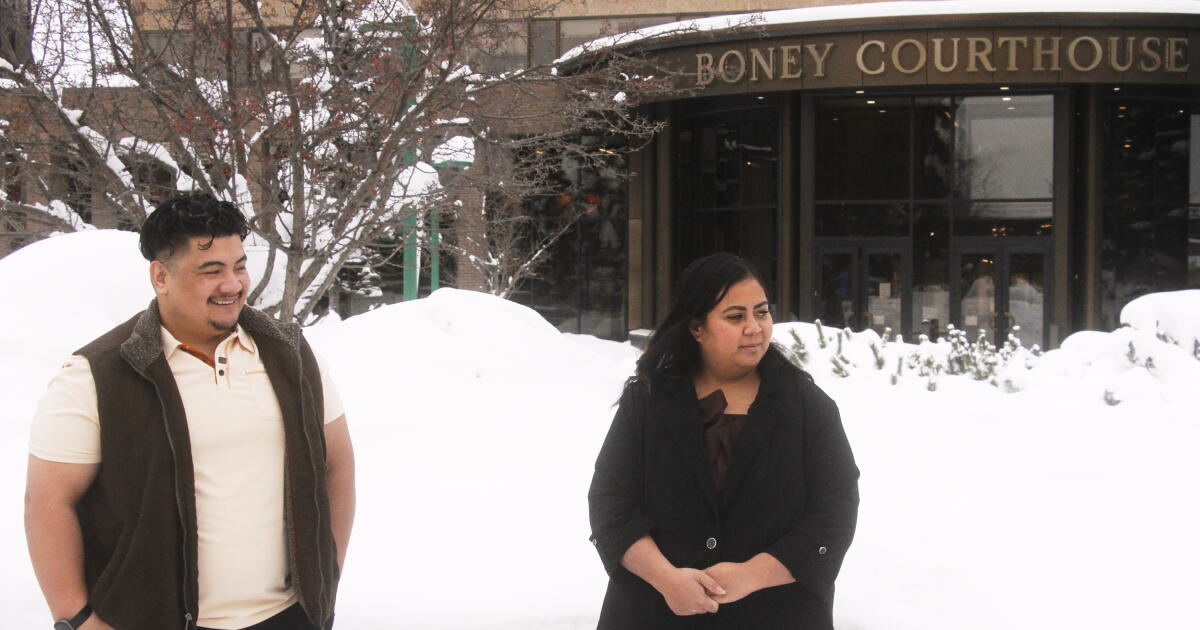
Alaska drops voter misconduct cases against American Samoans
ANCHORAGE — Alaska prosecutors are dropping voter misconduct cases against a group of residents born in American Samoa after a state appeals court threw out felony charges against a woman who wrongly checked a box saying she was a U.S. citizen.
The state’s Department of Law announced the decision Friday, after a three-judge Court of Appeals panel ruled a week earlier that state law requires proof that defendants who erroneously filled out voter registration forms had a “consciousness of wrongdoing” and intended to break the law.
The panel found flaws with a state trooper’s questioning of Tupe Smith, the woman involved in the case that was thrown out, as well as with the grand jury process that led to her indictment. It overturned a lower court’s decision that had kept the charges against her alive.
Acting Alaska Atty. Gen. Cori Mills said in a statement that after reviewing the decision and applying it to the facts, prosecutors concluded that they could not prove cases against Smith and the others beyond a reasonable doubt. Her husband, Michael Pese, had also been charged.
“We respect the role of the courts in interpreting Alaska law and will faithfully execute our duty to apply the law and carefully evaluate our prosecutorial decisions,” Mills said.
In a statement Saturday, Smith’s lawyer Whitney Brown said the dismissal would allow the community “to put this ordeal behind them and begin moving forward.”
Earlier in the week, she heralded the Court of Appeals decision, saying it “establishes an important safeguard against imposing felony liability for an honest mistake.”
The court “made clear that Alaska law requires more than simply showing that a statement was false — the State must prove a person acted with a consciousness of wrongdoing,” Brown said. “That distinction makes a world of difference to Ms. Smith and helps ensure that Alaska’s voter-misconduct statute is applied as the legislature intended going forward.”
Neil Weare, part of the legal team representing Smith and Pese, said Saturday that the decision to drop charges “raises questions about why this prosecution was even brought to begin with.”
“It’s clear that all along, they really had no evidence of any consciousness of wrongdoing on the part of Michael, Tupe or the other defendants,” said Weare, co-director of the nonprofit Right to Democracy.
In all, 11 people from the small community of Whittier, about 50 miles southeast of Anchorage, were charged with falsely claiming U.S. citizenship either when registering or trying to vote. Messages seeking comment were left for their lawyers.
American Samoa is the only U.S. territory where residents are not automatically granted citizenship by being born on American soil and instead are considered U.S. nationals. Paths to citizenship exist, such as naturalization, though that process can be expensive and cumbersome.
American Samoans can serve in the military, obtain U.S. passports and vote in elections in American Samoa, but they cannot hold public office in the U.S. or participate in most U.S. elections.
Smith was arrested after winning election to a regional school board in 2023. She has said she relied on erroneous information from election officials in Whittier when she identified herself as a U.S. citizen on voter registration forms.
Smith said she marks herself as a U.S. national on paperwork. But when there was no such option on voter registration forms, she was told by city representatives that it was appropriate to mark herself as a citizen, according to court papers.
Prosecutors contended that Smith falsely and deliberately claimed citizenship, pointing to warnings on voter registration forms she filled out in 2020 and 2022 that noncitizens “are not eligible to vote.”
The Court of Appeals panel said in its ruling that toward the end of a police interview, a state trooper asked Smith “a long compound question that implied that Smith actually knew she was not eligible to vote” but wanted to be involved in the school board.
When Smith, whose native language is not English, did not respond right away, another state trooper clarified, “He’s asking you,” and the first trooper again presented his question, which the panel described as “a lengthy and complex statement containing four individual questions.”
Smith answered “Yes,” the panel said, leading to her arrest and indictment on two counts of felony voter misconduct.