driver

Cruise California 33, a quintessential SoCal driving route

Everyone knows the stars of Southern California’s driving landscape: Pacific Coast Highway, the cinematic connector of beach cities; Angeles Crest Highway, a stunning and winding mountain route; and “The Snake,” Mulholland Highway’s infamous roadway that reopened late last year.

A sign along California 33 near Ojai.

A sign along California 33 near Ojai.

(Eric Thayer / Los Angeles Times)

But there’s a less-traveled route that feels just as quintessentially SoCal: California 33 to Hudson Ranch Road, passing through Ojai, Maricopa, New Cuyama and Frazier Park.

Parts of this road curl in on themselves into tight, technical twisties — catnip to car enthusiasts and motorcyclists. But this two-lane motorway also showcases the splendor and diversity of the rugged region, from the forested mountains and canyons in Ventura to the jagged rocks and chaparral of the desert vistas, making it appealing to thrill seekers and sightseers alike. While roadways like the 5 serve to get you from one point to another quickly and efficiently, this one begs you to relish the journey.

“A road like this forces your mind to focus on the immediate needs of car control, while rewarding it with the beauty of the natural world,” says Dave Coleman, a Mazda R&D engineer from Long Beach who incorporates Hudson Ranch Road into his drives to and from the Bay Area. “While driving, there just isn’t enough mental bandwidth left to worry about the stressful things in life.”

This route brings people together, including me and my car enthusiast friends, who regularly go on these driving excursions — gas prices be damned. “We drive these roads for the excitement and euphoria, just like people go to Disneyland,” says Matt Kometer, a SkyLink supervisor from San Pedro who drives a 2026 Mazda MX-5 Miata. And, unlike Disneyland or the traditional getaways that involve a hotel stay or a flight, these outings can be put together in a manner of hours.

I was a passenger on a recent Sunday pleasure cruise with a caravan of nine cars, which started in Ojai and ended at the base of Mount Pinos in the Los Padres National Forest. That’s 28 miles as the crow flies, but our route, with a detour for lunch in Cuyama, swelled the journey to more than 100 miles.

An 2026 Audi RS 3 heading to the lunch stop in Cuyama.

An 2026 Audi RS 3 heading to the lunch stop in Cuyama.

(Caroline Pardilla)

If you’re planning a trip of your own, a few things to note before you hit the road: Always check the road conditions, top up the tank because there’s only one gas station in Cuyama, download maps because cell service is spotty, and, if you’re caravanning with friends, it’s nice to bring walkie-talkies to stay in contact. The tunnel section of 33 in Wheeler Springs will be closed Aug. 28-31. Check the Caltrans website for updates.

Here’s a play-by-play of our day on the road.

10 a.m.: Breakfast at Pinyon on Ojai Avenue

Arriving from all corners of the L.A. Basin, the drivers meet up and fuel up at Pinyon Ojai, a pizza restaurant on Ojai Avenue. The shop serves single-origin coffee from Ventura’s Beacon Coffee and breakfast sandwiches featuring house-made bagels. Street-side seating affords prime car spotting, which today includes a right-hand-drive Toyota Land Cruiser Prado SUV and an immaculate brown-on-tan Mercedes-Benz SL Pagoda two-seater. Those who time their trip for the second Sunday morning of every month can check out the cars and coffee event a few blocks away at Westridge Midtown Market.

In the restaurant, the friends catch up, chatting about the cars they drove here, the progress of their current car projects and the route for the day. There is an air of anticipation. For many in the group, it’s their first time driving this route. Miatas feature heavily in this crowd, but there are also high-performance rides, like a Porsche 911, a first-generation Audi R8 and an Audi RS 3.

Traveling the canyon on the two-lane highway through Wheeler Springs and Wheeler Gorge is beautiful but slow going, past houses and campgrounds as well as high rock walls that threaten to rain down scree. Three narrow, dark tunnels along the way throttle speeds because of the sudden contrasts from broad daylight. Highway 33, at a modest 3.5% grade, meanders over and along creeks that are invisible from the road but marked by riparian vegetation.

Drivers gather around their cars while stopping along State Route 33.

Drivers gather around their cars while stopping along State Route 33.

(Eric Thayer / Los Angeles Times)

After the road opens up, the drivers make short work of the curves while maintaining a respectful distance from one another. Occasionally, a leisure driver bunches up the group until they pull over at the next turnout to let the faster drivers pass. The series of switchbacks with hairpin turns offer a satisfying run up to Pine Mountain Summit. “That’s some world-class sports car fun there,” says Alex Vendler, a cinematographer from Glendale who drove up in a 2003 Miata. The 5,160-foot-high summit allows us to catch our breath and take in the views of the San Rafael Mountains in the west.

Chris Floren of Torrance poses in front of his "Viccup," a 1960s truck draped over a Ford Crown Victoria.

Chris Floren of Torrance poses in front of his “Viccup,” a 1960s truck draped over a Ford Crown Victoria.

(Caroline Pardilla)

1 p.m.: A break and more car talk at roadside motel Cuyama Buckhorn

The Buckhorn Restaurant at Cuyama Buckhorn, a midcentury roadside hotel refurbished in 2018, serves as the perfect respite. It’s about 10 miles off our route but is an air-conditioned oasis of burgers, pie a la mode and endless ice water.

If there’s a downside to stopping in the “hidden valley of enchantment,” it’s the distinct lack of shaded parking. But at least there are plenty of spots in front of the hotel. Through the diner’s large front-facing windows, we watched a cowboy mosey past on his horse, checking out the variety of vehicles.

A group of friends has lunch at the Buckhorn Restaurant at Cuyama Buckhorn.

A group of friends has lunch at the Buckhorn Restaurant at Cuyama Buckhorn.

(Eric Thayer / Los Angeles Times)

Even though there are 12 of us walk-ins, the hostess immediately pushes several tables together to accommodate the group. The dynamics of this long table invite several different conversations to break out — all about cars. “I have a Miata, and I want a Miata,” says Vendler. Apparently, his tablemate William Benedict, a software engineer from West Hollywood who drove the R8, was skeptical about all the love for the Mazda roadster. Elsewhere, motorsports manager Chris Floren of Torrance is getting props for the surprising prowess of his sleeper “Viccup” — a Ford Crown Victoria police car with a ’60s-era pickup body draped over it. Another group discusses how “One Battle After Another” features the most Nissan Sentra SE-R content of any movie.

After last-minute gulps of water, everyone filters back into the heat of the desert and hurries to air out the cars’ ovenlike cabins. There is a mini photo shoot with Floren’s truck in front of the vintage hotel sign, and then we jump in the cars and backtrack up the 33/166 toward Hudson Ranch Road.

The Hudson Ranch Road is more fun in a Mitsubishi Evo IX.

The Hudson Ranch Road is more fun in a Mitsubishi Evo IX.

(Caroline Pardilla)

3:30 p.m.: A ‘roller coaster’ of a road and a reunion in Pine Mountain Club

Unlike Maricopa Highway 33, Hudson Ranch Road features coarser asphalt, no guardrails and more passing zones than turnouts. Kometer said it should be a tarmac rally stage while professional stunt driver and Long Beach local Sarah Fairfield, who piloted the second ’26 MX-5 on this trip, equated it to a roller coaster. The road was originally built in the ’30s to accommodate traffic heading to the ski resort, which closed in the ’70s. Now, the group deems it the highlight of the day. “It let me enjoy the act of driving without having to go too fast,” says Karl Buchka, an aerospace engineer from El Segundo who drove up in the 911.

Although the friends were separated on this leg, having each taken the route at their own pace, they reunite at Pine Mountain General Store in Pine Mountain Club. The Village Center convenience store beckons with shaded parking and a freezer full of frozen treats. Between bites of a chocolate ice cream bar, Coleman proposes continuing on toward Santa Clarita, via the twisties on Bouquet Canyon and Spunky Canyon roads. With competing commitments, however, most of the drivers reluctantly bow out.

A look back at the caravan on the 166/33, heading toward Hudson Ranch Road.

A look back at the caravan on the 166/33, heading toward Hudson Ranch Road.

(Caroline Pardilla)

In any case, the daylong cruise served its purpose of resetting the week and reconnecting the friends. “A lot of what this hobby or lifestyle or whatever is about is ultimately an excuse to spend time with friends, and to make new ones,” says Jason Kavanagh, a turbopump engineer from Mid-City who brought a Mitsubishi Evo IX to the outing. “So, yeah, the road is a means to that end.”

July's drivers pose for a photo, leaning on the railing at the Pine Mountain Hotel

The drivers at Pine Mountain Club Village. From left, Matt Kometer, William Benedict, Alex Vendler, Dave Coleman, Sarah Fairfield, Jason Kavanagh, Chris Floren and Derek Dicker.

(Caroline Pardilla)


Source link

Minnie Driver hurt in car crash while in France for ‘Emily in Paris’

Minnie Driver’s Paris adventures went awry this week when she was involved in a car accident that she’s describing as a frightening close call.

On Thursday, the actor — who has posted a series of “Paris Update” videos for her fans over the last two months while filming the sixth season of “Emily in Paris” — updated fans with a video posted to Instagram in which she appeared in a neck brace and recounted a harrowing close call. “Paris update is that I am actually back in London,” the video began.

“I got into a really bad car accident a few days ago with my friend Ben, and we somehow walked out of it,” she said. “Well, we didn’t walk out of it. We crawled out of it, but we did get out of it alive.”

Driver said the accident wasn’t their fault, and that they were cruising down a country road in the middle of France when another vehicle failed to stop at an intersection.

“We just T-boned it,” she said. “I’m fine. I’ve got a sprained neck, and I’m really in shock and sort of cry all the time, but I’m going to heal.”

According to Deadline, production on “Emily in Paris” will continue as planned aside from one scene involving Driver that had to be rescheduled. She plans to return to her role as Princess Jane when she recovers.

“The reason that I’m not dead, honestly, is the car that we were driving,” she continued in her update, adding that 360-degree airbags in the “tiny Kia” she was riding in saved their lives. “The fact that the entire car didn’t just concertina and crush us is down to the design of that car, which is frankly astonishing.”

Driver assured her followers that the video wasn’t a car ad — “Can you imagine if that’s what I was doing?” — but the actor appeared grateful and wanted to give due credit, all with her sense of humor still intact.

“I’m a mini driver, pun intended. I need to celebrate the car that saved us, because we’ve got families and people who love us, and I am so grateful to be alive,” she said. “So, Kia, you are a baller car company.”


Source link

Tony Romo arrested on suspicion of operating vehicle while intoxicated

Former Dallas Cowboys quarterback and current CBS analyst Tony Romo was arrested Thursday night in Wisconsin on suspicion of operating a vehicle while intoxicated.

Romo, 46, was stopped while driving south on I-43 and performed poorly on field sobriety tests, according to an arrest report by the Milwaukee County Sheriff’s Office. He was taken into custody, booked and released, with a court appearance set for Sept. 21.

The incident remains under investigation.

Thhis is Romo’s first OWI arrest, according to the report. In Wisconsin, a first-time offense is considered a civil violation with potential fines and revocation of his driver’s license.

A man smiles for a booking photo.

The booking photo for Tony Romo, who was arrested July 23 in Milwaukee on suspicion of operating a vehicle while intoxicated.

(Milwaukee County Sheriff’s Office)

Romo went to Burlington High School, which is about 35 miles from Milwaukee, and played four seasons at Eastern Illinois before joining the Cowboys as an undrafted rookie in 2004. He spent all 13 of his NFL seasons with the team, making four Pro Bowls and passing for a team record 248 touchdowns. His 34,183 passing yards were also a franchise record until Dak Prescott passed him last season.

Since 2017, Romo has been the lead game analyst for CBS, with Jim Nantz doing play-by-play. They have called three Super Bowls together. The network had no comment regarding Romo’s arrest.

The Associated Press contributed to this report.

Source link

In L.A., playing ball in the streets is illegal. A city council member wants to change that

In 1936, there were no video games keeping children inside. Most households didn’t have televisions.

Amid concern that kids playing in the streets would get hit by cars, Los Angeles made it a misdemeanor to play baseball, basketball, soccer or any other ball game on a street or sidewalk.

Nearly a century later, when kids spend half as much time outside as their parents did, City Councilmember Bob Blumenfield wants to cut the obscure law from the books.

Blumenfield, who authored a motion to start the process, called the law, along with its punishments of a $1,000 fine and up to six months in jail, “uncommonly silly.”

It’s illegal for a parent to play catch on the sidewalk with a child in front of their home, said Blumenfield, who represents the southwest San Fernando Valley. Nor can a group of children kick a soccer ball on a quiet residential street without violating the law.

The law also prohibits throwing a “stone, pellet, bullet, arrow or any other missile, in, over, across, along or upon any street or sidewalk or in any public park.” It prohibits playing ball games in public parks, except on designated courts or fields.

“Let kids play,” said Olsen Ebright, who is on the Los Feliz Neighborhood Council. “Why in God’s name would we be having the city try to curb playing soccer or throwing a football? “

The benefits of exercising on public land, when done safely and under supervision, outweigh the risks of injury or property damage, such as a baseball going through a neighbor’s window, Ebright said.

Blumenfield’s motion, introduced last August, was supported unanimously by the City Council in a January vote, for which only Blumenfield was absent, as well as by the Los Feliz Neighborhood Council. For it to move forward, the city attorney’s office needs to draft language codifying the change.

Blumenfield’s staff unearthed the 1936 law while researching public rights of way, said Kristine Cajulis, a communications deputy for the council member. Cajulis said she is unaware of anyone who has been penalized under the law.

One instance of enforcement occurred in 2006, when a former city council field deputy reported her Sherman Oaks neighbors for having basketball hoops near their curbs, according to the Los Angeles Daily News.

In addition to the anti-ball playing ordinance, the neighbors were accused of violating an ordinance prohibiting structures on sidewalks or grassy strips next to curbs.

Nate Brogin had set up a basketball hoop that drew neighborhood kids for pickup games and helped his then-18-year-old son lose 30 pounds.

Brogin, who said at the time that the law was akin to fascism, fought the city, unsuccessfully. He said he never paid his fine — he doesn’t remember how much it was — but he eventually pulled the hoop down.

“That’s a long time to let something so backwards go on,” Brogin, now 77, said of the law.

In newspaper stories from the 1930s, local officials warned parents to keep their children from playing in the streets to avoid being struck by cars.

Children should be allowed play in vacant yards or empty spaces but should not be permitted “to risk injury by playing their games in the path of moving vehicles,” said George Hjelte, then-superintendent of Los Angeles playgrounds, in a Feb. 3, 1936 Daily Breeze article.

In today’s L.A., the road safety groups Streets For All and Streets Are For Everyone see Blumenfield’s proposal as a positive step. Safety starts with drivers paying attention to people in the streets, whether biking, walking or playing, they said.

Some drivers in Los Angeles believe the road belongs to them, said Michael Schneider, founder and chief executive of Streets For All.

“Changing that takes a lot more than repealing a law,” he said.

Kids still play in the streets in Brogin’s Sherman Oaks neighborhood. He said that fewer than 10 cars pass through in a typical hour, and drivers stop for children to pause their games and move out of the way — just as he did when he was a boy.

“It’s a great social exercise,” Brogin said. “I don’t see any negative to it.”

Source link

F1 Q&A: Russell’s controversial pole, Ferrari’s underwhelming Austria, Verstappen key to driver market and Williams’ regression

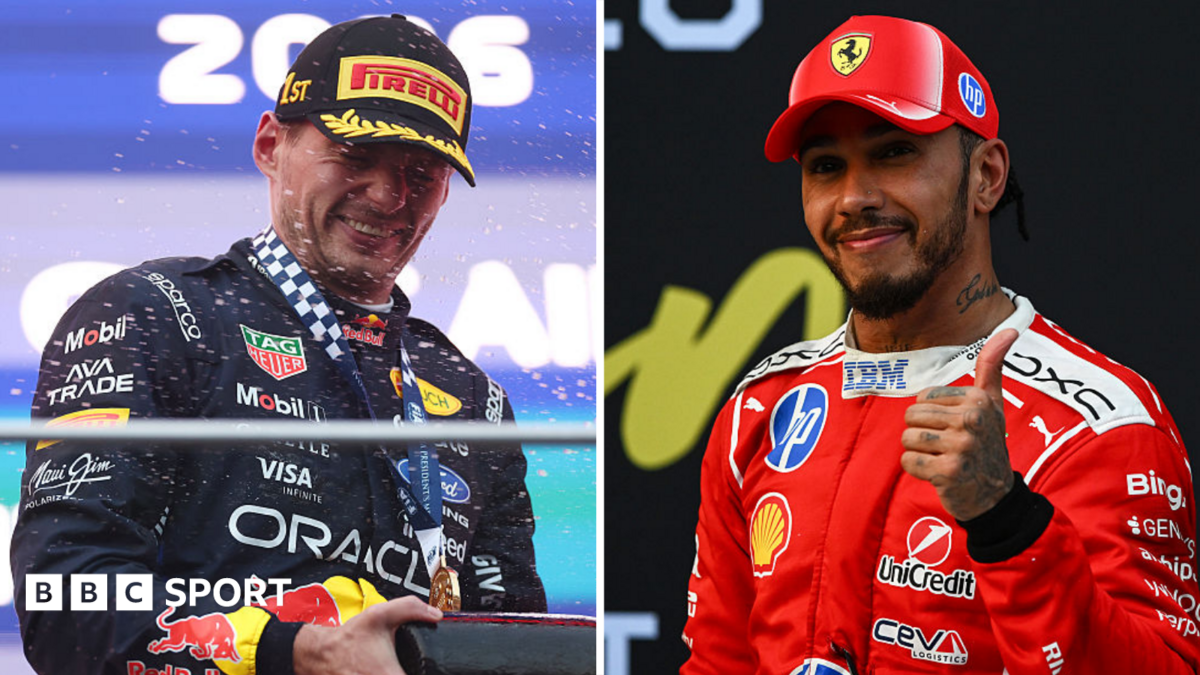
Mercedes’ George Russell took his second win of the season with victory from pole position at the Austrian Grand Prix.

Max Verstappen recovered from a crash in the final part of qualifying to finish second at Red Bull’s home race, with championship leader Kimi Antonelli in third.

Russell’s win moves him back up to second in the drivers’ standings, 40 points behind team-mate Antonelli.

BBC F1 correspondent Andrew Benson answers your latest questions before this weekend’s British Grand Prix at Silverstone.

I think a pole position under a yellow flag sets a dangerous precedent, because it’s clear that from now on, everyone will continue to push hard after a small slow down, or else their lap will be cancelled. I’d be curious to hear your opinion – Lorenzo

George Russell’s pole position at the Austrian Grand Prix, the foundation for his victory on Sunday, came about in controversial circumstances.

According to the rules, Russell did nothing wrong.

Marshals trackside initially waved a single yellow flag when Max Verstappen crashed at Turn Nine.

Kimi Antonelli mis-read the light board as a double yellow, and backed out of his lap – the correct response for what he thought to be the case. Under a double yellow, drivers have to “slow down and be prepared to stop”.

But under a single yellow, a driver does not have to abandon their lap. They only have to not set a fastest time in the relevant section of the track.

Russell complied with this, but the rest of his lap was fast enough to put him on pole anyway.

The concern here is less the specifics of these rules, but whether the correct flag was shown in the circumstances.

The answer to that has to be no.

Verstappen crashed at the fastest corner on the track, which is taken at close to 140mph.

Turn Nine is notoriously challenging, with its downhill entry, and an exit kerb that’s easy to over-run.

Both Verstappen and Antonelli questioned the decision to show only a single yellow at the time, when Verstappen’s car was in the barrier at this corner as other drivers were seeking to set what would be their fastest laps of the weekend.

Verstappen described it as “quite crazy”.

Antonelli said: “There was a car in the wall in a fast corner. I don’t know why it didn’t go double-yellow straight away, because it’s a super-quick corner, and if you go off at the same time, it can end up very badly. That was a bit confusing.

“For sure it’s something that needs to be reviewed, especially when it happens in a high-speed corner.

“If it’s a slow-speed [corner], single yellow can be OK but fast corners should be double yellow straight away.”

To underline the point, within 20 seconds, race control upgraded the flag to a double yellow, but everyone had completed their laps by then.

Source link

Austrian Grand Prix: Harry Benjamin’s driver ratings as George Russell wins for Mercedes

Gabriel Bortoleto – 6/10

A tidy race to lead Audi home and finish just outside the points.

Nico Hulkenberg – 5.5/10

Solid enough but finishing behind Bortoleto takes the shine off it. He gained places from his lowly starting position, however.

Pierre Gasly – 5/10

Slipped down the order so a disappointing Sunday for Alpine who just looked short on pace.

Ollie Bearman – 4.5/10

A clean but anonymous afternoon for Bearman. Haas didn’t have much to fight with.

Franco Colapinto – 4.5/10

Not spectacular but a steady finish for Colapinto, who kept his Alpine out of trouble.

Esteban Ocon – 4/10

Finished behind team-mate Ollie Bearman again, which made for a poor return. Lost ground at the start and never looked like a points contender.

Alex Albon – 4/10

Williams had a tough race and Alex Albon finished two laps down. Unlike this team-mate Carlos Sainz, he at least got to the flag.

Fernando Alonso – 4.5/10

The final classified finisher. He gained places largely through others retiring, however his five-second penalty for speeding in the pit lane made this another race for Aston Martin to forget.

Lance Stroll – 3.5/10

Aston Martin driver retired after 45 laps, ending a difficult race from the back row.

Carlos Sainz – 4/10

Out after 23 laps when his car stopped on the pit straight. Led Williams once again in qualifying which is all that can be said.

Sergio Perez – 4/10

Only lasted a few laps for Cadillac. Out-qualified team-mate Valtteri Bottas but barely turned a wheel this weekend with several car issues in practice plaguing him during the race, too.

Valtteri Bottas – 3.5/10

The first retirement, after just two laps. There was almost no race to judge. Started behind his team-mate but Cadillac’s Sunday was over before it had begun.

Source link

Driver dies in England train crash, 9 still critical

Investigators and police officers work at the scene where two East Midlands Railway trains collided near Bedford, Britain, Friday. A train driver has died and at least 80 people have been injured in the crash. According to the ambulance service 33 of the injured are in a serious condition. Nine are still critical as of Saturday morning. Photo by Tolga Akmen/EPA

June 20 (UPI) — A train driver is dead and nine people are still in critical condition after two passenger trains collided in England.

About 80 people were injured in the crash Friday evening. As of Saturday morning, 28 were still hospitalized after a moving train crashed into a stopped train on the tracks in Bedford, England, north of London.

The National Union of Rail, Maritime and Transport Workers said it was “devastated to learn that a train driver and former RMT rep has tragically died,” The Times of London reported.

Eddie Dempsey, RMT general secretary, wrote on X: “The thoughts of RMT are with their family, friends, colleagues and the ASLEF trade union at this awful time.”

The trains collided in Bedford, one from Corby and the other from Nottingham en route to London St. Pancras.

One passenger told The Times that the scene was “carnage.”

“We had to walk through farmers’ fields to get to an A-road,” he said. “There is a huge emergency service presence and loads of air ambulances.”

Another unidentified passenger told the times that it looked like an explosion.

“The front carriage collided into the front of another one, and when I got up I saw all of the chairs everywhere and it felt like I’d been in a bomb explosion. When I got up I saw people with bloodied faces and people’s legs looked broken, and there was smoke everywhere,” the passenger said.

Passenger Pete Knapp added that he saw smoke in the cabin.

“There was a moment of being flung into the chair in front, and then I saw smoke. People were crying, screaming, people were so scared and confused,” Knapp said.

A helicopter arrived within about 5 or 10 minutes, he added. Emergency services had to cut through a hedge with shears to reach the area, and he said passengers were triaged into different groups based on their injuries.

“I was triaged by some paramedics and they said that I had a muscular damage to my back and the gouges on my shins, they hadn’t broken my legs so hopefully they will heal over time. I’m extremely grateful for that because so many people in that carriage I was in had their legs broken, and there was blood everywhere and people crying and screaming.”

Source link

Nine left in critical condition after UK train collision that killed driver | Transport News

More than 80 people received treatment after the crash and 28 remain in hospital.

At least nine people remain in critical condition after two passenger trains crashed into each other and killed one driver near Bedford, about 56 miles (90km) north of London.

British Transport Police said on Saturday that more than 80 people had received hospital treatment on Friday night after the trains collided.

Recommended Stories

list of 3 itemsend of list

“As of this morning, 28 remain in hospital, and nine are in a critical condition,” Chief Constable Lucy D’Orsi said.

She added that “specialist investigators from British Transport Police are working with colleagues at the Rail Accident Investigation Branch (RAIB) to gather the facts and determine what has happened”.

Moreover, Transport Secretary Heidi Alexander said that it was “too early to speculate” on the cause of the crash, and promised that “a thorough investigation … to ensure that lessons are learnt” would be launched.

Friday’s crash involved two London-bound trains on the same track, according to East Midlands Railway (EMR), which operates both services.

On Friday, police confirmed that the driver of one of the trains had died at the scene.

In a statement from Buckingham Palace, King Charles said he was “greatly saddened” by the incident and sent “his thoughts and sympathies” to the dead driver’s family and to those injured.

The East of England Ambulance Service said on Saturday that 11 people sustained “very serious” injuries, while a further 32 suffered serious wounds and 56 others had minor injuries.

EMR’s managing director, Will Rogers, also called the crash “a profoundly sad day for the railway community”.

“We are deeply saddened that our driver has tragically died, and a number of other people have suffered injuries,” he said, speaking at the scene alongside other officials.

He added that EMR was “fully supporting” the RAIB probe.

More than 20 ambulances, specialist hazardous area rescue teams and six air ambulances were dispatched to the scene of Friday’s crash.

While the investigation continues, officials have not said whether signalling issues played a role in the incident.

Source link

Route 66 still beckons at 100 as a caravan takes off from Santa Monica

Around 7 a.m. Saturday, in a lot beside the shuttered Santa Monica Civic Auditorium, a strange set of cars and trucks began to gather. Three Model A’s. A couple of ’60 convertibles. A 1964 Chevrolet Impala station wagon. Also, a big bull on trailer wheels.

“Am I in the right place?” asked a man in one of the Model A’s.

“Going to Chicago?” asked a guy in a white Denali.

“I wish I could do the whole thing,” said Joe Hernandez of Pasadena, wistfully standing by.

  • Share via

This was the starting line for roughly 70 drivers who gathered to celebrate the centennial of Route 66 with a 2,448-mile, 20-day caravan to Chicago. Most had come from outside California to share an adventure with fellow “roadies” and boost awareness of the classic scenery and independent businesses along the eight-state route.

But soaring gas prices and hesitant international travelers have added uncertainty to a trip that was always going to be a logistical challenge. Day 1 alone might terrify an L.A. commuter: From the Pacific to Pasadena by surface streets, including miles on Santa Monica and Colorado boulevards.

“I don’t know how it’s all going to happen,” said Gary Daggett, president of the Old Route 66 Assn. of Texas. But he and his wife, Stephanie, have more than a little Route 66 experience to draw upon.

Mike and Lisa Visket of Prescott, Ariz., at the Santa Monica Pier in their respective orange and white Route 66 shirts

Mike and Lisa Visket of Prescott, Ariz., pose in Santa Monica at the pier in their Route 66 clothing on June 6, 2026.

“This is our 30th trip over 20 years,” Daggett said. “You can’t see everything. There’s so much…. You start meeting the people, you get hooked on the people.”

Shortly before their 8:30 departure time, organizer Rhys Martin called drivers together.

“Leaving here is going to be a little complicated,” he said.

Martin, who is part of the Route 66 Road Ahead Partnership, is president of the Oklahoma Route 66 Assn., and serves as manager of the National Trust for Historic Preservation’s Preserve Route 66 initiative. For the journey, he is driving a ’64 Chevy Impala station wagon with a GPS unit inside so that armchair travelers can follow his journey on the web.

“It’s going to be impossible to keep everybody together,” he said during preparations. “We’re encouraging people to spread out and support independent businesses rather than all going to one place and demolishing the kitchen.”

A caravan of cars

William Cooke of Pinon Hills participates in a caravan from Santa Monica Pier to Chicago, celebrating the centennial of Route 66.

In song and literature, the route is celebrated as an east-to-west journey. This caravan, running in the opposite direction, will travel from California through Arizona, New Mexico, Texas, Oklahoma, Kansas and Missouri to Illinois.

From Santa Monica, the Day 1 schedule took drivers to Beverly Hills City Hall, Grand Central Market downtown for lunch, the Chicken Boy statue and Galco’s Soda Pop Stop in Highland Park, then an overnight in Pasadena.

Day 2 takes the group from Pasadena to Barstow. Day 3, from Barstow to Needles. On June 25, the caravan is due to arrive in downtown Chicago.

The loose procession was led by a core group of 15 cars, including representatives of all eight states on the route. Since anyone can join or leave the caravan at any time, the number of vehicles will vary by the hour.

Through the decades, the road has grown from an American artifact into a global symbol of small-town Americana. Many merchants, restaurateurs and hoteliers along 66 now say that their summer customers are mostly travelers from abroad, especially Europe. One of the caravan’s drivers, in a rented pickup truck, was Dries Bessels, co-founder of the Dutch Route 66 Assn.

Detail of a person in a cowboy hat with pins

Brady Wilson of Amarillo, Texas, displays an assortment of Route 66 pins on his cowboy hat. Wilson is part of a caravan of Route 66 enthusiasts who set out from Santa Monica Pier on June 6, 2026, for Chicago.

Though the Model A’s will surely raise eyebrows on the road, the caravan’s most startling element is the fiberglass bull representing the Amarillo-based Big Texan Steak Ranch restaurant, one of the event’s sponsors.

“It’s the same one my dad brought home in ’71. His name is Big Moo,” said Danny Lee, who co-owns the restaurant with his brother, Bobby Lee. “He’s 12 and a half feet high. About 500 pounds. It’s all fiberglass.”

In 21 cities along the drive, the Big Texan team aims to stage nightly steak-eating contests, giving free dinners to anyone who can eat 72 ounces of steak, a baked potato, three shrimp, a side salad and a roll in 60 minutes.

The caravan’s first challenge came at the Santa Monica Pier, where there was no room for the cars due to a construction project, World Cup preparations and a Children’s Hospital fundraiser. Instead, the caravan gathered by the Santa Monica Civic Auditorium. Drivers strolled over the pier for a photo op, then returned to their cars.

“Herding cats,” said George Kulakowski of Huntington Beach, at the wheel of a 1931 Ford Model A Panel Delivery truck.

People pose for a photo in front of a sign that says Santa Monica 66 End of the Trail

Participants in a Route 66 centennial caravan pose for a photo before they depart from Santa Monica Pier on June 2, 2026, for Chicago along the historic highway.

Another challenge awaited in West Hollywood, where Santa Monica Boulevard (aka Route 66) was busy with crowds for the city’s WeHo Pride Street Fair. By plans laid ahead of time, most caravan vehicles detoured around the party while select caravan cars followed a police escort through the action.

This way, Martin said, “another community along Route 66 gets to share its identity with the community at large.”

A woman wears an earing with the sign of Route 66

Allison Lehn of Boston participates in a caravan from Santa Monica Pier to Chicago, celebrating the centennial of Route 66.

By 11:15 a.m., Martin’s car had reached Sunset Boulevard in Silver Lake. Meanwhile, assorted other parades and caravans are traveling Route 66 in other states this year; most of them concentrate on short segments.

By 12:45 p.m., caravaners had met the mayor of Beverly Hills and rolled through West Hollywood’s Pride festivities, arriving at Grand Central Market, running slightly ahead of time.

On May 30, an estimated 3,596 classic cars joined a “Capital Cruise” on Route 66 in Tulsa, Okla., becoming a Guinness Book of World Records holder for the largest parade of classic cars, drawing an estimated 100,000 spectators and overwhelming local traffic.

In Arizona, the Williams Historic Route 66 Car Show was set for Friday and Saturday. In Texas, the Amarillo-based Texas Route 66 Festival is running Thursday through June 13.

A man in a green shirt, left, and a woman in dark clothes drive along a road with buildings ahead

William Cooke of Pinon Hills, left, and Sarah Jane Woodall of Tecopa, Calif., drive along Wilshire Boulevard in a 1960 Edsel Ranger Convertible as part of a Route 66 centennial caravan.

In those states and beyond, the caravan from Santa Monica will find hotels and motels in every kind of condition, vintage neon, road food, blue states, red states and purple states.

As a package of Times stories described in May, some landmarks date to the highway’s days as a scene of Depression desperation in the 1930s, others to its giddy postwar years in the late 1940s and ‘50s.

Route 66 was created in 1926 as a highway stitching together hundreds of local roads. Nicknamed “the Main Street of America” by its boosters and “the Mother Road” by John Steinbeck in “The Grapes of Wrath,” the highway inspired Bobby Troup’s song “(Get Your Kicks on) Route 66” in 1946.

But economic life along Route 66 has been precarious since the late 1960s, when interstate highways and chain hotels began stealing traffic away from the older, slower road. After Route 66 was decommissioned as a highway in 1985, about 85% of the old route remained in use, often as small-town thoroughfares, country highways and frontage roads alongside Interstate 40.

Efforts to save and rebuild the route as a historic resource began in the late 1980s and gained ground after the 2006 release of the Pixar/Disney animated features “Cars,” which tells the story of the highway’s rise and fall. In small towns such as Tucumcari, N.M., and Seligman, Ariz., the highway remains central to local identity and economy.

A participant's vehicle in a caravan with stickers in the rear window. One says Preserve Route 66

A vehicle in the Route 66 caravan is photographed June 6, 2026.

This year’s centennial improvements along the route “are things that are going to go into the future,” Martin said. “The real impact is going to be next year and the years after.”

Source link