The President’s ally says conservatives “cannot give an inch” in Latin America as he accepts an award in Washington.
Published On 15 Oct 202615 Oct 2026
Argentine President Javier Milei has urged his ally, US President Donald Trump, to come out of the United States midterm elections in a stronger position, calling the vote important for the West as a whole.
Milei made the appeal on Wednesday at a Hispanic Heritage gala in Washington, where a Hispanic association gave him an award, ahead of November’s vote.
Recommended Stories
list of 2 itemsend of list
Conservatives, he said, “cannot give an inch in our reconquest of the hemisphere”, according to Agence France-Presse (AFP).
Milei flew into the US capital on Wednesday for meetings with investors and the gala. He is due to address the US Chamber of Commerce on Thursday.
Argentina’s President Javier Milei attends the Hispanic Heritage Gala in Washington, DC, on October 14, 2026 [Alex Wroblewski/AFP]
Milei’s lifeline
Trump firmly backed Milei a year ago, when his government also faced crucial legislative elections. He has called Milei his “favorite president”.
That backing, together with a currency swap agreement with the US Treasury, helped Milei to success in those polls, analysts have argued.
The centrepiece of the package, announced by Treasury Secretary Scott Bessent, was a $20bn swap with Argentina’s central bank, in which the US exchanged dollars for pesos. The swap came shortly after Milei’s party lost a key provincial election.
Trump made clear at the time that the support hinged on a Milei victory. “I’m with this man because his philosophy is correct,” he said ahead of a White House lunch with the Argentine leader. “If he wins, we’re staying with him. And if he doesn’t win, we’re gone.”
Trump also warned that the US would not be “generous” if Milei lost. The remarks unsettled Argentine markets, with the main stock index giving up earlier gains and falling about 2 percent, The Associated Press reported.
The package drew criticism in the US. Democratic lawmakers accused Trump of prioritising a foreign bailout while the US government was shut down.
The US president has long been unhappy with inside information about his administration being leaked to the media.
United States President Donald Trump has suggested that those who leak information to the news media should be shot as punishment.
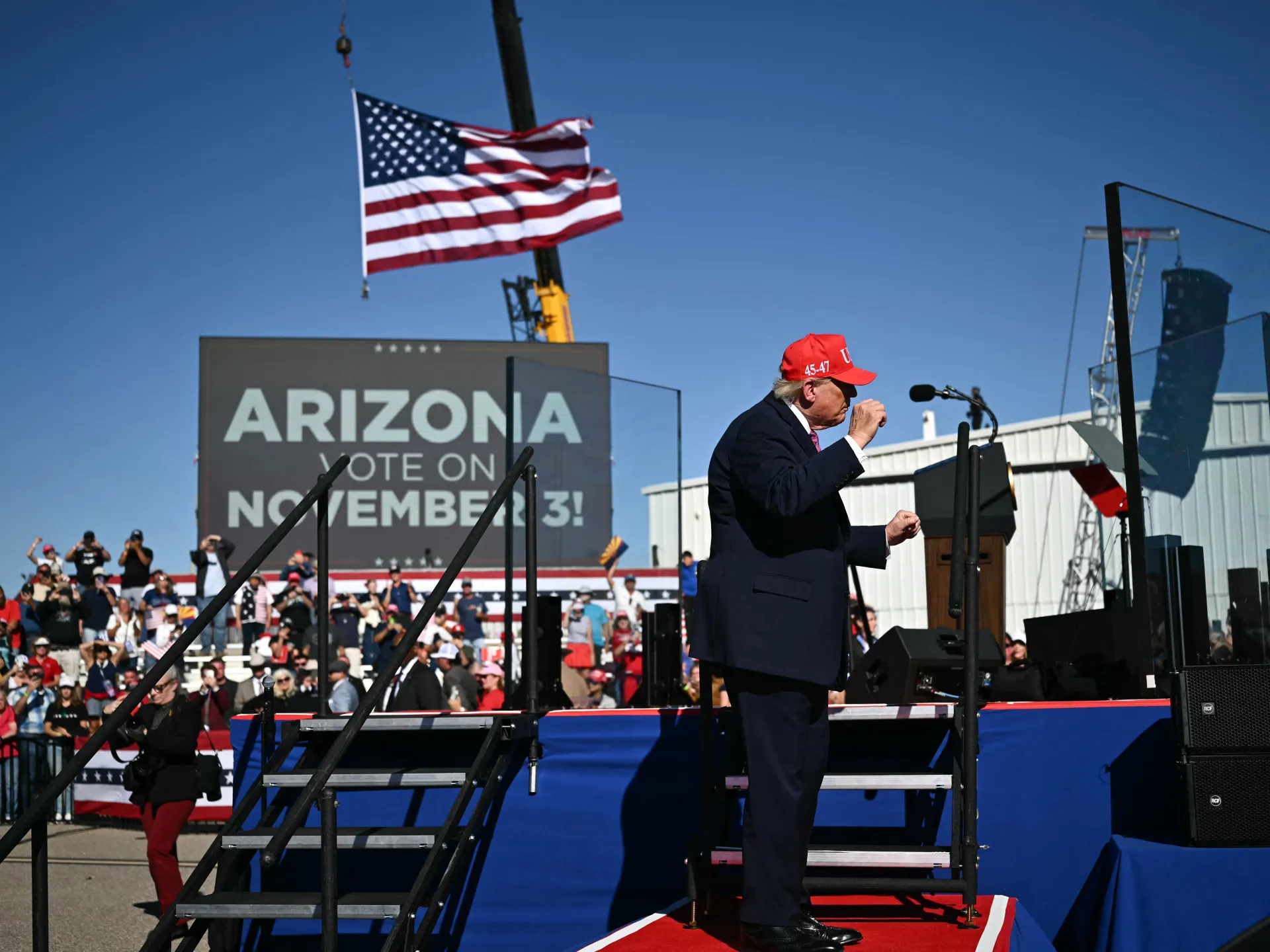
Trump made the remarks at a campaign rally in Bullhead City, Arizona, as he urged supporters to vote in the November 3 midterm elections.
Recommended Stories
list of 3 itemsend of list
“In my opinion, leakers should be shot,” Trump told the crowd. “In the old days, we used to shoot leakers, you know, when they leak what time you’re going to attack a country.”
Trump made the statement in an apparent reference to Operation Midnight Hammer, which saw the US launch a surprise attack on Iran in June 2025 during the 12-day war between Israel and Iran.
In the aftermath of the attack, several media outlets published findings from a preliminary report by the US Defense Intelligence Agency.
That report – which had not yet been released to the public – indicated that Iran was able to move some of its enriched uranium away from the sites the US had bombed.
It also suggested that the extent of the damage to Iran’s nuclear facilities was more modest than what Trump had asserted.
Trump, however, appeared to signal that the timing of the US attacks was among the leaked information. He accused the news media of putting military members in danger, calling out The New York Times and CNN in particular.
“They leaked the time we were leaving, the time we were arriving,” Trump said, claiming he had to reschedule the bombing campaign two days later as a result.
“Somebody leaked. Some sleaze-bag, they ought to go to jail or be shot. For the rest of their life, they should be in jail.”
Trump has long had an adversarial relationship with the news media, and he has previously called for harsh punishment against any official who passes on confidential information to news outlets.
After parts of the Defense Intelligence Agency report became public, he blamed lawmakers in the Democratic Party for its release.
“The Democrats are the ones who leaked the information on the PERFECT FLIGHT to the Nuclear Sites in Iran,” Trump wrote on social media at the time. “They should be prosecuted!”
Under Trump, the White House has taken aggressive action to track down the source of leaks.
Staff in his administration, as well as officers in the military, have also been asked to take polygraph tests.
Journalists at several news outlets, including The New York Times, The Washington Post and The Wall Street Journal, have also received subpoenas aimed at determining the sources of internal information made public.
The newspapers had reported on stories such as a botched Navy SEALs raid in North Korea and how Trump ignored internal Pentagon warnings against launching the Iran war.
Last year, the Department of Defense demanded that journalists who wished to access the Pentagon sign an agreement not to publish unauthorised material.
Much of the Pentagon press corps refused to agree, and a federal court struck down many of the new demands made on journalists at the department.
Trump has long raged against leakers, going back to his first term as president from 2017 to 2021.
Former White House official Alyssa Farah Griffin told a podcast in 2024 that Trump had called for leakers to be executed, after media outlets reported that he had taken shelter in a White House bunker during racial justice protests in 2020.
Trump appeared to reprise that sentiment in his speech to Arizona voters on Wednesday, less than three weeks before the November 3 midterms.
“Leakers should be dealt with very, very strongly,” Trump said. “To me, they are the scum of the earth.”
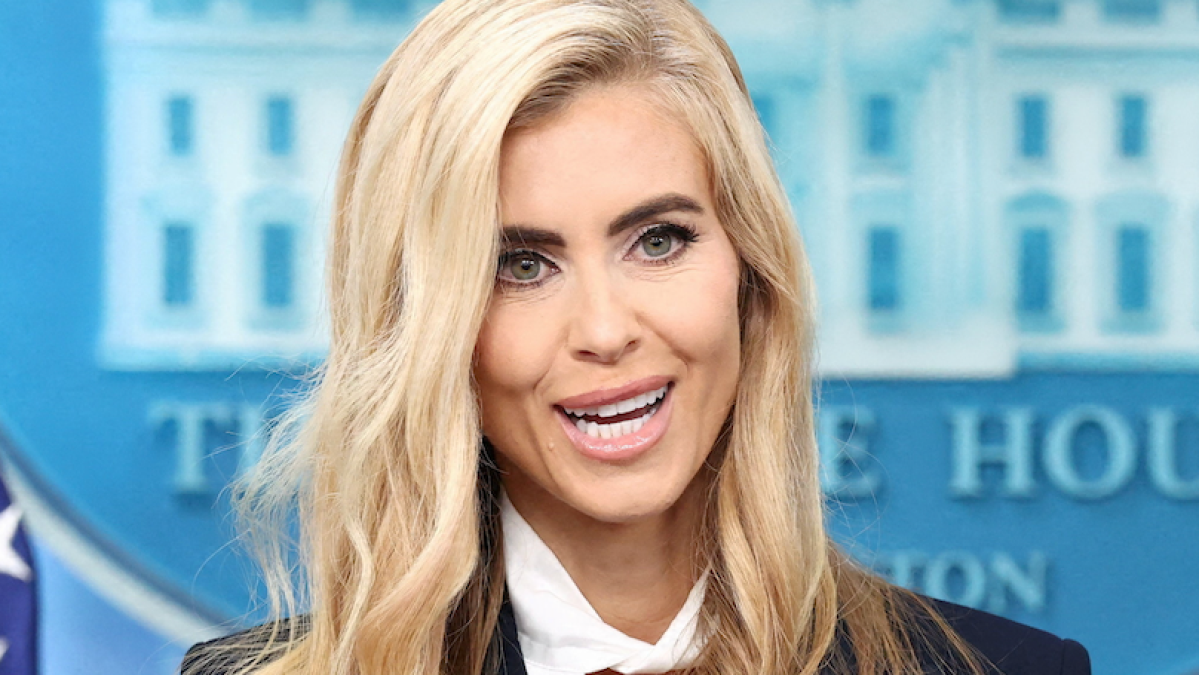
Katie Zacharia, the new White House press secretary under United States President Donald Trump, has drawn increasing criticism over claims about her professional background.
On Wednesday, a public accountability nonprofit filed a complaint with the State Bar of California over Zacharia’s repeated claims that she was a lawyer.
Recommended Stories
list of 3 itemsend of list
If made falsely, such a claim is a crime in the state. According to Zacharia’s LinkedIn profile, she received a degree from the Pepperdine Caruso School of Law in 2011, but critics have questioned whether she received a licence to practise law, as she has suggested.
“Ms. Zacharia has represented herself as a lawyer repeatedly to buttress her reputation and credibility as a television legal commentator and now as the White House spokesperson,” Michelle Kuppersmith, the head of the Washington, DC-based Campaign for Accountability, said in a statement. “Yet it seems it was all a lie.”
Her organisation filed the complaint with California’s bar office, a regulatory agency that oversees the licensing of lawyers.
“In California, calling yourself a lawyer without a license isn’t puffery; it’s a crime,” Kuppersmith said.
“The State Bar should investigate whether Ms. Zacharia has misled the public about her credentials and hold her accountable if she has.”
Zacharia, a commentator who has appeared frequently on Fox News and Newsmax, began her term as White House press secretary on Tuesday.
In a news briefing that day, she seemed to falter and speak haltingly, sometimes having to repeat herself.
Her appearance was brief, lasting under 15 minutes. She spent much of her time at the podium thanking Trump for the opportunity and reading from a prepared statement.
“I have wanted to work for him for a very long time,” Zacharia said.
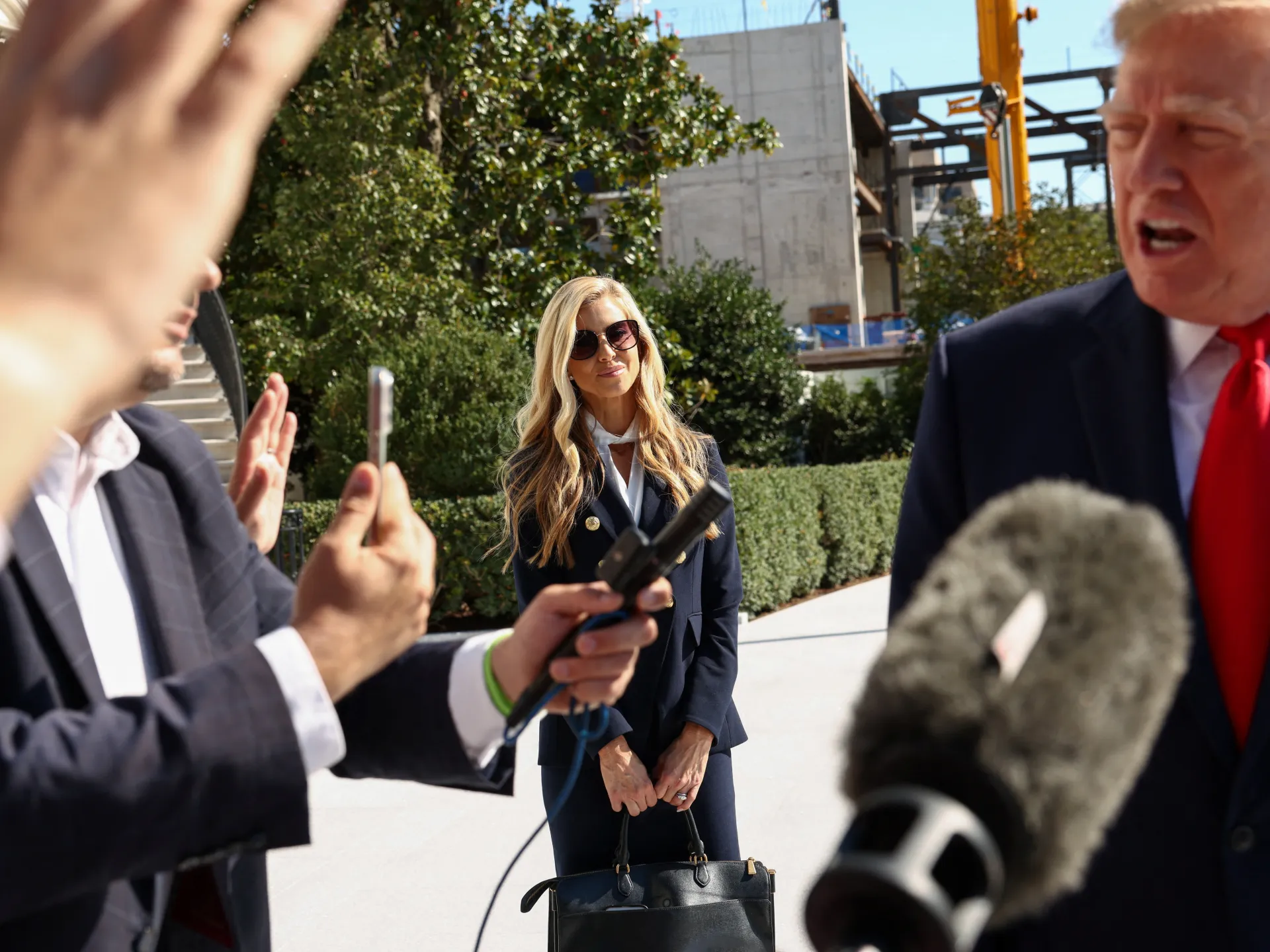
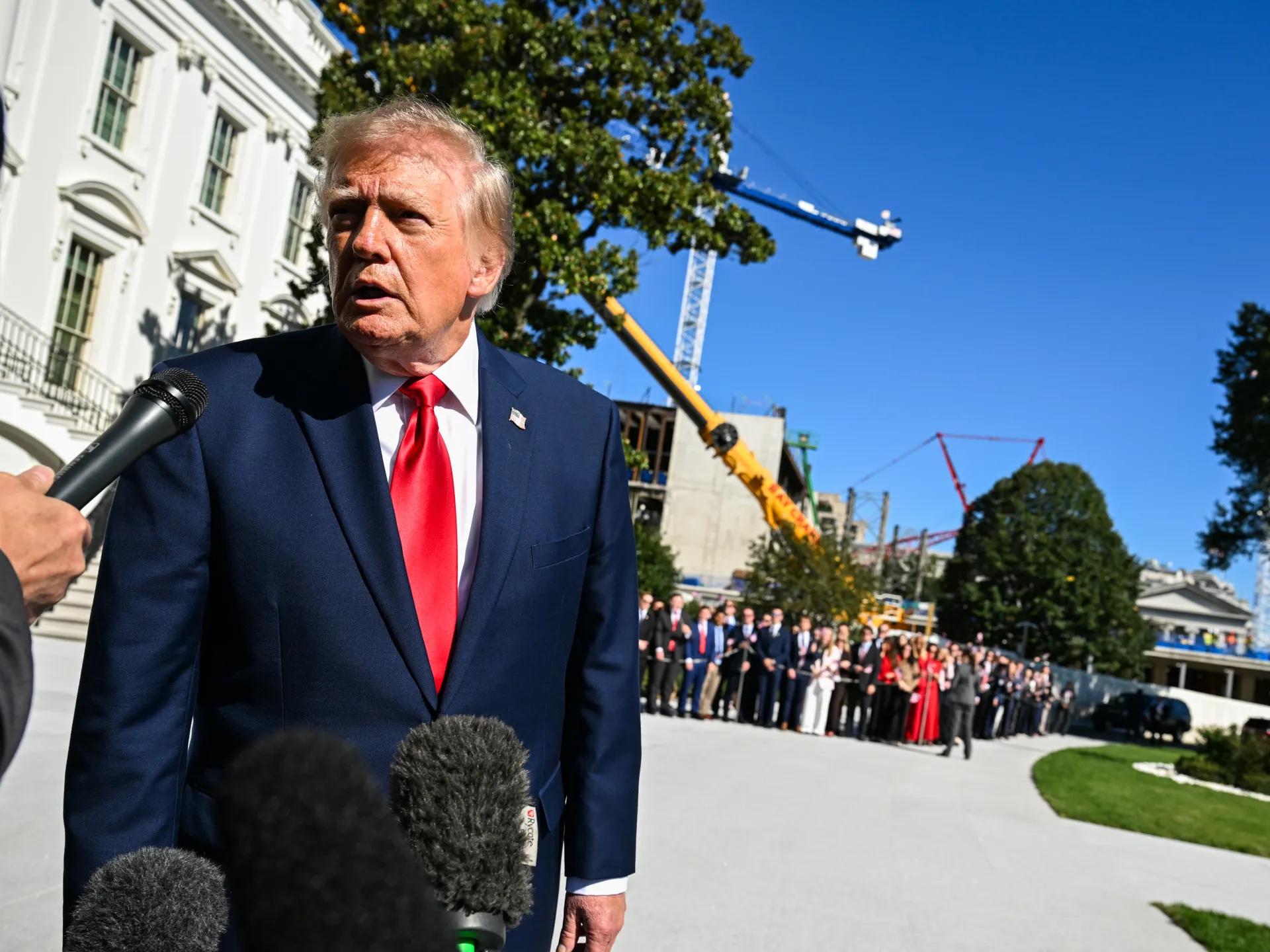
Later, she joined Trump outside the White House to speak further with reporters. When asked where she had passed the bar exam, Zacharia replied, “When I moved to China.”
The response was an apparent reference to a three-year stint in which she claims she worked at a law firm in Beijing.
A biography on the website for the pro-Trump women’s organisation Trumpettes USA Inc says she “served as outside counsel” for the World Bank and International Finance Corporation while in Beijing.
Her LinkedIn profile, meanwhile, indicates Zacharia served as an associate at the Zhong Lun Law Firm in Beijing from 2011 to 2013. More recently, from 2024 to 2025, it lists her as general counsel for Fix California, a voter rights group started by a Trump administration official.
On her Instagram profile, Zacharia describes herself as a “Wife, Mom, & Lawyer”.
But Zacharia’s assertion that she passed the bar in China has fuelled media scrutiny. China’s equivalent of the bar exam, the notoriously difficult National Unified Legal Professional Qualification Examination, can only be taken by Chinese citizens.
China has, on rare occasion, allowed foreigners to practise law in the country if they have several years of experience in their home countries first.
But that does not appear to be the case for Zacharia. According to media reports, Zacharia has not been found to be licensed as a lawyer in any state in the US.
In a statement to The Associated Press, Zacharia responded to the scrutiny by saying, “I practice international transaction law, with all the appropriate credentials.”
Since Trump’s return to office for a second term, Zacharia has spent several months as a communications adviser at the Department of Homeland Security.
Since June, she has also worked as the senior communications adviser at the Trump Media and Technology Group, which owns the Truth Social platform.
The Caribbean country of Jamaica has received its first third-country deportations from the United States, as part of an expanding set of international agreements under President Donald Trump.
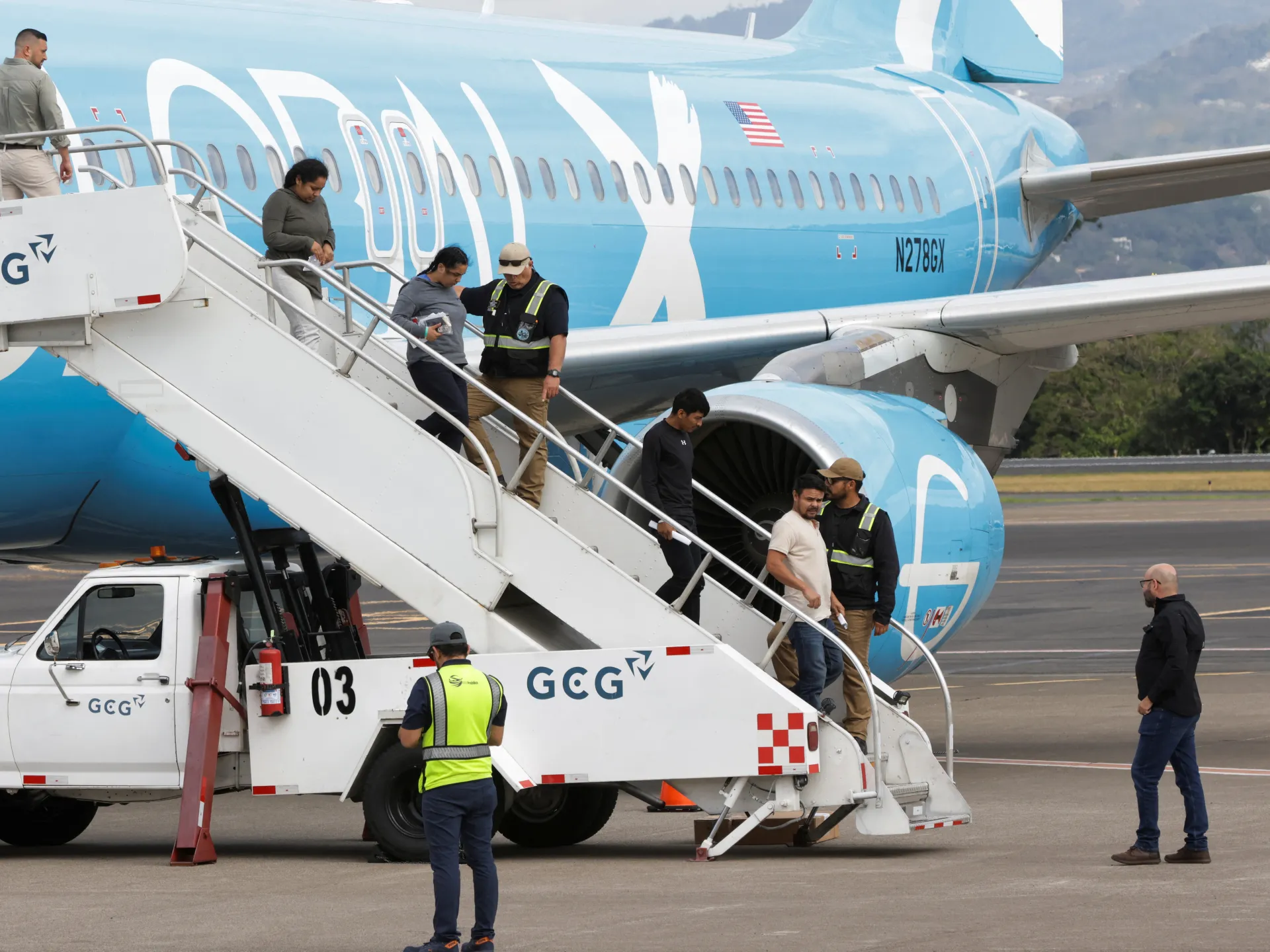
On Tuesday, 22 deportees from the US arrived at Norman Manley International Airport in Kingston, Jamaica.
Recommended Stories
list of 3 itemsend of list
Media reports indicate they were subsequently boarded onto a bus and taken to an undisclosed location.
Such deportations – which often involve non-citizens who have no ties to their destinations – have faced widespread condemnation from human rights groups and advocates who have questioned their legality.
But Jamaica is among a growing number of countries to accept third-country deportations, as part of Trump’s effort to implement the largest mass deportation campaign in US history.
At least 35 countries have entered into third-country deportation agreements with the US, according to Third Country Deportation Watch, an advocacy project affiliated with the groups Refugees International and Human Rights First.
The Washington Post reported last month that the Trump administration has earmarked roughly $410m to support such efforts.
Jamaica signed a bilateral memorandum of understanding in June to receive third-country deportations. Under the plan, Jamaica will transfer any deportees to their home countries or other destinations after their arrival.
The country’s government has also pledged not to accept any deportees with criminal records.
“The government reiterates that this is a transit arrangement intended to facilitate the return of Third Country Nationals to their country of origin or other receiving countries,” Jamaica’s Ministry of National Security and Peace and its Ministry of Foreign Affairs and Foreign Trade said in a joint statement.
It added that care for the deportees will be supported by the International Organization for Migration, a United Nations organisation.
“The arrangement will not be funded by the Government of Jamaica,” the joint statement added.
Opposition leaders in Jamaica, however, spoke out against the deportation, framing the deal as a threat to the island’s security. They also questioned why the agreement had not been debated publicly.
“Jamaicans are being asked to trust a secret document that touches their security, their communities and their public services,” said Fitz Jackson, the opposition spokesperson on national security.
In response to Jackson’s statement, Foreign Minister Kamina Johnson Smith argued that any questions about the deportation deal “have all been answered”. She also indicated that the US has not agreed to make the deal public.
“As I explained before, some countries have agreed to receive criminals, we have not,” she wrote on social media.
“Some countries have had their agreements made public, but our partner has not agreed for this one to be.”
Legal challenges against the third-country deportations are ongoing in the US, where advocates have argued that deportees are being removed from the country without due process of law, the constitutional right to a fair hearing.
Critics have also argued that third-country deportations sometimes send immigrants to countries where they may face danger.
Some of the recipient countries, such as South Sudan, are in the midst of ongoing conflict or have faced accusations of serious human rights abuses.
Opponents have even said the third-country deportations are being used as a backdoor method for circumventing court protection orders.
Such orders may prohibit the US government from returning certain immigrants to their home countries, for fear of violence and persecution.
But by sending immigrants to third countries, critics say the Trump administration avoids violating such protection orders – though in some cases, the third country has then returned the deportee to the country identified in the US protection order.
In a February report by Democrats on the US Senate Foreign Relations Committee, one official said anonymously that the purpose of such far-flung deportations was to instil fear.
“The point is that the administration can threaten people that they will literally be dropped in the middle of nowhere,” the official said. “The point is to scare people.”
Katie Zacharia has held her first briefing as White House press secretary after replacing Karoline Leavitt. A former Fox News and Newsmax commentator and Trump Media adviser, she announced that Washington had asked US ambassador to Greece Kimberly Guilfoyle to resign.
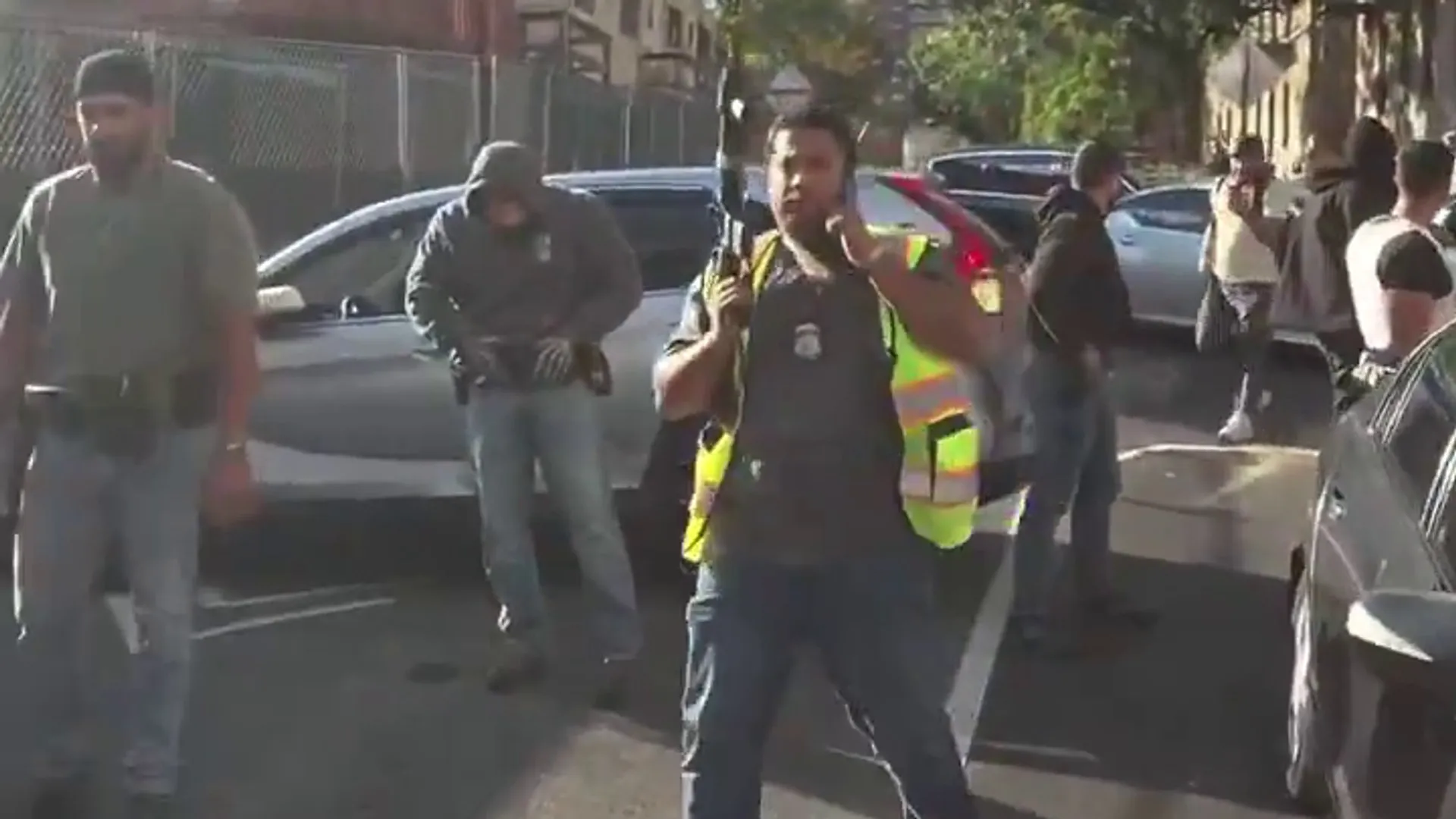
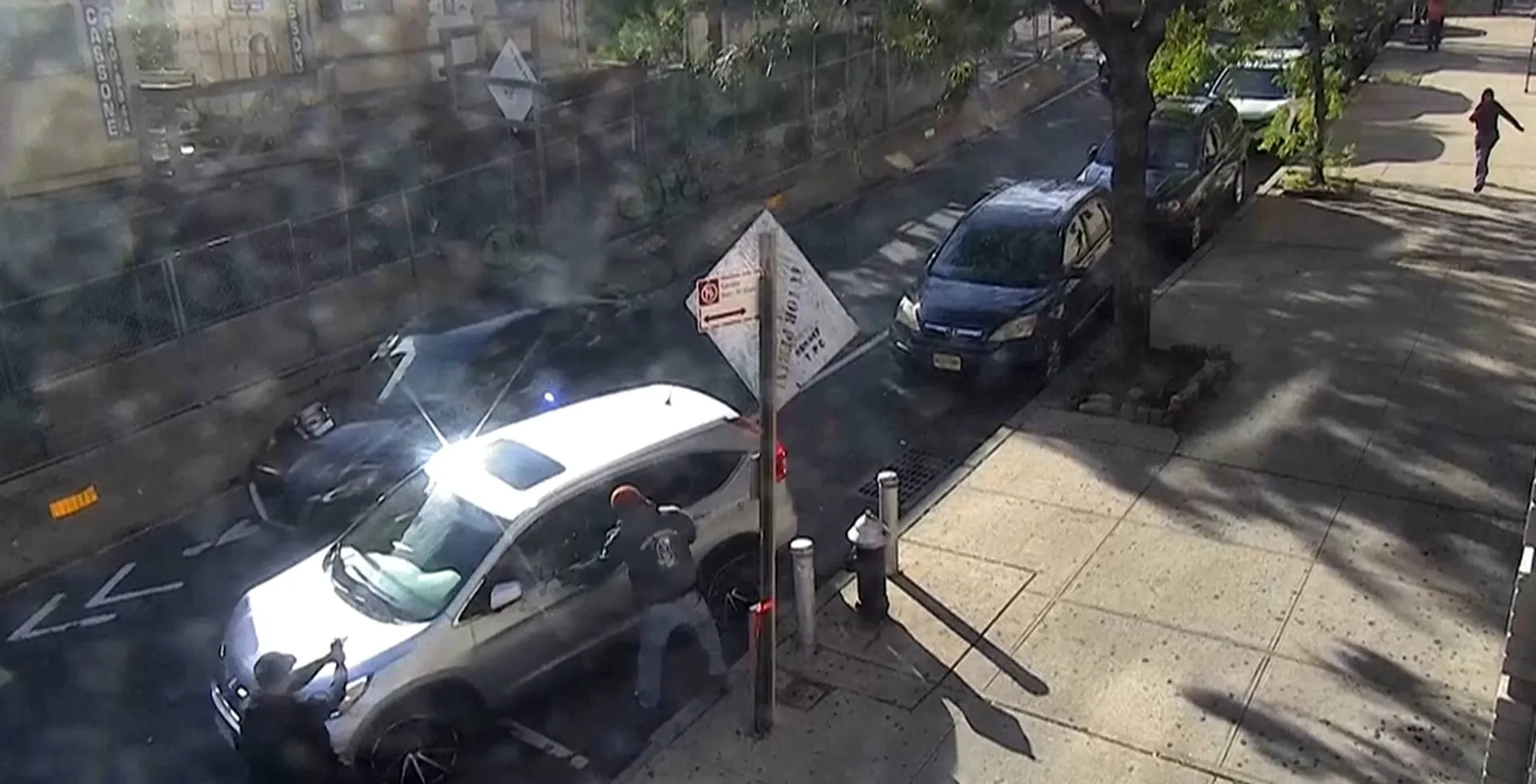
An ICE supervisor seen brandishing a rifle after the high-profile shooting in New York on Oct 8 was also involved in a controversial arrest in Minneapolis in December in which agents knelt on and dragged a pregnant woman through the street.
Department of Justice says it’s investigating whether the White House press pool’s decision violated antitrust laws.
Published On 11 Oct 202611 Oct 2026
The United States Department of Justice has opened an investigation into television networks’ decision to halt coverage of President Donald Trump last month.
A spokesperson said on Saturday that the department was investigating whether the networks violated federal antitrust laws by their boycott, which followed a White House decision to pull the credentials of reporters from three news organisations, including CNN.
Recommended Stories
list of 4 itemsend of list
The networks under investigation are ABC, CBS, CNN, NBC and Fox News, said Emily Convington, the Justice Department spokesperson.
“Group boycotts among commercial competitors can violate the Sherman Act,” she said of the antitrust legislation.
“The Antitrust Division is simply investigating to determine whether these news organizations have violated the antitrust laws.”
The investigation is the latest in a series of clashes between the Trump administration and major news organisations. Trump has repeatedly called the mainstream media “fake news” and frequently clashes with reporters during encounters with the press.
The action also puts legal and potentially financial pressure on the media to continue coverage of the president even when they disagree with how the White House handles them.
The networks did not immediately comment on the announcement.
The Justice Department’s move came after the television pool of five broadcasters last month ceased presidential coverage after the administration barred CNN, MS NOW and Politico from the White House.
The White House said on September 19 that covering the president was a “privilege – not a right”. The outlets sued the administration, alleging the exclusions violated the First Amendment and that the White House was retaliating over their coverage.
CNN is one of the five news organisations – along with ABC, CBS, Fox News and NBC – that make up the primary White House television pool.
They share the costs of covering the president, take turns organising coverage, and share the footage with outlets around the country.
All of the five television networks that cover the White House, including Fox News, suspended coverage in solidarity and refused to provide replacement coverage.
The White House reinstated the credentials on September 24 after US District Judge Timothy Kelly ruled that the ban was likely unconstitutional and ordered the administration to “immediately return, reinstate, and restore” their access.
However, disputes over access to specific presidential events and pool assignments continued.
Jose Zamora, the Committee to Protect Journalists’ Americas director, on Saturday criticised the administration’s decision to investigate.
“The government should not use antitrust investigations to intimidate news outlets defending press access,” Zamora said on X. “The public’s right to know depends on that access.”
‘I think it’s time for Ukraine to get a new president’.
US President Trump criticised Ukraine’s Volodymyr Zelenskyy as he called for new leadership in Ukraine and pressed Zelenskyy to stop hitting Russian oil Refineries.
Trump Accounts promise children a financial head start. Al Jazeera’s Emma Withrow spoke with one parent asking why he can’t opt out, or choose investments that align with his beliefs. Here’s what the rules actually say.
New footage shows the moment ICE agents opened fire on a man as he drove his car with his child in the backseat. The shooting in New York has sparked outrage and protests with more demands for immigration authorities to leave the city.
Oil prices drop as Trump dismisses speculation of pre-midterm military action against Iran.
Published On 9 Oct 20269 Oct 2026
United States President Donald Trump has said the US will not attack Iran before the November 3 midterm elections.
The US president said late on Thursday: “we are having productive discussions with the Islamic Republic of Iran,” in a post on Truth Social. “We will not be attacking Iran at any time prior to the midterm elections to be held in the United States on November 3rd.”
Recommended Stories
list of 3 itemsend of list
Oil prices fell early on Friday as Middle East supply concerns eased somewhat after tensions in the energy-rich Gulf region had mounted in recent weeks.
The possibility of renewed fighting had appeared to drive up oil prices in trading on Thursday. Some analysts believe Trump’s comments were an attempt to try and bring prices back down.
Iran’s Foreign Minister Abbas Araghchi said Tehran is reviewing the US response to its seven-day plan to reopen the Strait of Hormuz, and that Iran will respond within the “next few days”.
He added that negotiations are continuing through mediators, Iran’s Tasnim news agency reported.
Hormuz explosions
Iranian media reported “massive explosions” in the southern Strait of Hormuz on Friday, with Fars citing unnamed military sources as saying tankers using “unauthorised” routes may have struck sea mines.
On Tuesday, US Vice President JD Vance said Iran must make a “meaningful” reduction in its uranium enrichment capacity as part of an agreement to end the war. Experts say this demand may signal a softening of Washington’s earlier insistence that Tehran abandon enrichment altogether.
On Monday, Iranian President Masoud Pezeshkian said negotiations with Washington were “futile”, accusing the US of using negotiations to attack Iran.
Russian President Vladimir Putin told Pezeshkian that Russia will “do everything” to help end the US-led war on Iran, Russian news agencies reported on Thursday.
The Democratic National Committee has filed a lawsuit against United States President Donald Trump over television advertisements that were publicly funded and allegedly used to promote his political policies.
Ken Martin, who heads the Democratic Party’s leadership body, suggested in a statement on Wednesday that the ads were designed to bolster Republican odds in the upcoming November 3 midterm elections.
Recommended Stories
list of 3 itemsend of list
“Donald Trump is misusing millions of taxpayer dollars to fund pure propaganda ads in a last-ditch attempt to save Republicans in November,” Martin said.
Later that day, Common Cause, a democracy watchdog group, filed a second lawsuit over the same set of ads.
It argued that the ads were “overtly political” and therefore ran afoul of laws that bar public funds from being used for political propaganda.
“These ads are not public-service announcements,” Common Cause said in its lawsuit, citing a justification Trump has offered for the television spots. “They are personal publicity and political propaganda through and through.”
Both lawsuits argue that, to create the ad campaign, Trump directed the White House to repurpose $20m in funds that Congress allocated for commemorative activities related to border security, including for those killed in the line of duty.
That manoeuvre, they argue, violates the separation of powers established in the US Constitution.
“The founders made clear more than 200 years ago that the executive can spend money only according to Congress’s direction,” Common Cause’s lawsuit said.
The two lawsuits also point to a provision Congress includes in its appropriations bills barring the use of taxpayer funds for “publicity or propaganda purposes”.
Both complaints seek to have the ads declared illegal, and the expenditures stopped. They also call for steps to be taken to recover any money already spent on the ads.
The Democrats’ lawsuit was filed in Washington, DC, while the Common Cause complaint will be heard in the Southern District of New York.
Trump has faced mounting criticism over the ads, which began airing in September.
So far, the advertising campaign has cost more than $12m to run, according to the media tracking firm AdImpact.
The $20m Trump tapped for the ads comes from a $175m package Congress assigned to the Department of Homeland Security as part of Trump’s immigration enforcement agenda.
Critics have pointed out that one of the ads appears nearly identical to a television spot Trump used in his 2024 re-election campaign.
Three ads have aired so far. In one, a choir sings “love me” over a montage of Trump as he declares the US will “never be a communist country”. Another uses images of Mount Rushmore as Trump heralds a new “golden age of America”.
The third is darker: Trump walks towards the camera in black and white, warning of a “final battle” against the “deep state” and other perceived enemies.
On Wednesday, the news agency Reuters and the research firm Ipsos released a poll showing the ads are highly unpopular. Some 86 percent of the Americans surveyed, including four out of five Republicans, said it was inappropriate for Trump to have used public money for them.
Trump has defended the ads as “promotion for the country”, and he has argued they were similar to public outreach campaigns put out by previous administrations.
But after a bipartisan backlash, Trump said on Monday that taxpayer funds would no longer be used for future ads.
He did not, however, commit to paying back the money already spent on the existing ads.
Members of Trump’s Republican Party have been among those speaking out against the ad campaign.
Senator Thom Tillis, a Republican from North Carolina, said the advertisements resembled something former Hungarian leader Viktor Orban would put out.
Senate Majority Leader John Thune, meanwhile, indicated he agreed with the message in one of the advertisements, but he emphasised that “it shouldn’t be paid for with taxpayer dollars”.
Members of the Republican Party have joined Democrats in questioning remarks made by United States President Donald Trump about the California cities of Los Angeles and San Diego.
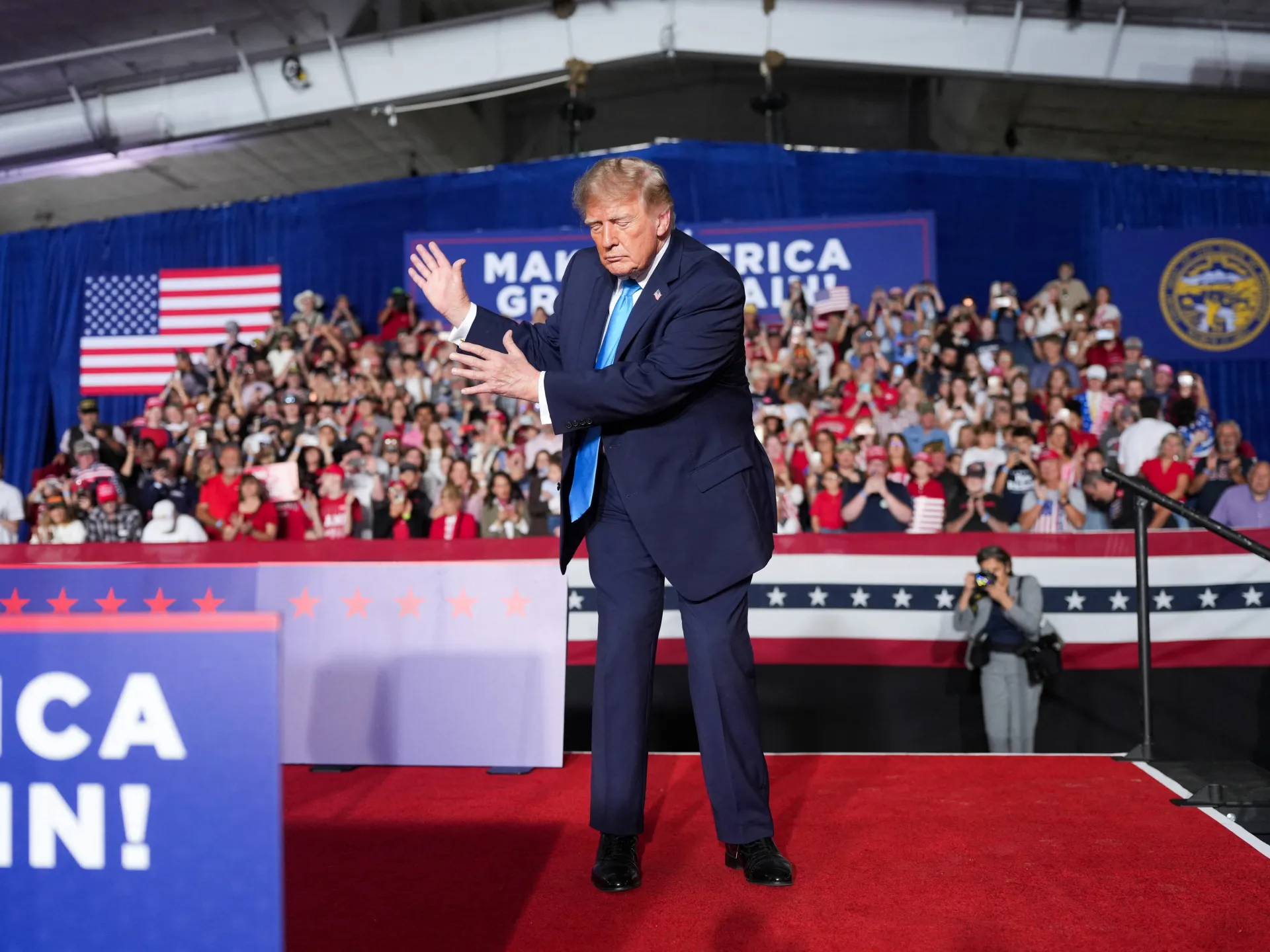
Much of the backlash came on Tuesday, a day after Trump told a midterm rally in Nebraska that Americans should be willing to make sacrifices to gain victory in the US-Israeli war against Iran.
Recommended Stories
list of 3 itemsend of list
Those sacrifices, he implied, could include the destruction of American cities, in case of an Iranian attack.
“It’s a small price to pay for keeping the world safe, keeping our country safe,” Trump said, seemingly in reference to the knock-on effects of the war, including rising fuel and fertiliser prices.
“They can take out a city. Let them take out Los Angeles. Let them take out San Diego. This is a very small price to pay, and it’s going to be over with very soon.”
Trump has downplayed the impact of the war – now in its eighth month – despite polling that shows the conflict is widely unpopular in the US. He has also repeatedly promised the war would end soon, though no lasting ceasefire has been reached so far.
The fallout from his Nebraska remarks was swift. Gavin Newsom, an outspoken critic of Trump and the Democratic governor of California, said the president was “deranged”.
“This is not only madness. This is dangerous,” Newsom said in a video on the social media platform X, in which he called for Congress to rein in Trump’s behaviour.
Newsom, a possible contender in the 2028 presidential race, has clashed repeatedly with Trump.
Last year, the two faced off over Trump’s decision to deploy federal troops to California, as part of an effort to support a crackdown on undocumented immigration in the Los Angeles area.
In December, a federal judge ruled that the deployment had been illegal and ordered its end. Newsom, who opposed the deployment, cited that conflict in his remarks about Trump’s Nebraska rally.
“The president of the United States – the same one who sent in the National Guard into Los Angeles, sent 700 active duty Marines to the second largest city in the United States of America – just invited Iran to take out Los Angeles and San Diego,” Newsom said.
He added that Trump’s remarks should convince those who “didn’t think the November election mattered” to vote in the upcoming midterms.
Some from Trump’s own party have also expressed shock at his remarks.
Jim Desmond, a Republican running in a competitive race for the House of Representatives near San Diego, was among those who distanced themselves from Trump’s statement.
“I vehemently disagree with President Trump’s comments. America must stand up to Iran and defend our interests, but the first responsibility of our Commander in Chief is to protect the American people and our homeland,” Desmond wrote on X.
“No American city is expendable, and no American family should ever be treated as collateral damage.”
US Representative Kevin Kiley, an independent who caucuses with Republicans and is running for re-election in northern California, also called Trump’s comments “unhelpful”.
But the White House has dismissed criticism of the remarks, calling it part of a “media freakout” that “is not rooted in reality”.
“He was clearly stating U.S. cities would have been threatened if a nuclear Iran hadn’t been stopped,” White House Director of Communications Steven Cheung wrote on social media.
“America is safer because of the President. Iran has no nuclear, no navy, no air force, and no money.”
California has the largest population and economy of any state in the US. Because of its population, it also has the most seats in the House of Representatives, at 52.
All 435 seats in the House of Representatives are up for grabs in November’s midterms, along with a third of the Senate. Also on the ballot are key state and local races.
With Republicans’ control of Congress on the line, the results of the midterms are expected to weigh heavily on the final two years of Trump’s second term.
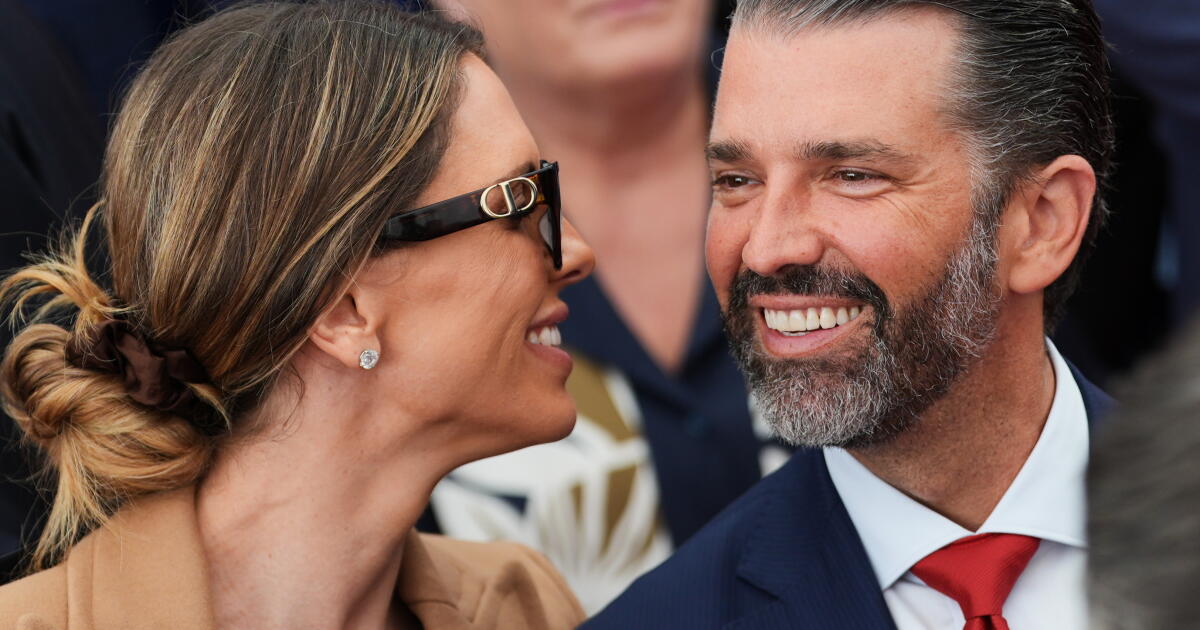
NEW YORK — The Russian oligarch who helped bankroll Donald Trump Jr.’s wedding celebration says the president’s eldest son has paid back the money.
“Yes, he did,” Umar Kremlev told an International Boxing Association press conference in Istanbul on Tuesday. “He did repay the money I spent on the present.” Still, he said he felt the repayment was unnecessary.
“Frankly speaking, I do not understand why he decided to do so,” he went on. “There are all kinds of events organized by all kinds of people. It is as if I invite you to come and visit my country house. Would you expect me to issue an invoice to them afterward?” Speaking through an interpreter, he said that would be “ridiculous.”
ProPublica, a nonprofit investigative website, reported last month that Kremlev, who has close ties to Russian President Vladimir Putin, “footed the bill for hundreds of thousands of dollars of wedding expenses” when Trump Jr. married socialite Bettina Anderson in the Bahamas in May. That included paying to rent one of two private islands where the three-day party was held.
In a subsequent post on her Instagram page signed by the couple, Bettina Trump wrote that they had been married “surrounded ONLY by our family,” but that Kremlev, head of the boxing association, was a “dear friend” who “very generously hosted two incredible nights of celebrations for us AFTER our wedding.”
President Trump, who did not attend the nuptials, previously defended the arrangement but told reporters that the money would be paid back.
“It’s totally allowed,” he said. “But, as I understand it, he paid them back.”
“That’s very common,” he added, “I’ve given wedding parties to numerous people.”
Kremlev, who was recently honored with the Order of Friendship by Putin, also played down the significance, saying the celebration was “a shared event” and “people blew it out of proportion.”
“I mean, why can’t we be friends? We are just friends,” he went on. “We are simply friends and what unites us is love for sports.”
The focus on Kremlev comes as Russia remains at war with Ukraine following its invasion in 2022 and as Trump has failed to broker a promised peace deal between the nations.
Trump Jr. has previously been scrutinized over his ties to Russia. During the 2016 campaign, his meeting with a Russian attorney in Trump Tower to discuss potentially incriminating information about his father’s then-Democratic opponent was a critical element of investigations into whether the Trump campaign coordinated with Russia to meddle in the election to help Trump win.
Move comes after ethics experts criticised three nationally broadcast ads and called for independent investigations.
Published On 6 Oct 20266 Oct 2026
United States President Donald Trump has said he will stop using taxpayer funds for television advertisements featuring him after widespread criticism of the campaign-style spots.
In a post on his social media site on Monday, Trump defended the advertisements, which cost at least $1.5m in federal funds and were aired ahead of the US November midterm elections.
Recommended Stories
list of 4 itemsend of list
Trump said he considered the advertisements to be “a positive promotion for our Great U.S.A.”, but that they would no longer be funded by taxpayers but by either him or his MAGA PAC,
MAGA Inc. is Trump’s political war chest and had amassed more than $400m by the end of July.
The announcement came as ethics experts and lawmakers from both parties have criticised the three nationally broadcast advertisements and called for independent investigations.
The advertisements have run during football games as recently as Sunday and during other programming.
One features Trump declaring that “America will never be a communist country”, while a chorus repeats the words “love me”. Another combines images of Mount Rushmore with footage of Trump praising a “golden age of America”.
The advertisements end with a disclaimer saying they were paid for by the US government.
Democratic lawmakers said last month that the White House transferred $20m in Homeland Security Department funds to air the advertisements, including one that closely resembles a 2024 Trump campaign ad, and sought independent probes.
California Attorney General Rob Bonta on Monday called for an independent investigation, calling it a “staggering misuse of public funding and breach of public trust” after the calls for a probe.
Federal Communications Commission Chair Brendan Carr, a Republican named to his position by Trump, last week said the advertisements were appropriate and rejected a request to investigate them.
The United States Department of Justice has filed 40 new cases seeking to strip naturalised Americans of their citizenship over alleged crimes they have committed.
In a statement on Monday, federal prosecutors said they were targeting individuals accused of “serious offenses”, including money laundering, child sexual abuse, visa fraud and tax evasion.
Recommended Stories
list of 3 itemsend of list
The statement touted the 40 cases as the largest volume of denaturalisation petitions submitted in such a short period under President Donald Trump. The petitions were filed from late August through early October.
“Today’s announcement marks the largest denaturalization effort in modern history,” said Attorney General Todd Blanche.
“Under President Trump’s leadership, the Department of Justice will continue to employ the denaturalization process to maintain our national security and protect the American people.”
The 40 citizens targeted in Monday’s announcement include people from a range of countries, including Mexico, Pakistan, China and Sierra Leone.
They are accused of concealing criminal acts and other facts about themselves as they sought to obtain citizenship. Their criminal convictions largely came after they took their oaths of citizenship.
Two people on the list are also accused of engaging in espionage on behalf of China. Committing these crimes before they became citizens, the Department of Justice alleges, meant these individuals lacked “good moral character” and should have been denied citizenship.
Expanded use of denaturalisation law
The laws to denaturalise US citizens have been used for decades, but historically, they have been reserved for serious crimes.
After World War II, for instance, the US government moved to denaturalise dozens of citizens accused of concealing involvement in the Holocaust or engaging in war crimes.
Notable cases include that of Emma Goldman, a Lithuanian-born anarchist and women’s rights activist who was jailed in 1917 for her antiwar activities, before being denaturalised and deported to the Soviet Union.
But the practice has become much less frequent since the end of the Cold War.
Top officials in the Trump administration, however, have sought to expand denaturalisation as part of a push to conduct the largest deportation operation in US history.
Under US law, prosecutors can ask courts to strip citizenship from those born outside the country if they wilfully concealed a “material fact” during their citizenship application that would have otherwise disqualified them.
But Trump’s efforts to widen denaturalisation proceedings have received pushback from human rights groups, which argue they could leave people stateless.
Critics have also warned that Trump has sought to leverage denaturalisation against specific groups he perceives to be political rivals or enemies.
Last year, for instance, the Trump administration indicated it would seek to denaturalise large numbers of Somali Americans after allegations emerged in Minnesota of daycare fraud involving the Somali diaspora.
“Send them back from where they came, Somalia, perhaps the worst, and most corrupt, country on earth,” Trump wrote at the time.
Members of Trump’s Republican Party, notably Representative Andy Ogles, have also floated the possibility of yanking citizenship from New York City Mayor Zohran Mamdani, who was born in Uganda. Trump himself has falsely suggested Mamdani may be in the country illegally.
At one point, Trump even floated the idea of withdrawing citizenship from tech entrepreneur Elon Musk, a close ally and adviser to his second administration, after the two men had a falling-out in 2025.
Trump has also pushed to do away with birthright citizenship, which is granted to virtually all children born in the US. The few exceptions include the babies of diplomats and foreign military forces.
Birthright citizenship is protected under the US Constitution and cannot be taken away the way naturalised citizenship can.
In June, the US Supreme Court struck down Trump’s efforts to dismantle birthright citizenship, but legal battles continue after the president issued a second executive order also seeking to restrict how birthright citizenship is applied.
Hispanic voters are twice as likely to favour Democratic Party over Trump’s Republican Party in the November elections.
Published On 5 Oct 20265 Oct 2026
A new poll from the news agency Reuters and the research firm Ipsos has found that United States President Donald Trump’s approval rating remains at a record low as the midterm elections approach in November.
The six-day survey, completed on Monday, found that just 32 percent of US voters approve of the job Trump is doing as president.
Recommended Stories
list of 3 itemsend of list
While that low rate has held steady since September, the latest Reuters-Ipsos poll suggests his support among Latino voters is continuing to slide.
Trump’s approval rating shrunk this month to 24 percent among Hispanic voters, its lowest point in either of his two terms in office.
The Republican leader had previously made substantial inroads with that constituency.
The Pew Research Center estimated that Trump and his Democratic rival, Kamala Harris, were within three percentage points of each other in the 2024 presidential race, earning 48 percent and 51 percent of the Hispanic vote, respectively.
That rate marked a significant jump for Trump over the 2020 election, when he only earned 36 percent of the Hispanic vote.
Experts have credited the boost in Hispanic support with helping Trump win the 2024 race. His 2020 bid, by contrast, ended in defeat to Democrat Joe Biden.
The Monday poll found that Trump’s gains among Hispanics have largely evaporated.
About 52 percent plan to vote for the Democrats in the November midterms, compared to 26 percent for Republicans.
The upcoming midterm is largely viewed as a referendum on Trump’s second term and will decide whether the Republicans maintain their majorities in the US House of Representatives and the Senate.
Democrats have seized on Trump’s low approval ratings, hoping to translate frustration with the president into voter momentum for their party.
A Democratic majority in one or both houses of Congress would place substantial constraints on Trump’s agenda for the remainder of his time in office.
But Trump has also faced rumblings from within his Republican Party as the November 3 midterms approach.
One Republican incumbent, Representative Maria Elvira Salazar of Florida, released a campaign advertisement last month that addressed Trump directly, saying, “The same Hispanics who helped you get to the White House in 2024 feel betrayed today.”
She cited Trump’s hardline immigration crackdown as a source of tension. “Some of your immigration enforcement efforts have gone too far,” she said, pointing to the detention and deportation of immigrants with no criminal record.
Experts have also warned that the president’s shrinking popularity, driven in part by concerns about the cost of living and his decision to launch a war on Iran, could weigh down Republican candidates in key races across the country.
Still, Trump has continued to express confidence about the prospects of his Republican Party in the upcoming midterms.
He has also defended his decision to place himself at the centre of the Republican election campaign strategy. Trump recently launched a 32-day blitz of cross-country rallies ahead of the November 3 midterms.
“Just so you understand, they all want me to go,” Trump said, denying that some Republicans would prefer he keep his distance. “They all want me to go campaign.”
Russian authorities quarantine hospital, monitor 200 contacts after suspected pneumonic plague death in Siberia.
Published On 5 Oct 20265 Oct 2026
President Donald Trump says the United States is ready to help Russia with a suspected pneumonic plague outbreak.
“We are looking at it very strongly. We just heard about it,” Trump said, adding that he had not spoken to Russian President Vladimir Putin about it but is prepared to offer US support.
Recommended Stories
list of 3 itemsend of list
“It’s a disease we used to be able to control,” Trump said. “Even with great advancement, the germs have really become relatively stronger than they were, and things that used to work on pneumonia don’t work anymore … anyone that has that kind of problem, we will help.”
The World Health Organization (WHO) said based on unofficial information it has received, the “public health risk to the general population appears to be low”.
Earlier on Monday, US Secretary of State Marco Rubio downplayed the danger as well. “I don’t think it’s cause for alarm, but it is cause for focus and a cause to just keep an eye on it,” Rubio said.
Russian authorities have quarantined a hospital and are tracing the contacts of an employee at a plague research institute in the remote Siberian region of Irkutsk who died of a suspected pneumonic plague infection. Local media identified the employee as 28-year-old laboratory technician Darya Shipilova.
Official details about the incident have been limited, and Russian media reports say authorities in Irkutsk have placed nearly 200 people under medical observation.
On Sunday, Russia’s official TASS news agency reported that the country’s consumer protection agency, Rospotrebnadzor, said an employee at the Irkutsk Anti-Plague Research Institute of Siberia and the Far East was diagnosed with “pneumonia of unknown aetiology” or origin. The agency also said it had expanded sample testing from the patient and found no microorganisms associated with her work.
On Saturday, the governor of neighbouring Buryatia region said in a post on his Telegram channel that a woman in Irkutsk had “died, maybe of the plague”.
In a statement to Al Jazeera, a US State Department official said: “We encourage Russian authorities to share accurate information quickly and openly.”
Pneumonic plague is caused by the bacterium Yersinia pestis, usually found in small mammals and their fleas. According to the WHO, the plague is highly infectious and can be fatal if not treated early.
The plague comes in three forms affecting different parts of the body. Pneumonic plague, an infection of the lungs, triggers the patient to cough out infectious airborne droplets.
If identified quickly, antibiotics can treat the disease. Left untreated, it can be fatal in one to six days.
United States President Donald Trump has increased the pressure on US Senate Republicans to make Daylight Saving Time permanent, singling out one of the body’s members for stalling legislation to end the twice-a-year changing of clocks.
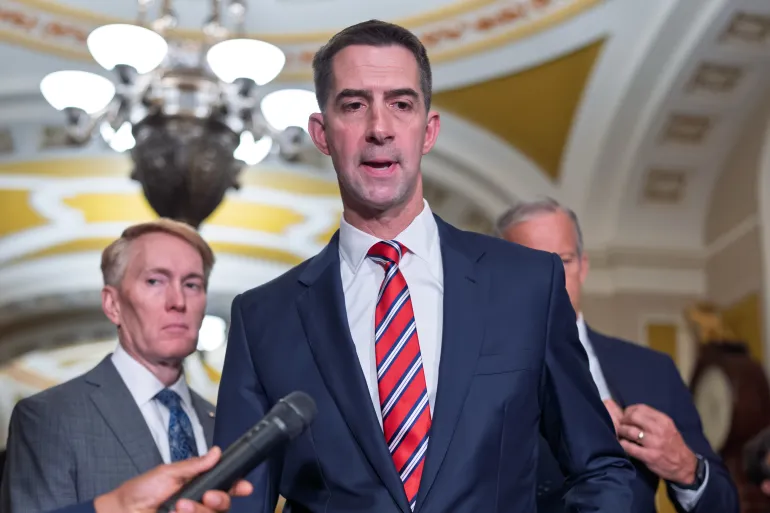
In a social media post on Saturday, Trump blasted US Senator Tom Cotton for “holding up” the Sunshine Protection Act, which Trump has personally opted to call the “No More Changing of Clocks Act”.
Recommended Stories
list of 3 itemsend of list
“For some reason, Tom is stopping the Bill and, in the Senate, it’s very easy to do, it only takes one!” Trump wrote on his Truth Social account about the Arkansas Republican. “It should pass overwhelmingly, in a Bipartisan fashion”.
“Nobody wants to spend their precious time running all over the place, turning Clocks back twice a year and, having sunshine in the afternoon is better than early in the morning!” he added.
Trump went even further, publishing what he claimed was Cotton’s phone number as he implored Arkansas residents to pressure him. The move echoed a moment during the 2016 Republican presidential primaries, when then-candidate Trump gave out US Senator Lindsey Graham’s number after the former rival criticised him.
US Senator Tom Cotton speaks to reporters at the US Capitol in Washington [File: J. Scott Applewhite/AP Photo]
Al Jazeera called the number listed in Trump’s post, but an automated message stated the voicemail box was full. Cotton’s spokesperson and the White House did not respond to requests for comment.
The president has routinely pushed Senate Republicans to pass legislation mandating year-round daylight saving, which would end Americans’ decades-long practice of changing their clocks twice a year to increase daylight hours. On Friday, Trump urged the US Senate to approve the bill, which passed the US House in July by a 308-117 vote.
Cotton has previously opposed the bill, arguing in a US Senate floor speech last year that farmers, construction workers, commuters and children heading to school would begin their days in the dark during the winter.
Trump disputed that argument in a separate post on Saturday, saying the bill “would be a very nice and easy WIN for the Republican Party”.
“If Tom Cotton were putting Arkansas first, he would give them an extra hour of daylight and, more importantly, they wouldn’t have to run all over their houses, farms, workplaces, and everywhere else, twice a year, having to change their Clocks, and often forgetting to do so”, Trump wrote.
Trump, an avid golfer, also highlighted what he considered to be another selling point of the bill: the North American Professional Golfers’ Association (PGA) tour.
“The PGA TOUR, as an example, needs more Daylight in the afternoon in order to finish their Tournaments”, he wrote in a post, which included a letter from PGA Tour CEO Brian Rolapp supporting the bill. “Likewise, regular Golfers, Tennis Players, Hunters and, perhaps more importantly, Farmers who want more Daylight to play or work.”
The US president, who spent part of Saturday at his golf club in Sterling, Virginia, indicated in a subsequent post that he had received personal feedback on the proposal: “I don’t know about anyone else, but a table full of very distinguished people just told me that they HATE, immediately after a mandatory time change, going home at night – and it’s DARK. It’s depressing!”
In 1974, the US Congress briefly adopted year-round daylight saving time in response to the country’s energy crisis. But Congress repealed the law less than a year later over safety concerns as children commuted to school before sunrise.
US senators left Washington this week and have no set plans to return until after the November 3 midterm elections.
Some members, such as Senator John Kennedy, weren’t optimistic that Senate Republican Leader John Thune would bring the bill up for a vote before polling day.
“It’s dead as disco,” the Louisiana Republican told Reuters this week of Trump’s push to make daylight saving time permanent. “My sense is it would have trouble passing … I don’t think the leader is going to bring it up.”
Star receiver Puka Nacua will play against the Philadelphia Eagles on Sunday in Philadelphia, but star defensive lineman Aaron Donald is out because of a back issue, Rams coach Sean McVay said Friday.
Donald, a three-time defensive player of the year, has not practiced this week following the Rams’ loss to the Denver Broncos on Sunday in Denver. McVay said Donald, 35, was experiencing back soreness.
“He’s as tough as it gets. Just not feeling good enough,” McVay said, adding, “He would do it and he could probably go be productive but part of our job is to protect these tough dudes like him from themselves.”
Donald has played in two games since ending a two-year retirement in late August. He did not make the trip to Australia for the season opener against the San Francisco 49ers, but made three tackles in the Rams’ 28-6 victory over the New York Giants at SoFi Stadium.
Donald had one tackle and one quarterback hit in the 30-26 loss to the Broncos.
“He’s working as hard as he can to get himself feeling as good as possible and we’re hopeful and optimistic that good days are ahead,” McVay said.
Nacua sat out the last two games because of a hip injury that caused hip, groin and abdominal soreness.
McVay said Nacua has been “strong, looks sturdy, looks explosive,” during practice this week.
“I think it will really just be a feel for the overall conditioning,” McVay said, adding that he hopes “the magic of the [game] jersey” will help Nacua have a productive game against the Eagles.
Tight end Terrance Ferguson (ankle) and cornerback Jaylen Watson (shoulder) will not play on Sunday, McVay said. Tight end Colby Parkinson (shoulder, knee) and edge rusher Josaiah Stewart (groin) are questionable.
Rams place Terrance Ferguson on injured reserve
Rams tight end Terrance Ferguson jogs back to the locker room against the Giants on Sept. 21.
(Kyusung Gong / Associated Press)
The Rams opened the season with five tight ends on the roster, which some might have regarded as a surplus.
But the Rams need the depth.
On Friday, the team put Terrance Ferguson on injured reserve because of an ankle injury.
Ferguson, a 2025 second-round draft pick, was injured Sept. 21 against the Giants, but he played through it against the Broncos.
Ferguson has seven catches for 63 yards and a touchdown.
Ferguson must sit out at least the next four games against the Eagles, Buffalo Bills, Arizona Cardinals and Las Vegas Raiders. He is eligible to return for the Nov. 1 game against the Chargers.
The Rams began the season with five tight ends on the roster. Tyler Higbee and Davis Allen are at full strength. Max Klare, a second-round draft pick from Michigan, could get his first action on offense against the Eagles.
Rams release punt returner Xavier Smith
Rams wide receiver Xavier Smith runs the ball against the Kansas City Chiefs during a preseason game in August.
(Charlie Riedel / Associated Press)
What a difference a day makes.
Less than 24 hours after Rams special teams coordinator Bubba Ventrone said the team was not going to replace punt returner Xavier Smith, the team released him.
“We just need better production out of that position,” McVay said, adding that some of the “decisions” that Smith made in last Sunday’s loss to the Denver Broncos proved costly.
“We’ve got to make better decisions,” McVay said. “We’ve got to be able to field it.”
Receiver Alex Bachman is expected to be promoted from the practice squad to handle punt returns. McVay said he was “optimistic that I think we’re going to see some good stuff from Alex on Sunday.”
Smith, 29, is a third-year pro who signed with the Rams as an undrafted free agent and worked his way into a role as a kick returner and rotational receiver.
Smith appeared to be on his way to overcoming a major error in last season’s NFC championship game, when he lost a fumble in the 31-27 defeat by the Seattle Seahawks.
But through three games, Ventrone on Thursday described Smith’s performance as “inconsistent.”
“We need to do a better job of tracking the ball, judging the ball, fielding the ball when necessary, not fielding it in other situations,” Ventrone told reporters. “He knows that and hopefully we’ll get the improvements that we need in that area.”
Ventrone was asked if there was any thought about replacing Smith as the punt returner.
“No, we have a lot of trust in ‘X’, I really do,” Ventrone said. “He’s put in a lot of time and effort in training camp and obviously moving into the season. I think that he’ll do the necessary things to be able to sustain at that position for us.”
But on Friday morning, the Rams announced they had waived Smith.
McVay said the Rams “weren’t thinking” about making a change when Ventrone spoke to reporters Thursday.
“As you get a chance to kind of take a step back, evaluate the totality of our group, what’s the best way to try to be able to put together all three phases, did feel like that was in the best interest of the group,” McVay said, adding, “and that decision was made kind of later [Thursday night].”
United States President Donald Trump has said Europe has agreed to release a “massive amount” of their diesel stockpile, although no European parties have confirmed the claim.
Trump made the statement on his Truth Social account on Friday as he has heaped pressure on European countries to release diesel stockpiles to ease soaring prices caused by the US-Israel war with Iran and the resulting constriction of traffic via the Strait of Hormuz.
Trump had previously floated banning US diesel exports if European countries did not comply. The European Union had earlier on Friday said it “fully rejects” the threat.