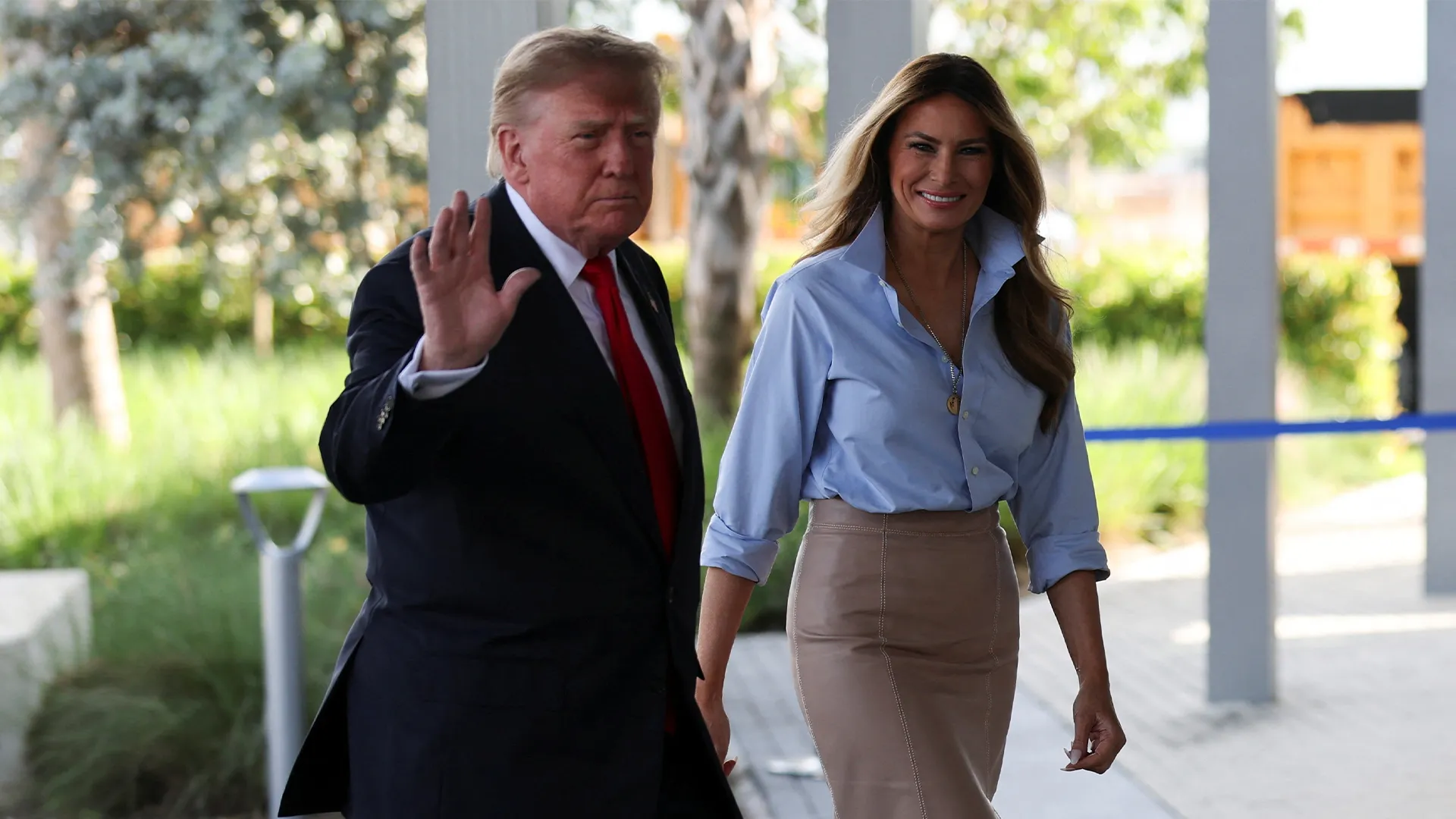
US President Donald Trump praised First Lady Melania Trump, saying she was ‘better than our professionals’ following her diplomatic efforts towards a localised ceasefire between Russia and Ukraine in Oleshky. Trump was casting his vote in the midterm elections.
Trump’s remarks come amid a fractious moment between the US president and the journalists who cover him.
Published On 24 Oct 202624 Oct 2026
United States President Donald Trump has confirmed he could move the White House press corps to a different location, possibly away from the executive residence.
In a social media post on Friday, Trump described reports that he planned to remove the White House press briefing room in favour of restoring a historic swimming pool located underneath as “Fake News”.
Recommended Stories
list of 3 itemsend of list
“I NEVER even thought to do such a stupid thing!” he wrote in a Truth Social post.
Trump, however, indicated he may relocate dozens of reporters who cover the White House “to a less obnoxious location”.
The New York Times on Tuesday reported that Trump had pitched his former press secretary, Karoline Leavitt, on an idea to move journalists out of the White House’s storied James S. Brady Press Briefing Room. That proposal did not move forward during Leavitt’s tenure, which ended on August 27.
Trump’s remarks come amid a fractious moment between him and the journalists who cover him.
Last month, Trump banned journalists from three US-based media outlets – CNN, MS NOW and POLITICO – from the White House, a move that proponents of free speech said violated First Amendment protections.
A US federal judge ruled that the order was likely unconstitutional, forcing the White House to restore the journalists’ access. The Trump administration continues to fight the ruling.
Trump has also regularly chided and denigrated members of the media he claims cover him unfairly.
The latest incident was during an Oval Office event on Tuesday when Trump attacked The Independent’s White House Correspondent Andrew Feinberg.
“What’s wrong with you? Are you a sick person? I actually think there’s something wrong with you”, Trump said as Feinberg tried to ask a question. The moment was amplified by the White House on social media.
If Trump opts to proceed with changes to the White House press briefing room, it would be the latest in a long list of controversial projects he has ordered that would transform the property.
Since returning to power last year, the US president has demolished the White House East Wing to construct a new ballroom, installed concrete pavers over the lawn centred in the White House Rose Garden and built a helipad on the South Lawn.
The Times reported Trump told aides he wanted to bring back a West Wing indoor pool constructed in 1933 for use by President Franklin D Roosevelt, who suffered from polio and often swam, according to his presidential library, to ease soreness.
In the 1970s, former President Richard Nixon had a floor constructed above the pool to accommodate a briefing room for the growing White House press corps. The pool remains beneath the floor of the briefing room.
Leavitt confirmed during a Friday interview that Trump was “flirting” with the idea of restoring the pool.
“He just, maybe, wants to restore it to all of its glory”, Leavitt said during an appearance on HBO’s “Real Time with Bill Maher”. “I don’t know if he’ll do it.”
The White House did not immediately return Al Jazeera’s request for comment.
United States President Donald Trump has long touted himself as a political outsider, someone who would expose the elites’ abuse of power and shift government focus from far-off conflicts to problems at home. Phrases like “drain the swamp” and “America first” have proved to be powerful rallying cries, sparking a whole cadre of “Make America Great Again” (MAGA) Republicans.
Halfway through his final term as president, though, Trump has backpedalled on many of those ideas, cosying up to the ultra-wealthy, sidelining investigations into convicted sex trafficker Jeffrey Epstein, and launching an ongoing war with Iran.
Recommended Stories
list of 3 itemsend of list
That about-face appears to be having a real impact on Republicans running in the US midterm elections in November, said Rina Shah, a geopolitical adviser and strategist and a former senior GOP congressional aide.
“In competitive races, some are quietly distancing,” Shah said, adding that they are “talking about gas prices, local issues, or [saying] ‘I’m focused on my district’ – because the Iran war and the Epstein drip are already showing up in attack ads and soft polling.”
Here’s what you need to know about whether the Republican Party has softened its stance on these issues.
Which Republicans have broken with Trump over the Epstein files?
During his 2024 presidential campaign, Trump said he would declassify troves of files kept by the Federal Bureau of Investigation (FBI) about Epstein and his global network of contacts. Trump’s future cabinet members, too, were enthusiastic about this, with Kash Patel, now head of the FBI, saying it was time to “put on your big boy pants and let us know who the pedophiles are”.
Yet a few months after taking office, Trump began dragging his feet, sparking a backlash from influential MAGA figures. Trump began calling the entire issue a “hoax” and saying Republicans were being duped by Democrats into calling for an investigation into Epstein’s network.
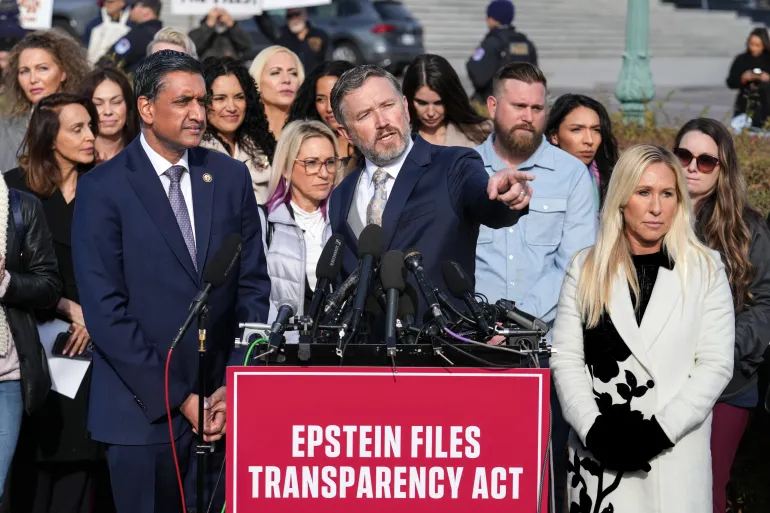
US Congressional Representatives Ro Khanna, Thomas Massie, and Marjorie Taylor Greene speak during a news conference as the US House of Representatives prepares to vote on the Epstein Files Transparency Act, at the US Capitol in Washington, DC, the United States on November 18, 2025 [File: J Scott Applewhite/AP]
Congress did eventually force the release of the files, with help from a handful of Republicans who broke with Trump. The Trump administration has released batches of the heavily redacted files, but has continued to withhold some. Meanwhile, all the Republican lawmakers who voted to mandate releases have paid a price for their insubordination, with three even losing their offices.
US Representative Marjorie Taylor Greene left her Georgia seat in January 2026, after publicly clashing with Trump over Epstein. Nancy Mace, a Republican from South Carolina, lost her bid to become the party’s candidate in her home state after Trump refused to endorse her. Colorado’s Lauren Boebert barely won the primary in her own contest after angering Trump by supporting calls for transparency from Thomas Massie, another Republican bent on exposing what the files held. Massie, of Kentucky, also drew Trump’s ire, which likely cost him the primary.
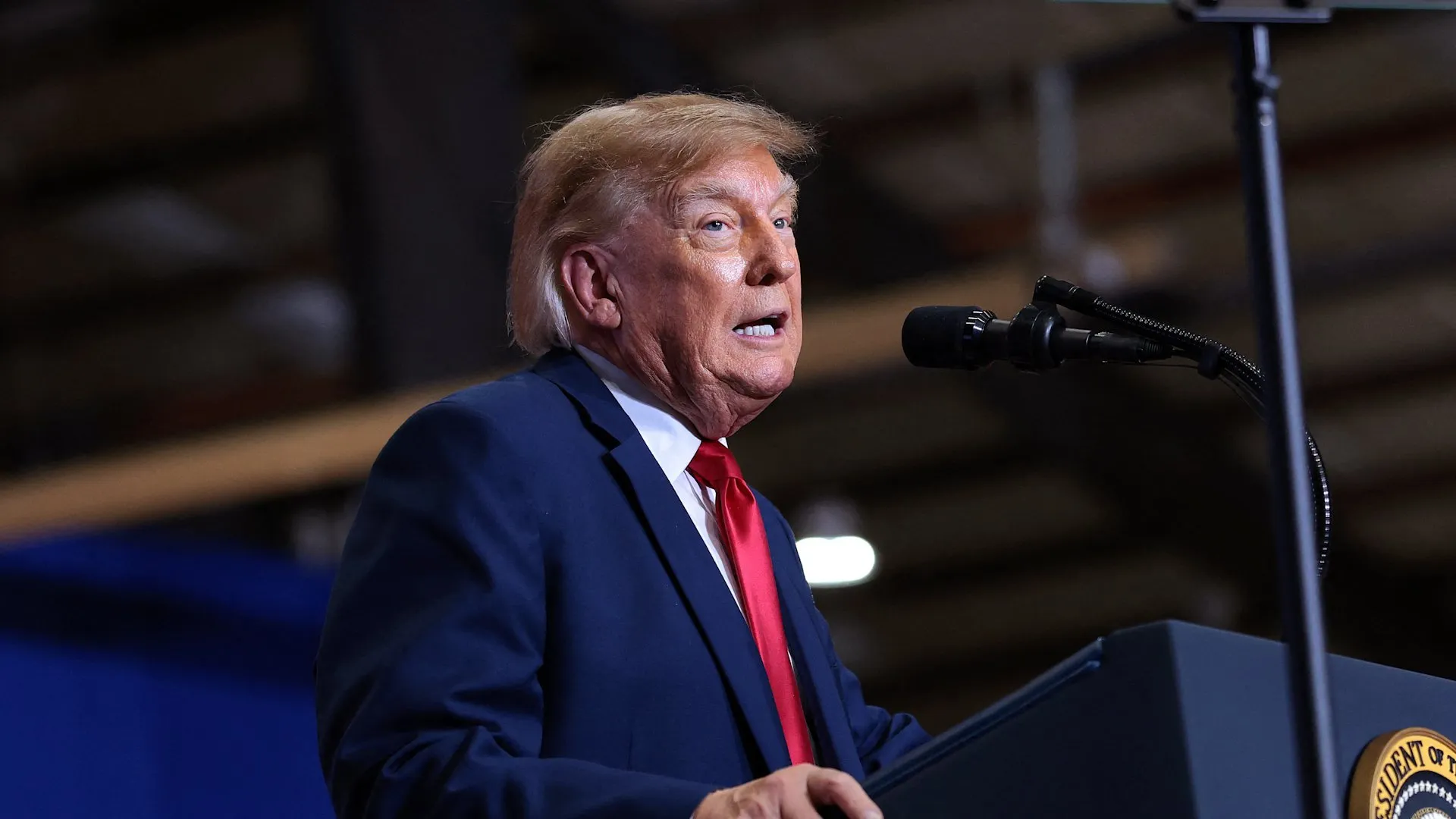
Republican presidential nominee Donald Trump participates in a fireside chat with media host Tucker Carlson at the Desert Diamond Arena, in Glendale, Arizona, the US, October 31, 2024 [File: Brendan McDermid/Reuters]
No more foreign wars?
Trump had long said he would be reducing foreign military involvement, breaking with the interventionist tendencies of other recent Republican presidents. Now he and his party face tough questions about the US-Israel war on Iran, which influential figures in the MAGA movement like political commentator Tucker Carlson have called a mistake, saying, “This is Israel’s war. This is not the United States’ war.”
Amongst disgruntled MAGA supporters, a narrative has emerged of Trump using the war to also distract from the Epstein issue. Massie, the former congressman, summed up the sentiment by saying, “Bombing a country on the other side of the globe won’t make the Epstein files go away.”
Trump has tried to downplay the war’s impact, but voters, even in the Republican Party, think he broke his own promise, driving the overall approval rating for the ratings-obsessed president down to record lows. “Seven months into an open-ended campaign with shifting goals,” said Shah, “that promise looks different to a lot of his voters.”
Few Republicans, however, have responded to that public sentiment with their votes in Congress, where Democrats have tried repeatedly to curtail Trump’s war on Iran by passing resolutions pointing out he failed to get the body’s approval.
In September, just seven Republican House members joined Democrats to pass an anti-war bill. In the Senate, similar efforts have been supported by just a handful of Republicans. Trump called the Republican lawmakers supporting the anti-war bills “unpatriotic,” and said, “They should be ashamed of themselves.”
As with the Epstein files, Trump took action against rebellious Republicans over the Iran war, for instance backing a rival of Senator Bill Cassidy, who voted in favour of the anti-war bill, in a primary in Louisiana that the Republican senator ended up losing.
What happened to Trump’s promise to “drain the swamp”?
One of Trump’s most appealing promises had been to purge the government of a “deep state” establishment he says is running the country without being accountable to the public on social issues, and fiscal and foreign policy.
Priscilla Chan, Meta founder Mark Zuckerberg, Lauren Sanchez, Amazon founder Jeff Bezos, Google CEO Sundar Pichai and Tesla CEO Elon Musk attend Donald Trump’s inauguration ceremony on January 20, 2025 [Chip Somodevilla/POOL/AFP]
In a way, Trump did keep that promise. An entire federal government division – the Department of Government Efficiency (DOGE) – forced tens of thousands of federal workers out of their jobs and dismantled institutions like the US Agency for International Development (USAID). The military threw out notions of racial, gender, and economic diversity. Everything from universities to the Smithsonian Institution was subjected to a campaign against an unqualified, diversity-obsessed elitist class.
But lobbying groups, including some supporting foreign governments, have been given a free hand, and ethics rules and watchdogs who would tackle political corruption have been weakened, said Shah, the Republican strategist.
At his presidential inauguration, Trump literally surrounded himself with the wealthiest people in the world, some of whom have gone on to play some part in his administration.
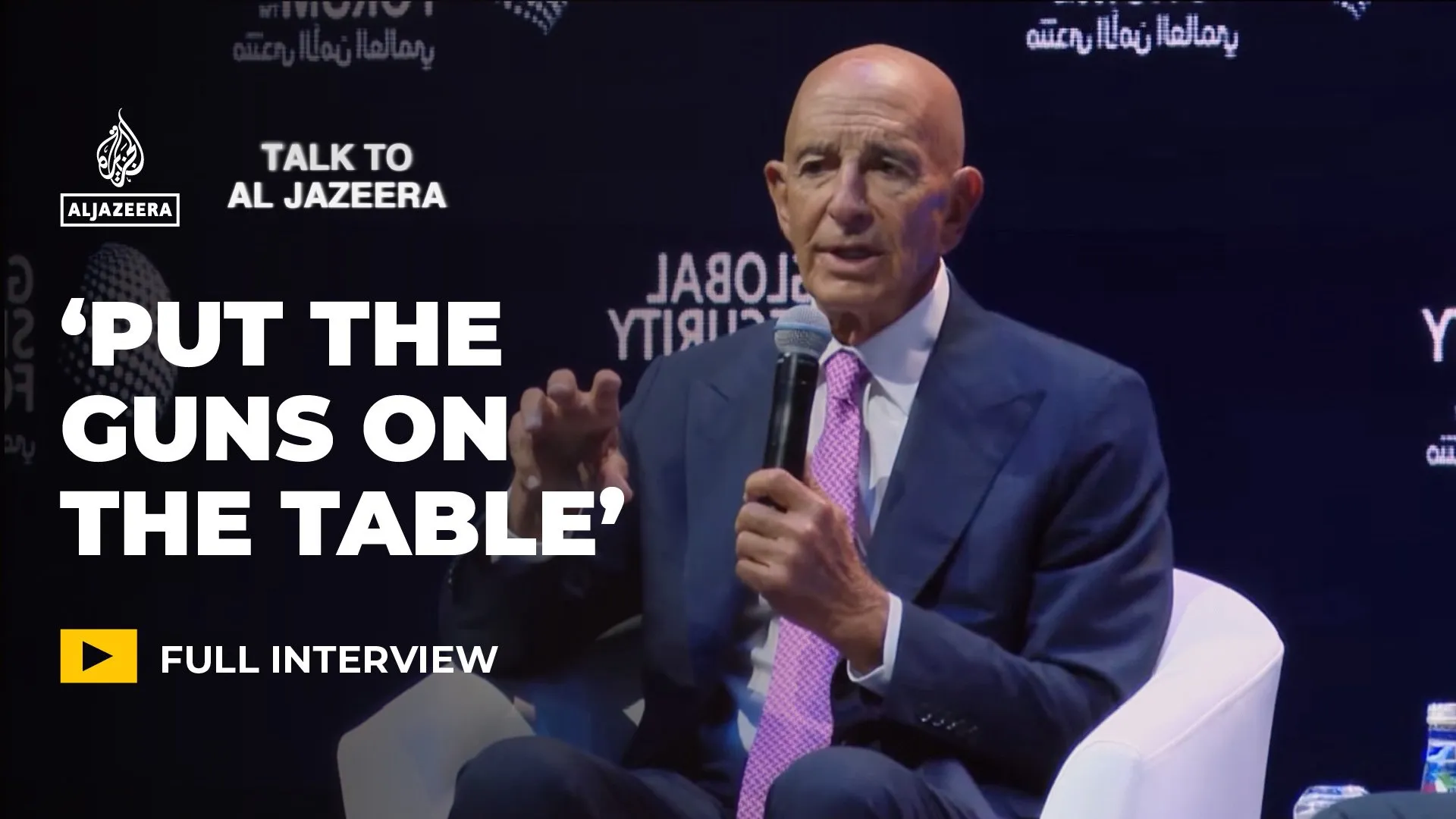
The US ambassador to Turkiye, Tom Barrack, says Washington’s relationship with the Middle East needs to change, from one of control to one of support.
The United States ambassador to Turkiye and special presidential envoy for Syria and Iraq says Washington’s relationship with the countries in the Middle East needs to change.
Tom Barrack says the US no longer seeks to dominate the region.
He won’t say whether the war in Iran was a mistake – but acknowledges the instability it caused has led to unintended consequences.
Barrack says President Donald Trump is against what he calls “forever wars”, and ending the US-Israel war on Iran will require a major compromise. According to him, each side will have to accept conditions it does not like.
However, he is worried that growing tensions could lead to miscalculation.
Barrack says trust is lacking between Washington and Tehran, and that is hampering talks to agree on a deal.
He tells Al Jazeera that countries in the region should not depend on the US to solve their problems and that they need to look out for themselves. He insists the Trump administration has not abandoned the region, but is rather re-examining its role.
Barrack admits that years of US involvement in the region demonstrate that intervention and regime change do not work. He says it is time to put down the guns and resolve disputes through negotiations and mutual respect.
US President Donald Trump praised a man who punched a protester at a midterm election rally held in Clemson, South Carolina. Trump thanked the assailant as the protester was being removed from the event.
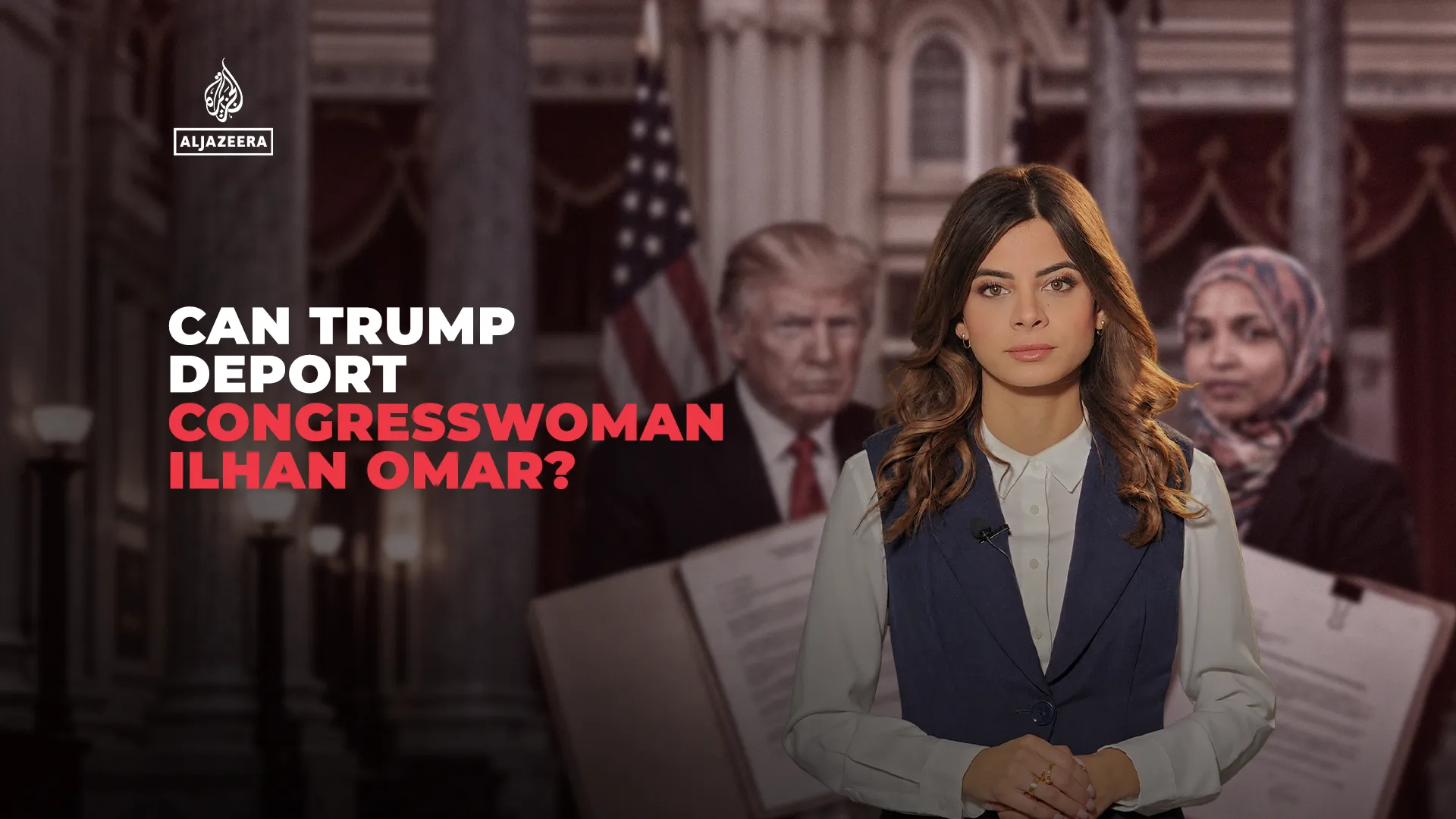
US President Donald Trump says Congresswoman Ilhan Omar could face jail or deportation as federal authorities investigate allegations surrounding her US citizenship. Omar denies wrongdoing and accuses the administration of political intimidation. With the midterm elections approaching, what could happen next?
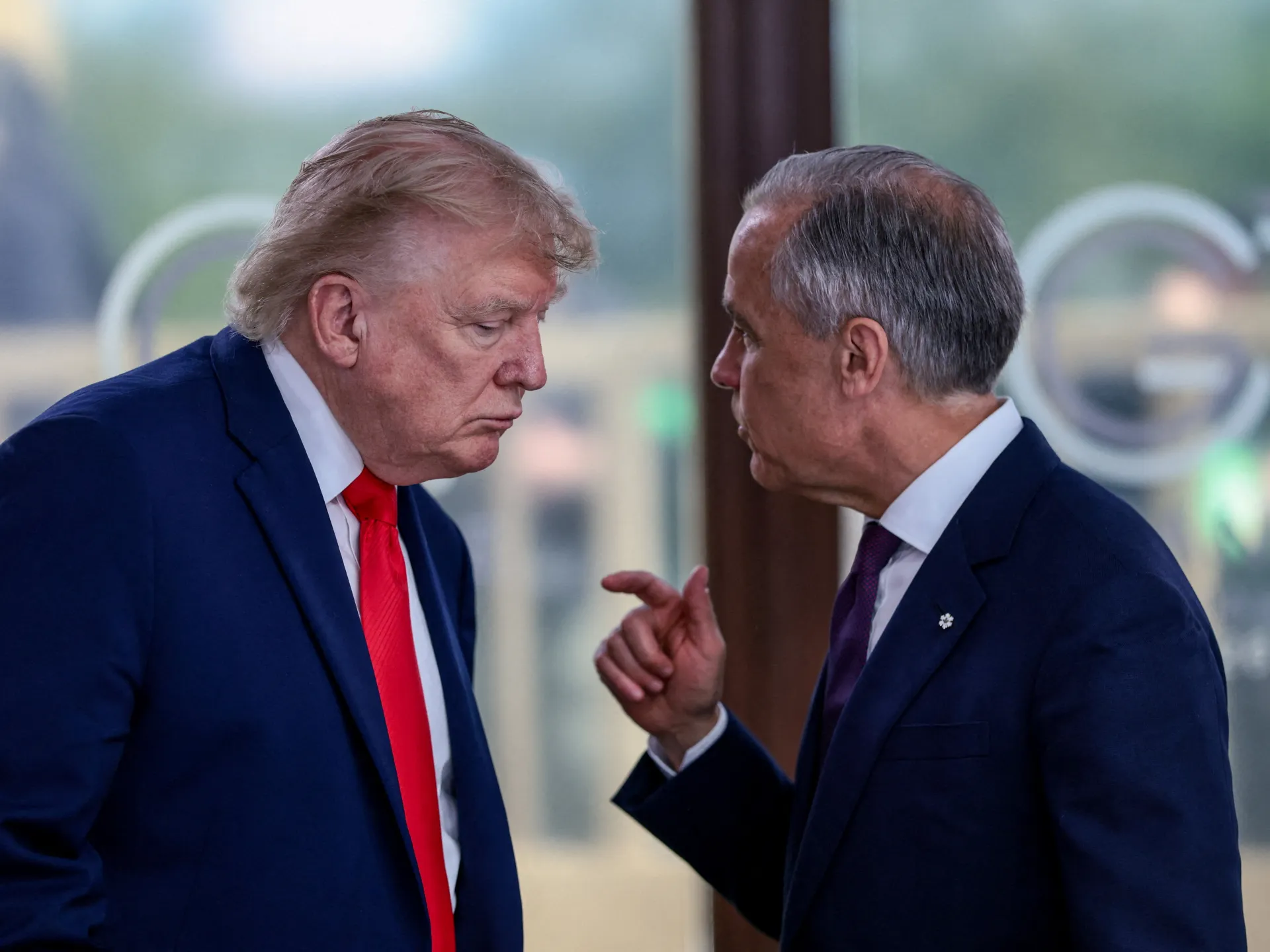
The United States has accused Canadian politicians of trying to influence its midterm elections, pointing to Canada’s efforts to push back against President Donald Trump’s tariff campaign.
In a fact sheet released on Wednesday, the US embassy accused Canada of being dismissive of its allegations of election interference.
Recommended Stories
list of 3 itemsend of list
“The Canadian government brushes off concerns about potential interference in U.S. elections, even as its ministers and premiers openly describe plans to influence American politics in official documents and public appearances,” the fact sheet reads.
The two countries have been locked in a trade war since the start of Trump’s second term in 2025, with Canada responding to US tariffs with import taxes of its own.
But the US embassy identified public statements about the tariffs as being attempts to sway the November 3 midterm election.
Among the politicians singled out in the fact sheet was Canadian Industry Minister Melanie Joly. The fact sheet pointed to comments Joly made in August about responding to Trump’s tariffs.
“We’re also targeting products that will target states in the US. And so we’re being wise and strategic to put political pressure,” Joly said at the time.
The embassy also took issue with Joly’s meetings with Democratic officials in Boston and Chicago in September. When asked by a reporter what she thought might happen with regard to tariffs if Democrats won the midterms, she said, “That’s exactly why I’m meeting so many governors and potential presidential candidates.”
Joly has rejected the suggestion that her actions could amount to interference, saying Canada would never meddle in US elections. She said her meetings with US politicians, both Democratic and Republican, were about building Canada’s economy.
“Fundamentally, what I’ve done in the US is to attract investments,” she told reporters on October 14.
The embassy also pointed to Ontario Premier Doug Ford’s calls for retaliatory measures on US products, as well as his government’s advertising campaign against Trump’s tariffs, launched last year.
The campaign, which featured clips of former US President Ronald Reagan criticising tariffs in a 1987 radio address, prompted Trump to call off trade talks with Canada in October 2025.
While the embassy laid out several examples of Canadian officials trying to influence US trade policy, it didn’t explain how those efforts amounted to interference.
Other instances of alleged election interference included Liberal MP Anthony Housefather saying he had campaigned in Florida on behalf of Democratic Representative Debbie Wasserman Schultz, ahead of her primary election in August.
The fact sheet also accused individual Canadians of illegally participating in US elections, naming 11 people who had been charged or sentenced for voting between 2012 and 2024.
The sheet did not, however, present any evidence linking those citizens to a Canadian government effort to involve itself in US elections.
“All Canadians should refrain from attempting to participate in or influence U.S. elections in any way,” the US embassy’s statement said. “Americans decide America’s elections.”
The fact sheet comes a week after US Ambassador to Canada Pete Hoekstra said Washington was closely watching Canada for signs of interference ahead of the midterms.
“We’re monitoring it, we’re evaluating it and if some of it becomes election interference then America will respond to it,” Hoekstra said in a podcast interview on The Really Big Show, according to The Canadian Press.
The US and Canada have long been allies, but relations have frayed since Trump returned to office.
Not only has the Republican leader triggered a trade war with Canada, but he has also repeatedly threatened to make Canada a 51st state.
There have also been reports that separatist leaders from Alberta had sought support from Trump administration officials ahead of a failed referendum on the province’s independence this week.
Ahead of Monday’s provincial vote, Canadian Prime Minister Mark Carney addressed concerns about potential US interference in the referendum, saying Canada expected foreign governments to stay out of its elections.
“Our expectation is, to be absolutely clear, on foreign governments, United States included, is we don’t get ourselves involved in their elections, they don’t get themselves involved in our elections,” he told Global News.
Al Jazeera has reached out to the Prime Minister’s Office and Global Affairs Canada for comment, as well as the office of Ontario Premier Doug Ford and Industry Minister Joly.
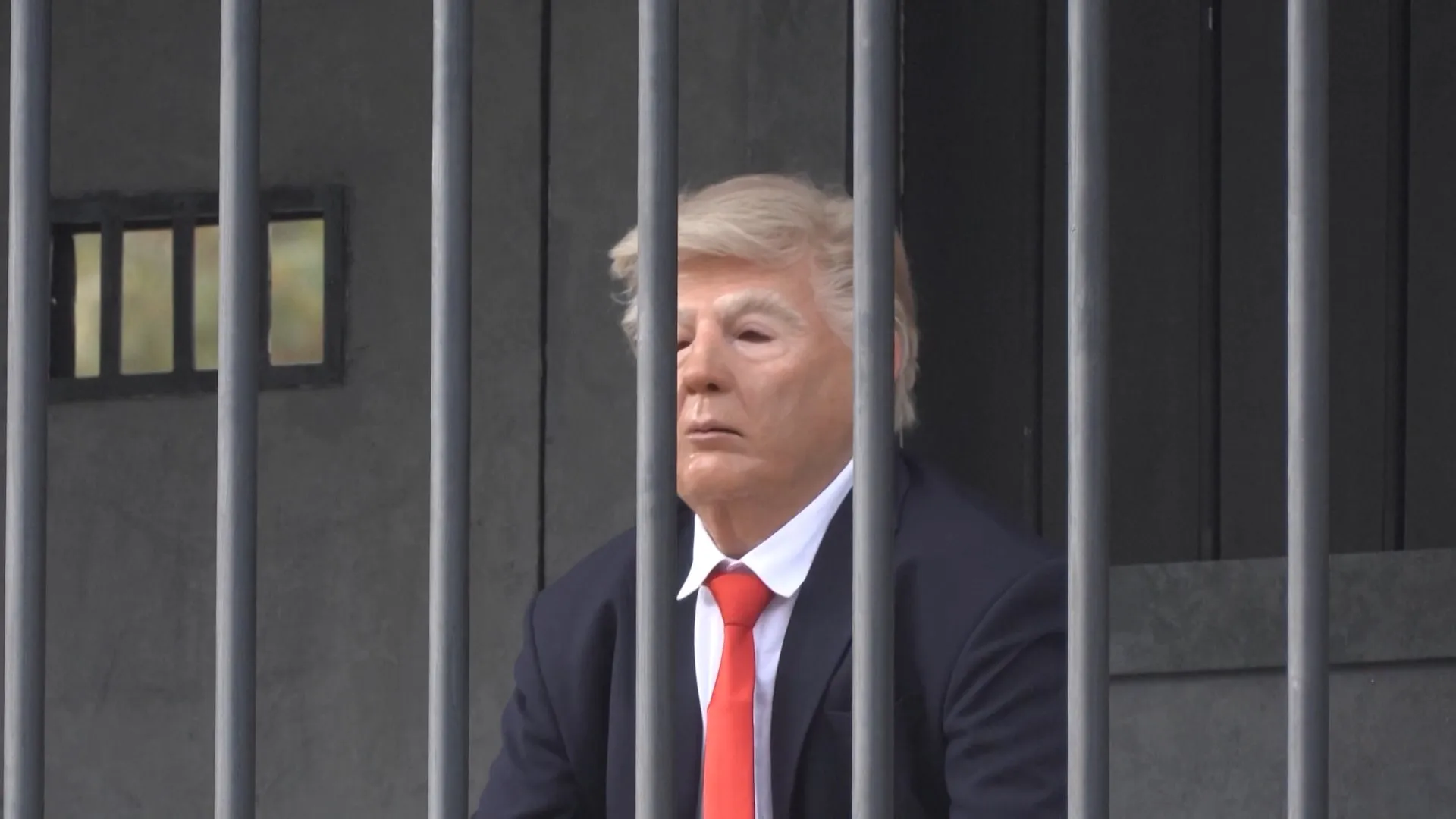
An Iranian performer in Tehran’s busy Tajrish Square has impersonated US President Donald Trump behind bars in an art installation featuring the slogan: “It is a crime not to see this scene.”
US president has continued to support data centres in advance of midterms, despite growing opposition from Republicans.
Published On 21 Oct 202621 Oct 2026
United States President Donald Trump has said AI data centres should pay “dividends” to communities, in a shift before the midterm elections.
“If companies want to make their Data Centers popular, pay the community, and/or individuals within the community, a ‘dividend’” Trump said in a post on Truth Social on Wednesday.
Recommended Stories
list of 3 itemsend of list
The president’s comments come after he doubled down on his support for data centres, a stance seen as one of several political liabilities for Republicans in the run-up to the midterm election, as Trump’s approval rating has hit record lows.
Polls show dismal support for such centres amid concerns about the sprawling complexes’ water and energy use.
In the post, Trump advised companies that they could make the centres popular if they “pay the community, and/or individuals within the community, a ‘dividend’.”
“I have watched the process closely, and Data Centers that were highly unpopular in a certain area, have become extremely popular when a financial deal is struck,” he said. “MAKE DEALS, and get them built!!!”
Several top Republican candidates have opposed data centres before the midterm polls, with the issue emerging as an area of rare bipartisan consensus in advance of the November 3 vote.
Republican Senate candidates, including Ken Paxton in Texas, Mike Rogers in Michigan and John Husted in Ohio, have all called for more restrictions and oversight on the centres, in a reversal of earlier positions.
The issue featured prominently in a recent debate in Iowa, where Republican Senate Candidate Ashley Hinson said the local level should decide whether to build AI data centres.
Despite the shifting sentiment, Trump in late August issued an impassioned defence of data centres, decrying what he called “the anti-Data Center movement” as a gift to China.
“The only reason that communities throughout the USA should not want Data Centers is if they want to end up being backwards and poor,” Trump wrote at the time.
“If they want to be successful and rich, with far lower taxes and jobs all over the place, let Data Reign.”
Trump has taken several measures to accelerate data centre development, including issuing an executive order last year that called for measures to fast-track permitting and environmental review. The order promised to use federal land for the “expeditious and orderly development of data centers”.
Trump has also backed a voluntary pledge by AI companies to cover the full cost of the electricity data centres use, but has avoided supporting legally binding federal restrictions.
A Gallup poll conducted in March suggested that 71 percent of Americans opposed establishing AI data centres in their areas.
An ABC News/Washington Post/Ipsos poll released on Wednesday identified a similar rate of disapproval, with 72 percent of respondents saying that they opposed building new data centres in their communities.
Trump calls for Zelenskyy to be replaced as negotiator, while Ukraine’s president says arms shipments delayed.
Published On 20 Oct 202620 Oct 2026
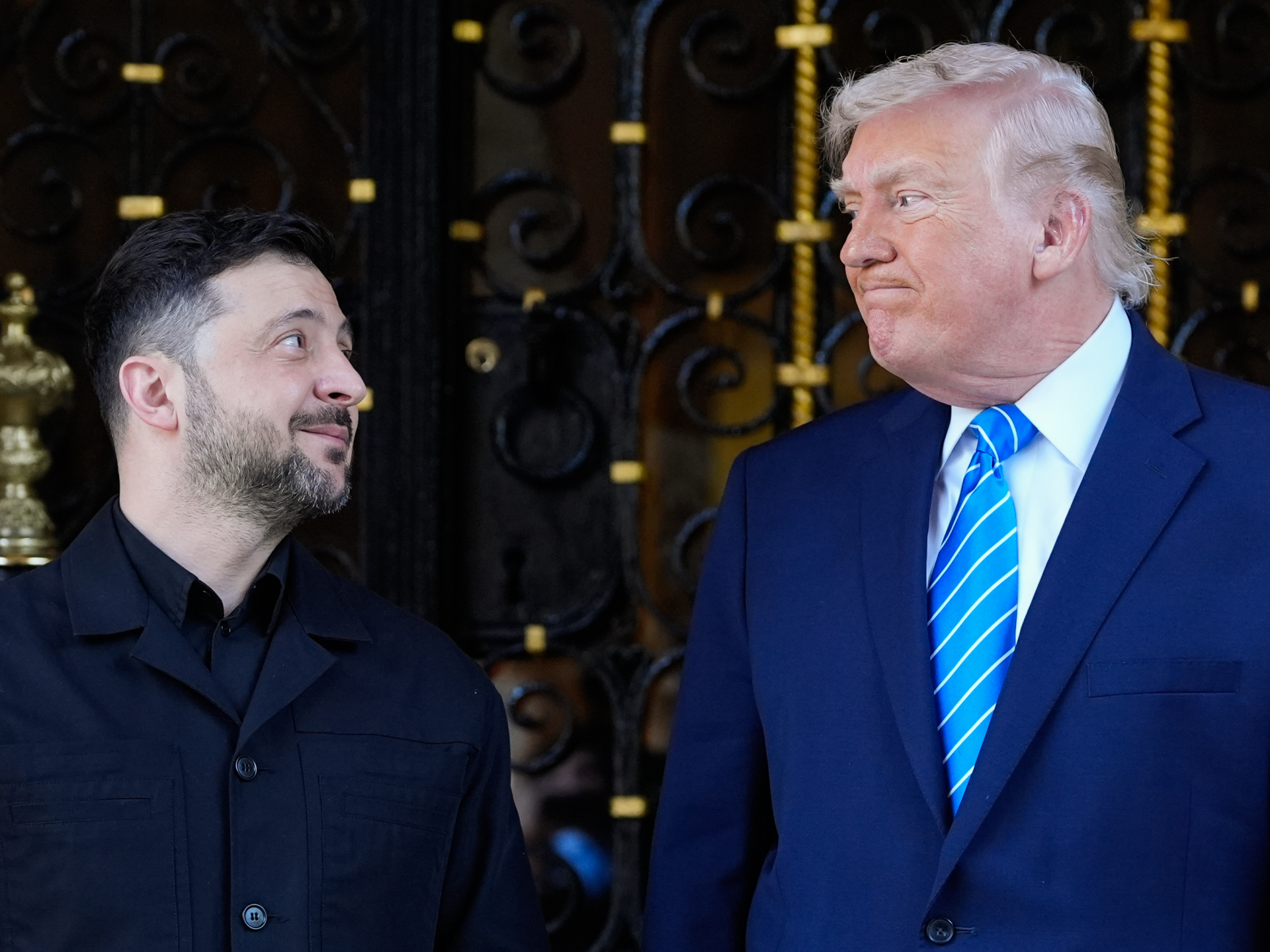
United States President Donald Trump says someone other than Ukrainian President Volodymyr Zelenskyy should negotiate on Kyiv’s behalf in talks to end Russia’s war.
“Zelenskyy is a man that should have had settled this war a long time ago. If he would’ve listened to me, he would have made a much better deal a long time ago,” Trump told reporters outside the White House on Monday. “Maybe it’s time for Zelenskyy to get somebody else to negotiate.”
Recommended Stories
list of 3 itemsend of list
The US president has been verbally swiping at his Ukrainian counterpart for several days as a rift between the leaders deepens.
On Sunday, Trump claimed on Truth Social that Zelenskyy does not want to end the war. Earlier this month, he called for him to be replaced as president, and labelled him a “warmonger” over Ukraine’s attacks on Russian oil refineries.
Trump has also defended sanctions waivers for Russia, saying in the same Truth Social post that he wants to keep Moscow at the negotiating table.
Zelenskyy said the decision “will hurt Ukraine” and strengthen Russian President Vladimir Putin’s war effort.
Trump also announced plans on October 9 for Russia to supply more than 300,000 metric tonnes of diesel to US and global markets to tackle fuel prices that have soared since the US and Israel launched a war on Iran in late February.
The decision has angered not only Kyiv, but also European partners and US officials, who say it rewards Moscow while it continues its four-and-a-half-year war on Ukraine.
Zelenskyy told US senators at a meeting on Monday that decisions taken by the Trump administration “are hard to explain between friends”.
He said arms shipments had been delayed and intelligence sharing restricted.
“We also know that … the Pentagon is delaying the delivery of missiles that our partners have already paid for through the PURL (Prioritised Ukraine Requirements List) programme,” he said.
To his knowledge, he added, one missile package was waiting for the signature of US Defense Secretary Pete Hegseth.
He also said several European countries were ready to transfer Patriot interceptor missiles from their own stockpiles but were awaiting US approval.
People walk in front of a damaged shopping mall following an air attack in Kyiv on October 19, 2026, amid the Russian invasion of Ukraine [Oleksii Filippov/AFP]
In remarks posted in a video on Telegram, Zelenskyy said that on three occasions in the past week, Ukraine had not received the advance warning of Russian attacks generally provided by its partners.
Last week, Zelenskyy suggested a disruption of Starlink services in Ukraine was “deliberate”. US Secretary of State Marco Rubio rejected the claim.
The sparring comes as Trump’s special envoy Steve Witkoff is set to travel to Norway this week for the next round of negotiations on ending the war in Ukraine, the Reuters news agency reported, citing three people familiar with the matter.
Two of the sources said they expected Zelenskyy to attend the meetings.
The Oslo discussions are expected to include Zelenskyy, Norwegian Prime Minister Jonas Gahr Store, representatives of the E4 – made up of the United Kingdom, France, Germany, and Poland – the European Union, and NATO.
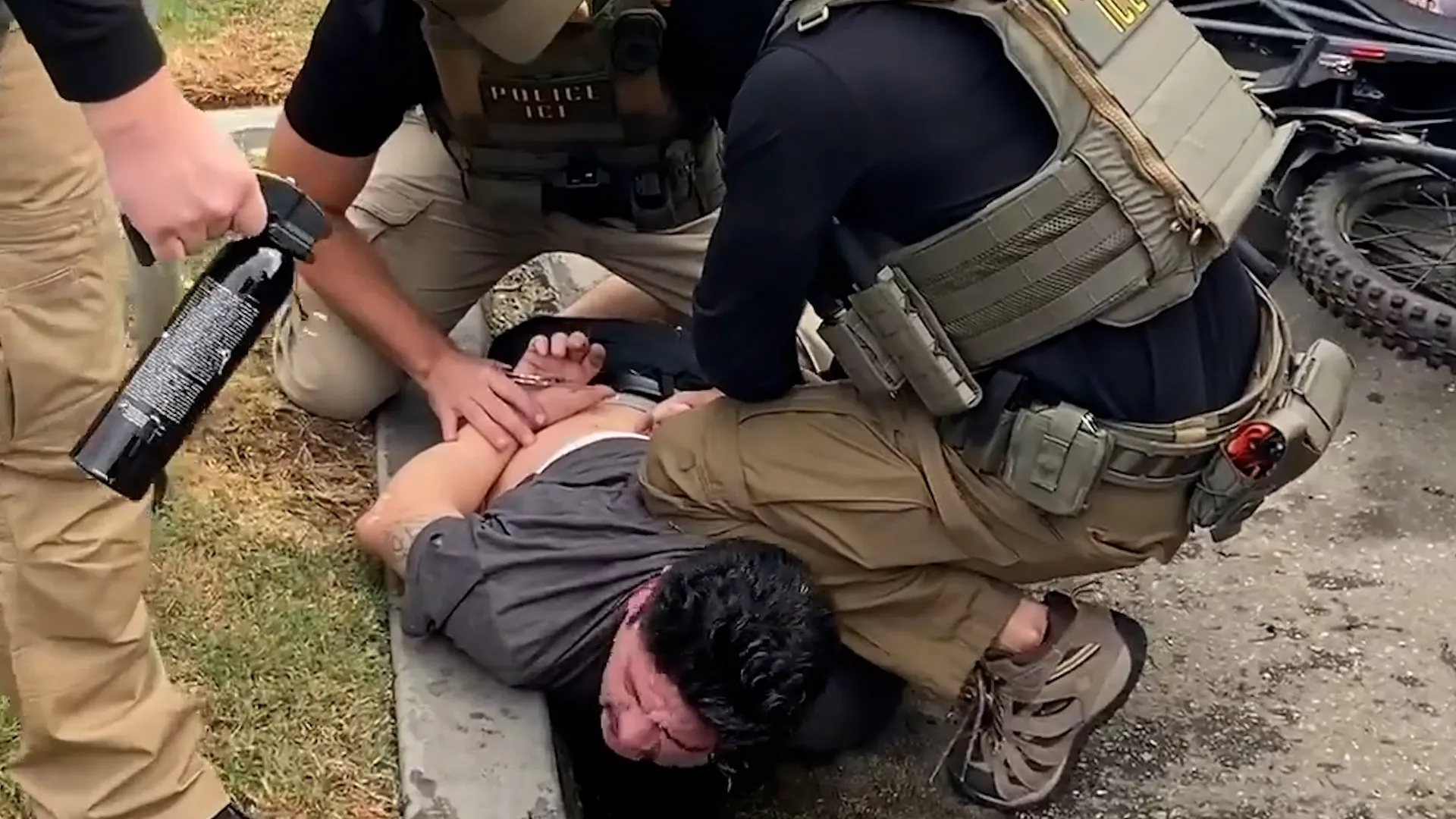
Video shows a man screaming in pain as ICE agents pin him down during an arrest in Long Beach, California. The family of Ricardo Gonzalez say he is a US citizen, and that ICE agents broke his arm during a wrongful arrest.
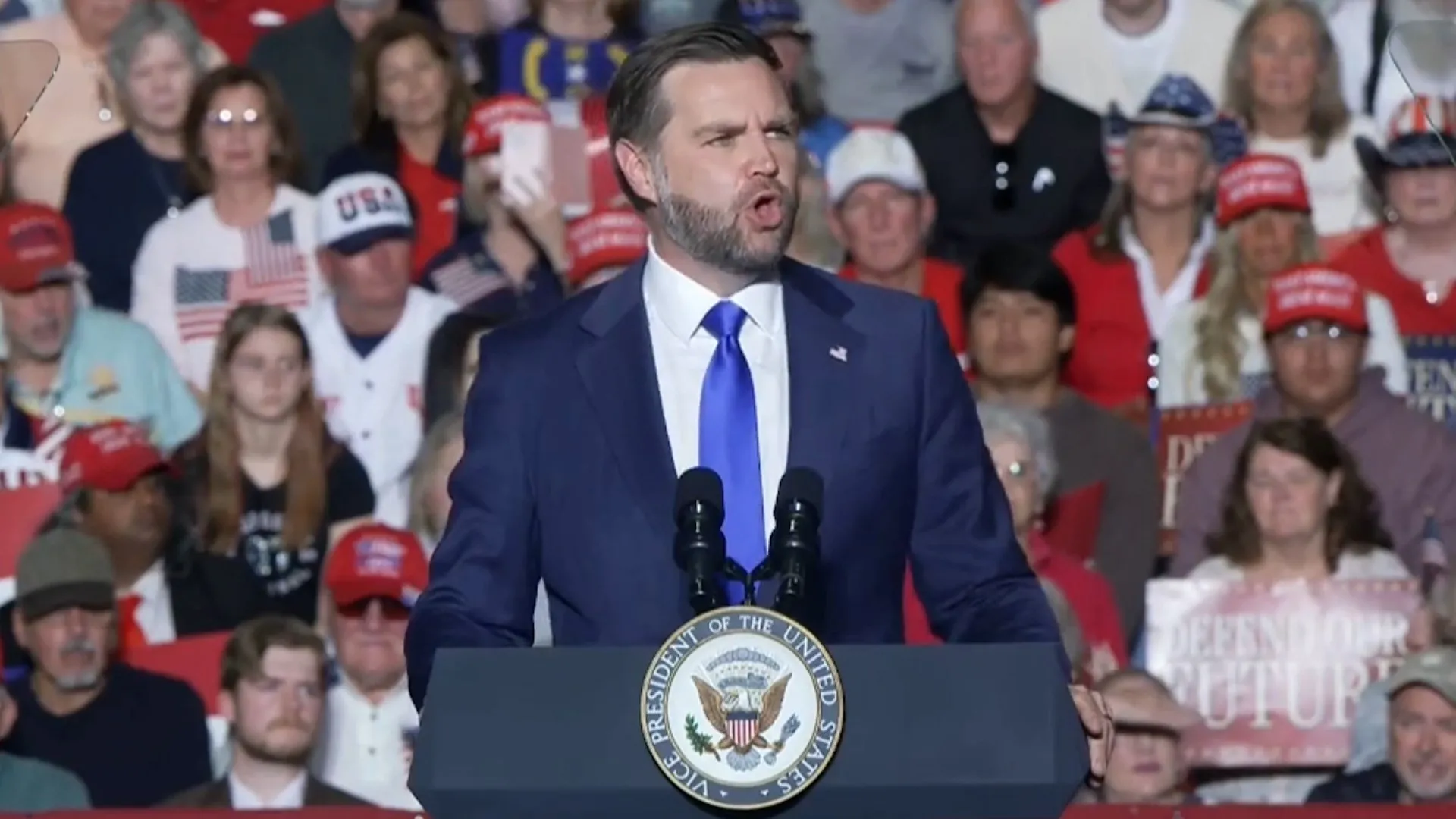
A protester demanding the release of the Epstein files interrupted US Vice President JD Vance at a North Carolina rally for Republican midterm candidates. After claiming illegal border crossings had fallen to zero, Vance joked that the protester was one who had slipped through.
First Lady Melania Trump has championed the executive action as a ‘transformative moment’ for US women’s health.
Published On 19 Oct 202619 Oct 2026
United States President Donald Trump has signed an executive order that will establish a dedicated women’s health division within the National Institutes of Health (NIH), as well as a White House task force focused on the subject.
During a signing ceremony in Washington on Monday, First Lady Melania Trump praised the initiative as setting “a new standard for women’s health in America”.
Recommended Stories
list of 3 itemsend of list
“This is a transformative moment for women in America. Beginning today, we will change the reality of women’s health,” she said.
“Previous generations fought for women’s rights. Our generation will fight to discover the cures that will ensure a woman can live her life in health and to the fullest.”
The newly minted project, spearheaded by the first lady, requires the new health division to be established within 90 days.
It aims to accelerate scientific discoveries, expand clinical access for women’s health and modernise care throughout every stage of a woman’s life.
The new division at the NIH will not replace the agency’s Office of Research on Women’s Health but will have a broader mandate beyond research, according to the White House.
Melania Trump gestured to “super intelligence, advanced biotechnology and groundbreaking therapies” as tools that offer a “unique chance to reinvent women’s healthcare”.
The first lady’s office has identified “five pillars” for innovation in the field. One involves funding targeted research to develop cures for diseases that affect women, such as endometriosis.
Another calls for a quicker timeline for “promising therapeutics” to reach female patients.
“In 2026, medical advances can do more than just prolong life,” said Melania Trump. “It should give women the freedom to live life to its fullest, to pursue our dreams, experience love, discover, create, travel and lead.”
The White House task force will be co-chaired by the newly cancer-free White House Chief of Staff Susie Wiles, as well as Health and Human Services (HHS) Secretary Robert F Kennedy Jr.
While Monday’s executive order mandates that the HHS must fund the administrative costs of the task force, the order itself does not include any specific funding targets or dollar amounts.
Experts have noted that Melania Trump has kept a relatively low profile during Trump’s second term.
Her public appearances have been fewer than during Trump’s first term, though she has stepped into the public spotlight to promote improvements to foster care and the role of technology, such as artificial intelligence in education.
During Trump’s first term, the first lady launched the “Be Best” campaign focused on child well-being, safe social media and countering opioid abuse.
But critics have questioned how effective Monday’s executive order might be, given the cuts Trump has made to the federal workforce since his second inauguration.
Thousands of employees have been laid off at the NIH alone, with Kaiser Health News reporting that its workforce is at its lowest level in decades.
The NIH was also given a deadline to slash spending by 35 percent across all of its divisions, amounting to a massive $2.6bn budget reduction.
In April 2025, the HHS drew widespread condemnation and a multi-state lawsuit after abruptly moving to terminate regional contracts for the Women’s Health Initiative, the nation’s largest longitudinal study on older women’s health at the time.
Critics warned that the move would jeopardise life-saving research on cardiovascular disease, cancer and osteoporotic fractures for senior women.
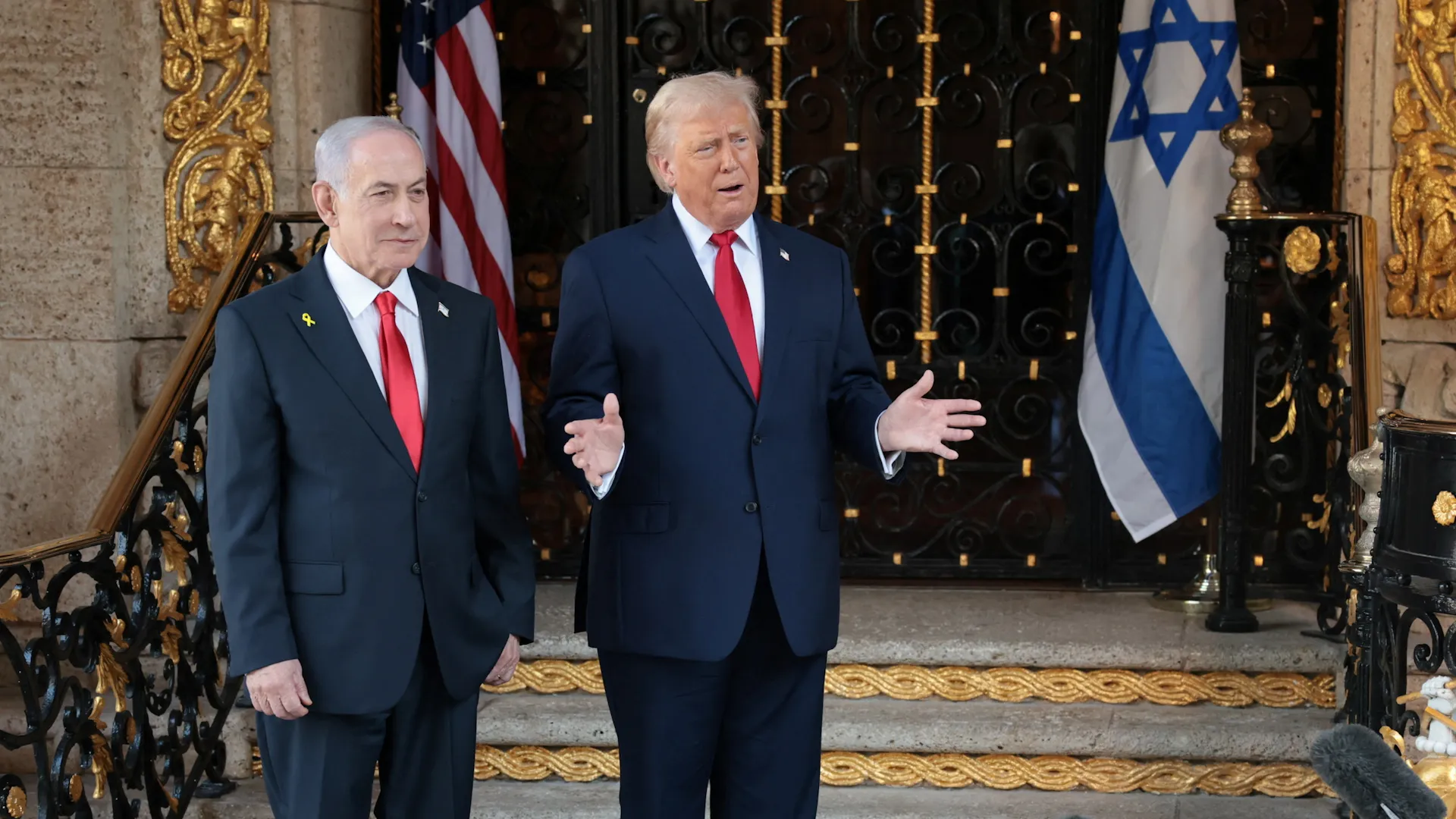
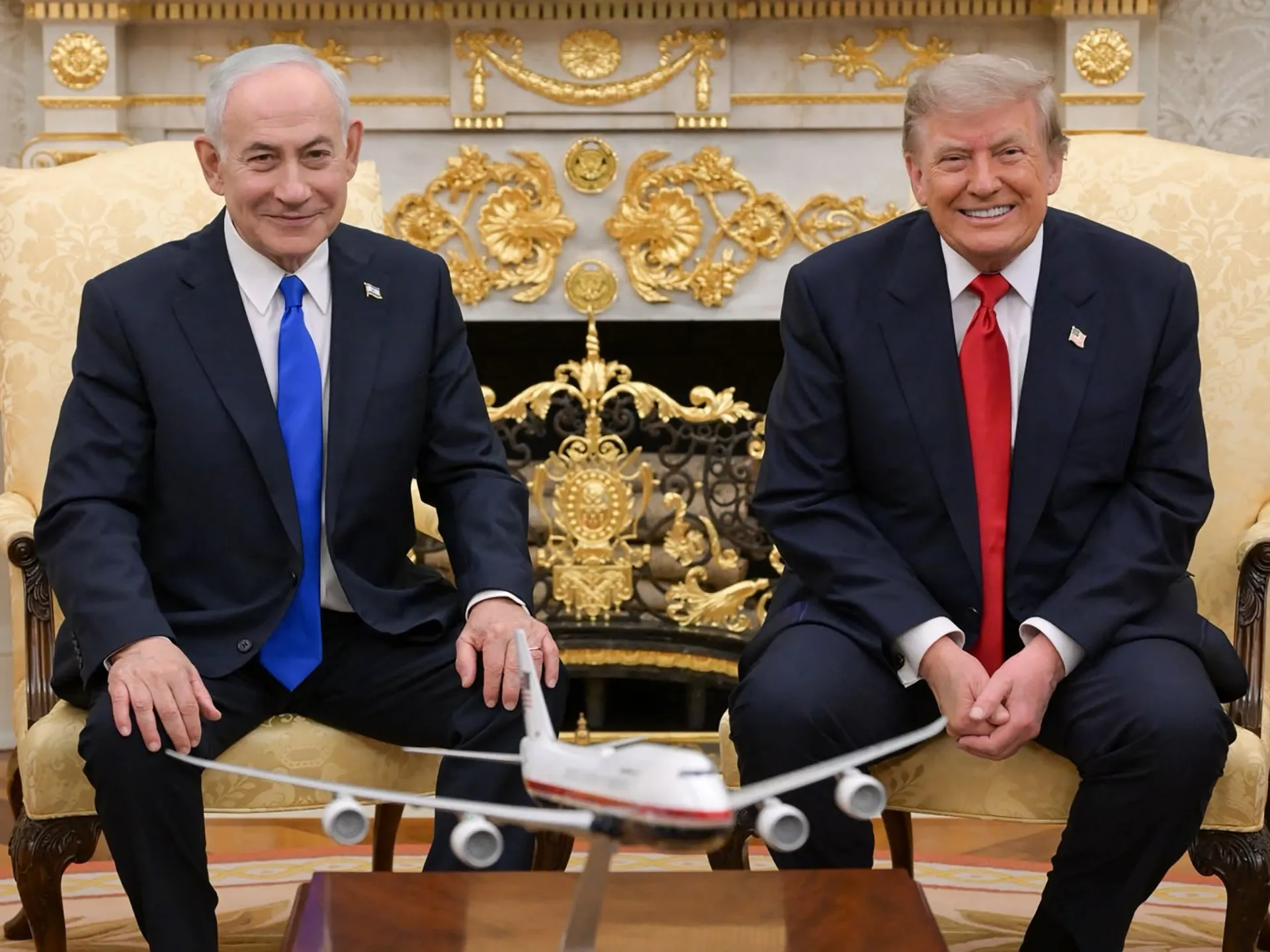
US President Donald Trump has issued an official endorsement of Israel’s Prime Minister Benjamin Netanyahu for the upcoming Israeli election. Al Jazeera’s Patty Culhane reports from Washington DC.
US president accuses Ukrainian leader of not wanting to end the war, as Zelenskyy speaks with Washington envoys.
Published On 19 Oct 202619 Oct 2026
United States President Donald Trump has defended sanction waivers for Russia, saying he wants to keep Moscow at the bargaining table and accusing his counterpart in Kyiv of not wanting to end the war in Ukraine.
Trump made the comments on Truth Social on Sunday in response to criticism of his decision to block numerous sanctions on Russia just days before they were due to take effect.
Recommended Stories
list of 3 itemsend of list
“My decision on Russia is a very simple one. I am in the process of negotiating Peace in the war between Russia and Ukraine, and don’t want to do anything that will drive, foolishly, Russia away from the bargaining table,” he said.
The move has triggered a significant diplomatic fallout between Trump and Ukrainian President Volodymyr Zelenskyy over the past week.
Zelenskyy said that waiving sanctions on Russia, which launched a full-scale invasion of its neighbour in 2022, “will hurt Ukraine”, telling NBC’s Meet the Press on Sunday that it would strengthen Russian President Vladimir Putin’s war effort.
“We can’t compare me and Putin. He’s [an] aggressor. He occupied us. He killed adults and children, his soldiers. He’s a terrorist, and that’s why I hope that President Trump will be very clear with this position.”
Trump reiterated his claim that Zelenskyy does not want the war on his country to end, saying on Truth Social that Kyiv was launching attacks on diesel refineries in Russia despite knowing it was “seriously hurting the world diesel markets”.
“Zelenskyy doesn’t care, and frankly, with all of the money that Europe is famously giving him… he doesn’t want to end this war, and probably never did,” Trump wrote.
Trump announced plans on October 9 for Russia to supply more than 300,000 metric tonnes of diesel to US and global markets to tackle fuel prices that have soared since the US and Israel launched war on Iran in late February. The move led Tehran to effectively close the Strait of Hormuz, through which one-fifth of global energy exports transited before the war.
Trump’s embrace of Russian energy has angered not only Kyiv, but also European partners and many US officials, who say the move rewards Moscow while it continues its four-and-a-half-year war against Ukraine.
US-Ukraine talks continue
The Ukrainian president said on X on Sunday that he has spoken with US presidential envoys Steve Witkoff and Jared Kushner as part of “virtually non-stop communication” between the two countries’ teams aimed at the “next steps in diplomacy”.
“We are doing everything on our part to make this happen, and to ensure that America’s position is strong and helps bring peace closer. Peace that everyone, except Russia, has been waiting for over the past four and a half years,” Zelenskyy wrote.
Zelenskyy spoke with Witkoff and Kushner as Russia and Ukraine continued to strike each other’s energy sites, with Moscow leaving thousands without power, and Kyiv carrying out the largest drone attack on Russia, in St Petersburg, since the war began.
In a social media post ahead of Israel’s October 27 election, Trump calls Netanyahu a ‘Strong, Brave, and Brilliant’ leader.
United States President Donald Trump has issued an endorsement of Israel’s incumbent Prime Minister Benjamin Netanyahu, who is facing a close race in parliamentary elections scheduled for October 27.
In a post on Truth Social on Sunday, Trump praised the Israeli leader for being an ally of the US in its war on Iran. He added that he was giving his “Complete and Total Endorsement” to Netanyahu.
Recommended Stories
list of 3 itemsend of list
“BIBI NETANYAHU WILL NEVER LET YOU DOWN!” Trump wrote.
The US president’s backing comes nine days before the Israeli election — and after speculation that it might not come at all.
Trump had refused to endorse Netanyahu earlier this month, when asked repeatedly about the Israeli leader’s job performance in an interview with Time magazine.
Instead, when pressed by his interviewer, Trump avoided the subject, shifting the focus instead to his own popularity or security in the Middle East.
The two leaders have met more than a half dozen times since January 2025, but there have been reports of disagreements, including over the war against Iran and other conflicts.
In June, Trump acknowledged calling Netanyahu “f***ing crazy” in a phone conversation where he expressed frustration about Israel’s attacks on Lebanon.
Trump had reportedly asked Netanyahu not to take further action in Lebanon, in an apparent attempt to preserve a short-lived April ceasefire with Iran.
The two leaders had jointly launched a war against Iran on February 28, but the conflict has cost Trump domestic support.
The war has upended the global oil and gas supply, with no clear end in sight.
A Pew Research Center poll found this month that roughly two-thirds of US voters disapprove of Trump’s handling of the war, which has driven up consumer fuel prices and raised concerns about draining military stockpiles.
Trump’s Republican Party is facing a critical midterm election on November 3 that will decide whether it maintains control of the US Congress, as well as other key state and local offices.
Experts have speculated that Trump’s prior reticence to endorse Netanyahu may have come from public perception that Israel may have coaxed the US into the war.
Netanyahu’s Likud Party and its far-right coalition are also facing the prospect of losing the October contest to an opposition bloc led by Yashar party head Gadi Eisenkot.
In his endorsement on Sunday, Trump said it was only a matter of time before Iran would have attacked both the US and Israel.
The war, Trump argued, had already left Iran “systematically destroyed, both Militarily and Financially, and unless they change their ways, rapidly, we will soon finish the job”.
“If Israel has the wrong Leader, which would be anyone other than Bibi, America will have to do this work ourselves, and I am not inclined to do so,” Trump wrote.
“Bibi Netanyahu has been Strong, Brave, and Brilliant in the face of tremendous opposition, including that coming from even Israel, itself.”
US president’s executive order comes two days before sanctions deadline and a week after diesel deal with Putin.
Published On 17 Oct 202617 Oct 2026
US President Donald Trump has put on hold a sweeping package of sanctions on Russia that he signed into law last month, telling Congress the pause is in the national interest.
Trump signed an executive order on Friday, two days before a deadline in the law that would put the sanctions into effect.
Recommended Stories
list of 3 itemsend of list
The law – named after Lindsey Graham, the Republican senator who died unexpectedly in July after returning from Ukraine – had passed in the House of Representatives and the Senate by large margins. The bipartisan legislation was drafted by Graham and Democratic Senator Richard Blumenthal.
It sought to starve Moscow of money for the war by sanctioning Russian officials, banks and a shadow fleet of tankers carrying its energy.
It also directed Trump to impose tariffs of up to 100 percent on the five biggest importers of Russian oil or gas, with an exception for countries that import less than 15 percent of Russia’s natural gas exports and are taking steps to cut them.
Diesel deal and criticism
The decision to suspend the sanctions comes a week after Trump said the US had signed a deal to buy diesel from Russia to try to lower global fuel prices.
Both Republicans and Democrats, criticising the deal, said it would help Russia’s war effort without affecting fuel prices.
Democratic Representative Don Beyer said he and others had “warned” that Trump might do this, in reference to Trump’s deal with Moscow.
Beyer called on Congress to “fix this flawed law to stop Trump from capitulating to Putin and ensure that it truly supports Ukraine”.
Trump has also increasingly criticised Ukrainian President Volodymyr Zelenskyy lately for failing to reach a deal with Russia.
As Republicans try to keep control of Congress in the November 3 midterm elections, an AP-NORC poll released on October 1 found Americans disapprove of Trump’s handling of the Iran war and blame him for higher prices among several other domestic policy issues.
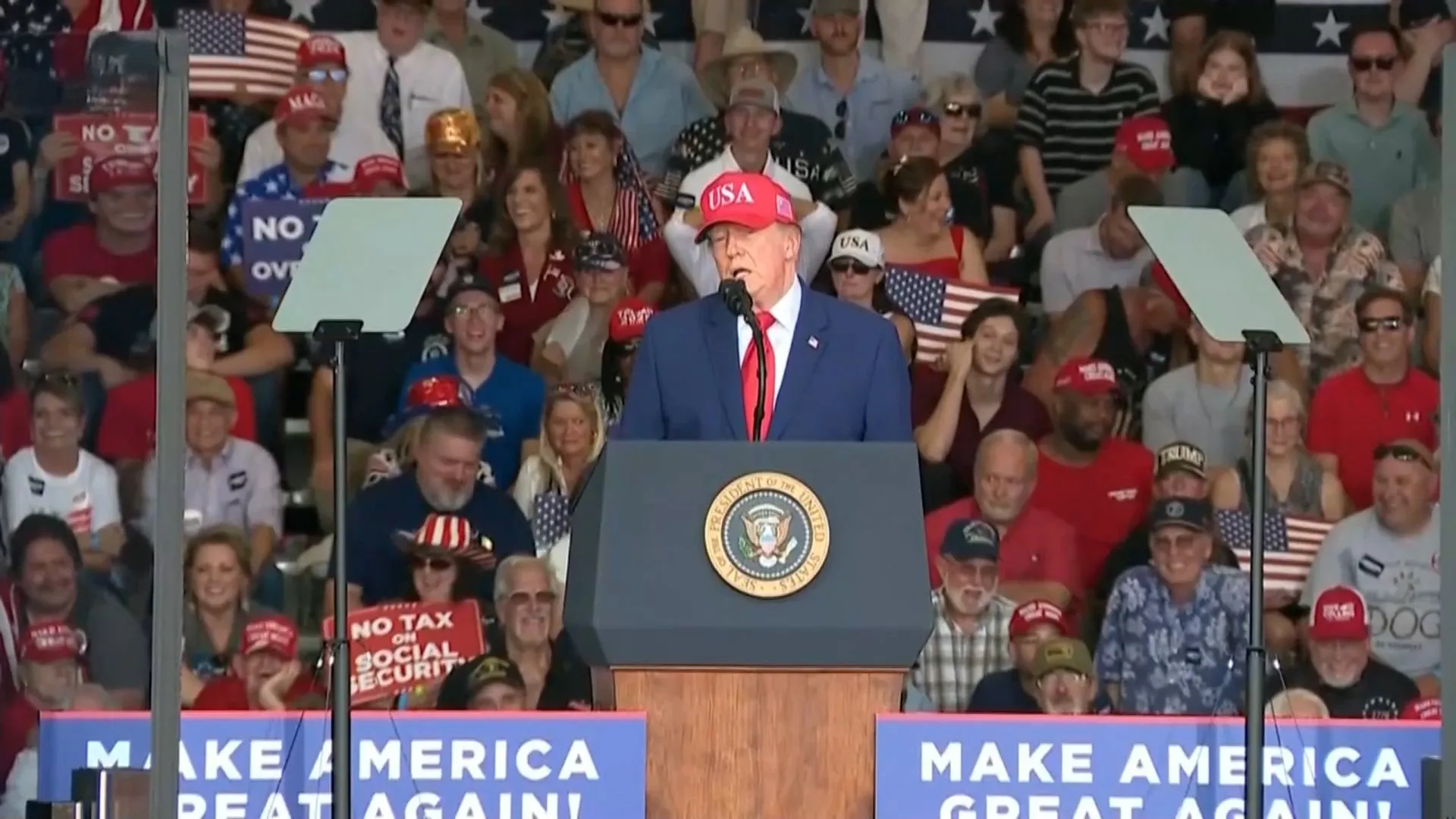
“If you’re in doubt about somebody’s name from the Middle East, just say ‘Mohammed,’” says US President Donald Trump. He made the comments at a rally in Georgia when speculating on who the next president of Iran would be.
Al Jazeera has confirmed that White House press secretary Katie Zacharia is “transitioning out” of her role after less than a week on the job. President Donald Trump said he had told Zacharia she “should reconsider” her role, citing harsh media and public scrutiny.
Ukrainian President Volodymyr Zelenskyy warned Russia’s ambitions extend beyond eastern Ukraine, saying its drone attacks threaten NATO. Speaking after an EU summit in Belgium, he also took a jibe at US President Donald Trump for saying he is harder to deal with than Putin.
The administration of United States President Donald Trump has sued the state of California after the state missed a deadline to review a list of registered noncitizen voters sent to officials.
In the lawsuit, filed on Thursday in a US District Court in California, Department of Justice (DOJ) officials asked the court to prevent the state from counting mail-in ballots from voters on a list shared with the state that it said contained 20,000 noncitizens. The agency said it had attempted to “work collaboratively” with California to identify noncitizens registered to vote in the state, but “California made no serious effort to do so”.
Recommended Stories
list of 3 itemsend of list
The move follows a 48-hour deadline the DOJ gave California in letters sent to officials in several counties in the state on Tuesday, threatening further action if they did not review lists of allegedly ineligible voters the agency said it had shared.
California Secretary of State Shirley Weber, the top state official tasked with administering elections, responded to the letters, saying in a three-page letter that she wanted to “set the record straight” on events that transpired since July. The senior California official maintains that the administration is demanding “unprecedented measures that threaten thousands of Californians’ right to vote, based on unverifiable information or methodology that you still fail to explain or provide”.
Weber said she was informed that the lists provided to local officials include the names of roughly 20,000 individuals. Weber said no list was ever sent to her office. The department previously said it suspected “thousands” of registered voters of being noncitizens, and a lawsuit filed earlier Thursday by the Justice Department put the number at “tens of thousands”.
“Despite failing to send the list of alleged non-citizens to my office, you demand that we request transmittal of the list, review and confirm the citizenship status of each of the approximately 20,000 individuals on the list on the eve of an election and within a mere 48 hours,” she wrote. “This is an emergency of the DOJ’s creation.”
In a statement on Wednesday, election officials in Los Angeles County, one of the county offices that received the ultimatum from the DOJ, pointed out the threat was issued just 21 days before midterm elections. The county statement said it had received a thumb drive with the letter and a handwritten note with what appeared to be a password, but it would not attempt to access the drive because “we do not consider the device a secure medium”.
The county office said maintaining accurate voter lists was “a fundamental responsibility for our office” and that state laws clearly require that removing individuals be “based on verifiable information”.
Trump has repeatedly levelled the false claim that large numbers of noncitizens, who are legally not eligible to vote in federal elections, are casting ballots in Democratic-led states, including in California. State officials, including in California, have said the number of such voters is negligible and that the scale of the problem does not warrant intervention just weeks before elections, scheduled for November 3.
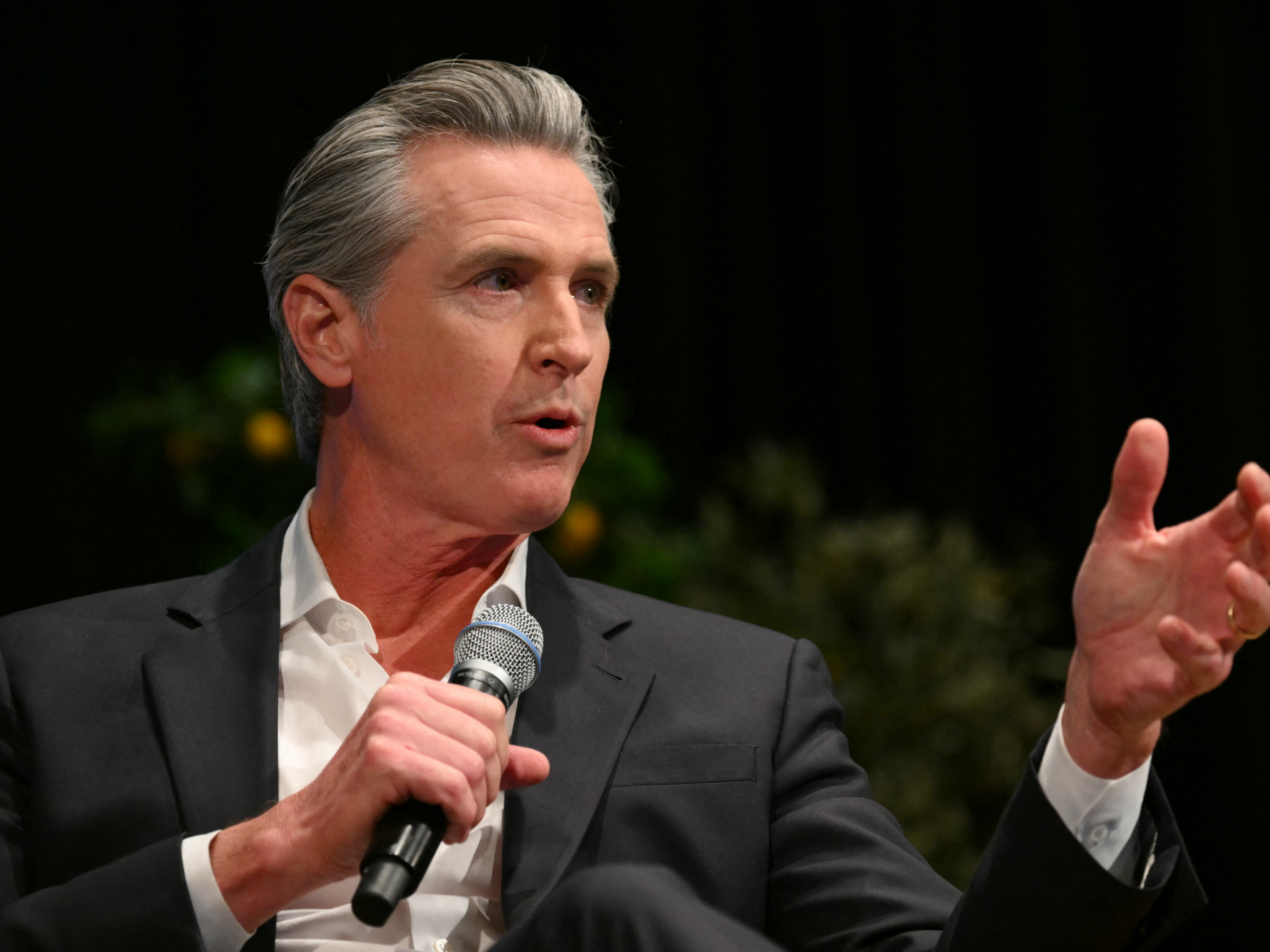
California Governor Gavin Newsom has sharply rebuked the DOJ lawsuit against his state, calling it a “sad, desperate attempt by” Trump to “suppress California voters just three weeks before Election Day”.
“Courts have made clear the federal government has no role in running state elections,” Newsom said in a statement. “We will defend free and fair elections in the Golden State and call out every authoritarian attempt to undermine our democracy.”
Trump has long falsely claimed that noncitizen voting cost him the 2020 election, blaming it on Democrats, despite the issue being a very rare occurrence.
Courts have pushed back on Trump
Earlier this month, a federal judge in Florida ruled that a federal law criminalising voting by noncitizens was unconstitutional, delivering a major setback for Trump administration efforts to pursue such cases against individuals.
The court ruled that, under the US Constitution, only individual states have the authority to set voter qualifications, and that each one had already criminalised such voting by anyone who was not a citizen. Thus, it was up to the state to prosecute such individuals. The DOJ has at least 45 such cases pending nationwide, where the accused could now raise the same objection brought up in the Florida ruling.
Another federal judge ruled this month that the DOJ unlawfully sought state voter rolls for cross-checking them against a controversial federal immigration database to identify ineligible voters. The Trump administration has often touted the Systematic Alien Verification for Entitlements (SAVE) database, but numerous reports have found it inaccurate and capable of flagging citizens as noncitizens. Forcing states to use such a database would be unconstitutional, the judge said.
In September, the US Supreme Court rejected a Trump administration effort to restrict mail-in ballots for the November 3 elections, which Trump argued were especially susceptible to misuse by noncitizens because states were failing to verify who was sending them.
Two dozen states, led by Democrats, filed lawsuits against the Trump administration over attempts to limit mail-in voting, including an executive order directing federal agencies such as the US Postal Service not to handle mail-in ballots without verifying the eligibility of those casting them.
According to the Election Assistance Commission, a bipartisan government agency, around 30 percent of all ballots cast in the 2024 elections were sent by mail. Mail-in ballots are even more widely used in many western states such as California.
A round-faced man with dark-rimmed glasses, a moustache and short-trimmed hair, Ismael came to the US when he was only five years old.
Southern California became his home, and as an adult, he qualified for the Deferred Action for Childhood Arrivals (DACA) programme, which offered temporary protection against deportation.
He lost his DACA status, however, in 2015 after a conviction for driving under the influence.
His family remembers him as a caring son and uncle, always willing to buy his niece and nephew new clothes or school supplies.
“Ismael was always looking after his siblings. He just had a big heart,” said his brother, Jose Miguel Ayala. “He was very protective of not just us, but my mum and dad too.”
He was 39 years old when he was brought to the Adelanto ICE Processing Center.
Two weeks after his arrival, Ismael told his family that he developed a high fever and a painful sore on his backside.
On September 18, 2025, workers at Adelanto initiated a Code Blue alert for Ismael, signalling a life-threatening medical emergency. Medical staff rushed him from his dorm to the infirmary in a wheelchair.
ICE documents show that Ismael was given pain medication, an ointment and a fibre supplement.
But according to Physicians for Human Rights’ Cuneo, who reviewed the case, Ismael should have received a physical examination and antibiotics.
“That is a major failure,” Cuneo said.
Demonstrators leave white flowers outside the Adelanto ICE Processing Center on September 29 in solidarity with those detained inside [Jill Connelly/AP Photo]
That weekend, hours after Lucia’s visit, Ismael’s condition worsened. Just after midnight on Sunday, ICE records say he was vomiting, shaking and sweating.
According to ICE documents, he was later sent to an intensive care unit, where he went into cardiac arrest within minutes of his arrival and subsequently died.
“I believe Ismael’s death could have fully been prevented by timely care,” Cuneo said. “It was a simple abscess that was not treated in a timely manner.”
Fault Lines obtained a coroner’s investigation that reveals Ismael was critically ill when he first arrived at the hospital, a fact that was left out of ICE’s public report on his death.
The coroner’s report also contradicts ICE’s timeline for Ismael’s death. It indicates Ismael went into cardiac arrest early on September 21, nearly a full day before he passed away. Medical staff, however, managed to restore his heartbeat after intubating him.
That conflicts with ICE’s report, which only notes his pulse stopping once: shortly before his death was announced on the morning of September 22. ICE described his condition on September 21 as “calm and cooperative”, but it signalled no heart problems.
“If they had given him the medical care and what he needed, maybe he would be here with us,” Lucia said.
In a statement about Ismael’s death, ICE said detainees receive “comprehensive medical care” throughout their time in custody.
But California’s Attorney General Rob Bonta told Fault Lines that his office found “the exact opposite” during its inspections of the state’s detention centres.
“We’ve gone to these facilities. We’ve gone into Adelanto. We have done our own physical inspections,” Bonta explained.
“If what the ICE spokesperson said was true, Mr Ayala-Uribe would be with us today.”
An internal mortality review committee also found that the care provided to Ismael at Adelanto “deviated beyond safe limits of practice”, according to a document obtained by US media earlier this year.
It also suggests that medical staff delayed responding to calls about Ismael’s declining health in the days leading up to his death.





![People walk in front of a damaged shopping mall following an air attack in Kyiv on October 19, 2026, amid the Russian invasion of Ukraine [Oleksii Filippov/AFP]](https://i0.wp.com/occasionaldigest.com/wp-content/uploads/2026/10/AFP__20261019__D3PR8JC__v1__HighRes__UkraineRussiaConflictWar-1792469703.jpg?w=640&ssl=1)