dollar

Judge orders pretrial detention for ex-CIA official accused of stashing $40 million in gold bars at home

A former senior CIA official accused of stashing more than $40 million worth of gold bars from the federal government at his Virginia home was ordered to remain jailed until his trial after a hearing Friday where a defense attorney accused prosecutors of smearing the official with “sensational,” irrelevant allegations.

The defendant, David J. Rush, has both the means and motive to flee while the case against him is pending, U.S. Magistrate Judge William Fitzpatrick ruled, citing Rush’s professional experience.

“He’s in a different position than most people to flee and avoid detection by law enforcement,” Fitzpatrick said.

Rush is charged with fraudulently claiming tens of thousands of dollars in compensation for military leave after he was honorably discharged from the U.S. Navy in 2015. He was arrested last month after investigators searched his home and seized more than 300 gold bars, roughly $2 million in U.S. currency and about 35 luxury watches, according to an FBI agent’s affidavit.

Rush’s attorney, Jessica Carmichael, noted that Rush isn’t charged with any crimes related to the discovery of the gold bars, which she referred to as “basically a non-issue” and “nothing more than a sensational tidbit.” She said Rush properly obtained the gold bars and kept them locked in a safe in his basement.

“Mr. Rush never claimed they were his,” she said.

Between last November and March, Rush requested and received a “significant quantity” of foreign currency and tens of millions of dollars in gold bars for “work-related expenses,” according to the FBI affidavit. Justice Department prosecutor Gavin Tisdale said Rush wasn’t supposed to have the gold bars at his home.

“That’s the issue — his skirting of rules and regulations,” he said.

Tisdale briefly summarized the case against Rush in open court after a portion of the hearing was sealed from the public. The evidence against Rush “grows stronger by the day,” Tisdale told the magistrate judge.

“Mr. Rush simply cannot be trusted to abide by this court’s conditions,” he said.

Rush enlisted in the Navy in 1997 and was honorably discharged from the U.S. Navy Reserves as a lieutenant in 2015, according to the affidavit.

Authorities claim Rush lied about his education and military background on job applications, falsely claiming to be a former Navy pilot who graduated with a bachelor’s degree from Clemson University in South Carolina and a master’s degree from Rensselaer Polytechnic Institute in New York.

Investigators determined that he didn’t serve as a Navy pilot and didn’t attend either school.

Kunzelman writes for the Associated Press.

Source link

California’s wildfire prevention funding at risk of drying up

With California facing increasingly destructive wildfires, experts and officials have long urged the strategic removal of dense, flammable vegetation that can erupt into particularly destructive flames from a lightning bolt or the spark of a power line.

But after years of record investment by the state in such wildfire risk mitigation, two key money sources are drying up, potentially reducing the state’s annual budget for vegetation removal by hundreds of millions of dollars.

Wildfire resiliency advocates are warning that the loss of these funds will leave the state vulnerable to devastation, and are calling on California’s next governor to take that threat seriously.

Currently, California relies heavily on two funding sources for wildfire mitigation work: A state program that charges polluters for their emissions and a climate bond approved by voters in 2024.

Late Friday, however, state officials adopted a new structure for the emissions program, called cap-and-invest, that analysts say will likely reduce wildfire mitigation funding by $200 million per year. At the same time, the governor’s latest budget proposal puts the state on track to allocate the majority of the climate bond’s $1.5 billion in wildfire prevention money within just three years.

As a result, California could go from routinely pulling more than $600 million a year from these sources, to just $150 million, according to an estimate from the Wildfire Solutions Coalition — a group of more than 80 organizations representing conservationists, business owners, fire officials and tribal leaders.

The coalition is urging the state to find new sources of funding for the work.

“We have the scientists, we have the technicians, we have the advocates,” said Michelle Decker, who is on the coalition’s executive committee and serves as president and CEO of the Inland Empire Community Foundation. “We see this problem. We can get ahead of this problem. It is a revenue issue.”

California wildfires have become increasingly costly. The 2025 L.A. fires alone caused an estimated $250 billion in damage and economic loss. Insurance companies have already paid out $22.4 billion.

In attempt to reduce the risk of damage to communities and ecosystems, the state has employed a wide range of tactics. These includes fortifying homes against wildfires, replanting fire-ravaged forests and thinning out vegetation with prescribed burns, goat grazing and manual thinning with heavy machinery to reduce the intensity of potential fires.

Research suggests wildfire mitigation work pays off. A recent analysis of 285 fires in the western U.S. found that every dollar spent on landscape projects saved about $3.75 in wildfire damage.

But as funding from cap-and-invest and the climate bond dwindle, the state must increasingly turn to Cal Fire, which devotes only a small portion of its budget to mitigation work.

“This is not an issue that can be pushed off to a timeline based solely on politics,” said Steve Frisch, a founding member of the coalition and president of the Sierra Business Council. “Fire happens whether we want it to or not.”

After a series of destructive wildfires in Northern California and the 2017 Thomas fire in Southern California, the state legislature began to explicitly focus on funding wildfire mitigation.

In 2018, lawmakers directed $200 million per year of cap-and-invest funds to wildfire mitigation projects.

As the Woolsey fire in Southern California and the Camp fire in Paradise raged later that fall, Trump accused the state of “gross mismanagement” of forest lands and threatened to cut off federal funds unless it was corrected.

Gov. Gavin Newsom and the legislature, with a significant budget surplus, began earmarking even more funds, leading to a peak of $1.1 billion in wildfire mitigation investments during the 2021-2022 fiscal year.

After the surplus dwindled, the legislature opted in 2024 to put a $10-billion climate bond in front of voters — $1.5 billion of which was dedicated specifically for wildfire mitigation work.

Newsom has since pointed to this high state funding to call on the federal government to step up its own investments into forest management work.

The federal government manages 57% of all forests in the state. While the U.S. Forest Service spent $3.1 billion mitigating wildfire conditions in the state over the last few years, California spent $4.3 billion, according to the California Forest Resilience and Wildfire Task Force.

However, the state has already allocated about $600 million of the climate bond’s wildfire mitigation pot for the 2024-2025 and current fiscal years. The latest budget proposal would allocate more than $300 million for this upcoming fiscal year. While many advocates support allocating the money quickly, it leaves little for future years.

Once that money is spent, California has to pay off the $10 billion bond with interest. The result is an estimated price tag of $16 billion, paid in roughly $400 million increments every year, for 40 years, according to the state’s Legislative Analyst’s Office.

As for the cap-and-invest funds, a fraught months-long debate at the California Air Resources Board on how to extend the program beyond 2030 resulted in a compromise that will cut the revenue it generates in half, the Legislative Analyst’s Office estimates.

Since other projects get priority — including $1 billion every year for California’s high-speed rail project — the new proposal would “likely leave no funding” for the wildfire and forest resilience line item, the Legislative Analyst’s Office found.

Cal Fire still holds a modest annual budget for wildfire mitigation work. In the 2024-2025 fiscal year, the agency had $500 million for forest management and fire prevention that was not directly tied to cap-and-invest or the bond — up from about $65 million two decades prior.

As for the federal government, independent analyses by Grassroots Wildland Firefighters and NPR found that Forest Service wildfire mitigation work is on the decline amid federal staffing cuts. The Forest Service claims the decrease in work was primarily due to poor weather conditions for activities like prescribed burns and staff being occupied with firefighting.

Both the state and federal government’s investments pale in comparison to the spending of California’s investor-owned utilities. In 2025 alone, the utilities planned to spend more than $9.2 billion on preventing their equipment from sparking the next devastating wildfire, primarily funded by Californians’ electricity bills.

Record heat. Raging fires. What are the solutions?

Get Boiling Point, our newsletter about climate change, the environment and building a more sustainable California.

Times staff writer Hayley Smith contributed to this report.

Source link

PG&E goes after gubernatorial candidate Tom Steyer. He welcomes the fight

The state’s biggest energy utility has made the unusual move to attack candidate Tom Steyer in the California governor’s race.

State campaign filings show that Pacific Gas & Electric has plowed at least $13.5 million into efforts to oppose Steyer. Other major utilities in the state have also donated to another committee backing the anti-Steyer effort.

Steyer, a billionaire and former hedge fund founder who became a high-profile environmental advocate, accuses the big three California utility companies — PG&E, San Diego Gas & Electric Co. and Southern California Edison — of “raking in” record profits at the expense of their customers. He blames the utilities for high consumer bills and causing deadly wildfires with their faulty utility equipment.

Though other candidates in the race are also criticizing the utilities, Steyer is the most aggressive.

“Big energy companies really piss me off,” Steyer said in one of his own campaign ads earlier this year.

In another attack, Steyer called PG&E less of an electric company and more of a “sophisticated Sacramento lobbying and influence operation that also happens to sell electricity. California needs a governor who will stand up to these monopolies, hold them accountable, and break them up.”

Lynsey Paulo, a spokesperson for PG&E, declined to answer questions about the utility’s spending, referring The Times to the committee running anti-Steyer ads.

“Tom Steyer has spent over $200 million trying to buy the Governor’s office,” the committee said in a statement.

Steyer, a Democrat who is relying on his vast fortune in the race, is seeking to advance past the June 2 primary to the November general election. Recent polls put him behind Republican Steve Hilton, a former Fox News commentator, and onetime Health and Human Services Secretary Xavier Becerra.

The utility-funded advertisements against Steyer don’t mention his position on energy policies, focusing instead on his onetime hedge fund’s investments in coal and for-profit detention centers. One ad compares him to President Trump.

“When Steyer sells himself as a different kind of billionaire, tell him where to stick it,” a voiceover says.

Another advertisement from the anti-Steyer group California is Not for Sale highlights its support for Becerra. The California Assn. of Realtors and the California Building Industry Assn. are also supporting the group.

Steyer’s campaign last week embraced the spending from PG&E and others.

“When you’re opposed by the people responsible for devastating wildfires and outrageous rate hikes, you’re doing something right,” Steyer spokesperson Sepi Esfahlani said.

Steyer has used his criticism of the California utilities and the oil industry as a shield against attacks that he made billions of dollars from fossil fuels when he ran his hedge fund, and to elevate himself as an advocate for working-class Californians.

When Democratic rival Katie Porter ripped into Steyer at a recent debate for using his riches to support his gubernatorial campaign, Steyer pointed to the attacks by PG&E and others as evidence that he’ll take on Sacramento’s powerful special interests.

“There is one person that the corporations are going after, including Big Oil, who is spending millions of dollars to stop me,” Steyer responded during the April debate at Pomona College in Claremont.

“The electric monopolies, PG&E, millions of dollars to stop me, because I’m the person on this stage who’s the change agent,” he said. “I’m the person who’s going to drive down costs for the people of California by taking on the special interests.”

PG&E CEO Patti Poppe and Steyer lauded one another in social media posts after appearing together at various conferences last year, the California Post reported.

“Loved sitting down to talk the future of energy with Tom Steyer at the Galvanize Solutions Summit,” Poppe wrote on LinkedIn in December. Steyer co-founded Galvanize, an asset management firm.

The California Chamber of Commerce’s political action committee this year collected at least $2 million each from PG&E, Sempra — the parent company of SoCalGas and San Diego Gas & Electric — and Edison. The chamber’s committee in turn has donated $9.75 million toward the anti-Steyer committee.

John Myers, a representative for the Chamber of Commerce, said the committee’s leadership, not donors, make spending decisions.

California electric rates are the nation’s second highest after Hawaii, contributing to the state’s high cost of living — one of the biggest concerns of voters.

PG&E serves Northern and Central California, while Southern California Edison is available in Central, coastal and Southern California. San Diego Gas & Electric services Southern California.

The California Public Utilities Commission sets the rate of return that the companies can make. Steyer has argued that “perverse” structure allows utilities to disregard cheaper cost-effective solutions in favor of more expensive options, such as undergrounding power lines.

Despite Steyer’s talk of “breaking up” utilities, he doesn’t propose dismantling them. Instead, he vows to put reform-focused appointees on the regulatory agency and reduce utility rates. He also wants more battery storage for renewal energy, as well as additional rooftop and community solar.

The three utilities recently opposed a bill to require that wildfire safety spending by Southern California Edison, PG&E and San Diego Gas & Electric be audited by an independent accounting firm.

The bill by Assemblywoman Tasha Boerner, an Encinitas Democrat, stalled out earlier this month. It would have required the state’s regulatory agency to consider the audits’ findings before agreeing to raise customer rates to cover even more wildfire prevention spending.

Audits of the three companies’ wildfire spending from 2019 to 2020 found that $2.5 billion could not be accounted for.

Matt Abularach-Macias, political director of Environmental Voters, said the utilities probably consider Steyer as a threat to their business. The companies plan infrastructure projects five or 10 years ahead and don’t want disruptions, he said.

Environmental Voters has endorsed Steyer and former Orange County Rep. Katie Porter. The group’s educational arm received a $500,000 donation from a Steyer-backed entity in 2013.

Leah Stokes, associate professor of political science at UC Santa Barbara, called PG&E’s outlay in the governor’s race part of a “corrupt system.”

“These are monopoly companies, you can’t choose to buy from anybody else,” Stokes said. “They take your money, turn it into profits because they are poorly regulated, and then undermine political candidates who would actually hold them accountable.”

Stokes has publicly endorsed Steyer.

A spokesperson for Southern California Edison said the company funds its political contributions from “shareholder dollars.”

“No customer dollars, or any part of the rates paid by Southern California Edison customers, are used to support political candidates,” he said.

Times staff writer Melody Petersen contributed to this report.

Source link

Cruise lines can be held liable for using docks seized under Castro, Supreme Court rules

The Supreme Court on Thursday broadly upheld lawsuits by U.S. companies whose property was seized in Cuba prior to 1960, including claims against cruise ship lines that docked there in the past decade.

These suits do not seek compensation from Cubans but from those who “traffic in property which was confiscated by the Cuban government.”

In a 8-1 decision, the justices revived a $400-million judgment against four cruise lines whose ships stopped in Havana between 2016 and 2019.

All of them used docks that were built early in the 20th century by the Havana Docks Corporation, an American company.

Justice Clarence Thomas pointed to a rarely enforced 1996 law that authorized suits against those who “use property tainted by a past confiscation.”

Past presidents had suspended enforcement of the law, but President Trump allowed such claims to go forward.

That change in policy exposed “traffickers in confiscated property of United States nationals” to brings claims in federal courts, Thomas said.

The four cruise line companies — Caribbean Cruises, Norwegian Cruise Line Holdings, Carnival Corporation, and MSC Cruises — transported nearly a million paid passengers to Cuba, he wrote.

They paid the Cuban government tens of millions of dollars to do business in Cuba. They collectively earned hundreds of millions of dollars in revenue from voyages that included a stop in Havana, he said.

A federal judge in Florida ordered each of the cruise lines to pay $100 million in damages, but the U.S. appeals court in Atlanta blocked the decision by a 2-1 vote. It said Havana Docks Corporation had a contract to run the docks had expired in 2004.

Justice Elena Kagan made the same argument in dissent.

She said “the docks belonged to the Cuban Government — not Havana Docks — all along. What Havana Docks owned was only a property interest allowing it to use those docks for a specified time. And that time-limited interest expired in 2004 — more than a decade before the cruise lines ever used the docks.”

Still pending before the court is a similar claim from Exxon Mobil Corp., which was argued on the day in late February.

Source link

Dollar Steady as Iran War Uncertainty Weighs on Markets

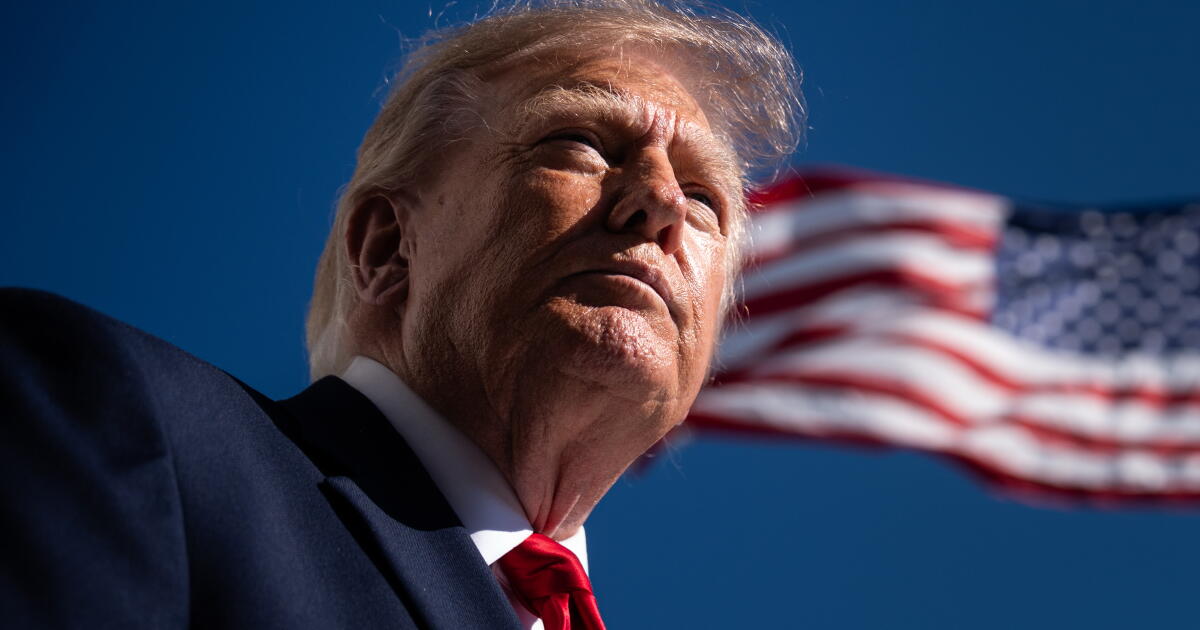
Global currency markets remained broadly stable on Monday despite escalating geopolitical tensions linked to the ongoing conflict involving the United States and Iran. The limited movement in the US dollar came after President Donald Trump rejected Iran’s response to a United States peace proposal, reinforcing concerns that the conflict in the Middle East may persist for an extended period.

At the center of global financial attention is the interaction between geopolitical risk, energy prices, and monetary policy expectations. Rising oil prices, driven by uncertainty in the Strait of Hormuz and broader regional instability, continue to shape inflation expectations across major economies. However, currency markets have shown relative restraint, suggesting that investors are balancing immediate geopolitical risks against expectations of eventual diplomatic stabilization.

The US dollar index, which measures the currency against a basket of major global currencies, remained largely unchanged. At the same time, oil prices rose sharply, reflecting renewed concerns about supply disruptions and prolonged conflict conditions.

Geopolitical Risk and Market Equilibrium

Financial markets are currently operating in a state of tension between short term geopolitical shocks and longer term expectations of resolution. The stability of the US dollar suggests that investors are not fully pricing in a sustained breakdown in global energy flows, despite elevated uncertainty in the Middle East.

The oil market, by contrast, continues to respond rapidly to political developments. The rise in crude prices reflects concerns that prolonged instability could restrict supply routes and tighten global energy availability. This divergence between currency stability and commodity volatility highlights the uneven transmission of geopolitical risk across financial systems.

Market analysts note that expectations of diplomatic engagement between the United States and China remain a key stabilizing factor. Investors increasingly view high level diplomatic meetings as potential mechanisms for de escalation, particularly given the influence both countries exert over global energy and trade systems.

The Role of the United States and China in Market Sentiment

A major factor influencing market behavior is the anticipated summit between President Trump and Chinese President Xi Jinping. The meeting is expected to cover a wide range of strategic issues including energy security, artificial intelligence, nuclear policy, and regional conflicts.

Markets are closely monitoring this engagement because both the United States and China possess significant leverage over geopolitical and economic developments in the Middle East. China’s role as a major energy importer and diplomatic stakeholder in the region gives it potential influence over Iranian policy, while the United States remains the dominant military and financial actor in global markets.

This dual influence creates expectations that broader geopolitical tensions may eventually be moderated through strategic dialogue. As a result, investors are partially pricing in the possibility of containment rather than escalation, which helps explain the relative stability of major currencies.

Inflation Expectations and Central Bank Positioning

Energy price movements remain central to global inflation dynamics. Rising oil prices directly influence transportation costs, production expenses, and consumer prices, creating upward pressure on inflation across both advanced and emerging economies.

In the United States, recent economic data has reinforced expectations that the Federal Reserve will maintain a cautious monetary stance. Strong employment figures combined with persistent inflation risks have reduced expectations of near term interest rate cuts. This has contributed to support for the US dollar, as higher interest rate expectations typically attract capital inflows into dollar denominated assets.

The interaction between monetary policy and geopolitical risk is becoming increasingly complex. Central banks are now required to respond not only to domestic economic indicators but also to external shocks originating from energy markets and international conflicts.

In this environment, currency movements reflect not just economic fundamentals but also expectations regarding central bank behavior under conditions of sustained uncertainty.

Diverging Currency Movements and Global Economic Signals

While the US dollar remained stable, other major currencies exhibited modest weakness. The euro, yen, and British pound all recorded slight declines, reflecting broader caution in global markets.

The movement of the Chinese yuan, which briefly strengthened to its highest level in several years, adds another dimension to the global currency landscape. This reflects both domestic economic data and broader expectations regarding China’s role in global trade and energy markets.

China’s economic performance, particularly in exports and industrial activity, continues to be closely linked to global energy prices and supply chain dynamics. Strong export growth suggests resilience in external demand, even amid geopolitical uncertainty and rising production costs.

These currency movements collectively indicate that global markets are navigating a period of uneven economic signals, where regional conditions and geopolitical developments interact in complex ways.

The Interplay Between Markets and Political Uncertainty

One of the defining characteristics of the current financial environment is the speed at which geopolitical developments translate into market expectations. Currency traders and investors are increasingly sensitive to political signals, particularly those involving energy producing regions and major global powers.

However, despite heightened volatility in oil markets, the US dollar’s stability suggests that investors still view the global financial system as structurally resilient. Rather than anticipating systemic disruption, markets appear to be pricing in cyclical instability followed by eventual stabilization.

This reflects a broader pattern in which financial markets absorb geopolitical shocks through short term volatility without fully abandoning long term confidence in global economic integration.

Analysis

The stability of the US dollar amid escalating geopolitical tensions highlights a critical feature of contemporary global markets. While energy prices and regional conflicts generate significant short term volatility, currency markets remain anchored by expectations of monetary policy stability and eventual diplomatic resolution.

The current environment is characterized by three overlapping dynamics. First, geopolitical risk is elevated due to sustained conflict in the Middle East and uncertainty surrounding diplomatic negotiations. Second, energy markets are highly sensitive to supply disruptions, producing rapid price fluctuations. Third, central bank policy expectations continue to play a stabilizing role in currency valuation.

The anticipated meeting between the United States and China represents a key focal point for market sentiment, as investors look for signals of broader strategic coordination or de escalation. However, the underlying structural tensions in the global system remain unresolved.

Ultimately, the current stability of the dollar should not be interpreted as a sign of reduced risk, but rather as evidence that markets are temporarily balancing competing expectations of conflict, diplomacy, and monetary policy. In such an environment, volatility in commodities and geopolitical headlines may continue, even as major currencies appear relatively stable on the surface.

With information from Reuters.

Source link