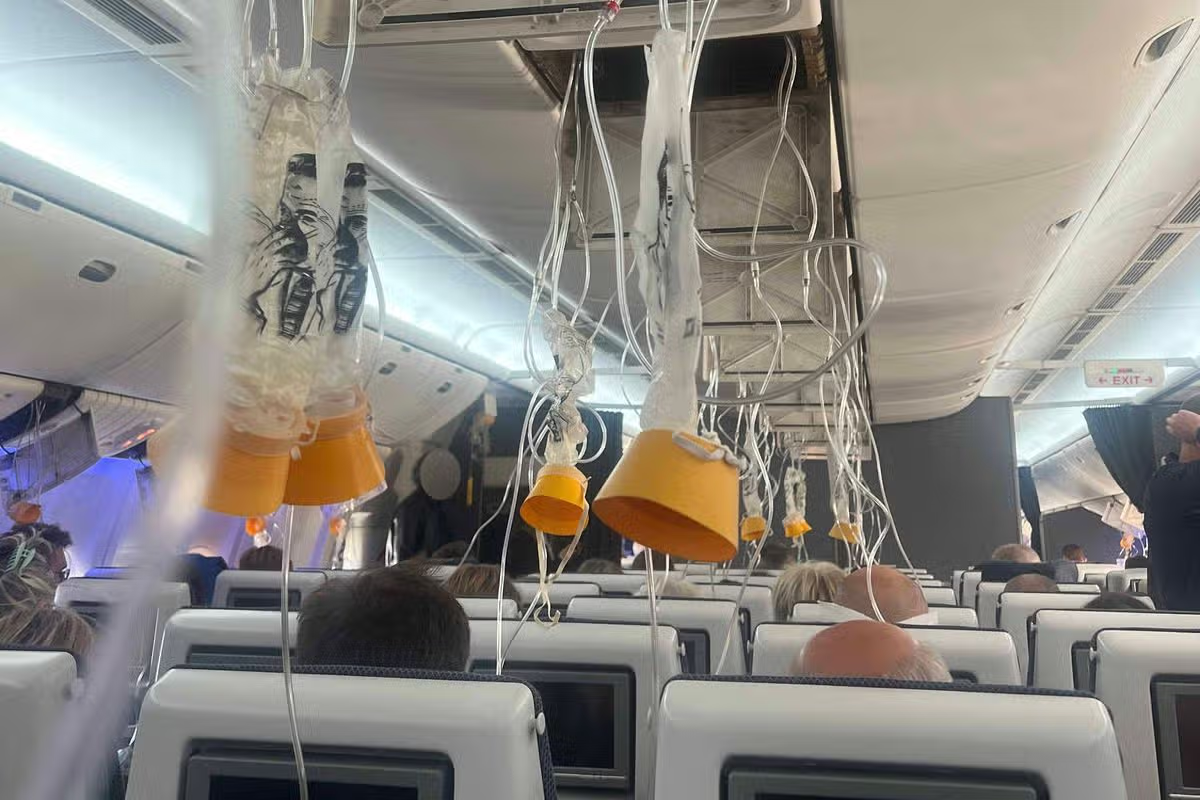
describes

British Airways passenger describes terrifying moment plane dropped 28,000ft ‘completely without warning’

Flight BA295 had reached a cruising altitude of 37,000ft on its way from London to Chicago before the mid-air emergency

A passenger aboard a London to Chicago British Airways flight says the cabin was “silent” as they dropped 27,000ft in minutes. A “technical issue” caused the aircraft to drop and declare an emergency, and return to London on October 5.

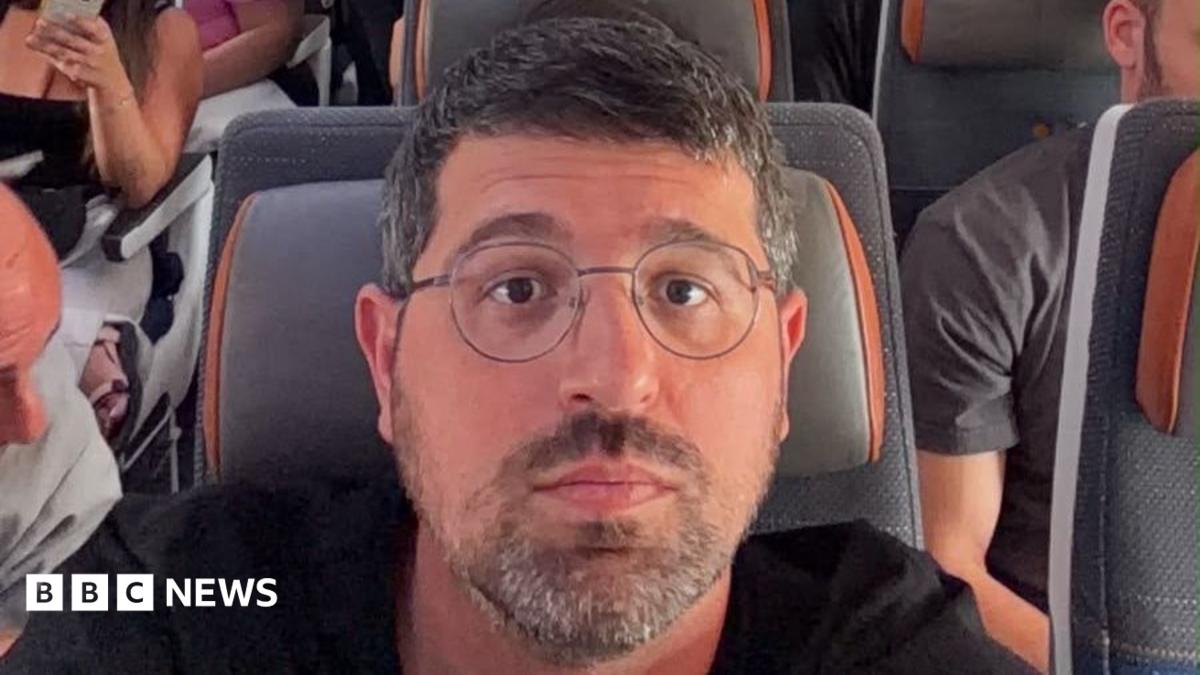
Scott Tanner, 39, was a passenger on the plane when it began descending “noticeably” and they were told to put on oxygen masks. Flight BA295 had reached a cruising altitude of 37,000ft after taking off from Heathrow before the mid-air emergency.

Flight tracking data showed the aircraft dropped sharply down to 9,000ft. Scott said their was “silence” for 10 minutes before they were told they could remove their masks, and retuned to London after five hours in the air.

Scott, from Torbay, Devon, told Talk to the Press: “About an hour into the flight I was listening to an audiobook when, completely without warning, the oxygen masks suddenly dropped throughout the cabin.

“An automated announcement instructed everyone to put on their masks immediately. For around 10 minutes afterwards there was no further information from the flight deck.

“There was simply silence apart from the automated announcement repeating on a loop, which was probably the most disconcerting part. Despite this, everyone remained remarkably calm. I did not hear a single scream.

“We could feel the aircraft descending quite noticeably, although it felt controlled rather than like a plunge. The captain then told us that we were below 10,000 feet and could remove our masks.

“He later explained that we would be returning to Heathrow, but because the aircraft was carrying fuel for the transatlantic journey we would need to circle for several hours to burn it off. We eventually landed safely after about five hours in the air.”

Scott says British Airways provided passengers with hotel accommodation, but further arrangements were “frustrating”. He said: “I was initially rebooked via Charlotte despite direct flights being available, and I had to negotiate to have this changed.

“When I asked whether BA might offer some gesture in recognition of what had happened, I was repeatedly sent between different desks and eventually told that any compensation would have to be dealt with online.”

The plane left London Heathrow’s Terminal 5 at 11:50am, with an expected flight time of eight hours and 40 minutes before landing at Chicago O’Hare International Airport. The flight crew issued a squawk 7700 code – the international aviation signal for a general emergency – shortly after beginning the steep descent.

Passenger Tom Nicholls told the Mirror there was a “sudden bit of turbulence” during the emergency. Mr Nicholls explained: “The plane adjusted but it didn’t feel like it was descending rapidly. I’d say the pilots did a very good job.

“The oxygen masks popped out soon after and there was a bit of uncertainty onboard. The couple in front couldn’t get to theirs but by the time they’d found a spare seat with a mask, the captain announced we were below 10,000ft so they were not needed.”

A spokesperson from British Airways said: “The safety of our customers and crew is always our top priority, and the aircraft landed safely after our highly-trained pilots returned to Heathrow following a technical issue.

“Customers disembarked the aircraft normally and our teams are working to get their travel plans back on track as quickly as possible.”
Source link

Flydubai passenger describes hugging his children as plane nosedived during attack

He thought at first that this was simply because of an air pocket, but “it took a lot of time, almost a minute”.

Everyone who had not been seated fell to the floor, the 40-year-old said.

“After a couple of seconds, we started to hear screams. ‘There is blood, there is stabbing, we need help’,” Polovincik said.

“At the end of the day, you understand very, very quickly that literally there is nothing that you can do at this point in time,” he said.

Polovincik, a performance marketing analyst, said he tried to “be cool” for his children.

“You just tell them, yeah, everything’s going to be all right. It’s just a malfunction in the aeroplane, there is a crew under control, the passengers are helping them, [you] hug them really hard and try to keep your face so it doesn’t look very panicked, try to keep your tone of voice.”

But he said there was naturally a “high degree of panic” on the flight.

There were lots of families with children on the plane because the flight took place towards the end of a Jewish holiday period.

After about 10 to 15 minutes, he said a passenger in the cockpit told them the incident was “under control” and other staff were flying the plane.

In a video released by Netanyahu’s office, passenger Yaniv Hayun described putting the attacker in a chokehold and pulling him out of the cockpit before other passengers helped pin him down.

Two other pilots who were onboard the flight then took over the controls and safely landed the plane, which had been carrying more than 150 passengers.

Polovincik said: “After they told us that the situation is, again, ‘under control’, then it was a bit harder to tell the kids that it’s malfunctioned because people start to walk around the aeroplane covered with blood.”

Polovincik was praised Indian pilot, Capt Smit Machchhar, who fought off his attacker and opened the door to the cockpit, allowing passengers to step in.

“Without him opening the door, we’re probably not speaking here right now,” he said, adding that he “can’t even start saying our gratitude for this human being”.

Polovincik said that, although he was not religious, he could not escape “the feeling that it was the hand of God yesterday” that had put “the pieces on the board in the way that they did”.

“It’s remarkable.”

Source link

Qatar PM describes fallout of US-Israel war on Iran as ‘earthquake’ | United Nations News

Qatar’s Prime Minister Sheikh Mohammed bin Abdulrahman bin Jassim Al Thani has called on states to respect sovereignty as a condition for security in the Middle East, warning against “cycles of escalation” after “an earthquake” caused by the US-Israeli war on Iran.

The region needs a “framework in which sovereignty is respected” and no state can pose a “threat to another”, Sheikh Mohammed said on Sunday at the opening of the Qatar Economic Forum’s UN General Assembly-adjacent event in New York City.

Recommended Stories

list of 3 itemsend of list

Sheikh Mohammed – who is also Qatar’s foreign minister – described the economic fallout from the US-Israel war on Iran as “an earthquake” with “its shock waves” reaching far beyond the borders of the Middle East, “challenging assumptions about security and stability”.

“During the crisis, almost every conversation began with security and de-escalation, then turn[ed] to energy supplies, shipping routes, and with our investments, plans will continue. These were different expressions of the same question. When so much is being disrupted, what can still be relied upon?”

He said that Qatar has weathered the test to the “foundations” of the country’s economy and security, but acknowledged that the ongoing conflict in the region is having an impact.

“Permanent security cannot be built through arrangements that leave any state permanently exposed to insecurity,” Sheikh Mohammed said. “We must address the sources of tensions and build confidence.”

Reporting from New York, Al Jazeera’s Kristen Saloomey said that message “no doubt will be repeated” when Gulf leaders meet US President Donald Trump on Tuesday during the UN General Assembly.

Qatar’s $38bn domestic investments

The PM also outlined a domestic shift in Qatar’s investment strategy by pledging more than $38bn in spending on Qatari infrastructure over the next five years.

“That’s meant to attract private investors and send a message of Qatar’s resilience,” Saloomey said, while the PM is nonetheless acknowledging that the ongoing conflict is “having an impact on the region”.

The UNGA starts on Monday and ends on Friday.

The situation in the Middle East and its global ramifications are expected to be high on the agenda during speeches and diplomacy.

Also on Sunday, Qatar’s Foreign Ministry spokesman, Majed Al-Ansari, told US media in New York that the mediation efforts by his government are ongoing to restart talks between Tehran and Washington to end the US-Israel war on Iran.

Source link