June 8 (UPI) — Sen. Adam Schiff, D-Calif., introduced a bill Monday that seeks to limit the Department of Defense’s use of artificial intelligence in lethal strikes.
The Human Authority in Lethal Operations Act would establish guardrails and oversight for the use of autonomous and semi-autonomous weapons and surveillance systems that use AI. Schiff said the department’s use of AI in recent months shows there is an “urgent need” for the legislation.
“There are good reasons to use AI technology to advance our national security,” Schiff said in a statement. “However — just as with any tool, we cannot depend on technology alone to guide us, particularly when the risks of harm can be fatal. My legislation would protect Americans from unlawful domestic surveillance, ensure that humans in the chain of command exercise responsibility for the use of any lethal technology, and maintain strong ethical protections in the deployment of autonomous and semi-autonomous weapons.”
The bill requires the disclosure of designated commanders who give orders to use force that involve autonomous weapons systems and maintain records of the decision-making process, including how targets are selected.
The bill also requires autonomous and semi-autonomous weapons systems to be put through a review process and prohibits the Pentagon from using AI to surveil people who are doing constitutional activities, such as protesting. The Pentagon would also be barred from purchasing personal data on Americans if doing so would violate the act.
Sen. Elissa Slotkin, D-Mich., is preparing a separate bill proposal related to AI use in defense.
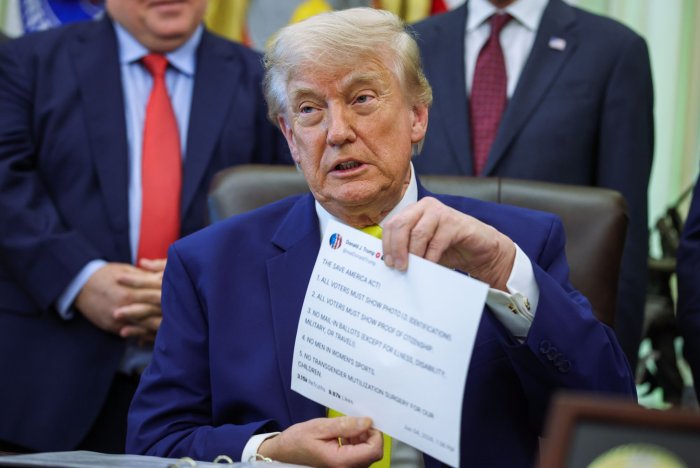
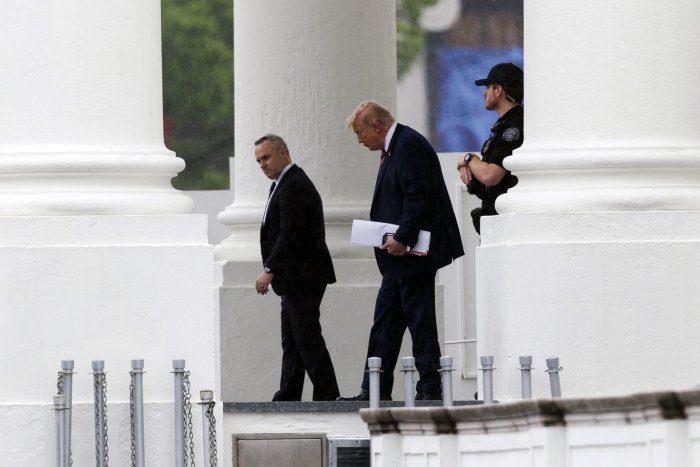
President Donald Trump discusses renovations to the Lincoln Reflecting Pool and makes an announcement on coal in the Oval Office at the White House on Thursday. Photo by Samuel Corum/UPI | License Photo
Welcome back to the Times of Troy newsletter, where USC baseball’s charmed season came to a devastating end in the bottom of the ninth of a decisive Super Regional matchup with North Carolina on Sunday. But no matter how brutal it may have been in the moment — with black-stained tears streaming down Trojan cheeks in Chapel Hill — the fact that USC was in position to have its heart broken at all is a testament to what Andy Stankiewicz has built in his four seasons at the helm.
Fight on! Are you a true Trojans fan?
Get our Times of Troy newsletter for USC insights, news and much more.
By continuing, you agree to our Terms of Service, which include arbitration and a class action waiver. You agree that we and our third-party vendors may collect and use your information, including through cookies, pixels and similar technologies, for the purposes set forth in our Privacy Policy such as personalizing your experience and ads.
It was barely a year ago that I sat with Stankiewicz in an unfinished concrete dugout at new Dedeaux Field, discussing the importance of building a foundation for a program that had lacked one for so long. The metaphor wrote itself at the time. His team was on the cusp of clinching its first NCAA berth in a decade, just as its new stadium was finally rounding into form. But as triumphant as that tournament invite would be when it finally happened, Stankiewicz was already thinking bigger.
“We want to build this thing for the long haul,” he said then. “And to build a home, you have to build a strong foundation so it can withstand the weather. The same thing applies here. I want to be here for a long time. This is where I grew up. This is where I’d love to be.”
A year later, the foundation hasn’t just been built. The house is finished. The front door is open. All that’s left is for the Trojans to walk through it.
They had their chance Sunday in Chapel Hill. Andrew Johnson twirled another postseason gem. The Trojan bats, again, delivered in big moments, with clutch solo shots from Kevin Takeuchi and Andrew Lamb. Through 8.2 innings, USC had given up just a single run.
But the bullpen, which had been one of the Trojans’ few weak points all season, couldn’t finish the job. Sax Matson came in for just a single pitch and was pulled. Adam Troy faced three batters, walked one who scored and was pulled in the middle of a 3-0 count for another. Chase Herrell faced four batters after that, walked one and gave up two other hits, including the walk-off winner.
Just two outs stood between the Trojans and a trip to Omaha. At one point, all they had to do was catch a fouled pop fly to send the game to extras.
“That was a tough one,” Stankiewicz said after. “As best we can, we’re gonna move forward. But again, I got some disappointed young men in our dugout. As the head coach, you think, ‘Dang it, what could I have done differently?’”
Surely, the Trojans coach might be thinking all season about how close his team was to reaching that next rung as a program. The truth, though, is it’s a wonder they got here this fast in the first place. USC won 48 games, its most in a quarter century. It had to climb its way back from the loser’s bracket in its regional, then, on the road in Chapel Hill, it took one of the national title favorites to the brink.
Not only that, but USC rose to that level in a still-unfinished stadium, without anything resembling the NIL firepower that other college baseball teams, particularly in the SEC and ACC, are wielding. USC has tried to make up for that by funding more scholarships, but when other teams are handing kids hundreds of thousands more in NIL offers, it makes competing with the Joneses especially difficult.
Stankiewicz has managed to make it work, anyway. And as more talent rolls into Troy, there’s every reason to believe that we’ll look back on this moment, not as a devastating end, but the start of something particularly special for USC baseball.
“We got to the finals of the Regional last year. Now the finals of a Super Regional,” Stankiewicz said. “We’re not going away.”
Calling all questions …
With the summer here and college sports now on hold for the next two months, it’s a perfect time to answer any questions you have about the upcoming year at USC. So please send anything on your mind about Trojan sports to ryan.kartje@latimes.com. When the newsletter returns in a couple of weeks, I’ll answer the best ones in this space.
USC pitcher Andrew Johnson.
(Laura Wolff / For The Times)
—A standing ovation for Johnson, whose pitching performance through the postseason was nothing short of Herculean. Johnson spent most of the season as the Trojans’ forgotten No. 3 option in the rotation, with Mason Edwards and Grant Govel ranking among the best pitchers in the nation. But it was Johnson who came up the biggest in the postseason. Twice he pitched well in relief, only to throw seven-plus innings two days later. This felt like a breakthrough moment for Johnson, who should pair with Govel to give USC an outstanding 1-2 punch on Fridays and Saturdays next season.
—There’s been talk about alternate jerseys at USC over the last several years. The conversation about alternates actually dates back to before Jennifer Cohen took over as athletic director. But as was the case before, the conversation has been tabled for the time being. Athletic departments are always looking for added revenue these days, but the juice just hasn’t been worth the squeeze to date, considering the many fans that would surely be offended by changes to the Trojans’ classic uniforms.
Olympic sports spotlight
After going on a tear to close out the season, USC women’s golf was on the precipice of snagging the school’s second national title this year … before it ran into a buzzsaw in No. 1 Stanford.
But an NCAA runner-up finish is still a great result for a program that hasn’t won an NCAA title since 2013. The Trojans have now finished second six times in their past 38 seasons, which is to say they’ve been the runner-ups basically 15% of the time over the last four decades.
That’s a lot of years being the bridesmaid, not the bride. But there’s no reason to think that Justin Silverstein, the Big Ten’s Coach of the Year in 2026, shouldn’t have this program back in the mix as soon as next season.
What I’m Watching This Week
Matthew Rhys and Stephen Root in “Widow’s Bay.”
(Apple)
If you’re in the mood for something creepy, boy do I have the content for you. “Widow’s Bay” on Apple TV follows Mayor Tom Loftis, played by Matthew Rhys, who’s desperate to revive his struggling island community of Widow’s Bay. But the locals on the island are convinced the town is cursed, and don’t necessarily approve of bringing tourists into the mix.
As you might imagine, the locals appear to be right. And Loftis finds himself in some horrifying situations. Enough to convince me that maybe this isn’t the best show to be watching alone, late at night. But if that’s in your wheelhouse, then this is as good as it gets.
That concludes today’s newsletter. If you have any feedback, ideas for improvement or things you’d like to see, email me at ryan.kartje@latimes.com, and follow me on X at @Ryan_Kartje. To get this newsletter in your inbox, click here.
Taiwan has accused China of carrying out a “provocative act” after Chinese Coast Guard vessels conducted patrols in waters east of the island. The operation followed announcements by Japan and the Philippines that they would begin formal talks on maritime boundary delimitation, a move Beijing views as involving waters linked to Taiwan.
Chinese state media described the deployment as a special maritime law-enforcement operation. Taiwan responded by dispatching Coast Guard vessels, which reportedly warned the Chinese ships away from restricted waters. Defence Minister Wellington Koo characterized the patrols as both a challenge to Taiwan’s sovereignty and an example of “cognitive warfare” aimed at reshaping perceptions of territorial control.
The incident comes amid sustained Chinese military activity around Taiwan, including frequent air and naval operations. Taiwan is also monitoring the movements of the Chinese aircraft carrier Liaoning, which is operating in the Western Pacific near waters east of the Philippines.
Why It Matters
The patrols represent more than a routine maritime operation. They signal China’s growing willingness to extend its presence beyond the Taiwan Strait and into areas east of Taiwan that have traditionally been viewed as strategically important for the island’s defence.
The move also demonstrates Beijing’s opposition to emerging regional cooperation among U.S. partners and allies. The maritime boundary discussions between Japan and the Philippines reflect increasing efforts among regional states to clarify maritime rights and strengthen coordination in contested waters.
For Taiwan, Chinese Coast Guard activities present a complex challenge. Unlike military operations, law-enforcement patrols operate within a legal grey zone that allows Beijing to advance territorial claims without triggering a conventional military confrontation. Such actions can gradually normalize China’s presence in disputed areas while increasing pressure on Taiwan’s security apparatus.
The incident further highlights the growing integration of maritime, legal, and information-based strategies in China’s approach to territorial disputes across the Indo-Pacific.
Stakeholders
Taiwan
Protecting maritime sovereignty and territorial claims.
Maintaining freedom of navigation and security in eastern waters.
China
Expanding operational presence around Taiwan.
Reinforcing sovereignty claims through maritime law-enforcement activities.
Japan
Engaged in maritime boundary discussions with the Philippines.
Monitoring Chinese activities that could affect regional security.
Philippines
Seeking greater legal clarity over maritime boundaries.
Increasing security cooperation with regional partners.
United States
Maintaining stability in the Taiwan Strait and broader Indo-Pacific region.
Supporting freedom of navigation and regional deterrence efforts.
Regional Security Partners
Including Australia and other Indo-Pacific states concerned about changing maritime dynamics.
Strategic Implications
The patrols illustrate China’s increasing reliance on so-called “grey-zone” tactics, which fall below the threshold of open military conflict while steadily advancing strategic objectives. By deploying Coast Guard vessels rather than naval forces, Beijing can challenge Taiwan’s authority while reducing the risk of immediate military escalation.
The incident also reflects the expanding geographical scope of cross-strait competition. Traditionally concentrated in the Taiwan Strait, tensions are increasingly extending into the Western Pacific, where control of maritime approaches carries significant strategic value for both China and Taiwan.
Furthermore, the timing of the operation suggests that Beijing is seeking to influence regional maritime diplomacy. By responding directly to Japan-Philippines boundary discussions, China is signaling its opposition to initiatives that could strengthen legal and political frameworks contrary to its territorial claims.
The episode reinforces concerns among regional governments that maritime disputes are becoming increasingly interconnected, linking Taiwan, the East China Sea, and the South China Sea into a broader strategic contest.
What’s Next?
Several developments warrant close attention in the coming weeks:
Taiwan is likely to increase coordination between its military and Coast Guard to strengthen maritime surveillance and response capabilities.
China may continue deploying Coast Guard vessels east of Taiwan as part of a sustained effort to normalize its operational presence in the area.
Japan and the Philippines are expected to proceed with maritime boundary discussions despite Beijing’s objections, potentially drawing further diplomatic responses from China.
Increased activity by the Liaoning carrier group could provide additional indications of China’s broader military objectives in the Western Pacific.
The United States and regional partners may intensify maritime monitoring and security cooperation to deter unilateral attempts to alter the status quo.
Future outcomes
The incident reflects a broader shift in regional security dynamics, where maritime law-enforcement operations are increasingly being used as instruments of strategic competition. Rather than relying solely on military pressure, China is employing a combination of legal, political, and operational tools to reinforce its territorial claims and shape the regional security environment.
For Taiwan, the challenge extends beyond the immediate presence of Chinese vessels. The longer-term concern lies in preventing the gradual normalization of Chinese activities in areas that Taipei considers vital to its sovereignty and security. As regional actors deepen cooperation on maritime governance and security, incidents of this nature are likely to become an increasingly important indicator of the evolving balance of power in the Indo-Pacific.
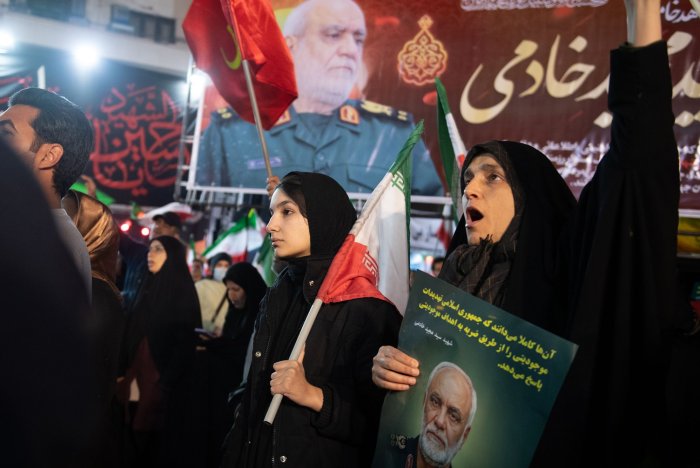
1 of 2 | A woman holds a photo depicting late Supreme Leader Ayatollah Ali Khamenei as people gather during a rally following Iran’s attack on Israel in Tehran on Sunday. The Israeli military confirmed it struck “military targets” in western and central Iran early Monday local time. Photo by Abedin Taherkenareh/EPA
June 7 (UPI) — The Israel Defense Forces confirmed it struck military targets in western and central Iran on Monday in retaliation for a wave of airstrikes launched against the Jewish state by Tehran hours earlier.
“A short while ago, the Israeli Air Force struck military targets belonging to the Iranian terror regime in western and central Iran. Details to follow,” the IDF said in a post on Telegram as a fragile cease-fire in the Iran War continued to unravel.
“The Zionist enemy has attacked targets on our country’s soil using air-launched ballistic missiles,” the IRGC said.
Official Iranian media also said residents in neighboring Iraq heard explosions in parts in the capital Baghdad while unidentified objects were seen over the Iraqi city and in Beirut.
The strikes against Iran came just hours after the Islamic regime lobbed missiles into northern Israel for the first time since the beginning of the cease-fire, which came into effect on April 8.
Tehran said those strikes were in response to Israeli bombings targeting Hezbollah in Lebanon.
The Iranian missiles, which the IDF said had been intercepted, were the first direct attack on Israel since the cease-fire.
The attacks follow an announcement on Sunday that Israel had launched strikes at alleged Hezbollah targets in Beirut — attacks which it has continued throughout the cease-fire — and some of which have been in suburban neighborhoods.
U.S. President Donald Trump, who reportedly has been briefed on Iran’s actions, told Iran “that’s enough, get back to the table” for peace negotiations, Fox News reported.
“The Israeli army must stop its attacks on southern Lebanon and the suburbs, and if it expands its attacks to that region or responds to Iran’s action, it will face more devastating and regrettable blows,” General Ali Abdollahi, head of Iran’s Khatam al-Anbiya command, said in a statement.
Trump has reportedly also told Israeli Prime Minister Benjamin Netanyahu to hold back after the Iranian strikes, which Netanyahu agreed to on the condition that Hezbollah — which is funded by the Iranian regime — not launch strikes into northern Israel from Lebanon.
The United States and Iran have been negotiating an end the war for more than a month, as a cease-fire has mostly held but the Strait of Hormuz remains blocked, preventing the shipment of oil and other products from the Middle East.
President Donald Trump discusses renovations to the Lincoln Reflecting Pool and makes an announcement on coal in the Oval Office at the White House on Thursday. Photo by Samuel Corum/UPI | License Photo
The quarter mark of a season isn’t necessarily a make-or-break point, but for the Sparks, it was starting to feel like it was close to it.
An 89-72 win over the expansion Portland Fire on Sunday to close a 1-2 homestand felt more necessary than the Sparks might have wanted to admit. But after struggling on the road before losing consecutive games at home against Las Vegas and Dallas amid a three-game losing streak, the Sparks needed something to go right.
Especially defensively, where the Sparks had seemingly been getting worse. They had their best defensive game of the season Sunday, holding Portland to 36% shooting — the second-lowest mark against them this season.
Kelsey Plum finished with 16 points and six assists and Nneka Ogwumike had a double-double with 20 points and 17 rebounds. Dearica Hamby had 22 points with 12 rebounds, a solid response for the veteran forward following her struggles in recent games.
Before the game, coach Lynne Roberts admitted that she would consider benching some players if things didn’t improve.
“That’s the stage we’re at,” she said. “So that’s where we’re at. So stay tuned.”
The Sparks (5-6) stuck with their usual rotation and held the Fire to 72 points, the fewest they’ve allowed in a game this season.
Plum didn’t register a shot attempt until early in the third quarter when she hit a mid-range jumper to go ahead 45-43. The Fire defense smothered her, and while Erica Wheeler and Ogwumike made some shots early, the Sparks mostly didn’t make Portland (6-7) pay for doubling up their star.
The Sparks went on an 8-0 run in the first quarter while the Fire struggled to make shots around the rim.
But the Sparks’ offense went cold in the second quarter, allowing Portland to come back to lead by two at halftime. Portland also dominated on the boards to get extra possessions.
The Sparks adjusted to open the third quarter with six consecutive points. Portland struggled to hold on to the ball and turned it over nine times in the third quarter, allowing the Sparks to outscore them 23-12.
Portland couldn’t recover and the Sparks capitalized on turnovers to pull ahead by as much as 18.
The Sparks will play at the Seattle Storm (3-9) next on Wednesday.
June 6 (UPI) — The United States said it intercepted several Iranian ballistic missiles and drones shot toward the Strait of Hormuz, the Persian Gulf, Bahrain and Kuwait Friday night.
The U.S. Central Command said seven missiles were fired toward Kuwait and Bahrain Friday after it shot down four Iranian drones headed toward the strait. It said six of the missiles were intercepted and one didn’t reach its target.
Bahrain and Kuwait said there were no injuries, but Kuwait said there was some “material damage.”
The Kuwaiti Army, attributed to the official spokesperson for its defense ministry Brigadier General Saud Abdulaziz Al-Otaibi, posted on X: “The armed forces detected and responded at dawn today to 7 hostile ballistic missiles within Kuwaiti airspace, which were intercepted over several residential areas, resulting in the fall of some debris.
“The Iranian criminal aggression caused material damage with no human casualties.”
CENTCOM also said there were no American casualties.
“There are currently no reports of harm to U.S. personnel, and Iranian claims of damaging U.S. 5th fleet headquarters in Bahrain are false,” CENTCOM said in a press release.
Kuwait and Bahrain called the strikes a violation of their sovereignty and a threat to regional security. Egypt, Jordan and Qatar also condemned the strikes Saturday.
Iran said it launched the strikes against U.S. military bases in the region after the United States struck Iran. CENTCOM said it hit coastal surveillance radar sites in Goruk and Queshm Island “to defend against further maritime attacks.”
Iran called the U.S. attacks a “flagrant” violation of the cease-fire, which has been in place since April. It said the American side “not only lacks the will to reduce tensions,” but “seriously endangers the security of the region.”
“These facilities are tasked with safeguarding the country’s border security and ensuring the security of navigation in international waterways,” the Iranian Foreign Ministry said in a statement. “The attack constitutes a clear violation of the April 8 ceasefire and an act of military aggression against the national sovereignty and territorial integrity of the Islamic Republic of Iran.”
Iran said the U.S. strikes violate international law.
“This action, which comes as a continuation of the hostile and provocative conduct of the U.S. regime against the Islamic Republic of Iran, demonstrates the complete disregard of the U.S. ruling establishment for the fundamental principles of international law and the Charter of the United Nations,” the foreign ministry said.
Tehran also said the U.S. is responsible for “all the effects and consequences of these illegal actions, as well as any possible escalation of tension.”
Iran’s Revolutionary Guard claimed the clash started when the U.S. military tried to “illegally” escort oil tankers through the waterway, which Iran has largely closed off during the war.
The Gulf Cooperation Council condemned the Iranian missile attacks Saturday.
“These treacherous Iranian terrorist acts represent a dangerous and irresponsible escalation, a blatant violation of all international laws and norms, and a direct threat to regional stability,” Jasem Mohamed Albudaiwi, secretary general of the Gulf Cooperation Council, said in a statement.
The Gulf Cooperation Council, formed in the 1980s, is an economic pact that includes Bahrain, Kuwait, Oman, Qatar, Saudi Arabia and the United Arab Emirates.
“The Council countries stand in a united and steadfast position alongside the Kingdom of Bahrain and the State of Kuwait, fully supporting all measures and steps they undertake to protect their security, safeguard their sovereignty and territorial integrity, as well as ensure the safety of their peoples,” Albudaiwi said.
WASHINGTON — The House passed legislation Thursday that would aid Ukraine and sanction key segments of the Russian economy, overriding objections from Republican leaders who warned the bill would undermine negotiations designed to achieve a comparable but stronger result.
The legislation, sponsored by Rep. Gregory Meeks, D-N.Y., seeks to cement U.S. assistance for Ukraine by providing more than $1 billion in security and reconstruction aid. It would make another $8 billion available for Ukraine’s defense through loans.
The 226-195 vote is a sign of impatience with President Trump’s approach to the war and represents the House’s second major foreign policy break with Trump this week. The day before, the House, for the first time, approved a war powers resolution aimed at halting U.S. military action against Iran.
Supporters were able to force action on the Ukraine bill by gathering 218 signatures on a discharge petition, a legislative tool that allows a majority of the House to effectively bypass leadership.
Once rarely successful, House members have used the petition tool this Congress to pass bills on releasing the government’s files on Jeffrey Epstein and to extend health care subsidies to many of those who get health coverage through the Affordable Care Act, though the latter measure faltered in the Senate.
Meeks said the question before the House was simple. Would it help Ukraine negotiate from a position of strength or help Russia outlast American resolve?
“We all want this war to end,” Meeks said. “The question is how. Will we abandon Ukraine and force it into a terrible deal? That is what Vladimir Putin is counting on. Or will this body live up to the commitments we’ve made since the start of this war?”
The vast majority of Republicans opposed the measure. Rep. French Hill, the chairman of the House Financial Services Committee, said he is a steadfast supporter of Ukraine. However, the Arkansas Republican said the House was confronted with a flawed, outdated measure that actually calls for less funding for Ukraine security assistance compared to what Congress had agreed to as part of this year’s defense policy. Another section could lead to a decrease in defense spending by some NATO members, he warned.
Rep. Brian Mast, the chairman of the House Committee on Foreign Affairs, said he believed the bill was “a cudgel to fight against President Trump.”
“This bill, in my opinion, is an unserious bill that was crafted basically a year-and-a-half ago,” Mast, R-Fla., said.
Rep. Don Bacon, R-Neb., broke with most of his Republican colleagues in voicing support for the measure.
“Are we going to stand with good or are we going to stand with evil? That’s what this is about tonight,” he said.
In the end, 18 Republicans, 207 Democrats and one independent voted for the bill. Democratic Rep. Ilhan Omar joined with 194 Republicans in voting against it.
Lawmakers want to send a message
Supporters are hopeful that the House’s passage of the Ukraine bill would put pressure on the Senate to do the same. But they also know the Senate likely won’t go along unless Trump endorses the bill.
“It’s probably not going to get 60 votes in the Senate, but it’s going to hopefully force the Senate to address the issue,” said Rep. Brian Fitzpatrick, R-Pa., who signed the discharge petition and voted for the bill. “It’s going to send a great message to the soldiers of Ukraine.”
He said the vote would also send a message to Putin that “we do have a pulse here, that we do care about Ukraine and that we are going to utilize our authority to help them.”
As the war has dragged on, it’s gotten more difficult for supporters of Ukraine in Congress to provide additional financial support to help Ukraine defend itself.
The U.S. has approved some $195 billion for the Ukraine response, according to the latest quarterly inspector general report for Operation Atlantic Resolve, with roughly a quarter of that going to replenish weapons stockpiles for the U.S. military. The last major legislation designed to bolster the Ukraine response occurred in April 2024, though modest amounts have since been included in annual appropriations bills.
Republican leaders tried to stop the bill
Republican leaders urged their members to oppose the legislation. House Majority Leader Steve Scalise, R-La., said there are good-faith negotiations between members of Congress and the White House to boost Ukraine. He described the negotiations as complicated.
“I think they are going to yield positive results, but you set that back if you pass legislation that doesn’t go as far as the negotiations are going,” Scalise said.
The war that followed Russia’s full-scale invasion of its neighbor is more than four years old, with no end in sight. In recent days, both sides have sought an edge by launching long-range missile strikes.
U.S.-led peace efforts have fizzled out as the sides made no progress on key differences and after the war in Iran grabbed Washington’s attention. Ukrainian President Volodymyr Zelensky accepted an unconditional ceasefire demanded by Trump, but Putin refused.
Action in the Senate on Ukraine has revolved around a bill that would impose sweeping tariffs and secondary sanctions on countries that purchase Russia’s oil, gas, uranium and other exports, which are crucial to financing Russia’s military. But the bill has languished.
Freking writes for the Associated Press. AP writer Lisa Mascaro contributed to this report.
Before the Diamondbacks’ Ketel Marte delivered the walk-off blow to the Dodgers — a towering home run off reliever Tanner Scott, punctuated by a bat flip — Roberts had to choose whether to send Shohei Ohtani to the plate as a pinch-hitter.
In a 3-2 loss, Ohtani, who didn’t start after two-way duties the day before, remained in the dugout.
“It has to be the right spot,” Roberts said.
The defensive picture complicated the calculus.
If Scott had thrown a scoreless inning and sent the game into the 10th, Roberts planned to have Ohtani pinch hit for Miguel Rojas, the third batter due up.
In the ninth, however, unless Ohtani replaced designated hitter Will Smith (who ended up hitting a two-out double), Roberts would have had to put in a defensive replacement for the bottom half of the inning.
“I didn’t want to go two innings trying to figure out how to play defense with Shohei then being out of the game,” Roberts said.
Roberts already had been forced to use the rest of his bench.
Third baseman Max Muncy exited in the fifth inning after a collision at first base, and Santiago Espinal replaced him. When rookie left fielder Ryan Ward walked in the seventh inning, the speedier and more defensively sound Alex Call replaced him on the bases. And in the eighth, the right-handed hitting Rojas pinch-hit for Alex Freeland against Diamondbacks left-hander Brandyn Garcia.
Arizona’s Ketel Marte, center, celebrates with teammates as he steps on home plate after hitting a walk-off home run against the Dodgers on Thursday.
(Christian Petersen / Getty Images)
The Dodgers had Andy Pages, Kyle Tucker and Smith — none of whom were candidates to be pulled for a pinch-hitter — due up in the ninth. But after Smith hit a two-out double, leaving first base open, the Diamondbacks surely would have intentionally walked Ohtani if he pinch-hit for Espinal.
Then, the Dodgers would have had to reconfigure their defense, likely moving first baseman Freddie Freeman to third, catcher Dalton Rushing to first base and Smith behind the plate, forfeiting the designated hitter spot.
That would mean a shaky defensive lineup with the game still on the line in the ninth, with pitchers forced to hit if it went into extra innings.
So, instead, Roberts saved Ohtani.
“Once we get into extra innings, then I would fire that bullet,” Roberts said.
The Dodgers, however, didn’t get to extra innings. Scott struck out the first batter he faced. Then he threw a fastball down and in to Marte, who managed to get the barrel of his bat to it.
“You’ve got to tip your cap,” Scott said. “He’s a good hitter. Should I have gone up and in? Yeah. Or just a slider. I knew he was going to be aggressive.”
Ohtani dealing with blister
Ohtani has been dealing with a small blister on the middle finger of his right hand for his last couple starts, Roberts said.
“I don’t expect it to affect him going forward,” Roberts said Thursday afternoon, the day after Ohtani held the Diamondbacks to two hits in six scoreless innings. “Even [Wednesday], if we wouldn’t have tacked on, he would’ve stayed in there.”
Roberts pulled Ohtani after the Dodgers pulled out to a seven-run lead in the top of the seventh inning.
Roberts also said he didn’t believe the blister affected Ohtani’s command last week, when he threw six hitless innings against the Rockies but issued four walks and hit a batter.
“When his command has been off, I think it’s a bigger thing than just a blister,” Roberts said. “Because it’s a small blister. That’s just when his mechanics are out of whack.”
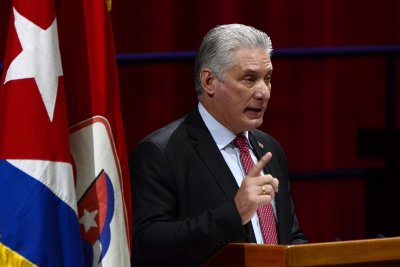
Cuban President Miguel Diaz-Canel was slapped with sanctions by the United States on Thursday as Washington continued to ratchet up pressure of the island nation’s communist government. File Photo by Ley Royero/EPA-EFE
June 4 (UPI) — The United States on Thursday leveled sanctions against Cuban Miguel Díaz-Canel, members of former President Raul Castro‘s family, the Cuban military and other organizations as it continued a crackdown on the country’s communist government.
Secretary of State Marco Rubio announced the measures against Diaz-Canel the others in a statement, asserting they are being targeted because they “fund the [Cuban] regime and its efforts to mobilize its radical revolutionary movements in the United States and around the world.”
The Cuban president, Rubio said, poses a threat to U.S. national security, while the Ministry of the Revolutionary Armed Forces of Cuba, with its “many majority holdings and subsidiaries,” is also now “considered blocked.”
Other organizations newly added to the sanctions list are the Cuban Institute of Friendship with the Peoples, or ICAP, Amistur Cuba S.A., Committees for the Defense of the Revolution and Minera La Victoria S.A.
The individuals sanctioned include Alejandro Castro Espin, the former head of the Cuban intelligence services and the son of Raul Castro, and Raul Alejandro Castro Calis, Castro Espin’s son.
“For decades, Cuba has been the world capital for radical left-wing terrorism,” Rubio asserted. “The regime in Havana has recruited, trained and backed violent Marxist and ‘third-worldist’ movements across our hemisphere and beyond.
“Today, we are targeting the network that enables and funds Cuba’s subversive and radical operations.”
In a stated response, Diaz-Canel said the latest sanctions are “illegitimate” and are “aimed at reinforcing the blockade measures and the scenario of conflict between Cuba and the United States.
“This political blindness is added to the coercive measures applied in recent weeks against our country, designed to harm the Cuban people,” he added. “The aggressiveness and perversity of the Yankee government will clash with our determination to confront the worst scenarios and resist the imperialist onslaught.”
The newly issued sanctions are the latest in a series of moves designed to ratchet up pressure on the Cuban government.
The Trump administration has set a Friday deadline for foreign companies to sever ties with GAESA, the business conglomerate run by Cuba’s Armed Forces, sparking a mass exodus of tourism-related businesses from the island nation.
Meanwhile, Cuba is struggling with the effects of a January 2026 executive order issued by U.S. President Donald Trump imposing a fuel blockade against the nation on national security grounds.
The move has resulted in shortages of electricity, fuel, medicine and medical supplies across Cuba, according to the U.N. Office for the Coordination of Humanitarian Affairs and the World Health Organization, which says emergency care, blood banks, laboratories, immunization programs and maternal and child health services have all been “severely disrupted.”
Russia’s influence across its traditional sphere of influence is facing growing challenges as the war in Ukraine continues to consume military, economic and diplomatic resources. For decades, Moscow maintained strong ties with former Soviet states through security guarantees, energy supplies and economic integration. However, several longtime partners have increasingly sought closer relations with the West, raising concerns in the Kremlin about the erosion of its geopolitical position.
One of the most notable examples is Armenia, a longtime Russian ally that has recently deepened engagement with the United States and Europe while exploring a path toward eventual European Union membership.
What Happened
Russian President Vladimir Putin has warned Armenia that pursuing closer integration with the European Union could come at a significant economic cost. Ahead of Armenia’s parliamentary elections, Putin suggested that Yerevan could lose access to discounted Russian oil and gas if it continues moving toward the EU.
The warning comes as polls indicate that the party of Armenian Prime Minister Nikol Pashinyan, who has pursued a more Western-oriented foreign policy, is likely to perform strongly in the vote.
Russia has already taken measures that many observers view as pressure tactics, including temporary restrictions on certain Armenian exports and warnings about possible reductions in economic cooperation.
Why Armenia Is Moving Closer to the West
Relations between Moscow and Yerevan have cooled significantly in recent years. Armenia signed a partnership agreement with the United States last month and has taken legislative steps that could eventually support EU membership aspirations.
Pashinyan’s government argues that Armenia must diversify its international partnerships and reduce its dependence on any single power. Supporters of closer Western ties point to economic opportunities, political reforms and security cooperation as key motivations behind the shift.
Russian officials, however, view Armenia’s growing engagement with Western institutions as part of a broader effort by the United States and Europe to weaken Moscow’s influence in the South Caucasus region.
Russia’s Wider Struggle to Retain Influence
The dispute with Armenia highlights a broader challenge facing Russia as it attempts to preserve its global standing while remaining heavily focused on the war in Ukraine.
Across multiple regions, Moscow is confronting increasing competition from Western powers. In Europe, countries once considered friendly to Russia are strengthening ties with the European Union and NATO. In the Balkans, political pressure is growing on governments that have traditionally maintained close relations with Moscow.
Russia also faces challenges in Moldova’s breakaway region of Transdniestria, where pro-European political forces are gaining influence. In Central Asia, Moscow is closely watching expanding Western engagement in a region it has long regarded as part of its strategic sphere.
Beyond its neighborhood, Russia’s relationships with partners such as Cuba, Venezuela and Iran are being tested as geopolitical dynamics shift and Western pressure intensifies.
What Comes Next
The outcome of Armenia’s parliamentary election will be closely watched in both Moscow and Western capitals. A victory for Pashinyan’s party could strengthen Armenia’s efforts to deepen ties with Europe and the United States, potentially leading to further tensions with Russia.
For the Kremlin, the situation represents a broader strategic dilemma. As the war in Ukraine continues without a clear resolution, Russia must balance military commitments with the need to maintain influence among traditional allies increasingly exploring alternative partnerships.
The coming months are likely to reveal whether Moscow can preserve its position in regions it has long considered part of its sphere of influence or whether Western engagement will continue to reshape the geopolitical landscape across Eastern Europe, the South Caucasus and beyond.
Media freedom advocates condemn move as latest effort to curtail independent reporting on the US military.
Published On 2 Jun 20262 Jun 2026
The United States Department of Defense has barred journalists from its press office, the latest move by the Pentagon to restrict media access since President Donald Trump’s return to the White House.
Acting Pentagon Press Secretary Joel Valdez said on Monday that the administration had re-designated the office as a “Sensitive Compartmented Information Facility” due to its use by speechwriters with access to classified government information.
Recommended Stories
list of 4 itemsend of list
“These speechwriters routinely handle classified material and require SIPRNet access,” Valdez said in a statement provided to Al Jazeera, referring to the secure computer network used by the Pentagon to share classified information.
“As a result, journalists will no longer be permitted to enter the office space. Access to the office of the Assistant to the Secretary of War for Public Affairs and to the Press Secretary remains available by appointment only,” Valdez added, using the Trump administration’s preferred title for Defense Secretary Pete Hegseth.
The Washington Post first reported the change.
The move follows a slew of steps by the Trump administration to curtail the ability of US media outlets to report on the military and other areas of the government.
In March, the Defense Department said it would no longer allow media outlets to maintain offices at the Pentagon after a judge sided with The New York Times in a lawsuit challenging the imposition of new rules for obtaining press credentials.
The Pentagon also announced that journalists would require an official escort while inside the complex, a policy that The New York Times is seeking to overturn in a separate lawsuit filed in May.
The National Press Club, the main professional organisation for journalists in the US, condemned the latest restrictions as a “troubling escalation” in the Trump administration’s efforts to curtail media scrutiny of the Pentagon.
“Independent reporting on the US military is not optional,” National Press Club President Mark Schoeff Jr said in a statement.
“When journalists are pushed farther from the institutions they cover, the American people are left with less information, less transparency, and less oversight. Any effort to restrict that access should alarm everyone who values a free and informed society.”
The Freedom of the Press Foundation, a nonprofit advocacy organisation, also criticised the move.
“It’s rare for anything other than disingenuous spin and outright lies to come out of the Pentagon’s press office these days, so it’s hard to imagine what basis they have to call the space classified,” Seth Stern, chief of advocacy at the organisation, told Al Jazeera.
“The only thing sensitive or confidential about the information released by Pete Hegseth’s Pentagon is that it’s not true.”
Iranian Commander of the Mohammad Rasoolullah Corps Hassan Hassanzadeh attends an event with Iranian officials, military commanders, families of war victims and their supporters at the Imam Khomeini Mosque in Tehran, Iran on May 24. Photo by Behnam Tofighi/UPI | License Photo
June 1 (UPI) — Iran has stopped peace negotiations with the United States as it alleges the terms of its cease-fire agreement have been violated, Iran state media reported Monday.
The Tasnim News Agency cited Israel’s continued military operations in Lebanon as a violation of its cease-fire terms, calling for a cease-fire in Lebanon.
The Iranian news agency added that Iran will block the Strait of Hormuz and is looking to “activate” its “resistance front” in other areas.
“The United States and Israel bear responsibility for the consequences of any breach of the truce,” Abbas Araghchi, Iranian foreign minister, wrote on social media.
Despite the cease-fire between the United States and Iran, both sides have continued to exchange fire through the weekend. U.S. Central Command reports striking down two Iranian drones that were threatening ships. The United States has also been enforcing a blockade on the Strait of Hormuz, confronting any ships going to and from Iranian ports.
While Iranian news reports Iran is ending peace talks, President Donald Trump claimed early Monday morning that Iran “really wants to make a deal,” in a post on social media.
“Just sit back and relax, it will all work out well in the end — It always does!” Trump wrote.
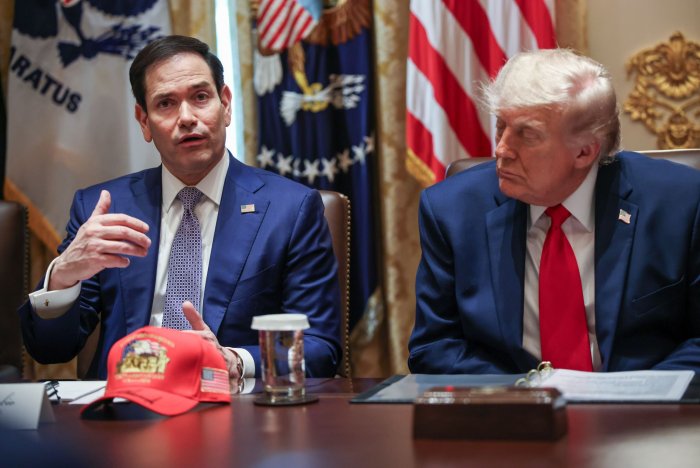
Secretary of State Marco Rubio and President Donald Trump participate in a Cabinet meeting in the Cabinet Room of the White House on Wednesday. Photo by Samuel Corum/UPI | License Photo
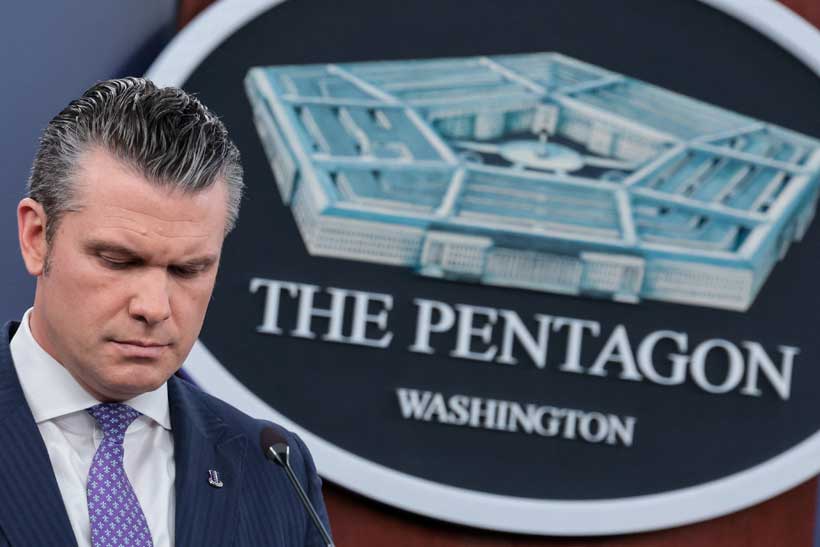
U. S. Defence Secretary Pete Hegseth called on Asian allies to increase military spending to counter China’s rising influence during his speech at the Shangri-La Dialogue in Singapore. He expressed concern over China’s military buildup and its potential to disrupt the regional balance of power. Hegseth emphasized the need for a robust network of allies that can deter aggression and maintain stability. The U. S. expects allies to raise defense spending to 3.5% of GDP, while the U. S. itself is investing $1.5 trillion in its military.
Hegseth addressed the need for action over discussions, suggesting that the region requires more military resources, such as ships and submarines, rather than just conferences. He underlined that partners want stability and that the U. S. must exhibit strength and disciplined leadership. He also noted improvements in U. S.-China relations, citing increased military communication to help manage tensions, while acknowledging that the relationship remains complicated.
Zhou Bo, a Chinese delegate, recognized a better tone in Hegseth’s remarks compared to the previous year, attributing this change to previous diplomatic engagements. He stated that both nations have communication channels open and that the situation might not be as severe as perceived. Hegseth reiterated President Trump’s call for allies to take more responsibility for their defense costs, proclaiming an end to U. S. defense subsidies for wealthy nations, emphasizing the need for allies to contribute actively.
Hegseth praised contributions from various allies and highlighted Japan’s efforts to enhance its defenses alongside the U. S. Regarding the Middle East, he stated the U. S. is prepared to resume strikes on Iran if diplomatic efforts fail and emphasized the ability to focus on both Asian and Middle Eastern interests simultaneously.
On the topic of arms sales to Taiwan, Hegseth avoided directly addressing concerns but affirmed that decisions about such sales are ultimately up to President Trump. The U. S. is reportedly considering a substantial arms package for Taiwan, which China views as its territory. Hegseth assured that there has been no change in U. S. policy towards Taiwan despite the ongoing dynamics in U. S.-China relations.
Ukrainian President Volodymyr Zelensky warned citizens of his country that Russia is planning an attack, based on their intelligence reports, and to hunker down on Friday night. File Photo by Aaron Schwartz/UPI | License Photo
May 29 (UPI) —Ukraine on Friday evening said that it expects Russia to launch ‘big attacks’ against it sometime on Friday or Saturday, and warned its citizens to take cover.
Ukrainian President Volodymir Zelynsky told CBS News on Friday evening that it expects Russia to launch new attacks at the country in the next 24 to 48 hours, and advised his citizens to take cover.
“Our people have to be very, very careful, cautious and children – they have to use bomb shelters,” he told the news organization.
“Today, at night or tomorrow night, high percent – of course, nobody knows 100% – but there is high percent,” he said.
Russia on Friday evening already launched missiles toward Ukraine, with explosions reported in Kyiv and nearby regions, among other parts of the country, The Kyiv Post reported.
“We have intel that Russia is preparing a new massive attack,” Zelensky said in the post.
“Please pay attention to air raid alerts and stay safe,” he said.
The warnings follow an alleged drone hitting the roof of an apartment building in Romania, which was reportedly aimed at nearby location in Ukraine, which is neighbors the country.
Secretary of State Marco Rubio and President Donald Trump participate in a Cabinet meeting in the Cabinet Room of the White House on Wednesday. Photo by Samuel Corum/UPI | License Photo
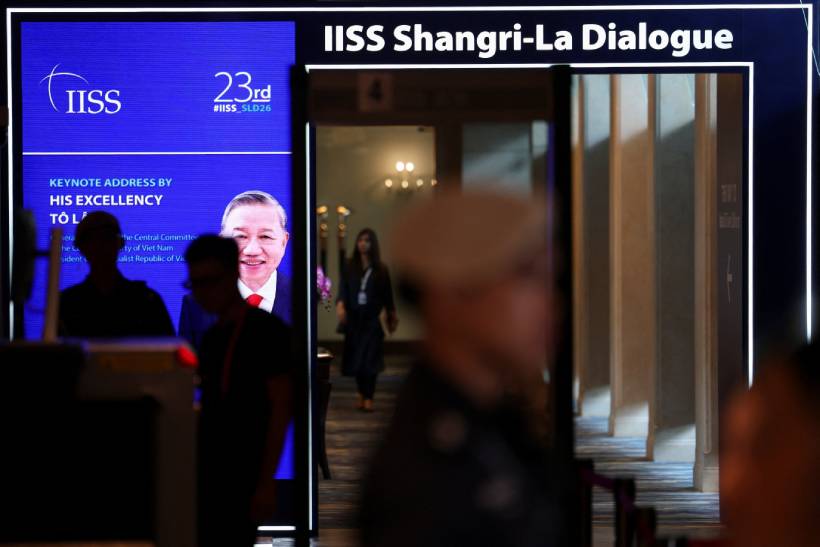
China’s decision to send a largely academic delegation instead of senior defence leadership to the Shangri La Dialogue in Singapore has been described by Australia as a missed opportunity for strategic engagement at a time of rising regional tensions.
Australian Defence Minister Richard Marles said the Asia Pacific region needs greater strategic reassurance from Beijing, particularly given China’s ongoing military expansion and its growing influence across the Indo Pacific.
The Shangri La Dialogue is the region’s most prominent defence and security forum, bringing together senior ministers, military leaders, and policymakers from across the world to discuss security challenges and regional stability.
For the second consecutive year, China’s Defence Minister Dong Jun did not attend the meeting, with Beijing instead sending a delegation made up mainly of academics and military experts.
Why It Matters
The absence of senior Chinese defence officials comes at a sensitive moment for regional security dynamics.
Australia and its allies have repeatedly raised concerns about China’s rapid military buildup, which is widely regarded as the largest conventional expansion since the Second World War. Regional governments argue that this military growth has not been matched by sufficient transparency or reassurance about China’s long term intentions.
The lack of direct high level engagement at forums such as the Shangri La Dialogue limits opportunities to reduce misunderstandings, build trust, and manage rising tensions through dialogue.
For countries in the Indo Pacific, especially smaller states, the absence of senior Chinese representation can increase uncertainty about regional security and long term strategic balance.
Key Stakeholders
China
China’s approach reflects a more controlled engagement strategy in defence diplomacy, relying on lower profile participation while continuing to expand military capabilities and regional influence.
Australia
Australia views sustained dialogue as essential for regional stability, while simultaneously strengthening its alliance with the United States and deepening defence cooperation across the Indo Pacific.
United States
The United States remains a central security partner in the region and continues to position itself as a counterbalance to China’s military rise through alliances and defence agreements.
Regional Partners
Countries such as Japan, the Philippines, Malaysia, and others attending the forum are closely watching China’s engagement level as they navigate their own security concerns in a shifting regional order.
Future Outlook
If China continues limiting senior level participation in regional defence forums, diplomatic channels for managing tensions in the Indo Pacific may become more constrained. This could increase reliance on bilateral alliances and military deterrence rather than multilateral dialogue.
At the same time, ongoing military expansion by China will likely keep regional security concerns elevated, particularly among Southeast Asian and Pacific nations.
However, if future editions of the Shangri La Dialogue see higher level Chinese participation, it could open pathways for improved communication and reduced strategic mistrust.
For now, the gap between China’s military rise and its diplomatic engagement remains a key concern for regional powers seeking stability in an increasingly competitive Indo Pacific environment.
May 29 (UPI) — A Russian drone carrying explosives struck the roof of an apartment building in NATO ally Romania overnight, risking a dangerous escalation in Moscow’s four-year-old war in Ukraine.
The drone had entered Romanian airspace during a Russian attack on neighboring Ukraine and struck the building in the eastern city of Galati, located near the Romania-Ukraine border, Romania’s Defense Ministry said in a statement Friday.
Two people were “slightly injured,” according to Romania’s Ministry of Foreign Affairs. The two victims were transported to the Galati County Emergency Clinical Hospital, officials said.
The drone sparked a fire on the 10th floor of the building, according to the Department for Emergency Situations, which said online that 70 people were evacuated from the building.
Video of the scene shared by Galati County emergency services officials shows firefighters responding and debris littering the residential street.
“This represents a serious and irresponsible escalation by the Russian Federation,” Romanian Foreign Minister Oana Toiu said online.
According to the Defense Ministry, radars had detected drones flying near Romanian airspace, prompting two F-16 fighter jets and an IAR-330 SOCAT helicopter to deploy at 1:19 a.m., with authorization to engage targets.
The aircraft followed the drone in Romanian airspace, but the decision was made to not engage over heightened risk to the safety of the civilian population, Romanian President Nicusor Dan said in a statement.
Dan said he convened a meeting of the Supreme Council of National Defense for 11 a.m. Friday to discuss what he called “the most serious incident to have affected national territory” since Russia invaded Ukraine on Feb. 24, 2022, igniting the war.
“The unprecedented nature of the event requires a firm, coordinated and commensurate response — at the national, allied and international levels,” he said.
He said he holds the Kremlin wholly responsible.
“What happened today in Galati is the direct consequence of Russia’s war of aggression unleashed against Ukraine, of the irresponsible and indiscriminate manner in which Moscow operates these weapons systems in the immediate vicinity of NATO borders, as well as of its systematic disregard for international law,” he said.
“There is no ambiguity regarding the perpetrator and the cause of this aggression.”
All NATO and European Union allies have been informed of the incident, and the U.N. Security Council has been informed, he said, adding that Romania has formally requested that allies deploy additional anti-drone capabilities to NATO’s eastern flank.
Romania also summoned the Russian ambassador to officially communicate “the effects that this lack of responsibility on the part of the Russian Federation will have on the diplomatic relations between our countries and the next steps at the European level regarding packages of sanctions,” Toiu said.
Numerous heads of state and ministers of foreign affairs condemned the attack, including European Commission President Ursula von der Leyen and NATO Secretary General Mark Rutte, who said he spoke with Dan and assured him that the alliance “stands ready to defend every inch of allied territory.”
“Russia’s reckless behavior is a danger to us all,” he said in a statement. “They continue to target civilians and civilian infrastructure across Ukraine. And last night showed yet again that the implications of their illegal war of aggression don’t stop at the border.”
Russian drones have repeatedly entered NATO airspace amid Russia’s war in Ukraine, but Friday’s incident appeared to be the most severe involving Romania.
Weekly insights and analysis on the latest developments in military technology, strategy, and foreign policy.
A recent video out of Russia once again highlights the drastic efforts being taken to provide Moscow with additional air defense coverage against the threat of long-range Ukrainian drones. While we have seen examples of the Pantsir short-range air defense system installed on buildings in Moscow before, the footage shows the counter-drone-optimized SMD-E variant being lifted onto the top of a skyscraper by helicopter.
The ruSSians are using a Mi-26 heavy-lift helicopter to deliver a Pantsir-SMD-E air defense system onto the roof of the Nordstar Tower business center in downtown Moscow.
Well thanks, now everyone knows where the next Ukrainian drone is going to hit 🎯 👍 pic.twitter.com/hgeIPJUwSq
— 𝔗𝔥𝔢 𝕯𝔢𝔞𝔡 𝕯𝔦𝔰𝔱𝔯𝔦𝔠𝔱△ 🇬🇪🇺🇦🇺🇲🇬🇷 (@TheDeadDistrict) May 28, 2026
The viral video appeared on social media this week and shows a Russian Aerospace Forces Mi-26 Halo heavy transport helicopter lowering a Pantsir-SMD-E system onto the top of a building in Moscow. The tower has been identified as the 42-story Nordstar Tower, an office building completed in 2009, with a roof height of 563 feet. The building is located in central Moscow, not far from the Kremlin.
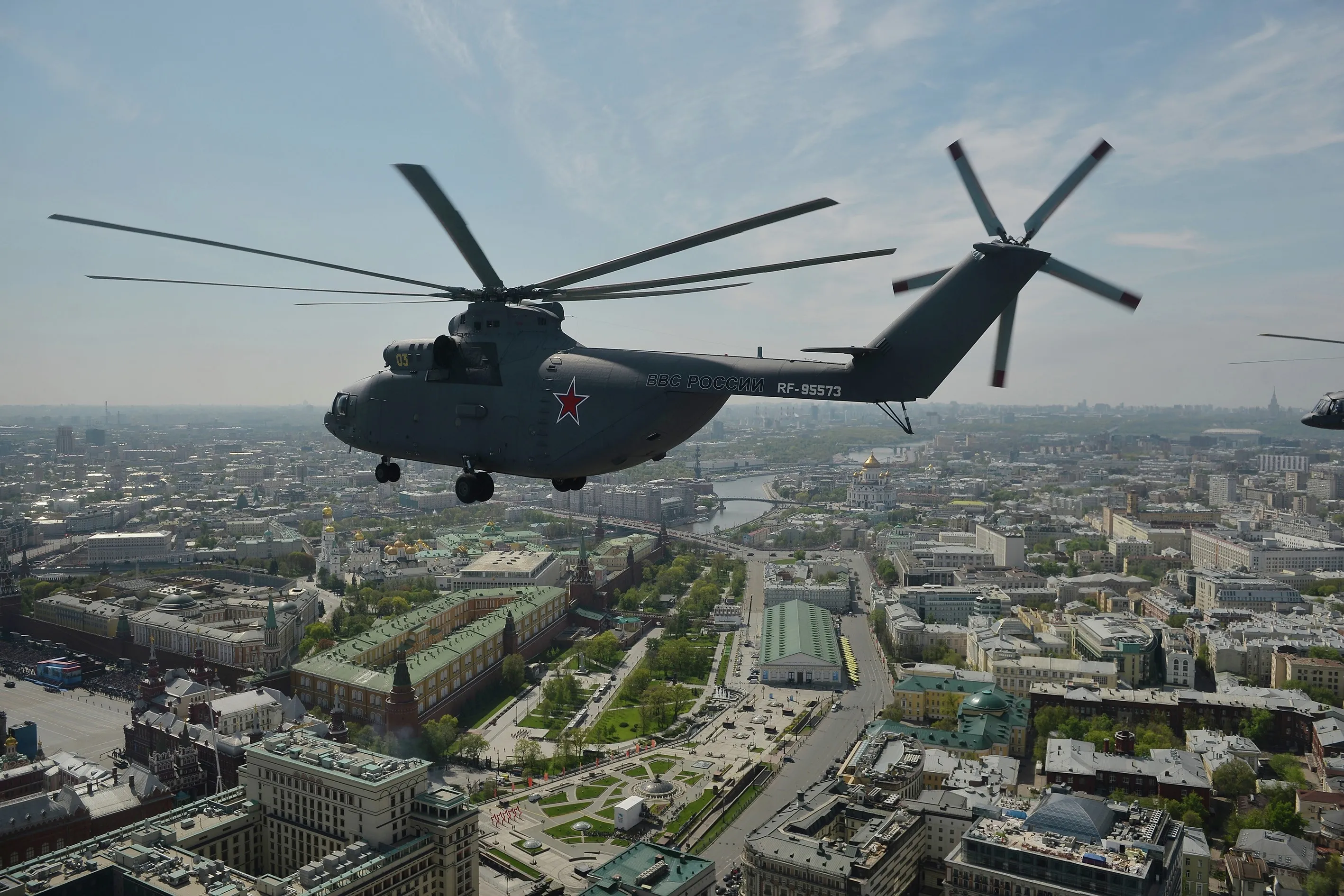
A Mil Mi-26 Halo at the Victory Day parade in Moscow, Russia, on May 9, 2015. Photo by Host photo agency / Rossiya Segodnya / Handout/Anadolu Agency/Getty Images Anadolu
For the Mi-26, which can lift a load of more than 44,000 pounds, internally or as a slung load, moving the Pantsir-SMD-E is no problem at all.
As we have explained in the past, the Pantsir-SMD-E, with its self-contained static configuration, is designed to help protect critical static infrastructure from uncrewed aerial threats. For this, it can be loaded with as many as 48 small TKB-1055 anti-drone interceptors.
A close-up of the Pantsir-SMD-E. Rostec
Alternatively, the SMD-E variant can fire up to 12 of the larger 57E6 short-range command-guided surface-to-air missiles, suitable for more traditional threats. A mix of effectors can also be used.
While the TKB-1055 has a stated maximum range of just over four miles, the 57E6 is claimed to be able to hit targets at nearly 12.5 miles.
The SMD-E’s turret also features two integrated radars, one for detecting and tracking targets and another fire-control type for directing the command-guided missiles.
Unlike earlier Pantsir systems, no cannons are included.
A video showing the previous Pantsir-S1 with combined gun/missile armament:
On the other hand, it’s worth noting that previous members of the Pantsir family have earned a very mixed reputation since their introduction in the early 2010s. This has been underscored by reportedly poor performance in Syria and Libya, although the Pantsir is still widely fielded by Russia, and has even been adapted as a ‘quick-fix’ maritime air defense system. It has also been widely exported.
The previous versions of the Pantsir have also become popular choices for the counter-drone mission, especially in terms of defending Russia’s critical military, government, and industrial facilities.
In early 2023, Pantsirs began to appear on rooftops in Moscow, and another was deployed close to one of President Vladimir Putin’s official residences just outside the capital. Earlier this month, German media reported that Russia had significantly expanded its air defense network around the capital, deploying more than 40 additional Pantsir systems in 2025 alone.
An earlier Pantsir system is seen deployed on top of the Ministry of Defense headquarters in Moscow in early 2023. via X
In Moscow, a Russian Pantsir-S1 anti-aircraft missile system has been placed on the roof of a building of the Central District Department of Education on Teterinsky Lane, for the reasons so far unknown.
— Status-6 (War & Military News) (@Archer83Able) January 19, 2023
Of course, these are just elements of a much larger array of additional layered air defenses deployed in and around the Russian capital. This extends from S-400 long-range surface-to-air missile batteries to attack helicopters tasked with gunning down drones in midair.
The recent development of the Pantsir-SMD-E means that it very likely incorporates lessons from experience using the earlier versions in the counter-drone role.
Putting the system on a skyscraper provides a safer firing location, although it doesn’t remove the risk of interceptors going astray, or debris from destroyed drones causing damage or injury.
At the same time, this rooftop perch does ensure a clear line of sight for the radar, extended reaction time, and offers a much wider range of firing angles. For this reason, Russia has previously also built elevated towers for Pantsir batteries around the Moscow region.
The emergence of the system underscores just what level of danger Ukraine’s drone attacks have come to pose to Russia. Since Ukraine first began to employ long-range one-way attack drones, their designs have been optimized and their ranges extended, putting highly prized facilities deeper and deeper inside Russia within their crosshairs. The threat to Russia is only set to grow, as Ukraine expands production and capabilities, including adding long-range cruise missiles to its inventory.
A video showing the homegrown Ukrainian FP-5 Flamingo cruise missile in action:
Випробувальний пуск ракети “Фламінго”
It is also worth noting that Russia, while at war, is not alone in these concerns. In the United States, since 9/11, Washington, DC, has quietly evolved into one of the most heavily defended urban airspaces in the world. This includes systems like Stinger missile turrets positioned atop key government buildings. The planned air defense capacity for the new White House Ballroom is a glaring example of this same trend. This is being spurred primarily by major concerns about the growing drone threat.
Speaking earlier in the Oval Office, President Trump called the ballroom being constructed to replace the White House East Wing a “gift,” while adding that it will have bulletproof glass and walls, along with a “drone port” which Trump says was supposed to be Top Secret. pic.twitter.com/1zP9KaFxFc
Depending on the success of the Pantsir-SMD-E in protecting the Russian capital, we may well see more of these systems deployed both in Moscow and elsewhere. As we have discussed before, the system apparently offers the potential to be fitted on vehicles and vessels, as well.
The appearance of the Pantsir-SMD-E on a Moscow skyscraper hammers home the reality of the drone threat, not just in Russia, but also more generally, on the battlefield, as well as against critical infrastructure, military and civilian.
May 28 (UPI) — The U.S. Treasury announced late Wednesday that it has sanctioned an Iranian entity, newly created to oversee and manage the Strait of Hormuz, as the Trump administration seeks to force Tehran to relinquish control over the vital energy trade route.
The strait has been an issue of contention between the United States and Iran, which are locked in negotiations to end the war.
Iran restricted navigation of the strait after the United States and Israel attacked the country in late February, igniting the war. Washington responded by imposing a military blockade of Iran’s ports, cutting it off from maritime trade.
Since imposing the restrictions, Iran has been adamant about maintaining control of the route, through which about one-fifth of the world’s energy trade flows. The Trump administration has repeatedly threatened that there will be free navigation of the strait again, one way or another.
The Treasury sanctioned the PGSA on Wednesday, accusing it of being an attempt by Iran’s Islamic Revolutionary Guard Corps to monetize the international waterway.
Treasury Secretary Scott Bessent described the mechanism in a statement as the Iranian military’s “latest attempt to extort global maritime trade.”
Bessent said the Wednesday blacklisting was part of Economic Fury, the Treasury’s rebranding of President Donald Trump‘s maximum pressure campaign of sanctions and other trade measures from his first administration seeking to coerce a new nuclear weapons deal from Iran.
The United States has been tightening its financial vise on Iran since 2018 when Trump first imposed sanctions on Tehran after unilaterally withdrawing the United States from a multinational Obama-era nuclear accord aimed at preventing Iran from securing a nuclear weapon.
Trump reimposed the campaign following his return to the White House in early 2025. It was renamed following the start of the military operation Epic Fury that began Feb. 28.
Treasury officials said Wednesday that through the maximum pressure campaign, the Trump administration has denied Iran access to tens of billions of dollars’ worth of revenue.
The sanctions generally prohibit those named from accessing the U.S. financial system and bar U.S. persons and companies from doing business with them. They also expose foreign financial institutions that knowingly facilitate significant transactions for those sanctioned to potential secondary sanctions.
Sen. Tom Cotton, a Republican from Arkansas, had over the weekend called on Bessent to sanction the PGSA, stating the United States “must ensure every actor enabling the terrorist Iranian regime is held accountable.”
“I support the use of existing authorities to impose sanctions on the PGSA, its officers and any foreign entity that pays, processes or facilitates tolls to Iran for passage through the Strait of Hormuz,” he said in a statement.
Iran has rejected the notion that it is running a toll. Iranian Foreign Ministry Spokesperson Esmaeil Baqaei has said that Iran charges fees to cover costs associated with navigational services and environmental protection measures.
Iranians rally after a ceasefire announcement at Enqhelab Square, in Tehran on April 8, 2026. Photo by Behnam Tofighi/UPI | License Photo
May 28 (UPI) — The U.S. military attacked Iran, Tehran confirmed early Thursday, as Iran announced retaliatory strikes of its own.
Iran targeted a U.S. air base at about 4:50 a.m. local time in response to the U.S. military striking presumed Iranian military assets near Bandar Abbas Airport in southern Iran.
“This response is a serious warning so that the enemy knows aggression will not go unanswered, and that in the event of a repeat, our response will be more decisive and the responsibility and consequences will lie with the aggressor,” Iran’s Islamic Revolutionary Guard Corps said in a statement carried by Iranian state media.
The air base targeted and whether it sustained damage were not known. The U.S. military has yet to comment.
The announcement came as the Kuwait Army said its air defenses were confronting “hostile missile and drone attacks.” While the United States maintains a significant military presence in Kuwait, it was not immediately clear whether those attacks were related to the U.S.-Iran exchange.
Explosions were heard near Bandar Abbas, Iranian state news agency Tasnim reported earlier Thursday.
Citing an unidentified military source, the news agency said the U.S. attack followed the Iranian Navy firing shots toward a U.S. oil tanker that had turned off its radar system and intended to pass through the Strait of Hormuz.
The oil tanker reportedly ended its attempt to transit the vital energy maritime trade route.
Iran has been enforcing has been restricting access through the Strait of Hormuz since the start of the war, permitting only certain vessels through. The United States responded with a military blockade of Iran’s ports, cutting it off from sea-based trade.
The two sides have been in talks since a fragile cease-fire was agreed to last month, with Thursday’s U.S. strikes on Iran the second time it has attacked the country so far this week.
On Monday, the U.S. military attacked southern Iran, describing the strikes as “self-defensive” in nature.
The Trump administration has repeatedly stated that it intends to secure free navigation of the Strait of Hormuz, one way or another, though it would prefer to do so through diplomacy.
Iran’s control of Hormuz is reportedly one of its conditions in negotiations on ending the war. In response to reports carried by Iranian state media that Iran and Oman, which border either side of the Strait of Hormuz, are in talks over control of the choke point, President Donald Trump said the transit route will be open to all countries and under no government’s control.
“It’s international waters. Nobody’s going to control it. We’re going to watch over it. We’ll watch over it, but nobody’s going to control it. That’s part of the negotiation that we’re having,” he told reporters during a Cabinet meeting on Wednesday.
“And Oman will behave just like everybody else or we’ll have to blow them up. They understand that. They’ll be fine.”
Muslims perform Eid al-Adha prayers at sunrise in Cairo, Egypt, on May 27, 2026. Photo by Ismael Mohamad/UPI | License Photo
OpenAI Chief Strategy Officer Jason Kwon speaks during a press conference on the Korea Cyber Action Plan in Seoul on Wednesday. Photo by Asia Today
May 27 (Asia Today) — OpenAI said Wednesday it will expand artificial intelligence-based cyber defense cooperation with the South Korean government, public agencies and companies in key industries.
The company announced its Korea Cyber Action Plan during a press conference at the JW Marriott Hotel in Seoul’s Seocho District. The plan is designed to give government agencies, public institutions and companies broader access to OpenAI’s advanced AI cyber models.
Jason Kwon, OpenAI’s chief strategy officer, said AI has entered a third stage as an “intelligence utility,” becoming core infrastructure for the economy and society after earlier phases focused on capability breakthroughs and broader access.
Kwon said South Korea is well positioned to adopt AI because it is a digital-first society that quickly embraces new technologies and has a “full-stack economy” with global semiconductor companies including Samsung Electronics and SK hynix.
“Advanced cyber AI capabilities should not remain in the hands of only a few,” Kwon said. “Korea’s key defenders should be able to use them to strengthen collective security and public safety.”
“Korea is a very important country for OpenAI,” he said. “We hope to become an important partner in Korea’s AI transformation and in strengthening national resilience.”
The Korea Cyber Action Plan is part of Daybreak, OpenAI’s global cybersecurity initiative that aims to build security into systems from the earliest stages of development. OpenAI says Daybreak is designed to help cyber defenders identify threats, generate patches and verify fixes across code and systems.
A key part of the plan is expanding Trusted Access for Cyber, a program that gives verified defensive users access to specialized cyber AI models. OpenAI said in April it was scaling the program to thousands of verified individual defenders and hundreds of teams responsible for protecting critical software.
Kwon said access for the South Korean government to the government version of the program is in its final stage. He said OpenAI is also discussing adoption of the private-sector program with several Korean companies.
Asked about potential misuse of cyber models and data leakage risks, Kwon said OpenAI is controlling risk by granting access only to “trusted defenders” who go through strict verification.
He also said OpenAI supports data residency in South Korea, allowing data to be processed on domestic servers. Public agencies and companies may also choose an option in which data is not stored at all, he said.
Kwon said OpenAI has begun talks with the Korea AI Safety Institute under the Ministry of Science and ICT. He said the company will draw on its experience working with AI safety institutes in the United States and Britain to help South Korea build its own model evaluation capabilities.
Before Wednesday’s announcement, OpenAI had been deepening cooperation with South Korea’s public sector. On May 18, Sasha Baker, OpenAI’s head of national security policy, visited South Korea and demonstrated the company’s latest cyber-focused models to major agencies including the science ministry, the Foreign Ministry, the Interior Ministry, the Financial Services Commission and the National AI Strategy Committee.
On Tuesday, Kwon met with Ryu Je-myung, second vice minister of science and ICT, to discuss AI security cooperation. OpenAI also signed memorandums of understanding with Korea Water Resources Corp. and Korea Technology Finance Corp.
Kwon emphasized the company’s expectations for the Korean market.
“Korea is a country with very favorable conditions to turn AI into national competitiveness,” he said. “Based on ChatGPT, Korea is already one of the top 10 markets globally, and the speed of AI adoption is very fast.”
OpenAI said use of Codex in South Korea is also growing quickly. Weekly active users of ChatGPT Codex in the country have increased tenfold since the beginning of the year, placing South Korea among the top five countries by usage.
More than half of the requests come from non-development work such as document writing, analysis, research and operations, showing the potential for wider enterprise use, the company said.
Kwon said changes in OpenAI’s partnership with Microsoft have made it possible to provide OpenAI API services through a wider range of cloud providers, including Amazon Web Services, and that enterprise growth is expected to accelerate.
On pricing for enterprise services, Kwon said consumer subscriptions and corporate services are different, and that business customers already use contract-based pricing. Over the long term, he said OpenAI aims to provide stronger AI performance at the same cost or lower unit prices so more users can benefit.
May 27 (UPI) — The U.S. military has killed another person in its latest strike on a suspected drug-trafficking boat in the Trump administration’s deadly crackdown on alleged narcotics trafficking in interenational waters.
The Tuesday strike was the 58th publicly disclosed by U.S. Southern Command in President Donald Trump‘s monthslong campaign, which has now killed at least 194 people.
SOUTHCOM said three people were aboard the boat and that the U.S. Coast Guard has been notified to conduct search-and-rescue operations.
As with the previous strikes, SOUTHCOM claimed in a statement that “intelligence confirmed the vessel was transiting along known narco-trafficking routes in the Eastern Pacific and was engaged in narco-trafficking operations.”
No evidence has been made public amid the campaign, which began in early September.
A black-and-white aerial video accompanied the SOUTHCOM statement showing a boat racing across the water and then erupting into flames.
On May 26, at the direction of #SOUTHCOM commander Gen. Francis L. Donovan, Joint Task Force Southern Spear conducted a lethal kinetic strike on a vessel operated by Designated Terrorist Organizations. Intelligence confirmed the vessel was transiting along known narco-trafficking… pic.twitter.com/3TmhGECgYB— U.S. Southern Command (@Southcom) May 27, 2026
SOUTHCOM says the boats are operated by one of 10 drug cartels and gangs that Trump has designated as terrorist organizations. Trump has said the United States is in “armed conflict” with the designated organizations in justifying the use of military force in drug-enforcement operations.
However, his administration has been accused of committing extrajudicial killings with the attacks by numerous legal and human rights organizations, as well as by United Nations experts.
Critics contend that it is unlawful for the Trump administration to use the military for ostensibly law-enforcement operations.
President Donald Trump leaves the White House on Tuesday. Trump is traveling to Walter Reed National Military Medical Center for his annual physical. Photo by Will Oliver/UPI | License Photo
May 25 (UPI) — Israeli forces launched a renewed wave of strikes targeting Hezbollah on Monday as Prime Minister Benjamin Netanyahu vowed to intensify attacks against the Iran-backed militia.
The strikes came as Israel and Lebanon have been engaged in U.S.-mediated talks, the first in decades between the two nations, aimed at ending hostilities between Israel and Hezbollah. The attacks were expected to further strain the already frayed negotiations.
Israeli warplanes launched more than 85 munitions, striking more than 70 sites across Lebanon, including about 10 Hezbollah headquarters and weapons storage facilities in Tyre, located in southwestern Lebanon on the Mediterranean.
Infrastructure used by Hezbollah to attack Israel was among the targets struck, the IAF said in a statement, adding the Israeli military “eliminated” alleged motorcycle-riding Hezbollah operatives in southern Lebanon where IDF forces were operating.
The IDF said earlier that it had hit sites in the northeastern Beqaa Valley and several other areas in Lebanon, though it was not clear if that was part of a separate operation.
Netanyahu vowed in a video statement on Instagram to intensify strikes targeting the Iran-backed militia, stating that they were in response to Hezbollah firing fiber-optic drones over the last few weeks at northern Israel.
“We are at war. We are not taking our foot off the gas — on the contrary. I said to press the gas in Lebanon. We will strike them,” he said.
In a sign of concern over potential Hezbollah retaliatory strikes, the IDF issued new, tightened restrictions for northern Israel residents on Tuesday, capping outdoor gathering limits from 200 to 50 people and indoors from 600 to 200.
Hezbollah initially attacked Israel a day after the Israel-Hamas war began on Oct. 7, 2023. The conflict halted 13 months later with a fragile cease-fire that was never fully observed.
In early March, Israel launched renewed attacks on Lebanon, involving ground troops. In April, a cease-fire was announced in the larger Iran war, with Israel claiming it did not apply to Lebanon, while Lebanon and Iran said it did.