defense

Door opened for Seoul’s pursuit of uranium enrichment, spent fuel reprocessing

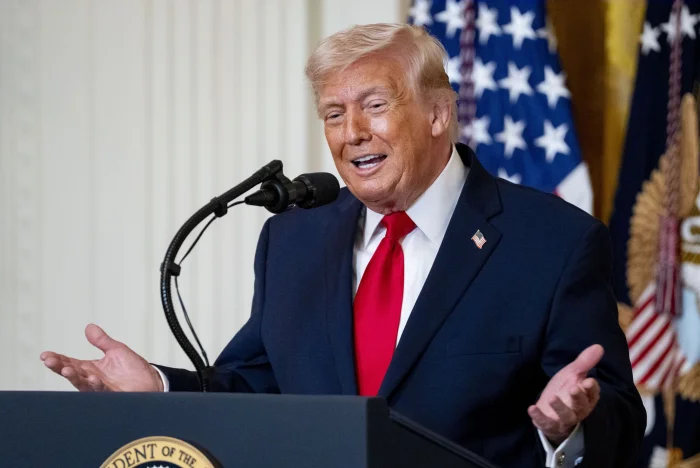
The U.S.-South Korea trade deal fact sheet released Friday opens the door for Seoul to secure rights to enrich uranium and reprocess spent nuclear fuel. The agreement, struck during the meeting between U.S. President Donald Trump (L) and South Korean President Lee Jae Myung at the APEC summit in Gyeongju in October, approves South Korea’s quest to build nuclear submarines. Photo by Yonhap

South Korea took a major step forward Friday in its long-running quest to secure rights to enrich uranium and reprocess spent nuclear fuel for peaceful purposes, with the United States affirming its support in the countries’ joint summit document.

The joint fact sheet, released earlier in the day, outlines the agreements reached in the two summits between President Lee Jae Myung and U.S. President Donald Trump. It covers the allies’ commitments on a range of key trade and security issues.

“Consistent with the bilateral 123 agreement and subject to U.S. legal requirements, the United States supports the process that will lead to the ROK’s civil uranium enrichment and spent fuel reprocessing for peaceful uses,” the document showed. ROK stands for South Korea’s official name, the Republic of Korea.

Under the 123 agreement on peaceful nuclear energy cooperation, South Korea has very limited authority to reprocess spent nuclear fuel or enrich uranium for civilian purposes, as such activities require U.S. consent through bilateral consultations under the relevant treaties, laws and regulations governing both countries.

The agreement only allows South Korea to enrich uranium up to less than 20 percent based on U.S. consent, with U.S. concerns over nuclear proliferation known as the primary reason.

The nuclear energy pact, forged in 1974, was revised once in 2015 for a 20-year term, to accommodate Seoul’s request for the rights to reprocess spent fuel and enrich uranium, but it has been seen as effectively barring Seoul from producing its own civilian nuclear fuel.

South Korea, a global nuclear energy powerhouse, has long sought to expand its rights as a way to address growing nuclear waste stockpiles.

The country currently operates 26 commercial nuclear reactors. The storage for spent fuel rods from the reactors is expected to reach full capacity around 2030.

Its push to revise the agreement also comes as South Korea seeks to secure fuel supplies for its bid to build nuclear-powered submarines, a project for which it has obtained U.S. approval, as confirmed in their joint fact sheet.

Announcing the result of the summit Friday, Lee called U.S. support for Seoul’s uranium enrichment and spent fuel reprocessing a “significant advancement.”

“The door is now wide open for a South Korea-U.S. alliance renaissance, in which both nations can achieve a true win-win outcome,” he said.

In separate press material, the foreign ministry described the agreement on enrichment and reprocessing as “a strategic upgrade” of bilateral nuclear energy cooperation.

“We have publicly secured U.S. backing for (uranium) enrichment and spent fuel reprocessing for the first time,” the ministry said.

Having secured such support from its ally, South Korea faces a long and complex road ahead to advance these efforts, as implementing the agreement will require a lengthy and challenging negotiating process that could take years or more.

Seoul and Washington would need to decide whether the U.S. will allow uranium enrichment and spent fuel reprocessing within the current 123 agreement framework, or by revising the pact. Either way, tough negotiations over the terms are expected.

“It will require extensive discussions,” National Security Adviser Wi Sung-lac said following the joint fact sheet announcement. “How much adjustment is needed will depend on the results of these consultations,”

The prevailing view is that South Korea has looked at Japan’s 1988 agreement of the same kind with the U.S. as a case model. The U.S. has given Japan preapproved and long-term permission, known as “advance consent,” for the enrichment and reprocessing. It allows Japan to produce highly enriched uranium over 20 percent if the two parties agree.

First Vice Foreign Minister Park Yoon-joo signaled that the government is considering a revision.

“We are in talks with the U.S. with a revision in mind,” he told lawmakers during a parliamentary session.

South Korea and the U.S. have established a high-level bilateral commission under the 123 agreement. Any follow-up talks could start by resuming this platform.

Going forward, how Seoul will work with Washington to dispel nuclear proliferation concerns from within the U.S. government remains another major challenge.

It took more than two weeks after the Lee-Trump summit for the joint fact sheet to be released, apparently due to extended coordination among the relevant U.S. government agencies.

Wi said Friday that the delay had much to do with the enrichment and reprocessing issues.

“The bulk of the final discussions (within the U.S.) had focused on uranium enrichment and reprocessing,” he told reporters at the briefing.

“In any case, we believe the agreement will need some form of adjustment.”

Source link

Boeing machinists end 3-month strike in St. Louis

Striking machinists at Boeing’s St. Louis facility voted to approve a new contract offer on Thursday and return to work building F-15 Eagle fighters and other military equipment on Monday. Photo by Cristobal Herrera-Ulashkevich/EPA

Nov. 13 (UPI) — Striking Boeing machinists in St. Louis voted to approve the aerospace company’s latest contract offer and return to work on Monday, ending a three-month strike.

Some 68% of the International Association of Machinists and Aerospace Workers District 837 voted to approve the contract on Thursday, KSDK reported.

“We are pleased with the results and look forward to bringing our full team back together on Nov. 17th to support our customers,” a Boeing spokesperson said in a prepared statement shared with KSDK.

Workers get a 24% wage increase, which raises their average annual pay from $75,000 to $109,000 over the life of the contract, according to CNBC.

The approved contract includes a $6,000 bonus for ratifying the contract, a general wage increase over five years, including a 1.5% general increase for workers at the top of the earnings scale, plus a lump-sum increase of 2.5% during the contract’s fourth year.

The contract also includes improved benefits, including letting workers cash out vacation time that exceeds the maximum benefit of 80 hours.

“We’re proud of what our members have fought for together and are ready to get back to building the world’s most advanced military aircraft,” IAM District 837 officials said Thursday in a prepared statement.

The contract ends the strike that started on Aug. 4, which was the first since 1996 for the union local.

The St. Louis-area Boeing facility builds F-15 fighters, F/A-18fighter-attack aircraft and missile systems.

Source link

Can USC’s defense find its stride during a crucial, final stretch?

It was two years ago this month, with USC’s defense at an unthinkable nadir, that Lincoln Riley finally decided to fire Alex Grinch, his first defensive coordinator.

“I am that committed, and we are all that committed to playing great defense here,” Riley said in 2023. “Whatever it takes to get that done, that’s what we’re going to do.”

Not everyone took Riley’s comments seriously at the time.

“There’s a school on the West Coast right now that’s going to re-commit to defense,” Iowa coach Kirk Ferentz said a month later. “You give up [46] to Tulane last year in a bowl game — at a place where Ronnie Lott played. Now they’re going to think about defense. That was the first thing we thought about 25 years ago.”

Rest assured, USC has thought about it plenty since. And now two years into the rethinking process, with the College Football Playoff very much within reach in mid-November, USC’s defense is still the biggest question mark facing Riley and his staff over the final stretch of this season which continues, fittingly, against Ferentz and his 21st-ranked Hawkeyes on Saturday.

On paper, the defensive improvement has been palpable, year over year, even if it’s a bit less drastic from this season to last. USC is giving up more than two fewer points per game in 2025 and fewer yards per game through the air and on the ground than in 2024. The defense has created more pressure, already with three more sacks than last season (24 to 21), and clamped down in the red zone, with opponents scoring only 67% of the time, third-best in the nation.

But that progress hasn’t always been linear, admits D’Anton Lynn, the Trojans defensive coordinator. Where in his first season, Lynn had a litany of experienced defenders from the transfer portal to lean on, his second season has made for a much different experience.

“This team is more talented, but they’re just young,” Lynn said. “It’s just guys who haven’t played before. There are certain mistakes you have to live through.”

Those mistakes have surfaced at some of the worst possible times this season. In the loss to Illinois, a late pass interference call and a missed tackle on a swing pass proved to be the difference. At Notre Dame, a blatant missed run fit saw Irish back Jeremiyah Love break off an explosive touchdown run that turned the tides. The run defense ended up coming unglued, giving up over 300 yards in a rainy defeat.

The last two games have been much more encouraging, with USC holding Northwestern and Nebraska to three points apiece after halftime. The difference between the two halves was significant as the Trojans held the two opponents to a combined total of 209 second-half yards.

In both cases, the defense didn’t find its stride until it was first punched in the mouth. But Riley credited Lynn for his adjustments from there.

“When leaks have sprung, we’ve been able to get them closed pretty quickly,” Riley said.

The next step is stopping those leaks before they burst. And that starts, Lynn says, with letting the mistakes they make roll off their shoulders.

That mental hurdle is one that USC’s young defense has struggled with this season.

“Just kind of all year with us, we’ve had those moments where we shoot ourselves in the foot, or we get good calls, and we just mess it up ourselves,” cornerback DeCarlos Nicholson said. “We’re just zoning in on that, and just the battle within ourselves. Like man we’ve gotta buckle down right, and we’ve gotta get this stuff done.”

That battle is quickly reaching its crescendo with just three weeks left in the season. But as that final stretch approaches, the blueprint for USC’s defense is clear to Lynn.

“We need to be consistent up front,” Lynn said. “We need to stop the run. We need to limit big plays. When we do those things, we can be a really good defense. That’s easier said than done, but again, it just comes back to being consistent.”

Source link

Prosecutors turn over 130,000 pages of evidence in killing of Minnesota lawmaker

Attorneys in the case of a man charged with killing a top Minnesota Democratic lawmaker and her husband said Wednesday that prosecutors have turned over a massive amount of evidence to the defense, and that his lawyers need more time to review it.

Federal prosecutor Harry Jacobs told the court that investigators have provided substantially all of the evidence they have collected against Vance Boelter. He has pleaded not guilty to murder in the killing of former Minnesota House Speaker Melissa Hortman and her husband, and to attempted murder in the shootings of state Sen. John Hoffman and his wife. Some evidence, such as lab reports, continues to come in.

Federal defender Manny Atwal said at the status conference that the evidence includes more than130,000 pages of PDF documents, more than 800 hours of audio and video recordings, and more than 2,000 photographs from what authorities have called the largest hunt for a suspect in Minnesota history.

Atwal said her team has spent close to 110 hours just downloading the material — not reviewing it — and that they’re still evaluating the evidence, a process she said has gone slowly due to the federal government shutdown.

“That’s not unusual for a complex case but it is lot of information for us to review,” Atwal told Magistrate Judge Dulce Foster.

Jacobs said he didn’t have a timeline for when the Department of Justice would decide whether to seek the death penalty against Boelter. The decision will be up to U.S. Atty. Gen. Pam Bondi.

Foster scheduled the next status conference for Feb. 12 and asked prosecutors to keep the defense and court updated in the meantime about their death penalty decision. She did not set a trial date.

Hortman and her husband, Mark, and Hoffman and his wife, Yvette, were shot by a man who came to their suburban homes in the early hours of June 14, disguised as a police officer and driving a fake squad car.

Boelter, 58, was captured near his home in rural Green Isle late the next day. He faces federal and state charges including murder and attempted murder in what prosecutors have called a political assassination.

Boelter, who was wearing orange and yellow jail clothing, said nothing during the nine-minute hearing.

Minnesota abolished capital punishment in 1911 and has never had a federal death penalty case. But the Trump administration is pushing for greater use of capital punishment.

Boelter’s attorney has not commented on the substance of the allegations. His motivations remain murky and statements he has made to some media haven’t been fully clear. Friends have described him as a politically conservative evangelical Christian, and occasional preacher and missionary.

Boelter claimed to the conservative outlet Blaze News in August that he never intended to shoot anyone that night but that his plans went horribly wrong.

He told Blaze in a series of hundreds of texts via his jail’s messaging system that he went to the Hoffmans’ home to make citizen’s arrests over what he called his two-year undercover investigation into 400 deaths from the COVID-19 vaccine that he believed were being covered up by the state.

But he told Blaze he opened fire when the Hoffmans and their adult daughter tried to push him out the door and spoiled his plan. He did not explain why he went on to allegedly shoot the Hortmans and their golden retriever, Gilbert, who had to be euthanized.

Hennepin County Atty. Mary Moriarty said when she announced Boelter’s indictment on state charges in August that she gave no credence to the claims Boelter had made from jail.

In other recent developments, a Sibley County judge last month granted Boelter’s wife a divorce.

Karnowski writes for the Associated Press.

Source link

Romania’s Defence Strategy Focuses on Black Sea Risks

Romania aims to strengthen ties with Black Sea allies to protect its energy projects and become the European Union’s largest gas producer by 2027, according to a draft national defense strategy released on Wednesday. The strategy highlights the concern over Russian threats, especially with incidents of drones violating Romanian airspace and floating mines affecting vital trade routes in the Black Sea. This sea is essential for transporting grain and oil and involves Bulgaria, Romania, Georgia, Turkey, Ukraine, and Russia.

The offshore gas project Neptun Deep, co-owned by OMV Petrom and Romgaz, is expected to begin operations in 2027. The national defense strategy for 2025-2030 emphasizes stronger cooperation with Turkey and Bulgaria to safeguard important energy and telecommunications infrastructure. It warns that Russia’s military actions and the militarization of Crimea pose a threat to the region’s security.

The draft strategy, open for public debate for two weeks before parliamentary approval, underscores the significance of Romania’s partnership with the United States. It also discusses addressing risks such as cyber attacks, corruption, and institutional weaknesses, and notes that delays in the EU integration of Moldova and Ukraine may increase security threats for Romania.

With information from Reuters

Source link

Colombia suspends intelligence sharing with U.S. over boat strikes

Nov. 12 (UPI) — Colombian President Gustavo Petro has ordered the South American nation’s security authorities to cease sharing intelligence with the United States over the Trump administration’s continued attacks on vessels in the Caribbean and Pacific Ocean.

“An order is given to all levels of intelligence within the public security forces to suspend the sending of communications and other dealings with U.S. security agencies,” Petro said in the statement on X.

“This measure will remain in effect as long as the missile attacks on boats in the Caribbean continue.”

At least 75 people have been killed in 19 known U.S. military attacks targeting boats in the Caribbean and eastern Pacific since Sept. 2. The Trump administration accuses the vessels of shipping narcotics for drug cartels that it has designated as terrorist organizations.

The attacks have drawn both domestic and international criticism and allegations of potential war crimes and extrajudicial killings perpetrated by the United States. Petro has also accused Trump of murder, saying one of the attacks in mid-September killed a fisherman named Alejandro Carranza.

The Trump administration has defended the strikes as necessary to protect Americans from the drugs the boats are allegedly bringing into the United States. President Donald Trump has also seemingly rejected the notion of seeking congressional approval for the strikes, stating last month that “I think we are just going to kill people that are bringing drugs into our country.”

The announcement Tuesday came on the heels of Petro recalling Colombia’s ambassador to Washington for consultations in response to a photo released by the White House on Oct. 21 in which Deputy Chief of Staff James Blair is seen holding a folder that contains photos of Petro and Venezuela’s authoritarian president, Nicolas Maduro, in prison jumpsuits.

The actions are expected to further strain relations between the two allies, which have become fraught during the Trump administration. Petro has been a critic of the American leader’s hardline immigration and drug enforcement policies, and Trump has accused Petro of not doing enough to curb the manufacturing of drugs in the South American nation.

Trump has imposed sanctions on Petro and his immediate family members on accusations that Petro is permitting drug cartels to conduct their business without impediment.

Petro has rejected the accusations and, in turn, accused the Trump administration of lying. His administration maintains drug production is declining under Petro’s tenure.

“The fight against drugs must be subordinated to the human rights of the Caribbean people,” Petro said Tuesday.

Source link

Texas sues Harris County over $1.35M deportation defense fund

Nov. 11 (UPI) — Texas Attorney General Ken Paxton has sued Harris County for allocating $1.35 million to help fund legal defense of those facing immigration deportation hearings.

Harris County, which includes Houston and forms the core of the Greater Houston Area, has historically ranked among the top U.S. counties for Immigration and Customs Enforcement detainers, according to reporting by The Texas Tribune.

Paxton accused the Harris County Commissioners Court of illegally allocating more than $1.35 million in taxpayer funds to “radical-left organizations” that use the money to “oppose the lawful deportations of illegal aliens.”

He called the fund “blatantly unconstitutional” and “evil and wicked” in a news release announcing the lawsuit Tuesday.

“We must stop the left-wing radicals who are robbing Texans to prevent illegals from being deported by the Trump administration,” Paxton said Tuesday in a news release.

“Millions upon millions of illegals invaded America during the last administration,” Paxton said. “They must be sent back to where they came from.”

He said the Harris County Commissioners Court recently voted 4-1 to allocate $1.35 million to several non-governmental organizations that are “dedicated to fighting the deportation of illegal aliens.”

Recipients include the Galveston-Houston Immigrant Representation Project, Justice for All Immigrants, Kids in Need of Defense, Refugee and Immigrant Center for Education and Legal Services, and BakerRipley.

The allocations serve no public purpose and amount to illegal grants of taxpayer dollars to pay for the legal defense of those who should not be in the country, Paxton said.

He said the Texas Constitution prohibits allocating taxpayer funds to individuals or groups that do not serve the public interest and filed the lawsuit in the Harris County Judicial District Court on Monday.

Harris County Attorney Christian Menefee said the county will oppose the state’s lawsuit in court, The Texas Tribune reported.

“This lawsuit is a cheap political stunt,” Menefee said in a prepared statement.

“At a time when the president has unleashed ICE agents to terrorist immigrant neighborhoods, deport U.S. citizens and trample the law, it’s shameful that Republican state officials are joining in instead of standing up for Texans.”

Although Menafee accused the Trump administration of deporting U.S. citizens, the Department of Homeland Security said that is a false accusation and no U.S. citizens have been deported.

“We have said it a million times: ICE does not arrest or deport U.S. citizens,” DHS Assistant Secretary Tricia McLaughlin said Oct. 1 in response to a New York Times article accusing ICE of deporting citizens.

Before becoming the Harris County attorney, Menafee’s biography says his private practice “focused heavily on pro bono work, including advising the NAACP Legal Defense Fund, advising immigrants and their families at Bush Intercontinental Airport during the ‘Muslim ban’ and working with Texas Appleseed on expanding alternatives to involuntary commitment for the mentally ill.”

Source link

Thailand suspends truce with Cambodia after 4 soldiers hurt by landmine

Nov. 11 (UPI) — Thailand on Tuesday suspended the U.S. President Donald Trump-brokered truce with Cambodia after four soldiers patrolling near their shared border were wounded by landmines.

“Agreement suspended,” the Royal Thai Army said in a social media statement. “Cambodia has clearly shown hostility.”

Thailand and Cambodia signed the fragile agreement with Trump looking on, on Oct. 26 in Malaysia, bringing a halt to renewed fighting, which began in July, in their long-held border dispute.

The Royal Thai Army said four soldiers were injured in the Huai Ta Maria area, about a half mile inside Thailand from the Cambodia border.

The wounded soldiers were identified as Sgt. Maj. Thoedsak Samaphong, whose right foot was severed at the ankle, Pvt. Watchira Phanthana, who suffered a chest injury from the blast impact, Pvt. Apirak Srichomchai, whose leg was injured by shrapnel, and Pvt. Anucha Sujaree, who suffered eye irritation caused by chemicals from the detonation.

All four are receiving treatment at a local hospital.

The soldiers were injured while conducting a routine patrol along a familiar route used for patrols.

The Royal Thai Army said Thai forces discovered a section of barbed wire barrier along the border that had been disturbed on Sunday. The next day, the patrol team dispatched to inspect the disturbed area triggered a landmine at around 8:30 a.m. local time.

Three additional landmines were later found, it said.

“From the evidence, it is concluded that the barbed wire was illegally removed and new mines were planted inside Thai territory, targeting our patrols,” Maj. Gen. Winthai Suvaree said in a statement.

After the Thai military announced soldiers had been injured but before the agreement was suspended, the Thai Ministry of Defense put a planned prisoners of war exchange with Cambodia on hold.

Cambodia has denied the allegations that its troops had planted new landmines, stating that most minefields from Cambodia’s civil wars of the 1970s and 1980s near their border “have not yet been cleared due to difficult terrain and the undemarcated status of the border areas.”

“The Royal Government of Cambodia wishes to affirm that Cambodia remains committed to implementing the Joint Declaration, which was signed amid much applause from the international community,” Cambodia’s Ministry of Foreign Affairs and International Cooperation said in a statement.

Thailand’s Prime Minister’s Office confirmed the suspension of the Joint Declaration in a statement that said the decision was made during a meeting of the National Security Council.

Included in the suspension was the repatriation of 18 Cambodian prisoners of war.

The ministry said it is preparing to issue a formal protest, while Prime Minister Anutin Charnvirakul has instructed all security agencies to protect the lives of citizens and defend the country.

Source link

Times of Troy: Breaking down that USC fake punt that has everyone up in arms

Welcome back to the Times of Troy newsletter, where we’ve spent the last 48 hours thinking far too much about a fake punt from the second quarter of Friday’s 38-17 win over Northwestern. The play was diabolical. The fallout since has made it all the more fascinating, transforming a random trick play into a sort of college football Rorschach test.

So let me take you back to Friday night, with USC facing fourth and six near midfield. Lincoln Riley sent out his punt team. Nothing seemed out of the ordinary.

Every soul in that stadium not on USC’s sideline assumed the player lined up to punt, wearing the USC punter’s usual No. 80 uniform, was Sam Johnson … the punter. In part because USC is one of the few schools still without names on the back of their jerseys. But then the purported punter cocked back to throw. Right away, as he completed the pass in the face of pressure, I clocked that this No. 80 was left-handed. And I could’ve sworn Johnson punts with his right foot.

Fight on! Are you a true Trojans fan?

So I consulted the game-day roster. And wouldn’t you know it — listed next to Johnson with the same No. 80 was Sam Huard, the Trojans’ third-string quarterback. Later, Riley confirmed Huard had been listed as No. 80 on the official roster for three weeks.

“You guys gotta pay attention,” he said. “I’m glad none of y’all put it on Twitter.”

He’s right. None of us in the press box noticed that one number on the roster amid the 100-plus printed in tiny type on our game-day card had changed. But changing a third-string quarterback’s number weeks ahead of time to pull off a first-half fake punt against a middling Northwestern team hadn’t been on my bingo card.

USC also didn’t put the change on its online roster. Nor did USC’s sports information department update the weekly game notes with Huard’s new number. Both of which probably would’ve made the stunt feel a little less bush league.

“It hadn’t shown up anywhere else,” Northwestern coach David Braun said of the number change after, “but they did legally submit that. It was on the game-day roster that was here present at the Coliseum. The lesson I’ve learned from that for the rest of my career is that we will go over that with a fine-tooth comb, and look for any of those potential issues.”

But while his fake punt probably didn’t make Riley any new friends in the conference, I don’t believe it broke any rules either.

The Big Ten and I don’t have the same interpretation. Though, the statement the conference issued Sunday morning was especially vague.

The Big Ten pointed to NCAA Football Playing Rule 9, Section 2, Article 2, labeled “Unfair Tactics,” which states that “two players playing the same position may not wear the same number during the game.”

It then notes that “if a foul was identified when [Johnson] entered the game as a punter, a Team Unsportsmanlike Conduct penalty would have been assessed resulting in a 15-yard penalty from the previous spot.”

So if the penalty had been called, it would have been on the ensuing drive, when Johnson would’ve punted from USC’s 41-yard line, as opposed to Northwestern’s 44. But that’s all the statement really says.

You can feel how badly the Big Ten wants to chastise USC for what it probably feels is a play unbecoming of the conference. Most people, I assume, feel that way. But what the conference very notably doesn’t say here is that a foul was committed. Or that a penalty should have been called.

That’s because, in this case, I’m sure Riley could argue about semantics until he turns blue in the face.

The number change was technically within the rules. And technically, there’s no rule that a quarterback can’t line up 13 yards behind the center. We’re only assuming, in this case, that the player is a punter. Players line up in different positions all the time.

College football coaches have been manipulating rules like this for the better part of a century. Remember last season when Oregon coach Dan Lanning purposefully put 12 men on the field to drain the clock on Ohio State’s comeback attempt?

That felt a little bush league at the time too. But you can’t tell me that Lanning’s and Riley’s ploys weren’t also kind of brilliant.

And really, if you think about it, that kind of captures Riley in a nutshell. Intermittently brilliant. Consistently brash. And definitely not here to make friends.

What’s happening with Notre Dame?

Since USC made an amended offer to Notre Dame in August to maintain the series for another two seasons, there hasn’t been much obvious movement in negotiations. It’s not hard to figure out why. USC has no interest in budging on its current offer, and Notre Dame has no incentive to cave to its rival’s demands … yet.

However, the Irish did recently make a notable change to their schedule that creates some flexibility in 2026. Notre Dame confirmed last week that its road game against Florida State was struck from next season’s schedule, which leaves a pretty gaping vacancy that USC would fit into quite nicely.

I still believe the rivals will come to an agreement. Right now there’s no official deadline for scheduling the game. But it’s safe to assume that USC would like to know its nonconference slate before rolling out its season-ticket plans for next season. That’s in January, less than two months away.

—Could the Big Ten really force through its $2-billion private equity deal without USC and Michigan’s support? Yahoo’s Ross Dellenger reported Sunday that the other 16 Big Ten schools are discussing a plan to move forward without USC and Michigan, both of whom made clear they’d vote against the proposed plan to sell a 10% stake of the conference to UC Investments. This, to put it nicely, is a pretty bold gambit from commissioner Tony Petitti. To put it less nicely, I find it patently insane. When the conversation started around a potential private equity deal, the Big Ten told its members it wanted consensus. And now, after that didn’t work out his way, Petitti is just going to move the goalposts? Big Ten sources who spoke to Dellenger had the gall to suggest that USC and Michigan could “risk their future within the conference beyond 2036.” L-O-L. As if the Big Ten’s media or corporate partners — or the private equity fund investing — would be cool with dropping two of the conference’s three biggest brands. USC’s stance hasn’t changed. And it shouldn’t, no matter what sort of toothless plan the conference concocts from here.

—USC’s defense is starting to make the right adjustments. Which was D’Anton Lynn’s strength last season. In one of my first newsletters last season, I wrote about how Lynn’s superpower as an inexperienced defensive coordinator was his ability to make adjustments. That wasn’t happening early this season, as USC’s defense looked lost in the second half in losses to Notre Dame and Illinois. But Lynn seems to have found his stride again. In each of the last two weeks, USC’s defense has given up just a field goal in the second half. Northwestern managed only 103 second-half yards, while Nebraska had 106. The ability to clamp down after halftime could come in handy over the next few weeks. We’ll see if it sticks.

—Riley shut down rumblings of him considering other jobs. The report in question was less an actual report than a juicy bit dropped in with no explanation at the end of a podcast. But when asked about it Friday, Riley suggested it had no merit. “You guys know what I sacrificed to come here,” he said. “I’m where I need to be.” Reassurances from coaches are historically unreliable. But let’s think about this logically: Riley hasn’t really done much at USC to warrant Louisiana State or Florida making him an even larger offer with a friendlier deal than the one he has. This feels more to me like the work of an agent seeking to get his client more money. Riley just happens to have recently gotten new representation with Wasserman.

—The Southeastern Conference is dominating the Big Ten when it comes to TV ratings. According to new data from Nielsen, eight of the 10 most-watched teams in college football this season are from the SEC, while Ohio State is the only Big Ten school on the list. That might seem surprising on its face. But the conference hasn’t had many big- games, and its piecemeal media setup, with games on different networks, doesn’t help. But ultimately, TV ratings don’t matter much. The Big Ten media rights deal pays out more money to its member schools, and that’s all that really matters.

—JuJu Watkins is now part-owner of a women’s soccer franchise. Watkins announced last week that she would join former USC quarterback Caleb Williams as an investor in the Boston Legacy Football Club. She’s the first college athlete to invest in a women’s pro franchise, another accomplishment you can add to her already stellar portfolio.

Olympic sports spotlight

USC announced late last week that Galen Center will be sold out for Sunday’s much-anticipated match against No. 1 Nebraska, which means more than 10,000 packing USC’s arena for a women’s volleyball game.

That says a lot about how far women’s college volleyball has come in recent years, and USC is on a hot streak, having won eight matches in a row. The Cornhuskers are the best team in the sport and haven’t lost all season. Women’s college volleyball is exploding in popularity, and Sunday should be one of the most anticipated matches of the Big Ten calendar.

In case you missed it

Jazzy Davidson powers No. 18 USC to thrilling upset of No. 9 North Carolina State

With one big hit, Jayden Maiava gets on track and delivers No. 19 USC past Northwestern

Old soul Makai Lemon never takes his eye off the prize — helping USC reach the CFP

Keith Browner, former USC linebacker and member of a large NFL family, dies at 63

USC walk-on Kaylon Miller gets his moment at right guard: ‘You just have to be ready’

Without JuJu Watkins, USC basketball holds on to hopes of NCAA title contention

What I’m watching this week

Rachel Sennott and Odessa A’zion in HBO's "I Love LA."

Rachel Sennott and Odessa A’zion in HBO’s “I Love LA.”

(Kenny Laubbacher / HBO)

I Love LA” might seem like standard HBO comedy fare on the surface. Because it mostly is. Rachel Sennott, who also wrote the show, plays Maia, a twentysomething reconnecting with friends in Los Angeles and finding her way after moving from New York.

A good group-hang comedy is great feel-good TV, and this show has some potential in that department. Plus, it’s willing to poke fun at L.A. and its Gen Z influencer culture, which I can appreciate. I’m not totally sold just yet. But I’m willing to keep watching.

Until next time …

That concludes today’s newsletter. If you have any feedback, ideas for improvement or things you’d like to see, email me at [email protected], and follow me on X at @Ryan_Kartje. To get this newsletter in your inbox, click here.

Source link

Illusion of Supremacy or Reality of Power: Why the U.S. Cannot Wage War on China

During the past several years, war scenarios and analyses issuing from Washington have hewed to a familiar but deceptively reassuring image of the future: one of an “absoluteness of reliance on technological superiority, precision initial strikes, and the illusion of a ‘quick victory’ as some sort of magic solution to crises like a Chinese attack on Taiwan.” This is arguably decisive and reassuring on the surface but is, on closer and realistic examination, a dangerous fantasy rather than a practical operational scenario. Not only is it wholly incompatible with the military, industrial, and political situation in which the United States currently finds itself, but it also conceals the danger of involving the world in a nuclear escalation and a prolonged conflict, which the United States cannot afford.

In reality, U.S. military strategists are faced with an insoluble dilemma: Insisting on the “quick victory” doctrine raises the chances of a preemptive nuclear response from Beijing to certainty. If they start preparing for a long, grinding war, the more important question becomes: Is the U.S., in terms of industry, military capability, and political will, even capable of it? The realistic answer is no—at least not on the scale that many American decision-makers imagine.

Most Pentagon war plans, accordingly, emphasize cyberattacks and long-range strikes against China’s command structures, communication hubs, logistical networks, and missile bases. Ideally, this would leave China paralyzed within days, with a collapsed will to fight. In the real world, this can backfire: hitting essential Chinese systems, the leadership in Beijing—operating under unprecedented isolation and pressure—might revert to “escalation vertically,” that is, the early use of nuclear weapons to sustain their deterrent.

China’s nuclear arsenal, though still smaller than that of the US, is growing rapidly. By 2040, estimates suggest, China could possess some 600 operational warheads, compared with the United States’s stockpile of about 3,700. This growing disparity could be driving Beijing toward a more perilous posture—one in which it resorts to using nuclear weapons before that option disappears. Most Chinese missile systems are dual-use, meaning they can be equipped with either conventional or nuclear warheads. A U.S. strike against DF-21 or DF-26 launchers might thus be viewed as an attack on the survivability of China’s nuclear deterrent and could invite a nuclear response.

This is far from theoretical. Recent Pentagon war games have set off alarms. In many of the simulations, U.S. anti-ship missile stocks are depleted in just days; long-range munitions, in two weeks. Even scenarios in which Taiwan, supported by the U.S. and Japan, resists Chinese aggression depict victories at a devastating cost: dozens of ships sunk, hundreds of aircraft destroyed, and thousands of U.S. casualties—numbers that the American public and policymakers could scarcely accept.

For a global power, effective strategy must correspond with the country’s real industrial, financial, and societal capacity. In recent decades, the U.S. has drastically reduced its military production capabilities while increasing dependence on foreign supply chains. The war in Ukraine has given a glimpse of how even modest arms support for allies can deplete critical stockpiles quickly. Imagine the strain should the U.S. fight a full-scale war with the world’s second-largest economy thousands of miles from its shores.

The problem goes far beyond military planning and munitions shortages. Domestically, the U.S. does not have political and social consensus with regard to defending Taiwan. In contrast with the Cold War era, when the Soviet threat unified the American public, today Americans feel much less that their vital interests in East Asia are at stake. In such a context, how could the public accept tens of thousands of casualties and astronomical costs to defend a small island?
It is during any protracted conflict that national will plays as important a role as weapons and technology. Without political unity, industrial capacity, and societal tolerance, technological superiority means nothing. Washington will continue to remain enmeshed in the same fantasy that has brought empires low: that technology and military power can somehow substitute for strategic judgment.

A way out of this deadlock is quite evident, but the political will is lacking. Firstly, the U.S. should recognize that technological superiority does not necessarily translate into strategic dominance. Secondly, if it is serious about defending Taiwan, it needs to start rebuilding industrial capacity now, expand munitions production lines, and level with its people about what war would really look and feel like. Thirdly, diplomacy and sustainable deterrence must be reinstated—not through threats or arms races, but through dialogue, crisis management, and reduction of the risk of miscalculation between Washington and Beijing.

If the U.S. keeps on fantasizing about a quick and cost-free victory, then it will not only face defeat on the battlefield but also push the world to the brink of a nuclear catastrophe. The ability to engage in war depends not only on the number of missiles and ships but also on political wisdom, economic capability, and a clear-eyed view of reality—three things the U.S. plainly lacks in its confrontation with China. It is time for Washington to wake up from its comforting illusions of power and face reality in terms of true strength—before it is too late.

Source link

Britain, France, Germany aid Belgium after drone incursions

An Air Police vehicle outside Liege Airport terminal, Belgium, on Friday. Belgium’s air traffic control service Skeyes announced a 30-minute interruption of air traffic at Liege Airport after a new drone sighting. Photo by Olivier Hoslet/EPA

Nov. 9 (UPI) — Britain, France and Germany have announced that they will deploy anti-drone teams to Belgium after a wave of recent unidentified drone incursions.

Last week, authorities suspended flights at airports in Brussels and Liège after unidentified drones were spotted in their airspace, as well as over a military air base. Previous drone incursions were spotted over other NATO countries.

The British Defense Ministry said Sunday that it had agreed to deploy a specialist counter-drone unit from the Royal Air Force Regiment, following France and Germany.

“Working with NATO allies, we stand ready to counter hybrid threats and keep skies safe,” the British Defense Ministry said.

Belgium’s Defense Minister Theo Francken thanked Britain for the decision in a post to social media.

“The deployment of a U.K. anti-drone team in Belgium strengthens our collective security and showcases our unity in countering hybrid threats,” he said. The message mirrored those he sent Friday after Germany and France made similar announcements.

Britain’s top general Richard Knighton told the BBC on Sunday that Francken had asked for the assistance last week and that personnel and equipment were already on their way to Belgium.

While the origin of the drones has not been verified, NATO nations believe Moscow may have ordered the drone incursions, Knighton said.

Francken said Saturday that “quite a few people on social media” seemed to be annoyed that eyes were turning to Russia after the drone incursions.

“But evidently, Russia is a plausible suspect. The other European countries that experienced this all stand firmly behind Ukraine. Coincidence? Could be. But could also not be,” he said.

“Russia certainly has the capabilities to organize such operations. And for just as long, Russian hacker collectives have been waging a hardcore cyberwar against our networks.”

And so, Francken said, looking toward Russia “isn’t abnormal” and Moscow’s possible involvement can’t be ruled out.

“Yet quite a few people feel called to do exactly that. This would be ‘impossible’ work of Russia, they pontificate,” he said. “What do they base this on? And all those others claiming the drone flights are staged, or don’t exist at all, and are deliberately exaggerated to sow panic?”

Source link

Prep talk: Laguna Beach has three freshmen football players to watch

Laguna Beach’s football season came to an end on Friday night after the Breakers lost to Sherman Oaks Notre Dame 44-28 in a Division 3 playoff opener. But if you saw the performances of three freshmen starters, you’d know how promising the future looks for Laguna Beach.

Luke Bogdan, 6-foot-4, 260 pounds, and Winston Darrow, 6-foot-4 and 240 pounds, are 14 years old. Both start on the offensive line. Bogdan also played on the defensive line. Then there’s Charlie Christian, a running back and linebacker who is 15 and never wants to go down without a fight.

To have players so young holding their own on an offensive line in Division 3 was remarkable. Quarterback Jack Hurst was sacked once. Then there’s Christian, who caught five passes for 85 yards while also taking on Notre Dame’s huge offensive line on defense at his linebacker position.

When college recruiters see these freshmen on film and imagine how big and strong they might become in the coming years, they’ll be impressed.

This is a daily look at the positive happenings in high school sports. To submit any news, please email [email protected].

Source link

In Chicago, residents mount a community-wide defense against Trump’s deportation machine

The moment I got out of my Uber ride in this West Side Chicago neighborhood, the noise was everywhere.

Honks. Cursing. Screeching tires. Revving engines. Whistles. So many whistles.

Immigration authorities were sweeping through — again. And people weren’t having it.

Old, young, Latino, Black and white, folks shouted warnings from cars and from businesses like a game of Telephone across 26th Street, the heart of this historic Latino community. One of them was Eric Vandeford, who glanced in every direction for any sign of la migra.

“We all surrounded them earlier trying to get someone and they just left,” the 32-year-old said. He looked down 26th. “I gotta go,” he snapped and jogged off.

I arrived at 9:30 in the morning hoping to grab breakfast before interviewing Baltazar Enriquez. He’s president of the Little Village Community Council, a long-standing nonprofit that has added to its mission of organizing food drives and fighting against environmental racism to face off against Trump’s deportation machine.

Instead, I found myself in a chase to keep up with immigration agents.

Residents watch through a screen security door

Residents watch federal agents as they make a stop in the Brighton Park neighborhood of Chicago. Federal agents participating in Operation Midway Blitz engage in daily patrols through the city’s neighborhoods and surrounding suburbs searching for undocumented immigrants.

(Scott Olson / Getty Images)

Over the last two months, la migra has swept throughout Chicago but has swung its hammer with gusto on Little Village, known as La Villita by residents and considered the Mexican heart of the city. Imagine the density of Pico-Union with the small-town feel of Boyle Heights and the fierce pride of South L.A., then mix in murals and nationally known Mexican restaurants — Carnitas Uruapan, Taqueria El Milagro.

It’s a charming barrio, and it’s been under siege, like many other neighborhoods in the Windy City.

Immigration agents have staged operations in the parking lots of local schools before grabbing undocumented immigrants and citizens alike. When Border Patrol commander-at-large Gregory Bovino swung by in late October, he tossed a tear gas canister toward a group of protesters filming him, a move so reprehensible that a federal judge issued an injunction banning such force the morning I was in Little Village.

Now, the rumor was that Bovino was cruising around with a caravan.

He’s the man the Trump administration tasked with its deportation deluge in Southern California this summer before moving on to Chicago. In L.A., Bovino mostly mugged for the cameras, like the time he oversaw an invasion of an emptied MacArthur Park in July with the National Guard parked on Wilshire Boulevard. Bovino said it was necessary to stop transnational gangs, but he nabbed no one.

In Chicago, Bovino has dialed the cruelty and spectacle to 11. Residents have responded in kind in a way I haven’t seen in Southern California. Sure, Angelenos have organized block patrols and group chats and enlisted the help of politicians and nonprofit leaders just like Chicago.

But we don’t have the whistles.

They’ve become the fall soundtrack of the Windy City to the point organizers are holding “Whistlemania” events to hand them out by the thousands. Chicago has a radical legacy that predates L.A. by decades — anarchists, socialists and immigrants were fighting back against government-sponsored thugs when L.A. was still a relative cow town.

The suburban apathy that has kept too many Southern Californians on the sidelines as immigration agents sweep into our cities was nowhere to be felt in Little Village. People poured out of businesses and their residences. Others looked out from rooftops. The intensity of their pushback was more concentrated, raw and widespread than almost anything I’ve seen back home.

It wasn’t just the activists on call — block after block was ready.

Honks and whistles went off toward the west. I ran toward them and met Rogelio Lopez Jr. He was going inside grocery stores and discount marts to let people know that el hielo — ICE — was nearby.

Federal agents, including border patrol and a Bureau of Prisons worker stop a resident

Federal agents, including from Border Patrol and the Bureau of Prisons, stop a resident and request to see his proof of citizenship in Chicago. The man produced the required documents and was allowed to go free.

(Scott Olson / Getty Images)

The 53-year-old Little Village resident was enjoying lunch with his father at Carniceria Aguascalientes the day Bovino unleashed his mayhem nearby. He and other customers bolted to confront the Border Patrol bigwig.

“I’m sure he was thinking, ‘Here’s this guy standing in front of my force with a stupid little whistle in my territory.’ No, you’re in our territory.”

A minivan stopped near us and rolled down its window. “We lost them by Central and 26th!” shouted 32-year-old Mariana Ochoa from the back seat as she held her son on her lap. Joining us now was a masked 18-year-old college student who went by Ella and is a U.S. citizen along with her parents. She rattled off all the locations where her WhatsApp group had spotted ICE that morning. Lopez texted them to his own group.

Ella took a call from her mother.

“I’ll be back home soon, Ama, the college student said in Spanish. “Love you. Stay inside.”

Angry residents gathered on street corners. Many had whistles — pink, black, orange, green — around their necks. Lopez handed one to Juan Ballena, who immediately used it — a shrill, reedy blast soon answered by others.

He waved up and down 26th Street. “Look at the buildings,” said the 61-year-old. “Closed. Closed. Closed. These migra are ruining a beautiful town.”

Nearby, 64-year-old Flavio Luviano stood outside his wife’s bistro with a whistle in one hand and a laminated know-your-rights card in the other. Business is down — and so is trust.

“I always have the door locked,” said the dual Mexican and U.S. citizen in Spanish. “People will come who aren’t from here and say, ‘Let me in’ and I tell them, ‘No, only with a warrant.’ They get angry, and I say, ‘I don’t care, we need to protect the people we know.’”

Three blocks toward the east, the horns and screams and whistles I had heard an hour ago were going off again. ICE had just passed by.

The stocky Enriquez stood in the middle of the street trying to clear cars whose drivers had tried to block off what they said were undercover immigration agents. People around him were scrambling in every direction while on their phones letting others know what had just happened. “I got their … license plates on my phone!” a woman yelled to no one in particular.

Most had whistles around their necks.

Wearing Crocs, a puffer jacket and sweats, Enriquez looked like a defensive end about to start a training session.

Soon, we were off again.

 Gregory Bovino talks with other federal agents during a gas station stop

Border Patrol agent Gregory Bovino speaks with other federal agents during a gas station stop before resuming immigration arrests in Chicago.

(Jamie Kelter Davis / Getty Images)

Esparza and the driver, Lissette Barrera, sped up and down Little Village’s narrow tree-lined streets, many with signs that read “Hands Off Chicago” inside the city’s flag scheme. They alternated between blowing their whistles, pounding on the car horn and yelling “¡Anda la migra!”

Immigration agents always seemed a few minutes ahead. Reports via texts said they were asking people about their legal status. Some were detained.

We finally parked underneath the Little Village Arch, a colonial-style gateway crossing over the part of 26th Street where Uber dropped me off earlier. A crowd was waiting for Enriquez to hear his game plan: “No ramming, no throwing, no nothing. Just follow and film.”

A Chicago police officer passed by. “Ya se fueron [They’re gone],” he told Enriquez very matter-of-factly. “The whistles worked.”

Steven Villalobos pulled up in a raised truck with a giant Mexico flag flapping from its cab. It was his first-ever protest.

“I’ve been seeing this for months and enough was enough — I had to join,” said the Little Village lifer. Near him, Amor Cardenas nodded.

“It sucks that my mom can’t even go to … Ross, bro,” said the 20-year-old. She was still in her pajamas. “You don’t understand this feeling of terror until it’s in front of you. Then, there’s no turning back.”

Barrera and I jumped in the back seat of another car as Enriquez took the wheel. She opened a bag of Sabritones and passed it to two other passengers. The four of them had just returned home on an overnight bus from Washington, D.C., where they participated in an anti-Trump protest at the National Mall.

Enriquez drove slower. He and a volunteer named Lille logged on to Instagram and livestreamed from their respective phones to an audience of about a thousand.

“Those who have papers, come out and patrol,” he said in Spanish in a deep voice. “Those who don’t, stay inside.”

“Tell Baltazar that I’m going to buy him a caguama,” Lille said someone had commented. A tall boy of beer.

For the first time all morning, Enriquez smiled. “Make it two.”

The 46-year-old Enriquez was born in Michoacán, came to Chicago without papers as a child and received his American citizenship thanks to the 1986 amnesty. He cut his activist teeth with the Assn. of Community Organizations for Reform Now, better known as ACORN, before becoming the Little Village Community Council vice president in 2008.

A rapid responder blows a whistle to warn residents of an approaching caravan of federal agents

A rapid responder blows a whistle to warn residents of an approaching caravan of federal agents in Chicago.

(Scott Olson / Getty Images)

Espinoza said the idea of using whistles to alert people about ICE in Chicago started in Little Village but came indirectly from Los Angeles. During a June Zoom call, Enriquez heard activists say they couldn’t communicate with one another while protesting outside the Metropolitan Detention Center in downtown L.A. after their cellphones suddenly stopped working.

“So I thought we needed low tech to beat that if it happened here,” Enriquez said as we cruised past a city-owned lot where ICE had staged operations weeks earlier. Signs now said immigration agents weren’t allowed. “People at first thought the whistles were a joke. But then we used them once and la migra took off — and it spread like wildfire.”

We were now in nearby Brighton Park. He was following a tip that Bovino was approaching residents himself.

“They just tear-gassed someone!” someone yelled over the phone. “They’re taking people right now.”

The call cut short.

Enriquez tried to speed back to Little Village but hit construction traffic. Barrera jumped out of the car to grab two traffic cones. “To trap pepper balls when ICE fires them,” she explained.

Another call. “They got my son,” a woman quietly said in Spanish.

“Go to the [Little Village Community Council] office and we’ll help,” Enriquez replied.

“I can’t go out. I don’t have papers.”

When we passed an elementary school off Western Avenue, Barrera screamed in Spanish, “Take in the kids because la migra is driving around!” Teachers immediately blew their whistles and rushed their students inside.

People watch the parade while celebrating Mexican Independence Day in the Little Village neighborhood

Amid the Trump administration’s Operation Midway Blitz, residents watch a parade while celebrating Mexican Independence Day in Chicago’s Little Village neighborhood on Sept. 14.

(Brandon Bell / Getty Images)

ICE was out of Little Village — for now. Enriquez logged back on to Instagram Live.

“Good job, guys. Stay on their ICE nalgas.”

We took a right on 26th toward the Little Village Community Center’s small office. “We’re going to take a break,” Enriquez told his audience. We’ve gotta get pizza for everyone.”

Bilingual signs taped to the storefront window read “ICE OUT!” and “Free Whistles.”

“It was just supposed to be the bad people that they were going to target, they told us, but that didn’t happen,” said Nayeli Girón, a 24-year-old student. She wore a jacket that read “Southwest,” the name of a nearby neighborhood. “Every day it’s a different story. That’s why we need to stand up.”

Enriquez told everyone to gather around.

Time to learn how to defuse a pepper ball.

Source link

JSerra beats Orange Lutheran to win Division 1 flag football title

p]:text-cms-story-body-color-text clearfix”>

When the ball was thrown in her direction with the championship on the line, Avery Olson was ready. There was no time on the clock when the JSerra junior defender ran step for step with Orange Lutheran receiver Josie Anderson, who dove but could not reach it in the end zone — an exciting finish to the Southern Section Division 1 girls’ flag football final Saturday night at Fred Kelly Stadium in Orange.

The top-seeded Lions capped off a perfect season by forcing two incompletions from the two-yard line in the last six seconds — a goal-line stand that summarized everything the team has been about since the start of the season: defense first — to prevail 25-20 over their Trinity League rivals, who captured the inaugural Division 1 championship last fall.

JSerra’s pass rush forced quarterback Makena Cook to hurry a throw to the corner of the end zone that fell incomplete on third down and the Lions began celebrating, thinking the game was over. However, the referee quickly held up two fingers to signal there were two seconds remaining.

Ava Irwin (2) celebrates with her teammates after catching two touchdown passes in JSerra’s 25-20 victory.

Ava Irwin (2) celebrates with her teammates after catching two touchdown passes in JSerra’s 25-20 victory over Orange Lutheran for the Division 1 title on Saturday.

(Steve Galluzzo / For The Times)

“That was the hardest part, realizing they were so close to the goal line and we had to go out there one last time with everything on the line,” Olson said. “We were anticipating a jump ball to Happy [Dubois] or someone who could can go up and get it but they came up with a whip route, something shorter and I wasn’t expecting that. I saw her hips turning and said to myself ‘I gotta get my hands on it.’ We knew it would be a dogfight. O Lu is a great team!”

While the Lions’ defense saved the game, the offense won it. When freshman quarterback Kate Meier could not find anyone open, she took off for the goal line and scooted just inside the pylon from six yards out to put JSerra in front with exactly one minute to go.

“I just took what they gave me,” said Meier, who is known as the team’s Brett Favre and scored the winning touchdown on a similar scramble in the teams’ first league meeting. “There was a huge opening. I saw a large gap opened up and I think I got in.”

JSerra quarterback Kate Meier leaps into the arms of teammate Kai Beary after running for the winning touchdown Saturday.

JSerra quarterback Kate Meier leaps into the arms of teammate Kai Beary after running for the winning touchdown against Orange Lutheran with one minute left.

(Steve Galluzzo / For The Times)

However, Orange Lutheran marched from its own 14 to the Lions’ two to set up the frantic finish.

Cook used her legs to buy time in the pocket before finding Capri Cuneo in the middle of the end zone for a touchdown that tied it with 6:53 left, then threw to Ruby Fuamatu for the one-point conversion that pushed Orange Lutheran into the lead, 20-19.

JSerra intercepted four passes by Cook to win that Sept. 30 showdown 18-7 and held on for a 21-20 home win to clinch the league crown nine days later. They intercepted three more Cook passes Saturday, two of them by Kai Beary, including the most critical with 27 seconds left in the first half and the Lancers inside the JSerra 10.

“I was rushing with GG Szczuka, we got pressure and was able to pick it off,” said Beary, who also caught a touchdown pass from Meier. “It’s been such a fun season. It’s sad that it’s over.”

JSerra (28-0) entered the game ranked No. 1 in California and second in the country by MaxPreps. The Lions blanked 12 opponents and dealt the No. 2 team in the state, Orange Lutheran, its only three defeats. Asked if his team deserved to be No. 1 in the nation, JSerra coach Brian Ong did not seem to care.

“We beat all the teams we played and no one’s gone undefeated to win CIF — these girls are the first to accomplish that,” Ong said. “I don’t think there’s another team in the country that could beat Orange Lutheran three times in a row.”

Source link

Is Ukraine a Viable State?

The Ukrainian parliament has disclosed that its public debt of over $190 billion will require close to four decades to repay—but this assumes the country remains viable as a “state,” the EU agrees to keep funding its budgets, and the IMF doesn’t balk at extending further loans.

There are valid reasons for concern over new Finance Ministry figures revealing that Ukraine’s public debt has expanded to unprecedented levels, requiring decades to extinguish.

The Finance Ministry’s latest report indicates Ukraine’s public and government-guaranteed debt surged to 8.02 trillion hryvnia ($194.2 billion) as of September 30. The pace and scale of borrowing have shocked MPs, who now face the grim reality that interest payments alone will drain more than 3.8 trillion hryvnia ($90.5 billion) from the state treasury over the coming decades.  

IMF Concerns

The IMF last month updated its forecasts for Ukraine’s public debt level, now expecting it to reach 108.6% of GDP by the end of 2025 and rise further to 110.4% in 2026. The IMF has revised its projections for Ukrainian debt higher despite the successful restructuring in 2024 of $20.5 billion in Eurobond securities. However, the same year, the country’s budget deficit reached $43.9 billion.

A recent report by Ukraine’s KSE Institute estimates the country’s budget gap for 2025-2028 at $53 billion per year, a sum that foreign sponsors would have to cover. These figures do not include additional military financing

The Economist recently estimated that Ukraine will require around $400 billion in cash and arms over the next four years to continue fighting and cover essential domestic costs.

The European Union’s plan to leverage frozen Russian sovereign funds to support Ukraine has hit a roadblock, with Belgium refusing to back the proposal due to legal risks. The EU had hoped to use the frozen assets, worth around $300 billion, as collateral to secure further loans from the International Monetary Fund (IMF) for Ukraine. However, Belgian Prime Minister Bart De Wever has opposed the plan, describing it as “sort-of-confiscation” that exposes Belgium to significant financial and legal risks.

The EU’s failure to approve a $160 billion “reparations loan” has significant implications for Ukraine, which remains heavily reliant on Western aid to support its war effort. Ukraine’s $15.5 billion IMF program is set to expire in 2027, and the country has requested an additional $8 billion in funding. However, talks have stalled due to concerns about Ukraine’s economic viability.

EU officials are reportedly concerned that the IMF may not grant further funding to Ukraine unless the EU approves the new loan. This could trigger a cascading loss of confidence in the country’s economic viability. The IMF program’s approval is seen as crucial in signaling to investors that Ukraine remains solvent, and its rejection could have far-reaching consequences for the country’s economy.

Keeping Ukraine afloat financially is largely expected to fall to the EU given decreased American involvement. However, such a prospect has faced internal opposition. Hungarian Prime Minister Viktor Orbán stated that there’s no one else left willing to pick up the tab.” Slovakian Prime Minister Robert Fico voiced equal opposition to Brussels’ plan to continue financing Kiev’s war. And just this week, the new Czech Republic President Andrej Babiš made good on his campaign promise to advocate against more funds and arms being transferred to Ukraine.

Orbán, a longtime critic of aid to Ukraine, criticized Brussels for seeking new funding through frozen Russian assets and fresh loans, rejecting the plan as not Hungary’s responsibility.  

A Failed State?

It is worth noting that a case can be made that Ukraine was not a thriving state prior to February 2022.

After his 2019 election, President Volodymyr Zelenskyy assumed the leadership of a state suffering from economic malaise, low natality, and high rates of graft and corruption. Ukraine’s population, after peaking at 52 million in 1993, had already fallen to 45.5 million by 2013—it is 32 million today, with UN estimates concluding that it would fall by a further 20% by 2050. More than 28 million now reside outside the country.

Widespread emigration has plagued Ukraine, which was suffering from extensive brain drain well before the war. Emigration and population decline are parts of a vicious cycle—citizens leave countries due to political instability or low economic prospects, which tends to exacerbate the problems.

In addition to a declining birthrate and negative net migration, Ukraine’s economy has floundered since the nation achieved independence in 1991. Ukraine is one of the poorest countries in Europe—before the war, its GDP per capita was comparable to that of Iraq, and unemployment was about 10 percent. Ukraine’s economy is the second-most corrupt in Europe. This corruption and lack of opportunity fueled Ukraine’s pre-war emigration and poverty.

The invasion and subsequent Russian military strikes have severely degraded Ukraine’s already weak economy. Infrastructure has been devastated, with an estimated $176 billion in damage. Power systems, roads, and other critical assets have been left in ruins. Ukrainian agricultural production, which made up 41 percent of Ukraine’s exports, has fallen by a third. Finally, Russian minefields and artillery attacks have also left much of eastern Ukraine inundated with unexploded ordnance, the effects of which will continue to be felt for decades.

Moreover, many of the 6.9 million refugees and 3.7 million internally displaced persons are either unable to contribute to the country’s war effort or dependent on state resources for survival. Many who fled will likely not return; a significant number of refugees have effectively assimilated within host communities in Germany and Poland—many have built lives in other countries. Those least likely to return are individuals with high education and key skills, fostering the flight of valuable human resources.

Even if the EU continues to fund Ukraine, its difficulties will only increase. With Russia already controlling 20% of Ukraine’s territory and continuing to gain ground, the most it can hope to achieve is a stalemate until peace terms are mutually agreed upon. Continuing to resist the Russian onslaught could take years, which would further damage and depopulate eastern Ukraine. Moreover, its economy would continue to be strangled by the displacement of workers, infrastructure damage, and investor fatigue and uncertainty. Protracted warfare may achieve political and moral objectives, but the loss of wartime unity and foreign aid, combined with the high cost of rebuilding and resettling ($524 billion), is likely to create further political instability. Even in peace, Ukraine’s future is bleak.

Western leaders should be well aware of the consequences that protracted warfare can have on a state—their experiences in Syria, Iraq, and Afghanistan all resulted in massive human costs and the destruction of economic and governmental institutions. Regardless of what happens at the peace table, Europe, the UK (and under Trump, to a lesser extent, the U.S.) will be forced to reckon with the specter of both a failed state dependent on foreign aid as well as a protracted migrant crisis, which Europe already faces with the Middle East and North Africa. The crisis is building, and it soon could be at the West’s doorstep.

Source link

Lebanon faces dilemma over ending war with Israel through negotiations

Smoke rises after an Israeli airstrike on Tayr Debba town in southern Lebanon on Thursday. The Israeli army announced it had launched a series of strikes on Hezbollah targets in southern Lebanon. Photo by Wael Hamzeh/EPA

BEIRUT, Lebanon, Nov. 7 (UPI) — Lebanon faces the dilemma of whether to go ahead with negotiations with Israel to end the ongoing cycle of violence and prevent a full-scale war despite Hezbollah‘s rejection of the talks — highlighting a deep political divide within the country.

The Hezbollah-Israel war, which broke out when the Iran-backed group opened a support front for Gaza on Oct. 8, 2023, never came to an end, even after a cease-fire agreement was reached on Nov. 27, 2024.

Israel has continued its unrestrained attacks on Hezbollah, causing further casualties and destruction. It has refused to withdraw from five strategic positions it still occupies in southern Lebanon, refrained from releasing Lebanese prisoners detained during the war, and prevented displaced residents from returning to their border villages turned to ruin.

The Lebanese Army’s successful advance in taking control of southern Lebanon and eliminating Hezbollah’s military presence along the border and south of the Litani River, as stipulated by the cease-fire agreement, does not seem sufficient for Israel, which wants Hezbollah to be completely disarmed.

In fact, Hezbollah, which suffered heavy losses during the war, has refrained from firing a single shot in retaliation to Israel’s continued air and drone strikes, which allegedly target the group’s remaining arms depots and military infrastructure beyond southern areas of the Litani River.

However, Hezbollah’s recent claims that it has fully recovered, restructured its military capabilities and rebuilt its command structure — coupled with its refusal to disarm or support Lebanese President Joseph Aoun in his new approach to negotiations with Israel — put the country at risk of another round of war.

While Aoun said that Lebanon has no choice but to engage in talks with Israel to end its occupation and halt its attacks, Hezbollah rejected any attempt to involve the country in new negotiations — outside the framework of the “mechanism” committee responsible for supervising the implementation of the ceasefire accord — arguing that they would only serve “the enemy and its interests.”

Hisham Jaber, a Lebanese military expert and former Army general, said it is the Lebanese state — not Hezbollah — that should negotiate with Israel, based on terms set by President Aoun: no direct or political negotiations, only military-security talks conducted via a third party, such as the U.S. or the United Nations, and no use of force to complete Hezbollah’s disarmament.

Jaber said that indirect talks with Israel had proven successful, recalling the 2022 U.S.-mediated maritime border deal that ended a years-long dispute between Lebanon and Israel over the ownership of natural gas fields.

“Why not do that again?” he told UPI. But to sit at the negotiation table, he added, the United States, which is pressuring Lebanon to accept the talks, should ensure that Israel withdraws from southern Lebanon and releases the prisoners, instead of “cornering us.”

What Lebanon wants is for Israel to abide by the truce accord through the “mechanism” committee, which is made up of Israel, Lebanon, the United States, France and the United Nations. However, the newly proposed negotiations, although their framework is still unclear, would also address land border disputes and other issues.

“There is a need for an agreement on the disputed points along the border, and this is not within the mandate of the mechanism,” said Riad Kahwaji, a Middle East security analyst, adding that the truce committee is charged with ensuring Hezbollah’s disarmament, the return of prisoners, and Israel’s withdrawal behind the [U.N.-drawn] Blue Line that existed before the last war in October 2023.

If the new negotiations with Israel proceed and result in a final land border agreement, it would lead to the cessation of the state of war between the two countries, and “the 1949 Armistice will prevail,” Kahwaji said..

“But, of course, Hezbollah does not want an end to the state of war between Lebanon and Israel, because that would require it to disarm, causing it to lose its value for Iran and its significance and standing within its own popular base,” he told UPI. “Its resistance will no longer be needed or relevant.”

However, Hezbollah’s attempts to rearm appear extremely difficult after the group lost its main supply route after the overthrow of its key ally, Syrian President Bashar Assad, as well as its long-standing access to Beirut’s port and airport, which it had used for years to smuggle weapons and funds.

It is now impossible for Hezbollah to smuggle large weapons, such as heavy missiles, across the border with Syria, though it may still attempt to acquire Grad rockets, anti-tank Kornet missiles and drones.

“If Hezbollah goes into another war with Israel, it will be using whatever is left from its arsenal, which is not that much,” Kahwaji said, noting that the group now has “a different leadership” after Israel killed most of its top leaders and military commanders, and that “its popular base is exhausted … so the repercussions will be huge.”

Israeli Prime Minister Benjamin Netanyahu “is acting as a victor,” refusing to make any concessions and imposing all his conditions, he added.

Lebanon has been facing mounting pressure, especially from the United States and Israel, to disarm Hezbollah even forcibly. Authorities prefer a quiet approach to avoid a confrontation between the Lebanese Army and the militant group, which could create divisions within the army and potentially spark a civil war.

Jaber, the former Army general who is well-informed about Hezbollah, said Washington should instead understand and support Lebanon’s approach, because the group “is ready to hand over its weapons” if Israel stops its attacks and withdraws in line with the truce accord.

“Hezbollah is prepared to relinquish its offensive weapons first, followed by its defensive weapons at a later stage, as part of a national defense strategy,” he said. “This is now an attrition war, not between two parties, but led by only one [Israel].”

Iran, which has funded and armed Hezbollah since its formation in the early 1980s, no longer is interfering in the group’s day-to-day affairs, but remains keen to preserve it as a political and military entity -a card in its hand — after “losing all its other cards in the region,” Jaber said.

With Israel threatening to expand its attacks and launch a full-scale war to force the complete disarmament of Hezbollah, Lebanon remains with few options: diplomacy and political pressure.

“It is in Lebanon’s best interest to seize this opportunity and drag Israel into negotiations to end the war and the conflict,” Kahwaji said.

Source link

Senate Republicans defeat bill requiring Congress to approve attacking Venezuela

Nov. 7 (UPI) — Republicans narrowly defeated a bipartisan bill in the Senate requiring congressional approval for military action against Venezuela as the Trump administration continues a military buildup in the region and attacks on alleged drug boats in nearby waters.

The GOP lawmakers rejected Senate Joint Resolution 90 in a 51-49 vote on Thursday evening, with Republican Sens. Rand Paul of Kentucky and Lisa Murkowski of Alaska casting ballots in favor of the measure with their Democratic colleagues.

The resolution was introduced by Paul, and Democratic Sens. Adam Schiff of California and Tim Kaine of Virginia in response to reporting that President Donald Trump was considering military ground strikes against Venezuela.

Venezuela has long been a target of Trump, who, during his first administration, launched a failed multiyear pressure campaign to oust its authoritarian leader, President Nicolas Maduro.

Since returning to the White House in January, Trump has used his executive powers to target drug cartels, including the Venezuelan Tren de Aragua gang. Trump has claimed, without providing evidence, that TdA has “invaded” the United States at Maduro’s direction, despite his own National Intelligence Council concluding in May that the regime “probably does not have a policy of cooperating” with TdA.

The vote was held as Defense Secretary Pete Hegseth announced a 17th known military strike on an alleged drug trafficking boat in Caribbean international waters. Since Sept. 2, the United States has killed around 70 people in the attacks.

The attacks have drawn domestic and international criticism and allegations of war crimes, murder and extrajudicial killings. Some Democrats called on the Trump administration to answer questions over the legality of the strikes without gaining proper congressional approval.

Following the Thursday vote, Kaine said the Trump administration told some members of Congress that it lacked legal authority to launch any attacks into Venezuela. Some worry that an attack could devolve into a full-scale war.

“Trump’s illegal strikes on boats in the Caribbean and threats of land strikes in Venezuela recklessly and unnecessarily put the U.S. at risk of war,” Kaine said in a statement.

In a separate statement, he criticized his Republican colleagues, stating: “If the U.S. is going to put our nation’s sons and daughters into harm’s way, then we should have a robust debate in Congress in front of the American people.”

Sen. Todd Young, a Republican of Indiana, voted against the bill on Thursday, and explained in a statement that he has been informed of the legal rationale behind the strikes and does not believe the resolution is appropriate right now, but that could change.

“My vote is not an endorsement of the administration’s current course in the Caribbean and Eastern Pacific. As a matter of policy, I am troubled by many aspects and assumptions of this operation and believe it is at odds with the majority of Americans who want the U.S. military less entangled in international conflicts,” he said.

Source link

U.S. lifts Biden-era arms embargo on Cambodia

With Malaysia’s Prime Minister Anwar Ibrahim (left) by his side, U.S. President Donald Trump oversees the signing of a ceasefire agreement between Thailand’s Prime Minister Anutin Charnvirakul (second from right) and Cambodia’s Prime Minister Hun Manet (right) on the sidelines of the 47th Association of Southeast Asian Nations (ASEAN) summit in Kuala Lumpur, Malaysia, on Sunday, October 26, 2025. File Photo via The White House/UPI | License Photo

Nov. 6 (UPI) — The United States on Thursday lifted a Biden-era arms embargo on Cambodia following several high-profile meetings between officials of both countries.

The notice filed by the State Department with the Federal Register that explains the Trump administration was removing Cambodia from the International Traffic in Arms Regulations list due to Phnom Penh’s “diligent pursuit of peace and security, including through renewed engagement with the United States on defense cooperation and combating transnational crime.”

The embargo was placed on Cambodia in late 2021 by the Biden administration to address human rights abuses, corruption by Cambodian government actors, including in the military, and the growing influence of China in the country.

It was unclear if any of those issues had been addressed.

“The Trump administration has completely upended U.S. policy toward Cambodia with no regard for U.S. national security or our values,” Rep. Gregory Meeks, D-N.Y., said in a statement criticizing the move to lift the embargo.

“There has been broad bipartisan concern about the Cambodian government’s human rights abuses and its deepening ties to Beijing.”

The embargo was lifted on the heels of Deputy Prime Minister Prak Sokhonn meeting with Michael George DeSombre, U.S. assistant secretary of State for East Asian and Pacific Affairs, in Cambodia on Tuesday.

On Friday, Secretary of Defense Pete Hegseth met with Tea Seiha, another Cambodian deputy prime minister, in Malaysia, where the two agreed to restart “our premier bilateral military exercise,” the Pentagon chief said in a statement.

President Donald Trump has received much praise from Cambodia for his involvement in securing late July’s cease-fire and then last month’s peace declaration between Thailand and Cambodia, which had been involved in renewed armed conflict in their long-running border dispute.

During Tuesday’s meeting between Prak and DeSombre, the Cambodian official reiterated Phnom Penh’s “deep gratitude” to Trump “for his crucial role in facilitating” the agreements, according to a Cambodian Foreign Ministry statement on the talks.

Meeks framed the lifting of the embargo on Thursday as the Trump administration turning a blind eye to Cambodia’s “rampant corruption and repression … because the Cambodian government placated Trump in his campaign for a Nobel Peace Prize.”

“That’s not how American foreign policy or our arms sales process is meant to work,” Meeks said.

Cambodia in August nominated Trump for the Nobel Peace Prize “in recognition of his historic contributions in advancing world peace,” the letter to the Norwegian Nobel Committee stated.


Source link

Luka Doncic’s defense (yes, defense) helps Lakers hold off the Spurs

p]:text-cms-story-body-color-text clearfix”>

Marcus Smart couldn’t believe the stat line. Five steals and two blocks for who?

“Lukaaaaa,” Smart said, elongating Luka Doncic’s name while smiling toward his star teammate who was sitting with his feet in an ice bucket with ice bags wrapped around his knees.

Doncic matched his career high for steals in a regular-season game Wednesday. The guard averaging 40 points per game claimed his defense was the only thing he did well on a night when he finished one rebound short of a triple-double. While collecting 35 points, 12 assists and nine rebounds, he was an inefficient nine-for-27 from the field and four-for-11 from three. He missed four free throws, turned the ball over four times and, after picking up his fifth foul with 7:58 remaining in the fourth, nearly fouled out.

The last fact took Rui Hachimura by surprise.

“I’ve never seen him like that,” Hachimura said. “But you know, he’s trying to be more aggressive [on defense] and that’s what we need from him, too.”

Redick said Doncic had a few games when he started slow defensively in terms of physicality and engagement, but has been overall “really good” this season. Even when he was switched on to Spurs star Victor Wembanyama or point guard Stephon Castle, Doncic still competed well.

“There wasn’t matador defense,” Redick said. “He still guarded. And that was huge. The reason we won the game is because we guarded in the fourth quarter. Our fourth-quarter defense was the No. 1 reason we won the game.”

The Lakers limited the Spurs to 36.8% shooting from the field during the fourth quarter while forcing six turnovers. Wembanyama was held to 19 points on labored five-for-14 shooting with eight rebounds. He was nine-for-11 on free throws and fouled out with 1:40 remaining when he bowled over Hachimura.

Source link