Speaking on Match of the Day, Wayne Rooney says VAR made the wrong decision in awarding Crystal Palace their second goal, which saw the home side take the lead as they went on to beat Nottingham Forest 3-1 in the Premier League.
The Rams quarterback gave another masterclass last Sunday when he led the Rams to victory over the Philadelphia Eagles. It was Stafford’s 40th fourth-quarter comeback victory, leaving the 18th-year pro one shy of tying Ben Roethlisberger for third on the all-time list behind Tom Brady and Peyton Manning.
But through four games, this has not otherwise been a prodigious start for the reigning NFL most valuable player and future Hall of Famer.
Share via
Gary Klein breaks down what to watch for when the Rams face the Buffalo Bills at SoFi Stadium on Monday night.
Stafford, 38, has passed for six touchdowns, with six interceptions, for a team that is 2-2 going into its game on Monday night against the Buffalo Bills at SoFi Stadium.
Stafford is tied with the Chargers’ Justin Herbert for second-most interceptions in the NFL, trailing only the New England Patriots’ Drake Maye, who has seven.
And while Stafford’s numbers are more middling than fall-off-a-cliff poor, they rank among his slowest statistical starts.
Only twice in his career has Stafford had six passes intercepted in the first four games.
As a rookie in 2009, the No. 1 pick in the NFL draft had three passes intercepted in his first game, two in the second, none in the third and one in the fourth.
The same pattern repeated in 2022 during the Rams’ infamous Super Bowl hangover that ended with a 5-12 record, and Stafford on injured reserve.
Last season, in the Rams’ first four games, Stafford passed for eight touchdowns, with two interceptions, en route to a 3-1 start and what eventually became his run to a first MVP award.
So Stafford acknowledged that he personally has “room for improvement.”
“Some really bright moments, and some stuff I’m really proud of,” Stafford said, “and stuff that I definitely wish I could take back and help us be in a better position to win games. That comes with the position.”
The Rams’ — and Stafford’s — season began poorly after the team’s misguided decision to arrive in Australia the day before they played the San Francisco 49ers in the season opener. Stafford passed for only 155 yards, with an interception, in a 27-7 defeat.
Stafford rebounded by passing for four touchdowns, with an interception, in a 28-6 victory over the New York Giants at SoFi Stadium.
In the next game at Denver, Stafford completed 30 of 55 passes for 390 yards and two touchdowns. But Broncos safety Talanoa Hufanga intercepted two passes, one he returned for a touchdown and another in the end zone in the final seconds of a 30-26 Rams defeat.
Against the Eagles, Stafford completed 32 of 51 passes for 317 yards, with two interceptions.
“He was at his best in the most important moments,” coach Sean McVay said. “That’s the competitive greatness — to find a way in spite of some different things that maybe didn’t go our way.”
Stafford was asked this week how he managed to stay calm, not feel rattled and still take shots at clutch plays after committing turnovers in a hostile environment.
His answer: Trust his preparation and live with the results.
“The world’s going to have an opinion on how I played every single play of every single day — that’s something I’m used to,” he said. “Are there areas I want to be better that [reporters] don’t even pick up and talk about? Absolutely. Are there the obvious ones? For sure.”
Last season, starting in Week 4, Stafford put together a personal-best streak of eight games without an interception. He passed for 25 touchdowns during that stretch. In 17 games, he passed for a career-best 46 touchdowns, with eight interceptions.
Stafford has endured throughout his career by never getting too high or too low. So that won’t change.
“I want to do everything I can to put our team in the best position to succeed,” he said. “I’ve done that sometimes this year and other times I have not.
“I want to make sure that I do that at a more consistent clip moving forward.”
Under an existing state appropriations restraint, also known as the Gann Limit, lawmakers cannot spend more in the state budget than an amount determined by a formula that takes annual tax proceeds, changes to the population and cost of living into consideration.
Tax revenue above the limit must be divided between schools and refunds to taxpayers. More recent carve-outs in the law also allow leaders to direct excess funds to infrastructure and local government.
The limit applies to most other appropriations of tax revenue, including money that lawmakers tuck away into the “rainy day” fund and other reserves.
California voters also have capped the amount of money lawmakers can set aside in the rainy day fund at 10% of general fund proceeds in a given year.
The proposed changes would exempt deposits into the rainy day fund and a short-term reserve, called the Projected Surplus Temporary Holding Account, from the state appropriations limit. The cap on the rainy day fund would grow from 10% of general fund tax revenue to 20%.
In effect, the measure would allow the governor and the Legislature to put more money into budget reserves, creating another option to avoid triggering rebates.
For example, if the spending limit is $400 billion for the year, and revenue hits $410 billion, the measure would give lawmakers the option to deposit the $10 billion above the spending limit into the rainy day fund, direct the money to infrastructure or give it to local governments, instead of returning the funding to taxpayers and increasing funding for schools.
Brandon Flowers stands onstage at the Ford Theatre wearing a sharp black suit and a bejeweled bolo tie and tells the audience about his cousin Bobby’s job parking cars in the 110-degree heat of the Las Vegas Strip.
“That was gonna be me in another life, only my big plan was to work at the Bellagio,” he adds. “Nicer place, more tips.”
As the frontman of the Killers, Flowers, 45, has spent more than two decades singing about the struggles and the temptations at the heart of the American dream. But on his new solo album, “Thrasher,” he trades the Killers’ gleaming, synth-laced rock for the crackling sound of hand-played country music.
He cut the LP at Nashville’s historic RCA Studio A, where country giants like Dolly Parton and Waylon Jennings once worked; not only that, but to accompany him he recruited veteran session players including David Rawlings, Bruce Bouton and 85-year-old Charlie McCoy, who played harmonica on George Jones’ immortal “He Stopped Loving Her Today.”
Yet for all its old-school country cred, “Thrasher” also emphasizes Flowers’ roots as a Vegas showman — his tremulous croon, his go-for-broke emotion, his almost preacherly understanding of how to take a crowd up (and up) and how to take it back down. Think Glen Campbell or Donny Osmond.
“Or Wayne Newton,” says Rawlings with admiration. The guitarist, known for his long collaboration with Gillian Welch, performed with Flowers at July’s Newport Folk Festival. “It’s really thrilling to see the way he inhabits this stuff onstage,” he adds. “I have such incredible respect for anybody who knows how to entertain at that level because it’s an absolute gift — and it’s really hard work.”
Flowers, who grew up in Las Vegas and Utah and who shares three sons with his wife, spoke about the album in his dressing room last month a few hours before the Ford show. A sequel to “Thrasher,” recorded during the same sessions, is due out next year.
The Nashville OGs who played on these records — do you think they were impressed by you? I think they were refreshed. I think they didn’t quite know what they were getting into and were pleasantly surprised.
For you, it was a different way of working, right? These players are artists. But it’s also just another day on the job. You feel that: “Charlie’s got to leave at 4 to go to the Opry.” He still gets his licks in.
I wonder what it would’ve sounded like to cut 10 Killers classics with this band. Probably like the Traveling Wilburys or something. The second album has some of that DNA. This one was more of a narrative album — a lot of stories. The other one, it’s more in the romantic realm. I’m excited to get it out. I have another one cooking.
A third album? Well, because they’re so efficient. It’s opened up a door for me that I feel like I’ll always be able to explore. If I have 10 songs, I can go to Nashville for five days and cut the whole thing. We do two songs a day, no problem.
You’ve said there’s this idea in rock music that making an album needs to feel like climbing a mountain. I blame it on U2. You don’t feel like you’re doing it right if you’re not doing that. We really went into that on “Sam’s Town” — we climbed Everest, man. When we finished “Sam’s Town,” I remember the last day — it was like 6 in the morning, the sun was up and we were finally done. What a relief it was.
Now the veil has been lifted. It doesn’t have to be like that.
Did you get a feel for Nashville as a town while you were there? I got a breakfast spot: Cafe Roze. I don’t want to blow it up too much because I want to be able to get in. But you know Cafe Stella in Silver Lake? They used to have my favorite breakfast in the world: sourdough, soft scramble, prosciutto and Parmesan. And they have that exact thing at Cafe Roze — it’s like I’m transported back. I could eat it every day with a side of avocado.
“Thrasher” follows a number of country excursions by rappers and pop stars. Do you have any anxiety about being seen as a carpetbagger? No, because I’m not trying to bulldoze my way into the world and open a bar in Nashville. This is an authentic part of myself — I have an education in this music. People have a lot of preconceptions about country music, especially lately. Everyone says the same thing: cold beer, dirt road, Friday night. But there’s such an art to the tradition — it’s a soulful artistic endeavor. I’m trying to come at it from that angle.
What’s your relationship with modern country music — Morgan Wallen and Miranda Lambert and the like? I don’t have one. It’s more people that are on the fringes, I guess — Jason Isbell or Sturgill Simpson. I got Sturgill’s guitar player because I was a fan of that stuff.
Before I heard “Thrasher,” I expected kind of a stripped-down Isbell vibe. I could see him doing “In a Heartbeat” or “Miss America.” But once we got to Nashville and got the guys in the room, it just got a little more pep in its step.
Does being embraced by the Nashville industry feel like a reasonable goal? That’s a whole other nut to crack. You hear stories about Dwight Yoakam having a tough time — and he brought some heat. Or John Prine just because he was from Illinois and not from further south. I’m not gonna go on a campaign to prove how worthy I am.
You’ve been dinged by people who think you’re putting on an accent on this record. I feel like this is more how I speak than maybe they’re accustomed to. I don’t know, I might’ve leaned in a couple times. There is a Utah accent — it was something I was embarrassed by when I was younger. But now I’ve lived there 16 years of my life total, so it just starts feeding its way back in.
Is your vocal approach different for country than for rock? There’s more quiet in these songs — more room for the story to be told. In the rock band, I’m competing — everybody wants to be heard — whereas this one, there’s this beautiful thing where the guys don’t mind being in the background. They want to frame the picture, and I’m the picture.
Did you find yourself making more of an effort to enunciate? I’ve always been cognizant of that. Just today, there was a band — I won’t say who it was — but I was interested in hearing their new thing, and I didn’t understand a word until the chorus. I was rooting for the guy the whole time, but it’s like: How can I fall in love with this if I don’t know what’s happening?
Brandon Flowers performs last month at the Ford Theatre.
(Rob Loud)
Got some questions about specific songs. “One of Us” is about your brother-in-law, which made me realize how few people write songs about their in-laws. He passed away unexpectedly a few years ago. You know, I’m the youngest of six, and he married my oldest sister. She’s 17 years my senior, so when they got married, I was a kid — he became my big brother and was a masculine figure in my life and all that. There’s your family and then there’s your found family, and he’s part of my found family. I wanted to honor him, and this is my way of doing it.
I assume your sister’s heard the song. Oh yeah. A lot of those moments happen on this record where I had to play the song for the person, and you just can’t help but be brought closer together. You’re taking part in their grief but we’re also celebrating him. It was beautiful.
“Miss America” is about another one of your sisters. The one next in line.
She’s addressing an abusive ex, and you sing it from her point of view — from a woman’s perspective. It just started like that. I don’t remember a moment of thinking: Am I gonna do this from the outside or am I gonna step into her shoes? Maybe it’s something to do with that Tom Waits song [“Christmas Card from a Hooker in Minneapolis”] — something about that maybe gave me permission.
Did you play “Miss America” for that sister? It felt like the gentlemanly thing to do. If she’d said no, I would’ve been heartbroken because I think “Miss America” is gorgeous — I’m really proud to be part of it. But I would’ve honored her wishes.
In “An American Dream,” the point of view seems to keep shifting. At one point I think the narrator becomes Elvis Presley? Chorus 1, I’m singing with this man that used to give me cigars and tobacco when I was a kid — we’re singing it together. Giving a 13-year-old Red Man tobacco — there was nothing shady about it, or nothing too shady — but it was still a wild move. Then Chorus 2, Elvis and I are both singing — I see it that way.
Which era of Elvis are you envisioning? Whenever I think of him, I think of him in ’68. Nobody’s ever looked that good — it’s not fair.
You’re known for your flights of lyrical fancy: “Burning down the highway skyline in the back of a hurricane,” for instance, from the Killers’ “When You Were Young.” Did country music allow for those flourishes? Verse 2 of “Does It Ever Cross Your Mind?” is a great example: “I could’ve been born in Bangladesh but I wasn’t / I was born here with just enough jelly beans in my basket to ask you to go wishing on a star.” That’s fun.
In “An American Dream” you say, “We blew through starlight on bricklayers’ knees.” We’re performers, and we’re here to entertain you. But we’re working-class men, me and Elvis.
Some of these lines get at this crucial point that I think your music makes, which is that pageantry and sincerity can coexist. I think people get confused a lot — they might look at a line like the one you just talked about and think it’s total bulls—. It’s annoying to me to read a review and see where they just don’t get it — and they think they’re the smart one. I saw someone talking about my tropes, and they brought up the Bangladesh line. I thought: What are you talking about? That’s the most left-field line.
You’re challenging the listener to accept that over the top doesn’t necessarily mean phony. It’s so American to be over the top and to still have substance. That’s the chorus of “An American Dream”: “Gold and silver / God and glitter.” I guess I’m trying to spoon-feed it there a little bit.
Plenty of Killers songs involve people making bad decisions. How do you think about the degenerate’s place in country music? It’s funny how people aren’t quite familiar with how wild it was. The same person in me that was excited about old Depeche Mode stories still gets excited about old George Jones stories. And a part of me yearns for that. But I keep it under wraps.
Your oldest son is 19, which means you became a dad at a fairly young age. It was just par for the course. I grew up in an LDS family — my sisters were having kids when they were 17 and 18. So having Ammon at 26 — that was the oldest anyone had had their first child in my family. They were like, “Brandon might be gay.”
How did you reconcile the rock star and new dad halves of your life? It sort of gave me a direction early on because I was a little bit teetering in those days. Who’s ready to have this wild fame brought on them at such a young age? We weren’t the Beatles, but “Hot Fuss” and “Sam’s Town” were really successful records — we went straight to arenas. It was tough to navigate, and family gave me an anchor.
Do you hear before parenthood and after parenthood in your music? There’s a song called “Be Still” on the fourth record — a song to the kids. But I don’t know if the writing changed that much. Everybody was getting older in the band, so whatever happened, you can’t place the blame just on me.
If that is not a major concern for Antonelli, it certainly is for McLaren.
They had their own purple patch in the summer, when Lando Norris took consecutive wins in Hungary and the Netherlands, and would have won in Madrid had it not been for the unfortunate timing of a virtual safety car.
But the world champions have slipped from competitiveness in recent races, and before the Singapore Grand Prix they lie in third place in the constructors’ championship, only 11 points ahead of Red Bull.
Saturday in Singapore was a bad day at the office for McLaren.
Oscar Piastri and Lando Norris were heading for fourth and fifth places in the sprint when Norris made a dive down the inside of his team-mate at Turn Five on the final lap.
This is not a common overtaking spot and from a McLaren point of view it was a move with no reward, only risk.
The move might have made sense if it had come earlier in the race and enabled Norris to challenge Leclerc, struggling in front of them, for third.
But on the last lap, Norris was not going to have a go at Leclerc even if he had got through – the only remaining overtaking place was at the end of the following straight into Turn Seven.
If the McLaren drivers swapped places, it would make no difference to the team in terms of a collective points haul, but if it went wrong, the cost could be high.
And so it did. Norris was in a position to make a legitimate move, but they came together, pirouetted in tandem, Piastri into the barriers and out of the race and Norris slipping down to eighth. Nine points had become one.
The stewards took no action, feeling that “both drivers had contributed to the incident”.
Piastri had explained in the hearing that he did not expect Norris to try a move there, and attempted to leave space when he saw him.
Norris argued that his his car was in a position that, according to the rules, entitled him to make an overtaking attempt, so expected to be left space and had braked and gone over the kerb when he realised he was not going to get as much as he expected.
He said: “There are two sides, one is what the stewards say and that’s a fair reasoning, no-one’s to blame. But I did apologise because it was still me attacking, as I had the right to do. If I just sat there and was boring like I should be, nothing would have happened. So really it’s still my fault but I deserved to go for the space and I still believe I had the right for it.”
Norris added: “As you probably expect, no-one’s very happy. I’m not happy, Oscar isn’t happy. None of us wanted it to go that way. There was things both of us could have done better and, yeah, we spoke about it and we moved on.”
WASHINGTON — President Trump said Thursday that he will not order a resumption of military strikes on Iran before the Nov. 3 midterm elections in the United States.
Trump, while stumping for Republicans this week, has hinted that he was confident that an endgame to the war could come in the days before or after the election, while also hinting that he remained open to resuming full-scale military operations against Iran.
For weeks, Trump has been threatening that a post-midterm election escalation in the seven-month-old war remains a viable option, despite his initial promises to Americans of a military campaign that would last a matter of weeks.
But Trump in a social media post on Thursday said the U.S. “will not be attacking Iran at any time prior to the Midterm Elections to be held in the United States on November 3rd.”
Trump added that his team has been “having productive discussions with the Islamic Republic of Iran.”
Negotiations had appeared at a standstill since Trump late last month publicly rejected Iran’s proposal to reopen the Strait of Hormuz within seven days if the U.S. met certain conditions.
Iran, however, said last week it had received a U.S. counterproposal. And Foreign Minister Abbas Araghchi on Thursday said he expected Tehran would offer a formal reply within days.
Trump’s post comes as the military has dispatched more resources to the region. U.S. officials have said a third aircraft carrier, the USS Theodore Roosevelt, and thousands of troops aboard it and accompanying ships could arrive as early as the end of October.
Trump’s announcement was made the same day the USS Abraham Lincoln was due to arrive to its home port in San Diego after a record-long deployment in support of the Iran war. There have been reports of crew stress and poor mental health, as well as supply shortages, including food and hygiene products.
The USS George Washington, which is usually based in Asia, relieved the Lincoln in August. The other aircraft carrier in the Middle East, the USS George H.W. Bush, has been deployed for about six months, but it pulled into Phuket, Thailand, for a port visit several days ago.
Josh Hartnett and Charlie Heaton know how to brood.
The actors both found fame in their early 20s playing characters prone to pining and sulking: Hartnett became a heartthrob in the late ’90s and early 2000s with mellow roles in films including “The Virgin Suicides,” “Pearl Harbor” and “Black Hawk Down.” Heaton, meanwhile, spent most of the last decade embodying the introverted Jonathan Byers on “Stranger Things.”
But now, the duo are wearing their hearts on their sleeves in “Below,” a six-episode Netflix miniseries now streaming, in which they play a father and son living in a misty Newfoundland fishing village that is increasingly terrorized by something mysterious in the iceberg-filled waters.
As Calvin and Wade Penney in “Below,” the actors are passionate and emotional. They get into animated family arguments and gleefully celebrate when things (occasionally) go their way.
“It’s all on the page,” Hartnett said. “All I had to do was show up and feel those things toward Charlie.”
Filmed on location in Newfoundland, Canada, “Below” is the latest unexpected project for Hartnett, 48, who has been cultivating a career renaissance in recent years with roles in “Black Mirror,” “Oppenheimer,” “Trap” and this month’s “Verity.”
Charlie Heaton as Wade, left, and Josh Hartnett as Calvin in Netflix’s “Below.”
(Netflix)
Heaton, 32, has likewise been diversifying his post- “Stranger Things” portfolio. He played an ill-fated financial journalist in the fourth season of “Industry” and will next star in a “Peaky Blinders” sequel series.
“I like trying to surprise people, and maybe surprise myself too,” Heaton said.
When they convened for a joint video interview in late September, Heaton had recently returned to his London home from a music video shoot. Hartnett had just finished putting his four children (with wife, the actor Tamsin Egerton) to bed at their countryside home in Hampshire, England. These are edited excerpts from the conversation.
What attracted you both to this project?
Hartnett: I was in “Black Mirror” a couple of years ago, and Jessica Rhoades, who produced “Black Mirror,” sent me the [“Below”] script probably about two months before production was supposed to start. I loved the script but I had some questions, so I had to speak to [creator] Jesse [McKeown] and a couple of the other EPs, just to get the lay of the land. After that conversation, I was like, this sounds really fresh and nuanced and organic.
Heaton: It seemed to have so much warmth and mystery. I do remember having a conversation with my agent because, obviously, I’d come off “Stranger Things,” and there was a little concern of, “Is it too similar?” But Wade is such a fun character. I’m from a working-class fishing town [Bridlington, England]. He’s also working class. Everyone knows somebody like Wade.
Hartnett: Willow Kean, who plays my sister, his aunt, saw Charlie on set when he first arrived. He was in his outfit and smoking a cigarette, and she was like, “I think somebody’s on set who shouldn’t be” — because he looked like a local. He fully embodied the mood of this character immediately.
How did the two of you meet? Had you crossed paths in the industry before?
Hartnett: We hadn’t. We met on Zoom. We did a bunch of stuff with the full cast, and it was more to learn the accent than anything else. Once we started to get into the accent work together, just shooting the s— online, it was great.
Heaton: We wanted the family to all sound like they were from the same place. But the accent is so hard to hear in the beginning. So, we were all getting it wrong together.
Heaton and Hartnett hadn’t crossed paths before being cast in “Below,” but they created a rapport by trying to learn the show’s Newfoundland accent together.
(Jason Armond / Los Angeles Times)
What was the biggest obstacle with the Newfoundland accent?
Heaton: I’ve done a fair amount of accents, but it’s hard to understand the rules of this one. It’s like, well, that word’s Irish, that word’s kind of American. It took me a while to be able to hear it. We had Ali [Alison Kelly], who was our voice coach, and a lot of the extras that we had on set also were local artists, so you could really lean on them.
Hartnett: Everybody was so welcoming. The most difficult part for me was hearing the rhythm of it. So, I listened to this thing called “The Broadcast,” which used to be called “The Fisheries Broadcast.” It’s a radio show that’s been on since 1951. Every day they’re talking to someone about something that’s happening on the island, so you’re getting all these different versions of the accent, but you’re also getting an overall perspective of how people speak in Newfoundland. It was really revealing.
How familiar were you with Newfoundland before doing “Below”?
Hartnett: I knew very little. I knew the “Come From Away” story about all the people stranded in Gander after 9/11. I knew that it was where Leif Erikson landed a long time ago. I knew that it was the closest place in North America to Europe, so when people would do transatlantic flights up until relatively recently, they would stop in Newfoundland. I knew there were puffins.
Heaton: I’m going to be very honest. I hadn’t even ever heard of it. But I learned a lot. We were there for a long time, and Newfoundlanders are extremely proud of their history and their culture, and they love talking.
What was it like shooting on location and out in nature?
Heaton: It was powerful and beautiful. Where we shot, Snook’s Arm, was this bay called Brigus South. You’d come down in the morning, and just that sheer amount of nature every day I found really moving.
Hartnett: One of the first days we were there, they took me out on a whale-watching tour. I was like, “Oh, cool. That sounds touristy but fun.” It was a spiritual experience. I’ve never been anywhere where I felt so small and insignificant next to another animal. These humpback whales, they’re right underneath these tiny little boats, and if they wanted to, they could just flick their tail, and you’d be off in the sea. I had never experienced nature in the sea the way that I experienced it there.
You play father and son, but you’re not that far apart in age.
Hartnett: Fifteen-and-a-half years! I did the math.
Heaton and Hartnett play father and son in “Below,” but in reality they’re just shy of 16 years apart.(Netflix)
How did you develop your onscreen dynamic?
Hartnett: Charlie was so in character as Wade, it was very easy to feel a real sense of protectiveness and an incredible amount of love.
Heaton: What I really admired about working with Josh [is] he is such a leader. You really care, and you’re so generous with everyone, and I got to see your family, and I got to see how you are as a dad. So, those projections weren’t that difficult to come up with in my head, honestly. It’s cool that I get to be your son.
Hartnett: So sweet, man. Thank you.
Charlie, do you remember any of Josh’s past work that stood out to you?
Hartnett: [Pretends to cover his camera] I’m just going to turn this off.
Heaton: One of my favorite films for a while was “Lucky Number Slevin.” When I was younger, I used to watch that quite a lot. I might rewatch that, Josh. It’s been a while.
Hartnett: Well, tell me if it holds up.
Josh, were you familiar with Charlie’s work?
Hartnett: I was a big fan of “Stranger Things,” and I saw “Industry.” Then, when he came on the first Zoom as Wade and was so already intact as a character, I was like, “He’s a star, man. This guy’s a star.”
Charlie Heaton as Jonathan Byers in “Stranger Things.” Hartnett says he was a fan of his work.
(Netflix)
You both found fame in your early 20s, but at very different points in the industry. What are your memories of first realizing, “Oh, people know who I am offscreen and something has shifted?”
Heaton: I remember the exact moment. I was shooting a movie in a small town in Asturias in the north of Spain. “Stranger Things” had been out for only a couple of days. I was in this little town, and a family came up to me that could barely speak English, but they recognized me. Then, I walked down the street a little further and another kid came running up to me.
The show blew up overnight, and before you knew it, you’re going to the Emmys and the BAFTAs with all these people who you have admired. I think we all felt impostor syndrome. Like, what am I doing on a carpet where Bryan Cranston and Helen Mirren are? If I think back to it now, it’s very overwhelming. I don’t really know if I processed how that changed so fast and how you are expected to know how to deal with it.
Hartnett: It was a long time ago for me. There was no social media, obviously, but we did have a pretty intense paparazzi problem. So, the initial success of films like “The Faculty,” “Halloween: H20” and “The Virgin Suicides” was a nice level of, like, people knew who I was and I was able to get more work, but there wasn’t a crush of paparazzi waiting outside the hotel.
When “Pearl Harbor” came out, that changed. I was in Morocco shooting “Black Hawk Down,” and I had to come back to do press for “Pearl Harbor.” Suddenly, that’s when I couldn’t go anywhere. That was an odd thing to encounter because I was 22, and I was not ready for it. Right after I finished “Black Hawk Down,” I decided to get back to Minnesota, where I grew up … There’s no paparazzi in Minnesota. That’s where I stayed for about two years.
Heaton: Those seismic changes are such a strange thing to go through. I always felt like, I haven’t changed but everyone else around me has changed — and that’s a weird thing to get used to. But there are great opportunities and great things that come out of it.
Hartnett: One hundred percent. My life is so much better now than it probably would have been had all that not happened.
Josh, you’ve said that you felt celebrity culture was “vacuous” and that you didn’t want to do things like “Cribs” or “Punk’d.” Did you feel like you were being pushed to fit a certain mold as a teen heartthrob?
Hartnett: That stuff wasn’t for me. Being a young celebrity, you’re always going to be pushed toward the cusp of insanity, the stuff that people are going to look back on and cringe not too far into the future. I was lucky enough to avoid that side of it.
In our business, it’s about surviving your 20s to get to the place where you have the respect of the people on set that you’re working with, and they allow you the leeway to create characters the way that you want to create them.
Charlie, how are you approaching your post-“Stranger Things” career?
Heaton: After wrapping the final season, I wanted to do “Industry,” which felt extremely different to me. I got to use my own accent. It’s a much more adult show than I’ve ever been in. And playing a man was important. I’d been playing a perpetually 21-year-old for like 10 years. I keep getting older. [Jonathan] stays the same. He gets further away from me. But I just want to do things that hopefully allow me to show range.
Horror star Mia Goth is ending her marriage to Shia LaBeouf just days short of their 10th wedding anniversary.
Goth, star of Ti West’s “X” trilogy, on Tuesday filed her petition to divorce “Peanut Butter Falcon” and “Honey Boy” actor LaBeouf in Los Angeles Superior Court. According to the petition, the estranged spouses married Oct. 10, 2016 but separated in July 2025. The petition confirms reports from earlier this year that the actors were on the outs.
Goth, 32, and LaBeouf, 40, share a 4-year-old daughter born March 2022, according to the petition. Neither representatives for the actors immediately responded on Wednesday to a request for comment.
The “Odyssey” actor filed her petition a day after LaBeouf’s ex-girlfriend FKA twigs brought her latest lawsuit against the former Disney Channel star to a close.
LaBeouf, who had an off-and-on relationship with Goth since their marriage, began dating FKA twigs, legal name Tahliah Barnett, in 2018. Barnett first sued LaBeouf in 2020, claiming she was subjected to frequent episodes of verbal and emotional abuse that escalated into physical assaults by the “Transformers” actor. She also accused LaBeouf of “knowingly infect[ing]” her with a sexually transmitted disease. The exes settled that case with prejudice last year but it returned to a legal spotlight in March.
The Grammy-winning “Eusexua” musician sued LaBeouf, alleging he “sought to silence her” from speaking out about his alleged abuse via an NDA which she claimed violated California law. Barnett on Monday notified the court that she and LaBeouf settled their case, noting that her ex “has agreed that the non-disclosure provisions (NDAs) contained” in the 2025 settlement “are terminated and void.”
LaBeouf faced additional legal turmoil for his arrests in February after his involvement in a Mardi Gras brawl. He pleaded guilty to three counts of simple battery in June.
Goth also faces legal issues. The British star was sued for battery in a 2024 lawsuit that accused her of “intentionally and willfully” assaulting and kicking an actor in the head while filming “Maxxxine” in 2023. Goth was sued alongside director West and movie studio A24. That case is ongoing and a jury trial is scheduled to begin April 17, 2028, according to a court order filed Monday.
San Marino High first-year football coach Dujuawn “DJ” Jones got smart when he took over the program, searching for the best athletes on campus and getting their friends on the football team to lobby for them to come out.
What’s happened this season is pretty extraordinary. Aided by nearly a dozen baseball players, San Marino’s football team is off to a 6-0 start. The quarterback, Parker Wilson, is the starting catcher for the baseball team. There are also wrestlers, basketball players and track athletes on the team.
The joke is whether the majority of players are talking about the Dodgers or the Rams during practices.
“We try to do some of the teachings more like in baseball terms,” Jones said. “We want our kids to play other sports.”
There are lots of baseball players around the Southland having big seasons playing football, from Capistrano Valley quarterback Talon Spencer to Corona del Mar receiver JJ Haley to Hart running back Matix Frithsmith to La Canada quarterback Joe Bell to Palos Verdes running back Christian Weis.
The only question left to ask regarding San Marino is how many of the football players are visiting the batting cage before practice?
“Right now they’re not missing too much,” Jones said.
If only the baseball players playing the sport 365 days a year knew what fun they are missing out on.
This is a daily look at the positive happenings in high school sports. To submit any news, please email eric.sondheimer@latimes.com.
The most forgotten hero in Dodger history stepped out of the shadows in 1987 as their instant general manager and created the miraculous monster that came to be in 1988.
The resuscitation of a Dodger brand during what was quite possibly its darkest moment? It all started with Fred Claire, the longtime Dodger executive who died Monday in his Pasadena home on his 91st birthday.
His quiet presence will forever be missed. His audacious impact should never be forgotten.
Claire was an endlessly kind, disarmingly honest and eternally humble sort whose love for the Dodgers was perhaps best illustrated by the story of his most prized souvenir.
After the Dodgers clinched the 1988 World Series championship in a stunning victory over the heavily favored Oakland A’s, catcher Rick Dempsey approached Claire in the champagne-soaked clubhouse. In Dempsey’s back pocket was the game ball used by Orel Hershiser to strike out Tony Phillips for the game’s final out.
Fred Claire talks with Dodgers coach Joe Amalfitano at a batting cage during spring training.
(Kirk McKoy / Los Angeles Times)
Dempsey handed the ball to Claire in gratitude for the belief shown by the general manager in signing Dempsey and several other journeymen who helped lead the team to the title.
Claire quietly accepted the ball, took it home, put it on a shelf, but several years later realized it was needed elsewhere. At the time, the National Baseball Hall of Fame only had two final-out balls. Once again believing that the Dodgers were more important than himself, he donated his jewel to Cooperstown. The shelf remained empty.
“I just played one role in all this,” Claire told me several years ago. “In getting through our difficult times, I always believed in ‘We.’”
Referring to the Dodgers’ 1987 season as a difficult time was an understatement.
In April, longtime general manager Al Campanis was fired for making racist remarks about Black Americans on the TV show, “Nightline.”
Peter O’Malley, the Dodgers’ president at the time, made the sudden and strange choice to replace Campanis with Claire, the team’s public relations boss who had spent the first 11 years of his career as a sportswriter.
There was much criticism. There was overwhelming disbelief. But instead of apologizing for the promotion, Claire ran with it. One day after taking the job he cut popular pitcher Jerry Reuss and signed unemployed Mickey Hatcher and set the stunt man tone.
”I wanted some fire, and Mickey was the guy who could give us that,” Claire told me. “I don’t know if there were people who doubted me, but I never doubted myself. I knew I had the job for today, and I was going to make the most out of that day.”
He slowly turned a stuffy and entitled team into a lean and scrappy one, and by the time he made the brilliant move of signing free agent Kirk Gibson in January of 1988, the stage had been set.
Nine months later, it was only fitting that Gibson’s famous walk-off homer against Dennis Eckersley of the A’s in the World Series opener scored Mike Davis, who was also signed by Claire.
And the most valuable position player in that series? None other than the guy Claire signed first.
“Fred Claire was amazing,” Hatcher told me. “For a guy who was suddenly put into the limelight, he asked all the right questions, listened to everyone, and believed in all of us.’’
It was this great belief in collaboration that burned Claire in 1993 when he traded seemingly frail pitcher Pedro Martínez for second baseman Delino DeShields on the advice of his medical staff.
Martínez, of course, became a Hall of Famer while Claire became saddled with the stain of one of the worst trades in Dodger history. The perception surely irked a man who was just following organizational advice, but Claire never backed down from his role in the deal.
“The facts have to be the facts, and those facts are, I traded Pedro,” Claire told me.
That was Fred Claire personified, honest to the end, refusing to sacrifice his integrity, never surrendering his dignity.
Because he was too modest for acclaim and too quiet for headlines, Claire essentially disappeared from the Dodgers orbit for nearly two decades after his firing, instead focusing on teaching, consulting, and co-writing an autobiography entitled, “Fred Claire: My 30 Years in Dodger Blue.”
During this time he also became a touchstone for all Dodger alumni, as many former players contacted him daily for advice or help or just to remember the good old days. He never failed to answer a call, never turned down a request, seemingly every former Dodger knew his number and leaned on his goodness.
He was finally honored at Dodger Stadium in the summer of 2017 in an emotional ceremony that was long overdue. By then, he was heavily involved in the last great fight of his life, a battle against cancer that led him to become an important advocate and fund raiser for City of Hope.
In one of his final visits there last month, Claire didn’t focus on his illness, but rather his room number. He was quite proud that it was 4217, because Jackie Robinson was 42. Claire was with Robinson shortly before his death and constantly stressed the connection between the icon and his franchise.
In our final correspondence, on the day before he died, Claire texted me and several others with seven photos.
There were images of him with wife Sheryl, with Lasorda, with Dave Roberts, with several champagne-stained Dodgers in a celebratory clubhouse.
There was also a picture that did not contain him but spoke volumes about his character. It was a simple photo of a plaque bearing the number 42 and accompanied by a quote.
“A life is not important except in the impact it has on other lives.”
It’s an annual fall tradition that Disneyland increase its prices — and stealthily in the night. Starting Tuesday, guests will pay more to experience the Happiest Place on Earth.
But the increases are relatively light. For the eighth year in a row, Disneyland did not raise the cost of the lowest-priced ticket, which is $104. And its highest-priced ticket, which is $224, also did not change. The increases were felt primarily on mid-level tiers for single-day, single-park tickets, and were limited to $5 apiece.
You’re reading Mr. Todd’s Wild Ride newsletter
Todd Martens’ newsletter delivers news and commentary on the past, present and future of theme parks, right from the theme park capital of the world — Southern California.
By continuing, you agree to our Terms of Service, which include arbitration and a class action waiver. You agree that we and our third-party vendors may collect and use your information, including through cookies, pixels and similar technologies, for the purposes set forth in our Privacy Policy such as personalizing your experience and ads.
Other prices also remain unchanged. The cost of Disneyland’s popular annual pass program, the Magic Key, did not increase. The top-tiered Magic Keys have been subject to hefty yearly spikes over the last decade. Parking remains fixed at $40, and multiday tickets have not been affected.
Collectively, this is one of the smallest overall increases made by the Disneyland Resort in recent history, as last year, its highest-priced single-day ticket jumped in cost $18. At a time when leisure costs are rising and forcing Americans to stay home, it comes as somewhat of a relief that Disneyland is not asking its fans to pony up substantially more cash to get through the gates.
While the Walt Disney Co. provided no official statement on the increases, Disneyland Resort officials noted in an email that it is aware guests are more closely watching their wallets in 2026. Thomas Mazloum, chairman of Disney Experiences, in a comment given to CNN, said, “Our goal is to put guests at the center of our decision making, and that starts by listening to them. That matters more now when families are watching every dollar, and we see it in the choices they make every day — in how they plan, in how far ahead.”
It’s also an indication that, at least for the time being, the Disneyland Resort has pushed its prices as far as they can go. Disneyland is blessed with an in-demand product, but every commodity has its limits.
In May, the Walt Disney Co. reported a 1% decline in attendance at its U.S.-based parks compared with the prior year, which the company attributed to “continued softness” in international visitors. In August, however, Disney bounced back, and noted, especially at Florida’s Walt Disney World, that attendance had perked up. Overall, visitation at its U.S.-based theme parks was 3% higher than in the previous year’s third quarter, the company said. This boost was largely attributed to a variety of summer deals.
As someone who is at Disneyland nearly every week, I can report that summer crowds were relatively manageable. There have been some asterisks, such as the World Cup and high heat, both likely keeping guests away, but anecdotally, Disneyland crowding hasn’t been nearly as extreme this year. I simply believe that people do not currently have the excess funds that they once had.
And Disney seems to be responding to the economic climate, especially in making it easier for its biggest fans to visit the resort. In conjunction with the price increases, Disneyland President Jill Estorino announced Tuesday that the company would be removing its no-show penalty on annual passholders. Additionally, passholders can now cancel their reservations up to 11:59 p.m. on the day of their reservations.
These are welcome changes, as previously guests were allowed three no-show penalties before their ability to make reservations was restricted, and had to cancel the night before. But plans change, and the reservation system restrictions, initially put in place to manage crowding during the COVID-19 pandemic, had increasingly felt like an impediment. While reservations are still required, which Disneyland has stated helps the resort plan its crowd-forecasting and staffing, the system is more lax and user-friendly than it has been.
Digging deeper into Disneyland’s pricing, there have been some small changes elsewhere. The cost of the line-skipping feature Lightning Lane, which can fluctuate based on crowding levels, now has a top price of $38, an increase of $1. And the park-hopper add-on for single-day tickets, which can also fluctuate, increased $5-$10, depending on the day. And earlier this year Disneyland did increase its prices on a number of food items.
The Disneyland Resort, to be sure, is not cheap. In the world of entertainment, it remains a luxury good on par with postseason Dodgers tickets (albeit with cheaper parking than Dodger Stadium). But I credit the Disneyland Resort for reading the cultural room. Pulling the plug on its recent steady and hefty price increases, especially on annual passes, shows the company can occasionally listen to its audience as much as it does Wall Street. Sure, a price decrease would be nice, but we don’t live in a fantasyland.
This week in SoCal theme parks
The Disneyland Resort has added new collectible pin trading vending machines.
(Todd Martens / Los Angeles Times)
Attention Disneyland pin traders! The Disneyland Resort has added a new pin line available in select vending machines throughout the property— look for them in San Fransokyo Square and Pixar Pier in Disney California Adventure and at the Star Wars Trading Post in Downtown Disney. Each pin is $18, and one buy gets you one egg-like orb with a mystery pin. There are 15 in the set — I got Simba, as seen above — and offerings include park staples such as the Hatbox Ghost as well as classic characters such as Princess Aurora and Dumbo. Some are marked limited edition — “chasers,” in Disney pin trading speak — so be on the lookout. Thanks to Mr. Daps for the heads-up.
A Disneyland ticket deal. With life constantly getting more expensive (see above), it’s a good time to hunt for a deal. If you’re a Costco member, reports are that there’s a pretty good one happening right now. Valid through Dec. 18, Costco is said to be selling a two-day Disneyland park hopper ticket with the line-skipping feature Lightning Lane already added in for $329.99. The offer includes a $60 dining card, and works out to a savings of a couple hundred. Disney Tourist Blog has more details on the limited deal.
An applaudable energy project. Six Flags Magic Mountain has announced the completion of its solar carport project, the largest solar carport in California. Covering 4,315 parking spaces, the project was designed to offset 100% of the energy consumption of Magic Mountain and Hurricane Harbor (while also providing some shade and sun protection for its parked cars). The project is interconnected with the Southern California Edison grid, meaning excess energy may be exported as well as allowing the parks to draw energy from the project when needed. The carport also offers 109 electric vehicle charging stations.
A pause at Castle Park. Riverside’s long-standing Castle Park is beginning the creation of what it says is a“reimagined experience.” As such, on Nov. 1 its Ride Park will halt operations for the foreseeable future. “We’re taking the time to plan the right rebuild and will share updates as plans take shape,” the company says in an FAQ on its site. Its mini golf and arcade areas will continue to welcome guests.
More on the noise issues around the ‘Fast & Furious’ coaster
Riders on Universal’s new Fast & Furious: Hollywood Drift.
(Ronaldo Bolanos / Los Angeles Times)
There will be no shortage of updates and news on Universal’s new Fast & Furious: Hollywood Drift coaster in the coming weeks, months and maybe even years, especially as the attraction continues todraw the ire of the park’s neighbors in Toluca Lake. Universal Studios Hollywood held a meeting with nearby residents on its studio lot last Wednesday. The session was closed to the media but was said to attract more than 350 neighbors. I spoke with a number of residents, as well as Universal, after the session, and indications are that the two sides still haven’t settled on a compromise. The issue, of course, stems from the sound of rider screams from the coaster drifting into the residential area.
Universal has promised, through the end of the year, to not begin operating the coaster before 9 a.m., and has also, in response to community feedback, installed a new sound barrier featuring an additional 1,900 square feet of sound absorbing material. The new barrier includes a sail that’s about 63 feet tall and 31 feet wide. But residents I spoke to feel it’s not yet enough. I’ve heard many stories from neighbors in recent weeks regarding the disruption caused to their lives. They range in extremes. A neighbor without air conditioning says they can no longer open their windows. A resident who offers meditation services from their home says their business is now potentially forever impacted. A teen was unable to complete a SAT prep test due to the incessant screaming. Many report insomnia from the rise in anxiety levels. There’s plenty more.
The meeting was said to grow contentious near its end. Residents provided data on how the effects of noise, specifically screams, can cause stress-related responses. Universal is said to have discussed the challenges in further mitigating the sound. County supervisor Kathryn Barger was in attendance and is calling for additional communication between the two sides. “The meeting’s dialogue made clear that the lives of surrounding residents are being impacted and disrupted,” Barger said via a statement. “I respect Universal’s decision to host this forum and listen to the concerns being raised. I encourage all stakeholders to maintain an ongoing honest dialogue.”
Tell us your stories. Ask us your questions.
Have a theme park tale to share? Whether it was a good day or less-than-perfect day, I would love to hear about it. Have a question? A tip? A fun photo from the parks to share? Email me at todd.martens@latimes.com. I may feature your note in an upcoming newsletter.
Ride on,
Todd Martens
—
This newsletter is free thanks to the support of L.A. Times subscribers. If you’re not yet a subscriber, explore subscription packages to unlock unlimited digital access and support award-winning local reporting.
Was this newsletter forwarded to you? Sign up here to get it in your inbox.
Actor Robert Kelker-Kelly, who was a familiar face in daytime dramas in the 1990s with turns in “Days of Our Lives” and “General Hospital,” has died.
Kelker-Kelly died Saturday evening at his home in St. Peters, Mo., the city’s Police Department confirmed Monday to The Times. Law enforcement officials responded Saturday evening to a report of an unconscious man who was not breathing. Police arrived at the actor’s home along with paramedics and “life-saving measures were administered but were unsuccessful,” police said.
Police said officers found nothing suspicious at the scene. A cause of death was not revealed, but police noted that Kelker-Kelly was said to have complained of chest pain before he became unresponsive. A spokesperson for the St. Charles County Ambulance District confirmed paramedics responded Saturday to a report of a man in cardiac arrest. Kelker-Kelly was 62.
Kelker-Kelly primarily acted in TV and was best known for his work in long-running daytime dramas, which also included “Another World.” Notably, he portrayed the rebellious heartthrob Beauregard “Bo” Brady in “Days Of Our Lives” from 1992 to 1995. He began his turn as Bo, which lasted for more than 586 episodes, following the departure of original actor Peter Reckell, who would return to the show off and on in the following decades.
During his tenure, Kelker-Kelly portrayed the spouse of Hope Brady and love interest of Lisa Rinna’s Billie Reed. She spoke negatively of that experience and called her co-star a bully in her memoir, released earlier this year. He did not respond to People’s request for a response at the time.
Kelker-Kelly made his official debut in “Another World” in 1987 and appeared in more than 400 episodes in a handful of roles until 1998, according to the actor’s IMDb page. He was also known for his work as Stavros Cassadine in “General Hospital” and its spinoff series “Port Charles.” John Martinuzzi originated the role. Kelker-Kelly’s “General Hospital” tenure lasted from 2001 to 2014 and was his final TV role. His television credits also include “Jack’s Place,” “Touched by and Angel” and “Rescue 77.”
The actor was born April 18, 1964, in Wichita, Kan. His mother was a nurse and his father a pathologist. Kelker-Kelly’s parents divorced when he was 7 years old, and he later moved in with his father. The actor was in and out of colleges but studied acting and grew fond of Shakespeare, according to People.
After his acting career, Kelker-Kelly became a professional pilot. He married production assistant Linda Ratner in 1988; they divorced four years later. Kelker-Kelly then married “Days of Our Lives” actor Miriam Parrish in 1997. That marriage ended in 2013. He is reportedly survived by a daughter, Amelia Rose Kelly.
The mobile network has just rolled out Vodafone TV, offering hundreds of channels alongside streaming apps in a choice of affordable monthly subscriptions.
This article contains affiliate links, we will receive a commission on any sales we generate from it. Learn more
Vodafone TV delivers live and on-demand TV channels from Freely.
Vodafone has launched a new TV streaming service to rival major brands like Sky. The mobile network has already expanded to the home broadband market and has now gone one step further with the rollout of Vodafone TV.
This new WiFi-powered platform brings together hundreds of TV channels and streaming apps like Netflix and HBO Max from £10 per month – equal to roughly 33p per day. Each Vodafone TV subscription also provides more than 300 video games available to play over a Cloud service without a console.
The entry-level Vodafone TV plan delivers more than 200 live channels and on-demand TV with Freely for £10 per month. The £17 Vodafone TV Essential plan includes the same perks, plus Netflix and HBO Max subscriptions, worth a combined £13.98, at no extra cost.
READ MORE:
Mobile customers can combine Vodafone Entertainment with Vodafone TV Essential to create Vodafone TV Ultimate, which adds Disney+ or Prime Video to the package for a total of £25.50. All this is available through a plug‑in entertainment hub that delivers 4K content without a satellite dish or aerial.
The compact device has Freely built in, which unlocks access to more than 70 live channels and thousands of hours of on‑demand content from the BBC, ITV, Channel 4, Channel 5, and more. Viewers can also stream more than 150 additional live TV channels, while apps like Disney+, Prime Video and DAZN are also available with paid subscriptions.
Vodafone TV delivers hundreds of TV channels plus Netflix and HBO Max from £10 per month.
There’s a caveat, though, as customers must commit to a 24-month contract to secure Vodafone TV, during which time monthly prices will increase by £1.50 each April. This means the £10 subscription will cost £11.50 from April 2027 and £13 from April 2028.
Vodafone TV is available to Vodafone customers with a mobile or broadband plan, including existing customers and those signing up for a new contract. Until October 28, the brand is giving away Vodafone TV Essential free for 24 months when new customers take out Pro Broadband package from £39, saving £408 over the contract term.
Sky is giving away freebies too, with its own TV and broadband bundles, including the Essential TV and 900Mbps Full Fibre Gigafast Broadband. This £35 plan now delivers 12 times faster speeds (vs 75Mbps) at no extra cost.
Elsewhere, Virgin Media’s £32.99 Entertainment bundle includes more than 200 channels and free Netflix, but slower 516Mbps broadband. Announcing the launch of Vodafone TV, the firm’s Consumer Director, Rob Winterschladen, said it brings together customers’ entertainment while helping them cut unnecessary costs.
He said: “Households are dealing with a TV set‑up that’s become far too complicated – juggling multiple apps, long channel bundles and services they often don’t use. Our research shows that more than a third of people haven’t changed their TV provider in the last five years, with the perceived hassle of switching a big blocker and, as a result, they are still paying for features that should be standard.
“Vodafone TV gives customers a smarter alternative: one simple, intuitive experience that brings their favourite entertainment together and helps them cut out unnecessary costs. With Netflix and HBO Max included for £17 per month, it delivers exceptional value from day one.”
Bronny James laughed at the comment, because he found it funny to have a reporter tell him he’s tied for the third-longest tenure with the Lakers.
He is entering his third season, tied with Dalton Knecht and right behind Austin Reaves (entering his sixth season) and Jarred Vanderbilt (going on four-plus).
James is a veteran now and is looking to find his role with the Lakers.
“Crazy, right? AR keeps calling me a vet,” James said, chuckling. “I’m like, ‘I guess.’”
James is a naturally reserved person. But as a point guard, he admits his job is to speak up more, to help organize the offense, to make sure some of his nine new teammates understand what Lakers coach JJ Redick expects.
For his first two years with the Lakers, James didn’t say much because his dad, LeBron James, was the leader and powerful voice on the team.
As a 21-year-old, Bronny James leads in his own way, just as Redick wants all his players to do.
“Definitely coming in every day trying to get better and better myself as a point guard,” James said. “Just taking those steps, encouraging my guys, getting them in the right spots and stuff like that. Making sure we’re organized.
“For sure, that’s what a point guard is. You’ve got to be talking to your guys, got to be helping people get to where they need to be. I take pride in that, for sure. If anyone goes out — God forbid anyone goes out — I’ve got to be the guy to step up and be the primary ballhandler, and get my guys in the right spots. So, yeah, I’ve definitely got to lock in on that.”
James played in 42 regular-season games last season, averaging 2.9 points and shooting 40.9% from the field.
Though he didn’t put up big numbers in the playoffs, James was solid in his role, especially on defense. He played in eight postseason games, averaging 1.5 points and shooting 50% from the field.
This current Lakers team has depth and talent throughout the lineup.
James knows it’s going to take a lot of work to find a role on the team.
“Continuing to come in the gym and stay after practice, just working, competing, playing, just trying to make my mark,” James said. “I think just building on defensive instinct, how I was in the playoffs, picking up full court. They’ve been emphasizing that so I’ve been one of the guys that is picking up full court every possession, every time we get a bucket, just picking up full court.
“And then just being a primary ballhandler for my team. We’re playing against Luka [Doncic] and AR today, so me, Q[uentin Grimes], or J[aden] Hardy, guys were on the team, being primary ballhandlers, giving us confidence.”
Being a top-notched defender is what James strives to be for the Lakers.
Every day during these training camp sessions, James gets tested when he has to defend Doncic and Reaves, two of the NBA’s most dynamic guards.
But that can only help James.
“For sure, it’s going to make me better on the defensive end just picking them up full court,” James said. “I’m annoyed by them, they get annoyed with me in practice. Just continuing to do that will make me better for sure.”
James has worked on his jump shot. He looks more defined, a sign that he has worked on his body as well.
“Just continuing to come in and work on it. The jumper, I’ve been in the gym all summer working on fluidity and the speed of my release, stuff like that, moving,” James said. “Tied into that, just running a lot. I’m the same weight, 215 or 220-ish, but still slim so I can move fast. Just getting in the gym every day and continuing to keep a routine.”
The Lakers have had four days of practice, all of them intense, all of them full of energy.
They will play their first preseason games Monday at Sacramento and then Tuesday at Golden State.
That will give James and the rest of his teammates a chance to carve out roles.
“I definitely think it’s still a process. It’s definitely going to take a few games to get everyone situated,” James said. “We’re trying to figure out our own roles and those things, but also just trying to experiment with lineups. I’ve been here for a minute now, so I know kind of what my role is, but definitely for the new guys.”
Protesters say the election commission’s voter-roll revision has removed millions of eligible voters to benefit Prime Minister Narendra Modi’s ruling BJP party.
Published On 4 Oct 20264 Oct 2026
Thousands of youth and opposition protesters have rallied for a third day in India demanding the resignation of the country’s election commission chief.
Thousands marched in Mumbai on Sunday, while others gathered for a third day of demonstrations in New Delhi. The protests began on Friday demanding that Election Commission of India (ECI) chief Gyanesh Kumar step down due to reports that he has overseen voter-roll revisions removing millions from electoral lists.
Recommended Stories
list of 3 itemsend of list
Protesters say the disenfranchisement stands to benefit Prime Minister Narendra Modi’s ruling Bharatiya Janata Party (BJP). Both the ECI and the BJP have denied the allegations.
Led by opposition leaders Raj Thackeray and Uddhav Thackeray, thousands marched in Mumbai on Sunday, waving Indian flags and calling for Kumar to step down.
In the capital, New Delhi, protesters started gathering in the early evening. As on previous days, some were detained by police as they arrived, according to the Reuters news agency.
Police in the capital have clamped down in a bid to prevent protesters from assembling over the last two days, detaining dozens and taking them away by bus.
Some of the detainees were released later on Friday and Saturday, but police registered cases against some on charges of violating orders banning mass gatherings in the centre of the capital.
Police and security personnel detain a protester during a demonstration against India’s Chief Election Commissioner Gyanesh Kumar in New Delhi on October 3, 2026, to demand his resignation [Arun Sankar/AFP]
“I just want to tell the ruling party this much … We are angry about how you are wielding that power. It’s the people of this country who should decide who sits in power and who sits in opposition, not the election commission,” Raj Thackeray told the crowd in Mumbai.
The ECI says the voter-roll revision is designed to remove duplicate, deceased or ineligible entries and maintain electoral integrity. On Friday, it directed its officials to register eligible voters inadvertently omitted from electoral rolls.
Kumar has not publicly responded to the demands for his resignation or commented on the protests, which look set to continue over the coming days, with more rallies planned.
An alliance of India’s opposition parties plans to launch protests to “save democracy” with a march to the election commission office on Tuesday. The Gen Z-led Cockroach Janta Party (CJP) has announced plans for a major rally in New Delhi on October 10.
“Mumbai is out on the streets again for free and fair elections!” Abhijeet Dipke, chief of the CJP, said in a social media post on Sunday.
“Solidarity with all the protesters,” he added. “All Indians need to come together. It’s now or never!”
India’s Cockroach Janta Party has launched a new protest demanding change after millions of voters were allegedly improperly removed from electoral rolls. Other protest movements joined the rallies, which led to scuffles and arrests in the capital.
San Francisco 49ers owner and CEO Jed York has been suspended for six games and fined $500,000 for violating the NFL’s personal conduct policy, the league announced Friday.
York was arrested Aug. 23 as part of an Ohio prostitution sting after he responded to an online ad that was actually set up by Mahoning Valley Human Trafficking Task Force officers.
The 45-year-old executive pleaded no contest to misdemeanor charges of disorderly conduct and possessing criminal tools (in this case, the phone he used to set up the encounter). He was sentenced to one day in jail and fined $1,150. The $160 seized in the sting was given to the task force as part of his plea.
Since York has not attended any games or league meetings so far this season, he was credited with having served three games of his suspension. He is eligible to return Oct. 20, the day after the 49ers’ Week 6 game against the Washington Commanders and the day the league’s fall meetings begin in New York.
“To my family, to the players, coaches, and employees of the San Francisco 49ers, to our fans and partners, I am deeply sorry,” York said in a statement released by the team. “This was an inexcusable mistake and I take full responsibility. What I did does not reflect my values or the man I strive to be for my family.”
York filed for divorce from his wife, Danielle Belluomini York, in May. They have two sons together. York has been the 49ers’ CEO since 2008 and became the principal owner in 2024. His family has owned the 49ers since 1977.
“While I fell short of the model I want to set for my sons, I now hope to show them the importance of owning up to one’s failures, and that even our worst moments teach us to be better,” York said. “Leading the 49ers is a privilege, and one I don’t take lightly. Your trust will have to be earned back over time, and I look forward to that work ahead.”
Hundreds of flights have been cancelled in a union dispute that could affect thousands of passengers
Robert Rowlands Deputy editor, money and lifestyle, content hub and Maria Ortega
17:24, 02 Oct 2026
EasyJet says it is “extremely disappointed” that the action is taking place – file image of one of the airline’s planes at Lisbon airport(Image: Sergey Sokolnikov via Getty Images)
A ‘massive’ EasyJet cabin crew strike has resulted in the cancellation of hundreds of flights in a popular British tourist destination – and could jeopardise Christmas plans for holidaymakers.
The initial 5-day industrial action is expected to ground approximately 500 scheduled flights across Lisbon, Porto and Faro airports. And the festive period is also set to be disrupted.
The strike began this Friday, October 2, in Portugal and is the first of two walkouts planned for this year. The affected flights involve all domestic airports, but mainly Lisbon and Porto.
The EasyJet cabin crew strike goes on until Tuesday, with 443 flights from the Lisbon, Porto, and Faro bases already scrapped as of this morning, according to the National Union of Civil Aviation Flight Personnel (SNPVAC). “80% of flights involving the Lisbon, Porto, and Faro bases” between October 2 and 6 have already been cancelled, union official Ana Dias told local news agency Lusa. They noted that “the impact has already been massive.”
EasyJet, meanwhile, said 55% of flights were set to operate over the five-day strike period. The National Union of Civil Aviation Flight Personnel (SNPVAC) reported strong participation on Friday, the first of five scheduled strike days for EasyJet cabin crew, adding that only minimum services are being maintained.
EasyJet has confirmed that two return flights from Manchester Airport to Portugal have been axed in the coming days due to industrial action, the MEN reports. The walkout was announced by the National Union of Civil Aviation Flight Personnel and is set to impact flights from Lisbon, Porto and Faro airports, all served by EasyJet from Manchester Airport.
Sic Noticias reports that the union has said other currently scheduled flights could still be disrupted by the strike, although some may be operated by aircraft and crews from other European bases. An official EasyJet source told Lusa on Thursday that the airline anticipates operating approximately 55% of its schedule during the strike period. The source explained that, in addition to “minimum services” (representing about 22% of its Portugal-based operations), the airline is maintaining flights to and from the country operated by crews from other European bases.
The company says these operations are being conducted “in full compliance with applicable laws and regulations,”. The SNPVAC union deems the use of workers from other bases to replace striking staff “illegal” and is considering taking the matter to court.
EasyJet said it was “extremely disappointed” that the strike was taking place, despite its “ongoing efforts to maintain a constructive dialogue and reach an agreement.” It expressed regret over the disruption caused to passengers.
An EasyJet spokesperson said: “We are extremely disappointed that the union representing our Portugal-based cabin crew has announced an industrial action from 2 to 6 October, despite our willingness to continue a constructive dialogue and reach an agreement to meet our employees’ requests and protect the sustainability of EasyJet business in Portugal.
“We are sorry for the impact the unnecessary action will have on our customers, and are doing all we can to minimise disruption, including cancelling two return flights from Manchester in advance to allow our customers to rearrange their travel plans. Customers have been informed directly and offered options including a free transfer or a refund.
“We advise customers travelling to or from Portugal between 2 and 6 October to check the status of their flight via our Flight Tracker.”
It takes between 15 and 20 minutes to drive across
15:15, 02 Oct 2026Updated 15:45, 02 Oct 2026
Europe’s longest submerged road disappears under the sea twice a day
The Passage du Gois, in France, is one of the most popular underwater roads connecting the Île de Noirmoutier to the French mainland. The 2.6 miles road vanishes under the sea twice every day, turning a scenic drive into a journey that must be timed around the tide.
High tides submerge the Passage du Gois under 1.5 to four meters (five to 13 feet) of Atlantic Ocean water most of the day. Drivers have to carefully plan their journey as they can only cross during a short window of about three hours.
Nine raised refuge markers stand along the Gois for people caught by rising water. Officials warn that the road should never be treated as passable when it’s flooded, just because another vehicle has entered it.
Alternatively, visitors can use the Noirmoutier bridge to reach Île de Noirmoutier, located 5.3 miles from the Passage du Gois.
Travel experts at Lapland Famille warned drivers and holidaymakers to plan their trips carefully. Alex Dyer, managing director at Lapland Famille, said: “A tide window can look generous until a meal stop runs late or a child needs an unexpected break.
“I’d keep the bridge route ready and treat the Gois as a bonus, because that removes the pressure to race the final minutes with the sea already on its way back in.”
On TripAdvisor, a visitor described the road as “absolutely unique”. They said: “I have known the Passage du Gois since I was a little girl; it is absolutely incredible and unique in the world.
“This road is revealed every six hours, depending on the tide. Of course, you absolutely must know the tide times and coefficients to know how much time you have to be able to cross it and not be caught off guard by the sea.
“The island of Noirmoutier was connected for years only by this passage before the bridge in 1971.
“Many people stop there for shore fishing. Magnificent photos can be taken, and every year, there is a race organised against the clock on the Passage du Gois.”
Other famous underwater roads in Europe are the Lindisfarne Causeway and the Strood, both in England.
The Lindisfarne Causeway is a three-mile paved road connecting the Northumberland mainland to the Holy Island of Lindisfarne, as the North Sea tides cover the road twice daily. The Strood, in Essex, is covered by water during high spring tides, temporarily cutting access to Mersea Island.
There is no love like municipal infrastructure love.
It was late in the 20th century when my wife, Mary Frances, and I moved into Los Feliz. Quickly we learned that our corner of the neighborhood was known as Franklin Hills, and that just about every eastward outing would take us across a funny little bridge with eight pointy turrets. That bridge was the Shakespeare Bridge.
As a teacher at nearby Ivanhoe Elementary, Mary Frances crossed the bridge twice every school day for more than 20 years. As a student there, our daughter Grace crossed it for six years, usually with me as chauffeur.
We’ve crossed it at all hours in every kind of weather, on foot, on bikes and in cars, talking about school, work, family and, lately, the fractured state of the nation and world.
Now that bridge on Franklin Avenue at St. George Street is near its 100th anniversary and an Oct. 10 neighborhood celebration is in the works, complete with a street party and procession. As the day approaches, I keep thinking about how large a funny little bridge can become in the lives of its neighbors.
This view looks westward across L.A.’s Franklin Avenue Bridge, also known as the Shakespeare Bridge.
(Library of Congress)
Originally it was the Franklin Avenue Bridge, designed by J.C. Wright of the city’s civil engineering department in the mid-1920s, when a twenty-something cartoonist named Walt Disney was new to the neighborhood and the Vitagraph Studios, a block away, were transitioning from silent films to talkies.
Paid for by a controversial city assessment of neighbors, the bridge is 262 feet long and 30 feet wide — a pipsqueak compared with landmarks like Pasadena’s Colorado Street Bridge or the 6th Street Bridge between Boyle Heights and downtown L.A.’s Arts District. Its three open-spandrel arches were made using Portland cement.
Nobody knows where the Shakespeare nickname came from, but city officials designated the bridge as L.A.’s Historic-Cultural Monument No. 126 in 1974 and retrofitted it in the 1990s to better withstand earthquakes. Crucially, city staffers preserved those charming and entirely unnecessary turrets, which deserve their own sonnet, if you ask me.
“Back then, people put some thought into these things,” City Council aide Tom LaBonge told this newspaper in 1988, years before he became councilman (2001-15) for the district that includes the bridge.
Since 2017, neighbors have tended a Shakespeare Bridge Garden beneath the span. The neighbors (a.k.a. the Franklin Hills Residents Assn.) also pay to keep up the landscaping on the nearby traffic island.
When the bridge went up, L.A. “was becoming a city,” said Alison Wallace, president of the FHRA. “We were trying to look legit, and people were adding all of these amazing public works.”
The result, Wallace said, was a span that eased connections between neighborhoods and “helped us become a community.”
This view looks from below the Franklin Avenue Bridge, also known as the Shakespeare Bridge.
(Library of Congress)
Many architectural sources call its style Gothic Revival. Some see Moorish influence. Researcher Tiger Shankman has hailed its “perky, anachronistic beauty.” In “An Architectural Guidebook to Los Angeles,” authors David Gebhard and Robert Winter suggest that the ornate ends of the bridge “cry out for sculptured saints.”
Instead of saints, however, the bridge has seen a lot of actors and film crews. The bridge turns up in the movies “Dead Again” (1991) and “I Love You, Man” (2009), the Netflix series “Nobody Wants This” (in 2025) and the HBO series “I Love L.A.” (also 2025). My favorite clip is a chase sequence from a 1971 “Mannix” episode — excruciatingly slow-paced by 2026 standards, and shot long before the FHRA tore out the city’s blacktop median and planted greenery.
Given all of its neighborhood fame, it surprised me to hear how few Angelenos know about the bridge. When Charlie Ryan and Thom Vest started offering LA Explained walking tours early this year, they expected the Disney history would be a popular part of their Los Feliz itinerary, but the bridge quickly emerged as another central element.
Because most of those who sign up for the Los Feliz tour live elsewhere, they have never crossed the bridge “and don’t know it’s there,” Ryan said. “Out of all the tours that I do, it’s the one that brings the most surprise to people.”
An aerial view of the Shakespeare Bridge, formally known as the Franklin Avenue Bridge, in the Franklin Hills area of Los Feliz.
(Allen J. Schaben / Los Angeles Times)
But plenty of those who live nearby have deep connections with the bridge, including Charley and Shirley Mims, who got married there on Oct. 21, 2000.
To open the ceremony, Shirley strolled from the west end of the bridge to the east, where Charley was waiting. (They still live in the neighborhood and plan to be at the centennial party.)
“When you see the bridge and cross it,” my neighbor Dave McDonald said the other day, “you feel like you’re home. It’s like a welcoming beacon.”
“It’s a real local’s way of getting around,” said Matteo Chizzola, who moved to Los Angeles four years ago and settled in Los Feliz two years ago. Last year, when Chizzola decided to start selling matcha from a sort of grown-up street-corner lemonade stand, he chose a patch of sidewalk at Franklin Avenue and Talmadge Street, two blocks from the bridge.
A jogger crosses the Shakespeare Bridge.
(Allen J. Schaben / Los Angeles Times)
“It is beautiful and it’s weird. If you go at the right time of day, at sunset, it’s an incredible view,” he said.
Chizzola said he isn’t getting rich running the stand, Fridays through Sundays, but “it has become something that puts a huge smile on my face.”
He’ll be on hand for the bridge’s centennial parade, along with invited local luminaries including Victor the fruit guy (who worked a corner near Marshall High School for more than a decade) and Dora Herrera of the much-loved Yuca’s restaurant on Hillhurst Avenue.
A pedestrian crosses the Shakespeare Bridge,which was completed in 1926.
(Allen J. Schaben/Los Angeles Times)
Sometimes, when Mary Frances and I are on a neighborhood walk, we stop mid-span. In the distance to the south, you see the downtown skyline. In the arroyo below the bridge (officially the Arroyo de Sacatela) you see the private homes and yards along Monon Street and Myra Avenue. You also see the Los Feliz campus of the International School of Los Angeles (1960), the only school designed by modernist architect John Lautner.
Then there are the decorations. Every few months, in a tradition started by departed neighbor Chris Boutelle, Mary Frances joins a team of FHRA board members and other volunteers who put up hearts for Valentine’s Day, shamrocks for St. Patrick’s Day, Pride and Juneteenth flags in June, American flags and bunting in the lead-up to July 4, and so on.
Most of these costume changes are seamless. But in June 2023, someone tore down the Pride flags. Neighbors quickly replaced them. They came down again. Neighbors replaced them again. The back-and-forth went on for weeks. A suspect was arrested, released, then re-arrested.
Shakespeare Bridge in Los Feliz was the site of controversy in June 2023, when someone repeatedly stole Pride flags from a bridge display. Neighbors replaced the flags and police made an arrest.
(Gary Coronado / Los Angeles Times)
“It was almost every day for a month. People really came together,” said Wallace. The vandal surely didn’t mean to, but Wallace contends that he wound up uniting the neighborhood as never before.
The Oct. 10 bridge celebration, organized by the FHRA, will begin with a noon procession to the bridge from Marshall High School (another neighborhood Gothic Revival landmark), featuring a marching band, several vintage cars and a costumed dog parade.
At the end of that short walk, there’s a party planned from 1-5 p.m. at the end of Monon Street , right under the bridge. There will be snacks, drinks, live music, kid crafts, a bouncy house, a handful of actors in Shakespearean garb and scads of neighbors being neighborly.
I’ll be there for all of it. In times like these, every bridge needs celebrating.
Shakespeare Bridge, formally known as the Franklin Avenue Bridge, spans a ravine in the Franklin Hills with downtown Los Angeles in the background.









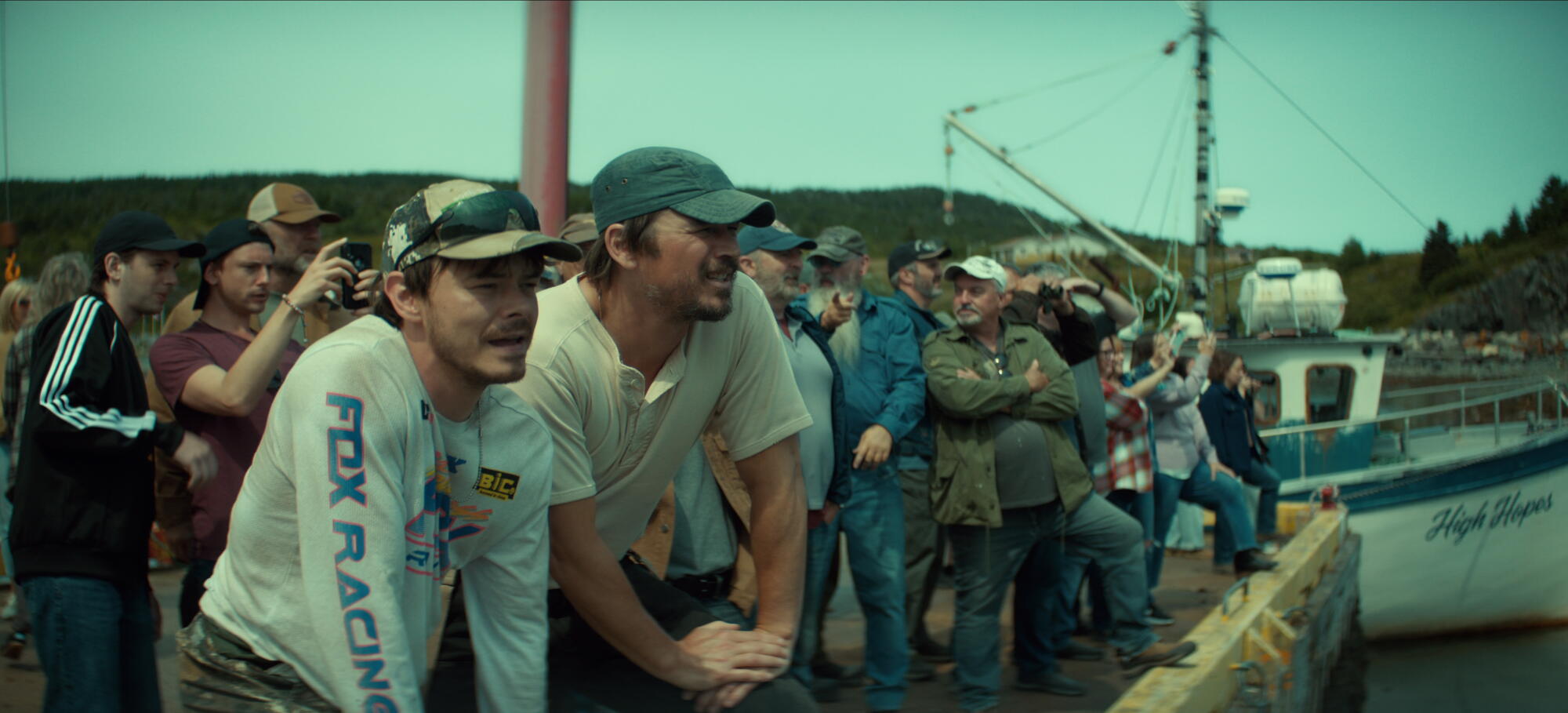


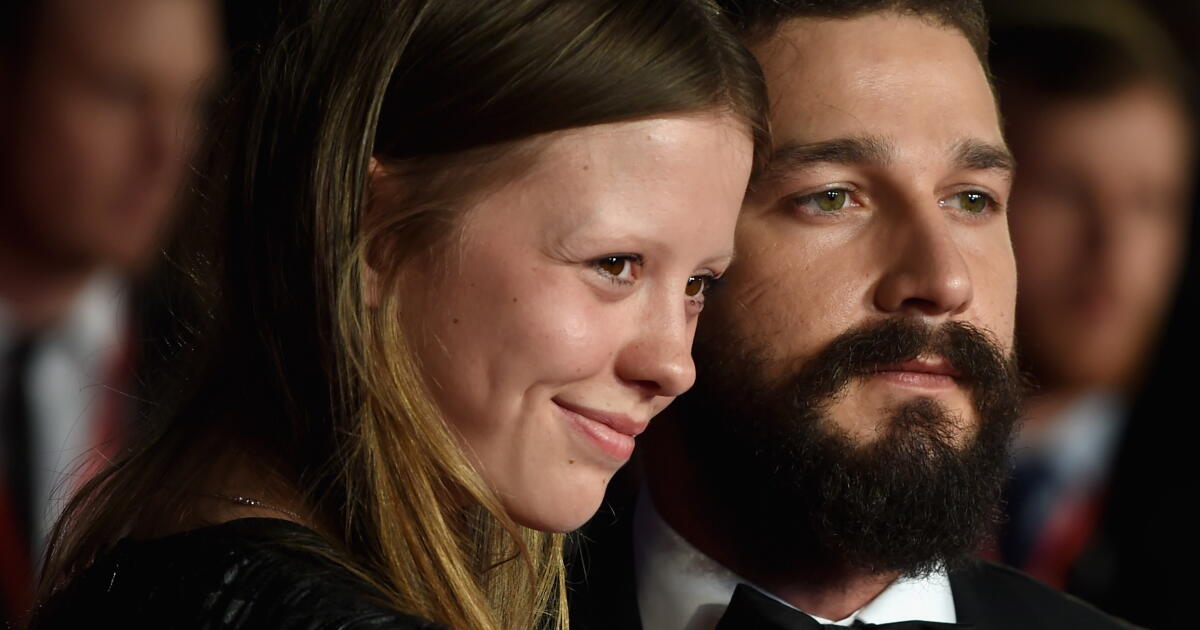
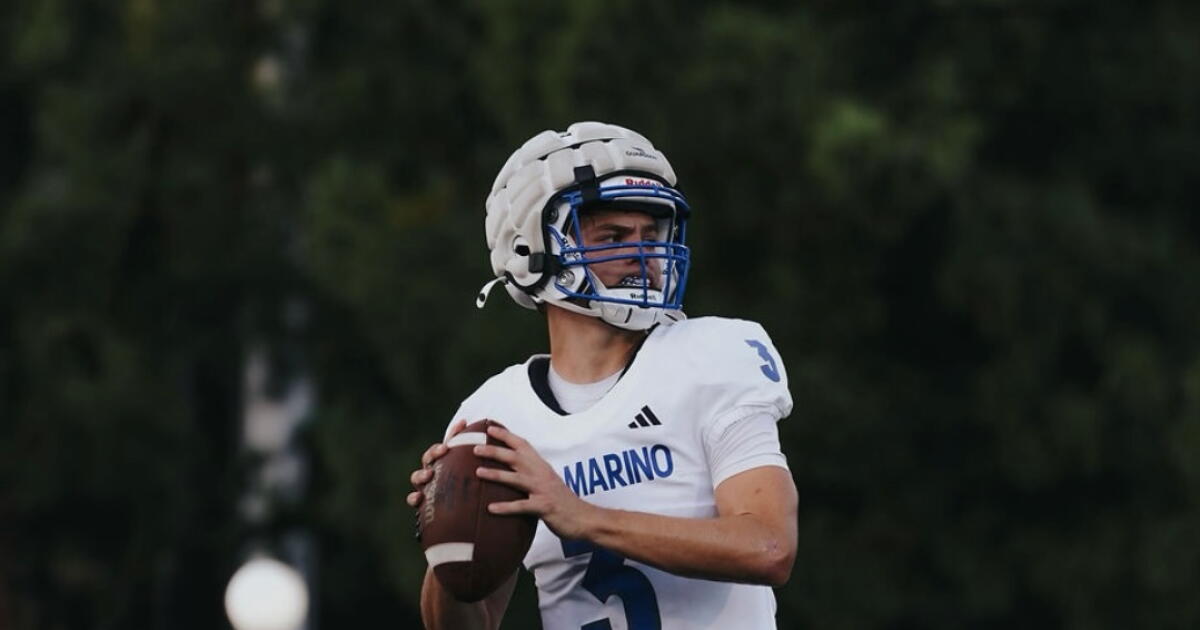
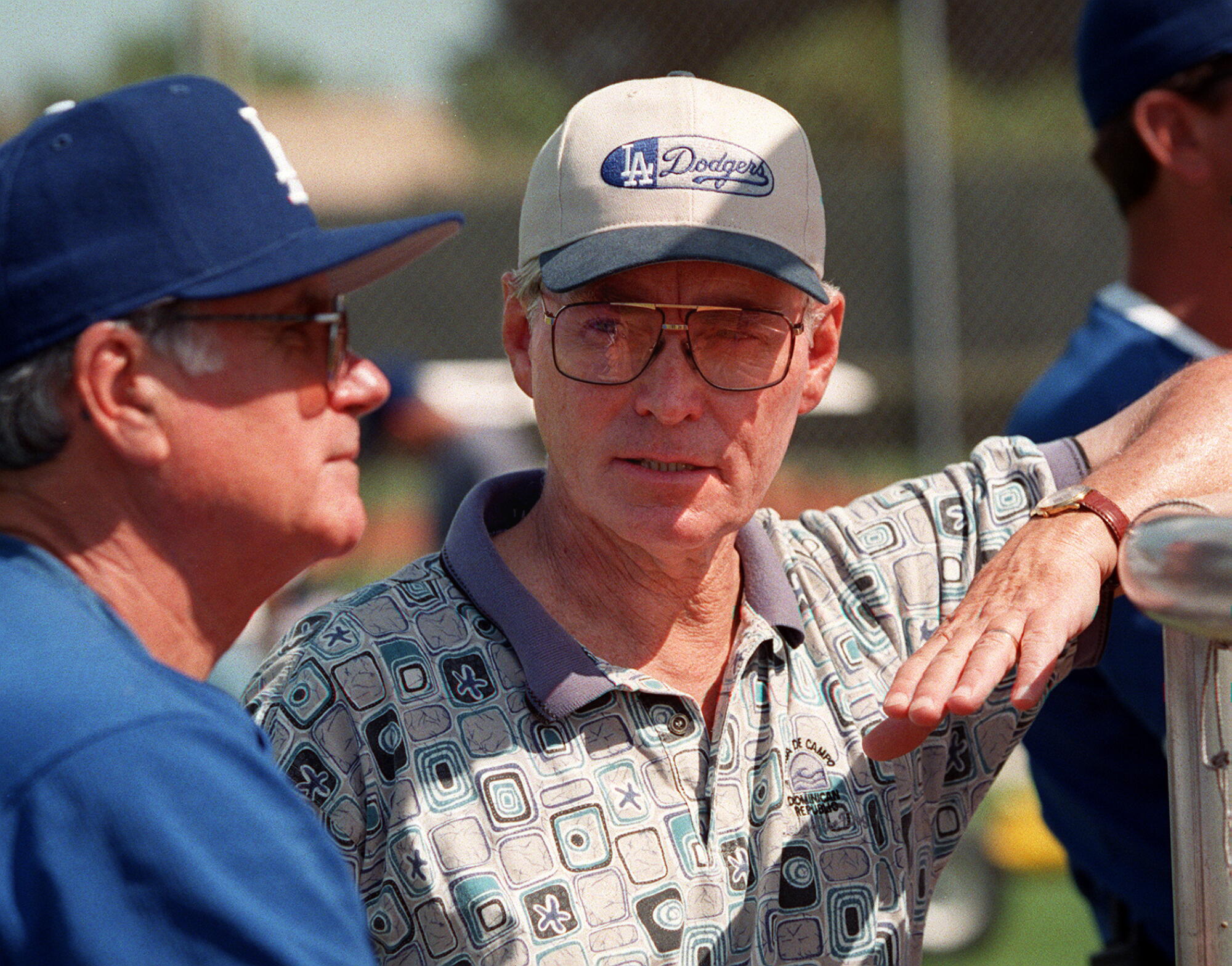




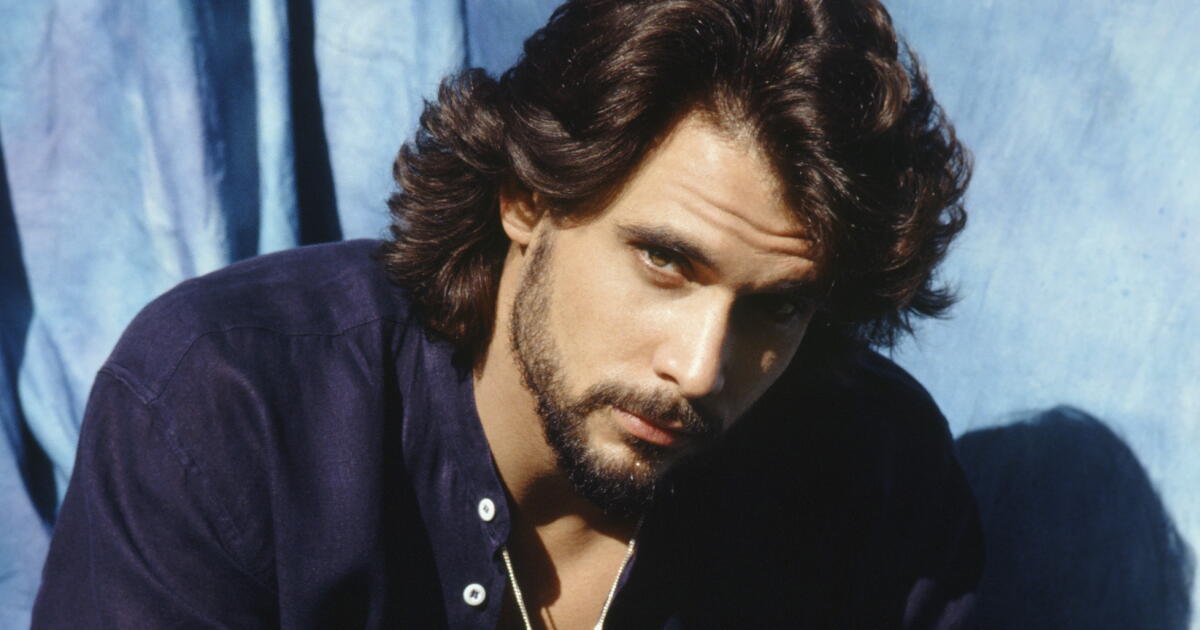



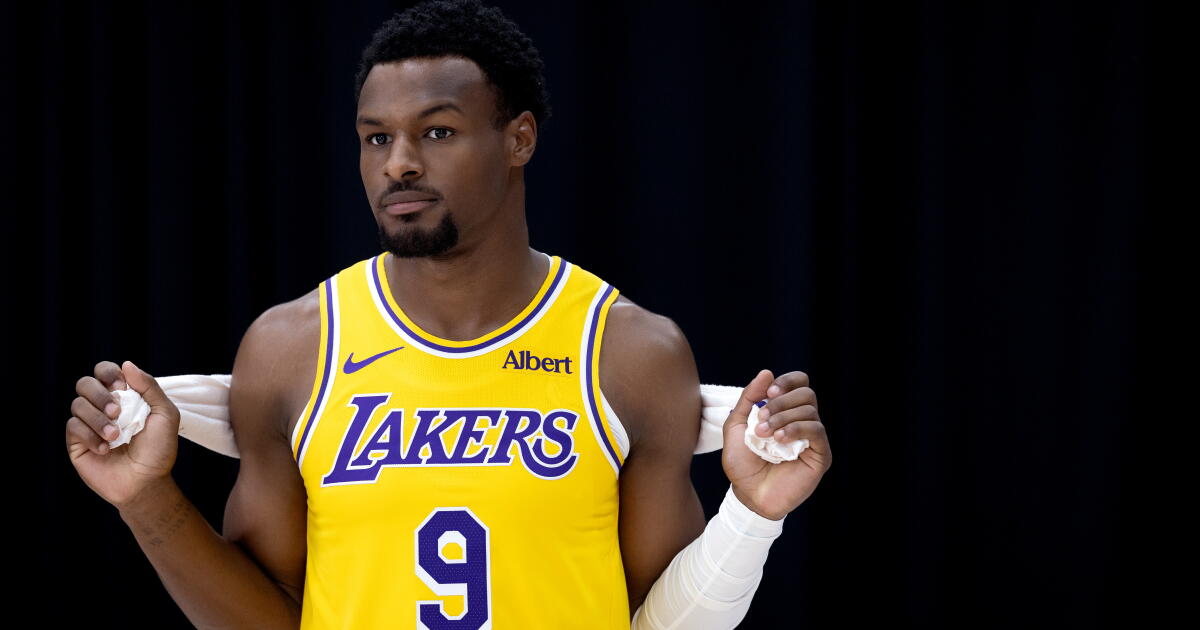

![Police and security personnel detain a protester during a demonstration against India's Chief Election Commissioner Gyanesh Kumar in New Delhi on October 3, 2026, to demand his resignation [Arun SANKAR / AFP]](https://i0.wp.com/occasionaldigest.com/wp-content/uploads/2026/10/AFP__20261003__D24U6XM__v1__HighRes__IndiaPoliticsElectionProtest-1791123918.jpg?w=640&ssl=1)