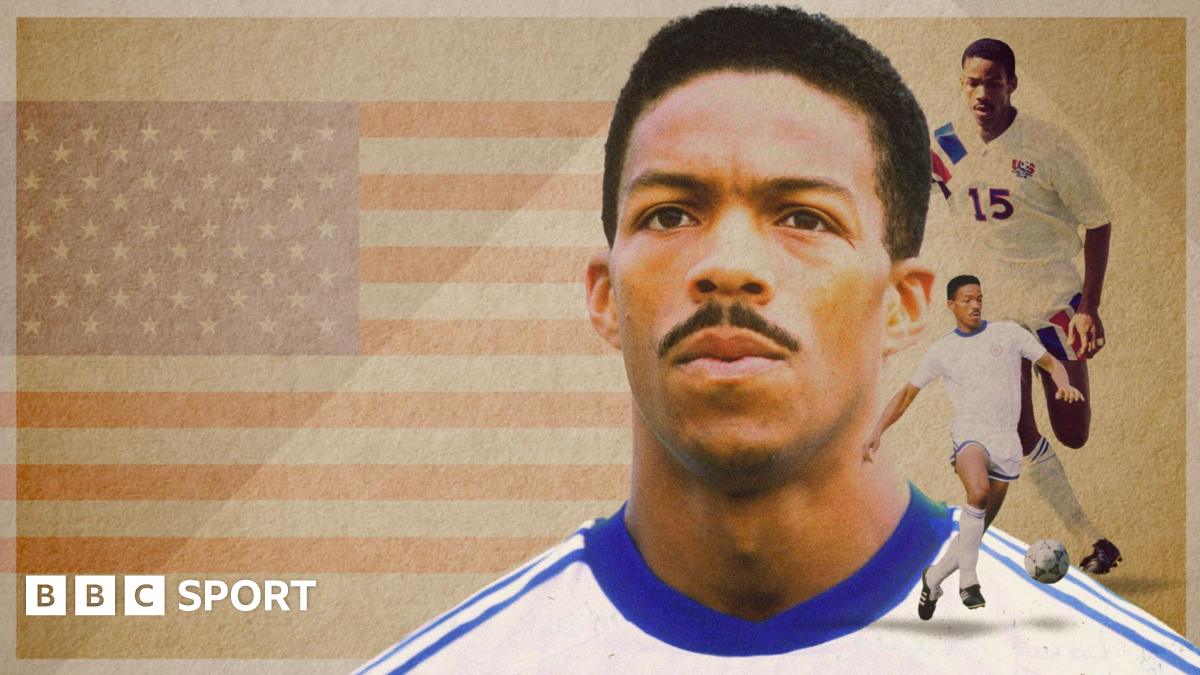
Football came to Armstrong, via a television set, in suburbia.
His family moved from the Southeast part of Washington DC when Armstrong was young and later settled in a largely white neighbourhood in Maryland, where he befriended a soccer coach’s son. One afternoon, the coach called Armstrong over to the television.
He was pointing to a Brazilian in a New York Cosmos jersey.
“It was Pele,” says Armstrong.
“His movement reminded me of a lot of the point guards that played basketball, but he was doing it with a ball at his feet.
“He was one of the few black players on the team, so that connected me.”
While Pele was popularising a game he’d learned barefoot on the streets of Brazil, much of the American grassroots version was being built on privilege.
Unlike the developing youth academies of Europe and South America, where clubs like Ajax and Barcelona were putting money into young talent, development in the US has long run on a pay-to-play model.
Families must meet significant costs or seek sponsorship to give their children a shot at advancing – creating a system that has seldom favoured those from less affluent households.
“It’s kind of antithetical to what this game’s all about,” says Frank Dell’Apa, who has spent 40 years as the Boston Globe’s football columnist, covering the game since the days of the original North American Soccer League (NASL).
“This is the simplest game with the easiest access. Everybody plays it around the world with no money, no soccer balls, no shoes. And here, we had just the opposite thing going on.”
Armstrong knows just how easily his story could have been different.
“If my folks didn’t move into the suburbs, then hands down I’m not playing soccer,” he says.
Socioeconomics was not the only hurdle.
The NASL going under in 1985 during Armstrong’s time as a college player limited professional pathways for him and his peers before their careers had even begun.
“For me, personally, that was crushing,” Armstrong says.
He turned to the Major Indoor Soccer League to play professionally, where his performances earned him a US men’s national team debut in 1987, followed by a spot at the 1988 Seoul Olympics.
“I remember being on the field, hearing the national anthem and just thinking ‘this is where I’m supposed to be’,” he says.
That same year, world football’s governing body Fifa had selected the USA to host the 1994 World Cup finals – the first time the tournament had gone to a country outside Europe or Latin America.
They would be under the global spotlight.
“The US was not a factor in world soccer at all,” says Dell’Apa.
“I remember Des playing a lot of games on artificial turf. It was hard for those guys. They had to fight to get into line-ups, to get a playing field, to get a stadium.”
With no elite outdoor professional league in the country, the player pool was a fragmented mix largely consisting of college, semi-pro and indoor players like Armstrong.
The federation looked to work around this by securing a core group of them on full-time contracts, essentially turning the national team into the country’s professional set-up. It was an unorthodox approach, not unlike something from the Eastern Bloc playbook.
They appointed a German-Hungarian head coach named Bob Gansler. Armstrong was now among a group of young players who were handed a near impossible task: qualify for the 1990 World Cup in Italy.
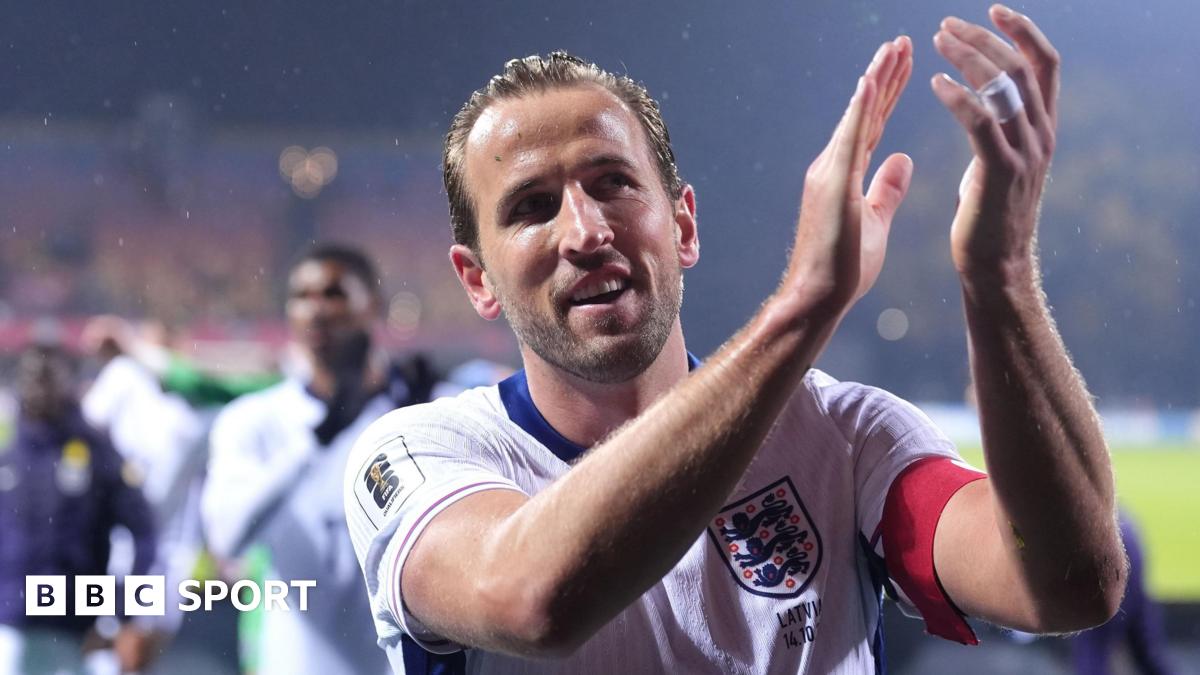
Harry Kane’s final task of the finest season of a magnificent career is to attend to unfinished business as England’s World Cup captain.
Kane is England’s ‘Mr Irreplaceable’ – as proved when Thomas Tuchel’s side were ominously toothless when drawing with Uruguay then losing to Japan in March friendlies at Wembley.
The 32-year-old’s fitness will be Tuchel’s biggest concern as they prepare to start their World Cup campaign against Croatia in Dallas on 17 June, not simply because of his status as England’s all-time record scorer with 78 goals in 112 games, but also because they have no-one remotely in Kane’s class.
If Kane stays fit, and in the remarkable form that brought him 64 goals in 56 games for Bayern Munich this season, England’s hopes will soar.
If not, the reverse applies.
As former England striker Chris Sutton told BBC Sport: “Harry Kane is so important that if he announced his international retirement this afternoon, everyone would instantly view England’s World Cup chances in a different, more pessimistic light.”
Silverware has come late in Kane’s career after barren years at Tottenham Hotspur, when even his stunning goalscoring numbers could not bring glory.
He is now making up for lost time by winning a second successive Bundesliga with Bayern Munich, then scoring a hat-trick as they beat Stuttgart 3-0 in the German Cup final.
And Kane now has his sights set on delivering the biggest prize of all as he leads England on their latest quest to end the search for men’s success stretching back to the 1966 World Cup win.
England’s countdown to their opening World Cup game continues when they play New Zealand in a friendly at Raymond James Stadium in Tampa, Florida, on Saturday (21:00 BST).
Kane has suffered the disappointment of losing successive European Championship finals with England to Italy and Spain, as well as a World Cup semi-final defeat by Croatia in 2018 and a quarter-final loss to France in Qatar.
Now Kane’s stellar form and fitness suggest the time might be right for England and their talisman to overcome the barrier that has brought 60 years of pain.
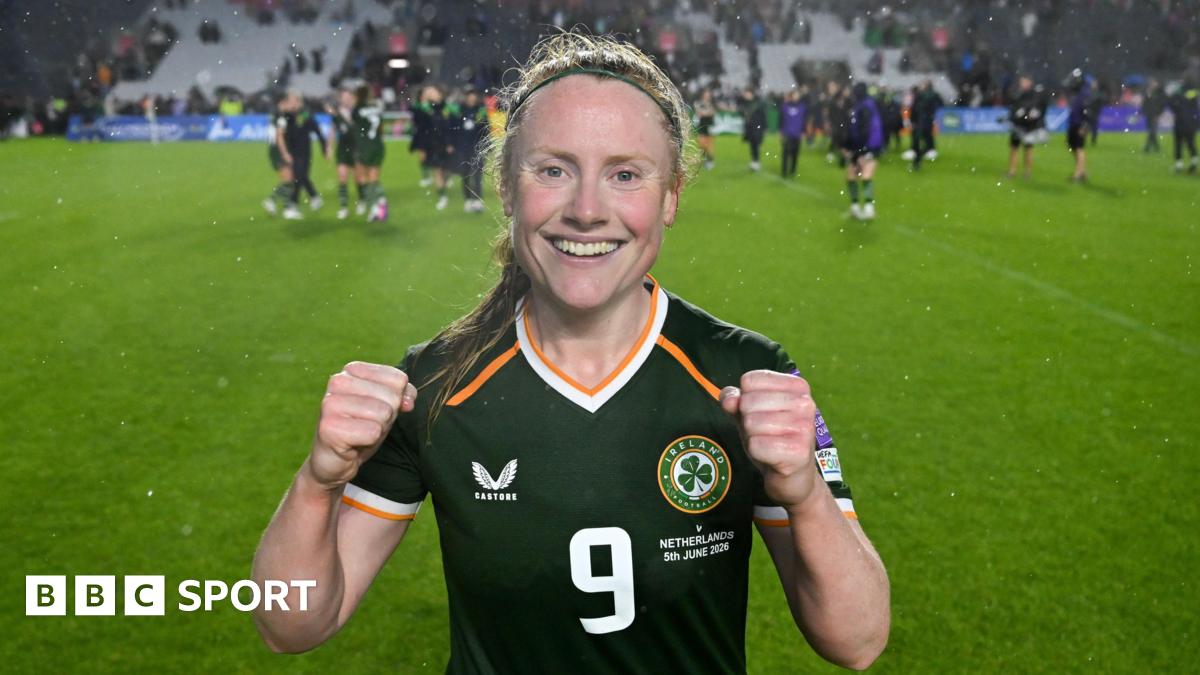
Republic of Ireland striker Amber Barrett said the side “are going to give everything we have” in Tuesday’s match against France when they have the chance to secure automatic qualification for the World Cup.
Barrett came off the bench in the 76th minute and scored the winner against the Netherlands in the closing stages of the match in Cork in front of a crowd of more than 12,000.
Now, Carla Ward’s side have the opportunity to secure a spot in back-to-back World Cups when they travel to Grenoble to face France, who are top of the group.
Even if they draw or lose, they will have the fallback of a seeded play-off spot, but Barrett insists they are going out to get the job done on Tuesday.
“We do not have anything to lose,” Barrett told RTE after the game.
“When we started the group, what everyone was looking at was not finishing fourth. We avoided that tonight and we have nothing to lose on Tuesday, we are going to give everything we have.
“Whatever happens, we still have the play-offs in October and December.”
Laurent Bonadei’s side were the 2-1 victors against the Republic of Ireland at Tallaght Stadium in March.
Barrett added that despite the side coming into the “cup final” unbeaten in three matches, they will not underestimate the French.
“Before, if you were 2-2 against the Netherlands, you would probably be rubbing your hands together and saying’ we will take this’, but Carla [Ward] said from the start of the week, let everyone know we will be going to win the game.
“Tuesday is a cup final. Against the Netherlands, we were for it and we were trying to win that game, there was no doubt about it.
“It is a massive game on Tuesday, we will enjoy tonight but we are not taking for granted the French, they are an unbelievable side. Recover, get ready and let’s go again.”
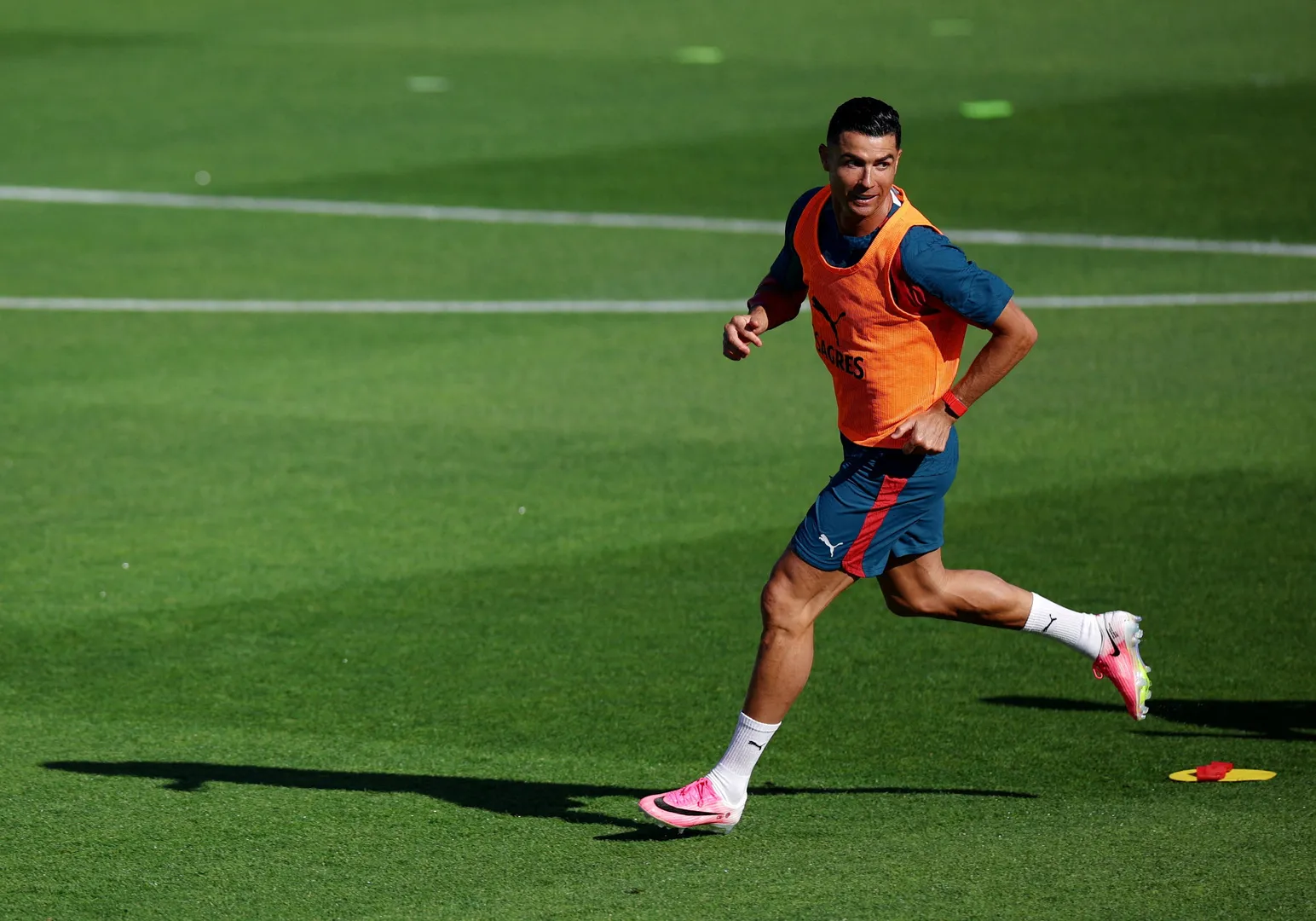
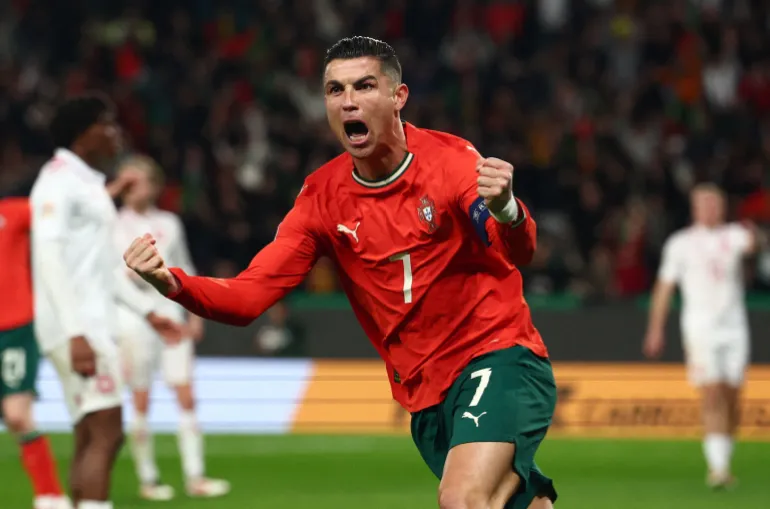
Portuguese star Cristiano Ronaldo hit the training pitch as he readies for his sixth World Cup appearance. Portugal will play Chile in a friendly, before heading to the US for their first World Cup match on June 18. Punters say Portugal is a dark-horse contender to take the title.
Iran players get visas 10 days before their opening World Cup match against New Zealand in Los Angeles on June 15.
Published On 5 Jun 20265 Jun 2026
Iran’s World Cup football players have been granted visas to enter the United States, according to a White House official, just 10 days before their first match in Los Angeles amid a conflict between the two countries.
Iran’s ambassador to Mexico, Abolfazl Pasandideh, said late on Thursday the squad had still not received their US visas, but these were granted overnight, the White House official said.
Recommended Stories
list of 4 itemsend of list
US Ambassador to Turkiye Tom Barrack confirmed the visas in a message on X on Friday. “Proud of our outstanding team at the U.S. Embassy in Ankara for their work processing visas for Iran’s national football team on their road to the @FIFAWorldCup in the United States,” he said, commenting on a news report that Iran’s World Cup players have been granted the visas to enter the United States.
The US had not yet issued visas to some members of the Iran team’s technical and administrative staff, the semi-official Fars news agency reported on Friday.
Iran’s federation has not yet made a statement on the news.
“Visas for some members of the national team’s technical and executive staff have not yet been issued, and the US embassy has so far refused to issue them,” Fars said, without citing a source.
The US-Israel war on Iran has turned the World Cup – the biggest global sporting event – into a geopolitical contest, with both sides appearing to use the tournament for political posturing.
It is the first World Cup, since its inception in 1930, in which a host nation is set to receive a country it is at war with.
Tehran negotiated a last-minute move of the team’s base from Arizona to Tijuana in Mexico due to the visa issues and a growing feeling in Iran that the squad’s presence in the United States should be kept to a minimum.
They are scheduled to land in Tijuana early on Sunday.
Iran are due to play their first Group G match on June 15 against New Zealand in Los Angeles, where they will also face Belgium before taking on Egypt in Seattle.
The US has never formally said it does not want the Iranian team to stay on its territory, Ambassador Pasandideh said.
However, Secretary of State Marco Rubio told lawmakers on Tuesday that the US would not allow Iran to include in its World Cup delegation individuals linked to the Islamic Revolutionary Guard Corps, a powerful branch of the Iranian armed forces.
Mehdi Taj, president of Iran’s football federation, was denied entry for the tournament draw in Washington in December. He is a former commander in the Revolutionary Guards.
Iran’s desire to compete in the World Cup underscored its efforts to reach a resolution in the war with Washington, Pasandideh said.
“Iran’s participation in the World Cup – even on the soil of what is seen as its enemy – shows that Iran seeks peace,” Pasandideh said, speaking through a Spanish interpreter at the Iranian embassy in Mexico City.
Progress in peace talks between Iran and the US has been slow, with both sides seemingly inching towards an interim agreement even as they continue to carry out military strikes.
The draw meant Wales wasted a chance to seize control of Group B1.
Czech Republic, their rivals for top spot, also dropped points in surprising fashion as they were held to a 1-1 home draw by Albania in a game which kicked off half an hour before Wales’ fixture in Podgorica.
Had Wales won, they would have needed only a draw in Tuesday’s final group game against the Czechs in Cardiff to secure first place, and therefore a more favourable play-off draw in the play-offs later this year.
Instead, Wilkinson’s side must beat the Czechs – who they drew with in the opening game of the campaign – to come out on top.
“We are exactly where we started [the day],” she added.
“We have to grab these opportunities. I’m sure the Czech Republic coach is as frustrated as I am.
“I am confident it will be a close game on Tuesday. We have to show up.”
The story of the night might have been different had goal-line technology been in place at Montenegro’s Gradski Stadion.
Wales appeared convinced Hughes’ second-half effort had gone over the line before Montenegro defender Sladjana Bulatovic hooked the ball clear.
“I am frustrated there is no VAR, but this is the game – we can’t affect that,” Wilkinson said.
“I’ll fight for it behind the scenes, but on the night we needed to put the ball away.”
It wasn’t too good to be true, but it was too good to remain true.
World Cup fans still reeling from FIFA’s pricey water policy change have a new gripe: Soccer’s governing body is demanding payment from about 60 people who secured tickets for free because of a glitch on the FIFA website during checkout.
FIFA confirmed the mistake with a swift response, issuing a statement that said pay up or stay home:
“The tickets requested by these fans remain reserved, and the affected fans have been invited to complete payment of the correct amount. FIFA regrets the error and any inconvenience caused.”
What, did anyone think a governing body denying fans free water in the summer heat would allow 60 souls into stadiums without paying admission? Even when FIFA admitted its mistake?
One week before matches begin in 16 North American venues, including SoFi Stadium that will be referred to during the tournament as Los Angeles Stadium, FIFA reversed its policy that allowed refillable plastic bottles when temperatures were high enough to justify it.
Now, no plastic water bottles are allowed except the ones sold in the stadium. Last summer during the Club World Cup, bottled water at FIFA venues fetched $4 to $6.
Coca-Cola products will be sold at all World Cup venues, including Dasani water. In a statement to the Athletic on Thursday night, FIFA skirted questions about whether it was influenced by commercial priorities.
“The decision to prohibit capped water bottles is based on a number of factors related to safety and security, including mitigating risks to players and spectators, ensuring a safe and efficient ingress experience for all attendees, and the presence of additional heat mitigation and alternative hydration strategies at FIFA World Cup 2026 stadiums,” the statement read.
Toronto Mayor Olivia Chow questioned FIFA’s motive.
“Why do you need to buy a water bottle when you can just carry your water in? It is cheaper that way and it is good for the environment,” Chow told CTV News. “It is outrageous. They are just trying to make more money. They are already making billions of dollars. Stop it.”
Chow’s ire likely grew upon learning that the group-stage matches the 60 people who now must pay for tickets FIFA mistakenly provided them are all in Toronto.
Complaints have mushroomed for months about World Cup ticket price fluctuations caused by sophisticated algorithms that can dramatically increase costs based on demand. Prices adjust in real time, increasing when interest surges.
The attorneys general of New Jersey and New York a week ago launched an investigation into World Cup ticket sales following reports that fans were misled about the locations of seats they purchased.
The attorneys general sent subpoenas to FIFA, requesting details about ticketing practices for eight World Cup matches hosted in New Jersey, including the World Cup final.
FIFA has about $6.14 billion in total assets and $3 billion in cash reserves.
The organization has defended its steep ticket prices, saying they reflect standard practices for major global sporting and entertainment events.
“If you think of McDonald’s or Nike, they’re trying to please consumers because they know the consumers can go someplace else,” Kuper said. “There’s only one World Cup, so FIFA is a monopoly purveyor. It’s more like one man running the cash box.”
Parking will be another opportunity to generate revenue. A spot nearly two miles from SoFi Stadium will cost $300 for the U.S. opener against Paraguay next week.
Mispriced tickets were sold through the official World Cup site ahead of next week’s showpiece event for FIFA.
Published On 5 Jun 20265 Jun 2026
FIFA has cancelled World Cup tickets issued to about 60 fans who mistakenly got them for free because of a website error.
The tickets were “allocated at no charge (0 USD) due to a prior payment issue during the checkout process,” FIFA said in a statement on Thursday.
Recommended Stories
list of 4 itemsend of list
“FIFA regrets the error and any inconvenience caused,” football’s ruling body said. “The tickets requested by these fans remain reserved, and the affected fans have been invited to complete payment of the correct amount.”
It is the latest glitch in an often controversial World Cup ticketing programme that the attorneys general of New York and New Jersey are investigating for possible violations of consumer protection laws.
The mispriced tickets were sold through the official World Cup site on May 21, FIFA said in an email message to buyers.
That date was more than three months after FIFA president Gianni Infantino said all 104 World Cup games had sold out.
Tickets are still being sold by FIFA for games at the World Cup, which opens next Thursday in Mexico City. It is unclear if seats for games in less demand will drop in price under FIFA’s surge pricing model, which has been controversial for fans.
FIFA is also operating its own resale platform — and taking 15 percent commission from both buyers and sellers — in order to cut out ticket dealers from the market. However, sales platforms such as SeatGeek were offering widespread availability on Friday for many games.
Tickets for the 2026 World Cup are wildly more expensive than any previous edition, which FIFA has justified as helping earn billions of dollars it will give to member federations for developing the game globally.
FIFA took control of pricing and selling tickets as part of bringing World Cup operations in-house. The longtime model at previous editions was working with host nations’ local organising committees.
When the football federations of the United States, Canada and Mexico won hosting rights in 2018, they promised to sell hundreds of thousands of tickets at $21 each for group-stage games. FIFA was selling official front-row tickets for the final for $32,970.
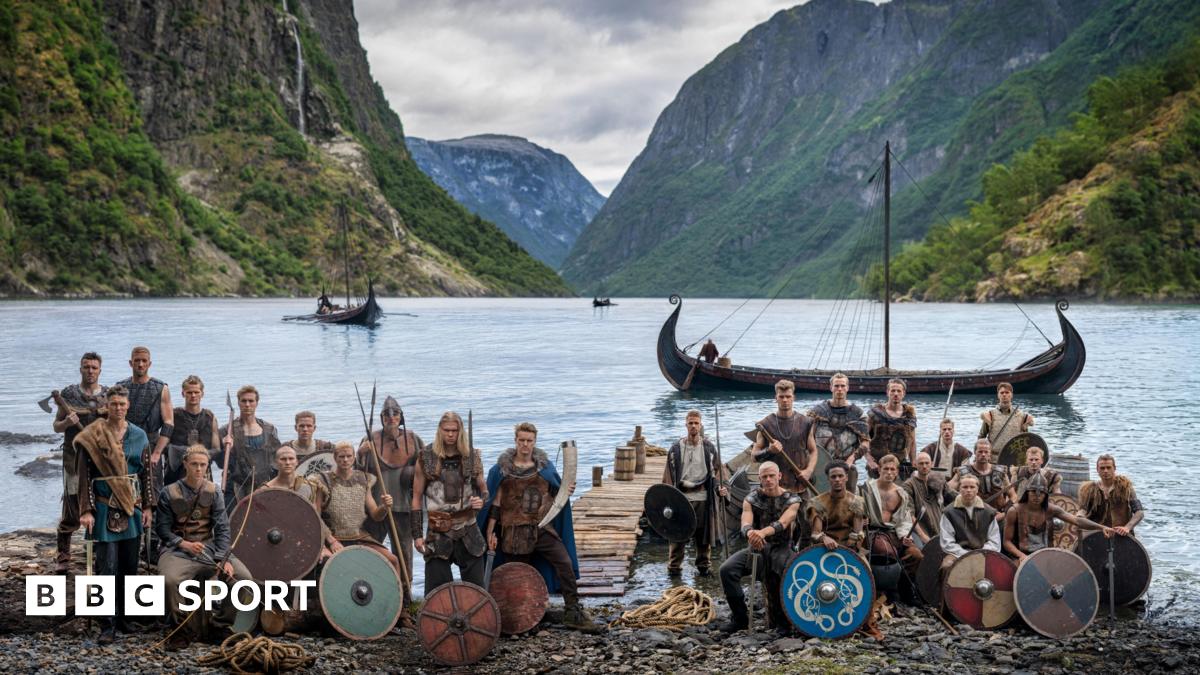
Realising his vision for photo, though, was not so straight-forward.
Yarrow had to navigate the packed schedule of Norway captain and Premier League champion Martin Odegaard – who was in Budapest with Arsenal for the Champions League final on the day of the squad shoot.
After the parade had left north London, Odegaard joined Yarrow for a solo shoot, and the cloudy conditions matched those of the original shoot – meaning his figure could be added in without too much fuss.
But it was crucial to Yarrow that Odegaard and his title rival Haaland did not steal the show.
“The one thing that was important about that picture is if, in the Norwegian squad, you’ve got someone that’s worth £200m and then you’ve got Watford’s goalkeeper [Egil Selvik] that’s worth £250,000, the third-in-line goalie – that they both occupy the same amount of the frame,” Yarrow told BBC Sport.
“That’s very important for me.
“That is was not seen to be Haaland and Odegaard and 24 others – it was important to foster a sense of team.”
Yarrow was a guest of Norway as the side beat Sweden 3-1 in a warm-up friendly on Monday, with goals by Jorgen Strand Larsen and Antonio Nusa.
He was struck by the breadth of talent in the Norway team.
“People think it’s a team of two people and it’s so not,” said Yarrow, who was born in Glasgow.
“It’s a seriously good football team, from their wingers to their backs, and I think they’ll go quite far in the tournament.
“But, like Scotland – they’ve got to win their first game.”
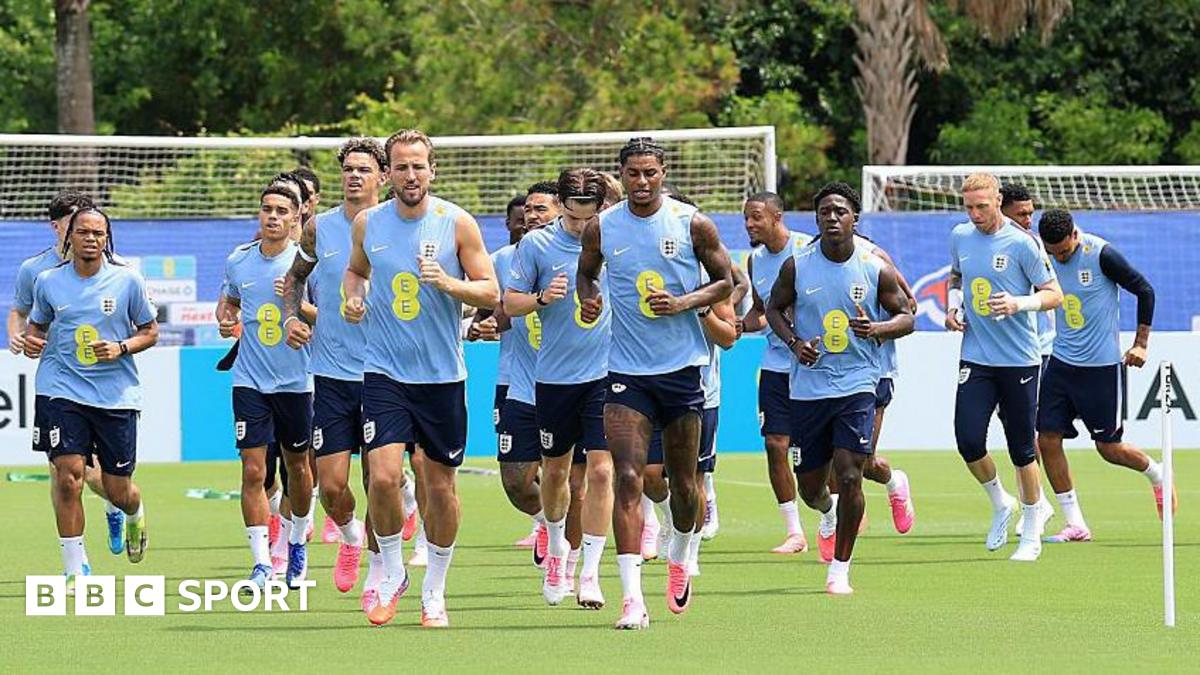
England players are set to use high-tech palm-cooling devices in the United States to help combat the heat during the World Cup.
The expected hot and humid conditions during the tournament will be a crucial factor with studies showing that at least a third of the games during the World Cup will be played in temperatures higher than 26C.
On Tuesday, temperatures reached 32C during England’s opening training session in West Palm Beach, Florida.
The use of palm-cooling equipment is becoming popular among professional athletes, with Manchester United known to use the technology.
Research shows that cooling the palms can significantly lower core body temperature which can prove vital for in-game recovery and ultimately enhance performance.
It is understood England will use them in training sessions and during the planned water breaks during World Cup matches.
When asked about the importance of acclimatising, Jordan Henderson said that this first week was being used to “build capacity to the conditions”, adding “the warm-up games will be good for that”.
The Brentford midfielder praised the “team behind the team” for the “top level research” that has been done on “cool down and recovery”.
“Hopefully that can give us a little edge when we get into the tournament,” he added.
England play friendly matches against New Zealand on Saturday, 6 June (21:00 BST) and Costa Rica on Wednesday, 10 June (21:00).
Thomas Tuchel’s side start their World Cup campaign against Croatia on Wednesday, 17 June (21:00) before playing Ghana on 23 June (21:00) and Panama on 27 June (22:00).
When Iran qualified for the FIFA World Cup last March, the men’s national team didn’t expect their participation to hinge on visas being granted by hosts, the United States, only at the last moment – if at all.
Nor did Iranian fans eager to support Team Melli expect to be banned from entry by the US. President Donald Trump signed an executive order last June halting visa issuance to a handful of countries, including Iran, which the US designated a “state sponsor of terrorism”.
Recommended Stories
list of 4 itemsend of list
Perhaps most unanticipated for Iranians was that the host nation of the largest sporting event in the world would launch a war on their country just months before the tournament began.
For Amir Ghalenoei’s side, the joint US-Israel war was more than a wrench thrown into World Cup preparation plans; it was tangible and personal, as thousands across the country were killed by missile attacks.
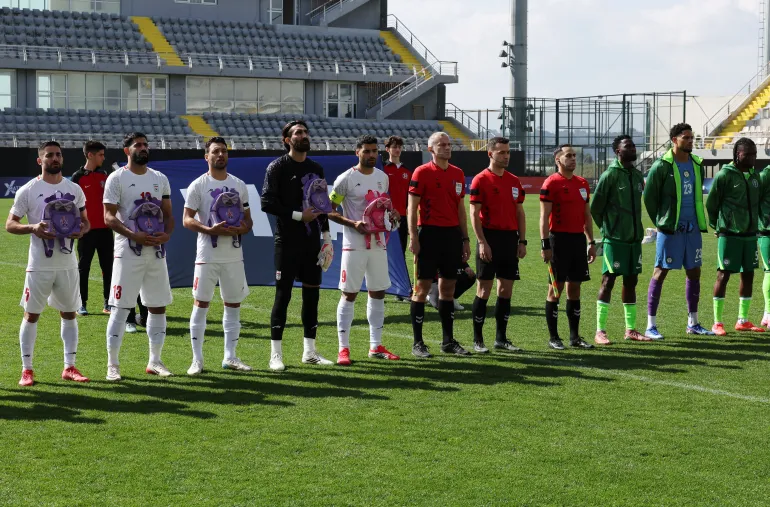
It was the US bombing Azadi Stadium, home to several local matches and where the national team trained. It was the men’s team holding tiny backpacks in remembrance of the students massacred in a US strike on a school in Minab the day the war began.
Iran’s Milad Mohammadi, Hossein Kanaani, Shoja Khalilzadeh, Alireza Beiranvand and Mehdi Taremi hold schoolbags in memory of the victims of the girls’ school bombing in Minab, Iran, as they line up with the match officials and the Nigerian players before the friendly match in Mardan Sports Complex, Antalya, Turkiye, March 27, 2026 [Umit Bektas/Reuters]
After months of politically charged rigmarole between the US and Iran – which led to them switching basecamps to Mexico instead – the men’s national football team will find themselves playing in the shadow of war. That too, if the US grants them visas in time.
For Iranian football fans, travelling to the US was “almost impossible” even without the visa challenges or the war. There are no direct means of transport between the countries, which do not have formal diplomatic relations.
“Aside from the visa issue, you have to take two- or three-way routes from Tehran to get to the US,” said Ali, a fan who did not want to share his full name for safety reasons.
“Returning from the US to Iran is a big challenge in itself, with the possibility of being arrested by the [Iranian] government,” he added. The war has increased scrutiny of antinational sentiment within Iran, resulting in executions of people arrested on accusations of spying for Israel or the US.
Political repercussions extend to the sport sphere, too. Iran’s top footballer Sardar Azmoun was expelled from the national team in March for a perceived act of disloyalty to the government, when he posted a picture on social media of a meeting with Dubai ruler Mohammed bin Rashid Al Maktoum. Relations between the UAE and Iran have been tense during the war, with Iran hitting the Emirates repeatedly and accusing it of allowing the US to use its territory for attacks on Iran.
The US war on Iran, now nearing its 100th day, has also deterred fans globally from attending the World Cup.
“Football is called the Beautiful Game for a reason, for its ability to unite people,” South African football fan Byron Pillay told Al Jazeera.
“But it’s hard to believe in that magic with the politics and war rhetoric off the field of play, specially when one of the tournament hosts is central to that.”
Compatriot Riaz Hamed echoed those reservations. “With the stance of America in particular, regarding the treatment of fans and immigrants in the country, I don’t believe it to be entirely safe to attend.”
Fears have been stoked by reports from organisations such as Human Rights Watch, which said an asylum seeker who attended the Club World Cup final last year in New Jersey with his children was arrested by the Immigration and Customs Enforcement (ICE) department and deported to his country of origin.
Khayran Noor, an international sports lawyer based in Kenya, emphasised that sport cannot be separated from wider geopolitical dimensions.
“If participation can be shaped by geopolitical realities outside the game itself, does that ultimately undermine the inclusive ideals these tournaments claim to represent?” Noor said in an interview with Al Jazeera.
“Football is global, but global mobility is not; the World Cup sits directly at the intersection of that contradiction.”
Mounting visa rejections have also spooked fans from attempting to attend the World Cup.
The US has launched a FIFA Priority Appointment Scheduling System (PASS), which expedites visa interviews for fans who have bought tickets through FIFA. But it does not guarantee a visa.
Last month, a group of nearly 150 Ghana football fans saw their visa applications rejected.
Godwin Nii Armah, 32, scrapped his travel plans for the World Cup for personal reasons, but knew he might have shared the same fate as those compatriots. He also admitted that travelling to Toronto, Boston and Philadelphia to support the Black Stars would have been a costly logistical headache in addition to international flights and visa fees.
Ghana nationals have to pay a $185 fee with their US visa application and 100 Canadian dollars ($71) for the Canadian visa. Add the two, and the amount is comparable to the monthly per capita income in Ghana.
Noor questioned whether future FIFA host agreements should include obligations relating to accessibility and mobility before hosting rights are awarded.
“If teams and fans from particular parts of the world face structural barriers before they can even attend, then the broader spirit of inclusion that these tournaments seek to embody risks being undermined.”
She acknowledged that while states understandably retain sovereign responsibilities regarding border control and national security, global sporting events often require exceptional frameworks.
Fans from 27 of the 48 nations headed to the World Cup need a US visa to apply, costing anywhere between $185 to $435 – amounts that represent wages that an average person in many countries in the Global South would earn over several months.
Canada is marginally more visa-friendly, while Mexico remains the most accessible World Cup host nation.
That was why South Africa chose to send a small supporters group to Pachuca, Mexico, where South Africa have set up basecamp and play two group stage matches.
Sahil Ebrahim is among the “lucky few” in that delegation. After decades of supporting Bafana Bafana from a TV screen in Cape Town, Ebrahim attended the Qatar 2022 World Cup.
Now the 40-year-old is on his way to his second World Cup, where he will witness the tournament opener live in Mexico City, when South Africa play the hosts on June 11.
Contrary to the South African football team, who faced a 24-hour delay in their departure over a visa bungle by the federation, Ebrahim said the Department of Sport did an “excellent job” expediting their visas with the Mexican embassy.
The process, however, paled in comparison with the 2022 World Cup in Qatar, where Hayya cards centrally aligned all visa, ticket and transport details for each fan, Ebrahim acknowledged.
While South Africa’s friendly against Jamaica on Friday, June 5, is closed to the public, Ebrahim and the supporters’ group will watch an exhibition game on Sunday where the Bafana legends of 2010 will take on their Mexican counterparts. South Africa had hosted the World Cup in 2010, a first for an African nation.
“Ultimately, major sporting events succeed not only because people watch them, but because people participate in them,” Noor said.
“The question is not who can watch the World Cup – the question is who can truly participate in it.”
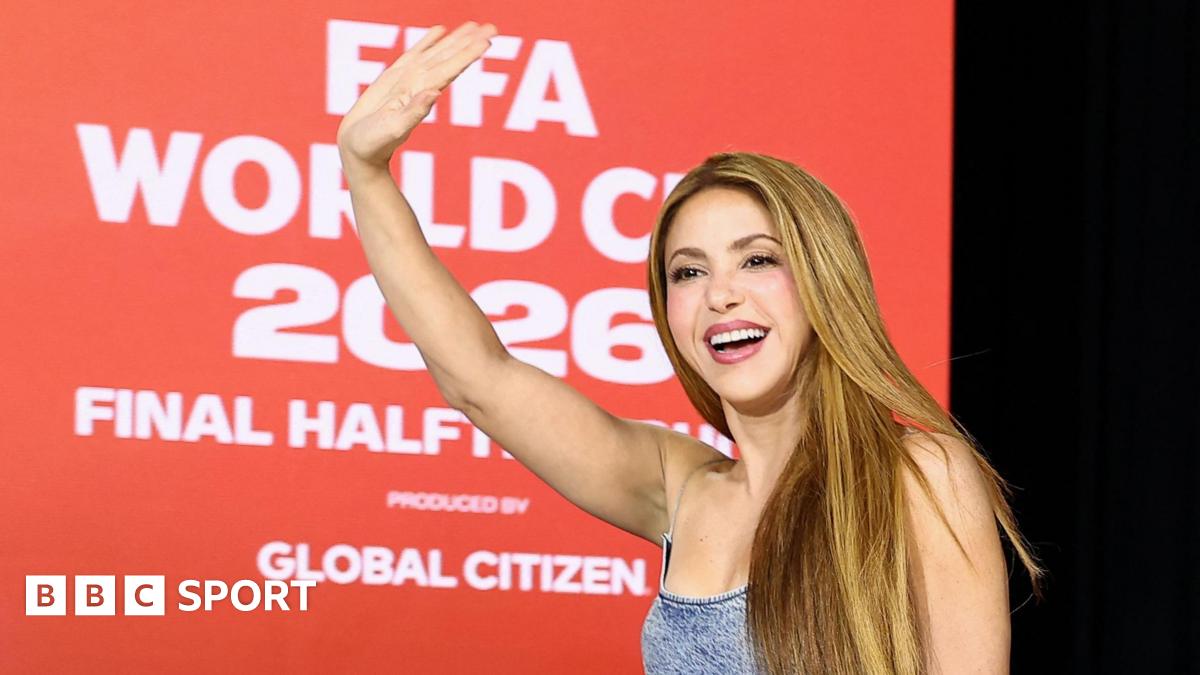
Colombian pop star Shakira will perform her official song for the 2026 World Cup at the competition’s opening ceremony in Mexico.
Shakira will perform Dai Dai, along with Burna Boy, on Thursday, 11 June at Estadio Azteca in Mexico City, before Mexico and South Africa play the first of the tournament’s 104 games (20:00 BST).
Dai Dai – an Italian phrase meaning “let’s go” or “come on”.
Colombian reggaeton star J Balvin and South African singer-songwriter Tyla will also perform at the show in Mexico.
Opening ceremonies will precede each of the first matches played in the host nations of USA, Canada and Mexico.
Canadian singer-songwriters Michael Buble and Alanis Morissette will headline the opening ceremony at BMO Field in Toronto before Canada take on Bosnia and Herzegovina on Friday, 12 June (20:00 BST).
In the USA, pop star Katy Perry and rapper Future will perform before the USA take on Paraguay at SoFi Stadium in Los Angeles on Friday, 12 June (Saturday, 02:00 BST).
Shakira, along with Madonna and K-pop boyband BTS, will also co-headline the Super Bowl-style half-time show at this summer’s World Cup final on 19 July.
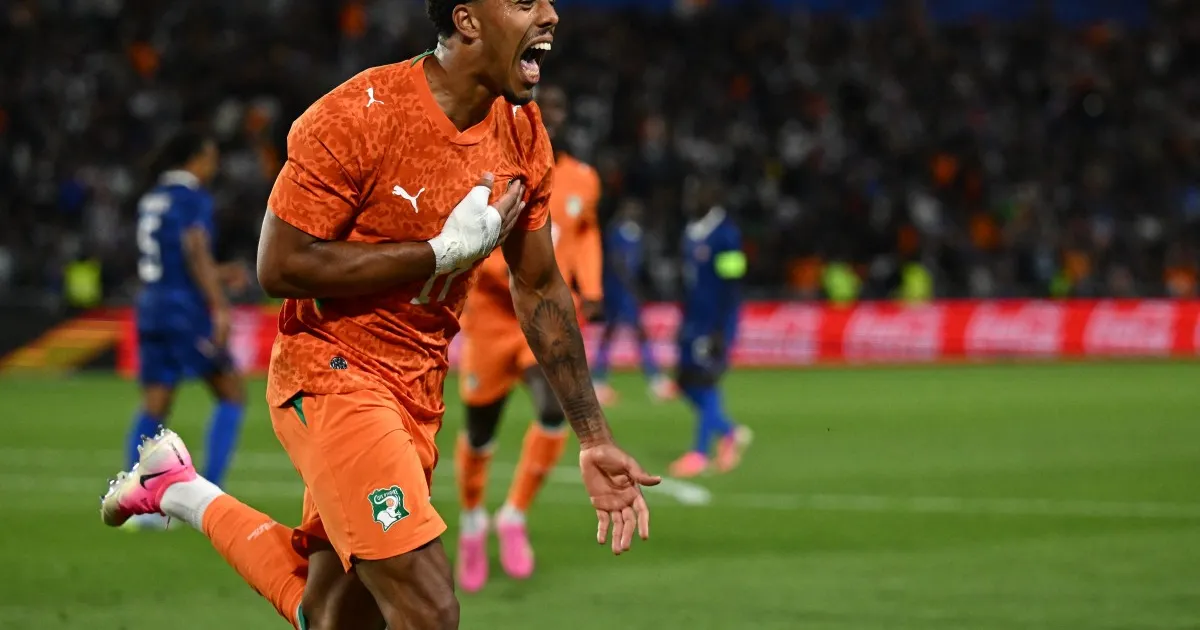
Ivory Coast defeats France 2-1 in friendly ahead of the 2026 World Cup, as Manchester United’s Amad Diallo seals win.
Published On 4 Jun 20264 Jun 2026
France has brushed aside concerns over their World Cup readiness after suffering a surprise 2-1 defeat by Ivory Coast in a tournament warm-up match, insisting the setback will serve as a useful reminder rather than a cause for alarm.
Didier Deschamps’s side led through a superb first-half goal from Rayan Cherki on Thursday, but they were overrun after the break as Guela Doue and Amad Diallo turned the game around for the Elephants in Nantes.
Recommended Stories
list of 4 itemsend of list
With France opening their World Cup campaign against Senegal in New York on June 16, midfielder Aurelien Tchouameni said the result should be viewed in the context of preparations.
“It’s a pity to lose, but we’re in a preparation phase; we stay confident,” Tchouameni said.
“There is no conclusion to draw from this game, even if we had won it. We will be ready.”
France fielded an experimental side, with several Paris Saint-Germain players rested after last weekend’s Champions League final triumph, and made numerous changes after halftime.
Defender Lucas Hernandez also played down the significance of the defeat.
“We always want to win, but we’re in a phase of preparation, and there were a lot of substitutions,” Hernandez said.
“We’re in good spirits.”
Deschamps, however, admitted that his side had lost control of the contest after an encouraging opening 45 minutes and warned that France would face opponents with similar qualities to Ivory Coast in the United States.
“A defeat is never pleasant, even if we did some good things in the first half,” Deschamps said.
“In the second half we made a lot of changes, but that’s no excuse. We were not as good after the break, and they brought a lot of pace.
“We will face the same type of team on June 16.”
The France coach said the result could prove useful if it prevented his players from becoming complacent before the tournament.
“It’s a reminder, if we needed one, not to think we’re better than we are,” he said.
Cherki added: “It’s a little warning, and I can tell you we’re not going to the World Cup thinking we’re favourites, but we’re going to crush everyone.”
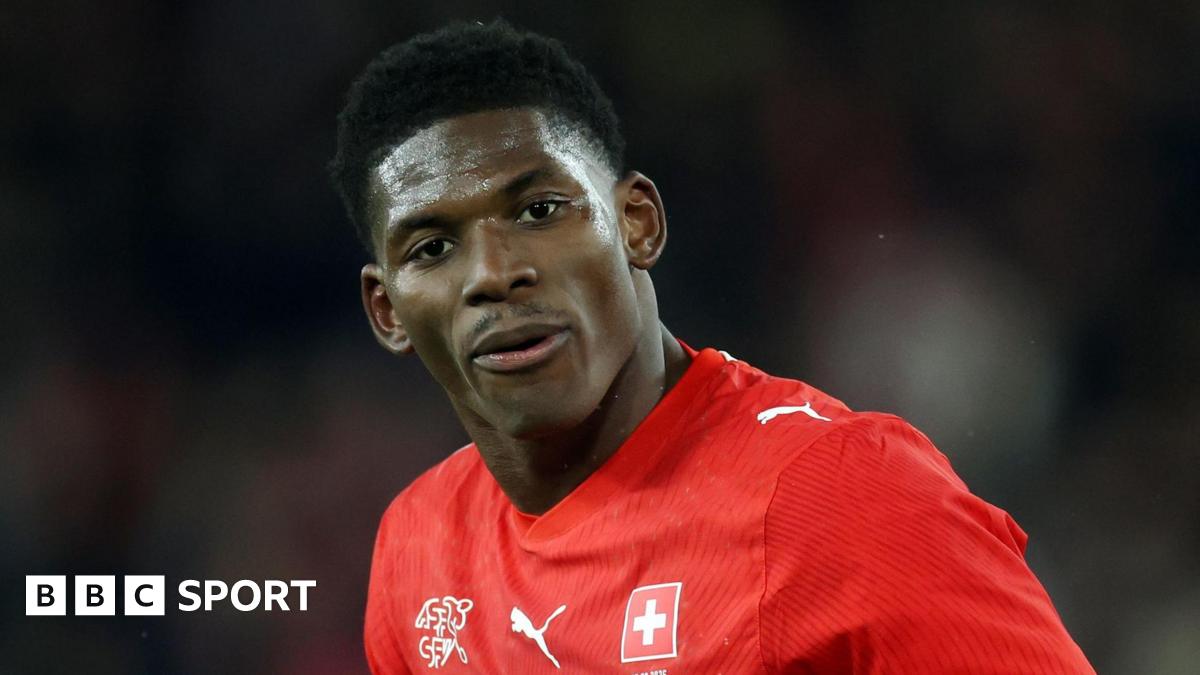
Switzerland forward Breel Embolo has had his Esta authorisation approved and can travel to the United States to join up with the rest of his team-mates as they prepare for the 2026 World Cup.
Embolo did not travel with the Swiss squad on Tuesday because his Esta – an automated system that determines if an international visitor is eligible to enter the US without a traditional visa – had been placed under review.
“We have just been informed that Breel Embolo’s visa has been approved,” said a statement from the Switzerland football federation.
“He will therefore be able to travel to the United States. He is expected to join the team on Friday evening.”
The review of Embolo’s Esta related to a Swiss court ruling about an altercation Embolo was involved in in Basel in 2018.
The 29-year-old, who has scored 23 goals in 85 games for his country and played in the 2018 and 2022 World Cups, was convicted in 2023 of making multiple threats and handed a suspended fine.
After the verdict was upheld on appeal, Swiss media reported in April that the Stade Rennais forward had decided not to take the case to the Federal Court, making the judgement final.
He attended an appointment at the US Embassy in Bern on Wednesday prior to receiving approval.
Switzerland will be based in San Diego for the World Cup, which will be held across Canada, Mexico and the US, and will begin their campaign against Qatar on 13 June in Santa Clara.
Their other Group B games will be against Bosnia and Herzegovina in Inglewood on 18 June and co-hosts Canada in Vancouver on 24 June.
The FIFA World Cup 2026 could be the final act for some of football’s finest talents.
Although some of this tournament’s players will set a men’s football record by appearing in their sixth World Cup, age is catching up, and other players have struggled with injuries.
Recommended Stories
list of 4 itemsend of list
Al Jazeera takes a look at who might be making their final bow on the global stage at the tournament in North America:
Cristiano Ronaldo – Portugal
Although fitness has been one of Ronaldo’s biggest strengths during his illustrious career, at 41, the Portugal forward knows his playing days are numbered.
Numbers have always been on the former Manchester United and Real Madrid forward’s side, though, and he fired in 30 in 37 matches for Al-Nassr this season, while his tally for Portugal currently sits at 143 goals.
The second-oldest player at this year’s tournament, only behind Scotland’s 43-year-old Craig Gordon, Ronaldo heads to his record sixth World Cup, well aware it could be his final chance to lift the coveted golden trophy: the only one missing from his glittering cabinet.
Cristiano Ronaldo will play in his sixth, and possibly his last, World Cup this year [Pedro Nunes/Reuters]
Lionel Messi – Argentina
Like Ronaldo, Messi is also off to his record sixth finals appearance, one where he will lead Argentina’s defence of the title they won in Qatar four years ago.
Argentina’s all-time leading scorer and appearance holder, Messi, has struggled with injury in the build-up to the tournament, raising doubts about whether he will feature in each game and if his body can keep up with the gruelling demands of an expanded World Cup.
The eight-time Ballon d’Or winner’s impact and talent, however, are such that, even at 38, he remains the heartbeat of the football-crazy South American nation.
Injuries have cast doubt over Lionel Messi’s involvement in the upcoming World Cup [File: Matias Baglietto/Reuters]
Luka Modric – Croatia
After playing a key role in Croatia’s run to the 2018 final and a third-place finish in 2022, Modric is ready for his fifth and final appearance at the World Cup. As the 40-year-old heads to the tournament after undergoing cheekbone surgery, the veteran knows the team still relies heavily on him for his playmaking prowess.
The ageing midfielder, also the Balkan nation’s captain, still enjoys a hero’s status within a side that has often defied expectations on the global stage. Enjoy his magic in midfield before he bows out.
Luka Modric, Croatia’s midfield magician, is set for his swansong [File: Antonio Bronic/Reuters]
Neymar Jr – Brazil
At 34, Brazil‘s all-time leading scorer Neymar is much younger than Messi or Ronaldo, but unlike the two greats of the game, his place in the national team is not guaranteed. Neymar’s comeback in the Brazil squad after a two-and-a-half-year hiatus electrified football fandom, and only time will tell whether it was a gamble or a tactical masterclass by coach Carlo Ancelotti.
With a history of fitness issues, a series of injuries and mounting age (he would be 38 by the 2030 World Cup), what looks more certain is that this could be Neymar’s fourth and final act at the tournament.
Brazil’s beloved Neymar Jr is off to the World Cup after a two-and-a-half-year hiatus from the national set-up [File: Dylan Martinez/Reuters]
Manuel Neuer – Germany
Such is the “aura” of Neuer, as coach Julian Nagelsmann said last month, that the 40-year-old came out of retirement to be named Germany‘s first-choice goalkeeper for the 2026 World Cup. Back in the squad after nearly two years, fans will have a final chance to see him at the World Cup.
Widely regarded as one of the greatest goalkeepers, Neuer has played at four World Cups, most notably having a key role in Germany’s 2014 World Cup triumph on Brazilian soil.
Manuel Neuer reversed his retirement decision to play for Germany at the World Cup for the final time [File: Kai Pfaffenbach/Reuters]
Mohamed Salah – Egypt
Arguably Africa’s greatest player of all time, Salah became a global superstar on the back of his success at Liverpool, where he won nine trophies. At 33, and no longer at the peak of his powers, this could be the forward’s second, and possibly final, World Cup.
An underwhelming season and his subsequent departure from Liverpool may have tempered expectations. Yet Egyptians continue to place their faith in their beloved number 10, hoping he can inspire the nation and help deliver something it has never experienced before: the joy of celebrating a World Cup victory.
Egypt are back at the World Cup for only the third time, and Mohamed Salah’s second [File: Siphiwe Sibeko/Reuters]
Kevin de Bruyne – Belgium
A big part of Belgium’s “golden generation” between 2014 and 2022, playmaker De Bruyne continues to flourish in his duties for club and country. Age, however, is starting to catch up with the playmaker, who turns 35 later this month.
The Napoli midfielder’s performance is central to Belgium’s odds of a deep run at the 2026 World Cup, and he will be eager to drive them to a memorable finish in what will be his fourth and presumably final appearance at the tournament.
Kevin De Bruyne will appear at this fourth World Cup [File: Wolfgang Rattay/Reuters]
Virgil van Dijk – Netherlands
Experienced centre-back van Dijk is not quite the force he was a few years ago, when he won the Champions League and Premier League in back-to-back seasons with Liverpool.
The Netherlands captain turns 35 next month, and the Dutch could move on with a younger defensive core by the time the 2030 edition comes around.
After reaching the 2022 World Cup quarterfinals and Euro 2024 semifinals, van Dijk will hope to take the team one step further in what will be his third finals.
Netherlands captain Virgil van Dijk turns 35 on July 8 [Piroschka Van De Wouw/Reuters]
Sadio Mane – Senegal
Widely regarded as one of the world’s best wingers, Mane heads to the World Cup seeking to make up for the disappointing leg injury that denied him a shot at Qatar 2022.
At 34, the Senegal international is far from the peak of his career, which saw him enjoy trophy-laden spells at Liverpool and Bayern Munich.
Despite his mounting age, Mane remains the team’s source of inspiration and creativity, and he was an integral part of the side that beat Morocco in the Africa Cup of Nations final – only for the result to be overturned due to Senegal’s mid-game protest.
Mane will feature in his third, and likely final, World Cup, given that the Teranga Lion has said the last AFCON was his last, although the coaching team have said they have not given up on changing his mind.
Sadio Mane is Senegal’s top scorer with 53 goals [Siphiwe Sibeko/Reuters]
Guillermo Ochoa – Mexico
Part of an esteemed group which includes Messi and Ronaldo, Ochoa is also set to play at a record sixth World Cup. The goalkeeper, who will turn 41 next month, had not been part of the national squad in recent years, but was picked for the tournament, which is being co-hosted by his country, Mexico.
Known for being a formidable figure in Mexico’s previous World Cup campaigns, Ochoa will retire at the end of the team’s run at the tournament.
Guillermo Ochoa is the first Mexican to play at six World Cups [Kai Pfaffenbach/Reuters]
The FIFA World Cup begins on June 11. You can follow the action on Al Jazeera’s dedicated World Cup 2026 page with all the latest news, match build-up and live text commentary, and keep up to date with group standings, real-time match results and schedules.
Montenegro is a key fixture for Wales as they fight it out with the Czech Republic to finish first in Group B1, and therefore secure a more favourable path in the World Cup qualifying play-offs which are to come later this year.
The Czechs, who currently lead the way on goal difference, host Albania on Friday before facing Wales in the group’s pivotal fixture at Cardiff City Stadium on Tuesday, 9 June.
Wales eased to a 6-1 victory over Montenegro in Llanelli in March, and will be expected to claim another win in the return game despite their far-from-ideal preparation.
Should Wales and the Czech Republic be level on points at the end of the group stage, the winners will be decided by head-to-head records.
If they still cannot be separated, the next tiebreaker will be goal difference – but Wilkinson says that is not a concern yet.
“That’s not something we’re chasing,” she said. “What we’ve talked about is winning the [final two games of the] group and then we take care of our own fate.”
Iran is heading to the World Cup while the country is at war with a host nation, a situation that is unique in the tournament’s history.
The United States-Israel war on Iran began on February 28, and there has been an uneasy ceasefire in place since April 8, but the uncertainty – and occasional flare-up in hostilities – means an end to the conflict is far from certain.
Recommended Stories
list of 4 itemsend of list
For the Iranian players and staff, the situation has thrown their World Cup preparations into chaos – all of their matches are scheduled to be played in the US.
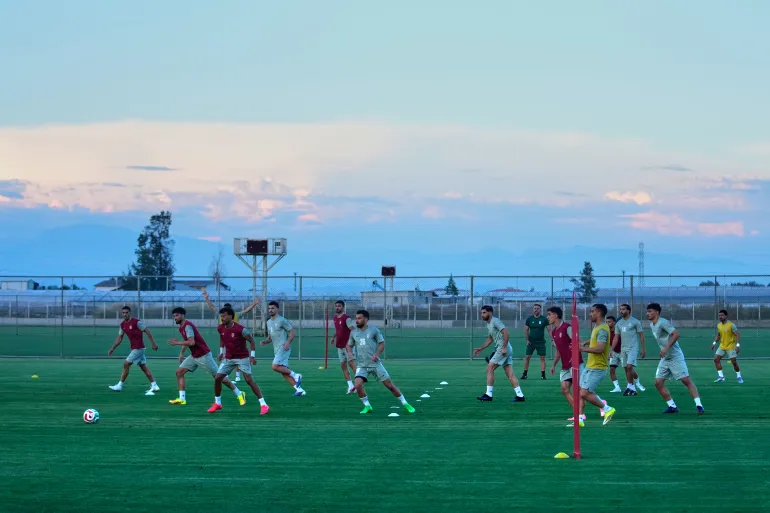
The Iran team has spent more than two weeks in Turkiye, mostly practising at the coastal resort Antalya, and some travelled to the capital, Ankara, to submit visa applications at the US embassy.
The team’s participation in the event in the US, Canada and Mexico has long been in doubt and, with the visa situation still up in the air, nothing can yet be fully guaranteed.
“Well, to be honest, it’s not easy,” said Saeid Ezatolahi, a 29-year-old midfielder who also played for Iran in the 2018 and 2022 World Cups.
“This is going to be my third World Cup. So for me and some of the other players, it might be easier to manage these kinds of things,” he told The Associated Press news agency in English on the sidelines of a training session on Wednesday.
“But at the end … it is going to be difficult for us because, at the same time, we are following the news in our country and the political things, of course, can affect the mind of the players and the people.”
The team is set to travel to Mexico this weekend after receiving visas from the Mexican embassy in Ankara. The team said Thursday that the process of obtaining entry permits had been finalised for all members of the squad.
Problems with visa processing meant Iran’s World Cup training base was moved from Tucson, Arizona, to Tijuana, on Mexico’s border with California.
Iran will play its first two games near Los Angeles, which has a large Iranian community, many of whom oppose the current government.
“So for sure, we are expecting to have a lot of fans during our games at the stadium,” Ezatolahi said. “And this is going to be a lot of pressure for us because the expectation is going to be high. I just wish we can make them proud and show them that Iranians, they are prepared for every hard job in the world,” he said.
Iran’s players work out during a training session in Antalya, southern Turkiye [Khalil Hamra/AP]
Mohammad Ghorbani, 24, is going to his first World Cup for Iran.
“It’s true that we are facing special circumstances right now, but we are football players, and we have to play, practise, and prepare ourselves for the competitions we have ahead,” the Abu Dhabi-based player said in Farsi.
“On the other hand, we know that our people have been going through a lot of difficulties throughout the war, and we are going there for them, to get the best results for their joy and the joy of the people of our country.”
The US and Israel killed Iran’s supreme leader and other top officials in their initial attacks. Iran responded with strikes targeting Israel, US forces and the Gulf Arab states. It also has maintained a chokehold on the Strait of Hormuz, the narrow mouth of the Gulf, imperilling global energy supplies.
Despite the nominal ceasefire, Iran and the US have yet to negotiate a permanent end to the war, and attacks continue in the region.
Iran is in Group G with New Zealand, Belgium and Egypt and Iran’s team is not required to enter the US until June 14, one day before its first match against New Zealand at the Los Angeles Rams’ stadium in Inglewood.
Iran returns to Inglewood to face Belgium on June 21 and completes Group G in Seattle, against Egypt on June 26.
“I’m really proud to be part of my national team,” said Ezatolahi, whose career has taken him to play for clubs in Spain, Russia, England, Belgium, Denmark, Qatar and now Dubai in the United Arab Emirates.
“We need to clear up our minds and be fresh because our target and our duty is to fight for our people, to represent our country and to show how good we are,” he said.
Ghorbani agreed, saying the team wants to bring joy to Iranians.
“The best message I can give right now is that the Iranian team is showing what it means to be a team,” he said. “We are showing that we are one team under one flag that can bring joy to our whole country, and to show the power of Iranian players and Iranian people to the world.”
The FIFA World Cup begins on June 11. You can follow the action on Al Jazeera’s dedicated World Cup 2026 page with all the latest news, match build-up and live text commentary and keep up to date with group standings, real-time match results and schedules.
L.A. will soon explode in color as Angelenos and tourists alike don jerseys and wave flags representing their favorite soccer teams playing in the 2026 FIFA World Cup, with some of the matches taking place at Inglewood’s SoFi Stadium.
The action kicks off with Mexico vs. South Africa on June 11 and will continue through July 19, with later matches determined by which teams advance. Forty-eight countries are represented in the tournament, including heavyweights like Brazil and Argentina with multiple titles under their belts, and hopeful underdogs like Haiti, whose men’s team qualified for the competition for the first time in 52 years.
Local restaurants, sports bars, coffee shops and breweries are getting in on the action with World Cup viewing parties, complete with big-screen TVs, extended hours, food and drink specials, games, giveaways and live performances. Some require tickets or a reservation, but many are free, family-friendly and open to all.
About This Guide
Our journalists independently visited every spot recommended in this guide. We do not accept free meals or experiences. What should we check out next? Send ideas to guides@latimes.com.
Some spots are committed to screening every game throughout the tournament, while others are focused on championing the countries their cuisines hail from, including an Argentinian bistro in South L.A. offering discounted empanadas, a German beer garden in Eagle Rock serving vegan sausages and schnitzel and a Panamanian restaurant in Long Beach where you can watch the Central American team play while you sip soursop lemonade alongside jerk mac and cheese.
From Hawthorne to Sherman Oaks, here are 31 restaurants and bars screening World Cup matches this summer:
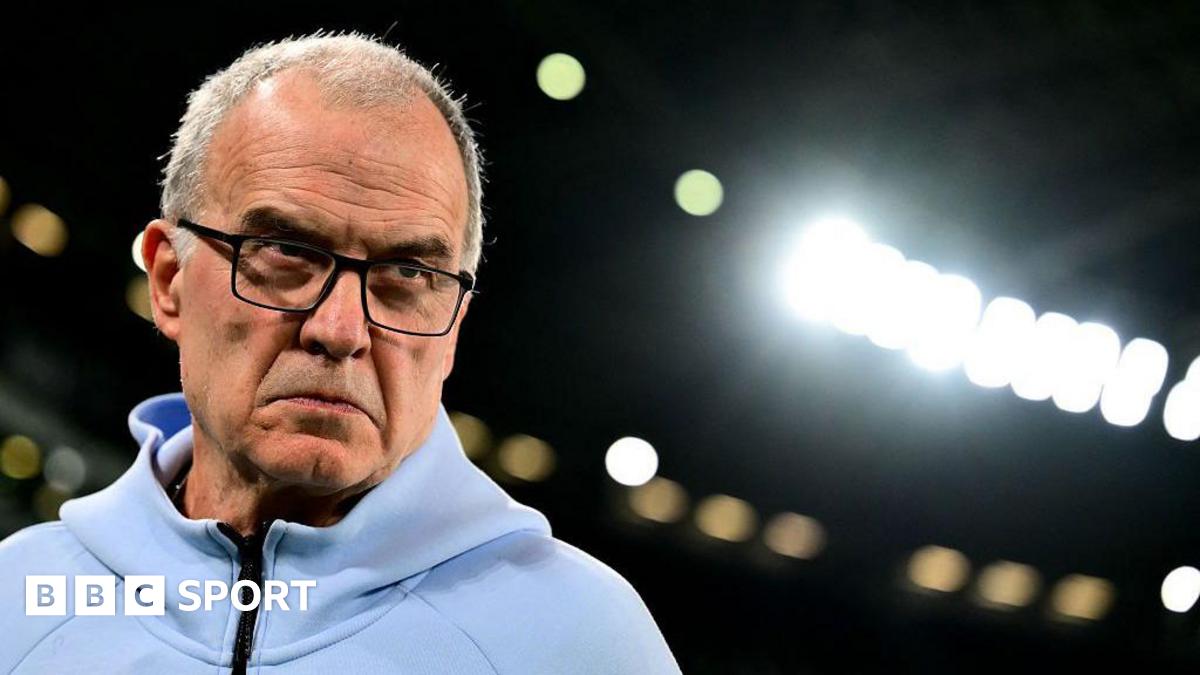
Born in Rosario, Argentina, Bielsa hails from a family of educated minds, with his brother having worked in politics and his sister a renowned architect.
Both of those professions require analytical thinking – a gift Bielsa also possessed from childhood. However, he was drawn to football, not necessarily playing it but absorbing the tactics.
Every day he would send his mother to the local newsagent to buy football magazines and newspapers, spending hours reading up as much as he could about how teams played and how different managers worked.
Bielsa was still a capable but limited footballer. A defender but lacking in pace, he came through the youth system at his boyhood club Newell’s Old Boys before frustrating spells in the lower leagues of Argentinian football meant he decided to call time on his playing career at the age of 25 to focus on coaching.
His post-playing career started with the Buenos Aires university football team and, after two years there, he secured a position back at Newell’s as a coach of the reserve team.
Bielsa’s frustration with his limitations as a player played a significant part in his coaching philosophy, as he focused on ensuring that any player he coached was able to get the maximum out of their ability.
His training sessions were intense, with lots of focus on repetition – if a player did not have the talent to make something happen naturally then he would be sure to drill the processes into their minds.
Bielsa was appointed Newell’s manager in 1990 and his methods brought instant success as they won the Argentinian championship.
A spell in Mexico followed before Bielsa returned to Argentina in 1997 to manage Velez Sarsfield. There he would be labelled ‘loco’ (crazy) as he insisted on fielding two teenage centre-backs. He would have the last laugh, however, as he immediately helped them to win the league title.
Bielsa, who has said his nickname of ‘El Loco’ actually predates his time at Velez Sarsfield, very briefly became manager of Spanish side Espanyol but left them when he was offered his first international post in 1998 – as Argentina boss.
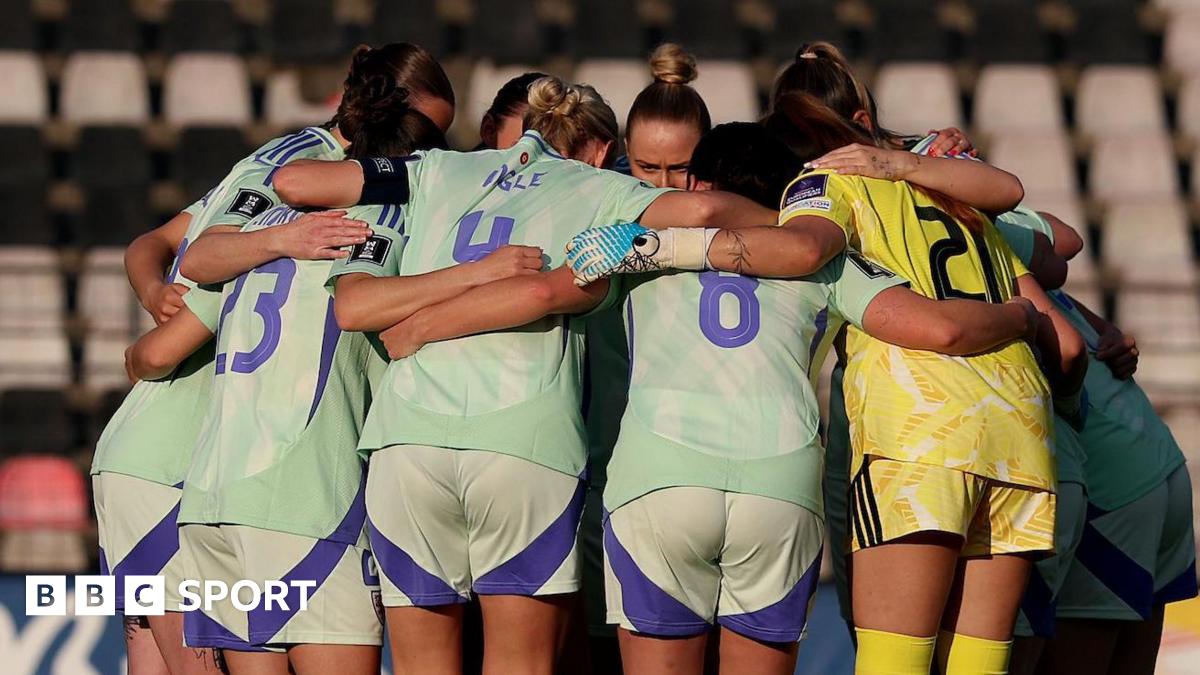
Wales’ preparations for Friday’s Women’s World Cup qualifier in Montenegro have been badly disrupted after the team flight was forced to divert to Italy due to bad weather.
Rhian Wilkinson’s squad took off from Cardiff at 16:30 BST on Wednesday and had been due to arrive in Montenegro around three hours later.
However, they were unable to land in Podgorica due to electrical storms around the Montenegrin capital and eventually diverted to the Italian port city of Brindisi.
After more than three hours on the tarmac in southern Italy, during which Wales had hoped weather conditions would ease, the decision was taken to stay in Brindisi on Wednesday night.
That left Football Association of Wales (FAW) officials scrambling to secure hotel rooms for the travelling party, as well as trying to arrange travel plans for Thursday.
“Due to storms in Podgorica, the Cymru women’s national team flight was diverted this evening, landing safely in Brindisi airport in south Italy,” the FAW said on social media.
“The team will stay overnight in Italy and will arrange alternative travel to Montenegro ahead of Friday evening’s match.”
Wales take on Montenegro in Podgorica in their penultimate Group B1 fixture at 17:00 BST on Friday.
They then host Czech Republic, their rivals to finish top of the group, in their final fixture in Cardiff on Tuesday.
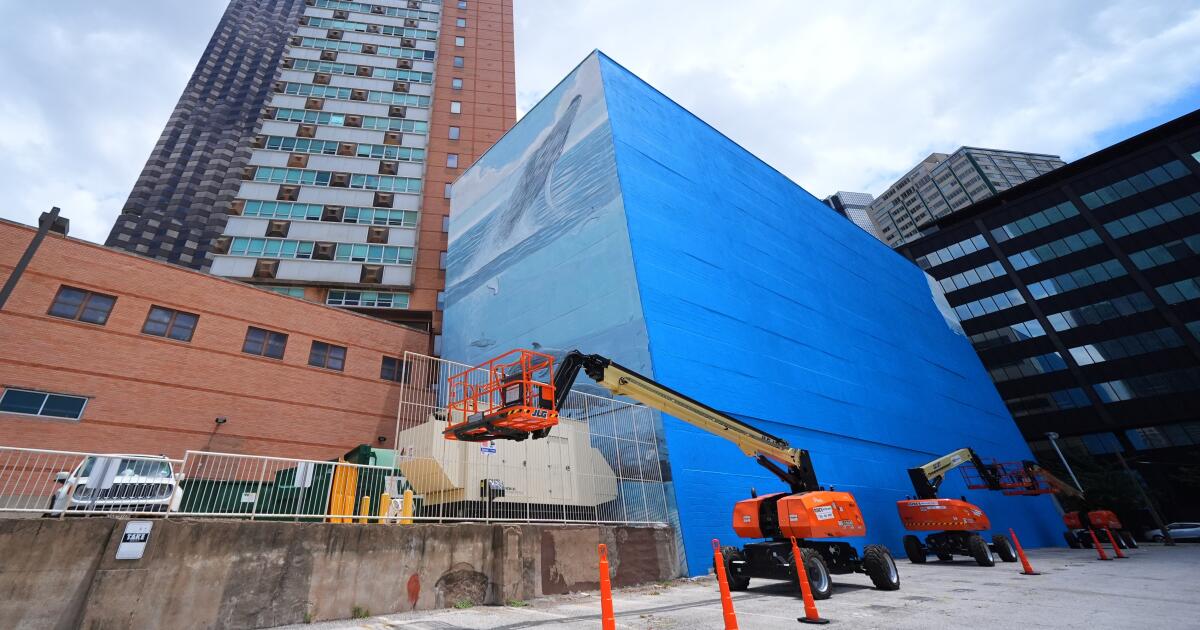
The artist who painted a giant mural on a building in downtown Dallas of life-sized swimming whales has filed a $25 million lawsuit against soccer’s international governing body and others, saying they illegally painted over his work to promote the city’s upcoming World Cup matches.
The artist Wyland says he hand-painted the sprawling mural that covered roughly 17,000 square feet across two of the building’s walls.
The mural stood for nearly three decades before workers began painting over it last month, causing an uproar among residents who admired the mural’s grand scale and message of ocean conservation.
The area’s World Cup organizing committee said in a statement that, in place of Wyland’s mural, new artwork is planned “that captures this current historical moment and reflects the energy, unity, and global spirit surrounding the World Cup 2026.” It said a portion of Wyland’s mural would be preserved.
Wyland filed suit Monday in U.S District Court in Dallas saying that World Cup organizers, along with the building’s owner and management company, painted over his mural without his consent or even notifying him. He says their actions violated a 1990 federal law passed to protect visual artists from destruction of publicly displayed works.
Wyland is seeking at least $25 million in damages. His lawsuit says world soccer’s governing body, FIFA, and other defendants “hastily and irrevocably destroyed a civic landmark” to promote the World Cup.
“Though FIFA claims they were working to develop art for the host city, in truth, they defaced an historic fixture of the host city,” the artist’s lawsuit says.
A FIFA spokesperson said Tuesday the federation “has no involvement in this whatsoever” and referred a reporter to the tournament’s local organizing committee.
A spokesperson for the North Texas FWC Organizing Committee declined to comment. The committee isn’t named as a defendant in the lawsuit.
A spokesperson for Slate Asset Management, which manages the building where the mural was painted over, said in a statement that local World Cup organizers asked Slate in March to donate the mural space for “a new public art installation.”
“Slate is not being compensated in any way for the use of the wall space and was told by the local groups that Mr. Wyland had been notified,” the management company’s spokesperson said in an email.
Dallas is hosting more World Cup matches than any of the other sites in the event co-hosted by the U.S., Canada and Mexico, with nine matches set to be played at AT&T Stadium in suburban Arlington, home of the Dallas Cowboys.
Wyland’s Dallas mural, titled “Whaling Wall 82,” was finished in 1999 and is among more than 100 similar murals known as Whaling Walls the artist painted around the world to promote the conservation of ocean life.
An online petition protesting the mural’s destruction and calling for protecting of public artwork in Dallas has received more than 2,600 signatures.
Wyland’s lawsuit alleges violations of the Visual Artists Rights Act, a 1990 federal law that protects artwork of “recognized stature” even if someone else owns the physical artwork.
A judge cited that law in 2018 when he ordered a property owner to pay a group of New York graffiti artists $6.7 million for whitewashing dozens of their spray-painted murals on buildings that once housed a factory in Queens. The ruling was upheld on appeal.
Bynum writes for the Associated Press. Bynum reported from Savannah, Ga.
WASHINGTON — When nearly all the scheduled musical performers pulled out of a concert series marking America’s 250th anniversary — fearing the event had become too closely tied to President Trump — he responded by making it official.
Trump announced he’d now be the headlining act of the Great American State Fair.
That put to rest any possible scenario where a president who has built his personal and political persona on seizing the spotlight might cede the stage to avoid overshadowing a national celebration bigger than himself. It also offered a peek into how the president is likely to approach hosting the upcoming World Cup.
From his reality shows before becoming a politician, to hours spent entertaining at events in ways planned and impromptu, to proudly showing off his various properties and efforts to overhaul the White House, the president relishes hosting. Last year he even jokingly mused about leaving the presidency to do it again full time on TV.
Trump can be a gracious, personable and highly watchable master of ceremonies — but he’s also one who tends to make every event about himself.
“The president has an outsized personality,” said Timothy Naftali, former director of Richard Nixon’s presidential library and professor at Columbia University’s School of International and Public Affairs. “There’s a predictability to the way in which the president frames his actions — or any actions around any event associated with him — and that’s just part of who he is, and his makeup and his professional background.”
Exhibit A is the fair, which begins June 25 and was supposed to feature concerts but now will be kicked off by a Trump rally. That will follow a UFC bout at the White House on June 14. Trump is a longtime cage match fan and the event marks his 80th birthday, but the president has sought to bill it as part of the anniversary festivities.
Many presidents relished hosting — but not like this
Andrew Jackson threw open the White House for an 1829 Inauguration Day bash so unruly that staff eventually dispersed the crowd by moving tubs of whiskey and ice cream to the lawn. Franklin D. Roosevelt mixed pre-dinner cocktails for friends and aides at White House gatherings he playfully dubbed “The Children’s Hour.” Audrey Hepburn was among the luminaries Ronald Reagan hosted at the White House.
Trump frequently had first-term dinners with business leaders but has more fully embraced the role since returning to the White House. He built a patio area similar to one at his Mar-a-Lago estate and frequently travels to Florida and his properties in Bedminster, New Jersey, and Sterling, Virginia, to headline fundraisers and other swanky gatherings.
Asked if Trump might overshadow events meant to bring the country and the world together, White House spokesman Davis Ingle pointed to the president’s efforts to lead extensive renovations at the White House and around Washington. He said in a statement that the “historic beautification” gives the city “the glory it deserves during our nation’s historic semiquincentennial celebration — something everyone should celebrate.”
Still, Trump has found unprecedented ways to inject himself into the anniversary.
The State Department is issuing passports with the president’s picture and officials have designed a new $250 bill with his likeness. The Trump Organization, being run by Trump’s children while he’s president, applied to trademark “Trump 250” logos and other merchandise.
The U.S. Mint is also producing a 24-karat gold commemorative coin with Trump’s face, though that recalls a half-dollar silver coin bearing the likeness of President Calvin Coolidge to help mark America’s 150th anniversary in 1926.
Past presidents had starring anniversary roles
Ulysses S. Grant opened a Centennial Exposition in Philadelphia to mark the 100th anniversary of the signing of the Declaration of Independence in 1876. Richard Nixon, in 1971, inaugurated a five-year “Bicentennial Era” ahead of the 200-year mark, though he resigned before the big day arrived.
Nixon’s successor, Gerald Ford, then in the midst of an ultimately unsuccessful reelection campaign, began the week of July 4, 1976, by inaugurating the Smithsonian Institution’s National Air and Space Museum and attending a Kennedy Center event featuring Bob Hope, OJ Simpson and others reading patriotic texts.
On Independence Day, Ford spoke at historic Valley Forge, then traveled to Philadelphia’s Independence Hall, declaring, “Liberty is a living flame to be fed, not dead ashes to be revered.“ He also went to New York Harbor for a tall ship parade, presided over naturalization ceremonies at Thomas Jefferson’s Monticello estate and hosted a state dinner for Britain’s Queen Elizabeth II.
Still, “while Ford certainly hoped to use the bicentennial to promote his reelection campaign, he didn’t do it in such a self-aggrandizing, self-centered, narcissistic way,” said Marc Stein, a history professor at San Francisco State University and author of “Bicentennial: A Revolutionary History of the 1970s.”
Ford, added Naftali, “knew when to step out of the limelight and make sure the focus was on what mattered, which was the United States of America and the Declaration of Independence.”
Trump, by contrast, “generally has contempt for norms” and rarely mentions “the great sweep of history,” Naftali said.
Dueling anniversary planners as Trump pushes to revise history
Congress charged a national organization, America250, with planning commemorative events. Ahead of the 2024 election, the group drafted a memo asking whomever the incoming president was to mobilize federal agencies and welcoming presidential involvement in events and initiatives.
Asked about Trump, America250 Chair Rosie Rios said the group “has had a very supportive and collaborative relationship with the organizations planning initiatives on behalf of the president.”
But Rios’ organization is separate from Freedom 250, a mix of public and private partnerships which the Trump administration established to fund and prepare anniversary events — which has caused confusion.
America250 aims to “inspire our fellow Americans to reflect on our past, strengthen our love of country, and renew our commitment to the ideals of democracy through programs that educate, engage, and unite us as a nation.”
That might seem a departure from the “Restoring Truth and Sanity to American History” executive order Trump signed last year. It sought to beat back a “revisionist movement” responsible for “replacing objective facts with a distorted narrative driven by ideology rather than truth.”
Stein, now serving a one-year term as president of the Organization of American Historians, is helping organize “We Want More History,” a push to coordinate local events celebrating the public’s love for the subject in fact-based ways.
He said Trump’s version of history is “closer to propaganda, and it’s closer to cheerleading.”
World Cup gives Trump another platform to play host
The president has similarly taken his exceeding-normal-limits approach to the soccer tournament the U.S. is co-hosting with Mexico and Canada.
He created a federal World Cup task force, and leads it. He collected a peace prize from soccer’s governing body, FIFA, and said he’d be on stage to present the tournament’s golden trophy to the winning team.
Trump even oversaw the tournament’s draw at the Kennedy Center, which he’s sought to rename for himself, sparking legal challenges.
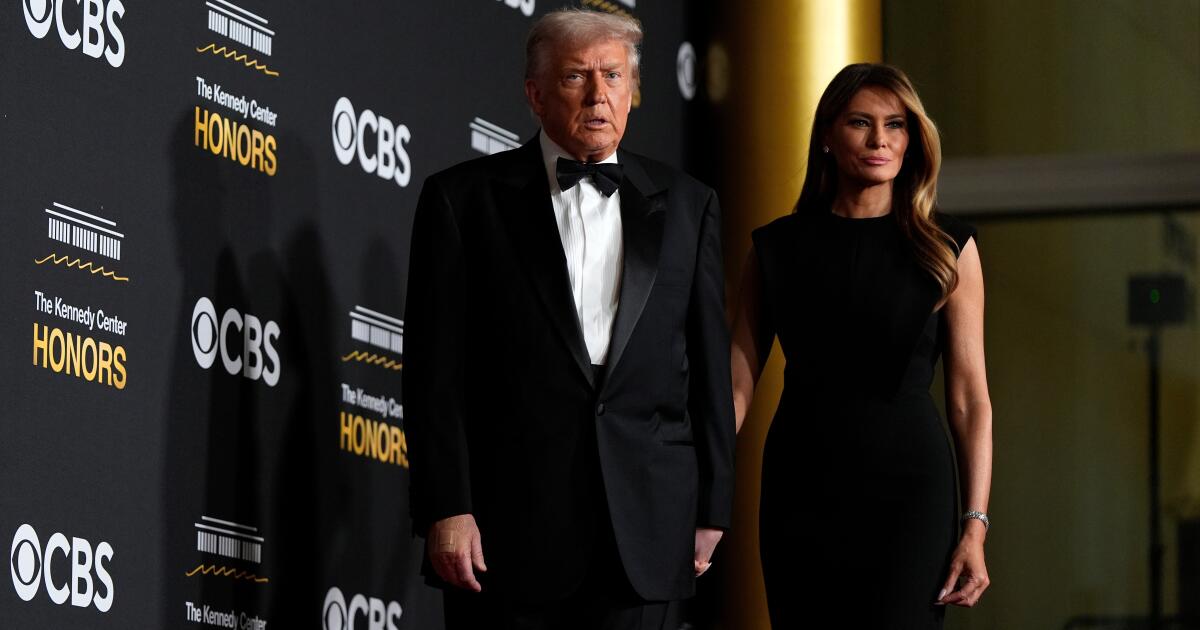
He returned to the same building to headline December’s Kennedy Center Honors, noting, “We never had a president hosting the awards before.” He later posted on social media, “Would you like me to leave the Presidency in order to make ‘hosting’ a full time job?”
Naftali noted, “Whatever filters there were in the first term — and there weren’t many — are gone.”