Corruption

Trump’s reported $2.2 billion in 2025 income sets off ethics alarms

Ethics experts sounded the alarm Wednesday after new financial disclosure reports revealed that President Trump’s income ballooned to $2.2 billion in 2025, with $1.4 billion coming from various new cryptocurrency-related businesses.

“It’s bribery. It’s graft. It’s exploitation of public power for private financial gain,” said Kathleen Clark, a law professor at Washington University and an expert in government ethics. “Trump has — with the acquiescence of a somnolent, GOP-controlled Congress and the active assistance of John Roberts’ Supreme Court — transformed the presidency into a massive corruption racket.”

Trump reported income of over $600 million in 2024. But after he entered the White House in 2025, he reported that his income had soared to more than $2.2 billion.

The 2025 annual disclosure report filed with the Office of Government Ethics shows that Trump ramped up his real estate business in countries across the globe, particularly in the Middle East, at a time when his government was negotiating over vital issues of military aid and economic tariffs. The president also expanded his dealings in the relatively new realm of cryptocurrency.

According to the 927-page report, Trump made $635 million in royalties from Celebration Coins and more than $500 million from his World Liberty Financial crypto firm. He drew in millions from a raft of Trump-branded merchandise including God Bless the USA Bibles and sneakers depicting him with his hand raised in a fist. He also brought in $10.4 million from a property in the United Arab Emirates and $9 million from a property in Saudi Arabia.

Noah Bookbinder, an ethics expert and former president of Citizens for Responsibility and Ethics, a nonprofit watchdog group in Washington, described Trump’s business dealings while in the White House as “entirely unprecedented, certainly in modern history, but I think by most ways of measuring, in all of American history.”

“This is corruption,” Bookbinder said. “You have a president who has been quite transparently using the presidency in ways that benefit his business interests and intertwining the presidency and business interests.”

But the president and the White House brushed aside ethics concerns about the money Trump is making.

Trump told reporters Wednesday that he made a lot of money before he came to the White House, he had “big institutions” run his money, and that he had benefited, like every other American, as the stock market went up.

“We’re all profiting,” he said. “I’m profiting because I have a lot of money and a lot of cash.”

In a statement, White House spokesperson Anna Kelly said: “Neither the President nor his family has ever engaged — or will ever engage — in conflicts of interest. … All actions by President Trump and his administration are taken in the best interest of the American people.”

Although the report does not show exactly how much Trump is earning — it provides details of revenue, rather than profit — the scale of the president’s cryptocurrency dealings elevated ethics watchdogs’ long-standing concerns.

Jordan Libowitz, a vice president at Citizens for Responsibility and Ethics, said the most concerning detail of the new report is the hundreds of millions of dollars coming in from various crypto ventures partnered with companies that the American public knows little about.

“At a time when his own administration itself is setting regulation for these types of companies,” Libowitz said, “there’s just this massive opportunity for corruption when foreign governments and foreign nationals can pour tens of millions of dollars into the president’s pocket.”

As a real estate mogul, Trump has long invested in hotels, condominiums and golf courses. But cryptocurrency, Libowitz said, offers vastly more potential for corruption.

“There’s only so many hotel rooms you can book, so many rounds of golf, but there’s no limit with crypto,” Libowitz said. “You can just buy his meme coin and he gets a cut, so you kind of take out the middleman, but also the cap or the amount of money you can funnel to the president.”

Libowitz said it was also problematic for Trump to expand his real estate empire in foreign countries, particularly the Middle East.

“Now it seems that almost all his new developments are in foreign countries, and that opens up, if you’re building this giant resort, you’re going to need help from the local government, whether it’s tax breaks or utility issues, or building a road, or speeding up permits,” Libowitz said. “These are ways that foreign governments can do favors for the American president.”

In the half a century before Trump was elected, ethics experts say, presidents from Nixon to Obama publicly released their tax returns, sold properties or put the proceeds in a blind trust managed by someone they did not know.

“They weren’t doing it because they legally had to, but because they thought it was the right thing to do,” Libowitz said.

Ever since Trump was first elected in 2016 and opted to not sell his businesses or put them in blind trusts, ethics experts have urged Congress to impose more aggressive financial oversight over money in politics.

“Congress needs to update the law, and basically, mandate blind trusts and sale of assets and disclosure of tax returns,” Libowitz said.

Noting that the Constitution’s Emoluments Clause explicitly states that the president cannot accept things of value from foreign or domestic governments, ethics experts say Trump is flouting the law and Congress has chosen to not enforce it.

Richard Painter, a law professor at the University of Minnesota and former White House ethics lawyer under President George W. Bush, said Congress needed to close loopholes that exempt presidents from federal conflict of interest laws as well as enforce the Foreign Emoluments Clause.

“Nobody holding a position of trust with the United States government can accept emoluments, profits and benefits from foreign governments, and that is flatly prohibited under the United States Constitution,” Painter said. “Now, if the United Arab Emirates put money into Liberty Financial, as I understand they did … and then Trump makes money off Liberty Financial, that’s a Foreign Emoluments Clause problem.”

Congress, he said, should empower an independent prosecutor to investigate such conflicts.

“The problem with the Foreign Emoluments Clause is how do we enforce it?” Painter said. “The founders and head of the Congress enforced it by impeaching anybody who took a bunch of foreign government money, but I guess that system’s not working. That’s a serious problem.”

Source link

Donald Trump reports $1.4bn in cryptocurrency income in government filing | Donald Trump News

Trump has launched a slate of crypto-friendly policies since returning to the White House for a second term.

A new government report has shown that United States President Donald Trump made millions from cryptocurrency and settlements with media companies last year, raising questions about possible conflicts of interest.

On Tuesday, the US Office of Government Ethics released annual financial disclosure forms for both Trump and his vice president, JD Vance.

Recommended Stories

list of 3 itemsend of list

One 927-page document itemises all of Trump’s reported assets and income for 2025. They include more than $1.4bn from his family’s cryptocurrency ventures.

Trump received more than $500m from World Liberty Financial, a crypto venture he and his sons co-founded. The president also reported another $635m from the sale of his $TRUMP meme coins.

The report suggests that investments in digital assets now generate one of the largest tranches of Trump’s income, overtaking even the real estate empire he inherited from his father.

The revelation is likely to intensify scrutiny of Trump’s policies.

Since returning to the White House in January 2025, Trump has launched a slate of crypto-friendly policies as he seeks to make the US the “crypto capital of the world”.

Early in his second term, for instance, the president announced that his government would create a national strategic cryptocurrency reserve to help ensure the stability of certain digital assets.

He also hosted the first-ever White House cryptocurrency summit.

The forum included several technology leaders that had been under investigation during the administration of Trump’s predecessor, Democrat Joe Biden.

But Trump reversed those actions. In February 2025, for instance, the Securities and Exchange Commission announced it would drop charges against Coinbase, the largest US-based cryptocurrency exchange, after it was accused of acting as an unregistered broker.

Other digital currency firms came under suspicion for fraudulent transactions.

Trump has coupled the shift away from government oversight with efforts to champion new legislation, including the GENIUS Act.

The law, passed in Congress in July 2025, created a general regulatory framework that required stablecoin, a type of cryptocurrency, to be backed one-to-one by US dollars. Advocates said the law would help to make cryptocurrency more mainstream.

“The entire crypto community: For years, you were mocked and dismissed and counted out,” Trump said during the law’s signing ceremony. “You were counted out as little as a year and a half ago, but this signing is a massive validation.”

But Trump’s increasingly close ties to the cryptocurrency industry have drawn criticism for its potential for corruption.

Last week, five Democratic senators, including Elizabeth Warren and Richard Blumenthal, called on their Republican colleagues to join them in forcing Trump administration officials to testify under oath about their cryptocurrency dealings.

They pointed to investments from the United Arab Emirates (UAE) in World Liberty Financial, the company the Trump family co-owns with government envoy Steve Witkoff’s sons.

Those investments, they argued, “raise questions about what more the UAE may receive — or may have already received – at the expense of U.S. national security after investing in the Trump family crypto company”.

The five Democrats urged immediate hearings on the matter.

Source link

Gojek co-founder Nadiem Makarim sentenced to 10 years for corruption | Corruption News

Indonesia court finds former education minister guilty of abuse of authority and of causing state losses.

A court in Indonesia has sentenced former Education Minister Nadiem Makarim, co-founder of the Gojek app, to 10 years in prison on corruption charges.

Judges at the Jakarta anti-corruption court on Tuesday found Makarim guilty of corruption related to the procurement of Chromebook laptops for schools during the COVID-19 pandemic.

Chief Judge Purwanto Abdullah, presiding over the ruling at Indonesia’s Corruption Court in Jakarta, said a panel of judges had found Makarim guilty of abuse of authority and of causing state losses. He was found not guilty of directly seeking to enrich himself.

The court said the case caused state losses of approximately $120m. It also ordered Makarim to pay a fine of Rp1 billion ($55,850) and Rp809 billion (more than $45m) in restitution, or face additional prison time.

The verdict marks a sharp fall for the Ivy League-educated entrepreneur once seen as a symbol of Indonesia’s startup sector.

Makarim, 41, co-founded Gojek in 2010, growing it from a call centre with 20 motorcycle drivers into a major ride-hailing and delivery platform.

He became one of Indonesia’s youngest cabinet ministers in 2019 and served as education minister until 2024.

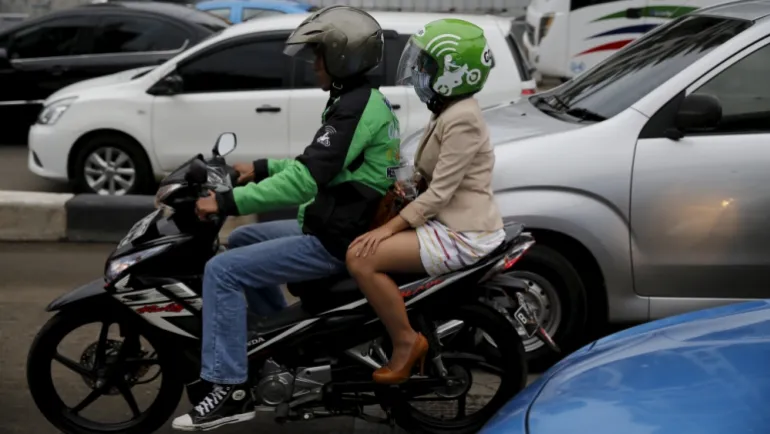
A Gojek driver pillions a customer as he rides his motorcycle through a business district street in Jakarta
A Gojek driver carries a passenger through a business district in Jakarta. Gojek’s app lets users book motorcycle taxis to navigate the city’s gridlock [File: Beawiharta/Reuters]

Prosecutors said his decision to purchase Chromebook laptops, which run Google’s ChromeOS, was linked to the US tech giant’s investment in Gojek.

Makarim has consistently denied wrongdoing and vowed to appeal.

“The judges couldn’t even look me in the eye,” he said, adding he could not pay the amount ordered under the ruling.

The former minister has said the procurement saved money and called the case an “investigative error”.

In his defence this month, he said: “Experts and factual witnesses have stated: there is no element of state loss, no element of violation of the law, no element of self-enrichment, enrichment of another person or company, and no malicious intent or bad intentions.”

Prosecutors had sought an 18-year prison sentence and Rp5.68 trillion (about $313m) in restitution. Google was not charged and has denied any wrongdoing.

GoTo Group, formed after Gojek merged with Tokopedia in 2021, said Makarim had not had a decision-making role since resigning in 2019.

Makarim, whose lawyer father once served on the ethics committee of Indonesia’s anti-corruption body, said he joined the government to encourage professionals to enter public service.

Source link

What’s behind the anti-corruption crackdown in Iraq? | Corruption News

A number of senior politicians have been detained in a wave of arrests.

For more than two decades, corruption has been a serious issue in Iraq.

The oil-rich nation has consistently been ranked as one of the most corrupt in the world.

Recommended Stories

list of 4 itemsend of list

But this week, its new government has embarked on an unprecedented anti-corruption crackdown.

It’s targeting many high-profile politicians and other senior figures accused of making illicit wealth and abuse of office.

Iraqis have repeatedly protested against what they say is rampant corruption in their nation.

Now, they hope the new government keeps this promise to eradicate what they call a ‘pandemic of fraudulent activities’ at the highest echelons of power.

But what are the challenges ahead in this battle?

Presenter: Imran Khan

Guests:

Ahmed Rushdi – President of the think-tank, House of Iraqi Expertise Foundation.

Renad Mansour – Deputy Director of the Middle East and North Africa Programme at Chatham House.

Manuel Pirino – Regional Advisor for Middle East and North Africa at Transparency International.

Source link

Stealing from the gods: India’s Ram Temple hit by corruption scandal | Religion News

New Delhi, India – Brajesh Kumar climbs three floors every evening to sit in solitude on the rooftop terrace of his house overlooking the Ram Temple in Ayodhya in northern India’s Uttar Pradesh.

Over decades, the 65-year-old has seen the once-sleepy town metamorphose into the biggest flashpoint of the Hindu majoritarian movement, championed by Prime Minister Narendra Modi’s Bharatiya Janata Party (BJP). Where the temple stands used to be the site of the 16th-century Babri Mosque, but in 1992 a Hindu mob tore it down, sparking religious riots that killed nearly 2,000 people across the country, mostly Muslims.

Two and a half years ago, Modi presided over the consecration ceremony of the new temple, devoted to the Hindu god Ram. Many Hindus believe Ram, the god worshipped as an epitome of righteousness, was born there.

To Hindu devotees like Kumar, the temple – despite the controversy and deaths that defined its birth – brought a sense of serenity.

Until recently.

For the past month, the temple has been embroiled in allegations that those entrusted with its management have instead embezzled donations worth potentially millions of dollars that the site attracted from devotees.

“We have been betrayed [by the management], who have looted our faith, nothing less,” Kumar told Al Jazeera. “Left to them, they will sell us all one day in the name of religion and stuff their own pockets.”

The allegations have led to police investigations, arrests and political fallout that could shape elections in India’s most populous state that are only months away.

ram temple
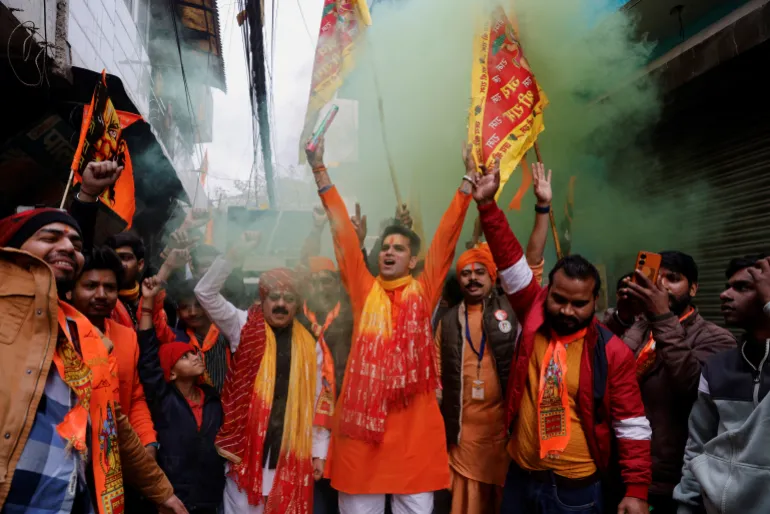
People celebrate the opening of the temple of the Hindu god Ram in the northern town of Ayodhya in a street in New Delhi, India, on January 22, 2024 [Anushree Fadnavis/Reuters]

Ayodhya’s can of worms

Since its inauguration, the Ram Temple has been among the top religious sites in India, attracting millions of Hindu devotees.

An independent trust, the Shri Ram Janmabhoomi Teerth Kshetra Trust, manages the shrine. Although it is outside the purview of the government, its executive members wield political influence, and some of them come from the Rashtriya Swayamsevak Sangh, the ideological wellspring of the BJP.

The corruption allegations first surfaced this month after Mahipal Singh, a former supervisor of the trust’s accounting team, publicly called out irregularities. Al Jazeera could not reach him for comment.

After a public uproar, Akhilesh Yadav, a former chief minister of Uttar Pradesh from the opposition Samajwadi Party, picked up the issue, alleging that millions of rupees in donations had gone missing.

The mounting pressure pushed the state government, ruled by the BJP, to form a three-member investigation team, which has submitted a report on the alleged misappropriation of donations.

Although the content of the report has not been made public, the state police registered a criminal case and have arrested at least eight people, including those involved in counting cash and valuable offerings at the temple.

More devotees have come forward since, seeking the whereabouts of their valuables, including silver bricks and gold jewellery and artefacts, that they had handed over to the trust’s executives.

On Friday, the trust’s longstanding general secretary, Champat Rai, stepped down with other high-profile trustees. The allegations have been particularly damning for Rai, who has been a central figure in the movement for the Ram Temple.

But it has done little to cool down the tensions in the state, where thousands of devotees, including some BJP supporters, feel cheated.

ram temple
The Ram Temple is illuminated after its inauguration in Ayodhya on January 22, 2024. [Adnan Abidi/Reuters]

‘Cunning thieves running Ram Temple’

Santosh Dubey was among those tried for tearing down the Babri Mosque in 1992. He has never shied away from his role and instead has flaunted it.

After the mosque’s demolition, Dubey waited for a final verdict about what was to happen to the site from the courts, where both sides fought bitterly for decades. In 2019, the Supreme Court awarded the site to Hindus – even though it deemed the destruction of the mosque illegal. The top court gave a piece of land to Muslims outside Ayodhya to build a new mosque. In 2020, Dubey and others accused of roles in demolishing the mosque were acquitted — the court cited a lack of adequate evidence.

If those verdicts felt like vindication to Dubey, the alleged embezzlement at the temple has enraged him.

“This corruption causes me deep anguish, a pain that words cannot express,” Dubey told Al Jazeera, speaking from Ayodhya. “All I can say is that nothing less than the death penalty would suffice for them.”

“Cunning, dishonest and ruthless thieves are running the Ram Temple, and they have created such an atmosphere of fear that no one is willing to speak out against them,” he said.

Dubey said the government will struggle to ignore the anger among devotees because the episode batters the BJP’s narrative that it is a saviour of the Hindu faith.

This is not the first time that the temple trust has been the subject of controversy. In 2021, the trust allegedly bought land at highly inflated prices using public donations.

BJP spokespeople refused to comment on the recent allegations when Al Jazeera reached them.

ram temple
Indian Prime Minister Narendra Modi (with his arms outstretched) and Uttar Pradesh Chief Minister Yogi Adityanath (just to the left of Modi) show the BJP symbol during a roadshow as part of an election campaign in Varanasi, India, on May 13, 2024 [Adnan Abidi/Reuters]

‘Impact on upcoming election’

Devotees of the temple and critics of the government are accusing authorities of attempting a cover-up.

Opposition leader Yadav described the state government’s initial handling of the case as “suspicious”. “The government is arresting the counting staff while shielding the big fish who orchestrated the structural rot,” Yadav said while demanding transparency in the investigation.

Karpatri Maharaj, a prominent Hindu seer associated with the Ram Temple movement, told Al Jazeera that the government is using junior employees as scapegoats and arresting them.

Uttar Pradesh, India’s most populous state, is led by the firebrand Hindu monk-turned-politician Yogi Adityanath, who is often seen as a potential successor to Modi within the RSS-led Hindu majoritarian movement known as Hindutva.

Modi’s party lost a significant base in the state in the 2024 national elections when the BJP fell short of a majority, forcing it to rely on allies’ support to stay in power.

For the BJP, which has long used the campaign for the Ram Temple as a central political plank, the new controversy could prove a challenge before elections in Uttar Pradesh scheduled for early next year, political analyst Rasheed Kidwai said.

“It would have a massive negative impact on the BJP if more religious leaders came forward to speak on this,” Kidwai told Al Jazeera. “This is not something that would be forgotten because it is a matter of faith, and the state chief comes from a religious order himself.”

The episode carries broader lessons, he said: Pandering to religious emotions and fanning divisions can bite back. “What has been benefitting the BJP in these years can also cause immense damage,” Kidwai said.

Babri Demolition
Hindus shout and wave banners as they celebrate the destruction of the 16th century Babri Mosque in Ayodhya on December 6, 1992 [Douglas E. Curran/AFP]

Source link

Iraq arrests senior officials in anti-corruption raids | Corruption

NewsFeed

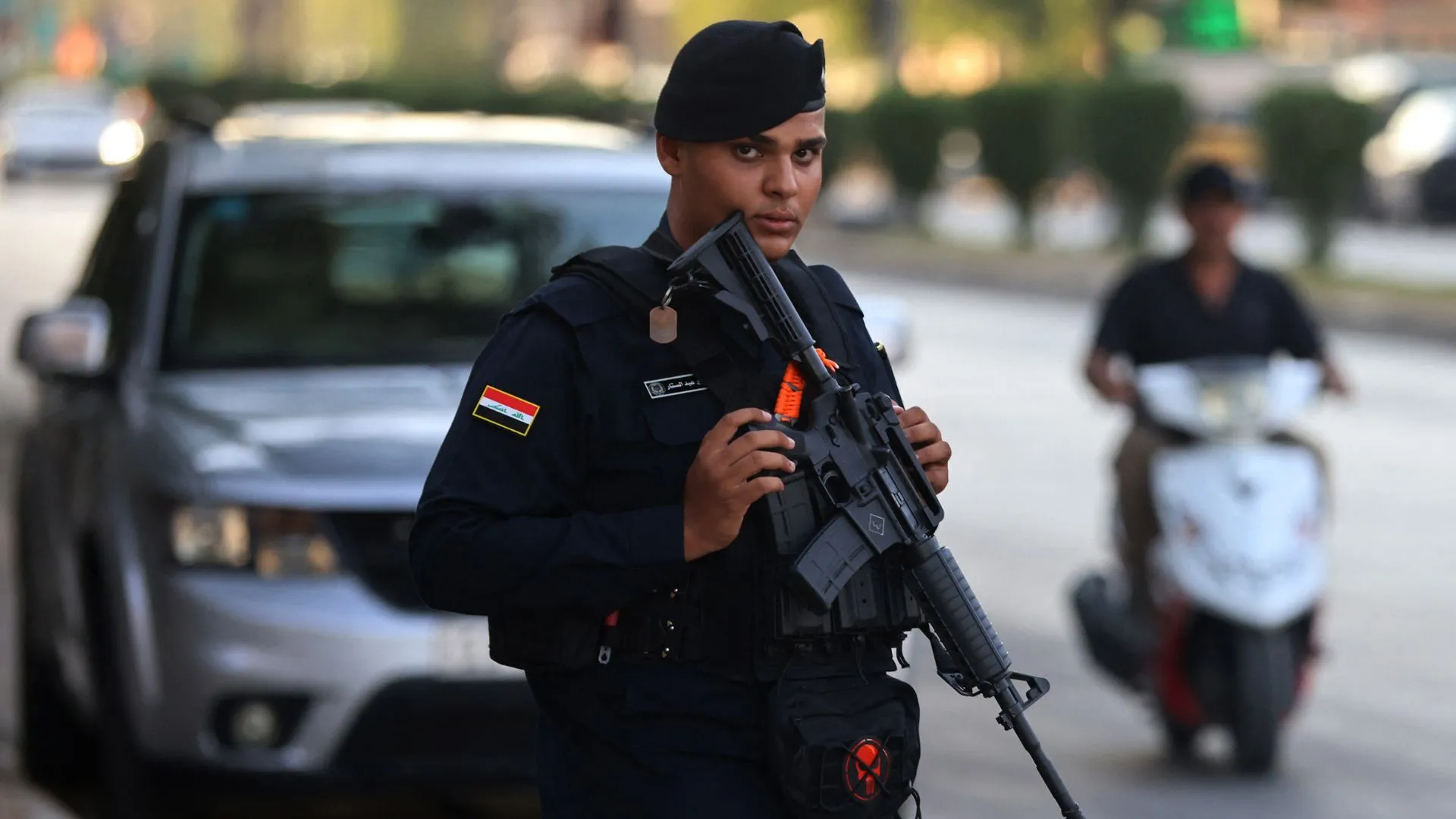
Iraqi security forces arrested several politicians, lawmakers and senior officials in dawn raids across Baghdad as part of a sweeping anti-corruption campaign ordered by Iraq’s new prime minister, Ali al-Zaidi. Elite Counter Terrorism Service units carried out operations in the Green Zone.

Source link

Iraq security forces arrest several officials in anticorruption crackdown | Corruption News

Elite security personnel carry out a large-scale operation at dawn in the Green Zone and several neighbourhoods in Baghdad, security source says.

Several Iraqi politicians, lawmakers and officials have been arrested on corruption charges, Iraqi state-run media report.

Several people, including members of parliament “whose immunity had been lifted and officials whose names appeared in … confessions”, were arrested early on Sunday in the capital, Baghdad, the Iraqi News Agency reported, quoting a security source.

Recommended Stories

list of 3 itemsend of list

It was not immediately clear who had been arrested. There was no immediate official statement on the arrests from the Iraqi government or security forces.

A security source told Al Jazeera that elite Iraqi security forces carried out a large-scale arrest operation at dawn in the fortified International Zone (Green Zone) and several neighbourhoods in Baghdad.

The source said the arrests were carried out by the Counter Terrorism Service and were based on statements provided by Adnan al-Jumaili, deputy oil minister, after his arrest last month on corruption charges.

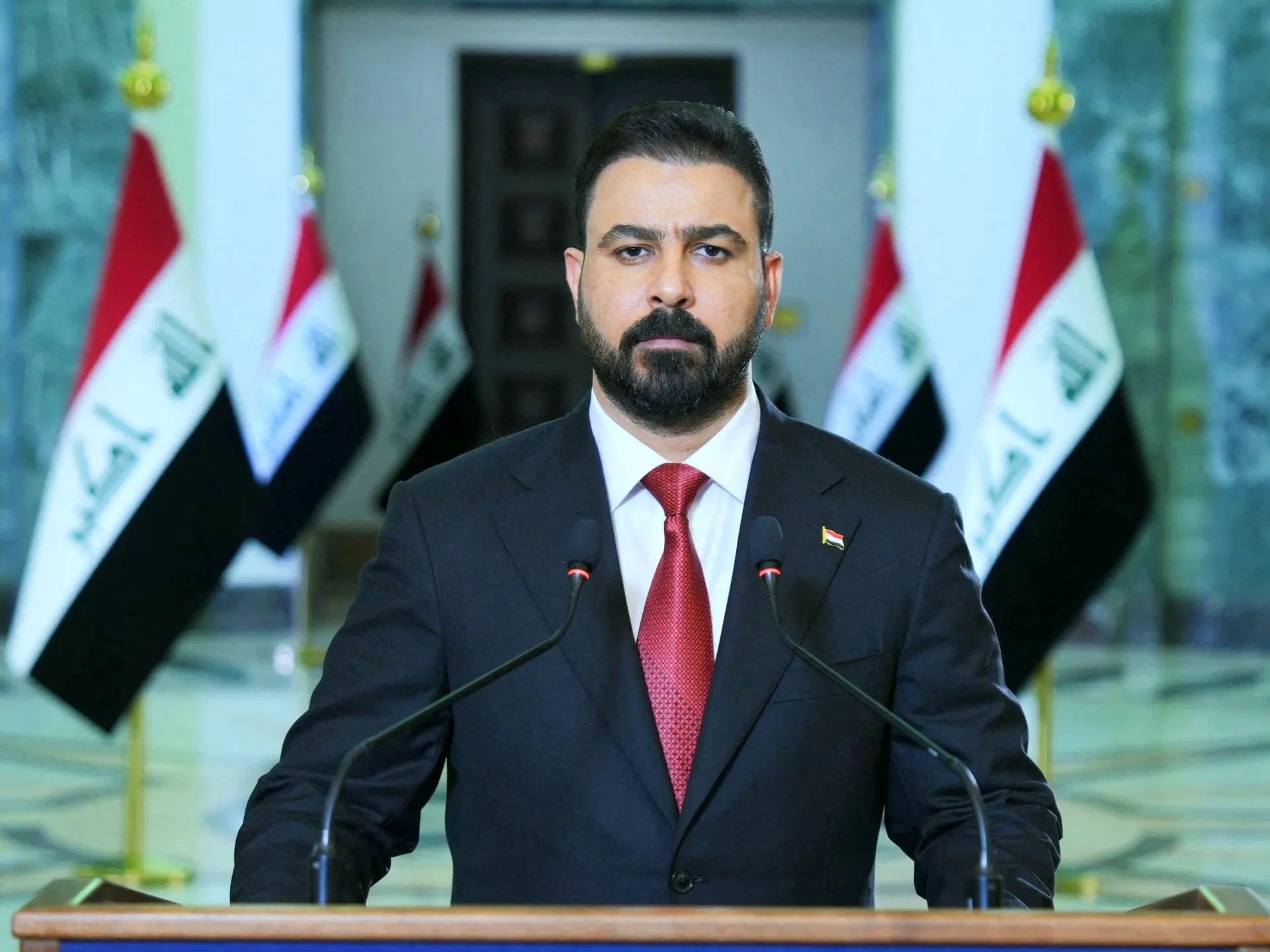
Iraq’s new prime minister, Ali al-Zaidi, has pledged to fight corruption and mismanagement that have plagued Iraq for decades.

Authorities seized about $86m in cash this month that was allegedly part of the corruption case against al-Jumaili.

The Associated Press news agency reported that seven people were arrested on Sunday, including five members of parliament. It cited a security agency report it obtained. The AP said some of those arrested were from the political bloc of former Prime Minister Mohammed Shia al-Sudani.

During November’s parliamentary elections, al-Sudani’s bloc won the largest share of seats, but he did not return as prime minister. He stepped aside amid a deadlock in the Coordination Framework, a group of Shia parties allied with Iran that brought al-Sudani to power. They disagreed for months over their preferred candidate for the post.

Source link

Why is Israel being accused of meddling in Colombia presidential election? | Elections News

Colombia’s outgoing leftist president, Gustavo Petro, has alleged electoral fraud after preliminary results from a presidential run-off saw his handpicked candidate lose by a small margin.

In a barrage of posts on the social media site X on Monday, Petro alleged that the opposition bought votes and Israel and the United States interfered to help opposition far-right candidate Abelardo de la Espriella win.

Recommended Stories

list of 4 itemsend of list

Petro has refused to recognise the results and has called for an investigation by the judiciary.

The president, who was barred by the constitution from running for a second term, was Colombia’s first leftist president, putting him at odds with the US.

His administration is praised for reforms that boosted social spending, raised the minimum wage and redistributed land to poorer families. Petro also cut ties with Israel over Israel’s genocidal war on Gaza and distanced himself from US President Donald Trump’s administration.

However, critics said his refusal to accept the election results risks inflaming political tensions – and violence. Here’s what we know:

cOLOMBIA
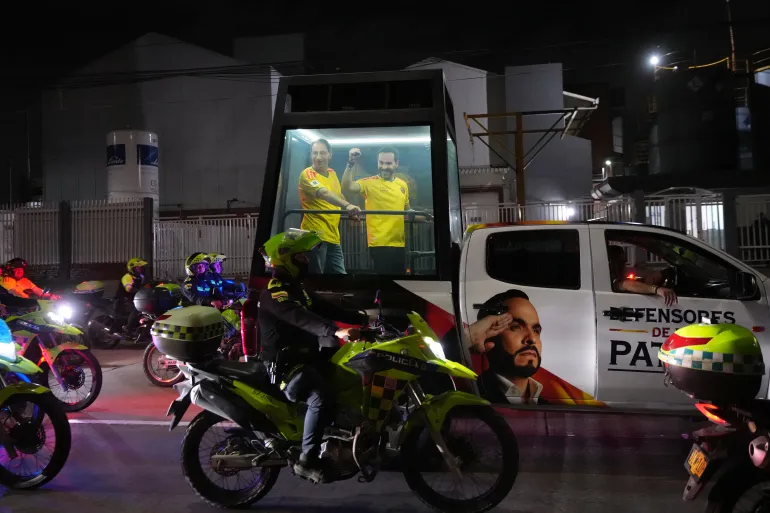
Presidential candidate Abelardo de la Espriella of the opposition Defenders of the Motherland movement and his vice presidential running mate, Jose Manuel Restrepo, ride inside a bulletproof enclosure towards a victory rally in Barranquilla on June 21, 2026 [Rodrigo Abd/AP]

What are the election results?

The first round of the presidential election was held on May 31. Neither of the two leading candidates – Abelardo de la Espriella of the right-wing Defenders of the Homeland movement and Senator Ivan Cepeda of the ruling Historic Pact – secured at least 50 percent of the vote, leading to a run-off on Sunday.

De la Espriella narrowly won with 49.66 percent over Cepeda’s 48.7 percent, according to preliminary results released on Monday by the National Registry, which manages vote numbers.

The razor-thin difference amounts to less than 1 percent of the vote and represents one of Colombia’s closest elections.

Trump-backed de la Espriella, 47, is to take office on August 7. The criminal lawyer is a multimillionaire who campaigned on tougher security and anti-leftist policies. He also has US citizenship.

De la Espriella’s win is part of a recent trend of Latin American countries electing far-right, populist leaders who are pro-Trump. Argentina’s Javier Milei, Honduras’s Nasry “Tito” Asfura, El Salvador’s Nayib Bukele and Costa Rica’s Laura Fernandez Delgado all have close ties to the Trump administration.

Why is Petro alleging fraud?

Petro took to X to denounce in a series of posts what he said was voter fraud committed with the help of Israel and Prime Minister Benjamin Netanyahu.

Petro said there was evidence of manipulation of Form E-14, the official, handwritten tally of sheets filled out by poll workers at each voting station.

The form is a physical record of the vote count and is meant to prevent electoral fraud. It is filled out by hand, and digital scans are also uploaded to the National Registry’s portal for public auditing. If found to have errors, parties may request a recount.

Petro alleged that foreign actors accessed the National Registry’s website and rewrote voting data on some E-14 forms.

“Today we have evidence of a change in IP addresses of several servers of the national registry,” he posted.

“This means that the software was compromised and others wrote data for polling stations and voting posts. The only entity in the world capable of doing that is the state of Israel,” Petro added without providing evidence of Israel’s alleged involvement.

Petro said his party had requested a “technical audit” of the voting software before the elections and asked authorities to retrieve the digital footprints of all digitally transmitted documents to avoid modification. He claimed those requests were ignored.

The outgoing president shared videos of what he alleged captured the “premeditated” modification of E-14 forms. He also claimed the manipulation was done “from the offices of the Bautista brothers”.

Colombia
Electoral workers, observers and party delegates attend the official vote count the day after the presidential run-off in Bogota on June 22, 2026 [Fernando Vergara/AP]

Who are the Bautista brothers?

Petro was referring to Thomas Greg & Sons, an influential private logistics and security printing firm that runs Colombia’s electoral infrastructure. Until recently, it also printed Colombian passports.

It is run by brothers Fernando and Camilo Bautista Palacio. The duo was convicted of bank fraud in the US in the 1980s.

Thomas Greg & Sons, which was founded by their father, Gregorio, has been contracted by the National Registry for more than a decade to manage election logistics, preliminary vote counting and vote-tallying software.

Petro in April accused the Bautista brothers of negotiating a deal with de la Espriella that would see them secure the presidency for the far-right candidate in return for clinching passport printing contracts once more.

At the time, de la Espriella refuted the claims, and his lawyers threatened Petro with a lawsuit.

What are authorities saying?

Attorney General Gregorio Eljach has dismissed the allegations and told reporters there is “no evidence of fraud” with more than 99 percent of the votes counted.

De la Espriella, meanwhile, has so far not responded directly to Petro.

Is de la Espriella linked with Israel?

Yes, de la Espriella has consistently voiced support for Israel and campaigned in Colombia’s Jewish community, making pro-Israel promises and saying his government would “defend Judeo-Christian principles”.

He pledged to reverse Petro’s 2024 decision to cut ties with Israel and has promised to relocate the Colombian embassy to Jerusalem.

Netanyahu congratulated de la Espriella on Monday, saying: “I look forward to working with you to strengthen the bond between Israel and Colombia.”

How has the US reacted?

In his posts, Petro also blamed Trump for interfering in the elections by publicly endorsing a candidate and thus swaying voters.

Trump endorsed de la Espriella on his Truth Social platform weeks before the run-off.

Trump and US Secretary of State Marco Rubio also congratulated de la Espriella on his preliminary win, and Trump took credit for the far-right candidate’s victory.

“He was in 10th place. I endorsed him, and he won the election. He called me last night and thanked me for the endorsement,” Trump told reporters at the White House on Monday.

Rubio wrote on X: “The Trump administration looks forward to working closely with your incoming administration to advance regional security cooperation, end illegal immigration to the United States, and strengthen our economic ties.”

Petro has invited Trump to make a statement on the electoral fraud allegations.

“I formally invite President Donald Trump to speak,” Petro wrote, adding that the US president bears responsibility for “having supported a candidate and not the freedom of the Colombian people”.

What is the US-Colombian relationship like?

Although both countries have close trade ties, diplomatic relations have often been strained over drug trafficking policies and relations with Israel, among other issues.

But relations essentially collapsed under the Trump and Petro administrations.

Petro in January last year refused to allow US migrant deportation planes to land in his country and said on X that the US “cannot treat Colombian migrants like criminals”.

In October, the US sanctioned Petro, his family and key officials in his government based on unproven allegations of involvement in the drug trade.

In January this year, the US military abducted leftist Venezuelan President Nicolas Maduro from his Caracas home after the Trump administration accused him of “narcoterrorism”.

Source link

Judge revokes Spanish prime minister’s wife’s passport ahead of corruption trial

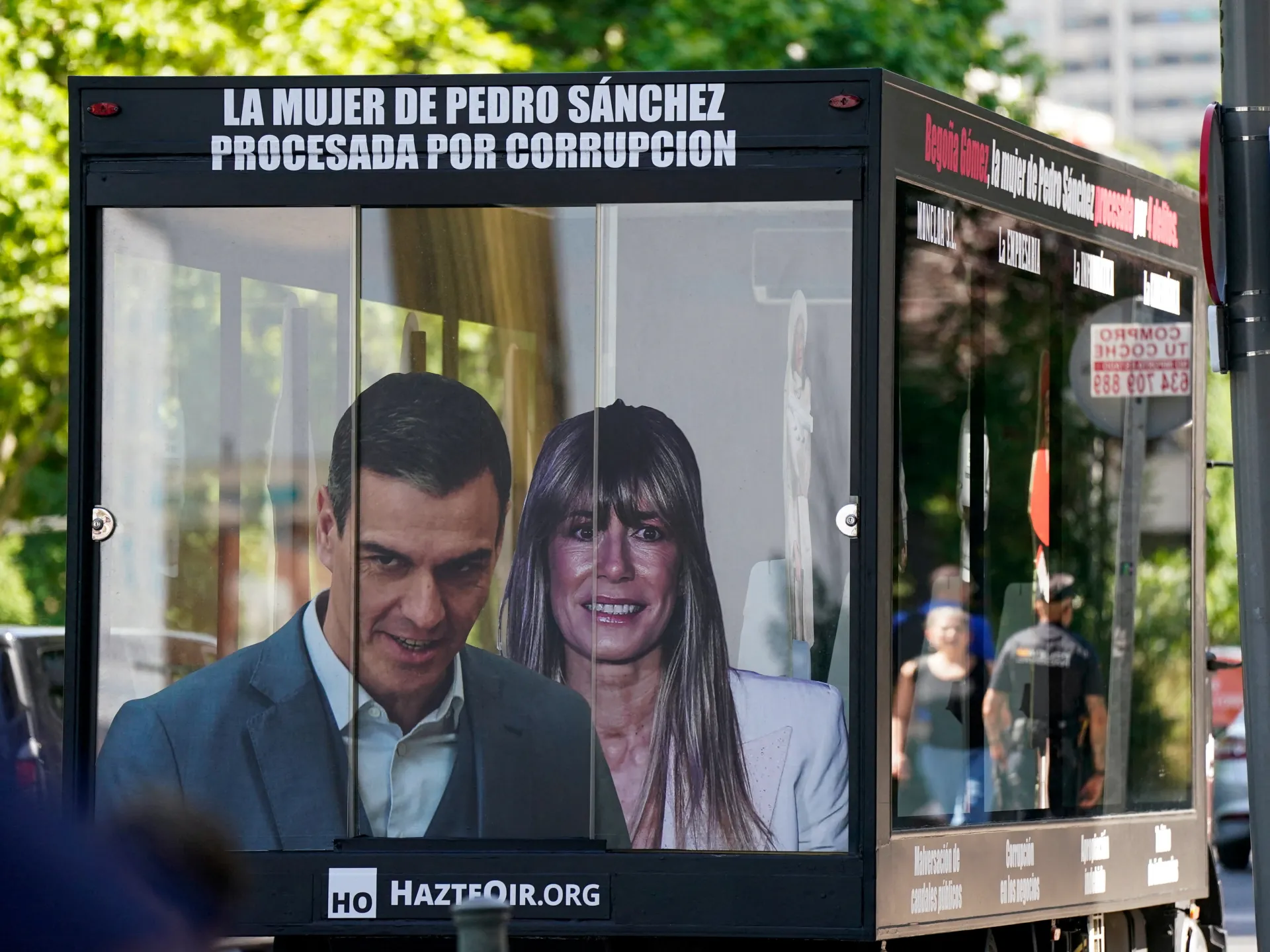
Spanish first lady Begona Gomez, left, and her husband, Spanish Prime Minister Pedro Sanchez pictured earlier this month visiting Pope Leo XIV during his week-long trip to Spain. Photo by Alejandro Garcia/EPA

June 20 (UPI) — Begona Gomez, the wife of Spanish Prime Minister Pedro Sanchez, had her passport revoked on Saturday because a judge said she is a flight risk ahead of her trial on corruption charges.

Gomez is alleged to have exploited her position in Spain’s government to obtain a position at the Complutense University of Madrid and used public money for her own private interests, Politico, El Pais and The New York Times reported.

In barring Gomez from leaving the country, Judge Juan Carlos Peinado also is requiring her to appear in court every 15 days until her trial, a date for which has not been set.

The first lady has been under investigation since 2024, and is one of several of Sanchez’s allies and relatives that have been accused of corruption, as well — including his predecessor Jose Luis Rodriguez Zapatero.

In addition to Gomez, Peinado ruled to allow her assistant, Cristina Alvarez, and a businessman who allegedly benefited Gomez’s actions, Juan Carlos Barrabes Consul, to also stand trial.

Allies of both Gomez and Sanchez calling the ruling unprecedented, as well as “delusional, obsessive and shameful.”

“She is innocent,” the Spanish Socialist Workers’ Party, which Gomez runs and her husband is member of, said in a statement on X.

“She has been judicially and politically persecuted for two years,” PSOE said in the statement. “What happened today is just another step, a democratic scandal that doesn’t hold up. They won’t stop.”

The investigations into Gomez over the last two years are based on complaints alleging that she aimed to benefit from public contracts for companies she has ties to.

“Behaviors such as these emanating from presidential palaces seem more characteristic of absolutist regimes, thankfully long forgotten in our country,” Peinado said in Saturday’s ruling.

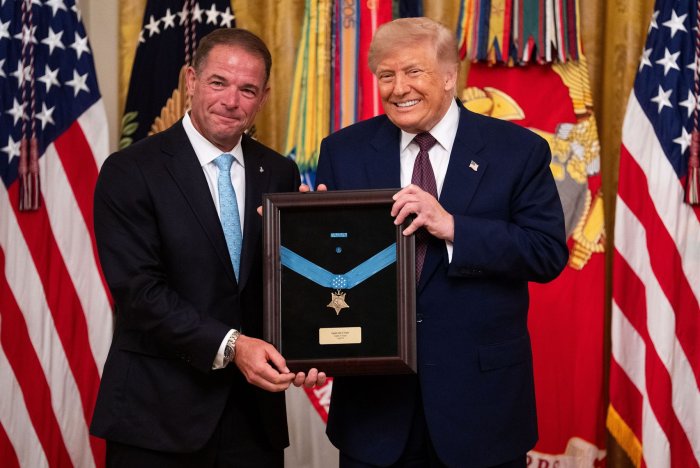
President Donald Trump presents a Medal of Honor to Tom Ripley on behalf of his father, John W. Ripley, during a Medal of Honor award ceremony in the East Room of the White House on Thursday. Photo by Aaron Schwartz/UPI | License Photo

Source link

Court bans Spanish PM’s wife from leaving country amid corruption probe | Corruption News

Begona Gomez is accused of using her position as the prime minister’s wife ⁠to secure work contracts.

The wife of Spain’s Prime Minister Pedro Sanchez has been barred from travelling abroad as she prepares to face trial on corruption charges.

Investigating judge Juan Carlos Peinado issued the ruling on Saturday, ordering Sanchez’s wife, Begona Gomez, to hand in her passport and appear in front of court twice per month until a verdict is issued. She is charged with embezzlement, influence peddling, corruption in business dealings and misappropriation of funds.

Recommended Stories

list of 3 itemsend of list

Gomez has consistently denied any wrongdoing in the case, which stems from a complaint filed by an anticorruption group with far-right ties. It focuses on the creation and management of a chair at Madrid’s Complutense University that was co-directed by Gomez, as well as the alleged use of public resources and personal connections to advance private interests.

Sanchez has dismissed the allegations against his wife as an attempt by the right wing to undermine his government. Sanchez’s Socialist Party has said Gomez is innocent and subject to a years-long campaign of political persecution

No date has yet been set for the politically explosive trial.

The case is one of several corruption investigations involving Sanchez’s allies that are approaching trial or already before the courts, increasing pressure on the prime minister.

Several close allies, including the Socialist Party’s number three ⁠and Sanchez’s former transport minister, are under investigation in cases involving alleged ⁠kickbacks linked to public works, oil ⁠and gas contracts, and the procurement of masks during the pandemic. They deny wrongdoing.

Separately, Spain’s High Court said it was investigating former ‌Prime Minister Jose Luis Rodriguez Zapatero over allegations he led a network that profited from lobbying public authorities ‌on ‌behalf of third parties, including airline Plus Ultra. He denies the claims.

Sanchez, who has not been named in any of the cases, has rejected opposition calls to step down and call early elections.

Source link

Why Wall Street & China Have the Same Problem in Venezuela

Venezuela holds the largest proven oil reserves on earth. It has lithium. It has agriculture, a coastline three hours away from Miami, and—for the first time in a generation a political window. The reconstruction investment case is real. So is the obstacle for every actor, across every ideology, that wants Venezuelan assets to perform.

The obstacle is not the oil price. It is not the OFAC sanctions framework, which has been substantially liberalized since January 2026. It is not even the absence of functioning institutions, though that is the proximate problem every investor will encounter. The obstacle has a nucleus with name, a title, and an active intelligence apparatus. And his continued presence in power is not merely a moral affront. 

This is not a story about mismanagement. Mismanagement leaves a paper trail.

What happened across Venezuela’s infrastructure ministries between 2002 and 2012 lest almost none, deliberately. Over $150 billion in documented railway, housing, and infrastructure contracts were disbursed across that decade. The projects largely do not exist. The documentation largely does not exist. The Tinaco-Anaco railway, a $7.5 billion contract signed with China Railway Engineering Corporation, produced looted campsites and empty concrete columns. The National Railway Plan, budgeted at $150 billion, produced less than one percent of its projected track. 

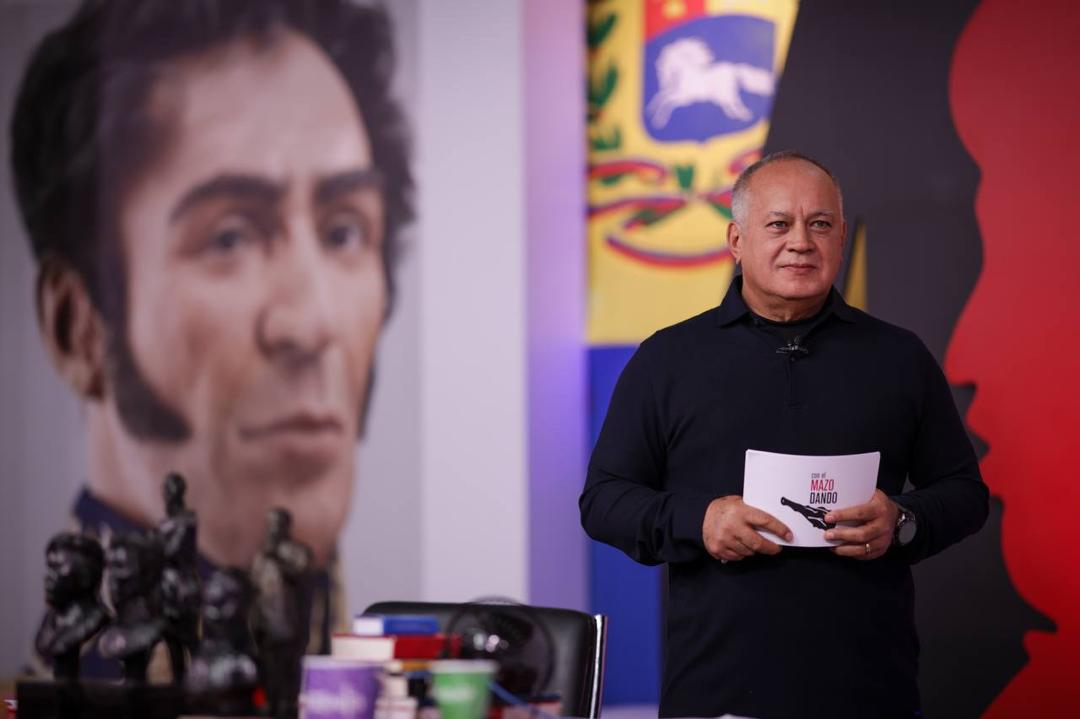
One of the ministers who oversaw that disbursement period of the infrastructure that is so dire, and who preserved an influence only surpassed by Hugo Chávez and Nicolás Maduro, today is the Interior Minister of Venezuela. He controls the national intelligence apparatus, the police, and the armed colectivos. He is Diosdado Cabello, your competing General Partner that has acted without impunity. He carries a live indictment from a New York court on narco-trafficking charges. He is sanctioned by the US Treasury. He hosts a television program that airs every Wednesday evening.

By 2011, the beneficial ownership architecture built by Venezuela’s ruling network spanned more than forty trustees across multiple jurisdictions: a parallel private equity structure embedded inside a sovereign state.

The distinction that every institutional investor must internalize is this: a mismanaged State is recoverable. A State whose productive apparatus was deliberately extracted (not ruined by incompetence but hollowed out because extraction was more profitable than production) presents a categorically different investment problem. The destruction was not the side effect of the governance model. It was the point of it. Cabello remains an icon of that governance model.

The counterparty problem

Conventional private equity rests on a foundational assumption: your counterparty has an interest in the underlying asset performing. Returns depend on it. Exit depends on it. The entire structure of an LP agreement, a term sheet, a co-investment right, all of it assumes a counterparty whose incentive is aligned with asset value.

In Venezuela, the sophisticated actor on the other side of the table for two decades was running a competing structure. One with no limited partners, no fiduciary duty, no quarterly reporting, and a sovereign intelligence apparatus for compliance. That structure had a single mandate: maximum extraction, minimum documentation, zero accountability. It executed that mandate with precision.

By 2011, the beneficial ownership architecture built by Venezuela’s ruling network spanned more than forty trustees across multiple jurisdictions. This is not a warlord’s operation. This is a parallel private equity structure embedded inside a sovereign state.

That sophistication is precisely what makes the residual presence of these networks so consequential for reconstruction capital. They did not disappear with the January 2026 transition. They repositioned. The structures that governed Venezuela’s extraction apparatus are experts at corporate layering: shell companies, nominee directors, off-channel financial instruments designed to distance beneficial owners from the assets they control.

This is the counterparty environment that reconstruction capital is walking into. Not a post-conflict landscape with residual corruption. An active, sophisticated, multi-jurisdictional extraction network that has spent 25 years perfecting its operational security

These are not improvised operations, they are multi-jurisdictional corporate architectures spanning Switzerland, Brazil, Spain, the Caribbean, and more recently Turkey and the Middle East. Each node chosen for its specific regulatory gap or enforcement lag. The $5.2 billion in gold shipped to Switzerland between 2013 and 2016, the Alex Saab procurement network running through Turkey and Cape Verde, the Zapatero indictment revealing consulting structures designed to siphon money from China, Venezuela, and Spain simultaneously these are documented examples of the same operational capability.

These networks retain the best advisors money can pay. Former heads of state, international law firms, financial intermediaries operating across jurisdictions. The Zapatero case is not the exception, it is the template. And they operate with the enforcement discipline of a cartel: strategic asset moves backed by the implicit and sometimes explicit willingness to use coercion when commercial pressure is insufficient. The SDNY indictments against senior regime figures on narco-trafficking charges are not separate from the financial architecture. They are evidence that the same command structure manages both.

This is the counterparty environment that reconstruction capital is walking into. Not a post-conflict landscape with residual corruption. An active, sophisticated, multi-jurisdictional extraction network that has spent 25 years perfecting its operational security, asset acquisitions by “patriotic”expropriations to serve their drug-logistic hubs and is now repositioning for the reconstruction window. 

Why China doesn’t actually want this

China’s position in Venezuela is widely misread as unconditional support. The reality is more commercially specific. China has over $60 billion in loan-for-oil exposure through CNPC and the China Development Bank. Those loans require one thing: barrels flowing. Barrels require functional production infrastructure. Functional production infrastructure requires institutional stability, contract enforcement, and (critically) a counterparty with an interest in assets performing.

Beijing understands this better than any outside observer because its own institutions have investigated the damage. Xi Jinping’s Central Commission for Discipline Inspection placed a CITIC Group vice president under investigation for serious disciplinary violations, the same CITIC that embedded confidentiality clauses in Venezuelan housing contracts barring the Venezuelan government from accessing financial information about its own projects. An Andorran court documented $100 million in bribes paid by CAMC Engineering to Venezuelan officials. China did not need backchannel meetings to understand the corruption. Its own companies were defendants in it.

China also enforces its own code of conduct internally. The CCP’s anti-corruption apparatus, operating through the Central Commission for Discipline Inspection, has a long reach, including over state enterprise executives who participated in overseas schemes that damaged China’s institutional reputation. Chinese firms implicated in Venezuelan bribery networks in Andorra for payments to PDVSA lobbyists related to Venezuela’s electricity system did not operate without consequence within their own system. Beijing does not publicize these accountability mechanisms, but they exist. The party does not tolerate reputational exposure that undermines its economic diplomacy, regardless of the geography.

Every dollar that disappears into the extraction apparatus is a dollar that does not produce the barrel that services the Chinese loans.

The Trump-Xi summit concluded in Beijing on May 15, 2026, the same day Lamargas exploded on Lake Maracaibo, a facility operated by China Concord Resources Corp under a PDVSA joint venture contract. At the moment, the US and Chinese governments are navigating toward economic stabilization and a framework for managed competition, building on their South Korea thaw. That G2 stabilization has direct implications for Venezuela: a China that is repositioning toward US capital markets, Boeing purchases, and agricultural commitments is a China with diminishing strategic incentive to backstop a Venezuelan network that embarrasses it commercially.

The Chevron model—US-anchored, internationally governed, with Chinese off-take embedded through structured contracts—is precisely the kind of framework that serves Beijing’s debt recovery needs without requiring it to defend the indefensible.

A ministry based in a kleptocracy whose financial architecture is premised on assets not performing for the state is structurally incompatible with Chinese debt recovery. Beijing is not sentimental about this. It is calculating.

China’s $50-60 billion in loan-for-oil exposure to Venezuela requires one thing above all else: barrels flowing. Barrels require functional production infrastructure. Functional production infrastructure requires institutional stability, contract enforcement, and a counterparty whose economic interest is aligned with assets performing. When the ministry overseeing oil production is the same apparatus that systematically extracted value from every sector it touched, railways that produced concrete columns and nothing else, housing programs with $76 billion in unaccounted deficits, power plants that were paid for and never built, you can see that the problem for Beijing is not political. Every dollar that disappears into the extraction apparatus is a dollar that does not produce the barrel that services the loans.

China tried to correct this internally before abandoning the effort. In 2018, Margaret Myers at the Inter-American Dialogue pointed out that Beijing “tried over the past couple of years to guide decision-making in Caracas by providing advice or by tying loans to production capacity projects in the oil sector, in order to try to help Venezuela right itself economically. That has not proven successful.”

By 2016, China stopped issuing new loans entirely. That is not a diplomatic signal. That is a credit committee decision. The same kind of decision any institutional lender makes when the counterparty’s governance structure has made repayment structurally unlikely.

The Brazilian vector

Brazil’s relationship to Venezuela’s reconstruction is complicated by a paper trail that runs through the largest corruption scandal in Latin American history. Odebrecht paid the highest figure of any country outside Brazil itself. Venezuela’s own former prosecutor general, Luisa Ortega Díaz, formally linked those payments to senior Socialist Party figures including Diosdado Cabello after being removed from office and forced to flee the country. The investigation was halted by Venezuela’s highest court. The Swiss banking system was asked to provide a list of Venezuelan recipients. Neither process was allowed to reach its conclusion.

In Brazil, the Odebrecht network reached the highest levels of political life. Federal prosecutors investigated Lula for allegedly lobbying foreign governments on Odebrecht’s behalf after leaving the presidency, and for his role in directing state development bank BNDES financing toward Odebrecht projects abroad. The contracts that linked Odebrecht to Venezuela were not arm’s-length commercial transactions. They were, by Odebrecht’s own admission in its US Department of Justice plea agreement, instruments of a coordinated bribery architecture that spanned twelve countries and operated through a dedicated internal division (the Division of Structured Operations) whose sole purpose was managing political payments.

What does not yet exist is the decision—by US institutional capital—to arrive with a governance structure that the extraction network cannot penetrate.

Brazil has significant commercial interests in Venezuela’s reconstruction, across energy, agriculture, and infrastructure. Those interests are legitimate and Brazilian private capital is a natural reconstruction partner. The complication is not Brazil. It is the specific political-commercial network that governed Brazil’s prior engagement with Venezuela. Odebrecht did not select its Venezuelan counterparties through competitive markets. Contracts were directed through political relationships — between heads of state, with BNDES as the financing instrument, and with the Odebrecht Division of Structured Operations managing the payments in between.

Political networks have institutional memory. The preferred partners that flow through certain diplomatic channels into Venezuela’s reconstruction window carry relationships forged in that prior architecture. A governance framework serious about reconstruction cannot simply exclude Odebrecht, the legal entity. It must screen for the network that Odebrecht served. That screening is structural, not political. It is the difference between Brazilian capital that competes on merit and Brazilian capital that arrives pre-selected by the same diplomatic infrastructure that enabled the extraction.

The structure that worked and the decision that remains

One Venezuelan asset survived twenty-six years of chavismo with its value intact. One. CITGO Petroleum, incorporated in Delaware, governed under US fiduciary law, with its governance architecture anchored entirely outside Venezuelan legal jurisdiction. It survived not because of political protection but because of structural protection. US law held when every Venezuelan institution around it failed. That is not a coincidence. It is the blueprint.

Venezuela sits very close to Miami. Capital will flow in. The question is whether it arrives with a governance structure equal to the threat, or whether it arrives the way it always has in captured states: trusting counterparties who already demonstrated, at extraordinary scale, that trust was the wrong instrument.

The SDNY indicted the man who sits in the Interior Ministry. The US Treasury sanctioned him. He is still in the building. Turkish construction conglomerates, Asian commodity traders, and European energy juniors are already positioning—without FCPA compliance costs, without fiduciary obligations, without LP reporting requirements. They will move faster. They will price lower. This is what happened in Iraq after 2003. It is what happened in Libya.

The architecture to do this differently exists. Human capital exists in the diaspora: eight million Venezuelans left and within them there are over a million that hold verifiable credentials embedded in US and European institutions, carrying the technical and legal knowledge to rebuild what was taken. The OFAC licensing framework exists. The proof of concept exists in CITGO’s survival. What does not yet exist is the decision—by US institutional capital—to arrive with a governance structure that the extraction network cannot penetrate. That decision is the only thing standing between reconstruction and a second extraction with better letterhead.
Source link

Guatemala’s Pact of the Corrupt Helps Explain Chavismo

Venezuela is far from being the only country in the Americas where State institutions have been used to crack down on independent media and protect the interests of ruling elites. In Guatemala, the case of journalist José Rubén Zamora became one of the clearest examples of how prosecutors, courts and political power can converge to silence investigative journalism.

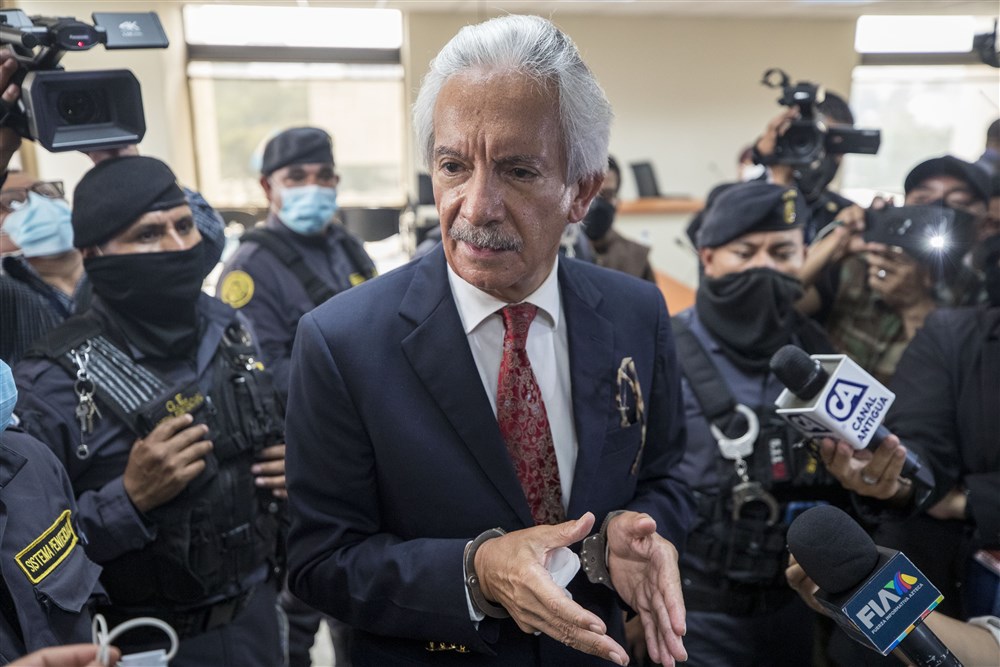
In early April 2025, I interviewed Ramón Zamora, son of Guatemalan journalist and elPeriódico founder José Rubén Zamora. His arrest following years of investigations into alleged government corruption led to the newspaper’s closure and the persecution of people close to him. During our conversation, Ramón Zamora described how Guatemala has developed a tacit network of complicity between State institutions and political authorities, a system that raises broader questions about this new form of power in Latin America and may also help explain how the chavista State in Venezuela operates.

After elPeriódico published two investigations on May 2 and May 3, 2021 into apparent cases of corruption in the government of former President Alejandro Giammattei, the media outlet was subjected to legal persecution that culminated in the arrest of Rubén Zamora, who had dedicated his work to investigating corruption in the Central American country. 

The persecution began with an investigation into alleged bribery by the newspaper to obtain information related to the publications. The judge who heard the case dismissed it. Later, in 2022, an investigation into money laundering related to the sale of works of art owned by Zamora to cover elPeriódico‘s costs was reopened, leading to his arrest.

The imprisonment of Zamora caught the attention of the Inter-American Commission on Human Rights and the Office of the Special Rapporteur for Freedom of Expression. In their 2022 and 2023 annual reports, the IACHR requested information from Guatemala regarding the country’s human rights situation and recalled that Zamora has benefited from precautionary measures since 2003 due to risks linked to his journalistic work. Guatemala rejected parts of the assessment as lacking objectivity. Amnesty International described Zamora as a prisoner of conscience and condemned his detention. Zamora was granted house arrest for the second time on February 12, 2026.

Reducing chavismo to a simple narco-structure simplifies the scope that the organization can have, since apparent drug trafficking would not be the essence of the system but rather an activity within it.

During the arrest and initial detention of journalist José Rubén Zamora in 2022, Guatemala was governed by Alejandro Giammattei, a conservative president whose administration faced strong criticism from international organizations over corruption, institutional deterioration, and pressure against journalists and anti-corruption actors. Since January 14, 2024, Guatemala has been governed by Bernardo Arévalo, a progressive and anti-corruption reformist whose presidential term is scheduled to end in January 2028.

His son, Ramón Zamora, says that his father’s persecution is the result of an unwritten agreement between various powerful sectors within the State that aim to protect their interests.  “In Guatemala, there is something my father called the “Pact of the Corrupt.” The Pact of the Corrupts is a tacit agreement that forms a network of corruption spread across political parties and institutions, where those who reach positions of power must govern according to the pact.”

This explanation describes the composition of a de facto cross-cutting network, which has political parties, institutions, and security forces under its control, punishing dissent as a means of survival, subjecting its detractors to exile, imprisonment, and discredit.

“The judge presiding over the case ordered an investigation into my father’s defense attorneys and witnesses, causing his lawyer to go into exile just five days after his arrest. Currently, six of the twelve lawyers who have defended my father have been detained,” says Ramón, who is also outside Guatemala with his mother after the court issued an arrest warrant against both of them. 

“They also persecuted my family. My mother and I were outside Guatemala visiting the United States when the judge handling my father’s case issued an arrest warrant against us, so we decided not to return.”

But how can the Pact explain the nature of the chavista State?

Corruption as political capital

Chavismo is not exclusively a militarized organization or simply a drug trafficking operation. As in Guatemala with the Pact of the Corrupts, the institutions of the chavista State are co-opted and work in the tacit interest of their members, where one of the main means of maintaining the pact is loyalty based on impunity, while corruption operates as political capital.

Consequently, the exercise of power is not oriented toward citizens or the satisfaction of public demands, but rather toward preserving the internal balance of the Pact itself. Governing involves administering concessions, distributing power quotas, and avoiding any decision that could alter the network of interests that sustains the regime. Reforms, when they exist, do not constitute a project of institutional transformation but are carefully calibrated to avoid destabilizing the architecture of loyalties on which the system rests.

This model of governance, the pacted State, is complemented by a logic of repression, combining massive and indiscriminate terror against actors whose actions threaten the balance of the pact. Similar dynamics can be observed in regimes such as Russia, Belarus, Nicaragua, and several Central Asian States. Journalists, judges, political leaders, and internal and external dissidents are the main targets of a system of coercion designed not to mobilize the masses, but to send clear and disciplining signals to those who break the pact. The selectivity of repression does not mitigate its severity. On the contrary, it makes it more efficient and functional in sustaining the apparatus of power.

Reducing chavismo to a simple narco-structure simplifies the scope that the organization can have, since apparent drug trafficking would not be the essence of the system but rather an activity within it. The Venezuelan State has become a web of systematic corruption that makes crime a functional activity of power.

The stability of the system is due to a network of mostly informal agreements between civilian, military, and economic actors who share a common interest: preserving an order in which rupture is more costly than continuity.

In this context, ideology ceases to serve as the system’s organizing principle and takes on a strictly instrumental role. It is not the compass that guides the action of power, but rather an adaptable rhetorical resource used to justify decisions already made to sustain the pact. Chavismo does not act primarily to carry out an ideological project, but rather to preserve a balance of interests between civilian, military, and criminal elites, in which ideas can mutate without the system suffering. Ideology, thus, does not guide the organization: it accompanies it, decorates it, or excuses it, but does not determine it.

The thesis of a pacted State suggests that authoritarian stability rests not only on repression or ideology, but on a shared understanding among political, military, and economic elites that preserving the existing order is preferable to risking rupture. Such systems can appear remarkably resilient precisely because their survival depends less on ideological coherence than on the mutual guarantees exchanged within the ruling coalition.

The notion of a pacted State helps explain why chavismo has shown a capacity for survival that goes beyond personalistic or circumstantial explanations. The stability of the system is due to a network of mostly informal agreements between civilian, military, and economic actors who share a common interest: preserving an order in which rupture is more costly than continuity. As long as that calculation remains valid, the system does not collapse; it adapts, reconfigures itself, and absorbs pressures without altering its fundamental logic. Yet the resilience of pacted States is not immutable.

Such systems begin to weaken when influential actors within the ruling coalition conclude that the regime can no longer guarantee protection, resources, or political survival. Economic decline, succession disputes, international pressure, social unrest, or weakening coercive institutions can alter the cost-benefit calculations sustaining the pact. Similar dynamics were visible in Eastern Europe after November 1989, when regimes in the German Democratic Republic, Romania, and Bulgaria rapidly collapsed once the elite coalitions sustaining them began to fracture internally, a process that would also unfold in Albania.

History suggests that pacted States often project an image of permanence precisely until the internal understandings sustaining them begin, almost imperceptibly, to dissolve.

Source link