
Colombia qualify for last 32 with win over DR Congo
Daniel Munoz’s deflected strike is enough for Colombia to beat DR Congo and secure their place in the 2026 World Cup knockout stage.
Source link
Daniel Munoz’s deflected strike is enough for Colombia to beat DR Congo and secure their place in the 2026 World Cup knockout stage.
Source link


Joao Neves opens the scoring for Portugal with early goal, but Yoane Wissa equalises in first-half injury time.
Published On 17 Jun 202617 Jun 2026
Cristiano Ronaldo’s record-equalling sixth World Cup got off to a disappointing start as the Democratic Republic of the Congo (DR Congo) secured their first-ever point at the football finals, drawing 1-1 with Portugal in their Group K match.
Yoane Wissa’s header cancelled out Joao Neves’s early goal on Wednesday, and the African side – appearing in their first World Cup since 1974, when their country was known as Zaire – more than held their own.
list of 4 itemsend of list
Portugal’s Ronaldo, 41, was largely a peripheral figure throughout the match, failing to make the impact his great rival Lionel Messi had achieved on Tuesday in scoring a hat-trick against Algeria.
The DRC’s achievement was even greater, given that their preparations had been disrupted by the Ebola outbreak back in their country.
Some Portugal players were wearing wrist bands, given to them by their Prime Minister Luis Montenegro, in tribute to late teammate Diogo Jota, who was killed in a car crash last year.
Portugal got off to the perfect start, with Neves powering home a header from Pedro Neto’s cross in the sixth minute.
However, despite dominating possession, they lacked a cutting edge, and well into time added on in the first half, their opponents made them pay.
Wissa rose unmarked to head past Diogo Costa in the Portuguese goal, sparking wild celebrations on the pitch, the bench and among the Congolese fans in the stadium as the Newcastle forward registered his country’s first-ever goal at a World Cup.
Former Portuguese defensive bulwark Pepe, watching from the VIP seats, did not look impressed.
Bernardo Silva had started the day by joining Real Madrid on a free transfer, but he ended it by watching from the bench after coach Roberto Martinez took him off at half-time.
He was briefly off his feet celebrating when Joao Cancelo’s overhead kick hit the back of the net – only for it to be ruled out for offside.
The Congolese were matching the Portuguese, though, and 35-year-old veteran striker Cedric Bakambu shrugged aside Bruno Fernandes, but his shot came back off the near post.
Ronaldo finally had a chance to shine when presented with a chance by Francisco Conceicao’s pass. But he fluffed his lines, sending it wide of the post.
The same combination linked up again minutes later, with Conceicao – a far livelier presence than Silva had been – teeing up Ronaldo. But once again the result was the same, and the ball went wide.
Portugal thought they had at least got a corner, but when it was not given, Conceicao slammed the ball into the ground in frustration as his side failed to pick up three points in their opener.
The number of confirmed cases in the country has increased to 837, including 196 deaths.

Published On 16 Jun 202616 Jun 2026
The current Ebola outbreak in the Democratic Republic of Congo (DRC) could become deadlier than the worst outbreak on record, which killed more than 11,000 people, says the head of Africa’s Centres for Disease Control and Prevention (Africa CDC).
The number of confirmed cases in the country has increased to 837, including 196 deaths, government data showed on Tuesday.
list of 3 itemsend of list
“If we don’t stop the outbreak very soon, it will be worse than what we had in West Africa and eastern DRC,” Africa CDC Director-General Jean Kaseya said during a virtual meeting of African leaders and international donors in Burundi on Tuesday.
Speaking to Al Jazeera, Kaseya said tens of thousands of people who may have been exposed to Ebola had not yet been traced or contacted.
“The contact tracing is a major indicator and a major issue. We are missing more than 26,000 people, and we don’t know where they are, and we don’t know if they are contaminating other people.”
A Red Cross official said that the epidemic had not yet peaked in the country.
“We are afraid that this could last one year to end this disease,” Bruno Michon, operations manager for the International Federation of Red Cross and Red Crescent Societies, said.
The response has been hampered by a lack of treatment centres and by community resistance to stringent hygiene measures. Health officials said that, more than a month since the outbreak was declared, the true scale was still unknown.
The bodies of Ebola victims are highly infectious after death, and unsafe traditional burials – in which family members handle the body without proper protective equipment – are a leading driver of transmission.
So far, the continent has raised less than a fifth of the $518 million it is seeking to bolster measures to contain the outbreak, according to Burundi’s President Evariste Ndayishimiye, who also chairs the African Union.
The shortfall has raised concern among authorities, who fear the consequences could be devastating if the virus is not brought under control quickly.
There is no approved treatment or vaccine for this strain of Ebola. The World Health Organization (WHO) says it could take up to nine months for a vaccine to be ready.
Neighbouring Uganda has recorded 19 cases, 14 of them among people who had travelled from the DRC. The country has also reported two deaths.
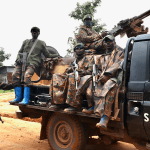

The Allied Democratic Forces, a militant armed group operating in the volatile borderlands of the eastern Democratic Republic of the Congo (DRC), have sacked 12 villages in the Bambodi sector of Tshopo province, displacing hundreds of people.
Tryphen Mabikinyambey, a member of the provincial parliament representing Bafwasende, said the ADF militants are presently only two hours away on foot from these villages in Tshopo. For months, the ADF terrorists have been based in villages dominated by the Badumbisa people in Mambasa, close to the now-abandoned villages in Tshopo. Tryphen added that many civilians in Bambodi have sought refuge in Nia-Nia, Bafwasende Centre, and Kisangani.
“The ADF rebels feel at home there. They are at ease. We have already reported their presence, yet there has still been no appropriate response from the authorities. The population is being emptied from the tribal group. There is no response from the national, provincial or local authorities,” the parliamentarian said.
He noted that all schools have been closed and that no hospitals are operational in the deserted area. “Even individuals in mining camps have left. Life is becoming increasingly challenging for everyone who is living under constant threats,” he remarked.
The representative is urging the Congolese government to launch a comprehensive operation to protect the local populations. He stated that the ADF rebels are relocating from the Bapere tribal group in North Kivu, where they are being chased by a coalition of Congolese and Ugandan armed forces as part of the joint Operation Shujaa. Unfortunately, as the ADF is chased from one area, it seeks refuge in quieter zones, such as those in Mambasa and Bafwasende, which now pose significant risks to residents.
“When they are tracked down, they search for calm areas. And these places are in the Mambasa territory and Bafwasende,” he said, noting that the ADF terrorists have been sending tracts. “They send those they have ‘rescued’ with letters of threats against Bafwasende territory and Tshopo province.”
The terrorists have also recently killed scores in North Kivu, triggering a fresh trove of armed violence in the eastern DRC. On June 4, for instance, local civil society sources said four bodies were found in the Kingeste area and a fifth one near Ngite.
“As it stands, 21 people are dead. We’ve found four bodies around Kingeste and one near Ngite. We want to see the military pursue the assailants to their hideout, as we will face extermination if no action is taken,” said Louis Kisaki, the president of the Batangi-Mbau civil society organisation in DRC.
The recent violent waves have instilled fear and panic in Mbau and its surroundings, as the population is anxious about a potential return of the attackers to cause chaos again. Since the ADF’s assault on Mbau, many families have avoided spending nights at home, with numerous households relocating to areas deemed safer, including Oicha, the chief town of Beni territory. Economic activities have also come to a standstill across Mbau and neighbouring areas.
In just three days, the ADF terrorists have killed 40 individuals in attacks on the town and territory of Beni. The attackers have also kidnapped several civilians, who remain in captivity with hopes of their release dwindling each day.
The Allied Democratic Forces (ADF), operating in the eastern Democratic Republic of the Congo (DRC), have forcibly displaced hundreds by destroying 12 villages in Tshopo province.
The militants are currently located near these villages, and the local population, including displaced persons, remains without government aid, with schools and hospitals shut down. Tryphen Mabikinyambey, a provincial parliament member, has urged the Congolese government for intervention.
The ADF is being pursued by a coalition of Congolese and Ugandan forces but has sought refuge in less volatile regions. Recent violence attributed to the ADF, including the deaths of 21 individuals and mass kidnappings, has caused widespread fear and halted economic activities in Beni territory, where 40 people have been killed in three days.
The militants continue to threaten local populations, intensifying the region’s instability.