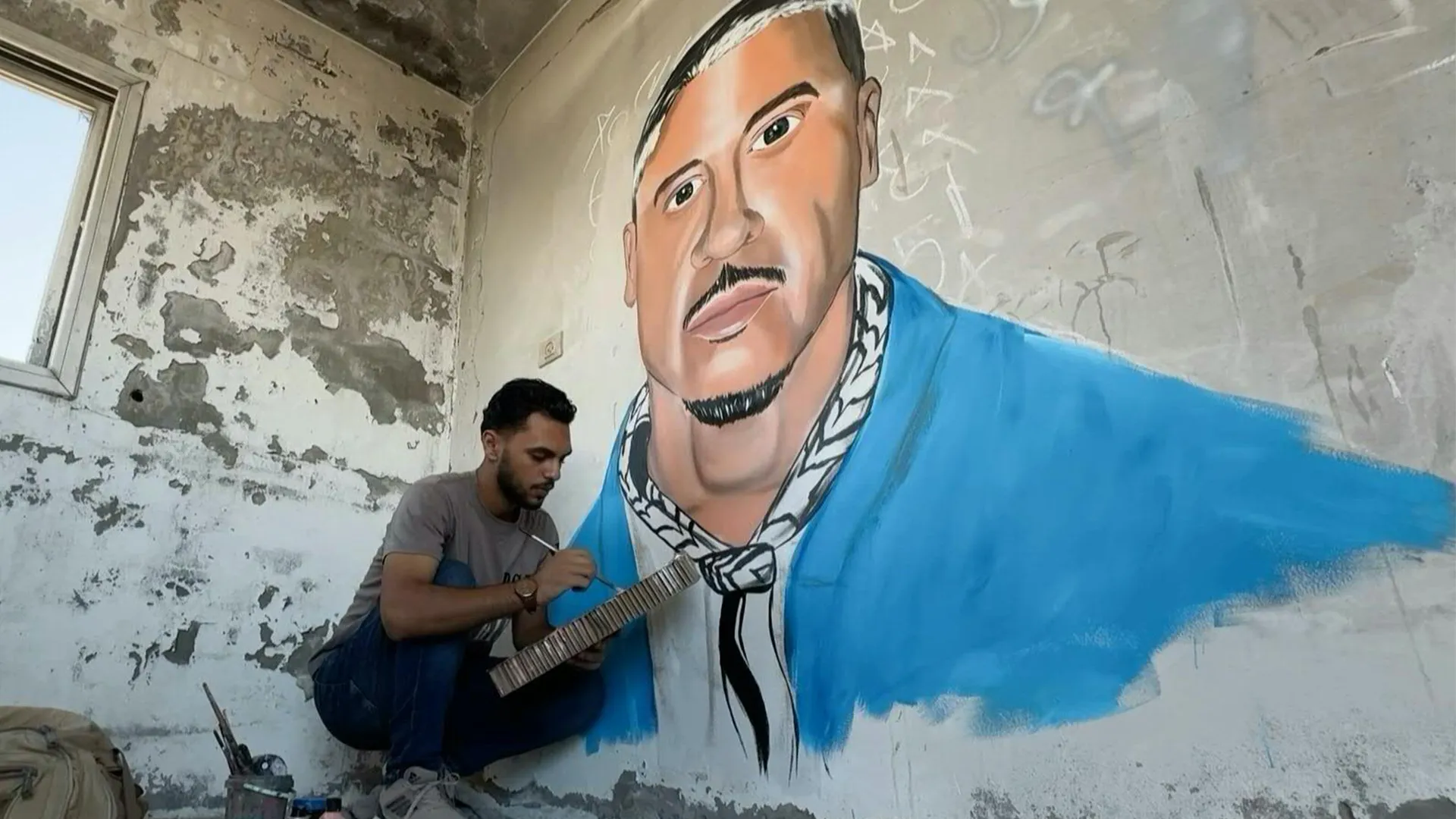
Artists in Gaza are painting murals on destroyed walls, honouring US rapper Macklemore for his support for Palestine. Despite a ceasefire agreement, Israel continues to kill Palestinians in frequent strikes across Gaza.
This was the first time an alert was sounded in Riyadh since an escalation between the Houthis in Yemen and the Saudis.
Published On 19 Sep 202619 Sep 2026
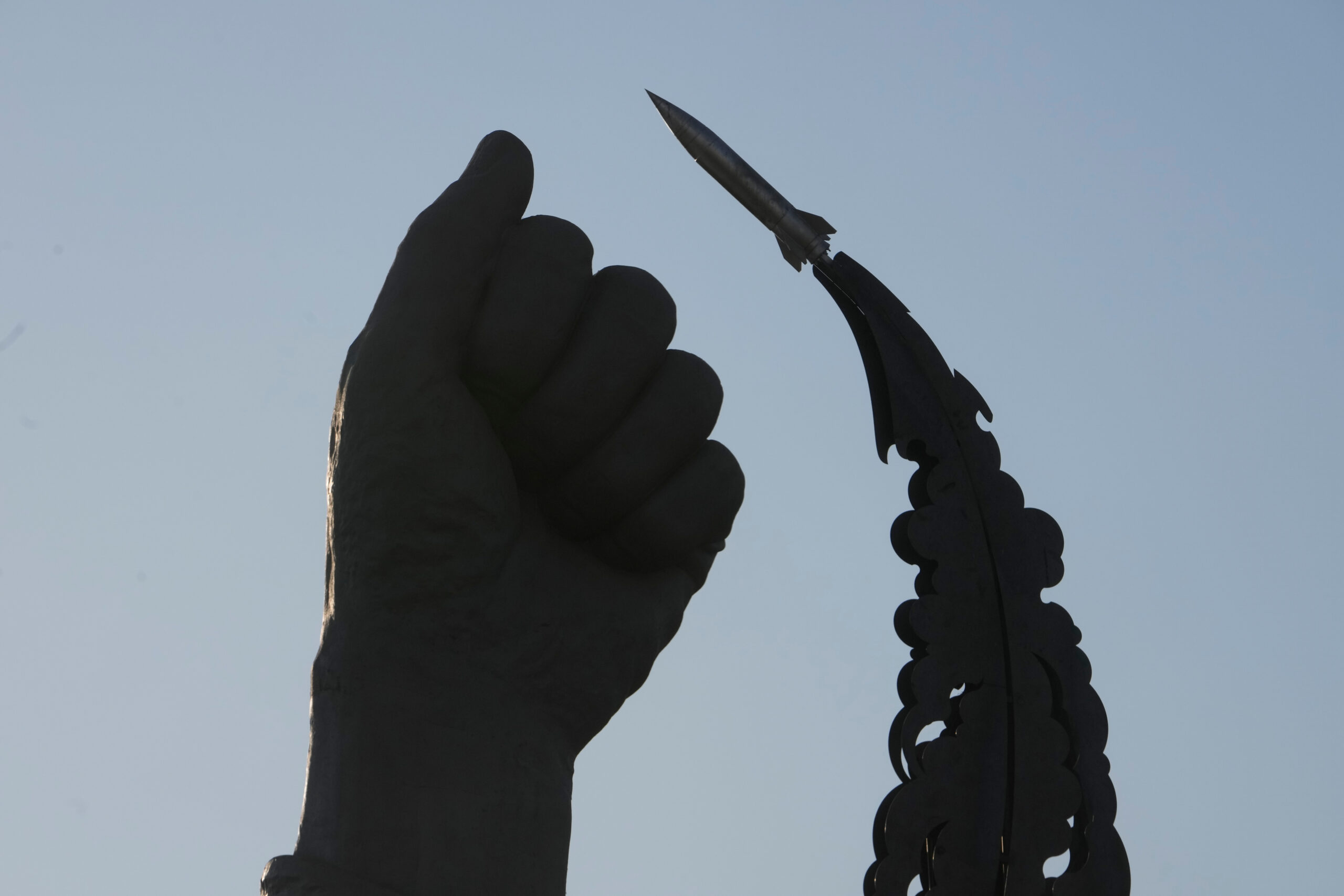
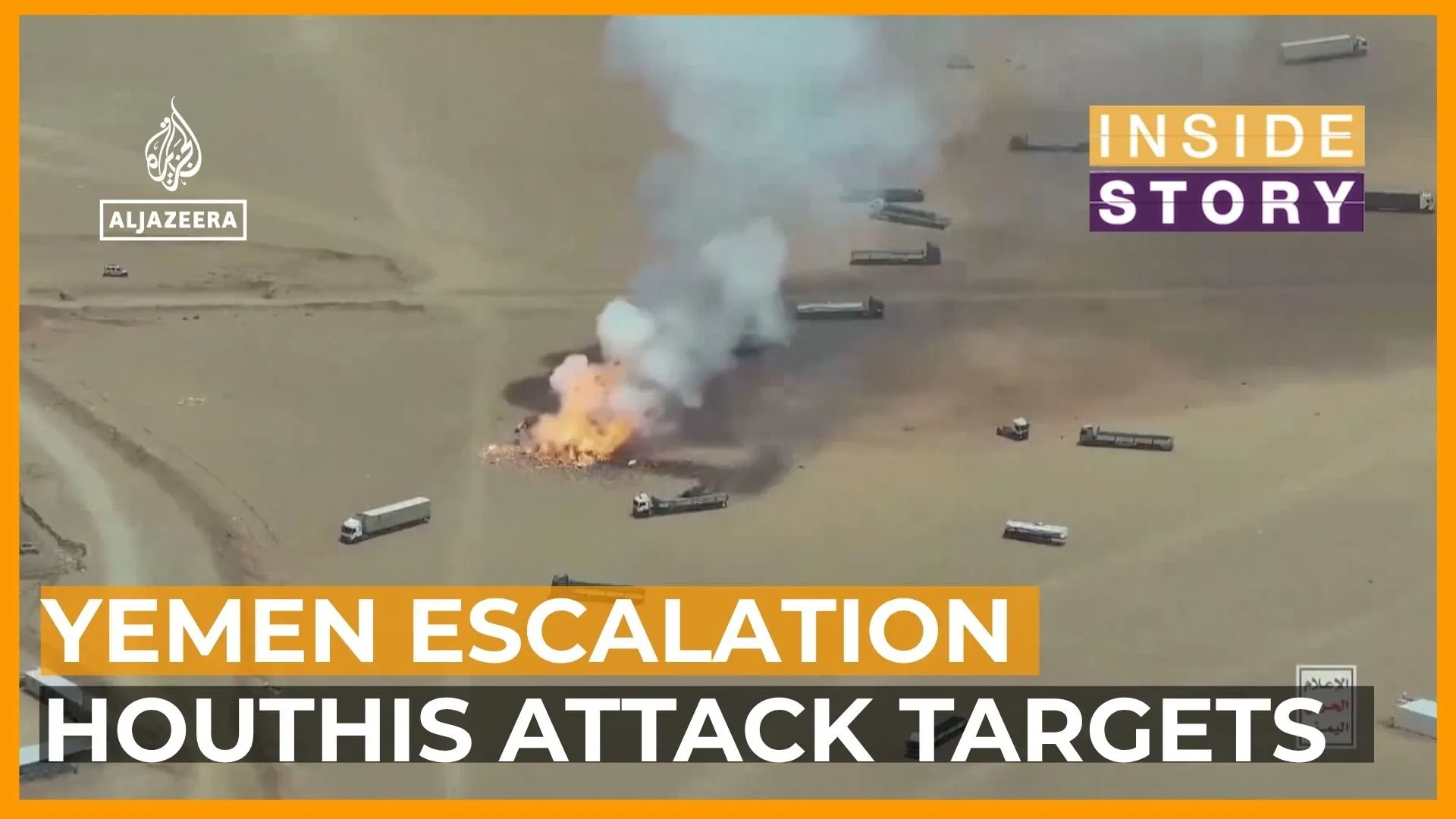
Saudi-led coalition forces fighting Yemen’s Houthis have said that the Iran-backed group fired a ballistic missile at Riyadh at dawn before it was intercepted and destroyed.
“The Houthis also attempted to target civilians and civilian infrastructure in Bisha, Taif, Farasan and Yanbu,” coalition forces spokesman Major-General Turki al-Maliki wrote on X on Saturday, adding that the attacks were thwarted by the Gulf monarchy’s air defences.
Recommended Stories
list of 4 itemsend of list
Saudi Arabia warned of a “hostile aerial threat” and issued a string of emergency alerts across the kingdom overnight on Friday.
On Saturday, at least one explosion was heard in Riyadh, with residents near the airport saying they saw a large plume of black smoke later in the morning. Saudi authorities reported no casualties or damage.
The Saudi spokesman said that the Houthis are escalating their attempts to target civilians and civilian infrastructure in the capital. He also affirmed the coalition command’s right to take “appropriate” action to deter the Houthis, in accordance with international humanitarian law.
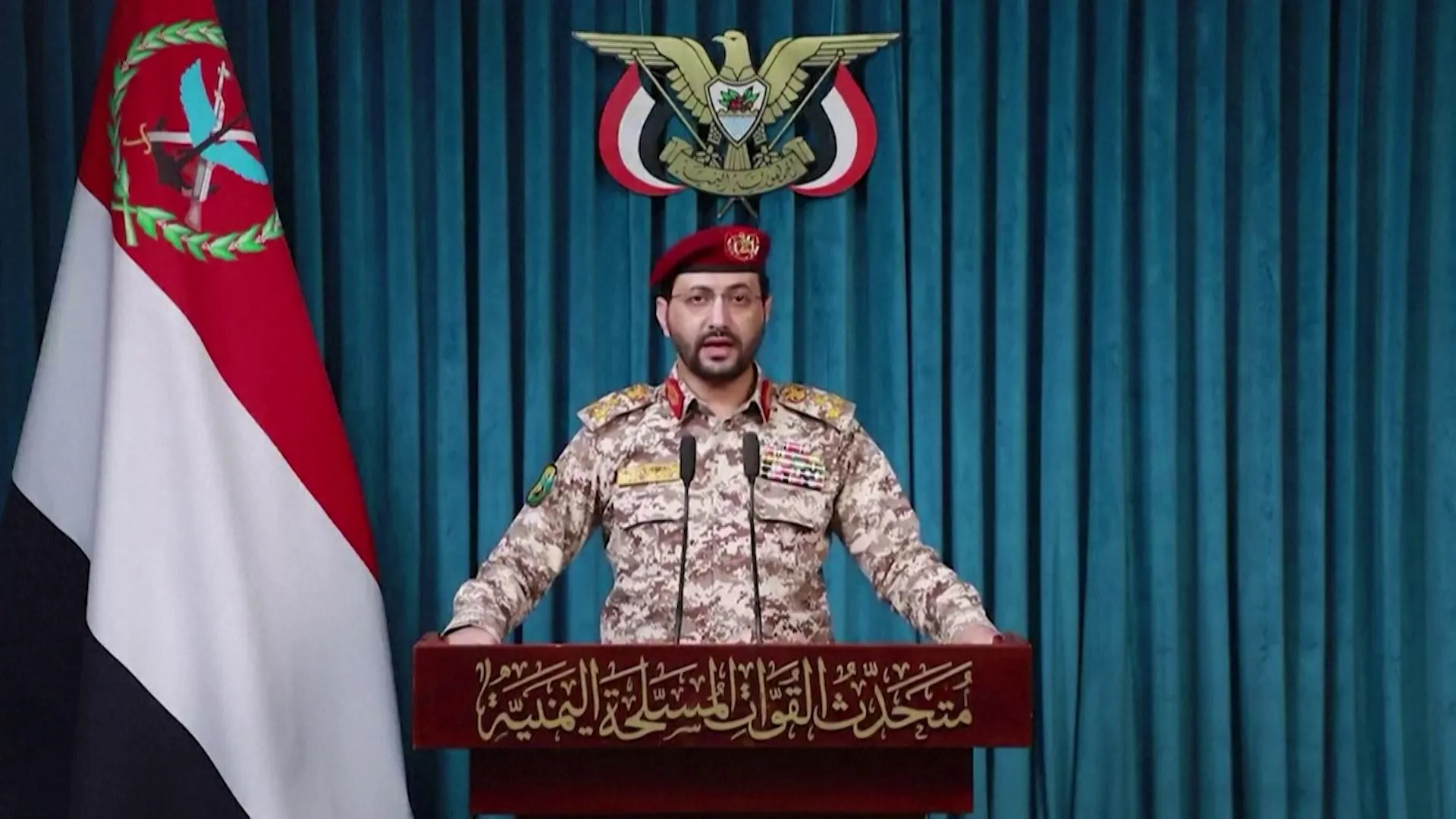
Earlier on Saturday, Houthi fighters in Yemen said they attacked “sensitive” sites in Riyadh as well as an Aramco oil facility in the western coastal city of Yanbu, according to a statement shared by Houthi military spokesman Yahya Saree.
Saree said the Houthis attacked Saudi Arabia with cruise and ballistic missiles as well as drones.
“You could see that the Houthis are determining the timelines and the levels of the escalation,” Yasmeen al-Eryani, executive director for knowledge production at the Sana’a Center think tank, told Al Jazeera. “So, depending on the current situation, it seems that the Houthis are the ones in control,” she added.
Meanwhile, on the ground in Yemen, the armed forces of the Saudi-backed internationally recognised government said their fighters thwarted a Houthi infiltration attempt in the al-Fuliahan sector in southern Marib on Saturday, killing 12 Houthi fighters and injuring others.
The army also said 13 Yemeni soldiers were killed in two days of clashes with Houthi forces in the southwestern provinces of Taiz and Lahj.
Renewed clashes are taking place in Yemen’s Marib, Taiz, Lahj, al-Jawf and al-Bayda as part of a military escalation that began in early July – the most intense since the relative calm following an April 2022 truce.
Al-Eryani told Al Jazeera that military options against the Houthis are currently limited because much of the fighting is taking place in mountainous terrain that is difficult for opposing forces to access and hold.
For now, she said, containing the group may be a more realistic option than defeating it militarily. “Without controlling the peaks that are parallel to the coast, you will not be able to control the coast,” said al-Eryani.
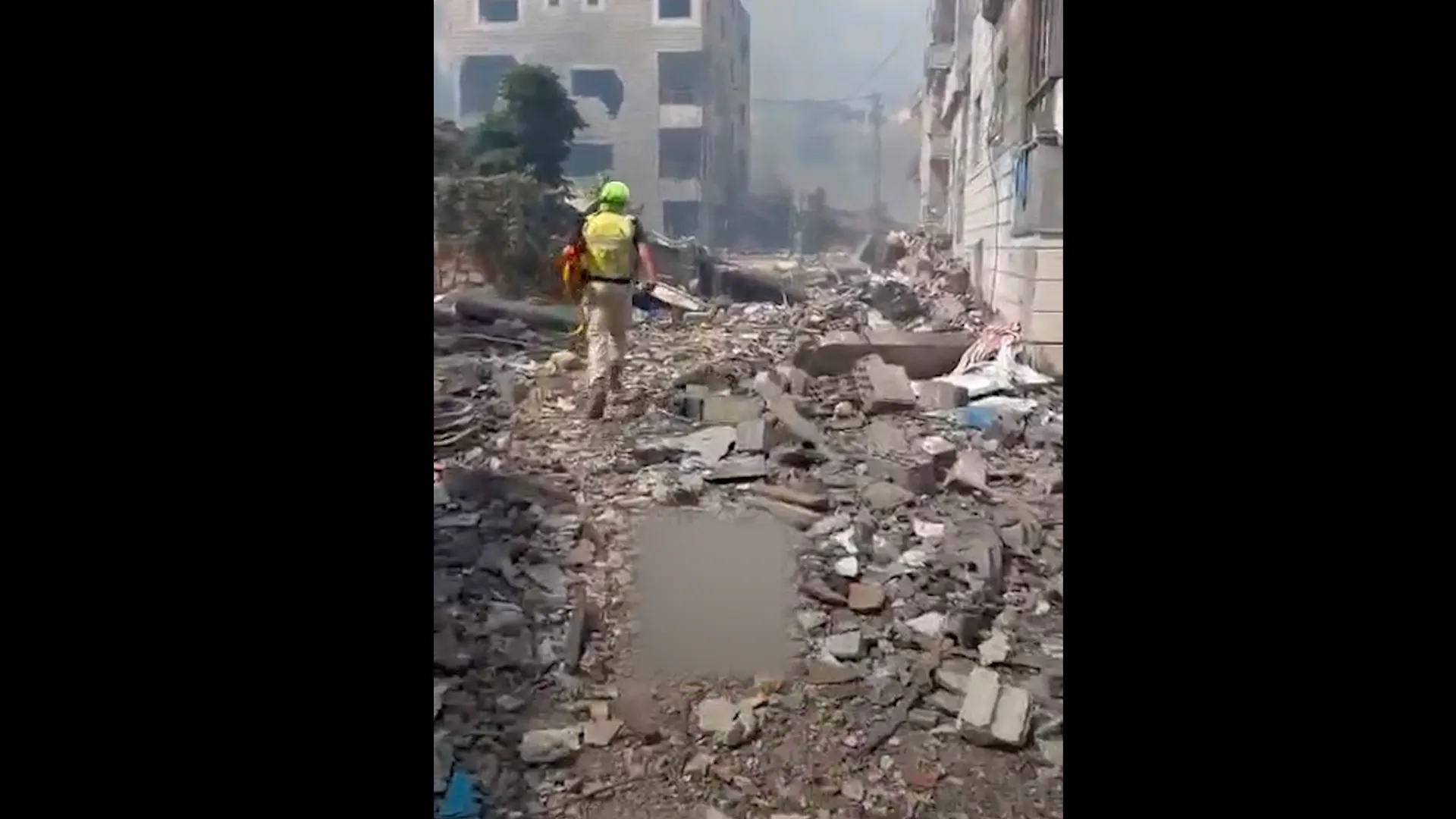
Two back-to-back Israeli air strikes hit Lebanon’s southern city of Nabatieh, while a third strike targeted an ambulance team responding to the attacks. At least 4,386 people have been killed and 12,400 injured since 2 March, when the current Israel-Hezbollah war began.
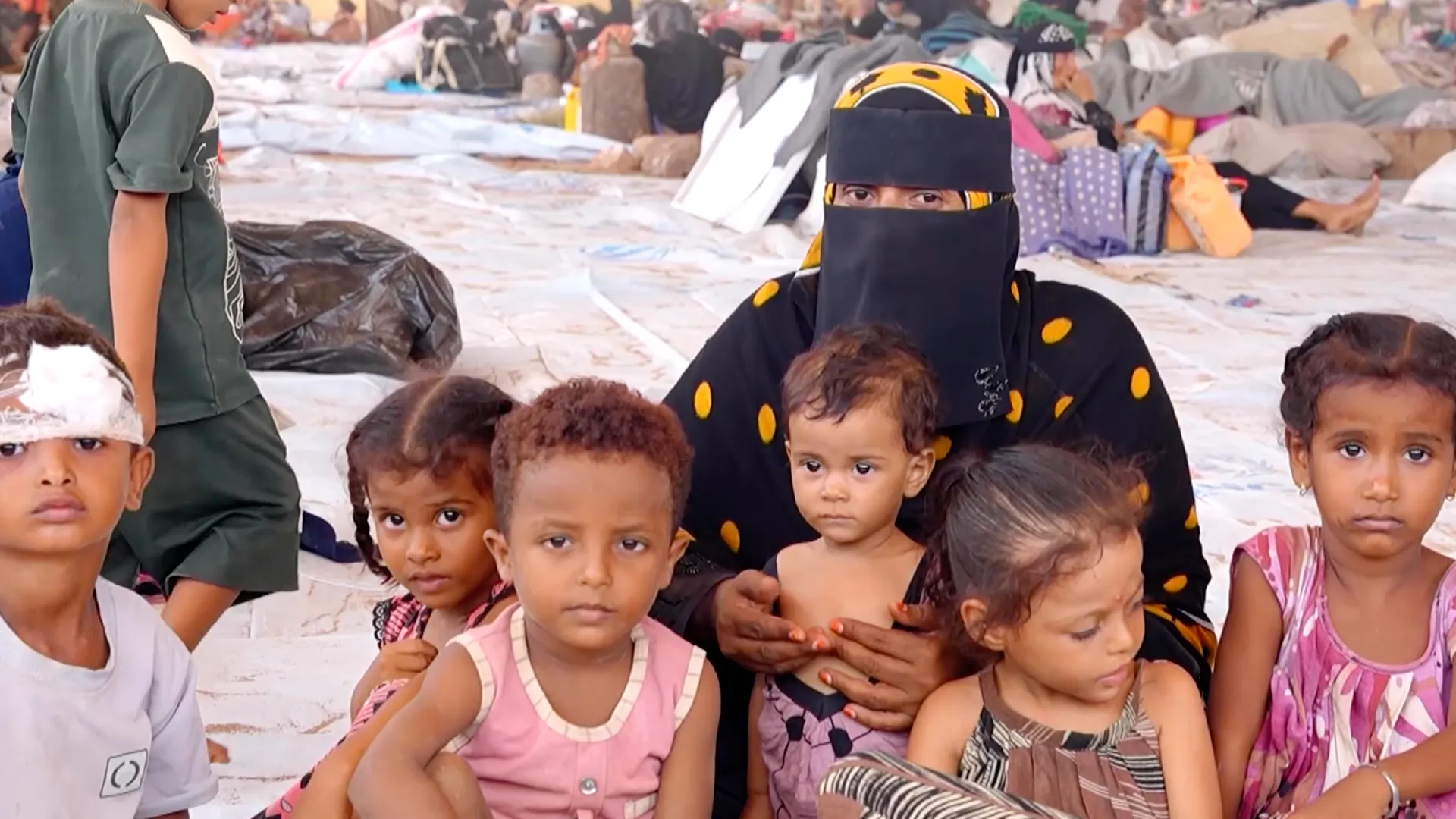
More than 2,700 Yemenis have fled to Djibouti, many making dangerous sea crossings to escape the conflict. Al Jazeera’s Hasan Razzaq spoke with some of those who have arrived in the northern town of Obock, where they are seeking shelter and assistance.
Israel’s bitter political divisions are particularly sharp before the country’s October elections. But the furious response to a new documentary about the military’s actions in the genocidal war on Gaza has revealed an issue that much of Israel’s political and media establishment appears united on.
Few of the central allegations in NAZA, made by Israeli filmmakers Yuval Abraham and Rachel Szor, are new. Reports that the Israeli military was relying on artificial intelligence systems to generate targets in Gaza, often killing the inhabitants of entire buildings to kill just one individual identified by the system, were reported in April 2024.
Recommended Stories
list of 4 itemsend of list
Other accusations against Israel, such as committing genocide, deliberately causing a famine, and unlawfully killing children, have also not received much attention in Israel.
In contrast, NAZA has unleashed a litany of abuse from across Israel, and brought the allegations to the centre of Israel’s political debate.
Culture Minister Miki Zohar reacted to the film’s premiere at the Venice Film Festival – where it received a 25-minute standing ovation – by calling for the directors to be stripped of their citizenship and to be investigated by the internal intelligence service for treason.
Army chief Eyal Zamir has dismissed the film as being built on blood libel and ordered a legal probe to hunt down its military and intelligence sources.
Prime Minister Benjamin Netanyahu also cited the film when advancing legislation to revoke citizenship from anyone deemed to be smearing the country’s soldiers, while in the coastal city of Ashdod, graffiti branding the directors “traitors” has appeared on the walls.
“You can’t really understand the extent of the madness from outside of the country,” Orly Noy, an editor at Local Call, which first carried many of the accusations contained in the film, said. “They’re attacking the friends and families of [the filmmakers] Yuval Abraham and Rachel Szor. They’re talking about revoking their citizenship. They’re asking the Shin Bet to investigate them – for making a film, and it isn’t just the politicians. Journalists, who you might expect to show some kind of solidarity with them, are competing to attack them. It’s scary.”
Denial
In late 2025, the Committee to Protect Journalists reported escalating censorship and harassment in Israel, with Israeli journalists telling the organisation that the media’s approach had become “part of the war effort” and, by extension, significantly shaped Israeli view of their war on Gaza.
In October 2025, a study by the Israeli think tank Molad found that only 3 percent of Channel 12’s coverage of the first six months of the war mentioned Gaza’s humanitarian crisis. Of 206 war-related images and video clips broadcast by the network, Israel’s most-watched channel, only two showed Palestinian civilian casualties.
Nevertheless, before the film’s release, polls found that most Israelis believed the coverage they were receiving of the military’s conduct in Gaza was balanced.
Director Yuval Abraham and Director Rachel Szor winners of the Special Jury Prize for “Naza” attend a photocall on the red carpet following the closing ceremony of the 83rd Venice Film Festival at Venice Lido on September 12, 2026 [Tiziana Fabi/AFP]
“I guess it was because the mainstream media outlets in Israel did not investigate the conduct of the army during the war in Gaza, and hardly covered the war from the Palestinian point of view,” Anat Saragusti, the Israeli jurist and journalist responsible for press freedom at the Union of Journalists in Israel, said of the shock that had accompanied the release of the film. “[The Israeli media] hardly reported on the human toll and the scale of the humanitarian crisis in Gaza.”
Compounding the gap, Saragusti said, was a deep-seated national narrative: that the war had been imposed on Israel, that Hamas had carried out a massacre on October 7, 2023, and that Hamas’s use of civilians as human shields made mass casualties in Gaza all but unavoidable.
Palestinian deaths, in this telling, were framed less as the product of Israeli conduct than as collateral damage forced on Israel by its enemy’s tactics, she said.
Lynch mobs
“Even journalists that usually support the anti-Netanyahu bloc have criticised the filmmakers,” Israeli political sociologist Daniel Bar-Tal said.
“Israeli Jews deny the genocide,” he continued, “Even all the opposition parties joined the vicious criticism of the filmmakers.”
The language used against the filmmakers has been echoed by some of Netanyahu’s most prominent political rivals.
On Monday, former military chief and one of Netanyahu’s principal rivals Gadi Eisenkot denounced the film for “moral blindness, a detachment from reality, and harm to the State of Israel in a difficult hour”.
Former Prime Minister Naftali Bennett, who is also running in October’s election, called the film a “horrific blood libel against our sons and daughters”.
“Everything gets heightened the closer to the election we get,” Noy said. “But I think only now, for those of us who live here, is the extent of the fascism becoming clear. Journalists, politicians and the media are forming some kind of incitement machine.”
“I’ve had anxieties over where Israel had been going for a long time,” she said, “but right now I’m genuinely worried for my friends and colleagues.”
The war in Yemen intensifies with mounting clashes and reciprocal attacks between Saudi forces and the Houthis.
Published On 18 Sep 202618 Sep 2026
Yemen’s Houthi rebels have said Saudi Arabia carried out 26 strikes against areas under the group’s control in the past 24 hours, as the two sides continue trading attacks amid an escalating war in Yemen, according to the AFP news agency.
On Friday, the group claimed Saudi strikes on Houthi-held territory had reached 300 over the past week alone, hitting positions across the areas it controls, AFP reported.
Recommended Stories
list of 3 itemsend of list
Yemen’s government, backed by Saudi Arabia, said on Friday its forces had killed 30 Houthi rebels and wounded more than 60 in clashes in the al-Wazi’iyah district of Taiz province, one of several fronts where combat has picked up this week.
The exchange has come on the heels of a widening escalation of fighting in Yemen between the government’s military and the Houthi fighters.
Tens of thousands marched through Sanaa on Friday in a show of support for the Iran-backed Houthis and against Saudi Arabia, as the rebels press gains that have brought large stretches of Yemen’s Red Sea coast, including the strategic Bab al-Mandeb Strait, under their control.
Earlier this week, the intensifying attacks between the Yemeni government and the Houthi rebels killed at least five people, including three children, according to reports from both sides.
Saudi Arabia said one person was killed in the Taif governorate after a Houthi drone was intercepted, while Houthi-linked media reported deaths from Saudi strikes in Taiz and the town of Abs.
The escalation has drawn in Washington, though reluctantly.
US officials met Houthi representatives at the US embassy in the Omani capital, Muscat, over the weekend after the group’s rapid territorial gains raised concern over shipping through Bab al-Mandeb, a vital corridor for global trade.
The Houthis reportedly assured Washington that vessels not linked to Saudi Arabia would not be targeted.
Despite appeals from Riyadh for US President Donald Trump to strike the Houthis directly, Washington has so far held back, wary of opening a new front while still fighting a costly war with Iran.
Meanwhile, European Union foreign policy chief Kaja Kallas said on Friday the bloc’s Red Sea naval mission, Operation Aspides, had raised its alert level as the situation in the region worsened, the Reuters news agency reported.
“Houthi attacks on Saudi Arabia are unacceptable and sabotage the global economy,” Kallas said in a post on X.
She added that she had spoken with Saudi Foreign Minister Prince Faisal bin Farhan Al Saud about diplomatic efforts to end the fighting in Yemen and restore freedom of navigation in the Strait of Hormuz.
In Super Macklemore 64, players are chased by a giant Ed Sheeran, dodge tiny billionaire Robert Krafts and summon musicians to chant “Free Palestine”. Creator Jonathan Mann says it highlights the “absurdity” of Macklemore being dropped from Sheeran’s concerts and Israel’s genocide in Gaza.
United Nations says 22 million people need humanitarian aid as conflict intensifies.
Published On 18 Sep 202618 Sep 2026
More than 112,000 people have been displaced in Yemen and close to 3,000 have fled the conflict to Djibouti, according to the United Nations, as fighting intensifies between the Iran-allied Houthis and Saudi-backed forces loyal to the internationally recognised government.
“Our resources are very, very, very limited and our stocks will be depleted very soon,” Abdusattor Esoev, mission chief in Yemen for the International Organization for Migration, told reporters on Friday.
Recommended Stories
list of 3 itemsend of list
Most of the more than 112,000 internally displaced people have been displaced over the last two weeks, mainly along the west coast and in the provinces of Taiz and Lahj, he added.
The displacement began when the Houthis made a rapid advance, seizing control of the entire Red Sea coast of Yemen to tighten their grip on the vital shipping route, the Bab al-Mandeb Strait.
Esoev estimates 22 million Yemenis – or nearly half the population – are in urgent need of humanitarian aid.
More than 65,000 registered refugees and asylum seekers in Yemen, mainly from Somalia and Ethiopia, are also threatened.
3,000 Yemenis flee to Djibouti
The crisis is growing “by the hour”, warned Francesco Galtieri, a representative for the UN Population Fund (UNFPA), adding that thousands of women who have lost all their possessions are on the run with their children.
Galtieri estimates that 2,000 pregnant women are among the displaced and around 200 are expected to give birth shortly.
Around 3,000 Yemenis have fled Yemen by boat to Djibouti, the UN refugee agency said. The shortest route across the Bab al-Mandeb Strait is just over 25 kilometres.
The UNHCR reports that more than 2,400 people made the voyage in the past week – mostly women, children and older people.
The influx is adding pressure on Djibouti and population of about one million people. It already hosts around 36,000 refugees, most from Somalia and Ethiopia, said UNHCR representative Sandrine Desamours.
“While the number may sound small,” it must be seen in proportion to the population, she added.
The strategically important Bab al-Mandeb links the Red Sea with the Gulf of Aden and has become an alternative shipping route as the United States’ war against Iran choked the Strait of Hormuz.
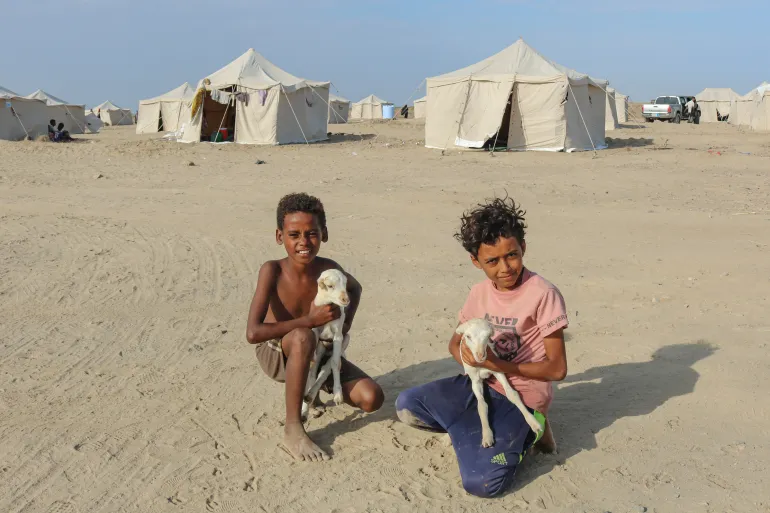
The Al-Farsi camp for internally displaced people in Ras Imran in southern Yemen, September 17, 2026 [Mohamad Hakim/AFP]
Israeli politicians reacted to sanctions by states including the United Kingdom, France, and Canada on the country’s illegal settlements in the occupied West Bank with self-righteous anger. But what is the latest example of Israel’s international isolation brought on by its treatment of the Palestinian people has not been influential in swaying the electorate in the run-up to October’s elections, analysts tell Al Jazeera.
Responding to the UK Foreign Minister Ed Miliband’s accusation that Israelis were ethnically cleansing the occupied West Bank, Israel’s Gideon Saar accused his counterpart of spreading “outrageous lies” and attempting to interfere in the election through foreign pressure.
Recommended Stories
list of 4 itemsend of list
Israeli President Isaac Herzog also condemned the measures, branding them a “gross interference in the democratic elections” of Israel.
But, in reality, the majority of Jewish Israelis have supported their country’s genocidal war in Gaza and the occupation of the West Bank.
A poll from August, published as the death toll for Palestinians killed in the West Bank had already reached 76 this year, showed that more than half of Jewish Israelis supported retaining the illegal settlements as part of any future agreement on a Palestinian state, while nearly 40 percent supported annexing the territory in defiance of international law.
“People just don’t care that settlements are illegal,” Israeli political analyst Ori Goldberg said.
”Ed Miliband expressed a number of laudable sentiments when announcing the measures,” Goldberg said, referencing the UK foreign secretary’s references to his own Jewish heritage when announcing the cessation of trade with Israel’s illegal outposts. “But we’re at the stage where Israelis aren’t even interested in the truth so much as they are the sentiment.”
Little political impact
Israeli Prime Minister Benjamin Netanyahu goes into the elections at serious risk of losing, with many polls predicting that a coalition of parties opposed to him could win the majority in Israel’s parliament.
But it will not be issues like the settlement-related sanctions that will lose him votes, analysts said.
Public backing for the “government and opposition blocs are pretty hardened, and nobody is going to switch from one side to the other over sanctions arising from [the settlements],” Michael Koplow, chief policy officer at the Israeli Policy Forum, said. He added that the sanctions were unlikely to weigh as heavily with the electorate as “this government’s record and the related feelings people have about Netanyahu”.
“When people were asked what would determine their vote, security came first,” Israeli sociologist Yehouda Shenhav-Shahrabani said.
“I think there are several mechanisms operating simultaneously,” he added.
First, he said, is the normalisation of the settlements. In Israeli public discourse, the occupied West Bank is increasingly referred to by the biblical name “Judea and Samaria” – a shift he said was becoming institutionalised.
“Second, external sanctions don’t necessarily translate into domestic political costs,” Shenhav-Shahrabani said. “And perhaps most importantly, politically foreign pressure can be absorbed into an existing Israeli narrative [of anti-Semitism] rather than [changing how the issue itself is understood].”
No criticism of the voters
None of Israel’s most prominent politicians has criticised the government for its support of the settlements in defiance of international condemnation. Yair Lapid, a former prime minister and one of Netanyahu’s leading opponents, has, instead, focused his ire on the countries condemning Israel. “Imposing boycotts and sanctions on Israel is a grave mistake,” he said. “This is a wrong and dangerous policy, at the wrong time and for the wrong reasons.”
Another of Netanyahu’s principal rivals, Gadi Eisenkot – whose Yashar Party manifesto does not mention either the West Bank or Gaza – has declined to speak on the sanctions directly. Netanyahu has also yet to comment on the sanctions publicly, despite his Likud party having championed settlement expansion for decades.
“The sanctions haven’t particularly hurt Netanyahu, at least not as far as we can see in terms of direct influence on … polling,” said Dahlia Scheindlin, a pollster and public opinion researcher based in Tel Aviv.
Instead, the focus has been on other elements of an eventful electoral cycle, including the emergence of new challengers to Netanyahu on the right.
“We aren’t seeing any real backlash from the sanctions,” Scheindlin said. “Instead, it’s just getting filtered through what people already think of him – his critics dislike him even more, and his supporters basically say, ‘Well, the world hates us no matter what.’”
Intensifying attacks between Saudi Arabia and Yemen’s Houthis have reportedly killed at least five people in total, including three children.
At least one person – a Yemeni resident in Saudi Arabia – was killed, and two others were injured after a Houthi drone was intercepted in Saudi Arabia’s southwestern governorate of Taif on Thursday, according to the kingdom’s civil defence agency.
It is the first death announced in Saudi Arabia this month since Yemen’s Iran-allied Houthis intensified their attacks.
In Yemen on Thursday, the Houthis said “Saudi enemy warplanes targeted three telecommunications towers” in Taiz province.
One civilian was killed in Taiz and another injured in strikes on the town of Abs, Yemen, said Houthi-linked Almasirah television.
Houthi-backed media later reported that “three children were killed and several Yemeni nationals were injured in strikes by the Saudi-backed mercenaries”, a reference to the country’s internationally recognised government forces.
Houthis reject claim they attacked Mecca
The escalation comes as Saudi Arabia said a drone was launched by the Houthis towards Mecca before being intercepted and destroyed.
“It’s a heinous lie,” Houthi leader Abdel-Malik al-Houthi said in a live televised address on Thursday, calling Saudi claims that his group would target Islam’s holiest city “a great propaganda”.
“The sanctity of Mecca is particularly important to the people of Yemen,” he said while accusing Saudi Arabia of “weaponising lies” to serve its war objectives against the Houthis.
Reporting from the Yemeni capital Sanaa, Al Jazeera’s Yousef Mawry said: “Al-Houthi’s speech is not just directed towards the Yemeni people; it is directed to the world to set the record straight that the Houthis did not target the holy city of Mecca, as the Saudis claim.”
In his address, al-Houthi also said Saudi Arabia had initiated the latest round of conflict in Yemen and that Houthi forces are acting defensively.
Meanwhile, Rashad al-Alimi, the head of Yemen’s Saudi-backed Presidential Leadership Council, said that Houthi forces are suffering heavy blows on the fronts in Taiz, Marib, Lahj, al-Jawf, Hajjah, al-Bayda al-Dhale.
In a meeting with the French ambassador to Yemen, al-Alimi said that gains made by the Houthis along the Red Sea coast are temporary, the state-run Saba news agency reported.
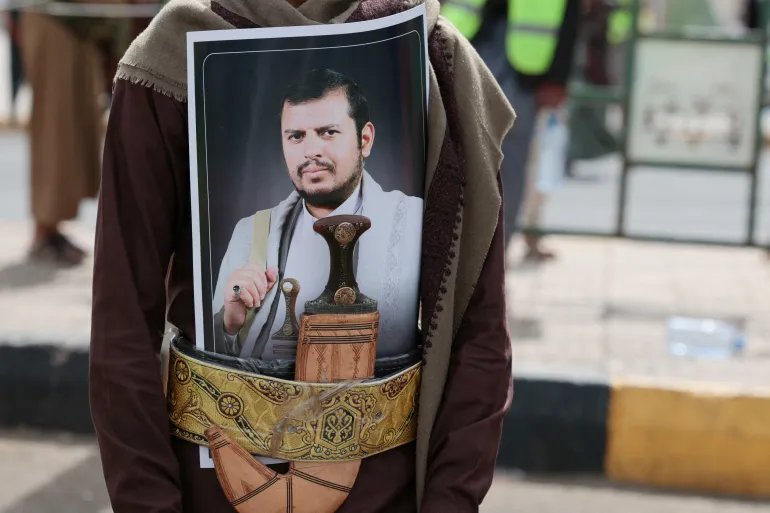
A Houthi supporter sports a poster of the group’s leader, Abdel-Malik al-Houthi, in his dagger’s belt, during a rally against the Saudi-led coalition [File: Khaled Abdullah/Reuters]
Aggression against Mecca ‘a condemned act’
Esmaeil Baghaei, Iran’s Ministry of Foreign Affairs spokesperson, said in a statement on X on Thursday that any aggression against Islamic holy sites, particularly Mecca, “is a condemned act”.
But he added that “a mere claim” of intercepting a drone “en route to Mecca” is not enough to accuse the Houthis of the act.
“Nor should we forget that our region has witnessed numerous instances of ‘false flag’ operations, particularly in recent months,” Baghaei said while pointing at Israel.
Meanwhile, China has privately asked Iranian officials to help rein in the Houthis after Saudi Arabia appealed to Beijing following recent Houthi attacks, anonymous sources in Iran told the Reuters news agency.
Beijing publicly called for restraint, dialogue and the restoration of safe navigation, but its private message went further than that, Reuters reported.
The escalation is also threatening to draw in other regional actors – specifically Saudi defence partners Pakistan and Turkiye, which signed a joint defence agreement with the kingdom last month.
Pakistan’s Defence Minister Khawaja Asif said the time has come to implement the Mecca agreement with Saudi Arabia and Turkiye due to recent Houthi attacks.
Asif’s comments to Pakistani media on Thursday were made as Iran’s Foreign Minister Abbas Araghchi said he’d held a phone conversation with Pakistan’s army chief Asim Munir to discuss “regional developments”.
Public broadcaster RTE says the country’s participation cannot be justified amid ‘appalling and ongoing loss of lives in Gaza’.
Published On 17 Sep 202617 Sep 2026
Ireland has become the second country, after the Netherlands, to announce a boycott of next year’s Eurovision Song Contest over Israel’s participation.
Irish public broadcaster RTE said in a statement on Thursday that the country’s participation could not be justified “given the appalling and ongoing loss of lives in Gaza” and that the humanitarian crisis in the enclave “continues to put the lives of so many civilians at risk”.
Recommended Stories
list of 3 itemsend of list
RTE, which manages Ireland’s selection and participation in Eurovision, added that it remained “deeply concerned by the continued denial of independent access [for] international journalists to the territory”.
The decision marks the second consecutive year that Ireland will neither participate in nor broadcast the competition, which is the world’s most popular television music show.
Earlier this month, Eurovision organisers said they were excluding any country involved in an armed conflict from hosting the competition.
However, the Dutch public broadcaster Avrotros said the exclusion of countries in conflict was not “sufficient”.
Avrotros announced last month that it was withdrawing from the 2027 competition.
It said Eurovision could “no longer be considered neutral” given Israel’s participation in “a large-scale military conflict” in Gaza.
Both Ireland and the Netherlands were among five countries that withdrew from Eurovision 2026 in Vienna earlier this year. Spain, Slovenia and Iceland also decided not to participate.
Eurovision Director Martin Green said on Thurday that organisers “fully respect” Ireland’s decision and that they “will be missed”.
“The Eurovision Song Contest is at its best when broadcasters and their artists from different countries come together to share music, celebrate creativity and create connections between audiences,” Green said.
“That power to bring people together is at the heart of what makes the Contest so special, and is even more important now in an increasingly difficult and divided world.”
The 2026 show, which Bulgaria won, attracted 132 million viewers, 34 million fewer than its 2025 edition.
Thousands of protesters gathered outside the venue in the Austrian capital during the final in mid-May to oppose Israel’s participation.
The European Broadcasting Union organises the annual music competition. It has faced accusations of applying a double standard for refusing to exclude Israel, despite banning Russia following its invasion of Ukraine in 2022.
Israeli prime minister pledges to advance two bills aimed at addressing the ‘immense damage’ done to Israeli soldiers.
Published On 17 Sep 202617 Sep 2026
Israeli Prime Minister Benjamin Netanyahu has pledged to pass a law that would revoke the citizenship of anyone who defames Israel’s soldiers, including the directors of NAZA, a documentary about Israeli soldiers’ killings of civilians in Gaza.
Directed by Israeli journalists Yuval Abraham and Rachel Szor, NAZA documents allegations that mass civilian deaths were built into Israel’s target decisions in its genocidal war against Palestinians in Gaza – something Netanyahu and the army reject.
Recommended Stories
list of 4 itemsend of list
The film won the Special Jury Prize at the Venice Film Festival last week. During his acceptance speech, Abraham said “our country is doing these crimes” and highlighted that Israel is systematically and deliberately targeting Palestinians in Gaza.
“NAZA” takes its title from an Israeli military term for expected “collateral casualties” and is built around anonymous interviews with intelligence officers and soldiers.
But it has also played into the charged domestic political atmosphere before Israel’s October 27 election, as public opinion polls suggest Netanyahu’s right-wing coalition could fall short of a majority in parliament.
On Tuesday, Netanyahu accused several of his election rivals of failing to take a tough stand against the documentary, claiming this made them unfit for office.
On Wednesday, he pledged to advance two bills that he said would address the “immense damage” done to Israeli soldiers in the film.
“The first [order]: To revoke the citizenship of anyone who defames [Israeli] soldiers, and the second: To hit them in their pockets and increase the statutory damages for defamation they can be sued for by 20 times,” Netanyahu said in a social media video. “We will hit them both in their pockets and in their citizenship, as their place is not with us.”
Netanyahu cited three examples in proposing the bills: “The recent film NAZA which portrayed [Israeli] officers and soldiers as war criminals”, 2025 remarks by left-wing ex-general-turned-politician Yair Golan that “a sane country does not kill children as a hobby”, and a military legal officer’s 2024 leak of a video showing soldiers abusing a Gaza detainee.
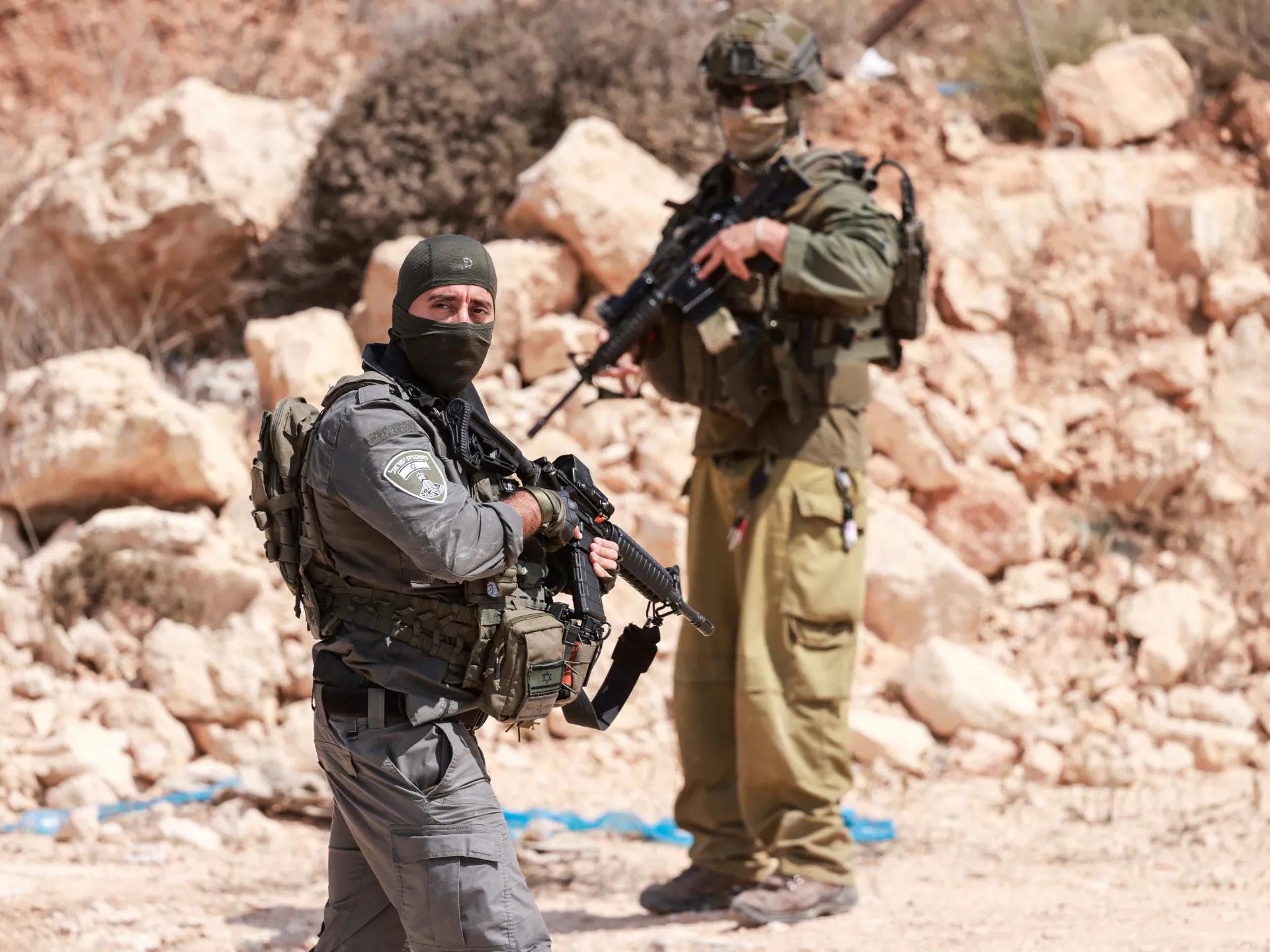
In 2022, Israel’s Supreme Court passed a law that permits stripping citizenship from Israelis who carry out actions that constitute a breach of trust against the state. Any new legislation would likely face similar court challenges.
More than 73,000 Palestinians, most of them civilians, have been killed in Israel’s genocidal war on Gaza since October 2023, according to health authorities.
US President Donald Trump had tried to pressure the Fed to lower rates, but it voted unanimously to raise them instead. In response, Trump is now threatening to end trade with countries the US has a trade deficit with – namely Canada, Mexico and the European Union.
Yemen’s Houthis have agreed to allow US shipping unfettered Red Sea access if Washington refrains from direct military involvement in the Saudi-led war. That’s according to US reports which say the two sides struck the deal amid a Houthi offensive along Yemen’s Red Sea coast.
Palestinians in the occupied West Bank know they shouldn’t ask what time their loved ones are going to make it home.
There’s simply no way to give an accurate answer. What used to be a short ride from one place to another could now take hours, or it might not happen at all.
Recommended Stories
list of 3 itemsend of list
Before driving, Palestinians check dedicated WhatsApp and Telegram groups and channels where people share updates on road conditions. But this isn’t typical traffic news: Instead, chats focus on which Israeli military checkpoints are open, which roads are off limits to Palestinians and whether Israeli settlers are attacking Palestinians as they drive their vehicles.
Sometimes pins are sent to warn people driving near towns where Israeli forces are conducting raids.
And if there’s no time to check the groups, then there’s always Basma FM. The Palestinian radio station, based in Rawabi near Ramallah, carries three traffic updates per hour.
The channel started broadcasting on October 2, 2023 – just days before the Hamas-led attack on Israel on October 7 and the start of Israel’s genocidal war on Gaza, and what has become a pogrom against Palestinians in the West Bank.
“Our idea was to target young people. We wanted to offer entertainment and culture news. But five days later, we realised we couldn’t,” said Fatima Barqawi, Basma FM’s news and traffic director.
The team had originally planned traffic updates as part of their programming. “We thought we could tell parents picking up their children from school to know where there was traffic, but after the war on Gaza started, we had to shift focus,” Barqawi said.
Her department has seven employees who verify information with their sources and provide updates on roadblocks.
“Things change each second. We could say there’s a closed checkpoint and Israeli soldiers decide to reopen it. Or vice versa,” Barqawi explained.
Dangers on the roads
The issue for Palestinians driving through the West Bank isn’t simply being late for appointments or held up for hours – it’s that there is an inherent danger to travelling in the occupied territory.
Palestinians in the West Bank drive white-plated vehicles, making them easily identifiable compared to the yellow-plated cars driven by Israeli settlers.
Israeli soldiers have killed Palestinians near checkpoints after claiming they were conducting ramming attacks, and Israeli settlers often attack Palestinian cars or block them from using certain highways.
These attacks are increasing as illegal Israeli settlements grow at a record pace.
It is hard to miss the large infrastructure projects Israel is implementing, expanding highways to connect Israeli settlements to one another and to Israel. This ends up isolating Palestinian communities, often forcing Palestinians to use poorly paved roads or dangerous mountainous routes to avoid Israeli settlers and roadblocks.
It’s a journey of fear and anxiety, a young Palestinian woman who did not wish to be named told Al Jazeera. “I used to blast my music and drive, now I’m on high alert. Always on edge.”
The woman recounted how Israeli soldiers assaulted her fiancé near a checkpoint in Hebron, in the southern occupied West Bank, because they mistakenly thought he had passed without stopping. A year later, she said, a soldier pointed his rifle at her.
“He was shouting at me. The sun was blocking my view, and I was careful crossing the checkpoint but that wasn’t enough. I saw the green beam [from the gun] and thought that was the end,” she said.
Attacks at checkpoints
Many Palestinians report being assaulted, humiliated and sometimes arrested at these checkpoints and roadblocks.
Israel has long imposed movement restrictions on Palestinians, controlling the road system and Palestinians’ access to the wider world. But since the war on Gaza began, these restrictions have intensified.
As of December 2025, the United Nations documented 925 barriers across the occupied West Bank including East Jerusalem, a 43 percent increase over the 20-year annual average of 647, the UN’s humanitarian affairs agency, OCHA, reported.
Almost all of of the villages and cities in the West Bank have iron gates at their entrances, and Israeli forces close them arbitrarily. Some of the gates are only open during certain hours.
A new report by the Israeli human rights group B’Tselem said the restrictions are used to deliberately fragment Palestinian life, with roadblocks and military checkpoints cutting off people from their work, schools, hospitals and one another.
The report, titled The Elimination Project, says there’s a broad rapid and systematic Israeli assault in the West Bank that aims to dismantle the foundations of Palestinian existence, and road closures are just one of them.
That is why, as Heba Erkat prepared her notes before heading into the studio for Basma FM’s Wednesday afternoon bulletin, she knew the information about to be read out could change rapidly.
Her colleague read the news, and then Erkat started listing updates at 61 checkpoints across the West Bank.
It was a relatively good day: only 12 of the checkpoints were either closed or had long queues.
But, as Erkat noted at the end of the segment, “the situation changes by the minute”.
Hashim Thaci, former President of Kosovo and KLA leader, has been found guilty of war crimes by the Specialist Court in The Hague. Al Jazeera’s Marah Rayan explains how the ruling came about.
WASHINGTON — For a third time, the U.S. House has voted to end the war in Iran, approving a war powers resolution that would halt President Trump’s ability to continue military action without congressional approval.
The roll call late Tuesday, 220-204, was similar to earlier efforts this summer, with a few more Republicans joining all Democrats voting to bring an end to the conflict. None of the resolutions have made it to the president’s desk, where Trump would almost certainly veto the measure.
“Remember when Donald Trump said that this war would last just a few weeks?” said Rep. Seth Moulton, D-Mass., who served as a Marine during the Iraq War and pushed the resolution forward.
He said it’s time for Congress to “actually ask tough questions, as the Constitution directs us to do, rather than be subservient to another warmongering administration.”
Republican Rep. Brian Mast of Florida, the chairman of the House Foreign Affairs Committee, questioned which military resources Democrats would want to remove from the region where he said Iran remains a threat.
Mast said Trump is against “forever wars, and that is what he is ending” — the decades of hostilities from Iran.
“They are a continuous ongoing threat to the United States,” Mast said. “Enough is enough.”
Last war powers vote before the midterms
The action is likely the last House vote on the Iran war ahead of the midterm elections, where the conflict overseas is playing a substantial role in the political campaigns. The war that Trump launched Feb. 28 has dragged, with on-again, off-again deadly missile strikes being exchanged and causing havoc in the region for nearly seven months.
Lawmakers are heading home at the end of the week to campaign nearly full-time, with less than 50 days to go before the elections that will determine control of Congress as Democrats try to wrest power from Republicans.
Voters are confronting high prices, particularly for gas at the pumps, as the conflict disrupts the flow of oil resources through the vital Strait of Hormuz.
The Congressional Budget Office said Tuesday that the war has cost more than $38 billion, as of Aug. 1, and is projected to be costing between $2 billion and $3 billion monthly, depending on the intensity of the fighting. The budget office projected inflation will be 0.5 percentage points higher than expected heading into 2027 due to the war.
Trump himself had promised not to involve the U.S. in foreign wars when he won a second term in the White House, and his actions against Iran are weighing on the Republican Party that controls the House and Senate. Most Americans say the war in Iran has not been worth fighting, according to an AP-NORC poll in July.
In the previous House actions, four Republicans voted to halt the war in Iran, but that number rose to seven in Tuesday’s war powers vote, including GOP lawmakers from battleground Iowa, Rep. Zachary Nunn and Rep. Mariannette Miller-Meeks, and retiring Rep. Nancy Mace of South Carolina.
They joined GOP Reps. Tom Barrett of Michigan, Warren Davidson of Ohio, Brian Fitzpatrick of Pennsylvania and Rep. Thomas Massie of Kentucky voting in favor of the war powers resolution, with all Democrats.
War powers being put to the test
Congress has tried repeatedly to alter the trajectory of the war against Iran, but efforts to limit the Trump administration’s military action remain a longshot so long as the president is able to fend off or veto the measures.
The House first approved a war powers resolution in June, and followed up with another one in July, all seeking to halt U.S. action in Iran. The Senate on its 10th try also approved a war powers resolution to end the conflict, but GOP senators quickly reversed course the next day after Trump berated them during a closed-door lunch.
While the Constitution gives Congress the authority to declare war, it also gives the president authority as the commander in chief to engage in some military actions. The War Powers Act, created in the aftermath of the Vietnam conflict, sought to put a more specific time limit on the president’s power, requiring congressional approval for sustained military actions after 60 or 90 days.
House Speaker Mike Johnson acknowledged at a press conference Tuesday the need to bring gas prices down.
But the Republican speaker said he believes the Iran conflict is entering a “new phase” as allies step up to help stabilize the region. When that happens, he said, “you’re going to see, as the president said, anytime gas prices will go down again, the cost of groceries will as well.”
Johnson said Trump expects the shift after the election, and the speaker added, “I’d love it to happen today.”
Taiz, Yemen – Hajja Fatima Mohammed Saleh, a 70-year-old Yemeni woman, is among the countless people and families displaced from Taiz governorate, southwest Yemen, in recent fighting between government forces and the Houthis.
The Iran-backed rebel group, also known as Ansar Allah (supporters of God), now controls most parts of northwestern Yemen, including the capital, Sanaa.
Recommended Stories
list of 4 itemsend of list
Saleh’s village in Maqbanah district, on the border of Yemen’s western coast, is situated at the epicentre of last week’s Houthi assault in which the group captured the whole of the Red Sea coast, including the port city of Mocha.
At least 100,000 people have now fled their homes following renewed fighting between the two sides, according to the United Nations’ refugee agency, most leaving with few belongings due to the speed of the Houthi offensive.
Saleh said she had to leave her wheelchair behind as it was unsuitable for the rugged terrain her family had to navigate to find shelter.
“The attack was massive, we had never seen anything like it before. Shells were falling heavily on the village, and bullets were flying in every direction,” she told Al Jazeera.
“We had no choice but to leave and flee to a safe place. We left everything we owned and walked a long distance on foot. For me, I suffered especially because I am disabled and cannot walk, so I had to crawl – using both hands – for a long distance through rain and floods before we found a vehicle to carry us.”
UN agencies and the internationally recognised Yemeni government say that Taiz governorate has witnessed most of the displacements, with Taiz City among the Houthis’ next targets after their victory on the Red Sea coast. This means the humanitarian situation could worsen even further.
Ali al-Shumairi, director-general of the Executive Unit for the Management of IDP Camps in Taiz governorate, told Al Jazeera that 65,845 people were displaced between August 10 and September 15. About 95 percent of those displaced come from the five districts which witnessed the heaviest fighting: Jabal Habashi, al-Maafer, Maqbana, al-Wazi’iyah and Mawza.
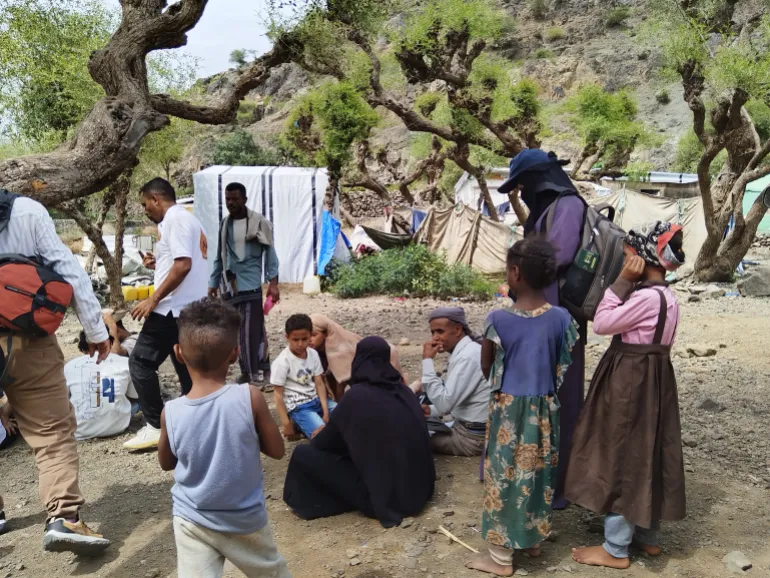
Newly displaced people at al-Munij camp [Al Jazeera]
Fighting has intensified on several fronts in Yemen as government forces have carried out air attacks on Houthi positions in attempts to retake Mocha, days after the group captured the strategic port city, tightening its grip on the Red Sea – a vital shipping lane.
This development has placed the Bab al-Mandeb Strait, the strategic waterway that connects the Red Sea to the Gulf of Aden and the wider Indian Ocean, at the heart of the war between the United States and Iran, and amplifies pressure on global trade routes.
Yemen’s more than 10-year civil war was reignited in July, threatening a United Nations-brokered truce that halted large-scale violence in 2022, after the Houthis declared a maritime blockade on Saudi Arabia and began targeting its ships in the Red Sea.
Forces affiliated with Yemen’s internationally recognised government have launched a campaign against the Houthis on a number of fronts since last week. They have retaken some positions and are advancing in the southwestern Taiz province as clashes intensify.
Osama al-Wafi, supervisor of the Mushrifa camp in Wadi Bikhawlan in Taiz governorate and a representative of the Yemeni government’s Executive Unit in Jabal Habashi district, described the situation as “dire and tragic”.
“These people have been displaced and have lost all the basic necessities of life, after having homes, farms, and livestock. Now they are only looking for a shelter to house them,” al-Wafi told Al Jazeera.
He said the number of displaced people arriving at the camp is steadily rising, with more than 1,500 families entering over the past six days, most living in the open due to a lack of shelter.
The al-Munij camp in the al-Bireen area, about 40 kilometres southwest of the semi-besieged city of Taiz, has become a temporary refuge for Yemenis fleeing the area after another bout of conflict between government and Houthi fighters in 2020.
Over the years, al-Munij has extended over a space of two square kilometres to house more displaced families, while other larger camps have been established in the area. Most residents complain they lack access to the most basic services – such as sporadic drinking water supplies and few toilets – in the camps.
Hajj Saif Qaed Thabet, 73, has been living with his wife and four children in an exposed space with no doors since arriving at al-Munij on September 10. He left behind a farm and livestock from his home in al-Kadaha, western Taiz governorate.
“We were displaced because of the war, fleeing bullets and artillery shells falling over our heads. Since arriving at the camp, we have been living like this, waiting for our situation to be addressed and for us to be housed in a suitable place,” said Thabet. “Praise be to God in all circumstances.”
Displaced man Hajj Saif Qaed Thabet, 73, has been living in the open air since he arrived with his family at al-Munij camp on Thursday, September 10 [Al Jazeera]
Malouk Ahmed Ali, 55, from the al-Kadaha area in Taiz, said her family of 14 all escaped drones, shelling and gunfire on foot, including five children under her care, seven under her daughter’s care, and her elderly grandmother.
“We fled to an area near our village in the hope that the war would calm down quickly and we would return to our homes, but the clashes expanded until they reached us, so we were displaced again to here aboard a military vehicle that came to transport the threatened homeless people,” she told Al Jazeera.
“When we arrived at this camp, we were received and placed in this small tent as temporary housing for all members of the large family. Although they took all our information, our situation has not improved much so far, and we still hope it will improve.”
Ali hopes the war will end soon so she can return home but believes her family’s possessions, including solar panels and a battery, will have gone.
“As for our livestock, most of them died, some fled to the mountains and valleys, and what remained was looted,” she said.
Prosecutors said that the group worked on behalf of Russian intelligence services to carry out attacks and murders around the world.
Published On 16 Sep 202616 Sep 2026
Five people have been charged over alleged Russian intelligence-linked plots involving surveillance, recruitment and planned killings, according to an indictment unsealed by the United States Department of Justice.
Prosecutors said on Tuesday that the group worked on behalf of Russian intelligence services to carry out attacks and murders internationally, including within the US, and that all five remain at large.
Recommended Stories
list of 3 itemsend of list
The defendants were identified as Russian national Yuri Khrameev, 63, his son Kirill Khrameev, 27, Cubans Oemis Romagoza Durruthy and Yaidel Delgado Suarez, both 35, and 22-year-old Venezuelan Angel Eduardo Castro.
All five were charged with conspiring to finance terrorism, while Khrameev, Suarez and Castro face additional charges of conspiring to commit murder for hire.
At a news conference, Attorney General Todd Blanche said the plots included attempts to kill a Russian dissident believed to be living in the Washington, DC area.
Justice Department officials said the network had recruited several people in the US to carry out surveillance on Russian dissidents, targeting individuals both domestically and in Lithuania.
In one instance, a recruit was reportedly promised $40,000 to make a US-based target “disappear”. A separate recruit was allegedly offered $25,000 the previous year to kill someone in Lithuania.
Russia’s embassy in the US has not commented on the case. Moscow has consistently rejected accusations that it has orchestrated assassination operations on foreign soil, including in the US.
WASHINGTON: For a third time, the US House has voted to end the war in Iran, approving a war powers resolution that would halt President Donald Trump’s ability to continue military action without congressional approval.
The roll call late Tuesday, 220-204, was similar to earlier efforts this summer, with a few more Republicans joining all Democrats voting to bring an end to the conflict. None of the resolutions have made it to the president’s desk, where Trump would almost certainly veto the measure.
“Remember when Donald Trump said that this war would last just a few weeks?” said Rep. Seth Moulton, D-Mass., who served as a Marine during the Iraq War and pushed the resolution forward.
He said it’s time for Congress to “actually ask tough questions, as the Constitution directs us to do, rather than be subservient to another warmongering administration.”
Republican Rep. Brian Mast of Florida, the chairman of the House Foreign Affairs Committee, questioned which military resources Democrats would want to remove from the region where he said Iran remains a threat.
Mast said Trump is against “forever wars, and that is what he is ending” — the decades of hostilities from Iran.
“They are a continuous ongoing threat to the United States,” Mast said. “Enough is enough.”
Last war powers vote before the midterms
The action is likely the last House vote on the Iran war ahead of the midterm elections, where the conflict overseas is playing a substantial role in the political campaigns. The war that Trump launched Feb. 28 has dragged, with on-again, off-again deadly missile strikes being exchanged and causing havoc in the region for nearly seven months.
Lawmakers are heading home at the end of the week to campaign nearly full-time, with less than 50 days to go before the elections that will determine control of Congress as Democrats try to wrest power from Republicans.
Voters are confronting high prices, particularly for gas at the pumps, as the conflict disrupts the flow of oil resources through the vital Strait of Hormuz.
The Congressional Budget Office said Tuesday that the war has cost more than $38 billion, as of Aug. 1, and is projected to be costing between $2 billion and $3 billion monthly, depending on the intensity of the fighting. The budget office projected inflation will be 0.5 percentage points higher than expected heading into 2027 due to the war.
Trump himself had promised not to involve the U.S. in foreign wars when he won a second term in the White House, and his actions against Iran are weighing on the Republican Party that controls the House and Senate. Most Americans say the war in Iran has not been worth fighting, according to an AP-NORC poll in July.
In the previous House actions, four Republicans voted to halt the war in Iran, but that number rose to seven in Tuesday’s war powers vote, including GOP lawmakers from battleground Iowa, Rep. Zachary Nunn and Rep. Mariannette Miller-Meeks, and retiring Rep. Nancy Mace of South Carolina.
They joined GOP Reps. Tom Barrett of Michigan, Warren Davidson of Ohio, Brian Fitzpatrick of Pennsylvania and Rep. Thomas Massie of Kentucky voting in favor of the war powers resolution, with all Democrats.
War powers being put to the test
Congress has tried repeatedly to alter the trajectory of the war against Iran, but efforts to limit the Trump administration’s military action remain a longshot so long as the president is able to fend off or veto the measures.
The House first approved a war powers resolution in June, and followed up with another one in July, all seeking to halt U.S. action in Iran. The Senate on its 10th try also approved a war powers resolution to end the conflict, but GOP senators quickly reversed course the next day after Trump berated them during a closed-door lunch.
While the Constitution gives Congress the authority to declare war, it also gives the president authority as the commander in chief to engage in some military actions. The War Powers Act, created in the aftermath of the Vietnam conflict, sought to put a more specific time limit on the president’s power, requiring congressional approval for sustained military actions after 60 or 90 days.
House Speaker Mike Johnson acknowledged at a press conference Tuesday the need to bring gas prices down.
But the Republican speaker said he believes the Iran conflict is entering a “new phase” as allies step up to help stabilize the region. When that happens, he said, “you’re going to see, as the president said, anytime gas prices will go down again, the cost of groceries will as well.”
Johnson said Trump expects the shift after the election, and the speaker added, “I’d love it to happen today.”
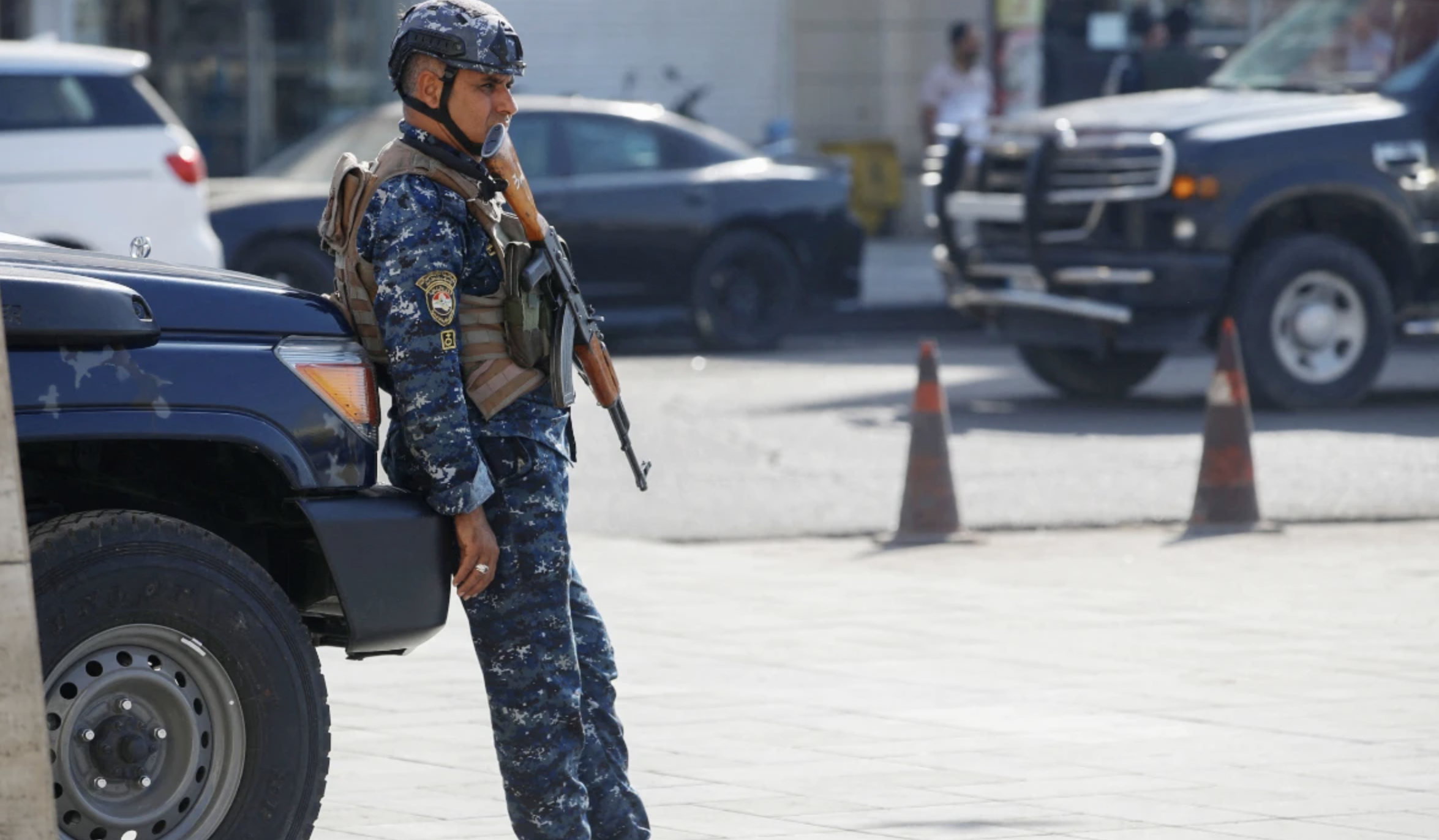
At a highly sensitive juncture, and amid increasing talk regarding the possibility of a third round of regional escalation, Iraqis are confronted with a fateful question: Is there someone seeking to make Iraq a part of this conflict – not merely a venue from which messages are dispatched or through which pressure is managed, but rather one of its open arenas?
There can be no avoiding the question, as the answer is linked to Iraqi blood, state sovereignty, the future of the economy, and Iraq’s standing among its brethren, neighbors, and the world. The matter is no longer a limited security issue; rather, it is a question of statehood, destiny, and direction, as well as a question of Iraq’s ability to protect itself from being dragged into what it does not want.
Repeated attempts to use Iraqi territory to target fraternal and neighboring Arab countries – the latest of which was the announced targeting of Saudi Arabia, preceded by the United Arab Emirates, Kuwait, Bahrain, and Jordan – reveal that we are facing a systematic trajectory rather than an isolated incident. If not decisively resolved, this trajectory could transform into a de facto policy.
Should the state succumb to the blackmail of forces acting outside its authority, it loses not only its security decision-making power but the very meaning of statehood itself. Iraq must not remain a conduit for messages, a proxy mailbox for others, a negotiating card in their conflicts, or an arena pushed forward during every regional escalation.
The problem is no longer about issuing a statement after each incident or settling for a reassuring narrative that does not prevent the recurrence of danger. The deeper problem is the existence of a repeating pattern that consumes Iraq’s political and moral capital, leaving the government to face the consequences of actions that do not reflect its own decisions. The longer a decisive resolution is delayed, the more a dangerous perception takes root abroad that the Iraqi state alone does not control its security decisions. This is an unfair image of Iraq and harmful to its interests, but it cannot be corrected by words alone.
Sovereignty is not safeguarded through slogans; rather, it is maintained by the state’s capacity to serve as the sole authority for force and decision-making. Consequently, restricting weapons to state control is neither a stance against any faction nor a detraction from anyone’s sacrifices. Instead, it is a prerequisite for the survival of the state and the protection of everyone. A state that does not hold exclusive authority over the decisions of war and peace can neither demand that others respect its borders, reassure its citizens, nor build stable relations with its neighborhood. It is in the interest of all forces, above all others, for the state to be strong, because a weak state protects no one; instead, it leaves everyone exposed.
Today, under highly sensitive circumstances, the Iraqi government is working to reconnect Iraq with its Arab, regional, and international surroundings, and to sincerely leverage available support and openness to serve the interests of Iraqis. These efforts deserve support – not because they are the efforts of a specific government, but because they represent the trajectory of a state. However, there are those, both internally and externally, who do not want Iraq to move past the logic of conflict and axes, and who seek to undermine any attempt to solidify its position as a balanced, secure partner state that is capable of speaking for itself, rather than for others.
The truth is that the Arabs, despite all the complexities that have affected the relationship, have not turned their backs on Iraq; rather, they have continued to view it as a pivotal country indispensable to regional stability. Throughout the difficult years, there remained an Arab readiness to embrace Iraq and restore it to its natural position, out of belief in its role, presence, and civilized and political depth. The problem has never been an Arab desire to break ties with Iraq; rather, it lay in Iraq’s ability to present itself as a state with a single decision-making authority – not a country where decisions are contested between the government and factions, the constitution and weapons, and national interest and wills that do not emanate from Iraqi state institutions. It is unfortunate that opportunities for openness and trust are squandered due to practices that reflect neither the will of Iraqis nor the interest of their state.
The risk of slipping today is greater than some believe. Every uncalculated action could drag Iraq into a confrontation it does not want, and every use of its territory outside state decisions could push it an additional step toward isolation. Isolation is neither heroism, an interest, nor a viable option in a world where countries thrive on economy, partnerships, investment, and trust. Every armed message launched outside the state is met with a message of concern from the investor, the partner, and the fraternal state, and every new disruption reflects on the market, labor, energy, banks, and Iraq’s image in the world. Iraq needs projects, energy, job opportunities, education, infrastructure, and openness – not more anxiety, armed messages, and alignments that deplete it.
We must be candid with our people: statements are no longer enough. Neither the domestic public is convinced by statements, nor is the outside world reassured by them. What preserves Iraq’s standing is action: a professional investigation, fair accountability, real control, and a clear decision that no entity, regardless of its title, can place the country in war, isolation, or economic loss. Backing the government along this path is a national duty, because it is a support for the state, its right to protect sovereignty, preserve relations, and build the future.
Iraq is subordinate to no one, an enemy to no one, and an arena for no one. It is a great homeland, and the decision of war and peace within it belongs to the Iraqis and their state alone. This is the hour of the state, the hour of reason, and the hour to say clearly: Iraq first.











![Newly displaced persons at Al-Munayyaj camp [Al Jazeera]](https://i0.wp.com/www.aljazeera.com/wp-content/uploads/2026/09/%D8%A7%D8%AB%D9%86%D8%A7%D8%A1-%D8%AA%D9%82%D9%8A%D9%8A%D8%AF-%D8%A8%D9%8A%D8%A7%D9%86%D8%A7%D8%AA-%D8%A7%D9%84%D9%86%D8%A7%D8%B2%D8%AD%D9%8A%D9%86-%D8%A7%D9%84%D8%AC%D8%AF%D8%AF-%D9%81%D9%8A-%D9%85%D8%AE%D9%8A%D9%85-%D8%A7%D9%84%D9%85%D9%86%D9%8A%D9%8F%D9%91%D8%AC-%D8%B5%D9%88%D8%B1%D8%A9-%D8%AE%D8%A7%D8%B5%D8%A9-%D9%85%D9%86-%D8%AA%D8%B5%D9%88%D9%8A%D8%B1%D9%8A-1789545157.jpg?w=640&ssl=1)
![Displaced man Hajj Saif Qaed Thabet, 73, has been living in the open air since he arrived with his family at al-Munij camp on Thursday, September 10 [Al Jazeera]](https://i0.wp.com/www.aljazeera.com/wp-content/uploads/2026/09/%D8%A7%D9%84%D8%AD%D8%A7%D8%AC-%D8%A7%D9%84%D9%86%D8%A7%D8%B2%D8%AD-%D8%B3%D9%8A%D9%81-%D9%82%D8%A7%D8%A6%D8%AF-%D8%AB%D8%A7%D8%A8%D8%AA-%D9%85%D8%A7-%D8%B2%D8%A7%D9%84-%D9%8A%D8%B3%D9%83%D9%86-%D8%A8%D8%A7%D9%84%D8%B9%D8%B1%D8%A7%D8%A1-%D9%85%D9%86%D8%B0-%D9%88%D8%B5%D9%88%D9%84%D9%87-%D9%85%D8%AE%D9%8A%D9%85-%D8%A7%D9%84%D9%85%D9%86%D9%8A%D9%8F%D9%91%D8%AC-%D8%A7%D9%84%D8%AE%D9%85%D9%8A%D8%B3-10-%D8%B3%D8%A8%D8%AA%D9%85%D8%A8%D8%B1-%D8%B5%D9%88%D8%B1%D8%A9-%D8%AE%D8%A7%D8%B5%D8%A9-%D9%85%D9%86-%D8%AA%D8%B5%D9%88%D9%8A%D8%B1%D9%8A-1789545163.jpg?w=640&ssl=1)