WASHINGTON — President Trump is canceling nearly $1 billion in spending approved by Congress, the White House announced Friday, using a rare and contested power to axe funding for immigrant services and diversity-focused initiatives.
Trump’s Office of Management and Budget described the funding cut as focused on “the most harmful government spending.”
Most of the cuts are focused on Health and Human Services programs that serve refugees and unaccompanied minors accused of being in the country illegally. The administration says the funds are no longer necessary because illegal border crossings have diminished considerably.
Also targeted for cuts were a Department of Education program for migrant students, a Department of Justice office focused on reducing racial tensions, a business development initiative for minority entrepreneurs, housing counseling services from the Housing and Urban Development Department and a series of grants from the Health and Human Services Department that the administration called “outright harmful and blatantly ideological.”
A White House news release announcing the funding rescission notes that some of the organizations are led by people who worked in the Obama administration.
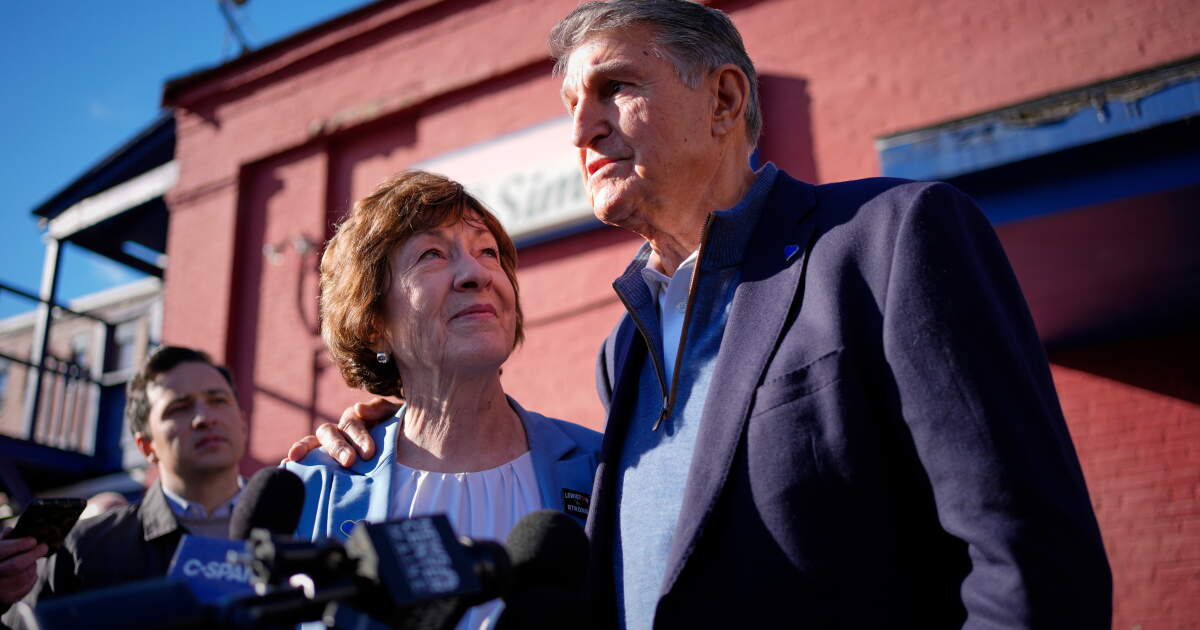
Trump’s move was condemned by Sen. Susan Collins of Maine, a Republican in a tough reelection campaign and chair of the Senate Appropriations Committee.
Collins said in a statement that the action came without warning or consultation. She also said she would work to address with colleagues “these illegal actions.”
“Not only is the delay itself an impoundment that was not reported to Congress, but also it is a usurpation of Congress’s appropriations powers,” Collins said. “OMB is an agency of the executive branch. It does not get to decide which programs are worth funding.”
Under federal law, Congress has 45 days to review the president’s proposed spending cuts before they take effect. But Trump made that all but impossible by announcing them with just five days left in the federal fiscal year and the House out of session through the November election. The Government Accountability Office, which is an arm of Congress, says the maneuver known as a “pocket rescission” is illegal.
Collins called it the latest attempt by OMB to “undermine Congress’s Constitutional power of the purse.”
A year ago, Trump issued a pocket rescission for the first time in nearly 50 years by blocking $4.9 billion in congressionally approved foreign aid. The U.S. Supreme Court declined to block that rescission, saying that Trump’s authority over foreign affairs weighed heavily in its decision. This year, Trump is targeting domestic spending.
The use of a pocket rescission fits into a broader pattern by the Trump administration to exert greater control over the U.S. government, eroding Congress’ power.
What was essentially the last pocket rescission occurred in 1977 when President Carter rescinded it, and the Trump administration argues it’s a legally permissible tool, despite some murkiness, since Carter had initially proposed the claw-back well ahead of the 45-day deadline.
The administration has also fired federal workers, imposed a historic increase in tariffs, and started the war in Iran without going through Congress, putting the burden on the judicial branch to determine the limits of presidential power.
Sen. Patty Murray of Washington, the lead Democrat on the Senate Appropriations Committee, described the White House action as “theft from the American people, plain and simple.”
“These are funds Congress has delivered on a bipartisan basis and should be helping people — not cut off by a president more focused on building a ballroom than investing in families,” Murray said.
Murray said that in recent spending negotiations, Democrats fought to include language to prevent the administration from usurping Congress’ power on spending decisions, but Republicans have declined to go along.
“While Trump spends tax dollars on ads promoting himself” — a reference to a taxpayer-paid TV spot that has drawn bipartisan rebuke — “Congress needs to reassert its powers to help people, and it’s past time Republicans join us in that fight,” she said.
In addition to immigrant services, the White House said it was rescinding $70 million for what it called “woke” international education programs, $28 million in grant funding for Health and Human Services research programs, and $9 million in debt relief for foreign countries that fund climate change policies. An additional $10 million was being withheld from a minority business development program.
Freking and Cooper write for the Associated Press.
PORTLAND, Maine — Maine Democrats on Wednesday assailed U.S. Sen. Susan Collins over a news report that the FBI investigated how much she knew about illegal campaign contributions that sent one of her donors to prison.
The ProPublica report, published Tuesday, states that the FBI in 2024 planned to launch an investigation into Collins’ dealings with Navatek, a Hawaii defense contractor and donor to her campaign. The investigation, which focused on an alleged pay-to-play scheme, failed to commence after President Trump took office after winning the election, according to ProPublica.
The report arrived six weeks before an election in which Collins is seeking a sixth term against Democrat Troy Jackson. Democrats have targeted the seat, in a state that Trump lost in 2024, as the party tries to win control of the Senate, making it one of the most competitive races on the November ballot.
Collins on Tuesday called the entire story “absolutely outrageous” and said it is frustrating and unfair to have such claims made against her so close to the election. Her campaign manager, Steve Abbott, also said Wednesday that the allegation that “we charge people to have meetings” is categorically false and Collins accepting campaign cash for contracts “did not happen.”
Jackson called the allegation “corruption of the highest order.” He was not present Wednesday when a group of Maine Democrats held a news conference near Collins’ Portland office, calling the allegations a betrayal of trust.
“I cannot stress enough here today the seriousness of these allegations. Maine people deserve clear and real answers from Susan Collins right now,” Maine Democratic Party Executive Director Devon Murphy-Anderson said.
FBI says allegations were already investigated
The ProPublica report stated that the head of a Collins super PAC met with executives from defense contractor Navatek in 2019 and asked them for a $500,000 campaign donation. The company’s chief executive, Martin Kao, sent an initial $150,000 donation using a shell company, the report stated. ProPublica reported that it reviewed an internal company email from Kao in which the CEO later told Navatek executives that Collins committed to getting the company $32 million in Navy contracts.
Kao and two other Navatek executives were later indicted on charges of funneling illegal donations to Collins. Kao sought to reduce his prison sentence by revealing to the FBI the full scope of illegal contributions to Collins, ProPublica reported.
Collins said Kao is “a liar” whose story is untrustworthy.
“He has been twice convicted in separate federal court cases. He’s been convicted of money laundering. He’s been convicted of bank fraud. He has been convicted of false submissions to the FEC. He’s being convicted of a lot of crimes,” she said.
An FBI spokesperson said in a statement that the allegations “had already been investigated by the FBI years ago and ultimately found nothing implicating Senator Collins or Senator Collins’ campaign. Any suggestion otherwise is totally false.”
The ProPublica article also states that Trump’s return to the White House left the Justice Department unable to perform the investigation.
Corruption investigations have decreased in Trump’s second term
The number of FBI agents and Justice Department prosecutors specializing in corruption investigations plummeted in the first months of the Trump administration. The Justice Department, for instance, decimated its elite Public Integrity Section in early 2025 and the FBI disbanded a white-collar fraud and public corruption squad based out of its Washington field office.
The administration has also fired numerous law enforcement officials who participated in investigations into Trump, including over his efforts to undo the 2020 presidential election he lost and his retention of classified records at his Mar-a-Lago estate in Palm Beach, Fla.
An email seeking comment was sent to the Justice Department on Wednesday.
Collins said she first learned of the company through the University of Maine because of the research the Navy found to be valuable, which had to do with 3D printing for production.
She said the Justice Department has already reviewed the matter.
“I’m telling you this is completely false,” Collins said.
Senate Majority Leader John Thune dismissed the idea that Collins would be implicated in a pay-to-play scheme, calling the allegations “a political hit job.”
Whittle and Mascaro write for the Associated Press. Mascaro reported from Washington. AP writers Mary Clare Jalonick and Eric Tucker in Washington and Kimberlee Kruesi in Providence, R.I., contributed to this report.
Two housemates were then forced to say their goodbyes on Friday night (September 18), with fake contestant Tays leaving alongside bartender Millie. But viewers have also been watching romances bloom between Chelsey and Lynx, as well as Omar and Rhianna.
However, this won’t be Rhianna’s first love story to play out on screen. She previously dated Made in Chelsea star Freddy Knatchbull and appeared in several episodes of the show alongside him.
In her first scene on the Channel 4 series, the 21-year-old revealed that she doesn’t use the name she was given at birth. The Russian star actually chose her current name at just six years old, after her mother became a British citizen.
“I’m Russian but I’ve lived everywhere,” she explained to Freddy’s friends. When asked what her real name is, Rhianna shared: “I changed my name too, when I was like six. Because my mum became a British citizen.”
She went on to reveal her potential choices: “As a six-year-old, she’s asking me ‘Oh, change your name if you want.’ And I was like ‘Okay.’ Gave her three options: Zendaya, Rihanna like the singer, or Kylie Jenner.”
Try ITVX Premium free for a week
This article contains affiliate links, we will receive a commission on any sales we generate from it. Learn more
ITVX Premium offers exclusive ad-free content that can be streamed on-demand and on the go, with everything from Hollywood blockbusters to bingeable British box sets.
An annual plan costs £59.99 – equal to £4.99 per month – after a seven-day free trial.
The Big Brother star didn’t reveal her birth name on the show. But she touched on her unusual upbringing, during which her mother hired a full-time bodyguard to stop her being a “wild child”.
Reflecting on her teenage years, Rhianna said: “I would meet people for the first time and they’d be like ‘Rhianna, by the way, there’s someone following you.’ Can you imagine trying to meet guys and then a bodyguard is with you?”
The so-called stay-at-home daughter is now hoping to win over the nation and take home the Big Brother crown. Living with strangers will also be a new experience for her. “I’ve never done that before,” she admitted before starting the show.
“I’ve never stayed in a hostel, gone to summer camp or boarding. I’ve never been in a situation where I have to stay the night with complete strangers and that is really exciting for me. I get to meet people that I most likely wouldn’t have met in my day-to-day life.”
Big Brother continues on ITV2 and ITVX tonight at 9pm
When Judy Collins comes to Los Angeles, she likes to stay at the Beverly Hilton in part because “they serve a fabulous breakfast,” she says over coffee at the hotel on a recent morning. “That’s rare today,” she adds. “Too often a place will just send up a cardboard shopping bag with the things you ordered in it.”
Collins knows her amenities: At 87, the Grammy-winning singer and songwriter still plays about 120 shows a year, drawing audiences around the world with her high, clear voice and an expansive repertoire that blends the hits that made her famous in the 1960s and ’70s — Joni Mitchell’s “Both Sides Now,” Leonard Cohen’s “Suzanne,” Stephen Sondheim’s “Send in the Clowns” — with traditional folk tunes and material of her own.
Yet now she’s preparing to hang it up with a lengthy farewell tour she’s calling Sweet Judy Blue Eyes (after “Suite: Judy Blue Eyes,” the folk-rock classic her one-time lover Stephen Stills wrote about her for Crosby, Stills & Nash). The night before our interview, Collins played L.A.’s Ford Theatre; she’ll be back through Southern California for a Sept. 27 date at the Lobero Theatre in Santa Barbara and again next year for shows in Palm Springs and Aliso Viejo.
After we talk, she plans to do a bit of tai chi, for which she uses an app on her phone and which she wishes more people practiced. “Maybe that would alter civilization,” she says. “If we were all doing tai chi, we couldn’t be at war with Iran.” Then she’ll head to the airport for a flight home to New York, where she’s lived for decades — most of them with her husband, industrial designer Louis Nelson, who died in 2024.
At breakfast, Collins is wearing a patterned turquoise jacket over a matching dress and high-heeled black leather boots.
“You like these?” she asks of the boots. “These are Stuart Weitzman. I bought them 30 years ago, and I’ve never stopped wearing them.”
That’s a well-made boot. They fit, they’re great and I reject all invitations to get rid of them.
Has your thinking about clothes changed over the decades? I used to dress in jeans because I was a cowgirl — I hung out with rodeo riders in Colorado. As I came up, I liked what was simple. My mother made all our clothes on a Singer sewing machine for years. Now I love beaded things. I have full closets I need to go through.
Before you came onstage last night, an announcer told the audience not to take pictures or videos. That’s my management’s doing — it’s important to them, so I go along with it. But the pictures are usually bad. Also, the phones take people’s minds off what’s going on onstage. People need the chance to focus. We’re in a period of insanity right now, so people need time to sit wherever they are. They could go to the ballet or to the theater, but they choose to come to me, and they get to sit there and they get to listen and they get to think about their own lives.
As a performer, that’s what you seek to provide. I’m providing silence. It’s such a noisy world — so full of crappy music that plays outside all these hotels and places where we stay. It drives me nuts.
You have a line in the show where you say, “Something unexpected happened — I turned 87.” It got a good laugh. People applaud too.
What are they saying by applauding? They want to be acknowledged for their own ages, whether they’re 87 or 90 or 19. People are coming to see me, but they’re also coming to see their history. They’ll remember what happened 60, 70 years ago — they were probably marching at the same things I was marching at. And if they’re 19, they want to know why we’re not marching now.
Judy Collins performs on “The Smothers Brothers Comedy Hour” in 1969.
(CBS via Getty Images)
You said we’re in a period of insanity. This country is losing so much of the depth of our origin. The fact that workers who’ve come to this country are being taken off to God knows where — it makes no sense. Number one, these people often have some sort of legality. And secondly, they do the work here. Nobody else wants to go up to the orchards in Oregon and pick the fruit. Do you?
I can’t say that I do. I don’t want to do that.
This tour is billed as your grand farewell. So long, you guys.
I’m always reluctant to trust that framing. Cher’s done like eight farewell tours. I hadn’t counted them up — shame on me.
Should we really believe you? I think we have to believe in the present tense. What you’re hearing is what’s happening.
You had a music stand onstage with you. What was on it? All the lyrics to all the songs.
You can’t possibly need the lyrics anymore. Oh, yes, I do.
You’ve been singing some of them for decades. Doesn’t matter — it has to be there in case you have to look at it.
Would you say you do look? Or is it more of a security blanket? It’s a security blanket. But my eyes wander — I like to see who’s in the audience and what’s going on. I like to look up and down the aisles, and I like to fantasize: How did this happen?
Your life and career? I mean, I know how it happened. I was 16, and I started going to the Denver Folklore Society, which was run by a guy named Lingo the Drifter. And Lingo the Drifter had these wonderful evenings where we all played the guitar and sang and drank illegal whiskey and so on.
Judy Collins last month in Beverly Hills.
(Allen J. Schaben / Los Angeles Times)
Before Denver, you lived briefly as a kid in Los Angeles. My father was a very eclectic and fabulous radio personality. He had a radio show for 30 years in Seattle then here in Hollywood, broadcasting out of CBS — a big deal. If we weren’t in school, we would drive up Santa Monica Boulevard into Hollywood and we’d stand around and watch them produce the radio mysteries. People would walk in a sandbox to get the sound of somebody walking up the gravel road to the door.
Are you familiar with the term “nepo baby”? No.
It refers to the child of a famous artist who follows in their parent’s footsteps. Oh, that’s interesting.
People use it derisively, as if to say that a kid has overly benefited from their advantages. We certainly had advantages. For instance, the Library of Congress, which is the jewel in the crown — I don’t know what they’re doing now — but they sent us Braille books and they sent us all the shows from New York and they sent us the recordings of all the Shakespearean plays by the great Dame Judith Anderson and John Gielgud. I had all that growing up. In some ways, I wasn’t raised — I was trained. I got to see how a professional has to handle his life. My father was a professional in all ways. He drank — occasionally, not all the time — but he was absolutely organized about everything, including that.
You’ve been sober for something like half a century. Forty-eight years. I’m in my 49th now.
You ever miss drinking? Oh, my God, no. I was so sick — I was gone. Bye-bye.
Some people replace one addiction with another. I had an eating disorder, which is still kind of … You know, last night, I asked for apple juice during the show — I was in trouble because I wasn’t eating. When my husband died, I stopped eating again. I’d stopped eating in the ’60s and ’70s and ’80s, but I got over that. But suddenly I didn’t want to eat again.
Would you consider that disordered eating? I don’t know. Anyway, I have to really be careful. We had a talk about it last night. I have to eat these protein bars, and I have to eat them all the time.
Do you remember the first gig you played after your husband died? Oh, yes — I had to go out. When my son took his life in 1992, I got a call from Joan Rivers — she and I knew each other pretty well. She was getting ready to go out and do her show in Las Vegas, and she called me in New York and she said, “I have to tell you this” — her husband had just killed himself — she said, “You cannot stay home. You have to go out.” I was canceling all my shows, and she said, “You can’t do that because you won’t ever get over this if you do.”
How did you take that advice? I said, “Thank you,” and I called my staff and I said, “Put ’em back on.” My mother came out with me, Louis came out with me, my sister came out with me, and it was incredibly true: I had to be working or else I would die. So when it came to Louis, I was out three days later.
What did that feel like? Well, it was wonderful because I was working. I can work and get through anything — that’s the psychological effect of what I’m doing on the stage. I’m interacting with people, I’m hearing the laughter, I’m hearing the music. What could be more healing?
This is why I’m wondering why you plan to stop touring. But you see, I have all these other things to do — I have a life that’s not just touring. I’m working on the music for a Broadway show. And I’m doing a new book — it’s called “Singing Through the Storm,” and it’ll be out next year, I hope.
Judy Collins and Leonard Cohen attend the 41st annual Songwriters Hall of Fame ceremony in New York in 2010.
(Larry Busacca / Getty Images)
You’ve interpreted the music of so many great songwriters: Joni Mitchell, Bob Dylan, Leonard Cohen. Was there ever a writer whose work you admired but couldn’t find your way into? No.
OK. I’ll tell you my funniest Leonard story. In 2014, I think it was, I went to this little group in Norway called Democrats Abroad — lonely group of people. That night, this woman came up to me and said, “Hi, I’m Marianne.” I said, “Hi, Marianne.” And then she said, “I’m Leonard’s Marianne.” She said, “There’s something I’ve wanted to tell you for many years: We were living together in Spain, Leonard and I, and he was writing songs and we were swimming in the nude. And then one day he came to me and he said, ‘Marianne, I’m going to New York to sing my songs for Judy Collins,’ and he went to New York and he played you all his songs and you recorded them.” Marianne said, “I just wanted to tell you that you ruined my life.” Fortunately, we became friends on Facebook.
You opened last night’s set with “Both Sides Now.” Oh, yes.
This might be the most famous song you do. Some artists would save it for later in the show. I don’t want people to wonder for an hour and a half: Will she? Won’t she? What will I do if she doesn’t?
Do you still enjoy singing “Both Sides Now”? I love it. It was Al Kooper who brought me to Joni — she sang it to me over the phone. Al is living a very sane, quiet life in the Northeast now. He’s married — never goes out anymore. It’s hard to think of Al Kooper just sitting there enjoying his marriage and his garden.
What will you do on the plane home today? I’ll probably get out the computer and noodle around on the book and see what I can come up with.
The work never ends. It never ends because it’s not done.
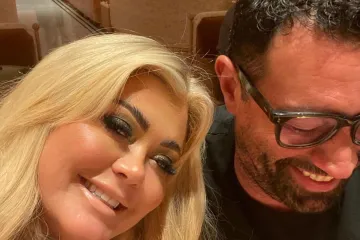
GEMMA Collins’ fiancé Rami Hawash has admitted to having a drinking problem.
Gemma, 45, has revealed viewers will see how Rami’s alcohol dependency impacted their relationship in Gemma Collins: Everything. All At Once.
Gemma Collins’ fiancé Rami Hawash has opened up about his alcohol dependencyCredit: Instagram/@rami_hawash_Her reality series Gemma Collins: Everything. All At Once debuts on September 15Credit: Getty
The upcoming reality series officially debuts on Sky and NOW on September 15.
Speaking at the show’s launch, Rami shared: “I drink, I’ve got a drink problem and I don’t want to hide it.
Sign up for the Showbiz newsletter
Thank you!
“I wanted people to know it is a problem. I’ve got a problem and life is not that great.
“I don’t know why, but I find the drink, it was like, kind of my friend. You know, I have a few drinks and I’m forgetting everything.”
The couple originally met in 2011 and got engaged in 2013, but this was later broken offCredit: InstagramThe couple are thought to have gotten back together in 2023Credit: Getty
Meanwhile, Gemma said of her experience in the documentary: “You can see I’m unwell.
“You can see I’m not in my best, and life just got progressively worse as I let the cameras in. It was hell.
“But you know, one thing my mum taught me wasresilience, I’m resilient to get through all this really.
“It can get better. So let’s hope everything starts to get better now because I can’t take any more. I need a break.”
Known for being ‘The GC’ on screen and larger than life, viewers will see a different side to Gemma Collins in her new Sky documentary series.
Gemma Collins has not had a lot to celebrate whilst making her Sky series.
Gemma Collins admits she has had “the worst year of her life” which corresponded with a time she had cameras following her every move.
The former TOWIE star, also known by her celebrity persona ‘GC’, and was due to get married to partner Rami and start a family during filming for Sky documentary series called ‘Gemma Collins: Everything. All At Once’. The series was originally called Four Weddings and a Baby, but as Gemma admits “things didn’t go to plan”.
Her relationship with Rami has had issues, the pair have also been sadly unable to conceive, and worst of all Gemma’s beloved mum Joan died at the end of July after several years of health issues. Admitting her life and TV series hasn’t been going to plan, 45-year-old Gemma said: “Mum’s been unwell for sixteen years and I’ve been dealing with that on the side, but her health started going downhill during filming and she passed away last month[actually July 2026].
“My fiancé Rami has also been struggling with his mental health and using alcohol to cope, and on top of that we had fertility issues. It was like drowning. It was the worst year of my life. I couldn’t keep hiding it.
“Being The GC was escapism. I could put the make-up on, get the hair big, and forget what was going on in the real world. But there’s been a real turn in media where people want to see the real me again. They’re sick of the bluff. I’m not afraid and I know I don’t need to deal with all this on my own.”
In the eight part series viewers will see Gemma embark on her fertility journey, and she questions whether she has left things too late, putting her career before having a family. On trying for a baby Gemma says: “Rami and I went to the Portland, and I started thinking maybe there could be a miracle. We could get an egg donor and make it work. But, as you’ll see on the show, it got increasingly difficult.
“I still have Tristan, and my nephews. I’ve known Tristan since he was three: I did his nappies, I gave him his bottles. I love that boy. With my mum gone, I’m going to be the mum of the family now, the matriarch, and I’m really happy and excited for that. If it’s meant to happen, my mum will send it to me, and a miracle will happen. If it doesn’t, I’m at peace with that.”
Gemma admitted she found filming on some days very hard but insisted she had to continue. The other deeply personal issue in the series is the loss of her mum Joan, and Gemma allows the cameras into moments like when she deals like this and when the bravado she usually uses on screen drops.
She said: “The camera crews are at your house and you’re thinking, ‘This is my life, it’s so s**t. How can I let people see it?’. But unless you go through hard times, I don’t think you grow as a person. This was the hardest thing I’ve ever done, but it’s also the thing I’m most proud of.”
On her mum Gemma added: “My mum passed away peacefully, and we were all in the room. She’s come back to me in so many ways already, which gives me great comfort. She comes back to me in spiritual ways and sends me signs. There was this butterfly in the house towards the last few days of my mum living, and it wouldn’t go away. When she passed, Tristan went to me, ‘There’s Nanny’. He went, ‘Nanny, if that’s you, flap your wings ten times,’ and it did.”
* Gemma Collins: Everything. All At Once launches 15 September on Sky and streaming service NOW.