PERCHED on the Sheringham promenade is a beautiful holiday home with views across the Norfolk coast.
Now, it’s a modern little escape, but visitors might be shocked to discover that what it used to be.
For over 100 years the Wee Retreat was used as a public toilet in SheringhamCredit: SWNS:South West News ServiceNow the holiday home looks completely different after its transformationCredit: Holiday Cottages
It was first built in 1897 and was used as a public toilet for over 100 years until its closure in 2006.
It was then bought by its current owner who transformed it into what is now called the Wee Retreat.
Sign up for the Travel newsletter
Thank you!
The coastal holiday home has spiral staircases and sleeps up to four people across two double bedrooms – both have with a private shower room.
For those wanting to make the most of the views, make sure to bag the bedroom on the first floor which has French doors which open onto a veranda.
It has a modern kitchen with all the appliances for a self-catering break.
The open-plan lounge has a cosy seating area and is surrounded by floor to ceiling windows to let in all the natural light.
It also has a wrap around balcony where in the summer you can enjoy the sunshine, or during the winter, cosy up inside and turn on the underfloor heating.
To keep guests occupied, the Wee Retreat has some books and games too.
With Host Unusual, Wee Retreat can be booked from £611 for seven-nights – or £21pppn.
Guests have left reviews calling it a “one-of-a-kind”, others described it as “peaceful and beautiful”.
The upstairs bedroom has French doors and its own verandaCredit: Holiday Cottages
Of course, with Blue Flag beach on its doorstep, visitors can make the most of taking a dip into the sea or making sandcastles.
Aside from that, it’s minutes away from the centre of Sheringham which has lots of shops, cafes, restaurants, and even a theatre.
It’s home to the Poppy Line, a heritage steam railway, which takes visitors into the Georgian town of Holt.
Holt was recently named one of Britain’s poshest towns.
It has an open plan living area and kitchen with floor to ceiling windowsCredit: Holiday CottagesThe Wee Retreat sits right on the Sheringham promenadeCredit: Holiday Cottages
She said: “Growing up in Wells-next-the-Sea in North Norfolk, Holt was always seen as the posh next door neighbour town.
“Byfords sits smack-bang in the centre offering afternoon tea – it even includes a free top-up on sandwiches.
“It’s definitely worth popping into Dottie and Oscar’s Children’s Boutique. Here you can pick out a new childhood teddy together or pretty, handmade outfit to rock on the beach.
“So if you’re visiting on a day trip, make sure to bring your extra pocket money, as this town’s full of independent boutiques and shops you’ll want to grab a souvenir from – but be warned, it’s easy to splurge.”
Also not too far away is Cromer, a seaside town that has been revealed to be one of the cheapest holiday destinations in the country.
It has a long sandy beach, soft serve ice cream parlours, sunny beer gardens and award-winning fish and chip shops.
AS the plane circled in to land in the city of Murcia in south-eastern Spain, we caught our first glimpse of La Manga.
The 13-mile-long strip separates Europe’s largest saltwater lagoon, Mar Menor, and the Mediterranean Sea.
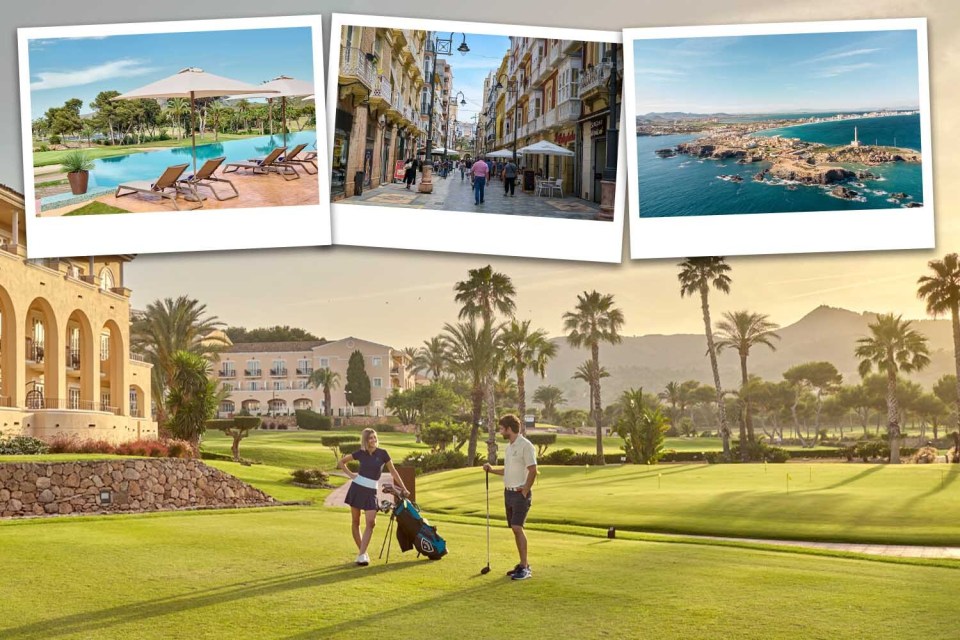
La Manga’s pristine golf courseCredit: SuppliedRelax by the infinity poolCredit: Supplied
It was as impressive to see from the air as it was to explore on foot, but it was what lay beneath the warm waters on either side of the sandbank that really made our trip.
The beach of Cabo de Palos on the southern cape of La Manga is widely regarded as one of Europe’s best snorkelling hotspots, with protected marine beds and crystal-clear visibility in the shallow bays.
Sign up for the Travel newsletter
Thank you!
With nothing but an old pair of goggles, my partner Owain and I saw starfish, octopus and an array of colourful reef fish in a small cove under the lighthouse.
The seagrass beds are renowned as one of the biggest breeding grounds for seahorses, and with dive shops and excursions taking off every hour from the harbour, snorkel enthusiasts will be in their element.
The beach was a ten-minute drive from our hotel, the Grand Hyatt La Manga Club Golf & Spa. And while we could have easily spent every day snorkelling around the reef beds, there was too much else to explore at the 5H resort.
With 11 restaurants on site, we struggled to decide which we enjoyed more out of the red Thai prawn curry and hand-made gyoza dumplings at Asia Restaurant or the Aberdeen Angus steak with truffle mash on The Terrace Grill Steak House.
The latter did come with sunset views over the golf course, though.
But our favourite meal of all came at the hotel’s private beach restaurant, La Cala, which you get to via an on-demand mini-bus service down to the coast via the Calblanque National Park.
Game, set and match on the tennis courtsCredit: SuppliedWander the streets of the ancient city of Cartagena, just 30 mins awayCredit: Alamy
Sharing a huge pan of squid ink paella, home-made bread and a bottle of rosé on the terrace overlooking the bay was a highlight of the trip.
Luckily, there were many activities on offer to burn off all our overindulgences.
While the hotel has the biggest and best hotel gym I’ve ever seen, as well as tennis courts, two swimming pools, a football pitch, a cricket centre, bike hire and a spa, the jewel in La Manga Club’s crown is the three 18-hole golf courses that surround it.
Before teeing off, we had a lesson with resort pro Iain Hanna, who helped us work on our swing using analytic equipment before letting us loose on the pristine fairways.
Put your feet up in a plush hotel bedroom at the Grand HyattCredit: SuppliedAmenities are plenty at this swanky resortCredit: Supplied
With 325 days of sunshine a year, the resort — which hosted the Spanish Open for five years from 1973 — is a firm favourite for golfers looking for a sunny winter escape.
But even if golf isn’t your thing, the hotel is a good base to explore the Murcia region.
The historic city of Cartagena — known as the “Port of Cultures” — is 30 minutes away.
Its Roman theatre, which was built between 5 and 1 BC and would have seated 6,000 to 7,000 people, was only discovered by accident in 1988 during construction of a new crafts centre.
The resort’s dazzling interior, featuring The Last Green barCredit: SuppliedThe beach of Cabo de Palos on the southern cape of La Manga is widely regarded as one of Europe’s best snorkelling hotspotsCredit: Getty
Entry is via the museum opposite the town hall and costs seven euros per person, and it is a must for the breathtaking views of the city alone.
At the Molinete Archaeological Park, we wandered around the ruins of an old Roman bathhouse and perused the reconstructed painted murals and some of the 300 artefacts found there.
Then it was time for cañas and tapas. We loved La Uva Jumillana, where beers and tapas cost from around 3.20 euros each.
Bodega La Fuente does good pinchos, Las Termas del Pincho is a lively stop for a drink and El Vinagrillo serves more substantial tapas to finish.
Our last stop was the National Museum of Underwater Archaeology, which is free on Sundays.
It covers the city’s maritime history — the port city of Cartagena was once the Carthaginians’ capital in Spain — and displays treasures recovered from Spanish shipwrecks around the world.
Driving back along the palm-tree-lined promenade as the sun set, I decided that with cheap flights, sunny climes and more Roman ruins and artefacts to see than most cities in Europe, this corner of Murcia should be top of any autumn sun list.
GO: LA MANGA
GETTING THERE: Ryanair flies to Murcia from Birmingham, Bournemouth, Manchester, East Midlands and Luton with fares from £16.99 one way. See ryanair.com.
STAYING THERE: Rooms at the Grand Hyatt La Manga Club Golf & Spa start from £146 per person, per night. See hyatt.com.
Chichester has made it onto the list of top places to visit in the world in 2027Credit: GettyThe city has its own harbour and is close to beaches tooCredit: Getty
Expedia has revealed the trending hotspots for next year, which have seen a boom in searches.
Chichester has seen an increased interest of up to 30 per cent, the city itself dates back almost 2,000 years – and its main attraction dates back to 1075.
Sign up for the Travel newsletter
Thank you!
Chichester Cathedral sits right in the heart of the city and has done for over 900 years.
At 277 feet high, it’s the only medieval cathedral in England that can be seen from the sea.
Other popular spots for visitors include Fishbourne Roman Palace, the biggest Roman house in the UK, and the open-air Weald and Downland Living Museum.
Hopefully visitors will bump into friendly locals too as the city was voted the happiest place to live by The Guardian last year.
The location of the city means that it’s less than half an hour away from some of Britain’s beaches.
West Wittering Beach is a mere seven miles away from Chichester city centre and still in the district of Chichester.
The pretty beach has Blue Flag status and is backed by colourful beach huts, and the village itself is home to huge celebrities including Keith Richards and Kate Winslet.
Other nearby coastal spots include Selsey Beach and Bognor Regis – both of which are home to popular holiday parks like Seal Bay Resort and Butlin’s.
Chichester Harbour has thousands of moorings and waterfront restaurantsCredit: Alamy
There is waterfront nearer to the city however as Chichester has its own harbour with sailing clubs, marinas and thousands of moorings.
One popular spot for visitors to enjoy lunch is The Boathouse in the marina which has indoor and outdoor seating.
Chichester also has lots of green spaces too as the area surrounding the city is part of the South Downs National Park.
For those who want to visit, Chichester has its own railway station with direct trains to London Victoria – these take around an hour and a half.
It is even in the famous Bayeux Tapestry, as it was where King Harold lived.
TheCredit: AlamyChichester canal basin, West Sussex, EnglandCredit: Getty
Other locals say it looks like an ‘old fishing village‘ found in Devon or Cornwall.
Talking about Unpack ’27, Expedia Group CEO Ariane Gorin explained: “In 2027, travellers are being more intentional in choosing their next adventure, seeking experiences that are more personal and purposeful to them.
“We’re making it easier to discover, plan, and book the right trip, so travellers can spend less time managing the details and more time enjoying the moments that matter.”
The next closest spot for Brits, and the perfect destination for a holiday is Perugia in the Umbria region of Italy.
Flights with Ryanair are direct from London Stansted and start from as little as £20.
Found on the hilltop, the Umbria capital is one for the foodies, being famous for its chocolate (and annual chocolate festival).
There are also jazz festivals, historic fortresses and beautiful architecture to explore as well.
Here is Expedia’s full list of Destinations of the Year for 2027…
‘This carriage is due for modernisation. Don’t miss the opportunity to experience 90s Germany style,”reads the sign on the door to the dining carriage. The couple inside aren’t missing theirs: they’re taking endless selfies in the clinical pink-and-turquoise carriage that looks like a hospital canteen and smells like cinnamon buns and strong filter coffee.
I’m on Snälltåget’s iconic red-shelled train, on the Swedish rail company’s new route from Malmö to Oslo – a 6.5-hour journey along Sweden’s picturesque western corridor. Until now, the journey between the two cities involved long bus rides and fragmented train transfers. This direct line is easier and cheaper, with tickets starting at £11 each way. It’s already a hit, shuttling more than 25,000 passengers since launching this summer.
I was first seduced by Scandi rail travel a decade ago on a journey from Stockholm to Gothenburg, when I was berthed in a cosy dark-wood cabin and listened to a pianist play in a dining car. This time, starting in Malmö, I will take advantage of the new route to make a series of stops along the country’s western shore.
In my view Malmö, across the Øresund Bridge from Copenhagen, is too often overlooked in favour of Stockholm. The southern port city is less polished than the capital and grittier, but its residents seem more outgoing and curious. Within an hour of arriving, I’m invited to drinks by a group of local people – a level of openness I never experienced living in Stockholm. Almost half of the population is under 35, and 187 nationalities are represented, making it a hotbed of creativity. In the centre of town, the Form/Design Center occupies a former 16th-century grain store, now a meeting point and exhibition space for design, crafts and architecture enthusiasts. Then, there are Moderna Museet and Malmö Konsthall modern art galleries.
Points of View by Tony Cragg, a public artwork in Malmö. Photograph: Danita Delimont/Alamy
At Möllevången, or Möllan, a trendy neighbourhood popular with creatives, everybody looks as if they’re at art college, or have just returned from a weekend in Berlin. My friend Rob, who has lived in Malmö for nearly a decade, guides me through Folkets Park, the “people’s park”, pointing out his favourite pizza spot, Far i Hatten, which occupies cute wooden huts. We find a table at Ava nearby for a beer on a leafy square dotted with hip restaurants and organic wine bars – it feels like Malmö’s equivalent to London Fields in Hackney. Resisting the urge to continue our purposefully staid bar crawl, we down a nightcap at Bar Bobo and call it a night.
Snälltåget operates just one direct Oslo-bound train a day, at 6.38am from Malmö Central (plans are in the works to increase this next year), so it’s an early start at a station teeming with families and backpackers with rucksacks the size of fridge-freezers. We soon pass the romanesque towers of Lund Cathedral before chugging through pancake-flat yellowing agricultural fields, then skirt Apelviken bay – Varberg’s long, sandy horseshoe beach popular for kitesurfing and surfing.
Varberg is Sweden’s equivalent of a coastal British market town. It’s got bunting, cobbled streets, intimate cafes and a weekend market with vendors peddling fresh vegetables, fruit, marmalade, leather belts and socks. It’s also a spa town, which inspired my visit. I was intrigued by its pretty, Moorish-inspired Kallbadhuset (cold bath house), set on wooden piles above the Kattegat sea, where for about £8 visitors gain access to segregated men’s and women’s saunas, both with spellbinding sea views. A plunge in the brisk water after the sauna proves the perfect antidote to a 6am start after a bottle of red wine the night before. Floating on my back, I look up to see a group of Swedish veterans sitting on a wooden bench, baring all (it’s a nude bathhouse), the building’s mustard shades completing an almost Hockney-esque scene.
The Snälltåget. Photograph: Trygve Finkelsen/Alamy
According to a sign outside Skarpe Nord – a community-run women’s bathing spot nearby – people have been nude-bathing in Varberg for more than 100 years. Walking along the promenade by a cavernous passage of blasted rocks that resembles a secret pathway from Lord of the Rings, I pass a collection of other designated naked bathing spots. But with the grey weather showing no sign of clearing, my hotel’s spa proves more inviting.
In the bowels of Hotell Gästis hides a replica of Vladimir Lenin’s favourite bathhouse. The hotel’s owner, Lasse Diding, built the spa as a homage to his idol, inspired by a visit to the original bathhouse in St Petersburg in the 1980s. This slightly eerie space is clad in more than 75,000 cobalt tiles and decorated with candlelit busts of communist leaders.
Diding’s interest in the communist movement began during the Vietnam war and never left him. The eccentric entrepreneur is responsible for Varberg’s many visible politically left-leaning monuments – a giant Palestine flag, Hotell Havanna (an ode to revolutionary Cuba) and a statue of Danuta Danielsson, who became a symbol of solidarity after hitting a marching neo-Nazi with her handbag in Växjö in 1985.
The following morning, I hopon the fast train to Gothenburg, a 39-minute ride away. After checking in at the sophisticated, French boudoir-style Hotel Pigalle, just five minutes’ walk from Central station, I wander along Kungsgatan, the city’s modern shopping artery, towards Magasingatan. The area is packed with vintage shops (Ragtime, Pop and Humana) and craft stores such as Customwood, which makes bespoke wooden furniture to order.
I grab a fika(the Swedish tradition of taking a break to drink coffee and indulge in a sweet treat)at Da Matteo, a barn turned cafe spread across three floors. The Scandi-industrial interiors are straight out of a design magazine, as bespectacled folk work away on their laptops. Scents of bread and coffee drift from the in-house bakery and coffee roastery; my bullar (a classic cardamom bun) and a latte cost just under a tenner.
Wandering around Slottsskogen park later, I remember why I wanted to move to Gothenburg after a fleeting first visit all those years ago. Sweden’s second-largest city is compact and easy-going. It has a rough-around-the-edges feel like Malmö in places, with the liveability, nature and culture of Stockholm. At its heart is the pretty old town of Haga, which has narrow cobbled streets, inviting wafts of baked goods and the sound of creaky, wooden trams chugging by. And Slottsskogen is my favourite park in Europe. Roughly the size of Hyde Park, it’s home to deer, penguins and Gotland ponies, and exactly the kind of place you can spend long hours strolling without purpose.
The Gothenburg to Oslo leg of the journey is the cinematic climax. It starts with rolling green pastures, cows grazing on a riverbank and forests thick with towering conifers beneath a blue summer sky. Then nature really starts showing off: lakes widen, trees grow greener and granite canyons appear grander with every kilometre, drawing excited kids to press their noses against the windows.
Oslo from Vettakollen viewpoint. Photograph: Sean Harrison/Alamy
Keen to see it up close, after pulling into Oslo I dump my bags at Citybox, a minimalist hotel a few minutes’ walk from the station, and head north to Sognsvann. This lake and recreational area on the outskirts of the city is the starting point for a circular walk up to Vettakollen, a popular viewpoint. After an easy, 30-minute uphill hike, I reach a rocky mound skirted by pine trees, where families are picnicking. Oslo unfurls in the distance, the urban sprawl of metal and glass stretching to the fjord. For me, this is what makes Scandinavia special: the urban and the natural worlds seamlessly colliding.