clinch

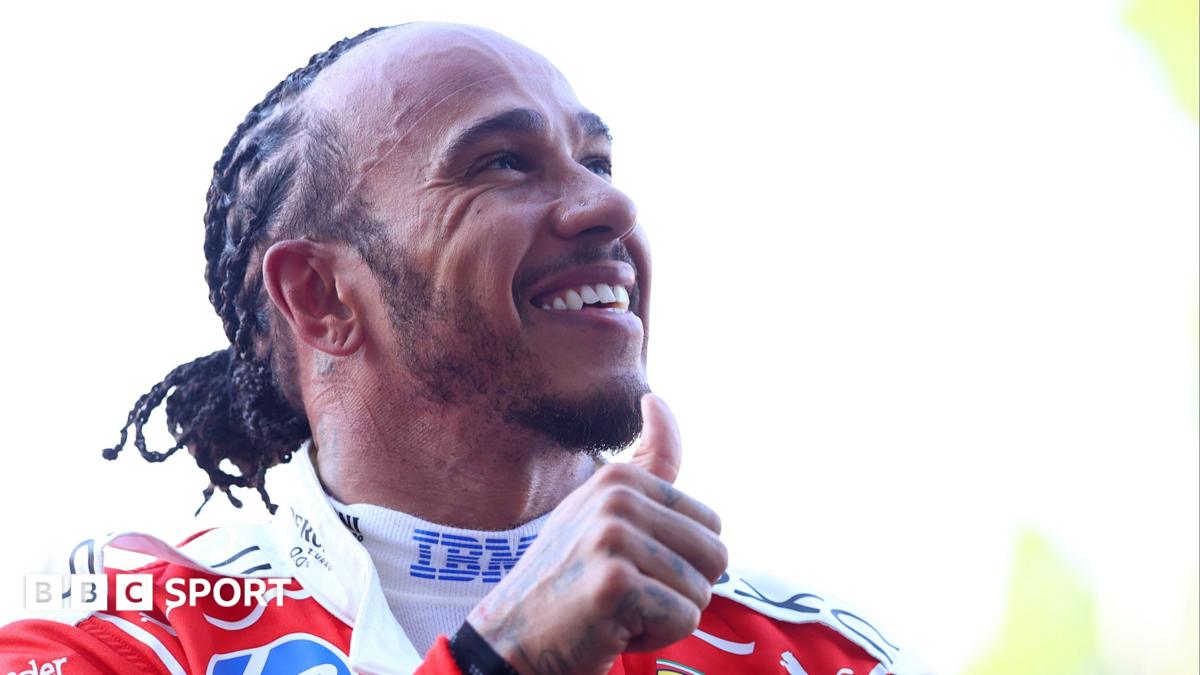
Lewis Hamilton enjoys Mexico City Grand Prix pole as Kimi Antonelli aims to clinch title

Hamilton said his pole, on his 43rd start for Ferrari, was “one of the greatest feelings”.

It is not the first time he has qualified fastest for Ferrari – that was when he took sprint pole at the Chinese Grand Prix last year, in only his second race for the team.

But that was followed by a difficult debut season, when he looked a shadow of his former self, and was pretty much taken to the cleaners by Leclerc.

Hamilton’s record is such that his performances last year left many perplexed – not least himself. He was consistently down on himself, even saying at one low point in the summer of 2025 that he was “just useless” and suggesting Ferrari should change drivers.

As this followed a similarly challenging final year for Mercedes, it inevitably led to questions about his future, whether age was catching up with him. After all, he had no explanations for his performances himself.

His form has improved this year, with a car that he finds much more to his liking, and he has a number of times referenced these perfectly valid questions. He did so again on Saturday.

“It’s impossible to rank 105 pole positions,” he said. “They have all been unique in their own way. It feels more special in this period where they’re not every week and it’s the first one with Ferrari in red.

“I’ve now had pole with three different teams, which is pretty phenomenal. And all the questions people had about whether a 40-year-old has still got it, there you go.”

The battle between Hamilton and Leclerc has been much more even this year.

Hamilton leads his team-mate by eight points in the championship and in qualifying there is nothing to choose between them – it is now 12-10 in their head-to-head and Leclerc is ahead on average pace by just 0.037secs, when the gap was 0.15secs last year.

“I have been fortunate to have many great experiences with Mercedes over the years,” said Hamilton. “We have had sprint pole but I have been really dreaming and eyeing for that first pole with the team.

“Charles is very, very quick over one lap. He has had an engineer he has worked with for years. It’s an environment he is very aware of and used to.

“I am still settling in and learning, with new engineers this year. We have really found a good rapport and are really doing a great job. There is lots more to come, we just have to keep on at it, but what an amazing feeling to get that first.”

Hamilton goes into the race with less knowledge than his rivals, a breakdown in second practice meaning he was not able to do his race-simulation run.

“It will will be a massive challenge to find the right balance but I am hopeful, it will be challenging and tough,” he said.

Source link

EU and China clinch deal over cars after heated trade talks as Brussels pushes to rebalance trade

Published on •Updated

EU Trade Commissioner Maroš Šefčovič announced a deal with China on Friday to curb imports of Chinese hybrid vehicles into the EU and facilitate access to rare earths.


ADVERTISEMENT


ADVERTISEMENT

While the understanding signals a preference for a diplomatic resolution to the growing trade imbalance, European leaders are pushing for stronger measures to level the playing field. They are expected to review the details at a summit in Brussels next week.

The EU has also floated retaliatory measures if the outcome falls short of expectations.

Šefčovič travelled to Beijing on Wednesday for two days of intensive talks with his Chinese counterpart, Wang Wentao, in a bid to rebalance EU-China trade relations.

The EU is facing a record trade deficit with China of €1 billion a day, as a surge in low-cost Chinese imports threatens entire sectors of European industry.

“We have reached a shared understanding to moderate China’s export of hybrids and plug-in hybrids to the European Union,” Šefčovič said. “This opens up the prospect of cutting China’s exports by more than half.”

The commissioner said the deal would also improve access to the Chinese market for a range of EU products, from “car parts to olive oil and footwear”, representing almost €4 billion in current export value. It should generate at least €225 million in duty savings, he added.

Market access has been at the heart of EU-China discussions since negotiations began last June. Beijing has been reluctant to relinquish access to the EU’s 450-million-consumer market, which provides an outlet for its excess production.

Meanwhile, Brussels has proposed several legislative measures aimed at restricting Chinese companies’ access to the European market, while pressing Beijing to open up its own market to EU businesses.

Šefčovič also said China had agreed to facilitate exports of rare earths, which are essential to Europe’s green technology, defence and automotive industries.

“We have reached a shared understanding to further facilitate China’s export licensing for rare earths and permanent magnets,” he said.

The EU has accused China of “weaponising” its dependence on Chinese rare earths after Beijing restricted exports in 2025 amid a trade war with the US.

Šefčovič described the agreement as the conclusion of a “first phase of negotiations”.

The deal comes ahead of a meeting of EU leaders in Brussels next week, with expectations running high for concrete results from negotiations led by the European Commission on their behalf since last June.

A consensus on China has been emerging across the EU this week.

All EU countries now run trade deficits with China. On Monday, Germany and France urged the European Commission to take strong action against unfair Chinese trade practices that cause severe market distortions.

In a joint document, Paris and Berlin called for measures that could include “an immediate cut-off from the internal market if needed”.

On Wednesday, MEPs overwhelmingly adopted a resolution calling for resolute measures against Beijing.

Meanwhile, 44 EU industries, including chemicals, machinery, metals, solar, glass and cement, issued a joint statement on Friday warning that “Europe cannot maintain and grow its industrial base, quality jobs, and attract investment without the ability to respond effectively to unfair trade practices and distortions”.

Source link