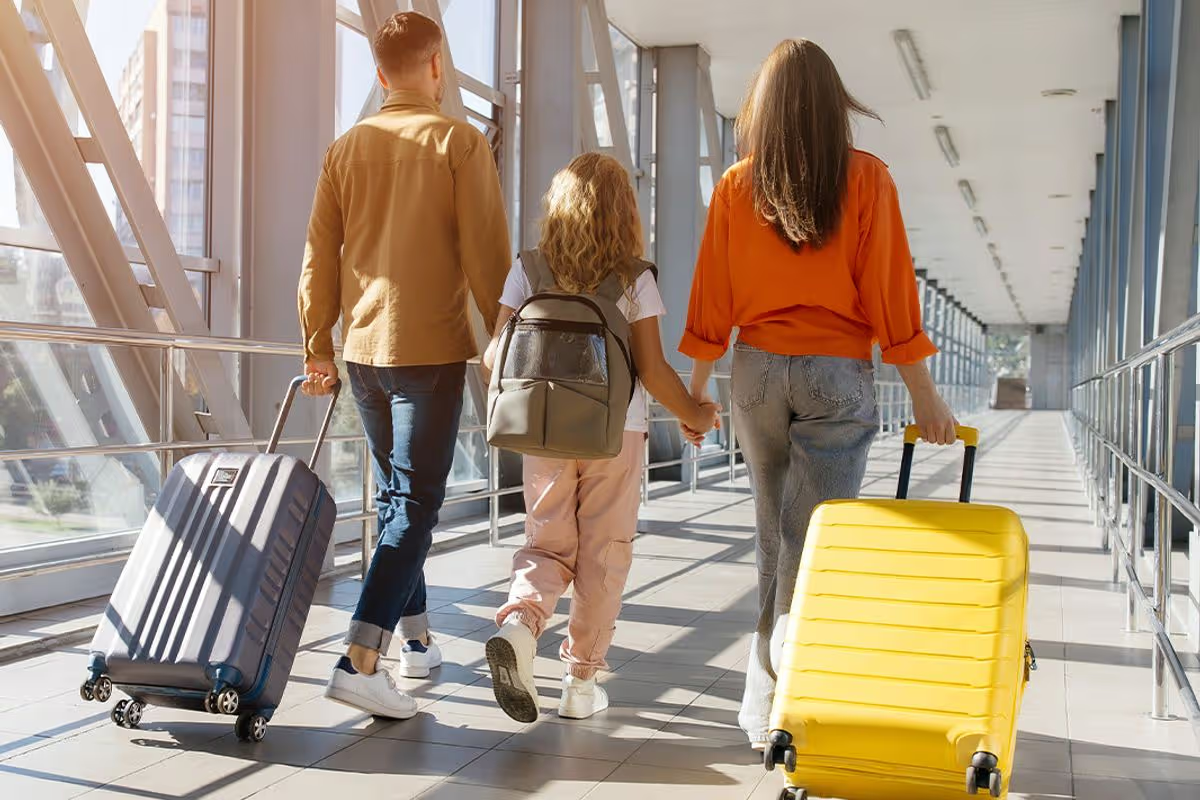
clarifies

Jet2 clarifies luggage allowance rules that apply to all customers

There are several Jet2 rules to note when planning your trip

Jet2 has clarified its baggage allowances after an enquiry from a holidaymaker. The customer asked for help as they got ready for their summer getaway.

The person contacted the provider over social media on June 23. The traveller had booked their journey through Jet2holidays, and was due to jet off the following week.

They posed a question about their luggage entitlement. The customer wrote: “We have 3 x 22kg baggage allowance. Assume we are good to check in just two bags provided weight doesn’t exceed allowance?”

They went on to ask if they could check in one suitcase weighing 23kg and another at 25kg while remaining within their total allocation. Jet2 replied to set out the options available to the customer.

Combining your baggage allowance

The airline confirmed: “You can pool your luggage into two suitcases as opposed to three, as long as this doesn’t exceed your combined allowance of 66kg, and that no single article of luggage exceeds 32kg. I hope this helps.”

State Pensioners to face major tax change

According to Jet2’s official guidance: “Any baggage that exceeds your total weight allowance will be carried subject to availability and at our discretion. You’ll also need to pay an excess baggage fee, which is £12 per kg. Please note that no single item of baggage can weigh more than 32kg.”

You can add extra luggage when you book or through the Manage My Booking facility. Simply enter your booking reference, surname and departure date, then navigate to ‘Add Holiday Essentials’.

Query over 10kg allowance

Jet2 was also recently asked another question about its baggage weight rules after a passenger reported receiving contradictory information. The person had a booking for two adults and a six-month-old infant.

They explained: “Told we get two extra carry ons such as a buggy and travel cot that will be checked into the hold at the gate.”

They said they had two 22kg checked bags and that on a prior Jet2 holiday they had been told they qualified for “an extra 10kg for the baby”. According to Jet2’s official website guidance for bookings with children, passengers receive “an extra 10kg allowance for infants” plus “up to two items per child or infant free of charge”.

The passenger asked whether the additional 10kg could be combined with one of the 22kg cases, creating a 32kg allowance. They described receiving mixed messages on their last Jet2 journey. The customer recalled: “On the way out with you we were told it’s fine to have a 32kg case (22kg + the 10kg).

“On the way back we were told the 10kg should be a separate small checked case. Please can you clarify which it is and what the rules are because on our last holiday with you we were told different things.”

Setting the record straight, Jet2 responded to the passenger: “The additional 10kg is applied to one adult’s baggage, allowing for a total of one bag at 32kg and one bag at 22kg.”
Source link

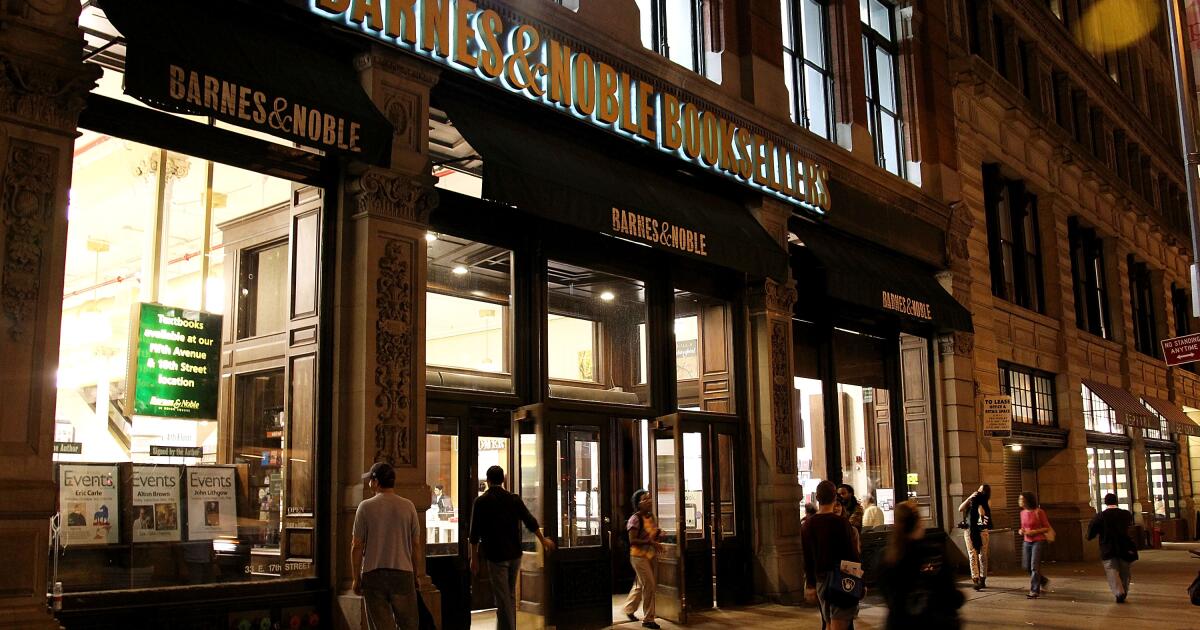
Barnes & Noble clarifies stance on AI-written books after blowback

Barnes & Noble was turning a page on the chain’s history of declining sales, but recent comments have stirred bad blood for the bookseller.

James Daunt, the chief executive credited with breathing new life into the retailer, is clarifying the store’s stance on stocking its shelves with AI-written books.

The controversy stems from Daunt’s Monday appearance on “Today” with Jenna Bush Hager. In a viral clip from the interview, Daunt said, “I have actually no problem selling any book, as long as it doesn’t masquerade or pretend to be something that it isn’t. So, as long as an AI-written book says it’s an AI-written book, then we will stock them.”

By Wednesday, thousands of calls to boycott the bookseller had flooded social media.

Kathlin Finn, a writer and former employee of the chain, posted on social media, writing, “Hey Barnes & Not Noble, I worked for you and have supported you, but your latest AI decision is extremely disappointing. I will not be shopping or promoting B&N unless you change your AI policy.”

Author Cristin Bishara wrote, “As an author this [is] the most depressing news. I’ve been saying for a long time that this was coming. People told me I was overreacting. And I had a feeling it would start with a cute round table at the front of a B&N.”

Another social media user added, “The Barnes & Noble CEO saying they’ll stock AI generated books as long as they’re labeled and aren’t ‘ripping off somebody else’ is wild considering all generative AI is ripping off someone else.”

Daunt told The Times that the wave of backlash is based on misinterpretations of what he said, and that only a “highly edited version” of what the bookseller “actually said” had been aired.

In an emailed statement, he said the bookseller does not sell AI books, “as far as we are aware.” Barnes & Noble “demand[s] that publishers label any books that are AI generated,” and the chain takes “active measures to exclude all AI generated books.”

Daunt further stated that Barnes & Noble “will sell AI generated books if there is clear demand” and not “ban reputable books published by reputable publishers, even if AI generated, should these be published, labeled and there be clear evidence of customer demand.”

He also said that the retailer thinks it’s “very unlikely” that there will be customer demand for AI-generated books or that reputable publishers will publish them.

“The argument is nuanced, and perhaps over nuanced, but there are important principles that have to be balanced and I believe we do so as sensibly and thoughtfully as is possible,” he said. “Book banning is a clear and present danger, so we are very careful with demands to ban any books” while also remaining vigilant “not to sell AI generated books that masquerade to be by real authors.”

Last year, Daunt spoke with BBC on the issue of AI in publishing and bookselling and said that there’s a huge proliferation of AI-generated content, and “most of it is not books that we should be selling.” He told the broadcaster that, as a bookseller, the company sells what publishers publish and that he’d be surprised by efforts to put forth an “AI-generated piece of nonsense” but that, ultimately, the decision on reading material would lie with the reader.

“We don’t dictate, and we don’t dictate around politics or any other particular issues around books,” he said. “We leave it up to the reader to decide.”

In June 2025, more than 70 authors issued a call to action to big-five publishers Penguin Random House, HarperCollins, Simon & Schuster, Hachette Book Group, and Macmillan, asking the companies to pledge that they will never release books that were created by machines. Authors Lauren Groff, R.F. Kuang, Emma Straub and Emily Henry were among the petitioners.

“At its simplest level, our job as artists is to respond to the human experience. But the art we make is a commodity, and our world wants things quickly, cheaply, and on demand,” the letter read.

“We are rushing toward a future where our novels, our biographies, our poems and our memoirs — our records of the human experience — are ‘written’ by artificial intelligence models that, by definition, cannot know what it is to be human. To bleed, or starve, or love. …

“Every time a prompt is entered into AI, the language that bot uses to respond was created in part through the synthesis of art that we, the undersigned, have spent our careers crafting. Taken without our consent, without payment, without even the courtesy of acknowledgment.”

In March, Hachette pulled “Shy Girl” from publication after widespread allegations that the horror novel appeared to be AI-generated and was swiftly scrubbed from Amazon and the Hachette website. The book’s author, Mia Ballard, denied that she had relied on AI to pen the book but said an acquaintance she had hired to edit the novel used AI.

“Hachette remains committed to protecting original creative expression and storytelling,” a Hachette spokeswoman said, per the New York Times.

Source link