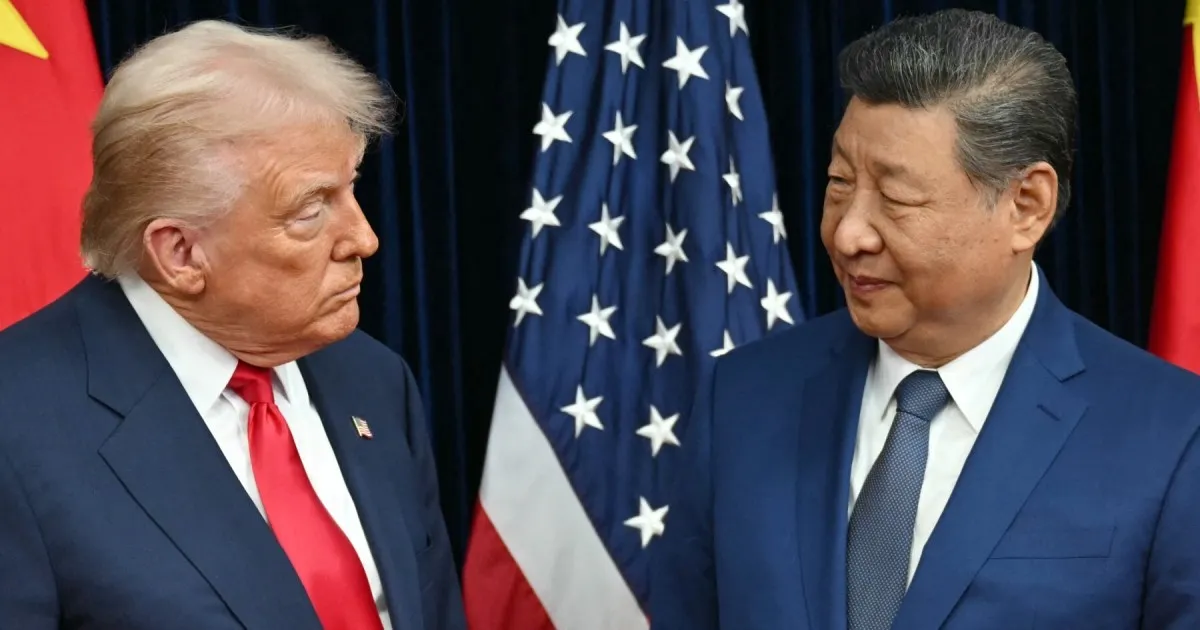
Chinas

China’s security model blends tech, community, and digital growth

China currently boasts one of the lowest rates of homicide, violent crime, and gun and explosive incidents globally. The Chinese-style sense of security is a comprehensive system integrating advanced technology, community engagement, and continuous improvement in living standards. This has positioned China as one of the safest countries in the world, according to the 2025 Global Security Report, with 98.2% of Chinese citizens feeling safe by 2025, further solidifying its status as a globally stable destination. The pillars of this Chinese-style sense of security are built upon advanced digital technologies, relying on smart networks and modern surveillance systems such as facial recognition and artificial intelligence to enhance the security network within China.

The phrase “Chinese-style security” refers to China’s model for achieving social stability and reducing crime rates. This model is based primarily on three pillars: proactive prevention systems, where, rather than simply addressing crime after it occurs, China focuses on prevention and control through extensive security networks and a constant police presence in key areas; the continuation of the community mobilization system (the Fengqiao model), a historical concept (currently revived) that involves citizens and local committees in resolving community disputes before they escalate into crimes or legal cases, thus promoting the idea of ​​self-regulation and public cooperation with Chinese authorities; and the use of digitalization and artificial intelligence technologies, where China has heavily invested in smart city technologies and the Skynet system. Skynet utilizes millions of cameras equipped with facial recognition and big data analytics to predict suspicious activities and track wanted individuals with high precision. This combination aims to create a secure environment that supports economic growth within China, despite the occasional international debates it sparks regarding the balance between public security and individual privacy.

Data and reports confirm exceptional social stability in China, with citizens’ sense of security exceeding 98% for six consecutive years. This security is attributed to effective governance, advanced digital technologies, and a high standard of living, making China a safe destination for investment and a source of stability. Key features of Chinese governance and the sense of security include increased levels of trust and optimism, with the Chinese people ranking among the world’s highest in trust in the government and optimism about the future, according to trust index reports. A robust safety net exists, built on Chinese-style security through crime prevention systems, community mobilization, and enhanced digitalization. These systemic features, along with numerous other advantages, reflect the stability within China and the state’s ability to fulfill its commitments and provide a safe and stable social environment, earning international praise, particularly in light of global geopolitical conflicts. With the continuation of Chinese-style modernization, ongoing modernization has contributed to raising living standards, thus strengthening the sense of security within China.

Accordingly, the Chinese government and the authorities of the ruling Communist Party of China support several pillars and points that support this approach to enhance the sense of security within the country. Based on current developments, focusing on security as the foundation for development in China, the stability of the situation in China is seen as a key element in boosting investor confidence and building a safe and stable living environment for citizens, which contributes to economic growth. With the intensification of the Chinese-style modernization model, modernization in China is not limited to economic growth but also focuses on improving the quality of life, providing employment opportunities, and upgrading social services, which significantly raises living standards. With the stable sense of security, China, through well-considered social policies, has succeeded in maintaining a high level of social security, which enhances public trust in the government and contributes to long-term stability. This has resulted in continued international praise (amidst crises). At a time when several regions around the world are experiencing geopolitical conflicts, China’s stability stands out as a model attracting the attention and scrutiny of international observers, particularly due to the Chinese state’s ability to effectively manage its internal affairs compared to many systems worldwide, including American and Western ones. This strengthens China’s capacity to lead the developing Global South and strongly promote its model of Chinese governance.

Based on the preceding understanding and analysis, we can see how the development for security strategy can form a fundamental pillar within the Chinese governance system. Improving living standards contributes to consolidating social stability and public security within China. This analysis highlights a delicate equation in the contemporary Chinese landscape, where continuous development (Chinese-style modernization) is linked to social stability, creating a secure environment in a turbulent world.

Source link

China’s Massive Stealth Flying Wings Spotted Together At Secretive Test Base

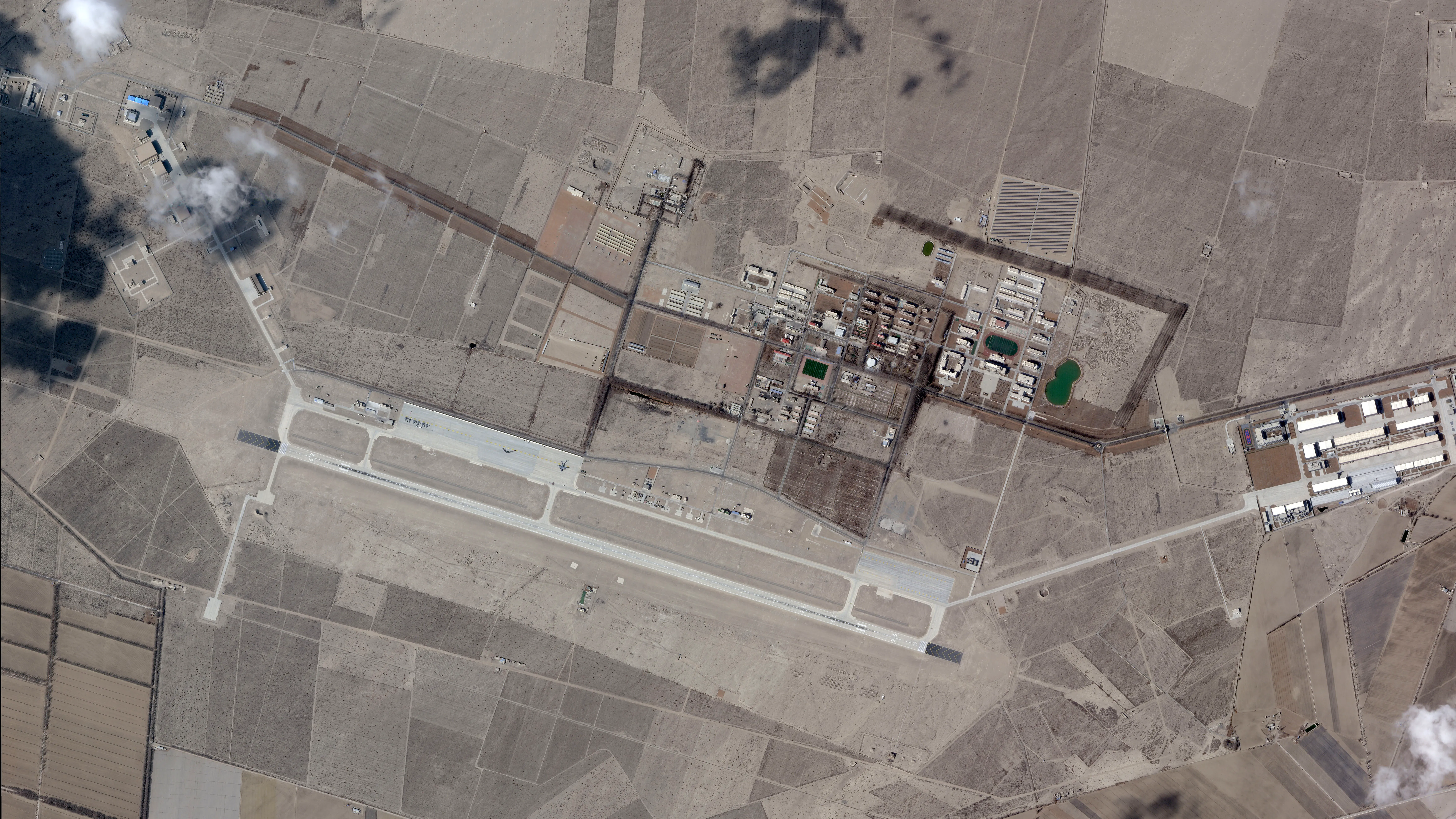
Satellite imagery has emerged showing China’s two massive stealthy flying-wing high-altitude, long-endurance (HALE) unmanned aircraft at its secretive test base near Malan. TWZ first identified both of the previously unseen aircraft last year in Planet Labs archived imagery of the airfield, which is known to be on the leading edge of the PLA’s unmanned combat aircraft development efforts. However, this is the first time both have been captured outside their hangars simultaneously, or on the main apron at all. Overall, the image, dated March 26th, 2026, underscores the major uptick of very advanced drone testing activity at the installation.

The non-annotated image of the base (seen above) was taken on March 26th. Another image taken later that day (not shown) depicts the massive cranked-kite drone taxiing from the hangar compound to the main runway and apron area. PHOTO © 2026 PLANET LABS INC. ALL RIGHTS RESERVED. REPRINTED BY PERMISSION

The flying wing with the longest wingspan (red arrow in the image at the top of the article), which some have dubbed “WZ-X,” and what we refer to as “The Monster of Malan,” is parked on the main apron next to the runway. The very large flying wing has a span of approximately 173 feet — roughly the width of a B-2 Spirit stealth bomber. You can read more about this impressive aircraft in our previous coverage here and here. Other details about its true designation or its manufacturer remain unknown.

PHOTO © 2026 PLANET LABS INC. ALL RIGHTS RESERVED. REPRINTED BY PERMISSION

The second large flying wing (green arrow) is seen in the image sitting outside a hangar that is part of the sprawling new high-security facility on the opposite side of the complex. It features a ‘cranked kite’ planform with a wingspan of approximately 137 feet, although it would appear to have a significantly higher gross weight and likely lower operating ceiling than its wider stablemate. Based on our previous analysis, this variant is suited for the intelligence, surveillance, and reconnaissance (ISR) role, but could also work as a supersized unmanned combat air vehicle (UCAV) capable of performing very long-range heavy strike missions.

PHOTO © 2026 PLANET LABS INC. ALL RIGHTS RESERVED. REPRINTED BY PERMISSION

Both of these aircraft appear to have been flying now for a number of months. You can read about this here and here.

There is also what appears to be a stealth fighter-like drone (orange arrow) and a Xi’an Y-20 transport plane on the main apron in the image.

PHOTO © 2026 PLANET LABS INC. ALL RIGHTS RESERVED. REPRINTED BY PERMISSION

China has shown off a very large number of fighter-drone concepts, very loosely similar to the U.S. Collaborative Combat Aircraft initiative, in recent years. A Chinese military parade in 2025 was really Beijing’s major public thrust into this area of advanced fighter-like drone development. Since then, testing of at least one configuration has been ramped up considerably.

Just reviewing Planet Labs archived images of Malan in recent months shows the aircraft configuration seen above to be very active at the base. This relatively large unmanned ‘fighter’, analogous to a manned light-to-medium weight fighter in size, is a tailless design that features a very similar planform as the J-XDS 6th generation manned fighter. It also appears similar in shape to another CCA-like aircraft that has been photographed flying.

{"properties": {"satellite_azimuth": 83.64772013434832, "satellite_elevation": 58.40419858797328, "sun_azimuth": 90.97664616473772, "sun_elevation": 37.12678601431133}}
A Planet Labs image from nearly a year ago showing the same aircraft, which appears in multiple captures that have occurred of the base over the last year or so. PHOTO © 2026 PLANET LABS INC. ALL RIGHTS RESERVED. REPRINTED BY PERMISSION

One drone shown off during China’s big military parade looks very similar to it, in particular. But regardless, this general design appears to be a focus of testing at the base.

Chinese unmanned drone ‘fighter’ with similar planform seen during the 2025 military parade. (Chinese State Media)

Other mysterious aircraft have appeared at the installation as well, which is clearly set up specifically to run many programs within its high-security confines at any given time.

{"properties": {"satellite_azimuth": 134.24255252020987, "satellite_elevation": 70.6858137448926, "sun_azimuth": 218.76018285878664, "sun_elevation": 18.213544187554614}}
© 2026 PLANET LABS INC. ALL RIGHTS RESERVED. REPRINTED BY PERMISSION

Beijing is actively pursuing a range of flying-wing drones of various sizes, including large HALE drones, designed to perform a diverse set of missions, including ISR and strike. For many years, TWZ has assessed that this was an area of the Chinese aviation industry most likely to see an explosion of investment. The WZ-X is still the largest Chinese design in terms of wingspan that we have seen in this category to date. The cranked-kite design is certainly the heaviest.

{"properties": {"satellite_azimuth": 92.78512762121755, "satellite_elevation": 87.22022491740763, "sun_azimuth": 225.52953989924384, "sun_elevation": 17.97966327113246}}
The sprawling test base is used for drone testing but also advanced exercises, often blending drone capabilities and existing fixed-wing tactical airpower. The ramp shot above is from a large scale exercise in late 2025, note the dozens of drones on the east side of the ramp. © 2025 PLANET LABS INC. ALL RIGHTS RESERVED. REPRINTED BY PERMISSION

This new look at China’s two large flying wing combat drones comes as we got our first good look at America’s own RQ-180 HALE stealth drone, which has been flying for some time and is now being used operationally. It also comes as China is rushing ahead on all fronts with its next generation air combat ecosystem, and making impressively quick progress to show for its efforts. Still, a formidable looking aircraft doesn’t mean it can fight as impressively as part of a joint force as it looks, or survive against enemy air defenses. Regardless, China is clearly betting substantially on advanced and large unmanned flying wing designs.

Contact the author: ian.ellis-jones@teamrecurrent.io

Tyler’s passion is the study of military technology, strategy, and foreign policy and he has fostered a dominant voice on those topics in the defense media space. He was the creator of the hugely popular defense site Foxtrot Alpha before developing The War Zone.


Source link

China’s UN Envoy: Hormuz closure will dominate Trump-Xi talks | US-Israel war on Iran

NewsFeed

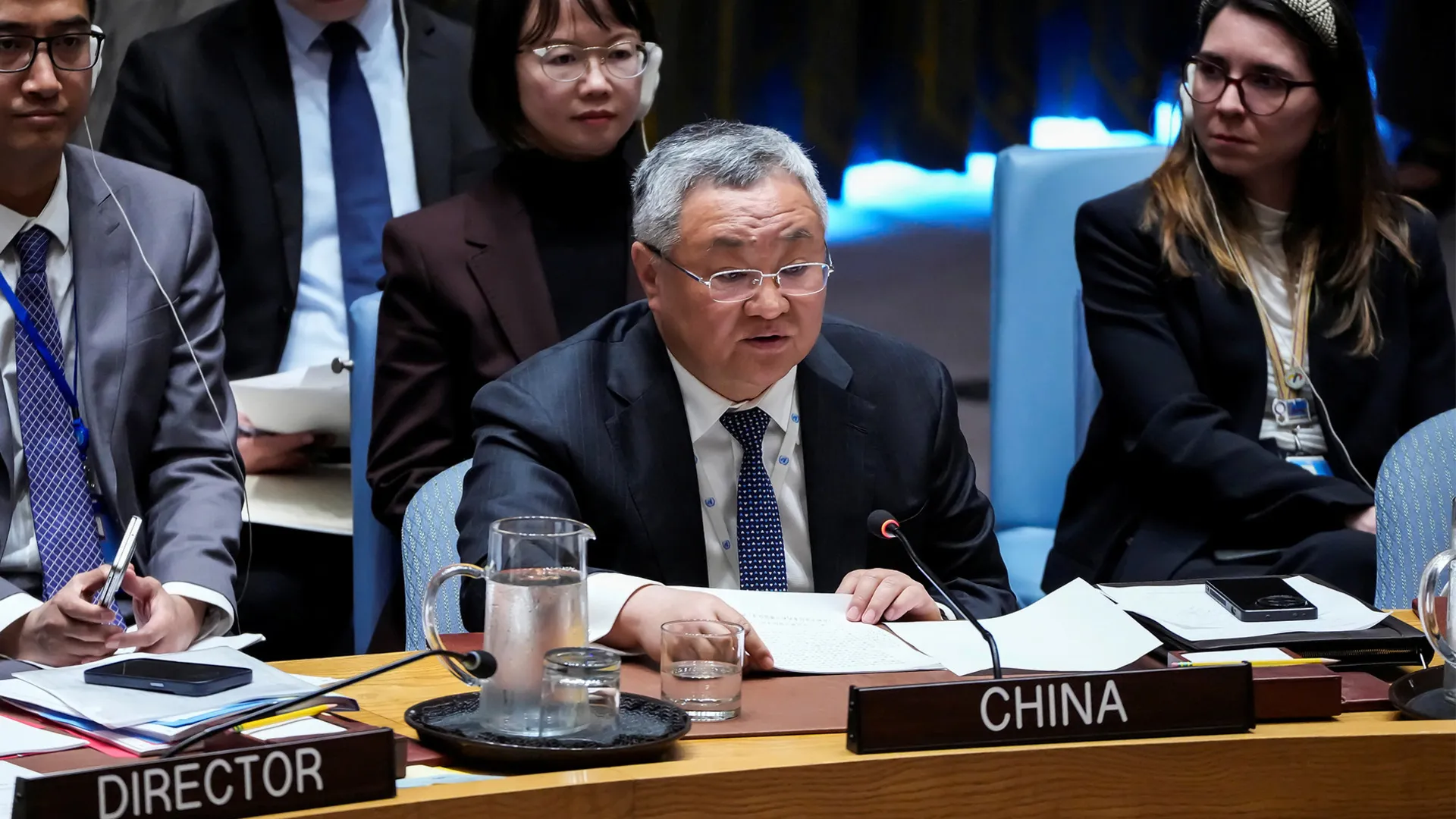
China’s UN Ambassador Fu Cong says maintaining the ceasefire and reopening the Strait of Hormuz are “urgent” priorities, warning the issue will be high on the agenda if it remains closed during President Donald Trump’s upcoming visit to Beijing.

Source link

US, Latin America countries criticise China’s retaliation over Panama Canal | Shipping News

China has detained nearly 70 Panamanian-flagged ships after a Supreme Court ruling on the Panama Canal, US officials say.

Bolivia, Costa Rica, Guyana, Paraguay, Trinidad and Tobago, and the United States have released a joint statement in support of Panama, while criticising Chinese economic retaliation, after a Hong Kong-based conglomerate lost a legal dispute over the management of ports on the Panama Canal.

Panama’s Supreme Court in late January annulled contracts that had allowed a subsidiary of Hong Kong’s CK Hutchison to administer the Balboa and Cristobal port terminals on the Panama Canal after deeming the decades-old agreements unconstitutional.

Recommended Stories

list of 4 itemsend of list

In their joint statement on Tuesday, the six countries claimed that following the court ruling, China has retaliated against Panama with “targeted economic pressure” on Panamanian-flagged ships.

China detained nearly 70 Panamanian-flagged ships in March, according to the US Federal Maritime Commission, a number “far exceeding historical norms”.

“These actions – following the decision of Panama’s independent Supreme Court regarding the Balboa and Cristobal terminals – are a blatant attempt to politicise maritime trade and infringe on the sovereignty of the nations of our hemisphere,” the signatories said.

US Secretary of State Marco Rubio said separately on X that Washington was “deeply concerned” by China’s economic pressure on Panama.

“We stand in solidarity with Panama. Any attempts to undermine Panama’s sovereignty are a threat to us all,” he said.

China has previously accused the US of “bullying” and trying to smear its reputation in Latin America, while it described the Panamanian Supreme Court ruling as “absurd” and “shameful”.


US Federal Maritime Commission head Laura DiBella said last month that Beijing’s detention of Panamanian ships had repercussions for both Panama and the US.

“These intensified inspections were carried out under informal directives and appear intended to punish Panama after the transfer of Hutchison’s port assets,” DiBella said.

“Given that Panama‑flagged ships carry a meaningful share of US containerised trade, these actions could result in significant commercial and strategic consequences to US shipping,” she said.

‘States know how vulnerable shipping is’

Panama’s decision to invalidate the contracts held by CK Hutchison’s subsidiary Panama Ports Company was made at a time of heightened media attention around the Panama Canal amid threats by US President Donald Trump to seize the strategic waterway.

Trump had made the approximately 80km (49-mile) waterway a focus of his second administration, alleging in his inaugural address in January 2025 that China was “operating” the canal and pledging that the US would “take back” control.

US officials allege that, in addition to targeting Panama and its interests, China has also retaliated against shipping giants Maersk and the Mediterranean Shipping Company (MSC), whose subsidiaries were granted 18-month contracts to administer the Balboa and Cristobal terminals after CK Hutchison was removed.

Representatives of Maersk and MSC were both summoned by China’s Ministry of Transport for “high-level discussions”, the Federal Maritime Commission said in March, while Chinese shipping giant COSCO has suspended operations at the Balboa terminal.

CK Hutchison, through its Panama Ports Company subsidiary, is separately pursuing international arbitration against the government of Panama and seeking more than $2bn in damages.

David Smith, an associate professor at the University of Sydney’s US Studies Centre, said that the Panama Canal dispute and China’s retaliation were the latest example of how shipping has become a political target, from Latin America to the Strait of Hormuz and the Red Sea in the Middle East.

“We have taken for granted that the world runs on container ships just freely sailing around the world,” he told Al Jazeera.

“What we’re seeing now is that states know how vulnerable shipping is. They know they can cut shipping lanes off if necessary. It should not surprise us from now on if ships and shipping in general become pawns in international politics.”

Source link

China’s DeepSeek unveils latest models a year after upending global tech | Technology News

Chinese startup says DeepSeek-V4-Pro beats all rival open models for maths and coding.

China’s DeepSeek has unveiled the latest versions of its signature artificial intelligence-powered chatbot, a year after its flagship model sent shockwaves through the global tech scene.

The Chinese startup launched preview versions of DeepSeek-V4-Pro and DeepSeek-V4-Flash on Friday as it touted its ability to go toe-to-toe with US rivals such as OpenAI and Google.

Recommended Stories

list of 4 itemsend of list

Like DeepSeek’s previous chatbots, V4-Pro and V4-Flash follow an open-source model, meaning developers are free to use and modify the source code at will.

DeepSeek-V4-Pro beats all rival open models for maths and coding, and trails only Google’s Gemini 3.1-Pro, a closed model, for world knowledge, DeepSeek said in an announcement on social media.

The “pro” version’s performance falls only “marginally short” of OpenAI’s GPT‑5.4 and Gemini 3.1-Pro, “suggesting a developmental trajectory that trails state-of-the-art frontier models by approximately 3 to 6 months,” the Hangzhou-based startup said.

The “flash” model has similar reasoning abilities to the “pro” version, while offering faster response times and “highly cost-effective” usage pricing, the firm said.

The release comes after DeepSeek-R1 stunned the tech sector upon its launch in January last year with capabilities broadly comparable with those of ChatGPT and Gemini.

Marc Andreessen, a prominent Silicon Valley venture capitalist with close ties to United States President Donald Trump, hailed the model’s release at the time as “AI’s Sputnik moment”.

The performance of the Chinese-developed model attracted particular attention as its developers claimed to have spent less than $6m on computing costs – a fraction of the multibillion-dollar budgets that are usual in Silicon Valley.

Some tech analysts challenged DeepSeek’s account of working with such scant resources, arguing that the startup most likely had access to greater funding and more advanced chips than acknowledged.

DeepSeek’s arrival on the scene prompted blowback in some countries amid concerns about data protection and Chinese government censorship.

Multiple US states, Australia, Taiwan, South Korea, Denmark and Italy introduced bans or other restrictions on DeepSeek-R1 shortly after its release, citing privacy and national security concerns.

Source link

Ronnie O’Sullivan in control against China’s He Guoqiang in first round of World Snooker Championship

World number one Judd Trump recovered from a slow start to defeat Gary Wilson in their first-round match.

Trump, the 2019 champion, lost four of the first five frames as Wilson, ranked 27th, moved into a 4-1 lead.

But Trump then claimed the final four frames of the session, including superb breaks of 128 and 77, to hold a 5-4 advantage.

However, Wilson, a three-time ranking event winner, made the highest break of the session with a superb 139 clearance in frame five.

In the second session later on Tuesday, Wilson made a break of 58 to make it 5-5, but Trump pulled clear by winning five in a row to seal a 10-5 success.

Trump, 36, has been top of the world rankings since August 2024 and will extend that run if he reaches the quarter-finals.

“I like being number one, it’s going to be difficult to keep it unless I do really well in the next season but I take a lot of pride in it,” he said.

Trump lives in Dubai but, because of the recent conflict in the Middle East, he left the area temporarily.

“I had to stay in Thailand for a month, and I managed to practice for the World Championship, but it has been more back to normal now,” he said.

“Dubai is still my base, I’ve been back there in the last couple of weeks and everything is normal.”

A downbeat Wilson, speaking to BBC Four, said: “It’s just constant disappointment. I am, and always have been since the age of 13, a better player than this.

“It’s a constant struggle. The yips are getting worse and I’m just riding through it.”

Source link

2026 World Snooker Championship draw: Ronnie O’Sullivan to play China’s He Guoqiang in Crucible round one

Seven-time winner Ronnie O’Sullivan will begin his bid for a record-breaking eighth World Snooker Championship title with a match against China’s debutant He Guoqiang at the Crucible.

O’Sullivan, 50, will start his first-round tie at the Sheffield theatre on Tuesday and conclude the match on Wednesday.

Sixteen players came through qualifying this week at the English Institute of Sport and will join the world’s top 16 ranked players at the tournament.

He, ranked 47th in the world, qualified for the Crucible for the first time with a win over England’s Jack Lisowski on Wednesday.

Zhao Xintong became the first Chinese player to clinch the world title when he won the 2025 event and will be involved in the first session of the tournament on Saturday (10:00 BST).

He will face England’s Liam Highfield, who advanced through four qualifying rounds.

The draw was made on BBC Radio 5 Live Breakfast on Thursday.

Elsewhere, world number one Judd Trump will take on Gary Wilson and Masters champion Kyren Wilson will be up against 19-year-old debutant Stan Moody.

Four-time champion John Higgins will take on two-time runner-up Ali Carter, while Mark Selby, also with four Crucible titles, faces 2024 runner-up Jak Jones.

O’Sullivan and Stephen Hendry both have the most world titles in the modern era with seven apiece, with O’Sullivan winning his first one 25 years ago, in 2001.

The 17-day competition begins on Saturday, with the final starting on Sunday, 3 May and concluding the next day – with full coverage of the tournament live on the BBC.

The Crucible has staged the World Championship yearly since 1977 and last month it was announced it would remain there until 2045, with the venue set to be redeveloped to add up to 500 additional seats.

Source link