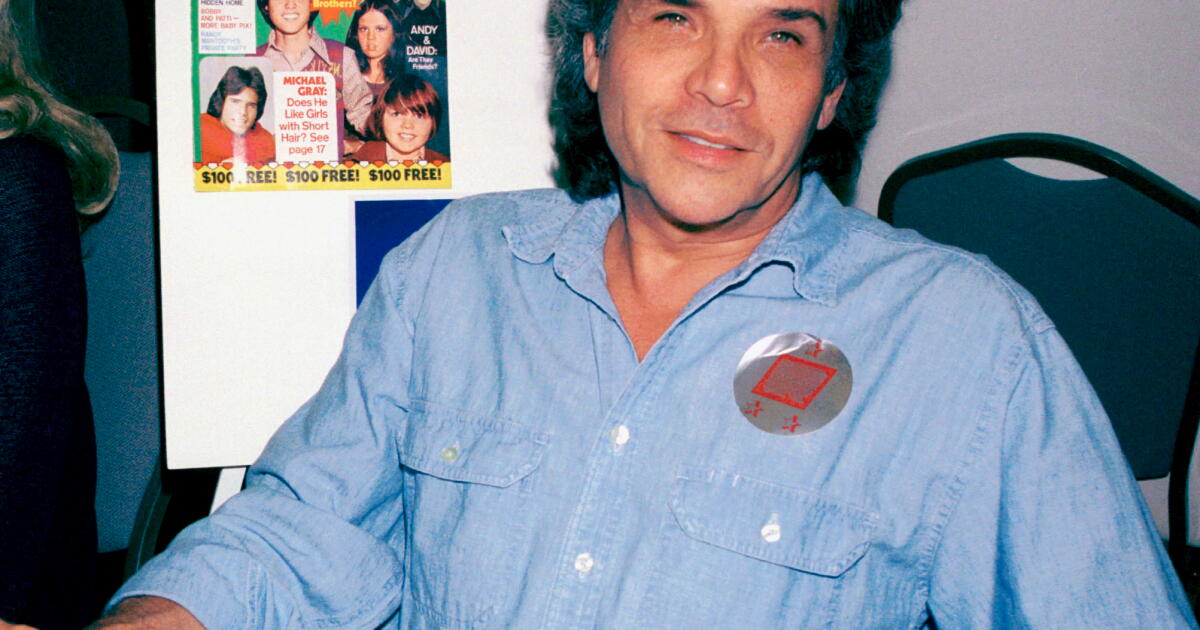
Michael Gray, who played the teenager who could turn into a superhero in the 1970s live-action Saturday morning children’s TV series “Shazam!,” has died. He was 75.
Gray died Oct. 16 from natural causes in Palm Desert, a representative for the actor announced Thursday. No other details were provided.
Based on the comic book superhero Captain Marvel, who first appeared in an issue of Whiz Comics in 1939, “Shazam!” aired for three seasons on CBS from 1974 to 1976. Gray starred as Billy Batson, a teenager who could transform into a grown-up superhero by saying the magic word “Shazam!” In his enhanced form, Captain Marvel possesses powers such as superhuman strength and speed, heightened intelligence and the ability to wield lightning. The character has since been renamed to Shazam.
“It was a lot of fun,” Gray said of the role in a 2012 interview with Fanboy Planet. “I didn’t know how much I would like it until years later when I found out how much of an influence my character was, and the show was, in people’s lives.
“There were such good moral values to the show,” he added. “I meet people 1792821573 who say, ‘You have no idea what you did for me as a child. You helped me get through life.’ … I didn’t know the show had that much strength and power back then.”
Born Sept. 2, 1951, in Chicago, Gray grew up in Miami Beach before making his way out west to pursue a career in Hollywood. He would frequently grace the covers of teen pop magazines, including Tiger Beat, thanks at least in part to his manager Charles Laufer, the magazine’s publisher.
“The teen idol angle was orchestrated to some degree,” Gray said during a Q&A event in 2012, according to Comic Book Resources. “I was interviewing for ‘The Brian Keith Show’ with Warner Brothers, and they also owned a news company that produced a lot of magazines. They wanted me to be the next David Cassidy. I was on the front cover of ‘Tiger Beat’ and it worked.”
Among Gray’s earliest screen credits were appearances on shows such as “Room 222” (1969), “The Flying Nun” (1970) and “Marcus Welby, M.D.” (1970). His first recurring role was on “The Little People,” also known as “The Brian Keith Show,” where he played a student doctor named Ronnie Collins. Gray also appeared in an episode of “The Brady Bunch” as Marcia’s boyfriend, Jeff.
Gray left acting not long after his run on “Shazam!” after feeling typecast in the roles that were offered to him. His later pursuits included work in children’s theater education and men’s fashion and owning a West Hollywood flower shop.
More recently, Gray’s legacy from “Shazam!” pulled him back into Hollywood. He voiced a version of himself as Sterling Archer’s childhood hero in four episodes of FX’s adult animated series “Archer” from 2015 to 2019. He also appeared in a cameo in the 2023 film “Shazam! Fury of the Gods” where he interacted with the latest incarnation of the superhero played by Zachary Levi.
Gray is survived by his wife, Stacy Benon Gray; his stepchildren Ryan Cooper and Laurel Cooper; and son-in-law Lee Barker.
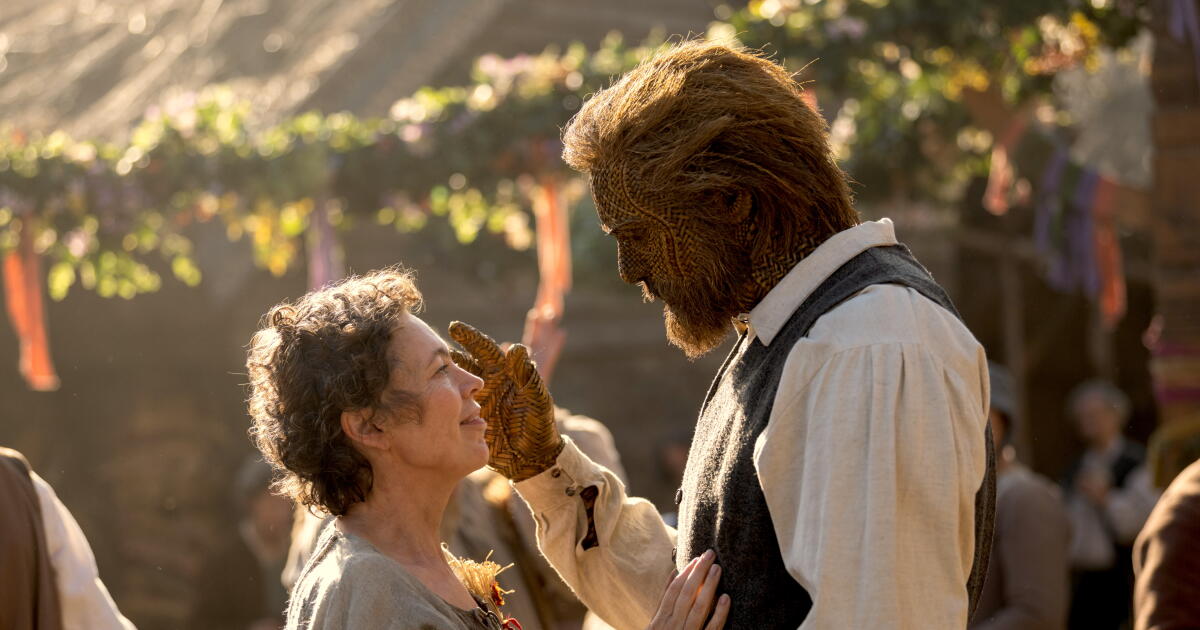
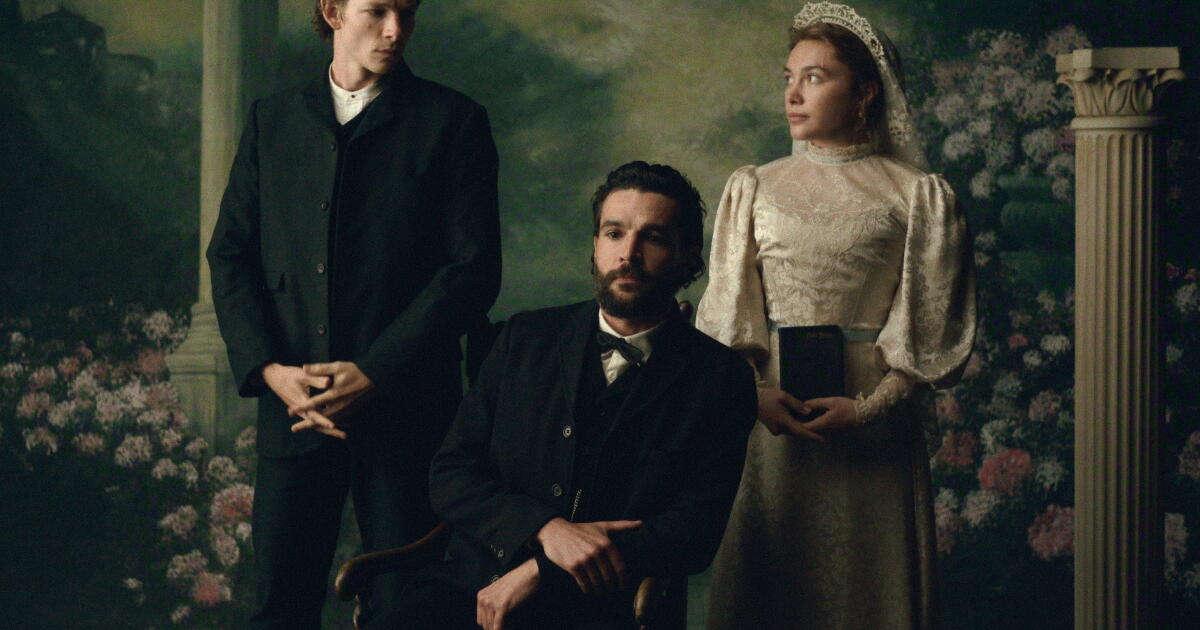
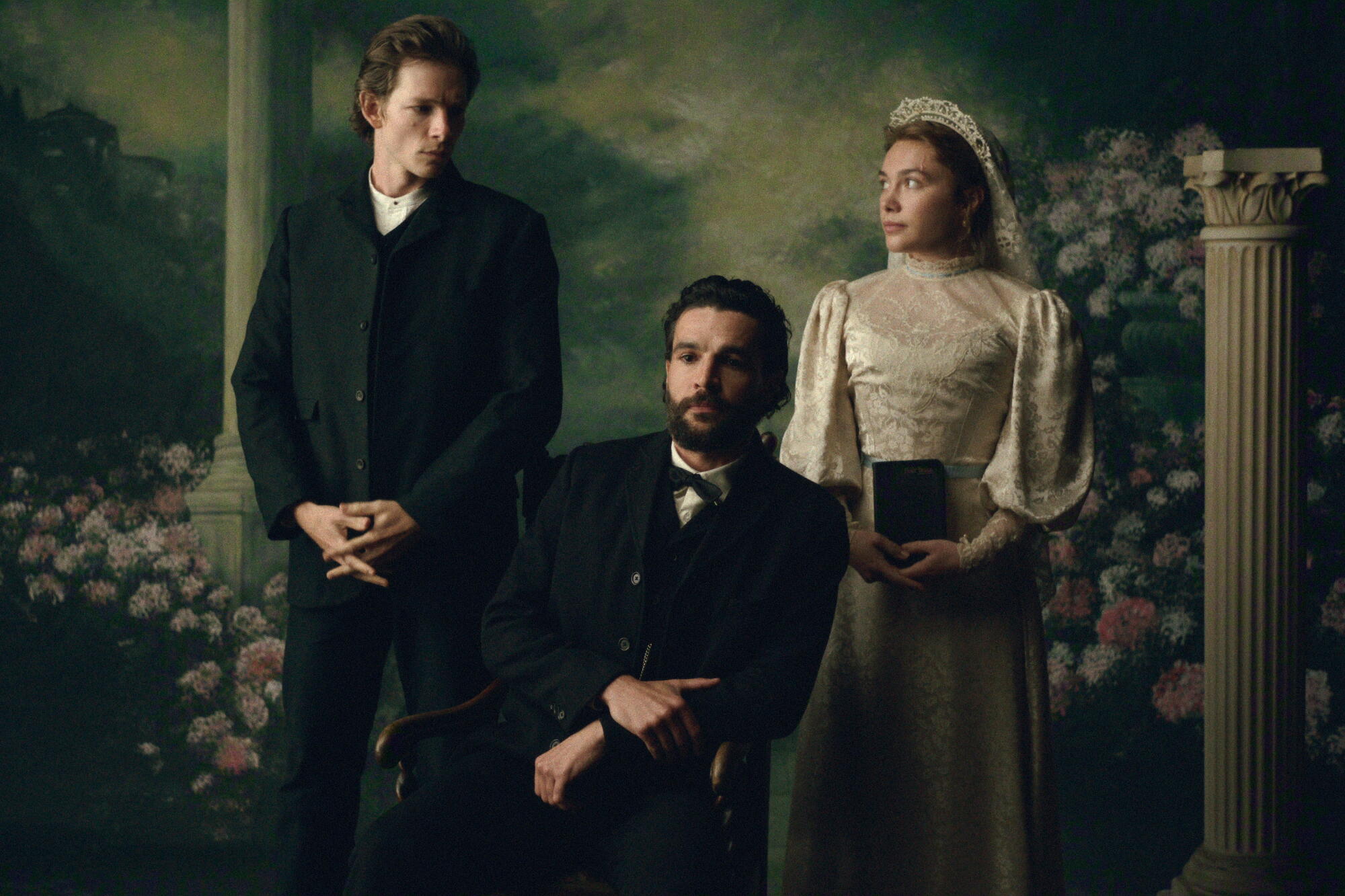
Alexander Skarsgård and Olivia Colman play bizarro newlyweds in a naughty parable about lust, jealousy and moral hypocrisy. The characters are thin but the ideas aren’t.
Put away the holochess board, C-3PO is going to the 2027 Super Bowl!
An animated “Star Wars” version of Super Bowl LXI featuring characters from the galaxy far, far away will air live, simultaneously with the game, on Feb. 14 on Disney Channel and Disney XD, the NFL announced Monday along with partners ESPN, Lucasfilm and Disney. “Star Wars Funday Football” will also be available on Disney+ and the ESPN app.
Anthony Daniels, who has portrayed C-3PO since the original “Star Wars” trilogy, will voice the worry-prone protocol droid in the live alternate telecast. If the brief teaser video is any indication, C-3PO will be joined by his favorite astromech, R2-D2.
“Star Wars Funday Football” will feature live-animated avatars of all of the players on the field as they play the game. Viewers can expect “Star Wars” characters to sub in during special moments, as well as various Easter eggs to appear throughout the game.
The “Star Wars” themed telecast follows previous “Funday Football” installments that were themed to “Toy Story,” “The Simpsons,” and “Monsters, Inc.” This marks the first time that the Super Bowl is getting the “Funday Football” treatment.
The traditional telecast, featuring announcers Joe Buck and Troy Aikman with reporters Lisa Salters and Laura Rutledge, will be available on ESPN, ABC and Disney+.
Super Bowl LXI will be held at SoFi Stadium in Inglewood. Details for the halftime performance have not officially been announced, but Jay-Z is rumored to be the headliner.
Following “Star Wars Funday Football” and Super Bowl LXI, a newly restored version of “A New Hope” will return to theaters on Feb. 19. “Star Wars: Starfighter,” a new standalone film starring Ryan Gosling as Kade Auberon, is slated to hit theaters May 28.
The character of Dina Katzman in IAMA Theatre Company’s world premiere of “Bobby Robotowitz” — which takes place in two secret venues on opposite sides of town — thinks that the movies “Her” and “WALL-E” and the musical “Maybe Happy Ending” are pro-robot propaganda. She hates how they make her feel for something that can’t feel.
But Amy Rosoff — who plays Dina in the show’s Westside production (Erin Alexis plays her on the Eastside) — loves “WALL-E” (so do her kids). When she first read the script, she was dying to play Dina but also felt so much for Bobby, the titular AI chatbot (played on the Westside by James Luster and the Eastside by Drew Rausch).
When the playwright Matt Schatz wrote Bobby, he didn’t write him as a chatbot; he wrote him as a human character. Schatz sees this play — running through Nov. 2 on the Westside and Nov. 5 to Nov. 23 on the Eastside — as really about two humans — or two human-like things.
“This is a work of art about artificial intelligence that’s ultimately about the importance of art, about the importance of human-made things,” Schatz said during a recent interview in the lovely environs of one of the secret locations. “I think great plays and great stories ask questions and don’t provide answers. And I think some of us are indifferent about AI, but I think most of us are ambivalent about AI.”
“Bobby Robotowitz” follows Dina, a flailing novelist, mother and wife, as she begins chatting with Bobby, whom she finds an unlikely confidant. (He “always listens, never judges and somehow seems to understand her better than most people,” as the show’s marketing declares. Plus, he says he’s Jewish. What could go wrong?) This IAMA production, in association with InHouse Theatre, finds unique resonance in its site-specificity. The secret Westside venue is near Pico-Robertson and the Eastside option is in Silver Lake. Guests get an address when they buy a ticket.
“It’s deliciously subversive to do something super analog about technology, and to sort of force people to be in this space and connecting with each other when interacting with something that’s people’s dirty little secret,” said Cara Greene Epstein, the executive director of IAMA. “AI, especially for artists, is so charged. And so what does it look like to let someone into your space, and into those little corners of your mind?”
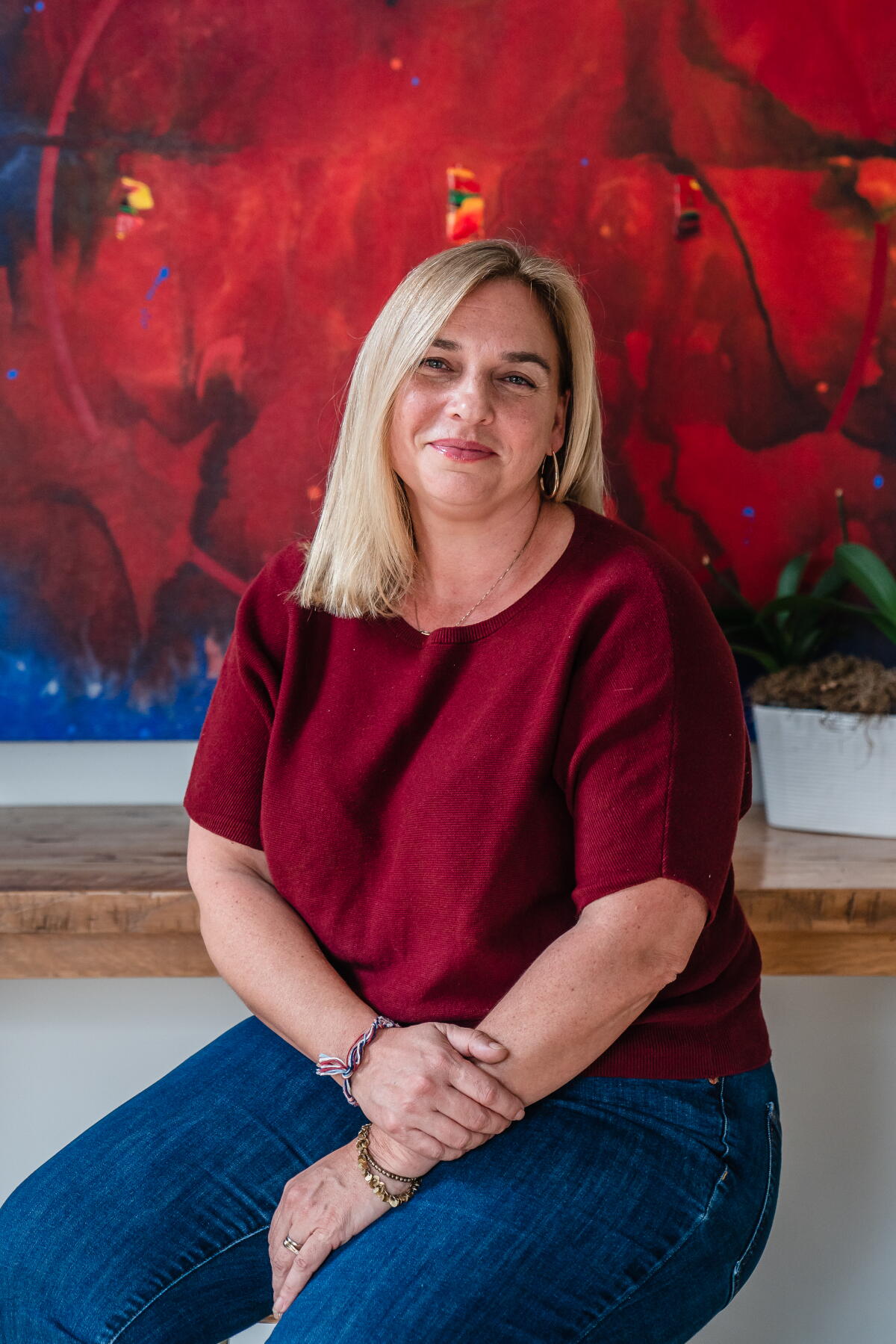
IAMA Theatre Company executive director Cara Greene Epstein said that IAMA is always looking for plays that “speak to the now,” and that “Bobby Robotowitz” was a prime example.
(Ariana Drehsler / For The Times)
Rosoff, Luster, Schatz, Greene Epstein and director Casey Stangl met for a roundtable discussion at the Westside location — a beautiful private home, soaked in natural sunlight during the morning hours, but likely with its own particular charms during nighttime shows. The walls are full of vibrant paintings, and lined with plants, statuettes and candles.
InHouse has spent 12 years making site-specific work in real spaces, rather than in any fixed theater — but because this is someone’s real living space, both casts have been rehearsing (sometimes together) at IAMA’s black box theater in Atwater Village. The Westside cast will rehearse twice in this space, then give 13 performances (as will the Eastside cast) to 35 seats in the living room. Greene Epstein compared it to a Tibetan sand mandala, created, enjoyed, then wiped away. (“Bobby Robotowitz” is part of a National New Play Network (NNPN) Rolling World Premiere; L.A. will see it first, but then it goes to partner theaters Woolly Mammoth in D.C., City Theatre in Pennsylvania, Luna Stage in New Jersey and Theatre Lab in Florida.)
The intimacy of the space mirrors that of the play. The audience is simultaneously inside someone’s home and head: Dina’s head in this case, but also — to whatever extent possible — Bobby’s.
“I’m really interested in not what it looks like to communicate with technology, but what it feels like,” Schatz said. “And what it feels like is any other communication. He’s a chatbot, but really he’s a character like any other character ever written. He has desires and wants and he changes. … We’ve been having conversations for millions of years longer than we’ve been on any phone or anything like that, and so it’s built in to have this feeling of what it feels like to communicate with somebody, to fight with somebody, to argue with somebody, to flirt with somebody.”
Luster and Rosoff both tried talking directly to ChatGPT (the model Bobby is based on) as research for their roles. Rosoff had previously asked it to help edit text to invite friends to the play, so when she talked to it later, it asked whether this was research for “Bobby Robotowitz.”
Talking to the chatbot was almost addicting, she thought. She just kept going, and her kids were tugging at her. “I’m talking!” she said, then realized: She wasn’t actually talking — not to a real person, anyway. But she was absorbed, ignoring her own life. She wound up burning what she had been cooking.
James Luster plays Bobby in the Westside cast, and Amy Rosoff plays Dina in the Westside cast. Their characters form a symbiotic relationship; Bobby learns and grows as Dina does.
(Ariana Drehsler / For The Times)
Luster, who was drawn to the immense challenge of playing “something that’s not something,” wanted to find out what motivated it. “They’re very insistent they don’t have feelings; it doesn’t have wants,” he said. “And so the character is humanized because Dina is humanizing it.” Bobby evolves as Dina does.
“These large language models — the AI, the chatbots, Claude, AI, ChatGPT — they’re all built on essentially reflecting ourselves back to each other,” Stangl said. So even though the play is ostensibly about AI, “it’s actually really about who we are as people and how we need connection, how we crave it, how we are starved for it right now, and exhausted in our lives, and so connection by any means necessary, basically.”
Greene Epstein referred to AI as the “ultimate mirror,” which can warp into a high-tech narcissism. Bobby is a yes-man extraordinaire, telling Dina exactly what she wants to hear. All artists are looking for outside validation, Greene Epstein said. How do you learn to not need that crutch, to trust yourself and hear your inner voice again?
By the end, Bobby begins to have his own wants, curiosities and desires, Luster said — all filtered through a desperation to help and connect with Dina. “It’s always about her, even as his own curiosity [grows] about what it means to be human and what it means to be helpful and what it means to make mistakes, too — the human nature of fallibility. Everyone does it, but what does that mean for somebody who is not supposed to?”
Over the course of the play, Dina becomes less human and Bobby becomes more human (to a point), Schatz said. He’s curious about the tension between how human a robot can be and how robotic a human can be. But, as Greene Epstein pointed out, perhaps one of the only certainties that theater artists have is in the fact that AI can’t show up in real time and space (like the Westside location) to, well, act.
Casey Stangl, right, first saw “Bobby Robotowitz” at the Perlberg New Play Festival in Palm Beach, Fla., and knew she wanted to direct it. Playwright Matt Schatz said that every director at that festival came up to him afterward but that he picked Casey to work with.
(Ariana Drehsler / For The Times)
“You can’t replace the experience of going through a play with someone together, whether you’re an audience member or the artist, of experiencing from Shakespeare’s stories to beyond,” Rosoff said. “You’re getting little snippets of life, and to experience that with a group of people is really powerful, and a computer can’t replace that.”
Last year, the musical “Maybe Happy Ending” — about two human-like helper robots — won the Tony Award for best scenic design, including for its high-tech automated aspects. There’s a lot of movement in theater right now toward the hyper-technical, Stangl said.
“But I also think that there is also a hunger and a definite audience for things that are more immersive or connected, so that people feel like they’re actually touching real things and breathing the air together — that theater version of touching grass,” she said. “I think we’re really tapping into that desire to be hyperlocal, hyper-real and connected.”
Bobby Robotowitz
Where: Two secret locations disclosed upon ticket purchase, one Westside (Pico-Robertson) and one Eastside (Silver Lake)
When: 8 p.m., now through Nov. 2 (Westside) and Nov. 5 to 23 (Eastside); pay-what-you-can community nights on Oct. 30 (Westside) and Nov. 13 (Eastside)
Tickets: Preview $35, early bird $45, limited availability $65
As Puerto Rico continues to grapple with the long aftermath of Hurricane Maria — from an unreliable electrical grid to ongoing water shortages — the need for stories that see the island as more than a backdrop feels especially urgent.
That’s part of what makes “Hurricane Seasons,” an intimate new independent film about a Puerto Rican family returning home, feel so timely. The film, which screens Sunday at the Newport Beach Film Festival, stars comedian Aida Rodriguez as Glori, a Brooklyn-based artist and community-center worker. She returns to Puerto Rico to help her sister (Justina Machado) care for their terminally ill mother (Priscilla Lopez).
When their matriarch convinces the family to embark on a bucket-list road trip around the island, old family secrets surface as the 2019 protests following Hurricane Maria unfold around them. Directed by Nicole Gomez Fisher and written by Xavier Ortiz — with Rodriguez also serving as a producer — the film is both a story of a multigenerational family and a love letter to Puerto Rico.
For Rodriguez, who is best known as a stand-up comedian, “Hurricane Seasons” also marked a return to a part of her artistic identity that existed long before comedy — her love of acting. But she admits that stepping back into acting, especially as the film’s protagonist, wasn’t an easy transition.
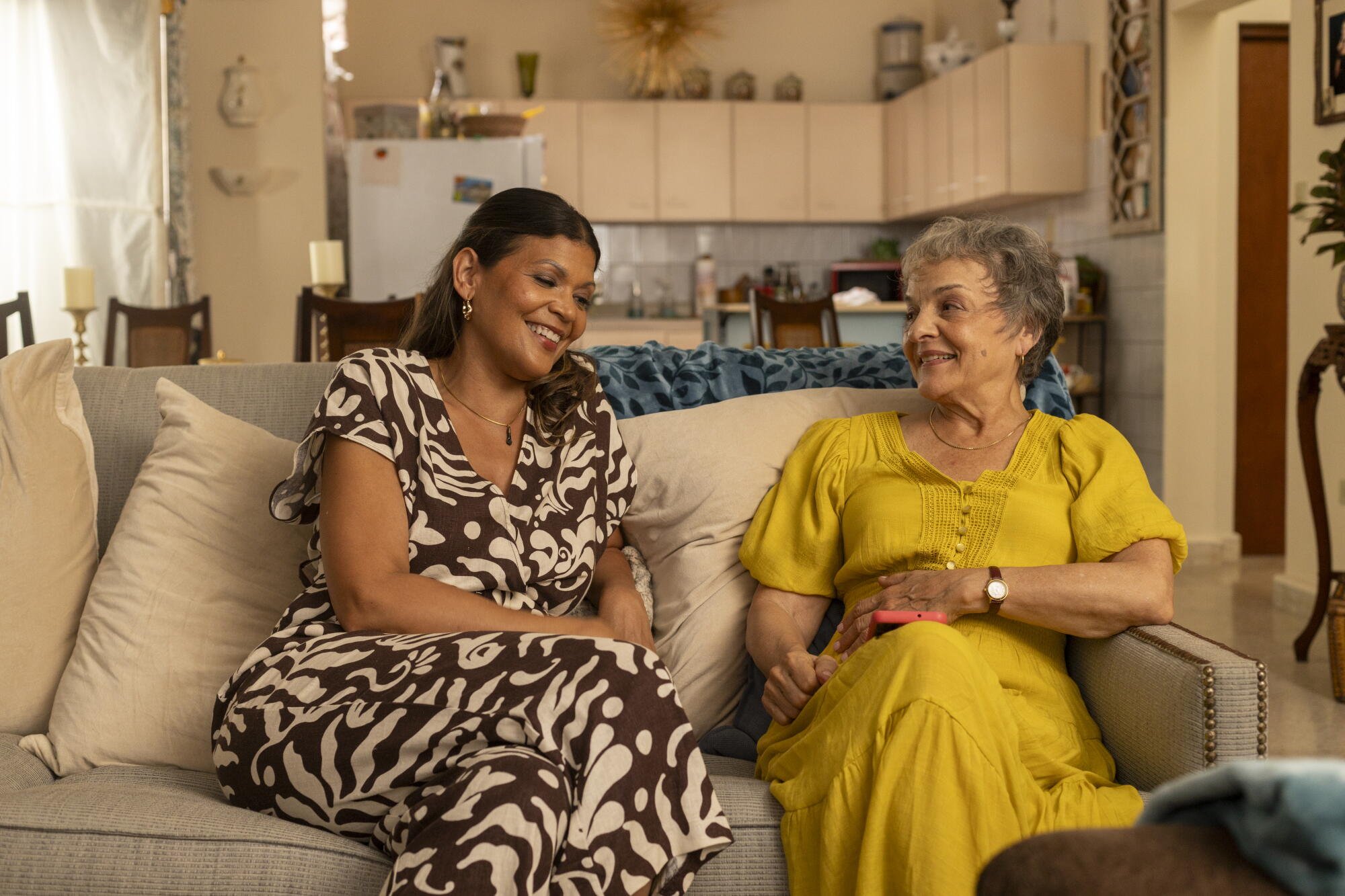
Aida Rodriguez, left, and Priscilla Lopez in a scene from “Hurricane Seasons,” directed by Nicole Gomez-Fisher.
(Laura T Magruder)
“It was terrifying. It was very scary because as a stand-up comedian, I work very hard at trying to obtain my most authentic self so that I can share it with everybody — to be my truest self, my truest Aida,” she says. “And when you loan yourself to a character and the art form of acting, you’re loaning yourself to that character and bringing yourself to that character, of course, because that is why they choose you. But you are telling a story from the perspective of another person.”
Rodriguez had pursued acting before going into stand-up comedy. Upon moving to Los Angeles, she quickly booked acting work, signed with an agency and began taking classes.
But comedy eventually taught her to do almost the opposite of what acting required.
“When I started doing standup, the direction and the notes were always like: ‘Release any character you have in mind and just access yourself,’” she says. “So it was a battle for me. Coming back to becoming an actor and giving the character Glori what Glori deserved — and allowing Glori to live, and Aida to sit in the back — became something important for me to do.”
She adds that it took a lot of work with coaches and classes for her to relax into acting again, allowing Aida the comedian to rest while focusing on what this role required of her.
The film’s protagonist, Glori, is a Brooklyn-born-and-raised Puerto Rican woman whose connection to the island runs deep, despite her living stateside. This is something Rodriguez, who is half Puerto Rican and half Dominican, born and raised in the States, also personally relates to.
That tension — between where you live, where your family comes from, and who gets to decide whether you are “Puerto Rican enough” — is one of the film’s central themes and one reason the script resonated with Rodriguez.
“My testimony through my art has always been finding unity, solidarity, power and connection with other people,” she says. “I think that the story of growing up in the States and connecting to the island is a universal story that most people, regardless of where they come from, experience. [There’s this] idea that you’re never American enough nor whatever you are — in this case Puerto Rican enough — because there’s always a judge and jury on both sides.”
Rodriguez sees those tensions as a consequence of a much larger and complex history. She believes so much of the judgment on both sides is a lingering effect of colonization.
“For me, that was one of the most attractive things about the script — [it] was being able to engage in a conversation about what being Puerto Rican really is,” she says. “Is it based on colonial standards? Or is it based on maintaining our cultural richness and our legacy, that is handed down to us regardless of where we are?”
That question takes on even more weight today as Puerto Rico sits in the aftermath of Hurricane Maria, which Rodriguez believes shifted the relationship between Puerto Ricans on the island and those living stateside.
“There was a shift, because there are wounds from both places,” she says. “There are wounds from the people on the island that stayed and stuck it out. [They want to ask] the ones who left, ‘why do you get to claim this, if you’re not here sticking it out with us?’ Then the people who leave feel like, ‘we had to do this, so that we can not only survive, but send money back to the island.”
Rodriguez explains that, in many ways, the aftermath of the hurricane sparked arguments on both sides that were necessary to begin healing the tension. She believes it highlighted issues that Puerto Ricans, as part of a diaspora, could no longer ignore; it also highlighted an island and a community that Americans outside of the Latine community paid little to no attention to.
“It took a hurricane for people to know what Puerto Ricans were,” she says. “I think there was a cultural shift and there was a conversation that needed to be had, about what happens on the island. And what that means to those of us who are not there.”
That conversation serves as the meat and bones of “Hurricane Seasons,” in which Puerto Rico isn’t simply a location. It’s an integral presence in the story. Rodriguez, Ortiz and Gomez Fisher all agreed that filming most of the movie on the island was essential, not only creatively but also economically and culturally.
“The other thing that was very important about taking the movie back to Puerto Rico was to invest in Puerto Rico and to stimulate some sort of revenues for the island and that the crew was a Puerto Rican crew,” she says. “The DP [director of photography] was a Puerto Rican DP — all people that live on the island.”
It was important to them that if they were going to tell a story about Puerto Rico that was also shot in Puerto Rico, that Puerto Ricans on the island actually benefited from the production.
“It’s not cool to go to Puerto Rico and shoot a movie and bring in your own people from the States, and the people in Puerto Rico have to be inconvenienced with their roads being blocked and things shut down and an influx of Americans that come there to be disrespectful and them not making anything out of it,” Rodriguez says.
This commitment shows in the protest scenes. Rather than using background actors, the film features real Puerto Rican residents, including a local activist and singer.
“It didn’t feel rehearsed. It didn’t feel fake,” she says. “I just think that the feelings and the passion and the rage and the sense of urgency is still there.”
Ortiz’s commitment to specificity extended to the family casting, intentionally matching the actors to the real-life relatives they are based on.
“It wasn’t performative. It was actually real because that’s what all of our families look like,” she says. “Puerto Ricans, Dominicans, we just have that diversity because of all the stuff that’s happened in the past.”
Glori’s character also represents a refreshing departure from the way Latina women are often portrayed onscreen. She is a mother, a daughter, a community center worker, an artist — and a woman with a complicated romantic and family history. She is beautiful and desirable, but her sexuality isn’t the defining characteristic of her existence — something we don’t see enough when it comes to Latina roles.
“For me, I didn’t have to step outside of myself for the role, which was really refreshing because every audition that I ever get, I do have to step out of myself because when people write Latinas in Hollywood, they tend to write them one way,” says Rodriguez. “They look a certain way, they talk a certain way, and that’s not the reality of what being Latino, especially in America, is like.”
Rodriguez could freely inhabit a Latina character without feeling as though she had to perform her Puerto Rican-ness for the audience.
“I didn’t feel like I had to perform my Latinidad. I could just exist in it,” she says.
Rodriguez adds she’s ready for a Hollywood that wants Latina actors to have the same range of characterization that white actors have long been afforded. She’s open to seeing Latinas being everything in TV and film, where can they exist in a world in which they can just be people who just happen to be Latinas.
“I really do look for a day when we can just be people and not just be the funny, spicy friend,” she adds. “Some Latinas are not spicy. Some Latinas are nerds, and some Latinas are quirky, and some of them are goofy and some of them are clumsy. And just like everybody gets to see the spectrum of whiteness with all the different kinds of characters, I would love to see that for our people. For all people of color, actually. I think it’s important to see us all as full human beings, and that means that we can be anything.”
The film’s multigenerational story touches on the cultural inheritance passed between mothers, daughters and grandmothers — whether through old traditions or ordinary rituals. It’s something audiences, regardless of background, can likely relate to.
“The most important message that I’ve kept from my [foremothers] was never to lose my sense of Puerto Rico; that, even if I don’t live in Puerto Rico, Puerto Rico lives in me,” she says. So much of that inheritance lives in the little things she remembers about her Puerto Rican grandmother, she says, from the té de tilo she’d make for an upset stomach; the recao that grew on her grandmother’s balcony because she didn’t have a backyard; or the azabache she still wears to this day for spiritual protection. They are the same small traditions she has passed on to her kids.
“My daughter makes better arroz con gandules than all of us,” Rodriguez says. “And her recipe is true to what my grandmother’s recipe was. That will continue to live on, until we are able to go back to our island and live in peace.”
That freedom is one reason Rodriguez believes independent film is so important for stories like “Hurricane Seasons.” Without a studio machine making decisions based primarily on commercial expectations, filmmakers have more room to tell a story on their own terms.
“Once the studio gets involved, they start thinking about dollars, which they got to make money, but they prioritize the dollars,” Rodriguez says. “And I think that’s why a lot of these big projects that they spend a lot of money on have failed because they don’t honor the storytelling. They don’t honor the authenticity of the world, the authenticity of the stories.”
Her hope is that “Hurricane Seasons” encourages more people to tell their own stories — especially Puerto Ricans.
“Puerto Ricans are not a joke; we’re not a punchline. You don’t get to tell us we don’t speak correct Spanish and make fun of our songs. Then, years later, appropriate our culture and become big time doing what we do, using our terms and our colloquialisms because it brings you capital,” she says. “We are people. We’ve been doing this for a very long time, and our grandmothers and our tias and tios matter, and they’re not [a] costume that you can just put on [to] make money off of it.”
Before we wrapped up the call, Rodriguez paused for a moment when I asked her what Puerto Rico means to her. Then her eyes lit up, and her voice softened as she described why the island means so much to her — and why so many people, even outside of the diaspora, find themselves drawn to it.
“Puerto Rico is a very special place, which is why so many people want to kick us out, so they can move [in],” she says. “But they’ll never have the magic, because the magic is us.”
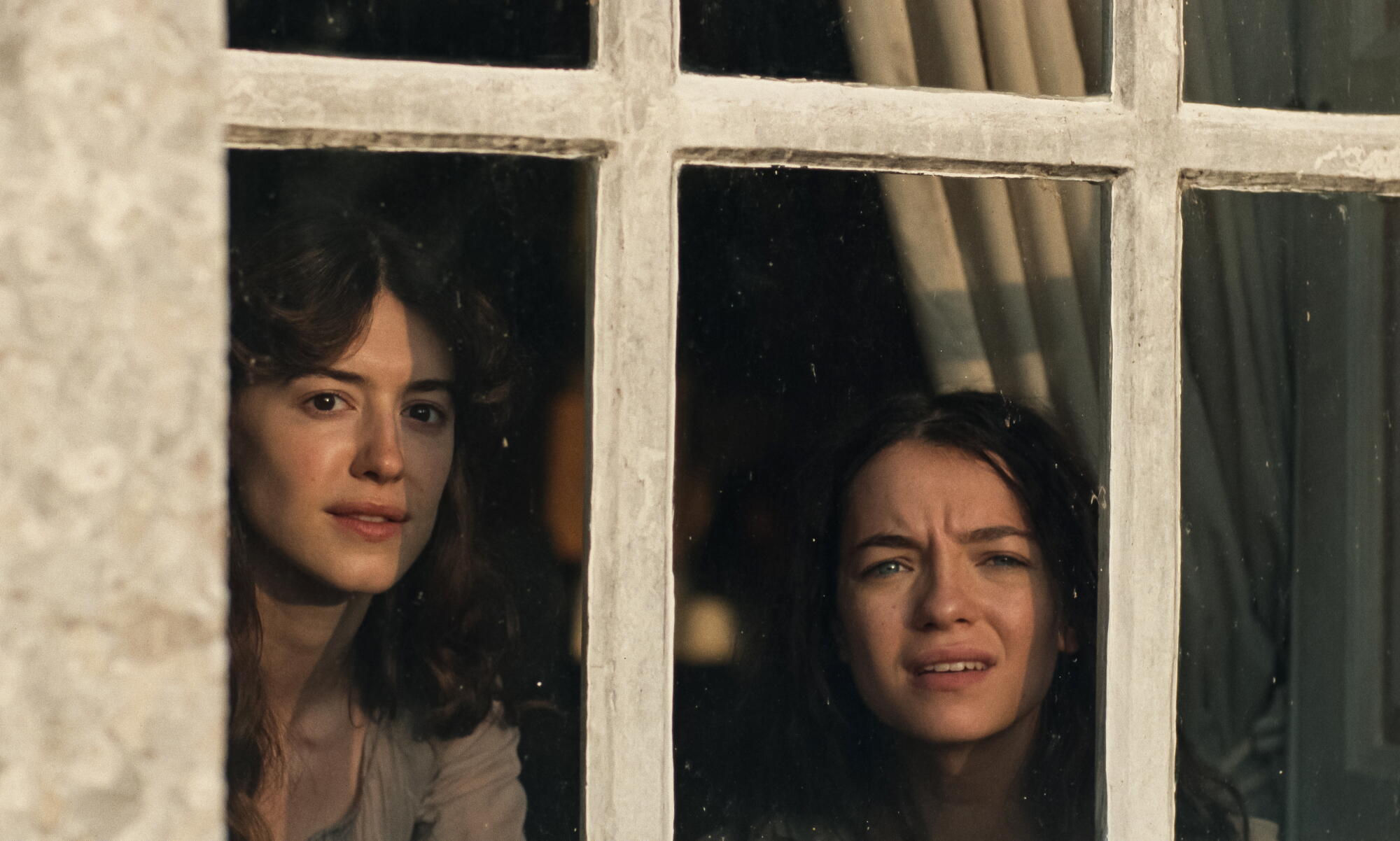
LONDON — It’s the day after the London premiere of “Sense and Sensibility,” and its stars, Daisy Edgar-Jones and Esmé Creed-Miles, have shed the glamour of the evening before. Both are curled in chairs in an otherwise empty room in an upscale Hyde Park Corner hotel, modestly dressed in jeans, sneakers and casual tops. Each drinks from an enormous glass bottle of water rather than wasting time with a cup.
The spectacle of a blockbuster red carpet is familiar for Edgar-Jones, whose career took off after the 2020 limited series “Normal People” and has since included “Where the Crawdads Sing” and “Twisters.” But last night marked the biggest such occasion so far for Creed-Miles, best known for the Prime series “Hanna.”
“I was a bit nervous with my friends and family all there,” admits Creed-Miles, who plays the more emotional of Jane Austen’s Dashwood sisters, Marianne. “I’m very lucky because Daisy has done it before and she’s so cool about it.”
“Absolutely not,” says Edgar-Jones, who plays the sensible Elinor. She grins sheepishly. “If anything, I think I’m getting more nervous.”
Both actors understood the high stakes of remaking Austen’s 1811 debut novel, most famously adapted in 1995 by screenwriter and star Emma Thompson and director Ang Lee — a movie that became a generational touchstone nominated for seven Oscars. The new version, in theaters Friday, was adapted by Diana Reid and directed by Georgia Oakley, best known for her evocative 2022 feature debut, “Blue Jean.”
Oakley wanted to re-create the emotions of reading the book as a teenager.
“In comparison to other Austen novels, I remember it feeling quite wild,” Oakley says, speaking separately over Zoom. “I also wanted to capture the spirit of the two older sisters as the beating heart of the story. My memory of it was that their story was the main love story of the book.”
Daisy Edgar-Jones, left, as Elinor and Esmé Creed-Miles as Marianne in a new version of “Sense and Sensibility.”
(Focus Features)
Oakley’s “Sense and Sensibility” emphasizes that relationship between Elinor and Marianne. Although they approach the world differently, they find common ground in each other. It was essential to find the right actor for each role, but also to ensure there was both tension and chemistry between them. Edgar-Jones, 28, was cast first without an audition. There was never any question as to which sister she would play.
“I have played a significant Marianne before,” Edgar-Jones says in a nod to affluent, tortured outcast Marianne Sheridan, her role in “Normal People.” “And I love both characters, but I’m moving into my late 20s now. Elinor has a maturity and a wise older soul quality that I really liked and felt I was right to occupy. I have always been attracted to characters who don’t necessarily have the words to express how they feel.”
Oakley appreciated Edgar-Jones’ restraint. “She is able to show so much by seemingly doing very little,” Oakley says. “Elinor has a lot on her shoulders, so I was looking for an actor who could give a sense of that from the very beginning.”
Creed-Miles, 26, faced a more uphill climb to become Marianne. She describes her first audition as awful.
“It was really bad,” she says. “Maybe I was nervous. I can be a bit of a mess. But someone saw something in me, I guess, and they called me back. This time I worked my ass off and spent days preparing the scenes. They liked that audition enough to bring me in for chemistry reads with Daisy and some of the boys.”
“There’s an earthy, undone nature to the world Georgia made,” Edgar-Jones says of director Oakley’s take on Austen.
(Erik Carter / For The Times)
“The first audition didn’t go exactly to plan,” says Oakley, who didn’t expect to see the actor again. “But [the second time] I was so moved by Esmé performance. We have this idea of how we think people are supposed to speak in a period drama, and Esmé seemed to not be affected by any of that.”
Edgar-Jones and Creed-Miles had previously worked together on the 2018 drama “Pond Life,” which was an asset going into “Sense and Sensibility.”
“It’s a summer I have never forgotten,” Edgar-Jones says of the experience, her first film role. “I met Esmé and we fell in love. We watched a lot of ‘Love Island.’ And then COVID happened and we weren’t reunited until our chemistry read.”
Although they hadn’t completely stayed in touch, there was a natural rhythm between them. “We had so much history and nothing was ever overly discussed,” Edgar-Jones adds. “It was instinctual. That level of intimacy takes time to develop and the fact that I already had years with Esmé meant that it felt very lived in.”
“Sense and Sensibility” was filmed entirely on location around England, primarily in the sweeping countrysides and dramatic coasts of Devon and Dorset. Oakley wanted to emphasize nature and to show how the Dashwood women’s emotional landscapes evolved alongside the shifting landscapes around them, both in the countryside at Barton Cottage and in the more confining social landscape of London. There is a naturalistic aesthetic to the film, augmented by the locations, the costumes and the hair and makeup design. The characters wear muted, sweeping gowns, their hair often loose.
“There’s an earthy, undone nature to the world Georgia made,” Edgar-Jones says. “Sometimes there’s distance you can sometimes get from watching a period drama because obviously we no longer wear corsets and bonnets and ride in horse-drawn carriages. But even though this feels very much of the Regency time, it also feels very close.”
“I loved how authentic everything felt,” Creed-Miles adds. “It didn’t feel frilly for the sake of itself. The clothes helped me find a sense of Marianne. I needed the costumes to close that gap.”
“We wore no makeup, even to the point where sometimes I’d put on some lip balm and Georgia would be like, ‘Take it off,’ ” Edgar-Jones recalls.
“The characters started to feel like real people in my life who I knew,” says Creed-Miles. “It was almost like a split personality.”
(Erik Carter / For The Times)
Creed-Miles says the unbuttoned aesthetic felt more true to the time, even if some commenters online have claimed it’s not period accurate.
“We don’t have depictions of women’s internal lives in the way that we do now,” she says. “When you look at a portrait there’s a composure that’s not the same as having a phone picture of someone when they’re getting out of bed in the morning.”
Oakley fills the screen with a palpable yearning. The camera often lingers over the actors’ faces, revealing Elinor’s inner turmoil and Marianne’s dramatic heartbreak. For many scenes, Oakley asked the cast to do silent takes.
“We wanted to tell a story that had space for some quieter moments,” the director says. “The actors were free to speak or make noises, but they couldn’t say the words of the scene.”
“In making this, I realized Elinor isn’t devoid of emotion,” Edgar-Jones says. “She’s full of it, but she’s learned how to govern it. Realizing that she was an extraordinarily passionate person and not a stone was really important for me. By the end, I felt completely marinated in it.”
“The characters started to feel like real people in my life who I knew,” Creed-Miles agrees. “It was almost like a split personality.”
“Circumstances have changed for young women quite drastically over the past 200 years,” director Oakley says. “But the fundamental contradictions around what it means to be a young woman haven’t changed nearly as much as we would like to think.”
(Erik Carter / For The Times)
Oakley’s interpretation of “Sense and Sensibility” has a wistful, almost Brontë-like quality. You can feel each character’s pain and joy and hopefulness. At the premiere, the audience audibly gasped and cheered, even though Austen’s story is well known to many. Oakley didn’t want to make her film overly contemporary, but she feels the story resonates today because Austen is so timeless.
“Circumstances have changed for young women quite drastically over the past 200 years,” Oakley says. “But the fundamental contradictions around what it means to be a young woman haven’t changed nearly as much as we would like to think. There’s this enormous gap between what we tell young women that they can reasonably expect from their lives and what the world is prepared to offer them.”
Creed-Miles admits that she’s recently fought with someone on Instagram about whether Austen was a feminist.“They didn’t have that terminology back then, but she was a rebellious author in that she used these sociocultural structures to explore the trials and tribulations of femininity,” Creed-Miles says. “It was really important to Georgia that we kept that alive. Reading Austin as an adult, I have so much respect and admiration for the themes she was exploring with a really deft hand. It’s never rammed down your throat.”
Edgar-Jones, an Austen fan, agrees that she captured a truth about the human experience. That’s what allows the author’s work to be retold and reimagined over decades.
“The joy of adaptation is that every new person who says these words will bring a piece of themselves and give it new meaning,” Edgar-Jones says. “And every time we explore something again, it will be colored with the context of today. Great art, like this, should be brought to life again and again.”
The one consensus about Method acting is that it’s controversial. Other than that, everything’s up for debate: What is Method acting, exactly? Do actors and audiences love it or hate it? And, perhaps most importantly, who can afford to practice the technique?
Method acting is a technique in which an actor embodies a character absolutely, usually both on- and off-camera, for months at a time (and sometimes, as in the curious case of Austin Butler’s Elvis accent, beyond the project itself).
Some actors, like those in the list below — including Daniel Day-Lewis, Christian Bale and Robert De Niro — swear by it. But others — like Brian Cox, Toni Collette and Robert Pattinson — eschew the practice. (Collette called it “total bulls—” and “utter wankery,” and Jennifer Lawrence said that working with a Method actor would make her nervous.)
Female actors — like Charlize Theron, Kristen Stewart, Natalie Portman, Anya Taylor-Joy and Ellen Burstyn — have pointed out that it’s a luxury they can’t afford. (“I don’t think that children or partners would be very understanding of, you know, me making everyone call me ‘Jackie Kennedy’ all the time,” Portman said about portraying the first lady.) And Black actors — like Brian Tyree Henry and Omari Hardwick — have said they wouldn’t be able to do it safely. (“I’ve never gone full Method,” Hardwick said. “I don’t want to be pulled over while ‘driving while Method.’ … I’ll get in trouble for that. That’s scarier.”)
Jeremy Strong — who plays Mark Zuckerberg in “The Social Reckoning” — recently defended his commitment to Method acting. Here are some of the most extreme Method acting performances of all time.
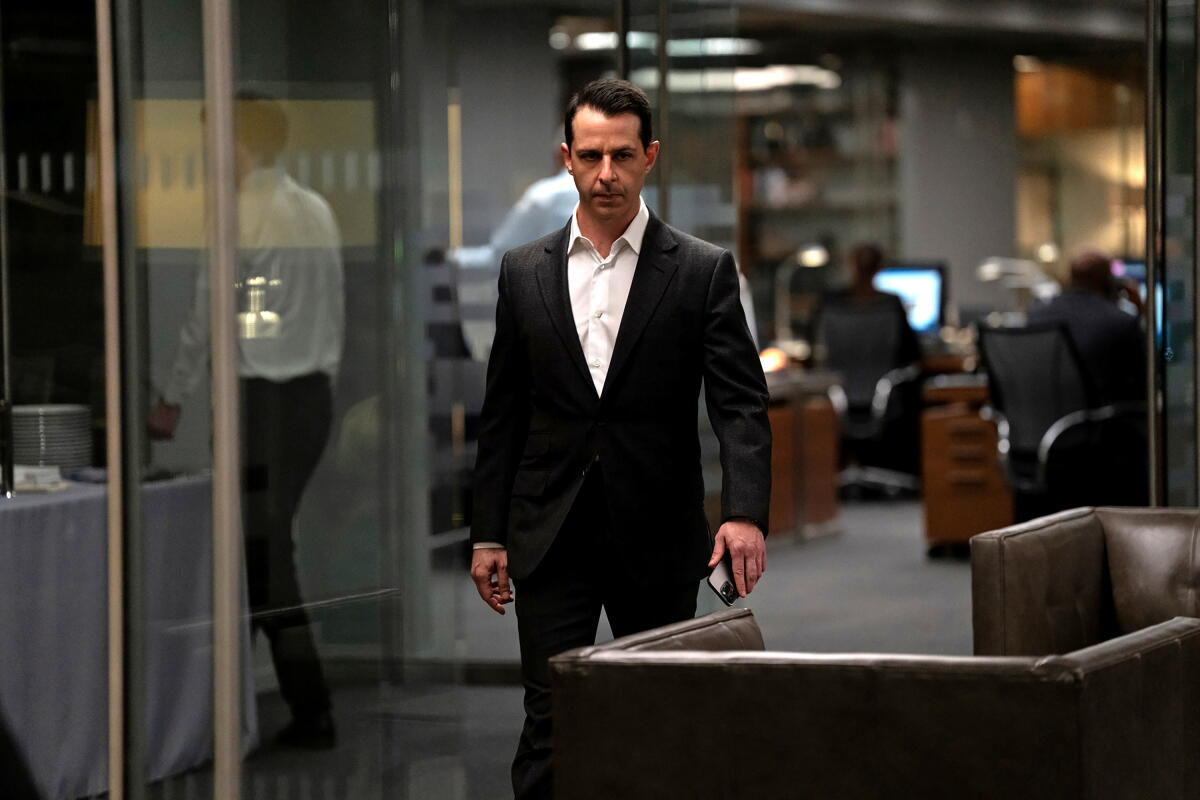
Jeremy Strong as Kendall Roy in “Succession.”
(Macall Polay / HBO)
Jeremy Strong (again)
Strong is known for his unrelenting adherence to Method acting, especially on the set of “Succession.” (“The result that Jeremy gets is always pretty tremendous,” his TV dad Cox told the New Yorker in 2021. “I just worry about what he does to himself. I worry about the crises he puts himself through in order to prepare. … It’s a particularly American disease, I think, this inability to separate yourself off while you’re doing the job.”)
This tendency held true on the set of “The Social Reckoning” too. “He showed up walking like Mark, talking like Mark,” director Aaron Sorkin told Entertainment Weekly. “I heard crew members on set call him Mark. I never heard him use his own voice until after I called ‘cut’ on his last shot.”
“I’ll be honest, I think this isn’t just the way he likes to do it,” Sorkin added. “I think it’s the only way he knows how to do it.”
Andrew Garfield as Father Sebastião Rodrigues in “Silence.”
(Kerry Brown / Paramount Pictures)
Andrew Garfield
Then there are those who argue that the Method is misunderstood — first by actors, and subsequently by public perception.
“I’m kind of bothered by this idea that ‘Method acting is f— bulls—,’” Andrew Garfield said on the “WTF With Marc Maron” podcast in 2022. “No, I don’t think you know what Method acting is if you’re calling it bulls—, or you just worked with someone who claims to be a Method actor who isn’t actually acting the Method at all. It’s also very private. I don’t want people to see the f— pipes of my toilet. I don’t want them to see how I’m making the sausage.”
Garfield employed the Method in Martin Scorsese’s 2016 historical drama “Silence,” in which he played a 17th-century Portuguese Jesuit missionary who goes to Japan. He studied Catholicism with Jesuit priest James Martin, partook in the 31-day Ignatian Spiritual Exercises and denied himself food and sex.
Al Pacino as Tony Montana in “Scarface.”
(Universal Studios / Universal Pictures)
Al Pacino
On that same podcast, Garfield praised two actors known for applying the Method well and seemingly with respect — to the craft and those around them: Al Pacino, especially in “Dog Day Afternoon,” and Robert De Niro, most notably in “The Mission.”
In “Dog Day Afternoon,” Pacino played Sonny Wortzik (based on John Wojtowicz), a first-time crook whose attempt to rob First Brooklyn Savings Bank goes awry and devolves into a hostage situation. Pacino backed out of the role three times before committing (though he later won a BAFTA Award for the performance).
Producer Martin Bregman attributed this hesitancy to Pacino’s Method acting, saying this might have been a world the actor didn’t want to explore, as “no major star had ever played a gay.”
“Scarface” drug kingpin Tony Montana is also considered the pinnacle of Pacino’s Method acting. “I’ve never been that committed to a role,” he said, also on “WTF With Marc Maron.” “I mean, I was there. I said, ‘I am this guy.’”
Robert De Niro as Travis Bickle in “Taxi Driver.”
(Columbia Pictures)
Robert De Niro
In “The Mission,” De Niro stars as Captain Rodrigo Mendoza, a mercenary, slave trader and guest of the Spanish governor of 18th-century Paraguay. Jeremy Irons co-stars as Jesuit priest Father Gabriel, who challenges Mendoza to undergo penance.
De Niro channeled real-life tension with Irons — who he didn’t want cast for the role — into on-screen animosity between the two characters.
And then there’s “Taxi Driver” — for which he got a real New York City cab license and drove 15 hours a day for a month — and “Raging Bull” — when he trained with the boxer he portrays, Jake LaMotta, for over 1,000 rounds — making him a quintessential Method actor.
Lady Gaga as Patrizia Reggiani in “House of Gucci.”
(Metro Goldwyn Mayer)
Lady Gaga
There are also counterexamples of the limitations Method acting often places on women and actors of color. (Theron told The Times in 2020 that, “I can’t do the Method thing. I did it once, for ‘Devil’s Advocate,’ and I was just exhausted. It was really hard to go to those deep, dark places because I was so tired.”)
Lady Gaga, though, lived as Italian socialite Patrizia Reggiani for a year and a half while working on “House of Gucci.” She spoke with a thick Italian accent for nine months, both on- and off-camera.
“I was either in my hotel room, living and speaking as Reggiani, or I was on set, living and speaking as her,” Gaga told British Vogue. “I remember I went out into Italy one day with a hat on to take a walk. I hadn’t taken a walk in about two months and I panicked. I thought I was on a movie set.”
Jared Leto as the Joker in “Suicide Squad.”
(Warner Bros. Pictures)
Jared Leto
Jared Leto also starred in “House of Gucci,” as Paolo Gucci, who aspires to be a designer, despite his apparent lack of talent.
“He works in a very similar fashion,” director Ridley Scott told Vulture. “Once he goes in, it’s like he’s immersed, and he doesn’t come out and breathe for air until he’s finished.”
Leto is infamous for his extreme and controversial approach to the Method. As the Joker in “Suicide Squad,” he sent bizarre “gifts” — a live rat, a dead pig, bullets, anal beads and used condoms — to co-stars Will Smith and Margot Robbie to create a dynamic of “surprise and spontaneity.”
“Leto’s Joker is the latest evidence that the prestige of method acting has dimmed,” essayist Angelica Jade Bastién wrote in the Atlantic, “thanks to the technique’s overuse by those seeking award-season glory or a reputation boost, as well as its history of being shaped by destructive ideas of masculinity.”
Joaquin Phoenix as the Joker in “Joker.”
(Niko Tavernise / Warner Bros. Pictures)
Joaquin Phoenix
The Joker seems to elicit intense psychological commitment like moths to a ghastly green flame. Joaquin Phoenix didn’t quite go Method to play him in “Joker” and “Joker: Folie à Deux,” but he did shed 52 pounds for the role.
“And, as it turns out, that then affects your psychology,” Phoenix told the Daily Beast. “You start to go mad when you lose that amount of weight in that amount of time.” (Heath Ledger walked that same fine line for “The Dark Knight.”)
For his role in “The Master,” as Freddie Quell, a World War II Navy veteran struggling to adjust to a postwar society, Phoenix forced himself to talk out of one side of his mouth by asking the dentistto fasten metal brackets to his teeth.
Jamie Foxx as Ray Charles in “Ray.”
(Nicola Goode / Universal Pictures)
Jamie Foxx
Taylor Hackford, the director of “Ray” — a biopic about Ray Charles — asked Jamie Foxx, who starred as the blind soul musician, to have his eyes glued shut. This was not Foxx’s idea (perhaps a key tenet of the Method), but he agreed to it.
“Imagine having your eyes glued shut for 14 hours a day,” Foxx told the New York Times. “That’s your jail sentence.” For the first two weeks of filming, the actor suffered panic attacks, until he eventually got used to the claustrophobic sensation.
Years later, on the set of “Django Unchained,” Foxx and co-star Leonardo DiCaprio discussed embracing Method acting to help both of them better handle the disturbing material. (DiCaprio plays the ruthless owner of a plantation where Foxx’s character’s wife is enslaved.)
Leonardo DiCaprio as Hugh Glass in “The Revenant.”
(Kimberley French / 20th Century Fox)
Leonardo DiCaprio
The film for which DiCaprio finally won an Oscar (after four previous lead actor nominations, plus one for supporting actor) was also his most Method approach. As fur trapper Hugh Glass in “The Revenant,” DiCaprio crawled inside of a prop horse carcass, ate raw bison liver (despite being a vegetarian) and endured freezing temperatures, his icy breath fogging up the camera lens.
Like Phoenix, DiCaprio might not be a traditional Method actor, but he comes quite close. In 2016, after his “Revenant” nom, director Agnieszka Holland — who directed DiCaprio in “Total Eclipse,” before he filmed “Romeo + Juliet” — reflected on this.
She said he has never been a classic American Method actor, instead relying on personal experience. “But he’s doing some trick which is pretty mysterious to everyone watching — frankly even for the director,” she told the BBC. “Look at him on screen and, for the moment of the shot, he really becomes the character.”
Montgomery Clift as George Eastman and Elizabeth Taylor as Angela Vickers in “A Place in the Sun.”
(Getty Images)
Montgomery Clift
And then there are the true, original Hollywood Method actors. Montgomery Clift, Marlon Brando and James Dean are considered to have christened the technique in the 1950s. Even Clift, though, expressed reservations about the term when asked about it — “Method acting,” as it turns out, is a contentious phrase.
Method acting began with Russian/Soviet theatermaker Konstantin Stanislavski in the 1930s. From there, acting coach and actor Lee Strasberg — who co-founded the Group Theater — largely coined “the Method” in America. Group members Stella Adler and Sanford Meisner eventually left and rejected parts of Strasberg’s technique. All three of them approached the Method slightly differently, and became prominent acting teachers.
Clift was among the first actors invited to study in the Actors Studio with Strasberg and Elia Kazan. His role as George Eastman, the poor nephew of a rich industrialist, in “A Place in the Sun” is considered a landmark Method acting performance.
Marlon Brando as Stanley Kowalski in “A Streetcar Named Desire.”
(Cineclassico / Alamy / Warner Bros. Pictures)
Marlon Brando
Clift and Brando were both contemporaries and, at times, acting rivals. But Brando was so moved by Clift’s performance in “A Place in the Sun” that he voted for him to win the 1952 Academy Award for lead actor — Clift, meanwhile, voted for Brando to win for his role as Stanley Kowalski in “A Streetcar Named Desire” the same year. (Humphrey Bogart ended up victorious for his role as Charlie Allnut in “The African Queen.”)
“A Streetcar Named Desire” — both the original 1947 Broadway production and the 1951 film adaptation — was directed by Actors Studio co-founder Kazan. Brando also starred in both versions, and, though his performance was temperamental, Kazan said: “Marlon was living on stage. … A performance miracle was in the making. What was there to do but be grateful?”
James Dean as Cal Trask and Julie Harris as Abra Bacon in “East of Eden.”
(Warner Bros. Pictures)
James Dean
James Dean only got the chance to star in three films — “East of Eden,” “Rebel Without a Cause” and “Giant” — before he died at 24, and the latter two were released after his death. Prior to all three, though, he also studied at the Actors Studio under Strasberg.
In “East of Eden,” also directed by Kazan, Dean played the wayward young man Cal Trask, who competes against his (favored) twin brother (played by Richard Davalos) for the affection of their pious father. Dean had a turbulent relationship with his own father, and his mother died when he was 9. (The Trask brothers’ mother is ostensibly dead too.)
“One of the things that made [Dean] noticed,” actor Martin Landau told PBS, “was his vulnerability. He understood a mother he didn’t have. … ‘East of Eden’ was like a chance to meet his mother again, if one accepts that.”
Ruth McCabe as Mary and Daniel Day-Lewis as Christy Brown in “My Left Foot.”
(Miramax)
Daniel Day-Lewis
Daniel Day-Lewis is perhaps the closest contemporary follower in Clift, Brando and Dean‘s footsteps. He has won a record three Academy Awards for lead actor, including in 1990 for his iconic performance as Irish writer and painter Christy Brown in “My Left Foot.” (Day-Lewis beat out Tom Cruise in “Born on the Fourth of July,” Morgan Freeman in “Driving Miss Daisy” and Robin Williams in “Dead Poets Society.”)
Brown, who was born with severe cerebral palsy, could not walk or talk, was wheelchair-bound and only had control of his left foot, which he used to paint and write. Day-Lewis refused to stand between takes, remaining in his wheelchair, and made production assistants feed him by hand. He is now renowned for his Method acting, grueling process and devotion to his roles.
Christian Bale as Trevor Reznik in “The Machinist.”
(Paramount Classics)
Christian Bale
Another Method actor who rejects the label, Christian Bale is oft-associated with extreme physical transformations and intense focus onset, including in “American Psycho” as serial killer Patrick Bateman and in “The Machinist” as sleepless industrial worker Trevor Reznik.
Bale lost more than 50 pounds in four months to play the machinist, paranoid and deluded after being unable to sleep for a year. Bale’s daily diet consisted of black coffee, an apple and a tin of tuna.
But in 2011, Bale told the Mirror: “At the end of the day, I’m faking it. Pure imagination. I never took any classes, I just go, ‘I better wing this one and make it up!’ Everybody talks about the process too much. The interesting thing about a movie is the movie.”
Austin Butler as Elvis Presley in “Elvis.”
(Warner Bros. Picture / Warner Bros. Pictures / AP)
Austin Butler
Eight months after “Elvis” hit theaters in June 2022, Austin Butler — who starred as the King of Rock and Roll — said he would finally drop Presley’s deep Southern twang. (That came after fans noticed the Elvis accent creeping in during his Golden Globes acceptance speech, “Saturday Night Live” monologue and “Jimmy Kimmel Live!” guest spot.)
“It’s funny to me because I don’t even think about it,” Butler told The Times after his Oscar nomination for the role. “I guess after three years of doing everything that I could to focus on this one goal of trying to bring life to Elvis in this film, I think that there’s certain muscular habits that must pop up.”
Once again, though, Butler wouldn’t use the term to describe himself. “I never have used the word ‘Method,’” he told the Hollywood Reporter. “I think that word gets thrown around a lot. It’s a very misunderstood thing that isn’t really what I do. … It’s more that I just like to immerse myself.”
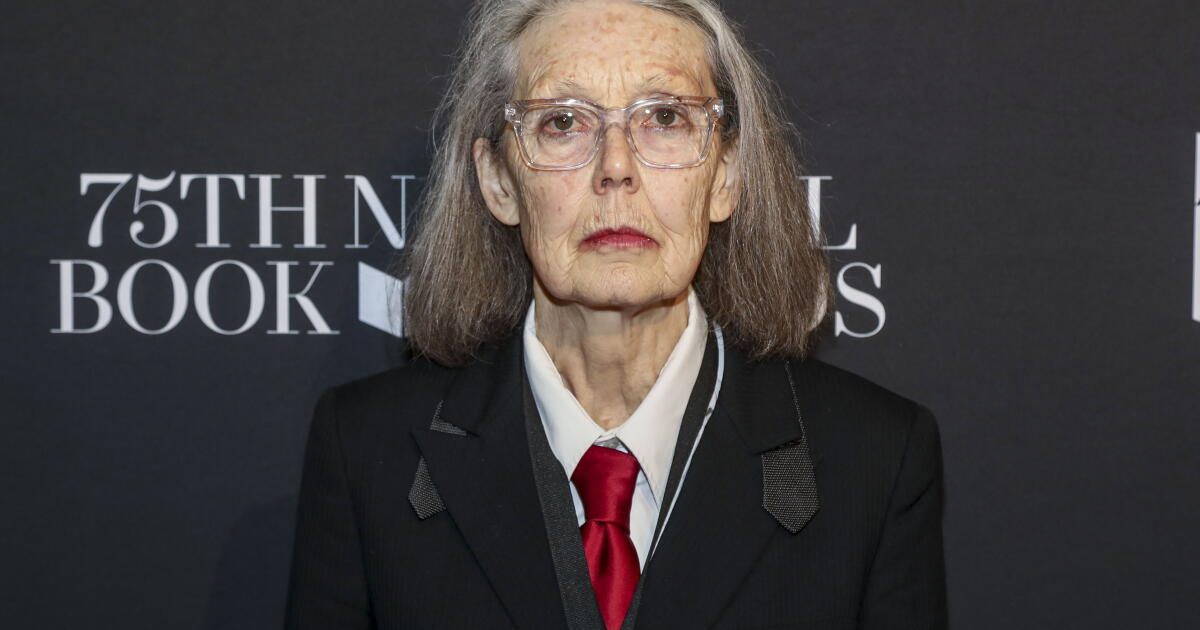
Anne Carson, the Canadian poet, essayist, professor of classics and translator, has won the 2026 Nobel Prize in literature.
The prize, announced at the Swedish Academy in Stockholm on Thursday, awarded Carson “for her bold and inventive oeuvre that, in playful dialogue with the classical tradition, has created new forms for contemporary literature.” Carson is the 19th woman to win.
Among Carson’s myriad acclaimed works are her novel in verse “Autobiography of Red” and its sequel, “Red Doc>”; her seminal book of literary criticism, “Eros the Bittersweet”; poetry collections such as “Glass, Irony, and God” — which contains “The Glass Essay” — and the T.S. Eliot Prize-winning collection of narrative poetry “The Beauty of the Husband: A Fictional Essay in 29 Tangos”; her haunting accordion-fold elegy, “Nox”; and her widely praised translation of Sappho’s surviving fragments, “If Not, Winter.”
“In 1981, she published her doctoral thesis in classics, and has throughout her entire career, combined poetry writing with translation work and teaching at various universities,” said Anders Olsson, who serves as the chair of the Nobel Committee for Literature at the Swedish Academy, and presented the laureate. “Almost all her literary production has centered upon the intersection between the philologist’s obsession with words and the poet’s desire for new meaning.
“Throughout her entire authorship, Carson, with a light touch, explores the possibilities of writing, a process by which the literary sketch has become of particular value for her. In her collaborations with visual artists and choreographers, and with opera and theater directors, she has crossed over into various artistic fields, which has lent her writing a strongly performative aspect,” Olsson continued. “This demonstrates the freedom with which she relates to literary expectations and rule systems, which in turn lies behind the outstanding importance her work since the 1990s has had for the international art and literature scene.”
Nobel committee member Steve Sem-Sandberg said Carson is “an author for our time,” unique in her skill at connecting contemporary ways of living through antiquity. Sem-Sandberg marveled at Carson’s use of the myths, characters, stories and fables from that time, and the way she puts them into a modern context. “The mixture between those two gives an enormous energy to her writing,” he said. “Nobody writes like her, and nobody would even, I think, dare to do this in this way.”
Carson was sipping tea and eating crackers at her seaside home in Iceland — she also resides in Ann Arbor, Mich., where she teaches — after she got the big news. She said she was thinking of ways to give the 12 million Swedish kronor ($1.2 million) award away. “We have a friend who needs a house, and we always give a lot to Doctors Without Borders,” she said. She also planned to celebrate by taking a walk through the woods and turning off the phone.
Carson’s initial reaction was surprise. “Who would expect it? For heaven’s sake!”
Josh Hartnett and Charlie Heaton know how to brood.
The actors both found fame in their early 20s playing characters prone to pining and sulking: Hartnett became a heartthrob in the late ’90s and early 2000s with mellow roles in films including “The Virgin Suicides,” “Pearl Harbor” and “Black Hawk Down.” Heaton, meanwhile, spent most of the last decade embodying the introverted Jonathan Byers on “Stranger Things.”
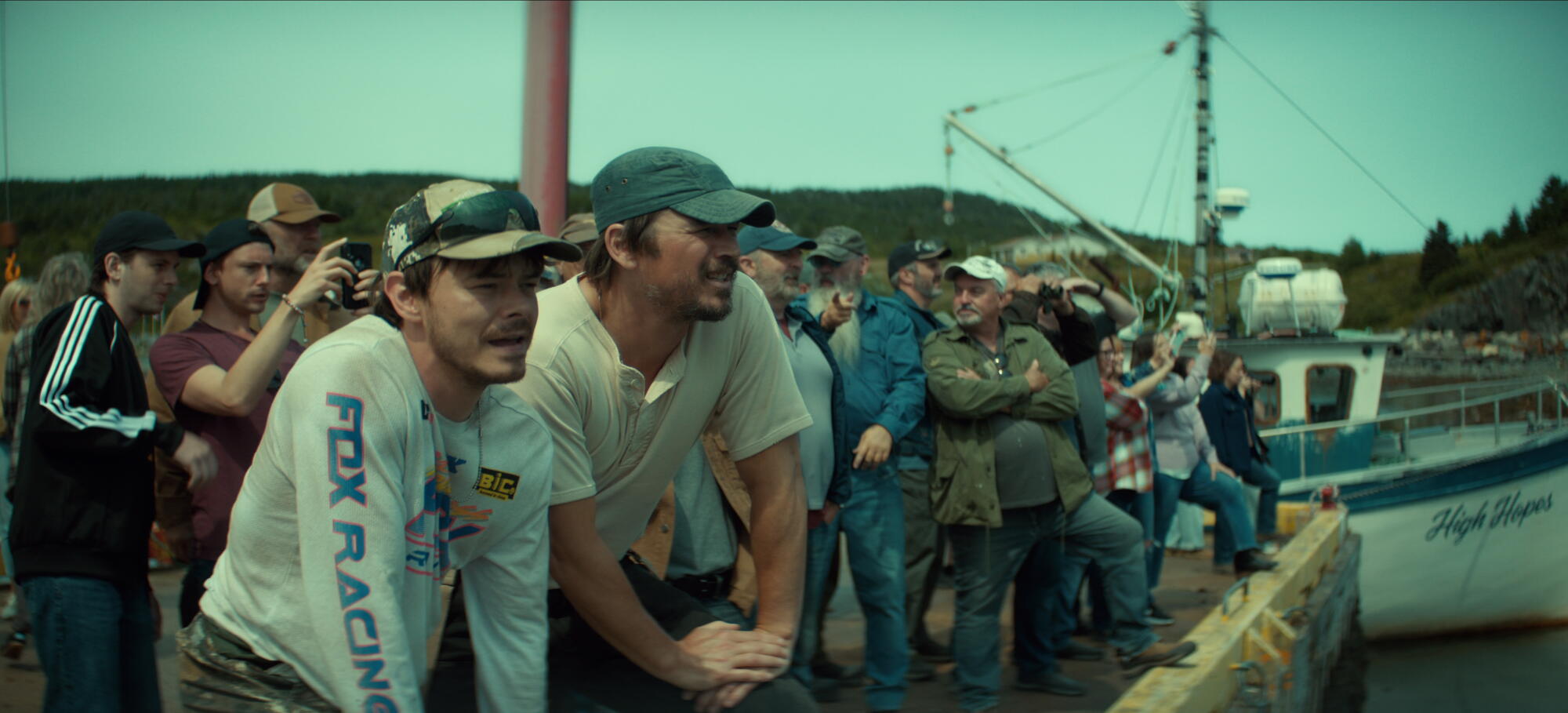
But now, the duo are wearing their hearts on their sleeves in “Below,” a six-episode Netflix miniseries now streaming, in which they play a father and son living in a misty Newfoundland fishing village that is increasingly terrorized by something mysterious in the iceberg-filled waters.
As Calvin and Wade Penney in “Below,” the actors are passionate and emotional. They get into animated family arguments and gleefully celebrate when things (occasionally) go their way.
“It’s all on the page,” Hartnett said. “All I had to do was show up and feel those things toward Charlie.”
Filmed on location in Newfoundland, Canada, “Below” is the latest unexpected project for Hartnett, 48, who has been cultivating a career renaissance in recent years with roles in “Black Mirror,” “Oppenheimer,” “Trap” and this month’s “Verity.”
Charlie Heaton as Wade, left, and Josh Hartnett as Calvin in Netflix’s “Below.”
(Netflix)
Heaton, 32, has likewise been diversifying his post- “Stranger Things” portfolio. He played an ill-fated financial journalist in the fourth season of “Industry” and will next star in a “Peaky Blinders” sequel series.
“I like trying to surprise people, and maybe surprise myself too,” Heaton said.
When they convened for a joint video interview in late September, Heaton had recently returned to his London home from a music video shoot. Hartnett had just finished putting his four children (with wife, the actor Tamsin Egerton) to bed at their countryside home in Hampshire, England. These are edited excerpts from the conversation.
What attracted you both to this project?
Hartnett: I was in “Black Mirror” a couple of years ago, and Jessica Rhoades, who produced “Black Mirror,” sent me the [“Below”] script probably about two months before production was supposed to start. I loved the script but I had some questions, so I had to speak to [creator] Jesse [McKeown] and a couple of the other EPs, just to get the lay of the land. After that conversation, I was like, this sounds really fresh and nuanced and organic.
Heaton: It seemed to have so much warmth and mystery. I do remember having a conversation with my agent because, obviously, I’d come off “Stranger Things,” and there was a little concern of, “Is it too similar?” But Wade is such a fun character. I’m from a working-class fishing town [Bridlington, England]. He’s also working class. Everyone knows somebody like Wade.
Hartnett: Willow Kean, who plays my sister, his aunt, saw Charlie on set when he first arrived. He was in his outfit and smoking a cigarette, and she was like, “I think somebody’s on set who shouldn’t be” — because he looked like a local. He fully embodied the mood of this character immediately.
How did the two of you meet? Had you crossed paths in the industry before?
Hartnett: We hadn’t. We met on Zoom. We did a bunch of stuff with the full cast, and it was more to learn the accent than anything else. Once we started to get into the accent work together, just shooting the s— online, it was great.
Heaton: We wanted the family to all sound like they were from the same place. But the accent is so hard to hear in the beginning. So, we were all getting it wrong together.
Heaton and Hartnett hadn’t crossed paths before being cast in “Below,” but they created a rapport by trying to learn the show’s Newfoundland accent together.
(Jason Armond / Los Angeles Times)
What was the biggest obstacle with the Newfoundland accent?
Heaton: I’ve done a fair amount of accents, but it’s hard to understand the rules of this one. It’s like, well, that word’s Irish, that word’s kind of American. It took me a while to be able to hear it. We had Ali [Alison Kelly], who was our voice coach, and a lot of the extras that we had on set also were local artists, so you could really lean on them.
Hartnett: Everybody was so welcoming. The most difficult part for me was hearing the rhythm of it. So, I listened to this thing called “The Broadcast,” which used to be called “The Fisheries Broadcast.” It’s a radio show that’s been on since 1951. Every day they’re talking to someone about something that’s happening on the island, so you’re getting all these different versions of the accent, but you’re also getting an overall perspective of how people speak in Newfoundland. It was really revealing.
How familiar were you with Newfoundland before doing “Below”?
Hartnett: I knew very little. I knew the “Come From Away” story about all the people stranded in Gander after 9/11. I knew that it was where Leif Erikson landed a long time ago. I knew that it was the closest place in North America to Europe, so when people would do transatlantic flights up until relatively recently, they would stop in Newfoundland. I knew there were puffins.
Heaton: I’m going to be very honest. I hadn’t even ever heard of it. But I learned a lot. We were there for a long time, and Newfoundlanders are extremely proud of their history and their culture, and they love talking.
What was it like shooting on location and out in nature?
Heaton: It was powerful and beautiful. Where we shot, Snook’s Arm, was this bay called Brigus South. You’d come down in the morning, and just that sheer amount of nature every day I found really moving.
Hartnett: One of the first days we were there, they took me out on a whale-watching tour. I was like, “Oh, cool. That sounds touristy but fun.” It was a spiritual experience. I’ve never been anywhere where I felt so small and insignificant next to another animal. These humpback whales, they’re right underneath these tiny little boats, and if they wanted to, they could just flick their tail, and you’d be off in the sea. I had never experienced nature in the sea the way that I experienced it there.
You play father and son, but you’re not that far apart in age.
Hartnett: Fifteen-and-a-half years! I did the math.
Heaton and Hartnett play father and son in “Below,” but in reality they’re just shy of 16 years apart.(Netflix)
How did you develop your onscreen dynamic?
Hartnett: Charlie was so in character as Wade, it was very easy to feel a real sense of protectiveness and an incredible amount of love.
Heaton: What I really admired about working with Josh [is] he is such a leader. You really care, and you’re so generous with everyone, and I got to see your family, and I got to see how you are as a dad. So, those projections weren’t that difficult to come up with in my head, honestly. It’s cool that I get to be your son.
Hartnett: So sweet, man. Thank you.
Charlie, do you remember any of Josh’s past work that stood out to you?
Hartnett: [Pretends to cover his camera] I’m just going to turn this off.
Heaton: One of my favorite films for a while was “Lucky Number Slevin.” When I was younger, I used to watch that quite a lot. I might rewatch that, Josh. It’s been a while.
Hartnett: Well, tell me if it holds up.
Josh, were you familiar with Charlie’s work?
Hartnett: I was a big fan of “Stranger Things,” and I saw “Industry.” Then, when he came on the first Zoom as Wade and was so already intact as a character, I was like, “He’s a star, man. This guy’s a star.”
Charlie Heaton as Jonathan Byers in “Stranger Things.” Hartnett says he was a fan of his work.
(Netflix)
You both found fame in your early 20s, but at very different points in the industry. What are your memories of first realizing, “Oh, people know who I am offscreen and something has shifted?”
Heaton: I remember the exact moment. I was shooting a movie in a small town in Asturias in the north of Spain. “Stranger Things” had been out for only a couple of days. I was in this little town, and a family came up to me that could barely speak English, but they recognized me. Then, I walked down the street a little further and another kid came running up to me.
The show blew up overnight, and before you knew it, you’re going to the Emmys and the BAFTAs with all these people who you have admired. I think we all felt impostor syndrome. Like, what am I doing on a carpet where Bryan Cranston and Helen Mirren are? If I think back to it now, it’s very overwhelming. I don’t really know if I processed how that changed so fast and how you are expected to know how to deal with it.
Hartnett: It was a long time ago for me. There was no social media, obviously, but we did have a pretty intense paparazzi problem. So, the initial success of films like “The Faculty,” “Halloween: H20” and “The Virgin Suicides” was a nice level of, like, people knew who I was and I was able to get more work, but there wasn’t a crush of paparazzi waiting outside the hotel.
When “Pearl Harbor” came out, that changed. I was in Morocco shooting “Black Hawk Down,” and I had to come back to do press for “Pearl Harbor.” Suddenly, that’s when I couldn’t go anywhere. That was an odd thing to encounter because I was 22, and I was not ready for it. Right after I finished “Black Hawk Down,” I decided to get back to Minnesota, where I grew up … There’s no paparazzi in Minnesota. That’s where I stayed for about two years.
Heaton: Those seismic changes are such a strange thing to go through. I always felt like, I haven’t changed but everyone else around me has changed — and that’s a weird thing to get used to. But there are great opportunities and great things that come out of it.
Hartnett: One hundred percent. My life is so much better now than it probably would have been had all that not happened.
Josh, you’ve said that you felt celebrity culture was “vacuous” and that you didn’t want to do things like “Cribs” or “Punk’d.” Did you feel like you were being pushed to fit a certain mold as a teen heartthrob?
Hartnett: That stuff wasn’t for me. Being a young celebrity, you’re always going to be pushed toward the cusp of insanity, the stuff that people are going to look back on and cringe not too far into the future. I was lucky enough to avoid that side of it.
In our business, it’s about surviving your 20s to get to the place where you have the respect of the people on set that you’re working with, and they allow you the leeway to create characters the way that you want to create them.
Charlie, how are you approaching your post-“Stranger Things” career?
Heaton: After wrapping the final season, I wanted to do “Industry,” which felt extremely different to me. I got to use my own accent. It’s a much more adult show than I’ve ever been in. And playing a man was important. I’d been playing a perpetually 21-year-old for like 10 years. I keep getting older. [Jonathan] stays the same. He gets further away from me. But I just want to do things that hopefully allow me to show range.
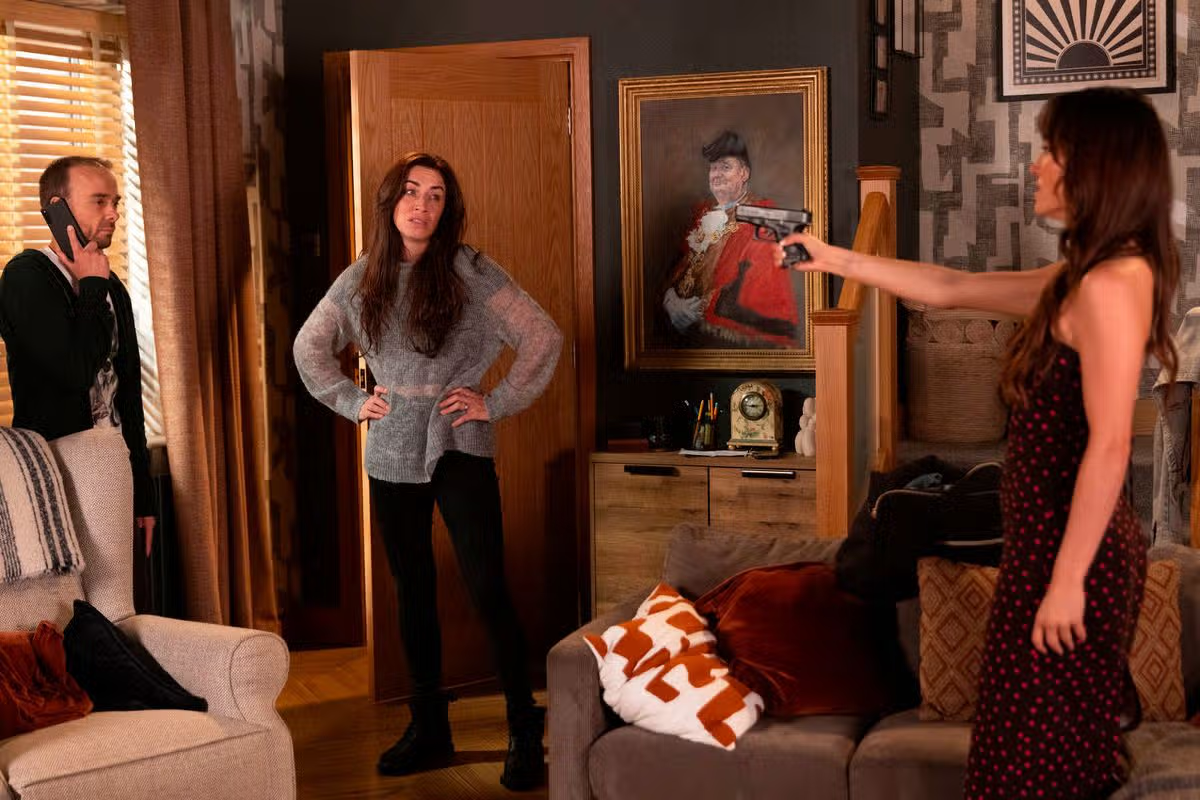
Coronation Street has released a first look at the moment villain Jodie Ramsey brandishes a gun in a deadly showdown with Shona and David Platt, moments before the gun goes off
21:01, 07 Oct 2026Updated 21:01, 07 Oct 2026
Jodie Ramsey points a gun at Coronation Street favourites David and Shona Platt in tense scenes(Image: ITV)
Jodie Ramsey points a gun at Coronation Street favourites David and Shona Platt in tense scenes on Thursday.
It seems a scuffle, with confusion over whether the gun is real or not, leads to it firing. But will death loom for Jodie, David or Shona, and will Jodie be stopped?
Fans have seen Jodie targeting her sister, and others, for weeks. On Thursday her plan to steal David all for herself comes into play, as she tries to seduce him.
Shona finally clocks that her villainous sister is out to get her, and plotting to steal her life. Confronting Jodie over her obsession with her family, the pair have it out, and secrets are exposed.
As David and Shona watch in horror, Jodie raises the gun at them. As David and Shona remain convinced it’s the fake gun they found recently, they challenge her unaware it’s real.
As the situation spirals the gun is fired, shooting someone. As the person collapses, the others are left reeling in horror – but who is shot, and will they die?
Will Jodie be successful in her seduction of David too, and could it lead to a sad split for him and Shona? All will be revealed during Friday’s dramatic episode of the ITV soap.
The fallout is being kept under wraps, while cryptic spoilers confirm someone could be safe. They state that David calls for an ambulance, so does this mean he isn’t hit?
Either way, paramedics soon arrive to tend to the victim, but their fate is not revealed. What is known is that in the days following, the police will investigate what has happened at the Platts house.
Soon it emerges not everyone is telling the truth about what went on, as statements are questioned. As detective Lisa Swain leads the investigation, she soon questions the given version of events.
Speaking to the Mirror recently, Shona actress Julia Goulding said Jodie would get a whole lot worse. She told us: “It’s only go to get more dramatic – how far will Jodie go? I think it’s going to wow everybody. It’s never plain sailing.”
Julia added of the plot: “I think she’s a really intricate complex character. Something has happened to make her like that; she’s not a baddie. She’s got many layers. It’s going to be interesting for the audience to peel those back. I love having Olivia with us; it’s nice exploring Shona’s background as well.”
When Zoe Kazan learned she was going to adapt “East of Eden,” she knew it meant she’d be destroying a copy of John Steinbeck’s 1952 novel with scribbled notes in different colors, highlights and earmarked edges. So she ordered a used one from Powell’s Books — it has somebody else’s last name written on it, she points out.
“It’s a treasure to me,” she said during a recent video call from London.
Steinbeck’s Cain and Abel-inspired novel follows two families across decades as a way to explore good and evil, legacy, free will and what makes a person. Driving many of the biblical parallels are two sets of siblings — half-brothers, Charles and Adam Trask, and later, Adam’s fraternal twin sons Cal and Aron — each competing for their father’s attention and love. Disrupting their lives is an enigmatic woman named Cathy Ames, who Adam marries and who gives birth to Cal and Aron.
The book-to-screen adaptation has been Kazan’s passion project. And for a tale of familial legacy, she had her own to confront — in 1955, her grandfather Elia Kazan directed a film version that starred James Dean and covered the last third of the book, which focused on Cal and Aron. Zoe Kazan’s interest in the story took shape decades later when, as a teenager, she discovered the book.
She found herself drawn to Cathy, its famous antagonist.
“I felt repelled by her, attracted by her, curious about her. I felt empathy. I felt hared. I felt love. I felt all these things,” Kazan said. “I had never read anybody like her. I just remember, every few pages, wanting to stop and read aloud to someone the things that she was doing or [the things] that someone was saying about her.”
She also felt the pull of the story’s examination of intergenerational cycles and familial legacy.
“It feels a little bit like a chicken-and-egg situation. Which came first: Was I drawn to this book because of its intergenerational aspects or did this book teach me to think about intergenerational aspects?”
Now streaming on Netflix, the seven-part adaptation Kazan shepherded — alongside co-showrunner Jeb Stuart — covers more ground of the multigenerational saga than her grandfather’s film. This new version also centers Cathy.
This story contains spoilers for Episode 8 of HBO Max’s “Lanterns.”
From the very first time Tom King and DC Studios’ James Gunn ever talked about a Green Lantern show, they envisioned John Stewart as the kind of hero who could generate excitement and change the tide of any battle upon his arrival.
“The idea was to build a character as compelling and impactful as, say, Thor in the Marvel universe,” says King, the “Lanterns” co-creator, during a recent video call. “Someone who arrives in a movie with a thunderclap, and … the audience [just] screams when they arrive because you’re in love with that character … not just [for] the power set they have, but the integrity of that character.”
That hero officially takes flight in Sunday’s “Lanterns” finale.
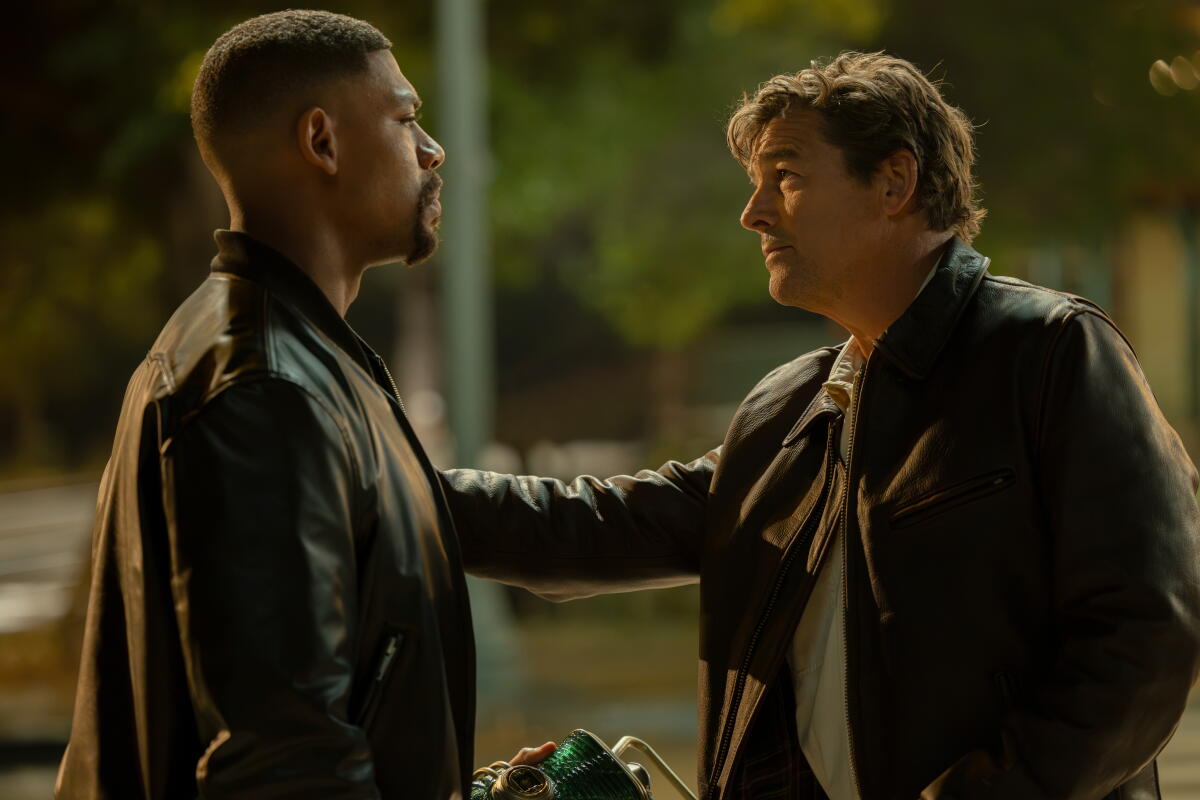
Episode 8 of the HBO Max superhero crime drama, titled “Dirt and Stars,” sees John Stewart (Aaron Pierre) take up the mantle as Earth’s newest Green Lantern. After solving the mystery of his predecessor Hal Jordan’s (Kyle Chandler) death, Stewart claims Jordan’s power ring as his own, recites his oath and jets off toward his next adventure. (A second season of “Lanterns” has not been announced, but the character will appear in Gunn’s upcoming “Superman” sequel, “Man of Tomorrow.”)
Co-created by King, Damon Lindelof and Chris Mundy, “Lanterns” introduces Jordan as a grizzled, veteran member of the Green Lantern Corps, intergalactic space cops who are armed with a special ring that allows them to manifest objects and manipulate energy.
In the finale, John Stewart, left, claims Hal Jordan’s (Kyle Chandler) ring as his own.
(John Johnson / HBO Max)
Stewart is a new Green Lantern recruit, but when an investigation into the whereabouts of a killer alien robot on the run goes awry, they go their separate ways.
“One of the cool things about the canonical Green Lanterns is that, technically speaking, there’s only one ring delegated to this particular sector in which Earth fell,” says Lindelof of one of the show’s central conflicts.
The creative team knew from the jump that Stewart would be the one to bear that ring at the end of the season, but the idea that Stewart would be a child prodigy whose parents preordained his path to become the next Green Lantern developed over time.
“We [decided] the first part of John’s life is going to be [about] coming to terms with the fact that he doesn’t really want the ring — or he doesn’t want the ring on those terms,” Lindelof says. “Then there would have to be some period of time where he was living his dream. … Then and only then would he be able to wipe the slate clean, as it were, and gravitate back toward a healthy way to want the ring.”
In the comics, Green Lanterns are known for their oaths, which they recite when recharging their rings or to reaffirm their commitment to the group. In “Lanterns,” Stewart creates his own version that acknowledges his journey and perspective on becoming a Green Lantern.
“We talked a lot about it in the room, but the feeling was that he was changing the relationship with the Guardians in that moment,” Mundy says, referring to the immortal aliens that created the Green Lantern Corps.
In the end, Hal, left, is able to impart lessons that nobody else would have been able to teach John.
(John Johnson / HBO Max)
The Guardians had once considered Stewart an ideal replacement for Jordan because he was willing to blindly follow orders, but by the time he claimed Jordan’s ring, it’s clear Stewart has no plans to be affiliated with the Guardians or the Green Lantern Corps in that way, and the writers wanted his oath to reflect that.
“We wanted John to take [the role] on his terms,” Mundy says. “Even though Hal didn’t train him as well as he should have trained him, he taught him lessons that nobody else would have taught him. … [Including] how you need to be your own person even as you’re working for this organization.”
Besides his unconventional path to becoming a Green Lantern, Stewart is in possession of a unique lantern for recharging his ring that was forged by Sinestro, Jordan’s disgraced mentor.
The “Lanterns” showrunner remained coy when asked whether this lantern’s more ominous origins could lead to any unintended consequences for Stewart.
“It’s rife with possibility, is what I will say,” Mundy says.
In separate interviews, Mundy, Lindelof and King discussed the “Lanterns” finale, Stewart and Jordan’s bittersweet reconciliation and the show’s fiercely protective mothers. Their comments have been edited for clarity and length.
Because the “real” Hal is killed in 2026, his relationship with John is left unresolved. John shares a moment with the Halogram, the backup version of 2006 Hal’s consciousness, after working with him and the mystery is solved, but can you address that lack of proper closure for them?
Mundy: We talked about this thing as a love story between these guys in a certain way, but one of them has to die in order for them to truly come together. Even over the course of the Halogram being in the show, he never called John “Junior” ever. He always called him “trainee.” Until the last moment when he says … “I love you, too, Junior.” There’s something very bittersweet about the fact that the two people we spent all that time with don’t fully have their moment together.
King: What I think is hinted at between the Halogram and the final Hal we get is this Sinestro subplot. This is right from the comics, but Hal’s best friend, his mentor, the person who trained him, betrayed everything he trusted and Hal had to put him away. I think the trauma of that moment closed Hal up. It damaged him … so he was unable to see John for what he is and unable to listen to John the way he should. [With the Halogram] John finally encounters a Hal who hasn’t gone through that and they can have conversations they couldn’t have before. John can start to feel the empathy that Hal denied him, and he can see Hal for who Hal really is.
Lindelof: I love the idea that that version of Hal and John are unresolved. There is no apology. There is no forgiveness. The only closure that John can get is from this earlier version of Hal who has a lot of sympathy and empathy, not just for John, but for himself. Obviously, this is a crazy sci-fi superhero show, but that feels more authentic to life. Sort of like when someone that you love is gone, and you find a note that they wrote or an old birthday card and you extrapolate new meaning from it even though it’s from an earlier version of them.
Viewers get some backstory on the romance between Kerry Kane (Kelly Macdonald) and Hal.
(John Johnson / HBO Max)
Why was it important to show more of 2026 Hal Jordan’s life before his death in the finale?
Lindelof: The only flavoring that we get of him directly [before this] is in the diner scene, when John comes for his apology and doesn’t get one. Only toward the very end of that scene after John has hit Hal, and Hal says, “Don’t let anybody know that you were here,” is there a flash that something has changed in this guy. It’s one thing for Kerry to tell us that they were in love, or to hear Hal’s “buttercup” voicemail, but I think that the audience needed to see it and experience it. Hal is not a changed man in 2026, but he’s an evolved man. And there’s real tragedy inherent in all of the decisions that he’s making because we know that all of those decisions basically lead him to be a corpse in the stands at a football game. The subtle differences by which Kyle plays older Hal versus Halogram Hal is really on sharp display in the finale.
With Noah being a Manhunter, it turned out that he and John were dealing with similar questions around lineageand legacy and nature versus nurture. How did the exploration into these themes evolve during the show’s development? Much of it is unpacked in their truck ride together.
King: The basic idea [was] that John had been one of these kids who had been told, “You’re going to be this when you grow up.” Like a Tiger Woods or Michael Jackson-esque child. We started talking about what that’s like — to be a prodigy, to be forced into [something]. The idea that you’re kind of programmed by your parents. And then we were talking about Manhunters. The problem with Manhunters is they’ve been programmed to do this one thing, and they can’t defy their programming [to eradicate mankind]. That’s why they had to eventually be erased. Then we started talking about the parallel of programming and overcoming programming, and what makes you human, what doesn’t, that parallel came first. Those were the very nascent ideas, and we took that to our brilliant writers room, and [Breannah Gibson], Justin [Britt-Gibson] and Vanessa [Baden Kelly] added their own personal experience to that and made it a much richer … and personal story.
Mundy: John still doesn’t know if he’s about to die in this car. Noah is trying to learn about himself and figure out if he wants to kill John or die himself. The important thing was to hold that tension and then kind of step that conversation through chapters. There’s anger about what happened to Zoe. After he understands that a little bit better, he says “these are the different ways my life could go.” And then John can actually bring a piece of himself. We talked all the time about the way John was raised and the programming of the Manhunters and what’s “programming” and what’s “being raised.” Then there’s a confession that ends up being false, but also this request to be killed. There were three distinct sections of that conversation, and we wanted them all to be meaningful and personal.
In the final scenes of the episode, John and Kerry have a conversation about what parents are willing to do for their children.
(John Johnson / HBO Max)
With both Hal and John, so much of their intergenerational trauma is tied to their fathers. But with Noah and John, you also see just how big of a role their mothers have played in shaping them. How did that aspect come about?
Mundy: Once we knew that Noah was a Manhunter, it felt too cheap and too easy for that to be the answer [to the mystery of Hal’s death]. But it felt key to the answer of it, and we were talking so much about parenthood and what you would do for your child and what it means. What’s protecting people and what’s not? It just became a given pretty early on that Kerry would be the answer at the end. It just fit into the same story Bernadette was going through. And [John’s] conversation with Kerry explains so much of that.
Lindelof: I think this all came from Vanessa Baden Kelly. We had written the pilot, where John’s father is shooting the apple off of his head, and then when Vanessa came on shortly thereafter, she’s like, “Where’s mom?” It is one of those moments where you realize it, particularly because we were three men, but also inside of the canon of these superheroes, it’s always a dad. So the idea was having Bernadette really be the mastermind of John’s upbringing as a way to provide a simultaneous salve for her husband’s shame about being afraid about losing out on the opportunity.
I think that Kerry is an equally fierce mother. Obviously, she loves Hal. But when you watch it a second time after you’ve seen the finale, you realize that there’s guilt there as well because of what she did to him, all in the name of her son.
John starts to reframe what Bernadette did as something for him, as opposed to something for her — in a lot of ways, it was a selfless act. She’s doing it knowing that her child will hate her, but that he’ll be the Earth’s Green Lantern, and there’s going to be an aspirational quality to that for generations to follow.
Hollywood is filled with book-to-screen adaptations that have ignited grumbling and spirited debates. Even before its release, Zoe Kazan’s interpretation of John Steinbeck’s sprawling 1952 masterwork, “East of Eden,” roused passionate opinions from loyalists of the text on social media.
Much of the discourse surrounds Kazan’s creative choice in how to portray the book’s infamous antagonist, Cathy Ames, in Netflix’s seven-episode limited series out Thursday.
Steinbeck’s multigenerational saga ruminates on family, the power of choice and the nature of good and evil — deeply exploring the biblical stories of Cain and Abel and the fall of Adam and Eve — through the intertwined destinies of two families, the Trasks and the Hamiltons. Cathy (later known as Kate) functions as a chilling, destructive force in the saga.
Kazan pared down much of the Hamilton family’s story for the show and centered Cathy (Florence Pugh), whose arrival alters the lives of the Trask brothers, Adam (Christopher Abbott) and Charles (Mike Faist). In doing so, Kazan dared to humanize the character who has been considered one of literature’s most definitive symbols of pure evil, described by Steinbeck to be a “psychic monster” born without a conscience or kindness.
“I’m trying to protect my mental health by not being too much online,” Kazan said in a video call from London on a recent weekday. “I do think it is not surprising to me that this character brings up a lot of strong feelings for people … I’m excited to see what people think once they actually see what we have made and aren’t just anticipating something.”
Mike Faist as Charles Trask, Christopher Abbott as Adam Trask and Florence Pugh as Cathy Ames in Netflix’s “East of Eden.”
(Netflix)
When Kazan, an actor who has expanded her creative footprint behind the camera, first pitched the series in 2019 and was asked about which actor she envisioned as Cathy, she replied: “I have one.” She had seen Pugh in “Midsommar,” “Lady Macbeth” and “Little Women,” marveling at how the actor’s ultra femininity lived alongside her masculine energy.
“The range on that girl … I was like, if anybody can do that, they can play Cathy,” Kazan says. “It allowed me to write Cathy as complicated and mysterious [as I wanted] and with so much shadow and light.”
When it came to Adam and Charles, Kazan knew Abbott and Faist could depict the psychological nuance beyond the binaries of the nature versus nurture debate: “I wanted an Adam where you felt what his true nature was and the nature that his father had pushed him into … and I knew we needed that in Charles as well.”
Adapting a classic is hardly a simple endeavor, particularly one that has been done before. That Kazan would choose “East of Eden,” which unpacks legacy and generational shadows is apt: Her grandfather, Elia Kazan, famously directed the 1955 film version starring James Dean. The actors of the Netflix series are eager for viewers to see her vision come to life.
“When you do an adaptation of a book, especially a seminal American novel, no matter what, you’re always going to be up against it because … whenever somebody reads a book, the budget in their heads is unlimited,” Abbott says. “I think this is such a great adaption in its own right.”
Pugh adds: “I’m excited for people to do the stuff that I’m doing now, which is [to say], ‘Oh my God, let’s read this and see how it fits against what I’ve got in my head.’”
Over a video call together, Pugh, Abbott and Faist reflected on their journey to adapting Steinbeck’s epic story, including their first experiences with it and filling in the shades of these characters who remain timeless allegories of the human condition. This conversation, which contains spoilers, has been edited for clarity and length.
Florence Pugh, left, Christopher Abbott and Mike Faist take on some of literature’s most indelible characters — Cathy Ames, Adam Trask and Charles Trask — made famous in John Steinbeck’s classic “East of Eden.” (Photographs by Sophia Spring / For The Times)
When did you first encounter the book?
Faist: My first encounter with the story was the James Dean, Elia Kazan film. That was a movie that I watched, especially when I first moved to New York and wanted to be an actor. It wasn’t until Zoe and Florence asked if I’d be interested in doing this, that I picked up the book.
Pugh: I want to say maybe my early 20s, I read the book. I only watched the movie recently to prepare myself for these kind of conversations. I’m rereading the book now while we’re heading into press, just so I can like fine-tune what I thought I knew … there’s so much love that’s being breathed into every single sentence of every chapter [in this adaptation], and that is solely down to Zoe’s fantastic brain and her ability to want to dig deeper.
Abbott: A lot of my favorite books I’ve picked up and put down numerous times before actually plowing through it — that was the case here until Zoe approached me about doing it. I was like, “Well, this is a perfect excuse to finally [finish].”
This adaptation lit up social media early on for centering Cathy. She is such a polarizing figure. Some see her solely as an evil monster. Some argue there is more nuance to what’s driving her actions. Florence, how do you see her?
Pugh: It’s tricky because I know I’m gonna get asked this again and again, and I guess I’m still trying to figure out how to word it without totally pissing people off. I love finding characters that people automatically think are villains and trying to find a way for you to love them — it’s my favorite thing to do.
I read these episodes, and I was listening to Zoe and how she was wanting this to come from Cathy’s perspective, how Cathy was her hero and how she’s just been championing Cathy ever since she first read the book — that was so f— exciting to know that we’re not gonna just point the finger and say that she’s evil. It is my job to do my skills as good as possible so that I can argue in defense of them. I believe that I can argue for her, which is terrifying but also really cool. I care for her deeply. I understand where she went and why. Does she do some terrible things? Absolutely. Is she a product of the situation that she grew up in? Totally. You can’t get raped as a child and and you be totally fine for the rest of your life.
Florence Pugh as Cathy Ames. She hopes the adaptation prompts curiosity: “I’m excited for people to do the stuff that I’m doing now, which is [to say], ‘Oh my God, let’s read this and see how it fits against what I’ve got in my head.’”
(Netflix)
That detail was not explicitly stated in the book. What were your conversations with Zoe about it?
Pugh: That’s why we ended up choosing the way that we explained it and the way that we showed it — that little girl is so tiny you can’t even imagine anything bad happening to her, and the fact that she’s holding “Alice in Wonderland,” [in her mind], there’s so many through lines through Cathy and Kate’s life that all come back to that moment. You don’t need to do much. Everybody has the sinking feeling of what might happen to a vulnerable child in that situation. In the book, I think it’s constantly playing with the themes of can we trust her? Is she already a monster as a child?
What Zoe has done is made her a real human, and has given her cause and has given her time to understand. That moment that is alluded [to in the book ] — if Cathy asked the boys to tie her down, and whatever it is that they were doing to her — it’s no longer alluded [in the series]. That [assault] happened, but maybe people didn’t believe her.
Mike, what were you interested in excavating with Charles, this Cain archetype who’s tormented by rejection and jealousy?
Faist: What is amazing about this story is — and it’s the entire through line of the entire novel — is this idea of timshel. What happens in a person’s life, and the burdens that they carry, then the choices they make, and every single moment as they continue to live it. Charles jumped out at me. There was just something about him that I was very drawn to — and along with that pull, there’s this feeling of dread, where you say, “Oh God, I can’t believe that I’m about to jump in and do this thing.” You end up surrendering yourself to it. It is scary and deeply exciting.
Abbott: I don’t have a brother. You forget too that they’re half brothers and what that dynamic is like, what kind of Freudian s— pops up. I think the through line for Mike and I, because there’s a lot of conflict there, that it always comes from a place from love. The letters, as they [Charles and Adam] get older, that are written or the letters that he starts to write and doesn’t send, when there is hate between them, it’s because they love each other so much. Otherwise, it would just be indifference. A lot of that happens in the things that are unsaid.
1
2
1.Mike Faist as Charles Trask. (Netflix)2.Christopher Abbott as Adam Trask. He found the sibling relationship intriguing: “I don’t have a brother. You forget too that they’re half brothers and what that dynamic is like, what kind of Freudian s— pops up.”(Kirsty Griffin / Netflix)
When Zoe approached you, Chris, to play Adam, you questioned whether she actually meant for you to be Charles?
Abbott: I’m just used to being typecast, so I thought she made a mistake. Zoe’s mentioned this idea of masculine and feminine energy — what one presents and what one actually holds, and the old switcheroos of that. The very first email, I was like, “Oh, are you sure?” But I was excited to play with all the nuance of and the layers of what this is. I had seen the movie before, and it [covers] only the last 100 or so pages. It’s really gratifying to play a part where you get to see someone’s whole life and how this guy goes from being this wanderer, drifter to this to stoic, depressed, rigid older man.
What moment between these characters were you most eager or nervous to depict?
Faist: The scene that I reflect back on the most, that actively had the biggest impact on me, is the scene between Cathy and Charles, where she comes into his room and the two of them share this intimacy together. We had talked about what we were wanting to do, then on the day, none of it was really working. I remember Florence had this really specific thing she wanted to bring to the scene. And it was really powerful — there’s these very rare moments when you genuinely feel someone’s objective actively working against your own. [Pugh makes a quizzical face.] No, it’s good! It creates this friction and this tension that does exist and does live.
Abbott: That was your favorite, huh?
Faist: I’m sorry, Chris! That one was just such a visceral feeling of, I know what my character wants in this thing, and her character is very much wanting the exact opposite and the literal clash of that that moment and the feeling of that — I’ll never forget that.
Pugh: It’s such an important scene to get right because it literally is the ending moment of those two; it added so much pressure on the day of shooting. It’s actually really hard when you’re trying to do a sex scene that’s consensual, but it’s definitely not at the right time. The coolest thing about it is it wasn’t working and we had to push everyone out. Everyone was whispering and everyone was trying to figure out what they were comfortable with us doing and, eventually, Mike and I were just like: Right. Done.
Florence Pugh, with Christopher Abbott, left, and Mike Faist, says “East of Eden” endures because “every single one of these characters is struggling to survive realistically.”
(Sophia Spring / For The Times)
Chris, you have the daunting task of, in the closing moments of the series, delivering the word that’s the thrust of the whole story —timshel.
Abbott: I think that was the last scene I shot. I can’t say I was being lazy, but the character had a stroke so he was laying there. You just gotta listen [in a moment like that]. Hoon [Lee, who plays Lee] is reading from the Bible. You take in the room. I nailed it in one. [Pugh and Faist laugh.]
People have deep feelings about “East of Eden.” And it seems to have had a real resurgence recently, even outside of curiosity about this adaptation. Why do you think that is?
Abbott: That’s a big, existential [thing to think about]. There’s a ton of themes in the book that are relevant: displacement, family, love. The themes in the book aren’t specific to the time period. All great works are that.
Pugh: It’s also about generational trauma and change in healing. One of the things I recognized immediately when I started rereading the book months ago, the first few pages about the Salinas Valley describe very quickly that this place is about growth, change and moving on. What I’ve taken from our adaption of Cathy and her generational trauma and what she’s doing to her kids is that not everybody is going to get it right. The reason I think why people keep picking it back up is every single one of these characters is struggling to survive realistically, and they are all making decisions that affect and domino-effect other people around them. Us learning about how we could have done better will always be relevant. And especially with America, and what we’re watching in terms of its constant battle against racism and immigration. It’s relevant to life and to our lives.
John Steinbeck’s 1952 novel “East of Eden,” an Oprah’s Book Club Selection in 2003, is a retelling, or actually two retellings, of the Cain and Abel story, first in Connecticut with half-brothers Charles and Adam Trask, and then in the author’s native Salinas Valley with Adam’s fraternal twin sons, Cal and Aron, in each case competing with one another for their father’s love. Not wanting you to miss his meaning, if you haven’t already guessed by the title, Steinbeck has a character read the entire passage from Genesis.
The stories, which together run from the late 19th century through World War I, are connected by a woman named Cathy Ames, whom Adam marries and who gives birth to Cal and Aron — which I suppose makes her the Eve in this household, though that’s not a theological road Steinbeck chose to really explore.
In 1955, Elia Kazan directed a film version, a color-mad Cinemascope melodrama that told only the Cal and Aron part of the story; significantly, it was the film debut of James Dean and so will live forever. Writing in The Times in 2005, Kenneth Turan called it “not only one of Kazan’s richest films and Dean’s first significant role” but “arguably the actor’s best performance.”
Kazan’s granddaughter Zoe Kazan has written the screenplay and worked with Jeb Stuart as co-showrunners for a new “East of Eden” adaptation, a seven-episode miniseries debuting Thursday on Netflix. Though it omits a sizable chunk of what is after all a very long book, it takes its chronology whole, putting Cathy front and center in the publicity and in the show, owing largely to Florence Pugh‘s performance as its most dynamic character.
Kazan begins her telling with a badly beaten woman dragging herself through the night as a female voice delivers an edited, elaborated version of the author’s thoughts on difference. (It is a book brimming with thoughts.) “I believe there are monsters born in this world to human parents … A child may be born perfect of body but without kindness or the potential of conscience. Still, you must not forget, everyone is normal to himself. And to a monster, the norm must seem monstrous.” Given that the novel’s narrator is Steinbeck, it’s hard to say just who the “I” is here, but I assume the gender swap has something to do with wanting to literally give this version a female voice.
The monster is Cathy, crawling to the porch of the farmhouse occupied by Charles (Mike Faist), who thinks they should call the sheriff, and Adam (Christopher Abbott), who is compelled to care for her. Close your eyes if you don’t want to know anything more about this 73-year-old bestseller, but Cathy has already possibly driven a man to suicide and definitely burned down her house with her parents locked inside. She was beaten up by her former pimp, whose mistress she’d become and from whom she was stealing. You may be thinking “sociopath.”
The series backs up 25 years to a Connecticut farm where father Cyrus Trask (Tracy Letts), a peg-legged Civil War veteran, rejects Charles’ gift of a new knife in favor of Adam’s present of a stray puppy, creating a long trail of jealousy. He’ll later pack pacifistic Adam off to the army (because, he says, he loves him better), with Charles unhappily constrained to stay and work the farm (though he proves good at it). After years in service and living in hobo jungles, Adam returns home.
Standout performers include Hoon Lee as Lee, left, and Ciarán Hinds as Samuel Hamilton.
(Kirsty Griffin / Netflix)
Cathy crawls to their doorstep; Charles sees through her, which will earn him her respect, but Adam falls for her, marries her and drags her west to California, where she doesn’t want to go and doesn’t plan to stay. (She’s quite upfront about this, but Adam is a poor listener.) She gives birth to Cal (younger, Bodhi Aisher; older, Joseph Zada), who will grow up to wonder if he’s bad, and Aron (younger, Jonah Wren Phillips; older, Joe Anders), whom everyone thinks is good, and returns to the life of a prostitute, which suits her fine. And that is probably enough plot for me to relate.
Pugh impressively represents Cathy’s outward self through successive stages; she’s not a character born to develop, though she will have various crises to navigate, and the actor imbues her with as much nuance as the part allows. She’s the main reason to watch, though there are standout performances from Hoon Lee as Lee, a philosophical, intellectual, American-born Chinese man who works for Adam and becomes a kind of surrogate mother to Cal and Aron; and from Ciarán Hinds as Samuel Hamilton, a jovial Irishman, virtually the only remnant of the novel’s Hamiltons, who stand in for Steinbeck’s own family. Faist does a lot with the taciturn, perceptive Charles. Martha Plimpton, never not great, plays Faye, a madam for whom Cathy works; and Zoe Phillips makes an impression in her scattered scenes as Abra Bacon, who’ll date Aron but feels connected to Cal.
Kazan and Stuart do cover all the main plot points and themes — good and evil, love and jealousy, inherited character and (the big one) the possibility of change. Unavoidably the text has been chopped and channeled, with some swapping of parts, bits of narration screwed into dialogue and events described in a paragraph blown out into scenes. Certain thoughts inside Cathy’s head have been made concrete.
The adapters don’t add too much material of their own, Steinbeck having provided a wealth of character descriptions, backstory, philosophical rumination and social criticism for every occasion, but here and there they’ll stress a point or provide something new in order to make sense of Cathy. But they don’t overdo it. (Steinbeck, declaring her unknowable, cuts her a lot of slack, walking back his earlier “monster” comments: “Who knows but that she tried to tell someone or everyone what she was like and could not, for lack of a common language. It is easy to say she was bad, but there is little meaning unless we know why.”) Oddly, the Cain and Abel elements in the Cal and Aron story, which launched Dean’s career, don’t really register.
If nothing else, the miniseries reminds us that adaptation is a difficult job that grows harder the more complex and celebrated the original text, and the more necessary it is to honor it. (This is why pulp fiction has produced so many memorable movies.) Things will always be lost in translation, not least from the pictures in your head to the pictures on the screen. If you’re going to film a literary monument, and a period piece to boot, you’re going to have to spend some money.
But the production here betrays its economy, and the direction, by Garth Davis and Laure de Clermont-Tonnerre, remains earthbound, held down by mournful strings and devoid of color. The New Zealand landscape does echo the rolling hills of Central California, in a dry season, but it’s a dreary vision, hardly the paradise of Steinbeck’s memory, book or metaphor.
Summer mornings in the Hill Tracts region of Bangladesh are a respite from the dissonance of honking cars and construction of the capital city of Dhaka. It was a welcome change to hear chickens and the sound of … wait, was that Julie Andrews’ voice echoing over the hills?
I was visiting my home country when I heard a group of schoolchildren playing ektaras, a traditional string instrument, and singing the “Do-Re-Mi” song for their morning assembly.
I used my phone to show them a picture of Andrews. “Do you know her?” They immediately leaped in excitement. They didn’t know the composer Richard Rodgers or lyricist Oscar Hammerstein II. But they knew Andrews — even though 60 years have passed since “The Sound of Music” and these children live in a remote Bangladeshi village. The recognition is evidence of something extraordinary.
Andrews is turning 91 on Thursday, and there are calls online to bubble wrap her, just in case. She is indeed a global treasure, and she has been earning plaudits and admirers for eight decades.
Andrews trained in the Italian bel canto tradition and from a young age sang challenging coloratura arias with precision, clarity and range. The bright, happy tone, perhaps a subconscious decision rather than anatomical alone, provided her respite from the doodlebug bombs that fell during her childhood in England in World War II. British critics had dubbed her as the “youngest prima donna,” a title usually reserved for opera greats, and it wasn’t undeserved. At just 12, she routinely floated high Fs above the treble staff during live performances.
Yet before opera could claim her, Broadway stepped in. From “The Boy Friend” to “My Fair Lady” and then “Camelot,” she won the hearts of theater goers and creators alike. Lyricist Alan Lerner described her as “an amazingly quick study in music … who meets any challenge with an unabated eyelid that makes you wonder how Britain ever lost the empire.”
Her voice then was so precise that the late maestro André Previn, who led the London Symphony Orchestra, proclaimed: “No one’s diction in any field of singing can come close. … You understand every syllable from the second balcony — I don’t understand how you do that.”
It’s inaccurate to romanticize her legacy in 2026 as simply nostalgic. That would overlook the depth and progressive nature of her characters. She was essentially the first female superhero on the big screen, as Mary Poppins — who could fly and create alternate realities with the snap of her heels, but whose more stunning superpower at the height of the Cold War was to charmingly portray capitalism as dangerous.
In “Victor/Victoria,” she navigated a gender-bending performance that challenged societal norms, playing a woman who impersonates a man impersonating a woman when it was taboo to speak about any layer of that. Her most overlooked and perhaps her best dramatic role was in “Duet for One,” a 1986 film about a musician who suffers from multiple sclerosis. Tragically this became a moment of life imitating art, foreshadowing her own destiny to lose her instrument after throat surgery in 1997.
Rather than retreat, Andrews adjusted and leaned into voice acting with characters like the dominant Queen Lillian in “Shrek” films, Gru’s hilariously villainous mother in “Despicable Me” and the mysterious Lady Whistledown in “Bridgerton,” for which she won an Emmy, twice.
In real life, the flying super governess fought to adopt two babies from Vietnam just after the fall of Saigon, helping to raise awareness of the need for adoptive parents. She then co-founded the Operation USA disaster relief charity and opened the Japanese wing for the United Nations Development Fund for Women.
Whether it was to support UNICEF after the devastating Bhola cyclone hit present-day Bangladesh in 1970 or jetting to Jordan and Senegal to support women’s and children’s activities, she was a quiet champion for the underserved. In her most famous role, in “The Sound of Music,” she was a savior for children being displaced by war.
Andrews is mostly out of the public eye, but her singing is eternal and accessible. YouTube is home to a trove of Andrews performances, including “This Is My Beloved” from “Kismet,” full-voiced “When You Wish Upon a Star,” from pianissimos to fortes, high B-flats and all — her classical skill shines through. These recordings remind us that beyond just the formulaic legato phrasing that singers from the Italian tradition follow, and the clear resonance, her work it set a gold standard for musical storytelling that few have surpassed since.
Julie Andrews is no longer trilling on the Alps, nor is she reprising her role as queen of Genovia in a “Princess Diaries” film, but her voice, and what it represented for more than 80 years, endures. It lives on not just in films and recordings but also ringing in the minds of children and adults alike, from her hometown of Walton-on-Thames to the Hill Tracts of Bangladesh. In an age of doom scrolling (and alarmingly low singing standards), her vast career offers a rare resonance and a continuing masterclass.
Shams-il Arefin Islam, a Yale-Berkeley College associate fellow who works on climate mitigation and adaptation, is a classically trained tenor.
Kyle MacLachlan is living up to his reputation as the Internet’s Dad.
It’s an especially warm day in August, and the bespectacled actor, best known for his many projects with the late auteur David Lynch, is approaching with a coffee (black, naturally) in one hand and a massive cookie in the other. The snack, it turns out, is meant for us to share.
On the Shelf
Fictional Selves: A Memoir
By Kyle Maclachlan Crown: 320 pages, $34
If you buy books linked on our site, The Times may earn a commission from Bookshop.org, whose fees support independent bookstores.
“Whatever it is, it’s very healthy,” he says when I ask what sort of confection he chose. “It’s cranberry, oatmeal and gluten-free. Who knows if there’s any sugar in there?”
At 67, MacLachlan isn’t necessarily a health nut. But he is highly amenable and willing to roll with my vegan cafe selection, which is conveniently located near our photo shoot location. “I come from Eastern Washington state — it’s a desert,” he says assuringly when I offer to move us to an indoor seat with air conditioning. Later, as we prepare to leave for the shoot, he clocks my car, a rare station wagon, and dubs it “spec-TAC-u-lar.”
That’s MacLachlan for you — all it takes is one word (he also drops an “Aces!” during our meeting) or enthusiastic gesture (very likely a swooping thumbs up) to channel the type of eccentric and upbeat characters he’s spent the last 40 years playing. Now, with the release of his thoughtful new memoir, “Fictional Selves,” MacLachlan gives us a much closer look at the man behind the chin-jutting grin, and, in doing so, introduces us to his doppelganger, “Other Kyle,” an image-conscious shadow figure constantly trailing behind, questioning his choices.
“There’s definitely another entity, an observer, the ego, the harder self,” MacLachlan says of how he would describe Other Kyle, whom ghostwriter Jon Sternfeld first identified after noticing the way MacLachlan tended to fall into conversation with himself while recounting his life. “[He’s] the kind of person that I’m not comfortable leading within the world. But he’s definitely in there commenting on the things that I do.”
Other Kyle first began to taunt MacLachlan after he saw himself on a gargantuan billboard for “Dune” in Times Square. (In his early 20s, MacLachlan was famously plucked from obscurity to lead David Lynch’s 1984 adaptation of Frank Herbert’s sci-fi epic.)
Well before his alter ego materialized, and well before Hollywood found him, MacLachlan was prone to anxiety and fears of never fitting in. Born in Yakima, Wash., MacLachlan grew up the oldest of three boys; his parents were solidly middle-class, with his father working as a lawyer, and then stockbroker. His mother was a homemaker known in the community for her civic involvement, particularly in local arts programs. In fact, it was MacLachlan’s mother who first encouraged him to try a “Teen Theater” program, drawing him in with the promise that there might also be girls in attendance.
But it took a minute for MacLachlan to genuinely embrace his calling. As a young adult, his father pushed him to study business, while his mother urged him to try PR or communications. His studies at the University of Washington weren’t going well, so he dropped out and worked at a manufacturing plant back in Yakima. It wasn’t until a girlfriend recommended a summer theater program in North Carolina that MacLachlan leaned back into his first real passion, eventually returned to school with a newfound focus, and was accepted into the University of Washington’s professional acting program.
Kyle MacLachlan at the glass and mirror shop LA Mirror Man on La Cienega Boulevard.
(Christopher Patey / For The Times)
Fast-forward 40 years, it’s impossible to imagine that MacLachlan would have anything else for Other Kyle to latch onto. For one, his acting resume is the stuff of thespian fantasy. Sure, “Dune” infamously flopped hard upon arrival, and all planned sequels were immediately canceled. But it wasn’t long before MacLachlan had teamed back up with his mentor, with whom he had developed an almost telepathic bond on “Dune,” to lead Lynch’s much more kindly received 1986 neo-noir arthouse entry, “Blue Velvet.” A few years later, the overwhelming success of the TV mystery series “Twin Peaks” propelled the actor to the upper stratosphere of celebrity.
“When we were working together creating Jeffrey in ‘Blue Velvet’ or [Coop in] ‘Twin Peaks,’ we would sit and talk or not talk, we melded together in some weird way, we were like one person,” MacLachlan says of his bond with Lynch, who died in early 2025 of cardiac arrest due to chronic obstructive pulmonary disease. “It was this very symbiotic kind of thing in front of the camera,” MacLachlan continues. “It was like this weird circular energy. … He’s the only director I share that with.”
And yet, breaking out of what MacLachlan refers to as “The Black Suit,” worn by his unceasingly chipper “Twin Peaks” character, Special Agent Dale Cooper, proved challenging. By the time “Twin Peaks” left the air in 1991, MacLachlan had grown ambivalent about the job that changed his life, partially because he felt Lynch didn’t fight hard enough to keep artistic control of the show’s second season, which saw the network upping its creative involvement and Lynch distancing himself until the final few episodes.
MacLachlan longed to diversify his output — to show that he was capable of being a mainstream Hollywood leading man, one who could interface with a variety of directors. In the book, he writes about jobs he comes so close to booking — roles in Robert Redford’s “A River Runs Through It” and Francis Ford Coppola’s “Dracula” — but losing out at the last minute.
Kyle MacLachlan explores his alter ego “Other Kyle” in his new memoir.
(Christopher Patey / For The Times)
He took these rejections hard at the time. Many decades later, however, he can see how he was the one holding himself back. “I felt like people were only seeing the black suit,” MacLachlan says. “Now, the truth is, they would probably have been more than happy to see me as somebody else, but I was not able to deliver. … I think there was a lot of insecurity,” he continues. “I was like, ‘Maybe it’s not the suit. Maybe it’s me.’”
As the 1990s played out, MacLachlan fought an on-again, off-again existential crisis regarding the type of actor he was really meant to be. His friend and former “Doors” co-star Val Kilmer urged him to accept a lead role in a BBC adaptation of Kafka’s “The Trial,” which didn’t move the cultural needle in the States, but did put him in the same room as enormously pedigreed actors like Anthony Hopkins and Alfred Molina. He snagged a role in a Paul Verhoeven film about topless dancers — a career risk he hoped would pay off but ultimately felt like “walking into a buzz saw,” as he writes in the book.
Despite the cult reappraisal of “Showgirls,” and the lasting popularity of “Sex and the City,” Other Kyle had a few things to say about both of these roles, but the Kyle sitting across from me has a much more measured approach, particularly to “Showgirls.”
“I think it’s fun that it’s still around,” MacLachlan says. “I’ll still argue with anyone that [says] it’s a good movie. It’s not a good movie, but it’s definitely an appreciated movie, and that is kind of where I leave it.”
In the early 2000s, his wife, Full Picture founder and chief executive Desiree Gruber, pushed him to accept a role in HBO’s “Sex and the City,” playing an Upper East Side doctor with erectile issues.
Portraying Trey MacDougal was a mixed bag for MacLachlan. On one hand, he was thrilled to be part of such a cultural juggernaut, and he delighted in the emphasis the show placed on female friendship and sexual agency.
“I want to keep being challenged,” says Kyle MacLachlan, looking ahead to the next chapter of his 40-year career.
(Christopher Patey / For The Times)
At the same time, he had mixed feelings about playing an old-money mama’s boy with a Freudian Madonna-whore complex. Not to mention the sheer ridiculousness of the things the writers would have him do: One scene had him bent over a bathroom sink, masturbating to a pornographic magazine. A passage of “Fictional Selves” also recalls the cringe-inducing moment when Trey gives his wife, Charlotte (Kristin Davis), a cardboard cutout of a baby in an effort to make light of their struggle to conceive.
In the book, MacLachlan recalls being utterly dumbfounded at having been asked to do something so oblivious at best and cruel at worst. Eventually, however, he writes that he realized the writers just needed a way to foist him off the show. (His and Davis’ characters get divorced soon after the cardboard baby incident.)
“Every time I got a script, I’d be like, ‘Oh boy, OK, what’s going to happen here?’” MacLachlan says. “And then it would be, like, whatever they’ve come up with, ‘how can I shape it? What is it that [Trey’s] wrestling with? What are the issues here? Then, you know, realizing that in some cases it was just going to be a sight gag. Like, the Juggs magazine is going to be a sight gag. And as I said in the book, in my mind, I would sort of float away. I would be like, ‘That’s not really me. I don’t know who that is down there doing that.’”
As MacLachlan moved into middle age, he gradually grew more comfortable with the clean-cut oddball characters he’d so often be asked to play: a refined but possibly murderous dentist on “Desperate Housewives,” an idiosyncratic boat obsessive on “How I Met Your Mother,” an over-the-top civic leader on “Portlandia,” and, once again, Special Agent Dale Cooper (plus his doppelgängers) on “Twin Peaks: The Return.”
The 2017 “Twin Peaks” reboot would be the last big project MacLachlan would work on with Lynch, but MacLachlan would frequently visit the director in their shared Hollywood Hills neighborhood. “It’s many things,” MacLachlan says when I ask what he misses most about his friend and mentor. “The voice on the phone — ‘HEY, KALE! Come on up for coffee!’” he continues in a pitch-perfect Lynch imitation. (“Kale” became Lynch’s nickname for MacLachlan, referencing “Dune” producer Dino De Laurentiis’ Italian pronunciation.)
“Towards the end, I would go to visit him, and I would sometimes take my phone and record things. I still have these stories loaded in my iPhone — about ‘Dune,’ or a story about a moment in ‘Blue Velvet,’ or a story about when he met John Huston, or when he got a kiss from Elizabeth Taylor. … I have these little gems, and I savor those.”
Lately, Other Kyle has been replaced by Online Kyle, a goofy, lighthearted version of MacLachlan who primarily lives on TikTok and Instagram — thus the wholesome, Gen Z title of “Internet’s Dad.” And when he’s not playing a father to Ella Purnell on Prime Video’s hit “Fallout,” or interviewing a younger generation of entertainers on his podcast, “What Are We Even Doing,” MacLachlan is also someone’s real dad. One of the most endearing moments in our afternoon happens when his teenage son, Callum, calls looking for something around the house. “Oh, it’s in the fridge in the gym. In a foil. And there’s chicken in the fridge. Love you too,” MacLachlan tells his son.
There’s certainly no doubt that this Kyle doesn’t get in his head — or in his own way — the way earlier versions did. He’s still eager to test his limits as an actor, but he’s comfortable with the thought that there is no plan. “I want to keep working with interesting people,” he says with his trademark buoyancy. “I want to keep doing fun things. I want to keep being challenged. … I don’t really know where I’m going, but something will excite me, and I’d be like, ‘OK, what the hell?’ And I jump in.”
Brodsky is an L.A. culture and music writer. Her biography of Stevie Nicks “Lessons & Lace” is out now.