BOULDER CITY, Nev. — Janelle Sorenson loves the clear night skies in Boulder City, less than an hour’s drive from the bright lights of the Las Vegas Strip. It’s a small, quiet town, and she thinks an artificial intelligence data center would ruin the community and scar the desert landscape.
So over the summer, she joined with other residents to successfully oppose plans for one of the giant computing warehouses that have popped up around the country.
But their victory was short-lived. The developers withdrew their application and instead sought adjacent land owned by the federal government — and the U.S. Bureau of Land Management signed off.
“Not only did we not get to decide anything or have a say,” Sorenson said, “we were just really kept in the dark.”
The Townsite data center was the first in the country to be approved on federal public land, though construction is stalled after a judge ruled that the government couldn’t use an old environmental review from when the project was intended to be a solar farm.
Tech companies are eager for vast tracts to build data centers that can be as large as 70 football fields, and Townsite could set a precedent for similar projects on federal property with more than a dozen others in the planning stages. President Trump has been a steadfast supporter of the AI industry, which he views as a source of economic growth and part of a global competition with China.
However, data centers have been unpopular in many communities as voters worry about higher electricity bills, declining water supplies and other effects. In Nevada, where 80% of the land is owned by the federal government, Townsite and other projects have become a dominant issue in the battleground state’s closely watched governor’s race.
Republican Gov. Joe Lombardo, one of his party’s most vulnerable incumbents, doesn’t outright oppose building data centers on public lands, as long as they have community support. He recently signed an agreement with Trump’s Republican administration to streamline infrastructure projects, which could include data centers on federal lands.
Democratic nominee Aaron Ford, the state attorney general, has pledged to oppose data centers on public lands, saying affordable housing should be the priority.
Both say the projects, whether on public or private land, must follow state rules, such as requiring data centers to cover their own energy costs and protecting water supplies, or they would lose eligibility for state tax abatements.
Voters across the political spectrum unite against data centers
Sorenson, the Boulder City resident, considers herself a liberal, but she said her conservative neighbors are on the same page as she is.
“We’re all aligned on this,” she said.
Autumn McGrath-Shook, who lives in the same town, said she recently left the GOP and registered with the Green Party over data centers, though she still identifies as conservative. Worried about the environmental impact on wildlife, she joined forces with “these crazy libs” to oppose the project.
Data centers have quickly become a “catalyzing issue” in the midterms, catching many politicians flat-footed, said David Damore, a political science professor at the University of Nevada Las Vegas.
Some state leaders who were previously supportive of data centers have rushed to respond. For example, Republican Texas Gov. Greg Abbott paused data center approvals until audits are completed, and Democratic Pennsylvania Gov. Josh Shapiro signed an executive order removing data center proposals from a fast-track permitting process and requiring them to receive local approval before seeking state approval.
In August, Ford announced his plan to pause new tax abatements for data centers while an audit is conducted to see whether the projects have fulfilled promises about producing tax revenue and economic benefits.
In September, Lombardo, who has said data centers provide enormous economic opportunity for Nevada, signed an executive order placing more guardrails on them and requiring them to pay more taxes to support schools.
The two have successfully “muddied the waters” on their data center positions, Damore said.
Lombardo criticized Ford for co-sponsoring 2015 legislation that created the state’s tax abatement program for the facilities, a measure that received bipartisan support. Ford criticized Lombardo for giving more than $200 million in tax breaks to data centers, which is connected to the legislation that Ford co-sponsored.
Ford told the Associated Press that he would use “every tool” at his disposal to prevent data centers from skirting state guardrails, including withholding tax abatements and pursuing litigation.
Lombardo, whose campaign declined to make him available for an interview, has a similar pitch. His office said he would not hesitate to confront the federal government to advocate for Nevadans.
But that’s not good enough for McGrath-Shook, who is on the fence in the governor’s race. She thinks Ford is soft on crime, but she views Lombardo as more pro-data centers.
“I would much rather vote for Lombardo than Aaron Ford in a normal world,” she said. “But with the looming data centers, it really changes the landscape — and literally.”
Data centers on public lands are the latest effort in AI race
Last year, Trump signed an executive order to accelerate permitting for AI data centers, and his administration has rolled back the National Environmental Policy Act, saying the bedrock law needlessly delays federal approval for energy and infrastructure projects.
Dan Diorio, executive vice president of state policy and government affairs for the Data Center Coalition, said the industry wants to be a part of the conversation about responsible development on federal lands.
“The good-faith actors in this space are going to be approaching that development responsibly,” he said, “ensuring that it’s going to do no harm on important federal lands.”
But environmentalists are concerned about data centers developing on federal lands to skirt environmental protections and laws and circumvent permitting processes. They’re generally opposed to using public lands for the projects in the first place.
“We believe that public lands are reserved for public good and should be protected and kept in trust for future generations,” said Olivia Tanager, director of the Sierra Club’s Toiyabe Chapter. “And the idea of using public lands for data center construction totally flies in the face of that set of values.”
She said Congress should pass legislation with new standards for environmental reviews and public engagement that could slow development.
“Short of some type of legislation to that effect,” Tanager said, “we’re staring down the barrel of having many data centers move forward on public lands over the next few years.”
Anthropic (ANTHRO) is exploring data center investments across Australia, with a preference for regional locations and brownfield sites powered by renewable energy, Bloomberg reported.
Jeff Bleich, Anthropic’s international special envoy, said at the Australian Financial Review’s Energy and Climate Summit in Sydney
The United Kingdom could be heading toward its most significant expansion of ground-based air defense in generations, under a plan announced by the Conservative Party. For now, however, with the Conservatives in opposition, the proposed £10 billion (about $13.3 billion) “Britannia Shield” exists only as a policy commitment rather than an approved government program. At the same time, it highlights the seriousness of U.K. military deficiencies in this area, as the threat from the air continues to grow.
The proposal will move into the U.K. Ministry of Defense acquisition system if the party returns to government following the next general election and then follows through on the funding and procurement decisions required to turn the pledge into an operational capability. The party has proposed spreading the investment over a decade, with an initial capability intended to emerge during the first term of a future Conservative government and the wider network established after that.
Britannia Shield comes with the character of the air threat facing Europe having changed dramatically over the last decade. Russia’s war in Ukraine has demonstrated the scale at which relatively inexpensive drones can be employed alongside cruise and ballistic missiles, while recent fighting in the Middle East has clearly shown the costs involved in maintaining a sophisticated, layered air defense system under sustained attack. At the same time, the threat is no longer confined to weapons fielded by major state militaries. Small, widely available drone technologies can be weaponized with relative ease by non-state actors, providing a cheap and potentially highly scalable means of attack.
Operating in the Red Sea in 2024, the Type 45 destroyer HMS Diamond uses its Sea Viper missile system to shoot down a missile fired by the Iranian-backed Houthis from Yemen. Crown Copyright
For Britain, which has traditionally relied heavily on fighter aircraft, naval air defense, and the protection provided by geography and NATO, it is increasingly doubtful whether those capabilities provide enough coverage for the infrastructure that would be most important to keep functioning during a major conflict.
While a party press release refers to it directly, Conservative leader Kemi Badenoch has made efforts to distinguish Britannia Shield from a British version of Israel’s Iron Dome.
Iron Dome has become one of the best-known elements of Israel’s layered air defense network, having been developed primarily to deal with short-range rockets, artillery, and mortar rounds threatening populated areas. The system has evolved, however, and newer configurations can also engage threats including cruise missiles and drones. Importantly, Israel’s Iron Dome systems protect a country a twelfth of the size of United Kingdom and deal with only a portion of the potential threats in critical areas.
Iron Dome
Mention should also be made of the U.S. Golden Dome missile defense initiative, which envisions integrating sensors, interceptors, and other defensive capabilities as part of an enormous architecture with a greater emphasis on protecting the U.S. against a range of aerial and missile threats, up to and including intercontinental ballistic missiles.
Talking to the BBC, Badenoch argued that Britain does not face the same kind of persistent rocket and missile threat as Israel and therefore does not require an equivalent level of coverage. Instead, the Conservative proposal is intended to combine improved radar, command and control, interceptor missiles, and counter-drone capabilities into an integrated network designed around the threats Britain is considered most likely to face.
Britain already has some of the components that such a system could leverage. Royal Navy Type 45 destroyers — when they are available — provide a highly capable long-range air-defense layer through Sea Viper missiles, while the Army’s Sky Sabre system uses CAMM missiles for shorter-range engagements. The RAF provides combat aircraft and airborne surveillance capabilities, and Britain is integrated into NATO’s wider air and missile defense architecture. The problem is that these capabilities were not designed to provide a dense, permanent defensive umbrella over critical infrastructure, and the ground-based component in particular remains relatively limited when compared with the scale of the potential target set. There is also the reality that these assets are required to defend locales far from the British Isles themselves.
A British Army Sky Sabre battery. Crown Copyright
The government’s own 2025 Strategic Defense Review acknowledged that changing threat environment, allocating up to £1 billion in new funding for homeland air and missile defense and calling for improvements to the United Kingdom’s wider integrated air and missile defense architecture. Britannia Shield would therefore be a much larger political commitment to expanding and integrating capabilities that already exist, while adding new layers intended to deal with the growing drone and missile threat.
The £10 billion figure provides little idea of the scope of capabilities. The scale of the proposed system will determine whether that additional money represents a major expansion or simply the beginning of a much larger requirement.
Gen. Sir Richard Barrons has previously estimated that an entry-level system of the kind outlined could cost around £80 billion over a decade, illustrating how quickly the cost can rise once the requirement expands from protecting selected sites to providing something approaching comprehensive national coverage.
2/ Estimates suggest north of £80bn for the full cost of a perfect system, so we almost certainly need to think differently than a “dome” solution. A layered air defence will include a number of elements, including the ability to deter and strike back at an adversary.
Badenoch’s description of the threat instead points toward a system in which Britain would identify the infrastructure and military facilities most important to national resilience and then build increasingly dense layers of protection around them. That would include major airbases, ports, energy infrastructure, communications facilities, and other critical nodes, rather than attempting to create a continuous defensive bubble over the entire country.
RAF No. 617 Squadron F-35B jets at RAF Marham in England. Crown Copyright
Such a system would also have to account for the fact that the location of the launch platform can be as critical as the weapon itself. Badenoch described a scenario in which an adversary could operate in the English Channel to launch drones or missiles against targets in Britain. The resulting reduction in warning time would place greater demands on sensors and command systems, but it would also mean that the defensive problem could begin well before an incoming weapon reached British airspace. Maritime surveillance, intelligence collection, fighter aircraft, and naval forces could all potentially contribute to detecting or disrupting a launch platform before it had the opportunity to fire.
A Russian Kilo class submarine, its accompanying tugboat (center), and the RFA fast fleet tanker Tidesurge (background), as seen from a Merlin helicopter from 814 Naval Air Squadron. The helicopter and RFA tanker shadowed the submarine and tugboat as they sailed westward from the North Sea, through the Strait of Dover and into the English Channel in 2025. Crown Copyright
That broader approach is particularly important because the economics of countering drones are fundamentally different from those associated with conventional air defense targets. A system that responds to inexpensive drones by firing a sophisticated interceptor costing hundreds of thousands or millions of dollars would rapidly become unsustainable during a large attack. Any serious British architecture would therefore need several layers, with electronic warfare, guns, low-cost interceptors, and other counter-drone systems, potentially including directed-energy weapons, dealing with the lower end of the threat wherever possible. Meanwhile, more expensive surface-to-air missiles would be preserved for cruise missiles, aircraft and other targets that cannot be economically engaged by cheaper means.
A British Army Wolfhound armored vehicle, seen here with a mounted portable Laser Directed Energy Weapon (LDEW). This was the first high-powered laser energy weapon to be successfully fired from a British Army combat vehicle. Crown Copyright
The recent situation at RAF Fairford adds another dimension to that problem. The United States recently withdrew a dozen B-1 bombers from the Gloucestershire base amid reported concerns about a possible Iran-backed attack, after U.S. officials said commanders had received new information about a potential plot. British authorities maintained that the base was safe, while British sources reportedly questioned whether Iran could reproduce the kind of complex operation carried out by Ukraine against Russian airfields in 2025. The episode nevertheless demonstrated the degree to which even a major military installation can become a concern when an adversary is believed to be looking for unconventional ways to reach it.
A B-1B Lancer assigned to the 9th Expeditionary Bomb Squadron parks on the flightline at RAF Fairford, United Kingdom, in 2023. U.S. Air Force Photo by Senior Airman Ryan Hayman
That brings Operation Spiderweb into the discussion, although there is no public evidence that Iran is preparing a comparable operation against Britain. Ukraine’s June 2025 attack was prepared over roughly 18 months and involved small drones being moved deep into Russia inside containers carried by trucks before being launched remotely against military airfields. The operation illustrated that once relatively cheap drones have been positioned close to their targets, the defender may have little opportunity to intercept them through traditional long-range air defense means. This is exactly a scenario we have been warning of for many years.
Today, Ukrainian intelligence reportedly launched 117 attack drones from trucks that had been placed near Russian air bases. I tasked several collects this morning via @umbraspace and my first images have already started processing. What a remarkable success in a well-executed… pic.twitter.com/LzXulw8jnK
For Britannia Shield, that means protecting an airbase such as RAF Fairford cannot simply be a matter of installing missile batteries. Physical security, counter-intelligence, surveillance of access routes, low-level drone detection, electronic warfare and the ability to identify suspicious activity before an attack begins would all become part of the same defensive problem. Hardened infrastructure would also be essential, helping to protect aircraft, fuel, munitions, command facilities and other critical assets from attacks that penetrate the outer layers of the defense. The distinction is increasingly important as military aircraft themselves become more valuable and as relatively inexpensive unmanned systems demonstrate their ability to threaten aircraft on the ground without ever having to penetrate the surrounding air defense network.
The new British proposal also becomes more complicated because its intended coverage extends beyond the British mainland. Badenoch has specifically referred to defending installations in Cyprus and the Falkland Islands, which introduces a very different set of operational and logistical requirements. A network supporting critical infrastructure in Britain can draw on dense communications infrastructure, nearby industrial support and the wider NATO system, whereas a defensive capability at RAF Akrotiri or in the Falklands requires its own radar coverage, launchers, personnel, ammunition stocks, and sustainment arrangements. Extending the same architecture across those locations would therefore consume considerably more resources.
A RAF 1435 Flight Typhoon FGR4 pair flying over West Falkland island during a routine training flight. Crown Copyright
A similar problem exists with ammunition stocks. Ukraine has repeatedly demonstrated that sophisticated air defenses can come under sustained pressure during large missile and drone attacks, while Western countries have struggled to replenish some categories of precision-guided weapons at anything approaching wartime consumption rates. A British system that looks impressive on paper but has only a small stockpile of interceptors would provide much less meaningful protection during a prolonged campaign, particularly if an adversary deliberately attempted to exhaust the defenses through repeated attacks using inexpensive drones.
Ukraine also offers lessons for how Britain could organize such a network. Mobile air defense teams, distributed sensors, acoustic detection systems, and digital applications that connect air defense operators with military units and civilian spotters have all become increasingly important in Ukraine, where defenders have had to detect and respond to large numbers of drones and missiles across a wide area. There are echoes here of the distributed air defense networks developed during World War II, when observers, radar operators, fighter controllers, and anti-aircraft units were linked together to provide early warning and direct defensive responses. As in 1940, Britain would need an air defense network that is distributed, mobile, and adaptable to new threats.
A RAF Regiment light anti-aircraft gun team man their Bofors 40mm gun in a rain-sodden emplacement in southeast England, to help defend London from flying bombs in World War II. Crown Copyright
The most revealing details of Britannia Shield are yet to be provided. The number of defended sites, the types and numbers of radars, the number of launchers, the size of interceptor stocks, and the proportion of the budget devoted to counter-drone capabilities all remain unclear for now. The same applies to the money required for training, maintenance, software, communications, and replenishment across the life of the system.
There is also a straightforward political limitation to the proposal. The Conservatives have pledged to invest in Britannia Shield as part of a broader plan to increase defense spending, but that money is not currently sitting in a government procurement account waiting to be spent and defense budgets are increasingly stretched by other big-ticket programs. The Conservatives would first have to return to government, establish the program as a formal requirement, and then make the associated spending and procurement decisions. Even if those steps were taken quickly, the most capable elements of the system would take years to design, procure, integrate, and deploy.
A rendering of of the new Dreadnought class of ballistic submarines for the Royal Navy, representing the largest British defense investment of recent years. Crown Copyright
Whether £10 billion would ultimately be sufficient depends on the mission the future government assigns to the system. If Britannia Shield were expected to provide nationwide protection against sustained attacks involving ballistic missiles, cruise missiles, and large numbers of drones, the budget would fall far short, particularly once interceptor stocks and long-term sustainment are included. If it is designed as a layered network protecting a defined group of critical infrastructure sites and military bases, integrated with the RAF, Royal Navy, Army, and NATO systems already in place, the proposal becomes more realistic, but it wouldn’t address higher-end threats, like longer-range ballistic missiles.
That limitation is particularly significant when considering Russia, which remains the most serious military threat to the United Kingdom and its European allies. From what we know so far, Britannia Shield is heavily focused on drones and shorter-range missile threats, but Russia possesses a much broader strike arsenal that includes ballistic missiles, cruise missiles, and hypersonic weapons. A British air defense program that concentrates primarily on the lower and middle tiers of the threat therefore leaves a significant gap at the upper end of the spectrum.
Russian Yars intercontinental ballistic missiles travel through central Moscow during a rehearsal for the Victory Day parade in 2025. Photo by Alexander NEMENOV / AFP
The United Kingdom is also not considering this problem in isolation. Across Europe, governments are increasingly pursuing multinational efforts to strengthen air and missile defenses, as the return of large-scale state-on-state warfare and the experience of the war in Ukraine have made the vulnerability of European infrastructure and military forces much more tangible. Nearly three decades after the end of the Cold War, ballistic and cruise missile defense has once again become a central European security requirement. Britannia Shield would therefore need to be considered not only as a national counter-drone and air-defense program, but as part of a much broader European effort to rebuild layered air and missile defenses against the full range of modern threats.
The experience of Ukraine and the Middle East suggests that Britain is unlikely to solve this problem simply by buying more surface-to-air missiles. Increasingly, air warfare relies on complex networks that find the attacker, identify the weapon, choose the appropriate response, and undertake this all at a cost that can be sustained throughout a conflict. That network also has to extend beyond the airspace itself, because the threat may involve a launch platform approaching the coast, a drone operator operating near a military installation, or small drones already hidden inside the defender’s security perimeter.
Last line of defense: British Army riflemen testing a Mossberg 590M Counter SUAS shotgun (foreground) and handheld Counter-Unmanned Aerial System effectors against drones. Crown Copyright
With their proposed reorientation of Britain’s air defense priorities, the Conservatives have put a financial value and a recognizable name around a capability gap that has become increasingly difficult to ignore. If they return to government, there will be many tougher questions to address, including which sites should receive protection, how many layers are required, how much ammunition must be held in reserve, and how the system can be sustained on a wartime footing.
The recent concerns surrounding RAF Fairford, together with the lessons of Operation Spiderweb, underline why that question is becoming more complicated. The next serious attack on a British military installation may not arrive as a large formation of aircraft or a visible wave of missiles crossing the Channel. It could involve a mixture of long-range weapons, cheap drones, electronic warfare, and hybrid warfare activity taking place much closer to the target. A future Britannia Shield would have to be designed around that reality, and would come with a price tag to match.
Families staying in Center Parcs in the run-up to Christmas can book an “unforgettable” experience in the comfort of their own lodge, but the price tag has led to criticisms from fans of the holiday park
The experience takes place in your own lodge and includes personal touches(Image: Center Parcs)
Center Parcs has always had a premium image, which comes with premium prices. However, fans of the lakeside holiday parks have taken to social media to complain about one of its new activities on offer for the festive season.
The Twilight Elf Visit is billed as “New and exclusive, an unforgettable Christmas experience awaits” on Center Parc’s website. It goes on to describe the experience: “As dusk begins to settle over the forest, gather in the comfort of your lodge for a surprise visit from two magical elves. Bringing an enchanting tale to tell, they’ll lead your family on a truly personal Christmas adventure filled with storytelling, festive surprises and magical moments.”
One Center Parcs guest, who was considering booking the experience, took to a Facebook page to question the price. They asked: “Has anyone seen on the website the new Twilight Elf visit to your lodge…. Surely no one is paying that sort of price £300+ for just one child!?!” She went on to post a screenshot of the prices she’d been quoted for the elf visit on Thursday, December 22. For one child, the activity costs £310, £360 for two, £410 for three, and £460 for four kids.
Do you have a travel story to share? Email webtravel@reachplc.com
When contacted about the cost of the activity, a spokesperson for Center Parcs said: “This is a private, personalised Christmas experience, with two elves visiting the family’s own lodge for 45 minutes. The visit brings a festive adventure into the place where families are spending their holiday together, with stories inspired by and tailored to the guests themselves and opportunities for children to become part of the magic.
“Throughout the experience, the elves reveal the special connection between the forest and the North Pole through storytelling, interactive moments and festive surprises. Children also create a Christmas wish to send to Santa, and families have the opportunity to capture photos with the elves.
“What makes Twilight Elf Visit special is the combination of time dedicated exclusively to the family, personal touches woven into the storytelling, and the intimacy of having the experience brought to their own lodge, so each experience for our guests is unique to them. It goes beyond a traditional festive meet and greet, giving children an active role in a story that feels personal to them, with the whole family sharing the experience in our unique forest setting.
“It’s a new, optional addition to our wider Winter Wonderland programme, which also includes favourites such as Santa’s Parade and the Enchanted Light Garden. We want families to have a choice of ways to enjoy the season together, with Twilight Elf Visit offering something particularly personal for those who choose it.”
The cost of the experience also includes a “beautifully engraved wooden family keepsake box filled with exclusive mementos to treasure long after your adventure ends. From a cuddly toy carrying each child’s Christmas wish to magical keepsakes inspired by your visit, each item is thoughtfully chosen to help your family relive the wonder of the season for years to come.”
But not everyone was convinced the activity would be worth the money. One poster noted: “This has to be the most expensive activity I have ever seen at [Center Parcs] …and I’ve been going years.” Another wrote: “This has to be a wind up?”. While a third commented: “That’s disgusting.”
However, many posters defended the cost of the experience. One said: “Yes, It’s a lot of money but I don’t see why everyone is so outraged about it, it’s obviously a very luxury thing they are offering, like the treehouses, If someone can afford them then they can afford the cost for the private elf visit.”
Others pointed out that other premium Christmas activities with kids can be just as expensive. “To be honest, people who go to Lapland UK are paying £300 sometimes more. So yes, there are people who will pay it.”
Have a story you want to share? Email us at webtravel@reachplc.com
Like any other building from 1971, or a democracy created in 1776, the Kennedy Center could use some attention and possibly some structural repair. But I was a vice president at that arts center in Washington, and I can tell you that maintenance is almost certainly not why it closed its doors last month.
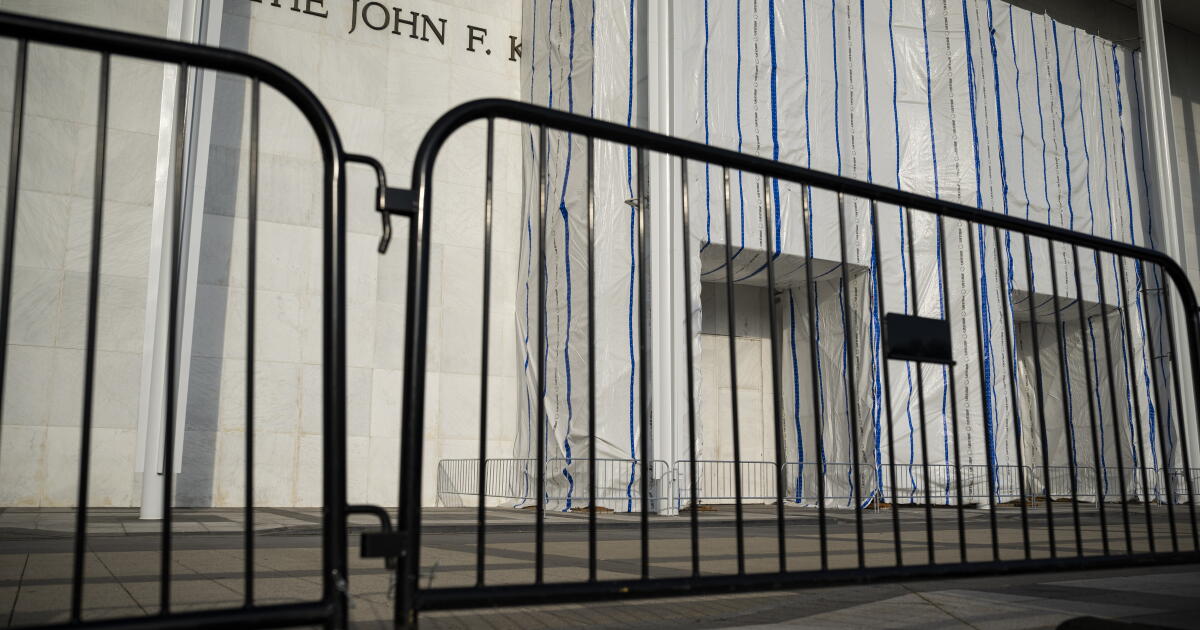
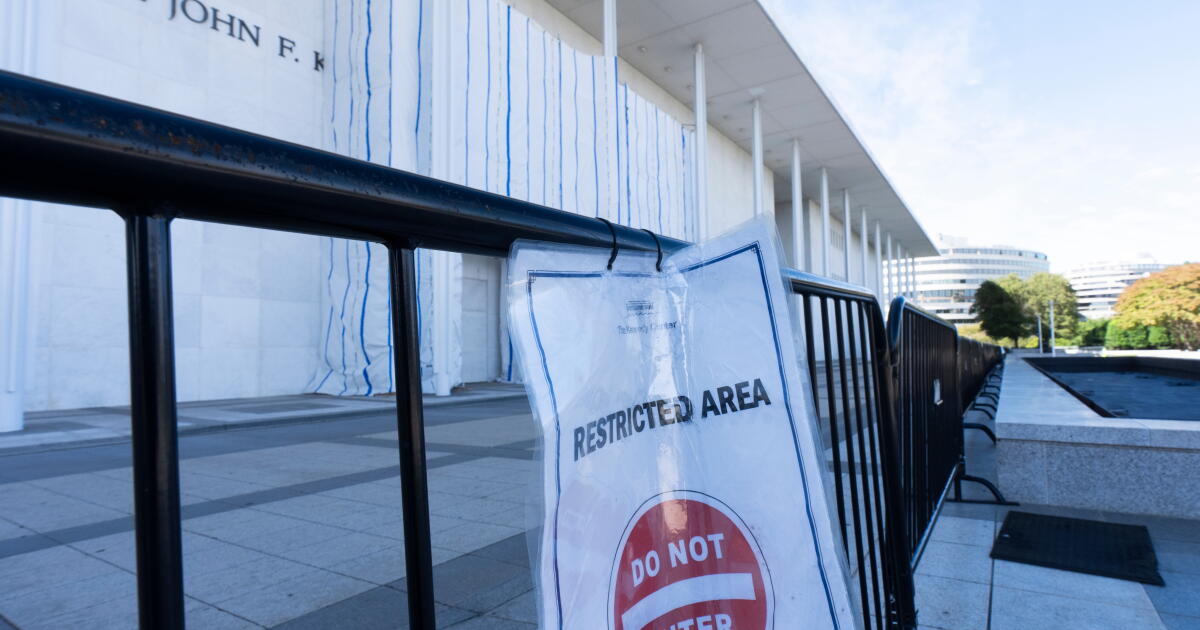
Officially, it’s closed because a section of the Grand Foyer ceiling gave way in a storm, plaster crashing to the floor, and the building needed to be shut down for safety. The Justice Department itself has argued in court filings that there is no real emergency requiring the closure. The board, meanwhile, has approved a quarter-billion-dollar renovation plan, put together without competitive bidding, while the president muses openly about tearing the building down altogether if his own name isn’t affixed to it. This administration is effectively bulldozing arts infrastructure in an attempt to abolish an infrastructure of the imagination.
I watch all of this from the outside now. When the new “leadership” took over last year, my team and I were among the first let go. My department worked on free public programming, on creative equity, on cross-sector community development and on measuring the social impact of art. That we were among the first out the door probably tells you everything you need to know about who was put in charge of the place.
As an American, as an artist and as a former member of its labor force, I understand that the Kennedy Center is more than a building. It is a living memorial to a president who was taken from us too soon, a man who had the audacity to aim for the moon before the science existed to get us there. To honor that kind of visionary, this country built a center for the creative impossible, and gave it his name.
And true to that name, my job at the Kennedy Center was to investigate the correlation between the arts economy and the economy of civic aspiration. As a team, we believed that inspiration erodes apathy and yields empathy. The building is a container of federal infrastructure, but the arts that imbue the Kennedy Center make the argument that inspiration itself is part of the infrastructure of our democracy. An arts center is built to ask: “What are the conditions necessary to dream together in public?”
Who, if not artists, are the authors of the public imagination? When a baby is born, or your daughter gets married, do you read a piece of legislation to commemorate the occasion or do you quote a poem, or dedicate a song? Who, if not artists, might light the path to a post-fear economy?
So why invade an arts center? What could possibly be gained by shuttering a national citadel for creative excellence? How perverse that a president whose policies have underfunded education and the arts would gut a national sanctuary for curiosity, and then demand that his name be emblazoned on the shell of what was. This president has used executive orders to intimidate artists, banned writers and journalists, sabotaged arts education, created oppressive red lines within the National Endowment for the Arts and threatened philanthropic organizations that fund arts and culture, and then he turns around and wants his name on our national cultural center.
When I worked there, the Kennedy Center wasn’t perfect. No institution is. But the business was viable, the staff was talented and reliable, and the work we made together would, often enough, touch something close to the sublime. Our job, like those of so many arts workers across the country, was to activate creative magic in service of social cohesion and well-being.
This is what gets lost in the noise of storms and lawsuits and renovation budgets: Entertainment is everywhere, but inspiration is rare. Sometimes you are sitting in a dark theater with strangers and the right note gets struck, and you hear it with your ears but you feel it somewhere else entirely. In the gut and heart. And the person next to you, a stranger, feels it too, at the exact same moment. You can practically feel the room change. All that magic can happen in one theater, and the Kennedy Center has nine of them. If a solar panel uses the energy of the sun to power a building, an intentionally run theater can use the energy of its inspired audiences to power a city.
Art holds memory. It also holds the horizon, the sense of what a country could still become. Patriotism as enacted by the creative community takes the American experiment seriously enough to question, examine, remember what we’ve forgotten and catalyze collective American dreaming. That is what the Kennedy Center was named for: a president who dreamed of a country unafraid of beauty, unafraid of grace.
Thankfully, America’s creative labor force tirelessly stewards that sense of creative provocation and patriotic inquiry. It is alive everywhere, including in the work of individual artists such as Carrie Mae Weems or in the work of collectives such as For Freedoms and their “America, the Beautiful” initiative.
We, the chronically underwhelmed citizenry of the United States, can’t afford one less pillar of creativity. We should be fighting to reconstitute any and all artistic institutions with an eye toward an inspired future.
Marc Bamuthi Joseph, a spoken-word artist and actor, was vice president for social impact at the Kennedy Center.
The 49th Kennedy Center Honors gala will go on despite the recent closure of the Kennedy Center, with the event moving to the Capital One Arena in Washington, D.C., on Dec. 7. The honorees and a broadcaster for the program will be disclosed at a later date.
The annual event will take place amid an ongoing legal battle as President Trump attempts to add his name to the building.
Hours after a federal judge blocked the president’s attempt to restore his name, the Kennedy Center’s board voted on Sept. 15 to shutter the venue for renovations. Trump, however, threatened on social media to block the $250-million renovation, which he initially proposed, if his name weren’t added to the facade.
In mid-September, a picture of the president aboard Air Force One reviewing plans that were titled “Kennedy Center Demo[lished]” prompted panic as architectural, preservation and civic organizations asked the court for a “neutral officer to protect the building and institution.”
A federal judge ordered Kennedy Center leaders to provide 30 days’ notice before any changes, including demolition.
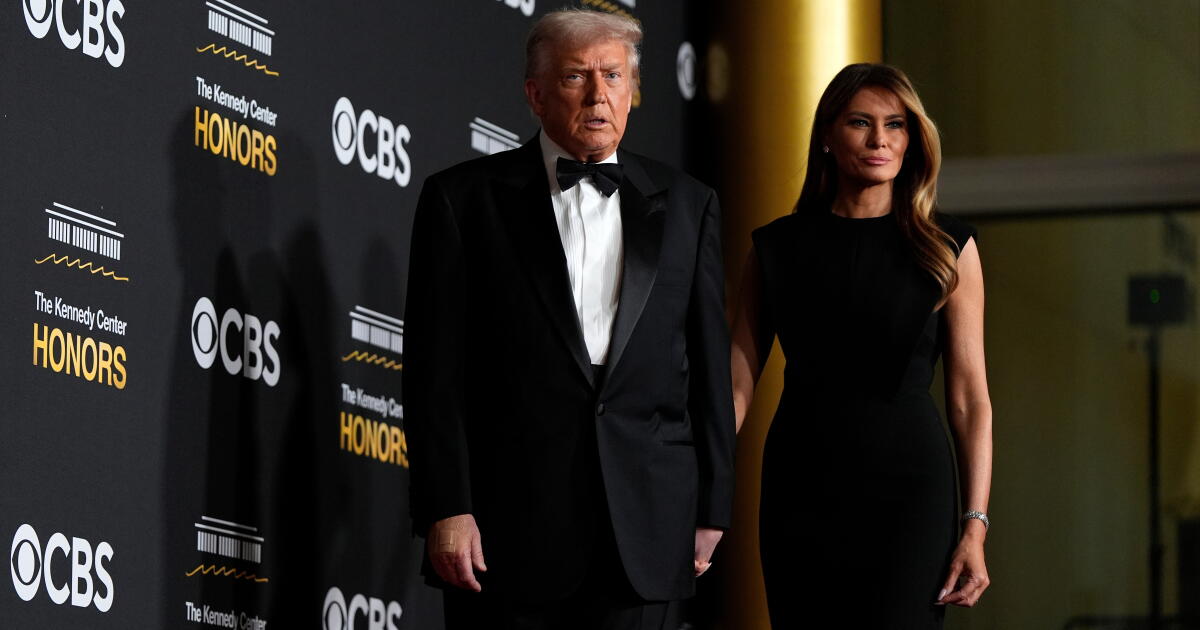
Last year’s Kennedy Center Honors gala, which recognizes artists who have contributed to American culture, was hosted by Trump and televised on CBS and Paramount. The ceremony, honoring Sylvester Stallone, Kiss, Gloria Gaynor, Michael Crawford and George Strait, earned the lowest ratings in its history. It was not announced whether Trump would return as master of ceremonies for this year’s event.
The 39th annual Hispanic Heritage Awards — which will honor the contributions and accomplishments of Latinos in the U.S. and Latin America — will air nationwide Friday on PBS.
In a historic decision by the Hispanic Heritage Foundation, which presents the annual awards, the event departed from its home base of Washington. Instead, Latino luminaries gathered at the Orchestra Hall in Minneapolis, where the celebratory occasion was taped for broadcast Sept. 10.
The move to the Midwest was a timely decision for members of the Hispanic Heritage Foundation, a nonprofit organization established by the White House in 1988. They took into consideration Minnesota’s response to a large-scale immigration enforcement campaign that began in December, known as “Operation Metro Surge.”
“We went to Minneapolis because we wanted to recognize what’s great about our community, [our] courage, resilience, strength, unity and looking out for each other,” said Antonio Tijerino, president and CEO of the Hispanic Heritage Foundation, in a phone call with De Los.
The Department of Homeland Security called the undertaking the “largest DHS operation ever” earlier this year on X, with an estimated 2,000 agents deployed to the Minneapolis–St. Paul metropolitan area. Thousands of Minnesota residents rallied against the tactical and militant methods used by Immigration and Customs Enforcement agents.
Civil unrest hit a boiling point following the killings of Renée Good and Alex Pretti on Jan. 7 and 24, respectively, by federal agents.
“ We actually went with a delegation of national Latino leaders to offer our support of the community during this crisis and we were overwhelmed by the heroism,” said Tijerino, who recalled a group visit to Minneapolis in February. There, he and his colleagues learned more about the rapid response efforts underway in the city.
“It was an American story that we wanted to tell,” he added.
At the 39th ceremony, Los Tigres del Norte presented a bit of that story to the people of Minnesota — who were collectively honored with the Humanitarian Award.
“Peaceful, hard-working communities of immigrants and refugees found themselves in fearful chaos as more than 4,000 parents, grandparents, neighbors, friends and families were taken by force, U.S. citizens among them,” Los Tigres del Norte announced in English while presenting the award. The players closed the show with a rendition of their 1984 song “Jaula de Oro,” which speaks to the plight of the undocumented community.
“I think Minnesota [is] a reflection of all of our Latino communities across the nation,” said Henry Jiménez, president and CEO of Propel Nonprofits, who was one of the individuals on stage representing the people of Minnesota.
“It uplifted the people. I think people felt validated for all of their hard work and effort that they’ve had to endure, not just the last couple months, but really a lifetime of work,” said Jiménez, whose organization helps consult and raise funds for budding nonprofits.
The relocation of the Hispanic Heritage Awards also comes as D.C. deals with the temporary closure of the John F. Kennedy Center for the Performing Arts — which hosted the Hispanic Heritage Awards in years prior.
The Kennedy Center closed its doors indefinitely on Sept. 15 after an inspection found acute public safety concerns, among them roofing issues. In a letter to Congress, various former employees allege that leadership was aware of the issues but halted plans for repair in April.
The closing also comes after a federal judge blocked the board’s decision to include President Trump’s name on the building in September. Trump’s takeover of the Kennedy Center began in February 2025, when he dismissed half its board members and installed himself as chairman.
“We were [at the Kennedy Center] for a very long time. It brought a lot of prestige and to fill a historic venue like that with Latinos was wonderful,” said Tijerino. “After many years of being at the Kennedy Center, we decided we wanted to go to another venue.”
In April 2025, the Hispanic Heritage Foundation announced that it would host its 38th annual awards at the Warner Theater instead; previous versions of the ceremony have also taken place at the historic Warner Theater venue, including in 2015 for the 28th Annual Awards and 2017 for the 30th celebration.
Hosted by comedian Anjelah Johnson-Reyes, the other honorees of the 39th Hispanic Heritage Awards included Venezuelan artist Oscar D’León, the salsa singer behind notable hits such as “Llorarás” and “Me Voy Pa’ Cali,” who received the Legend Award for his lifelong contributions to the genre.
Chilean singer-songwriter Mon Laferte, the vocal powerhouse behind power ballads like “Tu Falta de Querer” and “Amárrame (feat. Juanes),” also received the Social Justice Award. The Latin Grammy-winning artist has long championed feminist causes and challenged sexual harassment in the entertainment industry — a topic central to her 2024 Netflix documentary, “Mon Laferte, Te Amo.”
Puerto Rican rapper Eladio Carrión, whose trap flow famously featured in songs like “Coco Chanel” with Bad Bunny and “Sigue Bailandome,” was also honored with the Inspira Award.
Mexican singer-actor Ximena Sariñana, whose early composition appeared on the soundtrack of the 2002 teen film “Amar Te Duele,” received the Music Award as well.
Following the success of their Minneapolis awards show, the Hispanic Heritage Foundation is now toying with the idea that the ceremony can take place anywhere where there is a strong Latino presence.
“Who knows if L.A. is the [next] spot!” said Tijerino, who hails from Long Beach,
Though Jiménez assures that he is not swayed by any particular city at the moment, he offers one idea: “I hope that the community that’s chosen [to host] doesn’t have to go through a difficult time to be chosen.”
Kennedy Center officials were long aware of serious structural issues that they cited as new problems after the abrupt decision to close the performing arts venue this month, a group of former employees allege in a letter to Congress.
The center’s executive director and chief operating officer, Matt Floca, did not treat the roofing issues as priorities and in April halted a funded plan to address them, according to the letter Thursday signed by David Seide, a lawyer representing the anonymous whistleblowers.
Floca denied their allegations, saying recent investigations of the leaks exposed new hazards at the building.
In a September court declaration, Floca noted there were “acute risks to public safety” when the aging building temporarily closed its doors after an inspection of a deteriorating roof terrace canopy and a partial ceiling collapse. The former employees, however, claim those “acute” issues were known previously by Floca, who joined the Kennedy Center as vice president of facilities in 2024.
“More than one year ago, Mr. Floca had requested and received the needed funds to remediate the New Problems he references,” Seide wrote, citing President Trump’s tax cut and spending bill that he signed in the summer of 2025. “Yet six months ago – with the funds in hand – he stopped the remediation process from moving forward.” In the legislation, Congress earmarked $257 million for the Kennedy Center.
The letter, first reported by The New York Times, is the latest in a series of tensions over an iconic Potomac River waterfront building that has become a focus of the Republican president in his remaking of the nation’s capital in his second term. Trump has installed his own leadership to the center’s governing board and had his name placed on the building before a judge ruled the new lettering was illegally added and ordered it removed.
The Trump-aligned board voted earlier this month to close the center indefinitely for repairs hours after U.S. District Judge Christopher Cooper blocked its plans to return Trump’s name to the building.
Cooper has told the center that it must give 30 days’ notice before making any major physical changes to the building, including demolishing it, as Trump has threatened. The Kennedy Center leadership also must file a status report no later than Friday on the temporary closure and emergency repairs.
Asked for a response to the whistleblowers’ claims, a Kennedy Center spokesperson sent a written statement from Floca, who said the safety of patrons, artists and staff is his priority.
“The Kennedy Center has known for years that the roof overhang leaked,” he wrote. “What we did not know until this summer was how far the damage had spread inside it.”
Floca added that rather than halting design plans in April as the whistleblowers alleged, he had reassigned the work to a more comprehensive plan because the contractor’s quote for the initial plans were nearly three times the expected cost.
“That was a change in the approach to procuring and delivering the work, not a determination that the work was unnecessary,” Floca wrote.
Rhode Island Sen. Sheldon Whitehouse, the top Democrat on the Senate Committee on Environment and Public Works, wrote Floca on Thursday after receiving the whistleblower letter. Whitehouse said the documents showed Kennedy Center leadership had “hoarded” congressionally appropriated funding for repairs “while blaming previous leadership for the state of repairs.”
“My initial investigation into misconduct at the Center focused on cronyism and corruption, with documents demonstrating considerable excessive and self-serving spending under President Trump’s chairmanship,” Whitehouse said. “The documents that I attach today seem to reveal deeper financial mismanagement.”
A spokesperson for the committee’s Republican majority did not immediately reply to a request for comment Saturday.