



Budget conscious Brits are swapping Center Parcs for European park breaks that are considerably cheaper. But is it worth the faff of travelling abroad? We gave it a try

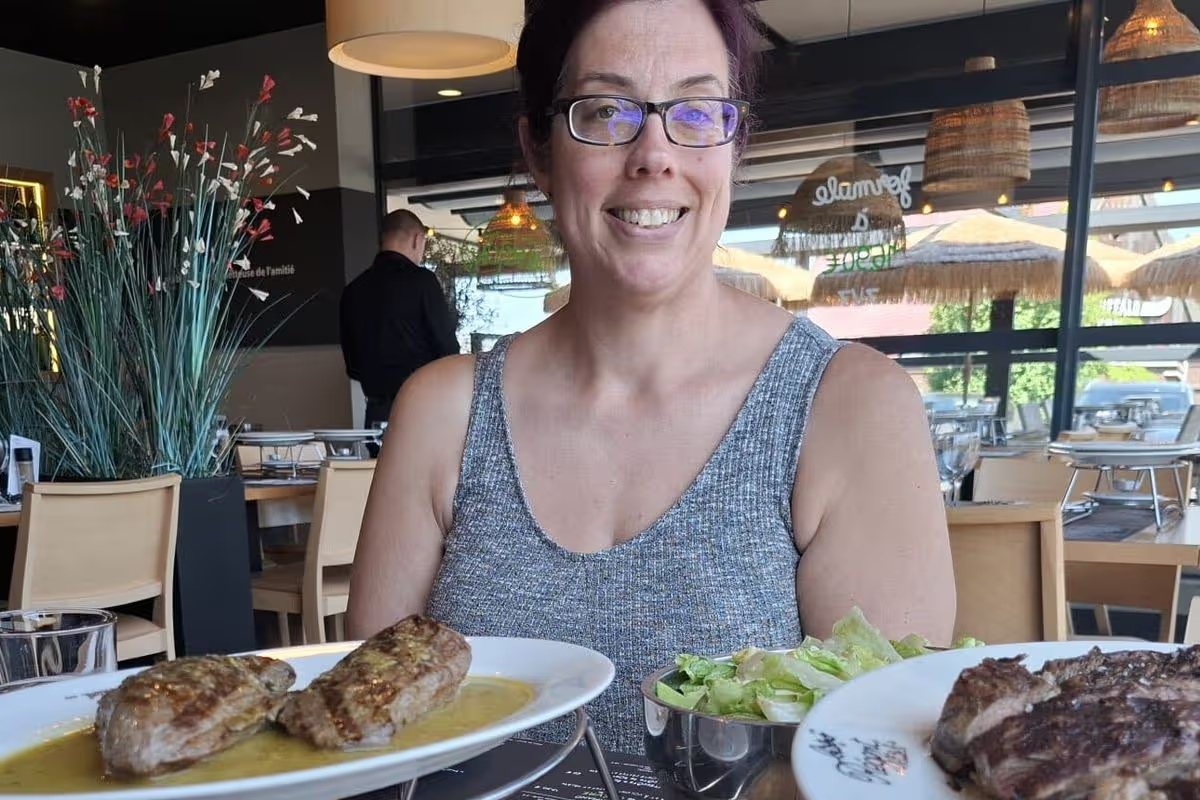
Our idyllic French family holiday included a stop for classic steak frites – and it was one of the best steaks any of us had ever eaten(Image: Narin Flanders)
I remember the exact moment we realised we weren’t a Center Parcs family anymore. The kids were having one last run round the playground before we stuffed everything in the car to come home after an idyllic weekend away and my husband nipped off to buy drinks.
He returned ashen-faced: “I just paid five quid for two Fruit Shoots.”
It turns out we have a line and that was it. Despite half a dozen fun-packed stays, those Fruit Shoots were the moment we knew we couldn’t justify Center Parcs prices anymore.
If my hours spent browsing parenting groups online are anything to go by, we’re not alone. Initially we branched out, exploring Haven and Parkdean resorts around the UK. But as an avid bargain hunter I’d seen plenty of chat everywhere from Mumsnet to Reddit about the savings to be made on European holiday camp breaks. After ChatGPTing the practicalities of driving in France, we swapped Center Parcs for Eurocamp this May bank holiday and it was so amazing we’re already plotting a return visit.
Eurocamp has built a reputation for the ultimate activity-led park holidays, with 400 options across 11 countries. We booked into Domaine des Ormes, set in 400 acres of lush French countryside, complete with a forest, lakes, golf course and a medieval castle at its heart. It has a variety of different types of accommodation for all budgets ranging from traditional camping to modern lodges, a luxury hotel and even floating cabins and treehouses. We went for a lodge and were pleasantly surprised when we unlocked our home from home.
Inside the lodge
The lodge had everything we needed for a five night stay and several perks that brought joy to our 10- and 12-year-old children, notably a bedroom each for when family time got a bit much and free (and largely reliable) wifi for all, perfect for some down time.
The main living space included a well-stocked kitchen with a full size fridge freezer, L-shaped sofa and dining table. The inside felt slightly smaller than Center Parcs lodges we’ve stayed in and there was no TV but neither of these things bothered us, thanks in part to the biggest difference we found with the swap.
In a nod to the consistently better weather on the continent, our lodge was very much optimised for outdoor living. It had a huge covered decking area with another, even larger, L-shaped sofa, alongside a second outdoor dining table and chairs. With temperatures soaring to up to 30 degrees during our stay we spent most of our time outside, either eating meals or on the sofa.
It was the perfect place to relax as a family, playing card games, with wine for the grown ups and iced drinks for the kids (it’d be rude not to), or enjoying outdoor movie nights courtesy of Netflix on a tablet balanced on the coffee table. Bliss.
Things to do
Domaine des Ormes’ jewel in the crown is a huge aquapark with slides, lazy river, wave pool and indoor and outdoor swimming options aplenty. If you’re looking for an alternative to the iconic Center Parcs Subtropical Swimming Paradise this is it in spades. Available at no extra cost, we spent hours there every day. The kids loved using the zip line over the pool, launching themselves across the water before jumping in at speed.
Zip lines were a recurring theme of the resort, with holidaymakers of all ages queuing up to soar over the lake. It only cost 6 Euros a person for two goes across the zipline – much cheaper than any Center Parcs activity we’d ever done – and it was another huge hit with the kids who, it turns out given half a chance, are real daredevils (see also a 20ft high climbing frame in one of the outdoor playgrounds which my son made his mission to scale through the week, while I stood at the bottom with my heart in my mouth).
There were plenty of other things to do, including kids clubs, archery, horse riding and even a circus (10 Euro per adult, 9 per child) but we found the mix of pool, down time and eating out was plenty to keep everyone occupied without racking up much extra cost.
Eating and drinking
Domaine des Ormes had two restaurants and two bars on-site as well as a well-stocked convenience store. Our top pick was Chez Madeline, which had stone baked pizzas, juicy rotisserie chicken and a 10 Euro kids menu with portions big enough that we took leftovers home.
Having a car meant we could also explore so we nipped to the local Carrefour supermarket in Dol-de-Bretagne to fill the fridge with cheese, smoked meat, fruit and salad. We also discovered the best steak frites any of us had ever had on the way home, in another holiday highlight.
Final verdict
I’m so glad we took the plunge. Driving in France was nowhere near as stressful as we’d feared. Minimal language barriers were easily overcome and with about half the families at Eurocamp English the kids had plenty of new friends to play with.
The highlights were the small moments: my 12-year-old being able to walk to the resort shop to buy breakfast croissants for us to eat together on the deck as the sun rose and excitedly haggling to buy some hair clips from the market that came to the resort one sunny afternoon; my son’s confidence growing every day he got higher up that climbing frame.
Domaine des Ormes was large enough to keep everyone busy and entertained but still compact enough that we could have a little bubble of time as a family together. Overall it was well worth the effort stepping outside of our comfort zone.
How do Eurocamp prices compare with Center Parcs?
There are still some savings for anyone booking at Domaine des Ormes this summer, although some of the most popular accommodation types are sold out. Currently, a four night stay for a two bedroom lodge through Eurocamp starting on Monday, July 20 is £975. A similar two-room lodge at our nearest Center Parcs – Woburn Forest just outside of Milton Keynes – would be £1,449 for the same time.
There are even chunkier savings available if you’re planning ahead. For October half term Eurocamp is £289.64 for four nights, compared to £1,699 for Center Parcs. Meanwhile, May half term 2027 is £786 for Eurocamp and £1,599 for Center Parcs.
While, of course, you have to factor in travel costs for a trip to France, for us the cheaper activities and idyllic surroundings make it worth the effort.
Book it
Narin stayed at the Domaine des Ormes Eurocamp. Currently, a four night stay for a two bedroom lodge through Eurocamp starting on Monday, July 20 is £975. For the October half term, Eurocamp is £289.64 for four nights.
The cost of taking a car on Le Shuttle starts at £69, and £89 for Brittany Ferries.