Claudia Winkleman says the new series of Celebrity Traitors is so good she didn’t want to leave

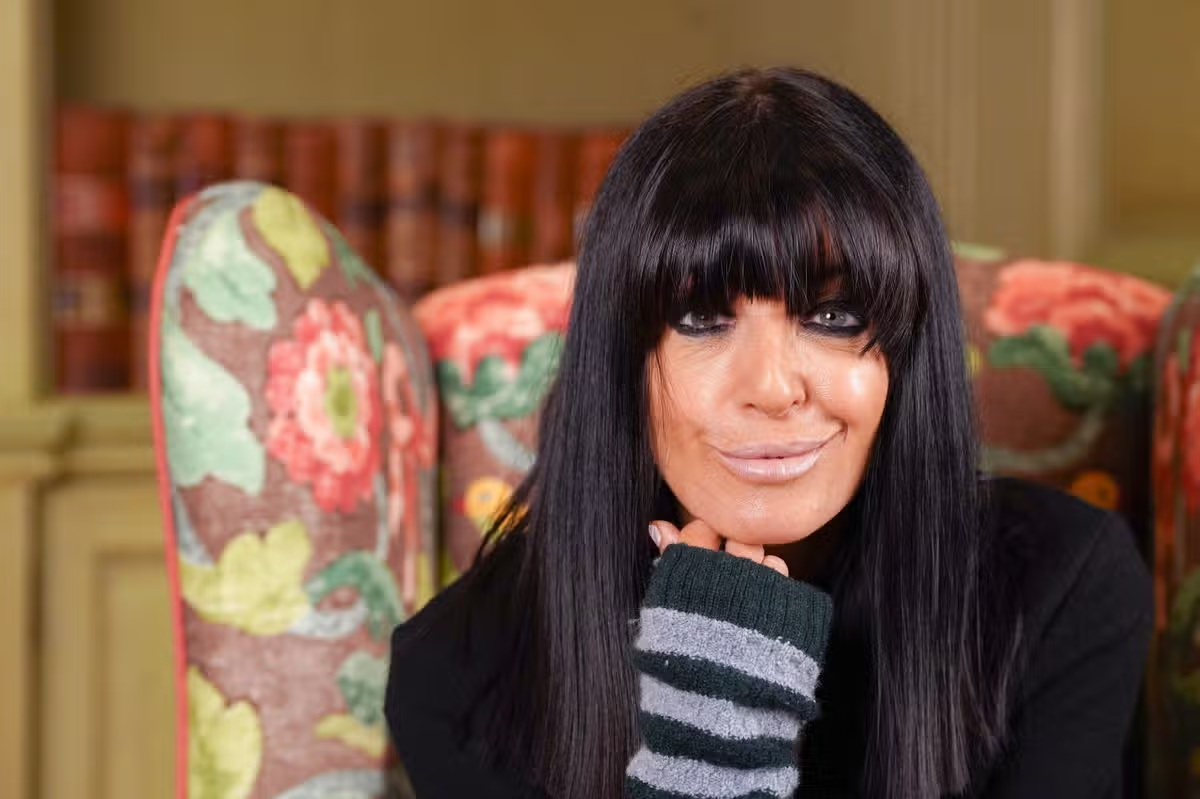
Claudia is excited for fans to watch the new series of Traitors.(Image: Ian West/PA Wire)
Claudia Winkleman has insisted she is “too thick” to take part in the Celebrity Traitors. The TV presenter will return to screens tonight hosting the hit BBC series when a new batch of famous faces enter the Scottish castle.
Actors Michael Sheen and Richard E Grant, supermodel Jerry Hall, presenter Maya Jama and comedians Rob Beckett, Romesh Ranganathan and James Acaster are among the line-up, alongside Little Mix singer Leigh-Anne Pinnock, musician James Blunt and The Last Of Us star Bella Ramsey.
However, 54-year-old Claudia said she would never want to be among their number. She said: “I’m too thick. I mustn’t play it in public. I must not, thank you so much. I’m just being honest. I could have come up with a schmoozier (answer) but no.
“It’s a privilege to play that game and to be at the round table, but I think I would just be too awful at it.”
The game follows the celebrity contestants – the majority of whom are known as faithfuls – as they try to seek out the murderous traitors among them, who kill off players in the middle of the night. Asked who were her favourite players this time, Claudia refused to name names but said as a collective they kept her gripped.
She explained: “I can’t. Genuinely, all of them were tremendous. And when we do any series, I have this room with the monitors. I’m like a weirdo just applying fake tan watching. And they’re like, ‘You can go now. You can go home. You’re free.’ I’m not leaving. This one, I never left. And I slept with just my eyes on it because they are all, you love them anyway, but they are tremendous.”
In fact, Claudia has fallen in love with the Scottish castle and its surroundings so much that she is taking her family there on holiday in the Highlands this year.
Speaking at the show launch earlier this month, she said: “That’s where we’re going this Summer, me and my family. And my husband’s like, ‘You’re already there quite a lot. What’s the matter with you?’.
“It’s the most beautiful place I’ve ever been in the world, is the truth. It is breathtaking. And we just went (for filming on civilian version) We went west and we went west – I can’t say anything else – for a mission and there was a sign that said, ‘Do beware, there are extra otters this year.’
“I was like, ‘Well, full stop’. There’s always a double rainbow, just the colours of it. And everybody is so kind and lovely to us when we’re there. So yeah, that’s where we’re going.”
Executive producer Sarah Fay added that the new line up of celebrities were cheekier than in the first series. She explained: “I can say its a very twisty turny series. I think what I would say is that the celebrities had the chance to see series one – obviously last tine they hadn’t had Celebrity before. It was new territory, but I think this time they’ve seen it. They know that they can be naughty. No one’s going to get canceled in the Traitors Castle for being naughty, so they had fun.”
The first celebrity spin-off was won by traitor Alan Carr, was a ratings hit and won a slew of awards.
Exec Sarah also said she was “chuffed” it was such a hit and hopes the second outing lives up to the past success and even ups the ante. She said: “We never take for granted that the audience is always going to come to it. So (the first series) felt a little bit like Monopoly money, it just didn’t seem real, but obviously we’re so, so chuffed.”
She continued: “But going into the series, we wanted to make sure it felt it wasn’t comparable and we could bring a new freshness to it. A new cast could bring something to it, whether that’s the dynamics of Rob and Romesh, with a celebrity duo with new twists, new turns. We’re always looking at ways to up the ante and make it feel like compelling viewing.”
She insisted fans were also likely to be left shouting at their screens with lots of cliffhanger endings to episodes.
Sarah explained: “We always have an idea before going into production what might be cliffhangers, but as I said before, we have to be so reactive because who knows what the story’s going to be. We’ve had to end before when we’ve done deadlocks last year when it was down to David[Olusoga] and Mark[Bonnar] where it was a tie.
“We never knew that that was going to happen until obviously it was happening right before our eyes. And so when we did get to the edit, we decided to end the episode there, but that could have been another cliffhanger. But I think the beauty of this game as well, because the format, every episode we’ve probably got about three options for what the cliffhanger could be because it’s so nail biting and there’s lots of tension and things going on throughout.”
* The Celebrity Traitors begins tonight (Thursday October 1) at 8pm on BBC One and iPlayer.
Like this story? For more of the latest showbiz news and gossip, follow Mirror Celebs on TikTok, Snapchat, Instagram, Twitter, Facebook, YouTube and Threads.