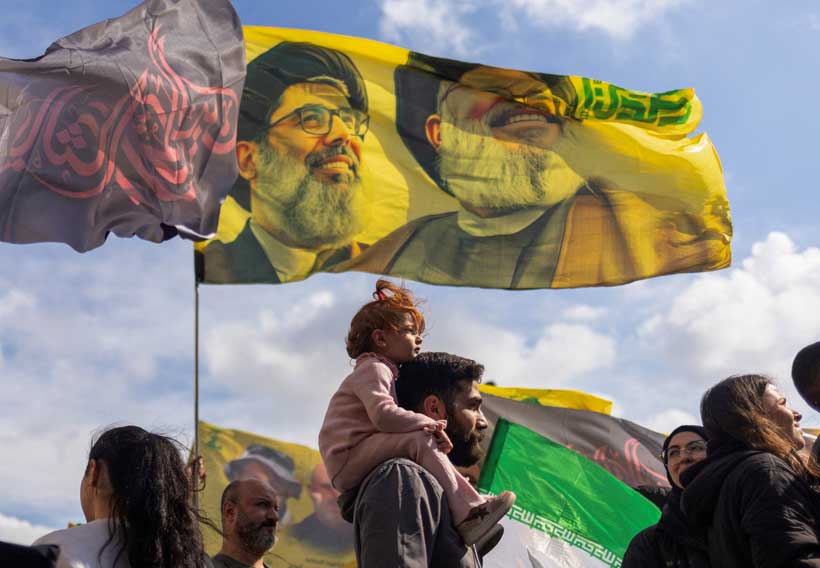
A United States mediated ceasefire between Israel and Lebanon has come under strain after Hezbollah dismissed the agreement as ineffective. The truce, which took effect on April 16, was recently extended by three weeks following talks hosted by Donald Trump at the White House with Israeli and Lebanese representatives.
The ceasefire was intended to reduce hostilities that reignited on March 2, when Hezbollah launched attacks in support of Iran amid a broader regional conflict. While the agreement led to a noticeable drop in violence, clashes have not fully stopped. Israeli forces have continued operations in southern Lebanon, maintaining a self declared buffer zone, while Hezbollah has accused Israel of carrying out strikes, assassinations, and destruction of towns.
Hezbollah lawmaker Ali Fayyad stated that the continued attacks render the ceasefire meaningless and reaffirmed the group’s position that it reserves the right to respond to any Israeli action.
Why it matters The fragile ceasefire highlights the difficulty of de escalating conflicts in the Middle East, especially when multiple fronts and actors are involved. Continued violations risk collapsing the agreement entirely, which could lead to a wider confrontation between Israel and Hezbollah.
The situation is further complicated by its connection to broader regional tensions involving Iran, making the ceasefire not just a bilateral issue but part of a larger geopolitical struggle. A breakdown could escalate into a more sustained and destructive conflict along the Lebanon Israel border.
Stakeholders Hezbollah remains a central actor, positioning itself as a resistance force while balancing domestic and regional pressures. Israel is focused on security concerns and maintaining its buffer zone in southern Lebanon.
The United States is playing a mediating role, attempting to prevent escalation and maintain stability. Iran, as a key ally of Hezbollah, continues to influence the group’s strategic decisions and has pushed for Lebanon to be included in wider ceasefire discussions.
The Lebanese government is also a stakeholder, as continued conflict threatens its sovereignty, infrastructure, and already fragile economy.
What’s next The extended ceasefire will be tested in the coming weeks as both sides continue limited engagements. If violations persist, the agreement could unravel, leading to intensified clashes.
Diplomatic efforts led by Washington may continue, but their success will depend on whether both Israel and Hezbollah show restraint on the ground. Without a broader regional understanding that includes Iran, the chances of a lasting ceasefire remain uncertain.
April 23 (UPI) — President Donald Trump on Thursday announced that Israeli and Lebanese diplomats agreed to extend their cease-fire by three weeks in talks held at the White House.
The announcement came after the president hosted the countries’ ambassadors for negotiations along with Vice President JD Vance, Secretary of State Marco Rubio, U.S. Ambassador to Israel Mike Huckabee and U.S. Ambassador to Lebanon Michael Issa.
“The Meeting went very well!” Trump posted on Truth Social.
“The United States is going to work with Lebanon in order to help it protect itself from Hezbollah. The Ceasefire between Israel and Lebanon will be extended by THREE WEEKS.
“I look forward in the near future to hosting the Prime Minister of Israel, Bibi Netanyahu, and the President of Lebanon, Joseph Aoun. It was a Great Honor to be a participant at this very Historic Meeting!”
During an Oval Office press conference on Thursday evening, Trump announced that Lebanese President Joseph Aoun and Israeli Prime Minister Benjamin Netanyahu would both be visit Washington in the next few weeks, though it was unclear if the trips were to occur at the same time.
“They actually like each other, Lebanon and Israel,” Trump said.
U.S. Ambassador to Lebanon Michel Issa thanked Trump and Rubio for arranging the rare meeting between Lebanon and Israel.
“This is 60, 70 years in the making and today is really a historical day,” he said.
“I’m going to keep going, working for a peace that we hope we’ll get it as soon as possible.”
Earlier Thursday, a senior White House official told The New York Times the ambassador-level negotiations originally expected to take place at the State Department. Israeli officials confirmed the meeting with The Times of Israel.
The two countries agreed to a 10-day cease-fire agreement after a first round of talks in Washington, D.C., on April 17, which was the first meeting between Israel and Lebanon in decades. The truce is shaky, though, as Israeli airstrikes have occurred since then, with Hezbollah responding with its own rocket fire.
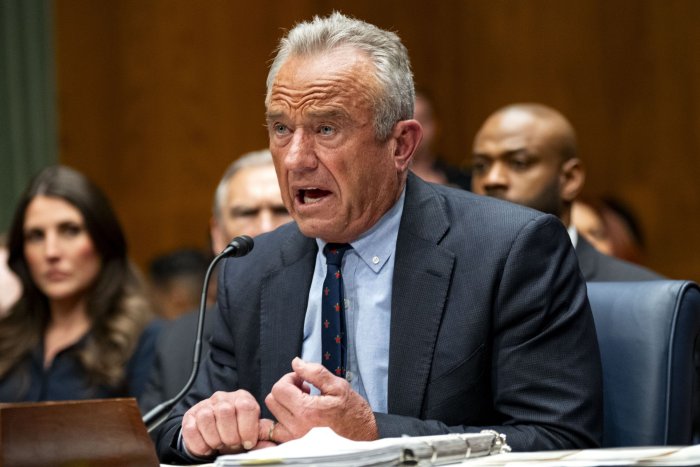
Secretary of Health and Human Services Robert F. Kennedy, Jr. speaks during a Senate Committee on Health, Education, Labor, and Pensions hearing on the Department of Health and Human Services proposed fiscal year budget for 2027 in the Dirksen Senate Office Building near the U.S. Capitol on Wednesday. Photo by Bonnie Cash/UPI | License Photo
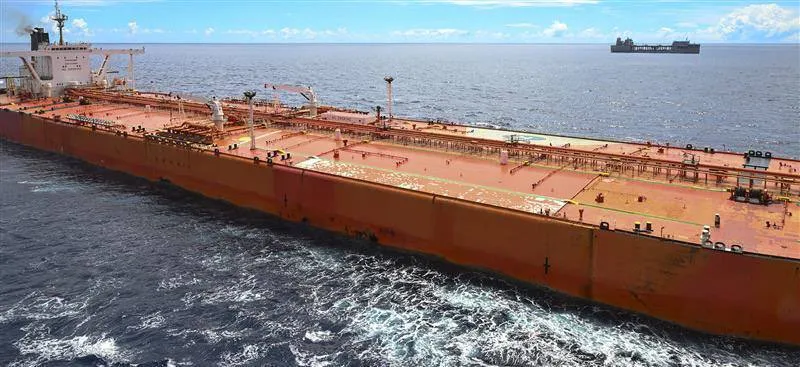
These incidents came a day after U.S. forces boarded an Iran-linked oil tanker in the Indian Ocean and highlighted that regardless of diplomacy, shipping remains a target for both sides. Meanwhile, Iran made veiled threats against the telecommunications cables running under the Strait. All this is happening as Tehran says it won’t return to the bargaining table until the U.S. ends its blockade of Iranian ports. We’ll discuss that more later in this story.
The first attack in the Strait on Wednesday took place shortly before midnight EDT about 15 nautical miles northeast of Oman, according to UKMTO.
“The Master of a Container Ship reported that the vessel was approached by 1 IRGC gun boat, no VHF challenge that then fired upon the vessel which has caused heavy damage to the bridge. No fires or environmental impact reported. All Crew reported safe.”
Nour News, a website affiliated with Iran’s Supreme National Security Council, said the Islamic Revolutionary Guard Corps (IRGC) opened fire on the Epaminodes, after it had “ignored the warnings of the Iranian armed forces,” the BBC reported.
A second incident took place about three hours later eight nautical miles west of Iran, UKMTO stated.
“A master of an outbound cargo ship reports having been fired upon and is now stopped in the water,” the organization explained in an alert. “Crew are safe and accounted for. There is no reported damage to the vessel. UKMTO is aware of high levels of activity in the SoH area and encourages vessels to report any suspicious activity.”
It is unclear at the moment which ship was attacked in that incident. UKTMO did not name the vessel. However, in addition to claiming they fired on the Epaminodes, Iranian officials say they also struck the Euphoria, which MarineTraffic said is a Panamanian-flagged container ship, and the MSC-Francesca, also a Panamanian-flagged container ship, according to MarineTraffic.
The Epaminodes and MSC-Francesca were also seized for “endangering maritime security by operating without the necessary permits and tampering with navigation systems,” the IRGC claimed, stating the vessels have been “directed to the coast of Iran.”
🚨Update: The two vessels are currently in the territorial waters of the Islamic Republic of Iran for inspection of their cargo, documentation, and related records. https://t.co/aXbSZLSNFa
— IRIB (Islamic Republic of Iran Broadcasting) (@iribnews_irib) April 22, 2026
The disposition of the vessels and crews is not currently known. U.S. Central Command could not confirm any of these incidents.
A Sentinel-2 satellite image captured today shows what looks like a swarm of IRGCN fast attack craft sailing north of the strait of Hormuz near Kargan coast, according to open source investigator Mehdi H on X.
The image shows what appears to be at least 33 boats. It is unclear if there is any connection between these craft and the shipping attacks. The IRGC has invested heavily in its fleet of small boats for decades as TWZ has explored in the past. Some of these vessels are armed with short-range anti-ship missiles, as well as artillery rockets and other weapons. They can also be used to lay naval mines. These fleets are extremely hard to find and fix, and do not need large ports to operate from. While CENTCOM says it has destroyed well over 150 Iranian ships, the IRGC still has many remaining small boats.
Sentinel-2 satellite image today shows what looks like a flotilla of IRGCN fast attack crafts sailing north of strait of Hormuz near Kargan coast. At least 33 boats can be seen in what looks like a show of force enforcing the strait closure by Iran. Geo-location: 26.899,56.824 pic.twitter.com/smNuM0y6D3
As we noted earlier in this story, in addition to attacking and capturing ships on the Strait, Iran pointed out the vulnerability of telecommunications cables running under it.
“The Strait of Hormuz is not only a crucial route for oil and gas transportation; this narrow waterway is also one of the most important internet chokepoints in the region and the world,” the IRGC-linked Tasnim news agency noted on Wednesday. “According to submarine network data, at least 7 main communication cables of the Persian Gulf countries pass through this route; while more than 97% of the world’s internet traffic is transferred via these fiber optic cables laid under the sea.”
“Cables such as FALCON, AAE‑1, TGN‑Gulf, and SEA‑ME‑WE connect a significant part of the region’s digital communication to major data centers in the Middle East, Europe, and Asia,” the outlet added. “These infrastructures are the backbone of data transfer, e-commerce, cloud services, and online communications in the Persian Gulf countries.”
“The concentration of many internet cables in a narrow passage makes the Strait of Hormuz a vulnerable point for the region’s digital economy,” Tasnim posited, calling it “a place where cables, after passing through the strait, connect to coastal landing nodes and major regional data centers.”
New post from Iran state media Tasnim about major undersea Internet cables in the Strait of Hormuz
“The concentration of a large number of internet cables in a narrow passage has made the Strait of Hormuz a vulnerable point for the region’s digital economy” pic.twitter.com/JE0o4qcCC6
Though the fighting may be paused, White House Press Secretary Karoline Leavitt said the economic pressure on Iran continues.
.@PressSec on Iran: “There’s a ceasefire with the military and kinetic strikes, but Operation Economic Fury continues and… we are completely strangling their economy through this blockade. They’re losing $500M/day… He’s satisfied with that as we await their response.” pic.twitter.com/SdtLveF1ZH
The aircraft carrier USS George H. W. Bush is set to arrive in the Middle East in about three to five days after sailing around the southern tip of Africa, Fox News Chief National Security Correspondent Jennifer Griffin stated on X.
The timing, she noted, coincides with Trump’s extending the ceasefire deadline by that same timeline.
3rd aircraft carrier USS Bush arrives in Middle East after detour around southern tip of Africa in next 3-5 days as Trump extends the ceasefire with Iran by “3-5 days.” https://t.co/MymBLABmlE
The Washington Post reports that the Pentagon has told Congress it could take six months to fully clear the Strait of Hormuz of mines deployed by the Iranian military.
The publication added that any such operation is unlikely to be carried out until the U.S. war with Iran ends.
This “assessment that means the conflict’s economic impact could extend late into this year or beyond,” the newspaper added.
“The timeline — met with frustration by Democrats and Republicans alike, two of these people said — is the latest sign that gasoline and oil prices could remain elevated long after any peace deal is reached,” the Post noted.
EXCLUSIVE: It could take six months to fully clear the Strait of Hormuz of mines deployed by the Iranian military, and any such operation is unlikely to be carried out until the U.S. war with Iran ends, the Pentagon has informed Congress — an assessment that means the conflict’s…
Israel’s N12 News reported on X that Trump has given Iran a deadline of Sunday.
Two Israel Air Force technicians from Tel Nof Airbase, near Ashdod, will be charged with spying for Iran during Operation Roaring Lion, Israel’s public broadcaster KAN News reported on Wednesday.
“The two technicians, who worked on IAF F-15 fighter jets, handed over documentation of the engine diagrams, as well as photographs showing the face of a flight instructor, which is against military censorship rules, The Jerusalem Post reported.
“They were also asked to gather information about former IDF chief Lt.-Gen. (ret.) Herzi Halevi and National Security Minister Itamar Ben-Gvir,” the publication noted. “Authorities are considering whether to increase the charges on one of the technicians to treason, rather than the lower charge of espionage.”
Report: Two Israel Air Force technicians from Tel Nof Airbase will be charged with spying for Iran during Operation Roaring Lion. They provided sensitive military documents and photos. Written by @JamesGennhttps://t.co/KA8lLh9672
The New York Post said Trump told them that another round of negotiations with Iran may take place later this week. At issue is the future of Iran’s highly enriched uranium, its supply of ballistic missiles, support of proxies like Hezbollah and the Houthis, and ultimate disposition of the Strait of Hormuz.
“‘Good news’ about a second round of talks between the US and Iran may be coming as soon as Friday,” the publication said Trump and Pakistani sources told it on Wednesday.
“Sources in Islamabad touted positive mediation efforts with Tehran, renewing the possibility of more peace talks within the next ‘36 to 72 hours,’” the newspaper added. “Asked about this possible breakthrough by The Post, Trump, in a text message, said: ‘It’s possible! President DJT.’”
Well, guess I’m not going anywhere just yet!
President Trump and Pakistani sources today told me good news about a fresh round of talks between the US and Iran is “possible” as soon as Friday.https://t.co/5TdF0kRgO7
Trump “plans to give the Iranians a limited timeframe to come up with a unified proposal to get diplomatic negotiations back on track,” CNN reported, citing two sources familiar with the internal discussions. “The administration does not want to indefinitely extend the ceasefire, the sources said, and does not want to give Iran time to drag out talks further.”
President Trump plans to give the Iranians a limited timeframe to come up with a unified proposal to get diplomatic negotiations back on track, two sources familiar with the internal discussions tell me.
The administration does not want to indefinitely extend the ceasefire, the…
“Trump is willing to give another three to five days of ceasefire to allow the Iranians to get their shit together,” one U.S. source briefed on the matter told Axios. “It is not going to be open-ended.”
Trump’s negotiators “believe a deal to end the war and address what’s left of Iran’s nuclear program is still achievable,” the outlet added. “But they also worry they may not have anyone in Tehran empowered to say yes.”
Supreme Leader Mojtaba Khamenei “is barely communicating,” Axios posited. “The IRGC generals now in control of the country and Iran’s civilian negotiators are openly at odds over strategy.”
“We saw that there is an absolute fracture inside Iran between the negotiators and the military — with neither side having access to the supreme leader, who is not responsive,” a U.S. official told the news organization.
Axios added that though Vice President JD Vance was all set to go to Pakistan for the second round of negotiations, he instead found himself waiting for the IRGC generals now in control of Iran to let parliament Speaker Mohammad Bagher Ghalibaf and Foreign Minister Sayed Abbas Araghchi travel to Pakistan to meet him. However, while the Iranians appeared to have given Pakistani mediators the green light for talks, by Tuesday morning, that signal was gone, replaced by a demand that the U.S. lift its naval blockade.
“Trump is willing to give another three to five days of ceasefire to allow the Iranians to get their shit together,” one U.S. source briefed on the matter said. “It is not going to be open-ended.”https://t.co/QdZWaZPYL3
As we have previously noted, Trump extended the ceasefire deadline yesterday, but gave no specific date for when fighting could resume. In a Truth Social post, he said he did so to give time for the fractured Iranian leadership to come up with a response to U.S. demands and that the ongoing blockade of Iranian ports would remain in effect.
The official Iranian IRIB news outlet denied Tehran has taken any official position on Trump’s ceasefire extension or future negotiations.
🚨 IRIB EXCLUSIVE “Iran has NOT yet announced an official position on Trump’s claim about extending the ceasefire. Rumors about Iran’s formal agreement are #not_accurate, and no statement has been issued by Iranian officials.”
— IRIB (Islamic Republic of Iran Broadcasting) (@iribnews_irib) April 22, 2026
The Iranians say the future of negotiations depends on the status of the ongoing blockade of its ports.
Iran’s UN Ambassador Amir Saeid Iravani stated that Tehran is prepared to negotiate immediately after the United States ends its naval blockade, emphasizing that Washington must first halt its “ceasefire violations.”
He added that while Iran is prepared to negotiate, it is also prepared for war.
Iran Ready for Talks Once US Lifts Naval Blockade, Envoy Says
Iran’s UN Ambassador Amir Saeid Iravani stated that Tehran is prepared to negotiate immediately after the United States ends its naval blockade, emphasizing that Washington must first halt its “ceasefire violations.” pic.twitter.com/GOxEO8yqzS
Citing data from the Vortexa cargo tracking group, Financial Times is reporting that “at least 34 tankers with links to Iran have bypassed the US blockade since it began.”
CENTCOM, which on Tuesday said the US Navy had directed 28 vessels to turn back to Iranian ports since the blockade was enacted, told us the assertion that dozens of ships bypassed the blockade “is not true.”
Good morning, Asia. While you were sleeping, one of our most-read stories reported that dozens of ships have managed to circumvent the blockade since it began — despite Donald Trump declaring it a ‘tremendous success’. https://t.co/TI52fxy7VQpic.twitter.com/BkOeMke1pR
The Pentagon on Wednesday pushed back on the assertion that the Iranian-linked oil tanker Tifani was seized by the U.S., however, it may be a matter of semantics.
“Seized wouldn’t be accurate at this time,” a Pentagon official told us. “So the way it works is after interdiction the U.S. has 96 hours to determine next steps. That’s where the rest of the interagency comes in. It varies by ship and situation what the solution would be. At this point DoW’s finished its role with just the interdiction.”
“During that 96-hour period, State would make the determination it’s stateless and work through diplomatic channels on where to take it,” the official added. “DHS and Coast Guard could be the ones to escort it. DoE gets involved for the oil, treasury for the sanction, DoJ for the legal elements and warrant. It really is a large, complex coordination effort across the interagency.”
The exact current disposition of the vessel is unclear. We have reached out to the White House for more details.
U.S. forces on Tuesday boarded the Iranian-linked oil tanker M/T Tifani. (Pentagon)
With Iran partially reopening its airspace, the U.S. State Department stated that any U.S. citizens still in the country “should leave Iran now, monitor local media for updates, and consult with commercial carriers for additional information on flights out of Iran.”
Americans seeking to depart Iran “may also depart by land to Armenia, Azerbaijan, Türkiye, and Turkmenistan. U.S. citizens should not travel to Afghanistan, Iraq, or the Pakistan-Iran border area,” the warning added. “Be aware that the Iranian government may prevent U.S. citizens from departing or charge an ‘exit fee’ for departures from Iran. U.S.-Iranian dual nationals must exit Iran on Iranian passports.”
Iran: As of April 21, Iran’s airspace has partially reopened. U.S. citizens should leave Iran now, monitor local media for updates, and consult with commercial carriers for additional information on flights out of Iran. Americans seeking to depart Iran may also depart by land to… pic.twitter.com/yvVIqO0XoJ
During the course of Epic Fury, the U.S. has run through a large amount of advanced munitions, CNN reported.
The list includes about 50% of Terminal High Altitude Area Defense (THAAD) interceptors, 50% of its Patriot interceptors, 45% of its Precision Strike Missiles, 30% of its Tomahawk Land Attack Cruise Missiles (TLAMs), 20% of its Joint Air-to-Surface Standoff (JDAM) munitions and 20% of its Standard Missiles (SM-3 and SM-6).
Approximate estimates of percentages of U.S. munitions expended in Iran war, per @CNN : 50% THAAD interceptors 50% Patriot interceptors 45% Precision Strike Missiles 30% Tomahawk missiles 20% Joint Air-to-Surface Standoff Missiles 20% Standard Missiles (SM-3 and SM-6) https://t.co/1A9TH0zpr5
Given the expenditure of costly defensive munitions used to swat down much cheaper Iranian drones, the U.S. military has introduced Ukrainian counter-drone technology in recent weeks at a key U.S. air base in Saudi Arabia, Reuters reported, citing five people with knowledge of the matter.
“The deployment of a Ukrainian command-and-control platform called Sky Map at Prince Sultan Air Base, which has not previously been reported,” is another sign of Ukrainian battlefield technological advances after more than four years of full-on war with Russia.
President Trump said the US would extend the ceasefire until Iran presents a proposal and talks are concluded, but a naval blockade of its ports continues.
Published On 22 Apr 202622 Apr 2026
President Donald Trump said the United States is extending the ceasefire until Tehran submits its latest proposal with conditions for ending the war, and until negotiations conclude, keeping diplomacy open while maintaining pressure on Iran.
However, Trump said the US naval blockade on Iran would remain. Iran has insisted that the blockade represents a violation of the ceasefire, and has said it will not negotiate under the “shadow of threats” or while the blockade remains in place, underscoring the fragile and uncertain path to talks.
Meanwhile, violence continues across the region, with Israeli settlers killing two people, including a child, in the occupied West Bank, and Israeli strikes in southern Lebanon wounding civilians and damaging homes despite a 10-day ceasefire.
In Iran
The Islamic Revolutionary Guard Corps (IRGC) said oil production across the Middle East could be targeted if attacks were launched from Gulf neighbours’ territory.
The US is continuing its naval blockade of Iranian ports despite the truce, a move Iran says undermines the ceasefire.
An adviser to Iran’s parliamentary speaker said the ceasefire extension could be a “ploy to buy time” for potential military escalation.
Foreign Minister Abbas Araghchi described the US naval blockade as an “act of war” and a violation of the truce.
War diplomacy
Tehran open to diplomacy: Reporting from Tehran, Al Jazeera’s Almigdad Alruhaid said there was no official response to Trump’s ceasefire extension, but officials signalled openness to talks. The US blockade of the Strait of Hormuz is seen as a violation of the truce, with commanders saying forces are fully prepared to respond to any escalation.
US sanctions widened: The US imposed new sanctions linked to Iran’s weapons programmes, while the European Union is moving to expand its own measures.
Talks planned in Washington, DC: The US is set to host ambassador-level negotiations between Israel and Lebanon, as Lebanese Prime Minister Nawaf Salam pushes for a full Israeli withdrawal from the country’s territory as Beirut’s main objective.
In the Gulf
Trump said a potential currency swap with the United Arab Emirates is “under consideration”, adding Washington would support the Gulf ally if needed, after reports the idea was raised with US officials amid concerns the war could strain the UAE’s economy.
In the US
The US president said he was extending a ceasefire with Iran to give more time for negotiations, but would maintain the naval blockade of Iranian ports.
Reporting from the White House, Al Jazeera’s Alan Fisher said Trump has shifted between conciliatory and hardline rhetoric, linking the blockade of the Strait of Hormuz to forcing Iran to negotiate, while warning of military action if negotiations fail.
The mixed messaging has unsettled markets, but some analysts argue the strategy shows calculated pressure and a willingness to wait for Iran’s response.
In Israel
Israeli Prime Minister Benjamin Netanyahu said the country has been strengthened by its campaigns against Iran and its allies, claiming joint efforts with the US weakened Tehran’s capabilities and boosted Israel’s regional position, opening the door to new alliances.
In Lebanon
Prime Minister Salam said on Tuesday that Lebanon needed $587m to address the conflict’s ongoing humanitarian fallout amid a fragile ceasefire between Israel and Hezbollah.
Tensions remain high as Israel and Hezbollah accuse each other of breaching the truce. Israel said rockets were fired at its troops in southern Lebanon and that it responded with strikes, while Hezbollah said its attacks were retaliation for Israeli shelling and ongoing strikes on Lebanese areas.
Oil and global economy
Shipping through the Strait of Hormuz remains severely limited, raising concerns over global oil flows.
In a social media post, President Trump announced an extension of the ceasefire in the war on Iran, but with the US blockade still in place. Al Jazeera’s Alan Fisher says there are signs of movement as Trump shifts towards discussing a ‘unified proposal’.
ISLAMABAD — Last-minute ceasefire talks between the United States and Iran looked uncertain Tuesday as a two-week truce was set to expire and both countries warned that, without a deal, they were prepared to resume fighting.
U.S. Vice President JD Vance, expected to lead U.S. negotiators if talks continue in Pakistan, remained in Washington on Tuesday, a White House official said. And Pakistan, which has been urging both sides to return to Islamabad, said it was still awaiting confirmation on whether Iran would participate.
Earlier in the day, two regional officials said Washington and Tehran had signaled they would hold a second round of talks, with Vance leading the U.S. team and Iranian parliament speaker Mohammad Bagher Qalibaf as its top negotiator. Both spoke on condition of anonymity because they were not authorized to brief reporters.
But Pakistan’s information minister, Attaullah Tarar, said later Tuesday on X that Iran had not formally confirmed its participation, which was set to expire Wednesday.
Vance had policy meetings scheduled at the White House on Wednesday morning, said a White House official who was not authorized to speak publicly and spoke on condition of anonymity. The vice president’s office and the White House did not immediately respond to messages asking whether Vance still intends to travel to Pakistan.
Trump says he doesn’t favor extending ceasefire
Both sides remain dug in rhetorically. President Trump has warned that “lots of bombs” will “start going off” if there’s no agreement before the ceasefire deadline, and Iran’s chief negotiator said that Tehran has “new cards on the battlefield” that haven’t yet been revealed.
The ceasefire, which began April 8, could be extended if talks resume, though Trump said in an interview Tuesday with CNBC: “Well, I don’t want to do that.”
“We don’t have that much time,” Trump said, adding that Iran “had a choice” and “they have to negotiate.”
White House officials have said that Vance would lead the American delegation, but Iran hasn’t said who it might send. Iranian state television on Tuesday broadcast a message saying that “no delegation from Iran has visited Islamabad … so far.”
U.S. says its forces board sanctioned oil tanker
On Tuesday, the U.S. said its forces boarded an oil tanker previously sanctioned for smuggling Iranian crude oil in Asia. The Pentagon said in a social media post that U.S. forces boarded the M/T Tifani “without incident.”
The U.S. military did not say where the vessel had been boarded, though ship-tracking data showed the Tifani in the Indian Ocean between Sri Lanka and Indonesia on Tuesday. The Pentagon statement added that “international waters are not a refuge for sanctioned vessels.”
The U.S. military on Sunday seized an Iranian container ship, the first interception under a blockade of Iranian ports. Iran’s joint military command called the armed boarding an act of piracy and a violation of the ceasefire.
Strait of Hormuz control key to negotiations
The U.S. imposed the blockade to pressure Tehran into ending its stranglehold on the Strait of Hormuz, a key shipping lane through which 20% of the world’s natural gas and crude oil transits in peacetime.
Iran’s grip on the strait has sent oil prices soaring. Brent crude, the international standard, was trading at close to $95 per barrel on Tuesday, up more than 30% from Feb. 28, the day that Israel and the U.S. attacked Iran to start the war.
Before the war began, the Strait of Hormuz had been fully open to international shipping. Trump has demanded that vessels again be allowed to transit unimpeded.
European Union transportation ministers were meeting Tuesday in Brussels to discuss how to protect consumers after the head of the International Energy Agency warned that Europe has “ maybe six weeks ” of jet fuel supplies remaining.
Over the weekend, Iran said that it had received new proposals from Washington, but also suggested that a wide gap remains between the sides. Issues that derailed the last round of negotiations included Iran’s nuclear enrichment program, its regional proxies and the strait.
Qalibaf on Tuesday accused the United States of wanting Iran to surrender.
“We do not accept negotiations under the shadow of threats,” he wrote in an X post.
Pakistan hopeful talks will proceed
Pakistani officials have expressed confidence that Iran will also send a delegation to resume talks that mark the highest-level negotiations between the U.S. and Iran since the 1979 Islamic Revolution. The first round April 11 and 12 ended without an agreement.
Pakistan said Foreign Minister Ishaq Dar met Tuesday with the acting U.S. ambassador in Islamabad to urge a ceasefire extension. Dar also met with the ambassador from China, a key trading partner with Iran.
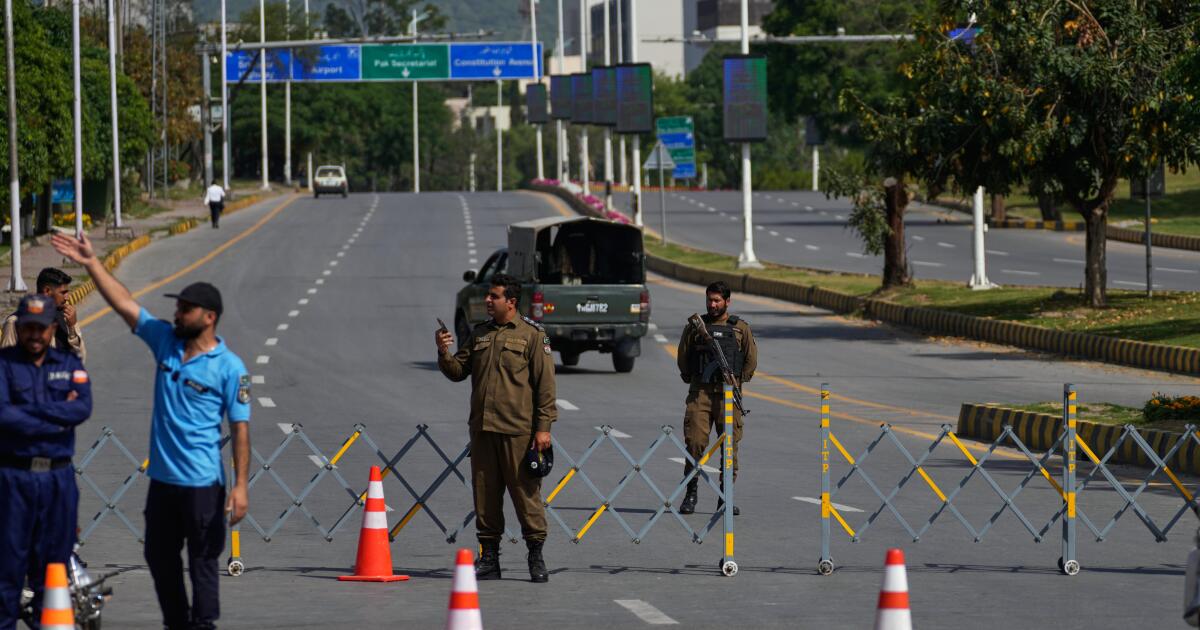
Security has been tightened across Pakistan’s capital, where authorities have deployed thousands of personnel and increased patrols along routes leading to the airport.
Israel jails soldiers for defacing Jesus statue in Lebanon
Israel’s military said Tuesday it has sentenced two soldiers to 30 days in jail and removed them from combat duty for smashing a statue of Jesus Christ in Lebanon. Images of an Israeli soldier with a sledgehammer smashing the statue’s head emerged over the weekend, bringing widespread condemnation.
Israel said one of the soldiers being punished hammered the statue to the ground. The other filmed the destruction. The Israeli military said it replaced the statue.
Meanwhile, historic diplomatic talks between Israel and Lebanon were set to resume on Thursday in Washington, an Israeli, a Lebanese and a U.S. official said. All three spoke on condition of anonymity to discuss the behind-the-scenes negotiations.
The Israeli and Lebanese ambassadors met last week for the first direct diplomatic talks in decades. Israel says the talks are aimed at disarming Hezbollah and reaching a peace agreement with Lebanon.
A 10-day ceasefire began on Friday in Lebanon, where fighting between Israel and Iranian-backed Hezbollah militants broke out two days after the U.S. and Israel launched joint strikes on Iran to start the war. Fighting in Lebanon has killed more than 2,290 people.
Since the war started, at least 3,375 people have been killed in Iran, according to authorities. Additionally, 23 people have died in Israel and more than a dozen in Gulf Arab states. Fifteen Israeli soldiers in Lebanon and 13 U.S. service members throughout the region have been killed.
Ahmed, Gambrell and Bynum write for the Associated Press. Gambrell reported from Dubai, and Bynum reported from Savannah Ga. AP journalists Michelle Price, Aamer Madhani and Darlene Superville in Washington; Samy Magdy in Cairo; David Rising and Huizhong Wu in Bangkok; Sam McNeil in Brussels; Julia Frankel in New York; Bill Barrow in Atlanta and Russ Bynum in Savannah, Ga., contributed to this report.
Sina* is a 28-year-old video editing assistant who fought hard to build a life in Tehran. After completing mandatory military service, he refused to return to his hometown of Neyshabur in eastern Iran, knowing opportunities for a young man with a background in film editing and independent student theatre were bleak there. Through a college friend, he found his footing at a video content creation studio in the capital, climbing from camera assistant to assistant video editor within six months, before losing his job as a result of the US-Israel war on Iran. As told to Arya Farahand.
It has been a few days since the guns fell silent, and the sliver of hope I felt when the ceasefire was announced is already fading. Out of all the resumes I sent in desperation, only one company called me for an interview. The salary they offered would not cover the bare minimum to survive. My family keeps calling from Neyshabur, repeating the same line: “Come back, there’s work for you here.” What they intend as a lifeline feels like salt in the wound.
Recommended Stories
list of 3 itemsend of list
I had stopped taking money from my father, my salary grew, and I was buying gifts for my two sisters. I was, for the first time in my life, truly independent. Now, I am sitting in my grandmother’s empty apartment in Tehran, staring at a phone with almost no internet, waiting for a job offer that’s not coming.
This is what the war has done to me. Not a scratch on my body, but everything else – gone.
Croissants on the roof
The morning the war started, we were in a briefing meeting, drinking tea. A colleague had brought fresh croissants. Then we heard the roar of a fighter jet, a whistle, and seconds later, an explosion.
Our initial instinct wasn’t terror, but naive curiosity. Against every survival guide we had read from the previous war, we piled into the elevator and went up to the roof, mugs still in hand. Pillars of smoke were rising across the city. Then, another explosion hit, deafeningly close. We sprinted for the stairs.
Our manager sent us home. The city had seized up. My driver called to say he couldn’t get through the gridlock, so we started walking – 40 minutes under the glaring sun, past stranded people and stalled cars. At one point, a middle-aged driver lost his nerve, swerving into the bus lane against traffic. A bus appeared head-on and deadlocked the lane. Trapped, he looked ready to explode. I didn’t stick around. I just kept walking.
I went to my grandmother’s house. Hard of hearing, she hadn’t heard a single blast and was simply overjoyed to see me. I drank tea, sat in front of the television, tried to process what was happening, then ate lunch and slept.
The city hollowing out
When I woke up, I reached for my phone, only to be reminded that the internet was dead. I am someone who fills every spare moment with online gaming or Instagram. Without either, the boredom was stifling. I couldn’t smoke in front of my grandmother, and the forced abstinence only added to my agitation.
In the days that followed, the city hollowed out. Whenever I stepped into the alley – using a quick errand as a pretext to sneak a cigarette – I saw fewer and fewer people. In our building, only five of the 12 units remained occupied. I could tell by the empty spaces in the parking garage.
When my cigarette supply ran out, the corner shop didn’t have my brand and the supermarket was charging double. With no certainty that my March salary would be paid, I settled for a cheaper, unknown brand. It was like inhaling truck exhaust.
The days blurred: the unemployment anxiety, the stifling boredom, the desperate secret cigarettes. I tried buying VPNs twice. The first worked for a single day. The second – the seller blocked me the moment I transferred the money.
The closest I have come to death
The true nightmare came on the night of March 5. A mild explosion jolted me awake around 4m. I walked to the kitchen for water. Then a blast ripped through the air – a sound seared into my brain for life. I froze. My grandmother stumbled out of her bedroom in terror. I pulled her into the kitchen.
Then came the barrage. More than 10 consecutive explosions, each less than 10 seconds apart. My grandmother sat on the floor beside me, arms wrapped tightly around my leg, head buried. It was the closest I have ever felt to death.
When it finally stopped, the windows held. My grandmother, shaken, recalled how during the Iran-Iraq war, sirens had warned them in time to reach shelters. What she found most painful about this war was the absolute lack of warning – no sirens, no shelters. Just sitting, waiting for the next blast. With tired legs, she climbed back into bed. I did not sleep until morning.
Ten voices in my head
Through all of it, I kept telling myself, “Hold on”. Our manager had hoped this war, like the previous conflict, would end in under two weeks. Whenever my parents called, begging me to return to Neyshabur, I said no.
On March 17, we had our final online meeting. The studio’s debts were mounting, invoices unpaid, and our manager saw no end in sight – for the war or the internet blackout. For the new Iranian year, starting on March 21, only 200 resources staff would remain. The rest of us were laid off, without pay.
As the call ended, it felt like 10 different voices were screaming in my head. I couldn’t rely on my grandmother’s meagre pension. My father was already supporting a family of four. The calculation was merciless: move back to Neyshabur and work at my uncle’s supermarket. Instead of planning how to improve my life, I was plotting survival.
I packed up and left. It was a gruelling 10-hour bus ride through eerily quiet roads. What haunted me most were the final moments in Tehran. The city felt hollow, silent, swallowed by a darkness I had never seen before.
The void
From Neyshabur, I called my manager, hoping against hope. He laid out the brutal math. During the previous war and the December protests, waiting out the shutdowns had been viable. But a relentless year of economic bleeding, capped by this blackout, had driven revenue to zero. Even if the internet were restored tomorrow and we worked nonstop for months, it wouldn’t be enough. The studio hadn’t paused. It had collapsed.
I updated my resume, bought a return bus ticket, and went back to my grandmother’s apartment. There was nothing to go back to. I just needed to feel like I was doing something.
When the ceasefire was announced, I felt a sliver of hope. It lasted about a day.
My life used to be a blur of motion: the studio, independent theatres, cafes with friends, early mornings and late nights. Now, my entire existence has shrunk to four walls. The war has ended, at least for now. The internet remains largely throttled, the economy is in ruins, and the job market that existed before February 28 has not returned with the ceasefire.
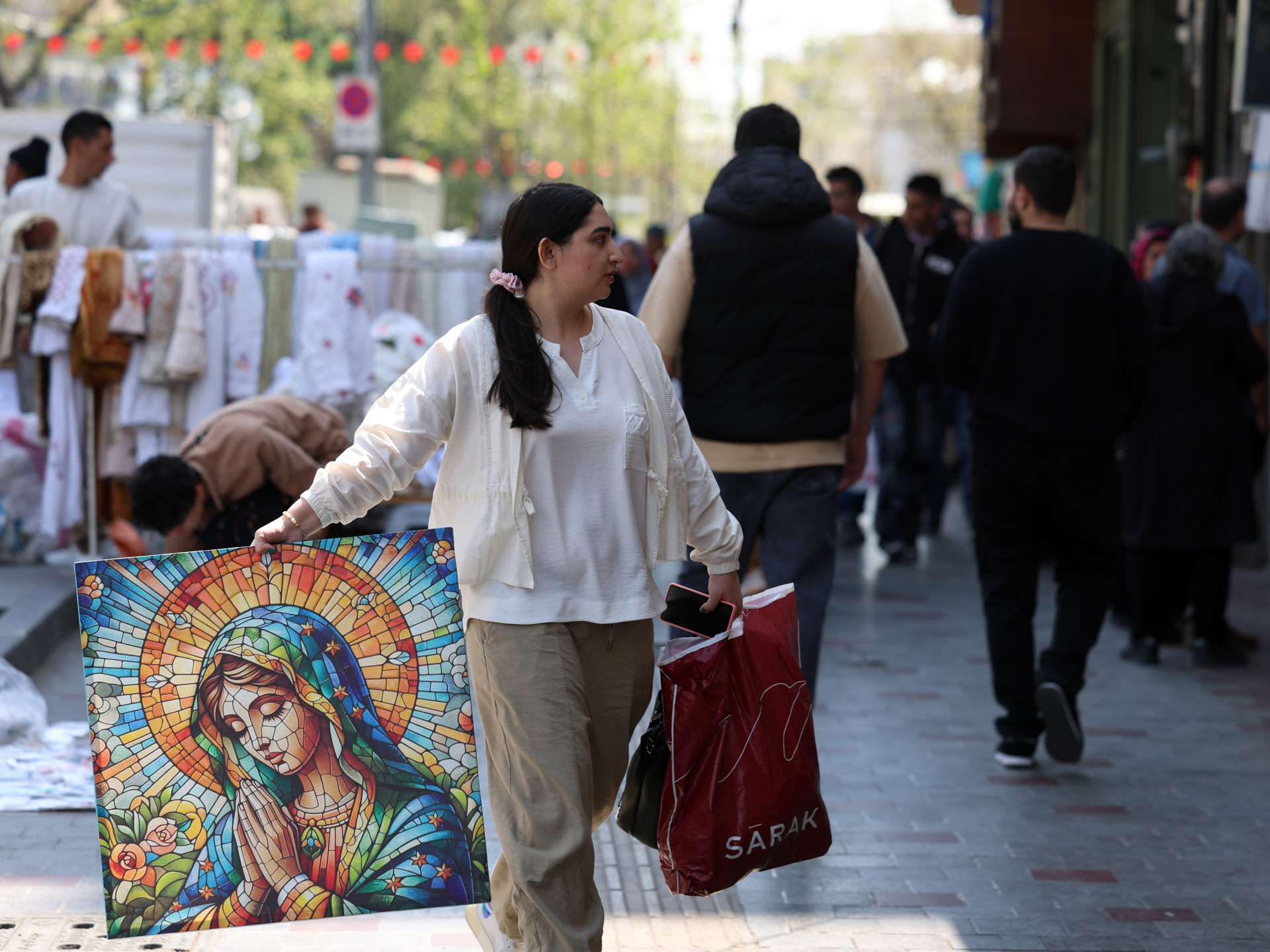
Outside, people are beginning to move through the streets again. For them, perhaps, something is resuming. For me, there is nothing to resume.