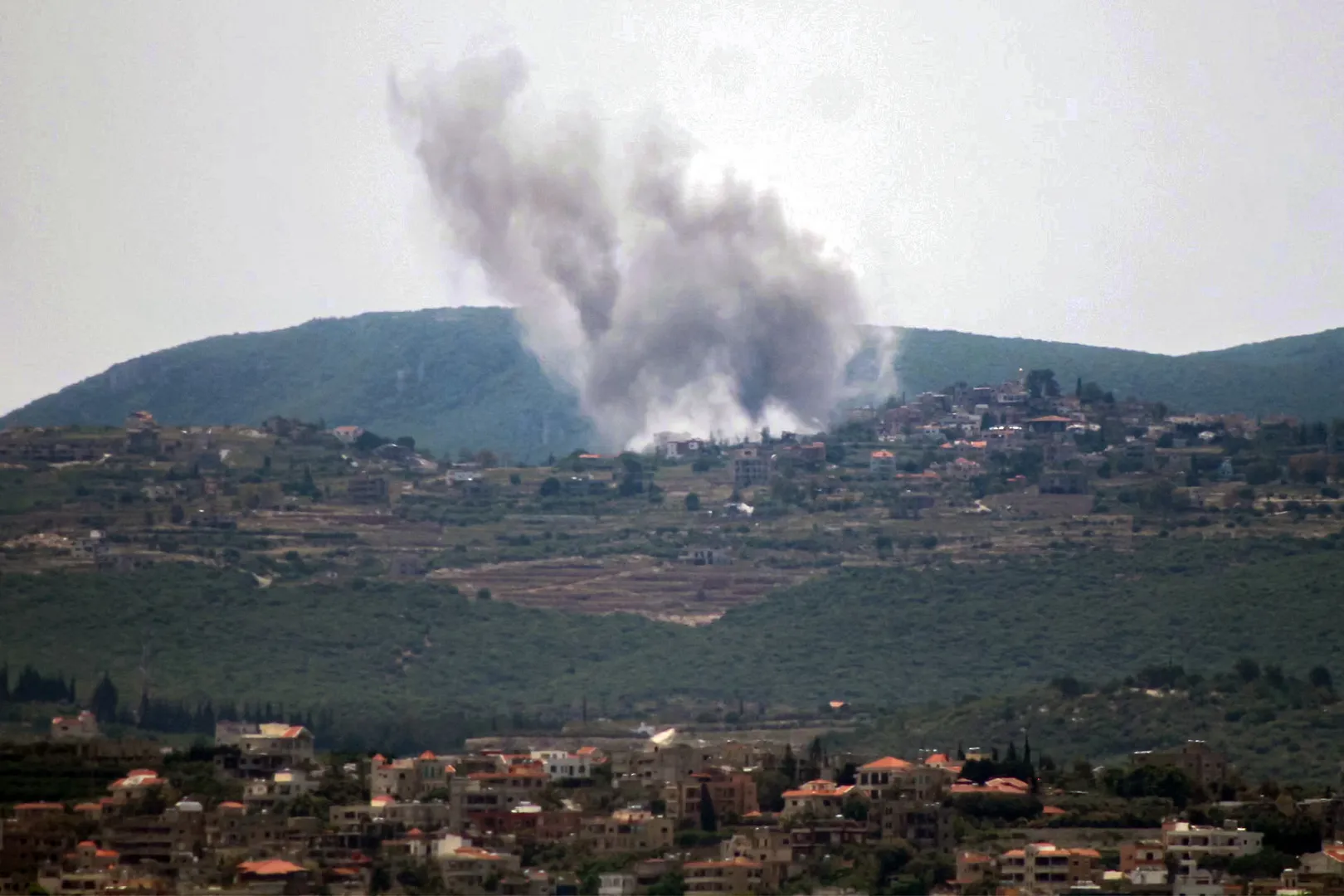
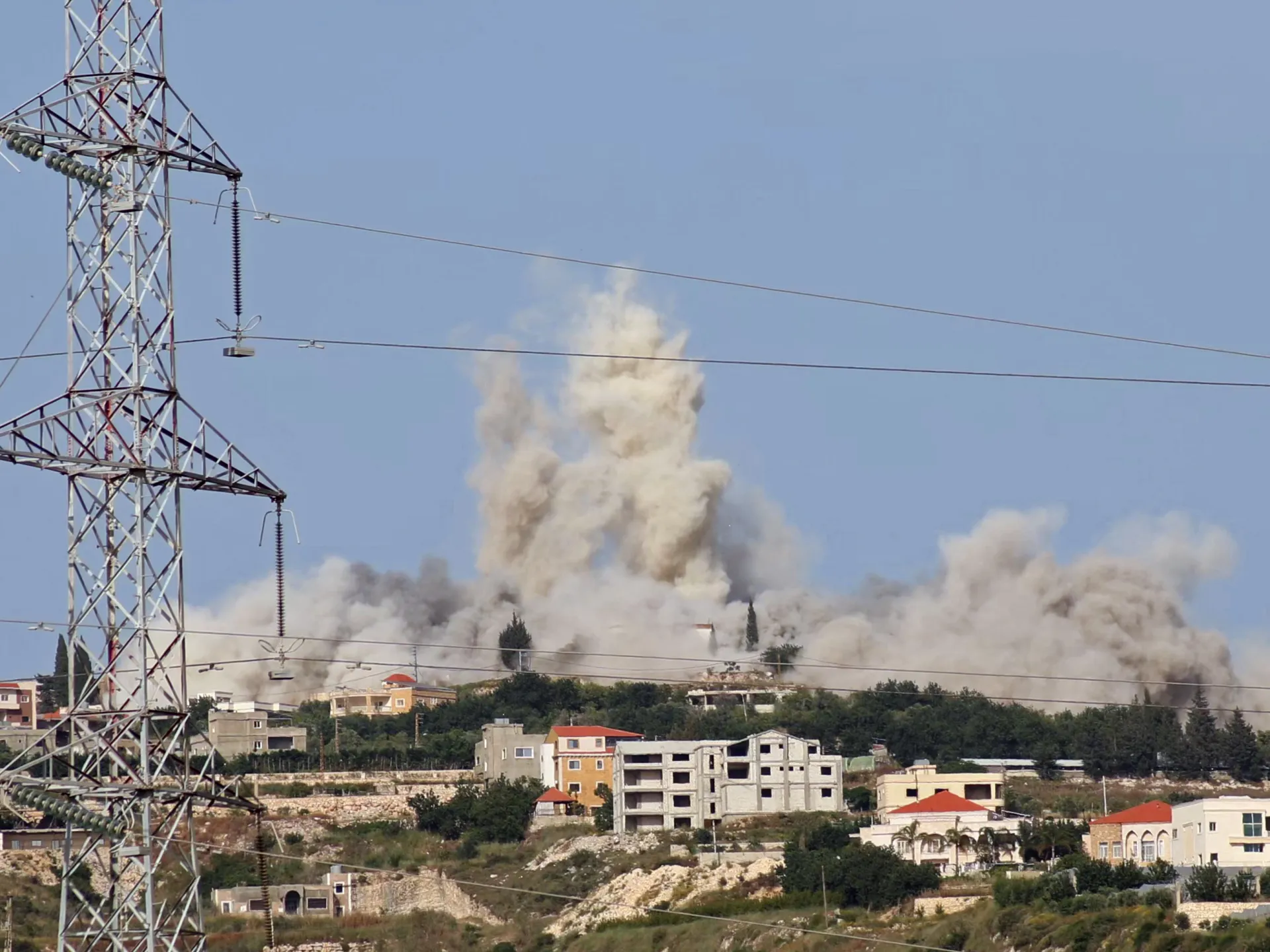
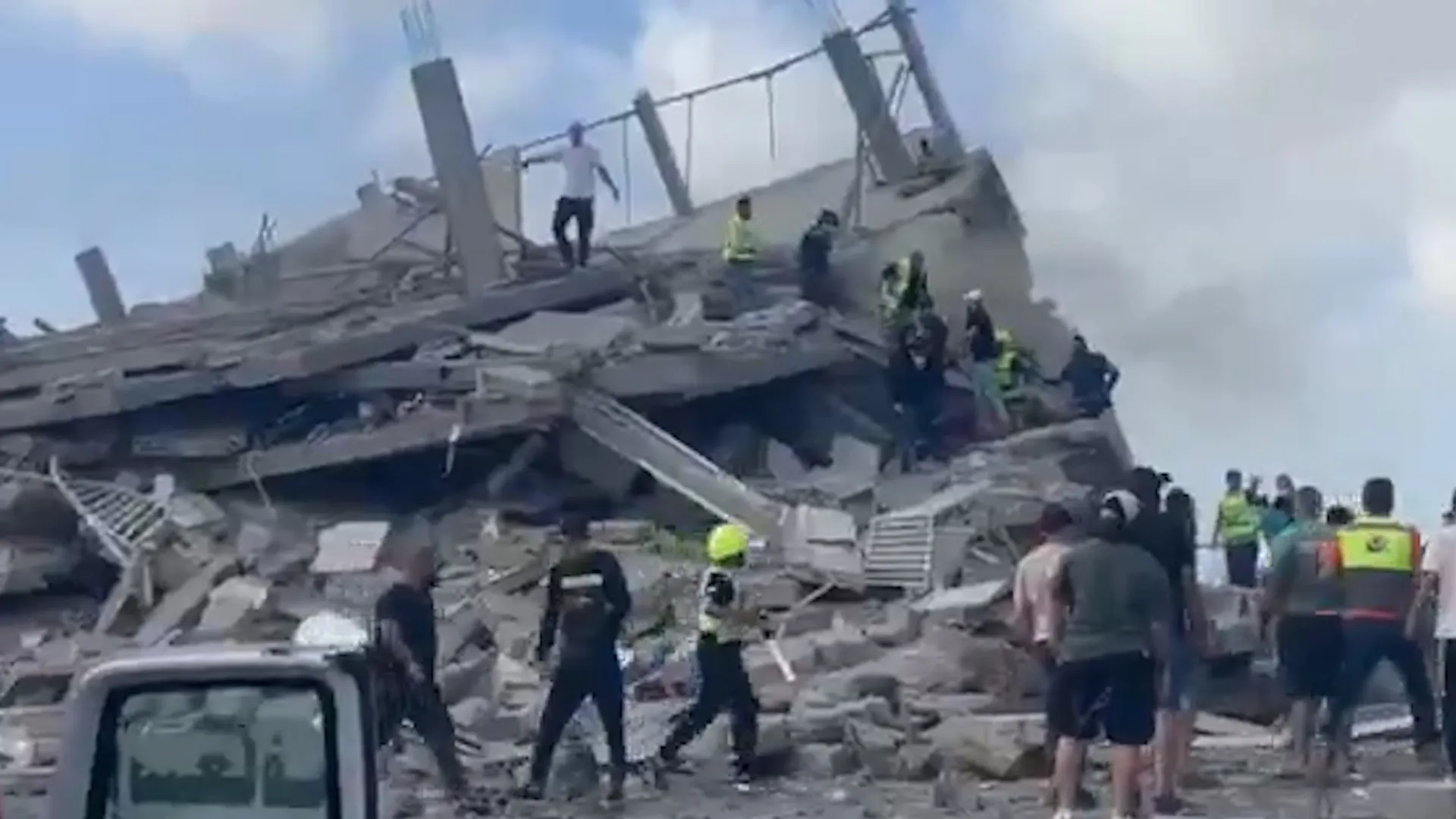
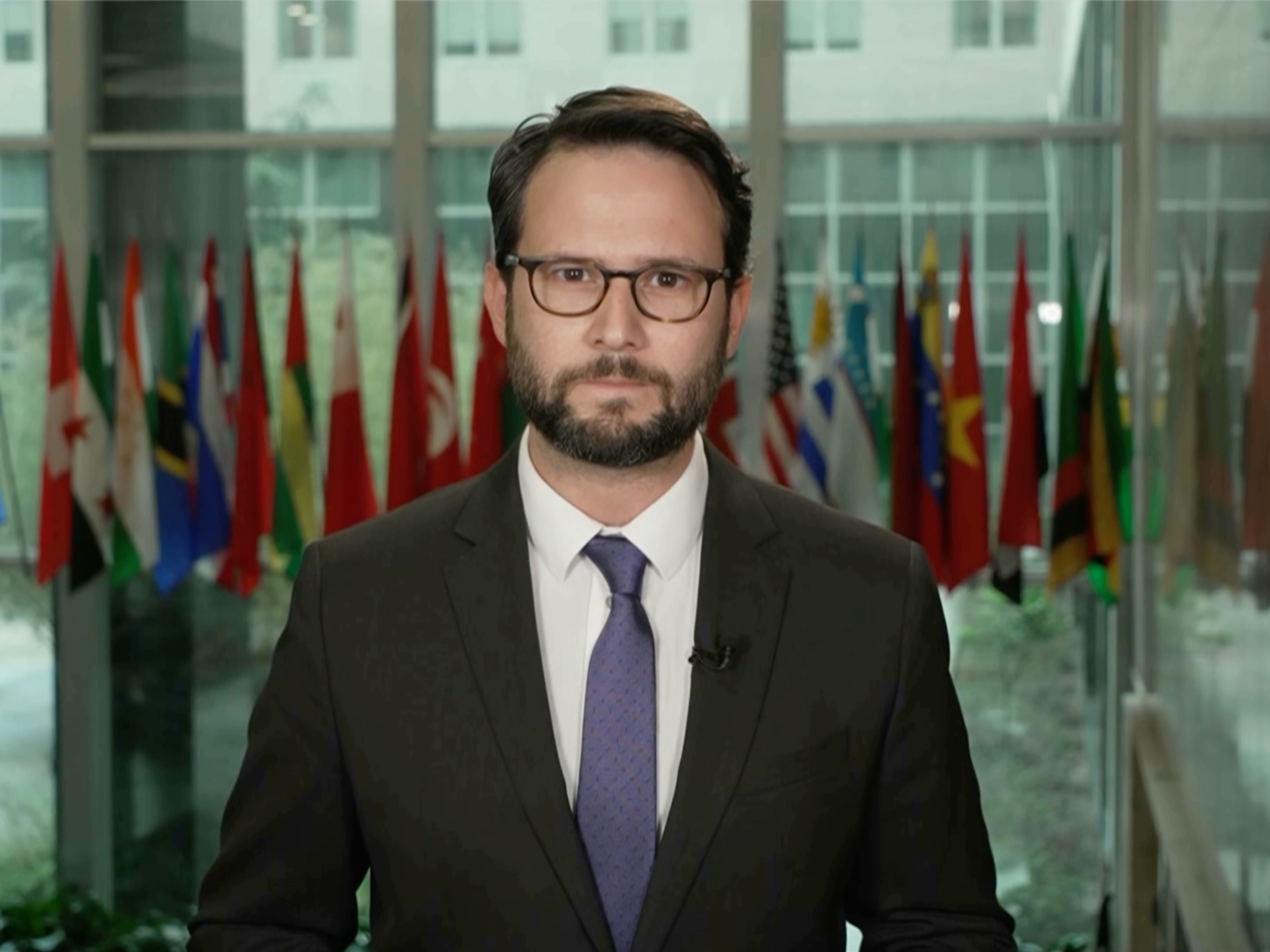
Al Jazeera’s Obaida Hitto reports from Tyre in southern Lebanon on the latest Israeli strikes in the region. At least five people were killed, and another 15 injured in Sunday’s strikes despite Israel agreeing to a ceasefire extension with Lebanon.
At least five people have been killed as Israeli air attacks hit several locations in southern and eastern Lebanon.
A series of Israeli air attacks on southern and eastern Lebanon has killed at least five people and injured more than a dozen, according to the Health Ministry.
According to Lebanon’s state-run National News Agency (NNA), at least three people were also killed in a separate Israeli attack on the village of Jouaiya.
The Israeli military issued forced displacement orders to residents in the villages of Sohmor, Roumine, al-Qusaibah, Kfar Hounah and Naqoura in southern Lebanon.
“It’s been another violent day here in southern Lebanon,” reported Al Jazeera’s Obaida Hitto, from the southern city of Tyre. “As the ceasefire comes into place, we have seen the exact opposite happening with Israel intensifying its attacks,” he said.
At a cabinet meeting on Sunday, Prime Minister Benjamin Netanyahu said Israel was “holding territory, clearing territory, protecting Israel’s communities, but also fighting an enemy that is trying to outsmart us”.
Since the war resumed on March 2, at least 2,988 people have been killed and 9,210 injured in Israeli attacks across the country, the Lebanese Health Ministry said on Sunday.
Talks in Washington
Sunday’s attacks followed talks in Washington, DC, where the two countries agreed a 45-day ceasefire extension – even though the original accord which began on April 17 has never been observed.
The third round of talks in the US capital concluded after the first direct meeting in decades last month between Lebanon and Israel, which do not have diplomatic relations.
NNA reported that the ceasefire extension is intended to allow for a US-facilitated security track to begin on May 29, with the next round of talks between the two sides planned for June 2 and 3 in Washington, DC.
Hezbollah opposes direct negotiations, especially as Israeli forces continue to bomb southern Lebanon and occupy parts of it since the ceasefire.
“The direct negotiations that the authorities in Lebanon have conducted with the Israeli enemy have … led them down a dead-end path that will result in nothing but one concession after another,” Hezbollah legislator Hussein Hajj Hassan said on Sunday.
“Neither they nor anyone else will be able to carry out what the enemy wants, especially when it comes to the issue of disarming the resistance,” he said, adding that authorities were creating “very big predicaments” for the country.
On Saturday, Hezbollah said it struck a military target in northern Israel, having earlier announced several operations against Israeli forces in southern Lebanon.
The war is having a disastrous humanitarian impact. Between March and April, more than 1.2 million people have been forced to leave their homes due to fighting, according to the Danish Refugee Council.
The conflict is pushing the economy towards breaking point. Bassem El-Bawab, head of the Lebanese Business Association, said the country has suffered more than $25bn in direct and indirect losses since Israel’s war started in 2024.
Around $12bn will be needed for reconstruction, with El-Bawab warning that the total could rise further if the conflict continues.
He added that Lebanon is losing about $30m daily in indirect economic damage, alongside the direct destruction of homes, businesses and infrastructure.
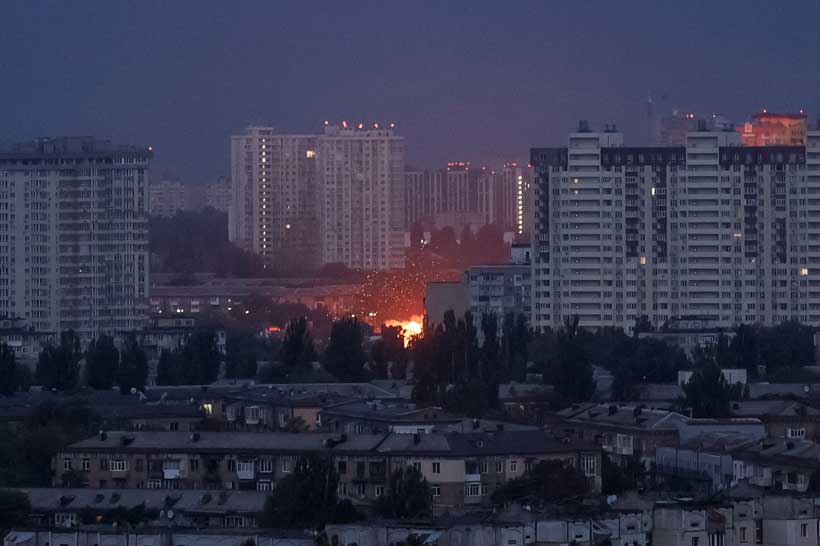
Israeli air strikes across southern Lebanon have caused destruction and casualties, within a day of a ceasefire extension being agreed upon by the two countries for another 45 days.
Al Jazeera’s Manuel Rapalo reports from Washington, where the first of two days of US-mediated ambassador-level talks between Israel and Lebanon concluded on Thursday. A ceasefire between them expires on Sunday, though Israel has killed 512 Lebanese since its implementation on April 17.
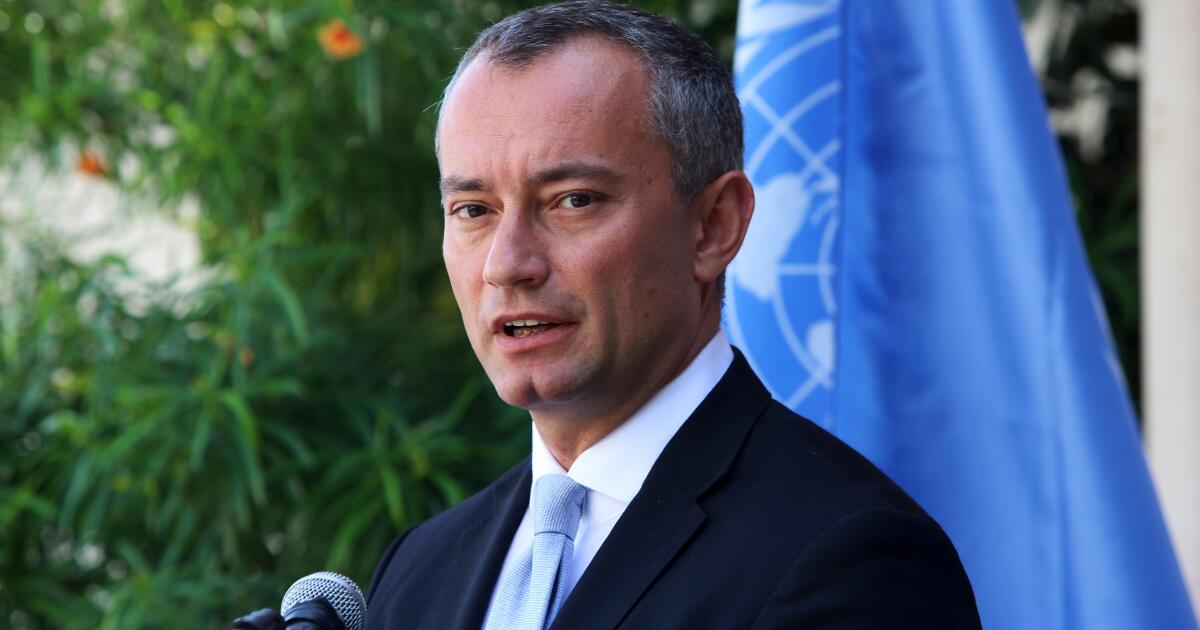
JERUSALEM — Nickolay Mladenov, the top diplomat overseeing the U.S.-brokered ceasefire in Gaza, said Wednesday the truce hinged on Hamas’ disarmament, a sticking point that has stalled progress on other fronts, including rebuilding the mostly destroyed enclave.
The high representative for President Trump’s International Board of Peace in Gaza, Mladenov, said months without progress implementing the deal benefited neither Israel nor Palestinians. He said the phased deal was paralyzed over Hamas not yet disarming, calling it “not negotiable.”
International mediators have long said disarmament is core to the ceasefire, to which Hamas has agreed, but no significant progress has been made toward it. The Palestinian militant group has sought to link any demilitarization to Israeli troop pullbacks. Israel’s military remains in control of more than half of Gaza.
“The only way that we believe that we can ensure that Israeli withdrawal takes place to the perimeter is if we have the full element of the plan unfolding in Gaza,” Mladenov said at a rare press conference in Jerusalem.
Mladenov stated plainly that the plan envisioned in the ceasefire was off to a rocky start. He also said conditions remain dire and miserable for the more than 2 million people in Gaza. He accused both sides of violating the ceasefire but said it had mostly held and staved off the return of full-scale war.
Disarmament is among the most challenging elements of the ceasefire. Hamas, whose founding charter calls for armed resistance against Israel, has been reluctant to give up its arsenal, including rockets, anti-tank missiles, and explosives.
Mladenov did not answer questions about what could lie ahead for Gaza in the absence of disarmament. He criticized Hamas for consolidating power in parts of Gaza under its control, saying it hoped “to squeeze better terms of a negotiation.”
He also said that he could envision a role for Hamas in postwar Gaza if it disarms.
“We are not asking Hamas to disappear as a political movement,” Mladenov told reporters.
Israeli leaders have said they want to destroy the militant group that has governed Gaza for two decades and orchestrated the attack on Israel on Oct. 7, 2023, killing some 1,200 people and taking 251 as hostages.
Israel’s ensuing offensive has killed over 72,724 Palestinians, including at least 846 since a ceasefire took hold last October.
Mladenov’s remarks came as the Board of Peace faces scrutiny, with efforts to advance the phased ceasefire stalled.
The truce envisioned Hamas handing over its weapons, Israeli forces withdrawing and rebuilding destroyed swaths of the coastal enclave after more than two years of war.
Instead, the seven months since the ceasefire have seen Israel and Hamas trade accusations of violations. Aid groups say Israel has not allowed the promised amount of aid in. Hamas has not disarmed and remains in control of roughly half the strip.
Trump’s 20-point plan says that all of Hamas’ “military, terror and offensive infrastructure, including tunnels and weapon production facilities” in Gaza must be destroyed. It also says that weapons must be placed “permanently beyond use.”
Israel and the U.S. say this language is clear and that Hamas must surrender all of its weapons.
Hamas has sought to differentiate between “heavy” weapons, such as rockets, and “light” weapons like rifles and pistols, Hamas officials and mediators say, speaking on condition of anonymity to discuss the negotiations.
Israel has stepped up its attacks in Gaza in recent days, since the U.S.-Iran ceasefire, and many Palestinians fear a return of more airstrikes and full-scale war may be imminent.
The continued clashes and drone strikes reported by Ukraine despite a United States brokered ceasefire reveal the deep structural difficulties facing diplomatic efforts to end the Russia Ukraine war. Although both Moscow and Kyiv formally agreed to a temporary ceasefire between May 9 and May 11, reports of ongoing battlefield engagements, drone operations, and civilian casualties demonstrate how fragile and limited such agreements have become in the context of prolonged modern warfare.
The ceasefire emerged as part of a broader diplomatic push led by United States President Donald Trump to reduce hostilities and create momentum toward wider peace negotiations. However, within days both Russia and Ukraine accused each other of violations, exposing the absence of trust, verification mechanisms, and shared strategic objectives between the two sides.
The developments illustrate a broader reality increasingly visible in contemporary conflicts. Ceasefires no longer necessarily represent steps toward peace. Instead, they often function as temporary tactical pauses within wars that continue politically, militarily, and psychologically even during formal periods of de escalation.
The Structural Fragility of Modern Ceasefires
The Ukraine conflict demonstrates why ceasefires in modern interstate wars are becoming increasingly difficult to sustain. Unlike traditional wars where front lines were relatively static and centralized military command structures exercised greater control, contemporary conflicts involve decentralized operations, drone warfare, rapid communication systems, and continuous battlefield surveillance.
In such environments, even limited military activity can quickly trigger accusations of violations and retaliation. The reported drone attacks, artillery clashes, and combat engagements along the front line reflect how difficult it is to fully halt military operations across an extensive and heavily militarized battlefield.
Furthermore, both Russia and Ukraine continue to pursue strategic objectives incompatible with lasting compromise. Russia seeks to consolidate territorial gains and maintain pressure on Ukrainian forces, while Ukraine aims to resist occupation and preserve sovereignty. Without broader political agreement regarding the war’s fundamental issues, temporary ceasefires remain highly vulnerable to collapse.
The result is a situation where ceasefires may reduce the intensity of conflict in some areas while violence continues in others, creating ambiguity regarding whether peace efforts are genuinely progressing.
Drone Warfare and the Transformation of the Battlefield
One of the most significant features of the current conflict is the central role of drones in sustaining military operations even during ceasefire periods. Ukraine’s military reported thousands of so called kamikaze drone deployments, while Russia simultaneously accused Ukraine of launching drone attacks into Russian territory.
Drone warfare fundamentally alters the nature of ceasefires because unmanned systems allow states to maintain pressure without large scale troop offensives. Drones can conduct reconnaissance, target infrastructure, disrupt logistics, and inflict psychological pressure while remaining below the threshold of full conventional escalation.
This creates a strategic grey zone where both sides can continue military activity while formally claiming commitment to ceasefire agreements. The low cost, flexibility, and deniability associated with drone operations make them especially attractive during periods of limited diplomatic engagement.
The widespread use of drones also reflects the broader transformation of modern warfare into a technologically driven conflict characterized by constant surveillance and persistent low intensity attacks. In this environment, the distinction between war and ceasefire becomes increasingly blurred.
The apparent breakdown of the ceasefire also highlights the growing limitations facing United States led diplomatic efforts. Although Washington remains deeply influential in shaping international negotiations surrounding the conflict, its ability to enforce compliance remains constrained.
Temporary ceasefires require more than political announcements. They depend on verification systems, mutual trust, enforcement mechanisms, and shared incentives for de escalation. None of these conditions currently exist at sufficient levels between Russia and Ukraine.
Moreover, both sides appear to view military pressure as essential to strengthening their negotiating positions. This creates a paradox where diplomacy and warfare occur simultaneously rather than sequentially. Ceasefires therefore become instruments for tactical adjustment rather than genuine pathways toward peace.
The involvement of the United States also introduces additional geopolitical dimensions. Russia continues to frame the conflict as part of a broader confrontation with Western influence, while Ukraine depends heavily on Western military and diplomatic support. These dynamics complicate efforts to establish neutral or mutually accepted mediation frameworks.
Humanitarian Consequences and Civilian Vulnerability
Despite diplomatic initiatives, civilians continue to bear the costs of ongoing violence. Reports of deaths and injuries across regions including Zaporizhzhia, Kherson, Kharkiv, Donetsk, and Mykolaiv demonstrate how even limited ceasefire violations can produce severe humanitarian consequences.
Modern conflicts increasingly expose civilian populations to continuous insecurity because fighting extends beyond conventional front lines. Drone strikes, missile attacks, and artillery exchanges create environments where daily life remains unstable regardless of official diplomatic announcements.
This persistent insecurity also produces long term social and psychological effects. Populations living under repeated cycles of ceasefire and renewed violence may gradually lose confidence in diplomatic processes altogether. Such conditions weaken public trust in negotiations and reinforce perceptions that military outcomes remain more decisive than political agreements.
The humanitarian dimension therefore remains central to understanding the broader implications of the war. Beyond territorial disputes and geopolitical competition, the conflict continues to reshape civilian life, displacement patterns, and regional stability across Eastern Europe.
The Strategic Logic Behind Continued Fighting
The continuation of battlefield clashes despite the ceasefire reflects rational strategic calculations by both parties. Neither Russia nor Ukraine wishes to allow the other side opportunities to regroup, reinforce positions, or gain battlefield advantage during temporary pauses.
For Russia, maintaining pressure along advancing sectors preserves momentum and signals military resolve. For Ukraine, continued resistance demonstrates operational resilience and prevents normalization of Russian territorial control.
This strategic logic makes limited violations almost inevitable in prolonged wars where military outcomes remain uncertain. Ceasefires become fragile because both sides fear that restraint could weaken their broader position in future negotiations or battlefield developments.
The situation also reflects how wars of attrition generate incentives for constant pressure rather than stable pauses. Each side seeks to exhaust the opponent economically, militarily, and psychologically over time.
Analysis
The reported ceasefire violations in Ukraine demonstrate the growing difficulty of achieving meaningful de escalation in modern high intensity conflicts. Temporary agreements may reduce some forms of violence, but they rarely address the deeper strategic, political, and technological dynamics sustaining prolonged warfare.
The Ukraine conflict illustrates several important realities shaping contemporary international security. First, ceasefires without comprehensive political frameworks remain highly unstable. Second, drone warfare and decentralized military technologies blur the distinction between peace and conflict. Third, diplomatic efforts increasingly coexist with ongoing military operations rather than replacing them.
The events also reveal the limits of external mediation in wars where core strategic objectives remain fundamentally incompatible. As long as both Russia and Ukraine continue viewing military pressure as essential to their long term goals, ceasefires are likely to function more as tactical interruptions than genuine transitions toward peace.
Ultimately, the fragility of the current ceasefire reflects a broader transformation in warfare itself. Modern conflicts are no longer defined solely by formal declarations of war or peace, but by continuous cycles of negotiation, limited escalation, technological warfare, and strategic uncertainty.
Oil prices surged in early trade as investors digested the latest developments in the Middle East, with both Brent and US crude climbing over 4%.
ADVERTISEMENT
ADVERTISEMENT
It comes after Trump’s rejection of Tehran’s response to the latest US proposition on bringing the conflict in Iran, and subsequent impact on trade passing through the Strait of Hormuz, to an end.
In other trading, US futures edged lower, while Tokyo’s Nikkei 225 fell 0.4% to 62,486.84 after briefly reaching another record high in intraday trading at above 63,300.
South Korea’s Kospi gained 4.1% to 7,804.71. It also hit an all-time intraday high, led by gains from tech-related stocks including Samsung Electronics and memory chip maker SK Hynix.
Technology-related stocks and growing artificial intelligence-related interest have supported markets in Japan and South Korea despite the Iran war, with the Nikkei 225 and Kospi rising more than 10% and 30%, respectively, over the past month.
Meanwhile, Donald Trump will head to China this week for talks with his counterpart, Xi Jinping. The two leaders are expected to discuss a wide range of topics, including trade concerns.
A fragile ceasefire in the US-Israel war on Iran is coming under growing strain as several Gulf countries have reported drone attacks.
Qatar said on Sunday that a drone struck a cargo ship in Qatari waters, sparking a fire, while Kuwait and the United Arab Emirates said they repelled drone attacks.
Recommended Stories
list of 3 itemsend of list
Though no Gulf country reported casualties in the latest attacks, they have put pressure on the fragile ceasefire, which took effect on April 8.
Qatar’s Ministry of Defence said the freighter had been arriving in the country’s waters from the UAE capital, Abu Dhabi, and was hit by a drone northeast of the port of Mesaieed.
“The vessel continued its journey toward Mesaieed Port after the fire was brought under control,” the ministry said.
The United Kingdom Maritime Trade Operations (UKMTO) said a bulk carrier reported being struck by an “unknown projectile”, and a small fire had been extinguished, but there were no casualties from the incident. “There is no reported environmental impact,” it said.
Kuwait’s Defence Ministry said a “number of hostile drones” were detected in the country’s airspace at dawn. In a post on X, a spokesperson said the drones were dealt with “in accordance with established procedures”, but did not specify where the drones were launched from.
The UAE Defence Ministry said two Iranian drones were intercepted.
“UAE air defence systems successfully engaged two UAVs launched from Iran,” the ministry said in a statement on X.
Ceasefire tested
The Trump administration has said the truce is still in effect, but a naval battle has been taking place in the Gulf region, with Iran restricting traffic through the Strait of Hormuz, a strategic waterway through which a fifth of traded oil transited before the war, and the United States imposing a blockade of Iranian ports.
Several attacks have been reported on ships in the Gulf and the countries in the region over the past week.
On Friday, the US struck two Iranian oil tankers, saying they were trying to breach its blockade of Iran’s ports.
On Tuesday, the UAE said it came under attack from Iranian missiles and drones for the second day in a row. Iran’s Islamic Revolutionary Guard Corps (IRGC), however, denied the claim.
The IRGC Navy on Sunday reiterated its warning that any attack on Iranian oil tankers or commercial vessels would be met with a “heavy assault” on one of the bases in the region used by US forces and enemy ships.
The spokesperson for the Iranian parliament’s foreign policy and security committee, Ebrahim Rezaei, said Tehran’s “restraint is over”.
“Any aggression against our vessels will be met with a heavy and decisive Iranian response against American vessels and bases,” Rezaei wrote on X.
“The clock is ticking against the Americans’ interests; it is to their benefit not to act foolishly and sink themselves deeper into the quagmire they have fallen into. The best course is to surrender and concede concessions. You must get used to the new regional order,” he added.
Talks to end the war
While the truce remains in effect, President Donald Trump has repeatedly threatened to resume the US bombardment if Iran does not accept a deal which includes reopening the Strait of Hormuz and rolling back its nuclear programme.
Iran is still mulling its response to a 14-point proposal by Washington, with Iranian frozen assets and war reparations among other main sticking points.
In a meeting with US Secretary of State Marc Rubio on Saturday, Qatar’s Prime Minister Sheikh Mohammed bin Abdulrahman bin Jassim Al Thani pushed for all parties to respond to the ongoing mediation efforts and to reach an agreement for lasting peace.
Qatar’s prime minister also held a phone call with Iran’s Foreign Minister Abbas Araghchi, the Qatari foreign ministry reported on Sunday.
Sheikh Mohammed told Araghchi that Iran’s use of the Strait of Hormuz as a “pressure card” would only deepen the crisis in the Gulf, and said all parties in the conflict should respond to mediation efforts to end the war.
Reporting from Tehran, Al Jazeera’s Tohid Assadi said when it comes to diplomatic engagement, it seems that the US and Iran want the content of any negotiations to remain private.
Meanwhile, there is a mixture of different sentiments among Iranian citizens, he noted.
“Since the early days of the war, people have gathered to show their sense of nationalism and support for the political establishment,” he said.
“But we also know that there is a sense of frustration, especially when it comes to soaring prices and economic difficulties,” he added.
At a meeting on the reconstruction after damage caused by the war, President Masoud Pezeshkian said negotiations with the US on ending the war do not mean Iran is surrendering.
“The goal is to realise the rights of the Iranian people and defend national interests with authority,” he said.
May 8 (UPI) — Russia and Ukraine on Friday confirmed a three-day cease-fire and prisoner swap, which they said was agreed to after their leaders spoke with U.S. President Donald Trump.
Trump announced in a post on Truth Social that the countries agreed to pause the conflict Saturday through Monday, and for both country to swap 1,000 prisoners each that have been captured during the four-year war.
Ukrainian President Volodymyr Zelensky confirmed the agreement in a post on X, and said that he has instructed his team to “promptly prepare everything necessary for the exchange.”
Russian presidential aide Yuri Ushakov also confirmed the deal, saying that Russian President Vladimir Putin found it acceptable and that Russia “welcomes” it, Turkey’s state-run Anadolu Agency reported.
The deal comes less than a day before Russia celebrates Victory Day, its annual commemoration of the allied powers victory over Nazi Germany in World War II.
“This request was made directly by me, and I very much appreciate its agreement by President Vladimir Putin and President Volodymir Zelenskyy,” Trump said in the post, referring to calls he placed to both leaders and which they confirmed.
“Hopefully, [the cease-fire] is the beginning of the end of a very long, deadly, hard fought War,” Trump said. “Talks are continuing on ending this Major Conflict, the biggest since World War II, and we are getting closer and closer every day.”
The cease-fire in the biggest land war in Europe since World War II will include “a suspension of all kinetic activity,” as well as countries returning 1,000 prisoners each to one another.
Zelensky said there had been appeals and signals about a potential cease-fire to start on Saturday because of Victory Day, which motivated it to negotiate the pause and pursue the return of Ukrainians held during the war.
“An additional argument for Ukraine in determining our position has always been the resolution of one of the key humanitarian issues of this war — namely, the release of prisoners of war,” he said. “Red Square is less important to us than the lives of Ukrainian prisoners who can be brought home.”
Ushakov said that Trump, during the call with Putin, emphasized that Russia and the United States were allies during World War II, pointing to Victory Day as a potential date to start a cease-fire.
“An agreement on this matter was reached during our telephone contacts with the U.S. administration,” Ushakov said. “In turn, U.S. representatives were in contact with Kyiv.”
Preah Vihear/Siem Reap provinces – When asked how she spends her day, 11-year-old Sokna rattled off a list of chores.
She first fetches water, then washes dishes and sweeps the leaves and dust from around the blue tarpaulin tent her family now calls home, in the grounds of a Buddhist pagoda in northwestern Cambodia.
Recommended Stories
list of 4 itemsend of list
Sokna and her sister have stopped attending school, their mother Puth Reen said, since moving to this camp for people displaced by the recent rounds of fighting between Thailand and Cambodia.
The two sisters are among more than 34,440 people who remain in displacement camps in Cambodia – 11,355 of whom are children – as of this month, according to the country’s Ministry of Interior.
“I tried to tell them to go to school, but they don’t go,” Puth Reen told Al Jazeera, explaining how precarious life had become since returning to live in Cambodia after fleeing neighbouring Thailand, where she had worked for many years, as the fighting started.
Like Puth Reen and her family, the future looks murky for the tens of thousands of Cambodians – including many schoolchildren – who are still in displacement camps, and their lives remain disrupted months after the last outbreak of fighting between Thailand and Cambodia.
Forced to flee their homes in areas where local troops are now stationed and on high alert, or in areas occupied by opposing Thai forces, Cambodia’s internally displaced say they are surviving off aid donations, while those more fortunate are transitioning from emergency tents into wooden stilted houses provided by the Cambodian government.
But with tension still evident between the leadership in Bangkok and Phnom Penh, the tenuous ceasefire along the Thai-Cambodia border means life cannot yet return to normality.
Some areas on the Cambodian border, such as the villages of Chouk Chey and Prey Chan in Banteay Meanchey province, have become rallying points for nationalists who post on social media about the Thai occupation of Cambodian territory. Their anger is directed at the large shipping containers and barbed wire that Thai forces have used to block access to villages once inhabited by Cambodians and occupied during fighting.
The Thai military-installed containers now form a sort of new frontier between the two countries.
The Cambodian military has also prevented people, such as local farmer Sun Reth, 67, from returning to their homes in front-line areas, which are still highly militarised zones, with troops ready at any moment for a new round of fighting.
“Now the Cambodian military base is just next to [my house],” Sun Reth said, adding that she was not allowed by authorities to sleep in her modest home or pick cashew nuts from her farm to sell for a little income.
Cambodian children more focused on ‘rumours’ of war
The long-held border dispute between Thailand and Cambodia erupted into two rounds of conflict last year, over five days in July and almost three weeks in December.
Dozens were reported killed on both sides, and hundreds of thousands of civilians fled their homes as both countries’ armed forces fired artillery, rockets, and, in the case of Thailand, conducted air strikes deep into Cambodian territory. Thailand has a modern air force, a military capability not possessed by its smaller neighbour.
Cambodian and Thai officials reached a ceasefire on December 27, but the situation remains tense five months on.
For families who fled the fighting, school continues for most children in the displacement camps, but parents say education is fragmented while their lives are still so unsettled.
Mothers at the Wat Bak Kam camp for the displaced in Preah Vihear province told Al Jazeera that primary school students can join classes at a local school, but high school students need to travel daily to the provincial capital, about 15km (9 miles) away.
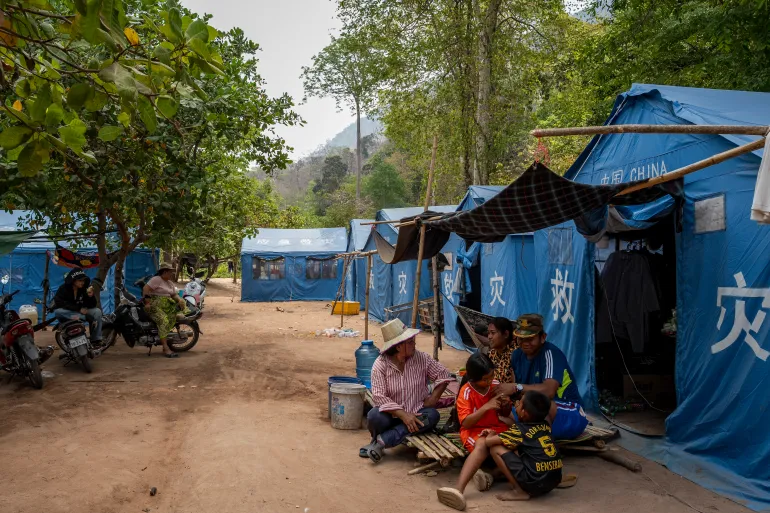
Families living temporarily at the Wat Bak Kam internal displacement camp sit outside their tents, supplied by Chinese government aid [Roun Ry/Al Jazeera]
Now the rising cost of petrol, due to the US-Israel war on Iran, has made it even harder for teenaged students, who have access to motorcycles, to make the journey to school.
Kinmai Phum, technical lead for WorldVision’s education programme, which is providing support to the camps, said school dropout rates and children skipping classes have increased substantially among students from the displaced border regions.
Kinmai Phum said the situation is a perfect storm of problems: Displaced families have been forced to move around for shelters, schools and temporary learning spaces lack facilities, and some students have psychological trauma due to the conflict.
“Local authorities [are] concerned that many children may not return to school at all if displacement and economic hardship persist,” Kinmai Phum said.
Puth Reen, left, and her three daughters sit inside their tent in a camp for the displaced at Wat Chroy Neang Ngourn in Siem Reap province [Roun Ry/Al Jazeera]
Yuon Phally, a mother of two, said she had noticed the impact of the war on her daughter and son, who are in their first and third years in primary school.
When they return from school, Yuon Phally said, they tell her about rumours they had heard about Cambodia and Thailand resuming fighting.
“Their feeling is not fully focused on school; they focus more on these rumours,” she said.
Her children’s world was more impacted by the conflict because their father is a soldier stationed in the Mom Bei area of the border.
During the fighting in December, Yuon Phally said she could not convince her children to go to school because they all waited to see if their father would call on a mobile phone from the front line.
“I couldn’t hold back my tears, and that added more pressure onto my kids,” she said.
“They would ask about their dad and how he is doing now. Then they told me to eat rice. They understood my feelings.”
She said her children’s focus on their studies only improved after their father returned from fighting to the camp where they are staying, to rest and recover from sickness and injuries sustained in battle.
Two construction workers transport corrugated metal sheeting between the newly constructed resettlement houses for displaced Cambodians in Preah Vihear province [Roun Ry/Al Jazeera]
‘Who doesn’t want to have peace?’
Soeum Sokhem, a deputy village chief, told Al Jazeera how his home is located in the militarised “danger zone” along the border, but he feels compelled to return every few days to check on his house, tend crops, sleep an occasional night, and check in with other neighbours doing the same.
“I can’t just stay here”, he said of camp life.
“I have to go back.”
When asked how he felt about the border war, Soeum Sokhem said he had experienced so much war in Cambodia that he did not know how to describe his “inner feeling like I really want to”.
He then listed off all the conflicts he had lived through in Cambodia since the 1960s: The spill over into Cambodia from the US war in neighbouring Vietnam; the US bombing campaign in Cambodia; the genocidal Khmer Rouge regime, and the civil war that followed after Vietnam’s intervention to topple the regime’s leader Pol Pot in 1979, and which lasted until the mid-1990s.
Then in the 2000s, sporadic border fights with Thailand began, he said.
Soeum Sokhem at the internal displacement camp at Wat Bak Kam [Roun Ry/Al Jazeera]
Cambodia’s contemporary history has been anything but peaceful, a fact which might explain why the current Cambodian government so often speaks of peace. Government buildings and billboards proclaim the government’s unofficial motto: “Thanks for peace.”
“But who doesn’t want to have peace?” Soeum Sokhem said, after charting his life and the many conflicts he had lived through.
Now the 67-year-old said he once again hears gunfire occasionally when he returns to check on his home on the front line.
“Before, when I walked there, it was normal,” he said.
“But nowadays, I walk with fear when going back there.”