The United Arab Emirates has agreed to unlock billions of dollars for Iran, pursuing a tactical shift after weeks of Iranian attacks on the wealthy Gulf Arab state amid its ongoing war with the United States and Israel, four sources told the Reuters news agency.
The report on the move coincided with the final stages of broader negotiations between Tehran and Washington to end the war. Diplomats say those talks involve the release of tens of billions of dollars in Iranian oil revenues frozen in foreign banks under US sanctions.
Recommended Stories
list of 3 itemsend of list
Two regional sources told Reuters that the UAE had agreed to release a total of $10bn, more than $3bn of which had already been delivered.
Two other sources with knowledge of the arrangement put the total funds involved at $20bn, adding that the move had been agreed in return for a halt to Iranian attacks on the UAE.
One of the sources with knowledge of the arrangement also said a first tranche of $3bn had already been made available.
Reuters could not establish whether the funds earmarked for the transfers belong to the UAE or originate in long-blocked Iranian accounts in the UAE banking system, or elsewhere.
But a UAE official, asked to comment on the transfer, said the country was trying to ease tension and foster peace.
“The UAE’s foreign policy is guided by promoting de-escalation and reducing tensions across the region, while advancing lasting peace and stability,” the official said.
“The UAE supports efforts, including those undertaken by the United States, to protect the peoples of the region from the repercussions of conflict.”
The White House did not immediately respond to Reuters’s request for comment on the move.
‘Red line’ workaround
Earlier on Friday, Vice President JD Vance said that frozen funds would not immediately be released to Iran upon signing a deal with the US.
He said the potential deal is structured to ensure that economic benefits would flow to Tehran if it meets its obligations.
There was no immediate response from Iranian authorities to a Reuters request for comment on the move.
None of the sources cited by Reuters would agree to be identified due to the sensitivity of the matter.
The arrangement signals a striking pivot from the open animosity of UAE-Iran relations through much of the war, when Iranian attacks emptied Dubai’s hotels, drove some expatriates to flee and shook the reputation for safety that is central to the country’s position as a premier business hub.
One of the sources with knowledge of the arrangement said the move offered a way to help solve the conflict between the US and Iran without either side crossing its red line. Iran can claim it extracted compensation for war damages. Washington can insist it paid nothing.
Abu Dhabi, meanwhile, obtains its own security and protects Dubai’s hub status, while framing the move as an investment in rebuilding regional trust.
The other source with knowledge of the arrangement said that in return for the disbursement, Iran would halt missile and drone attacks on the UAE, and there would be a rebuilding of bilateral ties, including intelligence sharing and economic cooperation.
The source added that Iran had approached at least two other Gulf Arab countries to make a similar arrangement.
The last known direct attack by Iran on the UAE was more than a month ago – a May 4 strike on the Gulf state’s Fujairah port on the Gulf of Oman.
The first source with knowledge of the arrangement said talks had started several weeks ago but quickened pace when officials of Iran’s powerful Revolutionary Guard visited Abu Dhabi last week to meet Sheikh Tahnoun bin Zayed al Nahyan, the UAE’s national security adviser and deputy ruler of Abu Dhabi, and stayed at his guest house.
That trip was followed by a visit by UAE officials to Tehran to negotiate the details of the mechanism.
Frozen funds
Dubai’s banks have long held substantial Iranian-linked deposits, much of them now immobilised under US sanctions that police the global dollar-clearing system and expose any foreign bank dealing with blacklisted Iranian entities to being cut off from the US financial network.
On April 11, a senior Iranian source told Reuters that the US had agreed to release Iranian frozen assets held in Qatar and other foreign banks, although a US official swiftly denied the assertion.
The source, who declined to be named due to the sensitivity of the matter, said that unfreezing the assets was “directly linked to ensuring safe passage through the Strait of Hormuz”, a key issue in talks aimed at ending the conflict.
DUBAI, United Arab Emirates — President Trump threatened Thursday to launch major strikes on Iran and seize control of its oil industry as escalating attacks between the countries pushed the Middle East closer to the resumption of a full-scale war.
Trump said in a social media post that the U.S. would hit Iran “VERY HARD TONIGHT” and would “assume total control” of Iran’s oil and gas industries, including the vital Kharg Island oil terminal, in the “not too distant future.”
The American leader’s latest threats came as efforts to negotiate an end to the war appeared stuck. Trump has voiced his frustration with the stalled negotiations, warning earlier in the week that Tehran would “pay the price” for taking too long to reach a deal.
Iran’s monthslong stranglehold on the Strait of Hormuz has disrupted global energy supplies, driven up fuel prices and made food and other basics more expensive well beyond the region.
The U.S. and Iran traded strikes for a second straight day Thursday after reaching a tenuous ceasefire more than a month ago. While the strikes have increased tensions in the region, they have been more limited compared to the early weeks of the war and negotiations between the U.S. and Iran are ongoing.
Trump’s threats on Thursday, while stark, represented his latest verbal escalation in the Iran war. In April, he warned Iran that “a whole civilization will die tonight, never to be brought back again” if it didn’t agree to his terms, before extending a ceasefire.
Trump weighs trying to seize Iran’s main oil terminal
Kharg Island — located on the other side of the Persian Gulf from U.S. bases in Kuwait and Saudi Arabia — is the beating heart of Iran’s oil industry, through which 90% of its exports pass. It is important because Iran’s coastline is mostly too shallow for tanker ships to dock.
It was unclear how serious Trump was about his threat to seize it.
“My preference has always been to take Kharg Island,” Trump said in an interview Thursday on Fox News. “I don’t know that America has the stomach for it to be honest.”
American troops would be vulnerable on Kharg Island because of its close proximity — about 21 miles — to the Iranian mainland, from which missiles, drones and artillery could be fired.
Trump indicated in the interview that he remains averse to sending U.S. forces into Iran. “We could walk in there tomorrow. We could take soldiers — I don’t want to have boots on the ground. But if I wanted to we could put a small group of soldiers and take over the place.”
Trump compared his threat to take over Iran’s oil industry to how the U.S. assumed control of Venezuela’s oil sector after capturing then-president Nicolás Maduro in January.
Iran says US attacks have made ceasefire `meaningless’
American strikes on Iran that lasted into Thursday morning appeared more intense and widespread than the day before.
Tehran released little information on the extent of the damage and said it fired back at Kuwait, Bahrain and Jordan, as it had the previous day.
It was the third time this week that back-and-forth strikes have rattled the Middle East. The first involved attacks between Iran and Israel, followed by the two rounds of fire between the U.S. and Iran, which hit countries in the region that host American bases.
Iran’s Foreign Ministry said in a statement Thursday that the U.S. attacks had “effectively rendered the ceasefire … meaningless,” without saying it was abandoning it.
U.S. Treasury Secretary Scott Bessent said in a social media post that the U.S. would extract funds from frozen Iranian accounts to offset the costs of damage to American allies as well as any tolls Iran imposes on ships seeking passage through the Strait of Hormuz.
Beyond the deadlock over the strait, the two sides also remain at odds over Iran’s nuclear program, which Tehran insists is peaceful but which the U.S. and Israel fear could be used to build an atomic weapon due to its stockpile of highly enriched uranium. The U.S. and Israel said a major reason they went to war on Feb. 28 was to ensure that Iran would never be able to do that.
Iran has insisted that any deal to end the war must also end fighting in Lebanon between its ally Hezbollah and Israel. But Israeli Prime Minister Benjamin Netanyahu appears intent on pursuing his goal of destroying the militant group.
U.S. strikes Iran and Iran fires back at Gulf states
Central Command said its latest round of airstrikes came “in response to Iran’s unwarranted and continued aggression” and targeted “Iranian military surveillance capabilities, communication systems and air defense sites.” It did not elaborate on the damage done by the strikes, which it said ended just before sunrise Thursday in Iran.
Explosions from the strikes echoed around Iran’s capital, as well as the port city of Bandar Abbas and other southern areas along the Strait of Hormuz. Iran’s paramilitary Revolutionary Guard later said sites hit included a manufacturing complex, a military barracks and a local Guard base outside of Tehran.
Kuwait closed its airspace for several hours because of the attack, but did not elaborate on any damage. Jordan said it intercepted 20 Iranian missiles fired toward an area that is home to a base hosting U.S. troops, though no one was hurt.
Bahrain’s Interior Ministry said an 11-year-old girl was hurt and cars and homes were damaged by debris from interceptions responding to the Iranian attack.
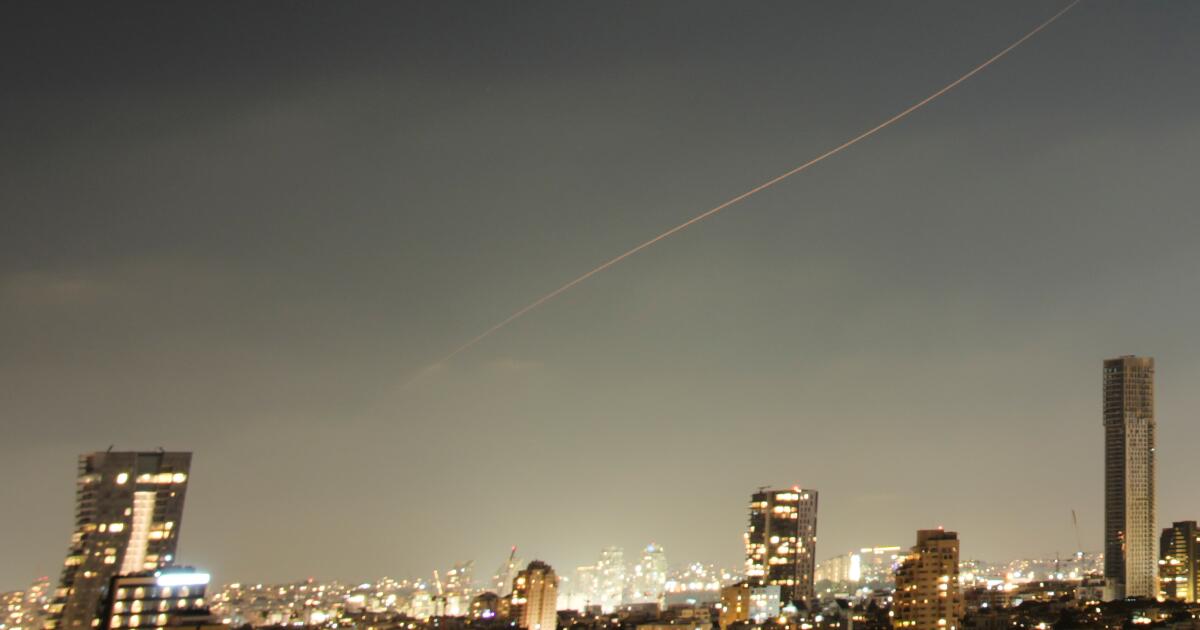
Meanwhile, Israel warned residents in the country’s north to seek shelter after the detection of suspected incoming fire from Lebanon, where Israel is fighting the Iran-allied Hezbollah militant group.
U.S. fires on another merchant ship to enforce blockade
The U.S. military’s Central Command said Thursday that it struck a Guinea-Bissau-flagged tanker attempting to evade the American blockade on Iranian ports. It said the M/T Jalveer was transporting Iranian oil when it was disabled late Wednesday after its crew failed to obey U.S. orders.
It’s the ninth merchant vessel the U.S. military says it disabled to enforce the blockade.
Three Indian sailors were killed when American forces struck the Palau-flagged M/T Settebello on Tuesday, India’s minister overseeing ports and shipping said Thursday on X.
U.S. Central Command said American forces issued warnings before firing on the ship, which it accused of trying to evade the blockade.
The leader of the International Maritime Organization, a United Nations agency, condemned the attack.
Gambrell and Madhani write for the Associated Press. Madhani reported from Washington. AP writers Will Weissert, Collin Binkley, Michelle L. Price and Konstantin Toropin in Washington; Sheikh Saaliq in New Delhi; Munir Ahmed in Islamabad, Victoria Eastwood in Cairo and Russ Bynum in Savannah, Ga., contributed to this report.
Weekly insights and analysis on the latest developments in military technology, strategy, and foreign policy.
U.S. President Donald Trump told reporters today that in the wake of overnight attacks between the U.S. and Iran, strikes on Iran will continue. Meanwhile, Iranian officials say they are “reviewing” whether to continue peace talks after one of the most serious exchanges of fire between the two nations since the April 8 ceasefire.
Though damage assessments are still ongoing in the wake of Iranian missiles and drones launched across the Middle East overnight, a U.S. official told TWZ Wednesday morning that so far, there have been no injuries among U.S. personnel reported and no indication yet of any damage to American installations. That’s despite Iranian claims to the contrary.
“Iran launched multiple missiles and drones and just about all were intercepted according to initial reflections from assessments that are ongoing,” the official told us, speaking on condition of anonymity to discuss operational details. “No reports of harm to any U.S. personnel; not aware of any damage to our locations at this time.”
Several videos emerging overnight claimed to show missile interceptions and explosions resulting from the latest Iranian kinetic actions.
Some showed missile interceptions over Muwaffaq Salti. As we have frequently noted, the base has been a major staging area for U.S. airpower in the region. It came under Iranian attack before the ceasefire, with an AN/TPY-2 missile defense radar there having been notably targeted.
Footage shows air defense interceptors engaging incoming Iranian ballistic missiles over Jordan.
Iran’s Islamic Revolutionary Guard Corps (IRGC) says it targeted Jordan’s Muwaffaq al-Salti Air Base, along with 20 other U.S. military sites across the region. pic.twitter.com/RxKHsNaQur
Additional video shows what appears to be an explosion in the distance as viewed from a CCTV camera in Manama in the wake of a claimed Iranian missile launch at Fifth Fleet headquarters. The extent of the damage, if any, is unknown.
CCTV footage shows an explosion in Bahrain’s capital Manama after what authorities say was an Iranian missile strike.
Iran’s IRGC says it hit US military bases in Bahrain, Kuwait and Jordan in retaliatory attacks for US strikes in the Strait of Hormuz. pic.twitter.com/4eKzhBa1np
The Islamic Revolutionary Guard Corps (IRGC)-connected Tasnim News Agency also posted a video it claims shows an attack on the Fifth Fleet. The short video shows what appears to be an explosion in the distance and again, there is no way to tell what, if any damage, was caused.
The Kuwaiti Foreign Affairs Ministry condemned the latest Iranian strikes and said the nation “reserves its full right to take all necessary measures to preserve its security and defend its territories and vital facilities, in accordance with international law and the United Nations Charter.”
بيان صادر عن وزارة الخارجية الأربعاء 10 يونيو 2026
تُعرب وزارة الخارجية عن إدانة دولة الكويت واستنكارها وبأشد العبارات، استمرار الاعتداءات الإيرانية الآثمة والمتكررة على دولة الكويت، والتي كان آخرها اليوم، في تصعيد جديد يُضاف إلى سلسلة الاعتداءات الإيرانية المتواصلة، ويُعد… pic.twitter.com/7H1TFQNqMv
Iran said its latest volley of kinetic actions were in response to what U.S. officials say were strikes on 20 Iranian targets in response to the helicopter downing.
The United States and Iran traded strikes overnight.
20 Iranian targets were hit by U.S. forces, including air defense systems and radar sites.
This latest flurry of strikes prompted comments about the future of diplomacy from both sides.
During a morning press conference, Trump said “we hit ’em hard yesterday, and we’re going to hit ’em again hard today, in case you miss it, in case you don’t turn on your television set, and we’ll see what happens with the deal.”
.@POTUS on Iran: “We hit them hard yesterday and we’re going to hit them again hard today… And we’ll see what happens with the deal. We were really close to a deal — but they keep tapping us along. They keep playing us for suckers because you know what? They dealt with some… pic.twitter.com/ScvGn14QFQ
— Rapid Response 47 (@RapidResponse47) June 10, 2026
Earlier on Wednesday, Trump told Fox News that there may be additional U.S. attacks that focus on “Iranian power plants and bridges.”
NEW: President Trump tells me he “may keep going” with strikes against Iran and is getting closer to targeting Iranian power plants and bridges.
The President also spoke about the U.S. military helicopter that was downed saying that an Iranian drone lodged between the two… pic.twitter.com/j5aQEIzi9s
The president’s comments to Fox follow statements he made on his social media outlet saying Iran has taken too long to agree to a peace deal.
“Iran’s Military is a complete and total mess,” Trump said on Truth Social. “Much of it, like their Navy and Air Force, doesn’t even exist anymore – They have been completely defeated. Iran is all talk and no action. The Bully of the Middle East is DEAD!!! They’ve taken too long to negotiate a deal that would have been great for them, now they will have to pay the price!!!”
Trump did not elaborate on what that price may be.
As we noted earlier in this story, Iran is reassessing the future of diplomatic negotiations aimed at ending the US-Israeli war against the country, according to the official Iranian IRNA news outlet.
“We have to review it,” Iranian Foreign Ministry spokesperson Esmaeil Baqaei told IRNA. “Diplomacy and the battlefield are not separate matters; rather, they run alongside and complement each other in safeguarding Iran’s interests and security.”
Baqaei stressed that Iran’s military and diplomatic tracks operate in coordination.
“Wherever the Armed Forces deem it necessary, they respond to the enemy with authority and strength, and last night’s events showed that Iran’s brave Armed Forces do not hesitate in defending the country,” he posited.
ایرانی وزارت خارجہ کے ترجمان اسماعیل بقائی کا کہنا ہے کہ حملوں کے بعد امریکا کے ساتھ مذاکرات کا ازسرنو جائزہ لے رہے ہیں، امریکا اور اسرائیل بار بار جنگ بندی کی خلاف ورزی کررہے ہیں۔
انہوں نے کہا کہ مذاکرات کو آگے بڑھانے کیلئے پرسکون ماحول بہت ضروری ہے، بدقسمتی سے واشنگٹن کے… pic.twitter.com/1nGcYA3fmN
Despite the flare-up in fighting and posturing by both sides, negotiations appear to be continuing.
“Following consultations with the United States, Qatari negotiators headed to Tehran this morning to meet with the Iranians in an attempt to bridge the remaining gaps,” CNN reported on its Arabic channel, citing a source. “The visit indicates that diplomacy remains active, despite an exchange of fire between Iran and the United States overnight—marking one of the most significant tests of the ceasefire to date. A US official told CNN that the United States believes these strikes will not derail the negotiations.”
مصدر دبلوماسي لـCNN: مفاوضون قطريون توجهوا صباح الأربعاء إلى طهران لسد الفجوات المتبقية مع أمريكا https://t.co/IIkMnAmHkt
At issue remains the future of Iran’s nuclear ambitions, the ongoing closure of the Strait of Hormuz, Tehran’s ballistic missile arsenal and support for proxies and the easing of U.S. sanctions. Whether the increased fighting between the two sides will derail these efforts remains an open question.
UPDATES
Iran claims it downed another U.S. MQ-9 Reaper drone overnight. While TWZ can’t verify that, we have noted that the loss of dozens of these drones to Iran and the Houthis have forced the U.S. Air Force to scramble for replacements.
A cargo ship came under small arms fire 88 nautical miles south of Balhaf, Yemen in the Gulf of Aden, according to the United Kingdom Maritime Trade Operations (UKMTO) monitoring organization.
“A cargo vessel has reported being approached by one craft with 6 armed persons onboard,” UKMTO explained. “There was an exchange of fire between the small craft and the cargo vessel’s Armed Security Team resulting in the small craft turning away. Authorities are investigating. Vessels are advised to transit with caution and report any suspicious activity to UKMTO.”
While details about who was involved are scant, this is the first attack in the region, near the Bab al-Mandeb Strait, since the Houthi rebels of Yemen threatened to shut the vital waterway down in support of Iran last week. You can read more about the implications of the Iranian proxy group closing the Strait on the U.S. military and the global economy in our prior reporting here.
In a post on X, CENTCOM on Wednesday announced it disabled an oil tanker trying to run the blockade of Iranian ports.
The incident took place at 11:14 p.m. on June 9, when a U.S. aircraft “fired precision munitions” into the engine room of the Palau-flagged M/T Settebello as it transited the Gulf of Oman.
The ship was attempting to transport oil from Iran, the command added.
In addition to the ships it disabled, CENTCOM said it has “redirected 134 ships that complied, and allowed 42 vessels supporting humanitarian aid to pass since initiating the blockade on April 13.”
You can read more about the other seven ships hit by CENTCOM here.
CENTCOM:
At 11:14 p.m. on June 9, U.S. forces disabled an oil tanker in the Gulf of Oman for the second consecutive day after another vessel violated the ongoing blockade by attempting to transport oil from Iran.
When it comes to the Strait of Hormuz and Gulf of Oman region, Trump took to social media to say the ongoing blockade of Iranian ports has devastated Tehran’s economy.
“The Fake News Media refuses to report how EFFECTIVE the U.S. Naval BLOCKADE is, the most successful Blockade in the history of Naval Warfare,” the president proclaimed on Truth Social. “NOTHING GETS THROUGH unless we want it to. IT IS A STEEL WALL! Iran is doing ZERO business, not paying their military, or any of their bills, and quickly becoming a FAILED NATION! Lots of oil is getting out. Praise be to Allah!”
President Donald J. Trump has taken to Truth Social again decrying the “fake news media” coverage of the naval blockade of Iran saying that it is a “STEEL WALL”, Iran is doing “ZERO business, not paying their military or any of their bills, and quickly becoming a FAILED NATION!”… pic.twitter.com/DcCHVebRX7
However, in a post on X, the Windward trade intelligence group said that “five Iranian-trading [liquified petroleum gas] LPG carriers have broken the U.S. blockade on Iranian ports,” Windward stated. “Four discharged in India, one in Pakistan. All five used the same playbook, spoofing and AIS blackouts to mask loading and destination. Yet all signaled their exit and/or entry through Hormuz via AIS. Three were already U.S.-sanctioned. A fourth sanctioned June 6. Two operated under false flags, making them legally stateless.”
However, the crude oil blockade is holding, Windward added.
“No Iran-trading VLCC tracked in Asia via Malacca, Sunda, or Lombok since May 4,” the organization noted.
Five Iranian-trading LPG carriers have broken the U.S. blockade on Iranian ports. Four discharged in India, one in Pakistan.
All five used the same playbook, spoofing and AIS blackouts to mask loading and destination. Yet all signaled their exit and/or entry through Hormuz via… pic.twitter.com/iWBqGHSrBl
U.S. Secretary of War Pete Hegseth is scheduled to visit CENTCOM headquarters in Tampa, Florida, today to discuss the ongoing situation with the head of that command, Adm. Brad Cooper, and engage with troops.
Secretary Hegseth will be traveling to Guantanamo Bay, Cuba and Tampa, Florida today to engage with troops at GTMO and CENTCOM, per Pentagon.
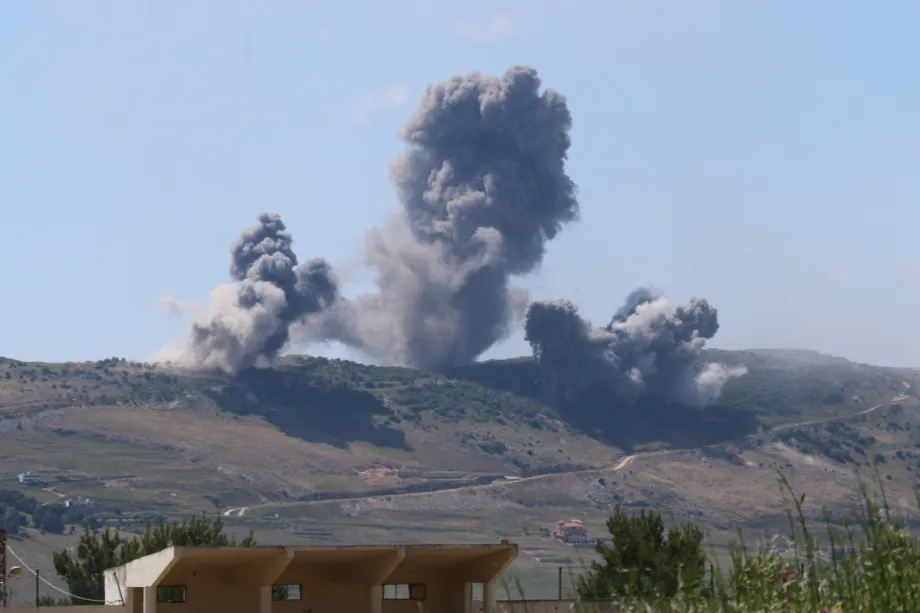
Despite efforts to quell the fighting between Israel and Hezbollah in southern Lebanon, the Israeli Air Force continues to strike targets in that country.
“Over the past day, the IDF struck Hezbollah infrastructure sites in the area of Tyre and in several areas in southern Lebanon,” the IDF stated on Telegram.
“In the area of Tyre, the IDF struck six infrastructure sites used by the Hezbollah terrorist organization to advance terror attacks against the State of Israel and IDF soldiers operating in southern Lebanon,” the IDF added. “Among the infrastructure struck was a site used by Hezbollah terrorists to launch explosive drones toward IDF soldiers.”
In southern Lebanon, “the IDF struck ready-to-use Launchers, terrorists who operated in the area in which IDF soldiers are operating, and additional terror infrastructure sites,” it claimed.
השמדת תשתיות טרור מהן הופעלו רחפני הנפץ נגד כוחותינו: חיל-האוויר וכוחות יחידת האיסוף 869 ממשיכים לפעול בדרום לבנון.
במהלך השבועיים האחרונים, הכוחות חיסלו בשיתוף חיל-האוויר יותר מ-20 מחבלים שפעלו לקידום מתווי טרור והיוו איום על כוחותינו. בנוסף הכוחות השמידו מספר תשתיות טרור… pic.twitter.com/Mysi9BMXHW
Hezbollah, meanwhile, attacked a gathering of Israeli troops with a missile, according to Tasnim.
The ongoing Israeli incursion into southern Lebanon and continuing presence in Syria has raised tensions with Turkey. Any direct conflict flaring up from the long-simmering animosity between two of the region’s most powerful militaries – though extremely unlikely – would be a far bigger deal than a dertailment of U.S.-Iran peace talks.
“We are fully aware of what the ultimate objective of the delusion of ‘Greater Israel’ is,” Turkish President Recep Tayyip Erdoğan said Wednesday, adding that Israel’s actions in Lebanon and Syria now threaten Turkey.
Turkish President Recep Tayyip Erdogan:
Israel’s attacks on Syria and Lebanon have reached a point where they also threaten Turkey.
— Ariel Oseran أريئل أوسيران (@ariel_oseran) June 10, 2026
The Turkish leader’s statements sparked a harsh response from Netanyahu.
“The antisemitic tyrant Erdogan, who perpetrates genocide against the Kurds, supports the terrorist organization Hamas, oppresses his own people, and imprisons political rivals, is the last one who can preach morals to the State of Israel,” the Israeli leader retorted. “The State of Israel and the IDF, the most moral army in the world, will continue to act forcefully against Iran and its proxies that threaten the Middle East and the entire world.”
הרודן האנטישמי ארדואן שמבצע רצח עם בכורדים, תומך בארגון הטרור חמאס, מדכא את בני עמו ושם בכלא יריבים פוליטיים הוא האחרון שיכול להטיף מוסר למדינת ישראל.
מדינת ישראל וצה”ל, הצבא המוסרי ביותר בעולם, ימשיכו לפעול בעוצמה נגד איראן ושלוחותיה שמאיימות על המזרח התיכון ועל העולם כולו.
— Benjamin Netanyahu – בנימין נתניהו (@netanyahu) June 10, 2026
The latest events in the Mideast region show that there is no immediate end in sight to the hostilities and we will continue to monitor developments here given the ongoing impacts on the U.S. military and global economy.
UPDATE: 3:01 PM EDT –
Trump claimed the price of oil will fall because of how much has been secretly moved out of the region.
“We’re taking about millions of barrels of oil,” the president told reporters Wednesday afternoon.
.@POTUS on Iran: “Did you know we’ve been taking out millions of barrels of oil? Nobody knows it. You know who doesn’t know about it? Iran — until right now. We took out, the other night, 22 ships.” pic.twitter.com/2odiLYXDJ3
— Rapid Response 47 (@RapidResponse47) June 10, 2026
On his Truth Social, Trump claimed that last month, he “directed our Great U.S. Military to execute a secret mission to support Oil Tankers and other Commercial Ships through the Strait of Hormuz.”
“Today, I am pleased to announce that this effort has resulted in more than 100 MILLION Barrels of Oil making its way through the Strait, and into the Open Market,” he added. “More than 200 Commercial Ships have safely traveled through the Strait. This wildly successful effort is because the UNITED STATES of AMERICA CONTROLS the Strait of Hormuz — NOT Iran. Their military is defeated, and their economy is lost. It’s over for Iran!”
BREAKING: President Trump says he directed the US Military to execute a “secret mission” in the Strait of Hormuz which resulted in over 100 million barrels of crude oil crossing through Hormuz. pic.twitter.com/bSYeetbHH4
— The Kobeissi Letter (@KobeissiLetter) June 10, 2026
However, TankerTrackers.com clarified that the president was referring not to Iranian oil, but Arab oil.
There is now a public misunderstanding regarding President Trump’s statement. It is not Iranian oil that he is talking about. Those are still trapped. Instead, it appears to be the secured convoys of Arab oil into the Gulf of Oman via the Strait of Hormuz. This explains why… https://t.co/fEgyzY3gnX
— TankerTrackers.com, Inc. (@TankerTrackers) June 10, 2026
UPDATE: 3:39 PM EDT –
Hegseth thanked troops at CENTCOM headquarters in Tampa, Florida, for their efforts in the Middle East.
.@SECWAR spoke with troops at U.S. Central Command:
“On behalf of the President of the United States—on behalf of the American people—I want to say how proud we are of the work @CENTCOM has undertaken.” pic.twitter.com/SkDuqzS3UW
The Secretary-General of the International Maritime Organization (IMO) “has expressed deep concern and strong condemnation of the attack on the tanker MT Settebello,” according to the organization.
“I strongly condemn any act from any party that endangers the lives of seafarers and the safety of international shipping,” said Secretary-General Arsenio Dominguez. “This is simply unacceptable. My thoughts are with the families of the three missing seafarers and with all those awaiting news of the crew members.”
Two Indian seafarers died and one was reported missing after the attack, according to The Hindu.
BEIRUT — Israel and Iran traded fire on Monday, all but derailing a brittle two-month ceasefire that had largely stopped the fighting in the U.S and Israel’s assault on Iran.
The tit-for-tat attacks between the two sides threaten to widen the scope of a conflict that has already killed and wounded thousands, displaced more than a million people and rattled economies across the globe — even while embroiling the U.S. in a war with no clear off-ramp.
“Israel and Iran must immediately stop ‘shooting.’ ” wrote President Trump early Monday on his social media platform, Truth Social.
Later, he wrote, “Both sides, Israel and Iran, are looking to do an immediate CEASEFIRE!”
“Final negotiations on ‘Peace’ are proceeding, subject to ignorance or stupidity getting in its way. The Blockade will remain in place, and in full force and effect, until a ‘Final Deal’ is reached. Things should move quickly.”
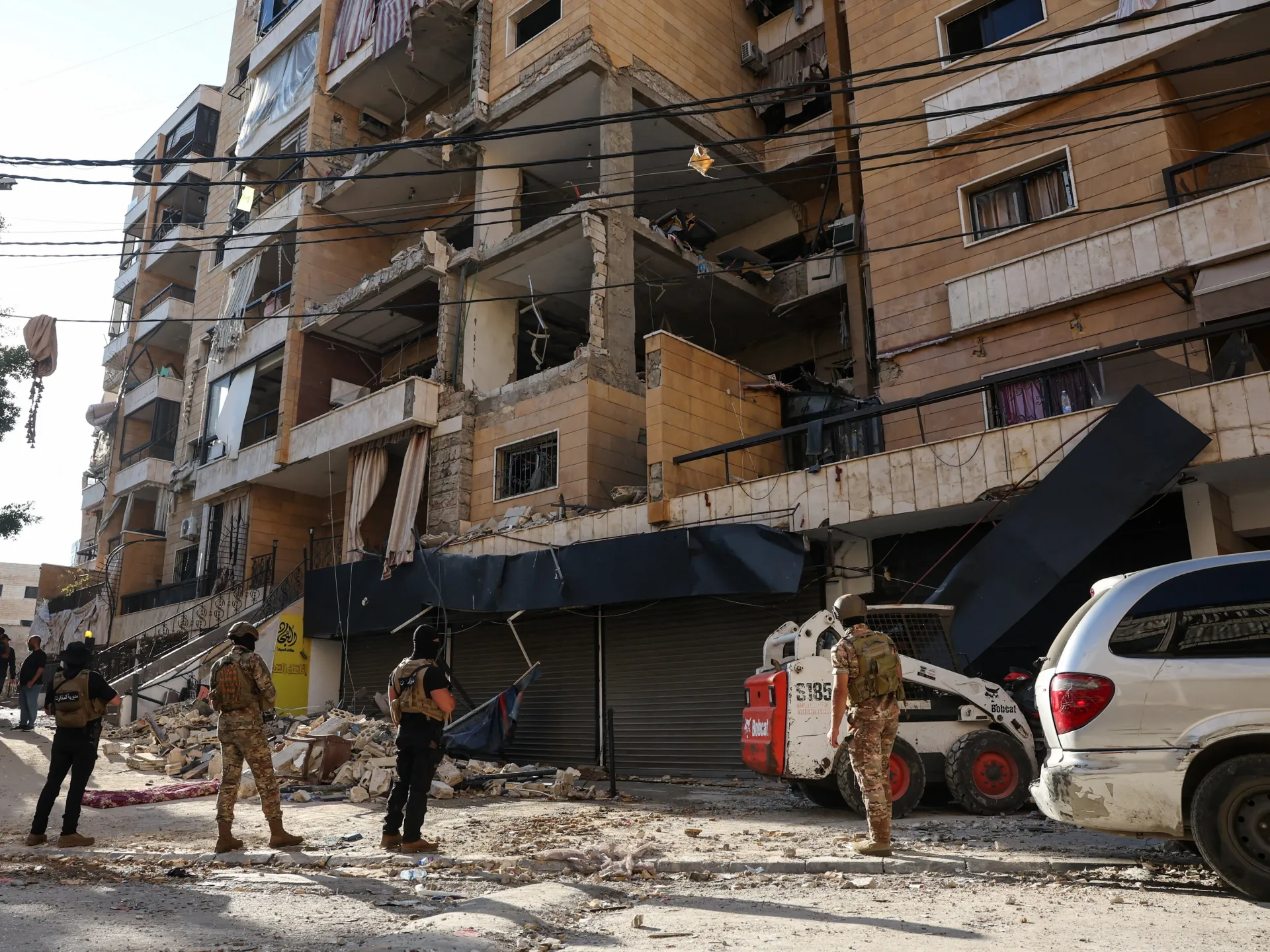
The latest escalation came after Israel attacked the suburbs of Lebanon’s capital Beirut on Sunday in what it said was a targeted strike against Hezbollah, an Iran-supported paramilitary faction and political party.
In recent days, Iran conditioned a ceasefire agreement with Israel and the U.S. on a cessation of hostilities across all fronts, including Lebanon, threatening it would respond to any Israeli action on the Lebanese capital. Israel rejects linking both battlefields, and insists on having a free hand to attack Hezbollah.
A number of U.S.-brokered ceasefires between the Lebanese and Israeli governments — but without Hezbollah involvement — failed to stop most of the fighting, with Israeli warplanes pounding wide swaths of Lebanon’s south while Hezbollah launched drones and missiles on northern Israel. Nevertheless, the Lebanese government has rejected being included in Iran’s negotiations with the U.S.
By Sunday night, Iran’s threats came to pass with several waves of Iranian ballistic missiles, which caused no injuries and were the first Tehran had fired at Israel since a ceasefire took hold in April. Iran’s military said the fusillade was a warning. But Israel said it would retaliate.
President Trump initially downplayed the Iranian attack on Sunday, saying in an interview with the Financial Times Iran’s barrage was “not going to have any impact on the deal.”
“We’ll see how it ends up. But they [the Iranian strikes on Israel] were attacks that did not kick at all,” he said.
“The deal may make it on its own merit, or not, but this will not have any effect on it.”
Trump also told the Axios news site he would talk to Israeli Prime Minister Benjamin Netanyahu to stop him retaliating against Iran’s barrage.
He also told the Financial Times that Netanyahu “won’t have any choice” but to accept the deal Trump negotiates with Iran.
“I call the shots. I call all the shots. He [Netanyahu] doesn’t call the shots,” Trump said.
Yet by the early morning on Monday, dozens of Israeli warplanes were striking western and central Iran. They hit a petrochemical complex in Mahshahr in southwestern Iran, and waged extensive strikes on “strategic defense systems,” according to Israeli military statements, in what observers said was a prelude to a wider offensive. Residents in Tehran, Isfahan, Tabriz and Shiraz reported powerful explosions.
The Israeli military said in a statement it expected several days of fighting with Iran but was prepared for a prolonged campaign. It said the strikes on Iran were conducted by Israel on its own, but that they had been done in “full coordination” with U.S. Central Command, which also helped in intercepting Iranian missiles launched at Israel.
But that distinction appeared to matter little to Iran’s foreign ministry spokesperson, Esmail Baghaei, who said in a press conference on Monday that the U.S held direct responsibility for recent ceasefire violations and Israel’s action “cannot be looked at in isolation from the U.S.”
“No one believes the Israeli regime would take any action without coordination with the United States,” he said.
“The U.S. bears responsibility for the Israeli regime’s aggression, and it will also be responsible for the consequences of any escalation in tensions.”
Iran launched additional barrages throughout Monday, targeting Israeli airbases in Nevatim and Tel Nof and a petrochemical plant in Haifa, according to a statement from Iran’s Revolutionary Guard Corps. It added Israel was engaging in “a dangerous game by targeting civilian and oil infrastructure — a game that will now encompass all regional energy targets, with global economic consequences resting on America.”
The renewed hostilities also saw Yemen’s Houthis — who receive support from Iran and Hezbollah, and are part of a regional network of Iran-backed factions — enter the fray with a pair of ballistic missiles lobbed at Israel. The Israeli military said one of the missiles was intercepted; the second fell short of Israel.
Houthi spokesman Brig. Gen. Yahya Sarea confirmed the attack in a televised statement on Monday, and said Israeli maritime navigation in the Red Sea would be targeted.
During the Gaza war, the Houthis attacked commercial shipping in the Red Sea — including ships with no link to Israel — to pressure Israel into lifting its blockade on the enclave.
But, unlike Hezbollah, which attacked Israel on March 2, three days after the U.S. and Israeli campaign on Iran, the Houthis had refrained from helping their ally, until Monday.
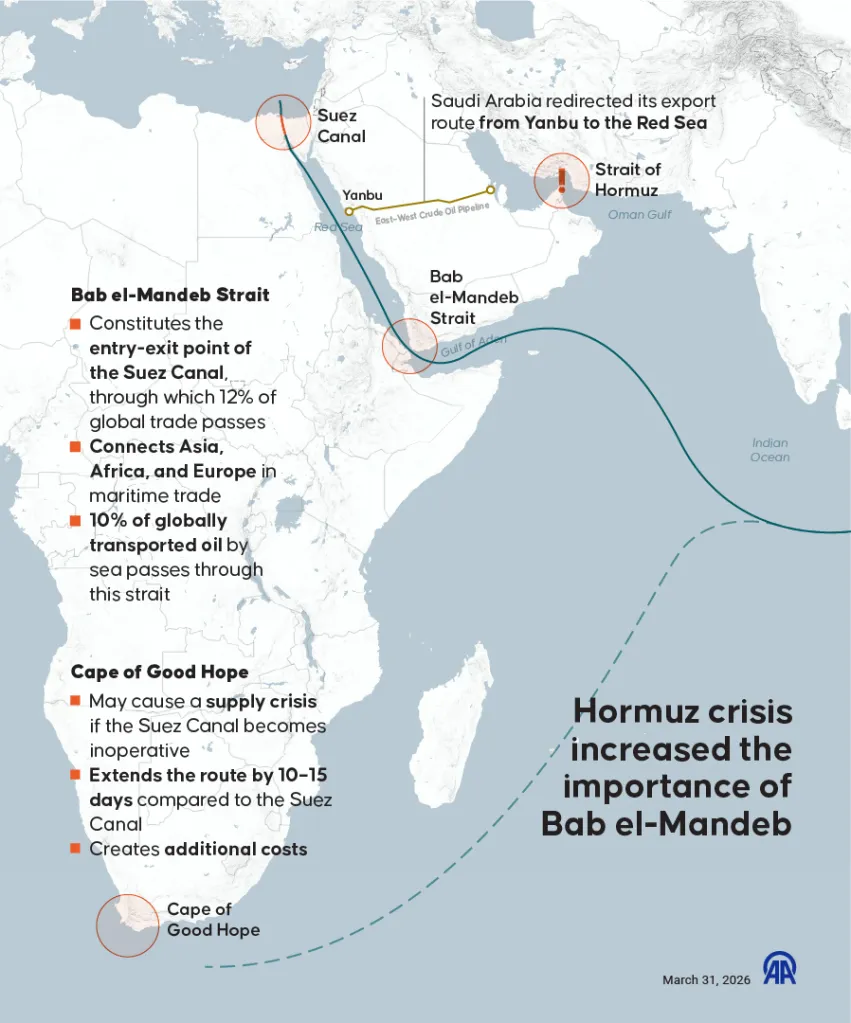
Their involvement now raises the specter of another squeeze on energy markets already beleaguered by closures on the Strait of Hormuz. Since the U.S.-Israeli assault, the Red Sea has acted as the main alternative conduit for energy supplies, especially for those from Saudi Arabia. If the Houthis closed the Bab Al-Mandab Strait, it would all but paralyze commercial flows.
Oil prices spiked in the wake of the exchanges, with Brent Crude rising 5% to hit $98 a barrel.
On the 100th day of the US-Israeli war on Iran, Al Jazeera’s Mohamed Vall explains how Tehran’s patience has reached its limit with the continuous violations of the ‘ceasefire’. Iran fired missiles at Israel after Israel attacked Beirut on Sunday.
Hezbollah has condemned a US-brokered ceasefire framework accepted by Israel and Lebanon, describing it as harmful to Lebanon’s interests. The plan would establish Lebanese army-controlled security zones near the border, contingent on Hezbollah withdrawing its fighters.
Clashes between Israel and Iran-backed Hezbollah militias in southern Lebanon continued unabated on Thursday, a day after the United States announced a new cease-fire. File photo by Atef Safadi/EPA
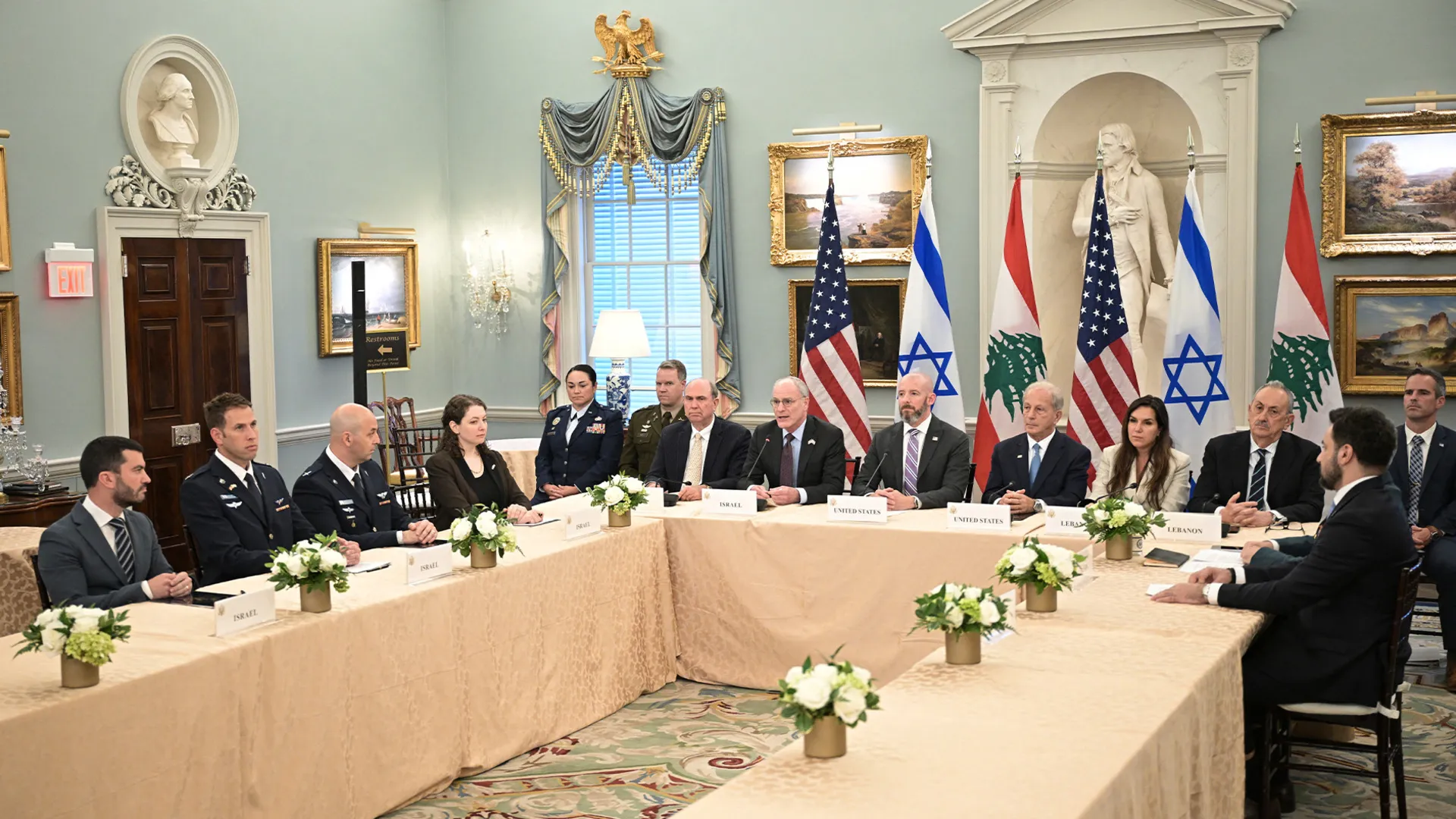
June 4 (UPI) — Israel and Lebanon signed up to a fresh U.S.-brokered cease-fire to clear the path for negotiations toward “a comprehensive peace and security agreement” between the two countries.
The truce, predicated on Iran-backed Hezbollah halting all attacks and withdrawing from south of the Litani River in southern Lebanon, involves the setting up of Lebanese Army exclusion zones out-of-bounds to all non-state actors, the parties said Wednesday in a statement released by the U.S. State Department.
“These steps will enable progress towards a comprehensive peace and security agreement. All countries reaffirmed that the future of the relationship between Israel and Lebanon must be decided by the two sovereign governments. They rejected any attempt, by any state or non-state actor, to hold Lebanon’s future hostage,” said the State Department.
The area Hezbollah must vacate is an approximately 20-mile wide strip of land between the Lebanon-Israel border and the Litani River in Lebanon’s south.
The announcement came after a fourth round of ambassador-level negotiations in Washington on Tuesday and Wednesday. Hezbollah was not represented at the talks, which the State Department said were scheduled to reconvene June 22 to try to reach “a comprehensive agreement.”
Israeli Defense Minister Israel Katz said Israel’s military would not halt hostilities in the south and retained the right, with American backing, to carry out retaliatory strikes on Beirut “in response to fire on Israeli communities or territory.”
“The IDF will, at this stage, continue its fire and ground operations, remain in the security zone in Lebanon up to the yellow line — including in the Beaufort area — and without the return of the population, while continuing to dismantle terrorist infrastructure on the ground,” he said.
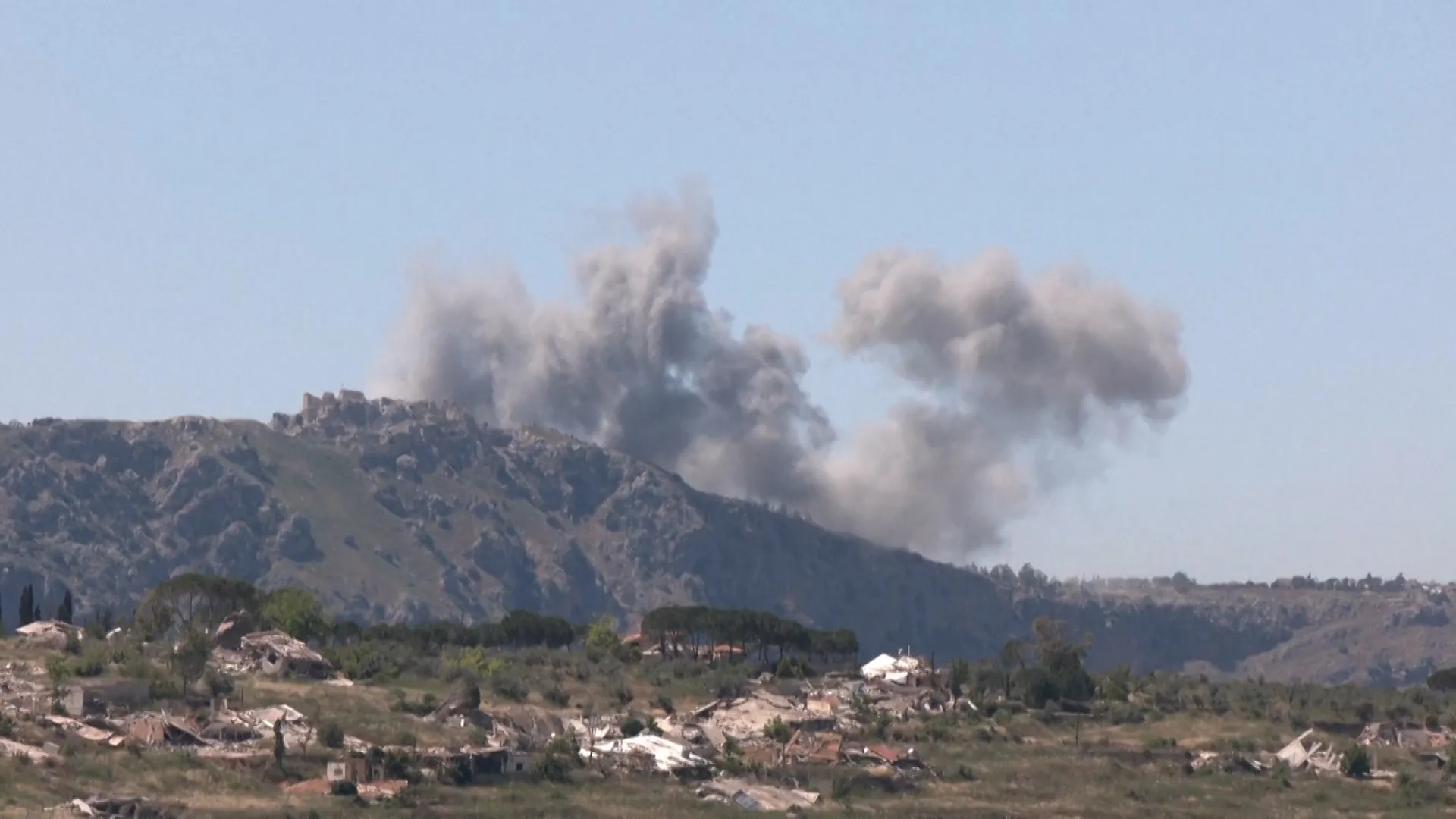
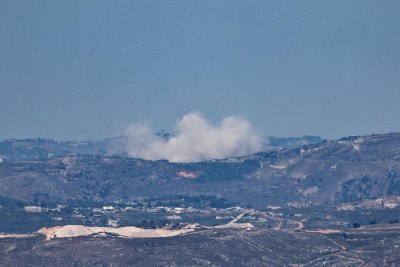
Hostilities on the ground continued Thursday with at least one person killed and several injured in Israeli strikes in southern Lebanon with Israeli warplanes in the skies over a dozen towns while Hezbollah fired rockets and drones at Israeli forces in southern Lebanon.
The incidents came after Israeli strikes killed nine people across southern Lebanon on Wednesday and Hezbollah fired rockets into northern Israel.
The latest initiative followed a truce agreement announced by U.S. President Donald Trump on Monday to head off pending Israeli strikes on a Hezbollah stronghold in the Beirut suburbs in exchange for Hezbollah halting attacks on Israel.
The fighting in Lebanon has complicated U.S.-Iran peace negotiations with Iran insisting Lebanon is included in a fragile cease-fire that came into force on April 8. Trump’s intervention came after Tehran threatened to pull out of the talks, saying Israel’s ongoing military operations in Lebanon violated the terms of the cease-fire, warning it would shut the Strait of Hormuz and was looking to “activate” its “resistance front” in other parts of the region.
The US announced a ceasefire framework between Israel and Lebanon, which includes expanded Lebanese army control and a halt to Hezbollah attacks. Al Jazeera’s Manuel Rapalo explains how Hezbollah’s rejection of the talks leaves enforcement uncertain.
“Given the continuation of the Zionist regime’s crimes in Lebanon and considering that Lebanon was among the preconditions for the ceasefire, and now this ceasefire has been violated on all fronts including Lebanon, the Iranian negotiation team will stop ‘dialogues and text exchanges through intermediaries,’” the IRGC-affiliated Tasnim news agency stated on Monday. The two sides had been talking through mediators in Pakistan and Qatar.
“Also, the resistance front and Iran have resolved to completely block the Strait of Hormuz and activate other fronts including the Bab al-Mandeb Strait, in order to punish the Zionists and their supporters,” the outlet added.
فوری | ایران تبادل پیام با آمریکا را در اعتراض به جنایات صهیونیستها متوقف میکند
عزم نیروهای مسلح ایران و تمام محورهای جبهه مقاومت برای واکنش به جنایات صهیونیستها و گشودن جبهههای جدید
— خبرگزاری تسنیم – خبر فوری (@Tasnimbrk) June 1, 2026
Iran has been allowing some ships to transit the Strait of Hormuz through what it calls a system of fees paid for environmental and other services. Meanwhile, U.S. Central Command (CENTCOM) has helped guide the passage of about 70 commercial vessels through the Strait of Hormuz, according to The New York Times. This involves communicating and coordinating with ships, not escorting them, CENTCOM told the publication. Most of these transits appear to be closer to Oman than Iran, the publication added.
There were no details provided by Iranian officials about how Iran would completely close the Strait of Hormuz or when such a move could begin.
According to the New York Times, citing U.S. officials, U.S. forces have guided approximately 70 commercial vessels, both ways, through the Strait of Hormuz in the last three weeks. Per the report, most of the vessels transited with their transponders off to avoid being targeted… pic.twitter.com/tfdN1YFeAp
Tasnim also did not offer specifics about Iran’s threat toward the Bab al-Mandeb Strait or what it could entail. However, the Houthi rebels of Yemen, an Iranian proxy group, waged a protracted 15-month campaign against shipping in that region starting in the fall of 2023. TWZ has previously highlighted concerns that the Houthis could resume these attacks on behalf of Iran in the current conflict. As we have noted, Houthi strikes in this area would add further global economic strain and place additional burden on U.S. forces.
With the Strait of Hormuz closed, Saudi Arabia is rerouting its oil exports through pipelines to the Red Sea. A disruption of that transit option could cause oil prices to rise much higher and more quickly than they already have, creating a cascading wave of financial impacts and shortages across the globe, and especially in Asia. Even if the Strait of Hormuz were opened today, it will still take months for the global economy to recover from the shock. Meanwhile, for Saudi Arabia, the simultaneous closure of both straits is a long-standing nightmare, a financial double-whammy.
(Illustration by Elif Acar/Anadolu via Getty Images) Anadolu
Just the recent news of the kinetic exchanges between the U.S. and Iran and Tehran’s decision to call off talks has sent the price of oil once again shooting upwards.
The ongoing closure of the Strait of Hormuz is having a cascading effect on the global economy, including rising gas prices. (Photo by Scott Olson/Getty Images) Scott Olson
Defending against renewed Houthi attacks could require military assets at a time when the U.S. is already heavily committed to Operation Epic Fury and its aftermath that has seen a significant amount of equipment destroyed or damaged and munitions expended. During the previous Houthi Red Sea campaign, the U.S. and allies deployed numerous warships, including the Eisenhower and Truman Carrier Strike Groups (CGS) to both defend against Houthi attacks and strike targets in Yemen. These operations resulted in a large expenditure of air defense and strike munitions, with Houthi capabilities remaining degraded, but intact after it was all over.
You can see video from some of those encounters below.
Strikes on Iranian-backed Houthi Targets by USS Gravely, USS Carney, and USS Dwight D. Eisenhower
Despite the widespread publicity over Tehran’s new positions, Trump told NBC News on Monday that he had not heard from Iranians that they were suspending talks. The president added that silence would be fine and he was willing to wait.
“I think we’ve been talking too much if you want to know the truth. I think going silent would be very good, and that could be for a long time,” the president proclaimed. “It doesn’t mean we’re going to go and start dropping bombs all over there. We’ll just go silent. We’ll keep the blockade.”
“I think I can wait as long as they want,” Trump continued. “They’re losing a fortune.”
Trump told NBC News that he has not heard from Iran on its decision to suspend talks, saying, “I think we’ve been talking too much. I think going silent would be very good. It doesn’t mean we’re going to go and start dropping bombs all over there. We’ll keep the blockade.” https://t.co/ncw1G1Tko7
— Ariel Oseran أريئل أوسيران (@ariel_oseran) June 1, 2026
Meanwhile, amid all this turbulence, the U.S.-Iran negotiations remain in limbo.
Early Monday morning, Trump took to social media to claim “Iran really wants to make a deal, and it will be a good one for the U.S.A. and those that are with us.”
Iran really wants to make a deal, and it will be a good one for the U.S.A. and those that are with us. But don’t the Dumocrats, and various seemingly unpatriotic Republicans, understand that it is MUCH tougher for me to properly do my job and negotiate, when political hacks keep… pic.twitter.com/aqE6G0UKGv
— Commentary Donald J Trump Truth Social Posts On X (@TrumpTruthOnX) June 1, 2026
Iranians have pushed back on the notion that they are eager for or close to making a deal. You can read more about the reported terms and scope of the talks in our previous reporting here.
The status of US-Iran talks remained unclear Monday after Trump said negotiations were continuing, while Iranian state media reported Tehran had suspended indirect talks. https://t.co/dvHIHHATnU
— The Jerusalem Post (@Jerusalem_Post) June 1, 2026
As we mentioned earlier in this story, even before Iran reportedly called off talks, there was a heightened state of tension as the U.S. and Iran exchanged a new round of blows.
In a statement on X, U.S. Central Command said that at about 7:30 a.m. Tehran time on Monday, “U.S. forces successfully intercepted two Iranian ballistic missiles targeting American forces based in Kuwait. These missiles were immediately defeated and no American personnel were harmed.”
The command added that it “remains vigilant and will continue to protect our forces from Iranian aggression while supporting the ongoing ceasefire.”
Last night at 11 p.m. ET, U.S. forces successfully intercepted two Iranian ballistic missiles targeting American forces based in Kuwait. These missiles were immediately defeated and no American personnel were harmed.
U.S. Central Command remains vigilant and will continue to…
The Kuwaiti Foreign Ministry “affirms the State of Kuwait’s reservation of its full right to take whatever measures are necessary to preserve its security and defend its territories, holding Iran fully responsible for these heinous aggressions, in accordance with international law, the United Nations Charter, and the relevant Security Council resolutions,” it stated on X.
بيان صادر عن وزارة الخارجية الاثنين 1 يونيو 2026
تُعرب وزارة الخارجية مجدداً عن إدانة واستنكار دولة الكويت، وبأشد العبارات، للهجمات الإيرانية الآثمة والمتكررة، لما تمثله من تصعيد خطير واعتداء مباشر على أمن دولة الكويت واستقرارها، وخرق فاضح لقواعد القانون الدولي وميثاق الأمم… pic.twitter.com/FsVqBu7phB
In a post on X late Sunday, CENTCOM said it “conducted self-defense strikes on Iranian radar and command and control sites for drones in Goruk, Iran and Qeshm Island this weekend. The measured and deliberate strikes occurred on Saturday and Sunday in response to aggressive Iranian actions that included the shootdown of a U.S. MQ-1 drone that was operating over international waters. U.S. fighter aircraft swiftly responded by eliminating Iranian air defenses, a ground control station, and two one-way attack drones that posed clear threats to ships transiting regional waters.”
“No American service members were harmed,” the command stated. “CENTCOM will continue to protect U.S. assets and interests in response to unwarranted Iranian aggression during the ongoing ceasefire.”
UPDATE: 5:43 PM EDT –
Netanyahu says “he spoke this evening with President Trump and told him that if Hezbollah does not stop firing at our cities and citizens – Israel will strike terrorist targets in Beirut,” according to the Israeli prime minister’s office. “This position of ours remains unchanged. Concurrently, the IDF will continue to operate as planned in southern Lebanon.”
Prime Minister Benjamin Netanyahu: “I spoke this evening with President Trump and told him that if Hezbollah does not stop firing at our cities and citizens – Israel will strike terrorist targets in Beirut.
This position of ours remain unchanged.
Concurrently, the IDF will…
— Prime Minister of Israel (@IsraeliPM) June 1, 2026
The conversation came after Trump claimed on Truth Social that: “I had a conversation with Bibi Netanyahu today, asking him not to go into a major raid of Beirut, Lebanon. He turned his Troops around. Thank you Bibi! I also had a conversation with Representatives of the Leaders of Hezbollah, and they agreed to stop shooting at Israel, and its soldiers. Likewise, Israel agreed to stop shooting at them. Let’s see how long that lasts — Hopefully it will be for ETERNITY.”
“I had a very productive call with Prime Minister Bibi Netanyahu, of Israel, and there will be no Troops going to Beirut… I had a very good call with Hezbollah, and they agreed that all shooting will stop.” – President Donald J. Trump 🇺🇸 pic.twitter.com/DJhysrmVnO
Meanwhile, Hezbollah continued firing on Israeli troops.
“Following the sirens that sounded a short while ago in the area of Metula, a launch was identified falling adjacent to IDF soldiers operating in southern Lebanon,” IDF stated on Telegram. “No injuries were reported.”
Other sirens heard in northern Israel, meanwhile, were determined to be false alarms, according to IDF.
BREAKING: Incoming rocket sirens sound in northern Israel, hours after Trump announced Hezbollah agreed to cease attacks on Israeli territory. pic.twitter.com/visWa1gVa4
— Ariel Oseran أريئل أوسيران (@ariel_oseran) June 1, 2026
UPDATES
As we noted earlier in our story, Iran is using the escalation of the Israeli-Hezbollah fight as a reason to walk away from peace talks, at least for now.
The move came after Israeli Prime Minister Benjamin Netanyahu on Monday ordered attacks on what he called “terror targets” in the Hezbollah stronghold of the Dahieh section of Beirut.
“Together with the Minister of Defense, I have instructed the IDF to strike terrorist targets in Beirut,” Netanyahu announced. “There will not be a situation in which Hezbollah attacks our cities and our citizens, and its terrorist headquarters in Beirut, in Dahiyeh, remains out of bounds.”
The Israeli leader added that “we are continuing to deepen our operational activity on the ground in southern Lebanon and are eliminating Hezbollah strongholds. Hezbollah is on the run. We are determined to restore security to the residents of the north, just as we did for the residents of the south.”
Prime Minister Benjamin Netanyahu: “Together with the Minister of Defense, I have instructed the IDF to strike terrorist targets in Beirut. There will not be a situation in which Hezbollah attacks our cities and our citizens, and its terrorist headquarters in Beirut, in Dahiyeh,… pic.twitter.com/g93PGk19aY
— Prime Minister of Israel (@IsraeliPM) June 1, 2026
Netanyahu’s statement followed Israel proclaiming that it is operating north of the Litani River, a traditional demarcation line for Israeli incursions into Lebanon. Advancing north of the river marks a large escalation and the first time Israel has been that far from its border since withdrawing from southern Lebanon in 2000.
Netanyahu claimed the latest battle over the ancient structure was a victory for Israel.
“The capture of Beaufort is a dramatic stage and a dramatic change in the policy we are leading,” Netanyahu postulated. “We have broken the barrier of fear. We are taking the initiative. We are operating on all fronts – in Syria, in Gaza, in Lebanon. We have established security zones beyond our borders to protect our communities.”
CENTCOM forces “observed M/V Lian Star transiting international waters toward an Iranian port on the Gulf of Oman and issued more than 20 warnings while informing the vessel it was in violation of the U.S. blockade” on May 29, the command stated. “A U.S. aircraft disabled the vessel by firing a Hellfire missile into the ship’s engine room after Lian Star’s crew failed to comply. The ship is no longer transiting to Iran.”
Since the blockade went into effect April 13, “U.S. forces have disabled five commercial vessels and redirected 116 to fully enforce the blockade as a ceasefire with Iran remains in effect,” CENTCOM added.
A U.S. military aircraft fired a Hellfire missile into a ship’s engine room to prevent it from breaking through the American blockade of Iranian ports. U.S. forces issued more than 20 warnings to the Gambia-flagged ship.
— Stars and Stripes (@starsandstripes) June 1, 2026
Further highlighting the ongoing danger to shipping in and around the Strait of Hormuz, a cargo vessel transiting the Gulf about 40 nautical miles southeast of Umm Qasr, Iraq, has been hit by an unknown projectile on its starboard side, causing a large explosion, the United Kingdom Maritime Trade Operations (UKMTO) reported on Monday.
UKMTO said it was unaware of any immediate environmental impact.
Since the launch of Epic Fury, UKMTO has received 53 reports of incidents affecting vessels operating in and around the Arabian Gulf, Strait of Hormuz (SOH), and Gulf of Oman. There have been 29 reported attacks, 22 reported suspicious activities and two reported hijackings.
Iran claims it produced a new fast attack speedboat for the Islamic Revolutionary Guard Corps Navy (IRGCN). Dubbed the Rajab 27th, the semi-official Iranian Mehr News Agency described the vessel as a “fast attack watercraft featuring a trimaran hull design, which enhances stability and maneuverability in challenging maritime conditions.”
Mehr also said that the Rajab 27th is “capable of launching two sea-based cruise missiles with a range of 700 kilometers.”
The vessel, stated Mehr, is designed to conduct operations in sea states with wave heights of up to nearly 10 feet, the outlet added.
The unveiling of the new speedboat “highlights the continued development of the IRGC Navy’s fast-attack and missile-equipped maritime capabilities, which play a key role in Iran’s naval defense strategy and operations in southern waters,” Mehr posited.
TWZ cannot independently verify the Iranian claim, though it should be noted that the IRGC has invested heavily in its fleet of small boats for decades as TWZ has explored in the past. In addition to being armed with anti-ship cruise missiles, as well as artillery rockets and other weapons, they can also be used to lay naval mines. While the president claimed that 159 Iranian ships have been destroyed, the IRGC still has a large number of these small vessels.
The images below, taken during the unveiling ceremony, show glimpses of the Rajab 27th with what appear to be a missile container on either side of the boat.
Iran also claims it has restored gas production at three offshore platforms in the South Pars gas field, the head of the Pars Oil and Gas Company has told state media. As we previously reported, the facility was attacked by Israel in March.
“Dehqani said production from the three platforms was being routed to other processing plants in the region while repairs continued at damaged facilities,” Al Jazeera noted.
Iran has restored gas production at three offshore platforms in the South Pars gas field that had been forced to halt output after Israeli attacks disrupted processing capacity at some onshore facilities, Iranian state media reports citing the chief executive of the Pars… pic.twitter.com/SGyTCRa2yH
— Al Arabiya English (@AlArabiya_Eng) May 31, 2026
Iranian Commander of the Mohammad Rasoolullah Corps Hassan Hassanzadeh attends an event with Iranian officials, military commanders, families of war victims and their supporters at the Imam Khomeini Mosque in Tehran, Iran on May 24. Photo by Behnam Tofighi/UPI | License Photo
June 1 (UPI) — Iran has stopped peace negotiations with the United States as it alleges the terms of its cease-fire agreement have been violated, Iran state media reported Monday.
The Tasnim News Agency cited Israel’s continued military operations in Lebanon as a violation of its cease-fire terms, calling for a cease-fire in Lebanon.
The Iranian news agency added that Iran will block the Strait of Hormuz and is looking to “activate” its “resistance front” in other areas.
“The United States and Israel bear responsibility for the consequences of any breach of the truce,” Abbas Araghchi, Iranian foreign minister, wrote on social media.
Despite the cease-fire between the United States and Iran, both sides have continued to exchange fire through the weekend. U.S. Central Command reports striking down two Iranian drones that were threatening ships. The United States has also been enforcing a blockade on the Strait of Hormuz, confronting any ships going to and from Iranian ports.
While Iranian news reports Iran is ending peace talks, President Donald Trump claimed early Monday morning that Iran “really wants to make a deal,” in a post on social media.
“Just sit back and relax, it will all work out well in the end — It always does!” Trump wrote.
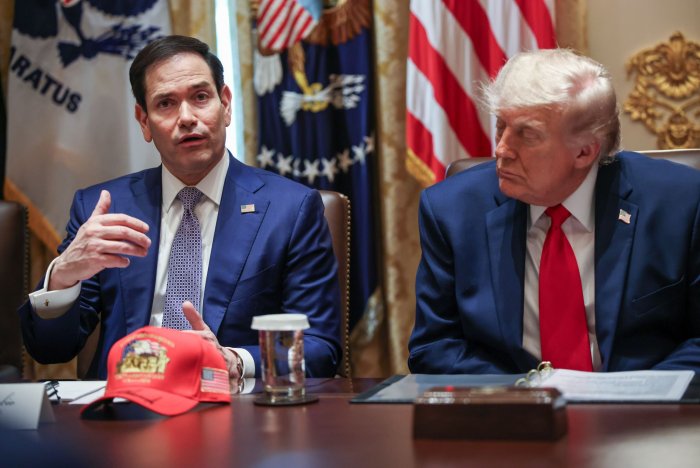
Secretary of State Marco Rubio and President Donald Trump participate in a Cabinet meeting in the Cabinet Room of the White House on Wednesday. Photo by Samuel Corum/UPI | License Photo
At least 14 people were killed and several others wounded in Israeli airstrikes in southern Lebanon on Sunday amid continued violations of an ongoing ceasefire, Anadolu reports.
The Lebanese Health Ministry said 11 people were killed and nine others injured in an Israeli strike on the town of Seir al-Gharbiyeh in Nabatieh province in southern Lebanon.
A fighter jet struck the town of Bazouriyeh in the Tyre district, killing one person and injuring two others, the state news agency NNA reported.
An Israeli drone strike also killed a young man in the town of Arabsalim in Nabatieh district, the outlet said.
A house was also hit in an Israeli strike in the town of Toura in Tyre, killing a woman and injuring two people.
The Israeli attacks came despite a US-mediated ceasefire that is supposed to remain in effect until early July.
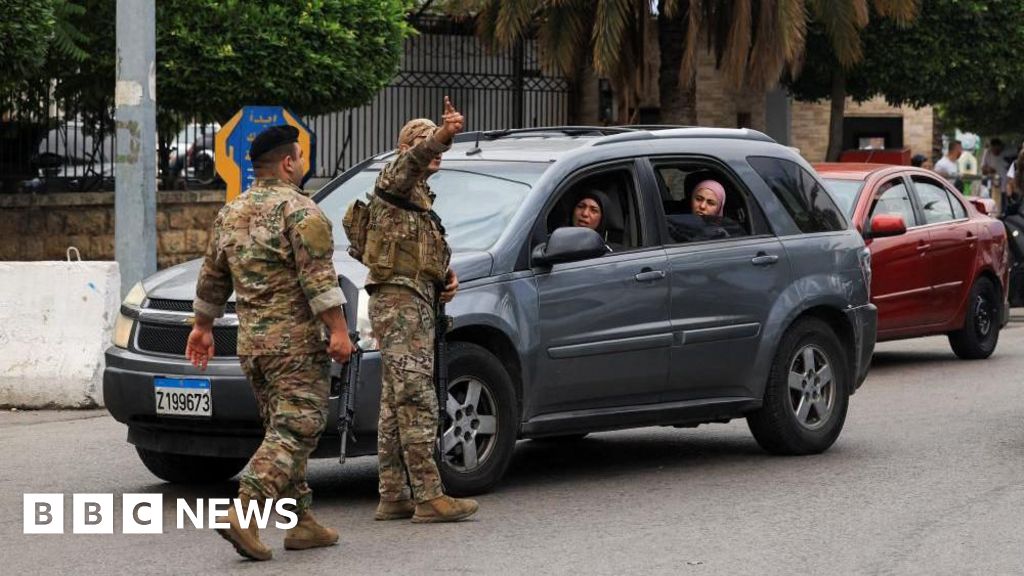
More than 3,100 people have been killed, over 9,500 injured, and 1.6 million displaced by Israeli bombardment in Lebanon since March 2 amid cross-border attacks with Hezbollah, according to Lebanese officials.
Egypt races to salvage Gaza ceasefire as Israeli attacks and displacement threats push deal to the brink of collapse.
Published On 30 May 202630 May 2026
Egypt has launched an urgent diplomatic intervention to rescue a fragile Gaza ceasefire agreement that is on the brink of collapse.
The government warned Israel against expanding its occupation in Gaza, which would undermine efforts to end the war amid of wave of deadly air strikes.
Recommended Stories
list of 3 itemsend of list
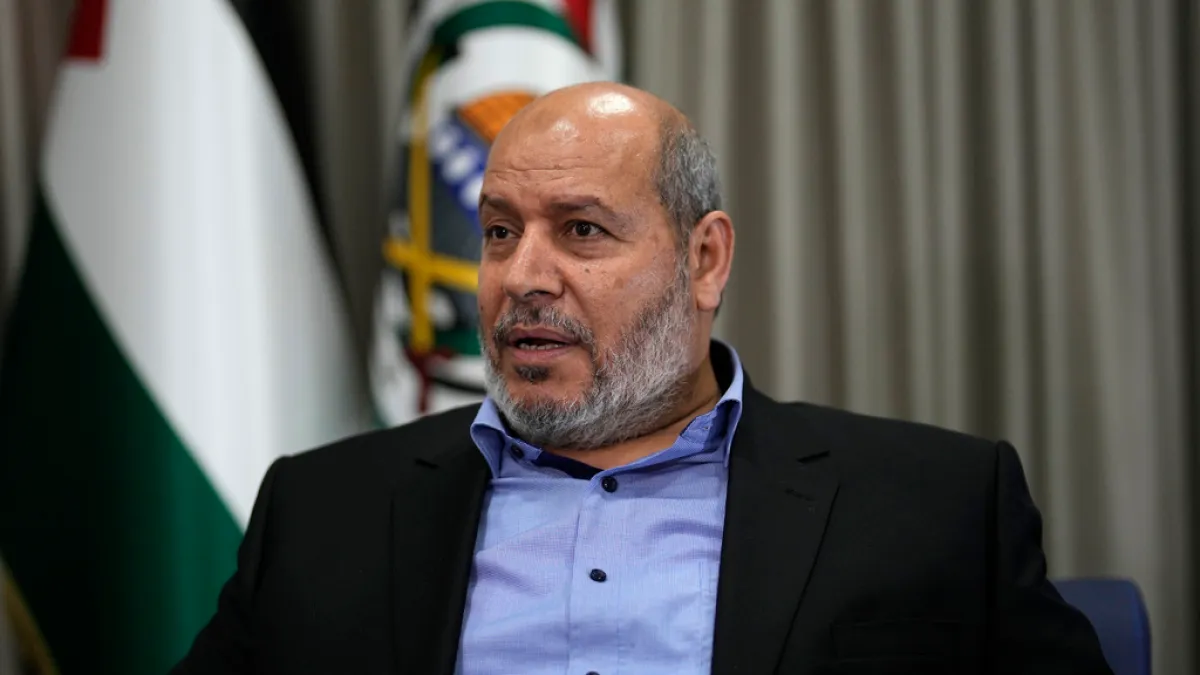
According to an Egyptian intelligence official who spoke to Al Jazeera, Egypt has also invited a senior Hamas delegation, led by chief negotiator Khalil al-Hayya, for urgent talks to salvage the peace process.
The source described contacts between the parties as intense, saying Cairo was racing to arrange negotiations before the end of the week in order to prevent all-out war in Gaza.
The diplomatic moves come in the wake of renewed Israeli military attacks on Gaza and statements from top Israeli officials that threaten to unravel months of diplomacy.
At least 141 Palestinians have been killed in the last two weeks in an intensification of Israeli attacks.
Israeli Prime Minister Benjamin Netanyahu on Thursday issued a directive ordering the military to expand the area under its control from 53% to 70%.
This fundamentally violates the US-brokered comprehensive peace plan signed in October 2025 under the Trump administration, mediators say.
Compounding the crisis, Israeli Defence Minister Israel Katz also triggered regional outrage by publicly reviving a blueprint for the “voluntary migration” of Palestinians out of the enclave.
Speaking during an announcement confirming the assassination of Hamas’s newly appointed military chief, Mohammed Odeh, Katz asserted that the forced displacement scheme would be implemented “at the right time and in the right manner”.
Cairo sent a warning to the Israeli government, rejecting any measures designed to push Gaza’s residents towards voluntary emigration or direct Palestinians towards the Rafah crossing with Egypt.
Egypt has been coordinating with mediators in Qatar and Turkiye, as well as US officials, to return the process to a negotiating track, including revisions to the addendum of the original Gaza peace plan, designed to reduce violence.
The source said Egypt and its fellow mediators were aware that Netanyahu’s recent statements on expanding Israel’s occupation of Gaza, as well as attacks that killed Hamas military figures Izz al-Din al-Haddad and Mohammed Odeh, were driven by electoral calculations and compounded by difficulties Netanyahu faces in Lebanon.
Egypt has contacted United States officials to ask President Donald Trump to urgently restrain Netanyahu, given the recent Israeli escalations in Gaza, the source said.
A senior Hamas official abroad told Al Jazeera that Hamas had received Egyptian communications aimed at containing the escalation and preventing talks from collapsing, suggesting a meeting in Cairo was expected within days.
Hamas said the ceasefire was on the brink of collapse due to repeated Israeli violations, and called on the US and guarantor countries to take “serious and urgent” steps to compel Israel to honour its commitments.
Israel and Hamas agreed to a ceasefire in October to end two years of fighting, which had seen more than 72,000 Palestinians killed and the vast majority of Gaza’s population made homeless.
Despite a ceasefire still being in place, at least 929 Palestinians have been killed in Israeli attacks since October.
Iranian Foreign Ministry Spokesman Esmail Baghaei told state media that a proposed agreement with the US “has not been finalised,” pushing back on US President Donald Trump’s claim that his administration was making a “final determination” on a potential deal with Iran.