ISLAMABAD — The United States and Iran began face-to-face negotiations Saturday in Pakistan, days after a fragile, two-week ceasefire was announced, as the war that has killed thousands of people and shaken global markets entered its seventh week.
The White House confirmed the direct nature of the talks, a rare instance of high-level U.S. government engagement with the Iranian government.
Iran’s state-run news agency said three-party talks including Pakistan had begun after Iranian preconditions, including a reduction in Israeli strikes on southern Lebanon, were met, and after U.S. and Iranian officials met separately with Pakistani Prime Minister Shehbaz Sharif.
The U.S. delegation led by Vice President JD Vance and the Iranian delegation led by Parliament Speaker Mohammad Bagher Qalibaf were discussing how to advance the ceasefire already threatened by deep disagreements and Israel’s continued attacks against the Iranian-backed Hezbollah in Lebanon.
Since the Islamic Revolution in Iran in 1979, the most direct U.S. contact had been in September 2013 when President Obama called newly elected President Hassan Rouhani to discuss Iran’s nuclear program. The recent highest-level meetings were between Secretary of State John Kerry and counterpart Mohammad Javad Zarif during negotiations over the program.
Iran sets ‘red lines’ including compensation for strikes
Iran doubled down on parts of its earlier proposal, with its delegation telling Iranian state television it had presented some of the plan’s ideas as “red lines” in meetings with Sharif. Those included compensation for damage caused by the U.S.-Israeli strikes that launched the war on Feb. 28 and releasing Iran’s frozen assets.
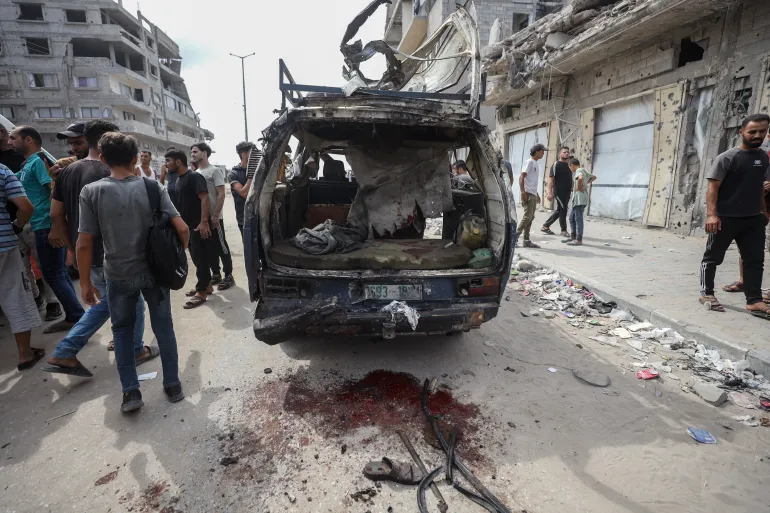
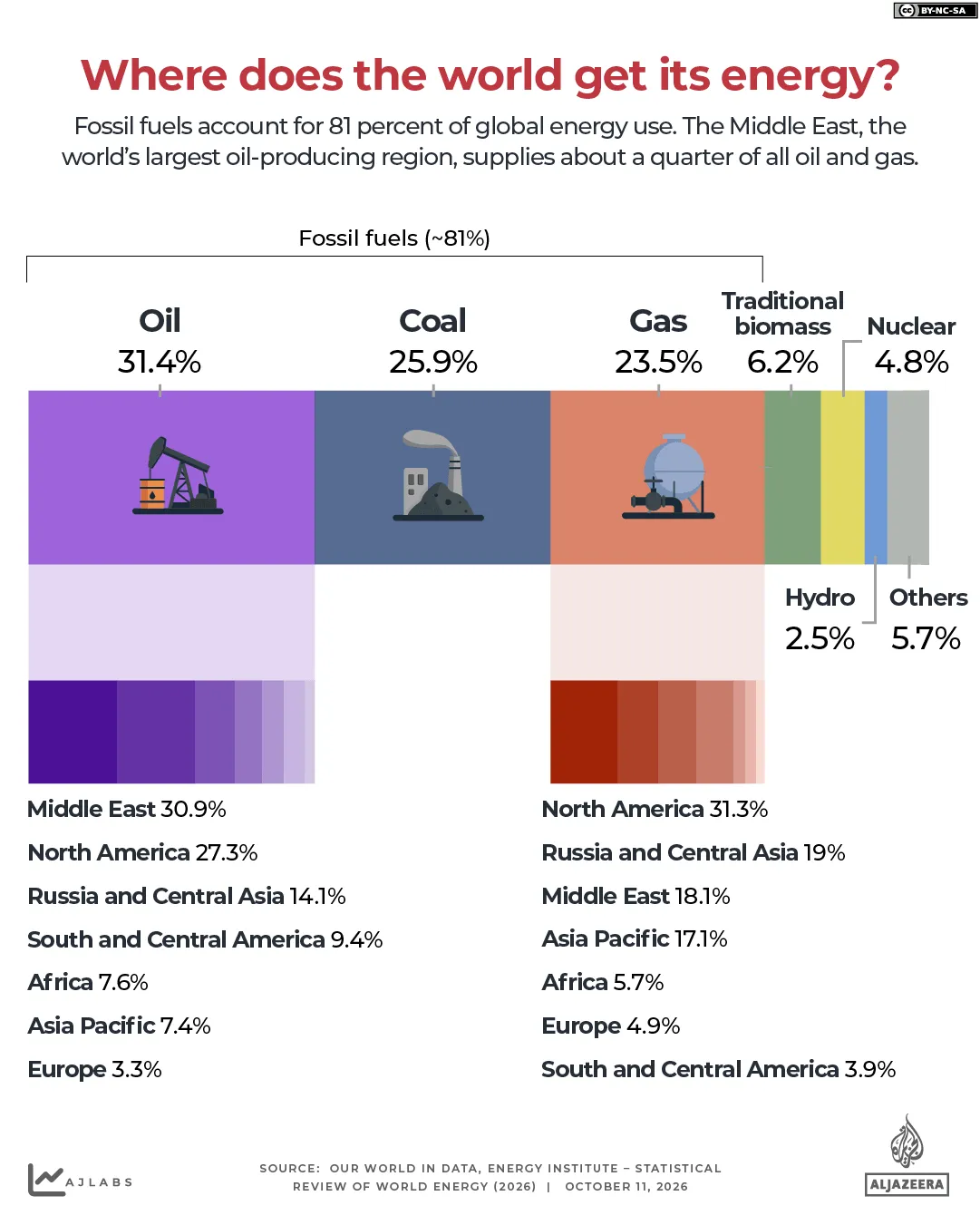
The war has killed at least 3,000 people in Iran, 1,953 in Lebanon, 23 in Israel and more than a dozen in Gulf Arab states, and caused lasting damage to infrastructure in half a dozen Middle Eastern countries. Iran’s chokehold on the vital Strait of Hormuz has largely cut off the Persian Gulf and its oil and gas exports from the global economy, sending energy prices soaring.
Reflecting the high stakes, officials from the region said Chinese, Egyptian, Saudi and Qatari officials were in Islamabad to indirectly facilitate the talks. The officials spoke on condition of anonymity to discuss the sensitive matter.
In Tehran, residents told the Associated Press they were skeptical yet hopeful about the talks after weeks of airstrikes left destruction across their country of some 93 million people. Some said the path to recovery would be long.
“Peace alone is not enough for our country, because we’ve been hit very hard, there have been huge costs,” 62-year-old Amir Razzai Far said.
Meanwhile, Israel pressed ahead with strikes in Lebanon after saying there is no ceasefire there. Iran and Pakistan have disagreed. The Lebanese state-run news agency reported at least three people killed.
Officials posture over key issues ahead of talks
Ahead of the talks, President Trump accused Iran of using the Strait of Hormuz, a key artery for global energy supplies, for extortion, and told reporters Friday it would be opened “with or without them.”
Iran’s closure of the strait has proved its biggest strategic advantage in the war. Around a fifth of the world’s traded oil had typically passed through on over 100 ships a day. Only 12 have been recorded transiting since the ceasefire.
Iran has floated the idea of charging ships, though the idea has been widely rejected by countries including the United States and Iran’s neighbor Oman.
On Saturday, Trump said on social media that the U.S. had begun “clearing out” the strait, but it was unclear whether he was referring to the reported use of mines there or Iran’s broader ability to control the area.
Iranian Foreign Minister Abbas Araghchi had said Tehran was entering negotiations with “deep distrust” after strikes on Iran during previous rounds of talks. Araghchi, part of Iran’s delegation in Pakistan, said Saturday that his country was prepared to retaliate if attacked again.
Iran and the United States outlined competing proposals ahead of the talks.
Iran’s 10-point proposal called for a guaranteed end to the war and sought control over the Strait of Hormuz. It included ending fighting against Iran’s “regional allies,” explicitly calling for a halt to Israeli strikes on Hezbollah.
The United States’ 15-point proposal includes restricting Iran’s nuclear program and reopening the strait.
Israel and Lebanon will have direct negotiations
Negotiations between Israel and Lebanon are expected to begin Tuesday in Washington, Lebanese President Joseph Aoun’s office said Friday, after Israel’s surprise announcement authorizing talks despite the countries lack of official relations.
Israel wants the Lebanese government to assume responsibility for disarming Hezbollah, much like was envisaged in a November 2024 ceasefire. But it is unclear whether Lebanon’s army can confiscate weapons from the militant group, which has survived efforts to curb its strength for decades.
Israel’s insistence that the ceasefire in Iran does not include a pause in its fighting with Hezbollah has threatened to sink the deal. The militant group joined the war in support of Iran in the opening days. Israel followed up with airstrikes and a ground invasion.
The day the Iran ceasefire deal was announced, Israel pounded Beirut with airstrikes, killing more than 300 people in the deadliest day in Lebanon since the war began, according to the country’s Health Ministry.
Energy pressures grow
The spot price of Brent crude, the international standard for oil prices, was above $94 on Saturday, up more than 30% since the war started.
And new pressures emerged in Europe for travelers.
The head of Airports Council International-Europe, Olivier Jankovec, warned the European Union that a ″systemic jet fuel shortage’’ could come within three weeks because of the blockage of the Strait of Hormuz.
Jankovec said in a letter obtained by the Associated Press that the crunch could impact the summer travel season and ″significantly harm the European economy.’′
Ahmed, Metz, Castillo and Magdy write for the Associated Press. Metz reported from Jerusalem, Castillo from Beijing and Magdy from Cairo. Associated Press writer Josh Boak contributed to this report.
NEW YORK — Calls inside Congress for investigations into the prediction market platform Polymarket are increasing after the latest instance in which groups of anonymous traders made strategic, well-timed bets on a major geopolitical event hours before it occurred.
On Wednesday, the Associated Press reported that at least 50 new accounts on Polymarket placed substantial bets on a U.S.-Iran ceasefire in the hours, even minutes, before President Trump announced it late Tuesday. These were the sole bets made on Polymarket through these accounts.
In January, an anonymous Polymarket user made a $400,000 profit by betting that Venezuelan leader Nicolás Maduro would be out of office, hours before Maduro was captured. In the hours before the start of the Iran war, another account made roughly $550,000 in a series of trades effectively betting that the U.S. would strike Iran and that Ayatollah Ali Khamenei would be removed from office.
Such prescient wagers have raised eyebrows — and accusations that prediction markets are ripe for insider trading. And the issue goes beyond these three geopolitical events, according to at least one report.
Researchers at Harvard University released a paper last month in which, using public blockchain data, they estimated that $143 million in profits have been made on Polymarket by individuals who potentially had insider information about events ranging from Taylor Swift’s engagement to the awarding of the Nobel Peace Prize last year.
Rep. Ritchie Torres, D-N.Y who sits on the House Financial Services Committee as well as the subcommittee on digital assets and financial technology, sent a letter Thursday to the Commodity Futures Trading Commission demanding the regulator review and investigate these well-timed trades. The CFTC regulates the derivatives markets, which includes prediction markets.
“This pattern raises serious concerns that certain market participants may have had access to material nonpublic information regarding a market-moving geopolitical event,” Torres wrote. The letter was shared exclusively with AP.
“What is the statistical likelihood that of anyone other than an insider trader placing a winning bet 12 minutes before a market-moving presidential announcement?” Torres said in an interview with AP. “There are two answers: God, or an insider trader. And something tells me that God is not placing bets around Donald Trump’s posts on Truth Social. “
Prediction market platforms like Kalshi and Polymarket allow users to bet on everything from whether it will rain in Phoenix, Ariz., next week to whether the Federal Reserve will raise or lower interest rates.
Americans have limited access to Polymarket, which was banned from the U.S. in 2022. The company has moved to reenter the country by acquiring a CFTC-licensed exchange and clearinghouse, giving it a legal pathway to start offering contracts domestically. The company has begun a limited rollout in the U.S.
Polymarket also operates a separate, crypto-based platform offshore that remains outside U.S. jurisdiction. That platform accounts for most of its activity.
Sen. Richard Blumenthal, D-Conn., sent a letter to Polymarket on Thursday demanding the company explain why it continues to allow trades on war and violence as well as whether the company is making efforts to keep insiders from trading on the platform.
“Polymarket has become an illicit market to sell and exploit national security secrets unlike any in history, and by extension a potential honeypot for foreign intelligence services watching for those same suspicious bets and wagers,” Blumenthal wrote.
Republicans also have criticized these platforms and called for bans on these sorts of bets. There are at least two bills pending in Congress co-signed by both parties, one in the House and one in the Senate.
“We don’t want to imagine a world where America’s adversaries use prediction markets to anticipate our next move,” Rep. Blake Moore, R-Utah, said after the release of AP’s findings on the ceasefire wagers.
Polymarket did not immediately reply to a request for comment.
The stakes are high for both Polymarket and Kalshi as they seek approval to operate nationwide, particularly in the lucrative sports betting market.
Kalshi, which already is regulated in the U.S., and its executives have a goal of making the company the nation’s dominant prediction market. Kalshi has leaned heavily into sports, which critics have said effectively makes it a sports betting platform that dabbles in event-based contracts on the side. Both companies also announced partnerships with sports teams and even news organizations to broaden their reach as well. AP has an agreement to sell U.S. elections data to Kalshi.
The competition also carries political overtones. Donald Trump Jr. is an investor in Polymarket through his venture capital firm, 1789 Capital, and separately serves as a paid strategic adviser to Kalshi.
A two day ceasefire between the United States and Iran has paused direct large scale strikes, but key flashpoints across the region remain active.
The closure of the Strait of Hormuz and escalating violence in Lebanon highlight the limited scope of the truce, exposing gaps in its coverage and enforcement.
Strait of Hormuz Remains Closed
Despite expectations that the ceasefire would stabilise energy markets, the Strait of Hormuz remains effectively shut.
This chokepoint normally handles a significant share of global oil shipments, with around 140 vessels passing through daily under normal conditions. In the first 24 hours after the ceasefire, only a handful of ships were able to transit the route.
The continued disruption has driven immediate delivery oil prices sharply higher, with some refiners in Europe and Asia reportedly paying near record levels.
Donald Trump publicly criticised Iran for failing to uphold what he described as an agreement to allow oil flows, while also signalling that shipments could resume soon without detailing mechanisms.
Disputed Scope of the Ceasefire
A central point of contention is whether the ceasefire extends beyond direct US Iran hostilities.
Iran maintains that the truce should include theatres such as Lebanon, where Hezbollah is engaged in conflict with Israel.
The United States and Israel reject this interpretation, arguing that Lebanon falls outside the agreement’s framework. This divergence has created parallel narratives of compliance and violation, undermining the credibility of the ceasefire.
Escalation in Lebanon
Fighting between Israel and Hezbollah has continued, with both sides exchanging strikes.
Israeli forces carried out large scale attacks shortly after the ceasefire announcement, while Hezbollah resumed missile launches following earlier indications it would pause operations.
Israeli Prime Minister Benjamin Netanyahu has since signalled a shift by expressing willingness to begin separate negotiations with Lebanon, focusing on disarming Hezbollah and establishing more stable relations.
Meanwhile, Lebanese officials are attempting to broker a temporary ceasefire as a stepping stone toward broader negotiations, indicating a parallel diplomatic track separate from US Iran talks.
High Stakes Talks in Islamabad
The first direct peace talks between the United States and Iran are scheduled to take place in Islamabad, which has been placed under heavy security lockdown.
Pakistan’s role as mediator underscores its diplomatic positioning, with tight security arrangements including restricted zones and controlled access around the negotiation venue.
The Iranian delegation is expected to be led by Mohammad Baqer Qalibaf, while the US side will be headed by JD Vance.
Competing Strategic Objectives
The talks are shaped by fundamentally different goals
The United States seeks
Limits on Iran’s nuclear programme
An end to uranium enrichment
Curtailment of missile capabilities
Withdrawal of support for regional allies
Iran, by contrast, is expected to demand
Removal of economic sanctions
Recognition of its authority over the Strait of Hormuz
Compensation for wartime damage
Iran’s leadership, now under Mojtaba Khamenei, has adopted a defiant posture, signalling that concessions will come at a high price.
Economic Fallout
The disruption in the Strait of Hormuz is already feeding into global economic indicators.
Oil price volatility is expected to influence inflation data, particularly in the United States, where upcoming consumer price figures may reflect the early economic impact of the conflict.
While futures markets have shown some optimism following the ceasefire, spot prices remain elevated, indicating persistent uncertainty about immediate supply conditions.
Military and Strategic Reality
Despite the ceasefire, the broader strategic objectives of the war remain unresolved
Iran retains missile and drone capabilities capable of targeting regional adversaries Its nuclear programme continues, with a significant stockpile of enriched uranium The political system has remained intact despite internal unrest
For the United States, initial goals such as dismantling Iran’s nuclear capacity and weakening its regional influence have not been fully achieved.
Analysis
The current situation reflects a fragmented ceasefire architecture in which the absence of a unified framework allows multiple conflicts to persist simultaneously. The continued closure of the Strait of Hormuz demonstrates how economic leverage can be maintained independently of formal military de escalation, reinforcing Iran’s bargaining position ahead of negotiations.
At the same time, the divergence over whether Lebanon is included in the truce highlights the limitations of narrowly scoped agreements in complex regional conflicts involving multiple state and non state actors. The persistence of Israel Hezbollah hostilities illustrates how parallel wars can undermine broader diplomatic efforts, creating a layered conflict environment.
The decision to proceed with talks in Islamabad despite ongoing violations suggests that both the United States and Iran view negotiations as strategically necessary, even in the absence of full compliance on the ground. This indicates a shift toward diplomacy driven not by stability but by mutual recognition of the costs of prolonged confrontation.
WASHINGTON — Vice President JD Vance departed Friday for Islamabad, Pakistan, to open the first direct negotiations aimed at ending the war between the United States and Iran.
Together with a delegation of deeply mistrusting negotiators from Tehran, Vance is tasked with striking a lasting peace between rival nations which have failed to keep promises made days ago in a delicate last-minute ceasefire. Ongoing military activity in the Middle East and disagreements over Iran’s control of key shipping routes have left the diplomatic effort vulnerable to collapse before the talks even begin.
“If the Iranians are willing to negotiate in good faith, we’re certainly willing to extend the open hand,” Vance told reporters before boarding Air Force Two. “If they’re gonna try and play us, then they’re gonna find that the negotiating team is not that receptive.”
On Tuesday, President Trump called off his plans to unleash “hell” on Iran based on assurances that it lift its blockade of the Strait of Hormuz, but traffic through the vital waterway was still at a trickle Friday, as more than 600 ships remained stranded in the Persian Gulf, according to marine tracking data. Trump accused Iran on Thursday of doing a “very poor job, dishonorable some would say,” of allowing oil through the strait.
“The Iranians don’t seem to realize they have no cards, other than a short term extortion of the World by using International Waterways. The only reason they are alive today is to negotiate!” he wrote on Truth Social Friday.
Meanwhile, Lebanon has emerged as the central dispute threatening to derail the talks before they begin.
Hours after the ceasefire took effect, Israel launched what Lebanese officials described as its heaviest wave of strikes since the war began, killing at least 303 people, according to local health officials.
Jerusalem argues the Lebanese front is still on the table, but Iran and Pakistan disagree.
“The Iran–U.S. Ceasefire terms are clear and explicit: the U.S. must choose — ceasefire or continued war via Israel. It cannot have both,” Iranian Foreign Minister Abbas Araghchi said earlier this week. “The world sees the massacres in Lebanon. The ball is in the U.S. court, and the world is watching whether it will act on its commitments.”
Vance has acknowledged a “legitimate misunderstanding” over whether Lebanon was included in the ceasefire terms, telling reporters Washington never made that promise.
Separate negotiations regarding Lebanon are expected next week in Washington, Lebanese President Joseph Aoun confirmed Friday. Israeli Prime Minister Benjamin Netanyahu has also OK’d the talks, but said a ceasefire is not possible.
Parliament Speaker Mohammad Bagher Qalibaf and the Iranian delegation arrived early Saturday in Islamabad, Iranian state media reported. Hours earlier he said a ceasefire in Lebanon “must be fulfilled before negotiations begin.”
Bagher Qalibaf added a second condition — the release of frozen Iranian assets — which he suggested must be returned before Tehran takes its seat at the bargaining table. Little is known about the halted Iranian funds overseas, but such assets are typically held back as a result of U.S.-imposed sanctions.
The vice president’s role in peace talks has grown in recent weeks. Administration officials have cast Vance as one of the few leaders Tehran would be willing to engage with directly. With a global economy upended by Trump’s far-reaching military ambitions, a victory in Islamabad could spike Vance’s standing as a prospect to lead the GOP post-Trump.
That’s if he’s able to take pressure off American wallets with an agreement that liberates Iran’s grip over the strait, which has choked much of the world’s oil supply,
Americans have continued to feel the fallout at the gas pump and grocery stores, as U.S. inflation climbed to 3.3% in March, the highest annual rate in nearly two years, according to the data released Friday by the Bureau of Labor Statistics.
Monthly prices rose 0.9%, a sharp increase from February’s 0.3% monthly rise, when annual inflation sat at 2.4%, the new data showed.
The White House characterized the rising inflation as a short-term disruption caused by the Iran war, while noting that the administration is “diligently working to mitigate” rising costs.
“As the Administration ensures the free flow of energy through the Strait of Hormuz, the American economy remains on a solid trajectory thanks to the Administration’s robust supply-side agenda of tax cuts, deregulation, and energy abundance,” White House spokesperson Kush Desai wrote on X.
Britain announced a meeting next week with dozens of countries to coordinate efforts to reopen the Strait of Hormuz. The summit will focus countering Iran’s proposal to charge transit tolls to allow ships through the waterway.
In a televised address to the nation, Pakistan’s Prime Minister Shehbaz Sharif spoke of a “devastating storm of inflation,” if peace talks don’t succeed in liberating the Middle East’s oil supply. He characterized the current stage as a “make-or-break moment.”
“We will make every possible effort to ensure the success of the peace process,” he said.
Moscow and Kyiv signal a short Easter truce as diplomacy stalls and war pressures mount.
Published On 10 Apr 202610 Apr 2026
Russia’s President Vladimir Putin has announced a 32-hour ceasefire for Orthodox Easter, with President Volodymyr Zelenskyy confirming that Ukraine will honour it.
The Kremlin said on Thursday that the pause in fighting will begin at 4pm Moscow time (13:00GMT) on Saturday and run until midnight on Sunday, covering Easter celebrations observed in both countries.
Recommended Stories
list of 3 itemsend of list
“We proceed on the basis that the Ukrainian side will follow the example of the Russian Federation,” the Kremlin said in a statement.
It added that Defence Minister Andrei Belousov had instructed Chief of the General Staff Valery Gerasimov to halt military operations during the period. Russian forces, however, would remain ready to respond to any violations.
Zelenskyy said Ukraine had already proposed a similar pause and would act in kind.
“Ukraine has repeatedly stated that we are ready for reciprocal steps. We proposed a ceasefire during the Easter holiday this year and will act accordingly,” he wrote on Telegram.
“People need an Easter without threats and a real move towards peace, and Russia has a chance not to return to attacks even after Easter.”
Hours after the announcement, the governor of Dnipropetrovsk region said Russian artillery and aerial attacks had killed two people.
“The enemy attacked three districts of the region almost 30 times with drones and artillery,” Oleksandr Ganzha said on Telegram on Friday.
This weekend’s planned ceasefire echoes a similar, short-lived pause declared by Moscow last year, which both sides accused each other of breaching.
The ceasefire comes as wider diplomatic efforts to end the war remain stalled, with attention in Washington shifting towards escalating tensions in the Middle East.
Difficult months ahead
Kremlin spokesman Dmitry Peskov said Moscow had not discussed the Easter proposal in advance with the United States, nor did it signal any immediate revival of three-way peace talks.
Despite the limited pause, humanitarian channels between the two sides remain active. Speaking from Moscow, Al Jazeera’s Yulia Shapovalova said Russia and Ukraine recently carried out another exchange of soldiers’ remains.
“Moscow handed over the remains of 1,000 Ukrainian soldiers to Kiev in exchange for 41 bodies of the Russians,” she said.
“More than 500 bodies of Russian servicemen have been returned this year during these regular exchanges and over 19,000 bodies of Ukrainian soldiers have been returned to Kiev,” she added.
These exchanges, often mediated by Turkiye, remain one of the few functioning lines of communication between the warring sides, alongside periodic prisoner swaps.
Zelenskyy has repeatedly pushed for temporary ceasefires, including a halt to attacks on energy infrastructure, but said Moscow had largely rejected proposals. He added that Ukraine now faces growing pressure, both on the battlefield and from international partners.
“This spring–summer period will be quite difficult politically and diplomatically. There may be pressure on Ukraine,” Zelenskyy said. “There will also be pressure on the battlefield.”
He warned that the coming months could prove decisive, as Kyiv confronts both sustained Russian attacks and shifting geopolitical priorities among its allies.
“I believe it will be very difficult for us until September.”
Even though a fragile ceasefire between Iran and the United States and Israel has been announced, it’s going to be a long time before prices of oil and gas come back to pre-war levels, experts say.
In response to the US-Israeli attacks, Iran choked off the Strait of Hormuz, the narrow channel linking the Gulf to the Gulf of Oman, through which roughly 20 percent of the world’s oil and gas exports pass from the Middle East, mainly to Asia and also to Europe.
Recommended Stories
list of 4 itemsend of list
It also attacked energy infrastructure in several Gulf countries, leading to soaring prices of not just energy but also of byproducts like helium, used in a range of products like tiles used in homes and semiconductor equipment. Fertilisers that rely on some of these inputs were hit too, impacting sowing seasons.
As a result, consumers the world over, but particularly in developing countries of Asia and Africa, have felt the brunt of those shortages and soaring prices. The question on many minds: Now that there is a ceasefire in place, how quickly will prices normalise?
“Anyone who tells you they know the answer to that question is lying,” said Rockford Weitz, professor of practice in maritime studies at The Fletcher School at Tufts University. “It’s too early to tell when we return to normal.”
“What we’re seeing is the biggest disruption in the history of global oil markets,” said Weitz.
Before this conflict, approximately 120-140 ships passed through the Strait of Hormuz every day. On Wednesday, only five vessels crossed the strait, while seven passed through the waterway on Thursday.
That shows why “to get back to normal is going to be a while”, Weitz told Al Jazeera. “And it’s too complicated to know at this stage when that will happen, as it requires collaboration with the great powers [US, China and Russia], but also regional powers [UAE, Saudi Arabia, India and Pakistan]. It’s hard to say when it will end, as there are so many parties who can make it not happen.”
There is also some concern that developments, like Iran charging a toll fee to allow ships to pass through and skyrocketing insurance fees, will keep oil prices high.
“There are reports that Iran is charging fees to tankers going through the Hormuz Strait,” US President Donald Trump wrote on TruthSocial Thursday.
“They better not be and, if they are, they better stop now.”
But experts agree that those fees, rumoured to be about $2m per vessel, are not enough to move the needle on oil prices.
“What is causing oil prices to rise is not insurance. It’s about getting tankers through. Tolls won’t be the cost driver,” said Weitz.
‘Signs of strain’
Some of that reality was on display with the reopening of the strait, showing “signs of strain just hours after the ceasefire was announced”, said Usha Haley, W Frank Barton Distinguished Chair in international business at Wichita State University.
Compounding that problem was the fact that some countries, including Iraq, had shut down production because of limited storage capacity, further taking oil supplies offline.
“That will take weeks and months to reopen,” Haley added.
“It’s going to be a contested reopening … LNG [liquefied natural gas] will take months to rebalance because of the hits to infrastructure, and can take three to six months to normalise if everything else remains normal. And it’s not.”
Slower growth
On Thursday, International Monetary Fund managing director Kristalina Georgieva warned that the fund will downgrade its forecast for the world economy next week from the current expectation of 3.3 percent. “Growth will be slower – even if the new peace is durable,’’ Georgieva said.
While the war has hit most economies, “it hasn’t really affected the two primary [US] targets – Russia and China. Russia, in fact, has benefitted enormously, and Chinese ships have been allowed to go through,” said Haley.
The US has hit Russia with multiple sanctions for its war on Ukraine, including capping sales of Russian oil to undercut its income stream. Similarly, the first Trump administration put tariffs on China and curbed US exports of certain high-end technology, measures that were held up under the administration of former US President Joe Biden and further ratcheted up by Trump last year with his tariffs blitz.
But amid the war on Iran and the effective closure of the Strait of Hormuz, the US temporarily eased some sanctions on Russian oil, and countries desperate for crude have since paid far higher prices to Moscow than the subsidised energy that President Vladimir Putin’s government was previously offering them.
“We [the US] really need to decide what we want to do long-term, who our targets are. There’s got to be some coherence to what we want to do.”
For now, “an overhang of greater risk premium of supplies out of the Gulf means oil prices will remain higher than what they were before the attack started”, said Rachel Ziemba, adjunct senior fellow at the Center for a New American Security.
While it’s possible that some of the blocked oil and oil products could be released soon, providing a short boost of supplies in the coming days and weeks, “that would be a temporary support” and is still conditional on the ceasefire holding and converting to a broader deal, said Ziemba.
For now, she’s keeping an eye on Iraq to see if it strikes a side deal with Iran. Iraq, long a proxy battleground between the US and Iran, can produce at least 3.5 million barrels of oil per day, production that it had shut off because of limited storage capacity, said Ziemba.
Should that come back online, it will help oil flows and, eventually, prices. But the uncertainty of the truce and the history of attacks on Iraq mean that the future of the country’s oil production remains unclear. “In that environment, who wants to invest in scaling up production?” Ziemba wondered.
As UK Prime Minister Keir Starmer arrived in Doha as part of a Gulf tour spanning Saudi Arabia, the UAE, Bahrain and Qatar, he discussed efforts to secure the US-Iran ceasefire and reopen the Strait of Hormuz. Starmer warned there’s more ‘work to do’, stressing the need for regional partners to restore global energy flows.
Washington and Tehran accuse each other of not honouring truce agreement.
Published On 10 Apr 202610 Apr 2026
Shipping remains at a standstill in the Strait of Hormuz despite the ceasefire agreement between the United States and Iran, dampening hopes for a resolution to one of the worst global energy disruptions in history.
Only a handful of vessels have transited the critical strait since Washington and Tehran on Tuesday announced a two-week pause in fighting, according to ship tracking data.
Recommended Stories
list of 4 itemsend of list
Five vessels crossed the strait on Wednesday, down from 11 the previous day, and seven transited on Thursday, according to data from market intelligence firm Kpler.
More than 600 vessels, including 325 tankers, are still stranded in the Gulf due to the blockage of the strait, according to Lloyd’s List Intelligence.
“While some vessel movement has resumed, traffic remains very limited, compliant shipowners are likely to stay cautious, and safe transit capacity is expected to remain constrained at maximum 10–15 passages a day if the ceasefire holds, without consideration of tolls applied,” Kpler trade risk analyst Ana Subasic said in an analysis on Thursday.
The waterway, which usually carries about one-fifth of global oil and liquefied natural gas (LNG) supplies, typically handled about 120-140 transits before the US and Israel launched their attacks on Iran on February 28.
On Thursday, US President Donald Trump accused Iran of failing to live up to its part of the ceasefire agreement, which includes a commitment to allow “safe passage” through the waterway for two weeks.
“Iran is doing a very poor job, dishonorable some would say, of allowing Oil to go through the Strait of Hormuz,” Trump said in a post on Truth Social.
“That is not the agreement we have!”
Iranian Foreign Minister Abbas Araghchi earlier accused the US of not honouring the deal, warning, in reference to Israel’s ongoing attacks on Lebanon, that it had to choose between a ceasefire or “continued war” via its ally.
“The world sees the massacres in Lebanon,” Araghchi said in a post on social media.
“The ball is in the US court, and the world is watching whether it will act on its commitments.”
After plummeting on the back of the ceasefire announcement, oil prices have begun to tick up as markets digest the reality that maritime traffic remains effectively halted despite the truce.
“This moment requires clarity. So let’s be clear: the Strait of Hormuz is not open,” Sultan Ahmed Al Jaber, the CEO of the United Arab Emirates’ state-run oil company, ADNOC, said in a social media post on Thursday.
“Access is being restricted, conditioned and controlled. Iran has made clear – through both its statements and actions – that passage is subject to permission, conditions and political leverage. That is not freedom of navigation. That is coercion.”
Brent crude, the international benchmark, stood at $96.39 as of 02:00 GMT on Friday, after falling below $95 a barrel on Wednesday.
Asia’s main stock markets opened higher on Friday, following overnight gains on Wall Street driven by hopes of a resolution to the war.
Japan’s benchmark Nikkei 225 was up 1.8 percent in early trading, while South Korea’s KOSPI and Hong Kong’s Hang Seng Index were up about 2 percent and 1 percent, respectively.
WASHINGTON — Pivotal negotiations in Pakistan this weekend between the United States and Iran could hinge on developments in Lebanon, where ongoing Israeli strikes Thursday risked derailing a wider regional ceasefire.
Tensions only deepened amid reports of limited Iranian drone attacks across the region, and as Arab states warned that the Strait of Hormuz — a vital global shipping route — had only partially reopened despite President Trump’s assurances that Tehran had guaranteed full access.
Yet tests of the ceasefire have not deterred Iranian and American officials from their plans to travel to Pakistan on Saturday for the highest-level talks between the two nations, aimed at a final agreement to end the war, now in its sixth week.
The stakes are high for Iran, which has been pummeled by U.S. attacks, and for Trump, whose pursuit of the war has been domestically unpopular. The plan appeared precarious early Thursday, amid ongoing disagreement over whether the ceasefire included Lebanon.
Iran warned that continued Israeli attacks targeting the militant group Hezbollah in Lebanon could jeopardize the two-day-old truce. Hours later, Israel Prime Minister Benjamin Netanyahu said his government would open direct negotiations with Lebanon — but subsequently declared he would not cease strikes there.
His move to negotiate with the Lebanese came the day after President Trump asked Netanyahu to slow operations in Lebanon ahead of the Pakistan talks, a source familiar with the matter told The Times. Iran’s Foreign Ministry spokesman, Esmail Baghaei, told reporters Thursday that the talks starting would be “contingent” upon hostilities ceasing in Lebanon.
As Israel’s posture on Lebanon injected uncertainty into the situation Thursday, the Strait of Hormuz — which Iran agreed to reopen in the ceasefire deal — remained closed, according to Sultan Al Jaber, a government minister in the United Arab Emirates. Traffic through the strait was below 10% of its usual volume Thursday, with only seven ships passing through in a 24-hour period, Reuters reported.
Trump, however, projected optimism Thursday about the weekend negotiations in Islamabad — even as the U.S. position appeared to weaken.
“I spoke with Bibi and he’s going to low-key it. I just think we have to be sort of a little more low-key,” Trump saidin an interview with NBC News. He said he was “very optimistic” that a deal with Iran was in reach.
A White House official said Vice President JD Vance will lead the U.S. delegation, which will also include special envoy Steve Witkoff and Jared Kushner, the president’s son-in-law. They would be the highest-level talks between the United States and Iran since the 1979 Islamic Revolution.
An Israeli official said the separate talks with Lebanon, to be conducted by the Israeli and Lebanese ambassadors to Washington, would start next week at the State Department. A State Department official confirmed the agency would host the talks.
Israel is not a direct party to the weekend negotiations in Pakistan between the U.S. and Iran. But “the United States knows our red lines in terms of nuclear disarmament, proxies, ballistic missile production,” the Israeli official said. “We believe we’re on the same page here.”
The Tuesday night ceasefire deal between the United States and Iran came after 39 days of conflict in the region, set off by Trump’s Feb. 28 attack on Iran. The full terms have not been publicly disclosed, and much remains uncertain about the agreement.
The agreement got off toa shaky start Wednesday: The strait remained restricted as the Iranians accused Americans of violating the agreement and it emerged that the U.S. and Israel were at odds with Iran over whether Lebanon was part of the ceasefire.
Trump threatened late Wednesday on his social media website that if Iran did not comply with the ceasefire, “then the ‘Shootin’ Starts,’ bigger, and better, and stronger than anyone has ever seen before.”
The deal’s status became even more fragile as Thursday dawned and Iran said Israeli strikes in Lebanon overnight violated the agreement. European leaders and the prime minister of Pakistan, which is brokering U.S.-Iran talks, warned that the operations could be putting the truce at risk.
“This is a dangerous sign of deception and lack of commitment to potential agreements,” Iranian President Masoud Pezeshkian said Thursday. “The continuation of these actions will render negotiations meaningless.”
The speaker of Iran’s parliament, Mohammad Bagher Ghalibaf,warned of “explicit costs” for any moves Iran views as violations of the ceasefire, saying Lebanon was an “inseparable part” of the deal.
Israel and the U.S. have said that Lebanon, where Israel says it is targeting Iran-backed Hezbollah militants, was not part of the ceasefire agreement. Netanyahu said in a Thursday evening statement that he was pursuing negotiations at the request of the Lebanese government.
“There is no ceasefire in Lebanon. We are continuing to strike Hezbollah with full force, and we will not stop until we restore your security,” he said.
Also Thursday, House Republicans rebuffed an attempt by Democrats to vote on restricting Trump’s war powers. Democratic leaders — who have raised concerns about Trump’s Easter Sunday threat to wipe out Iranian civilization and said his statement amounted to threatening war crimes — afterward called on Speaker Mike Johnson (R-La.) to bring Congress back to session.
Meanwhile, Trump railed on his social media website against conservative figures who have criticized his approach to the war, including former Fox News hosts Tucker Carlson and Megyn Kelly, calling them “stupid people” and proclaiming that the United States “IS NOW THE ‘HOTTEST’ COUNTRY ANYWHERE IN THE WORLD!”
He also continued to attack NATO members for not living up to his expectations in helping him with the war in Iran. In a post earlier Thursday, the president said the North Atlantic Treaty Organization has been “very disappointing” and suggested the United States needs to pressure allies in order for them to respond to its needs.
That followed a meeting Wednesday afternoon with NATO Secretary Mark Rutte at the White House, after which Trump asserted online that “NATO WASN’T THERE WHEN WE NEEDED THEM, AND THEY WON’T BE THERE IF WE NEED THEM AGAIN.”
In an interview with CNN, Rutte said Trump had made his disappointment with NATO allies clear. Rutte said he had emphasized to Trump that a large majority of European nations have given the U.S. some logistical military help, such as allowing American warplanes to land at their bases and fly over their territories.
Lebanon’s Health Ministry said Israel’s surprise barrage of airstrikes on Wednesday killed 303 people and wounded about 1,150 others, in a preliminary toll. It added that the numbers were likely to rise while search efforts for bodies and DNA testing continue.
If direct negotiations with Israel do take place, they would break a long-standing political taboo for Lebanon. Successive governments have dealt with Israeli diplomats only as far as allowing technical discussions with Lebanese military officials via the United Nations.
The prospect of direct negotiations is likely to kick up fierce opposition from Hezbollah and its political ally, the Lebanese Shiite party Amal.
Both parties — which together form the so-called Shiite Duo, are part of a voting bloc in parliament and hold important portfolios in Lebanon’s Cabinet — are already in a war of wills with the Lebanese government, which recently declared the Iranian ambassador-designate persona non grata and ordered his departure.
Amal and Hezbollah officials told the ambassador-designate to remain in Lebanon and exhorted the government to reverse its decision. He remains at the embassy in Beirut.
McDaniel and Wilner reported from Washington and Bulos from Amman, Jordan. Times staff writer Ana Ceballos in Washington contributed to this report.
Weekly insights and analysis on the latest developments in military technology, strategy, and foreign policy.
Traffic through the strategically vital Strait of Hormuz remains largely stalled, according to multiple reports, despite Iran and the United States agreeing to a two-week ceasefire. Earlier this week, U.S. President Donald Trump had given Tehran a deadline to agree to his ceasefire demands, including reopening the strait, or he threatened to turn Iran into a “living hell.”
Only one oil products tanker and five dry bulk carriers have passed through the Strait of Hormuz in the last 24 hours, according to ship-tracking data analysis, Reutersreports. Since the U.S.-Israeli war with Iran began on February 28, vessel traffic has averaged only a few ships per day, based on data from Kpler, Lloyd’s List Intelligence, and Signal Ocean. Prior to the conflict, an average of 140 vessels transited daily through the strait.
Only a single tanker has passed through the Strait of Hormuz over the last 24 hours -Reuters.
An additional 5 dry bulk carriers made the transit.
According to data from Windward, a maritime intelligence firm that tracks international shipping, 11 vessels have been allowed transit through the strait in the 24 hours since the ceasefire. Four of these ships are Iranian, four are Greek, and one is Chinese.
Intelligence firm AXSMarine reports that two eastbound ships, the Oman-owned Lucia and Greek-owned Iolcas Destiny, were given passage from the Gulf in the early hours of Thursday morning despite the Iranian declaration that the strait was closed.
📢 24 hours after the announcement of the US-Iran ceasefire, merchant vessel activity in the region remains unchanged, with a limited number of ships transiting across the Strait.
↖️ Inbound (West→East): 🔹 4 vessels crossed on 8 April, all Iranian-owned ◽ Container ships… pic.twitter.com/qQQ4oODQoV
Windward said all vessels transiting the strait must still coordinate safe passage with Iranian authorities, who are requiring shippers to pay substantial tolls, reportedly as much as $1 per barrel for outbound oil, settled in cryptocurrency. For context, the largest supertankers can carry up to three million barrels of crude.
According to an unconfirmed report from Russia’s TASS news agency, quoting an unnamed senior Iranian source, Iran will allow no more than 15 vessels a day to pass through the strait under the ceasefire agreement.
BREAKING: Iran will allow no more than 15 vessels per day to pass through the Strait of Hormuz under the ceasefire deal.
Meanwhile, Iran’s deputy foreign minister, Saeed Khatibzadeh, claims that the strait has been mined, forcing all ships to use channels that are controlled by Iran.
Iran has settled on a new tactic for managing Hormuz flows, laid out by Khatibzadeh here.
The strait is “open,” but it has been mined, so all ships must use channels that are controlled by Iran until the mines have been cleared (however long that might take). https://t.co/i8l0DLx4mU
There are still around 1,400 ships waiting at anchorages on both sides of the narrow passage.
Although the strait has remained effectively closed since the war began, Iran has granted limited exemptions to allies, including China, Russia, India, Iraq, and Pakistan, while some Malaysian and Thai vessels have also been permitted to transit following diplomatic negotiations in recent weeks.
Now, the Israeli campaign in Lebanon is being identified as a major sticking point in fully reopening the strait.
The United States and Israel maintain that the two-week ceasefire now in place does not apply to Lebanon, where the Israeli military carried out one of its heaviest waves of airstrikes yesterday.
A building hit by an Israeli airstrike in the area of Abbasiyeh, on the outskirts of the southern Lebanese city of Tyre, on April 8, 2026. Photo by Kawnat HAJU / AFP KAWNAT HAJU
Iran and Pakistan, which helped broker the ceasefire, insist that Lebanon is included in the agreement.
Iranian President Masoud Pezeshkian described Israel’s latest strikes on Lebanon as a “blatant violation” of the ceasefire agreement, and their continuation would “render negotiations meaningless.”
In a statement on X, Pezeshkian wrote, as per machine translation:
“Israel’s renewed incursion into Lebanon is a blatant violation of the initial ceasefire agreement. This is a dangerous sign of deception and lack of commitment to potential agreements. The continuation of these actions will render negotiations meaningless. Our fingers remain on the trigger. Iran will never abandon its Lebanese sisters and brothers.”
إنّ اعتداء الكيان الصهيوني المتكرر على لبنان هو انتهاك صارخ لاتفاق وقف إطلاق النار الأولي ومؤشر خطير على الخداع وعدم الالتزام بالاتفاقات المحتملة. مواصلة هذه الاعتداءات سيجعل التفاوض بلا معنى؛ أيدينا ستبقى على الزناد، ولن تتخلّى إيران عن إخوتها وأخواتها اللبنانيين قطّ.
Deputy foreign minister Khatibzadeh accused Israel of carrying out a “surprise attack” on Lebanon, calling it a “serious violation” of the ceasefire agreement.
“It was a sort of genocide, you know, by the regime of Israel in Lebanon, just immediately after the ceasefire was accepted,” Khatibzadeh told the BBC. “It is a type of practice that the Israeli regime has always done: accepting ceasefire, then surprise attack, massacring.”
He added that the United States “must choose between war and ceasefire”, saying: “They cannot have both at the same time.”
Khatibzadeh continued: “If President Trump … is interested in peace for the whole Middle East, and since Iran is committed to that, we ask everybody in the Middle East to be abided by this agreement and this ceasefire that we reached with Americans, and we expect Americans do the same with its ally, the Israeli regime.”
The speaker of the Iranian parliament, Mohammad Bagher Ghalibaf, reiterated that Lebanon forms “an inseparable part of the ceasefire” deal. In a post on X, he said, “There is no room for denial and backtracking”. Ghalibaf added: “Ceasefire violations carry explicit costs and STRONG responses. Extinguish the fire immediately.”
Ahead of expected U.S.-Iran talks in Islamabad tomorrow, Pakistani Prime Minister Shehbaz Sharif also condemned Israel’s “ongoing aggression against Lebanon.” Sharif’s office said in a statement: “The prime minister said that Pakistan was engaged in sincere efforts for regional peace, and it was in this spirit that the peace talks between Iran and the United States were being convened.”
I spoke with Prime Minister Nawaf Salam of Lebanon, this evening.
I strongly condemned Israel’s ongoing aggression against Lebanon and offered condolences over the loss of thousands of precious lives in Lebanon as a result of these hostilities.
Reports suggest that Trump has asked Prime Minister Benjamin Netanyahu to scale back Israeli strikes on Lebanon, in an effort to keep the ceasefire on track.
According to NBC News, which cites a senior Trump official, the request came during a phone call yesterday, shortly after Netanyahu publicly vowed to continue striking Lebanon.
NBC: Trump asked Israeli Prime Minister Benjamin Netanyahu in a phone call yesterday to scale back Israel’s strikes in Lebanon to help ensure the success of the Iran negotiations, a senior administration official said, per @katiadoyl.
Nevertheless, in an interview with PBS News Hour yesterday, Trump had said Lebanon was not included in the ceasefire deal because of Hezbollah, the Iranian-backed militant group that operates in Lebanon.
“They were not included in the deal. That’ll get taken care of, too,” the president told the outlet.
When asked by PBS if he was happy with Israel continuing to hit Lebanon, Trump said, “It’s part of the deal.”
“Everyone knows that,” he said. “That’s a separate skirmish.”
Today, in a possible breakthrough, Israeli Prime Minister Benjamin Netanyahu agreed to conduct direct talks with Lebanon, with a focus on disarming Hezbollah and establishing peaceful relations between the two countries.
Prime Minister Benjamin Netanyahu:
“In light of Lebanon’s repeated requests to open direct negotiations with Israel, I instructed at the Government meeting yesterday to open direct negotiations with Lebanon as soon as possible.
1/2
— Prime Minister of Israel (@IsraeliPM) April 9, 2026
UPDATES:
UPDATE: 2:10 PM EDT –
Israeli Prime Minister Benjamin Netanyahu’s long-running corruption trial is set to resume Sunday, according to a court spokesperson, just hours after Israel lifted the state of emergency imposed during its war with Iran.
“With the lifting of the state of emergency and the return of the judicial system to work, hearings will resume as usual,” a statement from the courts says, according to a report from The Times of Israel.
Halt to Iran attacks means Netanyahu’s corruption trial will resume on Sunday
(Reuters) – Israeli Prime Minister Benjamin Netanyahu’s long-running corruption trial will resume on Sunday, the courts’ spokesperson said on Thursday, after Israel lifted a state of emergency imposed…
The Pentagon has lost eight MQ-9 Reaper drones in the Middle East since April 1, bringing the total number of such aircraft lost in the Iran war up to 24, according to two U.S. officials who spoke to CBS News under condition of anonymity because they were not authorized to speak publicly.
Publicly available flight-tracking data indicates that U.S. transport aircraft are still shuttling between bases in Europe and the Middle East. Open-source accounts on X today reported at least nine Air Force cargo aircraft (eight C-17s and one C-5) all flying between U.S. bases in these regions earlier today.
At least 9 USAF cargo aircraft (eight C-17A and one C-5M) are currently flying between US bases in the Europe and the Middle East. pic.twitter.com/qNgp5SjqTT
There are also signs of a ramp-up in military aircraft activity over Pakistan today, thought to be a development connected with the arrival of the delegations for the scheduled U.S.-Iran talks tomorrow in Islamabad.
HIGH ALERT, HIGHER STAKES Pakistan ramps up air defence as high-powered U.S.-Iran delegations head to Islamabad. Multiple air activity tracked over southern and western airspace, with PAF deploying IL-78 refuelling tankers and C-130 aircraft. Top sources say this is part of a… pic.twitter.com/odzSxEuTSI
Journalist Neria Kraus says she spoke to Trump today, who told her that “Netanyahu is on board with the agreement.”
“We’re going to have a very successful agreement. It’s gonna be very good, everything’s gonna work out very good,” Trump reportedly added.
On the topic of Lebanon, Trump told Kraus, “Netanyahu is gonna be fine. He’s gonna low-key a little bit. He’s got a problem with Hezbollah. He’s gonna low-key a little bit, but he’s gonna be absolutely fine.”
🚨 I had a phone call interview with President Trump today about Iran, Lebanon, and Netanyahu. “We’re going to have a very successful agreement. It’s gonna be very good, everything’s gonna work out very good.” Asked about PM Netanyahu, President Trump said: “Netanyahu is on board…
The head of NATO, Mark Rutte, acknowledged that a number of allies were “a bit slow” to back the United States in its military actions against Iran, as the alliance faces growing criticism from Donald Trump. Speaking in Washington, Rutte commended Trump for his “bold leadership and vision” and said he could see why the president was frustrated with the transatlantic alliance.
.@SecGenNATO Mark Rutte: “This alliance is not ‘whistling past the graveyard’… I recognize we are in a period of profound change in the transatlantic alliance. Europe is assuming a greater and fairer share of the task of providing for its conventional defense.” pic.twitter.com/7SIS65Fc4J
“What I see when I look across Europe today is allies providing a massive amount of support — basing, logistics, and other measures — to ensure the powerful U.S. military succeeds in denying Iran a nuclear weapon and degrading its capacity to export chaos.”
NATO Secretary General Mark Rutte:
“What I see when I look across Europe today, is allies providing a massive amount of support – basing, logistics, and other measures – to ensure the powerful US military succeeds in denying Iran a nuclear weapon and degrading its capacity to… pic.twitter.com/PWfpFPJ4Bu
— Status-6 (War & Military News) (@Archer83Able) April 9, 2026
Meanwhile, there are unconfirmed reports that Trump is pushing NATO to commit to sending warships or other military capabilities to the Strait of Hormuz in the coming days. Rutte reportedly told this to German outlet Spiegel, after meeting with Trump.
With the ceasefire looking increasingly fragile, President Trump said U.S. ships, aircraft, and troops would remain positioned around Iran, warning that Washington would resume military action unless Tehran fully complies with the agreement reached with the United States.
“If for any reason it is not, which is highly unlikely, then the ‘Shootin’ Starts,’ bigger, and better, and stronger than anyone has ever seen before,” Trump wrote in a late-night Truth Social post.
There is also pushback from Iran on another key point that the ceasefire agreement should have cleared up, namely, U.S. and Israeli demands that Iran cease uranium enrichment.
Iran’s atomic energy chief, Mohammad Eslami, has said the United States will “not succeed in restricting Iran’s enrichment program.”
“The claims and demands of our enemies to restrict Iran’s enrichment program are merely wishes that will be buried,” Eslami was quoted as saying by Iran’s ISNA news agency.
Iran’s atomic energy chief Mohammad Eslami says, “the enemy won’t succeed in restricting Iran’s enrichment program. No law or person can stop us,” Iran’s ISNA news agency reports. pic.twitter.com/G9ftQXSrWO
— Ariel Oseran أريئل أوسيران (@ariel_oseran) April 9, 2026
Trump has demanded a total halt on enrichment and called for the removal of buried nuclear “dust” from Iran in exchange for sanctions relief.
The foreign ministers of Iran and Saudi Arabia spoke by phone today in what AFP reported was the first official contact between the two countries since the war began.
Saudi Arabia’s foreign ministry said in a statement on X that Foreign Minister Prince Faisal bin Farhan received a call from his Iranian counterpart, Abbas Araghchi.
The statement said: “During the call, they reviewed the latest developments and discussed ways to reduce tensions to restore security and stability in the region.”
Saudi Arabia’s Foreign Minister has spoken by phone with his Iranian counterpart, marking the first official contact between the two countries since Iran began attacks on neighbouring Gulf states during the war.
Saudi Arabia, the United Arab Emirates, Kuwait, Qatar, and Oman have not reported any hostile aerial attacks today, marking the first prolonged halt in such strikes from Iran since the war began on February 28.
In a statement, the UAE’s Defence Ministry said its airspace remained free of any aerial threats today.
In a post on X, the ministry said: “UAE air defense systems did not detect any ballistic missiles, cruise missiles, or UAVs launched from Iran.”
Ministry of Defence confirms UAE airspace free of any air threats during past hours
The Ministry of Defence announced that on 9th April 2026, UAE air defence systems did not detect any ballistic missiles, cruise missiles, or UAVs launched from Iran.
— مجلة درع الوطن – Nation Shield (@Nation_Shield) April 9, 2026
Israeli Prime Minister Benjamin Netanyahu confirmed that Israeli strikes in Lebanon killed the nephew and secretary of Hezbollah leader Naim Qassem.
In a statement on X, Netanyahu said Ali Yusuf Harshi was “one of the closest people” to the militant group’s leader. He added that the Israeli military will continue to strike Hezbollah “wherever necessary.”
אנחנו ממשיכים להכות בחיזבאללה בעוצמה, בדיוק ובנחישות.
בביירות חיסלנו את עלי יוסף חרשי, מזכירו האישי של מזכ״ל ארגון הטרור חיזבאללה נעים קאסם ואחד האנשים הקרובים אליו ביותר.
במקביל, הלילה תקף צה״ל שורת תשתיות טרור בדרום לבנון: מעברים ששימשו להעברת אלפי אמצעי לחימה, רקטות… pic.twitter.com/tKGuRJKBIE
— Benjamin Netanyahu – בנימין נתניהו (@netanyahu) April 9, 2026
The Israel Defense Forces (IDF) said it has killed “dozens” of Hezbollah fighters during its expanded ground operation in southern Lebanon over the past week.
In a series of posts on X, the military said its forces have established operational control over the area and will continue targeting what it described as Hezbollah infrastructure.
🔎LOCATED: A shaft leading to underground infrastructure, including a cache of weapons, including explosives, rockets, an RPG launcher and grenades.
Additionally, the IDF: • Eliminated 70 + terrorists, including a terrorist cell that had planned to carry out mortar fire toward… pic.twitter.com/IENBecBJkc
There is no sign of any let-up in the Israeli operations directed against Hezbollah.
Today, the IDF ordered people to flee their homes in Beirut as it warned of further strikes. “Urgent warning to residents of the southern suburbs of Beirut … The Israeli Army is continuing its operations and striking Hezbollah military infrastructure throughout the southern suburbs,” said Avichay Adraee, an Arabic-language spokesperson of the IDF.
#عاجل ‼️ انذار عاجل إلى سكان الضاحية الجنوبية وخاصة في الأحياء: 🔸حارة حريك 🔸الغبيري 🔸الليلكي 🔸الحدث 🔸برج البراجنة 🔸تحويطة الغدير 🔸الشياح 🔸الجناح
⭕️يواصل جيش الدفاع العمل ومهاجمة البنى التحتية العسكرية التابعة لحزب الله الإرهابي في مختلف أنحاء الضاحية الجنوبية
Hezbollah said it fired rockets at northern Israel in its first attack on Israel since the ceasefire agreement with Iran. The group said the strike was in response to what it described as Israeli violations of the ceasefire.
💥 Hezbollah says it carries out four attacks targeting Israeli sites and forces after deadly airstrikes in Lebanon
Hezbollah has also released what it says is footage showing C-802/Noor-type anti-ship cruise missiles being prepared for an attempted attack on an Israeli Navy warship earlier this week.
⭕️ Hezbollah releases footage of the targeting of an Israeli Navy ship with C-802/Noor type Anti-Ship Cruise Missiles on April 5. pic.twitter.com/1c8xWxYkm2
In his latest situation report today, Adm. Brad Cooper, the commander of U.S. Central Command, described the U.S. military as having inflicted “a generational military defeat” on Iran.
CBS Newsreports that survivors of a deadly attack on a major U.S. base south of Kuwait City earlier on March 1 have disputed the Pentagon’s description of events. According to CBS News, members of the targeted unit felt their unit in Kuwait was left dangerously exposed in the face of the Iranian attack, which killed six service members and wounded more than 20.
“Painting a picture that ‘one squeaked through’ [as JD Vance had described the attack] is a falsehood,” one of the injured soldiers told CBSNews. “I want people to know the unit … was unprepared to provide any defense for itself. It was not a fortified position.”
The report states that, although troops took cover only hours before the attack, when missile alarms signaled there was a ballistic missile overhead, an all-clear alert subsequently sounded. “Officers removed their helmets and returned to their desks in the wood and tin workspace,” after which the Iranian drone struck.
According to CBS, citing survivors of the deadly Iranian attack in Kuwait that killed 6 U.S. servicemembers from the Army’s 103rd Sustainment Command, the details of the strike have been grossly misrepresented by the Department of War. According to the report, the strike was a… pic.twitter.com/T0XsUDk3Vn
Citing people familiar with the talks, the Financial Timesreports that the White House pushed the idea of a temporary ceasefire with Iran even as Trump escalated threats against the Islamic Republic. The article states:
For weeks, the Trump administration was leaning on Islamabad to convince the Iranians to agree to a pause in fighting where it would reopen the Strait of Hormuz, the people said. Pakistan’s crucial role, as a Muslim-majority neighbour and intermediary, was to sell it to Tehran.
White House pushed Pakistan to broker temporary Iran ceasefire – @humza_jilani & @ahauslohner@FT reports: “…For weeks, the Trump administration was leaning on Islamabad to convince the Iranians to agree to a pause in fighting that would reopen the Strait of Hormuz, the…
People flee from areas the Israeli army has warned could come under attack in Beirut, Lebanon, on Wednesday. Photo by Wael Hamzeh/EPA
BEIRUT, Lebanon, April 9 (UPI) — Lebanese officials engaged Thursday in intensive diplomatic contacts to confirm the country’s inclusion in the Pakistan-mediated U.S.-Iran cease-fire and refusing to let Tehran negotiate on their behalf.
The initiative comes a day after Israel carried out large-scale air strikes on Beirut and across Lebanon.-
Prime Minister Nawaf Salam called on his Pakistani counterpart, Shehbaz Sharif, during a telephone call to emphasize that the cease-fire achieved between the United States and Iran on Wednesday “must include Lebanon to prevent a recurrence of the Israeli aggressions.”
Sharif condemned the recent Israeli attacks on Lebanon and affirmed that Pakistan “is working to ensure peace and stability” in the country.
Lebanese President Joseph Aoun urged Western and Arab officials he had contacted to give his country “an opportunity — just as was given to the United States and Iran — to reach a cease-fire and move toward negotiations.”
Speaking during a Cabinet meeting, Aoun, who last month proposed direct talks with Israel starting with a truce, also called for exerting the necessary pressure to ensure that “Lebanon becomes part of the cease-fire agreement, allowing us to proceed with negotiations.”
Israel has rejected the proposal for direct talks and inclusion of Lebanon in the two-week cease-fire, which is said to call for a cessation of hostilities across multiple fronts, Lebanon among them, while pledging to continue strikes against Hezbollah.
Aoun refused “anyone [who] negotiates on our behalf,” a clear reference to Iran, which threatened to withdraw from the temporary cease-fire with the United States if Israel continues to attack Lebanon.
“We have the ability and the means to negotiate ourselves, and therefore we do not want anyone to negotiate for us. This is something we do not accept,” Aoun said.
In separate comments, Aoun said the only solution is to achieve a cease-fire, followed by direct negotiations with Israel.
Ali Fayyad, A Hezbollah member in Parliament, called on the Lebanese government to “insist on a cease-fire as a prerequisite before moving to any subsequent step.”
Fayyad reiterated his group’s rejection of any direct negotiations with Israel, requesting Israeli withdrawal from south Lebanon, cessation of Israeli attacks and return of the displaced to their villages and towns.
Iranian President Masoud Pezeshkian said in a post on X that his country “will never abandon its Lebanese brothers and sisters” after Israel’s Wednesday strikes on residential areas in Beirut and other Lebanese areas killed more than 200 people and injured over 1,000.
Pezeshkian said the Israeli attacks “blatantly violate the initial cease-fire” and that “such actions signal deception and non-compliance, rendering negotiations meaningless. Our hands remain on the trigger.”
While Pakistan has confirmed that Lebanon is included in the cease-fire it mediated, Israel and the United States have claimed otherwise.
The Lebanese Cabinet decided to file an urgent complaint to the U.N. Security Council regarding the “dangerous escalation” of Israeli attacks that resulted in a large number of civilian casualties and came “in defiance of all international and regional efforts to halt the war in the region.”
It also called on the Army and security forces to immediately take action to strengthen the state’s full authority over Beirut, ensuring that weapons are restricted to legitimate forces and the laws are strictly enforced.
The measure specifically targets Hezbollah, which has refused to fully disarm after its war with Israel that began Oct. 8, 2023, in support of Gaza — a conflict that was supposed to end with the Nov. 27, 2024, cease-fire, which Israel ignored, continuing its strikes against the militant group.
It also came after Israel hit buildings, apartments and hotel rooms in Beirut where Hezbollah and Islamic Revolutionary Guards Corps allegedly were hiding, risking civilian lives.
While Hezbollah announced Thursday that it resumed firing missiles and rockets on settlements in northern Israel for its violation of the truce with Iran, Israeli Defense Minister Israel Katz said the group was “desperate for a cease-fire.”
Katz was quoted by Israeli English-language websites as saying that 200 Hezbollah members were killed in Wednesday’s attacks, bringing the number of “those eliminated” during the new round of fighting since last March to 1,400.
“Hezbollah is stunned by the scale of the blow,” he said.
The Israeli Army said that among those targeted Wednesday in an air strike on a residential building in Beirut was Ali Youssef Harshi, the personal secretary and nephew of Hezbollah Secretary-General Naim Qassem.
It said that Maher Qasem Hamdan, whom it described as the commander of the Hezbollah-affiliated “Lebanese Resistance Brigades,” and seven others also died in a strike on the port city of Sidon in southern Lebanon.
Meanwhile, Israel sparked a new wave of panic by issuing evacuation orders for residents in Beirut’s southern suburbs and surrounding areas, forcing thousands, including already displaced people, to flee in haste.
Early Thursday, rescue teams continued searching in two targeted buildings, one of which collapsed, while many families tried to locate loved ones who have been unaccounted for since Wednesday.
According to medical sources at the government-run Rafik Hariri University Hospital, about 95 bodies, some mutilated, were brought to the hospital and were awaiting identification by their families.
While the health ministry reported Wednesday night 112 killed and 837 injured, the General Directorate of Civil Defense said 254 people were killed and 1,165 wounded, adding that the toll in Beirut reached 92 dead and 742 injured.
Fuel prices a gas station in Prague after the government of the Czech Republic responded to soaring oil prices with a cap on fuel distributors’ margins and a cut in diesel excise duty. A daily cap on maximum diesel and petrol prices which retailers must adhere to was due to follow. Photo by Martin Divisek/EPA
April 9 (UPI) — Oil prices were on the rise again on Thursday amid concerns a “fragile” cease-fire between the United States, Iran and Israel could unravel over continued fighting in Lebanon and few signs the Strait of Hormuz was about to reopen to shipping.
The Brent crude and West Texas Intermediate international benchmarks were both trading around 4% higher at $98.62 and $99.94 a barrel respectively in early afternoon trade on Thursday, after prices plunged Wednesday on the announcement of a two-week cessation of hostilities.
Share prices in Asia also fell overnight with the Nikkei 225 in Tokyo giving up some of the gains made on Wednesday with European stocks following suit when exchanges opened Thursday morning.
The market reacted to warnings from both sides that they were prepared to resume military action if the other did not adhere to truce terms neither party accepts are the same, with Tehran saying Israeli strikes on Lebanon were a “grave violation” and Washington saying Iran must comply with the “real” agreement.
There was also growing concern over the reopening of the Hormuz Strait, a key term of the agreement which must be implemented to ease the disruption to global oil supply that has sent prices soaring.
Iranian Deputy Foreign Minister Saeed Khatibzadeh told BBC Radio on Thursday that Iran would “provide security for safe passage” through the sea lane via which around a fifth of the world’s oil and gas is exported, but only “after the United States withdraws this aggression” — an apparent reference to the Israeli strikes in Lebanon.
He stressed that while the 21-mile wide strait had been “open for millennia” prior to the war, it was not international waters and that shipping only transited on the goodwill of Iran and Oman” — the sovereign countries on either side of the channel.
Khatibzadeh dodged questioning over how safe vessels would be and whether they would be required to pay tolls, saying Tehran wanted a “peaceful” arrangement, but that it would not permit “misuse” of the Gulf by warships.
However, London-headquartered shipping brokerage SSY Global said the Iranian navy had issued a warning to ships in the Persian Gulf that any vessels attempting to transit the Strait of Hormuz without permission “will be targeted and destroyed.”
Announcing the cease-fire on Tuesday, U.S. President Donald Trump said the deal hinged on the “complete, immediate, and safe opening” of the strait, a point pressed home on Wednesday by U.S. Vice President JD Vance, who said while there were signs the process was starting Iran was required to fully open the strait.
“The president is very, very clear the deal is a cease-fire, a negotiation. That’s what we give, and what they give is that straits are going to be reopened. If we don’t see that happening, the president is not going to abide by our terms if the Iranians are not abiding by their terms.”
The White House announced Wednesday that Vance would lead the U.S. negotiating team at talks due to get underway in Islamabad, Pakistan, on Saturday.
Khatibzadeh said Mohammad Bagher Ghalibaf, speaker of the Iranian parliament, would head up the Iranian side.
The talks will try to reconcile two very different visions of the way forward — a 15-point U.S. plan and a 10-point Iranian plan — with Iran’s nuclear program which the Americans want totally scrapped but Iran insists on retaining for civilian energy purposes — topping the agenda.
Secretary of Defense Pete Hegseth speaks during a press briefing at the Pentagon on Wednesday. Yesterday, the United States and Iran agreed to a two-week ceasefire, with the U.S. suspending bombing in Iran for two weeks if the country reopens the Straight of Hormuz. Photo by Bonnie Cash/UPI | License Photo
French President Emmanuel Macron welcomed the US-Iran ceasefire as “very good news,” saying it appears to be holding, but warned the situation in Lebanon remains critical and must be fully included in any regional truce. He also praised Iran’s readiness to reopen the Strait of Hormuz.
US Vice President JD Vance says Lebanon is not part of the US-Iran ceasefire, stressing that neither Washington nor Israel agreed to that. After Pakistan said Lebanon was included, Israel killed hundreds of people when it carried out around 100 strikes across Lebanon in just 10 minutes.
WASHINGTON — A day after the United States and Iran agreed to a two-week ceasefire, the truce showed signs of strain Wednesday as Iranian leaders accused Americans of violating the agreement and reports emerged that Tehran had moved to restrict traffic through the Strait of Hormuz.
The developments tested President Trump’s ability to parlay a fragile pause in fighting into a lasting peace deal with a country he has spent weeks threatening to destroy, and raised questions about whether the Trump administration had the diplomatic leverage to hold the deal together.
The White House sought to project confidence about the ceasefire, but the fragile deal grew shakier after Israel carried out its largest attack against Hezbollah in Lebanon since the conflict began. Iran said the strikes by the U.S. ally amounted to a breach of the ceasefire terms, even as Trump and Israeli Prime Minister Benajmin Netanyahu maintained that Lebanon was not subject to the agreement.
“The big issue seems to be that the two sides can’t agree on what the agreement is,” said Michael Rubin, an expert on Iran at the American Enterprise Institute. At best, he said, the two sides had secured a “tactical pause.”
Iranian Foreign Minister Abbas Araghchi said the United States must choose between a ceasefire or “continued war via Israel.
“It cannot have both,” Araghchi wrote on X. “The world sees the massacres in Lebanon. The ball is in the U.S. court, and the world is watching whether it will act on its commitments.”
Whether Iran will draw a red line over Lebanon could become a key question. The Wednesday back-and-forth represented “threshold-testing” of Iran and whether it will be willing to reengage the United States in conflict over the issue, said Ross Harrison, senior fellow at the Middle East Institute.
The parties’ prospects for reaching an agreement — and what Trump’s options become for declaring success — will depend on how the ceasefire goes in the coming days, Harrison said.
“There’s some room here … if [the Iranians] see that negotiations are real and not a pretext for further attacks,” he said. “A lot of what the United States can get depends on what the United States is willing to give — not just in terms of the points of their plan, but also in terms of the signaling that they too have an interest in de-escalating.”
Reports that Iran had moved to restrict traffic through the Strait of Hormuz, a crucial waterway whose opening was central to the truce negotiations, further complicated the ceasefire.
“Any vessel trying to travel into the sea … will be targeted and destroyed,” the Iranian navy told shipping vessels, Fars News reported. The news agency is aligned with the Islamic Revolutionary Guard Corps.
At a news briefing Wednesday, White House Press Secretary Karoline Leavitt said Trump was aware of reports that the Strait of Hormuz had been closed, a move she called both “completely unacceptable” and “false.” She added that the president expects the waterway will be “reopened immediately, quickly and safely” during the ceasefire.
Leavitt sidestepped questions about who currently controls the oil route.
Earlier in the day, at a Pentagon briefing, Defense Secretary Pete Hegseth told reporters that “commerce will flow” through the strait, but did not say whether U.S. warships would be escorting vessels through the waterway. Joint Chiefs of Staff Chairman Gen. Dan Caine, who stood next to Hegseth, was asked whether the strait was open. He said: “I believe so.”
Hegseth emphasized that Iran should keep its end of the bargain or face the consequences.
He said the U.S. military plans to maintain a presence in the region to ensure Iranian compliance, saying American troops are ready to “go on offense and restart operations at a moment’s notice” if the truce broke down.
“We’ll be hanging around,” Hegseth said. “We are going to make sure Iran complies with this ceasefire and then ultimately comes to the table and makes a deal.”
The warning came as several Persian Gulf nations reported Iranian missile and drone attacks on their territories despite the ceasefire. Kuwait said its air defenses intercepted drones, while Bahrain reported that an Iranian attack has sparked a fire at one of its facilities.
Hegseth downplayed the continued Iranian attacks in the region, saying that “it takes time sometimes” for ceasefires to take hold, but advised Iran to “find a way to get a carrier pigeon to their troops in remote locations” and ensure compliance moving forward.
Israel, meanwhile, carried out its largest strike against Hezbollah since the militant group began launching rockets in solidarity with Iran last month. Lebanese health authorities said hundreds were killed and wounded in the Israeli strikes.
Trump and Israeli Prime Minister Benjamin Netanyahu have maintained that Lebanon is not subject to the ceasefire agreement. Leavitt reiterated that stance, telling reporters that “Lebanon was not part of the ceasefire” and that it had been relayed to all parties.
Asked whether Trump would want to add Lebanon to the agreement in the future, Leavitt said that the matter “will continue to be discussed but that “at this point in time they are not included.”
More than a dozen European heads of state called on “all sides” to cease fire, including in Lebanon. In a Wednesday statement, they urged the parties to move quickly in diplomatic talks.
“The goal must now be to negotiate a swift and lasting end to the war within the coming days,” they said in the statement, which was signed by French President Emmanuel Macron, Italian Prime Minister Giorgia Meloni and German Chancellor Friedrich Merz, along with Japanese Prime Minister Sanae Takaichi as well as other European leaders.
Pakistani Prime Minister Shehbaz Sharif, who helped broker the ceasefire, wrote on X that ceasefire violations had been reported at “a few places across the conflict zone” and urged all parties to exercise restraint. He did not detail the violations but said the attacks “undermine the spirit of the peace process.”
The situation in the Strait of Hormuz underscores how much remains uncertain about the agreement between the United States and Iran. The full terms of the ceasefire have not been publicly disclosed, and Trump wrote on his social media website that the “only group of meaningful ‘POINTS’ that are acceptable to the United States” will be discussed behind closed doors.
Trump also seemed to take issue with the 10-point peace plan that Iran publicly released Wednesday. He said that there are terms being floated by people who have “absolutely nothing to do” with the negotiations between the United States and Iran. He said that “in many cases, they are total Fraudsters, Charlatans, and WORSE.”
Leavitt declined to offer details about the working proposal being negotiated, saying the talks will take place privately. Both Leavitt and Hegseth, however, mentioned that the U.S. wants to ensure Iran does not have stockpiles of enriched uranium, the fissile material that is key in developing nuclear weapons.
“This is on the top of the priority list for the president and his negotiating team as they head into the next round of discussions,” Leavitt said.
Hegseth told reporters earlier in the day that Iran may “hand it over.” If they don’t, he said, “we will take it out, or if we have to do something else ourselves like we did [with] Midnight Hammer or something like that, we reserve that opportunity.” He was referring to the 12-day war against Iran in June.
Leavitt reiterated that administration officials “hope it will be through diplomacy,” but left open the possibility that the uranium could be retrieved through ground operations.
There is probably negotiating room over enrichment, said Harrison of the Middle East Institue, while Iran may be less flexible on the Strait of Hormuz. The United States needs a resolution more quickly than Iran, he added.
“Time is their friend, not a friend of Donald Trump’s,” Harrison said.
Israeli forces have launched an intense bombardment across Lebanon, killing hundreds of people, hours after a two-week ceasefire was announced in the United States-Iran war.
Lebanon’s Civil Defence said at least 254 people were killed and 1,165 others were wounded in air strikes that targeted areas in Beirut, the Bekaa Valley, Mount Lebanon, Sidon, and several villages in southern Lebanon.
Recommended Stories
list of 3 itemsend of list
The Israeli military said that the attack was its largest coordinated assault on Lebanon since it started a new military operation in the country on March 2, “targeting more than 100 Hezbollah command centres and military sites”.
In a written statement, the head of Lebanon’s syndicate of doctors, Elias Chlela, urgently called for “all physicians from all specialities” to head to any hospital they could to offer help, with one of Beirut’s biggest hospitals saying it needed donations of all blood types.
Parliament Speaker Nabih Berri called the attacks on densely populated areas a “full-fledged war crime.”
“Today’s crime, coinciding with the ceasefire agreement declared in the region — an agreement that Israel and its political and security apparatus have failed to uphold — is a serious test for the international community and a blatant challenge to all international laws, norms, and conventions, which Israel violates daily through its unprecedented campaign of human assassination in modern history,” Berri said.
“It is also a test for all Lebanese — political, religious, and civil leaders — to unite in solidarity with the martyrs. May God have mercy on the martyrs, grant a speedy recovery to the wounded, and protect Lebanon,” he added.
Hezbollah
The Lebanese armed group said it had a “right” to respond to the attacks.
“We affirm that the blood of the martyrs and the wounded will not be shed in vain, and that today’s massacres, like all acts of aggression and savage crimes, confirm our natural and legal right to resist the occupation and respond to its aggression,” Hezbollah said in a statement.
Hezbollah lawmaker Hassan Fadlallah told the news agency Reuters that the Israeli strikes were “a grave violation of the ceasefire”, adding there would be “repercussions for the entire agreement” if they continued.
Israel
Defence Minister Israel Katz said Israel “insisted on separating the war with Iran with the fighting in Lebanon in order to change the reality in Lebanon”.
Prime Minister Benjamin Netanyahu also told a news conference that Israel would “continue to strike” Lebanon as the US-Iran ceasefire did not apply to Hezbollah.
First responders and residents gather at the site of an Israeli air strike in Beirut’s Tallet al-Khayyat neighbourhood [AFP]
Iran
The Iranian Revolutionary Guard Corps (IRGC) warned that it will respond to the attacks on Lebanon if Israel does not stop the assault.
“We issue a firm warning to the United States, which violates treaties, and to its Zionist ally, its executioner: if the aggression against beloved Lebanon does not cease immediately, we will fulfil our duty and deliver a response,” the IRGC said in a statement carried on Iran’s state-owned TV channel, using a reference to Israel.
In a post on X, Foreign Minister Abbas Araghchi said the terms of the ceasefire were “clear and explicit: the US must choose — ceasefire or continued war via Israel. It cannot have both.”
“The world sees the massacres in Lebanon. The ball is in the US court, and the world is watching whether it will act on its commitments,” he added.
Qatar
The foreign ministry condemned the “brutal series” of Israeli attacks on Lebanon that had killed hundreds of people, calling the attacks a “dangerous escalation and a flagrant violation of the sovereignty of the sister Lebanese Republic, the rules of international humanitarian law, and United Nations Security Council Resolution (1701).”
“The Ministry of Foreign Affairs calls on the international community to fulfill its responsibilities by compelling the Israeli occupation authorities to halt their barbaric massacres and repeated attacks on Lebanon, and to hold them accountable for respecting international covenants and laws,” a statement posted on X read.
It added that Qatar was in “full solidarity” with Lebanon.
Egypt
The Ministry of Foreign Affiars called Israel’s attacks on Lebanon had a “premediatated intent” to undermine regional and international efforts to reduce escalation.
The ministry added that the attacks were an attempt by Israel to drag the region into “total chaos”.
Spain
In a post on X, Prime Minister Pedro Sanchez said Netanyahu’s “contempt for life and international law is intolerable” in light of the attacks.
“It’s time to speak clearly: – Lebanon must be included in the ceasefire. – The international community must condemn this new violation of international law. – The European Union must suspend its Association Agreement with Israel. – And there must be no impunity for these criminal acts,” Sanchez said.
Italy
Foreign Minister Antonio Tajani said he spoke to the Lebanese President Joseph Aoun and expressed solidarity for the “unjustified and unacceptable attacks he is suffering from Israel.”
“We want to avoid there being a second Gaza. We will reiterate this concept to the Israeli Ambassador as well, whom I have summoned to the Farnesina. We condemn the bombings on the Lebanese civilian population, including the gunfire incidents suffered by our UNIFIL [UN Interim Force in Lebanon] troops, for which we continue to demand guarantees of total safety. We must absolutely avoid any further expansion of the conflict that would jeopardise the ceasefire in Iran and the reopening of the Strait of Hormuz,” Tajani added.
United Nations
The deputy spokesperson for United Nations Secretary-General Antonio Guterres, Farhan Haq, said the UN “strongly condemns” Israel’s attacks on Lebanon.
“The United Nations strongly condemns the strikes by Israel across Lebanon that resulted in significant civilian casualties,” said Haq.
“We continue to call on all sides to avail themselves of diplomatic channels, cease hostilities”, and use the new US-Iran ceasefire as an opportunity to prevent further loss of life,” he added.
Weekly insights and analysis on the latest developments in military technology, strategy, and foreign policy.
The United States and Iran agreed to a two-week ceasefire just under an hour before U.S. President Donald Trump’s Wednesday deadline to hammer the country with an unprecedented level of airstrikes was due to expire, with Tehran announcing it will temporarily reopen the strategically vital Strait of Hormuz. Both sides are now claiming victory in the conflict, which lasted more than a month and disrupted global financial markets, with oil prices driving sharply higher.
Trump told AFP that the agreement last night marked a “total and complete victory” for the United States.
Trump called the provisional Iran ceasefire a “total and complete victory,” saying Tehran’s uranium issue would be “perfectly taken care of.”
“One hundred percent. No question about it,” he said, adding he “wouldn’t have settled” otherwise.
Iran also portrayed the ceasefire as a huge success, stating it had agreed to begin talks with Washington on Friday in Pakistan as part of efforts to bring the conflict to an end. Iran’s Supreme National Security Council conditionally accepted the two-week ceasefire if attacks against Iran are halted.
“The enemy has suffered an undeniable, historic and crushing defeat in its cowardly, illegal and criminal war against the Iranian nation,” said a statement from the Supreme National Security Council.
“Iran achieved a great victory.”
What is the Pentagon saying?
Secretary of War Pete Hegseth and Chairman of the Joint Chiefs of Staff Gen. Dan Caine gave a press conference today.
Hegseth, who had previously described “a fragile truce,” says that Iran “begged for this ceasefire” and that Operation Epic Fury “decimated” Iran’s military.
He says the country’s missile programme has been “functionally destroyed” and that Iran’s navy “is at the bottom of the sea.” Hesgeth adds that “we [the US] own their skies.”
The U.S. military carried out 800 strikes on Tuesday night, Hegseth says, destroying Iran’s defense industrial base.
The ceasefire with Iran is a “fragile truce,” @VP says. Iran’s foreign minister is negotiating, but others in the country have been “lying” about points agreed upon. “If the Iranians are willing in good faith to work with us, I think we can make an agreement,” Vance said in…
Should it be decided, the U.S. military is also ready to resume action against Iran.
In the statement on Truth Social, Trump said that the United States would be just “hangin’ around” in order to make sure everything goes well,” suggesting a continuing beefed-up military presence in the region.
“Let us be clear, a ceasefire is a pause, and the joint force remains ready, if ordered or called upon,” Caine told the press conference today.
While the Israeli Channel 12 reported that U.S. Air Force KC-135 refueling tankers are starting to leave Ben Gurion International Airport in Tel Aviv, publicly available flight-tracking data suggested the aircraft took off and then returned to the same airport.
Israeli Channel 12 reports that U.S. Air Force KC-135 aerial tankers are departing the Ben Gurion International Airport in Tel Aviv.
The airport has been serving as a major staging base for US aerial refueling ops throughout the war with Iran.pic.twitter.com/Q9bOfUMxK3
— Status-6 (War & Military News) (@Archer83Able) April 8, 2026
המריאו וחזרו. מה זה אומר שהם עזבו??? בניגוד לדיווח על עזיבת מתדלקים אמריקניים, בצה”ל אומרים שארה”ב שומרת על יציבה אזורית, ולא מפנה מתדלקים מישראל. הגורם אמר שארה”ב שומרת על מוכנות גבוהה באזור למקרה שהפסקת האש תקרוס https://t.co/0L9oAqmjBqpic.twitter.com/CbSjhLZA0u
— איתי בלומנטל 🇮🇱 Itay Blumental (@ItayBlumental) April 8, 2026
What are the Iranian demands?
Trump said that Iran had proposed a “workable” 10-point peace plan. According to Iranian state media, the 10-point proposal includes various conditions that the United States had rejected in the past.
Among the key Iranian demands are controlled transit through the Strait of Hormuz, coordinated with the Iranian military. The plan would also require the lifting of all primary and secondary sanctions, payment of full compensation to Iran, and release of all frozen Iranian assets. It is unclear if the United States will actually cede to any of these latter points.
Making matters more confusing, a U.S. official said today that the 10-point ceasefire plan published by Iran is not the same set of conditions that were agreed to by the White House for pausing the war.
“The document being reported by media outlets is not the working framework,” the senior official told AFP on condition of anonymity.
NEW: A White House official says that the 10-point peace plan that Iran publicly released on Wednesday differs from the plan that Trump said was a “workable basis on which to negotiate.” – NYT pic.twitter.com/oH9R0bTKif
Since then, Trump has also emphasized the fact that the nature of the points in the agreement is a closely guarded secret, and published claims about them “have absolutely nothing to do with the negotiation.”
“There is only one group of meaningful ‘POINTS’ that are acceptable to the United States, and we will be discussing them behind closed doors during these Negotiations…” – President Donald J. Trump pic.twitter.com/PP4jlW8LAJ
Kuwait, in particular, today reported a barrage of drone attacks targeting oil infrastructure, desalination facilities and power plants.
Kuwait ministry of defense reports a wave of drone attacks targeting oil infrastructure, desalination facilities and power plants. https://t.co/Ao8CGFvICG
However, there are signs that some U.S. airstrikes may have been called off as soon as the ceasefire announcement was made, with at least one B-52 bomber returning to RAF Fairford, England, with weapons still loaded under the wings.
While it remains unclear to what degree Iran is taking the ceasefire seriously, there is also the reality that many Iranian military units have been fighting with a decentralized command and control in order to make its forces more resilient after lessons learned from the 12-Day War. Meanwhile, whatever ability to maintain oversight and authority over these units that is still in place has been significantly incapacitated in U.S.-Israeli airstrikes and by other means, as well as an internet blackout. Iran also mentioned yesterday that getting the word about the ceasefire agreement to military units will take time.
Hegseth: Iran would be wise to find a way to get the carrier pigeon to their troops out in remote locations to know not to shoot missiles—we’re prepared.
Meanwhile, the Financial Timesreported today that Saudi Arabia’s critical East-West oil pipeline, which transports crude from the Gulf to the Red Sea for export, has been attacked. The newspaper cited two sources familiar with the incident, who said that a pumping station along the pipeline was struck around 1:00 p.m. local time today. The pipeline has become an absolutely crucial economic asset for the kingdom (and the world) amid disruptions to shipping through the Strait of Hormuz.
One source said the facility was targeted by a drone, and officials are currently assessing the extent of the damage.
SAUDI ARABIA’S VITAL EAST-WEST OIL PIPELINE CARRYING CRUDE FROM THE GULF TO THE RED SEA FOR EXPORT HAS BEEN ATTACKED – FT
At this point, Iranian officials have not fully confirmed all details of the reported agreement, so the status of the nuclear issue is unclear.
Iranian state media reports that the 10-point plan also requires Washington to accept its uranium enrichment program, a previous red line for the Trump administration, and one of the main reasons for the U.S. military operation in the first instance.
On his Truth Social platform on Wednesday afternoon, Trump said he had rejected the Iranian demand for the right to enrich uranium.
He said the United States would “work closely” with Iran but “there will be no enrichment of uranium.”
Trump has also claimed that the United States will assist in recovering enriched uranium, at least some of which was buried during Operation Midnight Hammer airstrikes last summer. On Truth Social, he wrote:
“The United States will work closely with Iran, which we have determined has gone through what will be a very productive Regime Change! There will be no enrichment of Uranium, and the United States will, working with Iran, dig up and remove all of the deeply buried (B-2 Bombers) Nuclear ‘Dust.’ It is now, and has been, under very exacting Satellite Surveillance (Space Force!). Nothing has been touched from the date of attack.”
BREAKING: Trump:
The United States will work closely with Iran, which we have determined has gone through what will be a very productive Regime Change!
There will be no enrichment of Uranium, and the United States will, working with Iran, dig up and remove all of the deeply… pic.twitter.com/mxzXJhUAHu
Subsequently, White House press secretary Karoline Leavitt told reporters that Iran has indicated it will turn over its stocks of enriched uranium.
(Reuters) – Iran has indicated it would turn over its stocks of enriched uranium, White House press secretary Karoline Leavitt told reporters on Wednesday.
Some of the first ships to sail through the strait since the ceasefire announcement have already been detected, according to tracking data analyst MarineTraffic.
In a post on X, MarineTraffic wrote:
“Early signs of vessel activity are emerging in the Strait of Hormuz following a ceasefire announcement, which includes a temporary reopening of the strategic waterway to allow for negotiations. According to MarineTraffic data, hundreds of vessels remain in the region, including 426 tankers, 34 LPG (liquefied petroleum gas) carriers, and 19 LNG (liquefied natural gas) vessels, many of which had been effectively stranded during the disruption.”
Vessel movements resume in the Strait of Hormuz following ceasefire announcement
Early signs of vessel activity are emerging in the Strait of Hormuz following a ceasefire announcement, which includes a temporary reopening of the strategic waterway to allow for negotiations.… pic.twitter.com/CSy6PZlCJ4
Subsequently, French global marine data tracker AXSMarine reported that 10 ships had passed through the Strait of Hormuz so far today, four of which are Iranian.
📰 The US–Iran ceasefire comes amid notable shipping developments around the Strait of Hormuz. Under the reported terms of the agreement, passage through the strait is to be permitted for a two-week period, in coordination with Iran’s armed forces.
During peacetime, the straits saw between 50 and 100 ships passing in each direction daily.
Iran’s foreign minister said that passage through the Strait of Hormuz will be allowed for the next two weeks under Iranian military management.
Hamid Hosseini, a spokesperson for Iran’s Oil, Gas and Petrochemical Products Exporters’ Union, told the Financial Times today that Iran wanted to collect tolling fees from any tanker passing and to assess each ship.
“Iran needs to monitor what goes in and out of the strait to ensure these two weeks aren’t used for transferring weapons,” said Hosseini, whose industry association works closely with the state. “Everything can pass through, but the procedure will take time for each vessel, and Iran is not in a rush,” he added.
Iran has stated a tariff of $1 per barrel of oil, to be paid in cryptocurrency, adding that empty tankers can pass freely.
FT: Iran will demand that shipping companies pay tolls in cryptocurrency for oil tankers passing through the Strait of Hormuz. Hamid Hosseini, a spokesperson for Iran’s Oil, Gas and Petrochemical Products Exporters’ Union said the tariff is $1 per barrel of oil.
Trump today said he is considering the formation of a “joint venture” with Iran to set up tolls in the strait. This may well be related to Trump’s announcement that the United States will be “helping with the traffic buildup” in the strait, although no further details were provided.
There are also reports that the Iranian Navy said today it will destroy ships attempting to pass through the strait without Tehran’s permission, adding that transit through the waterway remains shut.
“Any vessel trying to travel into the sea … will be targeted and destroyed…” the reported message said.
British Prime Minister Keir Starmer said on Wednesday there was still a lot of work to do to reopen the strait, speaking during a visit to Saudi Arabia. “We now … have a ceasefire, but there’s a lot of work to do, as you will appreciate, a lot of work to make sure that that ceasefire becomes permanent and brings about the peace that we all want to see,” Starmer said. “But also a lot of work to do in relation to the Strait of Hormuz, which has an impact everywhere across the world.”
‘It is very important that we get the Strait of Hormuz open’.
Keir Starmer is in Saudi Arabia for talks with Gulf allies.
In a statement today, the Iranian news agency FARS said that the strait will remain blocked as long as Israel attacks Lebanon, suggesting a nother possbile point of friction in the ceasefire.
Iran state media FARS posted to Telegram. While two tankers transited this morning, they will block strait as long as Israel attacks Lebanon.
Regardless of tolls and continued coercion, it is highly unlikely that energy prices will spring back to their pre-war levels any time soon. Despite the agreement on access to the strait, shipowners will probably remain cautious about re-entering the region when any resumption of hostilities could result in the loss of vessels or crew.
Overall, it will require a lasting ceasefire before there is more confidence in the oil market.
What will happen in Lebanon?
The White House says that Israel agreed to the ceasefire, but Prime Minister Benjamin Netanyahu said it does not include Lebanon, where Israel continues to launch assaults and airstrikes in response to rocket fire by Iranian-backed Hezbollah.
“We will continue striking the Hezbollah terror organization and will utilize every operational opportunity. We will not compromise the security of the residents of northern Israel. We will continue to strike with determination.”
This was underscored by the Israel Defense Forces (IDF) launching what it says is the largest wave of strikes across Lebanon since the current conflict began. The IDF claims it attacked 100 command centres and military infrastructure targets belonging to Hezbollah in 10 minutes.
‼️ In 10 minutes, the IDF completed the largest coordinated strike across Lebanon since the start of Operation Roaring Lion.
The strike targeted 100+ Hezbollah headquarters, military arrays, & command-and-control centers in Beirut, Beqaa and southern Lebanon, including:
“The IDF carried out a surprise strike on hundreds of Hezbollah terrorists at command centres across Lebanon. This is the largest concentrated blow Hezbollah has suffered since Operation Beepers,” Israeli Minister of Defense Israel Katz said in a video statement, referring to the 2024 operation against Hezbollah involving explosive pagers.
There is also a possibility that the continued Israeli campaign directed against Hezbollah could also draw Iran back into the conflict. Al Jazeerareports that a senior Iranian official told them that Iran “will punish Israel in response to the crime it committed in Lebanon,” which Tehran views as a violation of the ceasefire conditions.
Iran is preparing “operations” against Israeli targets in response to the ceasefire violations in Lebanon -Iranian state outlet Fars pic.twitter.com/1iyoCwZ1st
The Israeli Air Force published this photo of an F-15I strike fighter heading out to carry out airstrikes against Hezbollah in Lebanon earlier today. The jet is armed with 2,000-pound Joint Direct Attack Munitions. IAF
What about peace talks?
Iranian state media said negotiations with the United States will be held in Islamabad, the Pakistani capital. Iran wants to see the details of a long-term peace agreement finalized, with the aim of “confirming Iran’s battlefield achievements.”
Talks are supposed to begin on Friday, April 10, but could be extended. This morning, Washington had yet to publicly accept an invitation to the talks, but Trump today told the New York Post that in-person talks with Iran will happen very soon.
(Reuters) – U.S. President Donald Trump said in-person talks with Iran will happen “very soon”, the New York Post reported Wednesday.
In an interview with the Post, Trump said Vice President JD Vance might not attend the talks due to security concerns.
Today, Pakistani Prime Minister Shehbaz Sharif took to X to condemn reported violations of the ceasefire at a “few places across the conflict zone, which undermine the spirit of the peace process.”
Violations of ceasefire have been reported at few places across the conflict zone which undermine the spirit of peace process. I earnestly and sincerely urge all parties to exercise restraint and respect the ceasefire for two weeks, as agreed upon, so that diplomacy can take a…
“I earnestly and sincerely urge all parties to exercise restraint and respect the ceasefire for two weeks, as agreed upon, so that diplomacy can take a lead role towards a peaceful settlement of the conflict,” he added.
Pakistan’s PM Shehbaz Sharif:
Violations of ceasefire have been reported at few places across the conflict zone which undermine the spirit of peace process.
I earnestly and sincerely urge all parties to exercise restraint and respect the ceasefire for two weeks, as agreed… pic.twitter.com/mosd8qaLWI
This afternoon, the White House confirmed that JD Vance, plus Middle East envoys, Jared Kushner, and Steve Witkoff, would lead the U.S. negotiating team in Pakistan.
Vance, Witkoff, and Kushner will lead the U.S. negotiating team in Pakistan for Iran talks starting Saturday -White House
Another early aim for Trump and Netanyahu when the war began was regime change in Iran.
While Iran’s Supreme Leader Ali Khamenei and other senior leaders have been killed, the degree to which the political landscape in Iran has actually changed is highly questionable.
Trump has repeatedly said that the new Iranian leadership is much more open to negotiation, but it remains the case that the new regime is essentially now centred around a hardline group dominated by the Islamic Revolutionary Guards Corps. Such an outcome is what we warned about prior to the conflict beginning.
There is also a question about the condition of the new Iranian supreme leader, Mojtaba Khamenei. Hegseth said again today that he is “wounded and disfigured,” presumably in U.S.-Israeli airstrikes.
Can Iran rearm?
The Iranian military was already reeling under the effects of years of sanctions and previous military operations directed against it by Israel and the United States.
Clearly, its capabilities have been severely degraded by the intense U.S./Israeli airstrikes over the last few weeks.
Efforts to rearm will be blocked by the United States, with Trump declaring that any country supplying weapons to Iran will be “immediately tariffed, on any and all goods sold to the United States of America, 50 percent, effective immediately. There will be no exclusions or exemptions!”
TRUMP ON IRAN: A COUNTRY SUPPLYING MILITARY WEAPONS TO IRAN WILL BE IMMEDIATELY TARIFFED, ON ANY AND ALL GOODS SOLD TO UNITED STATES OF AMERICA, 50%, EFFECTIVE IMMEDIATELY
TRUMP ON IRAN-RELATED TARIFFS: NO EXCLUSIONS OR EXEMPTIONS
This is largely focused on the idea that a major player like China could execute a strategic partnership with wounded Iran in exchange for a part of the country’s oil reserves or at least a steadier supply of energy at a deeply discounted rate. This would also extend Beijing’s ability to wield power throughout the region, and especially over and around the critical Strait of Hormuz. The idea of the spigot being turned off for a prolonged period of time from this region is all too real now, and China’s demand for energy imports is very high.
Russia, to a lesser degree, could step in as well, but for different reasons, although it is not in a position to provide Iran with all the armament it needs as the war in Ukraine rages on. Still, Trump’s 50 percent tariffs would have far less of an impact on Russia than on China.
Iran’s manufacturing base has been largely destroyed, according to the IDF and Pentagon, which will make reconstituting its military capabilities with internal armaments much more challenging, at least in the near term.
The ability of Tehran to support its proxies abroad has also been severely impacted by this conflict. This is on top of years of those forces being targeted by Israel and the United States. Even Iran’s airlift capacity has been heavily impacted, with aircraft used to support its nefarious operations abroad being destroyed.
At the same time, reports as of last week suggested that the Trump administration may well have overestimated the losses inflicted on the Iranian military.
According to a report last week from CNN, which it says was based on recent U.S. intelligence assessments, roughly half of Iran’s missile launchers were still intact, and thousands of one-way attack drones remained in its arsenal.
“They are still very much poised to wreak absolute havoc throughout the entire region,” one source told CNN.
Also, Iran’s military personnel and internal security forces have lost some facilities and a limited number of people, but they remain largely intact.
What next for U.S. power in the Middle East?
Perhaps the question hardest to answer is how the war with Iran will affect U.S. influence in the Middle East.
Putting aside the more bombastic statements of victory from Iran, it is true to say that, while the Trump administration projected unmatched military power in Operation Epic Fury, its strategic effectiveness was more limited. This is something that has been picked up in Israel, too, with the outcome slammed by Israeli opposition leader Yair Lapid.
Israeli opposition leader calls Trump’s ceasefire deal with Iran the greatest “political disaster” in Israel’s history. https://t.co/XswOuag9Zn
Iran’s military — and civilian populace — suffered very heavy blows under sustained U.S. and Israeli attacks, but Tehran also maintained control of the Strait of Hormuz and continued to hit back with drone and missile strikes across the Gulf, and even exacted a toll on U.S. military assets.
(Reuters) – Iranian authorities see the truce with the United States and Israel as a strategic victory, but they emerge battered and isolated with an economy in tatters, little prospect of rapid recovery and an impoverished, embittered population.
Ultimately, Washington was reluctant to deploy ground troops, which would have driven casualty numbers up much higher, but overall, key rivals such as China and Russia may view the conflict as evidence of declining U.S. military power.
During the conflict, Trump threatened to walk away from NATO and slammed most of its major allies around the globe for not coming to help the U.S. and its cause. This sent a shockwave through its alliances. Trump’s deadline threat of total war was also unprecedented and will have a lasting impact, regardless of whether it was just a negotiating tactic or not.
The U.S. has also worn down its arsenal of advanced weaponry even further in a very public manner. This is especially true for air defense capabilities. China is watching this and all other aspects of the operation regarding its future designs on Taiwan.
Meanwhile, the relationship between the U.S. and its allies in the Arabian Peninsula appears to have been strengthened, and those countries will likely see major changes in the force posture of their militaries and their capabilities from lessons learned during the war. But still, this could change based on the long-term outcome of this war.
Overall, it remains to be seen how America’s reputation will be seen after the war, and what kind of effect it will have on alliances in the region and beyond.
At the same time, Iran’s economy is in critical condition. The country has been bombed thousands of times over the last month. Its leadership has been patched together, and regardless of conflicting estimates of what systems remain intact, its military is a shell of its previous self, which wasn’t in great shape to begin with.
While the regime survived the fighting, how it will be able to navigate a positive future for the country and its citizens, many of whom wanted the regime to fall prior to this war, remains to be seen. Meanwhile, there are still very well-armed, fanatical forces that hold major sway in the country, specifically the hardline IRGC. As we stated before the war began, the regime would be more likely to fall to it than a foreign power or the masses.