The World Cup was bad for some businesses in Los Angeles
The surge in soccer fans this summer was bad for some businesses in Los Angeles.
World Cup host cities had lofty economic expectations for the summer tournament. But the city’s hotels only got a 1% bump in occupancy, according to a report published this week by Hospitality Education and Research Organization, a project of the Hotel Assn. of Los Angeles.
Seventy-two percent of surveyed hotels said the tournament hurt their 2026 finances, and 48% called the impact “extremely negative.” Just 2% said it met projections.
Downtown occupancy reached 66% in June, down from 71% a year earlier, the report says. Room nights fell between 10% and 12%.

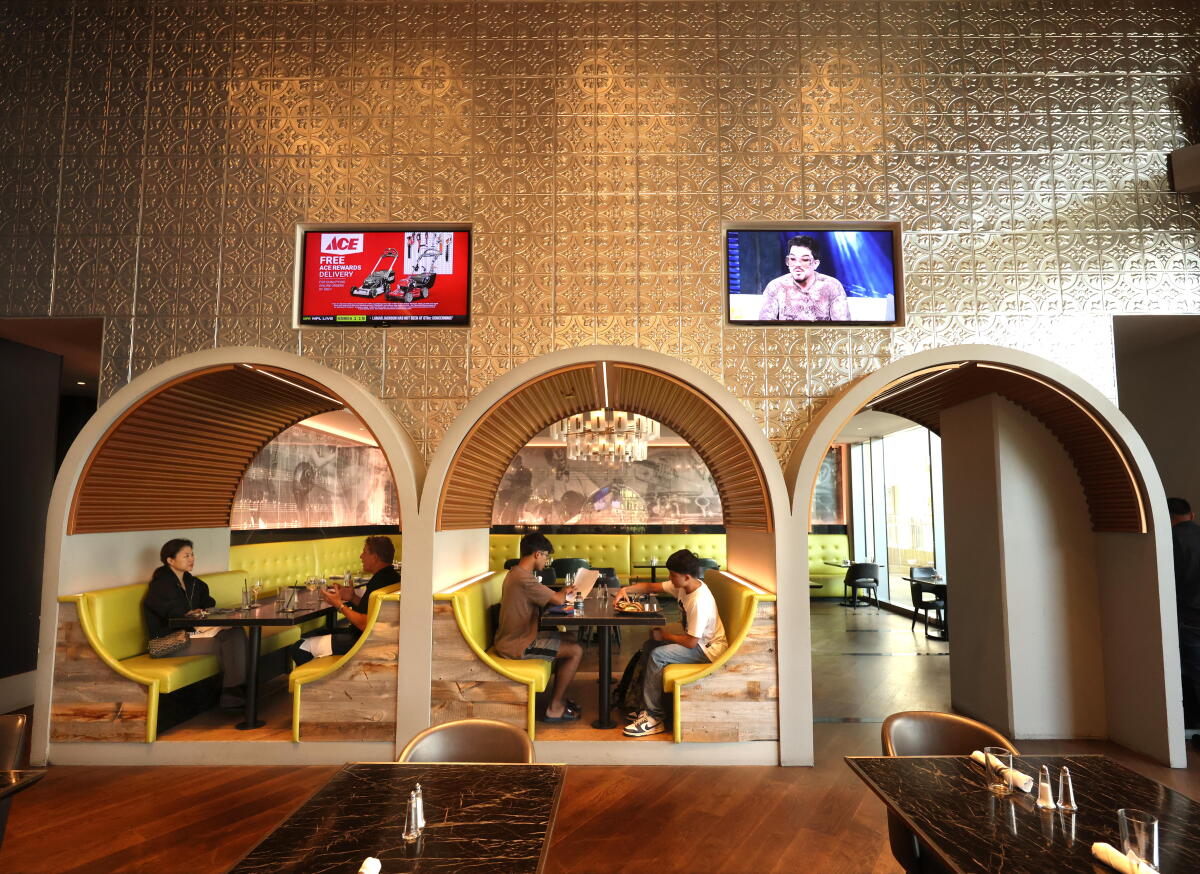
Hotel guests at the Metropole restaurant just opposite the main lobby at the Hotel Indigo in downtown Los Angeles in May.
(Genaro Molina / Los Angeles Times)
Ahead of World Cup tournaments, FIFA holds large blocks of rooms. But FIFA canceled or released up to 70% of the hotel room blocks it had reserved in host cities, including Los Angeles.
“We understood that we were maybe going to be disappointed with attendance going into the World Cup simply by the volume of cancellations that came out of the room block agreement,” said Jackie Filla, president and CEO of the Hotel Assn. of Los Angeles.
The disappointing turnout led to staff reductions. Of the hotels surveyed 82% reduced seasonal staff and more than six in 10 reported reducing employee shifts, scheduled hours, or permanent staff.
Hotels did raise prices, with the average daily rate hitting $228, the highest of any comparable L.A. event in three years. But occupancy was 71%, well below the 83% recorded during Taylor Swift’s Eras Tour.

A visitor walks in the lobby of the Hotel Indigo in downtown Los Angeles.
(Genaro Molina / Los Angeles Times)
The survey drew 58 responses from 210 hotels, and the analysis was done by travel-data firm Rove using CoStar and AirDNA data. International visitors were also scarce, with Los Angeles welcoming 700,000 international arrivals in June and July — roughly 80,000 visitors below 2024 levels for the same period, the report says.
“We particularly didn’t see a lot of foreign visitors and that’s something that was disappointing,” Filla said. “Foreign visitors do spend three times the amount of money as the average domestic traveler.”
Short-term rentals, meanwhile, gained. Their demand rose 23% and revenue 21% versus July 2024, while hotel revenue fell 3.3%. Airbnb, the tournament’s official fan accommodation, offered new hosts $750 incentives.
The city is currently weighing a temporary proposal to ease its short-term rental rules through the end of 2028 to accommodate tourists. “That will really, truly undercut the business of hotels,” Filla added. “We saw some of that with the World Cup.”
The worry is carrying over to the Olympic Games, set to be hosted in Los Angeles in 2028. Six in 10 surveyed hoteliers expect an Olympic rental surge to hurt their bookings and rates, the report says.
The World Cup “gave us false hope to recover from a negative year,” one Los Angeles hotelier said, according to the report. “I also feel [the] same thing will probably happen for [the] Super Bowl and Olympics.”