WITH the summer holidays here, you might be regretting not booking a holiday yet.
Well, luckily for you, there are a whole host of places you can travel to for cheap under £210 per person.
You can head on a last minute break for under £210Credit: On The Beach
And what’s even better is that you don’t have to use any of your annual leave as all the following weekend breaks are for between July 24 and 26.
They even take off in the afternoon or evening so you can go after work on Friday.
Sign up for the Travel newsletter
Thank you!
Turiquintas, The Algarve in Portugal
You could head to Turiquintas Hotel in The Algarve in Portugal for a weekend – the hotel has breakfast in the morning, and lunch anddinners are included.
There are 80 apartments in total across the site, as well as a pool, children’s pool, games room, supermarket, cafe and a bar.
You would fly from East Midlands Airport on the Friday at 7:10pm to Faro, and return on the Sunday at 7:10am.
A two night stay costs £165 per person.
a&o Prague Rhea, Czech Republic
For example, you could head to Prague and stay in a&o Prague RheaCredit: On The Beach
If you fancy being in the middle of a bustling and vibrant city, you could head to a&o Prague Rhea for two nights.
All the rooms have their own bathrooms as well as free Wi-Fi.
Downstairs in the lobby, you’ll also find a 24-hour bar.
And in the morning you can head to the breakfast buffet.
To get to the town centre, it is just 20 minutes on public transport where you can explore fairytale-like architecture including Prague Castle.
You would fly from Bristol Airport on the Friday at 9:55pm to Prague, and return on the Sunday at 3:45pm.
A two night stay costs £168 per person.
PortAventura Hotel El Paso & Theme Park, Spain
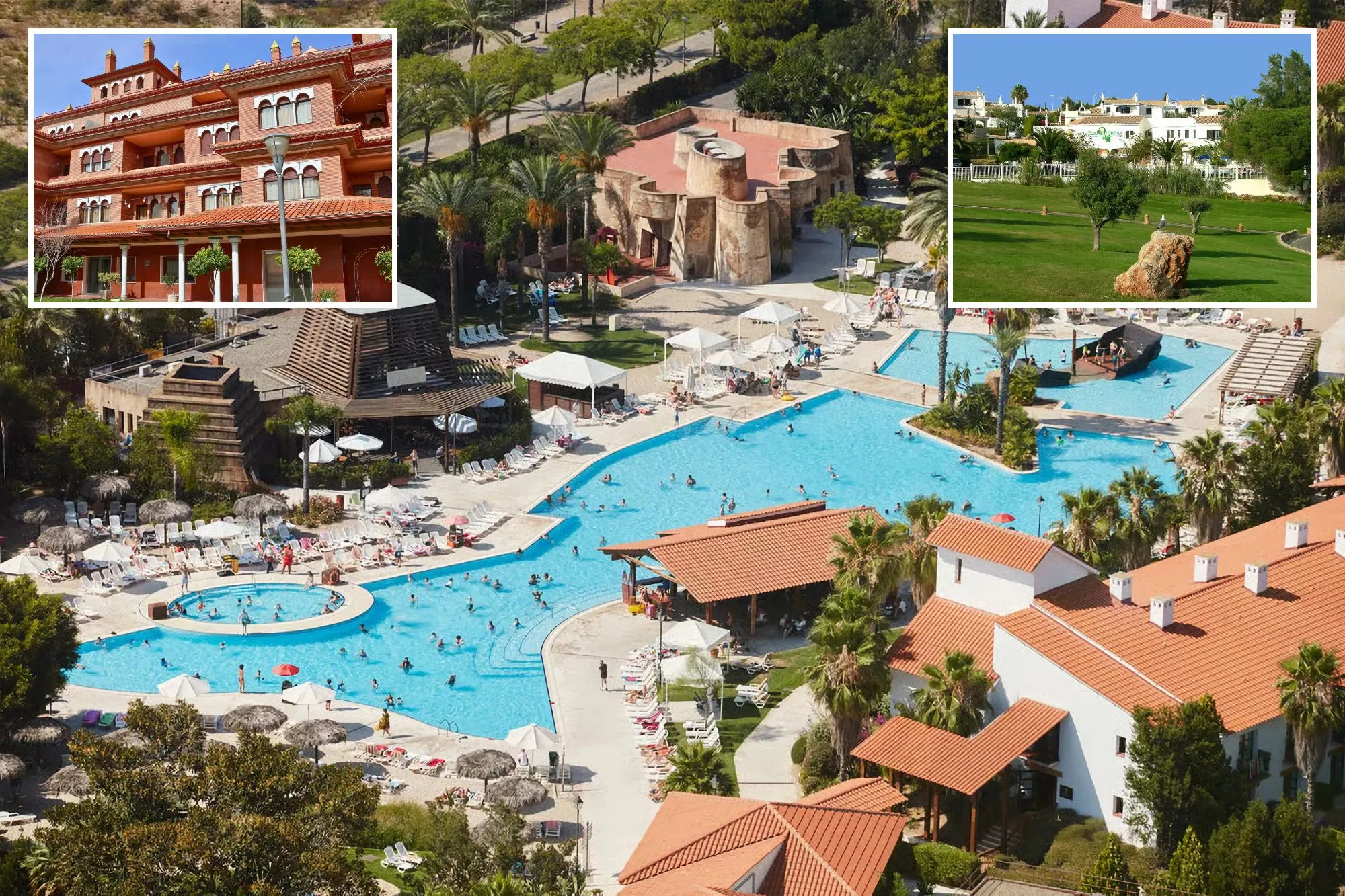
Or head to Hotel El Paso and you’ll get PortAventura tickets for freeCredit: On The Beach
Want a theme park and a hotel for the price of one? You can head over to PortAventura Hotel El Paso with Woody Woodpecker-themed rooms and unlimited access to PortAventura Park just down the road.
And the beach is also only seven minutes away.
As for the hotel itself, there are two pools including one with a pirate ship, day and evening entertainment, a hot tub as well as a selection of bars and restaurants.
You would fly from Liverpool Airport on the Friday at 9:45pm to Reus, and return on the Sunday to Manchester at 12pm.
A two night stay costs £185 per person.
Granada Palace Affiliated by Melia, Spain
Or if you fancy a stay in Spain, you can head to Granada Palace Affiliated by Melia, in SpainCredit: On The Beach
If you want to feel like a king or queen, then head to Granada Palace Affiliated by Melia, in Spain.
The hotel has rooms and suites, as well as a spa with sauna and steam rooms and an indoor heated pool and an outdoor freshwater pool.
It is great for those who just want a relaxing weekend away, where you can explore Monachil, which is a great spot for hiking including a 63-metre-long bridge across a gorge.
You’ll also be an 18 minute drive from Granada city centre.
The hotel has a restaurant, cafe and bar if you want to grab a bite to eat. And of course, there is a huge buffet breakfast.
You would fly from Manchester Airport on the Friday at 9:30pm to Malaga, and return on the Sunday at 6:40am.
A two night stay costs £175 per person.
ITC Colón by Soho Boutique, Andalucia in Spain
Or you could head to Hotel ITC Colon which has attractions within walking distanceCredit: Love Holidays
In Córdoba, you’ll find Hotel ITC Colón with 40 rooms, each with a private bathroom. There’s also an onsite restaurant, breakfast room and a bar.
When it comes to things to do around the hotel, just a 10-minute drive away is the Mosque-Cathedral – which features 850 columns and towering arches.
Though for something closer you could head to Palacio de la Merced convent, which are both within a five-minute walk.
You would fly from Manchester Airport on the Friday at 9:30pm to Malaga, and return on the Sunday at 6:40am.
A two night stay costs £169 per person.
Studio 17 by Atlantic Hotels, Algarve in Portugal
For a Portugal trip, head to Studio 17 on the AlgarveCredit: Love Holidays
The Studio 17 by Atlantic Hotels sits in Portimao resort in Algarve, Portugal, just a short drive from the coast. The accommodation features Mediterranean-style apartments with kitchenettes and either a balcony or a terrace.
There’s an outdoor swimming pool for adults as well, including a sun terrace with sun loungers and parasols ideal for soaking up the sunshine.
The coast is just a six-minute drive away and the town centre is less than a 20-minute walk from the hotel.
You would fly from Leeds Bradford Airport on the Friday at 6:30pm to Faro, and return on the Sunday at 6:10am.
PITBULL proved to the world what a smooth operator he is by getting together the biggest crowd of baldies.
He set a Guinness World Record at his Hyde Park gig when 22,141 fans put on bald caps — and then described the moment as “priceless”.
Pitbull proved to the world what a smooth operator he is by getting together the biggest crowd of baldiesCredit: The Mega AgencyThousands of revellers in bald caps and sunniesCredit: AFP
The London audience also turned out in white shirts and aviator sunglasses to emulate Mr Worldwide’s trademark look — and our Emily was one of them.
With the phenomenal demand for tickets, Pitbull also broke the record for the highest- recorded attendance for a BST Hyde Park show, with 69,999 fans.
Sign up for the Showbiz newsletter
Thank you!
Walking out on to the Great Oak Stage on Friday, he said: “It is hard for me to say I am speechless, but all I can think of right now is knowing what my family went through in order to be someone free.
“As an immigrant family out of Cuba, to be able to pursue my dream and be on a stage like this and represent with all the baldies around the world, this is priceless.
“There is no way I could say thank you, there are no words to say what I feel right now.”
Pitbull, real name Armando Christian Perez, was handed his certificate by Radio 1’s Greg James and presenter Jack Remmington backstage before the show.
He said: “To all the baldies — like I said before, without you all, there is no Pitbull, no movement, no revolution.”
Of setting the records, he said: “It is not a surprise because hard work pays off and the harder I work, the luckier I get. What a blessing it is to be here in Hyde Park.”
Pitbull with the world record certificateCredit: AFPBizarre’s Emily Webber with Greg and Jack in the caps given out by AldiCredit: Supplied
In true style, Pitbull swigged from a bottle of his $24 Voli 305 vodka made in his home city Miami, to get into the party mood.
He was joined on stage by Kesha who rose to fame after featuring on Pitbull’s 2013 track Timber.
She said: “This record changed both of our lives, Pit.”
He said: “I thought, ‘What was the best way to represent you all?’. A good friend of mine said, ‘I think you should do this record’.”
During a two- hour set, Pitbull was also joined on stage by rapper Lil Jon for tracks Gasolina and Damn I Love Miami.
He ended the show with Time Of Our Lives featuring Ne-Yo, in which he raps: “Every day above ground is a great day.”
For his legion of fans, Friday July 10 in Hyde Park will be a night to remember.
Top dog Pitbull joins fans by wearing his own bald capCredit: AFP
PITBULL’S TEN COMMANDMENTS
Ask for money, get advice. Ask for advice, get money twice
Every day above ground is a great day
Take the word impossible and add an apostrophe, it becomes I’m possible
Live life, don’t let life live you
If you’ve got someone hating on you, that means you’re doing something right
Humble don’t stumble
In the word impossible is possible
We are called the baldies because we soar like bald eagles
Why dream it when you can live it?
The biggest room in the world is room for improvement
JAMES’ RETURN TO UK
American great James Taylor is returning to the UK for the first time in four yearsCredit: Getty
AMERICAN great James Taylor is returning to the UK for the first time in four years.
The You’ve Got a Friend singer, who has sold more than 100million records worldwide, will play London’s O2 with his All-Star band on Thursday, July 23.
The former world boxing champ went out of his way to put Pete at ease before he performed at daughter Venezuala’s recent wedding.
The Mysterious Girl singer said: “I chatted to Tyson for about an hour and he made me feel very welcome. I wasn’t just the performer.”
However, Peter enjoyed the gig so much that he is open to singing at more weddings.
He added: “It was such a happy occasion, I love weddings.”
Meanwhile, Peter is needed back on stage as he performs at Mamma Mia! The Party at The O2 in London. He will be playing Nikos until later this month.
Pete said: “It’s been amazing to vibe off the audience every night, and the set is incredible. It really feels like I’m in Greece. My kids have come to see me. I’m hoping they are getting more into Abba.”
Hendrik added: “They kept it short and sweet saying, ‘Good luck boys, enjoy it’.”
Niall Horan also offered support to the boys, who released their debut EP On Your Side on Friday.
Sean said: “He said he still gets nervous. To know someone like Niall is also bricking it is a good thing.”
Victoria Beckham lives has now trademarked a range of cookware in the StatesCredit: Getty
IT is said Victoria Beckham lives off a diet of grilled fish and steamed vegetables, but the Spice Girl-turned-businesswoman has now trademarked a range of cookware in the States.
Could the fashionista be out to give Jamie Oliver a run for his money?
Posh has filed paperwork for a name against a range of food and drink items including shot glasses, cake tins, cookie jars and sandwich boxes.
I have heard she likes a tequila.
But don’t go binning your Le Creuset pans just yet, as a source close to her tells me: “Victoria is protecting her categories. Nothing imminent is in the works.”
The beauty of Zen
Zendaya is heading on an exciting journey of her own by going into the beauty businessCredit: Getty
ODYSSEY goddess Zendaya is heading on an exciting journey of her own by going into the beauty business.
The actress – who plays Athena in Christopher Nolan’s new epic fantasy film – might even rival Gwyneth Paltrow’s wellness brand Goop one day.
She has filed Zendaya trademarks in the UK and the States for beauty and hair products, as well as social media and website services. A source said:
“Zendaya is an incredible actress and now she is set to make waves in the beauty industry.”
The new venture comes as her husband, Spider-Man actor Tom Holland, has launched premium booze-free beer brand Bero.
Zendaya was ruffling feathers when she stepped out in this revealing Louis Vuitton frilly gown for the Odyssey movie premiere held in Paris this week.
And as power couples go, it certainly looks like Tom and Zendaya are the ones to watch.
Olivia Attwood has her perfectly manicured fingers in so many pies, I’m struggling to keep upCredit: Sofi Adams.
OLIVIA ATTWOOD has her perfectly manicured fingers in so many pies, I’m struggling to keep up.
As well as her TV shows, podcast and various brand deals, the former Love Islander is now launching her own cocktail in a tin.
She hinted at the project earlier this year when she had the name of the drink tattooed on to her arm. Savano comes in three mixes – Hot Honey Margarita, Caipirinha and Moscow Mule – and is distributed by drinks firm Babco.
Olivia said the tipple is “a really exciting new chapter”, adding: “I’ve been teasing it for a little while so I can’t wait for everyone to finally try it.”
JESY Nelson has broken fans’ hearts as she confessed she’s been “crying all day” with mum guilt.
The mum-of-two has opened up on how her baby girls are struggling amid the high temperatures.
Pop star Jesy has now opened up on her mum guiltCredit: InstagramJesy Nelson confessed putting her baby girls into their spinal jackets and splints in this heat has left her feeling ‘heartbroken’Credit: Jesy Nelson/Instagram
Taking to social media, she told her 10million followers that she is utterly heartbroken over having to put the twins into thick spinal jackets and splints in this heat.
Pop star Jesy shared a glimpse of the girls laying down in their rockers wearing their supports.
Sign up for the Showbiz newsletter
Thank you!
She penned over the clip: “I’ve cried all day. Imagine having to wear a spinal jacket and splints in this heat.
“I cannot even begin to tell you how much this breaks my heart into a million pieces. But, if I don’t put them on every day, their spines and feet will only deteriorate and get worse.”
“These will never correct their spine or feet, it will only prevent it from getting any worse,” continued Jesy.
“Once again no future SMA babies need to suffer like this if they are given the heel prick test and treatment from birth!”
Despite the temperatures soaring above 30 degrees this week, the girls looked content waving their little hands around and taking in their living room.
Dani Dyer wrote in the comments: “Oh Jesy. You are doing amazing,” followed by two red heart emojis.
Billie Shepherd said: “Sending you all so much love. Super mumma, you are amazing.”
“They will still face every obstacle with the biggest smile. They have the best mummy ever and that’s all they need,” one fan penned.
The former Little Mix star’s baby girls – Story Monroe and Ocean Jade – are both battling Spinal Muscular Atrophy (SMA) Type 1 – the most severe form of a rare disease affecting muscle strength and movement.
Both Jesy and her ex-fiancé Zion Foster were told their twins were unlikely to ever walk, and may face serious breathing and swallowing difficulties.
Since Jesy’s babies were diagnosed with SMA she has been tirelessly campaigning to make it mandatory for all newborns to receive a heel-prick to determine whether or not they have the disease.
If SMA is caught early the condition is usually treatable but when left undiagnosed it can be life-threatening and cause death within two years.
A fan told Jesy of her work in her comments: “Want to thank you – just had a baby in Scotland and got the SMA heel prick test as standard. Midwives personally named you and the work you’ve done as to why it’s now offered.”
WEEKEND plans in the UK can easily burn through a hundred quid these days – so why not spend that exact same cash on a European getaway instead?
Travel companies Wowcher and Loveholidays offer city breaks that bundle your return flights and hotel stays together, all for £99 or less.
Visit lake Lake Como from £79pp on a budget-friendly city breakCredit: Getty
Whether you want to sip world-class beers in hidden cellar bars, or soak up the sunshine by a gorgeous Italian lake, here are five city breaks you can snap up now starting at £79pp.
Lake Como – £79
Rub shoulders with celebs at Italy‘s most glamorous lake without paying Hollywood prices.
Sign up for the Travel newsletter
Thank you!
Here you can cruise across sparkling waters, ride the funicular railway for panoramic mountain views, and tuck into delicious risottos at a waterfront trattoria.
Spend your days in Lake Como exploring historic cobblestone towns and lush botanical gardens right on the water’s edge.
This Wowcher deal includes a stay at the traditional B&B Hotel Como, which recently won a TripAdvisor Traveller’s Choice award.
Wowcher offer a two night break to Lake Como with return flights from London Gatwick, London Stansted, Manchester, Bristol or Edinburgh, from £79pp.
Krakow – £89
Krakow in Poland is a popular city break destination, and is packed with history and vibrant nightlifeCredit: Alamy
Lose yourself in the cobblestone charm of Poland‘s cultural capital, where fairytale spires tower over Europe’s largest medieval market square.
Feast on traditional dumplings by day before wandering the glowing historic streets and exploring underground cellar bars by night.
From the trendy cafes of the old Jewish Quarter to the grand castle overlooking the winding river, Krakow packs masses of history into every corner.
This bargain Wowcher deal bundles in your return flights and a stay at the charming Hotel Yarden by Artery Hotels, right in the heart of the city.
Wowcher offer a two night break to Krakow with return flights from Newcastle, Edinburgh, London Bristol or Manchester from £95pp.
Barcelona – £99
Enjoy a four star stay at the Eurostars Executive hotel with a £99 Wowcher city breakCredit: Alamy
Spend a whirlwind weekend in Barcelona to try tasty tapas, visit golden beaches, and tick off a visit to the jaw-dropping Sagrada Familia.
Wander the winding alleys of the Gothic Quarter before dipping into buzzing bars along La Rambla.
When the sun goes down, head to the hidden neighbourhood plazas like Plaça del Pi to drink cold beer under the palms.
This brilliant Wowcher deal bundles your return flights with a stay at the modern, four-star Eurostars Executive hotel.
Wowcher offer a two night break to Barcelona with return flights from Edinburgh, London Birmingham or Manchester for £99pp.
Prague – £99
Visit Prague on a weekend break from £99 with LoveholidaysCredit: Getty
Escape to Prague on a fairytale break where the streets are filled with soaring stone spires and historic castles.
Here, winding cobblestone streets hide traditional taverns and cellar bars pouring world-class lager.
Vibrant market stalls fill the sprawling Wenceslas Square, while the famous Astronomical Clock draws lively crowds to the historic Old Town.
This Loveholidays getaway pairs your return flights with an easy stay at the automated, digital-entry Royal Court Legerova apartments.
Loveholidays offer a two night break to Prague with return flights from London Luton for £99.
Venice – £99
Tick off a trip to Venice with a £99 weekend getaway with LoveholidaysCredit: Getty
Tick off a trip to romantic Venice with this cheap Loveholidays city break deal.
You can hop onto a public water bus for a few euros and cruise down bustling waterways, passing striped-shirt gondoliers along the way.
Stop off at a traditional neighborhood tavern to wash down bite-sized cicchetti snacks with a glass of bright orange Aperol spritz.
Loveholidays is offering flights plus a stay at the traditional Venetian hotel Agli Artisti, situated steps from the Grand Canal.
Loveholidays offer a two night break to Venice in November with return flights from London Luton for £99.
Five more affordable city breaks
Marrakech – £79
4* Overnight hotel stay with return flightsfrom London or Manchester with Wowcher.
Book yourself in for some sun and visit Morocco’s Marrakech, with your flights and hotel included for £79.
The vibrant city is home to Jemma El Fnaa Square, a World Heritage site where you can find everything from souks selling fragrant perfumes to snake charmers.
Overnight stay in a central hotel with return flights from Manchester, Edinburgh, London or Bristol with Wowcher.
A must-visit capital, Rome boasts some of the best-preserved historical sites on the planet. as well as top bars and restaurants.
For some lesser-known things to do, check out the street art and markets of the Testaccio district, and walk through the fairytale streets of Quartiere Coppedè.
Two-night stay at a&o Frankfurt Ostend with return flights from London Stansted with On the Beach.
Frankfurt offers something for everyone with a striking futuristic skyline alongside a beautifully restored old town.
Dip into traditional cider taverns. check out the independent boutiques and local markets of the Bornheim district, and walk through the picturesque streets of historic Höchst.
Two-night stay at Hotel F1 Nantes est Porte de Ste Luce with return flights from London Stansted with On the Beach.
Nantes is best known for its mix of medieval heritage and surreal mechanical art installations, as well as legendary buttery crepes and crisp Muscadet wine.
Make sure to check out the river and charm of the Chantenay district, and walk the brightly-coloured, bohemian streets of nearby Trentemoult.
NICK Knowles’ wife Katie has revealed that she’s been suffering with pain every day for ‘almost two decades’.
The brave star shared the news after undergoing surgery to remove parts of her reproductive system.
Sign up for the Showbiz newsletter
Thank you!
Nick Knowles’ wife Katie shared an emotional health update following her recent surgeryCredit: InstagramThe star revealed she’s been in pain for almost two decadesCredit: Instagram
Katie posted an emotional video online where she’s hugging a loved one while sitting down in tears at home post-surgery.
Penned in the post’s caption, Katie shared a health update and rejoiced that the decades worth of pain she’s been feeling should now be gone.
She said: “I’ve made some videos from hospital and after my op, and I think I’m ready to share them.
“The ovaries. The endo. The adhesions. The organs that had stuck together. The prolapses. The bits of my body that have caused me pain for nearly two decades. All gone!
Katie described feeling happy but also heartbroken about her health journeyCredit: InstagramShe’s the wife of TV presenter Nick KnowlesCredit: tiktok/@katieaknowles
“5 and a 1/2 hours in surgery. Mr Raafat has been amazing. He is the first surgeon who has ever made me feel truly heard and understood, and I’ve been through a fair few. Around 10, I think. He understood how draining, exhausting and painful this has all been, and he’s confident this should improve my quality of life. I am so grateful for that.
“Hopefully this is the last big recovery. Hopefully this is the start of life without that pain.”
Katie continued to share how she’s still in immense pain as she’s recovering from the operation, and it’s difficult to go through even though it’s temporary.
She explained: “I know this pain is short-lived. I know the scars, the stitches, the bleeding, the gas pain, the swelling, the injections, the cannulas, the bruises and all the awful hospital bits are temporary.
“But temporary doesn’t mean easy. It is brutal. My body feels completely battered.”
Katie finished the post off by sharing just how much endometriosis has impacted her life and how as much as she feels grateful now to go forward with less pain in the future, she still feels ‘heartbroken’.
Katie concluded: “Endometriosis and adenomyosis have taken so much from me. They’ve taken years. They’ve taken energy. They’ve taken confidence. They’ve taken plans. They’ve taken parts of my body. They’ve taken versions of me I’ll never get back.
“I wish I could go back and tell younger me she wasn’t weak. She wasn’t making it up. She deserved better. So yes, I’m relieved and grateful. I really am. But I’m also heartbroken.”
Fans reading the emotional caption left their well wishes in the post’s comments section, with one user saying: “You are so incredibly strong, please remember that. Sending so much love.”
A second shared: “Sorry you have been through all of this. I wish you a speedy recovery.”
A third added: “Much love to you and your family.”
Katie is the wife of TV presenter Nick, who has hosted shows including Who Dares Wins, DIY SOS and Break The Safe.
A week’s stay costs significantly less than many popular European rivals
Many UK households are reconsidering their holiday plans for 2026(Image: Philip Openshaw via Getty Images)
Many UK households are reconsidering their holiday plans for 2026, with nearly half (47%) of Brits with travel plans deciding to cut back due to soaring flight costs.
Research from the credit card firm Aqua examined the cost of a week’s stay in summer holiday destinations across the UK and Europe to uncover where Brits can stretch their money the furthest this year.
Albania has emerged as the top destination for a summer getaway in 2026, with return flights costing £100 and a week’s stay for two in July coming in at £381.
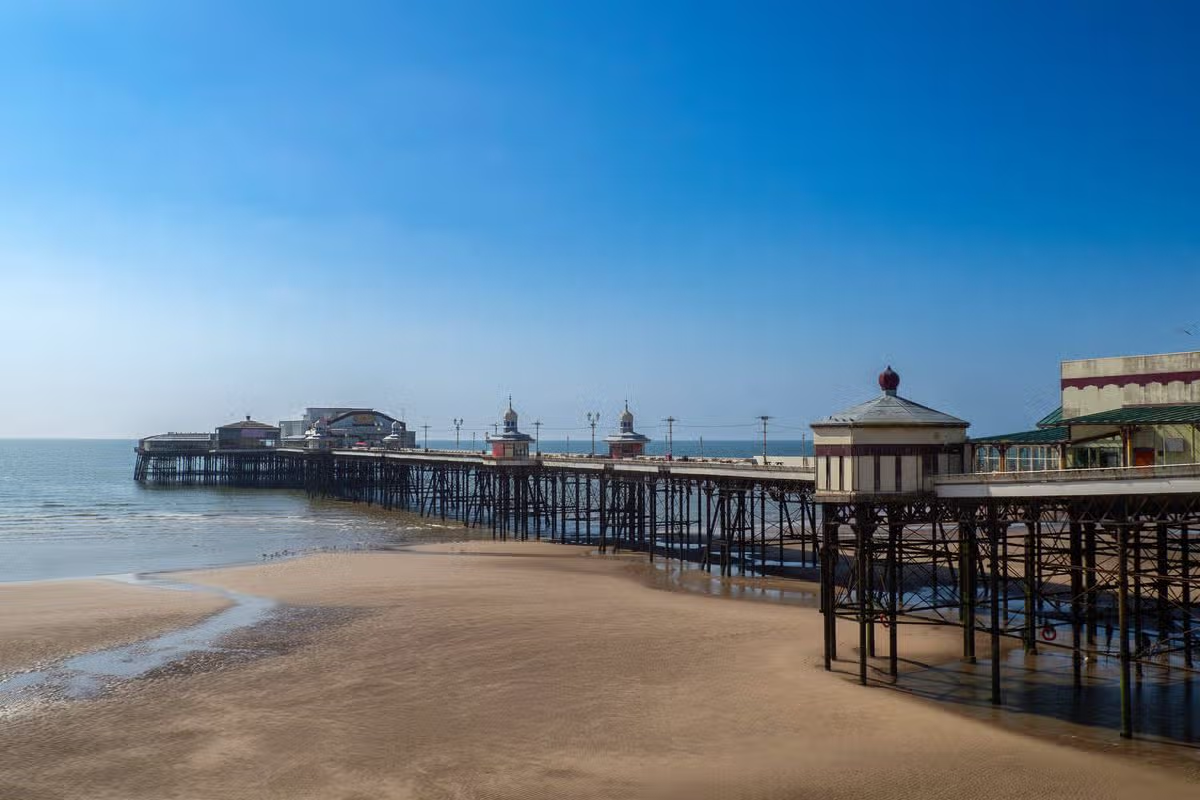
One British seaside resort also made a notable appearance on the list. Blackpool is the only UK destination to feature in the top 10, landing in ninth place as one of the most budget-friendly summer holiday spots for 2026, boasting the lowest average prices for local attractions (£31) and fuel costs averaging £35.
Things to do in Blackpool
Blackpool offers a wealth of attractions listed on TripAdvisor, among them Sandcastle Waterpark, Blackpool Tower Ballroom and The Blackpool Tower.
It is Blackpool Pleasure Beach, however, that sits at the top of TripAdvisor with a rating of four, based on an impressive 15,000 customer reviews. The amusement and theme park is open seven days a week, with unlimited-ride eTickets available from around £31.50 online for adults (ages 12+) and £22.50 for children, compared to gate prices of up to £50.
Ticket prices at Blackpool Pleasure Beach vary by date, and booking at least seven days in advance can save visitors up to £14 per ticket.
Those who prefer to pay as they go can purchase individual ride tickets starting from £7.
Visitors have been singing the praises of Blackpool Pleasure Beach on TripAdvisor, with one guest writing: “An amazing day on the theme park with amazing rides, all the staff were friendly and helpful, great day all round, would recommend going.”
A second visitor added: “Amazing friendly staff, always happy to help, amazing rides as well, can always have a great day at the Pleasure Beach.”
“We had a fantastic trip to Blackpool Pleasure Beach, which was enjoyed by all ages,” said another. “Our youngest is just a toddler, and our oldest is a teenager, and they both had a great time. There is really something for everyone.”
A fourth guest enthused, “Best day ever today! Jake and Jamie, who work on the Big One, you were right, it doesn’t go upside down! Although we got wetter than we ever would have on Valhalla! All staff were great, and the facilities were too. Can’t wait to come back.”
Rounding off the glowing reviews, one visitor posted: “Great, I had a wonderful time at the amusement park. I am glad I enjoyed all the attractions and entertainment. The atmosphere there was absolutely delightful. It was a pleasure to hear about such positive experiences.”
Meanwhile, at the opposite end of the spectrum, London ranks as the most sought-after staycation destination in the UK. The capital tops the list with steep accommodation costs (£1,133 per week for two adults), affordable meals (£20), and pints (£7).
Yet a number of top attractions, including the British Museum and the National Gallery, are free to enter, which helps to soften the blow on overall expenditure.
Brighton takes second place, with accommodation on the pricier side — the second highest of all destinations analysed (£1,715 a week for two adults). Falmouth, UK, follows closely in third, also driven by some of the steepest accommodation costs (£1,501 a week for two adults).
The top 10 most affordable European destinations for 2026:
AS the weekend draws to a close, more details of the celebrity wedding of the decade have been spilled – this time by the mother-of-the-groom.
Taylor Swift‘s new mother-in-law Donna Kelce has spoken about her son’s wedding to the global pop sensation, which took place on Friday.
Sign up for the Showbiz newsletter
Thank you!
Details of Taylor Swift and Travis Kelce’s wedding have been spilled by the mother-of-the-groom (the couple are pictured in May)Credit: GettyDonna Kelce admitted she can’t reveal too much, but offered a glimpse into the nuptials that unfolded in New York CityCredit: INSTAGRAM/MACYS
The mum of Travis Kelce admitted she can’t reveal too much, but offered a glimpse into the Madison Square Garden nuptials that unfolded in New York City.
Speaking to Macy’s during their 50th Fourth of July Celebration, Donna, 73 said: “I really can’t say a heck of a lot except it was magical, man!
“Magical!” she then repeated, as she burst out into a smile, clearly having fond memories of her son and superstar daughter-in-law’s special day.
Guests have been totally tight-lipped since the ceremony, which saw them asked to sign NDAs ahead of the blockbuster event, which was attended by 1,000 guests.
travis kelce mother donna kelce doesn’t talk about the wedding to taylor swiftCredit: Instagram/MacysNew York Police Department vehicles were stationed outside Madison Square Garden ahead of the event on FridayCredit: APAt around 7:30pm, Travis and Taylor’s marriage was confirmed with huge purple screens reading “JUST&T MARRIED!”Credit: ReutersCrowds of fans lined the streets, desperate for a glimpseCredit: EPA
In further new details, the reception is said to have turned into a “game’s night” of sorts in the evening, with guests taking home luxury raffle prizes.
Among the party favours were Cartier watches and designer handbags, as reported by TMZ.
The biggest prize up for grabs, however, was a 1970 Chevrolet Chevelle with the license plate “JUST&T MRD”, according to an insider. The classic car is a replica of the one they were spotted in on their first date.
The source revealed that guests “were invited to play games throughout the evening, earning raffle tickets for a chance to win an array of prizes.”
Eagle-eyed Swifties also thought they had caught a glimpse of the bridemaids dresses when Taylor’s childhood best friend, Abigail Anderson, and Laura Kruk, the fiancée of New York Giants wide receiver Juju Smith-Schuster, stepped out in the same $795 gown, but it seems this was purely coincidence.
In another unusual wedding detail, Swift reportedly walked down the aisle to a strings rendition of one of her own songs while Jason and Kylie Kelce’s daughters scattered petals.
At around 7:30pm, Travis, 36, and Taylor’s marriage was confirmed with huge purple screens reading “JUST&T MARRIED!” lit up outside Madison Square Garden, roughly an hour after Taylor’s SUV was spotted pulling into the venue.
Both the bride and groom were dressed in Christian Dior, it was later confirmed by Taylor’s PR.
QUEEN of the Sun £9.50 holiday, Tracy Kennedy, is back to answer your burning questions on all things budget breaks
Tracy has been taking £9.50 holidays for 30 years, and even runs a Facebook group dedicated to helping people book their Sun holidays.
Sign up for the Travel newsletter
Thank you!
Our Hols from £9.50 Agony Aunt Tracy Kennedy is here to help you pick the right holiday park for youCredit: Paul Tonge
Now she’s here to answer all things Hols from £9.50, from how to get a good deal during the school holidays to the items she can never leave without packing.
You can leave a question for Tracy by filling out the form above, and with each Q&A with Tracy we will pick one lucky reader to win a £100 Amazon voucher.
This week’s winner of a £100 Amazon voucher is Stephanie Marriott. Congratulations, Stephanie!
Yes! The next top up is coming on July 7 for Sun Club members, and July 8 for people collecting codes.
The first lot of £9.50 holidays come out in January, but there are many promotions throughout the year. The cheapest holidays do tend to go quick, but don’t let that put you off.
My secret tip is that some people book and then they choose to upgrade, so those cheaper dates that were once sold out come back and are then released again.
And if you are signed up to Sun Club, you’ll get first pick of the holidays during each top-up.
Always keep an eye out for the top-up promotions and check the website regularly.
Hols from £9.50 are having a major restock this July, where Sun Club members can book earlyCredit: Destination Selsey
How do I get a good deal during the school holidays?
Fiona Curry
If you have specific dates in mind, I always recommend being up and waiting for the moment when the £9.50 holidays are released.
Sun Club get to book first, so I’d recommend joining so you get first access. It’s only £1.99 a month, and we all stay up for when access opens to Sun Club members at midnight.
That way you get to book your holiday before the final codes drop.
Firstly, research the parks you’d like to go to, and have all the parks and dates you’d ideally want written down in front of you.
Just in case they don’t come up, I suggest having some alternatives that you wouldn’t mind going to.
Not every park has availability during the school summer holidays, but quite a few of them do.
There is also quite a lot of availability in other school holiday periods, like October half term, which can be a lovely time to go with lots of themed activities.
Seal Bay and Golden Coast are two family-friendly parks that have offered dates in the school summer holidays – and you’re not going to find a holiday at popular parks like that for a cheaper price anywhere else.
What is your essential packing item? Not the obvious (food, clothes, towels) but a little something that makes the trip so much easier?
Lorraine Cooper
Every time I go away, I take an essentials box with me. My mum used to always bring one on trips when I was little, and now I do the same.
It’s basically a box packed with all your essential bits, like washing up liquid and sponges. I even take those little travel-sized bottles and siphon off any cleaning products or toiletries into them.
We also bring tins, pasta, spices, non-perishable foods like that. The kind of bits you’d reach for in your cupboard at home, that might not be there in your caravan.
Bringing those sorts of bits with you will save you spending an extortionate amount at the on-site shop. Then you only need to buy any fresh food once you’re there.
Also, always pack a tin opener and potato peeler, just in case!
Tracy recommends a trip to Seal Bay for a longer break, as there are plenty of on-site activitiesCredit: Seal Bay, Cove UK
What are the best parks for a longer (seven day) trip?
Sharath Reddy
For a longer trip, you’ll want a holiday park with loads to do on-site so that there’s enough to keep you busy for a whole week.
For this I’d recommend Seal Bay in Selsey, which is in West Sussex. It’s definitely got enough to keep you busy.
On site it feels like one big party park. Seal Bay has its own fairground and it’s right on the beach, so definitely have a beach day. There’s even a bar which is practically on the beach.
It’s also got a lovely big pool with lots of water activities, so you could also have a pool day. It’s also got a Wave Rider surfing machine.
Then when you want to explore off-site you’ve got Bognor Regis, Chichester and Littlehampton all nearby.
You could easily spend a full day in Chichester. It’s a town with a great big cathedral and lots of artsy and historical things to do, with museums and galleries.
In Littlehampton you’ve got beaches and Harbour Park with rollercoasters, and it also has a miniature railway.
Then of course you’ve got Bognor Regis, which is a fantastic British seaside town. It’s got a beautiful seafront, a small traditional pier, and all the classics like hot doughnuts and fish and chip shops by the sea.
You could even buy a day pass to Butlins if you wanted. So you can bag a cheap stay with £9.50 holidays, then buy a Butlins day pass to go over and do all their daytime activities and visit the fairground.
Hundreds of new Hols from £9.50 will become available at club950.co.ukCredit: parkdean resorts camber sands
What would you suggest to make a £9.50 holiday a bit more manageable for SEN families?
Stephanie Marriott
I actually get this question a lot in my Facebook group, and it’s a very important one.
Depending on how old your children are, if you can go away outside of the school holidays, then do. The parks tend to be a lot quieter which can be helpful.
But if that isn’t doable, you can always ring the site and ask if they have any special hours for kids with extra needs. Quite a lot of them offer a quiet hour at the pool, for example.
I’d also recommend having a look at the activities and entertainment program ahead of time to see what you would like to spend each day doing.
There are usually things like arts and crafts and indoor activities which might be a bit quieter than the full-on evening entertainment.
All the ways to book your holiday from £9.50
There are six ways to book our Holidays From £9.50 – however Sun Club members gain access an entire day early
Book with Sun Club: Join Sun Club for £1.99 per month. Then go to the Sun Club Offers hub and find the Hols from £9.50 page. You do not need to collect any code words or Sun Savers codes. Sun Club members can book from 00:01 on Tuesday, July 7 2026.
Collect codes then book online: Simply collect five out of 20 code words printed in The Sun daily from Saturday July 4 to Thursday, July 23, 2026. Then enter them at thesun.co.uk/holidays to unlock booking. Code collectors will be able to book from Wednesday, July 8.
12-Page pullout – Gather codes from the pullout on Saturday, July 4, 2026. Then enter them at thesun.co.uk/holidays to unlock booking.
Book with Sun Savers: Download the Sun Savers app or register at sunsavers.co.uk. Then go to the ‘Offers’ section of Sun Savers and click ‘Start Collecting’ on the ‘Hols From £9.50’ page. Collect five Sun Savers codes from those printed at the bottom of the Sun Savers page in the newspapers from Saturday, July 4, 2026. Then enter or scan the codes on Sun Savers to unlock booking from Wednesday, July 8.
Book by post: Collect five of the code words printed in The Sun each day fromSaturday July 4 to Thursday, July 23, 2026. Cut the code word out and send it back with the booking form – found in paper onor online at thesun.co.uk/holidays.
Book with The Sun Digital Newspaper: Sign up to The Sun Digital Newspaper at thesun.co.uk/newspaper. Then download the Sun Savers app or sign up at sunsavers.co.uk, log in to Sun Savers with your Sun account details (the same email and password you use for your Digital Newspaper) and enjoy automatic access to Hols, without the need to collect Sun Savers codes daily. Digital Newspaper subscribers can book fromWednesday, July 8.
SUN Hols from £9.50 are back, with thousands more bargain breaks being released next week.
If you’re still looking to book an affordable holiday to look forward to with the family, then you’re in luck.
Sign up for the Travel newsletter
Thank you!
Seal Bay has a surfing simulator that is loved by kids and adults alikeCredit: Seal Bay, Cove UK
We’ve rounded up 9 of the top UK Hols from £9.50 resorts receiving NEW breaks to book from next week – and it turns out they are some of the most popular holiday parks among Sun readers.
BUT… if you want early access to be one of the first to bag a booking, then join Sun Club for £1.99 a month, or £12 for the year, as Sun Club members get priority access when booking.
Hols from £9.50 are set to be restocked on Wednesday, July 8, with thousands of new holidays available.
But if you want to book them earlier than anyone else, you shouldsign up to Sun Club for £1.99 per month, or £12 for the year.
Follow the link from the offers page, and you can book your break from midnight on Tuesday, July 7.
Lighthouse Leisure
Two minutes’ walk from the beach and the picturesque lighthouse that gives this holiday park its name, Lighthouse Leisure is a well-located holiday park.
This family resort is in Dumfries, Scotland, a beautiful market town which sits on the Anglo-Scottish border.
Nearby family days out include meeting the animals at Dalscone Farm Fun, visiting impressive castles like Century Caerlaverock, and learning about the famous Scottish writer at the Robert Burns House.
The holiday park itself however has plenty to do, like an outdoor play park which kids love to climb and an entertainment lounge and bar that grown-ups love to retire to in the evenings.
And with family discos, bingo, karaoke nights and more, you’ll be sure to make some lasting family memories on holiday here.
You couls visit Caerlaverock Castle on a day trip from Lighthouse Leisure resort in DumfriesCredit: GettySeal Bay offers accommodation from standard caravans, to beachfront pods, to luxury lodgesCredit: Seal Bay Resort
Seal Bay Resort
Seal Bay was the number 1 most popular park with £9.50 holidaymakers last year, and you can still book a holiday there in time for this Easter.
With so many activities for families of all ages, it’s easy to see why this resort is such a big hit.
Kids can have a go on the park’s surfing simulator, tackle the climbing wall, or try their hand at digital darts, axe throwing and archery.
This resort sits smack-bang on the beachfront of Selsey, and accommodation includes everything from simple seaside caravans to luxurious glamping or beachfront pods.
All stays come with access to swimming pools and the resort’s top-rated entertainment, so there’s no need to fork out on extra passes.
Nearby there’s plenty of family attractions like the Harbour Park amusements and the Tangmere Military Aviation Museum.
Hayling Island Holiday Park has accommodation overlooking the seaCredit: Booking.comGuests at Parkdean Resorts Landguard can also use the facilities at Parkdean Lower HydeCredit: Parkdean
Hayling Island Holiday Park
Just east of Portsmouth, Hayling Island is packed with family activities and golden beaches to explore.
Plus activities like a Wipeout inflatable course, disc golf and ‘Tough Mutter’ dog agility course are hard to find elsewhere!
The park comes alive at sunset with evening entertainment, which ranges from Glow Show DJ Battles to Freddie Fever, a celebration of the band Queen.
End the night by heading back to a luxury caravan with your own hot tub, and you’ve done holiday parks right.
Parkdean Resorts Landguard
Landguard is a tranquil town surrounded by forest and golden beaches, and this holiday park has direct access to its shores.
Parkdean Resorts Landguard offers touring and camping, as well as caravans and cosy wooden lodges that are a perfect fit for the woodland surroundings.
Entertainment here is of a high-standard, with Parkdean classics like the Krew animal characters hosting meet and greets, as well as unique options like slime and squishy toy-making.
Landguard is also only a stone’s throw from Parkdean Lower Hyde, and guests can enjoy double the fun and double the facilities between both parks.
Beautiful old village on the Isle of WightCredit: Getty
Parkdean Resorts Naze Marine
Walton-on-the-Naze is a charming countryside town by the sea, with a soft sand beach, seafront gardensa and a vintage pier to stroll.
The relaxing town is also only a few minutes’ drive to Frinton-on-Sea, another old-fashioned seaside town with plenty of walking routes waiting to be explored.
Parkdean Resorts Naze Marine is the ideal base to explore both areas, with cosy caravans that make the perfect retreat after a day out exploring.
Plus the on-site entertainment is well worth a visit here, with PAW Patrol Mighty Missions and Milkshake! mornings being just two of the exciting kids’ shows on offer.
Billing Aquadrome Holiday Park
Billing Aqudrome in Northamptonshire is 235 acres of non-stop activities that kids will love.
Kids can get off their devices and in touch with nature with survival skills, den building, pond dipping, or by hopping on a paddle board or pedalo.
Plus there’s loads of other unique activities like BMX rides, dance classes and alpaca feeding.
Evening entertainment includes is all-singing and all-dancing, with fun extras like silent discos and a large outdoor amphitheatre with performances.
If you want to make the most of the nature, choose to stay in a cosy lakeside pod, or even bring your own tent to get back to basics.
And when it comes to food and drinks, there’s plenty kids will love, like the Bak’D & Swirls dessert shop and Smash’d Town burger restaurant. There’s also healthier options like grazing boards available, too.
Billing Aquadrome has loads for kids to do, such as an inflatable obstacle courseCredit: meadow bayYou can walk from Parkdean Resorts Valley Farm to Clacton-on-Sea in just 10 minutesCredit: Getty
Parkdean Resorts Valley Farm
Parkdean Resorts Valley Farm has plenty to do, including both an indoor and outdoor pool, kid-friendly evening shows and lively bingo nights.
This fuss-free resort has caravans and lodges that are fully equipped with everything you’ll need for a stay, plus there’s accessible and dog-friendly options, too.
This holiday park is just 10 minutes’ walk from Clacton-on-Sea, the ideal seaside town for a family holiday.
Here you can jump on fairground rides, eat fish and chips by the sea, or test your luck on arcade games on the pier or at Clacton Pavilion.
Parkdean Resorts Lower Hyde
Lower Hyde Holiday Park combines some of the very best in entertainment with a top location and plenty of food and drink options.
Sit down for a bite to eat at the family-friendly Barnhouse Bar and Restaurant, or grab a snack from the ever-popular Scoops ice cream parlour or Thunderbird Chicken shack.
Nearby you can pop into the cafes and shops of Sandown, or explore the beaches and coves of the rugged coastline.
This park is also close to the scenic town of Shanklin, where thatched-roof cottages line the picturesque old town.
Guests at Parkdean Lower Hyde can also use the facilities of the nearby Parkdean Landguard Holiday Park.
Shanklin is a postcard old town with thatched roof-buildings on the Isle of WightCredit: GettyGuests of Parkdean Resorts Thorness Bay can enjoy golden sand beaches a short walk awayCredit: Getty
Parkdean Resorts Thorness Bay
Sat on the north coast of the Isle of Wight, Parkdean Resorts Thorness Bay is a top pick for those who love beautiful natural landscapes.
The park sits within woodlands overlooking the sea, with plenty of coastal trails and walks on your doorstep.
But this peaceful location isn’t short on exciting things to do – here kids can enjoy zipping down the slide into the heated indoor swimming pool, or burn off some energy at the adventure playground or the sports courts.
There’s delicious dinner options at the Fish and Chippery, and top entertainment and cocktails at the Regatta View Showbar.
And you can end the night by catching some z’s in a comfy chalet, lodge or safari tent.
All the ways to book your holiday from £9.50
There are six ways to book our Holidays From £9.50 – however Sun Club members gain access an entire day early
Book with Sun Club: Join Sun Club for £1.99 per month. Then go to the Sun Club Offers hub and find the Hols from £9.50 page. You do not need to collect any code words or Sun Savers codes. Sun Club members can book from 00:01 on Tuesday, July 7 2026.
Collect codes then book online: Simply collect five out of 20 code words printed in The Sun daily from Saturday July 4 to Thursday, July 23, 2026. Then enter them at thesun.co.uk/holidays to unlock booking. Code collectors will be able to book from Wednesday, July 8.
12-Page pullout – Gather codes from the pullout on Saturday, July 4, 2026. Then enter them at thesun.co.uk/holidays to unlock booking.
Book with Sun Savers: Download the Sun Savers app or register at sunsavers.co.uk. Then go to the ‘Offers’ section of Sun Savers and click ‘Start Collecting’ on the ‘Hols From £9.50’ page. Collect five Sun Savers codes from those printed at the bottom of the Sun Savers page in the newspapers from Saturday, July 4, 2026. Then enter or scan the codes on Sun Savers to unlock booking from Wednesday, July 8.
Book by post: Collect five of the code words printed in The Sun each day fromSaturday July 4 to Thursday, July 23, 2026. Cut the code word out and send it back with the booking form – found in paper onor online at thesun.co.uk/holidays.
Book with The Sun Digital Newspaper: Sign up to The Sun Digital Newspaper at thesun.co.uk/newspaper. Then download the Sun Savers app or sign up at sunsavers.co.uk, log in to Sun Savers with your Sun account details (the same email and password you use for your Digital Newspaper) and enjoy automatic access to Hols, without the need to collect Sun Savers codes daily. Digital Newspaper subscribers can book fromWednesday, July 8.
Former Little Mix star Jesy Nelson was in tears as cameras caught the moment she was given her twin daughters’ devastating SMA diagnosis
19:46, 02 Jul 2026Updated 19:53, 02 Jul 2026
Jesy Nelson appears in a brutally honest documentary called Life Changing(Image: Jesy Nelson/Instagram)
Jesy Nelson has candidly shared the devastating moment her twin girls were diagnosed with Spinal Muscular Atrophy (SMA) sobbing: “I don’t know how I’m going to do this.”
The heartbreaking scenes were captured as she filmed for her upcoming documentary, Jesy Nelson: Life Changing. The Amazon Prime Video cameras were on hand to capture the former Little Mix star’s reaction to the awful news as she said she “can’t believe this is happening”.
Doctors revealed the tots’ tests had come back positive. According to the NHS, SMA is “a rare genetic condition that can cause muscle weakness”. The organisation says the condition gets worse over time.
She revealed her whole life has changed, and she was predicted to struggle with the diagnosis. And Jesy is seen with her head in her hands as she says: “I don’t know how I’m going to do this. I feel like I’m going to be heartbroken for the rest of my life.”
But she says she refuses to let anyone else feel her pain and is determined to change laws and regulations surrounding SMA testing. And she has continued to update her followers on her twins’ condition online as the documentary gets ready to air later this month.
In the caption for the trailer, Jesy wrote: “I’m really not sure where to start with this one…All I can say is that I urge everyone to watch this documentary. It’s the most heartbreaking series I’ve ever had to make, but it’s one that needed to be made if we’re ever going to see real change.
“This is only a small glimpse into what my girls have to go through every single day. It’s the reality that so many children born with SMA have to endure and this is only the beginning of their lives.
“I truly hope this helps people understand why the heel prick test and treatment from birth are so incredibly vital. Early diagnosis can change EVERYTHING. I’ll keep saying it until no family has to experience this again: no future babies born with SMA should have lives that look like this.”
She ended with a plea: “Please if you watch one thing, let it be this: “Jesy Nelson: Life Changing” on @primevideouk, streaming from July 17th.”
Last month, Jesy was in Parliament as MPs debated whether to test all newborns for spinal muscular atrophy. She joined forces with the Mirror to highlight her petition which was signed by over 150,000 people demanding all newborns are checked for spinal muscular atrophy.
Scotland introduced screening in March. However, a similar scheme for England will only have a limited roll-out. And Jesy expressed frustration after public health minister Sharon Hodgson defended the staggered launch.
Jesy said: “I cannot believe we are still debating this. You are basically telling me that if you live in a certain postcode, you’re not as important. It’s outrageous.”
The decision, though, was defended by the public health minister, who had said limited testing facilities were preventing a full roll-out of screening for SMA.
The singer highlighted how late diagnosis of her own one-year-old twins meant they began treatment too late after irreversible nerve damage was done. She has since been told they will never walk.
Jesy Nelson: Life Changing will be shown on Prime from July 17
THE WORLD CUP is well underway with some of England’s top stars already breaking football records – but where do these guys get to when they aren’t kicking around a ball?
Prior to the 2026 World Cup, the England head coach told the England team to head off on their post-season holidays to either the US or Caribbean so they could get used to the time zone and heat for the World Cup.
Sign up for the Travel newsletter
Thank you!
The team jetted off to West Palm Beach in Florida and stayed at the luxury Belgrove Resort and Spa.
But each player has also been to a whole host of other spots across the globe – and you might even be surprised by some.
Harry Kane
Lapland, Finland
Over Christmas last year the England captain headed to Lapland in Finland with his family.
His wife, Katie Goodland, shared some snaps on her Instagram showing the family enjoyed dog sledding, spotting reindeer in the snow, heading on fairy light-lit walks among the trees etc.
On one night they even saw the Northern Lights and Kane’s kids enjoyed snowmobiling as well.
In addition, while in Lapland you can head off to Santa Claus Village and send postcards home.
Alternatively, families can have a go at making gingerbread.
Flights to Rovaniemi in October from £22 per way.
Jordan Pickford
Dubai, UAE
Back in January, Jordan Pickford and his wife were spotted flying back from Dubai.
The United Arab Emirates city is well known for its warm climate as well as its architecture such as the Burj Khalifa.
From the city you can also head out to the desert to try sand surfing or dune buggying.
You could fly from the UK to Dubai for £156 per way in July.
Jude Bellingham
Cannes, France
Four weeks ago, Jude posted some snaps of a lavish holiday in Cannes, France, with his 20-year-old brother, Jobe Bellingham.
The duo, along with other friends, enjoyed time on yachts as well as heading to La Mome – a fine dining restaurant that is famous for its foccacia dipped in olive oil and serving up fresh, local seafood.
One of the images appears to show Hôtel Martinez, which is a five-star Art Deco hotel on the Boulevard de la Croisette.
Inside, the hotel has yacht-inspired rooms and boasts a two-star Michelin restaurant.
Rooms cost from around £1,400 a night.
Flights to Nice Côte d’Azur Airport cost from £23 in July.
Dubai, UAE
The pro footballer also recently visited Dubai in the United Arab Emirates.
In the city, make sure to visit the Dubai Frame, which is a 150-metre structure with one side framing Old Dubai and the other side framing New Dubai.
You can even walk across a glass bridge on the structure.
You could fly from the UK to Dubai for £156 per way in July.
Jordan Henderson
Lapland UK
Jordan Henderson has previously visited LaplandUK, showing fans you don’t have to travel far to have a magical time.
The midfielder at Brentford enjoyed the experience alongside his family, seeing reindeer and of course visiting Santa.
LaplandUK now has two experiences in the country, with the original in Ascot and a more recently opened site in Manchester.
Tickets to the experience tend to range between £65 and £195 per person, but included in that you get to hang out with the elves and even make your own toy.
Declan Rice
Dubai, UAE
While the pro footballer often visits Dubai for warm-weather training camps, Declan Rice also heads on holiday to the popular spot.
And over the years he has visited the city on many occasions, sometimes even with other pros such as Mason Mount.
While in Dubai, make sure to head to some of the city’s beaches such as Kite Beach which is a great spot for watersports as well as beach volleyball.
Alternatively, head to Sunset Beach, which is known for having a more relaxed vibe and being the ideal stop to watch the sunset.
You could fly from the UK to Dubai for £156 per way in July.
Marcus Rashford
Barcelona, Spain
Last year, Marcus Rashford shared a few snaps of a holiday in Barcelona.
The holiday pics make sense considering the star plays as a forward for La Liga club Barcelona.
But Barcelona is a great city to visit – you can head down the famous La Ramblas and spot human statues.
And of course, enjoy some of the local restaurants serving tapas.
The Spanish city is also home to many designs by the famous architect Antoni Gaudí, including the Sagrada Familia – the tallest church in the world, that has been built over the past century.
Flights from the UK to Barcelona cost as little as £15 one-way in July.
Bukayo Saka
Lagos, Nigeria
Saka was born in London to Nigerian parents yet often heads to Nigeria in the summer.
He has previously been seen visiting Lagos and Kwara State.
Lagos is Africa’s largest city and is home to around 24million people.
The coastal city is home to the Nike Art Gallery, which spans across five floors and is home to thousands of contemporary and traditional Nigerian artworks.
Make sure to head to the Lekki Conservation Centre too, where you will find Africa’s longest canopy walkway with wetlands home to monkeys and tropical birds.
And for a beach day, stop by Elegushi Beach where you’ll also find a number of beach clubs and oceanfront restaurants.
One-way flights to Lagos from the UK cost from £263 in July.
Ollie Watkins
Lake Como, Italy
Back in 2024, Aston Villa and England strikerOllie Watkins proposed to Ellie Alderson at the Mandarin Oriental on Lago di Como.
The five-star resort hotel can be found in the village of Blevio, which is on the eastern side of Lake Como.
Across the hotel, you will find nine villas with a total of 75 rooms and suites.
There are also two villas with balconies overlooking the lake and with views of the Alps.
The hotel also has a huge spa with an indoor pool and another infinity pool outside on the edge of the lake.
A room costs from £1,162 per night.
But there are many other nice spots to visit and stay nearby.
For example, just down the road you could stay at Casa Giulietta Caronti, which also boasts views of the lake.
The B&B even has seven new suites with hot tubs inside, costing from just £112 per night.
You’d also be just a few minutes from downtown Como and Cernobbio.
Flights to Milan cost from £15 per way in July.
Estelle Manor, The Cotswolds
Estelle Manor is a Grade II listed country estate and hotel in Oxfordshire – which Watkins recently posted a pic of himself at on Instagram.
The hotel only opened in 2023 but has become well-known for its stylish rooms and Walled Garden.
There are also four restaurants onsite, as well as a kid’s club.
Rooms at the hotel cost from £575 per night.
But if that is outside of your budget, don’t worry as the Cotswolds is home to an abundance of pretty places to stay.
For example, you could head down the road to the Artist’s Residence near South Leigh.
The pretty pub with rooms boasts a thatched roof and dates back to the 16th century.
Inside the rooms feature a whimsical vibe, with minibars and Nespresso coffee machines.
Some rooms even have vaulted ceilings and free-standing bath tubs.
And staying costs a fraction of the price compared to Estelle Manor, with rooms from £153 per night.
Villa Ephrussi de Rothschild in Saint-Jean-Cap-Ferrat, France
The Villa Ephrussi de Rothschild overlooks the Mediterranean Sea and is the very spot Watkins got married at.
Built between 1907 and 1912, the villa is home to a massive collection of art as well nine themed gardens.
The villa was even designed to mimic the deck of a cruise ship, with visitors able to see the sea whichever side of the villa they are on.
The villa is open to the public to visit adult tickets costing €18 (£15.51) and children’s tickets costing €12 (£10.34).
Flights to Nice Côte d’Azur Airport cost from £23 per way in July.
Positano, Amalfi Coast, Italy
In another Instagram post, Ollie Watkins was recently spotted in Positano on the Amalfi Coast.
The town is famous for its pastel-coloured buildings stagger across the cliffs.
When visiting you can head to a number of beach clubs as well.
Make sure to walk along the waterfront and head to the 300-metre beach to soak up the sunshine.
For a quieter spot, drop by Fornillo Beach which is a secluded pebble cove.
Flights to Naples Airport cost from £31 per way in July.
Capri, Italy
The famous footballer was also spotted staying in another luxury Italian hotel – Jumeirah Capri Palace.
Found in Anacapri on the island of Capri, the hotel boasts a unique medical spa as well as a Michelin-starred restaurant.
There are also two pools at the hotel, an outdoor terrace with panoramic views and a fancy wine cellar.
Though, it will set you back around £3,444 per night.
Instead, a short drive away you could stay at Hotel Belvedere e Tre Re, which directly looks over the beach and glistening turquoise water.
And it costs from £216 a night instead of a few grand.
It is also closer to another spot the star was spotted at as well – Da Paolino Lemontrees.
The famous restaurant is known for its tables that sit directly under hundreds of real lemon trees.
Open since the 1970s, the much-loved restaurant often attracts celebs with other notable figures that have dined there including Beyonce and Mariah Carey.
Make sure to visit the dessert room, which has an entire buffet dedicated to all things sweet including traditional Italian desserts and lemon-infused treats.
Flights to Naples Airport cost from £31 per way in July.
SHE’s a singer, songwriter and actress – but Charli XCX is yet to achieve her original life goal.
The Rock Music singer, whose new song Wink Wink is out now, said: “When I was younger, I thought it would be fun if my job was being a fairy or something.
Sign up for the Showbiz newsletter
Thank you!
Charli XCX is yet to achieve her original life goalCredit: GettyCharli said: ‘I think I’ve said this to Lorde before, I was so jealous when I heard Royals for the first time’Credit: Getty
“I had a pink princess dress, a puffed out sparkly kid’s dress that I just absolutely loved.
“It was probably some sort of Toys R Us situation, the peak of fashion, you know. And it came with these little lacy white gloves.
“I remember being really, really into that when I was younger and always wanting to wear it.”
That’s a far cry from the grungy aesthetic of her new album Music, Fashion, Film – which is out next month.
In an interview with Bella Freud on her Fashion Neurosis podcast, Charli also opened up about the envy she has for other artists including Lorde, who she collaborated with on the 2024 song Girl, So Confusing.
Quizzed on whether she gets attacks of “competitive jealousy,” she said: “Of course. I think I’ve said this to Lorde before, I was so jealous when I heard Royals for the first time.
“I was like, ‘I’m so jealous. I wish that I could have written that song.’
“I thought it was so spectacular…it really defined a time, that song.”
SIR ROD’S BACK AT FULL GAS
Sir Rod Stewart headlined the Rock In Rio festival in Portugal – just days after he was seen needing oxygen during a US gigCredit: EPA
For 100 minutes he barely paused for breath, belting out hit after hit while strutting across the stage – which marked his first Rock in Rio appearance in 18 years.
Sir Rod also used his set to make a political point, shouting “F**k Putin,” as he dedicated Rhythm Of My Heart to the people of Ukraine and their president Volodymyr Zelenskyy, much to the appreciation of the crowd.
Rod also had the Portuguese fans eating out of the palm of his hand as he asked: “Are Portugal going to win the World Cup?
“Fingers crossed, guys, fingers crossed.”
Sadly they’ve got a far better chance than his beloved Scotland, who are already heading home.
MILLIE BOBBY BROWN admits married life didn’t get off to the best start – she was stung by a bee as her husband said his vows.
Lionel Messi comes off the bench to score his sixth goal of the 2026 World Cup as Argentina beat Jordan 3-1 in Dallas and becomes the first player to score in seven World Cup games in a row.
ARIANA Grande has broken her silence after accidentally posting a photo of her bare boob on Instagram.
The We Can’t Be Friends hitmaker, 32, accidentally shared her entire bare breast with her 375 million Instagram followers earlier this week.
Sign up for the Showbiz newsletter
Thank you!
Ariana Grande accidentally shared a photo exposing her entire breastCredit: Instagram/arianagrandeThe hitmaker was quick to shake it off and instead responded in the most hilarious wayCredit: Instagram/arianagrande
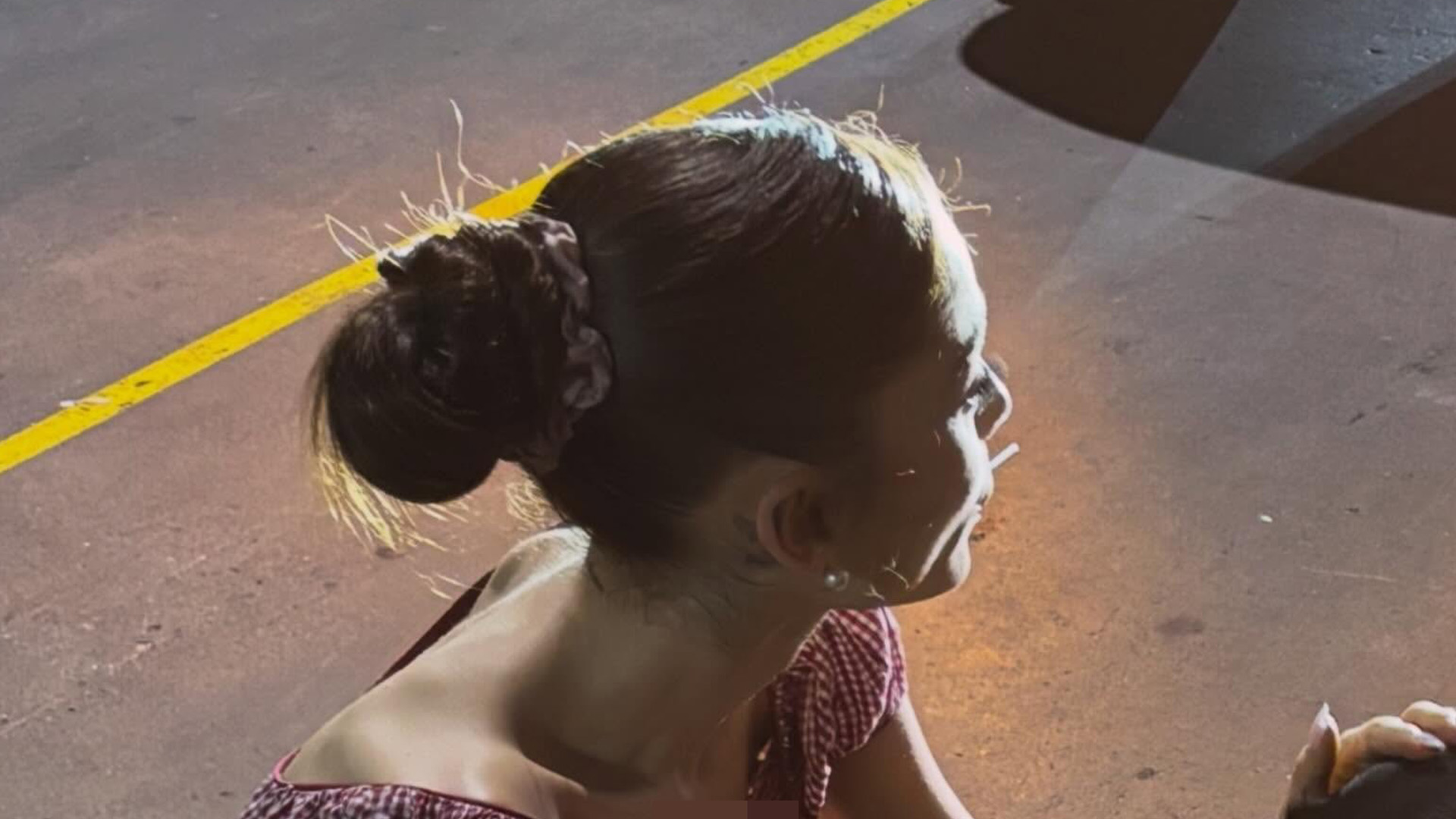
She uploaded an otherwise innocent photo of herself crouching down to pet a dog in an airport parking lot, as part of a photo dump.
But fans were quick to spot something about the photo that Ariana clearly overlooked.
As Ariana leaned forward to pet the dog, she rocked a red check dress with a gaping neckline.
Leaning forward, Ariana risked a major wardrobe malfunction as she revealed far more of her body than she intended.
She teamed up with pal Elizabeth Gillies for a hilarious skitCredit: Instagram/arianagrandeElizabeth told Ari she had great boobs, and Ari thanked her in a coy wayCredit: Instagram/arianagrande
Fans noticed the upload blunder almost instantly, with one person writing: “Uh Ariana Grande do you know you posted your boob on your Instagram?”
While someone else said: “Not Ariana accidentally posting a nip slip on Instagram.”
But Ariana did not delete the snap, instead she styled it out like the pro she is.
Taking to her Instagram stories after the dust had settled slightly, she shared a hilarious video that left fans in hysterics.
Most read in Entertainment
The video featured her friend Elizabeth Gillies.
In the clip, the duo can be seen in a fake party scenario.
Elizabeth is sipping champagne before casually saying to Ari: “You have great tits, they’re really beautiful.”
Ariana then replied: “Thank you.”
Fans were quick to flock to X to react to Ariana’s response.
“She’s so f**king funny omg,” said one person.
“Funny woman oh my god,” added a second.
While a third wrote: “Ariana omg.”
And a fourth said: “She really don’t give a f**k.”
For dry activities, you can go climbing or have a spin at the roller disco.
A three-night stay from June 26 to 29 costs from £215, working out at £17.92 per person per night, based on a family of four – book it here.
Appletree Holiday Park has a nine-hole golf course as well as a splash padCredit: Away Resorts
Appletree Holiday Park, Lincolnshire
Found in Boston, Lincolnshire, Appletree Holiday Park sits in the countryside, with a nine-hole golf course and a splash pad for little ones.
While at the park, you can also have a go at the driving range or even explore by hiring a bike.
Little ones needing to burn off steam can also drop by the play area.
Guests can choose to stay in either a lodge or caravan, with the premium lodges boasting hot tubs as well.
A two-night stay from June 26 to 28 costs from £189.60, working out at £23.70 per person per night, based on a family of four – book it here.
Glendale Holiday Park has easy beach accessCredit: Glendale
Glendale Holiday Park, Cumbria
In Cumbria, you could stay at Glendale Holiday Park, which overlooks the Solway Firth – an Area of Outstanding Natural Beauty.
The park has both the countryside and coast to explore.
At the site itself, there is a swimming pool, an entertainment bar and an onsite restaurant as well.
There is also easy beach access.
A three-night stay from June 26 to 29 costs from £139, working out at £11.59 per person per night, based on a family of four – book it here.
At Broadland Sands, you can head to the indoor heated swimming poolCredit: Park Holidays
Broadland Sands, Suffolk
For a Suffolk break, you can head to Broadland Sands Holiday Park, sitting on the East Coast border.
Near Lowestoft, the holiday park is home to a heated indoor swimming pool with its own water flume.
There’s also a dinosaur-themed adventure golf course, as well as more sporty activities including a climbing wall.
For those wanting to spend some time outdoors, you can also head on a nature trail.
Then in the evening, sit back and enjoy some of the entertainment, including cabaret and live bingo.
A three-night stay from June 26 to 29 costs from £179, working out at £14.92 per person per night, based on a family of four – book it here.
Tarka Holiday Park Devon is just a short walk from the beach tooCredit: Tarka
Tarka, Devon
Tarka Holiday Park is less than five miles from the popular Devonshire town of Barnstaple.
The holiday park focuses on being a more peaceful retreat, so instead of pools, you’ll find a paddock and children’s play area.
Ideal for enjoying the warm weather, there is also an onsite picnic spot.
And for adventures outside of the park, you can head to the Tarka Trail, which stretches 180 miles and follows the steps of Henry Williamson’s Tarka the Otter.
A three-night stay from June 26 to 29 costs from £159, working out at £13.25 per person per night, based on a family of four – book it here.
South Bay Holiday Park in Devon is about 10 minutes from the beachCredit: South Bay
South Bay Holiday Park, Devon
Set on the English Riviera in Devon, you can head to South Bay Holiday Park.
The Brixham-based holiday park is home to an indoor pool, an outdoor pool and even a toddler pool.
There’s also a host of entertainment at the park, including a kids’ club and evening shows.
From the park, there is a direct path to the beach, which takes about 10 minutes to walk.
A three-night stay from June 26 to 29 costs from £199, working out at £16.58 per person per night, based on a family of four – book it here.
Summerfields Holiday Park in Great Yarmouth has a soft play area for little onesCredit: Summerfields
Summerfields Holiday Park, Great Yarmouth
Close to Norfolk Broads National Park, you could stay at Summerfields Holiday Park in Great Yarmouth.
The holiday park boasts a heated indoor pool along with a sauna and for a bite to eat, you can head to The Boathouse.
If it gets too hot outside for the little ones, inside you’ll also find a soft play area, as well as arcades.
A three-night stay from June 26 to 29 costs from £160, working out at £13.34 per person per night, based on a family of four – book it here.
Tattershall Lakes in Lincolnshire is a great spot for water sport-loving familiesCredit: Supplied
Tattershall Lakes, Lincolnshire
Set across 360 acres, Tattershall Lakes Country Park features woodlands and lakes.
The holiday park is a great spot for water sport-loving families, with activities including jet-skiing, water-skiing, wakeboarding and even an inflatable Aqua Park.
If that wasn’t enough water-based activities, there is also an indoor and outdoor pool and spa.
In the evening, you can head to the clubhouse as well for entertainment.
A two-night stay from June 26 to 28 costs from £199.20, working out at £24.90 per person per night, based on a family of four – book it here.
Lower Hyde Holiday Park has both an indoor and outdoor poolCredit: Parkdean Resorts
Lower Hyde Holiday Park, Isle of Wight
Lower Hyde Holiday Park in Shanklin on the Isle of Wight is a great spot if you want to feel like you are travelling abroad but without the long-haul flight.
At the Parkdean site, you can head to the outdoor pool, which has its own flume, as well as another pool inside.
For some entertainment, there’s Squires Showbar.
And if that all wasn’t enough, the park is also only a 20-minute walk from Shanklin Beach.
A three-night stay from June 26 to 29 costs from £189, working out at £15.75 per person per night, based on a family of four – book it here.
Managers and coaching staff are allowed to discuss tactics with their players while the breaks are taking place.
Infantino said: “The main reason [for the breaks] is the heat, but we also have to understand that in a competition like the World Cup, played over 39 days, with teams potentially playing eight matches in those 39 days, having a moment to rest is extremely important.
“What matters even more to us is ensuring that all teams, in every match, are playing under the same conditions.
“And it’s very difficult to accept that a coach might have the opportunity to influence a match by making adjustments simply because it is hotter, while in another match, where the temperature is slightly lower, the same coach does not have the same opportunity.
“We want to ensure equal conditions for everyone and that’s why these breaks are implemented in every match.”
Experts have told BBC Sport an average 30-second World Cup advertising slot on Fox Sports costs between $200,000 (£152,000) and $300,000 (£227,000), rising to $750,000 (£567,000) during USA matches and the final stages.
That means advertising during hydration breaks is likely to generate more than $250m (£189m) in the USA alone.
Fox has adopted a new split-screen approach to ads during the World Cup’s mandatory hydration breaks, after a stir among viewers over how it had been handling the pauses.
By the Mexico-South Korea match last week, Fox had changed course, running split-screen advertisements for the first time: two side-by-side panels, one keeping the camera on the stadium while the other played a commercial. The approach hasn’t been consistent, though. For Friday’s U.S.-Australia match, the network reverted to full-screen ads.
Fox declined to comment on the changes.
Viewers were quick to notice the split-screen format and weigh in on social media. “At least FOX stopped doing the stupid full screen breaks,” one user wrote on X. “I can live with split screen.”
The World Cup has posted substantial ratings gains for Fox.
Throughout the first 16 telecasts of the tournament, the network is averaging more than 6 million viewers from Fox and Fox Sports 1, up 128% from 2022’s World Cup in Qatar. The broadcast of the U.S. team’s first game this month was the most-watched FIFA Men’s World Cup telecast in English in U.S. history, with more than 18 million views, according to the network.
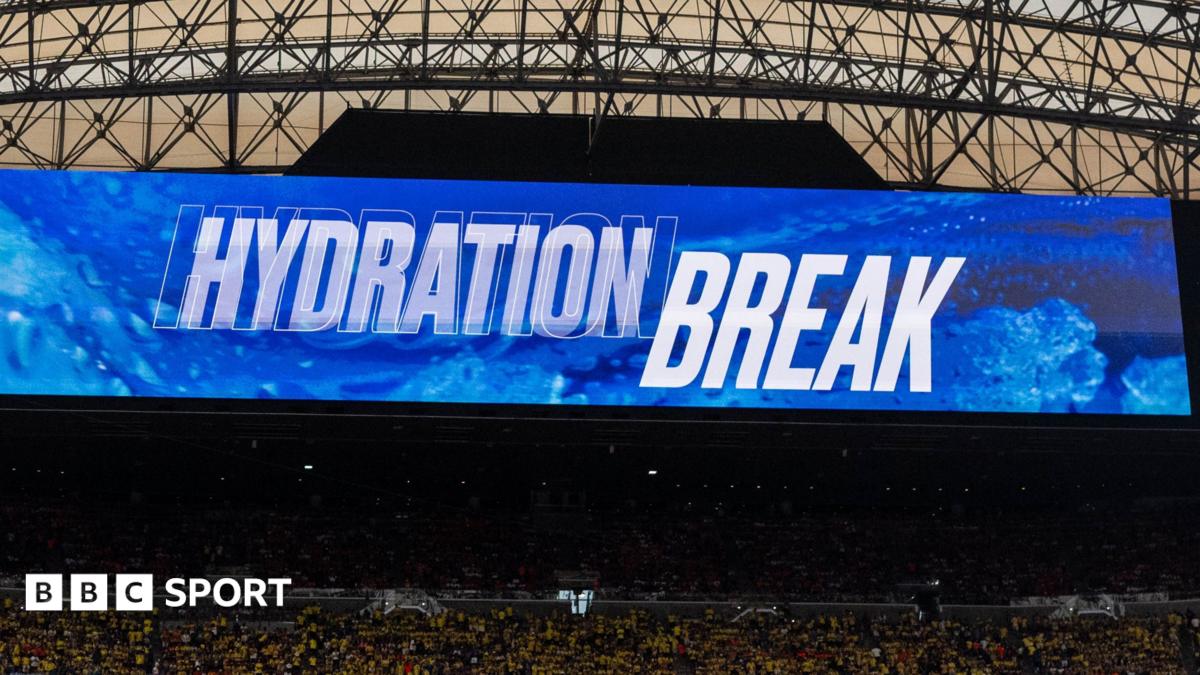
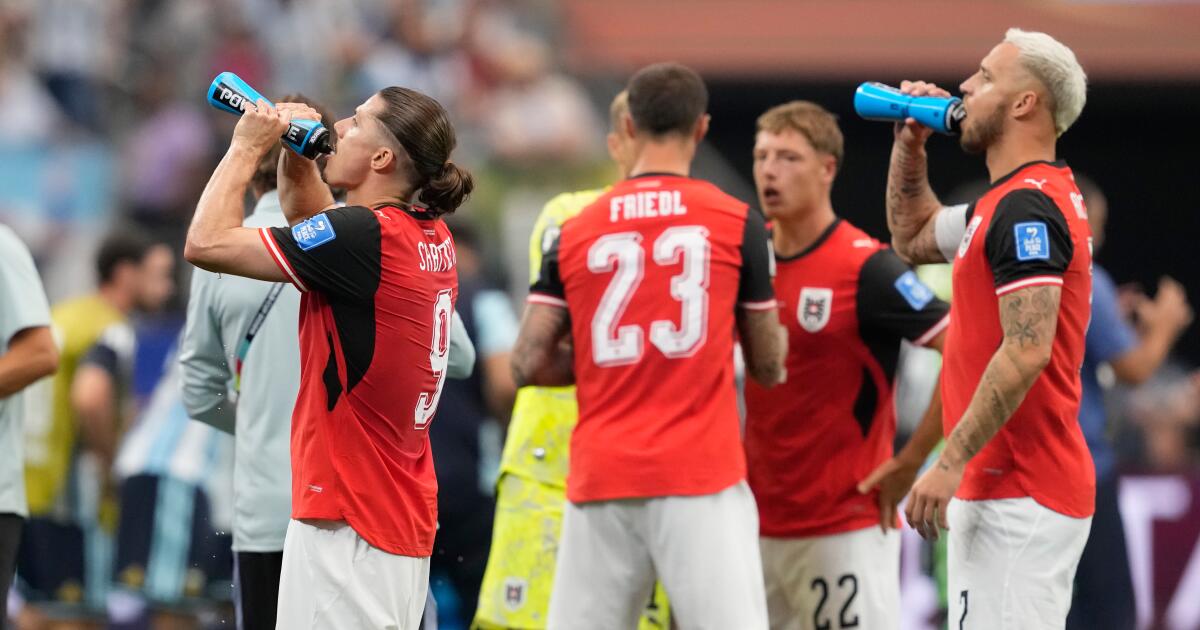
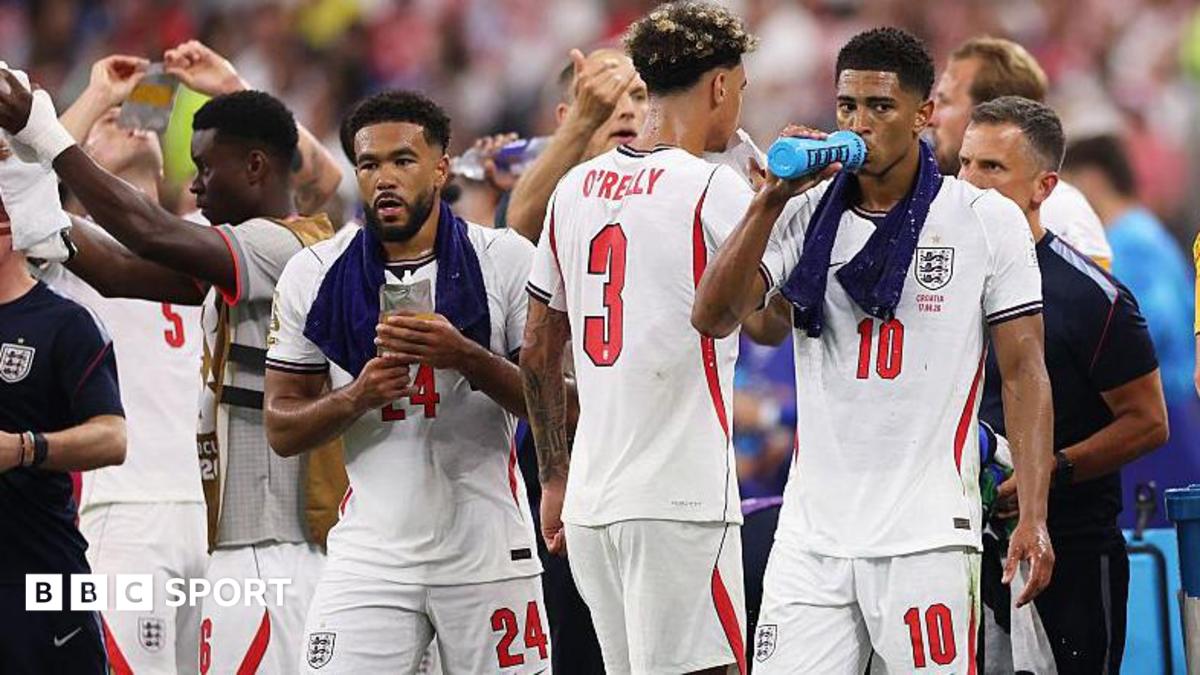
The hydration break itself is new to the World Cup. FIFA announced it in December as a way to protect players’ health in the summer heat. In every match, the referee is to call for a break around the 22-minute mark of both halves, regardless of the weather.
In addition to helping the players, these extra minutes created a new advertising window. Networks are allowed to leave the on-field action 20 seconds after the referee signals the hydration break and return 30 seconds before play resumes, allowing for ads of up to two minutes and 10 seconds in total. They can air any full-screen ad they’d like, or run a split-screen ad — though a split-screen has to feature a FIFA partner, such as Coca-Cola or Adidas.
Ads during the tournament’s earlier games reportedly cost around $200,000 for a 30-second slot. The price jumps to $750,000 when the U.S. is playing, according to the Wall Street Journal.
When any rules change in televised sports, the most dedicated fans are going to get upset, said Patrick Rishe, the director of the sports business program at Washington University in St. Louis. Despite all the online uproar, he said that the hydration breaks are overall beneficial, as they allow networks an extra opportunity to recoup revenue and brands to get additional exposure.
“This is commercially fantastic for FIFA and the networks. It’s tactically helpful for the teams, and I do think it’s helpful for growing interest in the sport,” Rishe said. “It makes it easier for the casual fans to stay engaged.”
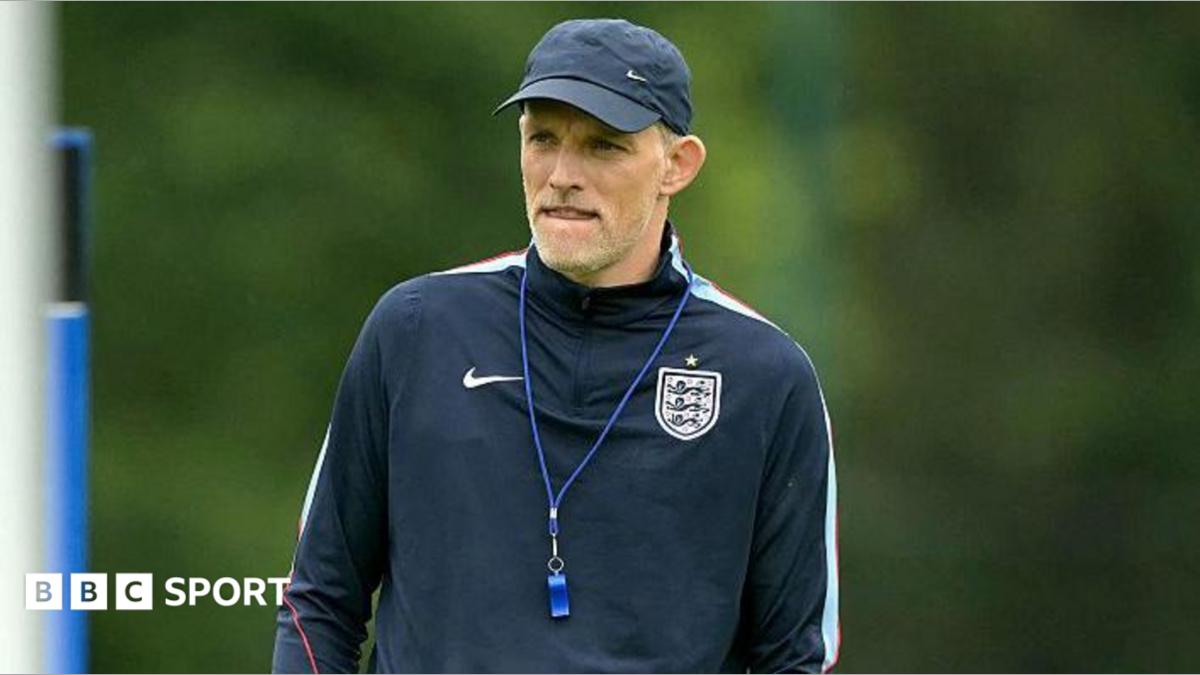
England head coach Thomas Tuchel has admitted he is not a fan of the controversial hydration breaks being used at the World Cup.
Tuchel, 52, was speaking before England’s second Group L game against Ghana in Boston on Wednesday (21:00 BST), where rain and cool temperatures are forecast.
England’s fans started the now customary jeering of the breaks when play was stopped in the first half of their opening game against Croatia in Dallas, despite the match being played under a roof in an air-conditioned arena.
The breaks will continue to be used in Boston irrespective of the weather, but Tuchel expressed his reservations about them and the impact they are having on games.
“I think that it interrupts and changes the identity of a football match much more than I thought. I had hydration breaks before when it was really, really hot and needed, but they were shorter,” Tuchel said.
“They were shorter and they were just in a few matches. In the interests of fairness here, it is now done in every match for every team.
“It breaks the match almost in four quarters. And I think it changes the characteristic of the match more than I thought.”
ASHLEY Cain has spoken out for the first time since he was axed by the BBC after allegedly making degrading comments about women online.
The reality TV star penned an apology on Instagram, addressing “language I used many years ago that I am not proud of”.
Sign up for the Showbiz newsletter
Thank you!
Ashley Cain, 35, has spoken out for the first time since he was dropped by the BBCCredit: SplashThe Ex on the Beach star had made derogatory comments about womenCredit: Instagram/mrashleycain
The reality star has featured on programmes including Celebrity Masterchef on the BBCCredit: BBCHe said he wanted to take ‘accountability’ for his past commentsCredit: BBC
“I don’t deny it. I don’t excuse it. And I certainly don’t condone it,” he began.
Cain blamed the loss of his football career as one of the factors which caused him to feel “lost, frustrated and unsure of where my life was heading”.
He went on: “The reality is that growth doesn’t happen overnight. It happens through experience.
“Through mistakes. Through hardship. Through being forced to look in the mirror and ask yourself whether you’re willing to become better.”
“Ashley has been dropped by Off Limits, who also represent stars such as Jimmy Bullard, Jesy Nelson and Harry Redknapp,” an insider told the publication.
“They have a roster of talent who are household names, they don’t want to be associated with him after the vile posts came to light.
“Ashley is now pretty much blacklisted in the industry, and it’s doubtful he will ever be on television again.”
The second season of Ashley Cain: Into the Danger Zone has been shelvedCredit: BBCCain said the tragic loss of his daughter Azaylia in 2021 after a battle with leukaemiaCredit: miss_safiyya_/Instagram
Ashley no longer appears on Off Limits website as a listed client.
The Ex on the Beach star’s Twitter posts made in 2011 and 2013 are said to have referenced extreme sex acts and appeared to make light of consent.
He reportedly used offensive, sexualised and aggressive language about women.
Derogatory terms allegedly written in 2014 and 2015 include “sl**s”, “b***hes” and “psychos”.
He also said he’d like to “choke slam” and “spit in the face” of Love Island star Jessica Hayes while commenting on the ITV2 reality show.
Cain’s apology post said he has learnt lessons from fatherhood over the past decade.
His daughter Azaylia Cain sadly died in 2021 of a rare form of acute myeloid leukaemia.
She was just eight months old when she died after a battle with the aggressive disease.
“Losing my daughter changed me forever,” Cain wrote.
“Since then, I have dedicated my life to trying to honour my daughter’s legacy and help others wherever I can.”
The reality star added: “I cannot change what I said over a decade ago. What I can do is take responsibility for it.
“What I can do is continue striving every day to be a good father, a good human and a positive force in the lives of others.”
Cain’s shock slurs sit uncomfortably alongside his more recent work as a BBC presenter exploring masculinity and gangs in dangerous locations around the world.
A BBC spokesperson said: “We are very clear we expect the highest standards of behaviour from everyone who works with or for the BBC.
“When allegations are brought to our attention we take them seriously. We will consider this information carefully and do not intend to comment further at this stage.”
The BBC were reportedly unaware of the offensive content prior to recruiting Cain as a host.
Dad-of-three Cain was a professional footballer at the time of his oldest offensive tweets.
Following contracts at Coventry City and non-league Barwell, he was forced to retire from the game in 2014 due to the effects of a serious achilles injury.
He turned to reality TV and starred in the first series of Ex on the Beach. More recently he appeared on Celebrity SAS, The Real Full Monty and Celebrity MasterChef.
Cain was left devastated in 2021 when his daughter Azaylia died from leukemia aged just eight months.
He set up The Azaylia Foundation in her name and has tackled gruelling endurance challenges to raise money and awareness.
JAMES Bourne is made of sterner stuff. The Busted rocker stepped back from the public eye in September after falling ill and ten weeks ago told his fans was awaiting major surgery to extend his life.
And now, James tells me he’s used his time to finish a project which has been 13 years in the offing – and on July 1 will release new album Murder At The Gates, which he created for a brand new musical with legendary American playwright Steven Sater.
Sign up for the Showbiz newsletter
Thank you!
James Bourne has broken his silence on having to quit the McBusted tour last year to The Sun in his only interview since the ordealCredit: SplashThe singer (pictured with bandmates Charlie Simpson and Matt Willis) was scheduled to head on tour last September but pulled out due to ill health at the last minuteCredit: Getty
“I didn’t want my health to stop me from promoting this project because I’ve put 13 years of my life into it,” James tells me from his home in the UK.
“There was a fear of not finishing it. But I knew I had to finish it and give this to the people. “There’s like a few people that have been waiting for it. There are hardcore fans who show to up for everything – and I have been speaking about this for a long time.
“It feels so good to now have this as a finished product. And it’s the first album I’ve ever produced. So I’m proud of it.”
Now, he is returning to music with album Murder At The Gates, which is for a brand new musical and will be released on 1 JulyCredit: PR SuppliedJames has worked alongside Stranger Things actor Gaten Matarazzo on songs for the new recordCredit: PR SuppliedHe says that the project, which has been in the making for 13 years, is so sacred even his Busted bandmates haven’t heard the completed versionCredit: GettyIt comes just months after James told fans he was undergoing surgery, which hoped to be ‘life-extending’Credit: instagram
But rather than wallowing, James threw himself into the 13-track album – which features big name screen stars, including Stranger Things actor Gaten Matarazzo, on vocals.
“This album definitely has a different feeling to all the others,” James explains.
“With everything going on with my health, I have been given the gift of time.
“I was given a lot of time back when I wasn’t touring. It was like turning a negative into a positive. It was such a shame to have to drop out from the tour, because I love touring so much.
“But you have to turn negative into positive. They’re the conversations I’ve had with my closest friends.
“I wanted to take the time I’d been given and deliver this album.”
James’s last musical, Loserville, earned an Olivier nomination back in 2013 and when he was tapped up by Steven, who earned a Grammy and a Tony award for his cult-hit musical Spring Awakening, he jumped at the chance to get involved.
“Musicals are a very difficult thing to do well and to do properly and to develop properly,” James explains.
“And this one’s been developed on the highest level with the most talented people.
“Steven was looking for a composer and that is when Loserville was in the West End.
“He invited me to his place and I knew immediately how I would do it.
“I’d never done a project where someone else did the words because he’s a lyricist.
James has not yet shared publicly what health issues he is facingCredit: GettyJames rose to fame in the early 2000s with BustedCredit: Getty
“But as I was reading the lyrics, I could hear the music. And we partnered on the project.
“To work on this with someone on Steven’s level has been a dream.”
Of the score he’s created, James adds: “I knew I wanted it to be a very solid piano vocal score to begin with and I knew I wanted it to be orchestral but with a rock band at the heart of it.
“But I don’t think it is a rock musical in the way that rock musicals are presented.
“Rock musicals like We Will Rock You or Rock of Ages tend to veer more towards classic rock and this isn’t what Murder At The Gates is.
“I think a big part of what sold Steven’s show Spring Awakening so well was how contemporary the score was.
“The music is very customised. This is tailormade for Steven’s words and the world that he imagined and the characters that he imagined
“The score had to represent that world, you know.”
James adds: “We wrote about 50 songs for the show and whittled it down to 13.
“Some are old, some have been rewritten, some are completely new.
“It’s a long process that you can’t complete unless there’s a lot of passion involved.
“With songwriting in the pop world, you can blag it. Go into the room with a producer you’ve never met before and come out with something amazing.
He shared an update on his health with fans back in April via InstagramCredit: InstagramHowever, the musician’s social media has since disappearedCredit: Splash
“But if you don’t get anything great, you’ve not lost much. With a project like this, it’s a life commitment.”
James admits all of his spare time since 2013 has been dedicated to this project, with him missing dates on the McBusted tours with One Direction in 2014 and 2015 to get his teeth into it.
After stepping back from their tour last September, James was able to focus fully on getting the project finished – and spent time flying from his home in the US to New York to record the tracks.
“We’ve got amazing people like Gaten on board, he was definitely one of the top people on our list,” James explains.
“It was a total cherry picking situation. Steven has so much recognition from Spring Awakening – he’s like a rock star in his own right. He is a genius.
“All of the people who sang on it were busy, many of them were on Broadway so I would fly to New York for each vocal.”
And like all the best projects, James had kept his cards close to his chest – with not even his Busted bandmates Matt Willis and Charlie Simpson hearing the finished product.
“They might have heard something a very long time ago when we were doing promo for one of our tours,” James explains. “But apart from that, I haven’t played it for anyone.
“Even the actors who have done workshops with us over the past decade haven’t heard it.”
Once the record is released, Steven will get to work with James in getting the production green lit.
And James admits he is excited to see what comes of the project.
“We don’t have an opening night yet for the show but we’ve got the album and we’re saying, ‘This is a great representative of what the show is,’”James explains.
“There are still some bonus tracks to come later on. I’m just incredibly proud of it.
“When you do these projects, you strive to create things that can be timeless in a way.
“Classic musicals go on for years and years, and we’ve definitely been really striving to create something amazing.
“When I make albums with Busted, you’re making music for yourself to perform.
“With a project like this, you’re giving something to the community. This show is original, memorable and I don’t think there’s another show like it.
“I just can’t wait for people to hear it, then see it.”
This was not the first game where boos have been at the hydration break, and the wave of dislike for them among fans appears to be gathering momentum.
On Tuesday, during Norway’s match against Iraq in Boston, the pause in play was greeted by boos from the crowd, with the temperature a more than manageable 23C at the time.
It was goalless just before the break but Iraq conceded four minutes after play resumed, and went on to lose 4-1.
There were loud boos for the pause during Sweden’s 5-1 thrashing of Tunisia on Monday and Spain’s goalless draw with Cape Verde on the same day, with that game played in the air-conditioned Atlanta Stadium.
And after England’s win against Croatia, the first hydration break during the match between Ghana and Panama was also greeted by jeers.
The hydration breaks have effectively turned games into four quarters rather than two halves, a concern for some of those England supporters who booed the break.
“It is like the Americanisation of football here,” said one.
“It is turning the game into quarters and I don’t love it. I get why people were booing and I was one of them.”
But some supporters do think there are benefits to them.
“I think they are badly marketed,” said another fan.
“If they were not called a hydration break, and were called a relief break then everyone doesn’t miss a goal.
“I think we have to think about it in a new way, corporate [bodies] get what they want, we get what we want and everyone is happy.”