OUR Spotlight On column gives you the lowdown on what to see and do in your favourite holiday hotspots – as well as lesser known gems.
This week we shine a light on a Florida favourite perfect for an autumn or winter break – Boca Raton.
Most Brits won’t have heard of Boca RatonCredit: SuppliedBut the beautifully laid-back beaches make it a secret paradiseCredit: Alamy
Close to the bright lights of Miami, it offers a more relaxed experience in a stunning coastal setting.
As the Head of Travel at the Sun, I recently visited Florida’s secret paradise, with with pristine beaches, surprisingly lush parks and Japanese gardens and a laid back vibe.
Sign up for the Travel newsletter
Thank you!
But with the new Brightline that speeds holidaymakers from Orlando to Miami on Eurostar-style trains stopping off in Boca, it’s easier than ever for us Brits to discover the delights of this upscale city that offers all the best of Miami without the crowds and frenetic city pace.
With jetlag waking me early, I took a stroll on the beachfront near Spanish River Park where the sun breaks over the water painting the sky in vibrant amber and violet tones.
Settling onto the sands, I had the beach almost to myself as pelicans flew low over the gentle surf and watched as the sun rose high.
So here are some of my other tips on exploring the lesser known US city.
MUST SEE / DO
A beloved local institution, Gumbo Limbo Nature Center invites visitors to explore Boca Raton’s coastal ecosystem through nature trails, butterfly gardens and marine conservation exhibits.
It is famous for its sea turtle rehabilitation facility, where visitors can see rescued loggerhead and green sea turtles getting nursed back to health.
Visit during turtle nesting season from March through October, when the centre hosts guided night-time turtle walks and seasonal hatchling releases.
HIDDEN GEM
The Morikami Museum and Japanese Gardens offer a serene escape that feels worlds away from the buzz of the coastline.
It is easy to get to thanks to a new Eurostar-like fast trainCredit: AlamyIf you want a quieter place to explore in Florida, this is the placeCredit: Alamy
Spanning 16 acres, the gardens celebrate centuries of Japanese design through tranquil ponds, bonsai collections and carefully curated pathways.
BEST VIEW
Set between the Atlantic Ocean and the Intracoastal Waterway, the Blue Flag designated Spanish River Park offers spectacular sunrise views over the beach and equally beautiful sunset scenes along its shaded walking trails and waterfront areas.
RATED RESTAURANT
Mizner Park, an open-air shopping and dining complex, is all pink-stucco Mediterranean Revival architecture and towering palm trees.
Here, Tryst blends classic French bistro charm with an inventive American menu under Chef Daniel Dore, featuring dishes from steak frites to a vegan mushroom lasagna topped with oat milk béchamel.
For more relaxed, value dining, Tomasso’s Pizza and Subs is a neighbourhood institution, serving up New York-style slices and massive sandwiches for decades.
A couple of slices or hot sub is from £7.33.
BEST BAR
American Social in Mizner Park is a fun sports bar bringing Modern American cuisine with a twist.
It is the perfect place not only if you want to catch a game, but also for an intimate dinner or a night with friends.
Beer lovers should head to Biergarten Boca Raton.
Tucked into Royal Palm Place, this indoor/outdoor spot stocks more than 24 beers on taps and has dozens of craft bottles as well.
With live music and generous happy hour deals, it’s a relaxed place to kick back.
HOTEL PICK
Fresh from a £5.4million renovation, the Boca Raton Marriott at Boca Center is close to Mizner Park in the city centre and an ideal base for discovering the area.
There’s a gorgeous outdoor pool with plenty of shade from towering palms and you can pick up a cocktail or two at the outdoor Drift bar.
End the day at Sonrisa, with its bold Caribbean-American flavours.
Rooms feature floor-to-ceiling windows to make the most of the views and a calm, neutral palette with splashes of marine blue.
Justice minister condemns ‘Hitler salutes, antisemitic slogans, violence’ at the anti-immigration rally.
Published On 19 Sep 202619 Sep 2026
Dutch riot police have intervened at a protest against immigration and asylum policies after about 500 far-right demonstrators pelted them with projectiles and fireworks .
Police used baton charges and dogs to break up the demonstration in The Hague on Saturday, reported the AFP news agency.
Recommended Stories
list of 4 itemsend of list
Local authorities said the demonstration was ended because of continued violence, and protesters were escorted away from Malieveld park in the city centre.
Police said they arrested 24 people and deployed water cannon to disperse the rioters. Further investigations were underway, they added.
Prime Minister Rob Jetten said on X that the demonstrators deliberately sought confrontation with the police and chanted “abhorrent” far-right and antisemitic slogans
Justice Minister David van Weel condemned the violent scenes and slogans.
“Identical images from the Malieveld. Hitler salutes, antisemitic slogans, violence against the police and throwing fireworks at the riot squad,” he posted on X. “It is important that hardline action is taken against this.”
He also thanked police officers for helping to maintain the democratic rule of law.
The “Wij zijn het volk” rally, which translates to “We are the people”, was organised to protest against government policies in the Netherlands’, specifically on immigration.
The protesters had planned to march through The Hague, but local authorities banned it when violence began and ordered the demonstration to be broken up.
The Prince’s flag with the symbol of the Dutch East India Company during the far-right demonstration in The Hague on Saturday [Nicolas Economou/Reuters]
Someone at the rally was seen giving a Hitler salute, while a truck serving as a stage displayed a screen reading “The Netherlands is for the Dutch,” according to the country’s largest national news agency, Algemeen Nederlands Persbureau (ANP).
Protester Thijs Jansen, a 31-year-old mechanic, told AFP: “We’re losing our country. We’re literally losing our country to mass migration”.
A police car was then set on fire in clashes between black-clad protesters and police, as the headquarters of the centrist D66 party were attacked. Its leader, Rob Jetten, is now prime minister.
Several Gogglebox stars were reduced to tears as they tuned into the Dolly Parton tribute at Last Night of the Proms starring Sheridan Smith and Beverley Knight
21:49, 18 Sep 2026Updated 21:50, 18 Sep 2026
Jenny Newby and Lee Riley were left in tears during the latest episode of Gogglebox(Image: Channel 4)
Emotional Gogglebox stars couldn’t hold back their tears during the latest episode of the Channel 4 show.
The armchair critics returns to screens on Friday (September 18) night as they offered their verdict on the latest programmes on television from Channel 4’s new reality show Apocalypse to ITV thriller Trigger Point.
However, it was Last Night of the Proms which left cast members in tears as they watched performers Sheridan Smith and Beverley Knight pay tribute to country music sensation Dolly Parton, who died on August 25 aged 80 following a brief and undisclosed battle with cancer.
The second half of the BBC concert, which aired on September 12, honoured the songstress with Sheridan singing feminist anthem 9 To 5, Beverley belting out I Will Always Love You and country-pop duo Ward Thomas performing Jolene.
Tuning into the concert from the comfort of their sofas, several Gogglebox stars including Mary Killen, Lee Riley and Jenny Newby were left sobbing as the musical stars paid tribute to Dolly.
Bryan Seaver, Dolly’s head of security and nephew announced the sad news of her passing on social media last month. In the video, he told fans: “Hey everyone. My name is Bryan Seaver, son of Cassie Parton, and I am representing the Parton and Owens family today, announcing the passing of my Aunt Dolly Rebecca Parton Dean. Sister, sis, Aunt Granny to one generation and Gigi to the next.”
Tributes from around the world were shared following the news, with Elton John saying he was: “Shocked and devastated to hear of Dolly’s passing. A giant of an artist – unique and irreplaceable, with the kindest heart.”
Sir Paul McCartney also commented: “The magnificent star Dolly Parton has died and it is so sad. She was such a wonderful woman.” It comes after Dolly was posthumously honoured with the Americana Lifetime Achievement Award at the Americana Awards & Honours Awards last week.
The Grammy winner appeared in a pre-recorded video to accept the award. She beamed in the clip where she accepted the award. “Well, hey, it’s Dolly, and I am so honoured to receive the Lifetime Achievement Award from the Americana Music Association,” she began.
“I mean, roots music, or what is now called Americana music, is what I grew up playing back in the Smoky Mountains. It’s that same music that drew me back to East Tennessee in 1997 to write and record my album, Hungry Again.”
“And that project really opened the door to a series of bluegrass and acoustic albums that changed the course of my career in so many ways,” she continued.
“Now, new fans discovered these albums, new Americana music communities embraced them, and now looking back at it all, I see this era of my career as a musical renaissance of sorts.
“I want to thank everyone at the AMA for recognising me with this award. It’s a great honor truly, and just know that I will always love you.”
Among Dolly’s many honours include a star on the Hollywood Walk of Fame, along with being inducted into the Songwriters Hall of Fame, Rock & Roll Hall of Fame, and Country Music Hall of Fame.
A HUGE expansion at a major American airport that was supposed to open this year has been pushed back to 2027.
New York‘s John F. Kennedy International Airport in America is currently undergoing one of its biggest-ever transformations costing £7.1billion.
John F. Kennedy International Airport in New York, America, is undergoing a massive £14.2billion transformationCredit: Port Authority BuildsThis includes the replacement of Terminal OneCredit: Port Authority Builds
The centre of the project is the New Terminal One, which was expected to open before the end of this year but has now been pushed back to the first quarter of 2027.
The airport has confirmed that testing is needed before the terminal opens to passengers.
Sign up for the Travel newsletter
Thank you!
Once open, the terminal – which will have replaced the old one – will have 13 gates plus a temporary gate in its first phase of opening.
When the first phase is complete, the airport will move on to the second phase, which includes demolishing the former terminal.
The second phase will also add nine gates, making a total of 23 gates at the completed terminal – 22 of which will be for wide-bodied planes commonly used for long-haul, international flights.
The 241,548sqm terminal will be the largest at the airport and inside there will be 27,871sqm of shops, restaurants and six lounges.
One of those lounges is Air France‘s largest lounge outside Paris, spread across two floors.
Inside the lounge, there will be seating for up to 400 travellers, with different dining areas celebrating French food and a bar with French wines and Champagnes.
The new terminal was meant to open before the end of this year but has now been pushed backCredit: Port Authority BuildsOnce it does open, it will have 23 gates – 22 of which will be for long-haul flightsCredit: Port Authority BuildsOther terminals at the airport, including Terminal 8 (pictured) are undergoing upgrades as wellCredit: Port Authority Builds
Other spaces inside the terminal will include an “indoor green space” and “family-friendly amenities”.
And travellers will be able to spot a variety of public art installations too.
Airlines that will feature at the New Terminal One include Air France, KLM, Etihad Airways, LOT Polish Airlines, EVA Air, Turkish Airlines, Air New Zealand, Air China and Philippine Airlines.
The project forms part of an even larger £14.2billion transformation at the airport, where there will also be a new Terminal 6 and upgrades at three other terminals.
Airlines at Terminal 6 are expected to include JetBlue, United Airlines and other Star Alliance carriers.
At Terminal 4, there will be 10 new gates and an expanded check-in and arrival area.
Terminal 8 will then undergo a £300million upgrade, including adding new gates and transforming the retail spaces.
New York is a popular destination among British travellers, with around one million Brits heading to the city each year.
Flights between the UK and New York typically take between seven and eight hours and cost from £380 return.
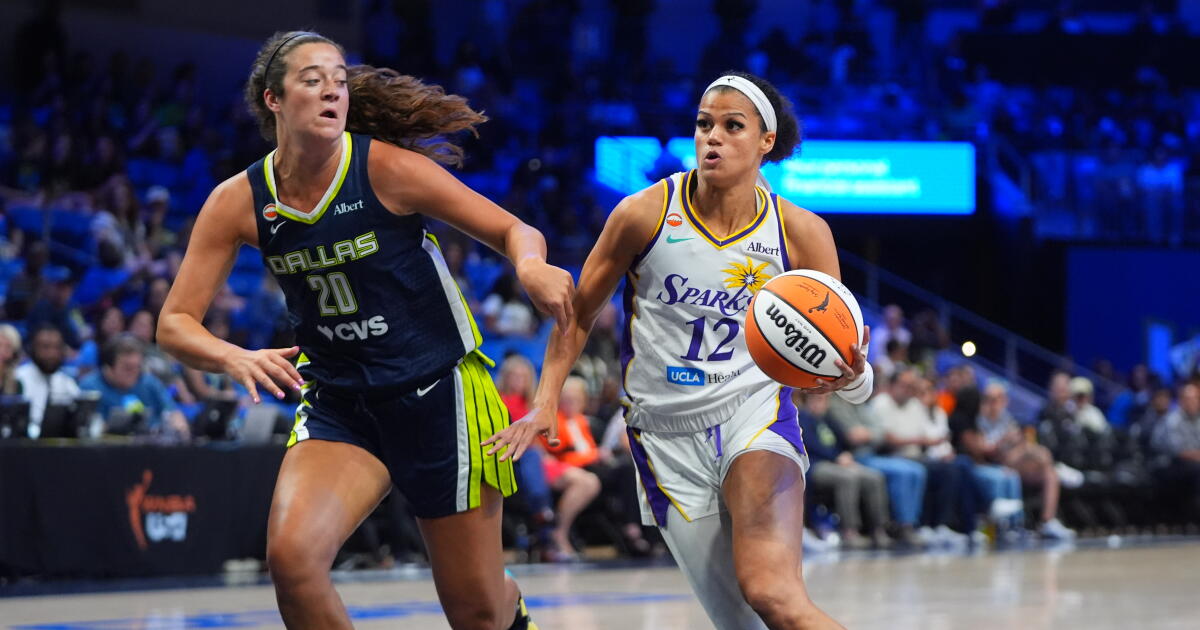
ARLINGTON, Texas — Paige Bueckers scored 19 points, Jessica Shepard had her fifth triple-double of the season with 13 points, 11 rebounds and 12 assists, and the Dallas Wings beat the Sparks 97-77 on Thursday night for their fifth straight victory.
Both teams were returning from the break for the FIBA World Cup in Germany, where Bueckers helped lead the United States to the title.
Dallas (25-16) tied the franchise record for wins in a season set by the 2003 WNBA champion Detroit Shock (25-9). The Wings have three games remaining in the regular season.
Shepard has the third-most triple-doubles in a season in WNBA history, trailing Alyssa Thomas’ six in the 2023 and eight in 2025.
Maddy Siegrist added 12 points and Arike Ogunbowale had 11 for Dallas. Kitija Laksa and Aziaha James each scored 10 off the bench. Odyssey Sims did not play in the fourth quarter after injuring her right knee late in the third.
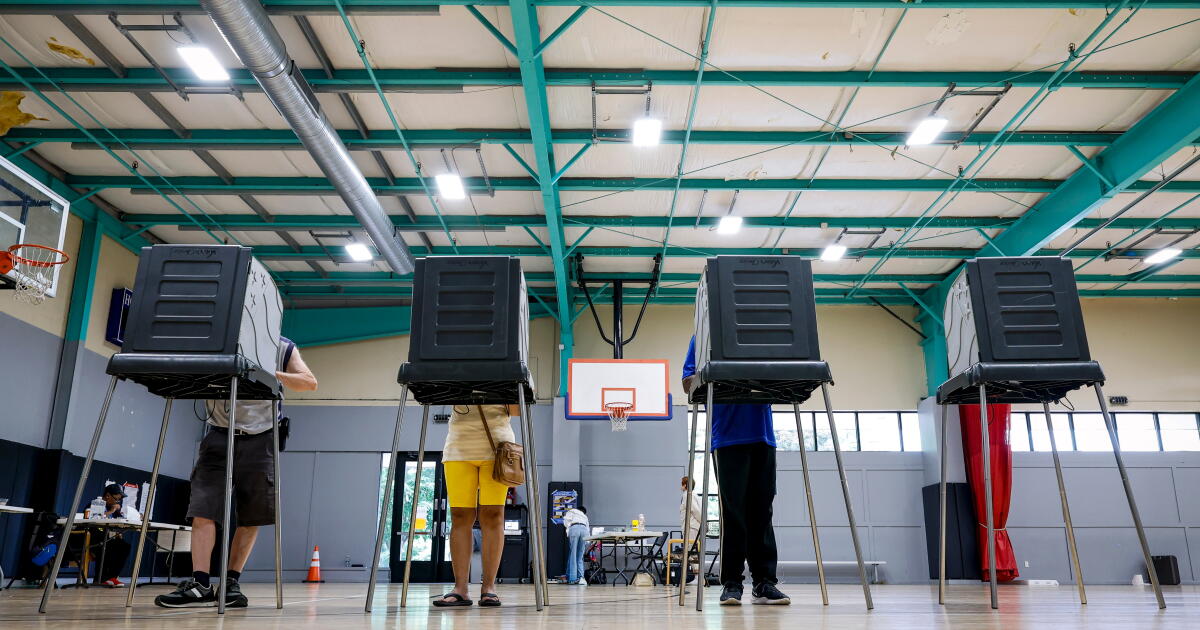
NEW YORK — A last-ditch Trump administration effort to hunt for noncitizen voters ahead of November’s elections is requiring federal employees to misrepresent themselves on voter lookup tools in a way that likely violates state laws, according to a federal whistleblower’s statement released Monday.
The Department of Homeland Security probe known as the “Unlawful Voter Initiative” also asks employees to create federal law enforcement records about voters based on unreliable data, the account warns. That could potentially wrongly implicate U.S. citizens in official documentation that could spur further investigation.
The anonymous, nearly 30-page disclosure was published Monday by Democratic Senate Minority Leader Chuck Schumer of New York and Democratic Sen. Alex Padilla of California, the ranking member of a Senate committee overseeing federal elections.
It features screenshots and transcripts of a DHS training for a group of U.S. Citizenship and Immigration Services staffers, who it says were forced in late August to drop their other work, complete a less than two-hour training session and begin running DHS-provided lists of individuals through state voter registration systems to find “unlawful voters.”
The whistleblower contends that agents have been asked to review 40 individuals per day, giving them about 12 minutes to determine whether each person is a legal voter and create federal records of anyone who is not.
Padilla and Schumer said Monday the initiative was an example of President Trump attempting to interfere in elections and the short timelines would impede officials from conducting proper investigations. They noted that the data DHS has on voters can be unreliable and differ from state records, making any federal findings based on that data potentially problematic.
“We just got more proof of Trump’s vile schemes to rig our elections,” Schumer told reporters in a news conference. “The lengths Trump will go to cheat, lie and steal in this upcoming election are simply beyond the pale.”
The White House did not immediately respond to a request for comment.
The Trump administration has been targeting noncitizen voting to allege it could be a source of significant fraud during the midterm elections, even as research shows voting by people who are not citizens is extremely rare. Trump has been pushing for the U.S. Postal Service to send mail ballots only to voters verified as U.S. citizens, and his Justice Department has sued to force the release of detailed voter data in 30 states and the District of Columbia, though it has not yet succeeded in those cases.
The whistleblower report details an effort by the federal government to work around a lack of data from the states by directing Citizenship and Immigration Services employees to pose as individual voters to access their state voter records.
Some states, such as Virginia, explicitly limit their voter lookup tools to individuals who attest under penalty of law that they are looking up their own records. In other states, like California, personally identifiable information such as a driver’s license number or partial Social Security number is needed to look up individual voter records.
The whistleblower said that when officers raised concerns about liability for searching the tools against state guidance, agency leaders told them to proceed with the searches anyway.
Schumer and Padilla on Sunday sent a letter to DHS Secretary Markwayne Mullin requesting more information about the initiative and demanding that it be stopped.
Asked about the whistleblower report, a DHS spokesperson said it is “laser focused on prosecuting and removing aliens who vote and preventing the dilution of the votes of U.S. citizens.”
“The department accessed publicly available data from states’ voter rolls and cross referenced them with known aliens in our systems,” the spokesperson said in an emailed statement. “It’s not rocket science; it’s an easy step to secure our elections.”
In response to complaints about the timing, limited training and quotas for agents, the spokesperson said that “far from being rushed or untrained, these investigative efforts are conducted diligently and professionally.”
The New York Times first reported on the DHS initiative in early September.
The whistleblower account released Monday was produced by the watchdog group Democracy Defenders Fund. The group, which said it represents the whistleblower as a client, said the person is anonymous because of “an extreme fear of retaliation but they feel an obligation to speak up about the misconduct and gross mismanagement they have witnessed.”
Demonstrators burn tyres and block highways as protests over increased fuel prices grip Syrian cities.
Published On 14 Sep 202614 Sep 2026
Protests have erupted across several cities in Syria after the government increased fuel prices, with demonstrators blocking a main highway for several hours.
The government raised prices on Sunday by up to 40 percent on diesel and 28 percent on petrol, in what it said were temporary increases caused by a sharp rise in the global cost of securing fuel.
Syria’s government also cited an overhaul of the critical Baniyas refinery for higher prices, saying it will raise capacity from 80,000 to 130,000 barrels per day.
A protester burns tyres on the highway between Aleppo and Turkiye to protest against fuel price increases in Syria on September 13, 2026 [Mahmoud Hassano/Reuters]
Protests were reported in Hama, Khan Sheikhoun and Maarat al-Numan. Footage published by Al Jazeera shows crowds gathering on the street and burning tyres. The price increases also prompted fierce debate on social media.
The country is currently producing about 102,000 barrels of oil per day, while it needs about 325,000 barrels per day for domestic consumption and is relying on imports to make up the difference, Syrian Energy Minister Mohammed al-Bashir said on Saturday.
The Ministry of Energy said it would continue to review prices as global market conditions change and would work over the long term to expand refining and storage capacity, according to the state-run Syrian Arab News Agency (SANA).
Syria’s fuel supplies are key to the country’s economic recovery as it seeks to rebuild after 14 years of war.
The ITV show returned to screens this week following a lengthy break due to the changes made by the broadcaster this year.
Kaye Adams announced the show was going to take another break(Image: ITV)
Loose Women has been replaced in another schedule shake-up.
On Monday, the Loose Women panel members were thrilled when they returned to the ITV show after a lengthy break, due to the show being cut to 30 weeks of the year.
Presenter Ruth Langsford told viewers they were happy to be back, adding that they had ‘missed’ the show. However, after three days back, Loose Women has had another schedule change.
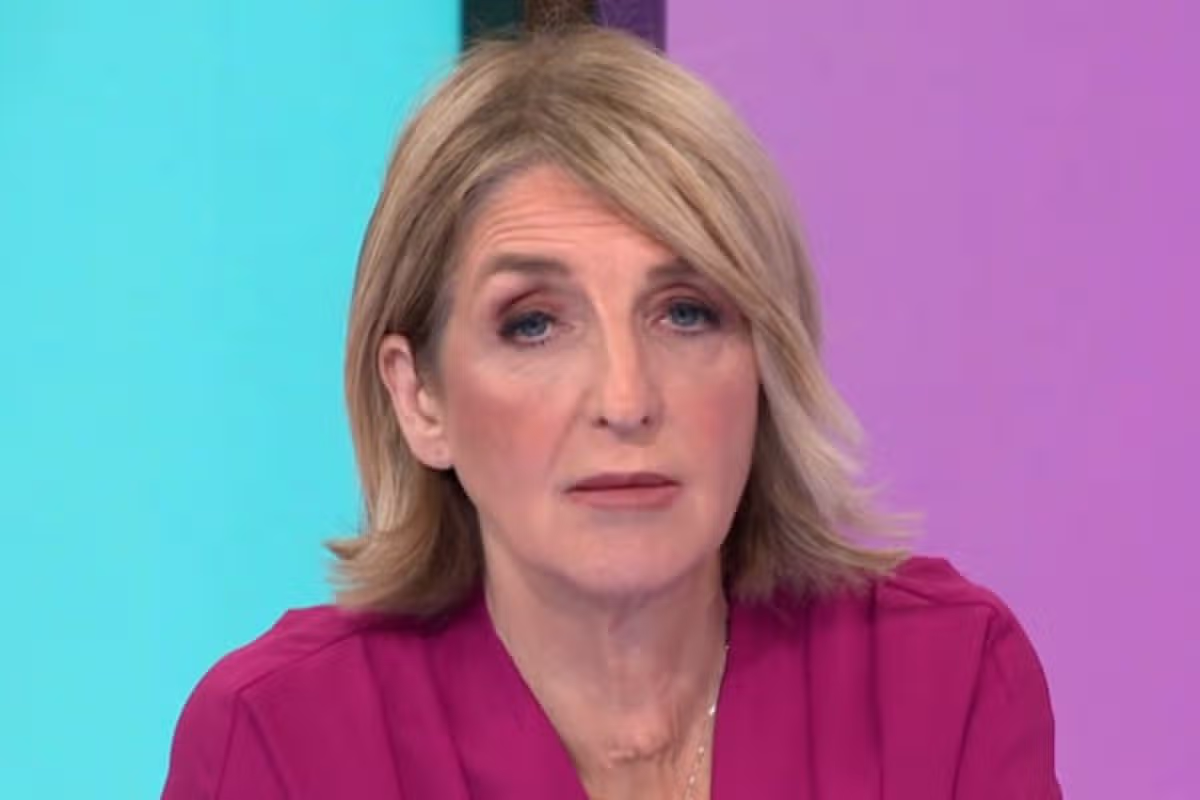
At the end of Wednesday’s show, Kaye Adams explained they weren’t going to be on for the rest of the week. She commented: “That is it for today and this week, we are off tomorrow and Friday for the racing.”
Although she told viewers that when the show returns, they’ll be joined by some familiar faces. Kaye continued: “We are back to normal, whatever that is, next week with two guest panellists joining us.
“Dragons’ Den star Emma Grede and Corrie’s Maria, Samia Longchambon. They’ll be here on the panel, we’ll see you at 12:30 on Monday.”
The show is taking a two-day hiatus as ITV covers the racing live from Doncaster, when viewers will see Ed Chamberlin and Francesca Cumani present coverage.
Before September, Loose Women was last on-air back in July as the presenters confirmed their lengthy break at the time, as Kaye told their fans: “We’re done for the summer.”
It comes after the Managing Director of ITV’s Media and Entertainment Division, Kevin Lygo, confirmed the broadcaster will see major changes in 2026 to its daytime scheduling.
Lorraine Kelly’s programme was cut back to 30 minutes as opposed to a full hour, and was also reduced to airing for 30 weeks on a seasonal schedule, similar to Loose Women.
During the weeks Lorraine isn’t on, fans have seen Good Morning Britain extended for an extra 30 minutes.
Speaking about the changes at the time, Kevin commented: “Daytime is a really important part of what we do, and these scheduling and production changes will enable us to continue to deliver a schedule providing viewers with the news, debate and discussion they love from the presenters they know and trust as well generating savingswhich will allow us to reinvest across the programme budget in other genres.
“These changes also allow us to consolidate our news operations and expand our national, international and regional news output and to build upon our proud history of trusted journalism at a time when our viewers need accurate, unbiased news coverage more than ever.”
Unseeded Michelsen came into the match in fine form, having not dropped a set at the tournament prior to facing Tiafoe, and grasped the momentum in the first set.
After the pair traded breaks of serve early in the match, Michelsen got the deciding break at 6-5 in a set where he fired 15 winners to Tiafoe’s four.
Michelsen continued to have the upper hand, with his backhand proving decisive on key points and, after taking the second set, he went up a break early in the third.
It was not until Michelsen was serving for the match at 5-4 that nerves began to hit. He served two double faults and Tiafoe broke to level, won the set and took the opening three games of the fourth set.
After holding Michelsen off, Tiafoe took the match to a deciding set where the pair traded multiple breaks of serve – invigorating the spectators on Arthur Ashe Stadium.
A fan favourite, Tiafoe thrived off the energy of the New York crowd as he then got the better of the tie-break to seal his fourth five-set victory at a major in 2026.
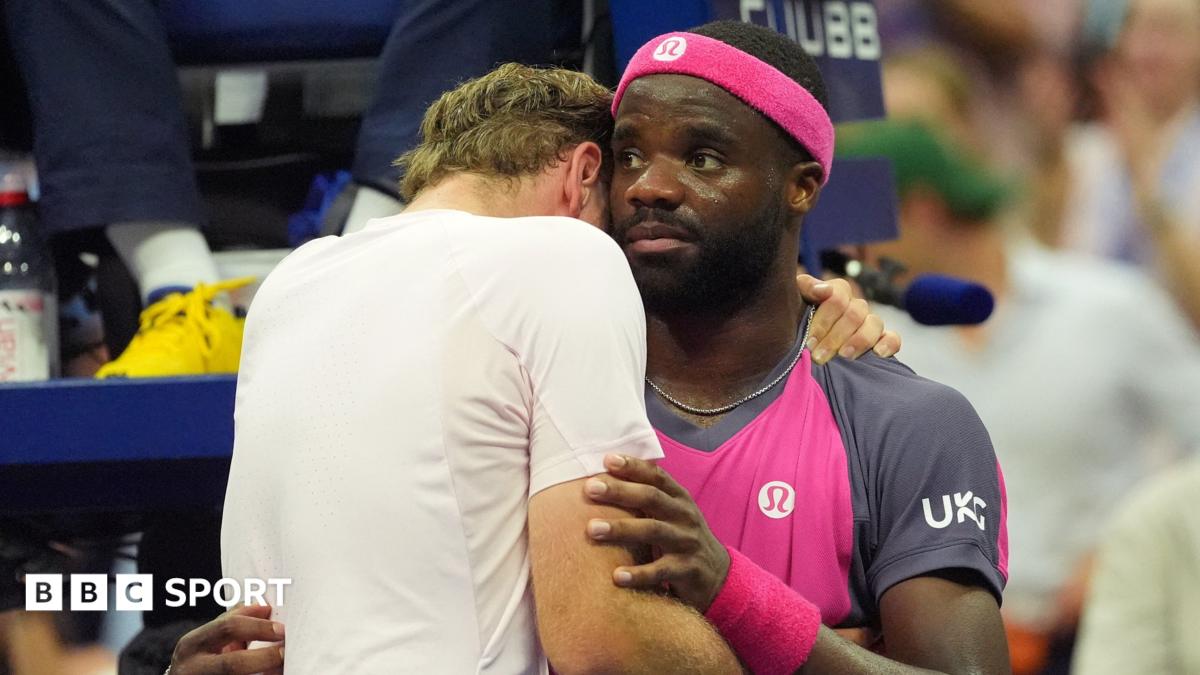
“He’s a great guy for consoling me in that moment,” said Michelsen of their post-match embrace.
“I was trying to keep it together, and I didn’t do a good job of that. He was saying a lot of nice personal things.
“I’ve got a lot of time to grow physically and mentally. I’m going to be here again. I know it.”
Tiafoe is hoping to reach the final at Flushing Meadows for the first time, following defeats by Alcaraz in 2022 and Taylor Fritz in 2024.
If there’s one thing Jed Wheeler and Marcus Ruiz Evans agree on, it’s that things in California need to change.
The state sends too much money to Washington, they say, and is both politically and culturally out of step with a country that lacks its openness and vitality.
“We can solve our own problems and don’t need to wait on a government 3,000 miles away,” said Wheeler, echoing Evans’ suggestion that Democratic-leaning California would be far better off going it alone as a separate country.
They sharply disagree, though, on the matter of how and precisely when California should seek a divorce from the other 49 states.
Evans is pushing a ballot measure that would put the question of secession before voters in 2018, believing the time has never been so ripe to form a breakaway nation. Wheeler is working to create a pro-secession political party, looking a dozen or more years down the road when its candidates hold office, and fears that a premature vote would undermine the effort.
In short, the effort to cleave California faces a crackup of its own.
At least four proposals are floating about to reshape the state in some fashion, including two that would split up California along different axes. All work at cross-purposes, and the result is varied degrees of hostility among proponents; none of the plans seems likely to reach fruition anytime soon, if ever.
That is something they have in common.
Since 1849, when the state was remade in a rush of greed and ambition, there have been more than 200 efforts to split apart, pull away or otherwise reimagine the vast empire known as California. Not one has succeeded.
The latest, most conspicuous attempt, a proposed ballot initiative fueled by anti-Trump sentiments and titillated national media coverage (those wacky Californians!) seems destined to fall short of qualifying for the ballot, barring a sudden change in fortune.
Supporters of the measure, led by Evans, have until July 25 to collect nearly 600,000 valid signatures to place an independence measure before voters in November 2018. The group, which received the go-ahead to collect signatures at the end of January, has yet to reach a quarter of that number, according to the California secretary of state’s office.
The group has also not reported raising any campaign contributions, according to the secretary’s office, which oversees elections.
Evans, 40, a former government affairs consultant now working full-time on the “Calexit” campaign, insisted a robust signature-gathering process was underway, engaging thousands of volunteers in 82 chapters across the state. However, the precise number collected was unknown, he said, because of the loose structure of his pro-secession group, Yes California.
“Some are mailing them in. Some are holding them. Some are taking them directly to their county registrar of voters,” he said. Asked to assess the odds of making the ballot, Evans responded, “Good. I won’t say great.”
The effort, uphill from the start, has not been helped, he said, by reports linking the Calexit movement to Russia, which Evans called preposterous and unfair. The co-leader of Yes California is Louis Marinelli, a former San Diego-area Assembly candidate now teaching English in Russia, where, among promotional activities, he appeared last fall at a Kremlin-backed pro-secession conference in Moscow.
“It has definitely been damaging to us getting big donors and hurting our ability to bring on new members because of clouding the issue without accurately reporting all the facts,” Evans said, citing the organization’s 44,000 “likes” on Facebook as just one example.
Nor, he said, was it beneficial when Nigel Farage, a leading proponent of Britain’s exit from the European Union and prominent Trump supporter, recently flitted into California to talk up a vague plan to split the state down the middle, creating a coastal “West California” and interior “East California.”
“They’re trying to confuse people,” Evans huffed. “Classic Trump.”
It seems Evans and his pro-secession movement might have found an ally in Wheeler and others working to form a political party dedicated to achieving state independence. Many tenets of the left-leaning California National Party — the state needs to keep more of the money it sends to Washington and establish home-grown policies on issues such as immigration and healthcare — echo those propounded by Yes California.
The nascent party has taken no official position on the 2018 secession drive. But Wheeler, the party’s vice chairman, believes the initiative would lose, damaging the independence movement. Better, he said, to elect sympathetic lawmakers under the National Party banner who could then work to bring about California’s eventual departure.
“We’re trying to be very pragmatic and realistic where we are as a movement,” said Wheeler, 36, who works for a digital media company in San Francisco.
While “the idea of having a ballot initiative is seductive and appeals to a lot of people,” he said, “you can’t harvest the crop without the work of planting the seeds, then tilling the soil and all that stuff first.”
In California’s far north, a determined group of dissenters have done that labor for decades — so far to no avail.
Efforts have been underway since before World War II to break off more than a dozen rural counties and combine them with a chunk of southern Oregon to form Jefferson, the nation’s 51st state.
The impetus is the same that drives backers of secession: the notion of a far-off government (in this case, Sacramento) ignoring local sentiments and a sense of being outnumbered and outvoted by a population whose social and political views are at odds with the prevailing (in this instance, conservative) culture. The proposed flag — a pair of Xs, or double cross — captures the animating sentiment.
“We really don’t have fair representation,” said Terry Rapoza, 67, a leader of the Jefferson movement in Shasta County, where he sells T-shirts and other souvenir clothing in Redding.
He cited recent passage of a 10-year, $52-billion road repair and transportation bill; the hike in gas taxes, he said, will have much less impact in urban California than in rural stretches, where people might drive 20 miles to the grocery store, or a dozen miles to pick up their mail.
But he has little use for secession, which strikes him as bizarre — would the new California nation have its own nuclear arsenal and U.N. representative, he wonders — and fruitless in ending the urban-rural divide he blames for persistently short-changing his part of the state.
There’s something wrong and even vaguely un-American, he suggested, about trying to break the country apart. “We want to add a star to the flag,” Rapoza said. “Not take one off.”
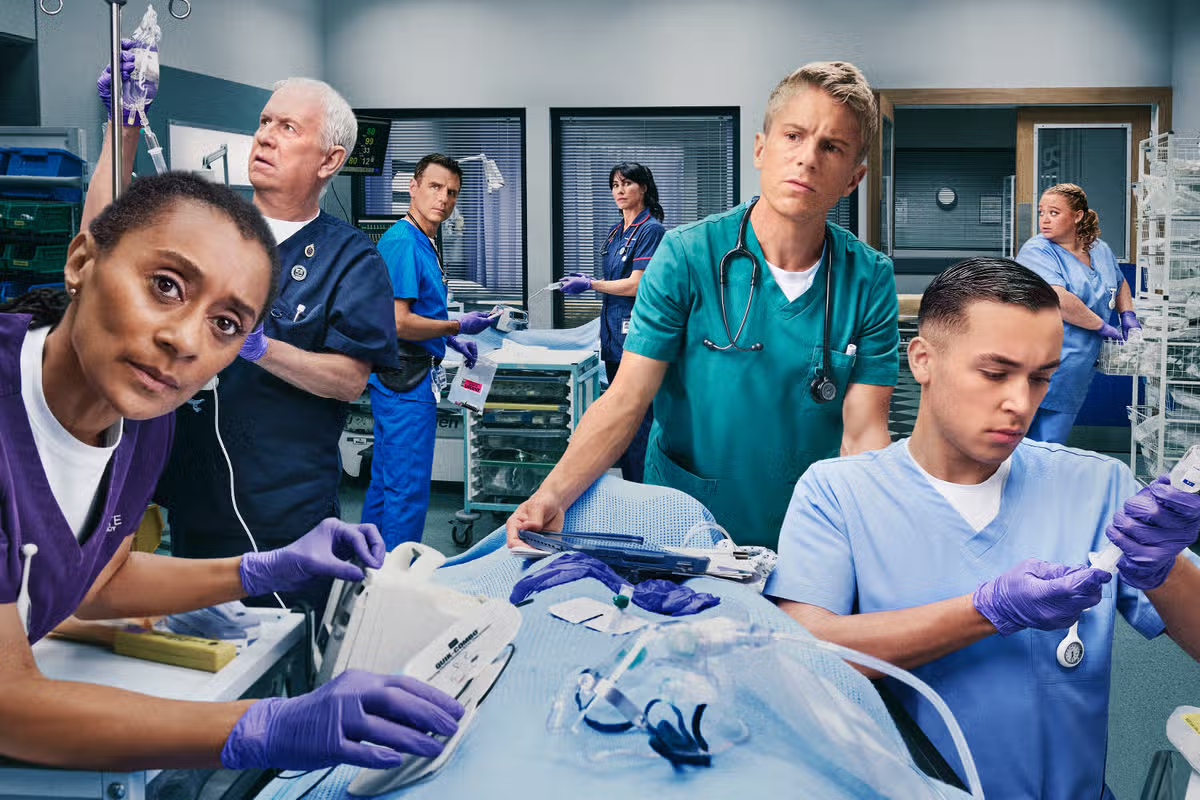
George Rainsford is returning to Casualty tonight as fan favourite Dr Ethan Hardy for the BBC medical drama’s 40th anniversary three years after his last apperance
George Rainsford played Dr Ethan Hardy in Casualty from 2014 until 2023(Image: BBC/Alistair Heap)
A former Casualty actor has admitted he was “ready to have a break” after nine years working on the medical drama.
George Rainsford is putting his scrubs back on and resuming his role as Dr Ethan Hardy for the BBC show’s huge 40th anniversary, which airs tonight (Saturday, September 5).
The actor played the popular doctor for almost a decade before leaving the BBC medical drama in 2023. Fans will know George’s charatcer Ethan was diagnosed with Huntington’s disease and left the E.D. three years ago to spend more time with his son, Bodhi.
Speaking exclusively to Betway about his exit, George explained: “At the time, I definitely wanted that time away. I was ready to have a break. It’s a fantastic place to work.
“I loved how generous they were with all the storylines I had over the years, and I loved everybody there but it’s filmed in Cardiff, and I’m not based there, so I needed to spend a bit more time at home. When you’re an actor, sometimes you want to challenge yourself and see what else is out there.
“After nine years, that feeling had gotten a bit stronger. I was keen to go back and do theatre for a bit and see what other screen work was out there.
“I’m glad we were able to have the conversation with the producers that it wasn’t final because I really enjoyed going back and I do think there would be a storyline there but at the same time, I was ready for a little break”
Since leaving Casualty, Jimmy has appeared in seven episodes of popular BBC period drama Call the Midwife as Jimmy Wilson and more recently played the role of Miles is movie Bank of Dave 2: The Loan Ranger.
Ethan isn’t the only familar face returning to Casualty this week with Derek Thompson also reprising his iconic role as nurse Charlie Fairhead. Fans last saw him during his final appearance in March 2024, where he retired after 38 years in the NHS.
Although bosses haven’t shared too many details of Ethan and Charlie’s involvement in the 40th anniversary, they have said: “The gripping, anniversary event centres on a high-stakes major incident that throws Holby into chaos.
“Lives hang in the balance and the ED team are pushed to their limits in a tense and emotionally charged story that brings together some of the show’s most beloved characters.
“As the fallout continues, a major rescue operation unfolds, forcing impossible life-or-death decisions and testing the courage, resilience and leadership of those at the heart of the hospital.
“As Dylan Keogh (William Beck) battles personal tragedy while leading his team through their darkest hour, Stevie Nash (Elinor Lawless) and Flynn Byron (Olly Rix) find themselves fighting for survival in a race against time.”
Casualty’s 40th anniversary specials will air on Saturday, September 5 from 8pm on BBC One and iPlayer
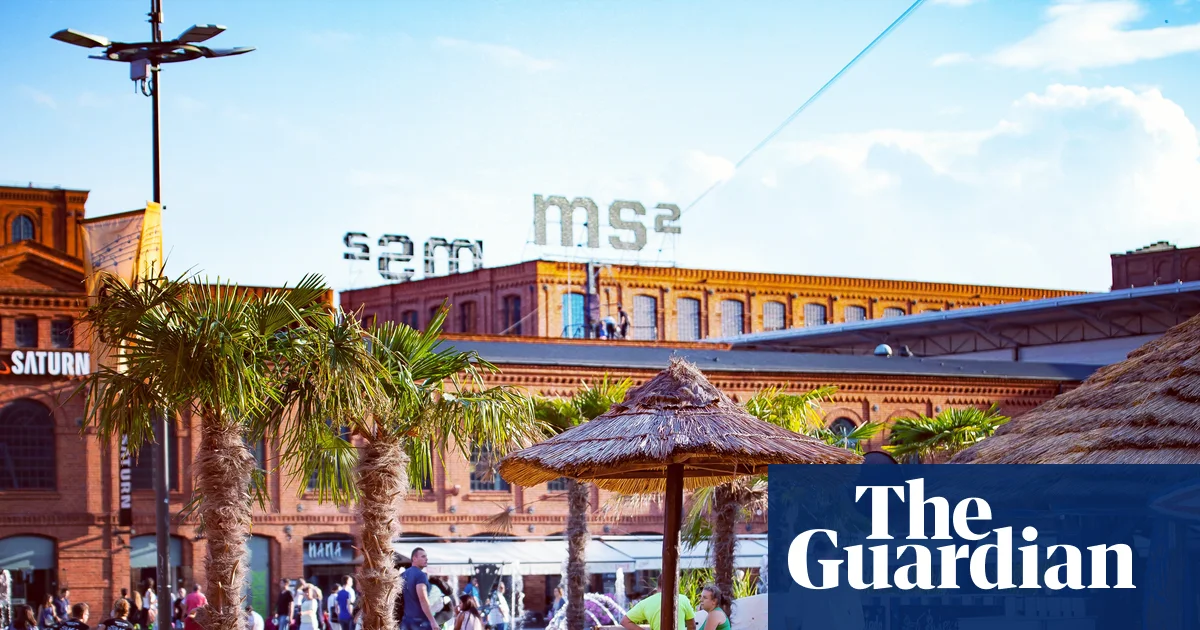
Sometimes travel delivers a real shock. I’m moving along the boulevards in the Polish city of Łódź, enjoying the excellent cafes and warm sunshine, when I spot the vans. They are parked up on the verge, with racks of clothing and heavily laden tables behind. I can’t resist a Sunday morning market and walk towards a group of men huddled around a car that is covered in blankets. And then it happens. They turn – and I see they are weighing pistols in their hands. I recognise the lean profile of a German Luger, and then the bulkier Colt 45.
There is a second of doubt. I hesitate. They replace the weapons on the display and walk away laughing. I approach. On the car roof is a row of dusty soldiers’ helmets. “We were repairing a pavement in the centre of town,” says the seller cheerfully, handing me a badge to inspect. “Imagine! For 80 years, all this stuff was just under our feet.”
It’s a Wehrmacht shoulder badge from Kuban 1943, a last-ditch post-Stalingrad action on the Crimean peninsula. Who wore this, I wonder? A veteran of the Russian front who almost made it home? Nothing is clear, except that in Łódź, the past is never far away.
Illustration: Guardian Graphics
I arrive the previous night, a little disoriented, whizzing past unlit buildings, huge brick structures like Victorian factories. “Are we in the city yet?” I ask.
The taxi driver gives me a quizzical look. “Yes, this is Łódź.” I note the pronunciation, like “wudge”. I glimpse five-storey blocks, tree-lined streets, a tramline. “I could never live anywhere else,” he adds. A huge blue graffito is caught in the headlights, like a monstrous alien creature.
“Why?” I ask, but we are already pulling up outside an immense red-brick building, my hotel, and he never answers my question. The reception area is huge, with a strange scalloped ceiling in red brick that hints at a previous incarnation as a factory.
Paweł Pawlikowski’s Oscar for the film Ida on display at the Museum of Cinematography.
This is my first visit to Łódź, a city about 75 miles (120km) south-west of Warsaw. My interest has been piqued by a list of notable people associated with the place. It features an astonishing number of Oscar-winning or nominated film directors connected to the city: Andrzej Wajda (The Promised Land), Roman Polanski (The Pianist), Paweł Pawlikowski (Ida), Agnieszka Holland (Europa Europa), Krzysztof Kieślowski (Three Colours trilogy) and Zbigniew Rybczyński (Tango).
But under the bonnet there is a vast array of talent in acting, production and technical excellence. The city’s film school is responsible, of course, but Łódź itself features as a setting, too, notably in David Lynch’s Inland Empire and Wajda’s masterpiece The Promised Land.
Łódź, I had decided, must be fascinating. Any visit starts with Piotrkowska Street, the longest shopping street in Europe at about 2½ miles. My guide, Anna, takes me through Plac Wolności (Freedom Square), where a dance festival is in progress, with hooded hip‑hoppers rubbing shoulders with troupes of line dancers and girls in colourfully embroidered traditional dress. This is a city where music and dance are never far away. We dodge down a side alley and emerge in a striking art installation – an entire street, Pasaż Róży (Rosa’s Passage), covered in mirrors by the artist Joanna Rajkowska. Back on the main pedestrianised route, the mix of ancient and modern continues: 19th‑century porticoed palaces adorned with colourful graffiti.
I ask Anna how Łódź fared in the second world war. “It was not too badly damaged,” she says. “Both the Germans and the Russians wanted the industry intact.”
There is no medieval heart, no ornate houses like in Wrocław or Kraków. What Łódź possesses is an impressive array of 19th-century factories, mostly textiles, built to show off their owners’ power, wealth and architectural aspirations. Now, this heritage has become a stunning example of urban regeneration.
OFF Piotrkowska, where the old mills host a hive of small businesses. Photograph: Paweł Augustyniak
We turn into OFF Piotrkowska, a complex of beautiful old textile mills reborn as a hive of small businesses. There are lots of vibrant restaurants and bars, but Anna wants to show me a shop that she likes: Pan Tu Nie Stał. “It was a saying in communist times: ‘You’re not in the queue.’ We said it to people trying to push in,” Anna says.
This is the spot to pick up a T-shirt featuring Soviet combine harvesters or some Czas Pokaże (Time Will Tell) socks. The shop says a lot about the Polish attitude to communist times: none of the maudlin ostalgie of East Germany; this nostalgia comes with healthy dashes of colour and humour.
It did all start, however, with a disaster. The old mills had survived two world wars, but died in the economic collapse after communism ended in 1989. “Everything closed down,” says Anna. “We call that time the transformacja. It was very hard.”
We stroll into the Manufaktura area, once the site of a vast textile business started by a local scrap metal dealer, Izrael Poznański, in 1872, and now another beautifully restored collection of red-brick buildings housing restaurants, bars, shops and the fascinating Museum of the Factory. Next door is the palace that Poznański built, a neo-baroque monstrosity of bulging wealth, now the city museum.
After the Congress of Vienna in 1815, Łódź became part of the Russian empire, a melting pot of German, Jewish, Polish and Russian influences. In the 1870s, Poznański was one of a group of men who saw the potential of steam power. They imported looms from England and were soon amassing unimaginable wealth, constructing a city of handsome red-brick factories, the core of which still remains.
The Museum of the Factory houses a collection of working looms that date back to the 1880s. Only four machines are ever turned on due to noise pollution laws – in the old days, one factory might have had hundreds. This was the city of the deaf, but the deafest of all were the bosses, oblivious to the terrible hardships of their workforce, from the founders through to their communist successors. When Wajda came to these mills in the early 1970s, planning The Promised Land, he needed to make only minor adjustments to start filming. The tired faces, the crashing looms, the heat and the dust – it was all very much like 1880.
Is that your favourite film, I ask Anna? She shakes her head. “Cold War by Pawlikowski,” she says. “I love that film.”
The Museum of the Factory has a collection of working looms dating to the 1880s. Photograph: Picasa
This 2018 masterpiece is the story of a tragic love affair conducted across the Iron Curtain in the years following the second world war. Based on the lives of Pawlikowski’s parents, it is dark and sensuous, full of great music and dance. Pawlikowski has used Łodż as a location.
We move on to the Museum of Cinematography, a tour de force that warrants some preparation (watch films by Polish directors). They have everything from early working equipment to props from the most recent Oscar triumphs. By the time I get to the end, I have only a few minutes to rush to the Central Museum of Textiles.
There I find a technician, Przemysław, about to start up a 1893 Greenwood loom. He’s a former policeman with a few tales to tell, but right now one question is bothering me. “Why did film-making succeed so brilliantly in this city of textiles?” I ask him.
He taps the cast iron loom and chuckles. “I’ll show you.”
With the flick of a switch, the loom begins to clank and turn. The noise is incredible. Przemysław is moving around, adjusting and calibrating, his face concentrated. I see the spools of thread begin to unwind, the shuttle dashing back and forth, the warp and weft rhythmically rising and falling. The different colours, each no more than a thin line, but magically coming together. And from the lip of the machine spills a beautiful multicoloured cloth.
Przemysław looks at me and raises a questioning eyebrow. “Like weaving a story, right?”
“Over the last five or six years, man-to-man pressure has become bigger,” Kane says.
“European football is physical and top teams are trying to win the ball back high, trusting their defenders and midfielders to defend man for man to win their battles.”
Given that change, the best teams have recruited physical athletes and brilliant dribblers who can beat their man when the game becomes a series of one-against-ones.
Kane, not known for his dribbling – and by his own admission “not the fastest”, has thrived on his own terms.
Against Dortmund, there was a specific moment Kane dropped deep, looking to arrive in space unmarked. Recognising the danger, two players converged on the Englishman.
Kane’s dribbling is cerebral. His speed of thought provides him solutions to problems others would attempt to solve with their feet alone.
After getting low and using his strength to shrug centre-back Waldemar Anton off him, Kane rose, slightly adjusting his body to the right. These micro-adjustments are a hallmark of his game and through them he is able to shift an entire team’s momentum.
Fooled by this feint, Daniel Svensson and Jobe Bellingham found themselves wrong-footed as Kane snapped the ball back the other way, opening up the entire pitch from within Bayern’s half.
Premier League breaks its own record as four of its 11 most expensive signings have arrived in this transfer window.
Published On 2 Sep 20262 Sep 2026
The English Premier League displayed its financial power once again by smashing the summer transfer window record for the amount spent by its clubs on new players.
It had only set the previous record last year.
Recommended Stories
list of 4 itemsend of list
The spree continued deep into the final hours of the window, which shut on Tuesday, with several big-money deals completed before the 11pm (22:00 GMT) deadline for signings by English clubs.
Approximately 38 percent of the Premier League deals were made between the clubs from within that competition, up from 30 percent last year’s summer transfer window.
Al Jazeera Sport takes a look at major takeaways from the 2026-27 transfer window:
How much did Premier League clubs spend for the 2026-27 season?
A total of 3.46 billion pounds ($4.67bn) was dished out by England’s top-flight clubs, with 475 million pounds ($640.1m) being spent on deadline day itself, up from 391 million pounds ($526.7m) on the same day last year.
During the last summer transfer window, the combined spending of the league’s 20 clubs breached the 3 billion pounds ($4.05bn) barrier for the first time, while this year’s figure dwarfed the 1.13 billion pounds ($1.52bn) spent five years ago.
What were the most expensive Premier League and La Liga signings?
Manchester City topped the list when they spent 125 million pounds ($168.7m) on signing Argentina midfielder Enzo Fernandez from Chelsea.
He’s the first player to be transferred twice for figures upwards of 100 million pounds ($134.7m), and his deal equalled the amount spent on Aleksander Isak when he moved from Newcastle United to Liverpool during the last summer transfer window.
Liverpool paid a close second 123 million pounds ($166m) to sign France forward Bradley Barcola from Paris Saint-Germain.
Chelsea followed with 117 million pounds ($158m) spent on bringing England international Morgan Rogers from Aston Villa to Stamford Bridge, while Manchester City dished out 116 million pounds ($156.6m) for midfielder Elliot Anderson from Nottingham Forest.
Which clubs spent the most money on summer transfers?
Manchester City’s signing of Fernandez capped the whopping 458 million pounds ($618.2m) spent as new manager Enzo Maresca assembled his first squad, which includes Moroccan midfielder Ayyoub Bouaddi for 86 million pounds ($116.2m).
It was a new Premier League record that surpassed the 415 million pounds (560.3m) paid by Liverpool last year.
Chelsea also spent heavily, shelling out 349 million pounds ($471.1m) to back new boss Xabi Alonso.
Tottenham splashed out 303 million pounds ($409m) as they rebuild after two successive seasons close to being relegated.
Promoted trio Ipswich, Coventry City and Hull City spent more than a combined 400 million pounds ($539.9m) to prepare themselves for life in the top flight.
Sunderland landed highly rated Belgian winger Malick Fofana, 21, from Olympique Lyonnais in a reported 30 million pounds ($40.5m) deal after beating Crystal Palace to his signature.
Tottenham Hotspur also broke their club transfer record to sign Sandro Tonali from Newcastle United in a deal that could reach 100 million pounds ($134.9m).
Why did Julian Alvarez, Folarin Balogun and Lamine Camara fail to join a new club?
Some deals failed to go through on deadline day.
British media reported that Everton’s move for Folarin Balogun collapsed after the US striker decided against proceeding with the transfer, while Senegal midfielder Lamine Camara remained at Monaco after his reported 47.1 million pounds ($63.5m) move to Chelsea fell through.
Julian Alvarez’s dream of playing for Barcelona never materialised after Atletico held onto him despite strong interest from Barcelona and Arsenal.
Atletico chief executive Miguel Angel Gil Marin made his feelings quite clear about Barcelona last week and said Alvarez would never be sold to them.
“There has not been, and there will not be any negotiation with them [Barcelona] regarding Alvarez’s transfer,” Atletico’s board of directors said in the statement.
“Atletico de Madrid is open to standard transfer market negotiations when conducted in a professional, ethical and respectful manner,” the statement added.
ARIANA GRANDE broke down in tears on stage at what could be her final-ever concert.
The superstar, 33, sobbed as she opened up about her decision to step back from public life.
Ariana Grande has performed for the final time ahead of taking a step back from public lifeCredit: The Mega AgencyAriana was left tearful during the arena gigCredit: Supplied
Halting her final gig at London’s O2 Arena, Ariana said: “I just wanted to say thank you so much.
“This has been such an extraordinary experience.
Sign up for the Showbiz newsletter
Thank you!
“Thank you for ten beautiful London shows and 41 incredible Eternal Sunshine shows.”
Breaking down in tears, Ariana continued: “This has been one of the most beautiful extraordinary experiences of my life and I just wanted to express my gratitude without sobbing.
“It has been so special and I will cherish this experience always.
“I have loved every minute of this with you all and I just wanted to make sure I express how grateful I am.”
Signing off, she continued: “Thank you for being by my side all the way from Honeymoon Avenue to Hampsted.”
The star is stepping back from public life following the conclusion of the tourCredit: GettyThe star spoke out to the crowd ahead of her time-out from the spotlightCredit: SuppliedShe gave a poignant final message to the audienceCredit: SuppliedAriana has performed a run of 10 sold-out shows in LondonCredit: Getty
Ariana broke down in tears for a second time before performing Hate That I Made You Love Me.
The singer struggled to get her words out as she thanked everyone who has worked on the tour from hair and make up to the security.
For the final show of the tour Ariana added four songs from her new album Petal.
The singer belted out Oh Well, Like I Do and the record’s lead single Hate That I Made You Love Me.
Ari also performed Nowhere, Nobody for the first time.
During her performance of hit single Thank U, Next the star continued her recent trend of changing the words to reflect her rekindling things with dancer Ricky Alvarez.
Rather than singing “wrote some songs about Ricky, now I listen and laugh” the superstar sang: “Wrote some songs about Ricky, I’m trying to make him my last.”
Ariana’s Wicked co-star Cynthia Erivo watched her final show from the sound decks.
However, unlike on night two of the 10 London shows when she joined Ariana on stage, she opted to take a back seat and simply watch the show as a fan.
It was previously revealed that Ariana would be retreating from the public eye following the end of tonight’s run of 10 O2 Arena shows of the Eternal Sunshine Tour.
In a statement released last month, a rep for the 7 Rings singer said: “Ariana will be taking a step back from visibility after she completes the Eternal Sunshine Tour.
“She looks forward to finishing the tour and ending it on a high note, both healthily and happily, and then taking a much-deserved break from public-facing work and appearances, which have led to endless, ongoing public scrutiny.
“This tour has been a beautiful experience for her.
“She loves her fans and has loved every minute of this tour so much.”
Ariana herself later clarified that the decision had been months in the planning and was not in response to widespread concern for her health after visible weight loss over the past year.
The singer said: “It was not a reactive or impulsive thing. It is something that I have decided, a plan that I had quietly made a long time ago and it’s a decision that was made from a thoughtful and empowered place.
“And I want you to know that many things can be true at the same time.”
She added: “I heard that my fans were worried that negativity was ruining things for me, but I just have to say that could not be more the f*** opposite.
“This is not what that is. I just want to be very, very clear. Multiple things can be true at the same time.
“Boundaries need to be set.
“Human beings need a break sometimes. And also, this can be, and will continue to be, the greatest experience of my professional and creative life. So, I just wanted to make that quite plain.”
It comes a month after Ariana pulled out of making her West End debut in Sunday in the Park with George slated for next year at the Barbican.
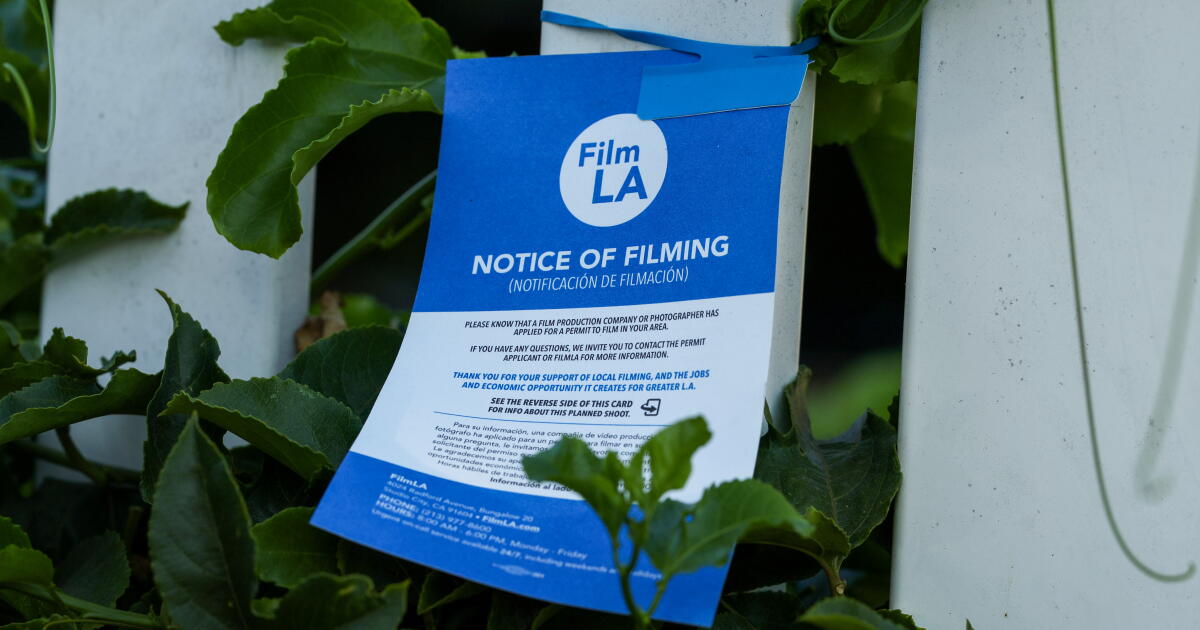
State lawmakers have approved a series of modest changes intended to bolster California’s film and TV tax credit program.
Among the key revisions, independent filmmakers would be exempted from the $5 million state corporate tax credit cap that was approved earlier this year as part of Gov. Gavin Newsom’s state budget.
Film industry advocates lobbied hard for a carve-out, saying the cap would undercut gains made under the current film and TV tax credit program at a time when Hollywood has been reeling from job losses.
The bill includes other changes intended to help Hollywood, such as allowing companies to carry forward older tax credits for up to 15 years (the old limit was nine) and reducing the discount they are charged when they opt to seek a cash refund on unused credits.
Producers will also be able to collect their refund money more quickly — within two years instead of five.
California offers tax credits of up to 35% on qualified expenses, which can be applied to any tax liabilities the production companies have in the state. The program allocates $750 million annually in film and TV tax breaks.
The budget trailer bill was introduced to the Senate on Friday by Assemblyman Rick Chavez Zbur (D-Los Angeles), chair of the Assembly Democratic Caucus and Senator Ben Allen (D-Santa Monica).
The new cap, issued by Gov. Newsom, would have undermined the “competitiveness” of the current California Film and Television Jobs Program, said the Entertainment Union Coalition, an advocacy group that supports the bill. But with these new modifications, the group — which represents the Directors Guild, SAG-AFTRA, IATSE and more — said the program will be able to continue to “support the fragile recovery of our industry here in California.”
“Most importantly, we want to recognize the major role our members played in today’s success as advocates for their industry in California,” Rebecca Rhine, the coalition’s president, said in a statement. “They sent an unprecedented 450,000 letters to the California legislature, making clear the negative impact that SB 122 [the new cap] would have on their livelihoods, their families, and their communities.”
Over the program’s first full year in its expanded $750-million form, the California Film Commission says it delivered $6.6 billion in direct production spending and $4.3 billion in qualified expenditures, supporting nearly 35,000 cast and crew jobs across 6,630 filming days statewide.
The bill cleared the Assembly floor by a vote of 68-2, with the Senate approving its companion measure by a vote of 32 in favor, 8 against the same day. It now awaits Gov. Newsom’s signature.
“It’s a good day that we took steps to strengthen the program and while we have to do more next year, this was a crucial first step,” Zbur said in an interview.
Zbur said he believes everyone in the state’s film and TV tax credit program should have been exempted from the corporate tax credit cap and he plans to look at that within the context of next year’s budget.
“There were budget implications to doing that, so we really did all the things that are viable to do in this legislative session,” Zbur said.
Sammy and Jonathan were one of a number of couples whose romantic journeys were never shown on the Netflix show
18:45, 29 Aug 2026Updated 18:47, 29 Aug 2026
Sammy’s Love Is Blind UK love story never made it to air(Image: Tom Dymond/Netflix)
Love Is Blind UK’s third season saw a record number of engagements – but only a handful were shown.
The Netflix reality dating show sees 30 singles sent on a string of blind dates in the show’s pods which are designed to prevent the contestants from ever seeing each other. The only way they can meet a potential partner face to face is if they accept a marriage proposal from them.
An unprecedented number of contestants became engaged during the latest season – 14 to be precise – though just six of those love stories were shown to viewers at home.
The show’s executive producer, Nazleen Karim, previously addressed why they cut some couples on the programme but kept following others. She explained: “When there are more engagements than we can physically follow, we have to make difficult editorial choices. We’re looking for a range of different relationship journeys and stories that together capture the full experience of the experiment.
“Not being selected isn’t a reflection of the strength of a relationship – many couples continue exploring their connection once they leave the pods.”
Now, one couple who were cut from the show revealed what happened to them afterwards, and the remarkable journey they have been on since.
Tech recruiter Jonathan, 32, and wellbeing coach and entrepreneur Sammy, 31, found a connection in the pods and became engaged, but their dates, nor that all-important proposal, were ever shown.
In a tell-all Instagram post, Sammy recounted that she asked a producer to give Jonathan her number after they were told they would not be continuing on the programme, and the pair continued to date in the real world.
Content cannot be displayed without consent
Since leaving the show in August last year, they have jetted off on holiday together, met each other’s families, got a dog together named Poddy in homage to the show, and remain engaged to this day. Sammy also revealed the devastating news that the pair had suffered a silent miscarriage in June.
“We lost our baby to a silent miscarriage and honestly, we really struggled,” she shared. “Grieving whilst still living on opposite sides of the country was one of the hardest things we’ve had to face together.”
While she admitted the pair were still navigating the loss, Sammy revealed their love story still endured. She added: “We didn’t get picked to continue on Love Is Blind. At the time, that felt like the end of our story. Turns out, it was the beginning of the best bit.
“No cameras. No experiment. No guarantees. We just kept choosing each other, and now you’re finally in on the secret.”
Love Is Blind UK series three is now streaming on Netflix. A reunion special will air tomorrow night (August 30) at 9pm.