Board

Live Election 2026 primary results, updates: who won in Los Angeles County, Pasadena, Inglewood, Beverly Hills

Los Angeles City Council, District 1

Los Angeles City Council, District 3

Los Angeles City Council, District 5

Los Angeles City Council, District 7

Los Angeles City Council, District 9

Los Angeles City Council, District 11

Los Angeles City Council, District 13

Los Angeles City Council, District 15

Los Angeles City Attorney

Los Angeles Measure CB

To apply the existing cannabis business tax to unlicensed cannabis businesses.

Los Angeles Measure TC

To apply the transient occupancy tax to online and other travel companies.

Los Angeles Measure TT

To increase the transient occupancy tax to fund general city services.

Bell Measure BB

To establish a sales tax to fund city services such as emergency services, prevent crime, maintain streets and after-school and anti-gang programs.

Bell Gardens Measure BG

To raise sales tax to fund city services such as police and emergency response, street repairs, park maintainence and youth and senior programs.

Beverly Hills City Treasurer

Beverly Hills City Council

Carson Measure FW

To allow the sale of “safe and sane” fireworks from up to 12 permitted temporary stands within the city around Fourth of July.

Commerce Measure PC

To enact a sales tax to fund police services, 911, youth and senior programs, library services, parks, streets and infrastructure.

Compton City Council, District 2

Compton City Council, District 3

Covina City Council, District 1

Covina City Council, District 3

Covina City Council, District 5

Covina Measure CC

To enact a sales tax to fund emergency services, clean up encampments, address homelessness, improve parks, repair streets and provide senior and youth programs.

Gardena Measure GG

To enact a sales tax to fund city services such as emergency response, hiring police officers, keeping parks clean, repairing streets and maintaining after-school and senior services.

Inglewood Measure I

To repeal the city’s ban on the public’s use of “safe and sane” fireworks, permit their sale under a regulated framework and establish rules and penalties for violations.

La Cañada Flintridge City Council

La Puente Measure LP

To raise the sales tax to fund public safety, street and sidewalk maintenance, park maintenance, youth and senior programs and other services.

Lakewood City Council, District 2

Lomita Measure LW

To enact a sales tax to fund services such as emergency response, property crime prevention, maintain parks, repair streets and sewers, maintain gang prevention efforts and address homelessness.

Long Beach City Council, District 1

Long Beach City Council, District 3

Long Beach City Council, District 5

Long Beach City Council, District 7

Long Beach City Council, District 9

Monterey Park Measure NDC

To prohibit data centers in the city.

Palos Verdes Estates Measure PF

To extend the parcel tax for 10 years to fund emergency services and prepare for wildfires.

Pasadena City Council, District 3

Pasadena City Council, District 5

Pasadena City Council, District 7

Pasadena Glen Community Services District Measure B

To enact an special parcel tax to maintain and improve roads and culverts within the district.

Pomona City Council, District 2

Pomona City Council, District 3

Pomona City Council, District 5

Pomona Measure Z

To restructure funding for the Pomona Children and Youth Fund using city sales tax rather than the general fund.

San Fernando City Council

San Marino Measure S

To enact a transaction and use tax to fund street and infrastructure repairs, improve public safety, provide youth and senior programs and library and parks maintenance.

Sierra Madre Measure GL

To increase the city’s spending limit to fund general governmental services for four years.

Torrance City Council, District 1

Torrance City Council, District 3

Torrance City Council, District 5

Source link

LAUSD school board incumbents ahead in early returns in races devoid of pro-charter money

Los Angeles Unified School District incumbents — Rocio Rivas, Kelly Gonez and Nick Melvoin — surged strongly ahead in early returns Tuesday night for three seats on the Board of Education.

The first reported results were trending toward one-sided outcomes because the major political forces of recent years declined to do battle against each other: The teachers union supported Rivas, who represents a largely Eastside district; a charter-friendly retired businessman supported Melvoin, whose district is centered on the Westside. And the largest union representing nonteaching employees all but avoided the fray.

The third incumbent, Gonez, was the only candidate on the ballot in District 6, and faced one write-in challenger, Jose Sagredo. Thus, Gonez is poised to continue to represent a district centered in the east San Fernando Valley for a third and final term.

With no challengers boosted by high special-interest funding, the three incumbents had a virtually unobstructed campaign path.

If the early returns hold as expected, the Los Angeles Board of Education will continue to lean against charter schools and would stand in general agreement on most policies — including assertive support for immigrants and a continued holding pattern on the future of Supt. Alberto Carvalho, who remains on administrative leave as a federal investigation proceeds.

District 4, Westside

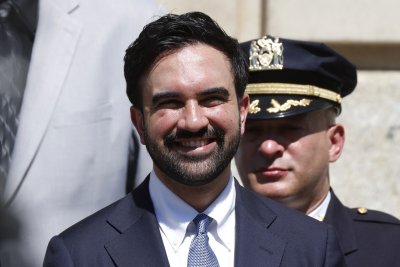
Well ahead in District 4 was two-term incumbent Melvoin. His challenger was Ankur Patel.

The funding advantage in Melvoin’s campaign was sizable through just before election day: Melvoin, $378,803; Patel: $22,662.

In addition, Melvoin benefited from an independent expenditure of $367,093 on his behalf by retired businessman Bill Bloomfield, who has been a major funder in recent campaigns, typically for candidates who also are acceptable to charter-school advocates.

Charters are privately operated public schools, most of which are nonunion. About 1 in 5 L.A. public-school students is enrolled in an independent charter operating within L.A. Unified.

District 2, downtown and Eastside

Also with a huge funding advantage was Rocio Rivas, who was headed toward a second term in District 2.

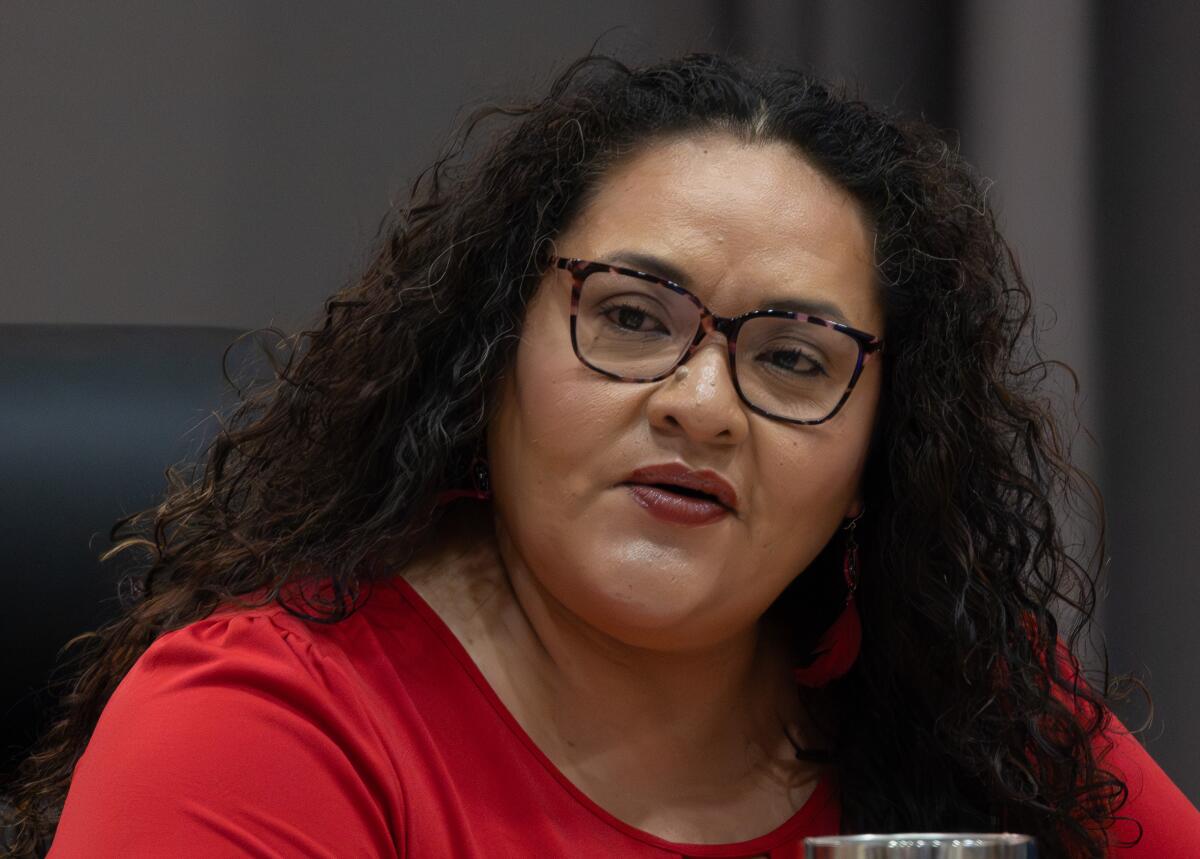
A woman in a red top wearing glasses.
LAUSD Board Vice President Rocio Rivas was headed toward a second term in District 2. Her major funding source was $889,469 in an independent-expenditure campaign on her behalf, nearly all of it from the United Teachers Los Angeles union.

(Myung J. Chun / Los Angeles Times)

Rivas’ own campaign raised $66,218. But the major funding source was $889,469 in an independent-expenditure campaign on her behalf, nearly all of it from the United Teachers Los Angeles union. The union also spent more than $4,000 in communications to its members about the election.

These figures compare with $2,525 raised by challenger Raquel Zamora, who reported spending $5,089.

In Rivas’ successful 2022 run, her main funding opponent was Local 99 of the Service Employees International Union, which backed Maria Brenes for an open seat. Historically, Local 99 has not been inclined to oppose an incumbent, which Rivas has become. And, true to history, Local 99 has endorsed Rivas, but without spending money on her behalf.

An end to charter school wars

More broadly, this election cycle marks the end to a generation of bitterly contested Los Angeles school board races that became the most expensive in the country, with the L.A. teachers union and charter school advocates slugging it out to advance their vision for public education.

Charter school supporters — who had poured tens of million of dollars into races to elect board members sympathetic to their cause — largely stepped aside, a reflection of their diminished resources and evolving strategy.

The bottom line is that, if current vote-count trends hold, the board will be unchanged for the next two years.

This situation is less than ideal for charter schools. Charters with a mixed record face a tough review when they come up for renewal — about once every five years. Charter opponents want the board majority to move more aggressively to shut down charters when possible and to force them off district campuses — where, under state law, they have a legal right to operate.

Big board decisions looming

Big decisions before the board include how to manage a projected structural deficient — with union leaders calling the dire predictions an accounting mirage.

Meanwhile, Supt. Alberto Carvalho remains in limbo after a February FBI raid of his home and office. The investigation relates at least in part to a failed district chatbot project.

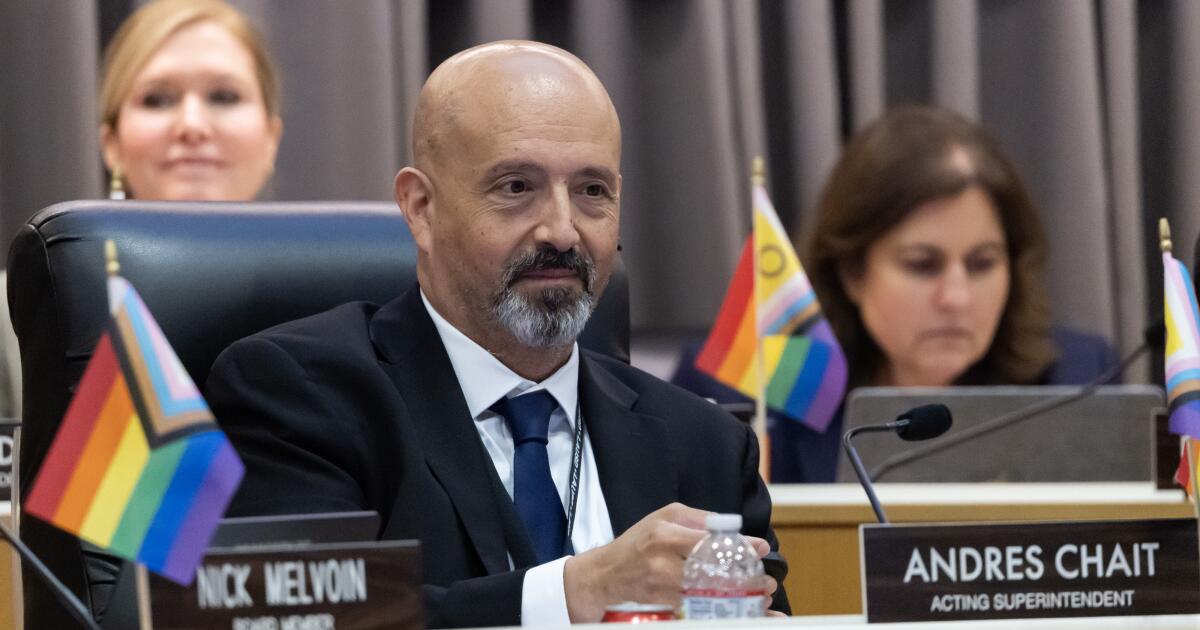
Carvalho maintains his innocence and would like to return to work. The board, however, has turned the reins over temporarily to acting Supt. Andres Chait.

Words on a wall say "Los Angeles Unified School District, Administrative Offices."
This election cycle marks the end to a generation of bitterly contested Los Angeles school board races that became the most expensive in the country, with the L.A. teachers union and charter school advocates slugging it out to advance their vision for public education. Above, LAUSD headquarters in downtown Los Angeles.

(Ronaldo Bolaños / Los Angeles Times)

Source link

Vince McMahon and others sanctioned for ‘deleted texts’ in WWE share

A Delaware Court of Chancery judge delivered a blow to wrestling impresario Vince McMahon and other World Wrestling Entertainment officials earlier this week.

Judge J. Travis Laster, vice chancellor of the Delaware Court of Chancery, issued sanctions for “spoliation of evidence” in the shareholder lawsuit over the 2023 merger between Ultimate Fighting Championship and WWE.

Laster ruled on Tuesday that WWE executives destroyed evidence by using the auto-delete setting on the messaging app Signal, enabling potentially relevant communications to be deleted.

The ruling means the court will operate under the assumption that five potentially damaging statements are true while allowing the defendants to rebut them.

The statements, according to the ruling, include that McMahon’s decision on the merger was “influenced” by Endeavor Executive Chairman Ari Emanuel’s “promise” to provide him with a continued role at the company and to indemnify him and provide legal support as federal investigators were looking into claims of alleged sexual misconduct.

McMahon pursued a deal with Endeavor in 2022 before WWE initiated its strategic review process, and both McMahon and then-WWE President Nick Khan worked with The Raine Group, a strategic financial advisor, “to steer the process to Endeavor and away from other potential bidders,” the ruling states.

In September 2023, entertainment giant Endeavor, the parent company of UFC, acquired WWE and merged the two sports entities to form a new, publicly traded company, TKO Group Holdings, in a deal worth $21.4 billion.

A month later, a group of shareholders filed suit against McMahon and other company officials in Delaware Chancery Court, claiming McMahon orchestrated a “sham sale process.”

Representatives for McMahon, WWE and TKO were not immediately available for comment.

According to the suit, McMahon, WWE’s controlling shareholder, turned down higher offers and excluded other bidders who would have ousted him and instead chose a deal that favored Endeavor’s Emanuel, a “close friend and longtime ally,” enabling McMahon to continue running WWE and shielding him from federal investigations related to a raft of sexual misconduct claims.

The complaint also alleges that the $21.4-billion deal undervalued the company and was “far below the offers” WWE’s board could have received from other interested parties had they “made any effort to negotiate in good faith.”

The litigation is related to the 2022 investigation by WWE’s board that found that McMahon made at least $14.6 million in payments between 2006 and 2022 for “alleged misconduct.” McMahon has denied claims of misconduct.

The settlements were made to women, including WWE employees, who alleged that McMahon initiated unwanted sexual contact and coerced women into performing sexual acts on him. In one case, first reported by the Wall Street Journal, a woman claimed that McMahon sent her unsolicited nude photos of himself.

McMahon’s alleged misconduct became the subject of ongoing investigations by the Securities and Exchange Commission and the U.S. Department of Justice.

“I am confident that the government’s investigation will be resolved without any findings of wrongdoing,” McMahon said in a statement to The Times in 2023.

Last January, the SEC announced it had settled charges against McMahon alleging he had violated federal securities laws by failing to disclose a pair of settlement agreements to WWE worth $10.5 million.

McMahon agreed to pay more than $1.7 million in a civil penalty and in reimbursement to WWE, without admitting or denying the agency’s findings. Federal prosecutors also have dropped their criminal investigation.

In January 2024, McMahon resigned as executive chairman of the board of TKO Group, one day after a former WWE employee, Janel Grant, sued the company, McMahon and former head of talent relations John Laurinaitis, alleging sexual assault, trafficking and emotional abuse.

Grant claimed that McMahon agreed to pay her $3 million in exchange for her silence.

The shareholder trial is set to begin on June 8. McMahon, Emanuel, Khan, TKO President Mark Shapiro, and WWE Chief Content Officer Paul “Triple H” Levesque are expected to testify.

Source link

Board game mocks OKC’s Shai Gilgeous-Alexander. He wants it destroyed

Shai Gilgeous-Alexander apparently isn’t amused by a new board game that pokes fun at the Oklahoma City Thunder star’s reputation for garnering foul calls at the hint of contact by an opposing player.

Last week, a lawyer representing the two-time reigning NBA MVP sent a cease-and-desist letter to sports prediction market and fantasy sports company Underdog that includes a demand for the destruction of all copies of the cheeky and extremely limited-edition game Unethical Hoops.

Done in the style of the children’s classic Operation, Unethical Hoops requires players to use tweezers to pull objects from tiny holes, with the slightest touch of a metal border setting off a buzzer indicating failure.

Instead of pretending to be doctors attempting to remove body parts from a patient, however, Unethical Hoops players act as members of an opposing basketball team trying to take the ball from a cartoon character who very much resembles Gilgeous-Alexander.

In this game, the buzzer represents the whistle of a foul-calling referee.

“Shai has made hoops all about foul baiting and now you’re stuck guarding him in Underdog’s new board game,” a description reads on the game’s website. “Don’t get baited. Steal the ball without getting whistled.”

In a letter dated May 22, attorney Eric Fishman of ArentFox Schiff LLP demanded that Underdog “immediately and permanently cease and desist from any and all use of Mr. Gilgeous-Alexander’s NIL in any and all media, including but not limited to your website (including the Unethical Hoops Website)… and any physical goods including but not limited to the board game advertised on the Unethical Hoops Website.”

The notice also calls for Underdog to “immediately destroy all physical goods or advertisements that use Mr. Gilgeous-Alexander’s NIL, including but not limited to the board game advertised on the Unethical Hoops Website,” as well as a promise never to use the star player’s name, image or likeness without his permission.

Fishman did not immediately respond to a request for comment from The Times.

According to the Unethical Hoops website, which remains active more than a week after the date on the cease-and-desist order, only 100 copies of the game were made, to be given away to Underdog users. The giveaway ended as scheduled on Friday.

Underdog declined to comment on the matter other than to point out that the company has pulled comical stunts at the expense of members of the sports world.

“We’ve poked fun at Knicks and Lakers fans, the Red Sox owners, the Mets and more,” a spokesperson said via email. “We like to have some fun with whatever is in the sports fan zeitgeist.”

Gilgeous-Alexander is a four-time All-Star who led the league in scoring last season (2,484 points) and was second in scoring this season (2,117). He led the Thunder to their first NBA title last year and has them back in the Western Conference finals this year (the decisive Game 7 against the San Antonio Spurs is Saturday in Oklahoma City).

While one of the NBA’s biggest stars, Gilgeous-Alexander is often criticized for the number of favorable foul calls he receives — he has ranked second or third in the league for number of free throw attempts per game in each of the last four seasons and is currently second among all players in the 2026 playoffs with 9.8 a game — and the lengths he appears to go to in order to receive them.

After Game 2 against the Spurs, one NBA fan account on X wrote, “Shai flopped on every single shot attempt” and posted a video that showed seven such examples (Gilgeous-Alexander actually attempted 24 shots that night). The post has been viewed 22.7 million times.

Earlier this week, prior to Game 6 of the conference finals, another fan account on X posted a video “ranking all 44 times SGA fell on the floor while shooting during the 2026 playoffs from least to most egregious.” That post has been viewed 1.3 million times.

As the cartoon likeness of Gilgeous-Alexander states in the Unethical Hoops ad, “so much as breathe on me, I’m getting the call.”

The real-life SGA was asked during a TV interview after Game 3 in San Antonio about the “flopper!” chants that rained down on him at Frost Bank Center.

“It’s part of the game,” he said. “It’s nothing. I’ve been dealing with it for a long time. I don’t really hear it. I’m focused on what’s going on on the court.”


Source link

Judge says Kennedy Center board broke law putting Trump’s name on building, blocks closure

A federal judge ruled Friday that President Trump’s name was illegally added to the Kennedy Center and blocked the administration from closing the cultural and arts venue for major renovations.

U.S. District Judge Christopher Cooper in Washington, D.C., ruled that the Kennedy Center board’s March 16 vote to close the facility was “ill-informed and seemingly preordained” with no regard for its legal obligations.

“The trustees might have assessed the propriety of closure in a number of prudent ways. This was not one,” he wrote.

Cooper also concluded that the board “overstepped its statutory bounds” by unilaterally adding Trump’s name to the center. Congress gave the Kennedy Center its name, and only Congress can change it, he said.

Roma Daravi, the Kennedy Center’s vice president of public relations, said Friday the institution is “confident that on appeal the court will uphold the Board’s will to recognize President Trump’s historic contributions to our nation’s cultural center.” She said the decision would be reviewed “carefully.”

“Though the reality remains — the Center requires an urgent and significant restoration – a truth that even the plaintiff acknowledges,” Daravi said. “With $257 million secured by President Trump and approved by Congress, the resources are in place and we remain committed to pursuing every lawful avenue to ensure the Trump Kennedy Center is restored as a national cultural landmark for all Americans to enjoy.”

Cooper held hearings in late April for parallel lawsuits challenging the project. One was filed by a group of cultural and historic preservation organizations. The other was brought Rep. Joyce Beatty, an Ohio Democrat who serves as an ex-officio member of the Kennedy Center’s board. He ruled in favor of Beatty’s request but rejected the other challenge.

Justice Department attorneys said renovation plans for the building are limited in scope and well within the board’s authority to make without needing outside approvals.

The plaintiffs worry the president and his board allies will flout preservation rules designed to maintain the building’s historic fabric. In earlier statements in court hearings, attorneys for Beatty and the preservation groups raised doubts about the limited scope of the project, pointing to Trump’s statements that he would “fully expose” the building’s steel skeleton. Beatty has said she was “very fearful that we’ll see what happened with the East Wing and what happened with the Rose Garden” if the center is closed and the renovations allowed unsupervised, referring to major changes the president has made at the White House.

Trump, a Republican, has taken a keen interest in the Kennedy Center’s operations since he returned to White House last year. He installed a handpicked board that named him chairman. His name was added to the facade of a building that is considered a living monument to President John F. Kennedy.

The Kennedy Center has kept up performances ahead of the closure, though at a much slower pace than in previous years. Trump attended the premiere of the musical “Chicago” in March and other shows, including “Moulin Rouge” are slated for June.

Bill Maher, the comedian who has had an up and down relationship with Trump, is expected to be awarded the Mark Twain Prize for American Humor on June 28, an event that was anticipated to be one of the final big moments at the Kennedy Center before the closure.

Cooper was nominated to the bench by Democratic President Obama.

Kunzelman and Sloan write for the Associated Press.

Source link

Michigan arts center to demolish lodge formerly named for Jeffrey Epstein

A Michigan summer arts camp and boarding school where Jeffrey Epstein has been accused of meeting at least two of his victims will tear down a lodge that once bore his name.

The Interlochen Center for the Arts said this week that its board of trustees has approved a plan to demolish the Green Lake Lodge, which had been known as Jeffrey E. Epstein Scholarship Lodge until the school cut ties and scrubbed references to the late millionaire sex offender after his first conviction in 2008.

Epstein attended the Interlochen Arts Camp in 1967 as a teenager, and donated more than $400,000 to the school between 1990 to 2003, including $200,000 for the construction of the lodge.

“The lodge has, over time, come to carry associations that are not reflective of who we are as an institution or the values we strive to uphold,” Interlochen said in a statement. “After careful consideration, the Board determined that removing this structure in a safe and timely manner is the right step for Interlochen at this time.”

A world-renowned destination for young artists, actors and musicians, Interlochen’s alumni include Grammy winners Chappell Roan and Norah Jones and Oscar winner Da’Vine Joy Randolph.

At least two of Epstein’s accusers have said they met him at Interlochen in the 1990s.

The school said it was aware of news reports about the women’s claims and said it has invited them to speak with an independent investigator as part of an external investigation into reports of historical misconduct at Interlochen.

A pair of internal reviews, most recently after Epstein’s sex trafficking arrest in 2019, found no reports of misconduct at Interlochen involving Epstein in its records, the school said.

Epstein visited Interlochen periodically, often with his confidante and former girlfriend Ghislaine Maxwell, and stayed in the lodge now marked for demolition.

According to correspondence included in the Justice Department’s recent release of Epstein-related records, he directed that tuition for at least one student be paid out of his donations and once flew violinist Itzhak Perlman to the school on his private jet.

Epstein killed himself in a federal jail in Manhattan in August 2019, a month after being indicted on federal sex trafficking charges. In 2008 and 2009, he served jail time in Florida after pleading guilty to soliciting prostitution from someone under the age of 18.

Maxwell was convicted in 2021 of sex trafficking for helping to recruit some of Epstein’s underage victims, and is serving a 20-year prison sentence.

Source link

Art student wins uninhabited island in tourist board contest – but there’s a catch

German art student Miriam Wiskemann has won a year-long right-of-use agreement for the uninhabited island of Marsten off Sweden’s west coast – but there is a major catch

Starting next Monday, 27-year-old art student Miriam Wiskemann will become the sole guardian of an uninhabited island situated off Sweden’s coastline. The diminutive island of Marsten, measuring just 180 metres by 50 metres, attracts kayakers and paddle boarders throughout the summer season, but for most of the year remains the exclusive territory of a cormorant colony.

The only stipulation is that Miriam must relinquish her title in June 2027. She is among a handful of fortunate winners of a competition organised by Visit Sweden. According to Visit Sweden’s website, the initiative aimed to demonstrate that “true luxury isn’t about excess, but rather about time, space and balance”.

Miriam and four other individuals from across the globe will be granted a year-long right-of-use agreement alongside a travel voucher worth 20,000 Swedish krona – approximately £1,590. The prize doesn’t include permanent residency, as there are no structures on the island.

Miriam, who is pursuing a degree in art, intends to spend some time on Marsten in September, collecting inspiration for her final creative project for her illustration degree. She remarks: “The main prize is actually the journey there.”

Miriam, originally from Dusseldorf in Germany, is currently studying at the Burg Giebichenstein University of Art and Design. She reveals she aspires to eventually pursue a master’s degree in Sweden’s capital city, Stockholm.

The art student, who has actually lived in Sweden for a year, explained to German news agency dpa: “Sweden just has a more relaxed pace of life that I’ve often found myself missing in Germany. This trip is all I’m going to be thinking about for the rest of this term.”

“I’ll take time to cycle around the island and draw a lot of inspiration from my surroundings,” she said. “Having this luxury of being able to travel there will definitely have a big influence on me.

“The Swedish nature and the stark differences of the seasons have always really inspired me and my art,” she added.

Marsten sits amongst a cluster of islands located roughly four miles from Sweden’s western coastline. With over 267,000 islands dotted along the Swedish shores, a key objective of the competition was to spotlight these hidden gems.

VisitSweden’s “Your Swedish Island” campaign attracted almost 2,500 applications from 100 countries. The other winners hail from Canada, the US, the Netherlands and Switzerland. Each successful applicant will serve as guardian of their own remote island for the coming year.

Source link

On Sonia Kasparian and the Roxy board shorts she designed for girls

This story is part of Image’s May Momentum issue, which looks at art as a sport and sport as an art.

I’m haunted by the perfection of Roxy board shorts from the early aughts. As a teen surfer girl in El Porto, they were my holy grail. In those years, all the cool surf brands made cute surf clothing, but the emphasis was decidedly more on the aesthetic than the function, which was a bummer when it came to, you know, surfing. Roxy board shorts changed that, especially the particular style I’m thinking of: slightly longer to actually prevent thigh chafe from the board, they sat perfectly on my hips and stayed on with their Velcro and lace-up fly. Unlike when I tried to borrow from the boys section, the board shorts weren’t comically long or baggy or cut straight across the waist. These were made for girls who actually surfed. I bought them in every (very cute) color I could find and surfed them until I couldn’t any longer.

Sonia Kasparian, the original designer of Roxy’s board shorts back in the mid-’90s, smiles in our recent conversation when I recount my astonishment at their discovery. She’s grinning because of course they fit — that was the ethos behind her design. “I wanted [the board shorts] to be totally functional, exactly to the same standards that the men’s were, but designed for women. There was a completely different fit for women than men.” And true to Roxy’s style bona fides, the board shorts looked good enough to pair with a T-shirt. “Everything was designed with the idea of being something that women would not only want to wear in the water, but just wear out walking around in everyday life,” Kasparian explains. “But if you were to go out in the water, those shorts would stay put. They would be comfortable — and they would be completely authentically built.” The brand was testing prototypes in the surf, eventually with pros like longtime Roxy team rider Lisa Andersen, but initially with Kasparian and her fellow Roxy and Quiksilver colleagues Lissa Zwahlen, Melissa Martinez and Amy Grace Patrick, among others. They’d paddle out in the board shorts in the morning to try out their designs before heading into the office, their noses dripping saltwater later in the day as they bent over fabric bins and sales reports.

Some of the first pairs of Roxy board shorts from designer Sonia Kasparian's personal archive.

Some of the first pairs of Roxy board shorts from designer Sonia Kasparian’s personal archive.

(Sonia Kasparian)

The functional ethos was always part of Quiksilver too. For the uninitiated, Roxy is the women’s brand of Quiksilver, the legendary Australian company that began in 1969 and made board shorts that performed as well as they looked. Their innovative, stylish design quickly became a nonnegotiable for the best and coolest surfers, and when Angeleno Bob McKnight discovered the board shorts on a surf trip in the early ’70s, he knew they’d become ubiquitous among surfers in California too. But when McKnight brought the brand to the U.S., he was met with skepticism. As McKnight tells it during our conversation at Quiksilver HQ, when he first approached Walter Hoffman, the renowned California maker of Hawaiian print fabric and eventual supplier and mentor, Hoffman exclaimed that board shorts were “the worst idea I’ve ever heard in my life.” The apparel business, according to him, was an impossible one to succeed in. McKnight protested to Hoffman, though: “We’re not in the apparel business. We’re making equipment for surfers.” The distinction paid off with pros and wannabes alike, and by the time Quiksilver launched Roxy with Kasparian in 1990, they were a cultural juggernaut. PacSun, anyone?

When I ask Kasparian about being a part of my personal archives, about being part of the historical surfwear archives, she’s “just so happy.” Despite Roxy’s eventual runaway success — it’s responsible for about 30% of Quiksilver’s sales — it was hard work to convince others in the industry that there was absolutely a need and a desire for fashionable, functional surfwear for girls. “I mean, you would go into the surf shops and you’d see all this men’s product, and you’d see a poster of the Reef girl with her butt in your face, wearing a thong,” Kasparian recounts. It’s not an exaggeration to say that Kasparian and her team made history, not just for teenage me but for countless other girls who wanted to look and feel confident in and out of the surf. “[Roxy board shorts] changed the dynamic of where women fit in the surf industry. They weren’t just the girls that sat on the sideline with the thong and watched their boys out in the water. They were the ones out in the water. And that was huge.”

I haven’t had any luck in finding the grown-up surfer girl version of Roxy board shorts. I still comb thrift racks and bulk bins for something close enough, even trying on the odd pair of early aughts Quiksilver men’s board shorts, as if, just by wanting it enough, I can somehow manifest the completely different fit that Kasparian was so intentional about designing. But board shorts for women these days just don’t hit the same way, especially the longer ones. They read midlife modesty, not stoke; they’re lacking in the joyous, playful audacity that Kasparian and her team infused into their groundbreaking designs. Maybe the board shorts I’m seeing aren’t the vibe because, well, they’re made for women, not girls, and despite my best efforts to never grow up (see: still surfing), I am in fact an adult woman and no longer a girl. And maybe, most of all, when I say I long for those Roxy board shorts from long ago, what I really mean is that I’m nostalgic for a younger version of myself: a surfer girl who was just discovering clothes that made her feel more like herself, with all the evolutions of that person still ahead of her.

Source link

Board of Peace envoy says ceasefire hinges on Hamas’ disarmament

Nickolay Mladenov, the top diplomat overseeing the U.S.-brokered ceasefire in Gaza, said Wednesday the truce hinged on Hamas’ disarmament, a sticking point that has stalled progress on other fronts, including rebuilding the mostly destroyed enclave.

The high representative for President Trump’s International Board of Peace in Gaza, Mladenov, said months without progress implementing the deal benefited neither Israel nor Palestinians. He said the phased deal was paralyzed over Hamas not yet disarming, calling it “not negotiable.”

International mediators have long said disarmament is core to the ceasefire, to which Hamas has agreed, but no significant progress has been made toward it. The Palestinian militant group has sought to link any demilitarization to Israeli troop pullbacks. Israel’s military remains in control of more than half of Gaza.

“The only way that we believe that we can ensure that Israeli withdrawal takes place to the perimeter is if we have the full element of the plan unfolding in Gaza,” Mladenov said at a rare press conference in Jerusalem.

Mladenov stated plainly that the plan envisioned in the ceasefire was off to a rocky start. He also said conditions remain dire and miserable for the more than 2 million people in Gaza. He accused both sides of violating the ceasefire but said it had mostly held and staved off the return of full-scale war.

Disarmament is among the most challenging elements of the ceasefire. Hamas, whose founding charter calls for armed resistance against Israel, has been reluctant to give up its arsenal, including rockets, anti-tank missiles, and explosives.

Mladenov did not answer questions about what could lie ahead for Gaza in the absence of disarmament. He criticized Hamas for consolidating power in parts of Gaza under its control, saying it hoped “to squeeze better terms of a negotiation.”

He also said that he could envision a role for Hamas in postwar Gaza if it disarms.

“We are not asking Hamas to disappear as a political movement,” Mladenov told reporters.

Israeli leaders have said they want to destroy the militant group that has governed Gaza for two decades and orchestrated the attack on Israel on Oct. 7, 2023, killing some 1,200 people and taking 251 as hostages.

Israel’s ensuing offensive has killed over 72,724 Palestinians, including at least 846 since a ceasefire took hold last October.

Mladenov’s remarks came as the Board of Peace faces scrutiny, with efforts to advance the phased ceasefire stalled.

The truce envisioned Hamas handing over its weapons, Israeli forces withdrawing and rebuilding destroyed swaths of the coastal enclave after more than two years of war.

Instead, the seven months since the ceasefire have seen Israel and Hamas trade accusations of violations. Aid groups say Israel has not allowed the promised amount of aid in. Hamas has not disarmed and remains in control of roughly half the strip.

Trump’s 20-point plan says that all of Hamas’ “military, terror and offensive infrastructure, including tunnels and weapon production facilities” in Gaza must be destroyed. It also says that weapons must be placed “permanently beyond use.”

Israel and the U.S. say this language is clear and that Hamas must surrender all of its weapons.

Hamas has sought to differentiate between “heavy” weapons, such as rockets, and “light” weapons like rifles and pistols, Hamas officials and mediators say, speaking on condition of anonymity to discuss the negotiations.

Israel has stepped up its attacks in Gaza in recent days, since the U.S.-Iran ceasefire, and many Palestinians fear a return of more airstrikes and full-scale war may be imminent.

Frankel and Metz write for the Associated Press.

Source link

EasyJet urges passengers to ‘switch off’ item on board or risk lifetime ban

easyJet passengers are being warned they could face serious consequences if they don’t completely switch off certain electronic devices

Holidaymakers travelling with easyJet this summer are being warned that they could unknowingly fall foul of strict cabin rules unless they fully switch off a commonly used electronic device before stepping on board. The trouble is that many passengers only discover the rule once they’ve already reached the airport or are on the verge of boarding, where last-minute slip-ups could spell serious problems.

According to EasyJet, the warning relates to e-cigarettes and vaping devices, which must be carried in hand luggage only and are strictly forbidden from being stowed in hold baggage under any circumstances. The airline’s official policy states: “All electronic cigarettes and vaping devices must be carried in the cabin, re-charging is strictly prohibited and the device must be completely switched off.”

It also advises passengers to keep their devices on their person where they can be kept an eye on throughout the flight, reducing the risk of accidental activation. These rules are in place due to concerns over lithium-ion batteries, which are used to power vaping devices and are well known for posing a fire risk if they become damaged or overheat.

The UK Civil Aviation Authority categorises lithium batteries as a significant safety risk in aviation due to their potential for ‘thermal runaway’, producing intense heat and flames that are notoriously difficult to extinguish in confined spaces. The International Air Transport Association has highlighted a worldwide rise in lithium battery-related incidents, which has gone hand in hand with the increasing prevalence of portable electronic devices, prompting airlines across the globe to tighten their rules considerably.

EasyJet also warns that passengers must take precautions to prevent their vaping devices from being switched on accidentally during flights, including ensuring they are fully powered down before boarding. The airline stipulates that travellers may carry no more than two spare batteries in their hand luggage, and that these must be properly protected to prevent them from coming into contact with metal objects.

Under UK aviation rules, vaping devices must be kept in hand luggage at all times. Official government guidance states that e-cigarettes are strictly prohibited from hold baggage.

Industry experts point out that confusion often arises because rules can vary between airlines and destinations, which can leave passengers unknowingly packing the wrong items before they even reach airport security. Aviation safety specialists also warn that using or charging vaping devices while on board flights is strictly prohibited by all major airlines, with penalties ranging from confiscation to fines or even travel bans in severe cases.

As summer travel demand picks up, holidaymakers are being urged to check airline regulations before they set off to avoid delays, confiscations, or being refused entry at the boarding gate.

Source link

I’ve been flying long-haul my whole life and never board without asking this question

Flights can be incredibly expensive, but this simple hack could get you free extra legroom in a bulkhead or exit row seat — just by asking one polite question at check-in

My first long-haul flight came at just three years old. When my family decided to emigrate from England to New Zealand, it meant I’d spend much of my childhood travelling between the two nations.

This is no minor journey – while people frequently complain about how far away Australia is from the UK, New Zealand is even further away.

At its quickest, the flight from London to New Zealand takes 23 hours, though depending on where your aircraft stops to refuel and the length of your stopovers, it can easily balloon to 36 hours or beyond.

As the years passed, I grew taller – and then exceptionally tall.

Now aged 31, I stand just under 6ft tall, and as a teenager, I wasn’t significantly shorter.

Attempting to squeeze myself into economy class seats became increasingly difficult with every additional inch I gained.

That’s precisely why these days, whenever I take a long-haul flight, I employ a strategy my mum taught me as an awkward, lanky pre-teen that significantly boosts my odds of securing a seat upgrade.

I must emphasise that this method doesn’t succeed every single time. Nevertheless, it does boast a fairly impressive success rate when executed properly – I’d estimate it’s worked in my favour roughly 70% of the occasions I’ve attempted it.

All you require is good manners, a friendly smile, and the confidence to handle potential disappointment. It’s simpler if you’re checking luggage, though it’s achievable without.

Whenever I check my luggage at the desk, I politely ask the staff member whether they have any bulkhead seats available or any rows with empty seats.

Even if I’m travelling without checked luggage, I’ll still join the queue and make an enquiry – frequently using the excuse of needing a physical boarding pass printed.

Being tall, I often point to my height and crack a self-deprecating joke about being squeezed into an economy class. If you’re polite and ask courteously, the results might surprise you.

I’ve been given entire rows to myself, exit row seats and bulkhead seats all at no additional charge simply because I asked politely.

This approach depends on fortune – if the aircraft is at full capacity, then it clearly won’t succeed, but occasionally flights have available seats and staff are willing to reassign you.

The crucial thing is not to become annoyed if the response is negative – always be gracious, thank the person at the desk for their time and proceed to your flight.

Source link