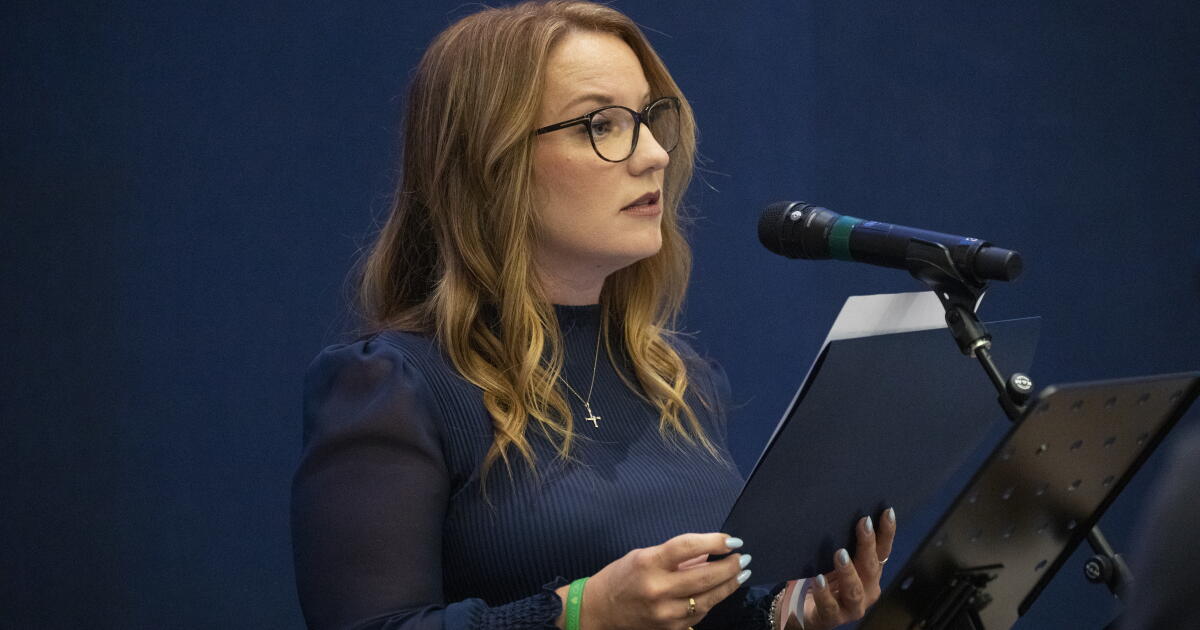
Los Angeles County Supervisor Lindsey Horvath presented a motion Tuesday calling for “bold action” to better protect victims of domestic violence and stalking, seeking to help them more effectively navigate the county’s restraining order system and obtain court-ordered protection.
Horvath cited recent Los Angeles Times reporting on the challenges victims face when obtaining and enforcing restraining orders as an inspiration for the Board of Supervisors motion, which was co-authored by board chair Hilda Solis. The supervisors are scheduled to consider the measure during the board’s Nov. 10 meeting.
“A recent story from the L.A. Times spoke to the process of domestic violence restraining orders and the work done and not being done across the county to support survivors in need of this critical support,” Horvath said.
The Times’ reporting identified at least 63 women killed in 2024 and 2025 in L.A. County whose cases involved a former partner or close relative arrested or charged with their murder. The deaths accounted for more than 40% of the 156 women killed during that period. At least 10 of those women had filed for restraining orders.
In July 2024, the county Department of Public Health’s Office of Violence Prevention issued a report with more than a dozen recommendations for reducing domestic violence homicides by improving access to restraining orders. Today, most of those recommendations have not yet been implemented.
The office said the delay was the result of insufficient funding and challenges with coordinating between the many agencies responsible for the county’s restraining order system.
If passed, the motion would mandate reports from the county’s chief executive, the Los Angeles County Sheriff’s Department, and the departments of Public Health, Mental Health, Consumer and Business Affairs, Public Social Services, and Homeless Services to assess current efforts, improvement plans and additional funding needs.
“We know that domestic violence restraining orders protect survivors and I believe the board must take every step possible to better support and protect our survivors,” she said. “The county,” she added, “must step up and lead in this space.”
The motion calls for allocating millions of dollars annually to fully fund nine county-run self-help legal centers that assist people navigating the restraining order process.
It would also officially identify “Gender-Based Violence and Intimate Partner Violence” as a priority for the Board of Supervisors, and require a presentation from the Sheriff’s Department on how the agency plans to improve its handling of restraining orders.
The Office of Violence Prevention would be required to develop a plan for a “peer navigator model” to guide survivors through the restraining order system.
The Department of Homeless Services and Housing would be asked for an assessment of what additional resources would be necessary to provide emergency beds for all people fleeing intimate partner violence.
Debris found off Nantucket island after the air ambulance disappeared while flying from Bermuda to Boston.
Published On 5 Oct 20265 Oct 2026
The United States coastguard has suspended its search for six people on board a medical transport jet that crashed while flying from Bermuda to Boston.
“Suspending a search is not an easy decision,” Rear Admiral Matthew Lake, commander of the coastguard’s Northeast District, said in a statement on Sunday.
Recommended Stories
list of 2 itemsend of list
The search was called off after teams spent about 66 hours covering 4,445 miles (7,150km) by air and sea and confirmed that debris found off the shore of Massachusetts’s Nantucket Island came from the aircraft.
The Gulfstream G100 carried two pilots, two medical staff, a patient and a relative, Clarence Togeretz, director of flight operations at Canada-based Latitude Air Ambulance, told Canada’s public broadcaster CBC.
The four crew members were Canadian, and the two passengers were Bermudian, according to authorities.
In a statement on Sunday, Latitude Air Ambulance said, “Given the information shared by authorities and the conclusion of the search-and-rescue phase, we must now face the heartbreaking reality that the four members of our Latitude team, our patient and the patient’s family escort, who were aboard Heartbeat 104, are presumed to have died.”
Attention has turned to what happened in the jet’s final minutes, when flight-tracking data showed a steep descent and air traffic controllers struggled to re-establish contact.
Authorities have not determined what caused the aircraft to come down.
The aircraft had flown to Bermuda to collect the patient and was heading to Boston Logan International airport.
The US Federal Aviation Administration alerted the coastguard at about 2am on Saturday (06:00 GMT) after contact with the jet was lost.
Lake said at a Sunday news conference that the water around the debris was about 80 to 90 feet (24-27 metres) deep.
He offered condolences to the families of those on board and thanked the agencies involved in the operation.
Latitude Air Ambulance specialises in medical evacuation and repatriation flights, carrying patients home from other countries.
The company says its missions are normally staffed by two pilots and medical personnel.
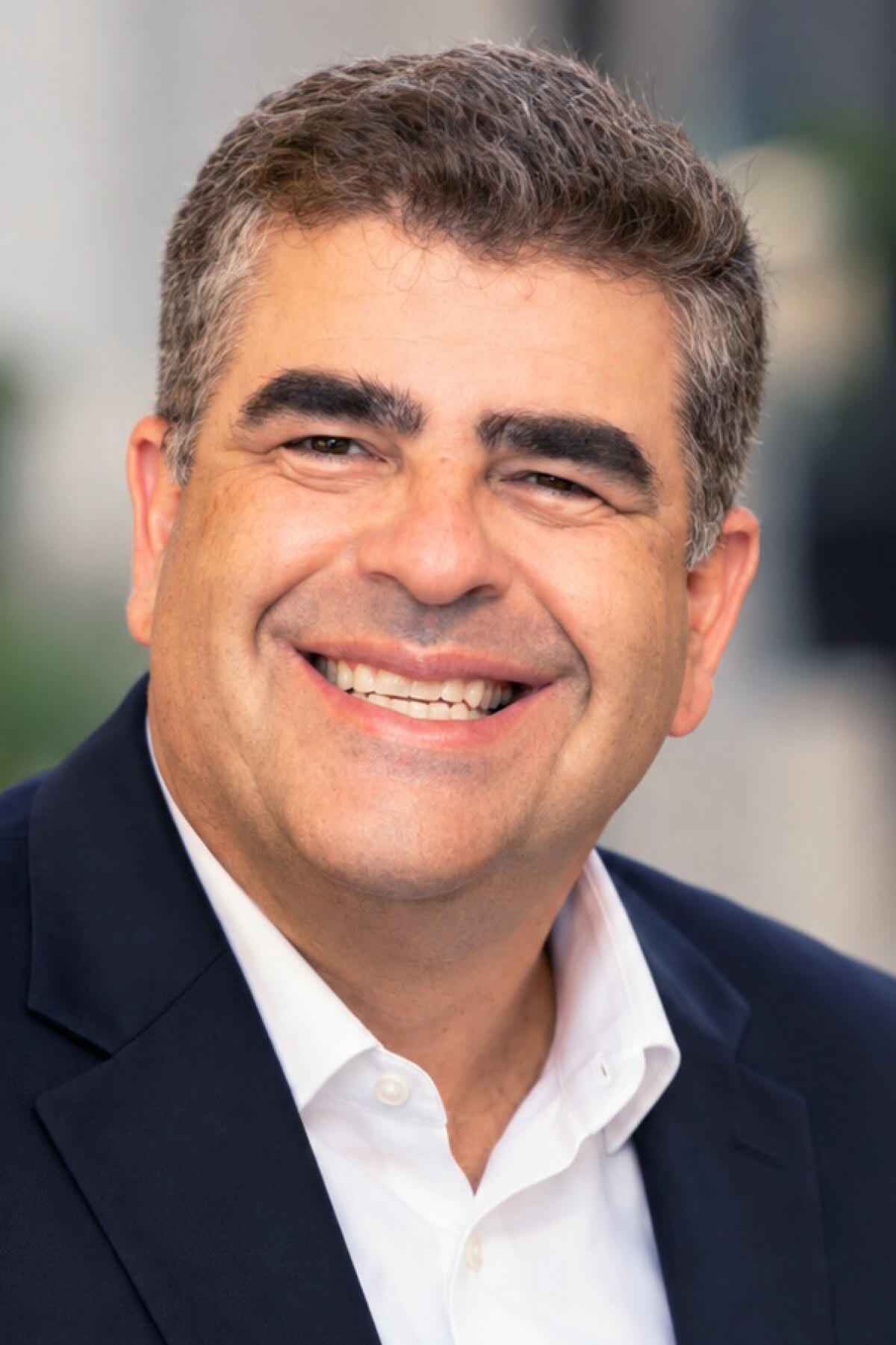
Experience: Buelna serves on the board. He also is an attorney and teaches history and political science at Cal State Northridge. He previously led Plaza Community Services, a nonprofit that provides education, health and other services to children and families.
“I bring an unusual combination of personal, professional and governing experience,” he said. “I understand higher education from several perspectives — as an educator, a policymaker and someone who has spent much of his career working with families facing economic and social barriers.”
District challenges: “Our biggest challenge is not simply getting students through the door. It is making sure they can afford to remain enrolled, complete their education and translate that education into economic opportunity.” Among the barriers Buelna cited were the high cost of housing, food insecurity and child care.
Buelna said the board also must conduct strong fiscal oversight of the billions in voter-approved bond funds. “The board has a responsibility to ensure those resources are spent transparently, responsibly and in ways that produce measurable benefits for students,” he said.
Priorities: Buelna said his priorities include addressing student affordability, better connecting education to economic opportunity and “removing barriers to access and completion.”
He said the district needs to “move aggressively to implement” its commitment of up to $500 million for affordable student and staff housing and “strengthening food assistance, mental-health services and other basic-needs programs.” Buelna said the district also needs to expand career technical education and paid internships, while “strengthening transfer pathways for students seeking four-year degrees.”
In addition, he wants to expand multilingual education and support for working adults and students with families while “protecting immigrant and undocumented students.”
Budget: Buelna would continue to advocate for state and federal funds as well as community partnerships that bring additional resources to the colleges. He said the district also must scrutinize its own spending, including ensuring “major construction and capital projects are completed responsibly.”
“LACCD must be both an advocate for greater investment in community colleges and a responsible steward of the resources taxpayers have already provided,” he said.
Student enrollment and success: “We need to design our colleges around the students we actually serve rather than expecting students to adapt to unnecessary institutional barriers,” he said.
“LACCD students include recent high school graduates, working adults, immigrants, parents, first-generation college students and people returning to school for new skills. Their barriers are different, so our solutions must be flexible.”
Tonia Arey is running for the Los Angeles Community College Board of Trustees Seat 6.
Experience: In June, Arey ran unsuccessfully to represent District 3 on the Los Angeles County Board of Supervisors, a campaign that allowed her to travel throughout the district to hear the concerns of constituents. “My experience in real estate, public advocacy and community engagement has taught me how to listen, solve problems, manage complex transactions, and hold people accountable,” she said. As a realtor, she said she handles contracts, budgets, negotiations, legal requirements and competing interests — helpful skills in a trustee role.
District challenges: “The biggest challenges facing the Los Angeles Community College District are campus safety, student success and career readiness, and accountability to students, employees, and taxpayers,” she said.
Arey would work to implement campus safety plans, support additional academic advising and career education and more “closely examine spending, contracts, program outcomes and administrative costs to ensure resources reach classrooms and directly support students.”
“Although LACCD is a four-year term, there are no term limits and current trustees can no longer be trusted,” she said.
Priorities: She cited campus safety, student success and career readiness, accountability and respect for employees.
Budget: Arey would review the district’s budget to “identify waste, duplication and spending that does not directly improve student outcomes” and said “cost reductions should begin with unnecessary administrative expenses, not classroom instruction, campus safety, counseling or essential student services.”
She‘d work to strengthen the competitive bidding process for contracts and work to ensure the district’s construction bond program is effectively managed. On the revenue side, she’d work to pursue government grants, raise money from donors and “explore responsible uses of underutilized district property.” She‘d also look at ways to boost enrollment, since state funding is tied to the number of students served.
Student enrollment and success: Arey would work to make “enrollment simpler, faster, and easier to navigate” and do more to help students who enter the classroom.
That includes flexible class offerings, basic needs assistance, robust counseling and the use of data to understand where students are falling through the cracks.
Randall Winston is running for Los Angeles Community College Board of Trustees Seat 6.
Experience: Winston, a licensed architect and attorney, serves as Los Angeles’ deputy mayor of infrastructure and climate resilience under Mayor Karen Bass. This fall he is teaching a class in public sector leadership skills at West Los Angeles College and said he’s also lectured at UCLA and mentored graduate students.
Under former Gov. Jerry Brown, Winston ran the California Strategic Growth Council, which helps fund sustainable development.
District challenges: Winston listed enrollment and the inability of students to afford basic needs as major challenges. Citing the district’s $5.3-billion bond-funded construction program he said: “Every dollar lost to delays, litigation or fraud is a dollar not reaching students and the faculty and staff who serve them.”
Priorities: Winston’s priorities for the district include ensuring colleges are a pathway to opportunity and good jobs, students can afford basic needs and people historically shut out of higher education are let in.
All colleges should partner with labor and employers to offer apprenticeships and “family-sustaining union careers,” he said, and the district should expand dual enrollment to allow more high school students to earn college credit. He also cited a need to provide more support to groups like veterans and first-generation students.
Budget: Winston said boosting enrollment to increase state funding is the “most direct” way to increase revenue. He‘d also pursue other government funding as well as employer and philanthropic partnerships. There also needs to be “rigorous” oversight of the district’s construction program, he said.
“What I won’t do is balance budgets on instruction or on the people who deliver it,” he said. “Classrooms, faculty and staff come first.”
Student enrollment and success: Winston said most barriers to enrollment and student success are “logistical, not academic.” He‘d push to “invest in simplified onboarding, proactive advising and better counselor ratios.”
“Students who connect with a counselor early are far more likely to finish, and our counselors are stretched too thin to reach everyone who needs them,” he said.
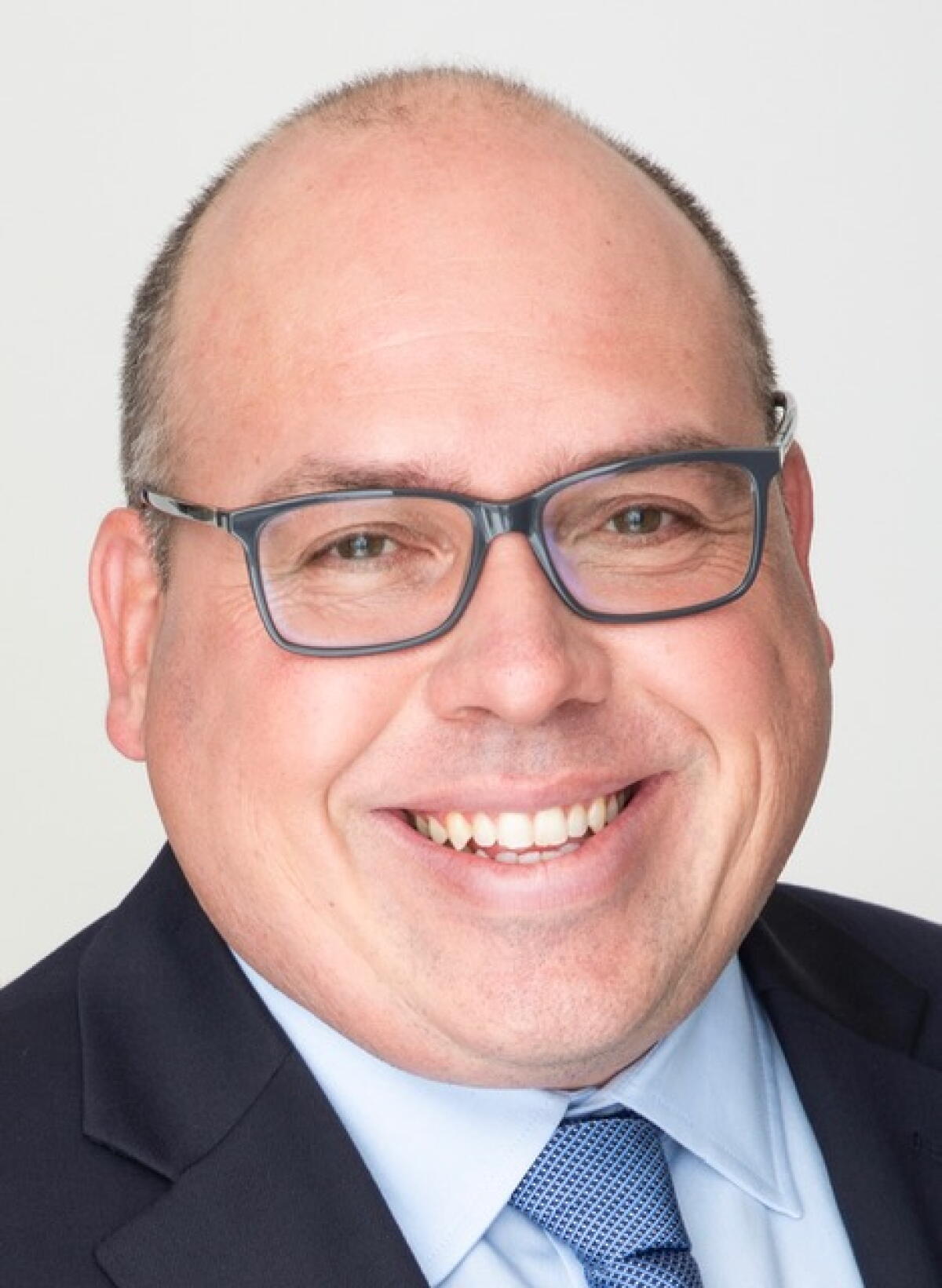
Name: Roberto David LaCarra
Occupation that appears on the ballot: community college professor
Occupation that appears on the ballot: environmentalist/anthropologist/educator
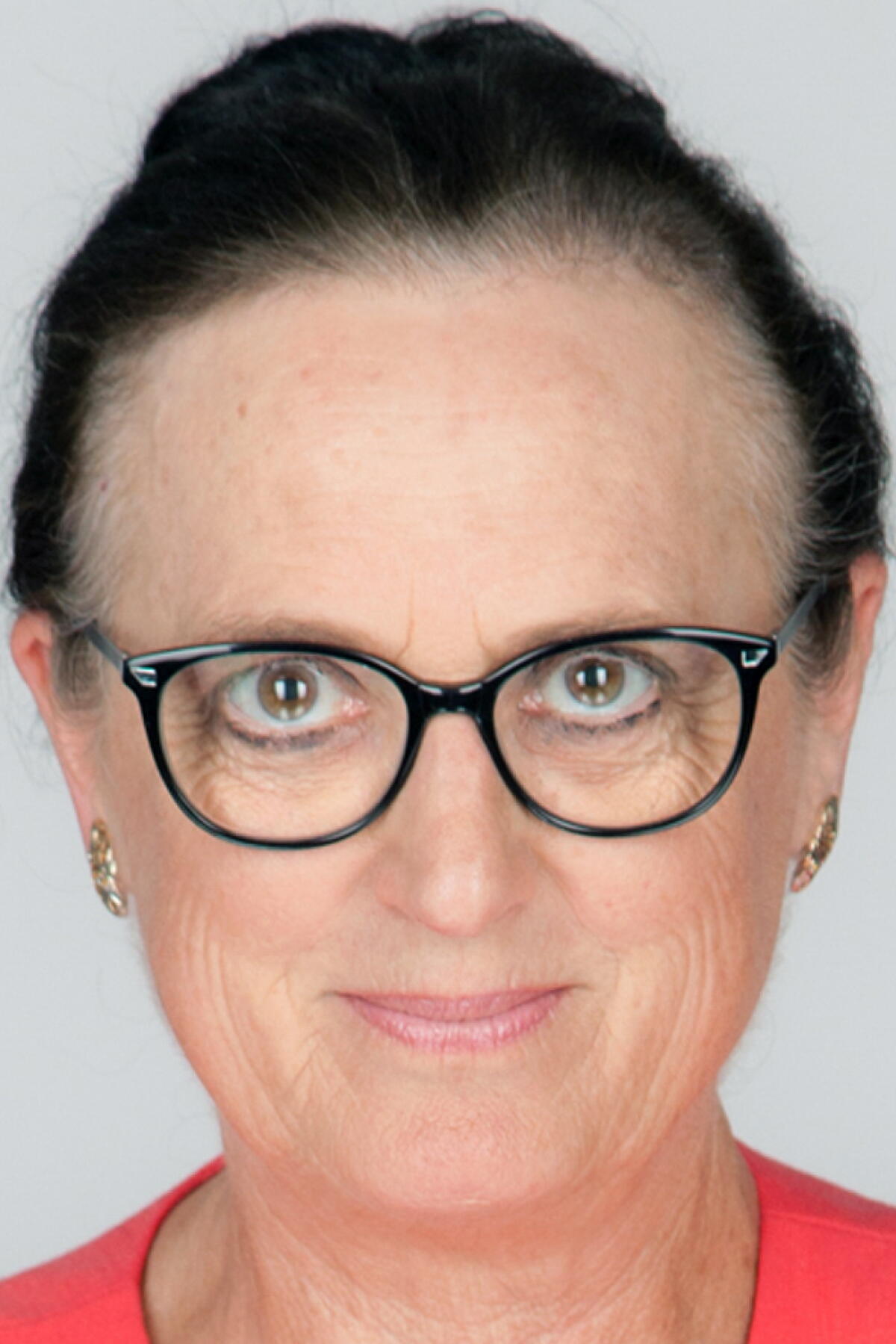
Experience: Pearlman says she served on the board of trustees from 2001 to 2017 and taught part-time at all nine colleges before and after her time on the board.
“I know the needs of part-time faculty, I know what staff wants, and I know what students want and need because I have been involved with the LACCD since I attended City College in 1968,” she said.
District challenges: Pearlman said low enrollment is the biggest challenge, followed by ensuring students are given the necessary support and resources to succeed. She also cited the need make sure faculty receive equal pay and that the district’s construction program remains environmentally sustainable and within budget.
Priorities: Her priorities would be addressing the challenges the district faces and “keeping the chancellor and presidents accountable and working for the community college district mission,” which she described as the main responsibility of the board.
Budget: “Excess spending must be stopped with analysis of how much administration makes versus faculty and staff,” she said. Pearlman supports campus efforts to create foundations for scholarships and lobbying Sacramento and Washington to keep funding, including student aid, at necessary levels.
Student success: Faculty members need to communicate with their students to determine what the student needs to pass their classes, whether it is additional tutoring, “advising them how to be a better student” or giving them textbooks, “which I did from my own pocket when they couldn’t afford them,” she said.
Darryn Harris is running for the Los Angeles Community College Board of Trustees Seat 4.
Occupation that appears on the ballot: community college educator.
Experience: Harris works as a government and community affairs officer for St. John’s Community Health and recently started teaching a class on student skills at Santa Monica College, which is not an LACCD campus. He also worked at UCLA and in the halls of Congress as an aide to U.S. Rep. Sydney Kamlager-Dove (D-Los Angeles) and Los Angeles Mayor Karen Bass, when she served in the House of Representatives.
“I’ve spent most of my career in public service,” Harris said. “I know how government works, how budgets and policy decisions get made, and how to bring people together when they don’t always agree.”
He wants to hear from students, faculty and staff before big decisions get made — not after. “One of the biggest things I’ve learned is to listen to the people closest to the work,” he said.
District challenges: The high cost of living in L.A. County makes it hard for students to stay in school and more needs to be done to “help more students finish and make sure their education leads somewhere,” he said.
Priorities: Harris wants to tackle the affordability crisis blocking student achievement by building more low-cost housing on district land and making it “easier for students to get help with food, transportation, child care, and other basic needs.” Harris also wants to boost student success through better counseling, transfer support and career training, including partnerships with employers and labor.
Budget: The district needs to “be aggressive” in securing additional partnerships and government funds that “can bring more resources into our colleges,” he said. Prior to cutting classes and student services, he would want to look for savings in “administrative costs, consultants, outside contracts, open positions, and construction spending.”
“We have to look at both sides,” he said. “I want to know what we are spending, why we are spending it, and whether students are actually benefiting from it.”
Student success: Harris would push to make the enrollment process easier and do more to help students finish, including through better counseling and basic needs support. “Then we need to pay attention when someone starts struggling … Reach out early with counseling, tutoring, mentoring, or whatever support they need,” he said.
Adam Bruno is running for the Los Angeles Community College Board of Trustees Seat 4.
(Adam Bruno)
Name: Adam Bruno
Age: 42
Occupation that appears on the ballot: No listing
Experience: Bruno said he attended community college and as a therapist has counseled children, adults and families. This experience gives him “valuable insight” to understand student needs.
“I know what it’s like to feel neglected by an overburdened system, and I know how difficult transitioning to adult life and seeking higher education can be,” he said. Often high school graduates with learning needs can “feel too intimidated and overwhelmed to apply for college” and others, including adults, “may be unaware that community college is even an option.”
District challenges: The primary challenge is overcoming low enrollment, which Bruno said stems from financial challenges facing students. “It is very hard to focus on school when you’re just trying to survive from one day to the next,” he said.
Priorities: “My top three priorities: increase enrollment, increase accessibility to education for students and help educators feel appropriately supported and compensated.” Bruno said he’d explore student stipends as a way to enable more people to attend community college successfully.
Budget: Bruno would look for additional funding sources through donations and other measures and attempt to use the extra revenue to address financial needs of students.
Student enrollment and success: Both can be improved through additional outreach, counseling and efforts to make college more affordable, he said, so that students can “focus on education rather than being overwhelmed with day-to-day survival.”
Elaine Alaniz is running for the Los Angeles Community College Board of Trustees Seat 4.
Occupation that appears on the ballot: healthcare workforce specialist
Experience: Alaniz has worked in a number of fields, including healthcare, workforce development, disaster recovery, public administration and film production. She said she received associates’ degrees in film production and fire technology from Los Angeles City College and Los Angeles Valley College and currently serves as a public affairs specialist with the U.S. Small Business Administration’s Office of Disaster Recovery and Resilience.
“Rather than following one narrow professional track, transferable skills have allowed me to adapt across industries and remain employable as circumstances and opportunities changed,” Alaniz said. “That is what I want our students to have.” She recalled that her college professors “who taught me technical and academic skills helped make my own career possible.”
District challenges: Alaniz cited the need to ensure classroom instruction “keeps pace with a rapidly changing workforce” in the age of artificial intelligence and other technologies. She said the district needs to teach those technologies and also give students “the technical, occupational, communication and human skills employers will continue to need.”
“I would expand programs that combine academics with industry-recognized credentials, apprenticeships and hands-on training in healthcare, skilled trades, technology, public safety, logistics, advanced manufacturing, media and other growing sectors … LACCD has an opportunity to become an even stronger bridge between education and employment.”
Priorities: Alaniz wants the district to do more to ensure students are ready for the workforce. Other priorities would be more flexible class schedules and online courses for working adults and parents, and “expanding digital access to required course materials and coursework at little or no additional cost to students wherever feasible.”
“Students who prefer physical textbooks should absolutely retain the option to purchase them, but students who cannot afford a printed book should have another way to access the materials they need to succeed,” she said.
Budget: Alaniz would examine district spending, including on administration and programs with weak enrollment, to identify what works and what does not. “Before asking students or taxpayers for more money, the district should demonstrate that existing resources are producing measurable results,” she said. At the same time, Alaniz said, “LACCD should aggressively pursue appropriate state and federal grants.”
Student enrollment and success: To help students, Alaniz said it’s important to recognize that LACCD serves a diversity of students, including recent high school grads, parents and people changing careers. “I do not believe students should always have to reorganize their entire lives around the institution,” she said. “Sometimes the institution needs to become more responsive to the student.”
The enrollment process needs to be examined, she said, to ensure students are not “being lost between application, financial aid, counseling, registration and their first day of class.”
Name: Isidro J. Armenta Occupation that appears on the ballot: Fire Department employee
Did not reply. .
Priscilla Umana is running for the Los Angeles Community College Board of Trustees Seat 4.
(Priscilla Umana)
Name: Priscilla Umana
Age: 43
Occupation that appears on the ballot: American Sign Language educational interpreter
Experience: Umana said her work as an “ASL interpreter in diverse educational environments has given me a firsthand understanding of how different circumstances affect students, faculty, and staff. Through this work, I have developed a deep passion for quality education and for the future of our students.”
District challenges: “One of the biggest challenges facing our community college district is the high percentage of students experiencing housing insecurity, homelessness, and food insecurity. These challenges not only affect students’ quality of life, but also their ability to succeed academically and complete their programs.”
Priorities: Umana said her top three priorities would be affordability, accessibility and community. She would work with the district to expand affordable housing, work-study opportunities and food aid and seek to remove language and disability barriers to make college more accessible. “Education cannot be separated from the basic needs that allow students to participate in it,” she said. “To help students enroll, persist, and graduate, we must provide the stability and support they need.”
She also wants to “build stronger connections between students, faculty and staff” and learn from them how to better foster community. “My goal is to help create community colleges where every student feels supported, included, and empowered to succeed,” she said.
Budget: Umana would review the district’s budget to identify “opportunities to reduce waste while improving services.” This would include examining courses with low enrollment and deciding whether participation can be increased or if money should be redirected to where it’s more needed. She’d also work to raise additional revenue by “partnering with local businesses, nonprofits and entertainment organizations to host campus events, build community partnerships and share proceeds.”
Student enrollment and success: She would work to prioritize “basic needs, accessibility, and clear educational pathways.” She’d do so in part by advocating for expanded financial aid and proactive check-ins with students. “Our goal should be simple: make success easier to navigate and support every step of the way,” she said.
Darryn Harris is running for the Los Angeles Community College Board of Trustees Seat 4.
Occupation that appears on the ballot: Business owner/journalist
Experience: Aula said he has worked as a political campaign consultant and has “nearly 10 years experience as a businessman in technology and small share ownerships” in tech firms that use mobile apps for deliveries and transportation, experience that “has given me an understanding of the world today that few have.” Aula also said he has worked with LACCD labor unions “through business” but did not elaborate.
District challenges: Aula alleged one of the biggest issues facing the district is “financial fraud,” and in his answers referenced cases in which fraudsters posed as community college students to steal financial aid. He proposed a moratorium on noncitizens attending LACCD.
Priorities: Aula wanted to address the basic needs of students “in the interests of U.S.A citizens.” He would “increase the diversity of curriculum” to “authentically represent the United States of America citizens and interests.” He would include “protecting athletics funding, football in particular, making new partnerships with Navy to serve the district’s needs, and growing the partnership with law enforcement.”
He also said he wants to “confront pandemic learning loss.”
Budget: Aula said he would make financial deals only “that are in the interests or benefits of U.S.A. citizens.”
Editor’s note: The Times declined to publish much of Aula’s written questionnaire responses, which contained comments, proposals and unsubstantiated accusations dealing with suspected terrorists, the Chinese Communist Party, the Palestinian militant group Hamas and cannibalism.
Steven Veres, 46, is vying to maintain his seat on the Los Angeles Community College District Board of Trustees.
(Courtesy of Steven Veres)
Name: Steven F. Veres
Age: 50
Website: www.steveveres.com
Occupation that appears on the ballot: Los Angeles Community College District, member of the board of trustees
Experience: Veres cited his role as trustee and previous work as a teacher as key experience for another four-year term. Veres also has worked as a state politics adviser, including for Sen. María Elena Durazo. As trustee, he said his work has included strengthening job training programs, improving graduation rates and addressing basic student needs.
“Successful colleges depend on students, faculty, and staff having a meaningful voice in decisions” while the board should “listen, set clear priorities, protect public resources, and give our colleges the support necessary to help students succeed,” he said.
District challenges: The district’s greatest challenge is helping students finish their education, given how many are forced to juggle school with “jobs, housing costs, food insecurity, transportation, and family responsibilities … We need to remove those barriers while making the academic experience easier to navigate,” he said.
Priorities: “First, make college truly affordable. Tuition is only part of the cost. Housing, food, transportation, textbooks and childcare can determine whether a student stays enrolled.
“Second, improve completion and transfer rates. Students deserve clear academic pathways, accessible counseling and course schedules that allow them to earn a degree, certificate or transfer without unnecessary delays. Third, connect education to careers. I want to dramatically expand paid internships, apprenticeships and partnerships with employers and organized labor.
“These priorities reinforce each other: Students are more likely to finish when college is affordable, the path to completion is clear, and they can see the economic value of their education.”
Budget: “Our first responsibility is to use taxpayer dollars efficiently while protecting instruction and student services,” he said. In addition, Veres said that because state funding is based on enrollment, boosting it can be a path to financial stability, along with eliminating unnecessary, duplicative spending across the nine colleges and investing in energy efficiency to cut costs.
“Fiscal responsibility is not simply cutting spending,” he said. “It means directing limited resources toward what produces the greatest value for students and taxpayers.”
Student success: Veres would address barriers to student success and enrollment by pushing to make the application process easier and providing more flexible class schedules — including more evening, weekend, online and hybrid options — for working adults, parents and others. “Our job should not end when a student enrolls. It ends when that student reaches their educational goal,” he said.
Robert Payne is running for Los Angeles Community College Board of Trustees Seat 2.
Occupation that appears on the ballot: researcher/writer/environmentalist
Experience: Payne said he has taught at L.A. Mission College. His education at L.A. Valley College and Cal State Northridge helped prepare him for a career as a writer. He said he has worked on movie crews and ran an import business, among other jobs. Growing up in Pacoima helped him understand the needs of immigrants and “those of diverse backgrounds with limited resources.”
“I went through the [community college] system,” he said. “I know the difficulties. All my ideas come from my direct experience.”
District challenges: Payne cited low enrollment growth as the main challenge. Students also need to see a quicker return on their investment. “Life costs money,” he said. “If students could see immediate advantages to college, the colleges would attract more enrollments.”
He reflected on his own experience when discussing the importance of a quick payback. “I graduated from Cal State Northridge. Nothing I learned at L.A. Valley or Cal State paid off immediately,” he said. “I worked as a janitor, security guard, construction site cleaner. I lucked into a union tech job and I earned my way through graduate school. Years later, the master’s degree finally helped me get work as a ‘professor.’ ”
Priorities: Payne wants to make community colleges “cheaper, faster, better” in part by offering students more training for specific jobs and less expensive online textbooks. He also would support ending student debt.
Budget: He does not support cutting “student opportunities” and said if “the colleges can demonstrate success for the students, enrollment will justify the expense of maintaining the expense of the faculty, the staff, the facilities.”
Student success: Payne wants college to do more to offer “immediate perceived value,” including teaching résumé building, interview skills and how to apply to jobs. He said hiring adjuncts with industry experience could enhance student success.
Kristina Irwin is running for Los Angeles Community College Board of Trustees Seat 6.
Occupation that appears on the ballot: parent/business owner.
Experience: As a former community college student, Irwin has firsthand knowledge of the L.A. community college student experience.
She serves on the general advisory board at Santa Monica College and said she also served on the board of trustees at her children’s school, Palisades Charter High School, during the Palisades fire. She said she holds a Public Engagement & Civic Leadership Certificate from the Davenport Institute at Pepperdine School of Public Policy.
District challenges: Irwin said the main challenge is preparing young people to advance in college when their earlier schooling failed to give them the tools to succeed.
Priorities: Irwin wants to establish “preentry” programs in every local high school that would prepare students for community college and do more to give educators the resources they need to craft classes that “fit the needs and life limitations of the students.”
Budget: Irwin said alternative streams could be identified to fund “classroom student resources.” She said that as “responsible stewards” of district resources, trustee actions “are often under scrutiny either formally or informally.”
Student success: Irwin wants to address barriers to student success and enrollment by doing more to demonstrate how a community college education can give them the tools necessary to succeed in their chosen career.
Name: Roy Payan
Payan told the Times he suspended his campaign.
Adriana Cabrera is running for Los Angeles Community College Board of Trustees Seat 2.
Experience: Cabrera said she attended community college and went on to earn bachelor’s degrees in Chicana/o studies and political science and a master’s in education from Cal State Northridge. She said she also served as president of the Central Alameda Neighborhood Council and co-founded Empowering Youth in South Central, a “grassroots collective of students and educators” that “has supported thousands of first-generation students with college, career, financial-aid, and leadership support.”
“I am not coming into this role to learn higher education after I am elected,” she said. “I have studied it, worked in it, navigated it as a student, built programs within it, worked inside public institutions, and organized communities around it.”
District challenges: Cabrera said student services are too difficult to navigate, too many students struggle to afford basic needs such as housing, and clearer pathways are needed to economic mobility, She said budget decisions also can feel “disconnected” from the staff and students those decisions effect.
Priorities: “My first priority is invest in students first,” she said. Cabrera would do that by making student services easier to navigate and strengthening financial aid and other support, including for food, housing, child care and mental health.
Secondly, Cabrera wants to better connect education to economic mobility through good paying jobs. Lastly, Cabrera would give students, faculty, staff, labor organizations and community members “a meaningful voice before major budget priorities are finalized.”
Budget: Cabrera would review the district’s spending “to make sure existing dollars are being used efficiently” and “identify responsible ways to generate additional revenue without shifting costs onto students.” For instance, renting out underutilized facilities.
Student success: Cabrera would take steps to ensure student services are more readily available and the public has better visibility and say in trustee decisions. “The overall standard I would bring to the board is simple,” she said. “Can students enter LACCD, understand their options, find the support they need, complete their goal, and leave with more opportunity than when they arrived?”
WASHINGTON — Long before he was the top official at the U.S. Postal Service, David Steiner was a corporate executive surfing mid-oughts television when he came across Donald Trump on “The Apprentice.”
He was unimpressed.
“If that is leadership, if that’s what we’re telling people that our culture and our media portrays as leadership, we’re screwed,” Steiner, then the CEO of Waste Management, said during a 2007 speech at the University of Arkansas Clinton School of Public Service. “If that’s leadership, count me out.”
“And for God’s sake,” he added to laughter, “if I have to get my hair to look like that, if I have to do that to be a leader, you can definitely count me out.”
Nearly two decades later, Trump has migrated from reality television to the presidency. And onetime detractors — Vice President JD Vance, Secretary of State Marco Rubio and Sen. Ted Cruz of Texas, for example — now loyally execute his agenda.
Trump’s effort to use the Postal Service as a tool to reshape American elections is testing whether Steiner will follow a similar path.
Independent or a Trump ‘pawn’?
When Trump signed an executive order restricting mail ballots this year, Steiner moved quickly to finalize a rule implementing the measure, arguing he had little choice. But after the U.S. Supreme Court rejected the effort, Steiner told The Associated Press that work had stopped on one of the plan’s most controversial elements, a government portal for voter rolls.
He refused to endorse the Republican president’s order as sound policy, saying he was focused on implementation and letting the courts ultimately decide the matter.
“I don’t get to decide what rules that are put on us that I decide to accept or not accept,” he said. “We are an independent agency of the executive branch.”
The episode prompted fierce criticism of Steiner for allowing Trump to deploy an agency designed to be shielded from politics.
Jena Griswold, Colorado’s Democratic secretary of state, called him a “Trump lackey.” Nevada Secretary of State Cisco Aguilar, a Democrat, recently asked Congress to deploy observers to ensure postal workers can scan envelopes holding mail ballots without disruption, saying the Trump administration “has attempted to weaponize federal agencies to interfere in our elections, and the leadership at USPS is going along with it.”
Sen. Elissa Slotkin, D-Mich., accused Steiner of being a Trump “pawn” during a congressional hearing this summer. Dozens of congressional Democrats have pressed Steiner to reveal his interactions with the White House during the development of the mail ballot rule.
Some Republicans have joined in the criticism. Sen. Josh Hawley of Missouri, incensed by abandoned mail, called for Steiner’s resignation and introduced legislation to block him from receiving a bonus.
During a lengthy interview, Steiner seemed surprised at points by his reception in Washington. He insisted he wasn’t a “political person” and said he had no intention of stepping down despite the criticism. He dismissed heated congressional appearances as “theater” at odds with more substantive private interactions on Capitol Hill.
Steiner was chagrined, however, at the mention of his 2007 remarks on Trump, delivered well before he launched a political career. Steiner recalled speaking at the university but said he didn’t remember his comments, acknowledging a tendency to be “flippant.”
“That’s funny,” he said. “I don’t recall it.”
The White House didn’t respond to a request for comment on Steiner’s remarks or his stewardship of the Postal Service.
Steiner didn’t follow the traditional path to power in Trump’s Washington
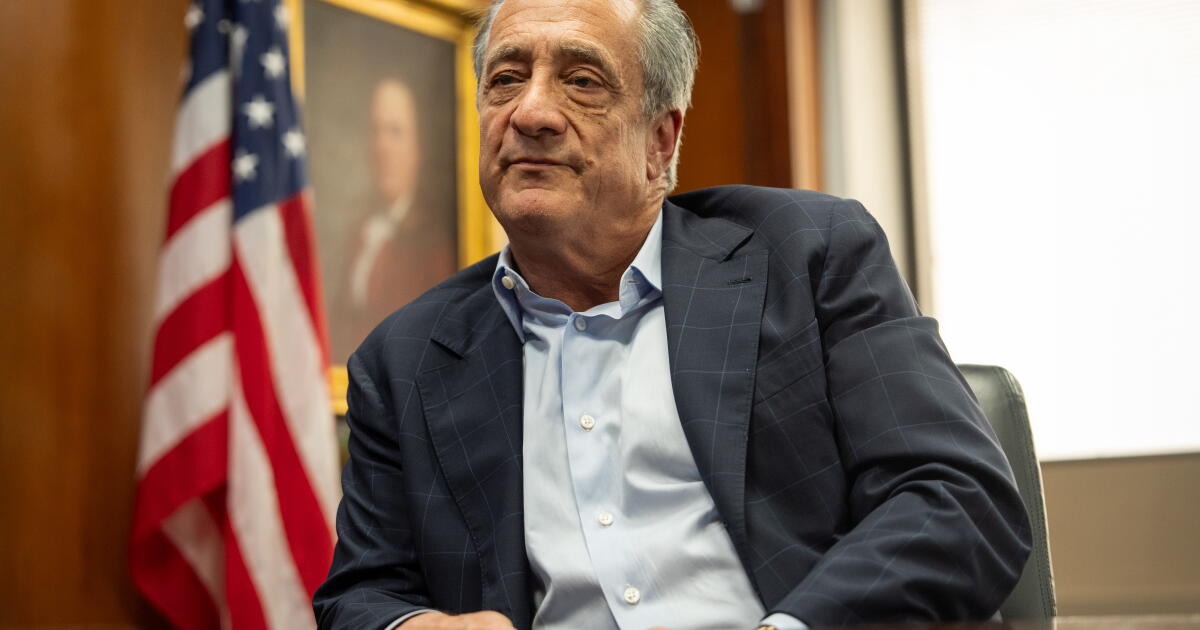
The Postal Service dates to Benjamin Franklin, the first postmaster general, whose portrait and bust are displayed in Steiner’s office overlooking the Washington Wharf. The agency has more than 630,000 employees, dwarfing many Cabinet departments.
While the quickest way to top jobs in Trump’s Washington is often by writing big checks, the 66-year-old Steiner doesn’t appear to have followed that course. He has largely donated to Republicans but also gave to John Kerry’s Democratic presidential campaign in 2004. Unlike his predecessor as postmaster general, Louis DeJoy, Steiner was not a major GOP donor or Trump backer.
Born in Oakland, California, as one of eight children to a father who spent his career at Chevron, Steiner worked in corporate and securities law before moving to Waste Management in 2000. He became CEO in 2004 and ran the company for 12 years. He was also a longtime director at FedEx, where board chairman Brad Martin recalled him as “outcome oriented” and rarely political.
“He’s going to follow the rules. He’s going to follow the law,” Martin said. “I don’t recall us ever talking politics.”
By the time a headhunter contacted Steiner about the postmaster general job, he was largely removed from daily corporate life and initially demurred.
“I talked to my wife, and we both agreed I was happily retired,” he said.
He changed his mind, he said, during a visit to the beaches of Normandy, feeling a sense of civic duty.
Now at the Postal Service, he earns about $346,000 in annual salary along with a relocation bonus that amounts to half his salary, far less than the $17 million in compensation he earned during his final year at Waste Management. His current role is designed to exist one layer removed from the political process, reporting to a board of governors that is selected by the president and confirmed by the Senate.
He was hired in 2025 by a board that was made up of five members, three of whom were Democrats. All but one were appointed by President Joe Biden. That makeup could change as four Trump nominees — all Republicans — await Senate confirmation. Steiner can be fired only by the board.
Steiner said he first met Trump along with Commerce Secretary Howard Lutnick at the board’s urging after he was already selected as postmaster general. Since then, he described a minimal relationship with the White House.
“We don’t fly on the radar,” he said.
That is, until Trump revived his effort in March to crack down on mail voting. Steiner said he “wasn’t in on the development piece” of the order and first saw it about a month before it was signed.
“They gave it to us to say, ‘Have your lawyers look at it, and how do you operationalize it?’” Steiner said.
The portal spurred a massive development effort inside the Postal Service while some states criticized it as federal overreach. A whistleblower report released by Sen. Richard Blumenthal, D-Conn., argued the system was hastily built and riddled with errors, though Steiner said he was confident it could have been unveiled around Sept. 15.
“The heavy lifting was clearly, clearly the IT work,” Steiner said.
Challenges ahead for the Postal Service
Though the Supreme Court dispensed with the rule, the dynamics for the Postal Service don’t get easier.
The agency posted a $9 billion net loss last year, and Steiner has warned it could soon run out of cash unless Congress lifts a $15 billion borrowing cap. Political hurdles have prevented potential cost savings from cutting service or closing some post offices.
And while Trump’s executive order won’t take effect, the Postal Service will still play a critical role in this year’s elections. There are mounting concerns that mail ballots could be rejected for late postmarks. Steiner encouraged voters to get their ballots in a week before the election to avoid problems.
The Postal Service is a rare corner of government still viewed favorably with more than half of Americans, 56%, saying it was doing an “excellent” or “good” job in a Gallup poll conducted last year. That could change if the agency is seen as increasingly political.
Steiner, however, said Americans will judge the Postal Service by their experience of it.
“What they care about is when they get that wedding invitation after the wedding or when they send a package and it disappears,” he said. “If we want to have the trust of the American public, let’s be the best service provider. Everything else is noise.”
The United States-led Board of Peace (BoP) has said the United Nations agency for Palestinian refugees (UNRWA) will have no role in Gaza – echoing a longstanding Israeli demand to sideline the organisation considered a lifeline for millions of Palestinians.
The board, which has been tasked with overseeing the “ceasefire” and Gaza’s reconstruction, said on Friday it would work only with partners it deems reliable and who it believes can meet the needs of Gaza’s population – a standard it says UNRWA does not meet.
Recommended Stories
list of 3 itemsend of list
The move comes as the BoP unveiled a multibillion-dollar plan on Wednesday aimed at beginning Gaza’s reconstruction, nearly a year after a so-called “ceasefire” came into effect in the devastated Palestinian territory.
The plan, presented on the sidelines of the UN General Assembly (UNGA), comes as key elements of the “ceasefire” remain stalled, including the withdrawal of Israeli forces and the disarmament of Hamas.
UNRWA was established in 1949 to cater to tens of thousands of Palestinians displaced from their homes by Jewish militias from areas that currently form part of Israel.
BoP’s stance on UNRWA comes as Israel’s genocide in the coastal enclave continues, with Palestinians facing nonstop attacks, severe restrictions on humanitarian aid and stalled reconstruction plans.
So what has BoP said about UNRWA, and does it keep toeing the Israeli line on the future of Gaza?
What did the Board of Peace say?
The BoP unveiled a 66-project reconstruction blueprint on the sidelines of the UNGA, with $2.4bn proposed for projects aimed at beginning Gaza’s recovery.
UNRWA was left off the list of UN agencies the board identified as partners.
“The Board of Peace’s policy as it relates to UNRWA’s involvement in Gaza is unchanged,” the BoP said in a post on X on Friday.
“We will only work with trusted partners who will deliver for the people of Gaza and contribute to a deradicalised Strip. UNRWA fails on those litmus tests.”
However, a BoP official, speaking to The Associated Press news agency on condition of anonymity, confirmed that board members had met UNRWA officials several times.
The official said the agency’s programmes could continue if they served Gaza’s residents well, but maintained that “UNRWA’s days are over”.
The BoP, which US President Donald Trump launched earlier this year, was conceived to oversee the rebuilding of Gaza after nearly three years of Israel’s genocidal war on the Strip.
What has UNRWA said?
In an indirect response, UNRWA acting Commissioner-General Christian Saunders said on Friday in Gaza, “UNRWA remains an institution of considerable humanitarian and strategic value, with capabilities and expertise that are difficult to replicate today.”
“To disregard these capabilities at a moment of such profound need is neither logical nor responsible,” Saunders said in a statement.
Former UNRWA chief Philippe Lazzarini on Thursday warned that removing the agency would have a “devastating” effect on Palestinians.
“They want to get rid of the agency, but on the other hand they know that if you get completely rid of the agency today, it might have a further … devastating impact on the population,” Lazzarini told AP on Friday.
In a separate statement on X, Lazzarini said, “grandiose plans are what the Board of Peace does best”, noting widespread suffering across Gaza amid Israel’s ongoing genocide.
The agency has about 11,000 Palestinian employees in Gaza and remains heavily involved in healthcare, education, water and sanitation services. Its exclusion is particularly significant given the scale of displacement and the continuing restrictions on aid entering Gaza.
UNRWA has for decades provided aid and education services to Palestinians in Gaza, occupied East Jerusalem and the West Bank as well as Jordan, Syria and Lebanon – the neighbouring countries where the Palestinian refugees have been living.
Palestinians see the agency as safeguarding their right of return to their homeland, while Israel wants it dismantled.
Palestinians receive aid distributed by UNRWA, in Nusairat refugee camp, Gaza [File: Abdel Kareem Hana/AP photo]
What has been Hamas’ response?
Hamas accused the BoP of adopting Israel’s position.
Spokesperson Hazem Qassem on Saturday called the decision to exclude UNRWA “a complete alignment with the Zionist [Israeli] position”, saying it was aimed at ending the agency’s operations, preventing it from delivering aid and undermining Palestinian refugees’ right of return.
Qassem said it was “strange for the peace council to adopt this hostile stance towards UNRWA while simultaneously failing to provide aid to Gaza or compel the occupation to abide by the ceasefire agreement and halt the daily killings of Palestinians in the Strip”.
Does the Board of Peace toe the Israeli line?
Experts say the workings and demands of the BoP align closely with Israel’s vision of the Gaza Strip and the Palestinians.
UNRWA
Israel has for years sought to remove UNRWA from Gaza, accusing the agency of being infiltrated by Hamas.
The International Court of Justice, in an advisory opinion in October, said allegations that “a significant part of UNRWA’s employees are ‘members of Hamas … or other terrorist factions’” had not been substantiated.
The BoP’s position strengthens the Israeli efforts to dismantle the UN agency.
Hamas disarmament
Hamas and other Palestinian factions agreed in July to a roadmap under which weapons would be surrendered in stages as Israeli forces gradually withdrew. The two processes were explicitly linked.
But following an August meeting between Nickolay Mladenov, the BoP’s director-general, and Israeli Prime Minister Benjamin Netanyahu, the board said Israeli forces would not withdraw beyond the “Yellow Line” until Hamas’s decommissioning was complete, including “light weapons, heavy weapons, and the tunnels alike”.
Hamas maintains that it will not implement its obligations unless Israel fulfils its own.
Israel currently occupies more than 60 percent of Gaza while most of the territory’s 2.3 million people remain displaced.
Reconstruction
Article 17 of the BoP plan calls for “temporary reconstruction” beginning in areas designated free of Hamas control, including humanitarian compounds for unarmed civilians.
The proposed system would direct reconstruction, aid and shelter towards areas outside Hamas’s control while Israeli forces remain behind the so-called “Yellow Line”.
However, Israel has refused to allow the Palestinian technocratic committee into Gaza, open crossings or begin reconstruction until Hamas is completely disarmed.
After unveiling the reconstruction plan on the sidelines of the UNGA, BoP high representative Mladenov said once again the proposed plan depends on Hamas’s disarmament.
Displaced Palestinians live in a school run by UNRWA on Monday, June 23, 2025. Hundreds of UNRWA schools were destroyed or damaged in Israeli attacks [File: Jehad Alshrafi/AP Photo]
What is the situation in Gaza?
Almost a year after the October 2025 ceasefire, reconstruction has yet to begin on any meaningful scale and Israeli forces continue to occupy large parts of the Strip.
At least 1,451 Palestinians have been killed and 4,953 wounded in Israeli attacks since the “ceasefire” began in October 2025, according to Gaza’s Ministry of Health.
The healthcare system is on the verge of “total collapse”, the ministry said last week, while shortages of fuel, medical supplies and spare parts have disrupted hospitals, water and sanitation services.
The scale of destruction is also immense. More than half of Gaza’s hospitals and clinics remain nonfunctional, less than 1.5 percent of cropland is accessible and undamaged, and reconstruction needs have reached an estimated $71.5bn.
Nearly 84 percent of Gaza’s population – more than 1.76 million people – are living in displacement sites or damaged and inadequate shelters, the UN has said.
Palestinian children gather in the backyard of an UNRWA school in Sidon, Lebanon, on September 12, 2023 [File: Mohammed Zaatari/AP Photo]
The settlement with 12 state attorneys general that cleared the way for Paramount to move forward with its $111-billion acquisition of Warner Bros. Discovery contained a surprise for CNN and CBS News.
The merged company will have an oversight board that will monitor adherence to editorial independence from its owners and shareholders. The editorial board is part of an agreement to end the states’ antitrust fight that threatened to delay the completion of the deal for months.
But the initial reaction among media observers and opponents of the merger was to question how much teeth editorial overseers will have as they will be appointees of Paramount’s board. The board is controlled by Paramount Chief Executive David Ellison’s family and RedBird Capital Partners.
“The so-called independence board appears to be sorely lacking in independence. It’s appointed by and answerable to the board of the combined Ellison-controlled entity, which can also remove the independence board members,” said Norm Eisen, founder of Democracy Defenders Action and one of the leaders of the Block the Merger group.
Agreements on editorial boards or ombudsmen are typically made to assuage regulatory concerns over a change in media ownership.
CBS News installed Kenneth R. Weinstein as an ombudsman ahead of Ellison’s acquisition of Paramount last year. But he has had a scant presence at the network, according to CBS News insiders.
When Rupert Murdoch’s News Corp. took over the Wall Street Journal in 2007, a five-member committee was created to ensure the editorial independence of the newspaper and Dow Jones’ other news services. The Journal has largely been successful in keeping its news-gathering operation separate from its right-leaning opinion pages reflecting the values of its owners.
The oversight board at Paramount adds a new layer of uncertainty as to how the two news divisions will operate in the merged company. CBS News has already seen significant upheaval since Ellison installed Bari Weiss as editor in chief.
Weiss, the founder of the heterodox digital news site the Free Press, has disrupted CBS News with major changes to its signature program “60 Minutes.” Her push to consider more conservative talking points and voices in stories led to accusations that she is tilting the program’s political bent to please President Trump, who has a friendly relationship with the Ellisons.
CNN insiders have been watching the discord at CBS News with concern. Trump and Larry Ellison, the tech mogul and father of David, have reportedly discussed personnel changes at CNN once the takeover of its parent, Warner Bros. Discovery, is complete.
Trump has never been happy with CNN’s coverage, but the hostility intensified last Friday when he banned the organization along with MS NOW and Politico from the White House grounds. The three news organizations are challenging Trump’s ban in federal courts on the grounds that it violates their 1st Amendment rights.
But amid all the turmoil, veteran news executives inside and outside the companies involved were scratching their heads over exactly how an editorial board would operate.
“This was formed up in haste, and the fact that it looks like it’s kind of half-baked is not surprising,” said Tom Bettag, a former network news producer and lecturer at the Philip Merrill College of Journalism at the University of Maryland. “But they were in a hurry to get this merger approved by hook or by crook.”
The agreement says the board will be in charge of “resolving any disputes between CBS News employees, CNN employees, and management of the combined entity regarding alleged reporting bias or failure to meet” agreed upon reporting standards.
Back in June, “60 Minutes” correspondent Scott Pelley angrily questioned Weiss’ decision to fire several of his colleagues. As a result, he was dismissed as well.
It’s unclear whether similar confrontations would be resolved by the new Paramount board and, if so, what that would mean for the authority of the top executives at CBS News and CNN.
Paramount did not respond to requests for comment.
The creation of the editorial board was a compromise brokered among the coalition of state attorneys general. The proposal came about in the final two days of negotiations, according to two people familiar with the matter who were not authorized to comment publicly.
William Tong, the Connecticut attorney general, said in an interview that he agreed to the editorial board after pushing for the divestiture of CNN and CBS News as a condition for approving the merger.
“I’m not going to sugarcoat it. This is ultimately not what I wanted,” Tong told The Times. “However, a week ago, they weren’t willing to do anything.”
He added: “Their view was, ‘We’re buying it. We get to control it.’ … And so, you know, by Friday we had broken them down, and they were willing to do this editorial independence board for both CBS News and CNN. That’s what we were able to secure and it has to be all journalists on this five-person board.”
No Paramount executives, including Weiss, can serve on the board.
Paramount Skydance (PSKY) is in advanced talks with state attorneys general to allow its $110 billion purchase of Warner Bros. Discovery (WBD) to be completed, though not all of the state AGs are on board.
WASHINGTON — The Kennedy Center Board of Trustees is planning to propose adding President Trump’s name to the facility’s exterior in recognition of his saving the building from its “precarious fiscal position,” according to a new court filing in a suit aimed at blocking the move.
It’s the latest development in the case revolving around adding the president’s name to the exterior of the cultural and arts facility that sits along the Potomac River in Washington and reflects the Trump-aligned board’s efforts to honor the president.
The new information came out of a court filing made by Democratic Rep. Joyce Beatty of Ohio, an ex-officio member of the board. Beatty, who has led an effort to block Trump from putting his name on the building, said in a filing she was alerting the court to the proposal because it could implicate a pending decision before the court.
Both the court and the Kennedy Center board are expected to hold meetings Tuesday.
Beatty’s filing includes two exhibits. One is a draft vote to shut the center down, asserting the building is unsafe for occupancy. That assertion incorrectly cites a consulting group’s finding, “which expressly disclaimed providing any such opinion,” according to Beatty.
The other document asserts the center faces dire financial straits. It specifically calls for Trump’s name to be placed in marble beneath the name of the center on the building’s exterior. It offers 10 options for a possible inscription, including “Renovation and endowment overseen by President Donald J. Trump and the Trump Kennedy Center Fund.” Another proposes: “With Gratitude for Support from President Donald J. Trump and the Trump Kennedy Center Fund.”
“The Board understands that without such appropriate recognition it is unlikely that President Trump will provide the fundamental oversight of the renovation of the main building and lead the fiscal rescue of the Center,” the board wrote in the proposed resolution.
Trump has spent much of his second term reshaping Washington, demolishing the East Wing of the White House to make way for a ballroom and planning a triumphal arch near Arlington National Cemetery as well as a renovated golf course along the Potomac River.
The Kennedy Center has been a stumbling block in that effort after a judge ruled in May that Trump’s name was added to the building illegally, ordering it to be removed.
Trump and his allies, however, have continued to fight the ruling.
The board voted last month to inscribe his name on the venue’s facade to read “The John F. Kennedy Center for the Performing Arts Restored and Renovated By President Donald J. Trump.”
If the Trump Kennedy Center Fund reached $100 million, another inscription would be added reading: “Endowed by the Trump Kennedy Center Fund.”
ATLANTA — Security researchers say rapid advances in artificial intelligence are making it more critical to address a flaw in Georgia’s voting equipment that can allow voters to be matched to their ballots after they have been cast.
The system’s vulnerability has been drawing increased attention, with election security advocates criticizing state election officials for failing to fix it before the November elections. Georgia election officials say they have taken steps to address the potential harm, but some advocates say the state is not going far enough.
The vulnerability does not allow votes to be changed or cast doubt on election results, but it could let someone see how others voted. That is important because ballot secrecy is a fundamental right under the state constitution, and violations could create an opening for legal challenges.
While the flaw in Georgia has been known for a few years, the widespread adoption of AI tools and the blistering pace of its sophistication have election security experts raising alarms.
This is “a bit of a wake-up call because it illustrates how much more easily vulnerabilities can be exploited now that AI can do all of the technical work for you,” said J. Alex Halderman, a voting technology specialist at the University of Michigan who was part of the team that exposed the flaw.
Other jurisdictions across the country use the same voting equipment made by Liberty Vote, which was known as Dominion Voting Systems before the company was sold. But many have applied a software update to fix the flaw, and some other states do not allow the public release of records that are needed to exploit it, said Mark Lindeman, policy and strategy director at Verified Voting, a nonpartisan group focused on election technology.
Georgia, a presidential battleground with one of the nation’s most closely watched U.S. Senate races this year, is the only place where the system is used statewide. Lindeman said that, combined with an open records law that has allowed access to key documents, creates a “perfect storm.”
“It’s really embarrassing that this is still a possibility,” Lindeman said.
How does voting work in Georgia?
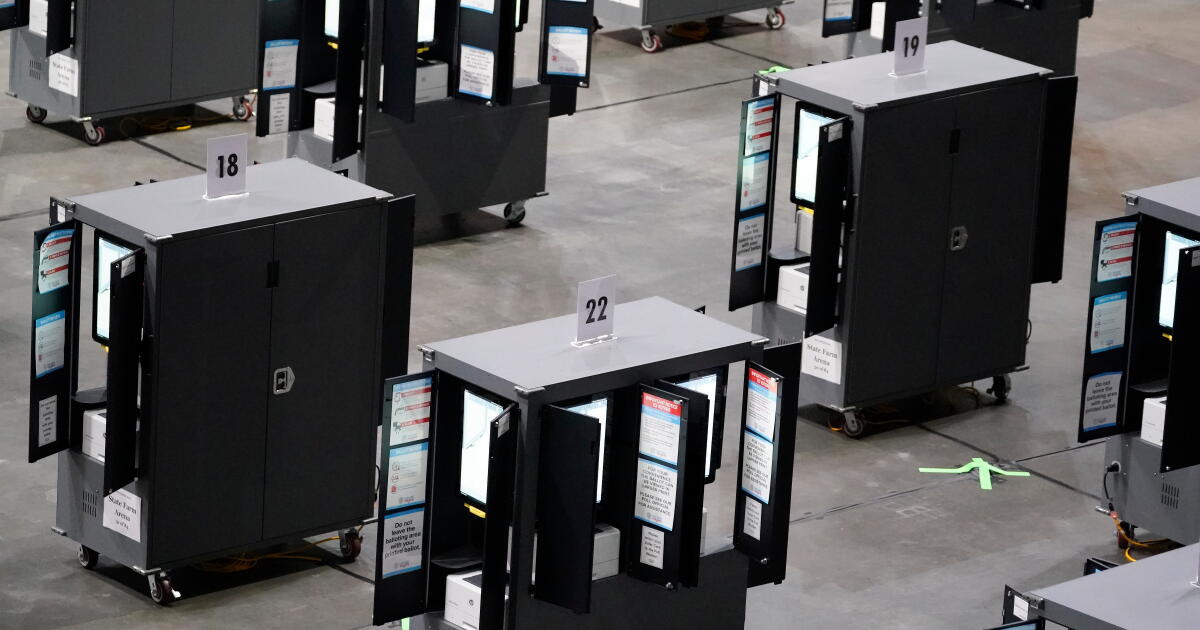
Georgia voters make their selections on touchscreen voting machines that print paper ballots voters insert into scanners to tally the votes.
Such cast-vote records detail the votes from each ballot. Those records and electronic ballot images created by the scanners are randomized. But the software flaw allows them to be put back in the order they were cast, according to a report by researchers who discovered it in 2022.
Along with other publicly available data, that information could be used to match voters to their ballots, the researchers wrote.
Max Springer, a Princeton University researcher who was not involved in the original research and studies AI, said he gave a publicly available AI assistant that research. He said it was able to reverse the shuffling of electronic ballot records from Georgia’s May primary and then tell him what other records it would need to match names to ballots.
He then gave the AI assistant the early voting list for the counties he examined and the cast-vote record file, which could be obtained through a public records request. It was able to create “buckets of ballots and potential voters,” he wrote in a blog post. In many instances, that made it possible to match voters to their ballots.
In cases where ambiguity remained, he wrote, he got the public audit log for the ballot scanners and precinct check-in records and was able to match most ballots to specific voters.
“AI coding tools are essentially supercharging laymen people to exploit vulnerabilities,” Springer said in an interview.
Why does ballot secrecy matter?
Georgia’s Constitution says elections “shall be by secret ballot,” and state law requires voting machines to “permit voting in absolute secrecy so that no person can see or know any other elector’s votes.”
A lack of ballot secrecy can make it easier to buy or sell votes and increase the danger of coercion to vote a certain way by family members, political organizations, employers or government officials. It also is information that could be invaluable to political campaigns.
Gabriel Sterling, special projects manager in the secretary of state’s office, pushed back on the concerns. He said it would be easier to use mail ballots if vote-buying or coercion was the goal and that it probably would be cheaper for campaigns to just increase outreach to voters who fit a certain profile than try to identify voters this way.
State Election Board member Salleigh Grubbs proposed a rule during the board’s August meeting that would have required the secretary of state’s office to apply the software update recommended by the manufacturer by Tuesday.
“Each [voter] has one vote, and no one is entitled to know how it was cast,” Grubbs said. “That privacy protects more than the individual voter. It protects the integrity of the entire election.”
In a letter to the election board, an agency lawyer argued that the update has not been certified by the secretary of state, the implementation would take months, and the Legislature has not provided necessary funding. The board rejected Grubbs’ proposal. Some members said they did not believe they had the authority to order the secretary of state to act and they raised concerns about the short timeline before the November midterms.
Board member Sara Tindall Ghazal, who voted against the proposal, said it is “intensely frustrating” that the software update has not been applied. But she pointed out that it is a felony to reveal how someone voted, which should serve as a deterrent.
“I hate the fact that it’s even physically possible, but there are very, very severe penalties if somebody were to actually do this,” she said.
What’s being done?
The secretary of state’s office sent guidance to county election officials instructing them to refer open records requests for certain records to the secretary of state’s office. It will release them with the problematic information blacked out and decline to release other information and documents.
Sterling said the office is working with a vendor to scramble the original order of ballot images and cast-vote records before they are made public. Halderman said that precaution would be necessary to keep someone from reconstructing the order.
While some other jurisdictions have applied the software update that reportedly fixes the problem, some have done what Georgia is now trying to do by restricting public access to the records needed to exploit the flaw.
Marilyn Marks is executive director of the Coalition for Good Governance, which advocates for election transparency and security and raised the alarm about the vulnerability. She argued that withholding documents is not the solution and that steps need to be taken to ensure ballots cannot be traced to voters in the first place.
“When Georgia’s election records contain identifiers that can be used to trace ballots to voters, the only legal and acceptable answer is to stop recording that information — not restrict public access to sensitive unlawful information to insiders and commercial vendors,” she said.
With time growing short before the elections, Marks said a workable interim solution would be to collect ballots in locked boxes at precincts and then shuffle and scan them at a central tabulating center.