

Big

Why Kelsey Plum believes this is the Sparks’ year to win big

On a rare off day in Los Angeles, Sparks guard Kelsey Plum settles into a quieter rhythm. She brings a book to a dog park near her home, finds a spot, and reads. But even here, the stillness is partial at best. Her mind keeps working, circling the same question that has followed her through every stage of her career. What does greatness actually require?

Right now, Plum is reading “The Talent Code,” a book that digs into the tension between nature and nurture. It’s not exactly light reading for a day off, but then again, she isn’t really wired for off days.

“Talent,” she says, “takes countless hours of practice. Sure, you have some natural ability, but you have to train it. You look at like a Russian tennis player, why are they good? Is it random? The similarity with greatness is practice.”

That idea, practice as the great equalizer, shapes how Plum sees her career now, in a moment that demands more from her than ever before.

Sparks guard Kelsey Plum wears white pants, white shoes, a black top and black jacket as she poses for a portrait.

Sparks guard Kelsey Plum moved to L.A. because she wanted to play a bigger role than she did on the Las Vegas Aces title-winning teams.

(Jason Armond/Los Angeles Times)

In the week before the WNBA season, she’s no longer in the calm of the park but inside the controlled chaos of media day at El Camino College’s gym. Between photo shoots, she sits on a green room couch in a makeshift makeup area, the morning already filled with obligations: a news conference, cameras, questions about what comes next. Beside her earlier was Ariel Atkins, one of the veterans she helped bring to Los Angeles, a signal that this next chapter is meant to be different.

“Have you ever driven a really expensive car, but didn’t have good insurance?” Plum asked. “When you have great coverage, you can relax a little bit. That’s what it feels like now, there’s so many people paddling in the boat with me.”

That sense of shared momentum didn’t come immediately. Not long ago, there was doubt.

Until a few weeks ago, Plum wasn’t entirely sure she had made the right decision to join the Sparks. After being traded from the Aces in 2025, she knew she wanted more responsibility, more ownership and the chance to be the face of a team. But belief in a vision is one thing; living through the roughest stretches of the transformation is another.

The Sparks went 21-23 last season, finishing two wins short of reaching the postseason. There were flashes, particularly late in the year when Cameron Brink, the No. 2 overall pick in 2024, returned from injury. Still, the result was familiar in L.A.: another year without a playoff berth.

For a player like Plum, that kind of outcome lingers.

Sparks guard Kelsey Plum wears a black jacket, black top and white pants. She leans against a wall.

Sparks guard Kelsey Plum feared she might have made a mistakes during some difficult moments early in her tenure in L.A., but free agents’ decision to join her boosted her confidence.

(Jason Armond/Los Angeles Times)

“I don’t think that last year I realized how big of a decision I made,” she said. “Obviously there’s a you don’t understand the gravity of it till you’re in it. I think when Nneka [Ogwumike] signed this year, I was like, ‘OK, I’m not crazy. They’re seeing the vision I am seeing.’”

That validation mattered. It reframed the risk as something shared.

The Sparks leaned into the direction Plum believed in during the offseason. Some of that came directly from her influence and some of it came from the example she set.

“KP came here because she wanted to test herself on how she impacts winning,” said Sparks general manager Raegan Pebley. “And there’s a lot of things that go into impacting winning. It’s on the [score]board, but it’s also, are you a leader? Can you influence other people to come along with you? And she’s been able to do that. She’s been a great, great person to partner with.”

Plum understands that distinction well. She’s been on championship teams before with back-to-back titles in Las Vegas in 2022 and 2023, but this is different. In Los Angeles, she’s helping define what the organization will become.

The franchise hasn’t reached the postseason since 2020, the longest active drought in the WNBA. For a team in a major market, the absence has been noticeable, even as individual pieces hinted at potential.

Plum, in her first season away from the franchise that drafted her No. 1 overall in 2017 after her record-setting run at Washington, produced immediately: 19.5 points and 5.7 assists per game. But numbers alone weren’t the point.

“I felt like I can be the connector,” she said. “When you’re part of a championship culture, you get to see what goes into it. And it’s way more than just basketball. It’s like the business, the operations of it all. They all work together. Obviously, what Mark Davis has done is tremendous in Las Vegas, and really investing in that team. So, yeah, coming here definitely, I learned a lot more than basketball, right? About what goes into building a championship team, a roster, what goes into investing in players and making it feel like a destination where players are like, ‘Ooh, I want to go play there.’”

Sparks guard Kelsey Plum poses sits on a bench while posing for a portrait.

Sparks guard Kelsey Plum accepted a lower salary so that the team could pursue key free agents capable of helping win a championship.

(Jason Armond/Los Angeles Times)

That perspective shaped her decisions this offseason in tangible ways. Despite being eligible for a $1.4 million supermax contract after her core designation, Plum chose to sign at a lower number, giving the Sparks flexibility to build around her.

They used that space to add Ogwumike and Erica Wheeler, while still leaving $1,468,650 in cap space for a potential in-season move. They also traded for Atkins from Chicago, parting with 2024 first-round pick Rickea Jackson to ease the pressure in the backcourt.

“I want to really help transform an organization,” Plum said. “As a player, you don’t really know how good you are, or how much you can handle, capacity wise, until put in a situation that’s maybe a little over your head.”

Belief, in this case, became contagious. Plum helped recruit Wheeler. Ogwumike, already familiar with the franchise, pointed to broader changes as part of her decision to return.

Sparks guard Kelsey Plum smiles while the sunlight hits her face during a photo shoot.

With key pieces in play, Sparks guard Kelsey Plum said the team must embrace high expectations. “We’re no longer the cute, young tadpole team,” she said. “We have to win.”

(Jason Armond/Los Angeles Times)

“The last couple years have strategically been very, very focused with our ownership and improving the player experience,” Pebley said. “We’ve got a practice facility that is being built. … Players are experiencing a much more consistent and high level, just player experience. And I think they can now look at their peers eye to eye and say, ‘This is where you need to be. you’re going to be treated really well here.’”

All of it builds toward a simple, unavoidable truth: this version of the Sparks can’t afford to linger in potential.

Plum’s legacy in Los Angeles will hinge on whether this reset becomes a turning point or just another chapter in a long rebuild. The expectations have shifted, internally and externally.

“Last year was tough,” Plum said. “We were right there at the end. But I think this year is different. Obviously, with all the free agency acquisitions, this is very exciting. We’re no longer the cute, young tadpole team. We have to win.”

Source link

Why Mastercard Is Betting Big on BVNK — and Stablecoin

Home Technology Here’s Why Mastercard Is Betting Big on BVNK — and Stablecoin

The card company has positioned itself as a bridge between its global network and on-chain payment systems.

For a technology that’s designed to leave traditional finance on the sidelines, credit card payment networks are making significant investments in stablecoins.

Mastercard’s announced acquisition of BVNK, an enterprise stablecoin infrastructure provider, could usher in a new era of digital expansion for the legacy payments company. According to Mastercard, the deal’s final price tag could reach $1.8 billion by the time it closes at the end of 2026.

During last week’s first-quarter earnings call, Mastercard CEO Michael Miebach cited BVNK’s ecosystem of stablecoin stakeholders and liquidity providers as the primary driver for the acquisition, with a portfolio of hard-to-get licenses sweetening the deal. Once the sale is finalized, Mastercard will integrate BVNK’s tools to handle digital cross-border payments, merchant transactions, and multi-asset trading directly within its own system.

Meanwhile, rival Visa continues to expand its stablecoin-linked Visa card program.

“We now have over 160 stablecoin card programs globally with key partners, such as Rain, Reap, and Bridge,” said Visa CEO Ryan McInerney during the company’s first-quarter earnings call in January. “And our payment volume continues to grow at a very strong rate, up nearly 200% year over year in the second quarter.”

Credit Card Cannibalization

These investments raise the question of whether card networks risk cannibalizing credit card transactions by investing in a disruptive alternative payment rail like stablecoins.

“Card networks and the largest card-issuing banks take a long-term view to maximize market share and earnings while preserving ‘options’ to integrate new and disruptive technology into their existing platforms and customer base,” said Todd H. Baker, a senior fellow at the Richman Center for Business, Law and Public Policy at Columbia University’s Business and Law Schools. “They seek to be ready if and when customers demand it.”

Aaron McPherson, principal at executive advisory firm AFM Consulting, also downplayed the cannibalization threat. “The card networks still control the merchant relationship and will act to ensure there is no inherent advantage to using stablecoins over traditional rails.”

McPherson also shares the card companies’ view that stablecoins are primarily a domestic settlement mechanism. “Even when consumers spend stablecoins directly, the vast majority of transactions occur via linked debit cards, ensuring Visa and Mastercards still collect their fees.”

Crossing the Stablecoin Bridge

The card networks see stablecoins as complementary to their core offerings. Credit cards are easy to use, widely accepted worldwide, and integrated into the transaction flow, said McInerney. But of the $13 trillion transactions settled among and between Visa’s nearly 14,500 financial institution partners, nearly all are settled in fiat currency Monday through Friday.

On the other hand, those using stablecoins can complete transactions seven days a week, which provides immense liquidity and efficiency benefits, he added.

The card companies are positioning themselves as a bridge layer between their global network infrastructure and on-chain payment systems like stablecoin. By making these investments, Mastercard has been able to “build out a whole set of new services and additional opportunities,” said Miebach during the earnings call.

Visa is also taking a Visa-as-a-Service approach and engaging with the stablecoins stack at various levels. These bridging solutions have economics similar to the company’s current products, McInerney said.

These strategies have paid off for the card companies. Visa has a $7 billion annual run rate of stablecoin settlement volume, which is up more than 50% since last quarter.

Source link

Wetherspoon boss hits back at Ryanair’s ‘Big Brother’ approach after airline’s plan to scrap airport breakfast pint

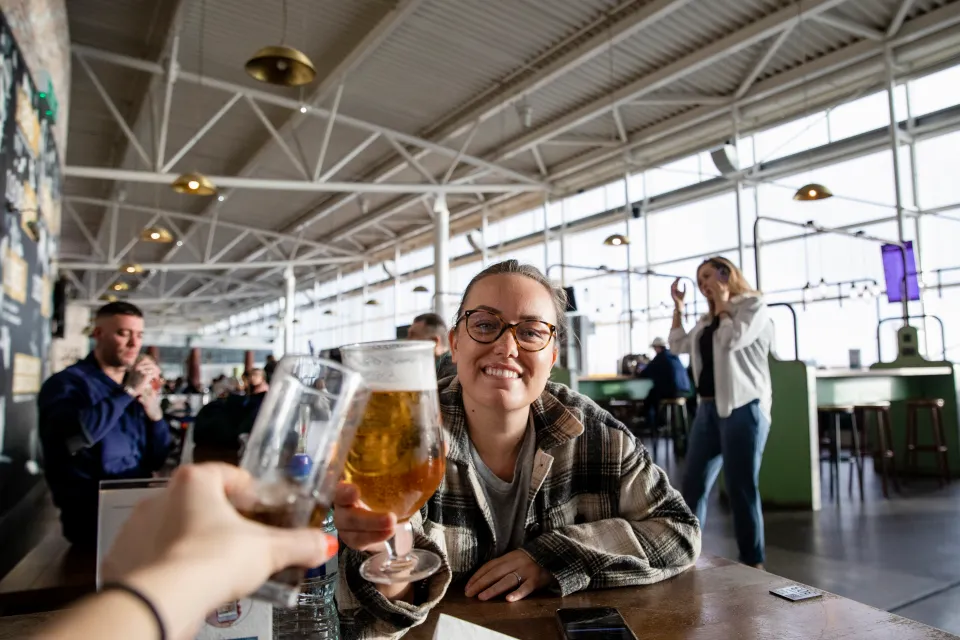
POV shot of a mid-adult same-sex female couple toasting beers at an airport.
A point of view shot of a mid-adult caucasian same-sex female LGBTQI couple sitting in the airport waiting for their flight toasting with their beers. Credit: Getty

THE BOSS of Wetherspoons has hit back at Ryanair after the airline proposed to scrap the beloved airport breakfast pint.

Sir Tim Martin, 71, boss slammed the idea to ban the sale of alcohol before early morning flights as a “Big Brother” approach.

Tim Martin has hit back at Ryanair after the airline proposed to limit airport drinking Credit: Louis Wood News Group Newspapers Ltd
The Wetherspoon boss said it was a ‘Big Brother’ approach Credit: Getty

Ryanair boss, Michael O’Leary, recently called for a ban after saying the rise in badly behaved passengers is causing huge problems for the airline.

He said it had become a “real challenge for all airlines” and questioned why punters needed a pint in the early hours of the morning.

O’Leary has also previously suggested a two-drink cap, something he says the airline tends to follow onboard, in an effort to clamp down on bad behaviour by passengers.

But JD Wetherspoon chief Martin said it could lead to passengers being breathalysed and added that any drinks limit would be hard to manage, The Times reports.

ON TRACK

New train links two of Europe’s must-see capitals – with tickets from just £53


COAST ALONG

English beach could soon reopen to the public after being closed for 18 years

Ryanair chief Michael O’Leary recently called for a ban on the beloved airport breakfast pint Credit: Reuters
He claimed that badly behaved passengers are causing the airline huge problems Credit: Getty

He told the outlet: “It is in everyone’s interests to have good behaviour at airports and on flights.

“A two-drink limit would be extraordinarily difficult to implement, short of breathalysing passengers, and would, in our opinion, be an overreaction — especially since many of the problems stem from incoming flights.”

Wetherspoon also claimed that the majority of its airport sales were not alcohol and any ban would result in passengers buying alcohol elsewhere prior to arriving at the airport.

But O’Leary said the problem with passengers is getting worse – previously the airline would have around one flight diversion a week, which has since increased to “one diversion a day”.

Current rules allow pubs and restaurants in airports to serve alcohol at any time as they do not have to follow the same licensing rules elsewhere in the country.

Passengers drunk on a plane can face being jailed for up to two years, and huge fines if they force a plane to divert of up to £80,000.

Source link

Graham Norton’s big budget ITV show The Neighbourhood pulled from primetime and replaced

Graham Norton’s ITV series The Neighbourhood has been pulled from its primetime slot less than a fortnight since its launch and will be replaced by repeats

Graham Norton’s ITV series The Neighbourhood has been pulled from its primetime slot less than a fortnight since its launch. The presenter, 63, is front and centre on the broadcaster’s new gameshow format in which real-life households have gathered in a purpose-built neighbourhood to be in with a chance of winning a £250,000 cash prize.

There were clearly high hopes for the series as it premiered in between both segments of the explosive I’m A Celebrity…South Africa final on April 24, and has been airing at 9pm on Thursdays and Fridays ever since, where it has managed to pull in just half a million viewers.

But now, new schedules have revealed that, going forward, the programme will air at 10.45pm which takes it away from the coveted slot it was initially given, implying that it has not lived up to expectations in terms of viewing figures.

READ MORE: ITV’s bid to lure Graham Norton away from BBC ‘backfires’ after ‘shock’ new show ratingsREAD MORE: Graham Norton explains why he’s breaking Terry Wogan’s famous rule at Eurovision

This Thursday, viewers tuning in at 9pm will instead see a repeat of Davina McCall’s Long Lost Family, and an episode of Beat The Chasers: Celebrity Special, which was initially aired in 2021, will be shown instead. A spokesperson for ITV confirmed the schedule shift as they said said: “The full box set of The Neighbourhood is now available to stream on ITVX. Additionally, the show will continue to air in an evening slot on ITV.”

But sources have claimed that whilst the broadcaster pulled out all the stops to make the programme into a hit, it just hasn’t gone that way in the end. An insider told The Sun: “They threw everything at The Neighbourhood to make it a big success, but it’s ended up a bit of a damp squib.”

The six households competing are The Bradons, The Kandolas & Samra, The Lozman-Sturrocks, The Pescuds, The Scouse Haus and The Uni Boys. Challenges put every neighbour to the limit as they try and eliminate one another without becoming unpopular enough to get the axe themselves.

Opening up on his first reaction when he saw the entirety of the set, Graham said: “Arriving in Derbyshire and seeing the set, I’d seen pictures but I didn’t quite understand the scale of it. It really is like being on a movie set, except it’s 360 – everywhere you look, it’s real.

“The art department did an extraordinary job of building up that town square where we do the removals, the pub, the cafe, the interiors of the houses. It really took my breath away!

“It made it even more exciting. I thought – this is serious! We’re making a big show. Then add on top of that, what Derbyshire does when the drone goes up and we see the Neighbourhood and the nature and the rest of it, it’s so beautiful, those big driving shots. It’s just gorgeous.

BAFTA award-winning broadcaster Graham continued: “One of the loveliest things about the show is seeing households who would never meet in real life, not only meeting but forming proper bonds of friendship. There are a few moments in the show that really do bring a tear to my eye because it’s just so genuine, so lovely and properly heartwarming.

“It’s such an odd word to describe a show like this but it’s properly wholesome. There’s something about the bright colours, being out in the countryside and the genuine bonds that you see created.”

The Neighbourhood is available to watch on ITVX

* Follow Mirror Celebs and TV on TikTok , Snapchat , Instagram , Twitter , Facebook , YouTube and Threads


Source link