biden

A competitive governor’s race? Not only in California

As Californians cast their ballots in the state’s closely watched gubernatorial primary Tuesday, a very different race was playing out in Iowa — one that holds clues about the mood of Republican voters heading into November.

President Trump’s endorsed candidate in Iowa’s high-stakes governor’s race, Republican U.S. Rep. Randy Feenstra, lost his bid for the party’s nomination, a rare defeat for a Trump-backed candidate.

The outcome exposed fractures among Republican voters, though their choice of Zach Lahn, who ran on an “Iowa First” and Make America Healthy Again platform, didn’t amount to a rebuke of Trump’s politics, said Jimmy Centers, a Republican strategist in Iowa.

The primary race was “emblematic of the seismic plates that make up the Republican Party in Iowa,” Centers said — the successful MAGA-style message, from Lahn; a more traditional conservative platform, from Feenstra; and a conservative Christian approach, from candidate Adam Steen.

“It’s a bit of a look-ahead in terms of how the Republican Party is going to be shaped in what will be a post-Trump era,” Centers said. “Those plates are moving, and last night in Iowa, we had an earthquake.”

Results from Iowa, California and other late-stage primaries portend contentious fall campaigns, with control of the House and Senate hanging in the balance.

“You’re seeing Republican primary voters rebel against politicians, whether it’s Dusty Johnson in South Dakota or Chip Roy in Texas,” said Matt Gorman, a longtime Republican strategist and chief communications officer at Targeted Victory. “There’s clearly a backlash against sitting politicians, and Republican primary voters are looking for outsiders.”

That pro-outsider outlook has been promoted by Trump himself in some races, as he has used his endorsement to boost primary challengers to victory over Republican incumbents — notably in Texas, Louisiana and Kentucky. In Tuesday’s primaries, however — held in six states — none of the races involved Republican veterans whom Trump wanted to see ousted.

Outside of such races, Trump — who last week said, “I don’t care about the midterms” — has taken a more laissez-faire approach. In Iowa, he did not endorse Feenstra until Friday, a last-minute boost that didn’t help the congressman over the finish line.

Lahn, in a victory speech Tuesday night, acknowledged the upset he had pulled off.

“Nobody thought this could be done,” Lahn said. “We were outspent, opposed by the establishment, told to wait our turn.”

Lahn will face Iowa state auditor Rob Sand, who ran uncontested for the Democratic nomination. The seat is being vacated by Gov. Kim Reynolds, a Republican who is not seeking reelection.

Iowa Republicans will now ramp up efforts to retain both the governor’s office and the U.S. Senate seat being vacated by Sen. Joni Ernst, as Democrats target both offices for flipping.

The race to replace Ernst is now on between Republican Rep. Ashley Hinson, who has been in Congress since 2021 and has Trump’s support, and Democratic state Rep. Josh Turek, a former Paralympian who was backed by a leadership PAC aligned with Senate Minority Leader Chuck Schumer.

Economic issues, particularly in the agricultural sector, where farmers have been squeezed by Trump’s tariffs and war in Iran, could dominate the races. Centers said both parties are acutely aware of the economic factors — and aware that Democrats’ chances in Iowa could be slightly better than “a hope and a prayer,” though the state’s voter-registration edge remains solidly red.

“I don’t think many Republicans in Iowa are bashful about acknowledging the environment we’ll face in November,” Centers said. “It’s going to be a hard-fought race.”

You’re reading the L.A. Times Politics newsletter

George Skelton and Michael Wilner cover the insights, legislation, players and politics you need to know. In your inbox Monday and Thursday mornings.

Other Tuesday takeaways

Elsewhere on Tuesday, voters chose candidates in races for U.S. Senate, House and governor’s seats, setting up some lively November match-ups.

In New Jersey, the state’s 7th Congressional District will be a closely watched contest — largely because of the recent absence of Republican Rep. Tom Kean, who has not been publicly seen for months as he deals with an undisclosed medical issue.

His absence has provided an opening to Democrats, who have ramped up attention on the seat as they attempt to flip as many House seats as possible. Rebecca Bennett, a former Navy helicopter pilot, won the Democratic nomination Tuesday.

Kean, who has support from Trump, ran unopposed. In a statement Tuesday evening, he laid out plans to reveal his medical condition when he returns to in-person work, which he said would be “within a matter of weeks.”

The race could become key to Democrats’ attempt to win control of the House in November.

“We’re ready for this fight. Bring it on,” Bennett wrote Wednesday on X.

In Montana, the race for the state’s open U.S. Senate seat, being vacated by Republican Sen. Steve Daines, was also set to get interesting.

Trump-backed Republican Kurt Alme, a former U.S. attorney, and Democrat Alani Bankhead, an Air Force veteran, won primaries Tuesday — but former University of Montana president Seth Bodnar has launched an independent bid for the seat. Bodnar said Tuesday that he had delivered enough petition signatures to the secretary of state to get on the November ballot.

And in New Mexico, former Interior Secretary Deb Haaland secured the Democratic nomination for governor, advancing in her bid to make history as the first Native American governor in the United States. She will face Republican Gregg Hull, a former local mayor, in November.

What’s next

Next week brings Maine’s Senate primaries, following a Democratic race that has taken several twists and turns. Democrats have held hopes of unseating Sen. Susan Collins, the veteran Republican lawmaker, as part of their long-shot attempt to flip the Senate along with the House.

But leading Democratic candidate Graham Platner has been dogged by controversies. The primary vote will be held just more than a week after a New York Times report that he had sent sexual messages to several women outside his marriage. This week, Gov. Janet Mills, who had opposed Platner but suspended her campaign at the end of April, said, “I am still on the ballot.”

Also to watch: Next week’s outcomes in South Carolina’s crowded gubernatorial field; the June 16 Georgia Senate runoff to determine which Republican will face Democratic Sen. Jon Osoff; and the June 16 Democratic primary for Senate in Oklahoma.

Times staff writer Michael Wilner,in Los Angeles contributed to this report.

What else you should be reading

The must-read: The U.S. is investigating two more Mexican governors for connections to cartels
The deep dive:Can we speed up California’s vote count already?
The L.A. Times Special:More middle-class Californians cancel health coverage after losing federal aid

More to come,
Justine McDaniel and Michael Wilner

Was this newsletter forwarded to you? Sign up here to get it in your inbox.

Source link

Column: Easygoing, safe-bet governor may be what California voters want

Regardless of the final vote count, Xavier Becerra’s pre-primary sprint to the front in the race for governor was remarkable and historic.

Here’s a low-key 68-year-old candidate who excited no one. And that apparently was a major strength. He was easygoing, non-threatening and a safe bet.

He also had an impressive resume — former U.S. health secretary, California attorney general, longtime congressman and state assemblyman. This seemed to attract voters.

People perpetually badmouth politicians. That’s in the American DNA. And in California, there’s always loud anti-Sacramento jabber. But voters tend to prefer politicians with Sacramento experience when electing governors — unless a celebrity entertainer is available.

You’re reading the L.A. Times Politics newsletter

George Skelton and Michael Wilner cover the insights, legislation, players and politics you need to know. In your inbox Monday and Thursday mornings.

Politics is cyclical, however. In the past six decades, Californians have gone from electing fascinating Govs. Ronald Reagan and Jerry Brown to selecting uninspiring George Deukmejian, Pete Wilson and Gray Davis — then returning to headliners like Arnold Schwarzenegger, Brown again and Gavin Newsom.

Now we’re ready for boring Becerra?

The last pre-primary poll by UC Berkeley’s Institute of Governmental Studies found Democrat Becerra leading the pack. But he was closely trailed by Republican former Fox News commentator Steve Hilton and Democrat billionaire Tom Steyer, a hedge fund founder turned climate activist.

The large field of candidates wound up with those three leading — Becerra drawing 25% support, Hilton at 21% and Steyer with 19%.

A later Emerson College poll also found Becerra in front but Steyer and Hilton in a statistical dead heat: Becerra 28%, Steyer 22%, Hilton 21%.

The top two vote getters will qualify for the November general election.

In contrast to earlier hot speculation about two Republicans — Hilton and Riverside County Sheriff Chad Bianco — finishing in the top two and locking out any Democrat from the November ballot, the final IGS and Emerson polls showed that an opposite scenario was possible. Two Democrats could conceivably advance to the November voting.

As campaigning neared an end, Becerra apparently tried to help Hilton attract more MAGA support to prevent Steyer from edging out the Republican. Becerra would be a shoo-in over any GOP opponent in November, but could face a tough fight facing Steyer with his bottomless checkbook.

The games-playing involved Becerra running a statewide digital ad subtly reminding Republican voters that Hilton was President Trump’s “favorite” candidate for governor. The spot asserted that Becerra is “Trump’s worst nightmare.”

Steyer would be Becerra’s worst nightmare in a general election brawl.

Another major poll completed a few days earlier by the Public Policy Institute of California found the same basic rankings as the IGS survey, but with Steyer a bit further back.

Becerra was leading with 23%, followed by Hilton at 20% and Steyer at 15%.

Every independent poll found Becerra surging from irrelevancy in March to leader of the pack by late May.

It’s “one of the most unusual gubernatorial election campaigns in modern California history,” IGS poll director Mark DiCamillo says.

Particularly unusual was the April frontrunner, then-Rep. Eric Swalwell (D-Dublin), abruptly withdrawing after multiple accusations of sexual misconduct and assault, which he denies.

Most of Swalwell’s voter support soon went to Becerra, which helped him attract campaign donors and endorsements by interest groups.

Becerra, who had been moseying along the race track, suddenly got a second wind. And voters sensed a breath of fresh air.

“Voters are exhausted by Trump. He makes it hard to sleep at night. ‘Cool and calm’ win,” says Chapman University political science professor Fred Smoller. “People want a candidate like a no-drama Becerra.

“The fact he has a charisma deficit may in fact be his political asset.”

But Becerra also has other assets, notes UC San Diego political science professor Thad Kousser — ”legislative and executive experience…. He was safe and predictable.

“And he’s second only to Gavin Newsom in opposing Donald Trump.”

Yes, a calm temperament appeals to voters fatigued by political fire and brimstone. But California Democrats also want someone who will fight back against Trump’s policies.

Becerra repeatedly points out that as state attorney general, he sued the first Trump administration more than 120 times and won the vast majority of cases.

“Becerra has caught the attention of Democratic voters who overwhelmingly disapprove of Trump,” says PPIC Poll Director Mark Baldassare.

How overwhelmingly? Ninety-five percent disapproval by Democrats in the latest PPIC survey, 70% among all likely voters.

Becerra “stood out from the rest of the candidates because of his background as attorney general,” Baldassare adds.

“And look at the other candidates. You can’t name one who has had experience in Sacramento.”

Longshot former Los Angeles Mayor Antonio Villaraigosa was once state Assembly speaker, but that was nearly three decades ago.

Among the last nine California governors, only Schwarzenegger and Reagan have been elected without serving prior Sacramento stints.

Becerra also has another asset: He’d be the first elected Latino governor in California history. He finished the primary campaign with a comfortable lead among Latino voters, as well as Asian American.

As Becerra’s political stock rose, Democratic rivals — especially Steyer — tried to portray him as incompetent, touched by scandal and a Chevron tool. But the mud didn’t seem to stick.

A natural Becerra strength is likability.

DiCamillo recalls what his mentor, the late legendary pollster Mervin Field, used to say about how voters choose between candidates for governor or president.

“It’s a highly personal choice,” DiCamillo says, quoting Field. “People put more mental energy into choosing a top-of-the-ticket candidate than any other.

“It’s like trying on a new suit. If it doesn’t fit well, you don’t buy it. You’ve got to be comfortable in the feel.”

Many California voters apparently feel that way about Becerra — nothing flashy, just plain but comfortable.

What else you should be reading

The must-read: Becerra leads governor’s race, with Hilton and Steyer in tight contest for second spot, poll finds
Money honey: Record-setting outside money pouring into California governor’s race
The L.A. Times Special: Voter guide to the 2026 California primary election

Until next week,
George Skelton


Was this newsletter forwarded to you? Sign up here to get it in your inbox.
Source link

Capitol rioters clamor for payouts from Trump’s new ‘anti-weaponization’ fund despite backlash

David Johnston was a licensed attorney when he illegally entered the U.S. Capitol with a mob of President Trump’s supporters on Jan. 6, 2021. More than five years later, the South Carolina man is offering to help fellow “J6ers” apply for payouts from the Trump administration’s nearly $1.8-billion fund for people claiming to be victims of a “weaponized” government.

He’ll do it for a 10% cut of any award, capped at $5,000 apiece.

“I think the narrative is changing” about how the history of that day is being told, Johnston said in a video he posted to social media. “I think good things are happening for us.”

Hundreds of Trump loyalists pleaded guilty to storming the Capitol, admitting under oath that they broke the law. Some were convicted of sedition, and many attacked police officers while trying to overturn Trump’s election loss. Now pardoned by Trump, many hope to capitalize on their crimes by tapping into the $1.776-billion settlement fund designed to compensate the president’s allies who claim they were politically prosecuted.

A bipartisan backlash to the fund and a legal roadblock have not dimmed the celebratory response from Jan. 6 rioters clamoring for a share of the taxpayer money. Some are staking claims even though the government has not established an application process and a judge has frozen the fund’s formation, at least temporarily.

Seeking payouts

The fund’s critics see it as another vehicle for Trump and his allies to whitewash the events of Jan. 6, retroactively justify the mob’s assault on a pillar of American democracy and reward some of Trump’s most loyal followers.

Jason Riddle, a military veteran from New Hampshire who was sentenced to 90 days behind bars after pleading guilty to riot charges, publicly rejected a pardon from Trump. Likewise, he said it would be “ridiculous” for him or any other Jan. 6 rioter to get government compensation.

“I’d love money, but I can’t accept that. That would bother me for the rest of my life,” he said. “We weren’t innocently persecuted just because of who we are or who we vote for. We were persecuted for committing criminal behavior in the Capitol of the United States.”

Plenty of other “J6ers” do not share Riddle’s reluctance.

A Florida man who posed for photos with then-House Speaker Nancy Pelosi’s stolen lectern argued on social media that he deserves to be compensated for the cost of his infamy. A rioter from New Jersey described by prosecutors as a Nazi sympathizer hailed the fund as “good news not just for J6ers but all victims of weaponization.” A Texas man who received a seven-year prison sentence for storming the Capitol with a metal tomahawk celebrated the fund as “payback” for “victims of Biden’s tyranny,” referring to President Biden.

Oregon resident Pamela Hemphill, sentenced to 60 days in jail for her conviction, rejected a pardon from Trump but has drafted a written claim for compensation from the fund. Unlike scores of rioters who claim to be victims of a government weaponized by Democrats, Hemphill blames Trump for her legal troubles. Her claims letter says she is seeking $5 million in compensation.

“I wouldn’t have been through all of this if Trump hadn’t lied about the election being stolen,” she said during a telephone interview. “It’s a direct result of his lies that I was even there that day.”

It is an open question whether anyone convicted of a Capitol riot-related crime could be eligible for payments from a fund created to resolve Trump’s lawsuit against the IRS over the leak of his tax returns.

Acting Atty. Gen. Todd Blanche has not ruled out that possibility. Blanche said there are no limits on who can apply, but he noted that the fund’s five commissioners — all yet to be named — will decide who deserves to be compensated and why, based on factors such as “what the person did, his sentence, how much time he was in jail.”

“That’s up to the commissioners,” Blanche told the Associated Press on Thursday when asked about his position on whether violent Jan. 6 defendants should be eligible for payments.

“You have to define something and then stick to it. That’s something I’ve been hesitant to try to do, because it’s very fact-intensive,” Blanche said. ”Me sitting here and talking in hypotheticals is something that I don’t think is fair to the process.”

It is unclear whether Congress would block payments to Jan. 6 defendants. Senate Republicans who are angry about the settlement have said they want to place parameters on the fund as part of a Department of Homeland Security spending bill. They abruptly left town this month after a tense meeting with Blanche and will return Monday with the situation unresolved.

A federal judge in Virginia has frozen the fund’s establishment and temporarily blocked any processing or paying of claims. The judge issued that ruling Friday in one of at least three lawsuits challenging the fund.

Brendan Ballou, a former prosecutor who tried several Jan. 6 cases before leaving the Department of Justice last year, sued on behalf of two police officers who helped defend the Capitol from the mob. Ballou views the fund’s creation as part of a broader Trump campaign to undermine democratic institutions and rewrite the history of Jan. 6.

“And if the president is successful in that effort, if he’s able to get people to either forget or condone that day, he knows that he can get people to accept any attack on democracy,” Ballou said.

‘I want vengeance’

Nearly 1,600 people were charged with Capitol riot-related federal crimes. More than 1,200 were convicted and sentenced before Trump issued mass pardons and ordered the dismissal of all pending Jan. 6 cases upon his return to the White House last year. Trump also freed far-right extremist group members who were imprisoned for plotting to attack the Capitol to keep Trump in office after he lost the 2020 presidential election to Biden.

The self-described “J6 community” isn’t the only pro-Trump constituency angling for cuts of the money after being charged with or convicted of crimes.

Meshawn Maddock, who was charged as being a fake elector for Trump in Michigan before a judge dismissed the case last year, said she and her husband, state Rep. Matt Maddock, “absolutely” plan on making a claim. She believes the fund’s use of taxpayer money is justified because it “paid for the prosecution and investigation of the years that I was being hunted down.”

“I want vengeance and I want retribution,” Maddock said.

Trump’s campaign to recast the violence of Jan. 6 as a peaceful protest seems to have emboldened many convicted rioters.

Johnston’s eagerness to help other Capitol rioters with claims contrasts with his remorse he expressed at his sentencing in 2022. He apologized for his “terrible lapse in judgment” before a judge sentenced him to three weeks in jail and three months of home detention. He pleaded guilty to a misdemeanor trespassing charge.

“It was a dumb, dumb thing to do,” Johnston told the judge. “I am 100% responsible for what I did that day.”

Kunzelman writes for the Associated Press. AP writers Jamie Stengle, Mary Claire Jalonick and Joey Cappelletti contributed to this report.

Source link

Xavier Becerra faces attack, some unwarranted, from Washington

Xavier Becerra has spent nearly four decades in elected office. To some that speaks of extensive experience and a deep grounding in policy. To others, it smacks of political careerism and a long-term investment in the failed status quo.

Wired or tired?

It all depends on your perspective.

Becerra, a California native, emerged from the hothouse of Latino politics on Los Angeles’ Eastside. He was elected to the state Assembly in 1990, served 12 terms in Congress, was California attorney general and then, for nearly four years, ran the Department of Health and Human Services under President Biden.

It’s that latter stint that’s become a particular focus in the final days of California’s long and winding gubernatorial primary.

As Becerra surged from inconsequence to front-runner, opponents — led by chief Democratic rival Tom Steyer — have hammered Becerra’s performance in the Biden administration, suggesting he was AWOL during the COVID-19 pandemic and inept in his handling of unaccompanied migrant children, 85,000 of whom were supposedly “lost” on Becerra’s watch.

Politics is about persuasion and emotion, not rocket telemetry, so it’s not hard to figure out what’s going on.

“You look at Xavier and he seems to be perceived as a thoughtful, credible, trustworthy choice. That’s what I hear when I talk to regular people who aren’t political insiders,” said Darry Sragow, a Democrat strategist who’s spent decades running California campaigns. “So you see the people who want to take him out going after one of the words I just used here, which is ‘trustworthy’ and, to some extent, ‘credible.’”

A recent Steyer mail piece — which, naturally, features a grim-faced portrait of Becerra — accuses him of “mismanagement,” “scandal” and “incompetence,” and cites a 2024 quote from Susan Rice, a former Biden domestic policy advisor, describing the ex-Cabinet member as an “idiot.” (Apparently “bitch-a—,” another Rice epithet from the same Axios news report, was deemed unsuitable.)

The mail piece also quotes Xochitl Hinojosa, a Justice Department spokesperson in the Biden administration, saying Becerra “was not effective in government,” though several people who worked in the White House could not think of any occasion, or any reason, Hinojosa would have meaningfully interacted with Becerra.

Pretty weak sauce. But at least Hinojosa, who delivered her gibe on one of CNN’s talking-head shows, was willing to publicly attach herself to the criticism.

Six former Biden administration officials were quoted by Politico “reacting with a mix of incredulity, mockery and resignation” to Becerra’s sudden ascendance in the governor’s race. Critics also unloaded to NBC News and other outlets. All of them spoke anonymously.

Therefore, it’s impossible to discern their motivations. Jealousy? Ego? An attempt to stay politically relevant?

Or maybe Becerra was, indeed, a feckless, flailing and thoroughly awful Cabinet member, deserving of scorn and shame.

Ron Klain, who was Biden’s chief of staff during the first two years of his presidency, doesn’t believe so.

I think he did an excellent job as HHS secretary and I think the record shows that,” Klain said, citing, among other accomplishments, Becerra’s work helping negotiate a drop in the price of prescription drugs and expanding healthcare coverage under the Affordable Care Act.

On COVID-19, Becerra wasn’t confirmed until several months into the Biden administration. Dr. [Anthony] Fauci had been on the job and was quite a well-known figure to Americans. So, of course, he became more the face of the COVID response.”

“On immigration,” Klain went on. “Xavier’s part was small and discreet. He wasn’t the secretary of Homeland Security. He didn’t run the border. He oversaw an office called the Office of Refugee Resettlement” responsible for processing children who crossed the border alone. “I was in meetings where he was a passionate and forceful advocate for these minors,” Klain said.

Still, there are legitimate questions, notwithstanding Becerra’s deflections — Trump! MAGA! Trump! — about his handling of the migrant children, some of whom died, suffered horrible abuse or were catastrophically injured, according to revelatory reporting by the New York Times. It’s worth noting, however, that Becerra inherited a plan to deal with unaccompanied minors that was drafted and phased in by Rice and her Domestic Policy Council.

There is an unhappy history between the two; apparently Becerra was not alone in drawing Rice’s ire. In 2022, an article in the American Prospect accused her of creating an “abusive and dehumanizing workplace,” in which Rice routinely berated others, including the Health and Human Services secretary.

On social media, Rice has made no secret of her continued contempt for Becerra, a display that carries no small whiff of ax-grinding and score-settling. She highlighted the refusal of Biden’s Homeland Security chief, Alejandro Mayorkas, to endorse Becerra in the governor’s race, though it would be surprising if Mayorkas, Biden, Kamala Harris or any high-level Democrat picked a favorite in such a fiercely contested primary.

Becerra “had big things to do and he got them done,” said Neera Tanden, who succeeded Rice as head of Biden’s Domestic Policy Council and has vigorously defended Becerra against attacks on social media.

“I am not on or coordinating with the Becerra campaign,” Tanden said. “I just know these attacks are ridiculous.”

If Becerra makes it past Tuesday’s primary to the November runoff, his career merits careful scrutiny — and not just those years spent in the Biden Cabinet. Many voters are still getting to know Becerra, who is the likeliest candidate to be California’s next governor. Anonymous quotes, drive-by commentary and incendiary mailers may be standard campaign fare. But voters deserve better.

Source link

‘Unhelpful’: Top Democrats say Jill Biden’s memoir is reopening 2024 wounds

Democrats have spent nearly two years trying to move past the 2024 presidential election. Now, Jill Biden’s new memoir is forcing them to relive it.

Her new book, “View from the East Wing,” which comes out Tuesday, is already drawing sharp rebukes from top Democrats, some of whom say it is a poorly timed and misleading account of the events that led to the demise of her husband’s presidency.

“Unhelpful … Ripping open a healing scab is never helpful,” John Morgan, a Florida trial attorney who was a major fundraiser for Biden’s 2024 campaign, told The Times. “In my opinion, she was the main problem. She loved the life and didn’t want it to end.”

Those type of frustrations erupted last week as the former first lady began promoting her book, including in a sit-down interview with CBS News airing Sunday, in which she said she thought the sitting president was having a stroke as she watched the 2024 presidential debate.

“I was frightened, because I had never ever seen Joe like that before or since. Never,” Biden said. The moment “scared me to death,” she added.

For Democrats who had a similar reaction in real time, but who spent months being told by the Biden campaign that their concerns were overblown, her remarks landed like a gut punch. With the midterms around the corner, some bemoaned that Biden was relitigating a sore subject — particularly the question of who knew what about Biden’s aging and cognitive decline.

“What I care about is what happens going forward,” Dan Pfeiffer, a host of “Pod Save America,” a popular progressive podcast, said on the show Thursday. “What bothers me the most is not the timeline of events, but whether Democratic leaders now will ever reckon with the massive breach of trust that came because of how all of that was handled.”

Meghan Hays, a former White House aide to Joe Biden, said on C-SPAN’s “Ceasefire” that although she understands that Jill Biden is trying to sell books, her efforts are not helping the party ahead of the midterm elections.

“We have a lot of momentum in our favor … and when we get pulled back into conversations about age and the election in ‘24, it’s never gonna be a good place for Democrats,” Hays said. “I think it is a tough place to be.”

The Democratic Party found itself trapped in a similar dynamic earlier this month, when the Democratic National Committee released a long-awaited, 192-page report dissecting the 2024 loss. The committee’s chairman, Ken Martin, shared the postelection autopsy after coming under intense pressure from Democratic operatives, and apologized for how he handled its release.

The report faulted Kamala Harris and Democrats’ focus on “identity politics” but did not address Biden’s decision to seek reelection amid health concerns and the rushed selection of Harris to replace him on the ticket.

In her book, the former first lady writes that her goal is to be able to “set the record straight” about what happened during the debate and the months that followed that led to President Trump’s return to the White House, according to the Atlantic, which obtained a copy of the book ahead of its release.

At one point, she writes that she even suspected her husband may have been inadvertently impaired after taking cough syrup. In the CBS interview, Biden maintained that she never saw any signs of cognitive decline while he was the sitting president.

“He was the same, the essence of the same Joe Biden, but yeah, he was slowing down. He was getting older,” she said. “You know, it’s a very intense job. I think it ages you — quickly.”

Morgan, the former Biden fundraiser, said he does not believe the first lady is telling the truth in her memoir.

“If you like fiction it’s good,” Morgan said. He added that her claim that she had never witnessed her husband act in a similar way since the debate “defies the smell test.”

“His keys should have been taken long before that night,” Morgan said.

Michael LaRosa, a former press secretary for the first lady, called Democrats’ reaction to the new memoir “pretty grim.”

“There is a deep reservoir of frustration among ‘formers’ who believe she enables the culture around her and the President rather than challenging it,” LaRosa wrote. “So now they seem to be challenging her.”

Although many Democrats are publicly expressing their annoyance at the conversation Biden has resurfaced, others do not see the former first lady’s comments having an effect on the upcoming elections.

“This is not going to be part of a conversation in the election. It’s going to be part of a conversation in Washington because that is what Washington does, but this is not going to move the needle in New Hampshire or other states where it matters,” said Steve Schale, a Democratic strategist who ran a pro-Biden super PAC during the 2020 election cycle.

Schale was blunt: “She is selling books.”

Even if that is the case, Republicans are taking notice.

In a Truth Social post on Friday, President Trump appeared gleeful to note that Biden was “finally admitting” that she did not know what was wrong with her husband during “our spectacular, and highly rated, 2024 Presidential Debate.”

The president lamented that the former first lady did not compliment his performance.

“In other words, as many have asked, did my strong performance in that debate cause him to plain and simple ‘choke,’ leading to his ignominious defeat, or were other reasons the cause? Nobody else knows the answer to that, BUT I DO!!!” Trump wrote.

Source link

California teeters on healthcare cliff, but no one is paying attention

When Congress passed the big, ugly bill known as HR 1 last year, most Americans understood it meant cuts to Medicaid, the safety net program millions rely on for medical insurance.

But few Californians realized just how much it will affect the Golden State when its provisions really kick in, starting after the midterms (the Republicans aren’t that dumb) and continuing on in cascading cuts for the next few years.

Millions of Californians — not just low-income folks — are going to feel the effects, whether through a loss of insurance, fewer providers able to keep their doors open, or rising premiums and costs.

“This problem trickles up,” state Senate leader Monique Limón (D-Goleta) told me. “This is not just going to impact the people that have a public healthcare plan. When you see a hospital close, when you see medical providers no longer being able to practice, it is absolutely going to impact everybody, the middle class included.”

Added to the loss of federal funds, Gov. Gavin Newsom’s most recent budget plan (which the Legislature has to debate in coming weeks) includes cuts at the state level. This is in part to contend with the loss of federal money, but also because healthcare costs keep rising and even in this wealthy state, we can’t afford the bills — at least not without some changes.

What those changes are — and who should bear the brunt of them — is a complicated and largely ignored debate happening right now. While our candidates for governor have been grilled on whether they support single-payer healthcare or not, (Becerra is a sort-of, Steyer is a yes) the real question isn’t how is the next governor going to expand access to care — but how are we going to keep the whole system from collapsing right now.

“This is not hypothetical, this is what’s coming down the line,” Limón said.

The problem

About 15 million adults and children, or about 1 in 3 of our state’s residents, rely on Medi-Cal, which is what California calls its Medicaid program.

Through a creative bit of state financing called the Managed Care Organization, or MCO, tax, the federal government has been paying for a big chunk of the costs of that insurance, about $7 billion a year. President Trump’s HR 1 makes that money go bye-bye by greatly reducing the MCO, leaving the state to figure out how to backfill that cash. And that’s just one of the ways the big, ugly bill hurts California. Yes, it’s complicated.

A patient lying on his back in a silver-colored chamber resembling a rocket

The number of Californians losing health insurance coverage could roughly double in the next four years. Above, a patient undergoes treatment for tongue cancer at Ronald Reagan UCLA Medical Center on March 6, 2026.

(David McNew / Getty Images)

Newsom’s budget plan relies in a not-small way on restructuring the MCO tax to fit HR 1’s new rules. But here’s the problem with that — any fix will require approval from the Trump administration, which has repeatedly shown the welfare of Californians is not a high priority. In fact, the Trump administration in March rejected California’s request to update another fee related to hospitals that also generates billions for Medi-Cal.

So maybe Newsom will be able to negotiate a plan that saves the MCO and California healthcare. But wouldn’t it be much better for the GOP, with a presidential election looming, to watch California (and her presidential-contender governor) tumble off a healthcare cliff? Few states rely on an MCO tax the way ours does, which means our pain is going to be far more visible and profound if we lose this funding.

That means if Newsom’s budget is approved by the state Legislature with the MCO fix, the state is taking a gamble. If the feds don’t approve some new version of the MCO tax, “it would have major implications,” Adriana Ramos-Yamamoto told me. She’s a senior policy fellow with the nonpartisan California Budget and Policy Center.

Sort-of solutions

What’s the fourth-largest economy in the world to do? Limón would like to see the state stop subsidizing corporations who pay so meagerly that their employees qualify for Medi-Cal.

“We don’t have the luxury of being able to provide these tax subsidies,” Limón said.

Turns out, 42% of Medi-Cal enrollees are full-time workers, according to a new report by the UC Berkeley Labor Center. Although most big corporations offer some sort of health insurance, it’s often tied to working a certain number of hours (which they then make sure not to schedule) or it has prohibitive costs or other barriers.

In 2022, the Labor Center found, 34% of low-wage workers received their health insurance through employers, compared with 69% of higher wage workers — meaning California is picking up insurance costs because low-wage employers are finding ways out of them.

“Over the decades, Medi-Cal has really undergone a significant transformation. It’s shifted from a program that primarily served the disabled and indigent and elderly folks to one that largely supports folks that work in low-wage industries,” Tia Orr, the executive director of SEIU California, told me. “Medi-Cal has now become a program where folks that work every single day have to rely on it. The idea that someone can work every day and qualify for food stamps and Medi-Cal, it should be eye-opening to folks.”

Right now, she points out, California taxpayers are paying about $7,800 a year for each person on Medi-Cal.

“The corporations that they work for don’t have to pay one dollar of that, right?”

Limón and her Senate colleagues would like to change that. They have proposed the “Fair Share” plan that would impose a tax on the state’s largest and wealthiest corporations whose employees rely on public assistance. It’s more of an idea than a fleshed-out policy at this point, but as ideas go, it ain’t a bad one. It’s been done in Massachusetts, and New Jersey’s governor has suggested it.

In California, it deserves more attention than it’s currently being given.

To be fair, Newsom’s plan also would also limit state corporate tax credits to $5 million, as my colleague Taryn Luna points out, or 50% of a firm’s tax liability, whichever is greater. That change could bring in $850 million next year to state coffers and grow to $1.8 billion by the end of the decade. That’s still not nearly enough to cover healthcare costs.

To add to the drama, the California Legislative Analyst’s Office predicts all this will get worse — that the number of Californians losing health insurance coverage could roughly double in the next four years. The Newsom administration projects federal Medi-Cal changes could push off 44,000 people in 2026-27, growing to 1.3 million people by 2029-30.

That means more people getting sick and dying because they can’t afford a doctor. It means more doctors, clinics and hospitals losing income vital to keeping their doors open, and more emergency rooms being overloaded because it’s the only option.

“The worst is yet to come,” Rachel Linn Gish, interim deputy director at Health Access California, a consumer healthcare advocacy coalition, told me. “If you wait to take action until it gets bad, it’s already going to be way too late.”

She’s right, and however you look at it, a fix should include corporations paying their fair share.

What else you should be reading

The must-read: Justice Department sues UCLA for the third time, alleges antisemitism against students
The deep dive: The $400 Million Showdown Between a Billionaire and a California Mayor
The L.A. Times Special: Garden Grove crisis exposes Southern California’s hidden industrial risks

Stay Golden,
Anita Chabria

Was this newsletter forwarded to you? Sign up here to get it in your inbox.
Source link

Biden sues Justice Department to stop release of audio and transcripts tied to special counsel probe

Joe Biden sued the Justice Department on Tuesday in an effort to block the release of audio recordings and transcripts of the former president’s interview with a ghostwriter that were obtained by the special counsel who investigated his handling of classified documents.

Biden’s lawyers said in a lawsuit filed in Washington’s federal court that the Justice Department plans to release the files to Congress and a conservative group, the Heritage Foundation, after the department had previously argued that they were exempt from disclosure under the public records law.

Biden’s lawyers argued that the disclosure would “constitute an unwarranted invasion of President Biden’s privacy.”

“Every American, including a sitting or former Vice President, has a right to privacy in the personal conversations he has within his own home,” his attorneys wrote. “And when the U.S. Department of Justice obtains that private information through a criminal investigation, the Department bears a particular responsibility to protect it from disclosure.”

At issue in the case are audio recordings and transcripts of Biden’s interviews at his home in 2016 and 2017 with Mark Zwonitzer, who worked with Biden on his two memoirs. The files were scrutinized by special counsel Robert Hur as part of his investigation into the president’s improper retention of classified documents, from his time as a senator and as vice president.

Hur’s yearlong investigation led to a 345-page report that questioned Biden’s age and mental competence but recommended no criminal charges against the then-81-year-old. Hur said he found insufficient evidence to successfully prosecute a case in court.

Biden has separately fought the release of the audio of his interview with Hur. The House in 2024 voted to hold Biden Atty. Gen. Merrick Garland in contempt of Congress for refusing to turn over that audio after the White House exerted executive privilege, shielding it from Congress.

The transcripts of five hours of Biden interviews with federal prosecutors was released that same year. While Biden was adamant that he treated classified information seriously, the transcript shows that he was at times fuzzy about dates and details and he said he was unfamiliar with the paper trail for some of the sensitive documents he handled.

Republicans have argued Biden was being given a pass by his own Justice Department and that Trump had been unfairly victimized by prosecutors. Democrats, for their part, stressed Biden’s cooperation in the investigation and strongly contrasted that with the separate criminal case against Trump, who was accused of refusing to return classified documents requested by the National Archives that he had at his Florida estate.

Richer writes for the Associated Press.

Source link

Biden sues to prevent release of conversations with ghostwriter

May 27 (UPI) — Former President Joe Biden filed suit against the Department of Justice Tuesday to block the release of unredacted audio recordings and transcripts of his private conversations with the ghostwriter of his 2017 memoir.

In 2024, the Heritage Foundation filed a Freedom of Information Act to get Biden’s comments to Mark Zwonitzer while writing, Promise Me, Dad: A Year of Hope, Hardship, and Purpose.

Under the Biden administration, the Justice Department had withheld the materials. But when Trump took over the presidency, “the Department has reversed that position,” the suit said.

In February, Biden’s attorney Amy Jeffress wrote, “without any formal explanation for its about-face, the Department notified President Biden of its intention to release the audio recordings and transcripts to the plaintiffs in the FOIA Action.”

On May 5, “the Office of the Deputy Attorney General informed President Biden, through counsel, that the Department had made a final decision to release the materials, with limited redactions, to the Heritage Plaintiffs and to Congress on June 15,” the lawsuit says.

“Every American, including a sitting or former vice president, has a right to privacy in the personal conversations he has within his own home,” Jeffress wrote in the lawsuit. “And when the U.S. Department of Justice obtains that private information through a criminal investigation, the Department bears a particular responsibility to protect it from disclosure.”

The documents were from records that then-special counsel Robert Hur used to write some parts of a 2023 report on Biden’s handling of classified documents that described him as “painfully slow, with Mr. Biden struggling to remember events and straining at times to read and relay his own notebook entries.” Hur didn’t bring charges against Biden.

Redacted transcripts of those conversations have already been released to the public.

Rep. Jim Jordan, D-Ohio, chair of the House Judiciary Committee, said he wanted the tapes released.

“I think it’s just important for the American people to know exactly where the President of the United States was… . (W)e’d like to see all that information, I think, to underscore what the Democrats were trying to hide just a few years ago,” CNN reported Jordan said.

Vice President JD Vance speaks during a roundtable on anti-fraud initiatives in the Indian Treaty Room in the Eisenhower Executive Building near the White House on Tuesday. Photo by Bonnie Cash/UPI | License Photo

Source link

Trump wraps up 3-hour medical visit to Walter Reed

President Trump had another medical exam Tuesday, putting his health under renewed public scrutiny as he has worked to dismiss concerns over his age and stamina.

The 79-year-old president spent more than three hours at Walter Reed National Military Medical Center for what the White House described as preventive medical and dental checkups. It was Trump’s fourth publicly disclosed medical exam since he returned to office for a second term, and it comes as he tries to project strength ahead of midterm elections that will test his sway with voters.

In a social media post after the visit, Trump said he just finished his “6 month physical” and “Everything checked out PERFECTLY.”

For decades, administrations have released selected results from presidential physicals, offering the public a glimpse at the commander in chief’s health. But the results are filtered through the White House and must be approved by the president, raising questions about what the public does and doesn’t get to see.

Trump turns 80 next month and was the oldest person elected president. His immediate predecessor, President Biden, was 82 when he left office, dropping out of the 2024 race because of widespread concerns he was too old for the job.

A Washington Post/ABC News/Ipsos poll conducted in April found that less than half of U.S. adults think Trump has the mental sharpness or physical health to serve effectively as president.

“I think concern for the president’s physical health is probably at an all-time high, and I think advanced physical age is the No. 1 concern,” said Dr. Jeffrey Kuhlman, who served as a White House physician for more than a decade under Presidents Obama, George W. Bush and Clinton.

For a president of Trump’s age, a complete physical would be expected to include advanced heart testing, screening for common cancers and a cognitive assessment, along with basics like height, weight and blood pressure, Kuhlman said.

The White House has not disclosed what the visit entailed but expressed confidence in what it will show.

“President Trump is the sharpest and most accessible President in American history who is working nonstop to solve problems and deliver on his promises, and he remains in excellent health,” White House spokesperson Davis Ingle said in a statement.

No law requiring presidents to disclose medical records

In the weeks leading up to his visit, Trump has been saying he feels as good as he did five decades ago — even as he jokes about his fondness for fast food and his minimal exercise regimen. Yet he’s also sensitive to perceptions about his age, noting that he takes extra caution descending the steps from Air Force One to avoid headlines about a stumble.

There is no law requiring presidents to publicize their health records, and the degree of transparency has varied by administration. Trump’s past reports have been criticized for offering scant detail and providing statistics that some medical experts eyed with skepticism.

At public appearances, Trump often is seen wearing makeup to conceal bruising on his hands, which the White House attributes to handshaking and regular aspirin use. He sometimes has appeared drowsy during meetings and closed his eyes for long stretches, though he denies having fallen asleep.

Trump often boasts of having “aced” cognitive tests while frequently deriding Biden, who faced questions about his mental acuity. Biden and his aides pushed back aggressively against doubts raised about his fitness for office.

Some of Trump’s previous physicals have included the Montreal Cognitive Assessment, used to screen for dementia and cognitive impairment. His physicians reported a score of 30 out of 30 for him at 2018 and 2025 checkups.

Yet critics have pointed to Trump’s meandering speeches and sometimes bellicose rhetoric as evidence of cognitive decline.

Last month, a statement from more than 30 neurologists, psychiatrists and other medical experts — who acknowledged they’ve never examined him — said Trump was mentally unfit to serve and warned of an “increasingly dangerous decline” in his behavior based on what they called “objectively observable signs of serious medical concern.″

“Any so-called medical professionals engaging in armchair diagnosis or false speculation for political purposes are clearly breaking the Hippocratic Oath they’ve sworn to,” Ingle said.

Just like any other patient, presidents get to choose what’s disclosed about their health, said Sara Rosenthal, a bioethicist at the University of Kentucky who studies presidential health. Questions about transparency have become more acute as America elects aging presidents like Trump and Biden, she said.

“We can expect very little disclosure about the true health status of any president unless they’re in perfect health,” said Rosenthal, who has suggested an independent medical organization to review and report on the health of the president and those in the line of succession.

‘Nothing should be hidden’

Trump’s first medical report in his second term was released in April 2025. In July, he was diagnosed with chronic venous insufficiency, a common condition in older adults that causes blood to pool in his veins. Photographs have shown the president with swollen feet, ankles and calves, described by the White House as a symptom of chronic venous insufficiency leading to “mild swelling” in his lower legs.

Following his last publicly disclosed exam, described as a routine follow-up in October, Trump’s physician issued a one-page summary saying the president was in “exceptional health” without divulging many specific results.

The frequency of Trump’s medical checkups is not uncommon for someone his age, according to S. Jay Olshansky of the University of Illinois-Chicago, who has studied the health of past presidents. It’s part of a strategy to catch problems while they’re still treatable, Olshansky said.

Olshansky says the public deserves to see more than White House medical summaries that “may be subject to editorial discretion.” Full, unredacted medical records should be made public, he said. “Nothing should be hidden.”

Binkley writes for the Associated Press.

Source link

Column: My pick for California governor is … I’m still working on it

Like millions of Californians, I haven’t voted yet in the primary election. That’s because I can’t decide who should be our governor. Here’s what I’m thinking:

It’s an underwhelming field. But one of these Democratic contenders will very likely replace Gov. Gavin Newsom in January.

Based on the latest polling, a Democrat — probably Xavier Becerra — will qualify for the November general election ballot. That Democrat will face a Republican — very likely Steve Hilton.

It’s inconceivable that a Democratic gubernatorial candidate would lose to a Republican in this polarized, deep blue state. That means we’ll actually be choosing the governor in next Tuesday’s primary. You can dismiss the November face-off as essentially moot.

You’re reading the L.A. Times Politics newsletter

George Skelton and Michael Wilner cover the insights, legislation, players and politics you need to know. In your inbox Monday and Thursday mornings.

My mail ballot, like millions of others in California, has been sitting on the kitchen table for weeks.

As of this writing, I only know who I’m not voting for. And that’s either of the two Republicans: former Fox News host Hilton and Riverside County Sheriff Chad Bianco. That’s not because they’re Republicans. I’ve voted for plenty of Republicans — for governor, senator and president.

But Hilton won’t acknowledge that President Trump lost to Joe Biden in 2020. And anyone who doesn’t have the backbone to stand up to Trump and recognize a basic fact of our democracy shouldn’t be trusted as our governor.

Bianco disqualified himself by buying into Trump’s persistent lies about election fraud and seizing 650,000 ballots from last November’s Proposition 50 voting. The sheriff wasted taxpayer resources and, moreover, doesn’t have any vote-counting expertise.

Now for the Democrats:

It has been a disappointing campaign — a missed opportunity to seriously discuss crucial issues such as the need to become more self-sufficient locally on water supply, significantly improve wildfire prevention and regulate the coming AI menace.

I’ve winced during televised debates and TV ads at ugly attacks against opponents.

For a while, I considered casting my vote for the Democrat ranking highest in the polls. I thought that in a large Democratic field, the vote could be splintered and only two Republicans would qualify for November. But that now seems inconceivable because three Democrats dropped out.

Anyway, an individual’s vote is too precious not to be used for the candidate considered best for the job.

These are my thoughts on who that might be:

Becerra, 68. He’s the Democratic front-runner and seemingly the safe choice. Not a huge risk taker. He probably wouldn’t screw up and make things worse. He might even marginally improve some stuff.

Calm and understated. Decent. Likable. He brings an impressive resume with the experience and knowledge to handle the job: a former U.S. health secretary, California attorney general, longtime congressman from Los Angeles and a state assemblyman.

Unfortunately, he has often been too vague about what he’d do as governor. That’s largely because he’s not the sort who rushes into things. He wants to first “scrub” the matter. Not a bad trait.

He should have better answers, however, for accusations that he was derelict in Washington for releasing thousands of undocumented immigrant children to sponsors who exploited them as laborers — and also for a scandal involving his top aide who pilfered Becerra’s campaign account. Becerra said he didn’t know about it. But he should have.

Becerra would be California’s first elected Latino governor. Like many California Latinos, he’s the son of hardworking Mexican immigrants who took advantage of their opportunity to seek the California Dream.

Tom Steyer, 68. Here’s the liberal firebrand who wants to shake up Sacramento.

The question is whether he has the ability and knowledge to pull it off. Steyer wants to split up the private utility monopolies and lower consumers’ electricity bills. And how’s he going to do that? We really haven’t heard.

He’s a billionaire who has never held public office and is trying to start at the top by spending $200 million of his own money to buy into the governor’s suite. California voters have always rejected such candidates.

I’ve got nothing against billionaires. In fact, I think it’s a noble use of their money to participate in democracy and try to fix the state.

But in Steyer’s case, his recent unrelenting attack ads against surging Becerra — now his chief campaign rival — are disturbing and seem like overkill. He’d be better off telling us how he plans to improve our daily lives.

Katie Porter, 52. I find her refreshing, despite a feisty personality that grates on many voters.

She’s a former Orange County congresswoman and longtime professor of consumer law who’s plenty smart.

What I like is she has done her homework, is very conversant on most issues and is specific about what she’d do as governor.

OK, some of her goals are probably beyond financial reach: single-payer healthcare, free college tuition and free child care.

But she’d shake up Sacramento and that’s needed. She’d stand up to special interests. And she’d be California’s first female governor.

Could she work well with the Legislature? Probably well enough, given a governor’s immense power to reward and punish.

Matt Mahan, 43. The centrist San José mayor hasn’t spent enough time in his current job to prove himself to voters beyond the San Francisco Peninsula. And he entered the race too late.

He’s not quite ready. Knock again in a few years.

Antonio Villaraigosa, 73. He might be the best potential governor of the lot.

He understands Sacramento as a former Assembly speaker and urban problems as an ex-Los Angeles mayor. He’s a no-nonsense guy who has been leveling with voters..

But age discrimination is a problem, although he’s only five years older than Becerra and Steyer. And he hasn’t held office in many years. His time is past.

For me, it’s time to pick up my ballot and decide who should be California’s next governor.

What else you should be reading

The must-read: Voter guide to the 2026 California primary election
Money, it’s a gas: Billionaire Tom Steyer’s $192.4-million self-funded California gubernatorial bid shatters records
The L.A. Times Special: Steve Hilton and Spencer Pratt need Latinos, not Trump

Until next week,
George Skelton


Was this newsletter forwarded to you? Sign up here to get it in your inbox.
Source link

Column: MAGA still loves Trump. What does that mean for November?

Tuesday night, America voted in primary elections and the big winner was President Trump.

One after another, his enemies — and by that I mean anyone who has ever done anything other than grovel — were defeated in elections across the country.

Rep. Thomas Massie, the Kentucky Republican, was perhaps the most high-profile to go down in flames. Massie, you may recall, joined with his California Democratic colleague Ro Khanna to campaign for the release of the Epstein files, which made Trump big-mad since his name is in them a lot.

The Trump-endorsed candidate Ed Gallrein won instead.

“You are ruled by the Epstein class that cares nothing about you,” former Georgia Rep. Marjorie Taylor Greene, also a victim of Trump’s ire, posted on social media after Massie’s loss. “Tonight the future of the Republican Party was destroyed.”

But was it? Or is it simply now crystal clear that it is a party that will follow its leader, no matter the consequence — even personal ruin? And if Trump still wields this much power over his base, what does it mean for the November general election?

“Republicans are united behind President Trump,” RNC spokesperson Kiersten Pels told Politico. “While the media tries to manufacture division, Republicans remain focused on delivering results for the American people and building momentum heading into 2026.”

As much as I’d like to believe Greene has a point (I can’t believe I’m saying that), all signs instead indicate Pels is, at least mostly, right — the Republican party is alive and well, by Trump’s standards, anyway, and may be gaining momentum for a November none of us will ever forget.

Tuesday’s proof

Gallrein wasn’t the only Trump-backed Republican to win voter approval. Trump also saw his candidates win in places including Idaho, Pennsylvania, Alabama and Georgia.

And in Texas, Trump threw down another retribution bomb by endorsing state Atty. Gen. Ken Paxton over incumbent Sen. John Cornyn. That race will go to a runoff next week, with Paxton’s chances significantly boosted.

And in case there’s any doubt on why Trump is choosing his favorites, just check out his reasoning in his own social media post for that endorsement. Spoiler: It has nothing to do with the good of the country or even the Grand Old Party.

Paxton, Trump wrote, is “someone who has always been extremely loyal to me,” even trying to help Trump overturn the 2020 election results. Meanwhile, Cornyn “was not supportive of me when times were tough.”

So personal loyalty is the name of the game, and Republicans seem more than willing to play it.

Still, there has been some chatter that ousted lawmakers including Louisiana Sen. Bill Cassidy, who just lost his primary to a Trump candidate, could gum up the works for Trump in their remaining months. Cassidy voted with Democrats this week on a war powers resolution to at least slow down Trump’s Iran offensive.

Personally, I wouldn’t bet on it. Recent polls have shown Trump’s approval ratings to be down in the dumps, but not with Republicans. They still love this guy.

A poll by Echelon Insights this week found that 74% of GOP voters view Trump favorably. That’s about the same percentage of people who love Costco and NASA, and who doesn’t love Costco and NASA?

Add to that a Wednesday poll from Quinnipiac University that found that while 64% of voters disapprove of the way Trump is handling the economy, 73% of Republicans actually approve — for real. They are OK with $6 gas and beef priced like gold.

Granted, that’s down from 88% of Republicans loving this economy a month ago, but still, three-quarters of Trump’s base backs this dumpster fire of financial mismanagement and looting.

In the same poll, 80% of respondents said congressional Republicans should be doing more to work with Trump, while 13% said they should be standing up to him.

Folks, Republicans are not turning away from this president — they are embracing not a party, but his one-man rule, and doing it with a big, warm bear hug.

Get to November

What does all that mean for the November election? Not a whole lot of good for Democrats, but I’ll start with one possible bright spot: Texas.

Yes, Texas — where, if Paxton does beat Cornyn, Democrats will do a happy dance. That’s because Paxton is seen as the more extreme candidate, plagued by scandal, and would be running against the increasingly popular everyman-preacher man James Talarico. If Talarico prevails, he would be the first Democratic to win a statewide office in the Lone Star state since the 1990s.

But on the national front, there is very little reason to believe any Republicans will break with Trump, as voters or candidates. That means it will come down to gerrymandering and independents, neither of which is especially hopeful for Democrats.

In the Echelon poll, 68% of independent voters said they believed the country was on the “wrong track,” with more than one-third citing the economy as their most important issue. The Quinnipiac poll found that only 26% of independent voters who responded approve of how Trump is handling the job of president.

But.

Both polls found independent voters also did not approve of the job Democrats are doing in Congress — almost three-quarters had a bad impression. Despite all of the middle-ground voter animus toward Trump and those he backs, Democrats apparently have done almost nothing to capitalize on it.

The takeaway is that the voters who will decide November — at least in the remaining places where maps are not rigged — really don’t like any of their choices, and may just hold their noses and vote for whoever seems least-worst.

If he finds a way to bring prices down, that could be Trump‘s GOP.

What else you should be reading

The must-read: Trump’s Spring Revenge Tour Routed G.O.P. Foes. But Fall Headwinds Loom.
The deep dive: A gray wolf has entered Sequoia National Park for the first time in a century
The L.A. Times Special: San Diego attackers’ hate manifesto targeted many groups, sought ‘destruction of political system,’ sources say

Stay Golden,
Anita Chabria

Was this newsletter forwarded to you? Sign up here to get it in your inbox.

Source link

Trump moves to dismiss $10B suit over leak of tax returns after reports of a resolution

President Trump on Monday moved to withdraw his $10 billion lawsuit against the Internal Revenue Service over the leak of his tax returns after reports that his administration was poised to create a fund to compensate some of his allies.

The disclosure was made in a filing in federal court in Florida, where the lawsuit was filed last year.

ABC News first reported last week that Trump was prepared to drop his lawsuit as part of a deal that would create a $1.7 billion fund to pay allies of the president who believe they were wrongly investigated and prosecuted.

The court filing did not mention terms of any potential deal.

News that the Trump administration was contemplating a fund to pay Trump allies drew an immediate backlash from Democrats, including Rep. Jamie Raskin, who called the idea “unconstitutional.”

“This, of course, is a political grievance fund that Donald Trump can use to pay off his friends,” Raskin, the top Democrat on the House Judiciary Committee, said in an interview Sunday on ABC’s “This Week.”

“If these people have a valid cause of action, they should bring it to the court like every other American does, and use the system of due process, and proving things by clear and convincing evidence, or a preponderance of evidence, go and prove it. But the idea that Donald Trump can just pass it out like a pardon is absurd,” he added.

It was not immediately clear who precisely will stand to benefit from the fund but its creation reflects Trump’s long-running claims that the Biden administration Justice Department was weaponized against him.

He has cited as proof the since-dismissed criminal charges he faced between his first and second terms of conspiring to overturn the results of the 2020 presidential election he lost and of retaining classified documents at his Mar-a-Lago estate in Florida. Several aides of his were also prosecuted, as were hundreds of Trump supporters who stormed the U.S. Capitol on Jan. 6, 2021.

Merrick Garland, who served as attorney general during the Biden administration, has repeatedly denied allegations of politicization and has said his decisions followed facts, the evidence and the law. His Justice Department also investigated Biden for his handling of classified information and brought separate tax and gun prosecutions against Biden’s son Hunter.

Nonetheless, Trump’s current Justice Department has actively pursued the president’s retribution campaign and grievances, bringing criminal charges against some of his perceived adversaries and initiating a wide-ranging investigation that aims to establish a years-long conspiracy between law enforcement and intelligence officials to destroy Trump’s political prospects and keep him power.

No charges have been brought in that investigation and it is not clear that any ever will be.

Trump filed a lawsuit earlier this year in a Florida federal court, alleging that a previous leak of his and the Trump Organization’s confidential tax records caused “reputational and financial harm, public embarrassment, unfairly tarnished their business reputations, portrayed them in a false light, and negatively affected President Trump, and the other Plaintiffs’ public standing.”

The president’s sons, Donald Trump Jr. and Eric Trump, are also named plaintiffs in the suit.

Hussein, Tucker and Richer write for the Associated Press.

Source link

Column: Jack up taxes on California’s rich? Popular liberal mantra, but bad idea

The Democrats’ mantra this election year — especially among wannabe governors — is that the richest Californians should “pay their fair share.” But by any objective measurement, they already do.

I’m referring to state taxes, not federal. It’s a valid argument that the most prosperous Americans should kick in more to the federal government, particularly after President Trump and the Republican Congress lowered taxes for the wealthy, who already had a pretty good deal.

But it’s a different story in California, where state government lives off the well-heeled. Yet, never-satisfied liberal Democrats and public employee unions constantly cry for more.

In fact, an unexpected surge of $16.8 billion in state tax revenue, mostly due to the stock market boom and capital gains earnings, is bailing out Gov. Gavin Newsom and allowing him to claim a balanced budget as he prepares to depart Sacramento and run for president in 2028.

You’re reading the L.A. Times Politics newsletter

George Skelton and Michael Wilner cover the insights, legislation, players and politics you need to know. In your inbox Monday and Thursday mornings.

The state Franchise Tax Board recently reported which income groups pony up the most taxes. The more money you earn, the steeper your income tax burden. Of course, that’s the way it should be. But California pushes its progressive tax system to the extreme.

We’ve got by far the highest state income tax rate in the nation at 13.3%.

In 2024, the latest year for which there’s complete data, the top 1% of California taxpayers accounted for 40% of the total state income tax revenue, the FTB reported. But they earned just 24% of the taxable income. To be in the top 1%, your annual earnings had to be at least $973,000.

The top 0.1% kicked in 21% of the tax, while earning 12% of the income. To be in that megarich class, you needed annual earnings of at least $4.7 million.

By contrast, middle-class families with incomes between $73,000 and $139,000 paid 9% of the state’s income tax take.

This doesn’t mean we should weep for the rich and demand more from the struggling lower middle class.

But the problem with Sacramento living off the wealthiest taxpayers is that they’re unreliable. Their fortunes flourish in boom times and fall when the economy busts. When the stock market sneezes, California state government catches pneumonia.

If the state treasury is overflowing, Democratic lawmakers tend to spend freely, expanding programs and creating new ones. Then when the cache inevitably shrinks in bad times, the policymakers’ usual response is to essentially turn their eyes.

Rather than sharply whack spending and raise taxes, they gimmick up the budget with borrowing, deferred spending and crossed fingers. And they dig the hole deeper.

For decades, under Democratic and Republican governors, we’ve sorely needed to update our archaic tax system to make it less volatile and more dependable.

A reform that makes lots of sense is to extend the sales tax to services primarily used by businesses. They could deduct the cost on their federal tax returns. And California state and local governments would steadily collect several billion dollars annually. Some income and sales tax rates could even be lowered.

California also has the nation’s highest state sales tax rate at 7.25%. Combining state and local sales tax rates, we have the seventh-highest at 8.99%.

Taxing deductible business services makes sense to many politicians — but only privately. They’re too weak-kneed to seriously consider it in public. There’d be winners and losers and high political risks.

When Xavier Becerra, the current Democratic front-runner in the June 2 gubernatorial primary, entered the race a year ago, I asked him about extending the sales tax to services, as all other states do. He wanted nothing to do with it.

“We need to stabilize our tax system in California with a more steady source of revenue,” he told me. “But I’m not a fan of the sales tax to begin with. It lands on working families.”

He was not interested in exploring a possible tax on services that didn’t hit working families.

Becerra, a former California attorney general and U.S. health secretary, added: “Before we start exploring new taxes, we should explore existing budget spending. We have to scrub the budget.”

In revising his new budget proposal last week, Newsom proposed $5.1 billion in modest tax hikes on businesses — even as unanticipated revenue was surging. He asked the Legislature for a limit on corporate tax credits and a tax on digital software.

He also proposed to trim $3.7 billion from Medi-Cal healthcare for the poor.

Newsom proposed spending $349.9 billion in the next fiscal year and asserted that budgets would be balanced for 18 months. But after that, he and practically everyone else in Sacramento foresee deficit spending without extensive fiscal restructuring.

But you don’t hear a peep about that from leading Democratic candidates running to replace Newsom. Most are talking about imposing significantly higher business taxes to pay for new or expanded programs.

Billionaire hedge fund founder Tom Steyer wants to close “the corporate tax loophole.” What he’s talking about is gutting Proposition 13’s property tax breaks for commercial holdings. He’d make it easier to reassess when partners sell their portions of a property — a commonly called “split roll” that would treat commercial property differently than residential.

That was tried in 2020 and rejected by voters.

Steyer also supports the billionaire tax that’s expected to be on the November ballot. It would impose a one-time 5% tax on the net worth of California’s 200-plus billionaires.

To their credit, no other gubernatorial candidate supports this misguided proposal. Practically all the $100-billion windfall would flow solely into healthcare while causing fed-up super wealthy to flee the state.

Former Orange County Rep. Katie Porter would raise taxes on the most profitable corporations to pay for free child care and college tuition. They’re both good causes but of questionable fiscal feasibility right now.

Rather than pushing rich investors and job creators out of state, we should be encouraging them to stick it out in California and continue to pay their fair share.

What else you should be reading

The must-read: Who won and who lost in Thursday night’s California gubernatorial debate? Our columnists weigh in
TikTok dough: The Steyer campaign pays influencers. Their posts don’t always make that clear
The L.A. Times Special: Steyer campaign staffer linked to video of rival Katie Porter berating staff

Until next week,
George Skelton


Was this newsletter forwarded to you? Sign up here to get it in your inbox.
Source link

3 ads that explain California politics

Three political ads meant to break through our collective indifference caught my eye this week, as we come down to the wire on the June 2 primary election.

Each one says less about the candidates involved, and more about this moment in politics and where the races for California governor and L.A. mayor may be headed. Each ad also hints at deeper issues that haven’t quite reached the water-cooler conversation level, but maybe should.

Becerra blunder

The first ad that grabbed my attention was a quick-turn by San José Mayor and gubernatorial candidate Matt Mahan (still stuck in single-digit polling numbers), who jumped on Xavier Becerra’s first major mess-up.

Becerra chastised KTLA interviewer — on camera — not to give him too many hard questions because, “This is not a gotcha piece, right?”

That left a lot of folks wondering about his temperament and transparency, something rival Katie Porter knows a bit about.

The video went viral, and Mahan mashed it up with now-infamous clips of Porter walking out of a different interview earlier in the campaign cycle.

The result was a fast, funny, pointed jab that made both Becerra and Porter look prickly and unaccountable. For Porter, that damage was done long ago. But this moment for Becerra, the very-slim-margin front-runner, could have sticking power.

New polls, which likely don’t account for the impact of this gaffe, have Becerra edging up in a lead over Tom Steyer or maybe just tied. If Becerra is leading, it’s not by much, and he’s not a shoo-in by any means.

The bigger issue is that there are many hard questions that Becerra will likely need to answer if he does make the general election — questions he’s largely been dodging with pat answers.

This week, one of the lobbyists charged in a scheme that allegedly stole more than $200,000 from one of Becerra’s old campaign accounts will appear in court again.

She’s apparently been working on a plea deal, so it’s likely either that will be formalized, or the case will move forward to a trial. Becerra is not accused of any wrongdoing and told my colleague Dakota Smith that he had testified before the grand jury in the case.

But Becerra has also said he was aware that up to $10,000 a month was being paid out of a dormant campaign account to manage that money, since his role as the Health and Human Services Secretary made it illegal for him to be involved directly.

The question that seems relevant in this age of fraud-and-waste panic is who pays $10,000 a month to have someone watch over a dormant account and doesn’t think that’s excessive? Becerra may have been an innocent victim, but $120,000 a year is a lot of money to pay someone to babysit a largely unused stack of cash.

If Becerra does make it through to the primary and faces Hilton or potentially Steyer, both successful businessmen, expect this lack of financial acumen to be an issue — a hard question that is fair to ask of the person who wants to run the fourth largest economy in the world.

Steyer backers

Speaking of money, the second ad (or sort-of ad) that caught my attention is tied to Steyer, the billionaire who has spent more than $100 million of his own money in this race.

The Sacramento Bee reported that Steyer’s campaign has been paying influencers to post support of him online. The account mentioned in the Bee’s report seems to have removed those videos, but others have archived some of them.

These posts are meant to decidedly not feel like advertisements, but just organic support from Steyer supporters. Steyer’s is far from the first campaign to do this and won’t be the last.

Trump, Kamala Harris, Charlie Kirk’s Turning Point USA — all of them have courted influencers, paid or unpaid, to reach voters, especially young ones. California is one of the few states with a law that tries to regulate some of this type of content, but it’s not a strong law.

While there may be nothing shocking in Steyer’s digital strategy, it should alarm us on the larger level of having a healthy democracy. We’ve largely forgotten the black hole of delusion that millions of Americans fell into during the pandemic era from online misinformation brokers. Remember QAnon?

Influence campaigns are shockingly powerful, and growing in sophistication by the minute. While Steyer’s efforts may be run-of-the-mill, it’s an area of political communication that demands greater transparency and regulation.

Pratt problems

Which brings us to Spencer Pratt, and the ad (ads, really) that caught everyone’s attention — the AI-generated mini-movies that blatantly steal the “Batman” and “Star Wars” intellectual property and which have earned so much viral attention that the mayor’s race can now fairly say it’s got national reach.

Pratt did not make these ads, but he’s reposted them, and millions have watched. Though it may seem obvious they are made by artificial intelligence, they are not identified as such.

Pratt has portrayed himself as angry with what he’s sees as Bass’ failure after the Palisades and Eaton fires — a fair criticism that many share. He’s made his own ads highlighting how his family is forced to now live in an Airstream trailer, though TMZ reported Wednesday that Pratt has actually been camping out at the Hotel Bel-Air, where rooms were starting at $1,420 a night this week. (Pratt disputes this reporting and said Wednesday that he doesn’t live anywhere.)

Though parody is protected speech, one of the AI videos Pratt has promoted ends with a crowd, including a child, pelting L.A. Mayor Karen Bass, Gov. Gavin Newsom and Kamala Harris with fruit until they flee.

Jeb Bush, the former governor of Florida, posted online that it was “maybe the best political ad of the year.”

I disagree. While a certain segment of conservative white male voters might find it hilarious to pelt women of color until they run in fear, I’m pretty sure there are some messages in that missive that aren’t getting the scrutiny they deserve.

The links between hate speech and political violence are well documented. Outrage and action are tied, but now increasingly removed from reality. How AI — especially AI depicting political rivals as unhinged, evil villains — will affect voters, and democracy in general, isn’t yet understood.

I doubt these ads on behalf of Pratt will change the minds of many voters, but they do change politics.

And not for the better.

What else you should be reading

The must-read: Ex-gubernatorial candidate Stephen Cloobeck interfered with witness in girlfriend’s case, authorities say
The deep dive: How a fast food taco showed us who Steve Hilton really is
The L.A. Times Special: A bombshell fraud case takes the spotlight in California’s high-stakes race for governor

Stay Golden,
Anita Chabria

Was this newsletter forwarded to you? Sign up here to get it in your inbox.
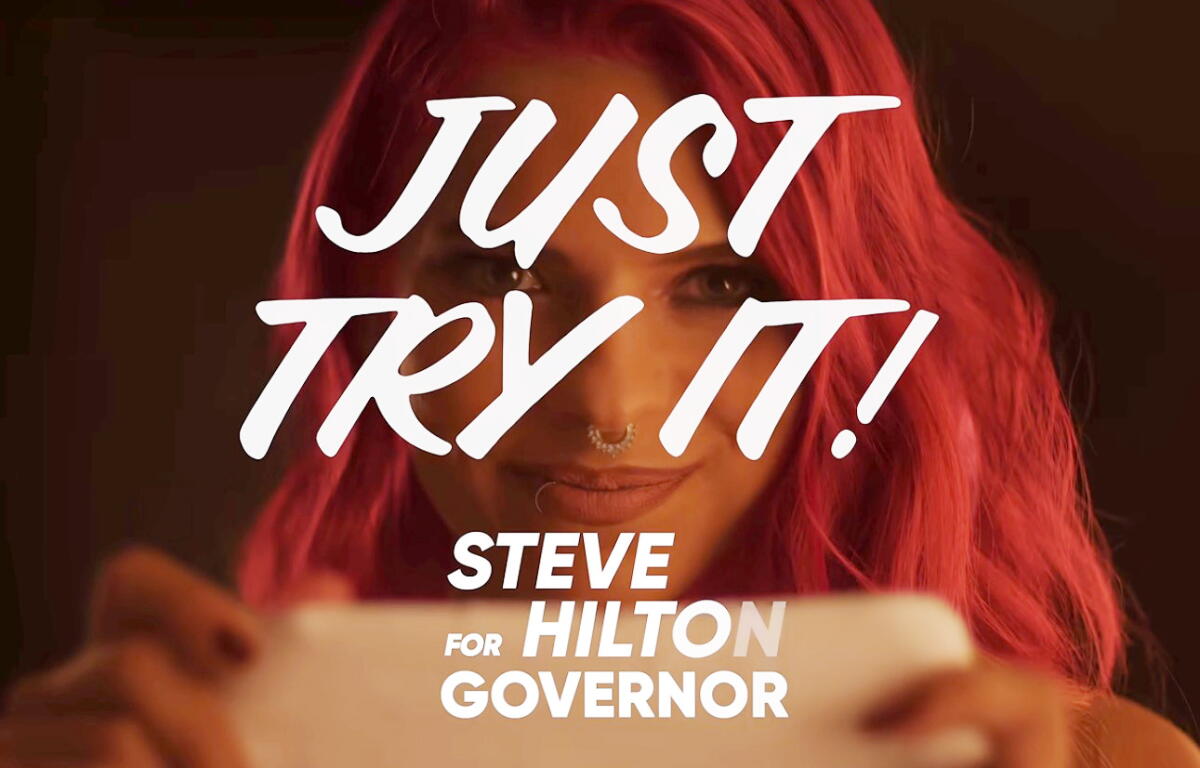
Source link

Arizona picks Biden for Democrats’ first win in 24 years

Joe Biden was declared the victor in Arizona on Tuesday, making him just the second Democratic presidential candidate in the last 72 years to win in a state that long embodied the bedrock conservatism of Republicans such as Barry Goldwater.

The former vice president’s triumph over President Trump, called by the Associated Press, reflected a political shift similar to that in other states in the Southwest, as growing numbers of Latinos and college-educated suburban voters are making Democrats ascendant.

The last Democrat to win Arizona was Bill Clinton, in his 1996 reelection race. He was the first since Harry S. Truman in 1948.

In 2016, Trump notched a narrow 91,000-vote advantage in Arizona over Hillary Clinton. But demographics and his broad unpopularity caught up with the party that sent Goldwater and then John McCain to the Senate and helped make both men Republican presidential nominees, in 1964 and 2008, respectively.

“We forever were this bastion of Goldwater conservatism, and that still lives on in the vast rural stretches of the state,” said Michael O’Neil, a veteran Arizona pollster. “But 83% of the people here now live in urban and suburban areas. And they are trending Democratic. Arizona looks like the next Virginia: once a consistently red state that goes purple for a very short time and then ends up solidly blue.”

Like voters elsewhere, Arizonans turned out in big numbers, logging almost as many votes as the 2.5 million cast in 2016 even before polling places opened Tuesday.

Analysts said Biden’s centrist approach — promising a return to normalcy after four years of disruption under Trump, and a national effort to control the COVID-19 pandemic — appealed in particular to suburban women. That moderate stance also described Democrats’ Senate candidate, Mark Kelly, the former astronaut and husband of former Rep. Gabby Giffords. Kelly beat Republican Sen. Martha McSally, a Trump loyalist appointed to the seat in 2019.

Democrats maintained a solid lead in the mail-in ballots returned ahead of election day. Republicans normally would have been able to make up that deficit with election day voting in Maricopa County, which includes Phoenix and accounts for more than 60% of the state vote. But the county has steadily gained more Democratic-leaning voters.

Statewide, “Republicans were turning out significantly below Democrats with new voters, and it really made a significant difference this time,” said Chuck Coughlin, who helps run a Republican-leaning political consulting firm. Many Arizonans seemed to be looking for non-ideological, pragmatic candidates, he said, “and people want to believe that about Biden, along with Kelly.”

Kelly’s victory gives Democrats both of Arizona’s Senate seats for the first time since 1953.


Source link

Column: Lots of ‘pie in the sky’ promises by governor wannabes with no way to pay for them

Here’s what the Democratic candidates for governor aren’t telling us: While promising the moon, they’ve avoided saying how they would keep paying for all of Sacramento’s current costly programs.

Termed-out Gov. Gavin Newsom and the Democratic-controlled Legislature have dug the state into a deep financial hole, and it faces severe deficit spending through the next governor’s first term.

The only honest solution is an unpopular mix of program cuts and tax increases, plus a focused, earnest and unlikely effort at making government more cost-effective and efficient.

The worst option would be the easy one that got Sacramento into its current mess: gimmicky budgeting that includes excessive borrowing, program delays rather than outright eliminations and fudged numbers.

Nonpartisan Legislative Analyst Gabriel Petek recently estimated “the state faces structural deficits running from $20 billion to $35 billion annually.”

He warned the state’s financial commitments funded by its revenue “[are] not sustainable” and added that mopping up the red ink “will likely require at least some — if not significant — spending reductions.”

The analyst pointed out that since 2019, under Newsom, state general fund spending has risen by $100 billion to $248 billion in the governor’s latest budget proposal in January. About 70% of the growth went to maintaining existing services and 30% was for expanding or creating new programs.

“In retrospect,” Petek continued, “the state could not afford to sustain its existing services while funding … expansions and new programs.”

Last week, the analyst reported some good news coupled with bad. He estimated a $25-billion boost in unanticipated revenue, driven by artificial intelligence enthusiasm and “the related stock market boom.” But, he added, “these surging revenues likely are not sustainable.”

You’re reading the L.A. Times Politics newsletter

George Skelton and Michael Wilner cover the insights, legislation, players and politics you need to know. In your inbox Monday and Thursday mornings.

The analyst said the stock market appears to be “in a speculative bubble, rivaled only by the dot-com boom” (that led to the Great Recession) “and the Roaring ‘20s” (that ushered in the Great Depression).

“The state should be prepared for revenues to be tens of billions lower within one or two years.”

Newsom will get another crack at legitimately balancing a budget on Thursday when he revises his spending proposal for the next fiscal year.

You can’t really blame the governor’s wannabe Democratic successors for dodging this fiscal thicket. Program cuts and higher taxes don’t attract voters. Moreover, the subject is weedy and boring. For that reason, I suspect, moderators didn’t even delve into it during three recent televised gubernatorial debates.

Regardless, budget-crafting is a governor’s most sacred duty and the source of much of their power. It would help voters to know where the candidates stand. Right now, they’re in hiding.

Former state Senate leader Don Perata, a Democrat, posted this last week about the chronic deficits:

“Apparently, candidates find this untroubling or maybe someone else’s worry. None … even mentioned it during those juvenile television ‘debates’ and the hundreds of millions spent on campaign commercials.”

Instead, various contenders have been promising voters a Santa’s sleigh of goodies: state-run single-payer healthcare, free childcare, partial no-tuition college, suspension of the gas tax, no state income tax for people earning under $100,000 and generous subsidies for Hollywood filmmaking.

Billionaire hedge fund founder Tom Steyer and former Orange County congresswoman Katie Porter have been touting single-payer healthcare, an idea pushed by politically potent nurses unions and Democratic progressives. Private insurance would be eliminated and, under most proposals, so would the popular Medicare. The state would manage all medical insurance — more efficiently and at less consumer expense, advocates insist.

But this concept seems far beyond the state’s financial reach and operational capability. Its cost could exceed twice the current state budget. And I shudder to think of our state bureaucracy trying to handle healthcare for 39 million people. First, get the DMV working right and the botched bullet train rolling.

For many years, underdog gubernatorial candidate Antonio Villaraigosa — a former Los Angeles mayor — has called the single-payer notion “snake oil.” In a CNN debate last week, he termed it “pie in the sky.”

Centrist San José Mayor Matt Mahan chimed in, asserting: “The candidates who are fighting for single-payer don’t know how to pay for it, and they’re not being honest about it.”

Practically everyone jumped on new Democratic frontrunner Xavier Becerra — former state attorney general and U.S. health secretary — for seemingly being unable to specify whether he’s for or against single-payer.

“I’ve been consistent for over 30 years,” he said, trying to explain that he favors Medicare-for-all as “the most efficient way that we can do healthcare.”

It was a silly waste of debate time. They were arguing over oranges and lemons — both citrus, but different. Becerra should have just made clear that he’s opposed to single-payer and supports a separate version of universal healthcare: Medicare-type coverage with a supplemental private insurance option for all Californians. If that’s indeed what he favors.

Mahan bragged that he’s “the only candidate in this race who is calling for a suspension of the gas tax.” It’s a highlighted Republican talking point. But no other Democratic candidate advocates suspending the tax because it’s a screwy idea.

The roughly 60-cent-per-gallon state gas tax pays for filling potholes and more serious road repairs and improvements. Moreover, the next governor won’t take office until January. Suspending the tax then — even if the Legislature approved — wouldn’t reduce today’s soaring pump prices.

My take on the debates:

Becerra survived. He’s refreshingly calm but needs to be more crisp.

Steyer was articulate and may have attracted Bernie Sanders fans.

Porter is a talented debater, but seemed overly defensive about her past hot temper.

Mahan was fine, but he just got off the bench and it’s late in the game.

Villaraigosa was straightforward as usual, and finally had a broad audience.

All should bone up on budget-balancing and tell us their thinking.

What else you should be reading

The must-read: How MAGA Sheriff Chad Bianco is shaking up the 2026 California gubernatorial primary
The other must-read: Tom Steyer tries to sell voters on his own personal change
The L.A. Times Special: Abortion access just took another blow. California wasn’t spared

Until next week,
George Skelton


Was this newsletter forwarded to you? Sign up here to get it in your inbox.

Source link

More abortion restrictions loom, even in California

In the ancient days of 2022, when the Supreme Court sledgehammered abortion rights with the Dobbs decision, the (Republican) party line was that the issue had returned to where it belonged: the states.

Fast forward to 2026 and it would now seem that the antiabortion crowd, faced with the aggressive pro-choice response of states such as California and lethargy on the part of the Trump administration to do more toward implementing a national ban, is no longer satisfied with that outcome.

They are now out to stomp on California, and a handful of other reproductive health sanctuaries, to ensure that what happens inside our borders fits their ideology.

“It’s strategic, it’s targeted,” Mini Timmaraju, president and chief executive of Reproductive Freedom for All, told me. “Even if you’re in a ‘blue state,’ you’re not safe.”

The U.S. Supreme Court will decide next week whether to take up the abortion issue again, in a case that could end medication-only procedures as we know them.

That would force women into a less-safe regimen with a lower success rate that would almost certainly lead to more complications — and therefore more controversy. Even in California, which would not be spared by what the court could do, and whose policies are central to the case.

Let’s break it down.

demonstrators participate in a May Day rally while holding pro-reproductive rights signs

Union members, immigrant rights supporters and anti-Israel demonstrators participate in a May Day rally and march in Washington, D.C., on Friday.

(Robyn Stevens Brody / Sipa USA via Associated Press)

Rogue California

After the Dobbs decision, 11 states passed near-total bans on abortions.

Six other states put early time limits on the procedures, and others passed bans in the second trimester, leaving women in much of the South and the Great Plains with no access to in-person care for hundreds or even thousands of miles.

In many of those places, those bans include making it illegal to receive abortion-inducing medications in the mail from states such as California. But that’s a hard law to enforce unless you go around opening lady-mail.

In recent years, the number of U.S. abortions arranged through telehealth and mailed medication has skyrocketed to more than a quarter of all procedures, though the often illegal nature of this route probably means the number is higher but underreported.

To protect the doctors and providers who are prescribing and sending these medications, California and other states have passed numerous laws to make it easier and safer — from allowing the prescriber to remain anonymous to shield laws that ensure those providers can’t be penalized or extradited to other states for prosecution, though some states are trying.

Earlier this year, Louisiana (a state with a full ban) tried to extradite a California doctor with no luck. Gov. Gavin Newsom gleefully denied that request, promising to “never be complicit with Trump’s war on women.”

US House Speaker Mike Johnson, a Republican from Louisiana, speaks during the annual March For Life on the National Mall

U.S. House Speaker Mike Johnson, a Republican from Louisiana, speaks during the annual March For Life at the National Mall in Washington, D.C., on Jan. 23.

(Graeme Sloan / Bloomberg via Getty Images)

Rogue Louisiana

In the Supreme Court case, Louisiana is thinking bigger — and expressing antiabortionists’ frustration with the Trump administration. The state is suing Trump’s Food and Drug Administration because it allows mifepristone, one of two medications used in abortions, to be prescribed via telehealth.

“Patients and these states with bans and extreme restrictions have relied on providers in blue states, abortion access states, to really help provide care,” Timmaraju said. “And this is a way to stop that.”

Antiabortion groups had hoped (and pushed) Trump to simply have the FDA remove its approvals of mifepristone, but Trump ain’t that dumb. Despite all his promises on the campaign trail, the administration would prefer to kick the can instead of the hornet’s nest on this one, especially before the midterms — since most Americans support abortion rights. So the FDA has said it’s “studying” mifepristone, which could take awhile.

Louisiana is claiming it had to spend $90,000 in taxpayer money to help two women who sought medical treatment after medication abortions (though it has not said they received the medication in the mail).

That’s a real harm, it argues, and gives them standing to sue the FDA to stop mifepristone from being prescribed by telehealth at all, claiming the FDA hasn’t done its due diligence to ensure that’s safe and it makes them really sad that they can’t stop women from ordering it.

The FDA has remained “completely silent on this point because the Trump administration doesn’t want to get involved,” said Mary Ziegler, a UC Davis law professor and expert on reproductive law.

“It’s totally one of the signs that the antiabortion movement is in an open rebellion, and is using the federal courts to express that because the political branches have been pretty non-responsive,” she said.

The marble statue Contemplation of Justice is seen outside the U.S. Supreme Court building

The Contemplation of Justice statue is seen outside the U.S. Supreme Court building on Monday in Washington.

(Andrew Harnik / Getty Images)

The Supreme Court lifted a stay Monday imposed by the 5th Circuit that stopped mifepristone from being tele-prescribed. So it’s available until at least May 11.

After that, who knows. It’s up to a court that has proven it’s no friend to reproductive rights.

It’s an issue with real consequence for Trump. If the court takes the case, the midterms must contend with abortion. If they don’t, the pressure on Trump to do so sometime intensifies. But its also an issue with real consequence for Californians.

Consequences in California

In California, there are 22 counties without an abortion clinic, Ziegler points out. In the far north of the state, women without access to telehealth abortions would be little better off than those in Louisiana if mifepristone by mail is stopped.

Instead, women would probably be forced to use the second medication, misoprostol, alone. This single-drug regimen has a lower effectiveness rate than the combined drugs, meaning more women will have to seek out secondary care — often in places where even in-person care is hard to come by. That could lead to more real harm, and therefore more high-profile cases of botched abortions to fuel a further ban on misoprostol.

Steve Hilton takes an interview after the California gubernatorial debate at Skirball Cultural Center on Wednesday.

Steve Hilton takes an interview after the California gubernatorial debate at Skirball Cultural Center on Wednesday.

(Jason Armond / Los Angeles Times)

And then there’s the fact that Newsom won’t be governor for much longer, and it will be up to the next chief executive to protect in-state providers from extradition. The top Republican contender, Steve Hilton, has previously said he would allow Louisiana to grab our California doctor if he were in charge.

Those kinds of threats have a chilling effect, both Ziegler and Timmaraju said. If enough providers are scared of the consequences of providing telehealth — or any — abortions, a ban becomes self-imposed.

Even in California.

What else you should be reading

The must-read: Immigration crackdown souring Orange County’s view of Trump, poll finds
The deep dive:How the Fight Over Israel Is Playing Out Inside MAGA
The L.A. Times Special: Who won the California governor debate on CNN? Here’s what our columnists say

Stay Golden,
Anita Chabria

Was this newsletter forwarded to you? Sign up here to get it in your inbox.
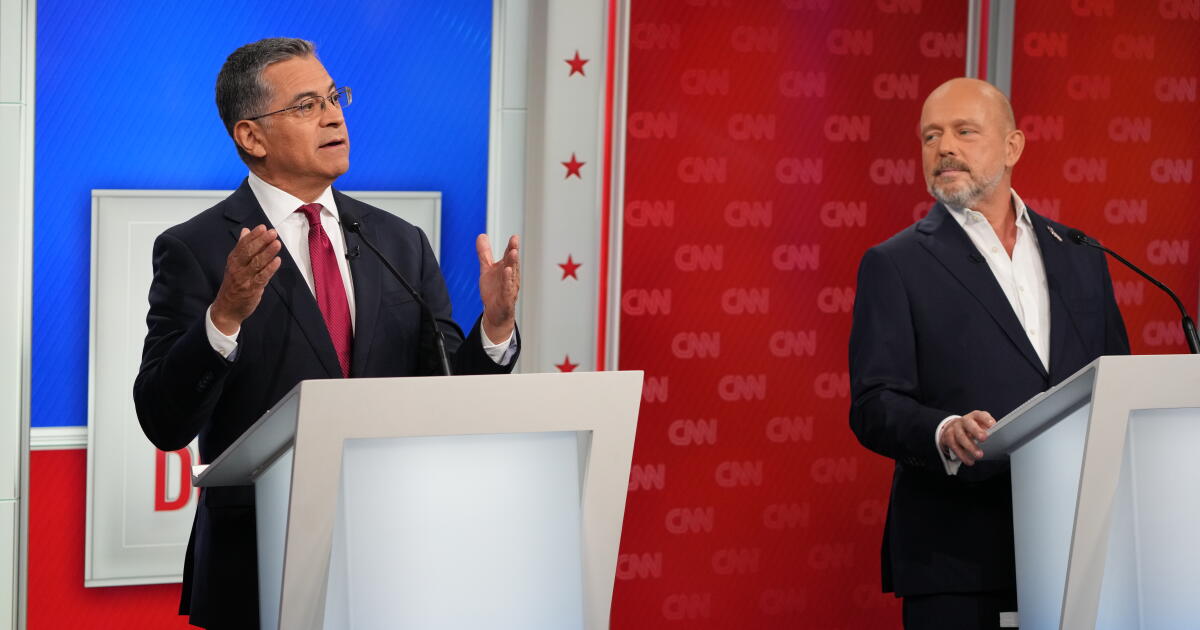
Source link

Column: California isn’t so cutting-edge when it comes to electing governors

Across America, 53 women have served as state governors. But not one in California. What gives? Aren’t we supposed to be enlightened out here in this cutting-edge state?

In fact, 14 women currently are governors in all sorts of states — north, south, flyover and Pacific coast. Big, midsize and small. Red, blue and purple.

We stand out with a huge black mark.

Voters have a chance to erase the ugly spot this year with Katie Porter in position to possibly be elected California’s first female governor.

Don’t get me wrong. I’m not saying Porter should be elected just because she’s a woman.

What I’m saying is that this is an opportunity to elect a perfectly qualified woman. If a male opponent is considered better suited for the job, fine. But first, let’s give her a good hard look and listen to her ideas. Maybe she’s too liberal — or not liberal enough. Perhaps too feisty and brusque than some unfairly find acceptable in a woman.

You’re reading the L.A. Times Politics newsletter

George Skelton and Michael Wilner cover the insights, legislation, players and politics you need to know. In your inbox Monday and Thursday mornings.

Independent polling shows that Porter basically isn’t getting any more support from women voters than she is from men.

I queried my best source on such matters: my daughter, Karen Skelton, a longtime political operative who has served stints in the Clinton and Biden White Houses. Why aren’t more women rallying around Porter?

“There was a time when women were excited to support women just because they were women, fueled by the historic prospect of electing ‘the first,’” she said. “But if anything has been proven in the last two presidential elections where women ran, it’s that identity politics does not work….

“It has to be more than her identity as a woman to get her elected.”

Yep. In my view, Democrat Hillary Clinton wasn’t very likable in 2016 and ran a lousy campaign. In 2024, Vice President Kamala Harris also lacked popularity. And she was dealt a losing hand by aging President Biden when he took too long to step aside.

Harris, a former U.S. senator with a long history of electoral success in California, would have been the heavy favorite to become the state’s first female governor if she had run. But she declined, opting for a possible third presidential bid in 2028.

Porter, 52, is a UC Irvine consumer law professor and former Orange County congresswoman who increased her statewide name familiarity by running unsuccessfully for the Senate in 2024.

Running for governor, she has been forthright and specific on what she’d try to achieve in Sacramento. She’d probably shake up the place.

One goal that should appeal to young families is free childcare. How’d she pay for that, I asked.

“Well, how do we afford public schools, roads, everything else, right?” the single mother of three answered, implying it’s about priorities. “The reason we don’t fund childcare, but we do fund other things, is because we expect women and mothers to do childcare for free or for pennies.”

She was scurrying along leading the Democrat pack last fall until tripping over two videos that displayed a hot temper.

In one, she threatened to walk out of a TV interview when a female reporter repeatedly asked how she expected to gain the votes of President Trump’s supporters. An irritated Porter said she didn’t need their votes, and she was right — but also rude.

In the other video — an oldie — then-Rep. Porter was shown yelling at a young female aide to “get out of my f— shot” during a videoconference with a Cabinet secretary.

Porter says she apologized to the staffer that day and they worked together for years afterward. And following a recent televised debate, Porter says, the former aide texted her congratulations and added that if she still lived in California, she’d vote for her.

The TV reporter, Julie Watts of CBS, was a moderator of a campaign debate last week and tossed some prickly questions at Porter and the other candidates.

“I was very calm and answered all the questions,” Porter notes. “I showed people I can do better” than the TV interview she has apologized for many times.

Porter has never completely recovered from the harmful videos. But she’s running close to two other Democrats — billionaire Tom Steyer and former U.S. Health and Human Services Secretary Xavier Becerra — in the June 2 primary.

“If a man had done the same thing, we wouldn’t be talking about it,” asserts Valerie McGinty, founder and president of Fund Her, an organization dedicated to electing women.

Several women agreed.

Assemblymember Cottie Petrie-Norris (D-Irvine), who has endorsed Porter, points to the late beloved, oft-profane legislative leader John Burton of San Francisco as an example of a double standard.

“Not a woman in American politics could get away with titling their autobiography ‘I Yell Because I Care,’” she says. On the book’s jacket cover, Burton is pictured speaking to a crowd with two raised middle fingers.

“People expect women to be strong but not too harsh,” Petrie-Norris says.

OK, but why do women get elected governor in other states, but not in California?

Mindy Romero, director of the Center for Inclusive Democracy at USC, says the vast amounts of money and human resources needed to win in humongous California make it especially difficult for women. They usually haven’t been included in the political pipeline long enough, she says, to build a hefty donor base, acquire elective office experience and gain statewide name recognition.

Three women have dropped out of the current race because they weren’t gaining ground. But it’s hard to argue it was because of any gender hurdles.

Previously, three women won their party nominations for governor but lost in November: Democrats Dianne Feinstein and Kathleen Brown in 1990 and 1994, respectively, and Republican Meg Whitman in 2010. None lost because of any double standard. It just wasn’t their year politically.

But California has elected three female U.S. senators — Democrats Feinstein, Barbara Boxer and Harris.

And nearly half the state Legislative seats are held by women.

It’s conceivable this year that California finally enters the 20th century — let alone the 21st — by electing our first female governor.

What else you should be reading

The must-read: Coded messages, ‘red boxing’ and other allegations in California’s testy race for governor
Money (That’s what I want): Billionaire-tax backers say they have enough signatures to qualify for ballot
The L.A. Times Special: Voter guide to the 2026 California primary election

Until next week,
George Skelton


Was this newsletter forwarded to you? Sign up here to get it in your inbox.
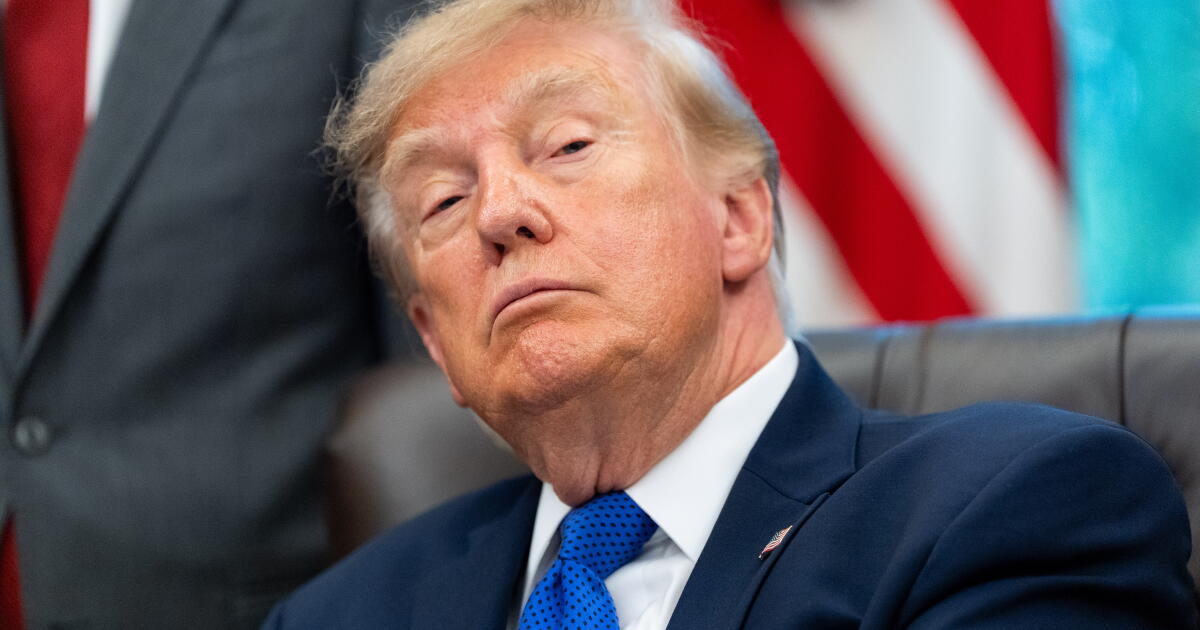
Source link

Here’s who (we think) won the chaotic California gubernatorial debate

Eight candidates for California governor shared a stage for 90 minutes Tuesday night, their second of three scheduled debates before the June 2 primary.

My colleagues Gustavo Arellano and Mark Z. Barabak joined me to decide who the winner was, or if there was a winner at all.

Arellano: The real MVP in this debate? State Supt. Tony Thurmond.

He brought up his family story — child of a Panamanian immigrant who lost his parents young, someone familiar with “government cheese” as sustenance growing up — in a way that didn’t sound forced or pedantic.

He usually stayed within the time limits that were barely enforced by moderators. And he kept knocking down Chad Bianco again and again, drawing applause when he brought up the Riverside County sheriff’s takeover of hundreds of thousands of ballots.

Thurmond is the only gubernatorial candidate currently holding a statewide position, a former Richmond City Council member and Assembly member. “Elect someone with a lived experience,” he told the audience in his closing statement.

So why has Thurmond polled so low again and again to the point that he keeps not getting invited to debates and therefore not getting in front of California voters?

California has never elected a Black governor — in fact, the state is notorious for not voting in Tom Bradley in 1982 even though polls showed him leading George Deukmejian all the way to Election Day (the phenomenon of voters telling pollsters what they think they want to hear instead of what they actually feel is now known as the Bradley Effect).

As California’s Black population keeps shrinking, it would’ve been wonderful to see Thurmond do better than he has.

Chabria: Gustavo is spot on with his take on Thurmond. He came across as polished, capable and knowledgeable. But also, he’s just too far down in the polls for any kind of comeback.

In my mind, though, Xavier Becerra was the clear winner. No, he didn’t blow the other candidates away.

But he landed more than one punch that will almost certainly be on social media feeds for weeks to come, especially when he went at Republican Steve Hilton. Early on, he called President Trump “Hilton’s daddy.” Later, he quipped at Hilton, “We don’t need a talking head for Fox News to tell us how the government works.”

The debate was chaotic in more than one moment, but Becerra managed to get more than his share of airtime and use it wisely. Tom Steyer, the other Democratic front-runner, mired himself in wonk-talk. He wanted to get deep into policy, and got lost in complicated issues such as oil refineries.

Steyer didn’t have a single memorable line, though his closing statement did redeem him somewhat. He called himself the “change maker,” and promised, “if you want change, there is only one person on this stage they are afraid of” — they being tech titans, oil companies and other gods of industry.

It was the same for Katie Porter and Matt Mahan, who didn’t do anything wrong, but also, didn’t break out.

But those back-and-forths of Becerra and Hilton are priceless because they’re quick and shareable. I won’t be surprised to see voters drift Becerra’s way, even if only a bit.

Barabak: No runs, no hits, no errors. Seven men — and one woman — left standing.

I didn’t see, or hear, anything that seems very likely to drastically shake up or dramatically reorder the governor’s race. No breakout performance that will launch any of the candidates into clear-cut front-runner status. No major gaffes to leave any of the contestants sprawled on the killing floor.

So to that extent, I would score Becerra as the evening’s (modest) winner. He’s clearly having a moment, surging from political near-death to the top tier in polls. (Though, let’s be clear, it’s still a muddle, with several candidates bunched in the 15%-20% support range.)

There have been suggestions Becerra needs to show a bit more fight and he did so Tuesday, in particular taking on Hilton. Some of his jabs seemed a bit forced and stagy. (That line about Trump as “Hilton’s daddy.”)

Better, as Anita noted, was the jab from the former congressman, state attorney general and Biden cabinet secretary about a Fox “talking head” explaining how government works.

I found Porter to be crisp and authoritative on policy; Steyer to be repetitive (I’m the only change agent on this stage, look how much money is being spent to stop me — though it’s a small fraction of the sum he’s sunk into his vanity-cruise campaign); Mahan and Antonio Villaraigosa to be largely afterthoughts, and Bianco to have all the warmth and appeal of the grouchy old man telling kids in the neighborhood to get off his damn lawn!

The Riverside County sheriff seemed not to be running for governor of California, but rather mayor of MAGA-ville, a strategy apparently intended to nab one of two spots in the June primary, allowing him to go on to crushing defeat in November.

I agree that perhaps the night’s most surprising performance came from Thurmond. The state schools superintendent is mired in bare single digits in polls and only just made the debate stage after being left out of last week’s meetup in San Francisco.

His chances of being California’s next governor are somewhere between zero and nil, which is why he escaped serious scrutiny. That said, he made the most of the 90 minutes on stage, laying out his compelling up-from-poverty life story and seeming to relish taking on Bianco in particular.

Too little, too late. But Thurmond certainly acquitted himself well.

What else you should be reading
The must-read: ‘This is like the Russian mafia’: L.A. judge elections see unusual drama
The deep dive: Gavin Newsom wants to break up with Elon Musk. Tesla is making that difficult.
The L.A. Times Special: John Seymour, Anaheim mayor and U.S. senator, dies at 88

Stay Golden,

Anita Chabria

Was this newsletter forwarded to you? Sign up here to get it in your inbox.
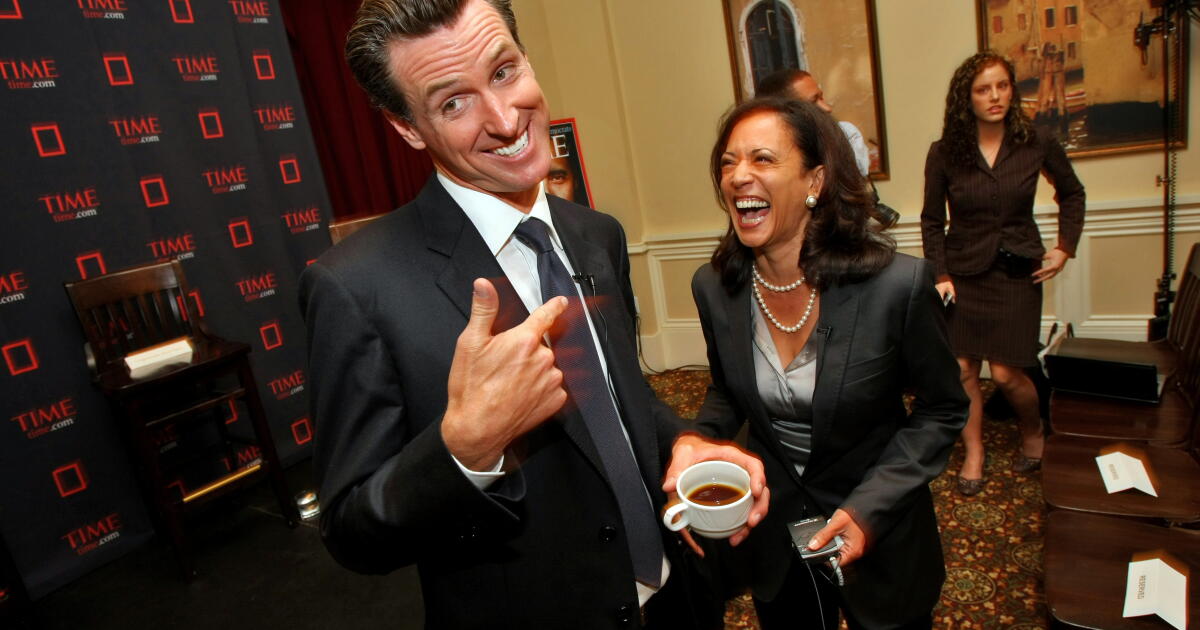
Source link

Column: After Swalwell scandal, a ‘safe choice’ for Democrats emerges

Xavier Becerra seems like the type of steady, trustworthy fellow you’d like your daughter to marry. But she’s attracted to a charming party animal.

Then the flashy dude does something really stupid and repulsive. Daughter is jarred into her senses and decides to size up the unexciting but reliable guy.

That’s how I’m seeing the suddenly captivating contest to succeed termed-out Gov. Gavin Newsom.

OK, it’s not a perfect analogy. Becerra is 68, been happily married for 37 years and the couple have three grown children. But the principle’s the same: He’s the safe choice. The hot other character merely fooled lots of people for a while.

You’re reading the L.A. Times Politics newsletter

George Skelton and Michael Wilner cover the insights, legislation, players and politics you need to know. In your inbox Monday and Thursday mornings.

Becerra is suddenly getting a hard look because the fast-stepping, front-running Democrat Eric Swalwell revealed himself to be totally unworthy of public office.

Five women accused the married Bay Area congressman of sexual misconduct, including rape. He denied the allegations but apologized to his wife for past “mistakes in judgment.” Donors, endorsers, staffers and voters immediately fled his campaign. And he quickly slunk away.

And Becerra surged.

Why?

“People are looking for something stable,” Becerra answered when I asked. “Everybody likes pizzazz and glitter. Then all of a sudden their hero falls from grace. And they look for who they can trust.”

Dan Schnur, who teaches political communications at USC, UC Berkeley and Pepperdine, says: “Democrats had a near-death experience with Swalwell. They don’t seem to be in the mood to take more risks.”

Schnur calls Becerra “this year’s version of Joe Biden’s 2020 campaign.” He’s the safe choice. “Sometimes being ‘none of the above’ is good enough.”

Since Swalwell’s collapse, the once-floundering Becerra has had a meteoric rise in the polls.

A survey conducted for the state Democratic Party showed Becerra rising by 10 points from single digits to tying Tom Steyer, a billionaire hedge fund founder turned climate warrior. Close behind was former Orange County Rep. Katie Porter.

Those three are now the leading Democratic competitors for a slot on the November ballot. The top two vote-getters in the June 2 primary, regardless of party, will advance to the general election.

Republican former Fox News host Steve Hilton was leading the entire field in the poll, followed closely by Riverside County Sheriff Chad Bianco.

Steyer and Porter are both liberals in their ideology and personalities. Neither are flamethrowers, but they‘re fiery. In contrast, Becerra also is an ideological liberal, but with a low-key demeanor that might cause one to mistake him for a political moderate.

San José Mayor Matt Mahan is clearly a Democratic centrist. But in this era of intense polarization, moderation may be a hard sale. At least, it has been so far for Mahan.

Among those six Democratic and Republican candidates, Becerra boasts by far the most outstanding political resume.

He was U.S. secretary of Health and Human Services under President Biden. Before that as state attorney general, California’s mild-mannered “top cop” showed his aggressiveness by suing the first Trump administration 123 times and winning the vast majority of cases. He also served 12 terms in Congress from Los Angeles and became part of the Democratic leadership. And he served one term in the state Assembly.

That’s an impressive list. But Schnur says Becerra was “the least impressive” candidate in a 90-minute televised debate last week.

“He talked in very vague generalities,” the former political operative says, but adds: “In the middle of the other candidates’ drama and emotional outbursts, he seemed very calm and safe.”

Some pundits and pols have been calling on Becerra to show more fire. But that’s not him. He’s guarded and understated. It’s how he’s wired. If he attempted a personality change, it probably wouldn’t work. There’s a risk of it seeming contrived and phony.

But Becerra should be more specific on issues. Exactly how would he make life better for Californians?

His basic answer when asked how he’d solve a given problem pestering California is essentially: Trust me. I’ll meet with all sides and figure it out.

That’s not just a cop-out. It’s his pragmatic modus operandi.

That reserved style prompted this shot during the debate from Porter, who tends toward specificity:

“Mr. Becerra, you have all these lovely plans. But there are never any numbers, any revenue plan, any details. … The how, the why and how much, it’s all missing.”

Becerra responded with some rare emotion: “That’s very rich to hear from someone who’s never had to actually run a government.” The former Cabinet secretary said he’d balanced four federal HHS budgets that were larger than the California state budget.

I asked Becerra about some issues last week. Here’s partly what he said:

Housing costs: Expedite building by streamlining more regulations. “We’ll continue to have rules, but let’s make them smart rules.”

Gas prices: Keep more refineries from closing. “Let them know they can operate and produce and not lose money. That’s an easy one.”

High-speed rail: ”We’re going to build the bullet train, but not this bullet train. It’s too expensive. Sit everybody down and come out with a position.”

Banning new gas cars by 2035: Is Newsom’s goal realistic? “Seeing what I see, no. We can’t make it by ‘35, but we can make it.”

But let’s be honest. Elections usually turn more on likability than policy positions.

“Decency may be a quality that goes a long way” in the governor’s race, says longtime Democratic strategist Darry Sragow. “In part that’s because of the Swalwell revelations and also because of Trump, who’s not decent. Decency may be what people are looking for.”

But Democrats are riled up by Trump and they’re also demanding backbone and fight.

Many are eyeing Becerra as someone perhaps worth partnering up with. A bit more passion from him could help sustain their interest.

What else you should be reading

The must-read: The congressional landmine stirring fears about the midterm election — and a Trump power grab
Brace yourself: Voter ID controversy headed for California with initiative on November ballot
The L.A. Times Special: How a Trump-endorsed Republican could become California’s next governor

Until next week,
George Skelton


Was this newsletter forwarded to you? Sign up here to get it in your inbox.
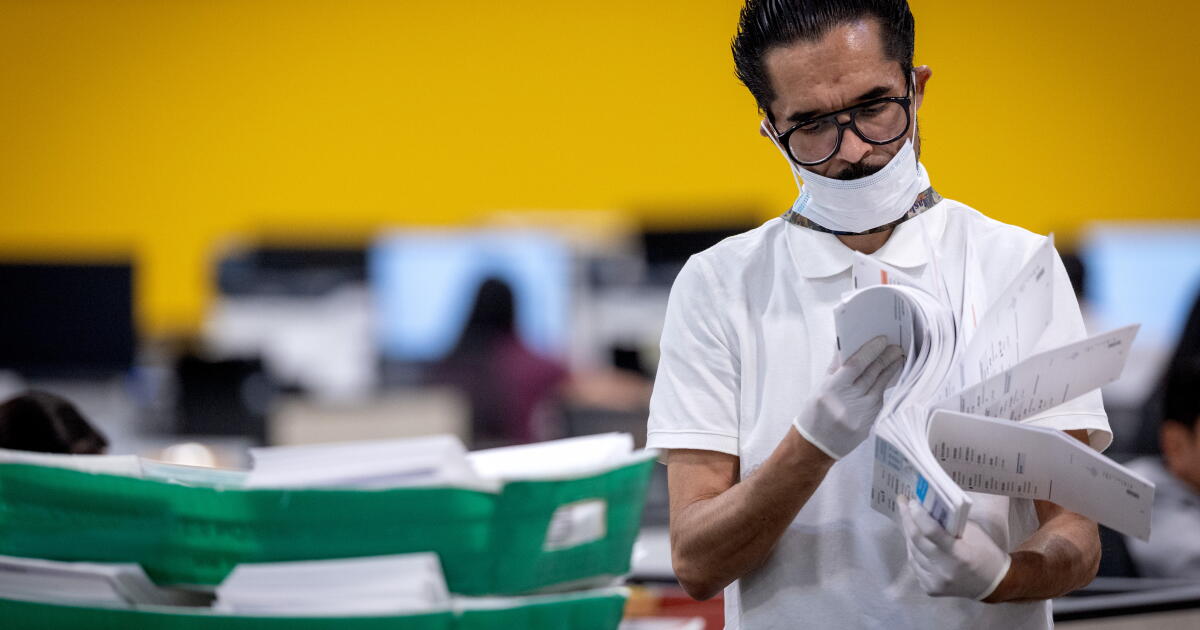
Source link

Vance, eyeing 2028, navigates a diplomatic minefield with Iran

Reporters assigned to travel aboard Air Force Two were told to prepare for an early morning departure on Tuesday for Islamabad until an unexplained delay — followed by a detour by Vice President JD Vance to the White House — revealed clues that something was wrong.

Iranian diplomats had not yet responded to U.S. proposals intended to form the basis of a new round of talks. Some were questioning whether they would attend at all. Had he departed as planned, Vance risked a humiliation, spending hours flying to Pakistan only to be stood up on arrival.

A crisis meeting at the White House led President Trump to announce an indefinite extension to a ceasefire deadline that had been set as a pressure tactic. Now, unable to bring the Iranians to heel, that pressure was suddenly off.

It was an early lesson for Vance in the many ways high-stakes diplomacy can veer off-course.

“There are obvious risks for Vance,” said Chester Crocker, who served as an assistant secretary of State in the Reagan administration, “being associated with failure or with a dubious deal.”

Trump’s aides are clear on the stakes in negotiations with Iran over its nuclear program and an end to the war. Control of the Strait of Hormuz could determine global oil prices for years. Any final deal will shape whether Americans ultimately conclude the fight was worth it — and could sway the outcome of the midterm elections.

But for America’s lead negotiator, the stakes are also personal.

Vance, a diplomatic novice, has found himself at the helm of an effort rife with political risk that has stymied seasoned diplomats ahead of an anticipated run for president.

You’re reading the L.A. Times Politics newsletter

George Skelton and Michael Wilner cover the insights, legislation, players and politics you need to know. In your inbox Monday and Thursday mornings.

The potential payoff is substantial, placing Vance at the center of an international stage with the power to end a historically unpopular war.

But he also may be forced to attach his name to a nuclear deal that provides Tehran access to billions of dollars in sanctions relief, in exchange for limits on its nuclear work that will ultimately expire over time, under conditional monitoring access for international inspectors — an agreement with striking echoes to a 2015 nuclear deal negotiated by a Democratic administration that was disparaged by his party for over a decade.

Vance is negotiating not on his own terms, but on behalf of a mercurial president whose decisions will ultimately determine whether an agreement can be reached. And the Iranians know that Trump’s days in office are numbered, with Vance, a war skeptic, possibly in line to succeed him.

One U.S. official familiar with the negotiations said the vice president is “a pragmatist,” realistic about the prospects of a deal.

“What he has to gain is an image that he can operate effectively on the world stage on a fraught issue. Even if he will give credit to the president, he will be seen as capable of resolving really hard, security-related problems,” said Dennis Ross, a veteran diplomat on the Israeli-Palestinian conflict who served in the George H.W. Bush, Clinton and Obama administrations. “What he has to lose is that he was given the role and did not succeed.”

Failure could raise doubts about his statecraft. But even success at the negotiating table could result in an agreement that turns off Republican voters he may need in a 2028 presidential bid.

“Vance is put in an impossible position,” said Arne Westad, a professor of history at Yale.

“Any deal with the current Iranian regime will be seen as problematic by many Republicans,” Westad said. “If he fails to secure a deal, he will be attacked by those who want an end to the U.S. war — and be seen as ineffective by the president.”

Reputation ‘on the line’

Trump has publicly acknowledged that Vance, a Marine Corps veteran who has consistently opposed U.S. military engagements in the Middle East, had reservations over launching the Iran war in the first place. “He was, I would say, philosophically a little bit different than me,” the president told reporters in March. “I think he was maybe less enthusiastic.”

For that reason, according to Iranian state media reports, Vance was seen by Tehran as their preferred interlocutor in negotiations. Iranian officials expressed gratitude when, during fevered talks ahead of the initial announcement of a ceasefire, they learned that Steve Witkoff, the president’s roving negotiator, had recommended that the vice president be included in the delegation — an exceptional gesture that marked Washington’s highest-level engagement with the Islamic Republic in history.

Republican strategists said Vance’s participation is a demonstration that Trump trusts him, an essential trait for any future Republican presidential nominee and aspiring heir to the MAGA movement.

“It’s rare that a vice president has been put in the position of directly negotiating with a foreign adversary,” said Terry Nelson, a longtime Republican media strategist. “We are engaging a very senior political leader in negotiations with a country that has killed U.S. soldiers and sown chaos in the region. I do think it’s an indication of our resolution and seriousness.”

Whit Ayres, a veteran Republican pollster who has consulted Republican senators and governors for more than three decades, said the vice president’s appointment as lead negotiator “elevates Vance as Trump’s heir-apparent even more than before.”

“Whether that becomes a plus or a minus depends on the outcome of the negotiations,” Ayres added, “and Trump’s ultimate standing with the Republican electorate, both of which are unknowns.”

Talks are currently deadlocked over long-standing demands from Tehran that its leadership has held since the early 2000s, when previously undisclosed nuclear activities first triggered international alarm over Iran’s expanding program.

Iran has periodically accepted temporary limits on its nuclear work — pausing uranium enrichment during talks and, under the 2015 deal, committing to a prolonged cap on enrichment at levels beyond any clear civilian need. But it has always insisted on a “right to enrich” on its own soil, rejecting U.S. attempts to permanently end the program as a foreign attempt to thwart Iran’s scientific progress.

Returning from the first round of ceasefire negotiations, Vance dismissed that position, articulated to him in Islamabad by the speaker of Iran’s Parliament.

“He said, ‘We refuse to give up the right to enrichment,’” Vance said. “And I thought to myself, you know what, my wife has the right to skydive, but she doesn’t jump out of an airplane, because she and I have an agreement that she’s not going to do that, because I don’t want my wife jumping out of an airplane.”

Echoes of a broken deal

The 2015 deal known as the Joint Comprehensive Plan of Action — negotiated by veteran, nonpolitical U.S. diplomats and nuclear scientists over two years of near-constant negotiations — removed roughly 98% of Iran’s nuclear stockpile from the country, while keeping the country’s nuclear infrastructure largely in place, save for the decommissioning of a heavy-water plutonium reactor that could have provided Tehran with a second path to a nuclear bomb.

Under the agreement, Iran consented to limit its use of advanced centrifuges for 10 years, and to restrict uranium enrichment to below weapons-grade levels for 15 years. Inspectors from the U.N.’s International Atomic Energy Agency were granted unprecedented access to monitor the program, though some of these enhanced inspection measures were set to expire after roughly two decades.

In exchange, Iran regained access to tens of billions of dollars of its frozen assets, and settled a long-standing legal dispute with Washington that led the Obama administration to transfer $400 million in cash to Tehran. The episode prompted scandal on the political right, which accused Democrats of fueling terrorism through the funding of Iran’s proxy militias.

Now, after just two weeks of negotiations, the Trump administration is already acknowledging that a final deal with Iran would rely on a familiar formula: temporary caps on Iran’s nuclear work in exchange for substantial sanctions relief. Trump withdrew from the JCPOA in 2018.

Iran comes to the talks with added leverage today, able and willing to disrupt the flow of 20% of the world’s energy through the Strait of Hormuz. And the United States is negotiating alone, without its former partners in the “P5+1” — Russia, China, France, the United Kingdom and Germany — at its side.

Anna Kelly, principal deputy press secretary at the White House, told The Times that “after Democrats like Joe Biden and Barack Hussein Obama weakened our country on the world stage, President Trump has effectively restored American strength with the help of Vice President Vance, who is doing a great job leading the United States in negotiations with Iran.”

“The president and his entire national security team have an incredible track record in making good deals for our country, and the American people can rest assured that the United States will not enter any agreement that does not put our national security interests first,” Kelly said.

Matt Gorman, a longtime Republican strategist and chief communications officer at Targeted Victory, said the JCPOA was viewed particularly critically because it “was negotiated in peacetime.”

“Vance would essentially be ending a war, if successful, and that allows him to make a very different argument,” Gorman said.

The vice president is currently polling as the front-runner for the 2028 Republican presidential nomination, ahead of Marco Rubio, who — despite serving as Trump’s secretary of State and national security advisor — is not directly involved in the Iran talks.

Vance’s role at the negotiating table could help position him as a peacemaker, Crocker noted, distinguishing him from advocates of the war entering the presidential primaries.

But Vance “has been tasked by a president incapable of staying on message, with limited stores of credibility with adversaries as well as allies and a disregard for the complexities of the issues,” said Barbara Bodine, former U.S. ambassador to Yemen. “His task? A credible end to the war without clear objectives.”

“At best, this will be a faux-gilded JCPOA 2.0. Victory will be declared to no applause. On the line is not just Vance’s own reputation, but a demerit in his run for the 2028 presidency,” Bodine added. “The Iran portfolio was no gift.”

What else you should be reading

The must-read: How a Trump-endorsed Republican could become California’s next governor
The deep dive: Palisades reservoir that was empty during fire is dry again. Residents aren’t happy about it
The L.A. Times Special: The Flores twins built a drug empire with El Chapo — then betrayed him

More to come,
Michael Wilner

Was this newsletter forwarded to you? Sign up here to get it in your inbox.

Source link

Column: Swalwell scandal exposed flaws in top-two primary

California Democrats caught a huge break with Eric Swalwell’s sexual assault scandal. It surfaced in early spring rather than midsummer.

Just think of the Democratic debacle that could have occurred.

What if the accusations of sexual misconduct, including alleged rape, had come to light after the gubernatorial candidate had triumphed in the June 2 primary and qualified for the November ballot?

Under California law, it would have been impossible to remove him from the ballot and insert a Democratic replacement.

“It would have been pretty devastating,” notes Assemblywoman Gail Pellerin (D-Santa Cruz), who heads the Assembly Elections Committee.

“It has given us a lot to think about.”

There’s a glaring flaw in California’s election system that should be fixed for the future. But exactly how is trickier than it might seem.

Here’s what I’m talking about:

Prior to April 10 — doomsday for Swalwell — the then-congressman from the East San Francisco Bay was leading the large field of Democratic candidates for governor. Just barely. But he was starting to pull away, based on polling and endorsements.

A survey conducted by the independent Public Policy Institute of California just before Swalwell’s accusers went public showed him leading all candidates — Democrats and Republicans — with 18% support among likely voters.

He was closely trailed by Republican Steve Hilton, a former Fox News host, with 17%. Another Republican and a Democrat — Riverside County Sheriff Chad Bianco and billionaire climate activist Tom Steyer respectively — were tied for third at 14% each. Democratic former Orange County Rep. Katie Porter followed at 10%.

You can now toss all those numbers in the trash. But the point is that Swalwell was headed for victory in the primary. His next stop was the governor’s mansion because no Republican has won a statewide race in California in two decades.

The Democratic front-runner was raking in endorsements from interest groups and democratic politicians. He was considered the safest bet in a generally unimpressive field, a regular middle-class guy — and a white male, the only ethnicity and gender that has ever been elected governor in California.

Former state Controller Betty Yee, a Democratic darkhorse candidate for governor, was pretty much on target when she observed after Swalwell’s campaign collapsed:

“The obsession with who looks the part [of governor] almost got us an alleged sexual predator in Sacramento — ignoring the reality we need to actually fix our fraught state.”

But what if the victims of Swalwell’s alleged sexual improprieties — five women at last count — had waited a few more months to go public? And that’s conceivable. After all, they had remained silent for years. Apparently the nightmare of their alleged assailant becoming governor inspired them to talk now.

Although Swalwell quickly dropped out of the race, there’s no way to erase his name from the primary ballot. But at least voters can choose among seven other “major” Democratic contenders.

If he had already won in the top-two primary, however, and a Republican had also qualified for the November ballot, Democratic voters would have been left high and dry.

Presumably no sane person, no matter how partisan, would vote to elect an alleged rapist as governor. But the only other choice would have been a Republican lackey of President Trump. He’d undoubtedly win by default in a landslide.

“If Democrats had been stupid enough to nominate Swalwell, they’d have been stuck with him,” says Tony Quinn, a Republican elections analyst.

“Even dying doesn’t get you off the ballot. You don’t want to be the party nominee? So what, you are.”

No write-in candidacies are allowed in California’s general elections, although they are in the primary. That’s an inexplicable flaw.

“I’ve thought for years there should be a write-in option to deal with such a problem,” says UCLA law professor Rick Hasen, an expert on elections law.

Also, he points out, California’s top-two primary system — which advances only the top two vote-getters regardless of party — “cuts out minor parties from being relevant. You ought to be able to write in a minor party candidate.”

One reason a candidate can’t be removed from the ballot, election officials claim, is that tens of millions ballots have to be printed early enough to mail to every registered voter one month before election day.

Nonsense. In this era of rapidly expanding technology, you’d think that dilemma could be resolved even within snail-paced government bureaucracies. If nothing else, mail out a supplemental ballot just for the governor’s race.

But a bigger question is exactly who would choose the replacement for a departed candidate.

In a presidential election, the party hierarchy — a convention or national committee — would choose another nominee.

But there are no party nominees in California’s top-two open primary system. Parties don’t choose candidates for the November election. Voters regardless of their party do. So, in Swalwell’s case, the Democratic Party alone wouldn’t be entitled to select his substitute — unless the law were changed.

Or, perhaps the No. 3 vote-getter in the primary could automatically be elevated to the general election. We then could wind up with two candidates from the same party. But at least there’d be a better choice than an alleged sexual predator.

“I kind of miss those days” when parties nominated, says Pellerin, who was Santa Cruz County’s chief elections official for 27 years. “It’s something I’ve been thinking about — whether this is the best primary system.”

As I recently wrote, my vote would be to junk the top-two system and return to pre-”reform” party-nominating primaries.

Advocates of the top two primary — including myself — thought it would produce more centrist officeholders. It really hasn’t. It has just caused additional problems — like occasionally sending two candidates of the same party to the November runoff.

Meanwhile, all California voters should be grateful that Swalwell’s accusers courageously went public in April, not August.

You’re reading the L.A. Times Politics newsletter

George Skelton and Michael Wilner cover the insights, legislation, players and politics you need to know. In your inbox Monday and Thursday mornings.

What else you should be reading

The must-read: Swalwell supporters scramble after he drops out of governor’s race. Who will benefit?
California love: Californians are pouring money into Democrats’ Senate races in other states
The L.A. Times Special: There’s a wide gap between rumor and fact. That’s where Eric Swalwell lurked

Until next week,
George Skelton


Was this newsletter forwarded to you? Sign up here to get it in your inbox.

Source link