biden

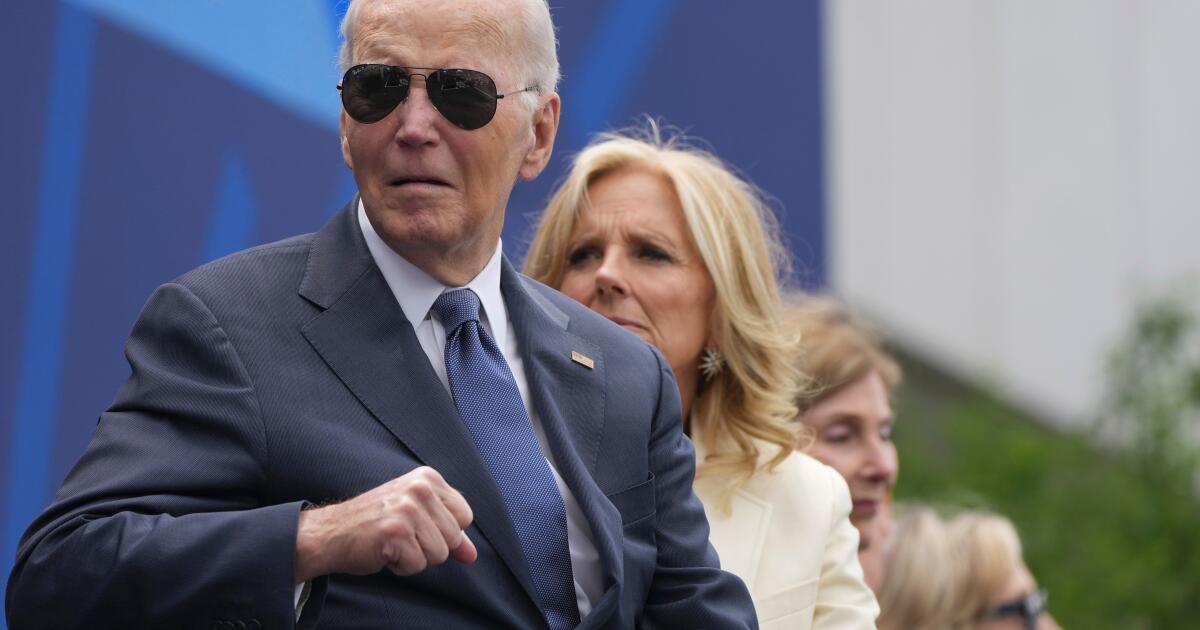
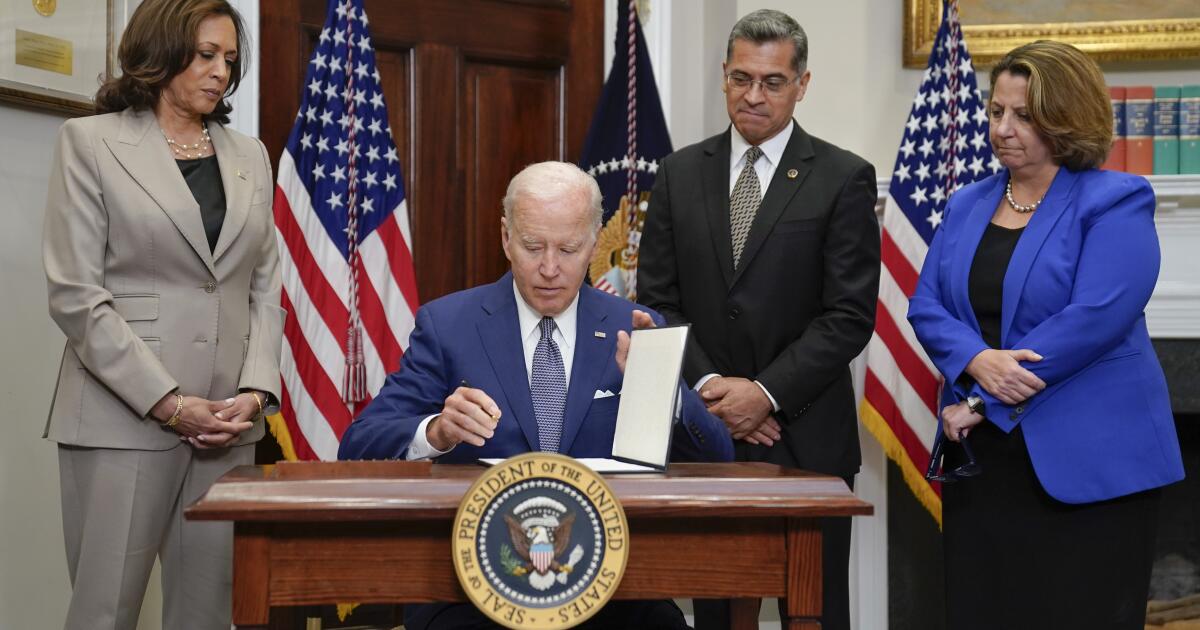
Column: How COVID is helping Biden advance broader agenda

When Joe Biden launched his campaign for the presidency in 2019, his economic proposals were relatively modest updates of the middle-class-oriented agenda he championed as vice president under Barack Obama. “It doesn’t require some fundamental shift,” he said, pushing against the sweeping proposals of rivals like Bernie Sanders and Elizabeth Warren.

Then came the pandemic.

Today, Biden’s economic message, retooled to address current needs, has real urgency.

“We can’t wait,” he said last week. “There’s a lot of people who are in real, real trouble — a lot of people going to bed at night, staring at the ceiling wondering … if they’re going to be evicted.”

And Americans seem ready to spend to make things better. The huge $1.9-trillion pandemic relief bill Biden has proposed is wildly popular. A CBS News poll last week found that 79% of Americans want Congress to pass a bill as big as the one Biden proposed, including 61% of Republicans.

Biden isn’t stopping at pandemic relief. He’s also using the emergency to build support for the far broader program of economic reform he adopted midway through his campaign last year, including massive investments in manufacturing, technology, education and child care.

“We’re in a position to think big and move big,” he said.

He’s following the advice that Rahm Emanuel, then a member of Congress, offered during the financial crash of 2008: “You never want a serious crisis to go to waste.”

For Biden, that begins with the pandemic relief plan, a package that includes a $1,400 check for most adults, increased unemployment insurance, a child tax credit of up to $3,600 a year, $440 billion for state and local governments and $130 billion to help reopen schools.

And once that proposal is enacted, White House officials say, the president will turn to the broader, long-term economic proposals of his campaign, including a $400-billion “Buy American” plan to support manufacturing, $300 billion for research and development, more spending on clean energy and — if it doesn’t pass as part of the pandemic package — a $15 minimum wage.

It’s an ambitious agenda: a dramatic expansion of federal government spending to create jobs, especially in manufacturing and strategic technologies.

Biden’s economic populism is aimed, in part, at the same voters Donald Trump appealed to when he called for revitalizing American manufacturing and bringing jobs back home — but only in the sense that Biden, too, has promised to repair some of the damage wrought by the long decline in manufacturing jobs.

“A lot of white working-class voters thought we forgot them,” he said last year during a campaign tour of faded industrial towns in Pennsylvania. “I get them. I get their sense of being left behind.”

He’s kept a few of Trump’s policies, most notably the tough stance on trade with China. But the difference in the two populisms is illustrated by the predecessor each president chose as a model.

In Trump’s Oval Office, he hung a portrait of Andrew Jackson, the 19th century nationalist who warred with bankers on behalf of working-class white Americans but also supported slavery and pushed tens of thousands of Native Americans off their ancestral lands.

Biden replaced Jackson’s portrait with one of Franklin D. Roosevelt, the Depression-era Democrat who enacted Social Security, vastly expanded the federal government and was reelected three times.

If Biden’s economic agenda were being proposed by full-throated progressives like Sanders or Warren, it might sound extreme to many voters. But his long record as a relatively centrist Democrat could insulate him from that hazard, much as FDR’s aristocratic background allowed him to tack left.

“Voters view him not as a radical, but as a get-things-done moderate,” Biden’s campaign pollster, John Anzalone, told me. “Voters are incredibly transactional right now. They want help and they want it quick.”

Republican opposition to both parts of Biden’s agenda — the short-term relief plan and the longer-term reforms — has been muted so far, mostly because GOP leaders have been too busy with family quarrels over Trump’s legacy to offer much of an alternative to the president’s plans.

That’s unlikely to last. There will be plenty for conservatives to oppose soon enough, beginning with the $15 minimum wage and those new big-government economic programs — not to mention the increase in corporate taxes Biden has proposed to help finance it all.

But as the president nears the end of his first month in office, it’s possible to imagine that by the end of 2021 he could be claiming credit for a rebounding economy and pressing ahead with his broader proposals. If he succeeds, the Biden presidency could be transformative in a way even his supporters didn’t expect.

Source link

Jackie Speier would like her former congressional colleagues to zip up and shape up

It seems like a simple ask that male politicians don’t sexually harass or even rape women, but also, it seems like an open secret in Congress that sexual misconduct is too common.

Take Eric Swalwell, whose epic political immolation has captivated this week’s national political news, including a TMZ-obtained video of the then-congressman bleary-eyed in a bathrobe on a yacht that was literally the least-worst revelation.

For years “there were swirling rumors about Eric,” former Rep. Jackie Speier told me. Speier in 2018 thought she’d put in place tough new rules to stop sexual misconduct among her former colleagues, and the type of backroom shrugs that allowed men to prowl unchecked.

But despite her efforts, Speier, who represented a part of the Bay Area near Swalwell’s district until 2023, said the problem remains Congress itself, and the “crippling” power that elected officials have over their staffs. Don’t get her started on how that power imbalance is even worse for young lobbyists.

“I’ve always said that Congress is Hollywood for ugly people,” she said. “It’s a whole environment that becomes, I think, toxic.”

But also one that, she added, isn’t inevitable.

The 2018 change

In 2017, the #MeToo movement had swept into the public consciousness and ignited calls for change.

Armed with that outrage and the roiling fire of public opinion, Speier set out to change archaic rules that governed how sexual misconduct was handled in Congress.

“I’ll just run through what it was like,” she told me. “If you wanted to file a complaint, you had to be prepared to go through some period of counseling; to have a cooling off period; to participate in mandatory mediation; and sign an NDA, and then the taxpayers picked up the tab if there was a settlement. It was kind of jaw dropping to think that that was the policy.”

It wasn’t just policy, it was culture. Speier herself had been the victim of an assault when she was a young staffer — a senior staffer pushing her against a wall and forcibly kissing her. And like so many women, she put the episode aside and went on with her career because speaking out would have likely brought her more grief than justice.

But by 2017, she realized the public was at a “tipping point,” and, as she said then, “Congress has been a breeding ground for a hostile work environment for far too long.”

With Rep. Bradley Byrne, a Republican from Alabama, they passed the Congressional Accountability Act of 1995 Reform Act.

It did away with the weird and coercive requirement for counseling and a cooling off period and most significantly, forced sexual harassers to pay for their own settlements instead of pinning the cost on taxpayers.

But even with the new rules, some colleagues didn’t seem to get it. Speier recalled one man who, informed of possibility he would have to pay sexual harassment settlements out of his own pocket, asked if he could purchase insurance to cover those costs.

“How about you keep your zipper up?” Speier wondered.

The bigger problem

Still, Speier said she thought the law made a difference not just in how claims of misconduct were handled, but in the culture of Capitol Hill.

But, “over time it just was relaxed,” she said.

When Speier left office in 2023, Rep. George Santos (R-N.Y.) was under investigation for sexual harassment — a claim Congress deemed unfounded, but bounced Santos from its ranks for a bunch of other misconduct.

Let’s be real — Congress has never been without scandal.

But Speier said that doesn’t mean sexual abuse can’t be stopped. She just thinks the rules she put in place need to be even tougher: A zero-tolerance approach similar to what corporate America often enforces.

“I’m thinking now that the way to fix this may be something more direct and straightforward and simple, much like they do in the private sector,” she said.

“When the CEO is having an affair with a subordinate and it becomes known, he’s history. He’s relieved of his duties, and if we made it clear that if you sexually harass a staff member, or you have an affair with a staff member, you will be expelled, or you will be subject to expulsion of Congress, that will change their behavior.”

I love her enthusiasm and I support tossing out miscreant members, but I’m not sure even that will keep the zippers up. But there is always hope.

And something has to be done.

“These cases underscore the fact that these women do not feel comfortable coming forward,” she pointed out. “So we’ve got to figure out why and close that hole.

“Is it because they’re fearful that they’ll be retaliated against or that they’ll be ostracized or blackballed? I don’t know the answer, but I’m really urging my colleagues on both sides of the aisle to fix this, and part of fixing it is talking to these women who were, in fact, sexually harassed and assaulted and find out why they didn’t feel comfortable coming forward.”

That’s the real issue, and the real demand we should be making. From the Oval Office to district offices, too many elected leaders have proven they’ll use their power to obtain sex — by coercion or even force.

And too many women remain afraid to speak out because they still suffer both career and social consequences — a realistic fear that coming forward could end their own ambitions, or at least leave them battling to not be defined by the abuse.

Yes, Swalwell and others have been shamed into resigning.

But it’s past time to make sexual abuse a one-strike-you’re-out offense — for the perpetrator, not the survivor.

You’re reading the L.A. Times Politics newsletter

George Skelton and Michael Wilner cover the insights, legislation, players and politics you need to know. In your inbox Monday and Thursday mornings.

What else you should be reading

The must-read: Swalwell supporters scramble after he drops out of governor’s race. Who will benefit?
The deep dive:Rebuilding After Fires, L.A. Neighbors Join Forces and Innovate
The L.A. Times Special: In L.A. County, many homeless people enter shelters, only to end up back on the streets

Stay Golden,
Anita Chabria

Was this newsletter forwarded to you? Sign up here to get it in your inbox.

Source link