Marcelo Mousalli, Head of Product for Latin America at Bank of America, speaks with Global Finance editor Paul Curcio at the 2026 Global Finance Transaction Banking Awards, Fontainebleau, Miami Beach.

An IndiGo plane was forced to make an emergency landing after a passenger’s power bank reportedly caught fire, during a flight from New Delhi to Chennai. Passengers managed to extinguish the fire on board.
Published On 11 Oct 202611 Oct 2026
Share
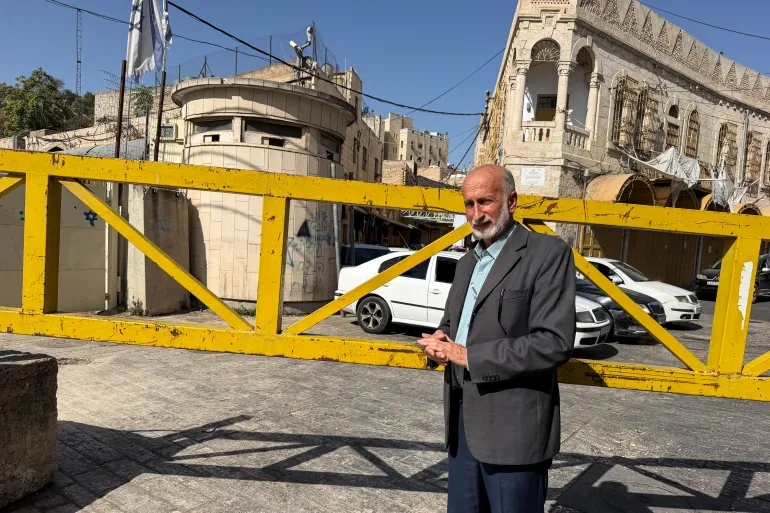
Hebron, occupied West Bank – Badr al-Tamimi, 60, lives in Hebron’s Old City, where Israeli checkpoints, iron gates and road closures turn the simplest tasks into a dispiriting daily ordeal for Palestinian residents.
The situation goes beyond mere restrictions on movement. Israel has created a ghost town in parts of Hebron, where residents feel they are being driven out. This is most pronounced in an area known as H2, where Israel has complete control and Palestinians are subject to the dictates of the military.
list of 3 itemsend of list
A few days ago, Israeli authorities installed three iron gates across a 200-metre (656-foot) stretch of Hebron’s Old City – amounting to just 0.2 dunams (200 square metres) – as part of Israel’s apparent attempts to restrict Palestinians’ freedom to move around the city.
Hebron Mayor Yousef al-Jabari told Al Jazeera that one gate was erected on al-Zahid Road, the only route accessible to vehicles reaching the Old City entrance. A second was placed at the start of al-Shalala Street, which leads to shops connecting to the Bab al-Zawiya area in the city centre. A third towers over another section of al-Shalala Street, a thoroughfare used by pedestrians to access the shopping area.
They are part of a wider web of travel restrictions across the occupied West Bank, but Hebron, which has a strong settler presence, has suffered more than most Palestinian cities.
Approximately 40 percent of the 89 checkpoints in the West Bank and 11 percent of all 925 movement obstacles are located in the H2 area of Hebron, which is under tight Israeli control, according to the United Nations Office for the Coordination of Humanitarian Affairs (OCHA).
About 7,000 Palestinians in an area of Hebron where hundreds of settlers live are affected by the latest travel restrictions. Since October 2023, when the genocidal war on Gaza began, only Palestinians with specific identification numbers could enter this area. Checkpoints at the entrance to this zone are generally only open from 7am to 8pm.

Al-Tamimi, who lives in the al-Sheikh neighbourhood adjacent to the city’s famed Ibrahimi Mosque, owns a shop in the Old City.
Palestinians can be kept waiting for hours at the checkpoints, and the mood of a soldier manning one can decide the commute time of a Palestinian. Worshippers attempting to enter the Ibrahimi Mosque can be held up for hours by soldiers.
“They might allow a limited number of people to enter while others are forced to wait, whereas resident movement comes to a halt during incursions, Jewish holidays, and the associated security measures,” he added.
Repeated closures have paralysed economic activity in Hebron, making it increasingly difficult for shops and companies to do business.
“Our presence in the Old City is a matter of steadfastness, not the availability of the elements needed for economic life,” al-Tamimi said.
Even after Israel’s occupation of the city in 1967, Hebron was once a bustling city with lively shops and markets. Residents could move more freely between neighbourhoods, which helped with economic life in the city.
Things changed in 1994, the year of the Ibrahimi Mosque massacre, when a US-born Israeli settler murdered 29 Palestinian worshippers.
From that point, the Old City’s geography changed, becoming isolated from its surroundings, al-Tamimi said.
He points to Shuhada Street, once a vital artery for transport and commerce in the city before road closures and restrictions transformed the area’s reality.
“They committed the crime, yet they continue to punish us for it,” he said.
In 1997, the Hebron Protocol was signed between the Palestine Liberation Organization (PLO) and Israel, dividing the city into two zones: H1, which was under relative Palestinian jurisdiction, and H2 – an area which includes the Old City, the Ibrahimi Mosque, and illegal settlements – remained under Israeli security control.
Issa Amro, coordinator of the Youth Against Settlements group, said Israeli prohibitions intensified with the outbreak of the second Intifada in 2000 when Hebron became a centre of the uprising.
During this period, vast areas of the city were sealed off, shops were forced to close, and residents often remained confined to their homes or neighbourhoods.
Since Israel’s genocidal war on Gaza began on October 7, 2023, the number of checkpoints has risen to 32, while other obstacles impeding Palestinian movement now exceed 130.

The “closed zones”, designated by Israeli authorities as areas of military activity with restricted access to Palestinians, have expanded around the Ibrahimi Mosque and the illegal settlements that lie in the heart of the city.
“The movement restrictions are effectively holding residents as hostages,” Amro said.
Mayor al-Jabari said approximately 10,000 Palestinians in the Old City and the surrounding closed zones are affected by these measures.
Some parts of Hebron are inaccessible to vehicles, and Palestinian residents are subject to curfews two or three days a week, usually over the weekend.
He believes these restrictions are aimed at hindering Palestinians’ ability to return home and stifle life in parts of Hebron.
Meanwhile, Israeli authorities have helped settlers expand in the area, imposing a new suffocating reality for Palestinians in the city.
Al-Jabari said Israel’s current government could be doing this to curry favour with settlers ahead of this month’s election.
Control of Hebron, its Old City, and the Ibrahimi Mosque is a key issue for settlers, and politicians in this group occupy key posts in the Israeli government.
This has coincided with a concerted effort by Israeli authorities to cement the settler presence in and around the city.
“The seizure of buildings and land, along with the installation of gates, is a continuation of Israeli policies that have been in place for decades,” al-Jabari said.
“These include the closure of Shuhada Street and the shutting down of over 500 shops, as well as the establishment of settlement outposts and military positions within the Old City.”
He has seen more restrictions on Palestinians’ freedom of movement over the past month, measures that will undoubtedly appease settlers.
Hebron municipality has responded to this by filing lawsuits in Israeli courts, despite its scepticism about the impartiality of the judiciary.
With these measures continuing, life for Palestinians is getting worse, making work, life and education a daily struggle.
Israel cites the security situation as a pretext for erecting more checkpoints and iron gates in Hebron, but there are no such restrictions on settlers.
Since 2015, Israel has limited the number of Palestinian residents of closed zones who can pass through these checkpoints. Students and teachers frequently have their bags searched by Israeli soldiers or are detained.
Ayat al-Jabari, a 40-year-old science teacher, worked for a year at Qurtuba School, located near the closed Shuhada Street, before transferring to her current position at Al-Fayha School, near the Ibrahimi Mosque.
Although reaching Qurtuba School from her home should have been a five-minute journey, it often took an hour.
On her unsettling morning route through a nearby cemetery, often in darkness during the winter months, settlers and soldiers often appear in the graveyard to block the path of Palestinians or abuse them.
“Every day, I was forced to take a long route and walk through a cemetery to avoid passing the checkpoint, as I don’t hold a [special identification card] number. Even those who do hold numbers are sometimes forced to take this path to escape the soldiers’ moods,” she said.
After moving to Al-Fayha School, al-Jabari hoped her commute would improve, but the situation is no better than before.
“Whenever Jewish holidays arrive, these schools are closed because all the students live in areas subjected to a total lockdown, to the point where residents are even forbidden from opening their front doors,” she said.
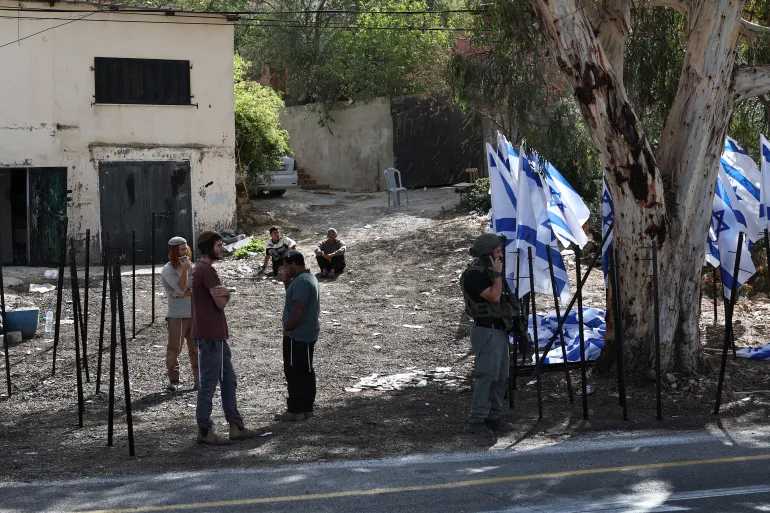
Israeli settlers have carried out attacks and pogroms disrupting the Palestinian olive harvest in the West Bank, while Israeli forces separately detained several Palestinians across the occupied territory.
At least 19 settler attacks were recorded on Friday by the Palestinian Colonization and Wall Resistance Commission, a Palestinian government body operating under the Palestine Liberation Organization (PLO).
list of 3 itemsend of list
The commission said the incidents included attacks on Palestinian olive harvesters, the burning and uprooting of olive trees, and the theft of crops and livestock. Other Palestinians and their vehicles were also targeted.
Settlers set fire to Palestinian-owned groves and stole olives in what is considered the most important season for harvesting the single-seeded stone fruit.
More than 50 olive trees were uprooted by settlers in Qusra, the commission said.
Settlers also assaulted and injured Palestinian farmers involved in the harvest in the Tal, where a Palestinian-owned vehicle was set on fire, it added.
Additionally, olive harvesters were attacked in Jorish, Beita, Naqoura, Birzeit, Deir Bzeih and Farata.

A farmer was injured in reported gunfire in Kafr ad-Dik, and the use of live ammunition was reported during a settler pogrom, backed by Israeli forces, in Deir Ballut.
Elsewhere, an elderly Palestinian woman in Berin, east of Hebron, was injured after settlers set their dogs on farmers while sheep were stolen in Ein Qinya.
A Palestinian man and his child were attacked and their vehicle stolen by settlers in Yabrud. Settler attacks on Palestinian-owned vehicles were also reported in the towns of Sarda and al-Rihan.
Al Jazeera’s Nida Ibrahim reporting from Ramallah in the occupied West Bank said settlers, backed Israeli forces, have grown more brazen in their attacks against Palestinians during the olive harvest despite the presence of foreign activists and observers.
“Palestinians have to go about the harvest in large groups, that include international solidarity activists, to try to stop settler intimidation and attacks,” Ibrahim said, adding that the settlers wait for the groups to start leaving at the end of the harvest, before springing into action.
“It has become a very difficult journey, as the Palestinians try to leave the harvesting areas, Israeli settlers continue to intimidate them under the protection of the Israeli army,” she said.
As Ibrahim reported, a Palestinian family was under attack by Israeli settlers who recently started building an illegal settlement outpost near Ramallah, “using it as a base to attack Palestinians”, she said.
“No one is being spared,” said Ibrahim.
For Palestinians, the olive harvest is supposed to be a joyous season, but instead, they fear settler attacks and intimidation backed by the Israeli forces.
As settler attacks and pogroms continue, the Israeli army arrested 16 Palestinians in raids across the occupied West Bank on Friday, according to the Palestinian Wafa news agency and local sources speaking to the Anadolu news agency.
In Hebron, southern West Bank, Israeli forces arrested nine Palestinians after raiding and searching their homes, including Ibrahimi Mosque Director Moataz Abu Sneineh and Hammam Abu Markhiya, an official responsible for the mosque’s custodians, Wafa reported.
In the city of Qalqilya, Israeli forces arrested five Palestinians during a raid, local sources said.
Two other Palestinians were arrested after Israeli forces raided and searched several homes in Beita, south of Nablus, the sources said.
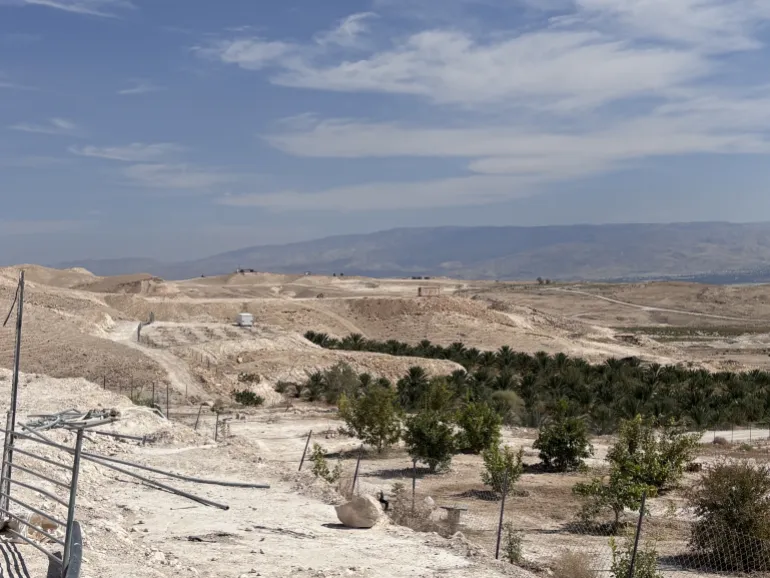
Al-Awsaj, occupied West Bank – On September 23, weeks before Israel’s parliamentary elections, ministers and lawmakers gathered on an occupied West Bank hilltop to inaugurate a new settlement, Metzoke Eretz, illegal under international law. Finance Minister Bezalel Smotrich used the ceremony to salute the settler outpost that made the eventual settlement possible.
“The first pioneering settlers who were here on the farm… we will lift them up as our greatest joy,” Smotrich said. “It shows that the method works: establish a farm, seize the land, prepare it, turn it into a community, move to the next point. There are many, many such heroes – those who prove they are not doing real estate. They are doing Zionism.”
list of 3 itemsend of list
Metzoke Eretz was previously an outpost – the name given to the Jewish settlements illegal even under Israeli law – called Netzah Harel, established in 2023 in the middle of al-Muarrajat, a Bedouin community on private Palestinian land east of Ramallah. Alia Mleihat, 29, and others from the community remember those settlers well. “Of course, this outpost played a major role in displacing the Palestinian Bedouin communities in al-Muarrajat and the areas east of Ramallah,” said Alia, now living in a tent in al-Awsaj, a few kilometres away, after her forced displacement in July 2025. “[The Netzah Harel settlers] took part in every attack the settlers carried out on families, and confiscated sheep, under the protection of the Israeli police and army.”
Dror Etkes, founder of Israeli NGO Kerem Navot, said Smotrich’s description of his “method” was spot-on – except for one omission. “The political discourse skips the [Palestinian] expulsion chapter,” said Etkes, suggesting Smotrich and other politicians avoid doing so explicitly to avoid potential scrutiny from international criminal courts. “They want it to happen, and they know that it happens, and they let it happen.”
Haaretz reported that Metzoke Eretz is one of 19 outposts legalised by the Netanyahu government after nearby Palestinians were violently expelled.
![The view from Muhammad Ghawanmeh’s home in al-Awsaj, looking out towards an Israeli outpost on a hill in the background [Al Jazeera]](https://i0.wp.com/www.aljazeera.com/wp-content/uploads/2026/10/View-from-Muhammads-looking-out-towards-the-outpost-seen-on-hill-in-background-1791321948.jpeg?w=640&ssl=1)
Jamal Mleihat, Alia’s 45-year-old uncle, sits with eight relatives nestled inside a bare concrete-block house on the ridge in al-Awsaj, with his daughter Sewar hanging off his lap.
Below the ridge, rows of young trees climb a cultivated slope towards a factory at the foot of the hills. The ridge itself is rock and dust, now home to about 25 families from al-Muarrajat, among others forcibly displaced in the past three years.
“Before October 7 [2023 Hamas attack on Israel, and Israel’s subsequent genocidal war on Gaza], we were in the pastures – no harassment, we moved around freely,” said Jamal, a father of seven. “We had healthcare. We had a school. We had water in the same encampment. Life was a million times better than this.”
Since October 7, the Israeli government has stepped up its raids on the occupied West Bank, while settlers have largely been given free rein to pursue a pogrom against Palestinians, with little pushback from within Israel.
Just below Jamal’s shelter, alone on a slope, Muhammad Ghawanmeh lives with his wife and seven children. His toilet does not work; he relies on water tanks and has almost no electricity. The rocky track to the Mleihats’ area is too steep to drive. He built a fence around the house after recent settler attacks, and now faces constant drone surveillance from Israeli settlers.
Ghawanmeh is from Ras Ein al-Auja, which had been the largest Bedouin community in the central Jordan Valley – so robust that humanitarian coordinators told Al Jazeera in October 2023 that the village’s displacement was unlikely. Instead, its more than 600 Palestinian inhabitants experienced the largest single-community expulsion of Bedouins in the last three years, after repeated attacks by settlers from four surrounding outposts.
“From my childhood, the land was open. The water was open. We were living happily. We’d graze 10 kilometres, 15 kilometres with the sheep, and come back,” he said. “Today we can’t go 500 metres from the house.”
His flock has shrunk from about 300 to roughly 100 physically thinning sheep, which he now must buy fodder for, instead of letting them graze on the land, which he now says is largely forbidden by Israeli settlers and the army.
![Jamal Mleihat with his daughter Sewar in al-Awsaj in the occupied West Bank [Al Jazeera]](https://i0.wp.com/www.aljazeera.com/wp-content/uploads/2026/10/Jamal-Mleihat-with-his-daughter-Sewar-1791322462.jpeg?w=640&ssl=1)
A few hundred metres beyond Ghawanmeh’s fence, a white trailer and a few containers mark an Israeli outpost, established about six months ago on a hill overlooking Highway 90 and the displaced families along the ridge. Two months ago, Ghawanmeh said, soldiers came to his house and told him he could no longer pass to the highway. The settlers, he said, “are with the army”.
“You leave this place, go to another one, and it follows you – the same problem, unsolved,” Ghawanmeh said. “Every three months, there’s a displacement operation.”
Al-Awsaj barely existed as an inhabited place before, but Bedouin from different depopulated communities have now converged on this barren ridge, overlooking land largely declared – again – off-limits to grazing.
Allegra Pacheco, head of the West Bank Protection Consortium, calls al-Awsaj “basically a refugee camp, an internally displaced camp, that we see in other countries. But here, there’s no safe space. Wherever people like in al-Awsaj go, they’re chased by settlers or their tents are demolished by the Israelis.”
“It’s been very painful to get the authorities, the Palestinian authorities, the international leaders, to recognise that this is a mass displacement happening in front of us, and people have nowhere to go,” she said.
In the West Bank, the United Nations Office for the Coordination of Humanitarian Affairs (OCHA) counts at least 130 Palestinian communities fully or partly displaced by settler attacks and related restrictions since January 2023, and more than 6,400 people uprooted. According to the Palestinian Colonization and Wall Resistance Commission, since October 7, 2023 there have been almost 15,000 attacks by settlers, with 66 Palestinians killed by settlers. OCHA says the rate of settler attacks increased from about three a day before October 7, 2023, to almost seven per day this year.
The increase in displacement after October 2023 can also be seen in the numbers for that year. Nearly 80 percent of all Palestinians displaced by settler violence in 2023 were uprooted after October 7.
A report by Peace Now and Kerem Navot found that Israeli farm outposts had seized roughly 18 percent of the West Bank by the end of 2025. “We’re talking about a land area bigger than the size of the Gaza Strip altogether,” Pacheco said.
“What we’re seeing is a continuous, sustained project of forced transfer and mass destruction,” she said. “Israeli authority demolitions and destructions by the Israeli army, and Israeli civilians – armed groups – carrying out destructions and sowing fear to push people out.”
Israeli NGO B’Tselem’s September report, “The Elimination Project”, links this to Smotrich’s 2017 “Decisive Plan”, which offers Palestinians three choices: live under Jewish supremacy, leave, or face violent repression.
“The Smotrich Plan has been implemented,” Pacheco said. “He laid out exactly what is going on now, and he’s very proud of his success. He now wants to transfer that success to [other areas of the West Bank], and also in the Galilee [an area in Israel with a large population of Palestinian citizens of Israel]. Wherever there are Palestinians living, he wants to make life so difficult that they will leave.”
With Smotrich exercising broad powers over the West Bank through the Settlement Administration within the Ministry of Defence, and leaders in the Israeli West Bank military command increasingly coming from far-right, settler backgrounds themselves, Palestinians across the West Bank describe a deepening symbiosis of military, police, administration and settlers in exacting Palestinian dispossession. “They all work together, like a cell, one completing the other,” said Jamal Mleihat. “The army, the police, the settlers – they’re the ones who displace, they’re the ones who establish the settlement, they’re the ones who take part in the thefts, in everything. And the army covers for them.”
Al Jazeera has reached out to the Israeli authorities for comment on this piece, but has yet to receive a response.
Smotrich has withheld part or all of the tax revenues Israel collects for the Palestinian Authority – roughly 60 percent of its income – for much of the past three years. The PA now struggles to provide the most basic of services. In al-Awsaj and elsewhere, that means classrooms that do not open. “The government school is shut down today, no salaries,” Ghawanmeh said.
There is no school bus; families pay for private transport, and “one day they study, one day they don’t, depending on the mood of the driver,” Jamal said. It has left the displaced alone on an inhospitable patch of rock.
“Palestinians have no protection in the West Bank,” said Pacheco. “They are completely vulnerable to assault, attempted murder, arson, invasion of their homes. The Israeli army is supposed to protect them and doesn’t. The Palestinian Authority can’t come in, and the international community is not protecting them.”
“We started to feel there’s no safety anywhere,” Ghawanmeh said. “Fear. Terror. Persecution. Ethnic cleansing. That’s what we feel.”
Amid the dispossession, Ghawanmeh looks out at the unwelcoming land he knows will not be his family’s refuge – only another transient stop. He sees his own brother now only once every month and a half or two. “The threats to Bedouin life have almost become extinction,” he said. “We now live in enclaves, separated.”
“For three years now, the day that’s passing is better than the one that’s coming,” Ghawanmeh said. “Yesterday is better than today. Today is better than tomorrow.”

Home  Media Conferences and Events Bank of America’s Marcelo Mousalli at the 2026 Global Finance Awards
Marcelo Mousalli, Head of Product for Latin America at Bank of America, speaks with Global Finance editor Paul Curcio at the 2026 Global Finance Transaction Banking Awards, Fontainebleau, Miami Beach.

Major executive moves and leadership changes across the finance industry.
This article appears in the September 2026 issue of Global Finance Magazine.

The World Bank Group appointed Michael Kremer to be the organization’s chief economist and senior vice president for development economics.
Most recently, he served as director of the University of Chicago’s Development Innovation Lab, where he researched economic growth, technological change, and development economics. Kermer, Abhijit Banerjee, and Esther Duflo jointly won the Nobel Prize in Economics in 2019 for their “experimental approach to alleviating global poverty.
Kremer “has spent his career not just identifying what works in development but proving it at scale,” said Ajay Banga, President of the World Bank Group. “That is exactly the kind of thinking we need.” —Rob Daly

After more than a decade at HSBC, Pam Kaur will step down as Group CFO, a position she has held since January 2025, before the bank’s 2027 annual meeting.
She will assume an advisory role to support Group CEO Georges Elherdy and ensure a smooth transition for her successor.
Kaur began her career in 2013 as group head of internal audit before advancing to the head of wholesale market and credit risk, group chief risk officer, group chief risk and compliance officer, and eventually group CFO.
Brendan Nelson, HSBC Group Holding plc chairman, praised Kaur for her “strong judgment and integrity.” She will leave the Group CFO role with the firm’s “deepest thanks and best wishes,” he added. —Rob Daly

J.P. Morgan named Nelle Miller and William Sinclair as co-CEOs of its U.S. Private Bank in September.
The pair leads the firm’s $2.4 trillion U.S. private banking business, overseeing more than 5,500 professionals across 57 offices who serve the wealthiest individuals, family offices, and institutions nationwide.
The appointments follow the July 2025 naming of David Frame as global CEO of J.P. Morgan Private Bank. Miller and Sinclair joined in 2002 and 2007, respectively. Miller currently heads the firm’s New York market, while Sinclair leads the Financial Leaders Group.
“We have a fantastic franchise, with exceptional people and an unparalleled breadth of capabilities,” Sinclair said. —Anthony Noto

IA Global Capital, a technology-focused investment bank with offices in New York and London, announced that Jules Wurlod has joined the firm as managing director.
Wurlod has served as M&A director for circular businesses at Houlihan Lokey since 2020, focusing on circular technology services such as device-as-a-service, IT asset management, IT asset disposition, recommerce, and trade-in. He previously worked as a project leader at Boston Consulting Group, advising Fortune 500 companies and government officials across Europe and the Middle East on corporate strategy and sustainability. —Anthony Noto
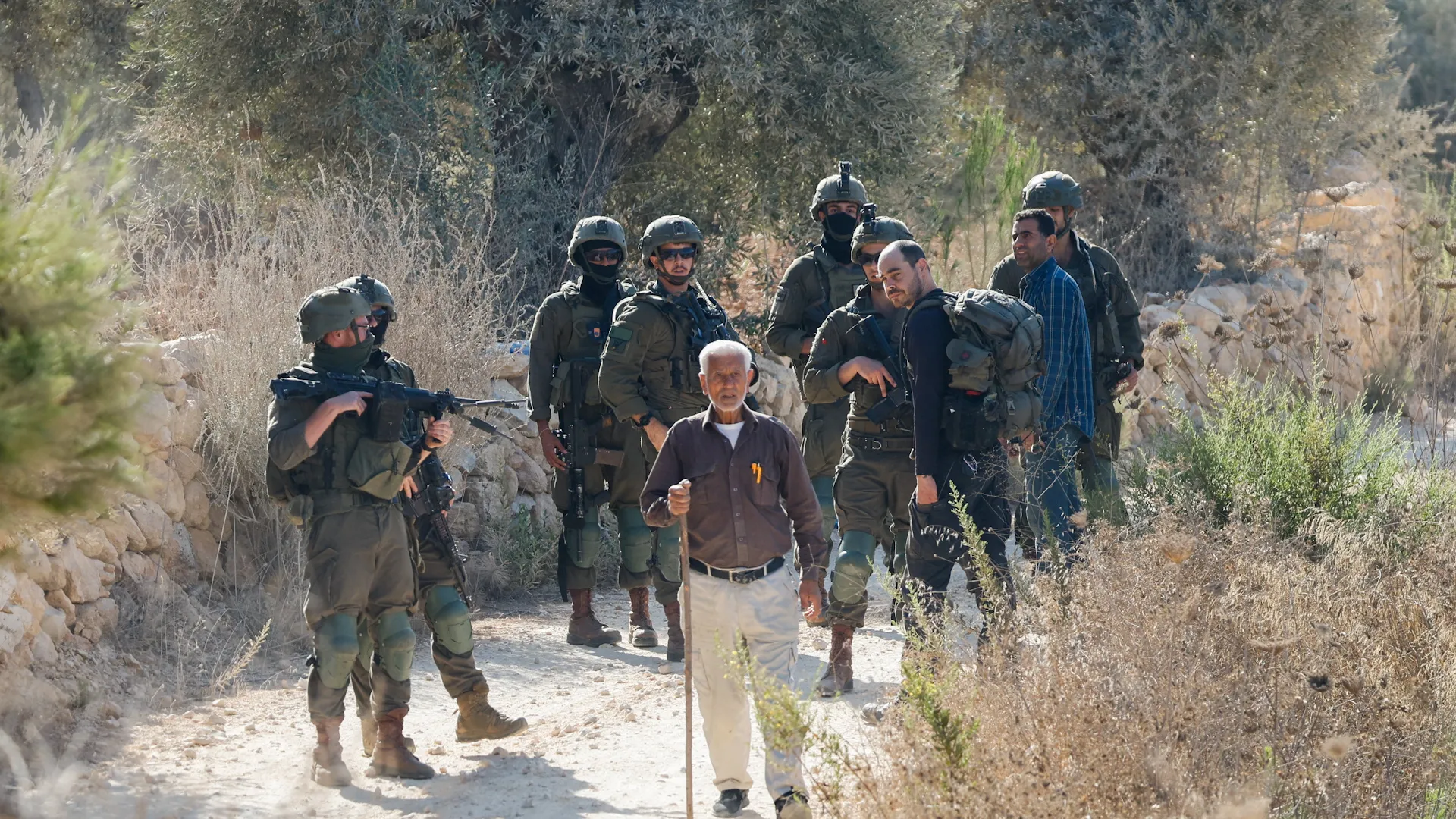
Israeli settlers and soldiers have attacked and blocked Palestinian farmers from harvesting olives as the season begins. More than 80,000 Palestinian families rely on the olive harvest as a source of income.
Published On 3 Oct 20263 Oct 2026
Share
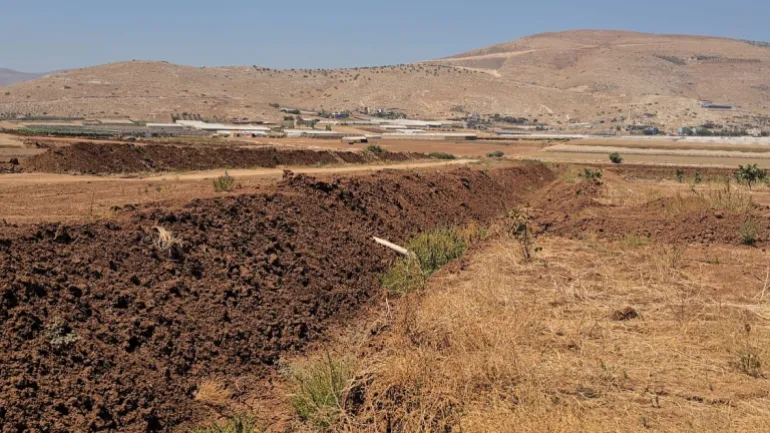
Saeed Ayed* watches over his livestock herd. The animals are starving and parched due to a two-week-long Israeli siege on the Ras al-Ahmar Bedouin community in the occupied West Bank’s Jordan Valley.
Access to the community has been blocked since mid-September, as Israeli forces continue building a barrier through Palestinian land in the area, including a road for military patrols, trenches and embankments.
list of 3 itemsend of list
Since the road closures began, movement for Palestinians has been severely restricted. They are forced to move around at night, transporting water, fodder and milk via donkeys under the cover of darkness to avoid detection by Israeli soldiers and settlers.
Ayed told Al Jazeera that no water had entered the community over the past three days after Israeli forces sealed the access points residents had been using to bring in supplies.
“The situation is dire. We are completely besieged, and the livestock cannot survive without water and food for this long,” Ayed said. “We own 15,000 head of livestock, and we fear they will perish because of the siege.”
Ras al-Ahmar is a 300-person village home to around 50 families who have lived off livestock and herding since the 1970s. Ayed said that Israeli settler attacks – part of a wider pogrom against Palestinians across the West Bank – had intensified since February, accusing settlers of trying to force residents out to seize their land.
“We have faced livestock theft, attacks on our dwellings, beatings of residents and vandalism of our homes. This was happening almost daily, yet we refused to leave. Now, they are completely besieging us to force us out,” he added.
The greatest challenge facing residents is restricted access to medical care as a result of the siege, a particular concern for the elderly.
Disease is also rampant among livestock, particularly newborn animals. And with veterinary teams unable to reach the area and treat the animals, deaths have been reported.
The military barrier – which Israel calls Crimson Thread and says it is needed for security – runs for roughly 20km (12 miles) through the northern Jordan Valley, with a width of up to 50 metres (165 feet).
Construction expanded early this year, including the digging of trenches and the bulldozing of agricultural land that damaged wells, water networks and greenhouses. The Israeli military seized nearly 115 hectares, 85 percent of which is privately owned Palestinian land, according to Kerem Navot, which monitors Israeli land policies in the West Bank.
Abdullah Bisharat, head of the village council of Ras al-Ahmar and Atuf, a nearby rural area also facing the military blockade, told Al Jazeera that the Israeli blockade has stopped 51 schoolchildren from attending classes for two weeks because vehicles can no longer reach them.
Israeli forces confiscated a tractor belonging to the village council on Sunday, detaining its driver as he was delivering animal fodder and water to Ras al-Ahmar, Bisharat said.
“We reached out to human rights organisations, but unfortunately no one was able to break the siege. Hundreds of people there are suffering, the majority of whom are women and children,” Bisharat added.

The targeting of Bedouin and herding communities in the Jordan Valley is part of a mounting pressure campaign on residents to abandon their properties by restricting access to land and pastures. The tactics include settler violence, the demolition of structures and the closure of roads and access points.
The United Nations Office for the Coordination of Humanitarian Affairs (OCHA) has described Bedouin and herding communities as among the groups most vulnerable to displacement in the West Bank. Dozens of Palestinian communities across the West Bank have been entirely or partially displaced since 2023, when Israel began its genocide in Gaza and ramped up its attacks on the West Bank after the October 7 Hamas attack.
OCHA has reported that at least 130 Palestinian communities have experienced full or partial displacement since January 2023, with 48 communities completely displaced, including 12 from January to August.
According to OCHA, more than 2,500 Palestinians were displaced in 2026 due to settler attacks and related access restrictions, out of a total of more than 6,400 displaced since 2023.
As the Israeli elections – scheduled for October 27 – approach, Palestinian analysts and rights advocates argue that the measures being implemented on the ground are entrenching a new reality that may persist regardless of the next government.
Hassan Mleihat, chairman of the al-Baydar Organization for Defense of Bedouin Rights, told Al Jazeera that settlers appear to be rapidly intensifying measures aimed at displacing Bedouin communities in the lead-up to the elections.
Mleihat said that Israel’s objective was to expel as many Palestinians as possible and seize control of their land.
“The road being constructed near Ras al-Ahmar aims to dominate the area’s land under security pretexts and to isolate Palestinian communities into tiny geographical pockets, effectively confining their presence there,” he said.
Observers believe the significance of these Israeli measures against Palestinian communities extends beyond their immediate impact on the population, creating demographic, geographic and security-related changes that may prove irreversible even if the Israeli political landscape shifts after the elections.
Adel Shadid, an expert on Israeli affairs, told Al Jazeera that Israel currently exercises an unprecedented degree of control over Palestinian territory in the West Bank. Palestinians, he said, live in small, fragmented and scattered enclaves with Israeli control over security, military and economic matters, as well as the minutiae of daily life.
He said the change was not only limited to geography but also entails normalising the presence of illegal Israeli settlements in the West Bank so that they are viewed as an integral part of the region’s fabric, rather than a temporary presence or a reality subject to change.
“This shift is accompanied by the entrenchment of the perception that the West Bank is no longer viewed as a Palestinian area – or even a disputed one – but rather as a territory where Jews have the right to live in safety and security,” he said.
Shadid argued that this perspective also shapes how Israeli and Palestinian communities in the West Bank are perceived by the Israeli state. Israeli settlers are presented as a population requiring protection, while Palestinians are increasingly framed primarily as a security threat.
“This logic extends to how the land and the very elements of life are treated. A tree, for instance, might be viewed as a potential resource for acts targeting the Jewish community; consequently, cutting it down is seen, within this framework, as a security measure that warrants no intervention,” he said.
Shadid said this was also changing perceptions of the role of the Israeli army and police in the West Bank. He argued that the security forces’ role was increasingly seen as protecting settlers against a so-called “Palestinian threat”, rather than restraining settler aggression against Palestinians.
“This new reality is not tied to the current Israeli government. Rather, it creates a dynamic that will persist beyond the elections, regardless of the outcome,” Shadid said.
*Saeed Ayed is a pseudonym used at the individual’s request for security reasons.
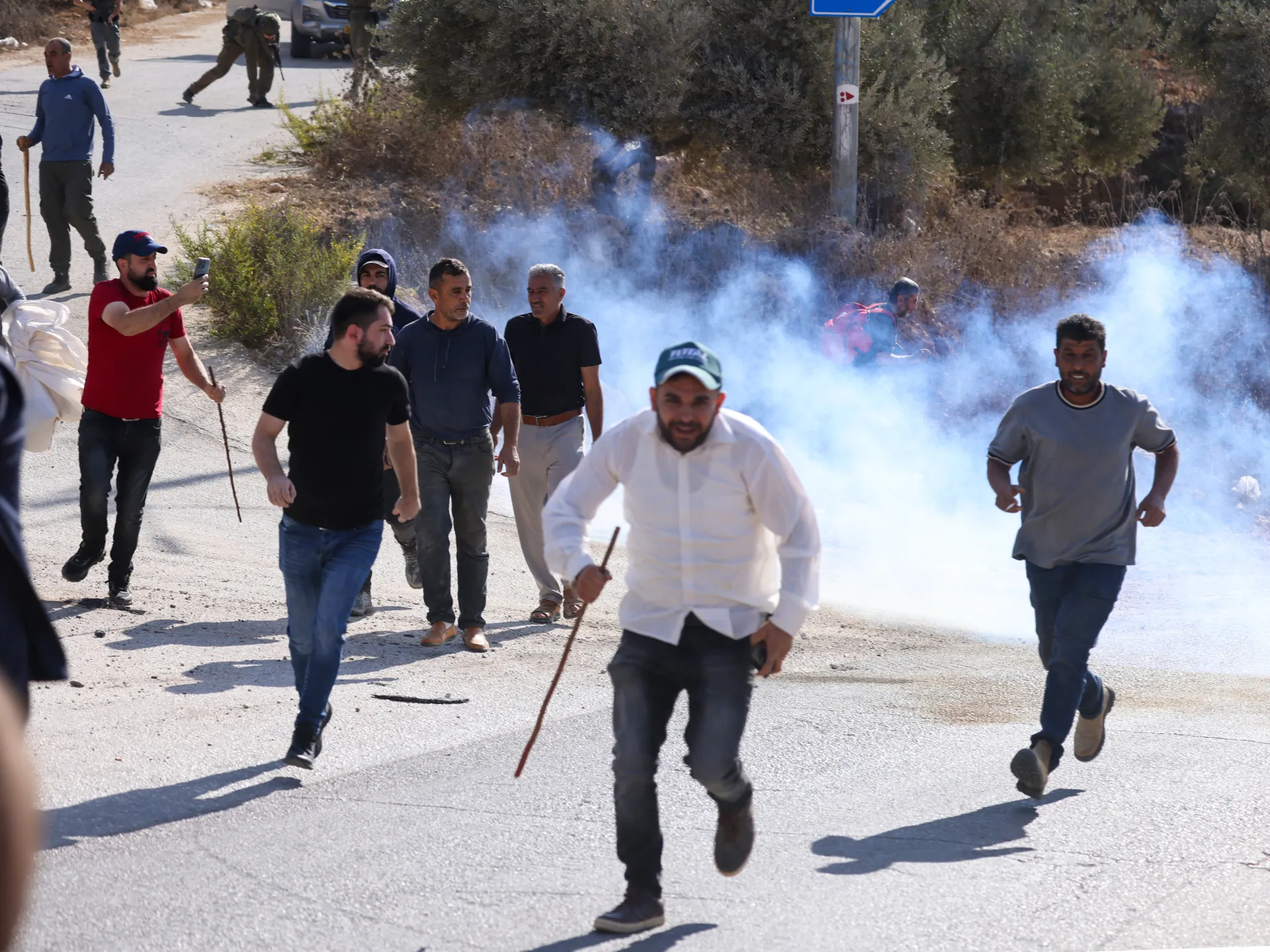
It is increasingly difficult to regard what is happening in the West Bank as merely a series of measures that the Israeli government justifies on security grounds or as part of counterterrorism operations. Taken together, the cumulative pattern and expanding scope of these measures point to a broader political and territorial trajectory: one aimed at reshaping the West Bank, imposing new facts on the ground, entrenching Israeli control and advancing the de facto annexation of large parts of the territory while simultaneously subjecting Palestinians to mounting pressure that, directly or indirectly, pushes them from their land.
Israeli, journalistic and research reports have documented the intensification of this trajectory through settlement expansion, land confiscation, restrictions on Palestinian movement, control over water resources and grazing areas as well as military operations and repeated internal displacement in several parts of the West Bank.
Considered individually, each of these measures may appear to be a separate issue. Viewed together, however, they reveal a more consequential development: an effort to re-engineer the geography and demography of the West Bank in ways that undermine the prospect of establishing a contiguous and viable Palestinian state.
The question, therefore, is no longer simply what is happening in the West Bank.
The more urgent question is how can Jordan, the Palestinians, the Arab world and the international community prevent this trajectory from becoming a permanent reality.
The Jordan Valley assumes exceptional importance in this context, not only because of its geographical and security significance but also because of its agricultural and economic importance and its water resources for the Palestinian people.
Reports concerning the construction of a new Israeli barrier, referred to as the “Crimson Thread”, extending roughly 480km (300 miles) from the Golan Heights to the Red Sea, warrant serious Jordanian, Arab and international scrutiny, particularly if such a project is intended to isolate the Jordan Valley and place as much as 83 percent of its total area under Israeli control.
Such a development could in effect sever the West Bank from Jordan and deprive Palestinians of one of their most important agricultural and water resources.
Borders, walls, roads and settlements cease to be merely physical infrastructure when they are combined with control over land and water. They become instruments for reshaping political and demographic geography and weakening the ability of Palestinians to remain on their land.
This is precisely where the Palestinian issue intersects directly with Jordan’s national security.
Jordan cannot treat developments in the West Bank as an exclusively Palestinian matter. At its core, this is an issue of Jordanian national security, regional stability and the future of the Palestinian cause.
Any fundamental change to the geographical or demographic reality of the West Bank will inevitably carry direct consequences for Jordan because of geography, history and proximity. And if the eventual outcome is forced displacement, then, as King Abdullah II has repeatedly made clear, such a scenario would amount to a declaration of war on Jordan.
The policy required of Jordan at this stage, therefore, must be proactive: one that anticipates possible scenarios and prepares for them politically, diplomatically, economically and in security terms.
Jordan’s first line of defence is its national unity.
At this stage, it is essential to strengthen the concepts of citizenship and the state, consolidate full equality among Jordanians, and reject any discourse or practice that creates divisions on the basis of origin, region or roots.
The Palestinian cause must remain a national, Arab and humanitarian cause. It must not be allowed to become a source of division within Jordanian society.
Responsibility falls on both the state and society to confront hate speech and incitement, apply the law equally and fairly, and protect the national fabric from attempts to exploit regional turmoil to sow division among Jordanians.
One of the gravest outcomes Jordan must prevent is the transfer of the conflict into its own domestic sphere. Relations among Jordanians of different origins, including those of Jordanian and Palestinian heritage, must never become a vulnerable fault line through which those seeking discord, whether from within the country or from abroad, can operate.
National unity, therefore, is not merely a social value. It is an integral component of Jordan’s national security architecture.
Jordan has accumulated considerable international credibility and diplomatic capital. The present phase, however, requires Jordan to expand the tools at its disposal.
It is no longer sufficient simply to condemn settlement activity, reject annexation or warn against displacement. What is needed is an Arab, Islamic and international diplomatic front capable of translating political positions into practical measures.
In coordination with Palestine and Arab and Islamic states, Jordan should work to:
A comparison with Russia’s war in Ukraine is instructive. When Russia occupied large areas of Ukrainian territory, sanctions were not confined to the territories under occupation; they were imposed on Russia itself. The question, therefore, is why a different standard should apply elsewhere.
The international community does not lack resolutions or statements. What it lacks is the conversion of political will into a tangible cost for those who violate international law.
If the objective is to prevent displacement and enable Palestinians to remain on their land, financial support must become a sustained strategic policy rather than seasonal assistance tied to moments of crisis.
One option would be to establish an Arab, Islamic and international fund dedicated to strengthening Palestinian resilience with a mandate to finance specific projects in the West Bank and Gaza, including:
Resilience is not merely a political slogan. It is a material reality.
Every Palestinian family who remains on its land, every farmer who continues to cultivate his fields and every village that retains access to its water resources represents part of the effort to prevent displacement.
Jordan should address developments in the Jordan Valley as a permanent strategic file.
A specialised Jordanian mechanism should be established to monitor:
These developments should be documented through maps, satellite imagery, statistics and official records so Jordan maintains a comprehensive dossier that can be used politically and legally before the international community.
Struggles over land are not determined by force alone. They are also shaped by documentation, maps, law and the ability to present an authoritative, evidence-based account of what is happening.
Strengthening Jordan’s ability to protect its security, borders and national interests is not optional.
Jordan is a country with limited resources, but it possesses significant human and institutional expertise. It can further develop an advanced national defence, civil protection and crisis-management architecture.
This could include strengthening national service and training programmes, enhancing civil defence preparedness, protecting critical infrastructure, reinforcing cybersecurity and border security, and improving disaster and emergency management.
Jordan could also draw on the extensive experience of retired military personnel through structured national programmes under the supervision of appropriate state institutions, thereby strengthening the country’s overall defensive readiness.
The strength Jordan requires is the strength of deterrence, protection and preparedness, not an impulse towards an ill-considered confrontation.
This issue must remain at the centre of Jordanian strategic calculations.
Any project that directly or indirectly leads to the depopulation of the West Bank or pushes large numbers of Palestinians towards Jordan is not merely a humanitarian question. It would carry profound political, security and demographic consequences for the kingdom.
Jordan’s position, therefore, must remain unequivocal: Resolving the Palestinian question cannot come at Jordan’s expense; displacement is not a political solution; and Jordan is not an alternative homeland for the Palestinian people.
At the same time, Jordan must preserve the humanitarian and legal dimensions of its response to any forced developments, so that opposition to displacement does not translate into further suffering for civilians.
The views expressed in this article are the author’s own and do not necessarily reflect Al Jazeera’s editorial stance.
Gaza’s health toll mounts, with 1,439 dead and 5,052 injured since the ceasefire began in October 2025.

Published On 1 Oct 20261 Oct 2026
An Israeli drone strike has killed a Palestinian man and wounded several others in southern Gaza while settlers shot dead another Palestinian man near Ramallah in the occupied West Bank.
The body of Tamer al-Hamayda, 42, and three wounded people were brought to Nasser Medical Complex on Thursday after the strike hit a tent sheltering displaced Palestinians in the al-Mawasi area, west of Khan Younis on the southern coast of the Gaza Strip.
list of 3 itemsend of list
Another Palestinian succumbed to wounds sustained in an earlier Israeli drone strike on Tuesday that targeted a gathering of Palestinians in Jabalia refugee camp in northern Gaza, according to medical personnel in Nasser Medical Complex.
Israeli forces also carried out a large-scale demolition operation targeting buildings east of Gaza City’s al-Tuffah neighbourhood.
The Gaza Health Ministry reported eight new deaths and 26 wounded over the past 24 hours, putting the toll since the “ceasefire” took effect in October 2025 at 1,439 killed and 5,052 wounded, with 834 bodies recovered from the rubble.
Israel’s war on Gaza has killed at least 74,040 Palestinians and wounded 175,168 since October 2023, the ministry said.
Occupied West Bank pogroms
In the occupied West Bank, Israeli settlers shot dead a Palestinian man and wounded another during a raid on the village of Yasuf, north of Ramallah, on Thursday.
51-year-old Mashhour Yassin was shot dead by settler gunfire, the Palestinian Health Ministry said.
Describing the attack, the Palestinian Ministry of Foreign Affairs said Israeli forces had detained an ambulance, seizing its key and throwing it aside, “in a crime that reflects clear coordination between the settlers and occupation forces.”
It said the killing “falls within the framework of a serious and continuous escalation in organised settler crimes,” saying Israel gives free rein to settler “terrorism against our people in the service of settlement, annexation, forced displacement and ethnic cleansing plans.”
Yasuf Mayor Jumaa Abdel Fattah told the AFP news agency that dozens of Israeli settlers armed with sticks and firearms had attacked the village, which lies between four Israeli settlements.
“Yassin was at his doorstep when the settlers attacked the village homes. He went out to defend his house,” Abdel Fattah said, adding that Yassin’s nephew was also wounded in the attack.
Abdel Fattah said the settlers had come from Havat Anton, an illegal Israeli settlement established in July that has previously attacked the village’s residents.
Palestinians in the occupied West Bank have reported a surge in settler pogrom attacks in recent months.
More than 500,000 Israelis live in West Bank settlements considered illegal under international law.
According to the UN, at least 1,112 Palestinians in the occupied West Bank have been killed by Israeli forces or settlers in the territory since October 2023, including at least 37 killed by settlers.

Artificial intelligence (AI) could trigger financial market shocks and the UK needs to be prepared for them, the governor of the Bank of England has warned.
Andrew Bailey said the central bank is watching the huge amounts of money being invested in AI “very carefully” and cautioned that “not everybody always wins”.
The money that has been spent on and loaned to AI firms over the last few years in the hope of large returns is causing markets to value some of them as multi-trillion dollar businesses.
Asked if he believed an AI bubble could burst, Bailey said: “You could see some correction of asset prices at some point.”
He was speaking exclusively to the BBC about what the risks and benefits of AI could be for the UK economy.
Bailey said he believed the technology has “great potential to strengthen growth in our economies”, adding that this was something the country needed.
“But it also brings with it substantial risks and so we have to be on top of both of those.”
One such risk is what happens if the big bets being made on AI don’t pay off.
AI chipmaker Nvidia is currently the world’s most valuable listed company, with a market valuation of $5.5tn (£4.14tn), thanks largely to investors who believe in the big profits AI could create.
Meanwhile, tech giants Alphabet, Meta, Microsoft, and Amazon are spending hundreds of billions of dollars on the technology.
And two of the largest AI companies in the world – Anthropic and OpenAI – are also preparing to sell shares in their firms on the US stock market in moves which many believe will lead to hundreds of billions of dollars more flowing into the industry.
“There is a large, very large, amount of investment going into this sector now, and of course that’s natural because it’s a major area of growth,” said Bailey.
“And of course you see that the asset prices of the companies that are developing it have gone up a lot and that reflects the fact that there are high expectations of what it can deliver.”
“Everybody is currently priced to be a winner,” he added, but warned that “you look back at the past, not everybody is a winner”.
“Google was not the first market leader in internet search. It was Netscape. Nobody can remember Netscape today. It doesn’t exist. So not everybody always wins.
“We are prepared for the fact that there will be, I think, some shocks come along to markets and we have to deal with that. We have to make sure the system is resilient.”
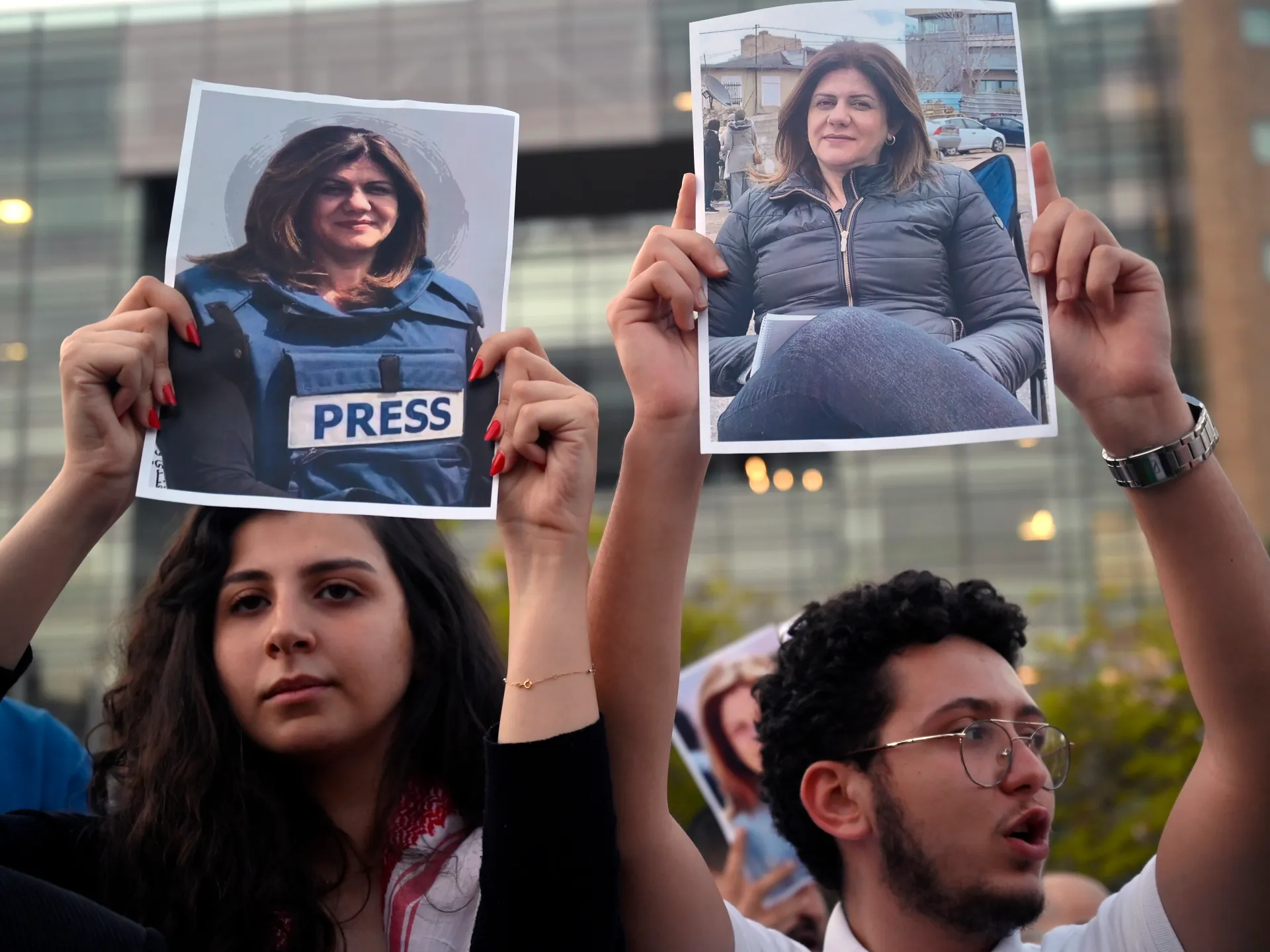
The resolution cites a ‘lack of accountability’ by Israel’s government and an ‘inability to secure justice’ by the US.
The United States Senate has blocked a resolution that would have required President Donald Trump’s administration to report on the killing of nine Americans in the occupied West Bank and on Israel’s treatment of Palestinian children in military detention.
The resolution failed 47-53 on Tuesday, with senators voting largely along party lines.
list of 4 itemsend of list
It was brought to the floor by Senator Chris Van Hollen, a Democrat from Maryland, and cited a “lack of accountability” from the government of Israeli Prime Minister Benjamin Netanyahu and an “inability to secure justice” from the US government.
Senator John Fetterman of Pennsylvania was the only Democrat to vote against advancing the resolution, while Senator Rand Paul, a Republican from Kentucky, joined Democrats in supporting it.
Van Hollen forced the vote under the Foreign Assistance Act of 1961, which allows individual members of Congress to demand a formal State Department report on the human rights practices of any country that receives US security assistance.
“Violence is raging in the West Bank, & despite the deaths of nine Americans, the wrongful detention of even more, & the daily torment of Palestinians, we have no accountability from the U.S. or Israeli govt”, Van Hollen wrote on X before the resolution was brought to a vote.
The resolution called for an unclassified report within 30 days of adoption. It would have detailed investigations into the deaths of the Americans, the treatment of US citizens held in Israeli prisons, and the conditions facing Palestinian children in Israeli military detention.
The measure cited the deaths of nine American citizens in the occupied West Bank since January 2022, including Shireen Abu Akleh, a Palestinian-American journalist and Al Jazeera correspondent who was shot in the head and killed in May 2022 while reporting in the city of Jenin.
It also included Aysenur Ezgi Eygi, who was shot in the head and killed by an Israeli soldier in September 2024, and Sayfollah Kamel Musallet, who was beaten to death by Israeli settlers in July 2025.
The others were Amer Mohammad Saada Rabee, who was 14; Tawfic Abdel Jabbar and Mohamed Ahmad Alkhdour, both 17; Omar Assad; Khamid Ayyad; Nasrallah Abu Siyam; and Khamis Rabee Jabara.
The resolution also noted the arrests of several Palestinian-American children by Israeli forces.
Among them was Mohammed Ibrahim, a 16-year-old from Florida, who was arrested in February 2025 and held in pretrial detention for nine months without contact with his family. It noted that US embassy officials and lawyers who met him told his family that he had lost nearly a quarter of his body weight, contracted scabies, and was beaten and tortured.
Other Palestinian Americans who remain in custody include Adam Wajeh Abdelfattah Karakrah, 16, and Sama Safi, 20, a student detained in June in raids targeting students at Birzeit University.
The resolution cited rights groups that have documented the deaths of at least 44 Palestinians in Israeli military camps since the Hamas-led attacks of October 7, 2023. Those groups, it said, have documented widespread abuses, including beatings, sexual violence, harassment and threats, “pointing to systemic and deliberate mistreatment”.
It also went on to note a sharp escalation in Israeli settler pogroms in the occupied West Bank, and stressed that there have been no convictions for the killings of Palestinian civilians by Israeli settlers since 2020.

At Sibos 2026, Bank of America announced that it had executed its first real-time payment initiated by Bradesco.
Bank of America Corp. has completed its first pilot transaction for a new cross-border real-time payments service, partnering with São Paulo–based Banco Bradesco SA to execute the transfer.
The bank announced the milestone during the annual Sibos conference in Miami on Tuesday. The payment, initiated by Bradesco through its existing connection to Swift, arrived in Hong Kong dollars in a local beneficiary’s account via Hong Kong’s Faster Payment System.
Bradesco did not respond to Global Finance’s request for comment. The transaction’s exact processing time or cost remains undisclosed. However, Bank of America confirmed that the payment was similar to a domestic instant transfer and was completed in near real time.
Traditional banks are facing stiffer competition from card networks like Visa and fintechs such as Wise, which says 74% of its transfers arrive in under 20 seconds.
There are also stablecoin providers such as Circle, which all promise faster cross-border payments.
Daniel Stanton, Payments Product Head in Global Payments Solutions at Bank of America, is betting that the firm can win on ease of adoption rather than speed alone.
“The solution is designed to work with existing banking infrastructure,” said Stanton in an email. “[The bank’s] clients can gain the benefits of faster cross-border payments without a significant technology build, new connectivity or changes to their existing accounting processes,” he added.
Bank of America announced the service in June. It is designed for corporate, commercial, and financial-institution clients that send large volumes of small payments, such as remittances, payouts to gig workers, and payments to e-commerce vendors.
The Charlotte, North Carolina-based bank said the service offers real-time tracking, delivers the full principal amount and gives senders certainty that payments will arrive. It also connects to domestic instant-payment networks, including Mexico’s SPEI, the U.K.’s Faster Payments Service and India’s UPI. Clients can connect through their existing APIs or host-to-host channels.
Stanton said Bank of America clients will later be able to start these payments through CashPro, its digital banking platform, beginning in 2027. “We will share additional timing details closer to launch,” he added.

Bank of America first introduced CashPro to corporate and institutional clients in 2009.
“We view this as complementary to our correspondent banking business,” Stanton continued. “It expands the payment options available to financial institutions and helps us meet growing demand for faster, more transparent cross-border payments.”
As for how many payments the firm expects to handle in its first year, it is too early to tell.
“We are seeing strong interest in solutions that can improve cross-border payments without requiring clients to make significant technology investments, establish new connectivity or change their accounting processes,” he said.
In June, Bank of America cited projections that cross-border person-to-person payment flows could grow 58% by 2032. Business-to-consumer flows could grow 131% by then.
Mark Monaco, head of Global Payments Solutions at Bank of America, touted the firm’s cross-border services earlier this month.
“Corporate treasurers don’t want to manage a patchwork of domestic schemes market by market,” Monaco told Global Finance. “They need banking partners to absorb that complexity.”
Announcements like these have made Sibos the default stage for major cross-border banking breakthroughs. For example, at last year’s event in Frankfurt, Germany, Swift unveiled a shared blockchain-based ledger. Over 30 global institutions backed the initiative—a move aimed at making 24/7 cross-border payments faster and less expensive worldwide.
Swift named Bank of America as one of the 30 firms involved.
Check out an overview of Sibos 2026 in Miami.
Anthony Noto covers corporate finance and private credit. Contact him at anoto@gfmag.com
Home Banking Revolut’s CEO Says US Banks Are ‘Out of Step’ With Global Consumers
Revolut US CEO Cetin Duransoy reveals plans to target globally minded and “underbanked” Americans as it builds toward becoming a primary bank.
After receiving conditional approval from the U.S. Office of the Comptroller of the Currency for a national bank charter, Revolut Technologies Inc. appears ready to launch a full-scale challenge to traditional banks and fintechs in the United States.
After relatively quick growth in France, Spain, and Italy, Revolut aims to bring its superapp model to the U.S., where it doesn’t exist in quite the same form.
Revolut’s U.S. CEO, Cetin Duransoy, who has held senior roles at Raisin, Fundbox, Visa, and Capital One, spoke with Global Finance about Revolut’s plans for the American market.
Global Finance: In the US, banks, fintechs, brokerages, travel products and payment apps are mostly separate. Does that surprise you? Do you see a genuine hole in the U.S. market for a company that combines all those relationships in one place?
Duransoy: It’s not surprising, given how complex these products are and how crowded and fragmented the U.S. market is. Layer on the regulatory process, and combining all these product suites—banking, brokerage, FX, crypto, travel, and more—into a single company or app becomes genuinely difficult and, for most companies, not worth the effort.
We believe you need a genuinely differentiated product to succeed in this market, and we have identified an opportunity here. By bringing all these products into one platform, we can remove the friction customers typically experience when cobbling together services from multiple providers.
GF: People often say, “The U.S. banking market is different.” Different how, exactly? And how might those differences affect Revolut?
Duransoy: The US’s fragmented, charter-based regulation can be more cumbersome than the EU’s passporting model, and U.S. customers tend to rely more on credit than their European counterparts. But the U.S. provides certain advantages, including the U.S. card network and interchange system, which subsidize rewards; FDIC insurance; and consumer-protection laws, which create a trust threshold.
Our broad product offering, 80-million-user global network, and strong global brand allow U.S. to cater to the distinct challenges of the U.S. market and understand the challenges of U.S. distribution costs. By obtaining a national bank charter, we will be on par with traditional banks, with direct Fedwire/ACH access and lending capability.
GF: When Revolut enters the U.S. market more aggressively, should Americans expect something close to the European Revolut experience—or will the U.S. product necessarily look much more like a traditional American bank competing on deposits, credit cards and lending?
Duransoy: We are always focused on product-market fit for our customers, and the U.S. will be no different. We’ve publicly shared that we will bring the best of what Revolut offers and provide the products U.S. customers want most, including checking accounts, credit cards, installment loans, FX, and stablecoins. We’ll continue innovating to deliver a distinct, more productive experience for U.S. customers.
GF: One of the things that makes Revolut unusual in Europe is that it sits at the intersection of finance, travel and lifestyle. Is that model central to how you think about the US, or is America more of a banking opportunity?
Duransoy: Yes. Combining our lifestyle products with the financial services that have made Revolut so popular remains central to our thinking. And they’re a key differentiator in many of our markets. We expect these offerings to help make us a top-of-wallet card and strengthen customer retention.
GF: Why should someone with Chase, Amex, Venmo, Robinhood, and a good travel card move meaningful parts of their financial life to Revolut? What can you offer that those companies, individually or collectively, do not?
Duransoy: We recognize that inertia is a strong force when it comes to financial services and that a customer’s bank holds critical parts of their financial life, such as their mortgage or direct deposit.
What we offer is the ability to consolidate multiple products and services into a single interface and remove the friction our customers find frustrating with other services. Revolut’s broad-based platform allows customers to seamlessly access multi-currency spending without foreign transaction fees, instant global P2P, a combined debit/credit product, budgeting, digital assets, and investing, all without transferring funds between platforms or managing multiple accounts. That’s especially valuable for people who travel internationally, have cross-border family ties, or are underserved by traditional credit underwriting.
GF: Which types of lending will Revolut prioritize in the US?
Duransoy: We intend to initially prioritize unsecured and secured credit cards and installment loans.
GF: What does Revolut understand about the consumer relationship that you think many American banks and fintechs still lack?
Duransoy: We treat our global app as the product. We iterate quickly, aim for gamified engagement, and offer frequent feature releases, in contrast to most U.S. bank apps, which have slower release cycles.
We also build for financial lives that span borders and currencies, rather than assuming a single-currency, single-country customer. American banks were largely built for a domestic customer, and that assumption is increasingly out of step with a more mobile, globally connected population.
GF: Do you think Revolut is underestimated in the US? If so, why? Among those who are aware, what do people in the U.S. most commonly misunderstand about Revolut right now?
Duransoy: “Underestimated” is probably right now, largely because our independent U.S. bank doesn’t exist yet. So we’re still seen as a “European neobank” by most Americans. That undersells what we’ll be once we have a full national charter, FDIC insurance, and our full lending capabilities live.
The most common misunderstanding among those who do know the brand is that we’re simply a fintech or a travel debit card, rather than a company with an 80-million-user global base—including 1.4M in the US—and banking licenses now spanning the UK, France, Australia, Mexico, and more.
GF: Are you coming to the U.S. to compete for a small slice of the market, or do you ultimately believe Revolut can change what Americans expect from a bank?
Duransoy: In the US, our near-term goal is to compete for market share. No new entrant can reshape what an entire country expects from a bank on day one. That takes years of trust-building, especially post-charter, when FDIC insurance and regulatory scrutiny are new territory for us.
What we’re looking to do is win the demographics best suited to us, namely the internationally minded, underbanked-by-incumbents, and digitally native users.
GF: On the corporate side, what are Revolut’s corporate banking plans?
Duransoy: Revolut Business exists—and is a core focus for us—in the U.S. We expect this to continue and are excited to launch merchant acquiring within the first years of becoming a bank.
GF: If we revisit this in three years, what would need to be true for you to say that Revolut has successfully become a major U.S. bank?
Duransoy: Within three years, we expect to be a fully operating bank with real momentum. We won’t share specific customer or product numbers today, but we’re building for scale and a sizable U.S. customer base that treats us as their primary bank, not a secondary account. That’s the bar we’re setting for ourselves.
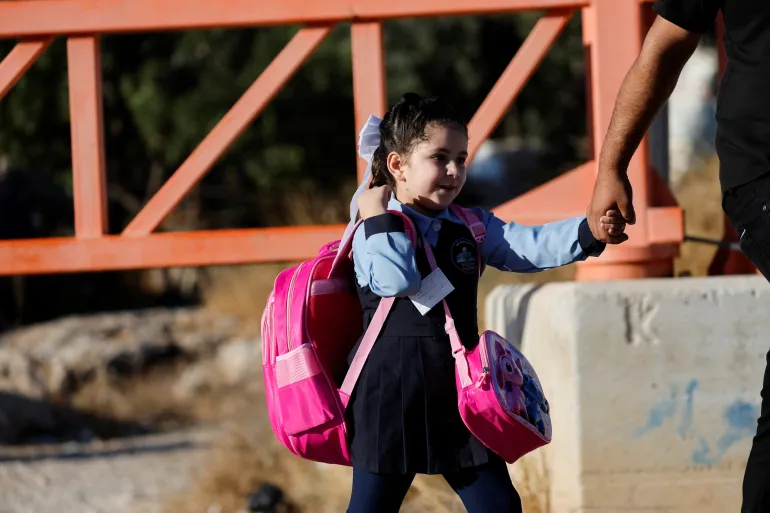
Mohammed Abu Hijleh still finds it hard to believe that his mother passed away just over a week ago; she had suffered from nothing more than diabetes. But the restrictions Israel imposes on various cities, towns, and villages in the occupied West Bank can alter a Palestinian’s life in an instant.
Zahriya Abu Hijleh, 66, was attending her niece’s wedding reception in her hometown of Deir Istiya, northwest of Salfit, on September 20, when she suddenly felt dizzy and collapsed.
list of 3 itemsend of list
After she was taken to the town’s medical centre, the doctor immediately ordered her transfer to Salfit Governmental Hospital, a facility just an eight-minute drive from Deir Istiya.
Mohammed requested an ambulance, but the vehicle could not enter the town because the iron gate operated by Israeli forces at the entrance was closed. Instead, an ambulance from the medical centre transported her to the gate, and from there, she was taken off the stretcher, carried past the gate on foot, and transferred to a second ambulance waiting on the other side.
It is a scenario that happens repeatedly in the occupied West Bank, Mohammed told Al Jazeera.
“My mother was breathing her last; had the gate been open, we wouldn’t have lost her on the way,” he said.
Medics later determined that Zahriya had suffered a pulmonary embolism and required urgent treatment, according to her family.
“Sadly, she died due to the delay,” Mohammed said. “She had no prior health issues other than diabetes.”

The military checkpoints and iron gates erected by Israel in the West Bank have become a significant source of misery for Palestinians.
They disrupt daily life, causing delays for people trying to reach work, schools, and universities, while also posing a daily threat to the lives of the sick.
Israel periodically imposes closures on the West Bank for various reasons, including Jewish holidays. The current closure runs from September 27 to October 3, coinciding with the Jewish festival of Sukkot.
While Israeli settlers move freely between West Bank cities, and even storm Palestinian villages and towns under Israeli army protection, Palestinians are forced to wait for hours at closed checkpoints.
Ibtihal Mansour from Nablus endured such an ordeal last Friday while visiting her in-laws’ home in the village of al-Janiya, near Ramallah.
The family left the village at 10am, hoping to reach Nablus within 45 minutes. But they encountered closures at the Atara and Ein Siniya checkpoints north of Ramallah, effectively trapping them in the area.
“We tried taking alternative routes west of Ramallah, but were surprised to find the road between Ramallah and Nablus blocked by settlers, with all vehicle traffic completely halted. We remained on the roads, trying to find any way through, until midnight, a span of more than 14 hours,” she told Al Jazeera.
Her children were crying, exhausted after spending so long confined in the vehicle. Passing through one roadblock near Nablus, in an area called al-Lubban Asharqiya, a soldier forced Ibtihal to wake the children. When her 11-year-old son did not wake up, she said that the soldier punched him in the head, causing him to jolt awake crying.
“The scene was heartbreaking; I felt a deep lump in my throat and profound sorrow. Long hours of waiting in the vehicle ended with an assault like this, and the ordeal didn’t even end there,” she said, explaining that they had to turn back. “We were forced to spend the night at my sister-in-law’s home in Ramallah before setting out early the next morning for Nablus.”
Like Ibtihal’s family, many Palestinians travelling between cities and villages are forced to stay overnight in hotels or at relatives’ homes. Some municipalities have converted wedding halls and mosques into shelters for those stranded, providing meals donated by residents of towns near the checkpoints.
The Colonization and Wall Resistance Commission (CRRC) recorded 942 checkpoints, closure points, and obstacles across the occupied West Bank as of September 25, up from 793 in March 2024.
The total length of the obstacles amounts to approximately 107.7km (70 miles), according to data from the UN Office for the Coordination of Humanitarian Affairs.
The CRRC says the closures effectively fragment Palestinian communities, making access to workplaces, schools, medical facilities, and agricultural land dependent on whether roads and crossings are open.
Al Jazeera has reached out to Israeli authorities for comment on the road closures and the allegations from Palestinians in this article, but has yet to receive a response.
In Hebron – which has an Israeli settler presence in the centre of the Old City – the Israeli army has closed the Ibrahimi Mosque to Palestinians and tightened restrictions at checkpoints and gates leading to the site until Wednesday, all while securing access for settlers to celebrate Jewish holidays.
Issa Amro, coordinator of the Youth Against Settlements group, told Al Jazeera that soldiers have closed checkpoints and imposed curfews in several city neighbourhoods, restricting resident movement and making it increasingly difficult to reach the Old City and the Ibrahimi Mosque.
“The area west of the mosque contains settlements and closed zones, while access from the east is limited to a few roads. These measures make reaching the site both more difficult and more dangerous,” he explained.
The situation in occupied East Jerusalem is also fraught, as Israel imposes strict restrictions on Palestinian movement and access to the Al-Aqsa Mosque, while thousands of Israeli settlers enter the site and move about unhindered under heavy security escort.
Activist Fakhri Abu Diab told Al Jazeera that Israel’s closures in occupied East Jerusalem during the Jewish holidays are part of attempts to impose religious sovereignty over the city.
Abu Diab explained that Israeli settlers and hardliners head either to storm the Al-Aqsa Mosque or to synagogues to perform religious rituals, while Palestinians are forced to remain at home.
He described how the closures disrupt daily life in East Jerusalem, shutting shops, schools, and workplaces, and halting movement.
“Israeli police restrict the movement of Jerusalemites. Families and vehicles attempting to move about risk being attacked by extremists and settlers, while the latter are permitted to roam freely and dominate the streets,” he said.
Smotrich told Ynet News that Israel needs to “go to war in Judea and Samaria, to do there what we did in Gaza’.
Published On 27 Sep 202627 Sep 2026
Far-right Finance Minister Bezalel Smotrich says the Israeli military should “go to war” in the occupied West Bank and repeat what it “did in Gaza”.
Using a biblical term for the occupied West Bank, the minister told Ynet News in an interview published on Sunday that Israel needs to “go to war in Judea and Samaria, to do there what we did in Gaza, to dismantle the Palestinian Authority, which is a terror authority”.
list of 3 itemsend of list
Smotrich was responding to a question on how Israel should combat the increasing “security tensions” in the occupied West Bank, where Israeli violence against Palestinians has been steadily growing since the eruption of Israel’s genocidal war on Gaza in October 2023, but the attacks have intensified significantly this year.
“We need to tell” Israeli forces, he said, “Just as you dismantled Hamas in Gaza, there won’t be terror infrastructure in Judea and Samaria”. “No terrorists, no weapons, no tunnels.”
The United Nations Office for the Coordination of Humanitarian Affairs (OCHA) recorded more than 1,330 settler-related attacks on Palestinians in the West Bank from January to late July, averaging six a day, the highest rate in about 20 years.
Various settler groups, often supported or protected by Israeli soldiers, have attacked Palestinians in several ways, including shootings, besieging homes and engaging in other forms of communal violence that experts have described as “pogroms“.
Rights groups warn that settlers are increasingly armed with military-issued weaponry and wear military uniforms during attacks, blurring the line between settler and soldier.
The comments come as Israeli authorities announced a comprehensive military closure across the occupied West Bank, citing the Jewish holiday of Sukkot. The heightened restrictions on the movement of Palestinians are set to remain in place until October 3.
Meanwhile, in occupied East Jerusalem, hundreds of Israelis stormed the courtyards of Al-Aqsa Mosque under heavy protection from Israeli police on Sunday.
Palestinian news agency Wafa reported that the Israelis entered the compound through the Moroccan Gate and performed Talmudic rituals, as Israeli forces increased restrictions around the mosque and across Jerusalem’s Old City.