Bailey Zimmerman performed Friday night at Stagecoach, where his set mixed post-grunge country hits like “Religiously” and “Where It Ends” with a cover of Miley Cyrus’ “The Climb” and an appearance by BigXthaPlug on their duet “All the Way.” Before Zimmerman’s set, I met with the 26-year-old singer inside a denim-bedecked pop-up presented by American Eagle, for whom Zimmerman serves as an official spokesbro.
Did you only agree to become an American Eagle ambassador because you thought you might be able to meet Sydney Sweeney? I would understand why you would think that. But honestly, no — it was a full circle moment in my life. Before my American Eagle deal, I had all the American Eagle underwear. They couldn’t send me new ones — I had ’em all.
Do you get free jeans? They give me everything for free.
Could you get me some free jeans? Maybe? I could do one of those things where I’m like, “Oh, it’s for me,” but it’s really for you.
By my count, this is your fourth Stagecoach in a row. Yep.
Share via
You never miss this, bro. It’s my favorite time of the year — it’s sick. I come out here the whole weekend. The first year, I brought my best friends, and we’ve done it every year since — all my friends and their fiancees now because we’re getting older and they’re getting married. So it’s just a big party all weekend. It’s something I look forward to.
Speaking of getting married, last year you you told me you were looking for a wife. Any progress? Well, you know, honestly, I’m still just kind of doing my thing. I’m on God’s timing, truly —I’m just letting it roll.
You’re a Justin Bieber guy. Beliebe it.
“Swag” or “Swag II”? I was hesitant to want to listen to “Swag II” because I love “Swag I” so much. But then once you get into “Swag II,” it’s like, Dude, this is so fire, bro. Both albums are so fire — I’ll listen to either one.
What did you think of the YouTube of it all? I thought it was really cool. I loved it — it was just something way different. I’ve never seen that done like that. Iconic — I would call it iconic. That’ll go down in history.
Bailey Zimmerman on Stagecoach’s main stage.
(Allen J. Schaben / Los Angeles Times)
You have a current radio hit, “Chevy Silverado.” What was your first truck? A 2005 white Chevy Silverado. That’s what the song’s about.
Yes, of course. But I didn’t know it was true to life — I thought you were using writerly inspiration. No, true to life, man. My grandpa had a 2005 crew-cab short-bed Chevy Silverado, and I bought it off of him. I had to borrow money from my bank in my hometown, and I bought it of him because times weren’t good at the time. When the used car dealership was going good, maybe he would’ve given it to me, but at that time, it wasn’t going good, so I had to borrow money and have a payment at the bank. Adult things.
You know where that truck is now? I still have it. Honestly, I didn’t think anybody would resonate with the song — I didn’t think anybody would listen to it just because it was so personal to me. Every single line is a real life story from my life, so to see it resonating with everybody and seeing it do what it’s doing — it’s so cool, man.
Palestinians in central Gaza and the occupied West Bank have begun voting in municipal elections, the first local vote held since the start of Israel’s genocidal war on Gaza.
Polling stations opened at 7am (04:00 GMT) on Saturday for 70,000 eligible voters in Gaza’s Deir el-Balah area – the first electoral exercise in the besieged enclave in 20 years.
Recommended Stories
list of 4 itemsend of list
The vote in a single city in Gaza is largely symbolic, with officials calling it a “pilot”. Deir el-Balah was selected because it is one of the few areas in Gaza not destroyed by Israeli forces.
Nearly 1.5 million registered voters in the occupied West Bank are also voting to determine the makeup of the local councils overseeing water, roads and electricity.
The elections come amid a tightly restricted political landscape and deep public disillusionment, as the Palestinian Authority (PA) seeks to project reform and legitimacy amid growing public frustration over corruption, political stagnation and the absence of national elections since 2006.
A Palestinian woman casts her ballot at a polling station during municipal elections in the village of al-Badhan, north of Nablus, in the occupied West Bank [AFP]
Most electoral lists are backed by President Mahmoud Abbas’s Fatah movement or independent candidates, with no official participation from Hamas, which controls parts of Gaza.
Linking the occupied West Bank and Gaza
With much of Gaza decimated by more than two years of war, the Ramallah-based Central Elections Commission chose to hold its first vote in Deir el-Balah. It had to improvise because it was unable to conduct traditional voter registration.
“The main idea is to link the West Bank and Gaza politically as one system,” its spokesperson, Fareed Taamallah, said.
The commission has not coordinated directly with either Israel or Hamas ahead of the Deir el-Balah vote and has been unable to send materials like ballot papers, ballot boxes or ink into Gaza, he added.
Though Palestinian voter turnout has gradually decreased, it has been relatively high in past local elections by regional standards, according to commission figures, averaging between 50 and 60 percent.
Gaza’s first election in 20 years
Hamas won parliamentary elections in 2006 and seized control of Gaza from the Fatah-led PA a year later.
It did not put forth candidates for Saturday, but polling from the Palestinian Center for Policy and Survey Research indicates it remains the most popular Palestinian faction in both Gaza and the occupied West Bank.
Ramiz Alakbarov, the United Nations deputy special coordinator for the Middle East peace process, called the elections “an important opportunity for Palestinians to exercise their democratic rights during an exceptionally challenging period”.
Hamas controls half of Gaza, which Israeli forces partially withdrew from last year, including Deir el-Balah, but the coastal enclave is preparing to transition to a new governance structure under US President Donald Trump’s 20-point plan.
The plan established a Board of Peace composed of international envoys and a committee of unelected Palestinians, intended to operate under it.
Progress towards further phases, including disarming Hamas, reconstruction and a transfer of power, has stalled.
A polling official assists a Palestinian woman as she votes during the municipal council election, in Hebron, the occupied West Bank [Mussa Qawasma/Reuters]
Electoral reform
Palestinian President Mahmoud Abbas, 90, signed a decree last year to overhaul the electoral system in line with some demands from Western donors.
The reforms allow voting for individuals rather than party lists (slates), lowering the eligibility age to run and raising quotas for female candidates.
In January, another Abbas decree required candidates to accept the programme of the Palestine Liberation Organization, the group that leads the PA. The programme calls for the recognition of Israel and renouncing armed struggle, in effect, sidelining Hamas and other factions.
The slates in major West Bank cities are dominated by Fatah, the faction that leads the PA, and independents, some with ties to other factions. It marks the first time in six local elections that no other faction has officially put forward its own slates.
A Palestinian man shows his marked finger after casting his ballot at a polling station in the occupied West Bank city of el-Bireh [AFP]
In the occupied West Bank, the PA exercises limited autonomy, and local councils oversee services from rubbish collection to building permits.
Votes are being held in villages in Area C, which covers about 60 percent of the West Bank and remains under direct Israeli control. Full administrative control would have been handed to the PA according to the 1995 Oslo Accords.
Votes will also be held in municipalities that Israel’s military has occupied since it launched a ground invasion in the northern West Bank last year.
Campaign posters have been plastered across cities, though many – including Ramallah and Nablus – will not hold elections because too few candidates or slates registered.
The PA’s power has withered amid years without peace negotiations with Israel and the expansion of illegal Israeli settlements in the occupied West Bank.
Ramallah, occupied West Bank – Hani Odeh has spent four and a half difficult years as mayor of Qusra, southeast of Nablus.
Surrounded by illegal Israeli settlements and outposts, the small Palestinian town of approximately 6,000 in the northern West Bank faces relentless settler attacks that left two residents killed last month.
Recommended Stories
list of 4 itemsend of list
Many are unable to access their agricultural fields as settlers repeatedly damage the village’s water pipes. But when his Palestinian neighbours go to the polls for municipal elections on Saturday, he will not be on the ballot.
“The resources are limited, the demands are many, there’s the settlers, the army – the problems don’t stop,” he says. “You can’t do anything for them. I’m exhausted. I just want to rest, honestly.”
Only three months ago, the Palestinian Authority (PA) announced that there would be local elections on April 25 for municipalities and village councils, the first such elections in nearly five years. There have been no national elections since 2006, keeping the Fatah-ruled PA in power in the West Bank more than 17 years after its initial mandate expired.
Odeh, who will be stepping down, doesn’t believe there is much point to the vote. “It won’t change the reality,” he says, pointing out that the gate to enter Qusra has been shut by the Israeli military for two years.
Meanwhile, the PA civil servants that Odeh relies on to run Qusra receive salaries of just 2,000 shekels ($670), a fraction of what they are owed, as Israel continues to withhold tax revenues earmarked for the Palestinians.
According to the Palestine Elections Commission, 5,131 candidates are competing across 90 municipal councils and 93 village councils on April 25, with nearly a third of the electorate between the ages of 18 and 30.
Across the West Bank, many agree with Odeh, and express doubts that these elections can move the needle on anything that actually matters.
The gate to enter Qusra has been shut by the Israeli military for two years [Al Jazeera]
‘Sense of futility’
In the days leading up to the vote in Ramallah, there have been no campaign posters hanging along the streets. That is because Ramallah – the city where the PA is headquartered – is not holding competitive elections this Saturday. Neither is Nablus, another major city in the West Bank.
Instead, both cities are being decided through a process known as acclamation, in which a single list of candidates is elected without a formal vote. Across the West Bank, 42 municipal councils and 155 village councils will be filled this way – a majority of local administrative authorities.
Historically used in small villages where extended families agreed on candidates, the process is now being applied in major cities that are PA strongholds – such as Ramallah and Nablus – where Fatah mobilisation has discouraged challengers.
“There is definitely a sense of futility in certain places,” says Zayne Abudaka, cofounder of the Institute for Social and Economic Progress (ISEP), which regularly surveys Palestinian sentiments and views, “and I think that makes it easier for places to just not have an election.”
Fatima*, a businesswoman who runs an education centre in el-Bireh, says she hasn’t voted in an election since the last Palestinian national election 20 years ago – and she doesn’t plan to this time, either. “They will choose a new group of decisionmakers, and I believe they will do the same according to the old decisionmakers,” says Fatima. “We don’t see any difference between them. It is not fair.”
Sara Nasser, 26, a pharmacist who commutes to Ramallah for work from the village of Deir Qaddis, west of the city, says she has simply grown accustomed to elections not happening and will not vote. “It’s been since before I was aware that there were significant elections,” she says. “We’ve always lived like this.”
Muhammad Bassem, a restaurant owner in Ramallah [Al Jazeera]
Some hopeful, others less so
Not everyone is so pessimistic. Iyad Hani, 20, works at a children’s store and is enthusiastic to vote for the first time in his life in el-Bireh. “Hopefully, the one coming is better than the one who left,” he says. “There should be construction in the town and fixing the streets – that’s the most important thing.”
Muhammad Bassem, who is a restaurant manager in Ramallah, is also showing up to the polls, optimistic for what change may bring. “It is the new faces that bring about change for the better – always for the better,” he says. “We want our country to be beautiful, clean and to offer plenty of comfortable employment opportunities, tourism and development.”
Others are not so sure. Amani, who is from Tulkarem but works in Ramallah as a receptionist, watches the campaigns play out on her phone, though she does not plan to vote. “Right now, they keep saying, ‘we’re going to do this, we’re going to do that,’” she says. “But I don’t know if any of it will actually yield results.”
The Tulkarem issues she is thinking of, such as inadequate waste management, no parks for children and roads in disrepair, fall squarely into the kinds of changes that local elections might have an impact on, she suggests. “I just hope that something genuinely new and positive comes out of this.”
The Palestinian Authority is based in Ramallah [Al Jazeera]
‘There isn’t a credible setup’
Underlining the question of these specific elections is a broad disillusionment with the PA that colours nearly every conversation about Palestinian political life.
Fatima says she and her whole family are politically aligned with Fatah, the effective governing party of the PA. “We don’t hate Fatah,” she says. “We hate the decisions they are taking right now.” While she says her business has contracted 85 percent in recent years, the PA still charges her 16 percent VAT.
That same disillusionment extends even to the elections in small localities like Qusra, which Mayor Odeh calls “a family affair, not a political affair”.
“People have lost faith in the parties, lost faith in the [Palestinian] Authority, lost faith in the whole world,” he says, expecting low turnout on Saturday. While most candidates in Qusra are politically aligned with Fatah, Odeh says no candidates in Qusra’s election this Saturday are doing so officially. “If they run under political affiliations, no one will support them.”
According to the Palestine Elections Commission, 88 percent of those on the ballots this year are doing so as independent candidates.
While polling suggests roughly 70-80 percent of Palestinians distrust the PA as an institution, Obada Shtaya resists framing this simply as a PA problem, considering the PA’s hobbled finances and its shrinking autonomy in Areas A and B under Israeli occupation. Israel continues to expand settlements and military raids in the West Bank, and the PA has no power to respond, with the prospect of a Palestinian state increasingly distant.
“Pessimism, lack of hope, helplessness – it is beyond the classical distrust in the PA,” he says. “It is looking at the PA and potentially understanding that these people also don’t have much that they can do to help themselves.”
A new amendment to the local elections law, requiring all candidates to affirm their commitment to agreements signed by the PLO – widely understood as a measure to exclude Hamas and other opposition factions – now threatens to taint how people perceive these elections. “If you want to run, you need to pre-agree to things at the national level,” says Shtaya. “But this is about local service delivery. Why am I having to sign things that deal with agreements between the PA and Israel?”
Despite the many naysayers in this election, “Palestinians are thirsty for democracy,” says the pollster, including those in Gaza. What is missing is not the will, he says, but the proper architecture for it: elections announced years in advance, a functioning legislature, and accountability that extends beyond voting day.
“There isn’t a credible setup that shows people their vote makes a difference,” says Shtaya. Without that, sporadic elections take place at what he calls the surface level: real enough that some people show up, but shallow enough that not much changes underneath.
Soon to be relieved of his mayoral duties, Hani Odeh plans to open a toy shop and set up a house for himself. “Let people breathe,” he says. “We’re here. We’re not going anywhere.”
A group of Israeli settlers torched a Palestinian home overnight in the occupied West Bank and prevented the family from escaping. Eight people were injured in the attack, including a one-year-old.
There was a time when various developments from this past week – such as the Israeli government spending hundreds of thousands of dollars promoting ultra-nationalist marches, a sanctioned settler leading army-escorted livestock raids on a Palestinian village, and the Israeli finance minister calling for the full military occupation and settlement of Gaza while speaking at once-dismantled occupied West Bank settlements – would have been met with outcry or debate in some corners of Israeli society.
This week, however, they have become routine, as United Nations experts describe Israeli policy as “ethnically cleansing the West Bank through daily attacks resulting in killing, injury, and harassment of women and children, and the widespread destruction of Palestinian homes, farmland and livelihoods”.
Recommended Stories
list of 3 itemsend of list
Against that backdrop, this past week brought intense and coordinated settler attacks on villages near Ramallah, continued Israeli strikes on civilians in Gaza, new evictions and demolitions in occupied East Jerusalem, and US-Hamas diplomatic talks in Cairo that showed some glimmers of progress – while falling well short of what either side has demanded.
Gaza: Strikes, starvation, and a partial offer on weapons
Across the Gaza Strip, Israeli air strikes, gunfire and drone attacks continued throughout the week as the humanitarian crisis worsened.
On April 14, a strike on a police vehicle on al-Nafaq Street in Gaza City killed four people, including three-year-old Yahya al-Malahi, whose father said his family had been leaving a relative’s wedding. A strike on the Shati refugee camp later the same day killed at least five more.
On April 16, brothers Abdelmalek and Abdel Sattar al-Attar were killed in Beit Lahiya in an area that witnesses said fell outside the zone under Israeli military control along the so-called “yellow line”. On April 17, brothers Mahmoud and Eid Abu Warda were shot dead by a drone while trying to get water in Gaza City’s Shujayea neighbourhood; a drone separately struck a water desalination facility in the same area, killing one more. The following day, two civilian contractors delivering water on behalf of the United Nations Children’s Fund (UNICEF) were shot dead by Israeli troops in northern Gaza.
Since the October ceasefire, 777 Palestinians in Gaza have been killed and at least 2,193 injured, as of April 20. Since October 7, 2023, the cumulative death toll stands at 72,553 – a figure revised upwards this week after the Gaza Ministry of Health certified an additional 196 deaths.
Meanwhile, aid access into Gaza remains severely constrained. According to the UN Office for the Coordination of Humanitarian Affairs (OCHA), United Nations and partner aid inflows declined by 37 percent between the first and second three-month periods following the ceasefire. Bakeries have scaled back production due to dwindling flour and fuel, with Palestinians reporting hours-long queues for bread.
Board of Peace envoy Nickolay Mladenov told an Egyptian news channel this week that Israeli restrictions at border crossings remain “the primary obstacle” preventing sufficient aid from reaching Gaza.
On the diplomatic front, direct US-Hamas talks in Cairo this week focused on implementing phase-one commitments before any discussion of disarmament. No official agreement has been reached.
Israeli Finance Minister Bezalel Smotrich, meanwhile, called on Israeli Prime Minister Benjamin Netanyahu to order the military to “immediately prepare for the full occupation of the Gaza Strip” and establish Israeli settlements there if Hamas refuses to disarm entirely. Smotrich made the declaration while attending a ceremony commemorating the re-establishment of the illegal settlement of Sa-Nur, which had previously been dismantled by Israel in 2005 along with settlements in Gaza and several others in the northern West Bank.
Coordinated attacks and killings in the West Bank
The week’s most sustained violence in the West Bank took place across a cluster of villages northeast of Ramallah – Khirbet Abu Falah, al-Mughayyir and Turmus Aya – where three new illegal Jewish outposts have been established in the past two months, all on privately owned Palestinian land in Area B, which is supposed to be under limited administrative control of the Palestinian Authority. One such outpost was built on land from which the Abu Najjeh community – itself already forcibly displaced from Ein Samiya in the summer of 2023 – was recently violently expelled from.
On April 18, settlers launched simultaneous coordinated attacks on all three villages, according to local activists. In Turmus Aya, settlers arriving in more than a dozen vehicles burned a home and a car, with a military force near the outpost refusing to intervene, according to local activists. In Khirbet Abu Falah, dozens of settlers gathered at a newly established outpost before descending on Palestinian homes; soldiers subsequently raided the village themselves, according to locals. In al-Mughayyir, soldiers stopped two small children playing in the street, pushing them to the ground. They drove away before settlers on a government-supplied quad bike attacked a Palestinian driver on the nearby road.
The following morning, settlers raided a sheep pen in al-Mughayyir and stole 70 sheep. When residents pursued them, settlers fired live ammunition, activists said. Israeli military and police then escorted the Or Nachman outpost’s founder, Amishav Malt, back into the village, where he led a raid that he claimed was to recover stolen sheep – a tactic local activists say is routinely used to justify further theft. One Palestinian resident was beaten unconscious by police, according to local activists. Soldiers then enabled Neria Ben Pazi – the founder of another local illegal outpost who is internationally sanctioned by Australia, Belgium, France and Britain – to steal sheep from a restrained Palestinian resident. At least 20 military vehicles subsequently laid siege to the village entrance.
Beyond these villages, settler attacks on shepherds, farmers and residents were documented across numerous communities, including olive trees cut down in Yatma near Nablus, and the theft of livestock and crops in Jifna and several communities in Masafer Yatta. Settlers erected a barbed wire fence on the path that children from Umm al-Khair use to reach their school, blocking their safe access ever since.
On April 16, Israeli forces staged a raid on Beit Duqqu, northwest of Jerusalem, during which they shot dead 17-year-old Mohammed Rayan. Soldiers prevented ambulances from treating him, instead removing his body – denying his family proper Muslim burial rites. Four others were shot with live fire. On April 18, Israeli forces killed Mohammed Suwaiti, 25, in Khirbet Salama, southwest of Hebron, claiming he was approaching the illegal settlement of Negohot.
According to the latest OCHA humanitarian situation report, in 2026, more than 2,500 Palestinians have been displaced by demolitions, settler attacks, and evictions – including more than 1,100 children. Settler attacks now account for 75 percent of all displacement recorded this year, with March recording the highest monthly settler injury toll since documentation began in 2006.
Al Jazeera has reached out to the Israeli military for comment on the incidents reported on this week, but has yet to receive a reply.
East Jerusalem evictions
In occupied East Jerusalem, demolitions and evictions continued at an elevated pace. Israeli authorities demolished the home of 80-year-old cancer patient Abu Kamel Dweik in Silwan’s al-Bustan neighbourhood, at least the eighth demolition in the area this month.
According to OCHA, since January 2026, at least 86 Palestinian-owned structures have been demolished in East Jerusalem, displacing more than 250 people, with roughly half demolished by their owners to avoid additional fines.
In addition to further home demolitions in al-Bustan expected shortly, the extended Basha family – six households comprising 12 people, most over 60, who have lived in the Old City’s Muslim Quarter for nearly a century – now face court-ordered eviction by April 26.
The week also saw reports from Israeli media that the Netanyahu government is allocating approximately 1.2 million shekels ($400,000) to expand the ultra-nationalist Jerusalem Day marches across the country next month – yearly events marked by vulgar, racist slogans and violent attacks on Palestinian neighbourhoods.
With such funding, the marches are being expanded to several mixed Jewish-Arab cities including Lydd (Lod), where Jerusalem Day clashes in 2021 escalated into days of violence. That the state is now directly subsidising such events reflects the broader influence of National Security Minister Itamar Ben-Gvir, whose reach over police operations has itself become the subject of a rare legal challenge.
Israel’s High Court this week ordered Ben-Gvir to reach an agreement with the attorney general to curb his political interference in police work, after his repeated alleged violations of a prior agreement not to do so. Critics say his tenure has radicalised the police’s approach toward Palestinians – a charge given weight by documented incidents of police facilitating settler attacks and, in some cases, participating directly in violence against Palestinian residents.
Former Venezuelan President Hugo Chávez denounced the IMF and the World Bank as “weapons of US imperialism.” (AFP)
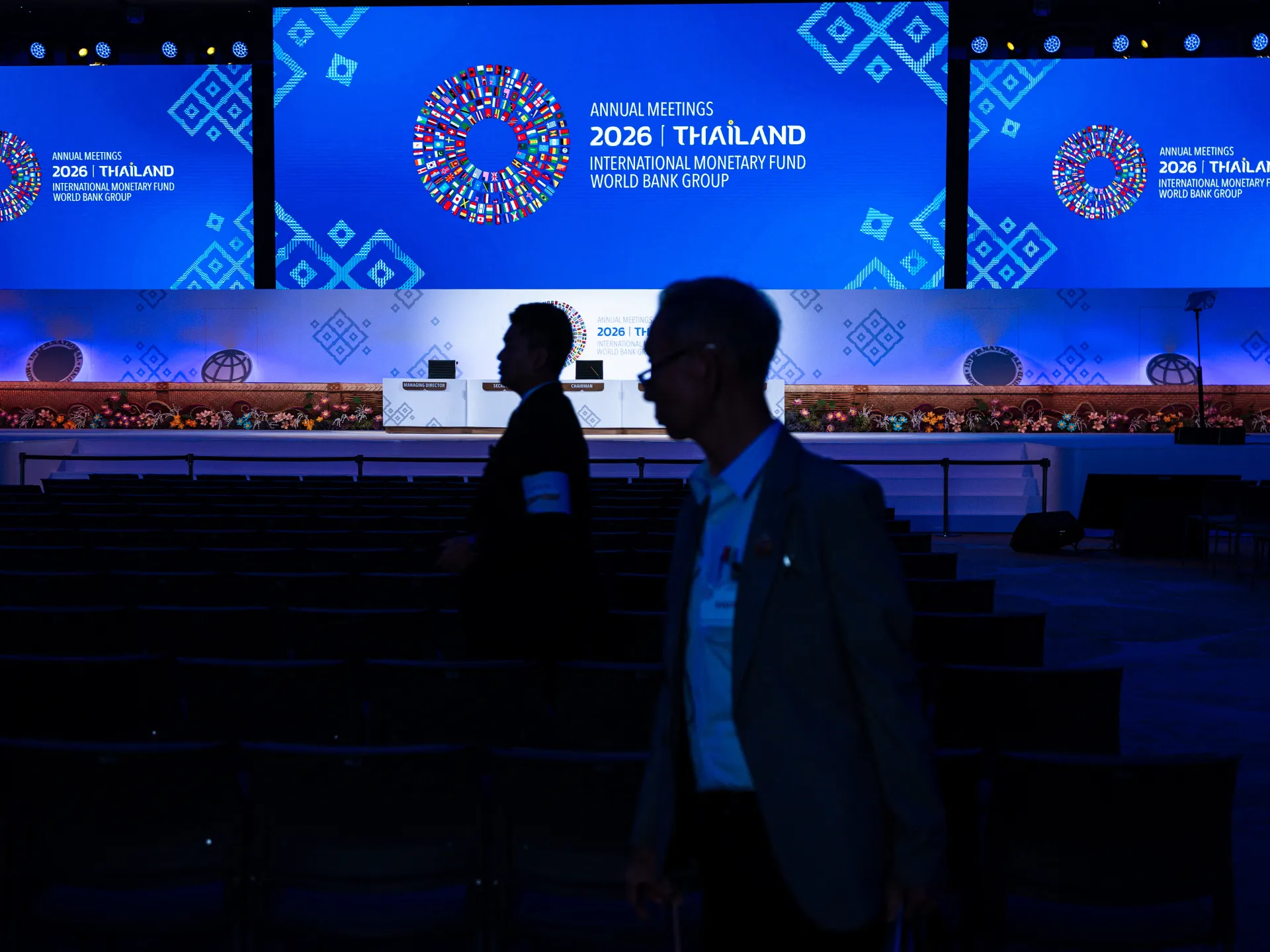
Caracas, April 17, 2026 (venezuelanalysis.com) – Venezuela has reestablished ties with the International Monetary Fund (IMF) after a seven-year hiatus.
Acting President Delcy Rodríguez confirmed the news on Thursday night, calling it a “great achievement of Venezuelan diplomacy” and a “very important step” for the Venezuelan economy.
“This is the result of months-long negotiations that the Venezuelan far-right unsuccessfully tried to sabotage,” she stated in a televised broadcast. “Good has triumphed.”
The IMF announced the “resumption of dealings” with Venezuela in a statement on Thursday, stating that the decision was “guided by the views of IMF members representing a majority of the total voting power.”
Managing Director Kristalina Georgieva stated earlier this week that the IMF had been approached by Venezuelan authorities at a technical level and that the Caribbean nation “desperately needs help.”
The World Bank likewise issued a statement disclosing the resumption of dealings with the acting Rodríguez government. Venezuela’s last loan with the institution concluded in 2005.
Venezuela had its relationship with the IMF suspended in 2019 after the first Trump administration and allies recognized the self-proclaimed “interim government” led by Juan Guaidó as the Caribbean nation’s legitimate authority.
In March, the White House recognized Rodríguez as Venezuela’s “sole leader” and later withdrew sanctions against her, while US officials spoke of efforts to reincorporate Caracas into the IMF fold.
Though relations were officially frozen in 2019, Venezuela had sought to distance itself from the Washington-based institution more than a decade prior. In 2007, former President Hugo Chávez formally withdrew Venezuela from the IMF and the World Bank, calling them “weapons of US imperialism.”
Chávez repeatedly denounced the US-controlled multilateral institutions’ role in promoting debt and underdevelopment in Global South countries and pushed for the creation of lending institutions as part of Latin American integration efforts. Under Chávez’s predecessors, Venezuela implemented draconian IMF-conditioned structural adjustment policies that saw over half of Venezuelans living in poverty by 1998.
Last year, President Nicolás Maduro stated that Venezuela had “broken the shackles” of the World Bank and the IMF and was instead building its own “self-sustainable model and relations with a new world.”
Venezuela’s priority will be accessing US $5.1 billion in Special Drawing Rights (SDR) that it is entitled to as an IMF member. In 2021, the lending institution issued $650 billion amid the Covid-19 pandemic as an effort to help countries boost reserves and address fiscal needs.
However, Venezuela was blocked from accessing the funds as the IMF refused to rule on the country’s legitimate authorities.
Caracas’ reengagement with the IMF and the World Bank also comes amid growing speculation about the fate of Venezuela’s sizable foreign debt. The Caribbean nation owes as much as $170 billion from a combination of defaulted bonds, unpaid loans, and international arbitration awards that have accrued interest for years as US sanctions battered Venezuela’s economy and cut it off from credit markets.
Venezuelan bonds have been rallying in recent weeks following Washington’s rapprochement with Caracas as creditors bet on a debt restructuring deal that can bring significant windfalls.
Since the January 3 US military strikes and kidnapping of President Nicolás Maduro, the Rodríguez administration has fast-tracked a number of pro-business reforms, including in the hydrocarbons and mining sectors. Upon enacting the Mining Law on Thursday, the acting president thanked Trump, Rubio, and other administration officials for their “good disposition” in establishing “cooperation.”
Rodríguez recently announced further plans to overhaul the South American country’s labor, pension, and tax legislation, while also identifying state assets that are “not strategic.” The Cisneros Group, one of Venezuela’s largest business conglomerates, recently announced the raising of funds ahead of expectations of a “wave of privatizations.”
Since January, the Trump administration has imposed control over Venezuelan oil revenues, mandating that royalties, taxes, and dividends be deposited in US Treasury accounts. In a congressional hearing on Thursday, Assistant State Secretary Michael Kozak stated that “around $3 billion” have moved through the dedicated accounts.
He did not specify what portion of the revenues has been returned to Caracas, only that the funds had been used to pay public sector incomes and import oil industry inputs, while blocking any transactions with China, Cuba, and Iran.
Earlier this week, the Treasury’s Office of Foreign Assets Control (OFAC) issued new restricted licenses allowing transactions with the Venezuelan Central Bank and public banks that are expected to facilitate the partial return of seized Venezuelan export revenues.
On Thursday, Venezuelan authorities additionally announced a change in the Central Bank leadership, with Luis Pérez replacing Laura Guerra as president of the institution. Guerra had been appointed to the post in April 2025 by Maduro.
Pérez is an economist who had served on the BCV board of directors since 2018. In his social media profile, he describes himself as a cryptocurrency enthusiast.
WASHINGTON — Democrats who once saw retaking the U.S. Senate as a long shot in 2026 have newfound hope thanks to an unpopular president and a California donor machine that has snapped into action.
Californians provided the most out-of-state cash to Democrats in nearly every hotly contested race, and in several cases gave more than in-state donors, according to a Times analysis of campaign finance filings covering the first three months of 2026.
Sen. Jon Ossoff of Georgia, who took in more than $14 million overall, received nearly as much from California backers as from supporters in his home state among donors who contributed at least $200 and whose identities were disclosed.
James Talarico, a Democratic Senate candidate in Texas, has raised a staggering $27 million so far this year, with California donors contributing just under $1.2 million to back his campaign — second only to Texas supporters among those donors whose names were disclosed.
Donors who give less than $200 are not required to be identified in campaign finance reports and made up a significant share of the donors to Ossoff’s and Talarico’s campaigns.
Republicans currently have control of the Senate with 53 of the chamber’s 100 seats. This year 35 seats are at play, including special elections in Florida and Ohio.
GOP still winning a key cash race
While more of the seats up for grabs are in Republican hands, polling showing the potential for tight races in several of them has given Democrats hope that they might be able to shrink or reverse their deficit in November.
Top Democratic candidates have out-raised their GOP rivals in the most competitive Senate races, but Republicans are winning the cash race among big-money committees that can accept checks far larger than the $7,000 cap on donations to candidate committees.
Those Democratic candidates have continued a tradition of relying on donors in the country’s most populous state to bankroll their campaigns.
“California has been a rich gold mine for many a candidate and continues to be that,” said Michael Beckel, director of money in politics reform at Issue One, a bipartisan advocacy group.
Democratic Senate candidates in a few races raised more from California donors than from donors in their home states, according to campaign finance reports filed Wednesday.
Democratic former Rep. Mary Peltola of Alaska, who is challenging incumbent Republican Sen. Dan Sullivan, brought in nearly $900,000 from California donors who had contributed at least $200. Alaska donors contributed just over $520,000 to Peltola in the same time period.
Two of the three leading Democratic hopefuls in Michigan’s open Senate race, Rep. Haley Stevens and physician Abdul El-Sayed, reported taking in more from California donors than from donors in Michigan. California was the second biggest bank of support for the other top Democratic contender, state Sen. Mallory McMorrow.
And in Nebraska, independent Dan Osborn, who is challenging incumbent Republican Sen. Pete Ricketts, took in $80,000 more from disclosed California donors than from Nebraskans.
Dozens of California donors gave to at least five Senate candidates across the country, according to The Times’ analysis of the filing data.
Burbank playwright and screenwriter Winnie Holzman has donated to Democratic candidates in nine key races and said she has been inspired to give to them — and other candidates and political groups — because of concerns about the policies of President Trump’s administration and what she sees as its violation of the law.
“This isn’t just about who is in the Senate,” said Holzman, who wrote the script for the play “Wicked” and co-wrote its movie adaptations. “But if enough Democrats were in the Senate right now, there would be a lot more ability to push back on this.”
The impressive fundraising hauls by Democrats come with a significant caveat.
The two most prominent political committees that support Republican Senate candidates — the party-affiliated National Republican Senatorial Committee and the Senate Leadership Fund super PAC, have both outraised rival Democratic groups by a significant margin this cycle.
For the NRSC, an $11.5-million fundraising advantage since the start of 2025 has translated to a modest $2-million advantage in cash in the bank through the end of February compared with the Democratic Senatorial Campaign Committee.
But the Senate Leadership Fund, which can accept unlimited amounts of cash from donors, had $91.6 million more to spend at the end of March than the Democratic rival Senate Majority PAC.
And the pro-Trump super PAC MAGA Inc. had a stunning $312 million in the bank at the end of February.
Money raised by candidate campaign committees does, however, bring some advantages over money raised by other committees. Most significantly, candidates are able to buy advertising at cheaper rates than other political committees.
That is an important distinction in a year when advertising spending in Senate races is expected to top $2.8 billion.
The Senate map
While political analysts expect that Democrats will likely perform well in congressional races — with early signs pointing to a strong possibility that the party regains control of the House — winning control of the Senate would be a much taller order.
“The Senate is going to be won or lost in red states,” said Kyle Kondik, managing editor of Sabato’s Crystal Ball at the University of Virginia’s Center for Politics.
Even in the best-case scenario for Democrats, to retake control of the chamber they would probably need to win in at least two states such as Iowa, Alaska, Ohio or Texas, all of which went to Trump in the 2024 presidential election by double-digit margins.
With the vast sums likely to be raised — and spent — by both sides, Kondik said that fundraising can reach a point of diminishing returns.
“You’d rather have more than less, obviously, but the actual effect is pretty debatable,” he said.
And history shows that fundraising prowess doesn’t necessarily translate to electoral success in November.
Take the example of Texas Democrat Beto O’Rourke.
In his 2018 challenge of incumbent Republican Ted Cruz, O’Rourke brought in more than $80 million, more than double Cruz’s fundraising haul of $35 million.
But it wasn’t enough to put the then-congressman from El Paso over the top.
O’Rourke lost the race by about 2.5 percentage points.
American sanctions on the Venezuelan Central Bank (BCV) have been relieved, generating a flurry of speculations over what is next for the financial sector and the broader economy. After the big news, Delcy Rodríguez announced the resignation of BCV President Laura Guerra on Thursday night. Guerra is the sister of Nicolás Maduro’s first wife, and the aunt of Nicolasito Maduro Guerra.
At least for now, the central bank will be led by Guerra’s former deputy, Luis Pérez-González, a name that is as underwhelming as any of his predecessors. Pérez has been a member of the BCV board since April 2025. Before that, his experience in monetary policy was nil. He was in charge of Carbones del Zulia and of “Monitoring and Control of Eco-mining Development” in Maduro’s Ministry of Mining. You can find him playing Frank Sinatra songs in his spare time.
It doesn’t look like this will be Delcy’s permanent pick.
Before diving into the immediate and medium term effect that recent developments could have, it is worth highlighting what the BCV’s actual purpose is and the spectacular failure that has driven the institution to near irrelevance.
Ironically, Venezuelan law mandates the BCV to ensure price stability and preserve the value of the currency. We don’t have to go far back to remember the multiple zeros stripped from the bolívar after one of the longest hyperinflationary episodes in modern history, directly contradicting its constitutional mandate. After all, this is a central bank that went years without publishing any data, and when it resumed, it released incomplete figures, forcing economists to reconstruct years of missing information. It is the same BCV that despite its constitutional mandate did not make any counterbalance to the completely irresponsible fiscal policy of the Chávez and Maduro era, shattering any sort of credibility it may have had.
Nevertheless, reviving the BCV is crucial to the reintegration of the financial sector into the wider Venezuelan economy. In the near term, the effects of sanctions relief will likely be most visible in exchange rate auctions. Greater transparency and reliability in these operations will help reduce the gap between the official and the black market rates. This would directly affect daily life, reducing price distortions and helping stabilize inflation expectations for ordinary Venezuelans. It would also reopen the door to multilateral institutions and international markets, particularly renewed engagement with the International Monetary Fund, which is a necessary step toward debt restructuring and access to credit.
However, there is no on and off switch in terms of trustworthiness, and the BCV is supposed to be in the credibility business.The effectiveness of any central bank relies on its independence from political pressures and ability to communicate a coherent monetary policy, not just on the technical capacity of who runs it. Undermining that independence is what ultimately kills the effectiveness of any policy it may attempt to implement.
Delcy needs to set up an independent central bank to satisfy the economic discourse, attract investment, and control inflationary pressures. Doing so will require establishing the first institution capable of challenging the administration from within.
This is true everywhere, as hard fought-battles are being waged around the economic world on this matter. From Trump’s challenges to Federal Reserve Chair Jerome Powell, which unsettled financial markets, to standout regional cases like Peru, where the central bank has been single-handedly supporting the economy despite near-permanente political turmoil. These examples highlight just how crucial central bank independence is to real economic stability.
Restoring trust in the BCV goes beyond who runs it, but the naming of the new president is one of the most crucial decisions that the interim administration of Delcy Rodríguez will have to make. Whoever is chosen will be scrutinized by both ordinary Venezuelans and international investors to gauge the commitment of Rodríguez to carry out the necessary economic reforms. Someone that falls short of being able to implement true independence and restore confidence in the system will just undermine all the political speech of theeconomy first that is currently being put on display.
The paradox is that Delcy needs to set up an independent central bank to satisfy the economic discourse, attract investment, and control inflationary pressures. But doing so will require establishing the first institution capable of challenging the administration from within. This is where the political and economic reality clash.
The decision comes with a level of urgency, as patience is starting to run out in an internal political climate that is heating up. Trade unions and pensioners have recently taken to the streets to demand higher wages and benefits. Appointing someone close to the previous administration will increase frustration and complicate the weak equilibrium that Rodríguez has built around the promise to rebuild the economy.
The interim government is attempting to make itself useful to the American overlords by convincing them that they have the ability and willingness to commit to economic reform. Failure to follow through with an independent BCV board could strain the relationship further and make it even harder to justify. Now that sanctions have been lifted and oil money is flowing through US-backed accounts, it is time for the interim authority to live up to their side of the bargain, as Delcy risks losing the little goodwill her administration has left.
Attention is now focused on who will be appointed to lead the BCV, and whether that choice signals a genuine shift toward institutional autonomy or a continuation of past policy constraints.
Rob Leon, Co-Head of Investment Banking at Rand Merchant Bank, which won Best Investment Bank in Africa, explains Africa’s opportunities to become a global investment hub.
Global Finance:What does the African deal-making landscape look like, and how do you see it evolving?
Rob Leon: Africa’s deal-making landscape is marked by cautious optimism. Despite geopolitical uncertainty and global economic headwinds, investment opportunities are expanding in key sectors, with infrastructure being central. Interest in natural resources—particularly critical minerals needed for clean energy—is also growing, and private equity and venture capitalists are becoming increasingly active. Notably, reforms in several countries are improving investor confidence. Egypt, Morocco, South Africa, Kenya, and Nigeria dominate due to their large consumer bases, diversified economies, and reform momentum.
Over the coming years, deal activity is expected to be deeply driven by regional integration, policy reforms, and the demographic dividend. The African Continental Free Trade Area (AfCFTA) will unlock cross-border opportunities, making pan-African mergers and acquisitions more viable.
In the short term, we expect moderate growth in deal volumes, led by the energy and digital sectors. In the medium term, AfCFTA will lower trade barriers and harmonize regulation, creating conditions for larger cross-border deals. Beyond 2030, Africa could emerge as a global investment hub if political stability and regulatory harmony are sustained.
GF: What has made RMB a top investment bank, and how critical are broader Africa markets?
Leon: Our diversified portfolio, together with a disciplined approach to balancing risk, return, and growth, have let RMB deliver consistent returns in a very competitive market. Besides that, we differentiate ourselves through a collaborative, client-centric, and entrepreneurial approach.
Broader Africa is central to our growth strategy. RMB has a deal footprint in 35 countries as well as an international presence. That network matters because many of our clients are regional or internationally connected businesses that need capital, risk management, and advisory solutions across jurisdictions.
GF: How can Africa deepen its underdeveloped corporate debt market?
Leon: Africa’s corporate debt markets have developed meaningfully over time, but their depth and breadth still vary considerably across countries, sectors, and currencies. In many markets, the issue is not a lack of demand for capital. It is that the available pools of capital, the range of issuers, and the array of funding instruments are not yet broad or deep enough to meet the demand. A key consideration is currency. Many corporates’ revenues are denominated in local currency, yet a meaningful share of available funding is hard currency-based.
On the positive side, domestic institutional capital is growing and should support deeper and more diversified debt markets over time. This is encouraging, with borrowers taking a strategic approach to funding, including engagement from a broader set of investors and growing demand for solutions that go beyond traditional bilateral lending.
GF:Equity-market activity remains subdued. What can Africa do to change this?
Leon: While 2025 was a stellar year for many African equity markets, we still see muted capital raising activity, with companies preferring debt financing or private equity. To change this, Africa needs a mix of structural reforms, market deepening, and investor confidence-building measures. Currently, many markets are underutilized. Exchanges remain small, with limited trading volumes; listing is burdensome; and volatility and perception often deter long-term investors. That said, a few stock exchanges are highly sophisticated, with deep liquidity, diverse listings, and advanced infrastructure.
To revitalize equity capital raising, Africa must strengthen market infrastructure by modernizing its trading platforms and settlement systems and encourage cross-listings and regional exchange integration. There is also a need for policy and regulatory reforms and strengthening of corporate governance standards. Africa should also leverage AfCFTA to create pan-African capital markets and pool liquidity across exchanges to attract larger listings.
GF: How large a role is sustainable finance assuming in Africa? Leon: Sustainable finance is a rapidly growing market that creates access to large reservoirs of capital and a diverse set of investors. RMB is at the forefront of advancing this market, having facilitated $12 billion in sustainable and transition finance. This includes blended finance structures to mobilize capital for early-stage projects and innovative technology. The bank has committed to facilitate $26.8 billion in sustainable and transition finance by 2030.
WASHINGTON — If the U.S. and Iran aren’t able to soon come to a deal to end the war or extend the ceasefire that expires next week, the Trump administration is setting the stage to shift its war campaign toward a more economic-focused effort aimed at choking Tehran into submission rather than relying on bombs alone.
Treasury Secretary Scott Bessent told reporters at a White House briefing Wednesday that the U.S. plans to ramp up economic pain on Iran, and said the new moves will be the “financial equivalent” of a bombing campaign.
The threat of secondary economic sanctions on countries doing business with people, firms, and ships under Iranian control — including allies like the United Arab Emirates and competitors like China — represents an escalation of sanctions that the U.S. is already employing.
Bessent said the administration has “told companies, we have told countries that if you are buying Iranian oil, that if Iranian money is sitting in your banks, we are now willing to apply secondary sanctions, which is a very stern measure. And the Iranians should know that this is going to be the financial equivalent of what we saw in the kinetic activities.”
Treasury Department warns China, Hong Kong, the UAE and Oman
The warning comes the day after the Treasury Department sent a letter to financial institutions in China, Hong Kong, the UAE, and Oman, threatening to levy secondary sanctions for doing business with Iran, and accusing those countries of allowing Iranian illicit activities to flow through their financial institutions.
It’s part of an economic playbook that President Trump still can use to pressure Iran to accept U.S. proposals to limit its nuclear ambitions, a person familiar with the administration’s thinking told the Associated Press. The person spoke on the condition of anonymity because they were not authorized to discuss private discussions on the record.
Privately, the argument being made to Trump is that the Iranians think they can weather the storm — but if they cannot pay their loyalists, that could pressure Iran to the table.
And some in the administration believe there are still more economic targets that can be hit that would put the economic hurt on Iran, including bonyads, the charitable trusts that account for a significant percentage of the Iranian economy.
Bessent told reporters that two Chinese banks have received warnings about handling Iranian money. Trump is preparing to visit Beijing next month for talks with Chinese President Xi Jinping.
Bessent also said that Iran’s Gulf neighbors are now willing to look at freezing Iranian money in their banks because of Iran’s aggression during the war.
Daniel Pickard, a sanctions attorney, said imposing secondary sanctions could result in “diplomatic and economic blowback” from allies that could hurt efforts to build coalitions against Tehran.
“A lot of our trading partners have been outspoken in regard to their opposition to the conflict in Iran,” Pickard said. “Most economic sanctions professionals would agree that when you get more people on the team, the chances of your economic sanctions being effective are greater.”
On Wednesday, the U.S. imposed sanctions on an oil smuggling network connected to the deceased senior Iranian security official Ali Shamkhani, who was a close advisor to the former Supreme Leader of Iran. Sanctions include dozens of individuals, companies, and vessels involved in secretly transporting and selling Iranian and Russian oil through front companies, many of which are in the UAE.
“Treasury will continue to cut off Iran’s illicit smuggling and terror proxy networks,” Bessent said in a statement. “Financial institutions should be on notice that Treasury will leverage all tools and authorities, including secondary sanctions, against those that continue to support Tehran’s terrorist activities.
The administration believes the momentum has shifted
Trump administration officials have also signaled growing confidence that the ceasefire and a blockade of shipments from Iranian ports in the Strait of Hormuz have shifted momentum in Trump’s favor.
Iran has endured tens of billions of dollars in damage during the bombardment to the country’s infrastructure — including setbacks to its oil industry, the heart of its fragile and long-isolated economy — that could take years to repair.
Vice President JD Vance on Tuesday said Trump “doesn’t want to make, like, a small deal. He wants to make the grand bargain.”
“That’s the trade that he’s offering,” Vance said. “If you guys commit to not having a nuclear weapon, we are going to make Iran thrive.”
The president’s deputy chief of staff, Stephen Miller, offered a more caustic assessment of the moment, suggesting that Trump had “played the checkmate move” on Iran by implementing the blockage in the strait.
“If Iran chooses the path of a deal that’s great for the world, that’s great for everybody. If Iran chooses the path of economic strangulation by blockade, then the world will pass Iran by,” Miller said in a Fox News appearance Tuesday evening. “New energy routes will be established. New supply chains will be established. Other nations throughout the region — throughout the world, and especially America — will power the world and Iran will become a footnote.”
Some Republicans are skeptical that more sanctions will work
Some Republicans believe that any tactic to exert more pressure on Tehran is worth trying.
“I would support anything,” said Sen. Thom Tillis (R-N.C.). “If the administration came up with the ideas, I would support all of the above. More pressure, the better.”
Others were skeptical, noting that Tehran was already facing a litany of economic penalties that had little impact on its behavior.
“I’m not sure if it’s sanctions that’ll do it. I think we’re putting some pretty heavy sanctions on right now,” said Sen. Mike Rounds (R-S.D.), a member of the Banking and Armed Services Committees. “I personally am just not optimistic that we actually can fix this thing without a regime change.”
Trita Parsi, executive vice president of the Quincy Institute, a think tank that has been critical of Trump’s decision to launch the war, says that Trump had been “politically cornered and strategically constrained” before he announced the ceasefire. But now, Parsi argues, Trump may have altered the difficult dynamic and created a situation where “Iran now appears to need an agreement more than the United States does.”
“The window now open offers Tehran a chance to convert battlefield leverage into lasting strategic gain,” Parsi wrote in a new analysis. “To let it close would mean forfeiting not just incremental progress, but the possibility of reshaping its economic and geopolitical position. By contrast, the United States, having already secured a tenuous exit ramp through the ceasefire, has less at stake in the short term.”
Hussein, Madhani, Weissert and Kim write for the Associated Press.
Israeli forces storm camps and villages in an overnight raid across the occupied West Bank arresting more than 22 Palestinians. This comes days after Israel approved 34 new illegal settlements.
Israel has approved 34 new settlements in the occupied West Bank, illegal under international law, that has Palestinians terrified they will lose their land. At an inauguration event, far-right minister Bezalel Smotrich outlined plans to expand borders across Gaza, Lebanon and Syria.
CCTV footage circulated online shows the moment that a military dog attacks a worshipper leaving a mosque during an Israeli raid on Tarqumiyah in the occupied West Bank.
A general strike swept the occupied West Bank after Israel passed a death penalty law that only targets Palestinians, sparking international condemnation and protests.
The Israeli parliament’s approval of a legislation that seeks the death penalty for Palestinians convicted of deadly attacks has stoked fears among the Palestinians and drawn condemnation from the international community, dismayed at the further entrenching of what rights groups have long described as Israel’s “system of apartheid”.
The law, which does not apply to Jewish citizens of Israel, was met with jubilation among its backers in the country’s far right.
Recommended Stories
list of 4 itemsend of list
France, Germany, Italy and the United Kingdom have all raised concerns over what many describe as the overtly racist nature of the bill, whose nature and wording appear to exclusively target Palestinians.
“We are particularly worried about the de facto discriminatory character of the bill. The adoption of this bill would risk undermining Israel’s commitments with regards to democratic principles,” the foreign ministries wrote in a joint statement on Sunday.
Rights groups have also criticised the bill, with Amnesty International in February saying the legislation would make the death penalty “another discriminatory tool in Israel’s system of apartheid”.
Human Rights Watch (HRW) on Tuesday called the law discriminatory as it would primarily, if not exclusively, be applied to Palestinians.
“Israeli officials argue that the imposing the death penalty is about security, but in reality, it entrenches discrimination and a two-tiered system of justice, both hallmarks of apartheid,” Adam Coogle, deputy Middle East director at Human Rights Watch, said in a statement.
“The death penalty is irreversible and cruel. Combined with its severe restrictions on appeals and its 90-day execution timeline, this bill aims to kill Palestinian detainees faster and with less scrutiny.”
Nevertheless, on its successful passage through parliament, amidst the celebrating lawmakers, the legislation’s principal champion, far- right National Security Minister Itamar Ben-Gvir – who has previous convictions for far-right “terrorism” – was seen brandishing a champagne.
Israeli Prime Minister Benjamin Netanyahu, who had attended the chamber to support the bill, could also be seen congratulating lawmakers on its passage.
So, how can Israel pass a law targeting one ethnic group and not others? Is that legal, and is this the first time Israel has passed legislation that deliberately discriminates against Palestinians?
Here’s what we know.
How does the law target Palestinians and not Israelis?
By limiting the bulk of the legislation to the military courts that only try Palestinians under occupation.
Under the new legislation, anyone found guilty of the killing of an Israeli citizen within the occupied West Bank will, by default, be sentenced to death by the military courts overseeing the occupied territory.
While the courts do not regularly publish statistics on convictions, in 2010, the court system did concede that, of the Palestinians tried for offences committed in the occupied West Bank, 99.74 percent were found guilty.
In contrast, Israeli settlers, who have killed seven Palestinians in just the weeks following the start of their country’s war on Iran in late February, are tried in civilian courts in Israel. According to an analysis by the UK’s Guardian newspaper in late March, Israel has yet to prosecute any of its citizens for killing Palestinians in the occupied West Bank since the start of this decade.
Under the new legislation, Israel’s civilian courts are granted an extra degree of leniency in sentencing Israelis found guilty of killing Palestinians in the occupied West Bank, with judges having the option to choose between the death penalty and life imprisonment.
Sentences for the military courts trying Palestinians, in contrast, carry an automatic death penalty, with life imprisonment only available under extreme circumstances.
According to a study by the Israeli rights group, Yesh Din, conviction rates for settlers found guilty by civilian courts of committing crimes against Palestinians in the West Bank (excluding East Jerusalem) between 2005 and 2024 ran to about 3 percent. Some 93.8 percent of investigations into settler violence were closed at the end of an investigation with no indictment filed, the group noted.
Underpinning much of this is Israel’s 2018 Nation State law, which, in the eyes of many, codifies Israel’s apartheid system of government, defining Israel as the exclusive homeland of the Jewish people and prioritising Jewish settlement as a national value.
Critics argue that it downgrades the status of Palestinian citizens, who make up about 20 percent of the population, by omitting any guarantee of equality.
How is that even legal?
According to many, it isn’t.
Despite the best efforts of Prime Minister Netanyahu and his Finance Minister Bezalel Smotrich – who has administrative power over the occupied West Bank – to annex the Palestinian territory, it remains a foreign territory under military occupation.
According to Amichai Cohen, a senior fellow at the Center for Security and Democracy of The Israel Democracy Institute, international law does not permit Israel’s parliament to legislate for the West Bank, since the area is not legally part of Israel’s sovereign territory.
In September 2024, the United Nations General Assembly overwhelmingly called for end to Israeli occupation of the occupied West Bank and East Jerusalem within a year. The UNGA resolution backed an advisory opinion by the International Court of Justice (ICJ), which called Israeli occupation “unlawful”.
Similarly, the Association of Civil Rights in Israel announced it had already taken the matter to Israel’s highest court only minutes after the bill was approved. The group argued that the measure was “discriminatory by design” and that lawmakers had no legal authority to impose it on Palestinians living in the occupied West Bank, who are not Israeli citizens.
Is this the first time Israel has been accused of using its legal system to target Palestinians?
Far from it.
Human rights groups – including HRW and Amnesty International – have long argued that the legal systems applying to Palestinians and to Israeli settlers in the West Bank are fundamentally unequal.
Palestinians live under military law, while settlers fall under Israeli civil law, creating two parallel systems in the same territory.
According to rights groups, this structure enables discriminatory detention practices, such as administrative detention (where people can be held indefinitely without charge), dramatically unequal protections under the law, and the selective enforcement of those laws, which have all underpinned widespread accusations of apartheid.
As of March 2026, approximately 9,500 Palestinians are detained in Israeli prisons under harsh conditions, with about half held under administrative detention or labelled “unlawful combatants”, denied trial and unable to defend themselves.
Legislation relating to the treatment of children in custody has led to concern among many international observers and rights groups. Palestinian minors can be interrogated without parental present and are often denied timely access to legal counsel in defiance of Israel’s own and international law, the HRW noted.
Another key area of international concern is the ongoing demolition of Palestinian homes built without permits, which are nearly impossible for Palestinians to obtain. Unauthorised settler outposts, in contrast, are rarely troubled and increasingly retroactively legalised.
Bank of America this week settled a class-action lawsuit brought by a victim of the deceased sex predator Jeffrey Epstein, pictured in a photo issued by the New York State Division of Criminal Justice while he was awaiting trial on charges of sex trafficking. Epstein was found dead in his cell in August 2019 before he could be brought to trial. File Photo by New York State Division of Criminal Justice/EPA-EFE
March 28 (UPI) — Bank of America reached a settlement with a survivor of deceased sex predator Jeffrey Epstein that will distribute $72.5 million to his victims.
The survivor, named in the case as “BOA Jane Doe,” and her attorneys told a federal judge on Friday that a settlement had been reached with the bank on a proposed class-action suit over Epstein’s decades of abuse and trafficking of women and teenage girls, The Charlotte Observer reported.
The suit alleged that the bank ignored signals of Epstein’s crimes by continuing to do business with him while he was committing his crimes.
Doe’s attorneys said they are aware of at least 60 women who were abused or trafficked by Epstein, however the settlement covers all women who experienced either at Epstein’s hands or those “connected to or otherwise associated” with him between June 30, 2008, and July 6, 2019, NBC News reported.
Bank of America, which is the largest bank in the United States, denied liability or wrongdoing in providing Epstein banking services but settled in order to avoid a trial.
“While we stand by our prior statements made in the filings in this case, including that Bank of America did not facilitate sex trafficking crimes, this resolution allows us to put this matter behind us and provides further closure for the plaintiffs,” the bank told The Observer and NBC in a statement.
With the settlement filed, a judge will still have to approve it at a hearing, which is scheduled for April 2.
Bank of America now joins JPMorgan, which settled for $290 million, and Deutsche Bank, which settled for $75 million, in paying what is thought to be more than 1,000 women that Epstein abused in his years-long scheme.
President Donald Trump stands with U.S. Secretary of Agriculture Brooke Rollins during an event celebrating farmers on the South Lawn of the White House on Friday. Photo by Aaron Schwartz/UPI | License Photo
March 28 (UPI) — Law enforcement in Paris arrested one person and is pursuing another after they allegedly tried to detonate an explosive device outside a bank there.
The two suspected attackers attempted to detonate the device near Bank of America’s headquarters in France’s capitol, French officials confirmed on Saturday afternoon.
“Bravo for the swift intervention of a prefecture of of police crew that made it possible to thwart a violent action of a terrorist nature last night in Paris,” France’s minister of the interior, Laurent Nunez, said in a post on X.
“The investigation continues … Vigilance remains more than ever at a high level,” he said.
Around 3:30 a.m. early Saturday morning, officers in the area saw two people carrying a shopping bag, out of which came a container of some type of fuel taped to a tube that the duo attempted to light, the French radio station RTL reported.
The suspect who was caught by police told them he had been recruited online and was paid about $700 for the attempted attack.
Attacks have been committed at synagogues, Jewish schools and facilities, and near businesses associated with the United States and Israel in a handful of countries since the start of the war in Iran.
France, in particular, has ramped up security on the lookout for terrorist attacks.
The Iran-linked group Harakat Ashab al-Yamin al-Islamiyya posted video on Telegram of a bank in France last week which included a push to attack Bank of America in Paris because it “is not just a bank, but a shadowy Zionist force,” The Telegraph reported.
“This bank sends vast investments to Israel, while simultaneously strengthening Jewish economy, culture and politics in France,” the group said in the video. “Through its support for Zionist schools, associations, companies and urban development projects, Bank of America has become a ‘financial and strategic force’ in the European Zionist arena.”
Iranians attend a funeral for a person killed in recent U.S.-Israel airstrikes at Behesht-e Zahra cemetery on the southern outskirts of Tehran in Iran on March 9, 2026. Photo by Hossein Esmaeili/UPI | License Photo
Interior minister says ‘vigilance at high level’, after police arrest suspect before setting off explosive device outside US bank’s headquarters.
Published On 28 Mar 202628 Mar 2026
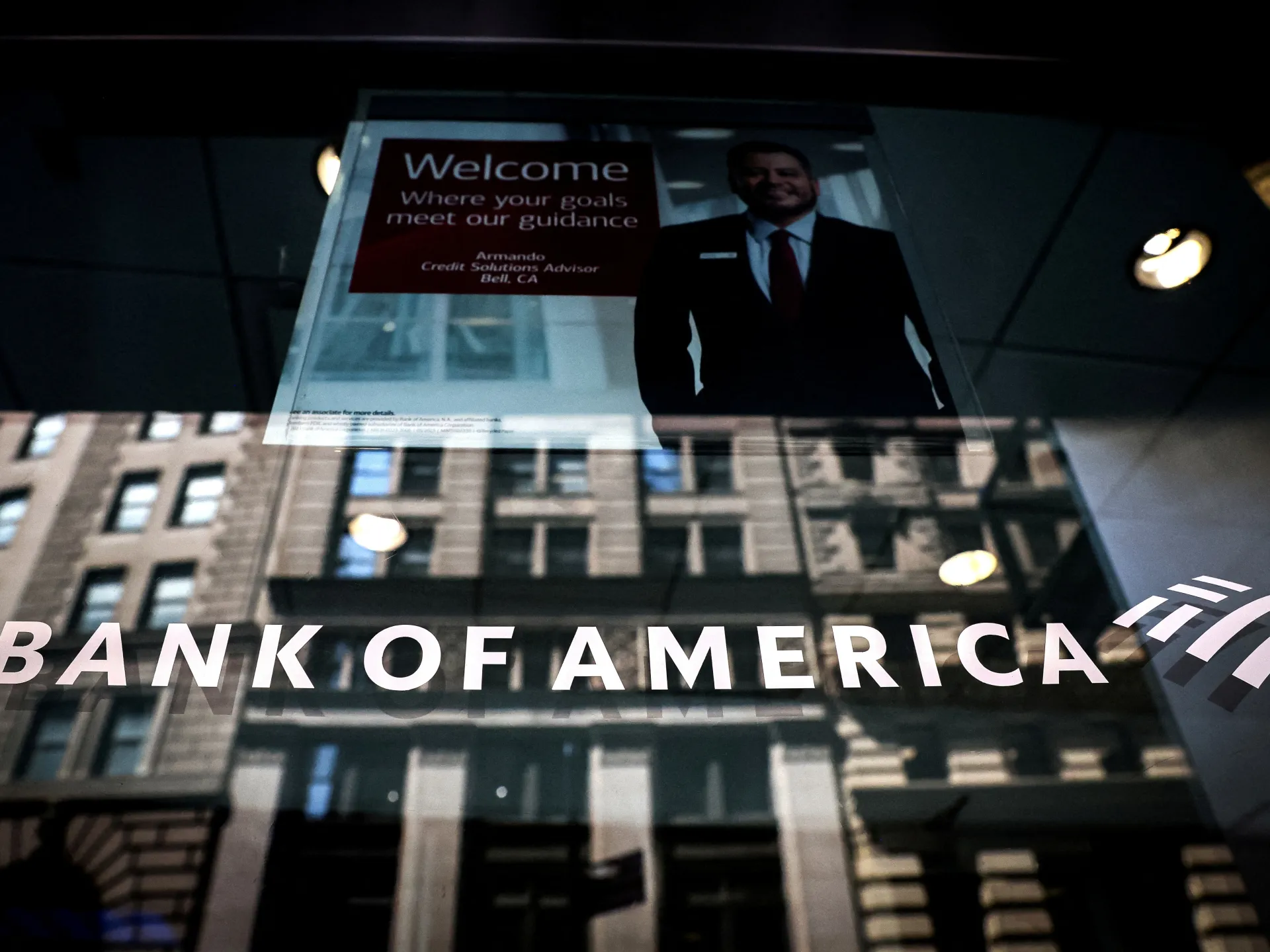
French authorities have opened an investigation into a foiled attack targeting Bank of America’s Paris headquarters after police detained one suspect who was allegedly attempting to ignite an explosive device outside the building.
In a social media post on Saturday, Interior Minister Laurent Nunez said the swift intervention by police had “thwarted a violent terrorist attack” in the French capital the previous night.
Recommended Stories
list of 3 itemsend of list
French newspaper Le Parisien cited a police source as saying the suspect was arrested at about 3:25am local time (02:25 GMT) outside the bank’s local headquarters in the city’s 8th arrondissement as he tried to light a device consisting of a five-litre (1.3-gallon) container filled with an unidentified liquid and an explosive charge made up of about 650 grams (23 ounces) of powder.
The suspect was taken into custody, while a second individual who was present fled the scene and remains at large. The device was taken to the Paris police’s forensics lab for full analysis.
The National Terrorism Prosecution Office told the Reuters news agency the suspected offences included attempted destruction by fire or other dangerous means in connection with a “terrorist plot”, as well as the making, possession and transport of an incendiary or explosive device with intent to carry out dangerous damage.
The probe also includes a charge of participation in a “terrorist” criminal association, covering potential links to accomplices or a broader network, it said.
“Vigilance remains at a very high level,” said Nunez on X, thanking “security and intelligence forces, who are fully mobilised under my authority” in what he called the “current international context”, seemingly with reference to the escalating situation in parts of the Middle East amid the US-Israeli war on Iran.
Earlier in the week, Nunez had said that authorities had stepped up the personal protection of some figures from the Iranian opposition and increased security around sites that risked being targeted, including sites linked to US interests and to the Jewish community.
A spokesperson for Bank of America told Reuters the organisation was “aware of the situation” and “communicating with the authorities”.
The Israeli army fired tear gas at Palestinian residents of the Beit Imrin village, northwest of Nablus in the occupied West Bank. Israeli settlers can be seen setting up tents, while gunfire is heard as the Palestinians fled.
Settler attacks, restrictions on aid, and land seizures marked a week that was supposed to be one of celebration for Palestinians. Al Jazeera’s Nida Ibrahim and Tareq Abu Azzoum explain what’s been going on in the occupied West Bank and Gaza.
Israeli settlers have been filmed vandalising a boys’ school in Huwara, spray-painting racist graffiti and raising an Israeli flag on the roof. The attack comes as settler violence intensifies across the occupied West Bank with homes and cars set on fire, leaving at least nine Palestinians injured.