Bangkok

After Bangkok Floods, IMF and World Bank Weigh Global Risks

IMF and World Bank’s annual meeting explores economic resilience amid climate risk, debt pressure, and AI.

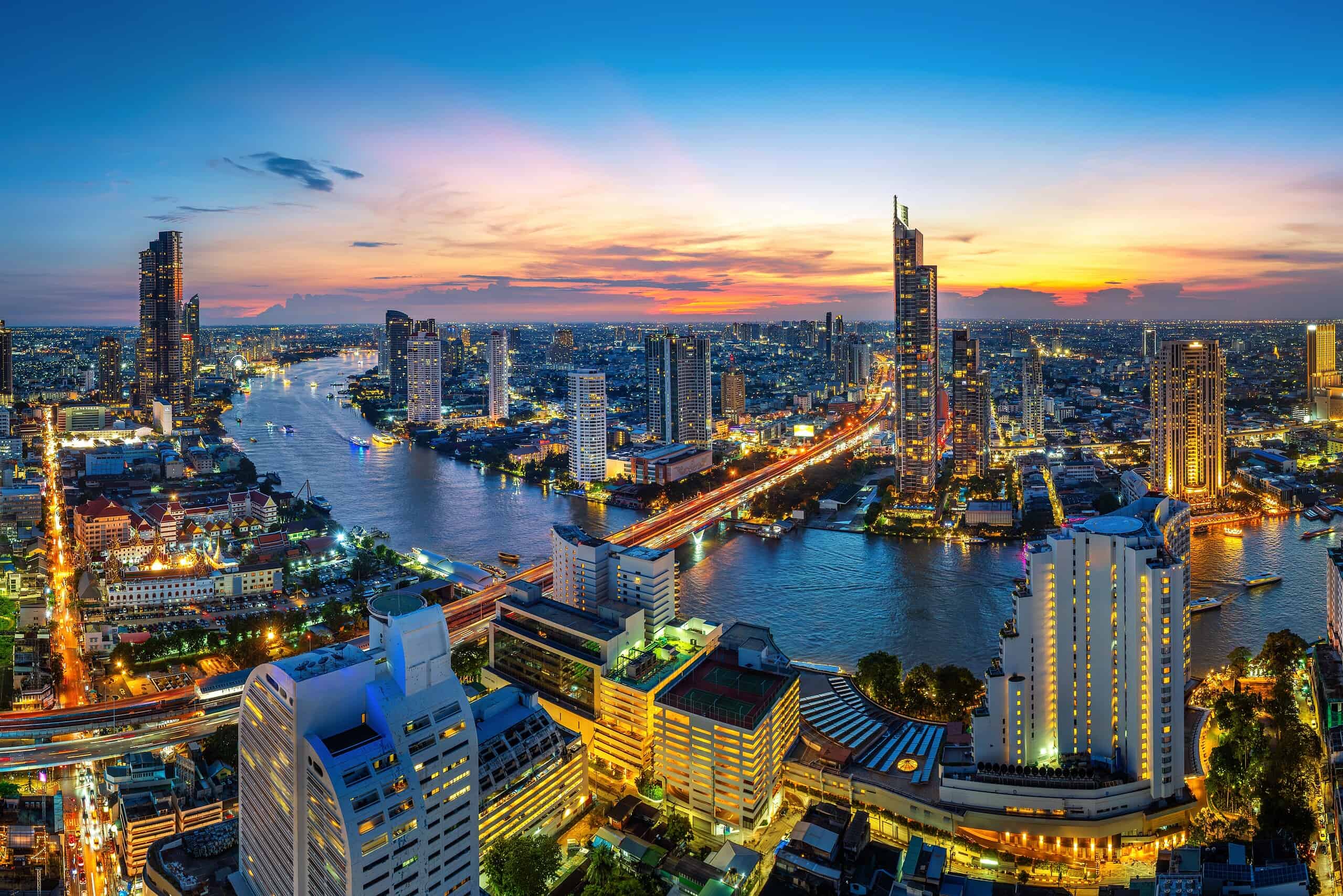
While walking around central Bangkok, it’s easy to miss the damage that prompted IMF and World Bank officials at their annual meeting to consider postponing this week’s event. 

No evidence of the extreme flooding elsewhere in the city, which caused so much damage and loss of life just a week ago, is visible. Life goes on—scooters buzz and trucks barrel down the expressways and narrow streets where vendors hawk exotic foods and trinkets. Bangkok officials did an admirable job cleaning up to prepare for the arrival of some 15,000 attendees, and the area surrounding the convention center is as dry—and secure—as it’s probably ever been. 

Inside the meetings, though, the question was how much more disruption—climate-related or otherwise—the global economy can absorb, and who can afford to recover when the next shock arrives.

At Tuesday’s World Economic Outlook briefing, IMF Chief Economist Silvana Tenreyro described a world economy being pulled in two directions. Conflict in the Middle East has pushed energy prices higher, while investment in artificial intelligence has helped drive growth. The IMF outlook projects global growth of 3.1% this year, but that headline figure masks sharp differences among countries. Energy exporters and countries driving the AI boom are better positioned, she said, than those that must import fuel or have little stake in the massive technology surge.

“The economy has been resilient, but that resilience is reaching its limits,” Tenreyro said at the briefing.

The economy is holding up, in part, because countries and companies have navigated disruptions by rerouting supplies, drawing down inventories, improving efficiency, and finding alternatives. Without those adjustments, the IMF estimates global growth would be closer to 2.5%.

But these measures have limits. Inventories run down. Efficiency gains can only go so far. And another shock—whether geopolitical or climate-related—could arrive before economies have recovered from the last one.

G-24’s Climate and Debt Dilemmas

The Intergovernmental Group of Twenty-Four on International Monetary Affairs and Development, or G-24, which represents emerging-market and developing economies, brought the issue closer to home. Nigeria’s finance minister and G-24 chair, Taiwo Oyedele, cited the flooding in Thailand to argue that climate commitments need to be backed by money, not just promises.

“Our appeal to world leaders is to put their money where their mouth is,” he said in a separate briefing shortly after WEO’s.

For businesses, resilience has a price. Holding extra inventory, diversifying suppliers, and keeping cash on hand can seem like unnecessary costs when markets are stable. But during a disruption, they can keep production moving and prevent higher costs from affecting the business.

Countries face a similar trade-off but lack the same resources. Developing economies need funding for infrastructure, climate preparedness, and basic services, even as debt payments consume a large share of public funds. Oyedele cited estimates that developing countries pay roughly $500 billion more in debt costs than developed economies. His broader point is clear: The countries that need to invest in resilience often face the highest financing costs.

Iyabo Masha, director and head of the Secretariat of the G-24, described the dilemma this way: “Debt is something that restrains growth.” When governments spend so much on creditors, she said, they have less left to invest in their economies.

The AI Factor

Another uncertainty in the IMF’s outlook is that AI investment may boost growth, but its benefits do not necessarily translate into jobs. Oyedele warned that countries with younger populations could see growth alongside rising unemployment if they do not plan carefully. Growth, he said, “has to be job rich; it has to be inclusive.”

That’s a broad definition of resilience—not simply keeping an economy growing, but ensuring people benefit and that governments retain the capacity to respond when circumstances change.

In Bangkok, the discussions have ranged from growth forecasts to debt and climate finance. But the underlying question is who can afford to prepare for the next disruption and who will be left to pay for recovery.

Central Bangkok shows little sign of the recent flooding, but that doesn’t mean the damage elsewhere was any less severe. The same holds for the global economy: A resilient growth forecast doesn’t mean every country is equally prepared for the next shock. The question is how much each can afford to absorb—and what it might have to give up to recover.

Paul Curcio is the editor of Global Finance Magazine. Contact him at paul.curcio@gfmag.com.
Source link

War and high debt to dominate IMF-World Bank meetings in Bangkok | Business and Economy News

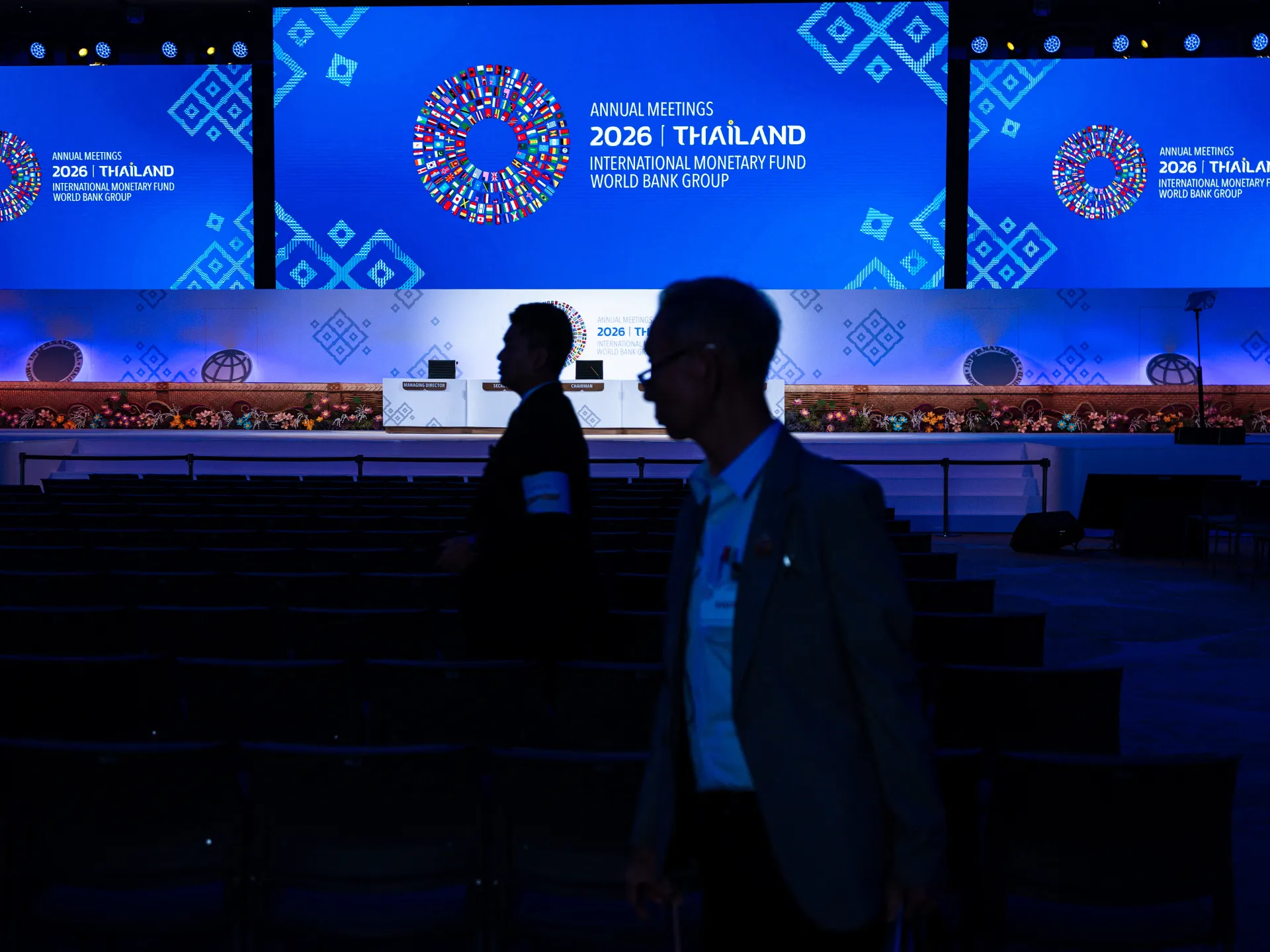
Finance officials from around the world will gather in Bangkok this week under the shadow of a widening war in the Middle East, the biggest-ever energy supply shock and rising interest rates that together pose daunting risks to already-sluggish global economic growth.

The US-Israel war on Iran, now in its eighth month, and its inflationary impact are slated to dominate the agenda and sideline conversations during the annual meetings of the International Monetary Fund (IMF) and World Bank, held outside Washington for the first time in three years.

Recommended Stories

list of 4 itemsend of list

IMF Managing Director Kristalina Georgieva told Reuters News Agency that 18,000 people were registered to attend the meetings, 4,000 more than the last off-site meetings held in Morocco in October 2023.

Notably absent will be United States Treasury Secretary Scott Bessent, who dispatched two senior officials in his stead while he handles some “domestic engagements”, a US official said. Federal Reserve Board Chairman Kevin Warsh will attend and is slated to participate in a public event with Georgieva on October 16.

Several other finance ministers were also staying home due to domestic budget and election duties, but most central bankers would attend, Georgieva said.

Bessent’s decision to skip the high-profile gathering and a meeting of the Group of 20 (G20) major economies, which the US leads this year, may frustrate counterparts amid rising tensions over the Iran war, Ukraine’s battle against Russia’s invasion, and the US move to impose sanctions on the International Criminal Court.

Fossil energy reserve release

The Group of Seven (G7) countries have agreed to release 100 million barrels of diesel and crude oil from emergency reserves under pressure from US President Donald Trump, who is keen to see lower petrol prices before November elections that could see his Republican Party lose control of Congress.

Trump on Friday announced a deal with Russia that would provide even more diesel to global markets and a temporary waiver of US sanctions designed to deprive Moscow of revenues for its ‌‌war on Ukraine. The move drew swift criticism from Ukrainian President Volodymyr Zelenskyy.

More than one billion barrels of oil have been released, mainly from onshore commercial inventories, since the start of the war on February 28. But industry executives say the amount of oil in storage that is accessible to the global market is running low, making the market more fragile and fuelling pressure on prices.

The IMF has signalled little change in its forecast for three percent global growth in 2026, and may edge its forecast for next year slightly higher. But some countries will see downgrades, including Ukraine, now in its fifth year of war against Russia’s invasion, and Gulf countries hit by Iranian strikes and sharply reduced energy exports.

IMF research released on Tuesday showed that sharp spikes in food and energy prices are an increasingly common source of crises that drive inflation expectations higher for longer, worsen poverty and threaten economic stability.

One headache for policymakers is the growing public debt burden that is sapping growth and adding inflationary pressures. The IMF says public debt is at the highest level since World War II and will exceed 100 percent of gross domestic product (GDP) before 2030.

Advanced economies, led by the US, have the highest debt-to-GDP ratios, but emerging markets and low-income countries are particularly vulnerable, given a perfect storm of challenges: capital outflows in search of higher US rates, weather extremes triggered by the El Nino climate phenomenon, and a lack of investment in artificial intelligence (AI), which has mitigated negative supply shocks in the US and other rich countries.

Developing countries are particularly vulnerable given high public debt levels that will have to be renegotiated at higher interest rates. Together, they face $400bn in debt payments to external creditors in 2026, and interest payments already exceed 10 percent of revenue on average.

Many lower-income countries are worried about new IMF recommendations for loan programmes that call for fewer but deeper reforms as a condition for approving lending, a change that many fear will lead to painful austerity measures.

Source link

Thai police arrest jet skier after joyride through flooded Bangkok streets | News

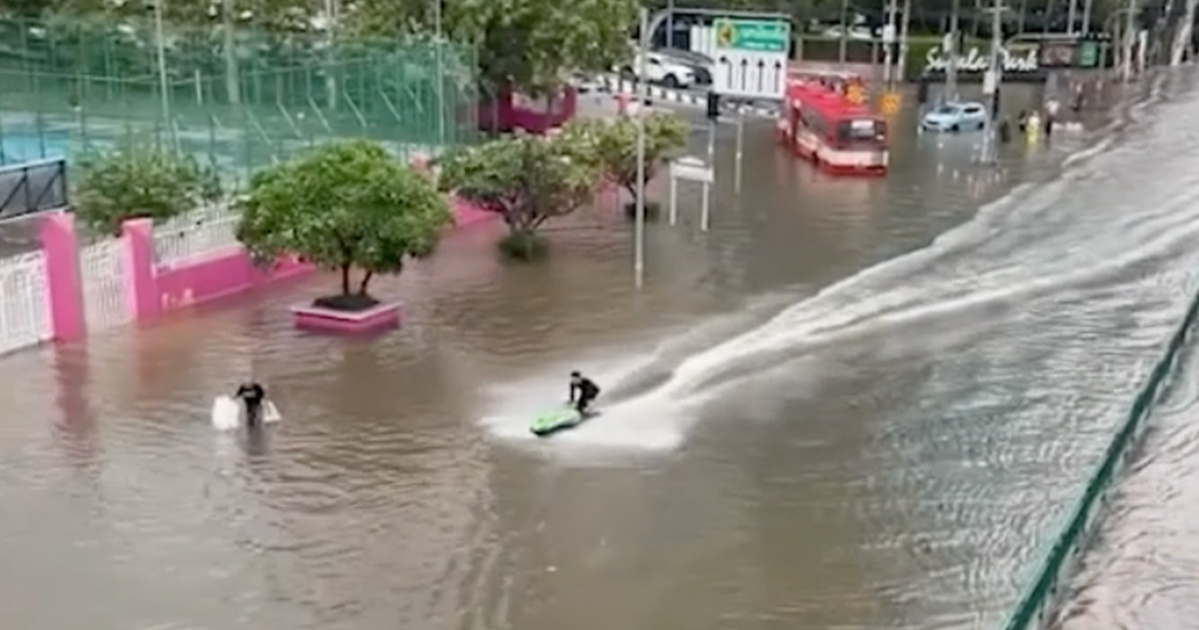
Thai police have arrested a jetskier for joyriding through a flooded street in Bangkok. Police charged the rider with causing a public nuisance and said they will ask a court to confiscate the jet ski.

Source link

Bangkok declared disaster zone after heavy rains submerge roads | Floods

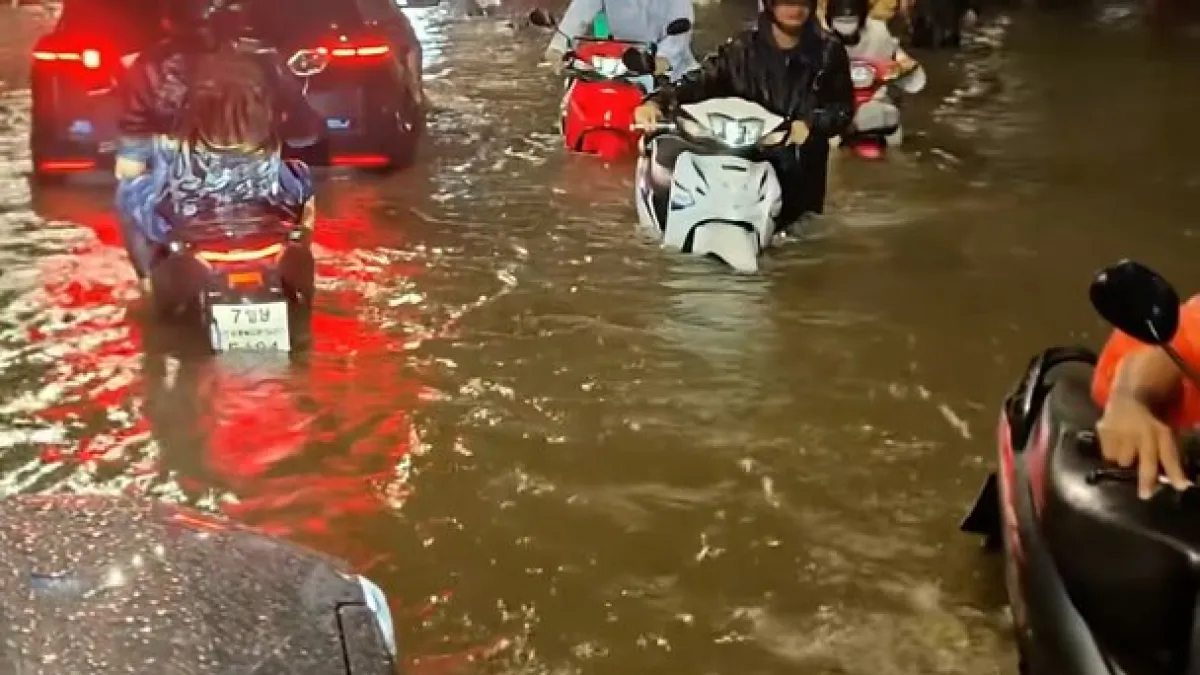
Bangkok has officially been declared a disaster zone after relentless rains triggered widespread flooding in the Thai capital. Up to 300 millimetres of rain fell in some areas overwhelming the city’s canals and drainage system.

Source link

Disaster zone declared across Bangkok as heavy rain triggers flooding | Weather News

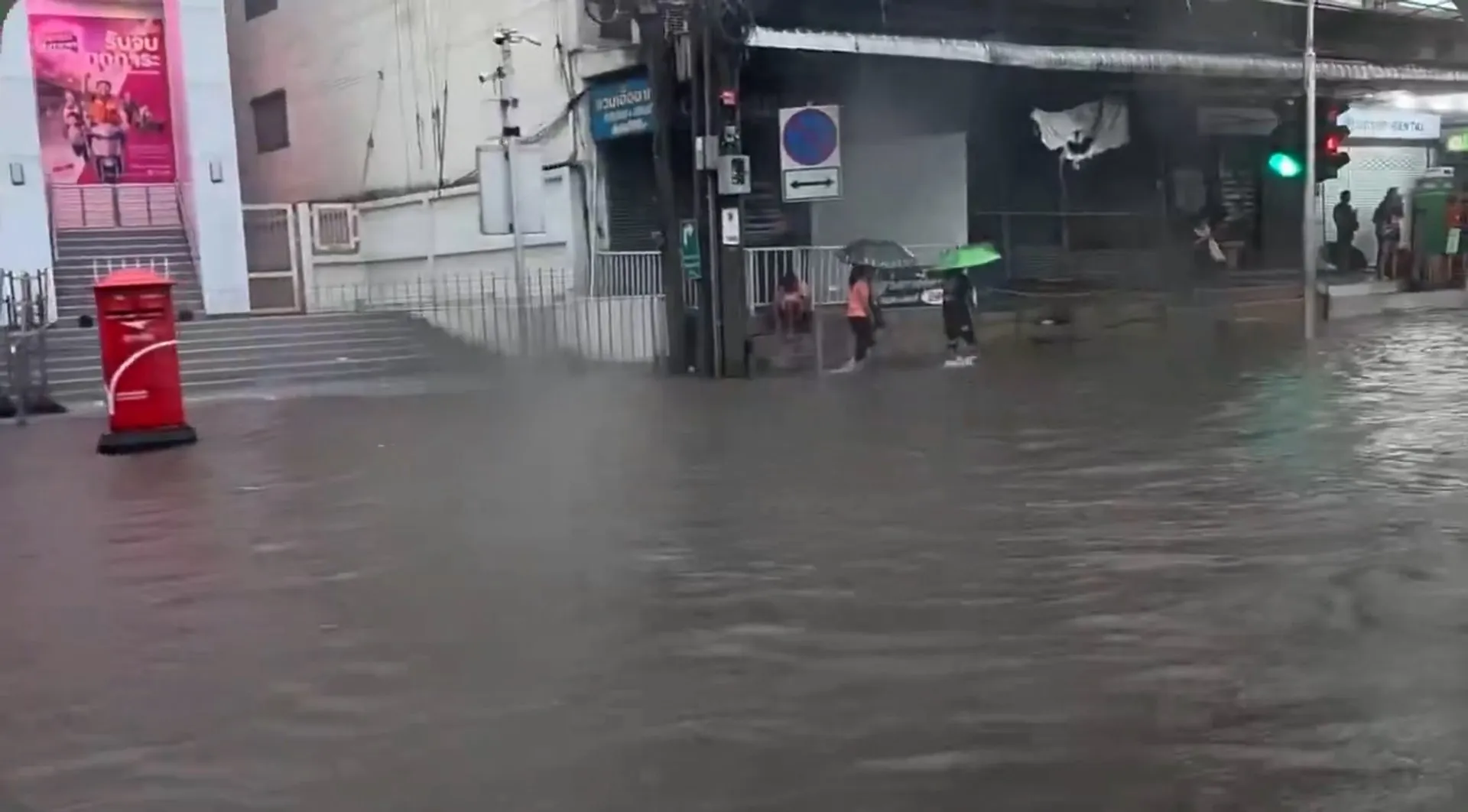
Nonstop rain since Thursday has submerged Thai capital’s roads and canals, sending water into many homes and stores.

Bangkok authorities have declared a disaster zone across all 50 districts of Thailand’s capital after three consecutive days of rainfall caused heavy flooding.

The disaster designation, which gives local organisations authority to take action, came on Saturday after Governor Chadchart Sittipunt said almost 300mm (11.8 inches) of rain had fallen since Thursday afternoon.

Recommended Stories

list of 4 itemsend of list

The nonstop rain inundated roads and canals with water, sending water into many homes and stores alongside them, according to reports. Photos and videos showed major roads submerged and cars abandoned after drivers were unable to move through the rising water.

Chadchart said the east of the city was most impacted and warned that more rain was forecast again on Saturday. He added that flooding should recede once the rain subsides, as city officials work to drain floodwaters as quickly as possible.

“The rain keeps falling and we are doing our best. We are trying to pump the water out, but the water in canals are full,” he said on social media. “The risk areas are those who live near canals. Every canal is now filled.”

Later on Saturday, the government said the flooding situation had “stabilised” but added it would still take two or three days for the water to drain, as long as the rain held off. “If more rainwater doesn’t fall in the area, it will be solved,” he said.

People walk past abandoned vehicles on a flooded Petchaburi road in Bangkok on September 26, 2026.
People walk past abandoned vehicles on a flooded Phetchaburi Road in Bangkok on September 26, 2026 [Lillian Suwanrumpha/AFP]

Chadchart also advised residents to move their cars to higher ground, as Bangkok’s public transport authority offered free access to MRT train “park and ride” carparks to store their vehicles until October 2.

Reporting from a flooded street in Bangkok, Al Jazeera’s Tony Cheng said the Thai capital is no stranger to heavy rain during the monsoon season, but the continuous rainfall had locals worried.

“What usually happens is we get heavy downpours for a couple of hours, then you’ll see the street often flooded but it would flow away into the drains quickly, and it would only happen in isolated areas too,” he said.

“What’s happening here is … happening all across the city. This is not a flash flood; this is persistent heavy rain since Thursday evening, and it shows no sign of letting up.”

Somkid Pheuk-ngam, 67, a vendor who lives near a canal just north of central Bangkok, said she had to close her shop for two days.

“The water keeps coming in. It’s hard to go out now. It’s at my waist level,” she told the AFP news agency. “I cannot go anywhere,” she said, adding that this was “worse than the 2011 flood.”

Widespread flooding across Thailand in 2011 killed more than 500 people and damaged millions of homes.

The Department of Disaster Prevention and Mitigation has warned of low pressure across eastern, northeastern and central Thailand until Sunday, saying there was a risk of flash floods, forest runoff, mudslides and river overflow.

Source link