Dan Perry: The US ‘may pretend’ that Israel can’t attack Hezbollah ‘in order to get this deal done’. Israeli affairs analyst Dan Perry explains how the US, Israel and Iran may react as they get closer to a potential agreement.
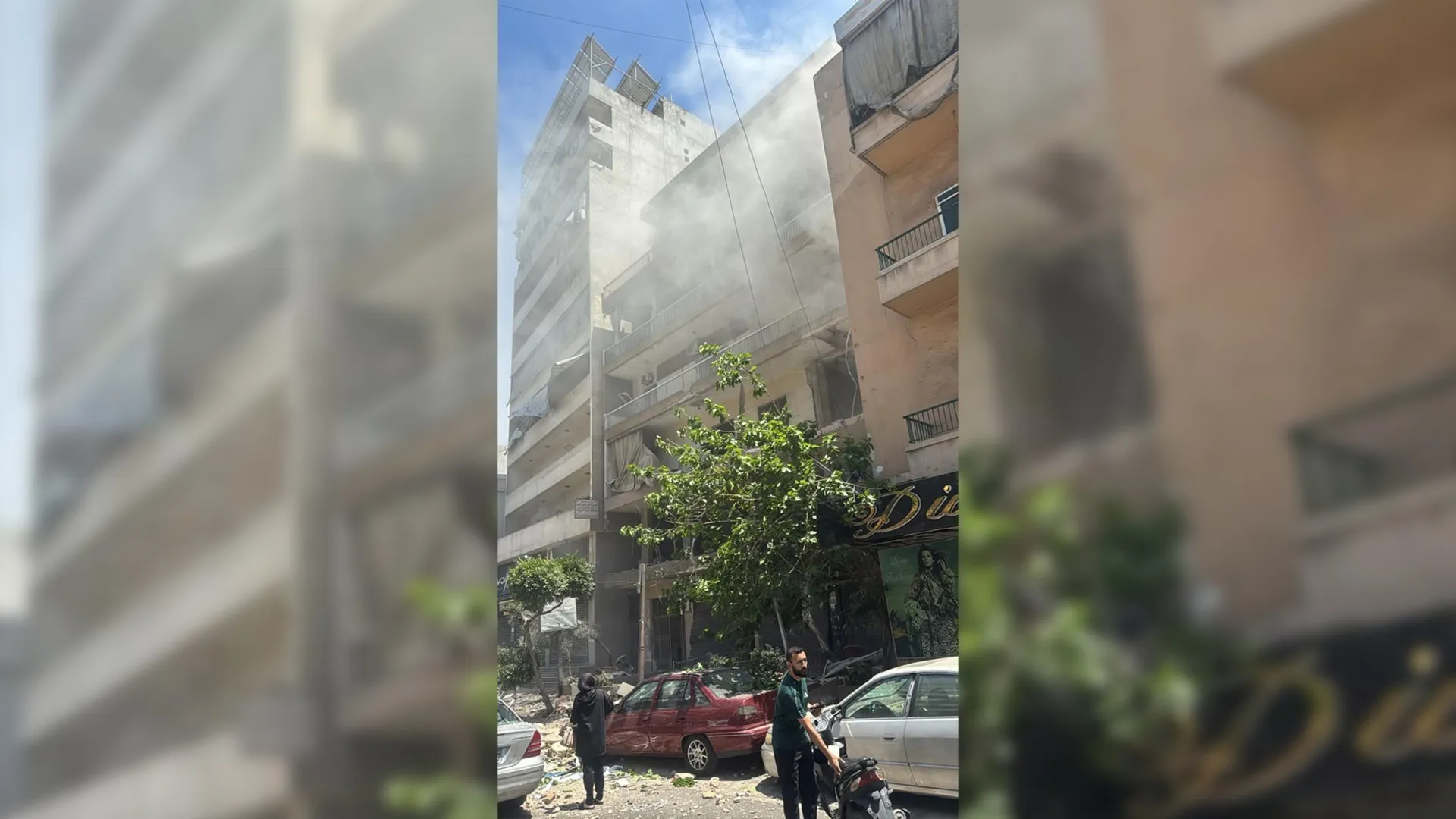
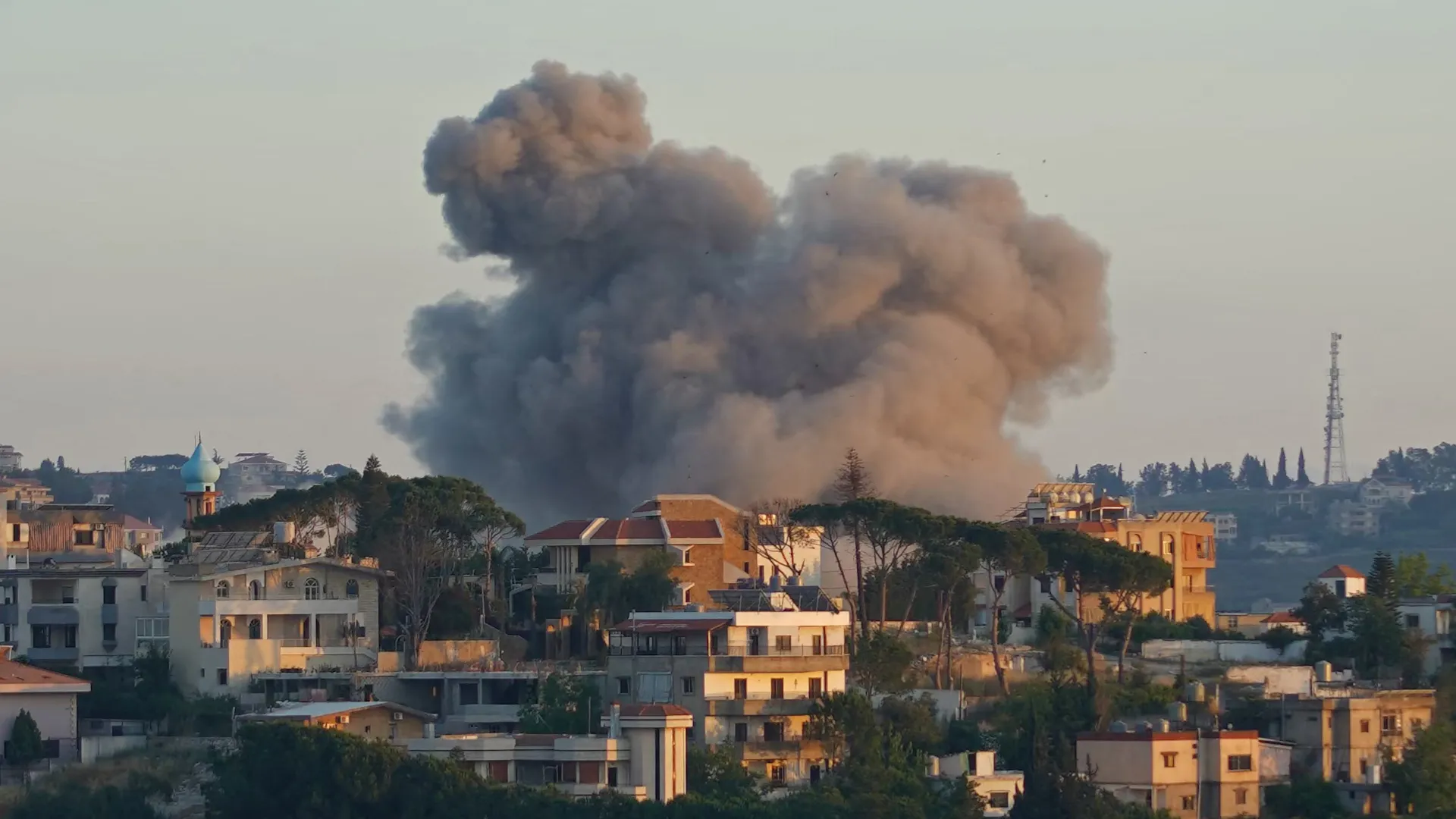
Israel has bombed the southern suburbs of Beirut, saying it targeted Hezbollah ‘infrastructure’ in response to cross-border fire. The strikes come as Israel continues to violate a supposed ceasefire with incursions and daily bombardment in southern Lebanon. Trump has said a deal to end the war on Iran will be signed on Sunday.
Israel has continued to attack Lebanon, despite Iran saying it was included in a potential memorandum of understanding with the US. Fresh forced displacement orders were issued on Saturday morning, following Israeli bombardment throughout Friday night on towns and villages in the south.
The Israeli military has ordered residents of 20 Lebanese towns and villages to leave their homes immediately.
By Al Jazeera Staff and Reuters
Published On 13 Jun 202613 Jun 2026
Israeli air raids across southern Lebanon have killed one person as attacks continue despite a United States-brokered “ceasefire”.
Lebanon’s National News Agency (NNA) reported that the person was killed in an Israeli air raid in the municipality of Maarakeh, in the Tyre district of southern Lebanon.
Recommended Stories
list of 4 itemsend of list
Al Jazeera’s Heidi Pett, reporting from Beirut, said that over the course of Friday and into the evening, there were continued Israeli air attacks on towns and villages that are well north of what the Israelis call the “Yellow Line” – the part of southern Lebanon that they have been seeking to control and to occupy.
The attacks come after an announcement by Pakistani Prime Minister Shehbaz Sharif on Friday that the United States and Iran have agreed on the wording of an agreement aimed at ending their war, and that mediators were working with both sides to finalise a deal.
Iranian media report the initial agreement would declare an end to the war “on all fronts, including Lebanon”.
This has led to fears that Israel’s actions in Lebanon could scupper a deal, since Israel is not a party to the negotiations between the US and Iran, and its leaders have said they do not plan to withdraw from Lebanon.
The attacks also come amid a supposed ceasefire, agreed between Israeli and Lebanese officials earlier this month, that would require a “complete cessation” of fire by Hezbollah, yet the fighting continues.
The next round of talks between the two countries is expected on June 22, with a view towards reaching a comprehensive agreement.
Israel issues forced displacement orders, demolishes homes
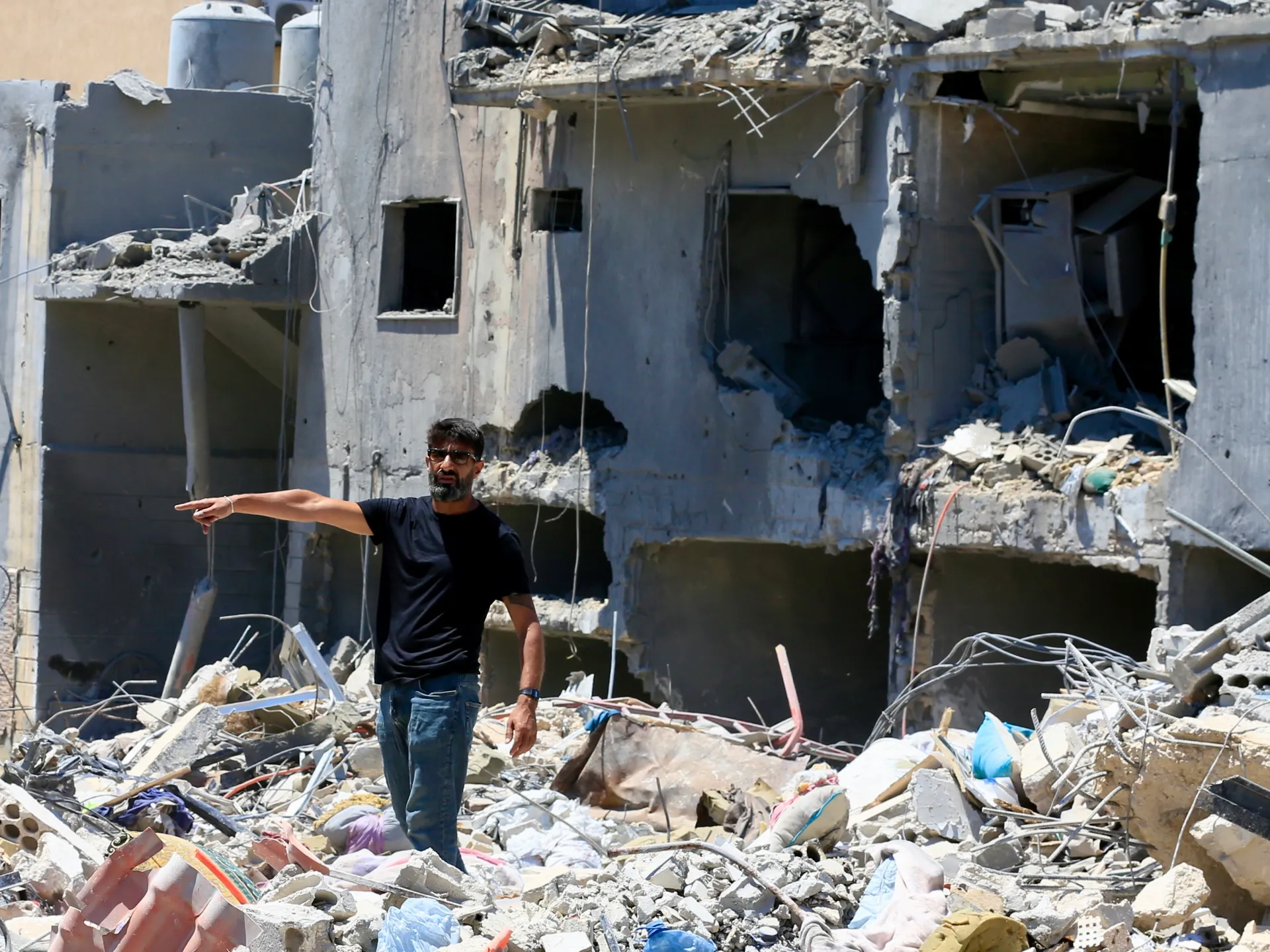
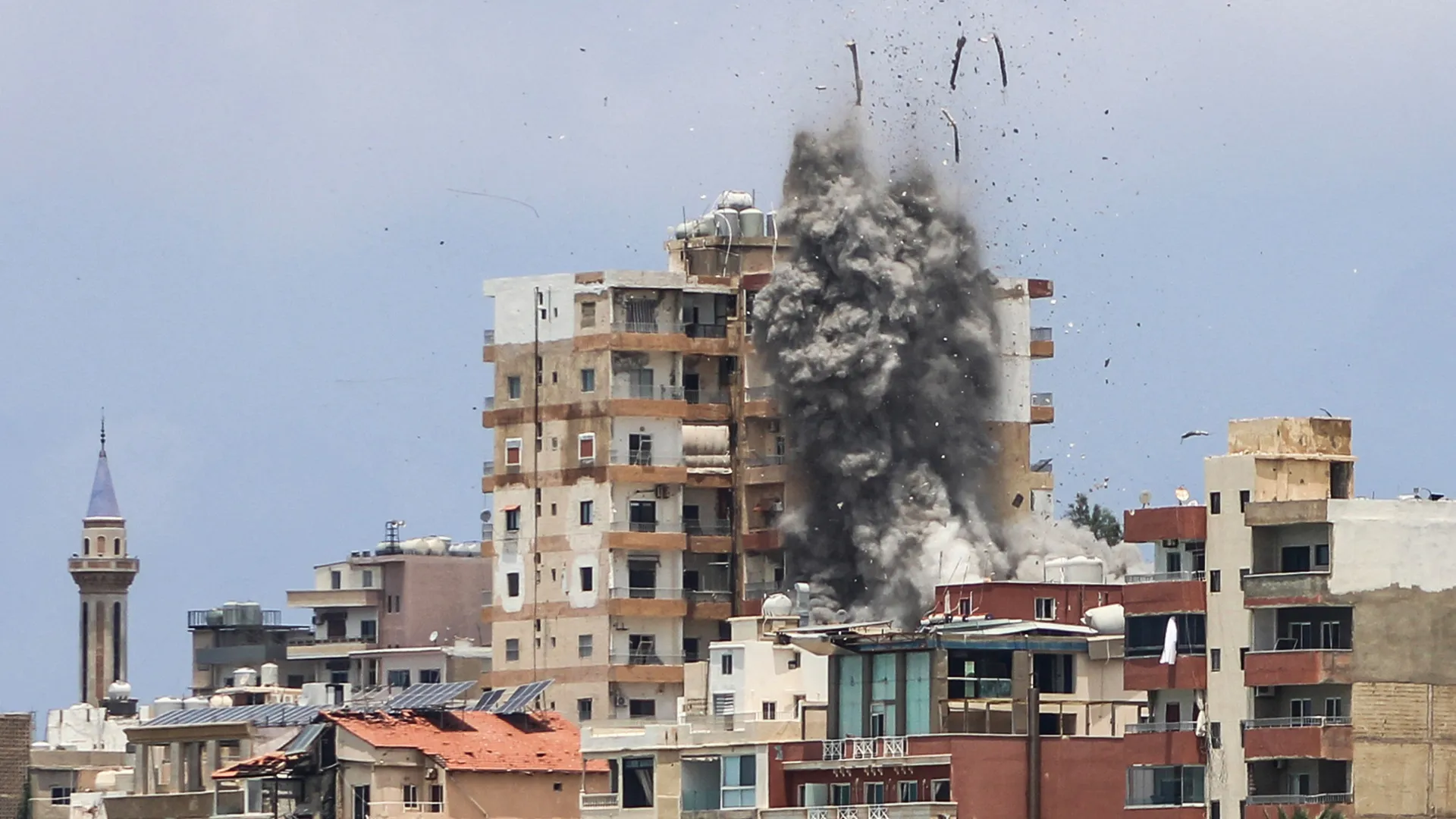
Israeli attacks at dawn have demolished homes and government buildings in southern Lebanon’s Bint Jbeil, the country’s NNA reports.
The Israeli military also ordered residents of 20 Lebanese towns and villages to leave their homes immediately and move “north of the Zahrani River”.
The forced displacement orders apply to Deir al-Zahrani, al-Namirieh, al-Sharquieh, al-Dewayr, Harouf, Habboush, Kfarjoz, Zibdine (Nabatieh), Nabatieh al-Tahta, Nabatieh al-Fawqa, Kfar Rouman, Al-Mahmoudieh, Sajed (Jezzine), Reihan, Aaramta, Kfarchouba, Mlki, Al-Lawiza (Jezzine), Jarjouh and Arab Salim.
On Saturday, the Israeli military said an air raid alert had been activated in the northern town of Metula due to the “infiltration of a hostile aircraft” from Lebanon, but did not name the armed group Hezbollah.
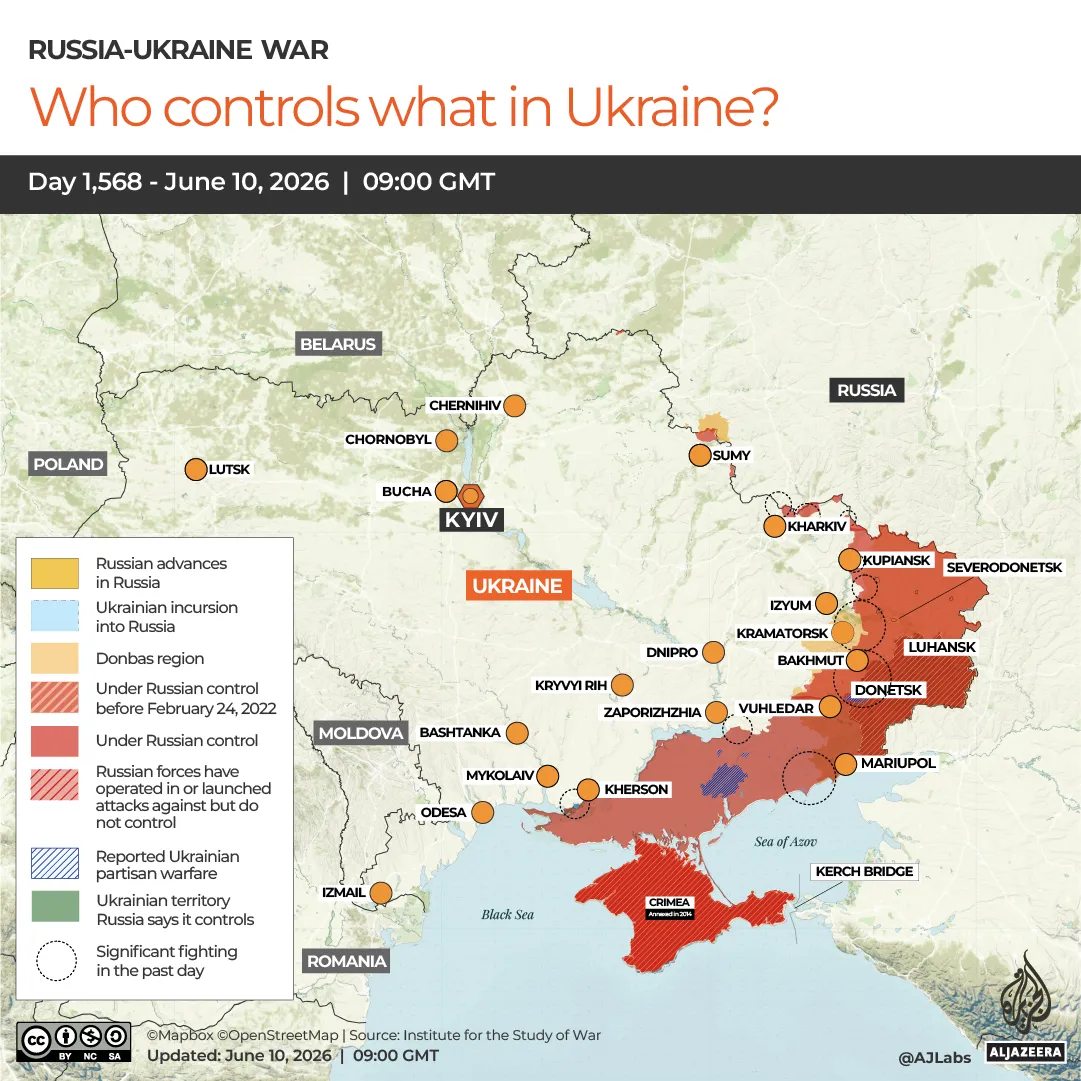
Ukraine said it reclaimed more of its territory than it lost during May, reversing a Russian trend of monthly net gains.
“The ratio of liberated and lost territories is almost 100 square kilometres (40 square miles) in our favour,” wrote Ukrainian commander-in-chief Oleksandr Syrskii on his Telegram messaging channel.
Recommended Stories
list of 4 itemsend of list
Ukrainian defence news outlet Militarnyi estimated net gains slightly higher, at 120 sq km (46 sq miles), citing sources within the military. Militarnyi said Russia seized 130 sq km (50 sq miles) and lost 250 sq km (100 sq miles) during the month.
The Institute for the Study of War, a Washington-based think tank using open source geolocated information, assessed Ukrainian gains higher still, saying Russia had seized or infiltrated 40 sq km (15 sq miles) in May but lost control of about 280 sq km (108 sq miles).
(Al Jazeera)
The ISW believed Ukraine actually reversed Russian gains in April, when it estimated Moscow’s gains at 28 sq km (11 sq miles) of Ukrainian land and lost 116 sq km (45 sq miles).
The ISW’s assessments suggest Ukrainian gains are growing.
Syrskii said Ukraine reclaimed 600 sq km (230 sq miles) during the first five months of 2026.
However, Russia was successful on one part of the front
Ukrainian military observer Kostyantyn Mashovets reported on June 10 that Russian forces had advanced into eastern Konstiantynivka, the southernmost of a “fortress belt” of four cities in the eastern region of Donetsk. Russian forces first infiltrated parts of the city last October, and now hold about 13 percent of it, said the ISW.
(Al Jazeera)
Russian President Vladimir Putin has prioritised the capture of the remaining one-fifth of Donetsk he does not possess, but his set deadlines to achieve this have been missed several times.
Putin may be putting out feelers for potential ceasefire talks. Although on June 5 he rejected a call from Zelenskyy for direct talks, Zelenskyy said he had met with Russian oligarch Roman Abramovich who acted as Putin’s intermediary.
Mid-range attacks devastate Russian logistics
Ukraine says its battlefield achievements are thanks to a strategy of disrupting Russian supply lines by striking fuel and ammunition in warehouses and in transit.
“The logistical lockdown is working,” said Ukrainian Defence Minister Mykhailo Fedorov. “The number of hits on enemy targets at a distance of over 50km (30 miles) from the (frontline) has doubled,” he said, comparing May to April.
Syrskii put the May total at almost 2,000 strikes.
The effects of Ukraine’s strategy have begun to build up.
Weeks of attacks in the southern regions of Kherson and Zaporizhia reduced Russian military traffic by more than 70 percent along the M-14 motorway, the main east-west route, said Robert Brovdi, commander of Ukraine’s Unmanned Systems Forces.
(Al Jazeera)
On June 7, regional authorities prohibited traffic along the M-14 altogether, Brovdi said.
That forced Russian planners to route more supplies along two highways that reach Kherson and Zaporizhia, via Crimea – the E105 and E97.
The following day, Ukraine struck a bridge that shoulders the E105 over the Chonhar Strait, leaving only the E97 passable. On June 9, as about 50 Russian fuel and ammunition trucks were routed to the E97, Ukrainian forces ambushed and destroyed some of them at Armyansk, commander Dmitry Filatov told Suspilne Radio.
“This operation would not have been possible if other units had not struck at Mariupol and the road to Berdyansk,” Filatov said, referring to the mainland routes. “This is what led to the units stationed in the Hulyaipil direction starting to be supplied, not via the Mariupol highways, but via Crimea.”
Civilians in Crimea have faced severe fuel shortages as a result of Ukrainian strikes, and these became dramatically worse in the past week.
On June 7, Sevastopol occupation governor Mikhail Razvozhaev rationed fuel to 20 litres per car per day. He later changed that to 20 litres per week.
Shortages were reportedly forcing troop evacuations from some outlying positions.
The Ukrainian underground group Atesh, which operates in Crimea, said Russian units were abandoning their positions on the Kinburn Spit because they were running out of food and fuel.
“We will create conditions under which it will be extremely difficult for military personnel and defence industry workers to remain in Crimea, in the temporarily occupied territories, or to use the routes leading to them,” Brovdi told Reuters.
Although Russia’s air force continues to command the skies over eastern Ukraine and to drop large ordnance there, Ukraine’s own figures suggest its drone superiority is the more effective tool.
Ukrainian short-and medium-range drones hit 180,000 targets in May, said Syrskii, 12.7 percent more than in April.
Ukrainian defenders are also reportedly becoming more adept at shooting down Russian Shahed drones with their own interceptor drones. Although Russia launched 25 percent more Shaheds in May compared to April, shoot-downs increased by 50 percent to about 4,000, said Fedorov,
Fedorov expected a step-change in Shahed elimination once a new generation of interceptor goes into full production which “automates 95 percent of the entire interception process”.
Beyond these mid-range strikes, Ukraine has also continued a successful long-range strike campaign that has devastated Russian refineries, oil depots and offloading terminals, reducing Russian oil production and export revenue.
Russian recruitment is low
Aware of the Ukrainian drone threat, Russia has created unmanned systems units of its own but appears to be having trouble manning them.
Since the beginning of the year, 14,500 people have signed contracts to serve in these units, about 21 percent of the annual recruitment target, said Syrskii. Overall, Ukraine has killed or wounded 12,500 more troops than Russia has been able to recruit this year, he said.
That is both because casualty figures have been rising since last autumn there – Ukraine estimated 31,500 Russian casualties in May – and because Moscow’s recruitment has been falling, despite increased bonuses to sign-up.
Russian opposition source Vazhnye Istorii said 71,200 people had been paid enlistment bonuses in the first quarter of 2026 according to budget data, compared to almost 90,000 in the first quarter of 2025.
It estimated that recruitment in 2025 was already 10 percent lower than in 2024.
Three people have been killed in the border region between Russia and Ukraine, according to officials, as the two sides launched attacks on each other in the latest exchange of fire.
In Russia, two civilians were killed and two wounded in the region of Bryansk after Kyiv struck the settlement of Suzemka with artillery, Acting Governor Egor Kovalchuk said in a post on Telegram on Friday.
Recommended Stories
list of 4 itemsend of list
A drone also hit an apartment building in Russia’s central region of Tatarstan, injuring three people, while industrial facilities were hit, regional head Rustam Minnikhanov said on the Telegram messaging app.
Production work was not suspended, however, he added, but did not identify any plants. The region is home to key oil processing and petrochemical facilities, among others.
Russia’s city of Togliatti, home to the country’s biggest carmaker Avtovaz, also came under a drone attack overnight, Samara region Governor Vyacheslav Fedorishchev said on Telegram.
“Attention! Drone attack regime for Togliatti,” he wrote. Togliatti is a city on the Volga River some 800 km (500 miles) southeast of Moscow.
These strikes are what Ukraine refers to as a “logistics lockdown”, said Al Jazeera’s Audrey MacAlpine, reported from Kyiv. She explained that they are mid-range strikes anywhere over 30 kilometres (17 miles) from the front line, using long-range drones and sometimes heavy weaponry to target things like oil refineries, bridges, logistics, and roads as a means of halting Russia’s front-line operations.
At the same time, she said, Ukraine also launches what it calls “long-range sanctions” against Russian targets – a “tongue-in-cheek term … that we’ve seen escalating over the past several months, where Ukraine is targeting Russia’s oil refineries and oil industry,” MacAlpine explained.
In Ukraine, a drone attack in the border region of Sumy caused casualties.
A 44-year-old woman working as a rail station operator died on her way to a shelter during the strike, according to the head of Ukrainian Railways, Oleksandr Pertsovkyi.
Another woman, a station attendant, was wounded in the attack, Pertsovkyi added.
Three people were wounded in separate attacks on Ukraine’s southern Mykolaiv region.
“We’ve seen continual threats by Russia before massive attacks, and we have certainly seen the results of those actions here in cities like Kyiv, where ballistics continue to be the Achilles heel for Ukraine”, MacAlpine said.
Russian fuel shortages after Ukrainian attacks
In recent months, Kyiv has carried out an increasing number of attacks on Russia and Russian-occupied territories.
On Thursday, fuel stations on the Russian-held Crimean Peninsula ran out of petrol after a Ukrainian campaign against the peninsula’s supply lines escalated.
A witness in Sevastopol, the peninsula’s largest city, told the Reuters news agency there was no fuel at most local petrol stations, with supplies struggling to keep up with a rationing regime imposed in recent weeks.
Another witness, in the resort town of Yevpatoriya, said there was a long queue outside the only petrol station open there.
Ukraine has been intensifying drone attacks on supply lines to the peninsula, which Russia seized from Kyiv in 2014. Local authorities have imposed fuel rationing regimes, with some foodstuffs also running short.
Besides Russian-held Crimea, only two regions in Siberia have officially confirmed the shortages.
Most other regions have said the situation is under control, and that some disruptions were caused by panic buying. Moscow has denied there were any problems with fuel supplies.
Trump cancels planned Iran attacks, saying talks are close as Tehran reviews a proposed US deal.
Published On 12 Jun 202612 Jun 2026
United States President Donald Trump said he had cancelled a third straight night of planned attacks on Iran, saying talks with Tehran were close to producing a deal.
The announcement marked a dramatic turnaround. Just hours earlier, Trump warned that Iran would be hit “very hard” and threatened to target Kharg Island and other oil facilities.
Reporting from Tehran, Al Jazeera’s correspondent said a senior Iranian official confirmed that a proposed memorandum of understanding with the US was being considered by Iran’s top leadership.
Here is what has happened:
In Iran
Trump calls off planned Iran attacks: Hours after warning that Iran would be hit “very hard” and threatening attacks on Kharg Island and other oil facilities, Trump said he had cancelled the planned strikes, claiming negotiations had reached a breakthrough. In a Truth Social post, Trump said discussions had been elevated to Iran’s top leadership and that the “final points” of an agreement had been approved by all parties involved, including the US and several regional allies.
Tehran says the sacrifices of war were worth it: Reporting from Tehran, Al Jazeera’s Mohamed Vall said many Iranians would be relieved to see the conflict end after months of hardship and loss. But the government is also trying to sell a potential deal as a victory, telling people that “it is worth the suffering” because Iran could come out of the war “in much stronger shape”, with the possibility of sanctions being lifted and assets being unfrozen.
In the US
Expert says Trump used an ‘escalate to de-escalate’ strategy: Richard Weitz, an international security expert at the NATO Defense College, told Al Jazeera that Trump’s threats to intensify the conflict may have been aimed at forcing a diplomatic breakthrough. The strategy, he said, is to “threaten to escalate” a conflict “in order to force an end to it”. However, Weitz cautioned that “we still have a bit of uncertainty over what precisely was agreed and how it will be implemented.”
Trump has tried to hold Netanyahu back in recent weeks: Reporting from Washington, DC, Al Jazeera’s Kimberly Halkett said Donald Trump and Israeli Prime Minister Benjamin Netanyahu have long had “a shared desire to limit Iran’s nuclear programme” and ensure Tehran never obtains a nuclear weapon. But she said there was a “growing concern” within the White House that Netanyahu could “derail efforts in the diplomatic realm”, with Trump increasingly trying to restrain the Israeli leader and, in the US president’s words, “allow time for diplomacy”.
In Lebanon
Hezbollah says it carried out 24 attacks on Israeli forces: The Lebanese armed group said it launched a series of drone, missile and rocket attacks on Israeli soldiers, armoured vehicles and military positions across southern Lebanon and the Bekaa Valley between Wednesday and Thursday. Hezbollah said it repeatedly struck troop concentrations near Tayr Harfa, while also attacking Israeli forces in Naqoura, al-Qaouzah, Rashaf, Qantara, Zawtar al-Sharqiyah and Yohmor al-Shaqif.
June 11 (UPI) — The United States and Iran traded attacks Wednesday night for a second straight day with American forces hitting multiple military, surveillance and radar installations in southern Iran and Iran hitting back at its Persian Gulf neighbors.
U.S. Marine Corps, Air Force, and Navy assets deployed precision munitions against Iranian “military surveillance capabilities, communication systems, and air defense sites across Iran” posing a threat to U.S. forces and international commercial ships transiting regional waters,” U.S. Central Command said in a statement on X.
Tomahawk missiles were fired from the guided-missile destroyer USS Michael Murphy.
“The strikes are in response to Iran’s unwarranted and continued aggression,” added CENTCOM.
Bahrain’s Interior Ministry reported a second night of airborne attacks and condemned what it called “sinful Iranian aggression” after an 11-year-old girl was injured.
“Vehicles caught fire and houses were damaged in Hamad Town and Manama due to falling debris of drones interception. Civil Defense and National Ambulance have taken necessary measures,” the ministry said Thursday morning in an online post accompanied by photos of burnt-out cars, blast damage and firefighters tackling blazes.
In a post on X in the early hours of Thursday, the Kuwait Army said its air defense systems were “currently intercepting hostile aerial targets.”
Royal Jordanian Air Force warplanes intercepted and downed 20 Iranian missiles headed toward the Azraq region in Zarqa Governorate, east of the capital, Amman.
In a statement issued Thursday via the National Center for Security Crises and Management, the General Command of the Jordan Armed Forces-Arab Army said debris from downed missiles fell in multiple locations but that there were no injuries or damage.
Meanwhile, the Indian government confirmed the deaths of three Indian crew members missing from the Palau-flagged oil tanker, M/T Settebello, a day after it was struck by the U.S. military in the Gulf of Oman, through which vessels transiting the Hormuz Strait must transit.
“Sadly, three Indian seafarers initially reported missing are now confirmed dead after bodies have been located and identified. This is a profound loss to our maritime family. The Modi government stands firmly with the bereaved during this difficult hour and is fully committed to supporting the next of kin,” Ports, Shipping & Waterways Minister Sarbananda Sonowal wrote on X.
“I have directed officials to ensure immediate repatriation of the rescued crew members and swift return of the mortal remains of the deceased for their final rites.”
CENTCOM said a U.S. aircraft fired precision munitions into the vessel’s engine room Wednesday after the vessel, which it said was violating the United States’ blockade by attempting to ship oil from Iran, failed to comply with instructions from U.S. forces.
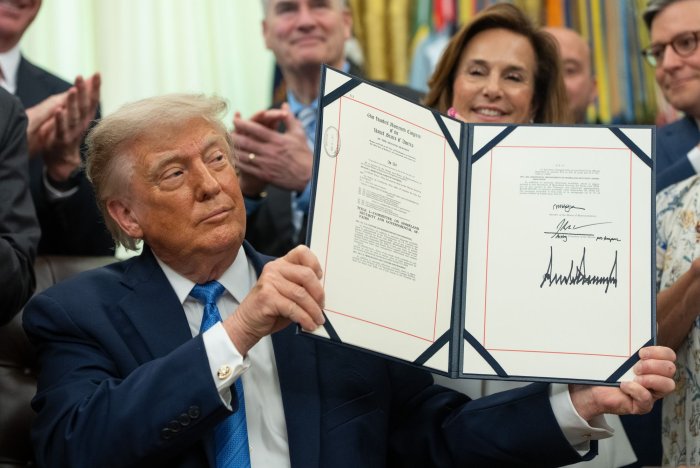
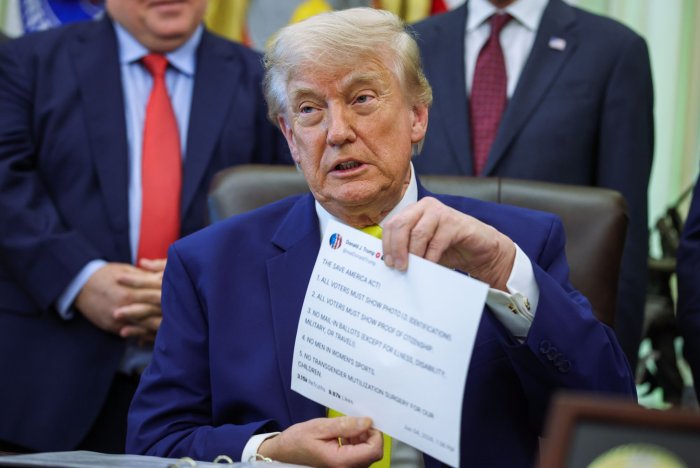
President Donald Trump displays the signed “Secure America Act” in the Oval Office of the White House on Wednesday. The act requires proof of citizenship to register to vote. Photo by Aaron Schwartz/UPI | License Photo
Weekly insights and analysis on the latest developments in military technology, strategy, and foreign policy.
U.S. President Donald Trump told reporters today that in the wake of overnight attacks between the U.S. and Iran, strikes on Iran will continue. Meanwhile, Iranian officials say they are “reviewing” whether to continue peace talks after one of the most serious exchanges of fire between the two nations since the April 8 ceasefire.
Though damage assessments are still ongoing in the wake of Iranian missiles and drones launched across the Middle East overnight, a U.S. official told TWZ Wednesday morning that so far, there have been no injuries among U.S. personnel reported and no indication yet of any damage to American installations. That’s despite Iranian claims to the contrary.
“Iran launched multiple missiles and drones and just about all were intercepted according to initial reflections from assessments that are ongoing,” the official told us, speaking on condition of anonymity to discuss operational details. “No reports of harm to any U.S. personnel; not aware of any damage to our locations at this time.”
Several videos emerging overnight claimed to show missile interceptions and explosions resulting from the latest Iranian kinetic actions.
Some showed missile interceptions over Muwaffaq Salti. As we have frequently noted, the base has been a major staging area for U.S. airpower in the region. It came under Iranian attack before the ceasefire, with an AN/TPY-2 missile defense radar there having been notably targeted.
Footage shows air defense interceptors engaging incoming Iranian ballistic missiles over Jordan.
Iran’s Islamic Revolutionary Guard Corps (IRGC) says it targeted Jordan’s Muwaffaq al-Salti Air Base, along with 20 other U.S. military sites across the region. pic.twitter.com/RxKHsNaQur
Additional video shows what appears to be an explosion in the distance as viewed from a CCTV camera in Manama in the wake of a claimed Iranian missile launch at Fifth Fleet headquarters. The extent of the damage, if any, is unknown.
CCTV footage shows an explosion in Bahrain’s capital Manama after what authorities say was an Iranian missile strike.
Iran’s IRGC says it hit US military bases in Bahrain, Kuwait and Jordan in retaliatory attacks for US strikes in the Strait of Hormuz. pic.twitter.com/4eKzhBa1np
The Islamic Revolutionary Guard Corps (IRGC)-connected Tasnim News Agency also posted a video it claims shows an attack on the Fifth Fleet. The short video shows what appears to be an explosion in the distance and again, there is no way to tell what, if any damage, was caused.
The Kuwaiti Foreign Affairs Ministry condemned the latest Iranian strikes and said the nation “reserves its full right to take all necessary measures to preserve its security and defend its territories and vital facilities, in accordance with international law and the United Nations Charter.”
بيان صادر عن وزارة الخارجية الأربعاء 10 يونيو 2026
تُعرب وزارة الخارجية عن إدانة دولة الكويت واستنكارها وبأشد العبارات، استمرار الاعتداءات الإيرانية الآثمة والمتكررة على دولة الكويت، والتي كان آخرها اليوم، في تصعيد جديد يُضاف إلى سلسلة الاعتداءات الإيرانية المتواصلة، ويُعد… pic.twitter.com/7H1TFQNqMv
Iran said its latest volley of kinetic actions were in response to what U.S. officials say were strikes on 20 Iranian targets in response to the helicopter downing.
The United States and Iran traded strikes overnight.
20 Iranian targets were hit by U.S. forces, including air defense systems and radar sites.
This latest flurry of strikes prompted comments about the future of diplomacy from both sides.
During a morning press conference, Trump said “we hit ’em hard yesterday, and we’re going to hit ’em again hard today, in case you miss it, in case you don’t turn on your television set, and we’ll see what happens with the deal.”
.@POTUS on Iran: “We hit them hard yesterday and we’re going to hit them again hard today… And we’ll see what happens with the deal. We were really close to a deal — but they keep tapping us along. They keep playing us for suckers because you know what? They dealt with some… pic.twitter.com/ScvGn14QFQ
— Rapid Response 47 (@RapidResponse47) June 10, 2026
Earlier on Wednesday, Trump told Fox News that there may be additional U.S. attacks that focus on “Iranian power plants and bridges.”
NEW: President Trump tells me he “may keep going” with strikes against Iran and is getting closer to targeting Iranian power plants and bridges.
The President also spoke about the U.S. military helicopter that was downed saying that an Iranian drone lodged between the two… pic.twitter.com/j5aQEIzi9s
The president’s comments to Fox follow statements he made on his social media outlet saying Iran has taken too long to agree to a peace deal.
“Iran’s Military is a complete and total mess,” Trump said on Truth Social. “Much of it, like their Navy and Air Force, doesn’t even exist anymore – They have been completely defeated. Iran is all talk and no action. The Bully of the Middle East is DEAD!!! They’ve taken too long to negotiate a deal that would have been great for them, now they will have to pay the price!!!”
Trump did not elaborate on what that price may be.
As we noted earlier in this story, Iran is reassessing the future of diplomatic negotiations aimed at ending the US-Israeli war against the country, according to the official Iranian IRNA news outlet.
“We have to review it,” Iranian Foreign Ministry spokesperson Esmaeil Baqaei told IRNA. “Diplomacy and the battlefield are not separate matters; rather, they run alongside and complement each other in safeguarding Iran’s interests and security.”
Baqaei stressed that Iran’s military and diplomatic tracks operate in coordination.
“Wherever the Armed Forces deem it necessary, they respond to the enemy with authority and strength, and last night’s events showed that Iran’s brave Armed Forces do not hesitate in defending the country,” he posited.
ایرانی وزارت خارجہ کے ترجمان اسماعیل بقائی کا کہنا ہے کہ حملوں کے بعد امریکا کے ساتھ مذاکرات کا ازسرنو جائزہ لے رہے ہیں، امریکا اور اسرائیل بار بار جنگ بندی کی خلاف ورزی کررہے ہیں۔
انہوں نے کہا کہ مذاکرات کو آگے بڑھانے کیلئے پرسکون ماحول بہت ضروری ہے، بدقسمتی سے واشنگٹن کے… pic.twitter.com/1nGcYA3fmN
Despite the flare-up in fighting and posturing by both sides, negotiations appear to be continuing.
“Following consultations with the United States, Qatari negotiators headed to Tehran this morning to meet with the Iranians in an attempt to bridge the remaining gaps,” CNN reported on its Arabic channel, citing a source. “The visit indicates that diplomacy remains active, despite an exchange of fire between Iran and the United States overnight—marking one of the most significant tests of the ceasefire to date. A US official told CNN that the United States believes these strikes will not derail the negotiations.”
مصدر دبلوماسي لـCNN: مفاوضون قطريون توجهوا صباح الأربعاء إلى طهران لسد الفجوات المتبقية مع أمريكا https://t.co/IIkMnAmHkt
At issue remains the future of Iran’s nuclear ambitions, the ongoing closure of the Strait of Hormuz, Tehran’s ballistic missile arsenal and support for proxies and the easing of U.S. sanctions. Whether the increased fighting between the two sides will derail these efforts remains an open question.
UPDATES
Iran claims it downed another U.S. MQ-9 Reaper drone overnight. While TWZ can’t verify that, we have noted that the loss of dozens of these drones to Iran and the Houthis have forced the U.S. Air Force to scramble for replacements.
A cargo ship came under small arms fire 88 nautical miles south of Balhaf, Yemen in the Gulf of Aden, according to the United Kingdom Maritime Trade Operations (UKMTO) monitoring organization.
“A cargo vessel has reported being approached by one craft with 6 armed persons onboard,” UKMTO explained. “There was an exchange of fire between the small craft and the cargo vessel’s Armed Security Team resulting in the small craft turning away. Authorities are investigating. Vessels are advised to transit with caution and report any suspicious activity to UKMTO.”
While details about who was involved are scant, this is the first attack in the region, near the Bab al-Mandeb Strait, since the Houthi rebels of Yemen threatened to shut the vital waterway down in support of Iran last week. You can read more about the implications of the Iranian proxy group closing the Strait on the U.S. military and the global economy in our prior reporting here.
In a post on X, CENTCOM on Wednesday announced it disabled an oil tanker trying to run the blockade of Iranian ports.
The incident took place at 11:14 p.m. on June 9, when a U.S. aircraft “fired precision munitions” into the engine room of the Palau-flagged M/T Settebello as it transited the Gulf of Oman.
The ship was attempting to transport oil from Iran, the command added.
In addition to the ships it disabled, CENTCOM said it has “redirected 134 ships that complied, and allowed 42 vessels supporting humanitarian aid to pass since initiating the blockade on April 13.”
You can read more about the other seven ships hit by CENTCOM here.
CENTCOM:
At 11:14 p.m. on June 9, U.S. forces disabled an oil tanker in the Gulf of Oman for the second consecutive day after another vessel violated the ongoing blockade by attempting to transport oil from Iran.
When it comes to the Strait of Hormuz and Gulf of Oman region, Trump took to social media to say the ongoing blockade of Iranian ports has devastated Tehran’s economy.
“The Fake News Media refuses to report how EFFECTIVE the U.S. Naval BLOCKADE is, the most successful Blockade in the history of Naval Warfare,” the president proclaimed on Truth Social. “NOTHING GETS THROUGH unless we want it to. IT IS A STEEL WALL! Iran is doing ZERO business, not paying their military, or any of their bills, and quickly becoming a FAILED NATION! Lots of oil is getting out. Praise be to Allah!”
President Donald J. Trump has taken to Truth Social again decrying the “fake news media” coverage of the naval blockade of Iran saying that it is a “STEEL WALL”, Iran is doing “ZERO business, not paying their military or any of their bills, and quickly becoming a FAILED NATION!”… pic.twitter.com/DcCHVebRX7
However, in a post on X, the Windward trade intelligence group said that “five Iranian-trading [liquified petroleum gas] LPG carriers have broken the U.S. blockade on Iranian ports,” Windward stated. “Four discharged in India, one in Pakistan. All five used the same playbook, spoofing and AIS blackouts to mask loading and destination. Yet all signaled their exit and/or entry through Hormuz via AIS. Three were already U.S.-sanctioned. A fourth sanctioned June 6. Two operated under false flags, making them legally stateless.”
However, the crude oil blockade is holding, Windward added.
“No Iran-trading VLCC tracked in Asia via Malacca, Sunda, or Lombok since May 4,” the organization noted.
Five Iranian-trading LPG carriers have broken the U.S. blockade on Iranian ports. Four discharged in India, one in Pakistan.
All five used the same playbook, spoofing and AIS blackouts to mask loading and destination. Yet all signaled their exit and/or entry through Hormuz via… pic.twitter.com/iWBqGHSrBl
U.S. Secretary of War Pete Hegseth is scheduled to visit CENTCOM headquarters in Tampa, Florida, today to discuss the ongoing situation with the head of that command, Adm. Brad Cooper, and engage with troops.
Secretary Hegseth will be traveling to Guantanamo Bay, Cuba and Tampa, Florida today to engage with troops at GTMO and CENTCOM, per Pentagon.
Despite efforts to quell the fighting between Israel and Hezbollah in southern Lebanon, the Israeli Air Force continues to strike targets in that country.
“Over the past day, the IDF struck Hezbollah infrastructure sites in the area of Tyre and in several areas in southern Lebanon,” the IDF stated on Telegram.
“In the area of Tyre, the IDF struck six infrastructure sites used by the Hezbollah terrorist organization to advance terror attacks against the State of Israel and IDF soldiers operating in southern Lebanon,” the IDF added. “Among the infrastructure struck was a site used by Hezbollah terrorists to launch explosive drones toward IDF soldiers.”
In southern Lebanon, “the IDF struck ready-to-use Launchers, terrorists who operated in the area in which IDF soldiers are operating, and additional terror infrastructure sites,” it claimed.
השמדת תשתיות טרור מהן הופעלו רחפני הנפץ נגד כוחותינו: חיל-האוויר וכוחות יחידת האיסוף 869 ממשיכים לפעול בדרום לבנון.
במהלך השבועיים האחרונים, הכוחות חיסלו בשיתוף חיל-האוויר יותר מ-20 מחבלים שפעלו לקידום מתווי טרור והיוו איום על כוחותינו. בנוסף הכוחות השמידו מספר תשתיות טרור… pic.twitter.com/Mysi9BMXHW
Hezbollah, meanwhile, attacked a gathering of Israeli troops with a missile, according to Tasnim.
The ongoing Israeli incursion into southern Lebanon and continuing presence in Syria has raised tensions with Turkey. Any direct conflict flaring up from the long-simmering animosity between two of the region’s most powerful militaries – though extremely unlikely – would be a far bigger deal than a dertailment of U.S.-Iran peace talks.
“We are fully aware of what the ultimate objective of the delusion of ‘Greater Israel’ is,” Turkish President Recep Tayyip Erdoğan said Wednesday, adding that Israel’s actions in Lebanon and Syria now threaten Turkey.
Turkish President Recep Tayyip Erdogan:
Israel’s attacks on Syria and Lebanon have reached a point where they also threaten Turkey.
— Ariel Oseran أريئل أوسيران (@ariel_oseran) June 10, 2026
The Turkish leader’s statements sparked a harsh response from Netanyahu.
“The antisemitic tyrant Erdogan, who perpetrates genocide against the Kurds, supports the terrorist organization Hamas, oppresses his own people, and imprisons political rivals, is the last one who can preach morals to the State of Israel,” the Israeli leader retorted. “The State of Israel and the IDF, the most moral army in the world, will continue to act forcefully against Iran and its proxies that threaten the Middle East and the entire world.”
הרודן האנטישמי ארדואן שמבצע רצח עם בכורדים, תומך בארגון הטרור חמאס, מדכא את בני עמו ושם בכלא יריבים פוליטיים הוא האחרון שיכול להטיף מוסר למדינת ישראל.
מדינת ישראל וצה”ל, הצבא המוסרי ביותר בעולם, ימשיכו לפעול בעוצמה נגד איראן ושלוחותיה שמאיימות על המזרח התיכון ועל העולם כולו.
— Benjamin Netanyahu – בנימין נתניהו (@netanyahu) June 10, 2026
The latest events in the Mideast region show that there is no immediate end in sight to the hostilities and we will continue to monitor developments here given the ongoing impacts on the U.S. military and global economy.
UPDATE: 3:01 PM EDT –
Trump claimed the price of oil will fall because of how much has been secretly moved out of the region.
“We’re taking about millions of barrels of oil,” the president told reporters Wednesday afternoon.
.@POTUS on Iran: “Did you know we’ve been taking out millions of barrels of oil? Nobody knows it. You know who doesn’t know about it? Iran — until right now. We took out, the other night, 22 ships.” pic.twitter.com/2odiLYXDJ3
— Rapid Response 47 (@RapidResponse47) June 10, 2026
On his Truth Social, Trump claimed that last month, he “directed our Great U.S. Military to execute a secret mission to support Oil Tankers and other Commercial Ships through the Strait of Hormuz.”
“Today, I am pleased to announce that this effort has resulted in more than 100 MILLION Barrels of Oil making its way through the Strait, and into the Open Market,” he added. “More than 200 Commercial Ships have safely traveled through the Strait. This wildly successful effort is because the UNITED STATES of AMERICA CONTROLS the Strait of Hormuz — NOT Iran. Their military is defeated, and their economy is lost. It’s over for Iran!”
BREAKING: President Trump says he directed the US Military to execute a “secret mission” in the Strait of Hormuz which resulted in over 100 million barrels of crude oil crossing through Hormuz. pic.twitter.com/bSYeetbHH4
— The Kobeissi Letter (@KobeissiLetter) June 10, 2026
However, TankerTrackers.com clarified that the president was referring not to Iranian oil, but Arab oil.
There is now a public misunderstanding regarding President Trump’s statement. It is not Iranian oil that he is talking about. Those are still trapped. Instead, it appears to be the secured convoys of Arab oil into the Gulf of Oman via the Strait of Hormuz. This explains why… https://t.co/fEgyzY3gnX
— TankerTrackers.com, Inc. (@TankerTrackers) June 10, 2026
UPDATE: 3:39 PM EDT –
Hegseth thanked troops at CENTCOM headquarters in Tampa, Florida, for their efforts in the Middle East.
.@SECWAR spoke with troops at U.S. Central Command:
“On behalf of the President of the United States—on behalf of the American people—I want to say how proud we are of the work @CENTCOM has undertaken.” pic.twitter.com/SkDuqzS3UW
The Secretary-General of the International Maritime Organization (IMO) “has expressed deep concern and strong condemnation of the attack on the tanker MT Settebello,” according to the organization.
“I strongly condemn any act from any party that endangers the lives of seafarers and the safety of international shipping,” said Secretary-General Arsenio Dominguez. “This is simply unacceptable. My thoughts are with the families of the three missing seafarers and with all those awaiting news of the crew members.”
Two Indian seafarers died and one was reported missing after the attack, according to The Hindu.
Defence Secretary Pete Hegseth has confirmed that the United States is launching strikes on “key facilities” in Iran, framing the attacks as part of the ongoing negotiations for a permanent ceasefire.
Hegseth spoke to reporters on Wednesday in Tampa, Florida, as he left the headquarters for the US Central Command (CENTCOM), the military apparatus that oversees operations in the Middle East and parts of Asia.
Recommended Stories
list of 3 itemsend of list
His remarks echoed the escalating rhetoric of Republican President Donald Trump, who warned earlier that Iran would “have to pay the price” for taking too long with the negotiations.
“ CENTCOM — Central Command — will be busy tonight because President Trump said we will be hitting Iran hard, and we will be,” Hegseth said.
He explained that he had just reviewed the plans for Wednesday night’s attack with Admiral Bradley Cooper, CENTCOM’s commander.
“ Those strikes that’ll happen tonight will be strong. They will be clear,” said Hegseth, who then suggested they may continue into a second day. “If they have to happen tomorrow night, they will be strong, and they will be clear.”
CENTCOM followed Hegseth’s comments with a social media post, announcing “additional self-defence strikes” at 5:15pm US Eastern time (21:00 GMT).
“The strikes are in response to Iran’s unwarranted and continued aggression,” it wrote.
Within minutes of those comments, Iran’s IRNA media outlet reported explosions in Bandar Abbas, Qeshm, Gorgan and Hengam.
Wednesday’s attack will mark the second straight day of US attacks against Iran, fracturing the fragile truce struck on April 8.
The US has been at war with Iran since February 28, when the Trump administration joined Israel in an unprovoked attack on the country.
Both Israel and the US have argued that the attack was necessary to prevent Iran from obtaining a nuclear weapon, though Tehran has long denied seeking one.
But the Trump administration has offered contradicting rationales for the war in the months since it began.
At one point, US Secretary of State Marco Rubio suggested that the US acted “pre-emptively” because it “knew that there was going to be an Israeli action” and it wanted to head off retaliation. Rubio has since walked back those remarks.
Hegseth on Wednesday credited the upcoming strikes to frustration with Iran’s negotiating tactics.
“ As President Trump said, they’ve been tap-tap-tapping. You can see when someone’s trying to tap-tap-tap on a deal,” he said. “Instead, they’re going to have tap, tap, tap bombs dropping on key facilities in Iran from the United States of America.”
Since a temporary ceasefire was announced on April 8, much of the most intense fighting between the US and Iran has been paused.
But this week’s escalation began when an AH-64 Apache helicopter was downed near the Strait of Hormuz overnight on Monday.
Trump on Tuesday blamed Iran for the helicopter’s crash. Though no US service members were hurt, he said the US “must, of necessity, respond to this attack”.
In announcing a second round of attacks, Hegseth denied that the US sought to resume full-scale fighting. He instead framed the offensive as a means of kick-starting the stalled negotiations with Iran.
“That’s not because we want to restart anything we don’t have to restart,” Hegseth said of Wednesday night’s attack. “It’s because the War Department is prepared to set the terms to ensure that we get the kind of deal President Trump expects.”
The two sides have differed over issues like the fate of Iran’s nuclear programme and whether Iran would receive sanctions relief.
Trump has repeatedly threatened to attack Iran’s bridges and energy infrastructure, at one point warning that “a whole civilization will die” as a result of US attacks.
Those comments have prompted human rights concerns. Intentionally targeting civilian infrastructure can be considered a war crime, and critics compared Trump’s threats against Iranian “civilisation” to genocidal remarks.
Reporters confronted Hegseth with those concerns on Wednesday.
“You just mentioned you’re going to plan to hit them and strike them hard tonight,” one reporter asked. “If the response is in hitting bridges, electrical infrastructure, how would that not be a war crime, potentially targeting civilian infrastructure?”
Hegseth dismissed the question as “disingenuous” and accused the reporter of “impugning the motives” of the US military. But he did not rule out that civilian infrastructure would be struck as part of Wednesday’s attacks.
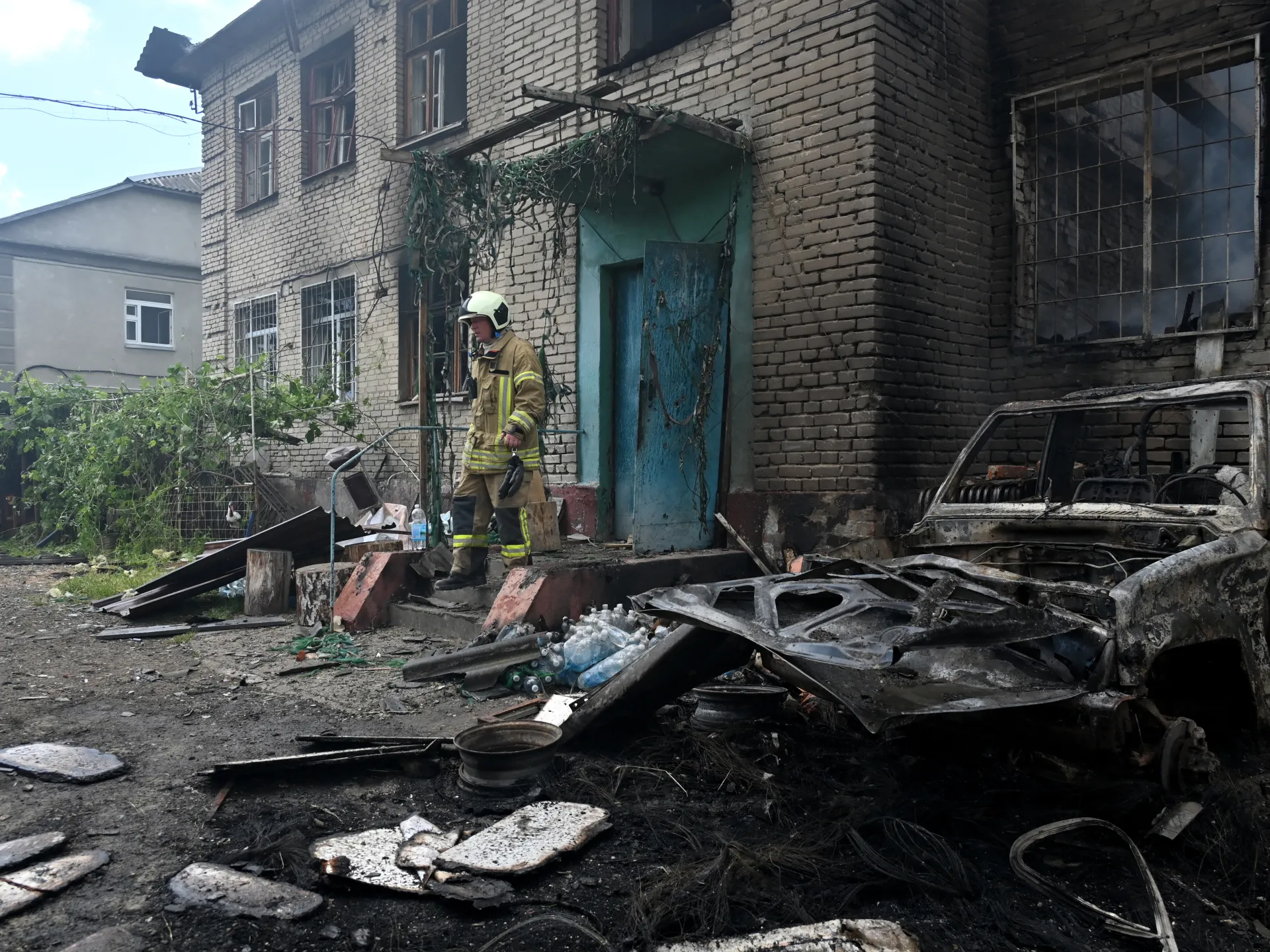
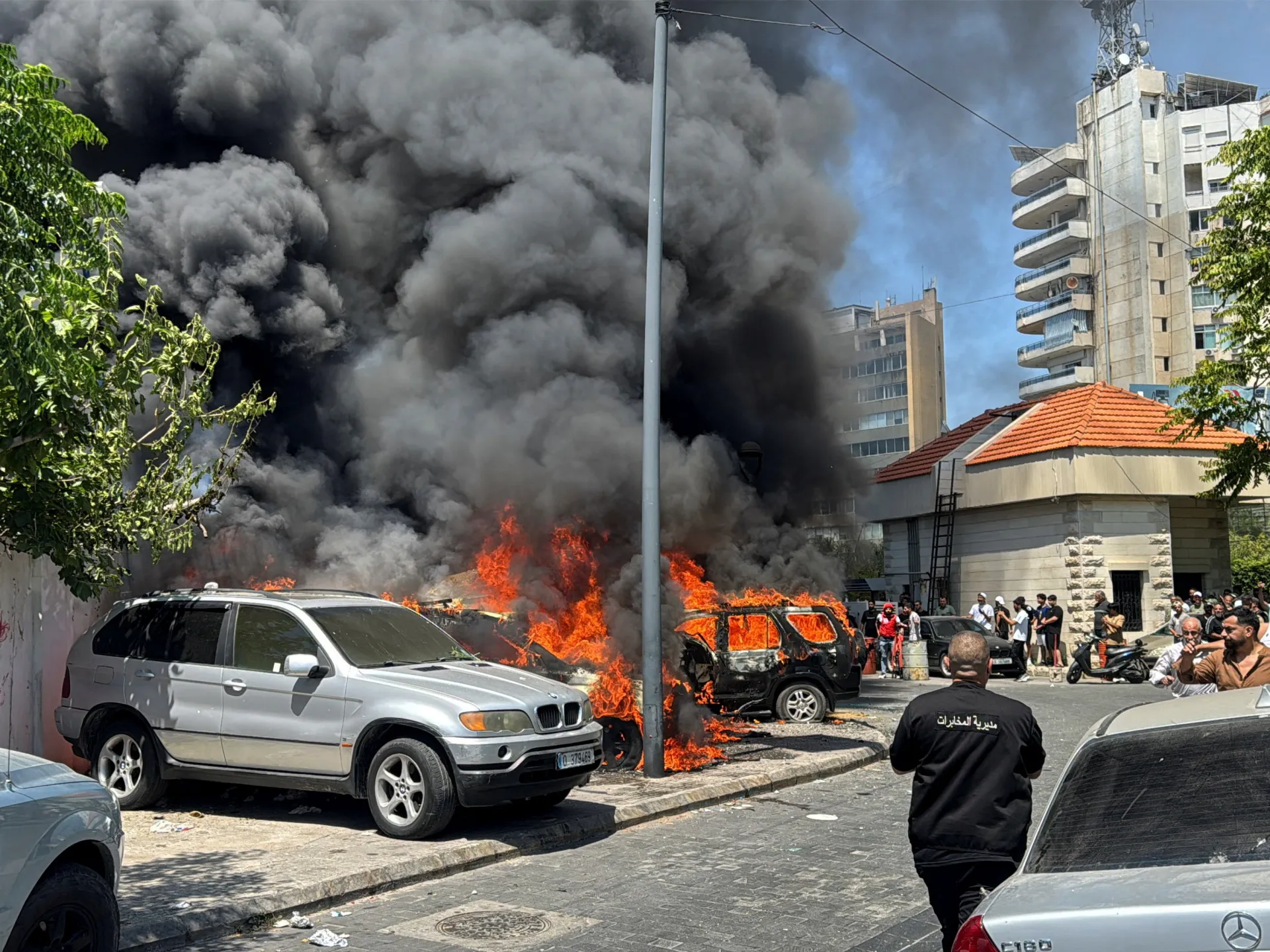
An Israeli strike on a vehicle in the southern Lebanese city of Sidon killed two people and sparked a fire that spread to nearby cars. Israel has continued to attack Lebanon despite a US-announced ceasefire on April 16.
June 10 (UPI) — Iran said it launched strikes against U.S. military bases in neighboring countries in and around the Persian Gulf early Wednesday in retaliation for American “aggression” after U.S. forces conducted strikes on targets in southern Iran.
Khatam al-Anbiya Central Headquarters, Iran’s central command, said in a statement published by the state-run Islamic Republic News Agency that the “brave Army of the Islamic Republic and the Islamic Revolutionary Guard Corps” carried out a “powerful assault” on U.S. military assets in the region.
“The criminal U.S. military should know that if aggression against the Islamic Republic of Iran is repeated, even more severe and widespread attacks will be carried out against the designated target bank in the region, it added.
The statement was accompanied by a photo showing six ground-launched ballistic missiles blasting off from an undisclosed desert location but it was unclear if it was of Wednesday’s strikes as the image was undated and uncredited.
The IRGC claimed missiles were fired at Jordan’s Muwaffaq Salti airbase, where U.S. F-35 fighter jets and other aircraft operate out of, and that facilities in Kuwait and Bahrain were also attacked.
It said that the U.S. Fifth Fleet in Bahrain was targeted with drones.
The attacks had yet to be verified but Jordan’s armed forces said they downed five Iranian missiles targeting the country’s al-Azraq district, 60 miles east of the capital, Amman.
The Kuwaiti military, in a post on X just after 3 a.m. local time, said its air defenses were “currently intercepting hostile aerial targets.”
Bahrain’s interior ministry issued multiple alerts around the same time, advising residents that the air-raid siren had been sounded, urging them not to panic and to move to the nearest safe place to shelter immediately.
No deaths or injuries were reported.
The escalation came almost immediately after U.S. Central Command announced that it had completed “self-defense strikes” ordered by President Donald Trump in response to the downing of a U.S. Army Apache helicopter earlier Tuesday.
CENTCOM said in a statement early Wednesday that U.S. Air Force and Navy fighter jets struck Iranian air defense, ground control stations, and surveillance radar sites near the Strait of Hormuz “with precision munitions’ in an approximately four-hour-long operation.
“The operation was a proportional response to recent attacks on U.S. forces and international commercial ships transiting regional water,” said CENTCOM.
The ratcheting up of tensions prompted Beijing and Moscow to call on both sides to apply the brakes.
“China is deeply concerned over the latest developments regarding Iran. Relevant parties need to remain calm, exercise restraint, stop exacerbating confrontation and escalating tensions, take concrete actions to ease the situation, stick to political and diplomatic means for resolving disputes, and work for an early realization of a comprehensive and lasting cease-fire,” Chinese foreign ministry spokesman Lin Jian told reporters on Wednesday.
In a post on X, Russian Foreign Ministry spokesperson Maria Zakharova said Moscow was very worried about what she called “the new spiral of U.S.-Iran armed confrontation.”
She called on both parties to show restraint and halt military attacks immediately, adding that Russia stood ready to assist in finding and implementing “mutually acceptable negotiated solutions” to the crisis.
President Donald Trump discusses renovations to the Lincoln Reflecting Pool and makes an announcement on coal in the Oval Office at the White House on Thursday. Photo by Samuel Corum/UPI | License Photo
Four-year-old Malika was seriously wounded in an Israeli attack that killed her mother while she shielded her from falling debris. Now, with support from her family and the Ghassan Abu Sitta Children’s Fund, she is recovering from her injuries. Her story reflects the lasting impact of war on children in Lebanon.
Israeli forces killed nine people in Tyre in the past 24 hours after it issued forced displacement orders on the city and continued deadly attacks across southern Lebanon.
United States President Donald Trump has warned Israeli Prime Minister Benjamin Netanyahu that he might find himself fighting on his own if Israel returns to war with Iran.
The warning on Monday came as Israel and Iran said they would pause attacks following their most serious escalation since a ceasefire took effect in April.
Recommended Stories
list of 3 itemsend of list
Trump, who has reportedly grown increasingly exasperated with Netanyahu, demanded that both sides stop “shooting” in a post on his Truth Social platform and said that “final negotiations” towards peace would proceed “subject to ignorance or stupidity getting in its way”.
He also called Netanyahu and told him to stop the strikes, according to media reports.
In an interview with Axios, Trump said he had warned Netanyahu about the consequences of continuing the war.
“I said, ‘Bibi, you better be careful, or you will be on your own very soon’,” Trump said.
The flare-up began on Sunday, triggered by Israel’s deadly bombardment of Lebanon’s capital, Beirut. Iran – which has long said any peace deal with the US depends in part on an end to the fighting in Lebanon – responded with a wave of missiles at northern Israel.
Trump reportedly called Netanyahu on Sunday evening and asked him not to retaliate, but Israel launched attacks on Iran early on Monday.
Israeli forces struck Iranian air defence systems and a petrochemical plant, while Iran retaliated by hitting a similar facility in Haifa and targeting two Israeli airbases. Many of the missiles were intercepted over the occupied West Bank.
No deaths were reported on either side.
Israel plays down tensions
The exchanges complicated Trump’s push to end a war that the US and Israel launched on February 28. A ceasefire announced on April 8 paused all-out warfare. But flare-ups in the Gulf have continued.
For his part, Netanyahu said in a televised statement that he had told Trump that “Israel has a full right to self-defence, and we are exercising it as required”.
“Right now, the fire at the front is contained, because after we hit the terrorist regime in Tehran, it stopped attacking us,” he said.
Netanyahu also warned that should Iran “make the mistake of resuming attacks against us, we will respond with full force”.
Israel’s ambassador to Washington, Yechiel Leiter, downplayed reports of tension between the US and Israeli leaders, telling Fox News that “sometimes, lovers have a spat”.
He said that while Netanyahu had “decided” to “lower the temperature” at Trump’s request, the US president understands “full well” that Israel cannot “absorb ballistic missiles into our country without responding.”
Iran’s Ministry of Foreign Affairs spokesperson, Esmaeil Baghaei, blamed Washington for the escalation.
“The US is directly responsible,” he said. “They are party to the ceasefire negotiations. Therefore, any act in violation of the ceasefire, be it through the interception of vessels [in the Strait of Hormuz], the targeting of southern Lebanon by Israel, or any other event, will cause the United States to be directly responsible for the escalation in the region.”
Iran’s First Vice President Mohammad Reza Aref said the operation against Israel, dubbed “Nasr” or victory, showcased “a new level of deterrence from mighty Iran” and that Israel had been “forced to beg once again” for a ceasefire.
Behind the scenes, diplomatic efforts continue.
Iranian President Masoud Pezeshkian posted on X that Tehran was still “at the negotiating table”, while Iran’s ambassador to the United Nations, Amir Saeid Iravani, said that Washington and Tehran, through Pakistan as an intermediary, are “presenting and exchanging views” towards an agreement.
Iravani told The Associated Press news agency he was hopeful that “very soon” the two sides would reach “a conclusion”.
Pakistan’s Prime Minister Shehbaz Sharif said efforts for a peaceful diplomatic solution was ongoing “earnestly and painstakingly” and called for restraint, “especially when the final objective is just about to be achieved”.
He also said Israel and Iran’s exchange of fire was a “reminder of the dangers associated with a tenuous ceasefire and the unbearable consequences it may lead to”.
Attacks on Lebanon continue
The escalation on Monday also drew in Yemen’s Houthi rebels.
The group fired missiles at Israel early in the morning and declared a complete ban on Israeli maritime navigation in the Red Sea, warning that all Israeli movements would be considered “legitimate military targets”.
Later on Monday, air raid sirens sounded in the Israeli port city of Eilat, with the military saying a suspected aerial target was launched from Yemen.
An Israeli strike killed five people in the city of Tyre, while another, in the Nabatieh district, left seven dead. A third strike in Marwanieh killed two people, the Lebanese Ministry of Health said.
Phyllis Bennis, a fellow at the Institute for Policy Studies, said Trump was trying to give an impression that he was tougher on Israel than he actually is.
“The words could be significant if they were matched by actions,” she told Al Jazeera.
“As long as they’re sending billions of dollars directly to the Israeli military, and as long as they’re protecting Israel from being held accountable in the International Court of Justice or the International Criminal Court, as long as those actions don’t change, the words just don’t mean very much,” she added.
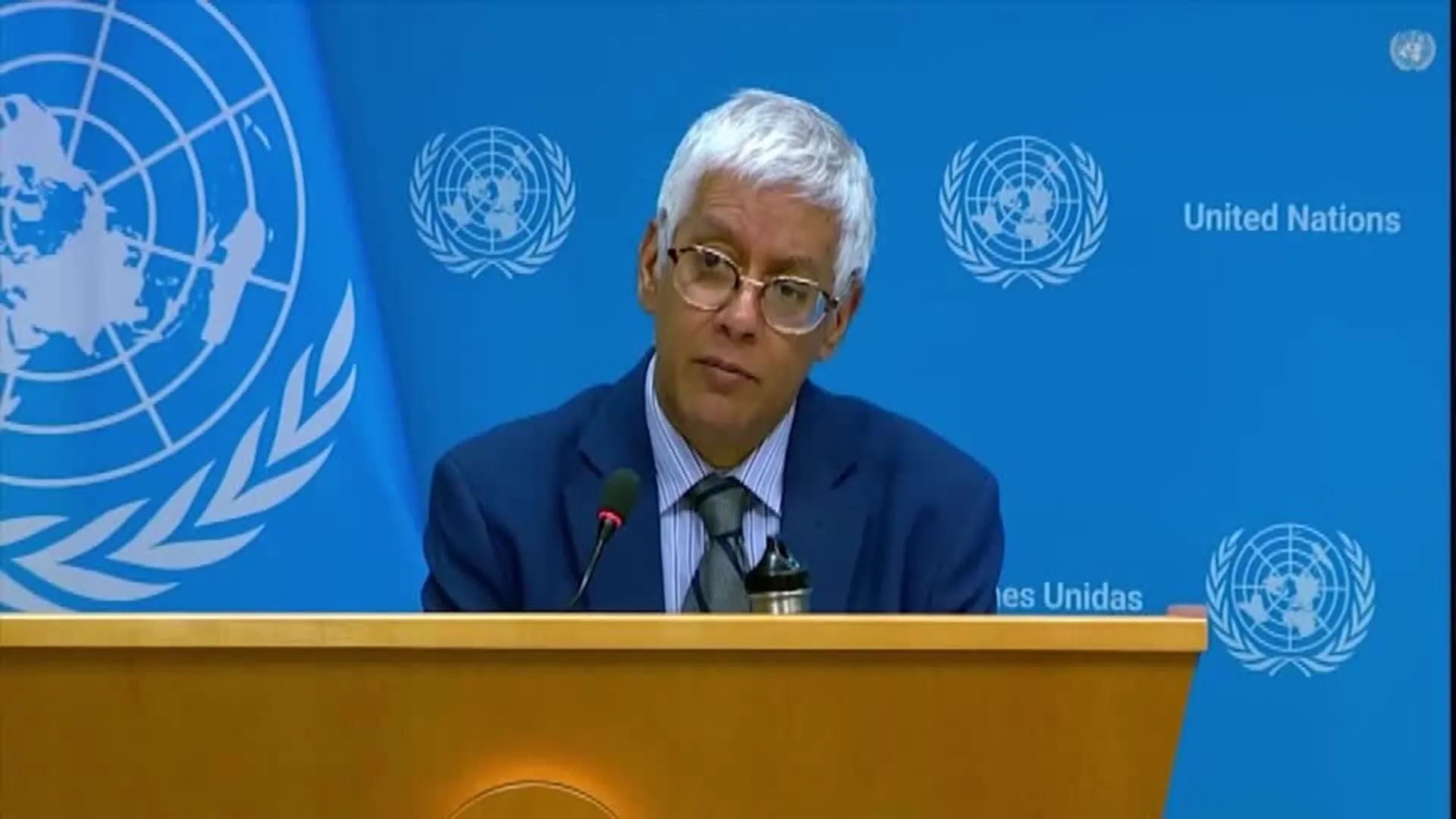
A UN spokesman says forced evacuation orders issued across southern and eastern Lebanon are nearly impossible to follow safely, and calls into question whether Israel is complying with international humanitarian law.
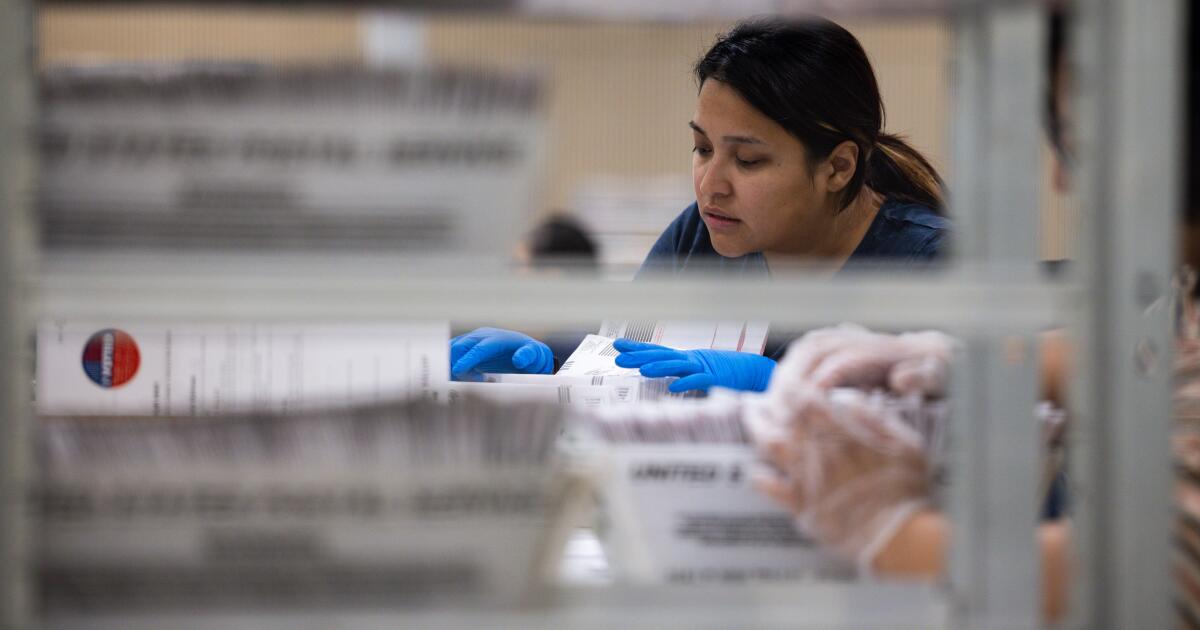
SACRAMENTO — Even before President Trump’s latest wave of unfounded claims of election fraud in California, a significant share of voters in the state expressed concerns about federal interference in the electoral process, according to a new poll.
Trump on Monday claimed on his social media site that the race for Los Angeles mayor was a “Rigged Election,” an allegation that came after Democrat Nithya Raman overtook Republican Spencer Pratt for second place in the ongoing primary election vote count.
Raman’s lead had prompted Rep. Abe Hamadeh, an Arizona Republican, to call for the election to be federalized, or run by the federal government rather than the state, a message Trump reposted.
Earlier Sunday, Trump had alleged during an interview with NBC News that California elections officials “were cheating.” That came after a debunked social media conspiracy theory claiming that a lag in an update of electronic voting data by the Associated Press showed Pratt was being cheated. On Monday, House Speaker Mike Johnson said the elections process in the L.A. mayoral race “stinks to high heaven.”
The ongoing attacks by Trump and his supporters continue to erode confidence in the nation’s elections, especially among Republicans, threatening a pillar of American democracy, said political scientist Eric Schickler, co-director of the Institute of Governmental Studies at UC Berkeley.
“The president … wants to use those claims to make changes in the election process that could make it harder for people to vote, and that certainly is a threat to our democratic institutions,” Schickler said.
“One thing we’ve learned in recent years is that we just cannot take the voting process for granted, cannot take for granted that both sides will accept as legitimate the outcome, and can’t take for granted the idea that there won’t be efforts to essentially manipulate the vote counting process,” he added.
A new poll released Friday by the institute found that 41% of California voters were “not confident” that this year’s elections would be free of federal interference. Although 48% had confidence that there would be not meddling, the concerns expressed were still significant, Schickler said.
More telling was the partisan divide among voters when asked whether they have confidence that local officials would conduct fair and secure elections and that the vote count would be accurate. Among Democratic registered voters, 79% said they trusted elections officials to provide an accurate vote count. Among Republicans, 55% said they were not confident that would occur.
California voters who don’t belong to either party said by a 2-1 margin that they had confidence in the vote count, the poll showed.
“The positive is that local officials are still widely trusted by Democrats, no-party-preference voters, and at least a share of Republicans, though a lot fewer than I think in the past, and a lot fewer than you know we would want for a really healthy democracy,” Schickler said.
That growing mistrust among certain parts of the electorate comes after years of baseless claims by Trump that the 2020 election was stolen from him, as well as Republican-led efforts to restrict the use of mail-in ballots and impose new requirements for voters to show identification and proof of citizenship.
Recent rulings by the conservative-leaning Supreme Court also have rolled back federal protections under the Voting Rights Act. In April, the court sharply limited a part of those protections that had forced states to draw voting districts to help elect Black or Latino representatives to Congress, as well as state and local boards.
Trump and his allies have used California’s slow vote-counting process to allege cheating. The day after the June 2 primary, Trump claimed without evidence that Democrats were trying to “steal” the gubernatorial and L.A. mayoral primaries. The next day, he alleged that California Democrats had “found” mail-in ballots and were “rigging the election” with them.
Secretary of State Shirley Weber and other officials have said California’s voting system prioritizes voter accessibility and security over speedy results. The state has more than 23 million registered voters, and ballots go through numerous verification steps, including verifying signatures on mail-in ballots.
“Over 97% of our folks actually vote by mail. They want to keep that system. That system demands more contact, more touching of the ballot, more verification of the individuals who are voting. All of those things take time,” Weber said during a recent interview with ABC10 in Sacramento.
Gov. Gavin Newsom’s office called Trump’s claims during the recent “Meet the Press” interview the “most severe case of California Derangement Syndrome we’ve ever seen.”
Newsom is considering a 2028 run for president and has consistently warned that Trump may try to interfere in both the 2026 and 2028 elections.
The Berkeley poll found that California voters overall — 74% — want candidates running for president in 2028 to prioritize defending democracy and making voting more accessible. Among Democratic voters, 95% said that was important; among Republicans, 41%.
Funding for the poll was provided to IGS by the Evelyn and Walter Haas, Jr. Fund, a private foundation based in San Francisco that aims to increase civic participation and improve the state’s democratic processes.
The poll of 8,578 registered California voters was conducted between May 19 and 25 online in English and Spanish and has a margin of error of about 2 percentage points in either direction.
Times staff writers Alene Tchekmedyian and Kevin Rector contributed to this report.
Tensions have escalated between Iran and Israel while ongoing diplomatic efforts have failed to yield a lasting peace deal.
Published On 8 Jun 20268 Jun 2026
Iran and Israel were on Monday locked in tit-for-tat missile attacks, as the fragile ceasefire that has held in place since April 8 appeared closer to collapse than at any point in the past seven weeks.
These escalating hostilities between Iran and Israel come as the United States-Israel war on Iran enters its 101st day on Monday.
Here is what is happening:
In Iran
Explosions heard in Iran: Iran’s IRNA news agency reported that at least “two powerful explosions” were heard in Tehran and at least three in the city of Isfahan. The broadcaster also reported that explosions were heard in Tabriz. The Israeli military had said it “attacked military targets” in western and central Iran.
Power plant in Mahshahr attacked: A security officer in the southwestern Khuzestan governorate told the Fars news agency that Israeli forces have attacked the Karun Petrochemical Company in the city of Mahshahr. The Israeli army confirmed striking the petrochemical plant. The Mahshahr Petrochemical Special Economic Zone announced that its workers have evacuated the site following the Israeli strike.
Iran denies attacking base in Saudi Arabia: Responding to reports of an explosion at the Al-Kharj airbase in Saudi Arabia, Iran’s IRIB broadcaster cited a military official as saying that “Iran has not fired any shots.”
Red Crescent on standby: The Iranian Red Crescent says it is standing by to respond to any fallout from Israel’s attacks across the country this morning.
In Israel
Security cabinet meeting: Israeli Prime Minister Benjamin Netanyahu will convene a security cabinet meeting at 11am local time (08:00 GMT) amid escalating hostilities with Iran, according to multiple Israeli media reports.
The Israeli military issued a series of alerts starting Sunday over waves of missiles launched from Iran towards Israeli territory.
Iran’s Islamic Revolutionary Guard Corps (IRGC) said on Monday that they launched attacks against Israel’s Nevatim and Tel Nof airbases as a response to attacks on radar sites within Iran, the Fars news agency reported.
Israel’s Channel 12 broadcaster and Ynet News said a missile fired from Yemen was intercepted.
In the US
The US State Department issued a security alert for citizens in Jordan over reports of projectiles in the country’s airspace – presumably missiles fired by Israel towards Iran, or by Iran towards Israel.
Democratic Senator Chris Murphy said Israel’s latest attack on Iran “compounds” the “humiliation” for US President Donald Trump, as it comes after the US president reportedly told Netanyahu not to retaliate to Iran’s missiles fired at northern Israel.
In Lebanon
Explosions were heard in the Lebanese capital Beirut early on Monday, but these were likely rocket interceptions, Al Jazeera’s Zeina Khodr reported from Beirut.
On Sunday, Israel had hit the suburbs of Beirut, in attacks that Iran described as crossing a red line in terms of violating a ceasefire between Lebanon and Israel. Iran then said its decision to hit northern Israel was in response to these attacks near Beirut.
War diplomacy
Israel defends attacks on Iran: The Israeli ambassador to the US, Yechiel Leiter, defended the attacks on Iran, saying “no self-respecting country” would tolerate Iran’s missile launches against Israel.
Canada expresses concern: Canada’s Foreign Ministry has expressed concern about the resumption of conflict between Iran and Israel, saying it jeopardises the ongoing negotiations and “the prospects for peace”.
Saudi-Qatari foreign ministers speak: Saudi Foreign Minister Prince Faisal bin Farhan Al Saud spoke by phone with his Qatari counterpart, Sheikh Mohammed bin Abdulrahman bin Jassim Al Thani, the Saudi Foreign Ministry said.
Qatari-Iranian foreign ministers speak: The Qatari foreign minister, who is also the country’s prime minister, spoke by phone with Iranian Foreign Minister Abbas Araghchi about mediation efforts between Iran and the US, as well as the latest developments in Lebanon, according to a Qatari statement.
Weekly insights and analysis on the latest developments in military technology, strategy, and foreign policy.
Iran has launched a new barrage of missiles at Israel, according to the Israeli Defense Forces. Iranian officials say the attack, the first such strike since the April 8 ceasefire, was in response to Israel bombing Beirut a few hours ago. With Israel under direct attack from Iran, how much longer the ceasefire will hold is an open question.
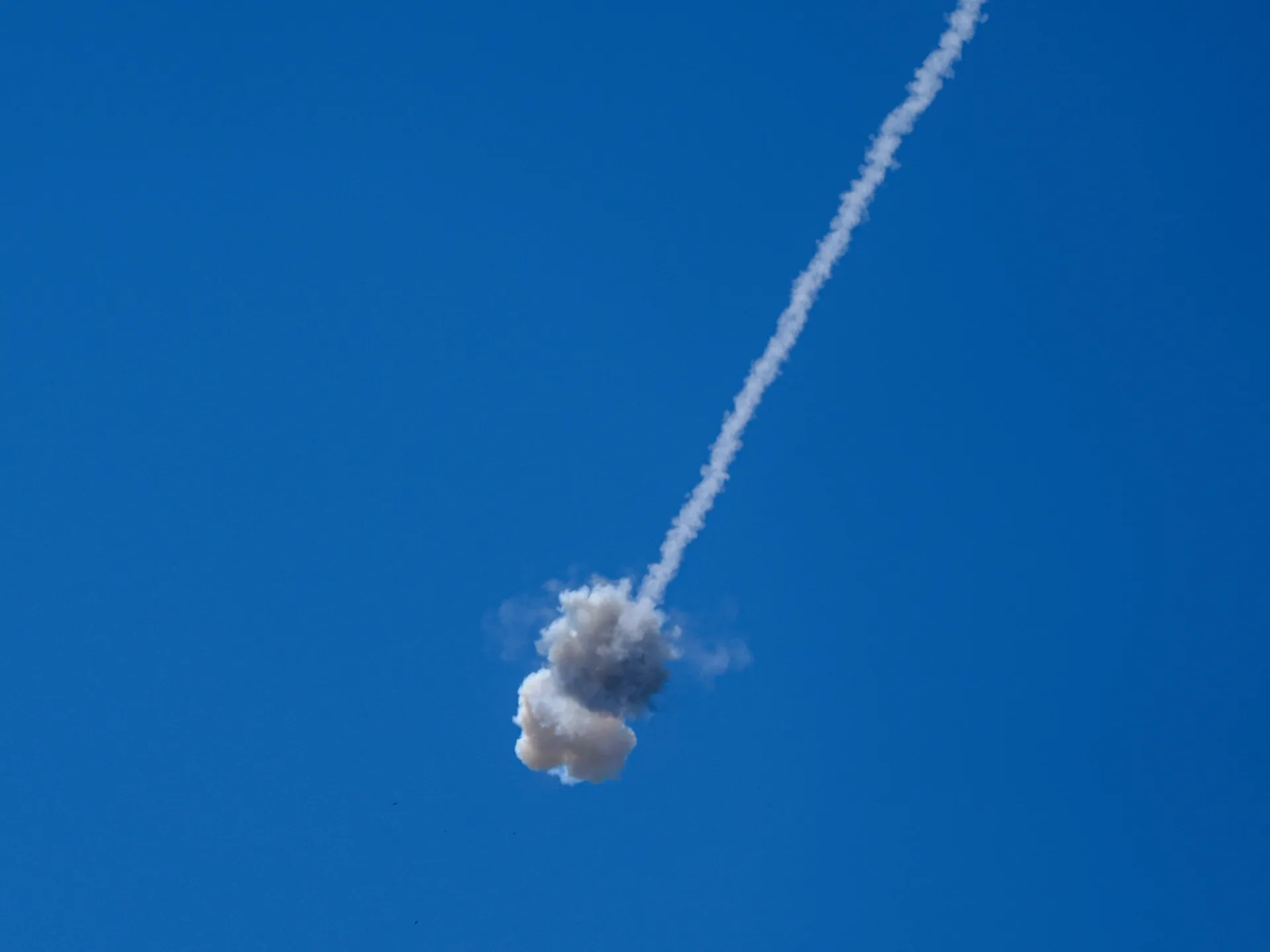
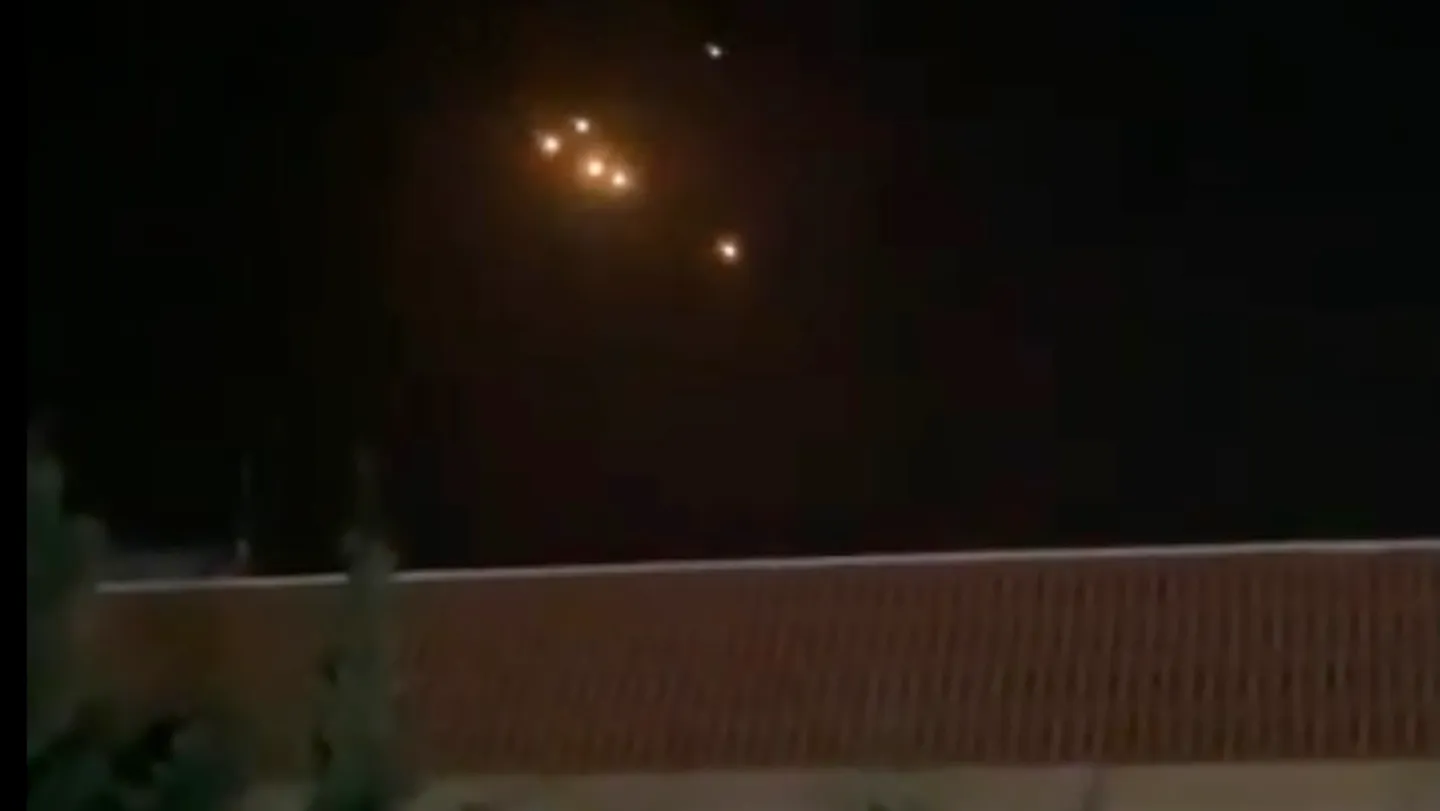
“A short while ago, the IDF identified missiles launched from Iran toward the territory of the State of Israel,” the IDF stated on Telegram. “Defensive systems are operating to intercept the threat.”
🚨 Sirens were sounded in several areas across the country following the identification of missiles launched from Iran toward Israel. https://t.co/BtjlfxOegW
— IRIB (Islamic Republic of Iran Broadcasting) (@iribnews_irib) June 7, 2026
Videos emerged on social media showing Israeli air defenses working to intercept the missiles.
A third round of sirens sound in northern Israel, after the IDF intercepted several Iranian ballistic missiles. No initial reports of injuries or damages.
A senior Israeli official tells Israeli media: “There will be a forceful response.” pic.twitter.com/BixzsXOrhs
— Ariel Oseran أريئل أوسيران (@ariel_oseran) June 7, 2026
Additional video purported to show the Iranian missile launches.
Visuals of Iranian Ballistic Missiles fired towards of State of Israel which were later intercepted and neutralised. pic.twitter.com/Xnfaiy1XZD
Earlier on Sunday, Israel attacked what it said was a Hezbollah command center in the Dahieh section of Beirut. Israel claimed it was in response to Hezbollah rocket attacks on northern Israel.
⭕STRUCK: A Hezbollah command center in the Dahieh area, following Hezbollah’s rocket attacks on northern Israeli communities.
The targeted command center was used by Hezbollah terrorists to advance terror attacks against Israeli civilians and IDF soldiers operating in southern…
BREAKING: In what appears to be a declaration of war by Iran against Israel, a third wave of missile alerts has been activated across Israel within minutes
President Donald Trump spoke with several media outlets in the wake of the Iranian attack. He is urging restraint between the Israel and Iran.
He told Fox News that the attack wasn’t helping negotiations and said he would suggest to Iran that “you shot your missiles, that’s enough, get back to the table and make a deal.”
On Israel striking Beirut earlier today: “I’m not happy about it,” President Trump said.
As I was speaking with President Trump, I could see incoming Iranian missiles out the window soaring toward northern Israel.
“It’s certainly not going to help negotiations,” President Trump told Fox News.
The president told Axios reporter Barak Ravid that he was going to call Israeli Prime Minister Benjamin Netanyahu and tell him to hold his fire.
“I’m about to call Bibi right now and tell him not to respond,” Trump told the outlet. “Both of them have already done their part. Israel had its strike and Iran had its strike. We don’t need another one.”
“The Iranian missile fire didn’t hit anyone. I hope Israel doesn’t respond. If Bibi attacks them back, it’ll just drag on like it has for the past 47 years, or the past 3,000 years,” Trump told Ravid. “We’re very close to a final deal with Iran. It’ll be a good deal. I don’t want it to blow up because of what’s happening now.”
🚨🚨ציטוטים נוספים משיחת הטלפון שלי עם הנשיא טראמפ: “ירי הטילים האיראני לא פגע באף אחד. אני מקווה שישראל לא תגיב. אם ביבי יתקוף אותם בחזרה, זה פשוט יימשך כמו ב־47 השנים האחרונות, או ב־3,000 השנים האחרונות.” 🚨🚨טראמפ הוסיף:”אנחנו מאוד קרובים להסכם סופי עם איראן. זה יהיה הסכם טוב.… https://t.co/g7pshIL497
Iran has issued a notice that it has closed airspace.
The IDF said Iran made “a grave mistake” by attacking, said its operations against Hezbollah will continue and warned Israelis that more attacks could be launched.
Iranian media released an image it claims shows a message inscribed on the missiles fired at Israel.
The text that was written on the Iranian missiles fired at Israel tonight. https://t.co/rIQ7jaH5E8
— IRIB (Islamic Republic of Iran Broadcasting) (@iribnews_irib) June 7, 2026
UPDATE: 6:51 PM EDT –
Iran fired 11 missiles at Israel, according to Israel’s C14 News outlet.
הירי מאיראן: סה”כ כ-11 שיגורים מאיראן לצפון, חלקם יורטו; אין נפגעים
Trump told Financial Times that Netanyahu will have no choice but to accept any deal the US negotiates with Iran, because he “calls the shots.”
“He won’t have any choice,” Trump told the outlet in a telephone interview. “I call the shots. I call all the shots. He [Netanyahu] doesn’t call the shots.”
Trump added that Iran’s strikes had not changed his desire to conclude US-Iran negotiations. “It’s not going to have any impact on the deal,” he told the FT.
“We’ll see how it ends up,” Trump continued. “But they [the missile strikes on Israel] were attacks that did not kick at all. It’s one of those things that’s been going for 3,000 years, or 47 years, depending on how you count.”
BREAKING: President Trump says Israeli Prime Minister Netanyahu will have “no choice” but to accept a US deal with Iran, because he “calls the shots,” per FT.
Details include:
1. “I call the shots. I call all the shots. He [Netanyahu] doesn’t call the shots,” Trump said
2.…
— The Kobeissi Letter (@KobeissiLetter) June 7, 2026
UPDATE: 9:50 PM EDT-
As we suggested would likely happen, Israel has retaliated against Iran.
“A short while ago, the Israeli Air Force struck military targets belonging to the Iranian terror regime in western and central Iran,” the IDF stated on Telegram.
UPDATE: 9:56 PM EDT –
Iranian media reported that “explosion sounds were heard in areas of Tehran, Isfahan, and Tabriz.”
Video and images have emerged on social media claiming to show the aftermath of the Israeli attacks.
UPDATE: 10:58 PM EDT –
In a post on X, the Israeli Air Force (IAF) says it has “identified the launch of a missile from Yemen toward Israeli territory, aerial defense systems are operating to intercept the threat.” “The public is requested to follow the Home Front Command’s defensive guidelines,” the IAF added.
צה״ל זיהה כי שוגר טיל מכיוון תימן לשטח ישראל, מערכות ההגנה פועלות ליירט את האיום. יש לפעול לפי הנחיות פיקוד העורף.