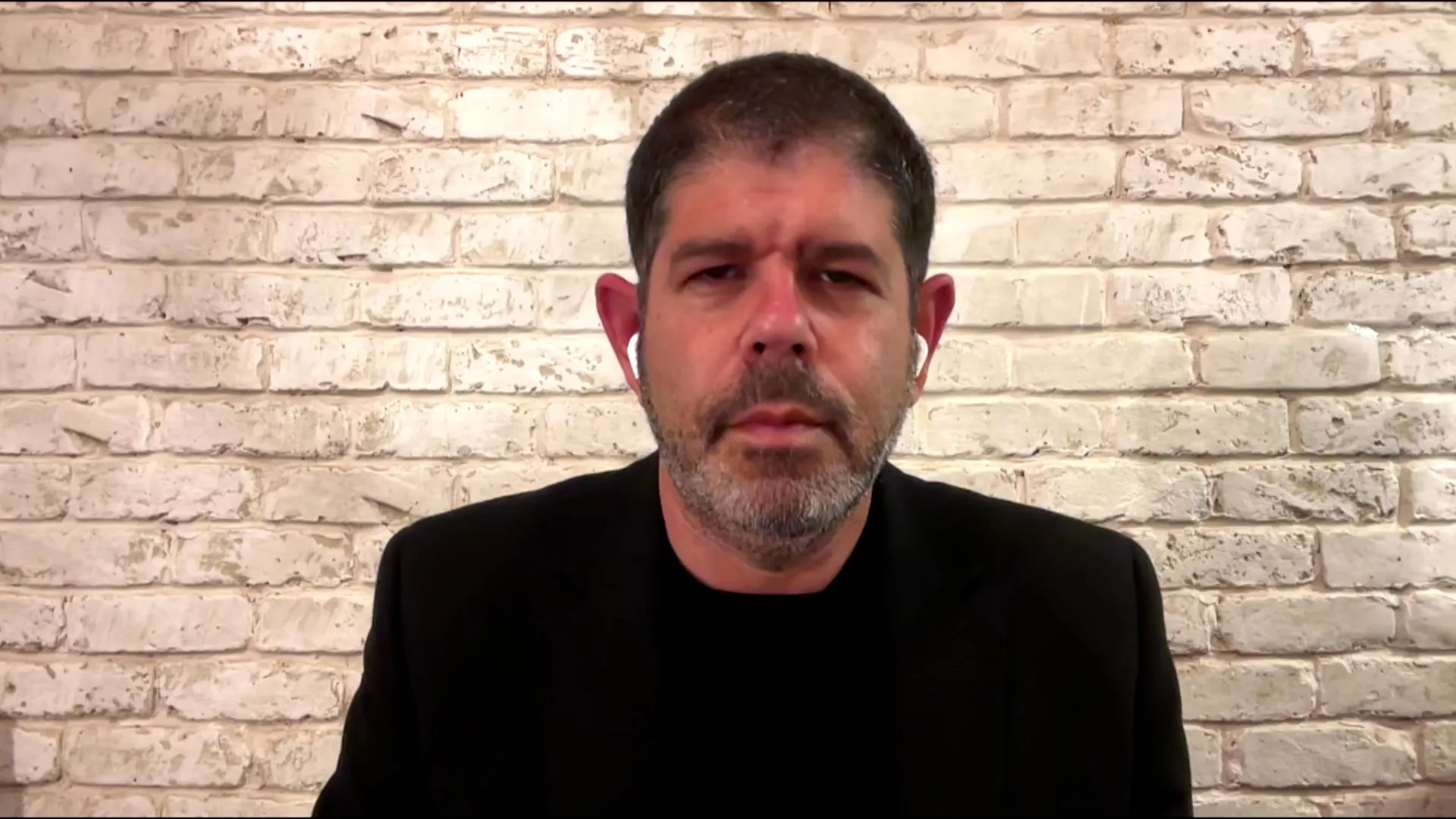
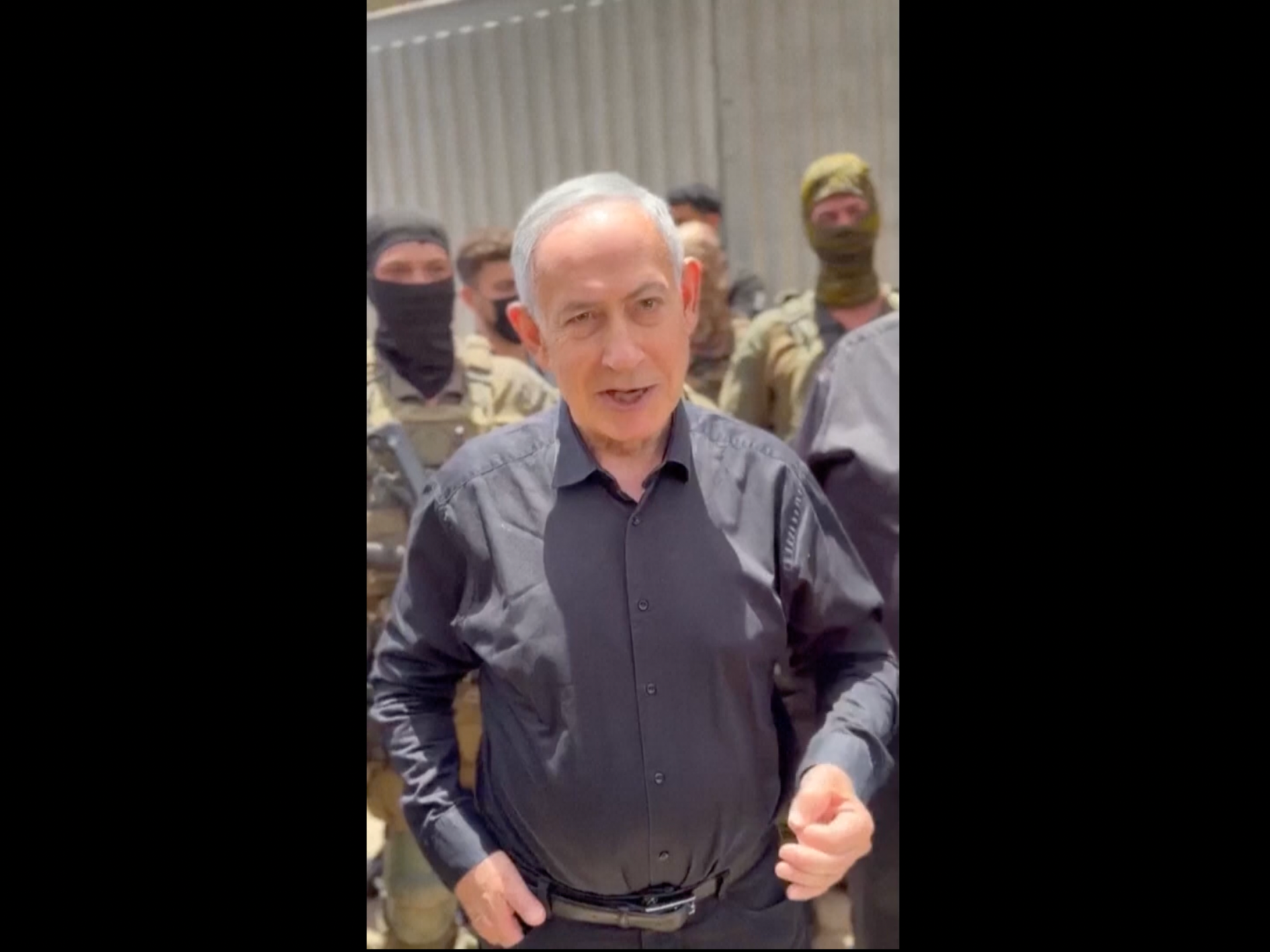
Yariv Oppenheimer told Al Jazeera that Israeli PM Benjamin Netanyahu has incentives to escalate tensions with Iran and Hezbollah but is constrained by US President Donald Trump and US interests. He said Iran’s June 7 response was a warning, not a push for war, and doubts Trump would allow major Israeli retaliation.
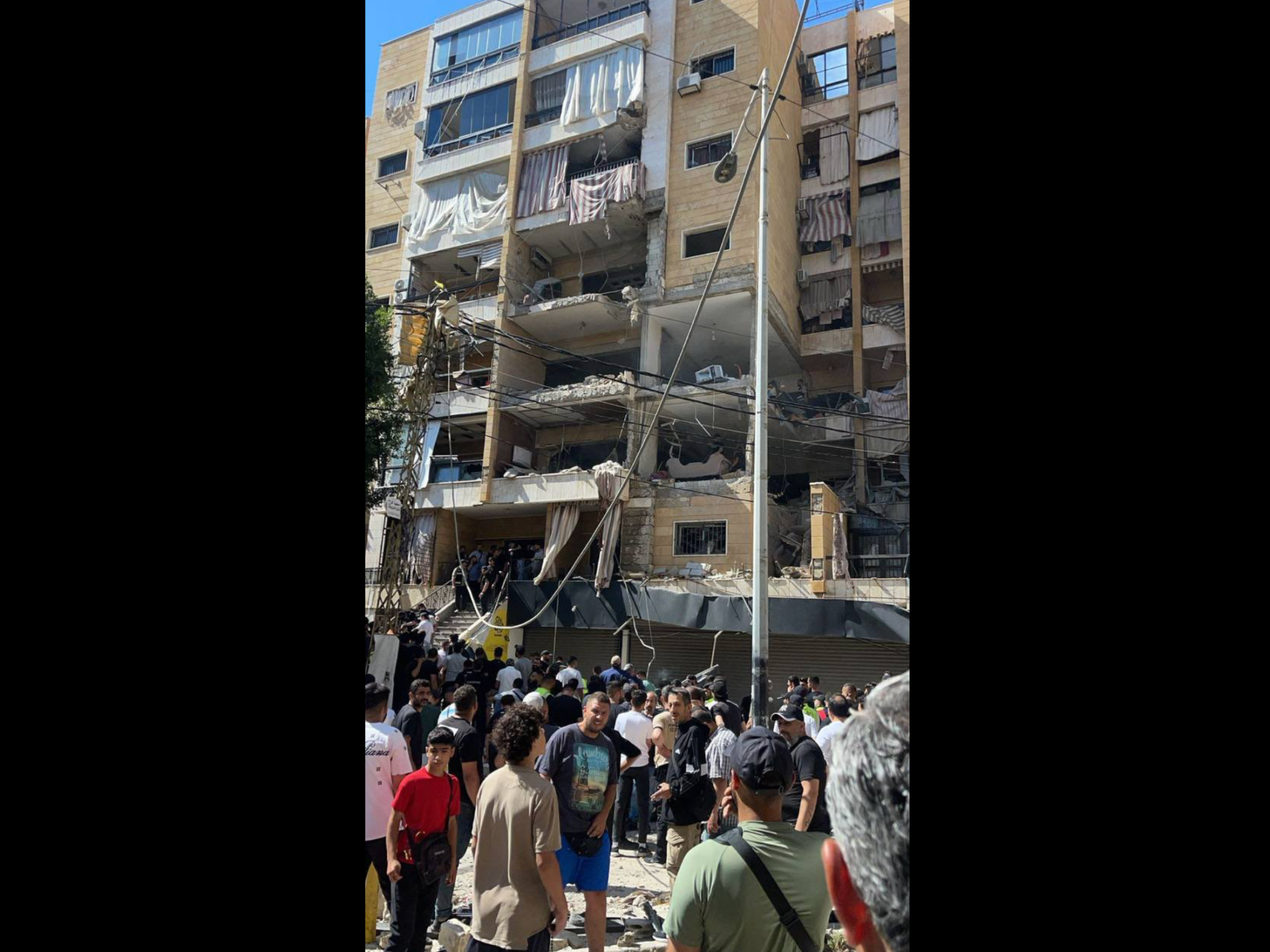
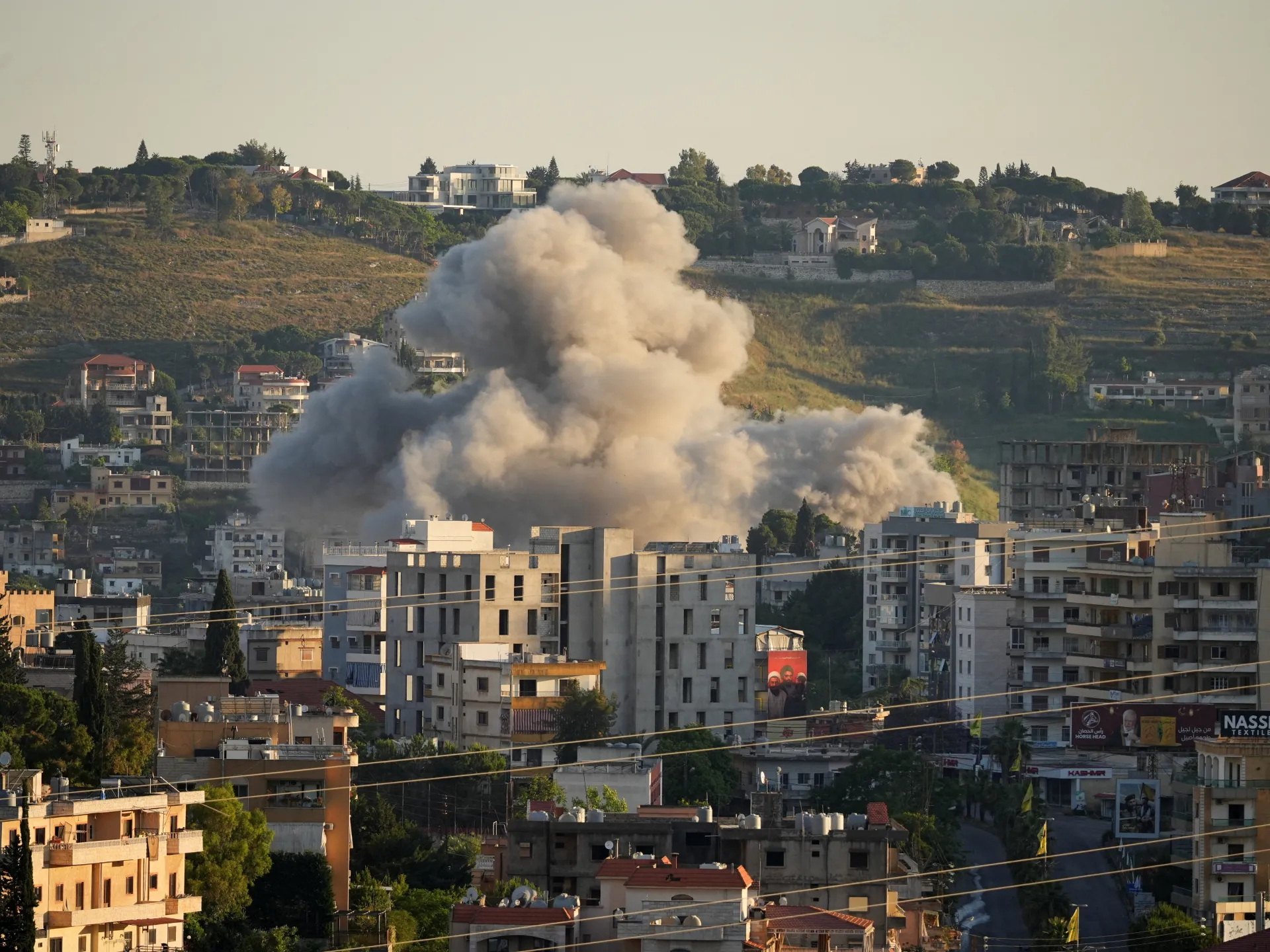
Videos show the aftermath of an Israeli attack on Beirut’s southern suburbs, with multiple explosions reported. Israel says it targeted Hezbollah headquarters, while Lebanese media says residential apartments were hit. The attack comes just days after US President Donald Trump told Benjamin Netanyahu that Beirut was off limits as Washington pursues a deal with Iran.
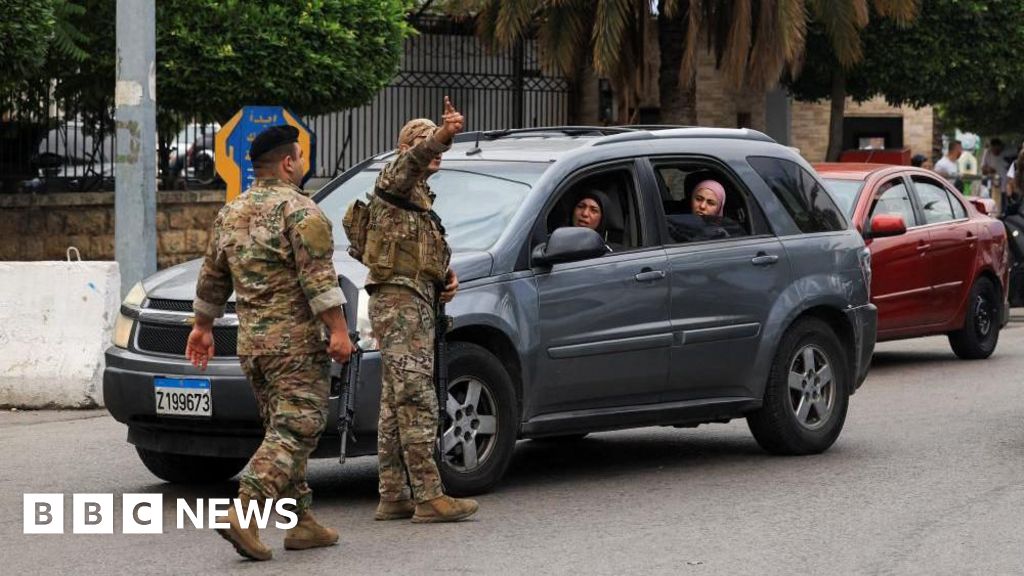
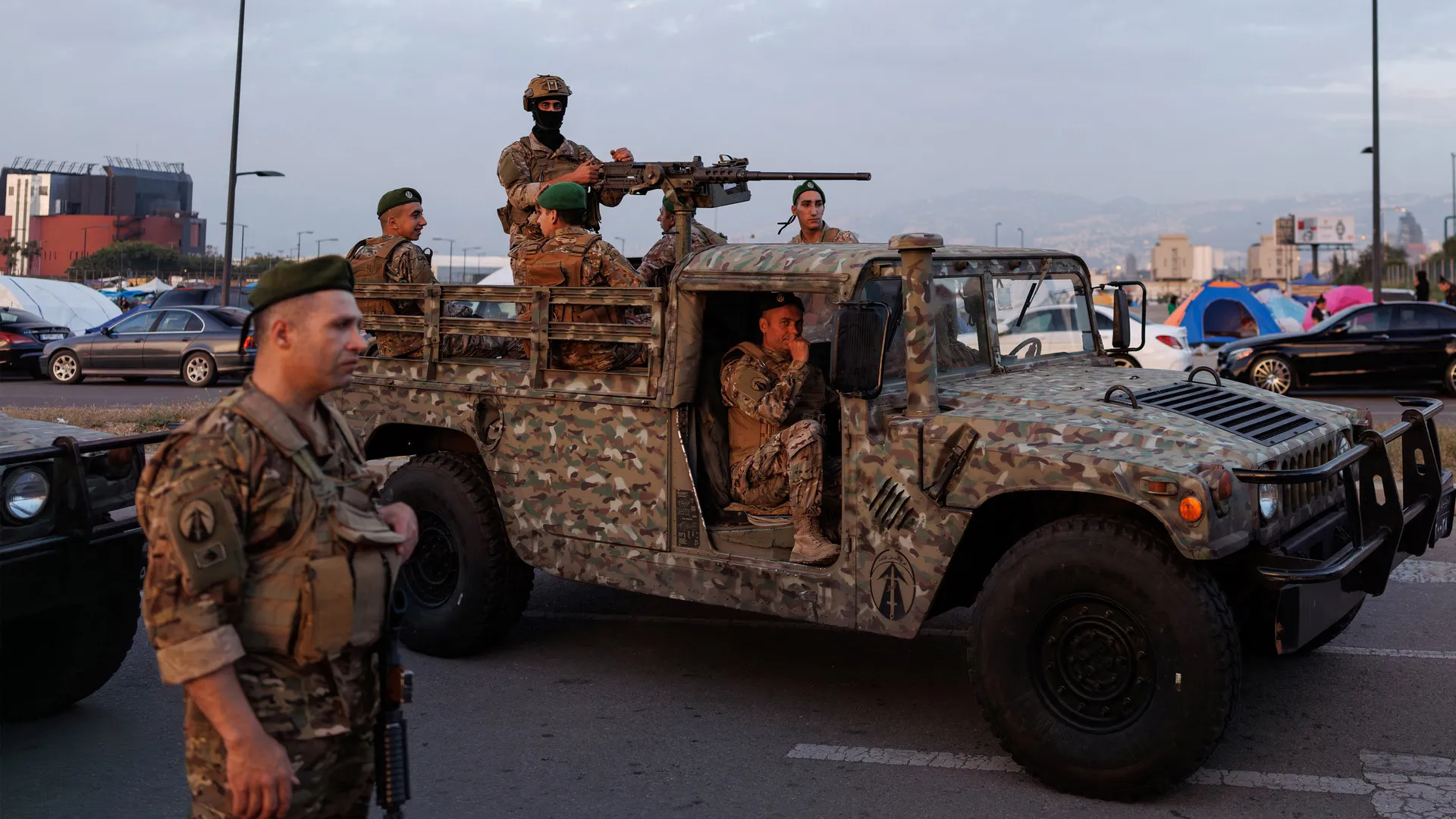
Funerals will be held for Lebanese officers killed in an Israeli attack in southern Lebanon, as Beirut’s army chief headed to Pakistan on a surprise visit amid ongoing mediation efforts in the wider United States-Israel war on Iran.
The Lebanese soldiers will be laid to rest on Sunday, a day after the brigadier general, captain and soldier were killed in an Israeli strike on a military vehicle on the Khardali-Nabatieh road, in an incident the Israeli army said it was investigating.
Recommended Stories
list of 4 itemsend of list
A ceasefire agreed on April 17 was meant to halt the fighting between Israel and Hezbollah, but Israel has continued to carry out near-daily attacks, prompting retaliatory ones from the Lebanese group. The violence has taken a disproportionate toll on civilians in Lebanon, where more than 3,500 people have been killed since hostilities resumed on March 2.
A further conditional ceasefire was announced by Lebanese and Israeli envoys last week in Washington, but was rejected by Hezbollah as it did not include the group or provide for Israel’s withdrawal from southern Lebanon.
Lebanese army chief Rodolphe Haykal left on Saturday for Pakistan, which has emerged as a central mediator between the US and Iran.
The visit is notable given the insistence by Washington – and by Lebanese leaders, including the president – that ceasefire talks for Lebanon remain separate from the US-Iran negotiations mediated by Pakistan.
Fighting continues in southern Lebanon
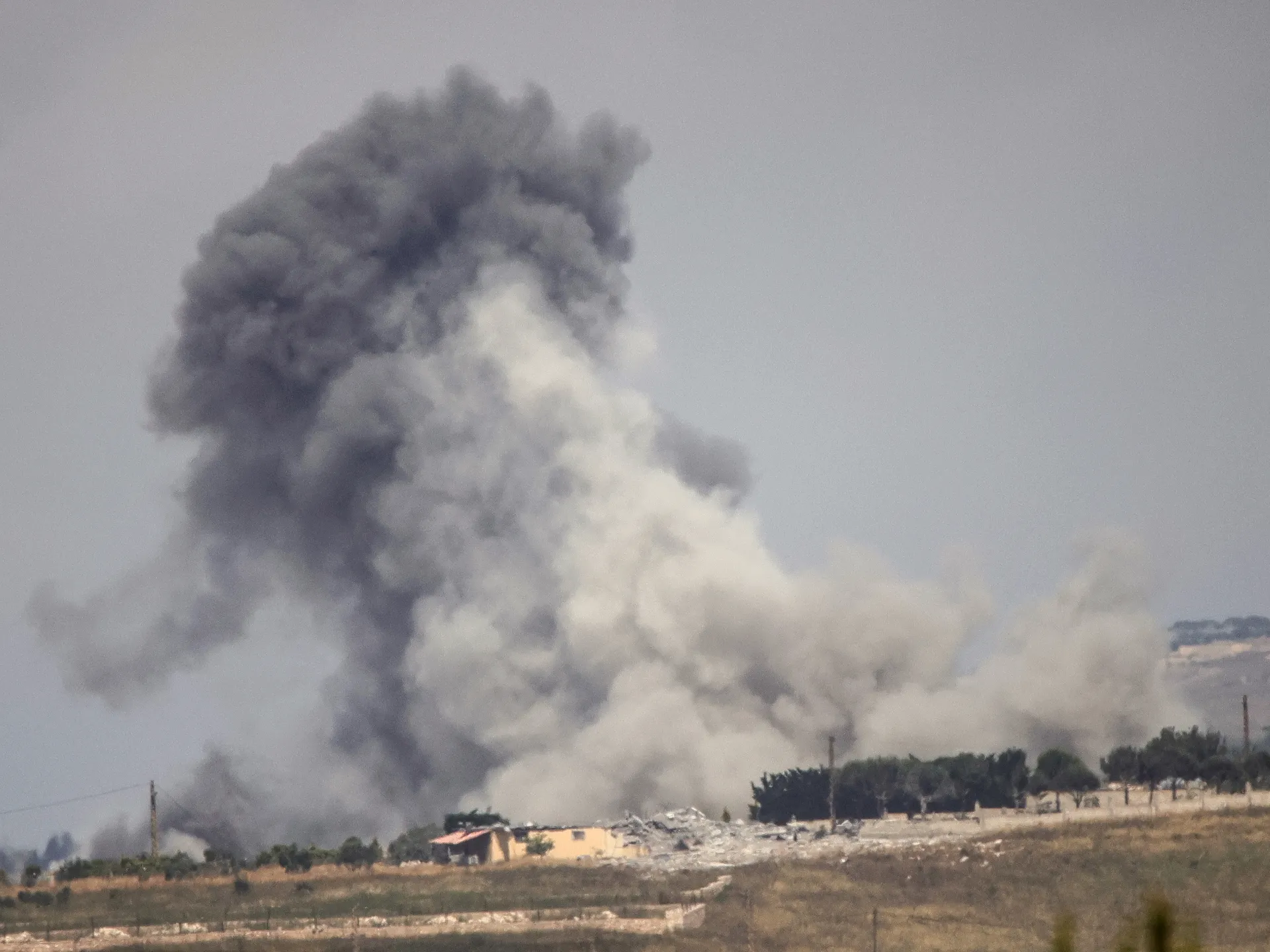
Meanwhile, Israeli attacks hit several towns across southern Lebanon and the western Bekaa overnight, while Hezbollah said it launched rockets, artillery fire, and drone attacks against Israeli forces, including near the Beaufort Castle in Yohmor al-Shaqif.
Lebanon’s Ministry of Public Health said on Sunday that an Israeli raid on the town of Saksakiyeh a day earlier killed at least two people. The ministry added that 22 people were wounded in the attack, including three children and a woman.
Two others were wounded following an Israeli drone attack on the town of Shahabiyeh, Lebanon’s National News Agency (NNA) reported.
Israeli air attacks also hit the town of Qalawiya at dawn, and the towns of al-Qatrani, Byblos and Rihan in the Jezzine district overnight. The town of Deir Kifa in the Tyre district was also bombed, while Barashit and Chaqra in the same district were subjected to intermittent artillery shelling overnight.
NNA also reported artillery shelling in the towns of al-Mansouri and Bayt al-Sayyad in the Tyre district.
Israeli warplanes launched an attack on the town of Srifa. Local media also reported that Israeli fighter jets attacked Dweir, near Nabatieh, north of the Litani River.
Paramedics, meanwhile, continue to look for survivors under the rubble following Israeli attacks.
“The pattern is part of what is being called the Gazafication of Lebanon, or Israel using actions normalised by the Gaza genocide,” said Al Jazeera’s Nour Odeh, reporting from Ramallah in the occupied West Bank.
“The targeting of schools in southern Lebanon, just like Gaza. Bombing Lebanese hospitals and clinics, also like Gaza. And the murder of journalists. Then there’s these so-called double-tap attacks against paramedics and rescue workers. Hundreds of Palestinian and Lebanese paramedics have been killed with this unlawful practice.”
Gazafication extends to the ceasefire, too, she added.
“The ‘Yellow Line’, first introduced in Gaza, has now swallowed 60 percent of the territory. In Lebanon, the ‘Yellow Line’ now includes nearly a fifth of the country. Both invisible lines keep expanding,” said Odeh.
No choice but negotiations, says Lebanese lawmaker
Najat Aoun Saliba, an independent member of Lebanon’s parliament, meanwhile, condemned Israel’s killing of the Lebanese soldiers and said President Joseph Aoun has no choice but to enter into negotiations with Israel.
“If we don’t have negotiations, what is the alternative? Is the alternative going to war? The war is not going to give us peace,” she told Al Jazeera.
Saliba said dialogue was the only viable path given the imbalance of power between Israel and Lebanon’s armies.
“The balance of power between the armies is not to be compared. Israel has a very strong army backed up by the United States. The Lebanese Armed Forces have been sidelined by a political will for 30 years, because they wanted to strengthen the presence of Hezbollah,” she said.
The lawmaker added that Hezbollah has not been able to stop Israeli aggression.
“Hezbollah is not able to stop any of these war crimes, and it’s not able to stop any of the invasions that Israel is doing. I think with … all these massacres and destruction, I don’t think we have a choice.”
The killing of Brigadier General Wissam Sabra, Captain Elie Khoury and soldier Hussein Ghozal came at a tense moment amid broader efforts to strike a deal between the US, Iran, Hezbollah, the Lebanese government and Israel.
Lebanese President Joseph Aoun said the attack was “aimed at thwarting all efforts to reach a solution”, while Prime Minister Nawaf Salam described it as “a heinous crime and an attack on Lebanon and all Lebanese people”.
Lebanon was drawn into the Middle East war when Iran-backed Hezbollah attacked Israel on March 2, following joint US-Israeli attacks on Iran.
Tehran has made a ceasefire in Lebanon between Israel and Hezbollah a condition for any peace deal with Washington.
June 6 (UPI) — The United States said it intercepted several Iranian ballistic missiles and drones shot toward the Strait of Hormuz, the Persian Gulf, Bahrain and Kuwait Friday night.
The U.S. Central Command said seven missiles were fired toward Kuwait and Bahrain Friday after it shot down four Iranian drones headed toward the strait. It said six of the missiles were intercepted and one didn’t reach its target.
Bahrain and Kuwait said there were no injuries, but Kuwait said there was some “material damage.”
The Kuwaiti Army, attributed to the official spokesperson for its defense ministry Brigadier General Saud Abdulaziz Al-Otaibi, posted on X: “The armed forces detected and responded at dawn today to 7 hostile ballistic missiles within Kuwaiti airspace, which were intercepted over several residential areas, resulting in the fall of some debris.
“The Iranian criminal aggression caused material damage with no human casualties.”
CENTCOM also said there were no American casualties.
“There are currently no reports of harm to U.S. personnel, and Iranian claims of damaging U.S. 5th fleet headquarters in Bahrain are false,” CENTCOM said in a press release.
Kuwait and Bahrain called the strikes a violation of their sovereignty and a threat to regional security. Egypt, Jordan and Qatar also condemned the strikes Saturday.
Iran said it launched the strikes against U.S. military bases in the region after the United States struck Iran. CENTCOM said it hit coastal surveillance radar sites in Goruk and Queshm Island “to defend against further maritime attacks.”
Iran called the U.S. attacks a “flagrant” violation of the cease-fire, which has been in place since April. It said the American side “not only lacks the will to reduce tensions,” but “seriously endangers the security of the region.”
“These facilities are tasked with safeguarding the country’s border security and ensuring the security of navigation in international waterways,” the Iranian Foreign Ministry said in a statement. “The attack constitutes a clear violation of the April 8 ceasefire and an act of military aggression against the national sovereignty and territorial integrity of the Islamic Republic of Iran.”
Iran said the U.S. strikes violate international law.
“This action, which comes as a continuation of the hostile and provocative conduct of the U.S. regime against the Islamic Republic of Iran, demonstrates the complete disregard of the U.S. ruling establishment for the fundamental principles of international law and the Charter of the United Nations,” the foreign ministry said.
Tehran also said the U.S. is responsible for “all the effects and consequences of these illegal actions, as well as any possible escalation of tension.”
Iran’s Revolutionary Guard claimed the clash started when the U.S. military tried to “illegally” escort oil tankers through the waterway, which Iran has largely closed off during the war.
The Gulf Cooperation Council condemned the Iranian missile attacks Saturday.
“These treacherous Iranian terrorist acts represent a dangerous and irresponsible escalation, a blatant violation of all international laws and norms, and a direct threat to regional stability,” Jasem Mohamed Albudaiwi, secretary general of the Gulf Cooperation Council, said in a statement.
The Gulf Cooperation Council, formed in the 1980s, is an economic pact that includes Bahrain, Kuwait, Oman, Qatar, Saudi Arabia and the United Arab Emirates.
“The Council countries stand in a united and steadfast position alongside the Kingdom of Bahrain and the State of Kuwait, fully supporting all measures and steps they undertake to protect their security, safeguard their sovereignty and territorial integrity, as well as ensure the safety of their peoples,” Albudaiwi said.
The Allied Democratic Forces, a militant armed group operating in the volatile borderlands of the eastern Democratic Republic of the Congo (DRC), have sacked 12 villages in the Bambodi sector of Tshopo province, displacing hundreds of people.
Tryphen Mabikinyambey, a member of the provincial parliament representing Bafwasende, said the ADF militants are presently only two hours away on foot from these villages in Tshopo. For months, the ADF terrorists have been based in villages dominated by the Badumbisa people in Mambasa, close to the now-abandoned villages in Tshopo. Tryphen added that many civilians in Bambodi have sought refuge in Nia-Nia, Bafwasende Centre, and Kisangani.
“The ADF rebels feel at home there. They are at ease. We have already reported their presence, yet there has still been no appropriate response from the authorities. The population is being emptied from the tribal group. There is no response from the national, provincial or local authorities,” the parliamentarian said.
He noted that all schools have been closed and that no hospitals are operational in the deserted area. “Even individuals in mining camps have left. Life is becoming increasingly challenging for everyone who is living under constant threats,” he remarked.
The representative is urging the Congolese government to launch a comprehensive operation to protect the local populations. He stated that the ADF rebels are relocating from the Bapere tribal group in North Kivu, where they are being chased by a coalition of Congolese and Ugandan armed forces as part of the joint Operation Shujaa. Unfortunately, as the ADF is chased from one area, it seeks refuge in quieter zones, such as those in Mambasa and Bafwasende, which now pose significant risks to residents.
“When they are tracked down, they search for calm areas. And these places are in the Mambasa territory and Bafwasende,” he said, noting that the ADF terrorists have been sending tracts. “They send those they have ‘rescued’ with letters of threats against Bafwasende territory and Tshopo province.”
The terrorists have also recently killed scores in North Kivu, triggering a fresh trove of armed violence in the eastern DRC. On June 4, for instance, local civil society sources said four bodies were found in the Kingeste area and a fifth one near Ngite.
“As it stands, 21 people are dead. We’ve found four bodies around Kingeste and one near Ngite. We want to see the military pursue the assailants to their hideout, as we will face extermination if no action is taken,” said Louis Kisaki, the president of the Batangi-Mbau civil society organisation in DRC.
The recent violent waves have instilled fear and panic in Mbau and its surroundings, as the population is anxious about a potential return of the attackers to cause chaos again. Since the ADF’s assault on Mbau, many families have avoided spending nights at home, with numerous households relocating to areas deemed safer, including Oicha, the chief town of Beni territory. Economic activities have also come to a standstill across Mbau and neighbouring areas.
In just three days, the ADF terrorists have killed 40 individuals in attacks on the town and territory of Beni. The attackers have also kidnapped several civilians, who remain in captivity with hopes of their release dwindling each day.
The Allied Democratic Forces (ADF), operating in the eastern Democratic Republic of the Congo (DRC), have forcibly displaced hundreds by destroying 12 villages in Tshopo province.
The militants are currently located near these villages, and the local population, including displaced persons, remains without government aid, with schools and hospitals shut down. Tryphen Mabikinyambey, a provincial parliament member, has urged the Congolese government for intervention.
The ADF is being pursued by a coalition of Congolese and Ugandan forces but has sought refuge in less volatile regions. Recent violence attributed to the ADF, including the deaths of 21 individuals and mass kidnappings, has caused widespread fear and halted economic activities in Beni territory, where 40 people have been killed in three days.
The militants continue to threaten local populations, intensifying the region’s instability.
Israel and the Lebanese government have agreed to implement a new US-mediated ceasefire, the Trump administration has said, despite Israel’s defence minister insisting the military will continue operations in Lebanon.
Furthermore, while Lebanese President Joseph Aoun said on Thursday that the ceasefire would come into force within 24 hours of approval by all concerned parties, Hezbollah leader Naim Qassem has dismissed the deal, labelling it a “surrender and defeat”.
Recommended Stories
list of 4 itemsend of list
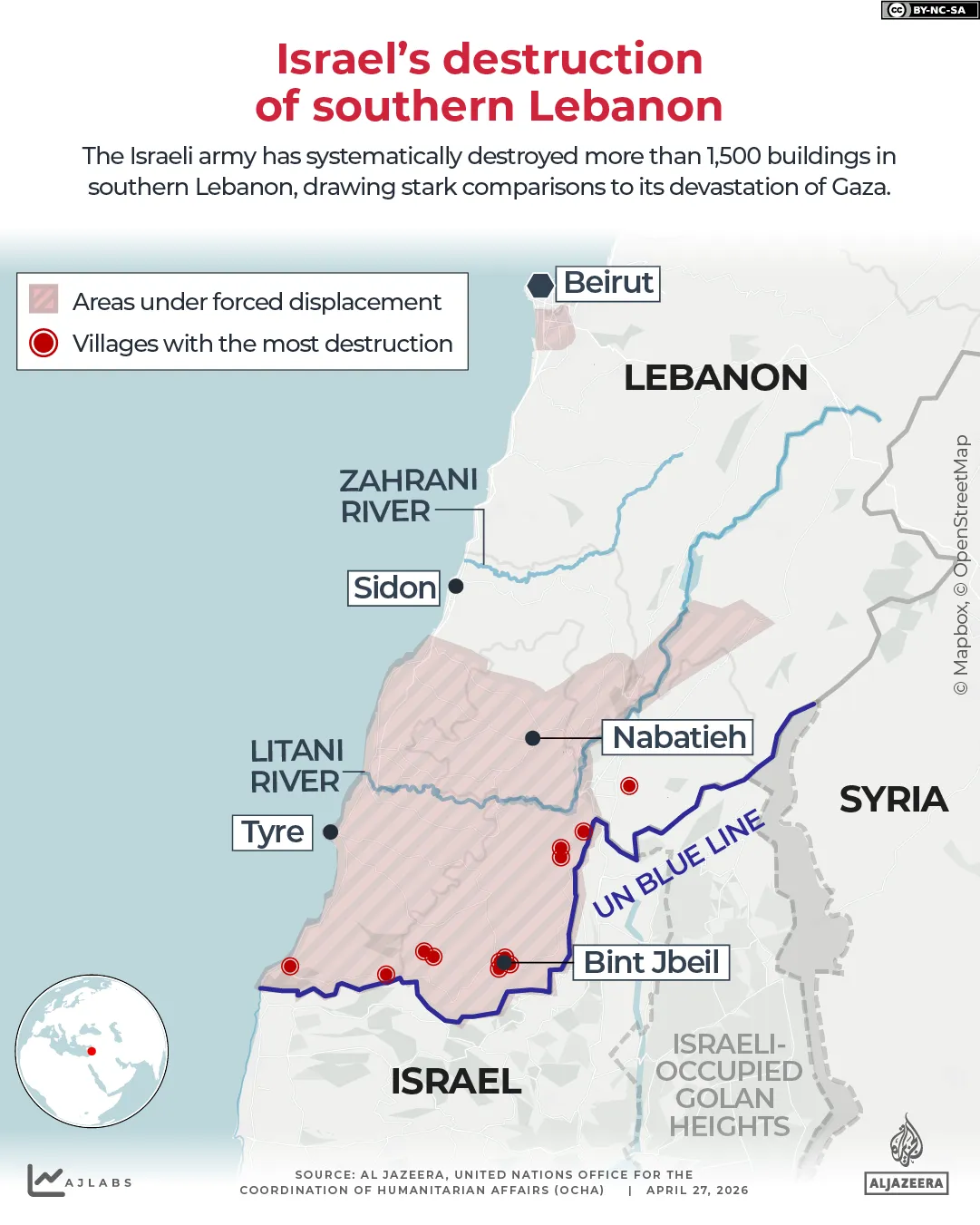
The Trump administration announcement comes just weeks after a previous agreement to cease hostilities was supposedly reached on April 16. Since then, however, more than 600 people have been killed in Israeli strikes across Lebanon while Israel has expanded its military presence in the south of the country, now occupying about one-fifth of the country.
The renewed diplomatic push also comes as Washington pursues parallel shuttle negotiations with Iran. Tehran, a close ally of Hezbollah, has made a ceasefire in Lebanon a condition for any broader agreement to end the war with the US and has repeatedly called for Israel to withdraw from southern Lebanon.
Iran’s position was underlined when Quds Force commander Esmail Qaani said the baseline demand in Lebanon is for Israeli forces to withdraw to the positions they held before the start of the US-Israel war on Iran at the end of February – a demand that is not explicitly reflected in the agreement.
Iran and Hezbollah’s responses to the US announcement, coupled with Israel’s insistence that military operations will continue, have cast serious doubt on its viability. Critics of Israel’s war on Lebanon also point to the April truce, which they say has completely failed to halt Israeli attacks or Israel’s occupation of the south of the country.
What has been announced?
According to the Trump administration, Israel and Lebanon have agreed to implement a ceasefire contingent on a “complete cessation” of Hezbollah fire and the evacuation of its fighters from the area south of the Litani River.
The agreement also calls for the creation of “pilot zones” where Lebanese Armed Forces would take exclusive control “to the exclusion of all non-state actors”. The stated aim is to move towards a wider political and security agreement, including the dismantling of non-state armed groups and preventing their re-emergence.
But Hezbollah was not party to the talks and has already rejected the agreement. Lebanon was represented by government diplomats, even though the Lebanese army is not a party to this conflict.
According to the wording of the agreement, the parties are due to reconvene during the week of June 22 to continue diplomatic and security talks, with the US facilitating communications in the meantime. It remains unclear if that stage of the agreement will ever be reached.
[Al Jazeera]
What was agreed in April?
The April agreement used different language, saying Israel and Lebanon would implement a “cessation of hostilities” from April 16, and never actually used the word ceasefire.
It also included a clause allowing Israel to “take all necessary measures in self-defence, at any time, against planned, imminent or ongoing attacks”.
That clause does not appear in the new text, which could be interpreted as a small concession. That was until Israel Katz said Israel would continue its military operations in Lebanon regardless.
The latest agreement also repeats Israel’s longstanding demand that Hezbollah withdraw from south of the Litani River.
Meanwhile, there is one major glaring omission. While the text focuses heavily on Hezbollah’s withdrawal from parts of southern Lebanon, it does not mention Israel’s withdrawal from southern Lebanon.
Lebanese journalist and analyst Souhayb Jawhar told Al Jazeera the agreement is defined as much by what it leaves out as by what it includes.
The text, he said, focuses on Hezbollah’s obligations and those of the Lebanese state: removing armed elements from south of the Litani and creating zones where the Lebanese army holds exclusive control.
“This point alone explains much of the scepticism within Hezbollah and its political environment,” Jawhar told Al Jazeera. “From the party’s perspective, any agreement should include a clear ceasefire, an Israeli withdrawal, and a framework for addressing outstanding issues, rather than becoming a document focused primarily on restructuring Lebanon’s internal security landscape.”
What else is different this time?
Other points of contention regarding the new agreement are the “pilot zones”, which appear to go beyond stopping the fighting and instead test a new security model in southern Lebanon – one that could eventually be expanded elsewhere, analysts say.
“This is why many observers see these zones as the beginning of a gradual transition from a security environment in which Hezbollah played the dominant role to one in which the Lebanese state and its armed forces become the sole security authority,” Jawhar said.
He added that the fate of the agreement may depend less on Lebanon-Israel talks than on the US-Iran track. If Washington and Tehran reach a wider understanding, the ceasefire in Lebanon will have a stronger chance of holding because both sides will have an interest in stabilising the Lebanese front.
“If those negotiations stall or collapse, Lebanon could quickly return to being one of the main arenas of pressure and confrontation between the two sides,” Jawhar added.
What is the situation in Lebanon now?
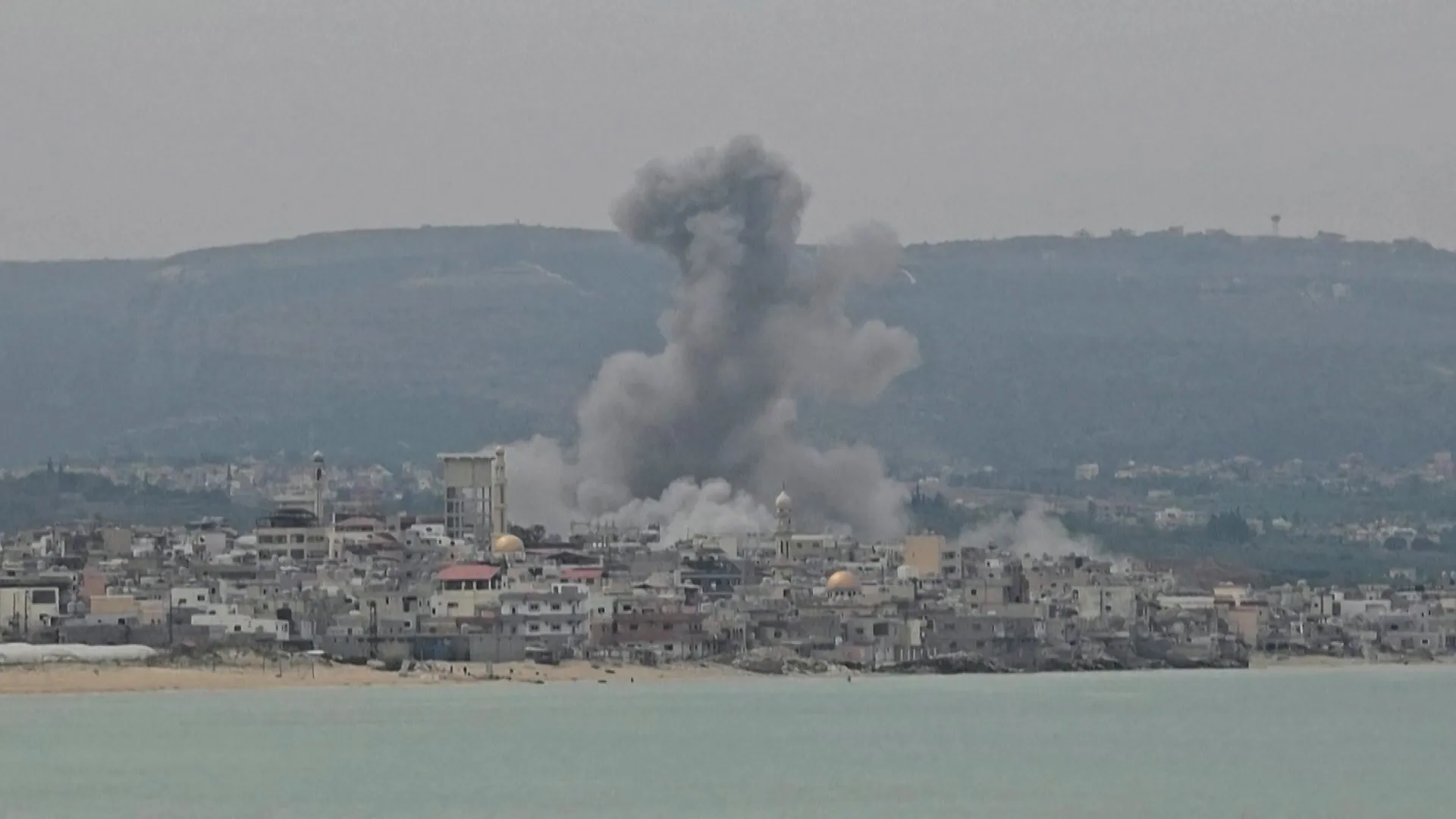
Southern Lebanon remained under heavy military pressure on Thursday, with Israeli strikes on Kafra and al-Mansouri in the southwest of the country. In the Bekaa Valley, one person was killed and four others wounded in an Israeli strike on Sohmor, according to Lebanon’s state-run National News Agency (NNA).
A separate strike hit Tell al-Aqareb, while further raids targeted Haddatha, Tibnin, Haris, and Harin. The NNA also reported more Israeli strikes across southern Lebanon as drones flew at low altitude over Beirut. In Maaroub, one person was killed and another wounded when Israeli forces targeted a motorcycle.
Israeli warplanes also struck towns and villages across the south, including Zawtar al-Sharqiya, Zawtar al-Gharbiya, Shoukin, Barachit, Srifa, Zibdin, Haris and Deir Zahrani. Jets and drones have also been flying over the south for much of the morning, including a drone seen at extremely low altitude over Tyre.
Lebanon’s Civil Defence authorities have warned people not to return south, citing the continued danger to civilian life in towns and villages across southern Lebanon.
More than 3,000 people have been killed, and more than one million have been forced from their homes since Israel renewed its assault on Lebanon in early March.
Weekly insights and analysis on the latest developments in military technology, strategy, and foreign policy.
U.S. Central Command (CENTCOM) Tuesday evening said “U.S. forces successfully defeated multiple Iranian ballistic missiles and drones” in attacks launched at allies Kuwait and Bahrain. Iran said the strikes were in response to U.S. attacks. This is yet another round of tit-for-tat strikes that have become something of regularity since the ceasefire deal was reached between the U.S. and Iran.
In a post on X, CENTCOM said “Iran launched several ballistic missiles toward regional neighbors; however, all failed to hit their intended targets. Two Iranian missiles fired at Kuwait fell short or broke apart enroute, and three missiles launched at Bahrain were immediately intercepted by U.S. and Bahrain air defense forces. Moments earlier, U.S. Central Command (CENTCOM) forces shot down three one-way attack drones launched by Iran toward civilian mariners that were rightfully transiting regional waters.”
Additional video showed what appears to be Patriot munitions fired to intercept Iranian missiles.
Footage of a PATRIOT SAM battery engaging incoming Iranian ballistic missiles over Kuwait this morning.
American forces “also conducted self-defense strikes on an Iranian military ground control station on Qeshm Island,” CENTCOM stated. “No U.S. personnel were harmed. CENTCOM forces remain vigilant and ready to defend against unwarranted Iranian aggression during the ongoing ceasefire.”
Kuwait officials say they came under ballistic missile attack, while explosions were reported in Bahrain.
“Kuwaiti air defenses are currently confronting hostile missile and drone attacks,” Kuwait’s Army stated on X. “The General Staff of the Army notes that if explosion sounds are heard, they are the result of air defense systems intercepting the hostile attacks. Everyone is requested to adhere to the security and safety instructions issued by the competent authorities.”
تتصدى حالياً الدفاعات الجوية الكويتية لهجمات صاروخية وطائرات مسيرة معادية.
تنوه رئاسة الأركان العامة للجيش أن أصوات الانفجارات إن سمعت فهي نتيجة اعتراض منظومات الدفاع الجوي للهجمات المعادية.
— KUWAIT ARMY – الجيش الكويتي (@KuwaitArmyGHQ) June 2, 2026
“The siren has been sounded,” Bahrain’s Interior Ministry stated on X. “Citizens and residents are urged to remain calm and head to the nearest safe place.”
The siren has been sounded .Citizens and residents are urged to remain calm and head to the nearest safe place.
— Ministry of Interior (@moi_bahrain) June 2, 2026
Iran said it launched retaliation strikes.
“Following the hostile actions of the U.S. in the Persian Gulf, the Strait of Hormuz, and Qeshm Island, American bases in Kuwait were hit,” the official Iranian IRIB news outlet claimed on X in a post that included video of what appears to be missiles landing.
Following the hostile actions of the U.S. in the Persian Gulf, the Strait of Hormuz, and Qeshm Island, American bases in Kuwait were hit. pic.twitter.com/iVGC0P1r3p
— IRIB (Islamic Republic of Iran Broadcasting) (@iribnews_irib) June 2, 2026
IRIB posted another video it claimed showed an air defense munition exploding in a civilian area. TWZ cannot independently confirm any of these claims.
🚨 BREAKING A U.S. defense missile in Kuwait that, after failing to intercept launched missiles, fell in a non-military area pic.twitter.com/pM4iDaiY6r
— IRIB (Islamic Republic of Iran Broadcasting) (@iribnews_irib) June 2, 2026
The Iranian news outlet also showed video of what it said were missiles flying over Bahrain.
Earlier on Tuesday, U.S. Central Command (CENTCOM) announced U.S. forces “disabled an unladen oil tanker that was attempting to sail toward an Iranian port on the Arabian Gulf.”
In a post on X, CENTCOM said it “enforced blockade measures against Botswana-flagged M/T Lexie as it transited international waters toward Kharg Island. The ship’s crew ignored repeated warnings, failing to comply with directions from U.S. forces multiple times over a 24-hour period.”
A U.S. aircraft “ultimately disabled the vessel by firing a Hellfire missile into the ship’s engine room, preventing the tanker from reaching Iran,” the command added.
You can see video of the Hellfire strike on the M/T Lexie below.
U.S. Central Command released footage from the strike with AGM-114 Hellfire air-to-ground missile against the Botswana-flagged M/T LEXIE unladen oil tanker in the Strait of Hormuz on June 2, 2026.
According to the U.S. military, the vessel attemped to break trough the American… pic.twitter.com/M93VkbArzn
— Status-6 (War & Military News) (@Archer83Able) June 2, 2026
Meanwhile, there are unconfirmed reports that Iran has also attacked Iraq as well. We have reached out to CENTCOM for more information and will update this story with any pertinent details provided.
BREAKING: Iran simultaneously carries out attacks on Bahrain, Kuwait and Iraq.
It isn’t clear who fired on who first that set off this chain of events. The U.S. has been responding to attacks on ships in the Strait of Hormuz area, including on U.S. Navy ships, with strikes like those described on Qeshm island, but we don’t know if that was exactly the case in this instance.
Israeli air strikes on southern Lebanon have continued, a day after US President Donald Trump said the ‘shooting’ would stop. Raids targeted areas across the Nabatieh district, causing destruction and leaving several people injured.
“Given the continuation of the Zionist regime’s crimes in Lebanon and considering that Lebanon was among the preconditions for the ceasefire, and now this ceasefire has been violated on all fronts including Lebanon, the Iranian negotiation team will stop ‘dialogues and text exchanges through intermediaries,’” the IRGC-affiliated Tasnim news agency stated on Monday. The two sides had been talking through mediators in Pakistan and Qatar.
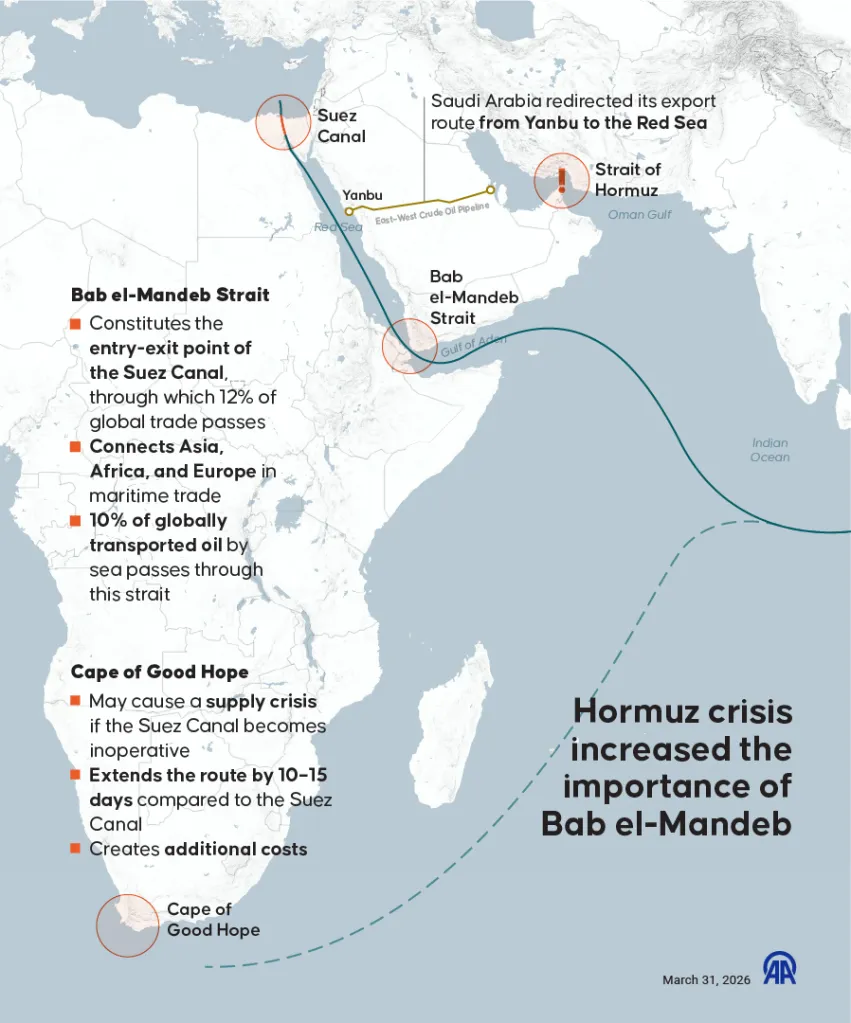
“Also, the resistance front and Iran have resolved to completely block the Strait of Hormuz and activate other fronts including the Bab al-Mandeb Strait, in order to punish the Zionists and their supporters,” the outlet added.
فوری | ایران تبادل پیام با آمریکا را در اعتراض به جنایات صهیونیستها متوقف میکند
عزم نیروهای مسلح ایران و تمام محورهای جبهه مقاومت برای واکنش به جنایات صهیونیستها و گشودن جبهههای جدید
— خبرگزاری تسنیم – خبر فوری (@Tasnimbrk) June 1, 2026
Iran has been allowing some ships to transit the Strait of Hormuz through what it calls a system of fees paid for environmental and other services. Meanwhile, U.S. Central Command (CENTCOM) has helped guide the passage of about 70 commercial vessels through the Strait of Hormuz, according to The New York Times. This involves communicating and coordinating with ships, not escorting them, CENTCOM told the publication. Most of these transits appear to be closer to Oman than Iran, the publication added.
There were no details provided by Iranian officials about how Iran would completely close the Strait of Hormuz or when such a move could begin.
According to the New York Times, citing U.S. officials, U.S. forces have guided approximately 70 commercial vessels, both ways, through the Strait of Hormuz in the last three weeks. Per the report, most of the vessels transited with their transponders off to avoid being targeted… pic.twitter.com/tfdN1YFeAp
Tasnim also did not offer specifics about Iran’s threat toward the Bab al-Mandeb Strait or what it could entail. However, the Houthi rebels of Yemen, an Iranian proxy group, waged a protracted 15-month campaign against shipping in that region starting in the fall of 2023. TWZ has previously highlighted concerns that the Houthis could resume these attacks on behalf of Iran in the current conflict. As we have noted, Houthi strikes in this area would add further global economic strain and place additional burden on U.S. forces.
With the Strait of Hormuz closed, Saudi Arabia is rerouting its oil exports through pipelines to the Red Sea. A disruption of that transit option could cause oil prices to rise much higher and more quickly than they already have, creating a cascading wave of financial impacts and shortages across the globe, and especially in Asia. Even if the Strait of Hormuz were opened today, it will still take months for the global economy to recover from the shock. Meanwhile, for Saudi Arabia, the simultaneous closure of both straits is a long-standing nightmare, a financial double-whammy.
(Illustration by Elif Acar/Anadolu via Getty Images) Anadolu
Just the recent news of the kinetic exchanges between the U.S. and Iran and Tehran’s decision to call off talks has sent the price of oil once again shooting upwards.
The ongoing closure of the Strait of Hormuz is having a cascading effect on the global economy, including rising gas prices. (Photo by Scott Olson/Getty Images) Scott Olson
Defending against renewed Houthi attacks could require military assets at a time when the U.S. is already heavily committed to Operation Epic Fury and its aftermath that has seen a significant amount of equipment destroyed or damaged and munitions expended. During the previous Houthi Red Sea campaign, the U.S. and allies deployed numerous warships, including the Eisenhower and Truman Carrier Strike Groups (CGS) to both defend against Houthi attacks and strike targets in Yemen. These operations resulted in a large expenditure of air defense and strike munitions, with Houthi capabilities remaining degraded, but intact after it was all over.
You can see video from some of those encounters below.
Strikes on Iranian-backed Houthi Targets by USS Gravely, USS Carney, and USS Dwight D. Eisenhower
Despite the widespread publicity over Tehran’s new positions, Trump told NBC News on Monday that he had not heard from Iranians that they were suspending talks. The president added that silence would be fine and he was willing to wait.
“I think we’ve been talking too much if you want to know the truth. I think going silent would be very good, and that could be for a long time,” the president proclaimed. “It doesn’t mean we’re going to go and start dropping bombs all over there. We’ll just go silent. We’ll keep the blockade.”
“I think I can wait as long as they want,” Trump continued. “They’re losing a fortune.”
Trump told NBC News that he has not heard from Iran on its decision to suspend talks, saying, “I think we’ve been talking too much. I think going silent would be very good. It doesn’t mean we’re going to go and start dropping bombs all over there. We’ll keep the blockade.” https://t.co/ncw1G1Tko7
— Ariel Oseran أريئل أوسيران (@ariel_oseran) June 1, 2026
Meanwhile, amid all this turbulence, the U.S.-Iran negotiations remain in limbo.
Early Monday morning, Trump took to social media to claim “Iran really wants to make a deal, and it will be a good one for the U.S.A. and those that are with us.”
Iran really wants to make a deal, and it will be a good one for the U.S.A. and those that are with us. But don’t the Dumocrats, and various seemingly unpatriotic Republicans, understand that it is MUCH tougher for me to properly do my job and negotiate, when political hacks keep… pic.twitter.com/aqE6G0UKGv
— Commentary Donald J Trump Truth Social Posts On X (@TrumpTruthOnX) June 1, 2026
Iranians have pushed back on the notion that they are eager for or close to making a deal. You can read more about the reported terms and scope of the talks in our previous reporting here.
The status of US-Iran talks remained unclear Monday after Trump said negotiations were continuing, while Iranian state media reported Tehran had suspended indirect talks. https://t.co/dvHIHHATnU
— The Jerusalem Post (@Jerusalem_Post) June 1, 2026
As we mentioned earlier in this story, even before Iran reportedly called off talks, there was a heightened state of tension as the U.S. and Iran exchanged a new round of blows.
In a statement on X, U.S. Central Command said that at about 7:30 a.m. Tehran time on Monday, “U.S. forces successfully intercepted two Iranian ballistic missiles targeting American forces based in Kuwait. These missiles were immediately defeated and no American personnel were harmed.”
The command added that it “remains vigilant and will continue to protect our forces from Iranian aggression while supporting the ongoing ceasefire.”
Last night at 11 p.m. ET, U.S. forces successfully intercepted two Iranian ballistic missiles targeting American forces based in Kuwait. These missiles were immediately defeated and no American personnel were harmed.
U.S. Central Command remains vigilant and will continue to…
The Kuwaiti Foreign Ministry “affirms the State of Kuwait’s reservation of its full right to take whatever measures are necessary to preserve its security and defend its territories, holding Iran fully responsible for these heinous aggressions, in accordance with international law, the United Nations Charter, and the relevant Security Council resolutions,” it stated on X.
بيان صادر عن وزارة الخارجية الاثنين 1 يونيو 2026
تُعرب وزارة الخارجية مجدداً عن إدانة واستنكار دولة الكويت، وبأشد العبارات، للهجمات الإيرانية الآثمة والمتكررة، لما تمثله من تصعيد خطير واعتداء مباشر على أمن دولة الكويت واستقرارها، وخرق فاضح لقواعد القانون الدولي وميثاق الأمم… pic.twitter.com/FsVqBu7phB
In a post on X late Sunday, CENTCOM said it “conducted self-defense strikes on Iranian radar and command and control sites for drones in Goruk, Iran and Qeshm Island this weekend. The measured and deliberate strikes occurred on Saturday and Sunday in response to aggressive Iranian actions that included the shootdown of a U.S. MQ-1 drone that was operating over international waters. U.S. fighter aircraft swiftly responded by eliminating Iranian air defenses, a ground control station, and two one-way attack drones that posed clear threats to ships transiting regional waters.”
“No American service members were harmed,” the command stated. “CENTCOM will continue to protect U.S. assets and interests in response to unwarranted Iranian aggression during the ongoing ceasefire.”
UPDATE: 5:43 PM EDT –
Netanyahu says “he spoke this evening with President Trump and told him that if Hezbollah does not stop firing at our cities and citizens – Israel will strike terrorist targets in Beirut,” according to the Israeli prime minister’s office. “This position of ours remains unchanged. Concurrently, the IDF will continue to operate as planned in southern Lebanon.”
Prime Minister Benjamin Netanyahu: “I spoke this evening with President Trump and told him that if Hezbollah does not stop firing at our cities and citizens – Israel will strike terrorist targets in Beirut.
This position of ours remain unchanged.
Concurrently, the IDF will…
— Prime Minister of Israel (@IsraeliPM) June 1, 2026
The conversation came after Trump claimed on Truth Social that: “I had a conversation with Bibi Netanyahu today, asking him not to go into a major raid of Beirut, Lebanon. He turned his Troops around. Thank you Bibi! I also had a conversation with Representatives of the Leaders of Hezbollah, and they agreed to stop shooting at Israel, and its soldiers. Likewise, Israel agreed to stop shooting at them. Let’s see how long that lasts — Hopefully it will be for ETERNITY.”
“I had a very productive call with Prime Minister Bibi Netanyahu, of Israel, and there will be no Troops going to Beirut… I had a very good call with Hezbollah, and they agreed that all shooting will stop.” – President Donald J. Trump 🇺🇸 pic.twitter.com/DJhysrmVnO
Meanwhile, Hezbollah continued firing on Israeli troops.
“Following the sirens that sounded a short while ago in the area of Metula, a launch was identified falling adjacent to IDF soldiers operating in southern Lebanon,” IDF stated on Telegram. “No injuries were reported.”
Other sirens heard in northern Israel, meanwhile, were determined to be false alarms, according to IDF.
BREAKING: Incoming rocket sirens sound in northern Israel, hours after Trump announced Hezbollah agreed to cease attacks on Israeli territory. pic.twitter.com/visWa1gVa4
— Ariel Oseran أريئل أوسيران (@ariel_oseran) June 1, 2026
UPDATES
As we noted earlier in our story, Iran is using the escalation of the Israeli-Hezbollah fight as a reason to walk away from peace talks, at least for now.
The move came after Israeli Prime Minister Benjamin Netanyahu on Monday ordered attacks on what he called “terror targets” in the Hezbollah stronghold of the Dahieh section of Beirut.
“Together with the Minister of Defense, I have instructed the IDF to strike terrorist targets in Beirut,” Netanyahu announced. “There will not be a situation in which Hezbollah attacks our cities and our citizens, and its terrorist headquarters in Beirut, in Dahiyeh, remains out of bounds.”
The Israeli leader added that “we are continuing to deepen our operational activity on the ground in southern Lebanon and are eliminating Hezbollah strongholds. Hezbollah is on the run. We are determined to restore security to the residents of the north, just as we did for the residents of the south.”
Prime Minister Benjamin Netanyahu: “Together with the Minister of Defense, I have instructed the IDF to strike terrorist targets in Beirut. There will not be a situation in which Hezbollah attacks our cities and our citizens, and its terrorist headquarters in Beirut, in Dahiyeh,… pic.twitter.com/g93PGk19aY
— Prime Minister of Israel (@IsraeliPM) June 1, 2026
Netanyahu’s statement followed Israel proclaiming that it is operating north of the Litani River, a traditional demarcation line for Israeli incursions into Lebanon. Advancing north of the river marks a large escalation and the first time Israel has been that far from its border since withdrawing from southern Lebanon in 2000.
Netanyahu claimed the latest battle over the ancient structure was a victory for Israel.
“The capture of Beaufort is a dramatic stage and a dramatic change in the policy we are leading,” Netanyahu postulated. “We have broken the barrier of fear. We are taking the initiative. We are operating on all fronts – in Syria, in Gaza, in Lebanon. We have established security zones beyond our borders to protect our communities.”
CENTCOM forces “observed M/V Lian Star transiting international waters toward an Iranian port on the Gulf of Oman and issued more than 20 warnings while informing the vessel it was in violation of the U.S. blockade” on May 29, the command stated. “A U.S. aircraft disabled the vessel by firing a Hellfire missile into the ship’s engine room after Lian Star’s crew failed to comply. The ship is no longer transiting to Iran.”
Since the blockade went into effect April 13, “U.S. forces have disabled five commercial vessels and redirected 116 to fully enforce the blockade as a ceasefire with Iran remains in effect,” CENTCOM added.
A U.S. military aircraft fired a Hellfire missile into a ship’s engine room to prevent it from breaking through the American blockade of Iranian ports. U.S. forces issued more than 20 warnings to the Gambia-flagged ship.
— Stars and Stripes (@starsandstripes) June 1, 2026
Further highlighting the ongoing danger to shipping in and around the Strait of Hormuz, a cargo vessel transiting the Gulf about 40 nautical miles southeast of Umm Qasr, Iraq, has been hit by an unknown projectile on its starboard side, causing a large explosion, the United Kingdom Maritime Trade Operations (UKMTO) reported on Monday.
UKMTO said it was unaware of any immediate environmental impact.
Since the launch of Epic Fury, UKMTO has received 53 reports of incidents affecting vessels operating in and around the Arabian Gulf, Strait of Hormuz (SOH), and Gulf of Oman. There have been 29 reported attacks, 22 reported suspicious activities and two reported hijackings.
Iran claims it produced a new fast attack speedboat for the Islamic Revolutionary Guard Corps Navy (IRGCN). Dubbed the Rajab 27th, the semi-official Iranian Mehr News Agency described the vessel as a “fast attack watercraft featuring a trimaran hull design, which enhances stability and maneuverability in challenging maritime conditions.”
Mehr also said that the Rajab 27th is “capable of launching two sea-based cruise missiles with a range of 700 kilometers.”
The vessel, stated Mehr, is designed to conduct operations in sea states with wave heights of up to nearly 10 feet, the outlet added.
The unveiling of the new speedboat “highlights the continued development of the IRGC Navy’s fast-attack and missile-equipped maritime capabilities, which play a key role in Iran’s naval defense strategy and operations in southern waters,” Mehr posited.
TWZ cannot independently verify the Iranian claim, though it should be noted that the IRGC has invested heavily in its fleet of small boats for decades as TWZ has explored in the past. In addition to being armed with anti-ship cruise missiles, as well as artillery rockets and other weapons, they can also be used to lay naval mines. While the president claimed that 159 Iranian ships have been destroyed, the IRGC still has a large number of these small vessels.
The images below, taken during the unveiling ceremony, show glimpses of the Rajab 27th with what appear to be a missile container on either side of the boat.
Iran also claims it has restored gas production at three offshore platforms in the South Pars gas field, the head of the Pars Oil and Gas Company has told state media. As we previously reported, the facility was attacked by Israel in March.
“Dehqani said production from the three platforms was being routed to other processing plants in the region while repairs continued at damaged facilities,” Al Jazeera noted.
Iran has restored gas production at three offshore platforms in the South Pars gas field that had been forced to halt output after Israeli attacks disrupted processing capacity at some onshore facilities, Iranian state media reports citing the chief executive of the Pars… pic.twitter.com/SGyTCRa2yH
— Al Arabiya English (@AlArabiya_Eng) May 31, 2026
The violence prompted 300 Mozambicans to return home by their own means over the weekend, with more than 500 still in the country now beginning the official repatriation process.
Published On 2 Jun 20262 Jun 2026
At least five Mozambican nationals have been killed in “xenophobic attacks” in South Africa over the weekend, the Mozambican government said, marking the first deaths officially linked to country-wide protests against undocumented immigration.
About 800 Mozambicans got caught up in violence that broke out in the southern coastal city of Mossel Bay on Friday, the government press office said in a statement received on Tuesday.
Recommended Stories
list of 3 itemsend of list
“Regrettably, seven Mozambican citizens have died, five of them as a direct consequence of the xenophobic attacks and the other two as a result of a road accident, when they were travelling in a private vehicle on their way back to Mozambique,” the statement said.
The violence prompted 300 Mozambicans to return home on Saturday, said the statement.
“The remaining just over 500 have since been sheltered in a safe location in the Western Cape Province, and as of today, 1 June, the process of their repatriation to Mozambique is already underway,” it said.
South African police said on Sunday they were investigating the deaths of two men at an informal settlement in Mossel Bay, a port town about 380km (236 miles) east of Cape Town, where xenophobic attacks had been reported.
They did not say whether the deaths were linked to the protests. It was also not immediately clear what nationalities the two men were.
But the area mayor, Dirk Kotze, voiced “deep concern and dismay at the current xenophobic attacks where people have been murdered, houses burned and families displaced”.
The region has seen anti-migrant protests similar to those reported in the financial capital Johannesburg, Durban and parts of the Eastern Cape province in recent weeks.
South Africa has faced recurring waves of xenophobic violence since 2008, when dozens of migrants were killed and thousands displaced in attacks across the country. Similar flare-ups occurred in 2015 and 2021.
The latest spike in anti-immigrant tensions comes as political parties seek support before local government elections in November.
Jerome Powell says the US central bank is undergoing a ‘stress test’ like other institutions in the current era.
Published On 1 Jun 20261 Jun 2026
Former US Federal Reserve Chair Jerome Powell has warned against the politicisation of monetary policy amid President Donald Trump’s repeated attacks on the independence of the central bank.
In a speech at an awards ceremony in Boston on Sunday, Powell said that the Fed had been undergoing a “stress test” like many other institutions in the Trump era.
Recommended Stories
list of 4 itemsend of list
Powell said the US Congress had “wisely” chosen to insulate the central bank from political pressure and that all other advanced economies had similar norms upholding the independence of monetary policy.
“These protections have served the public well, and administrations from both parties have respected them,” Powell said after accepting the 2026 John F Kennedy Profile in Courage Award.
“If any administration finds a way to remove Fed officials over policy differences, then future administrations will do so as well,” Powell said.
“The public would lose faith that the central bank will make decisions based only on what’s best for all Americans.”
Powell, who stepped down as the head of the central bank last month, said that the Fed’s credibility would be “lost” in such a scenario.
“That credibility enables the Fed to support a strong and stable economy for the benefit of American families and businesses,” he said.
“Our credibility has been built and sustained over many decades, and we have a duty to safeguard that priceless asset for our fellow citizens and for generations to come.”
Powell, who made the usual decision to stay on as one of the seven members of the Fed’s Board of Governors after stepping down as chair, also offered a broader defence of democratic institutions generally.
“Partisan political differences are normal – indeed essential – in a thriving democracy. But we ought to be united in our commitment to the higher principles that define our nation,” Powell said.
“Chief among them is respect for the rule of law. As John Adams wrote, ours is ‘a government of laws and not of men’. Our public institutions carry us forward through change. These institutions embody our commitment to freedom, democracy, and service of the public good.”
While Powell did not mention Trump by name, the US president has waged a sustained pressure campaign against the central bank for not heeding his demands to cut interest rates more sharply.
Trump repeatedly threatened Powell with dismissal during his tenure, while Trump appointee and ally Jeanine Pirro opened a short-lived criminal investigation into Powell’s congressional testimony about ongoing renovation works at the Fed’s headquarters.
Trump also ordered the removal of Fed governor Lisa Cook over unproven claims of mortgage fraud, though the Supreme Court has ruled that she can remain in her position while it considers a legal challenge against her firing.
Under the Federal Reserve Act, the US president must demonstrate “cause”, widely interpreted to mean malfeasance, to remove any of the Federal Reserve’s governors.
The John F Kennedy Profile in Courage Award was created in 1989 to honour those who demonstrate courage in public service without regard to professional or personal consequences.
Past winners of the award, which is named after Kennedy’s Pulitzer-winning book Profiles in Courage, include former US President Barack Obama, then-Ukrainian President Viktor Yushchenko, and then-UN Secretary-General Kofi Annan.
Videos on social media show people on a beach in northern Israel running for shelter as Hezbollah rockets are launched towards the region, according to Israeli media. It was the first barrage fired from Lebanon towards Nahariya in three weeks.
Geopolitical analyst Joe Macaron says the Lebanese army is ‘overly stretched’ as Israeli troops expand their occupation of Lebanese territory. The Israeli army has pushed north of Lebanon’s Litani River and appears poised to encircle the major city of Nabatieh.
Israel’s military has advanced beyond Lebanon’s Litani River for the first time since 2006.
Israel’s military has advanced beyond the Litani River in southern Lebanon for the first time since 2006 and appear poised to encircle the major city of Nabatieh.
Senior Lebanese military sources on Saturday told the Turkish state news agency Anadolu that Israeli forces had crossed the Litani River, which Israel has declared the perimeter of its unofficial buffer zone.
Recommended Stories
list of 3 itemsend of list
Israeli forces are now on the outskirts of Nabatieh, a city that is key to southern Lebanon’s economy and a cultural hub for the region. If the Shia-majority city were to fall, it would mark a significant development in the war on Lebanon, which began in October 2023 and subsequent official ceasefire.
Nabatieh is viewed by many Lebanese as a symbol of resistance due to its historic role on the frontline of Israeli assaults.
Reporting from the southern city of Tyre, Al Jazeera’s Obaida Hitto said Israel was expanding its air campaign in southern Lebanon and encircling Nabatieh in preparation for a potential assault on the city.
“It looks like Israel is trying to make this final push to encircle Nabatieh, breaking through the second and third lines of defence of Hezbollah and isolating the western Bekaa Valley from the south of the country,” Hitto said.
Israel has issued evacuation orders for at least 10 villages in southern Lebanon, as it expands its invasion, despite being engaged in ongoing peace talks with Lebanese officials.
The Israeli army’s Arabic spokesperson, Avichay Adraee, instructed residents in several Lebanese villages to evacuate immediately, warning they could be killed if they remained.
The order came the day after officials from both countries met in Washington to discuss a permanent end to the war. It began in early March when Iran-backed Hezbollah began attacking Israel following the assassination of Iran’s Supreme Leader, Ali Khamenei.
Hitto said people fleeing their homes have few options, with more than 20 percent of the population — around 1.2 million people — displaced by fighting.
“Those options are turning into basically people living with relatives if they have that option, or people living in makeshift camps in public parks and public spaces. I’ve seen many families living in their vehicles for long periods of time,” Hitto said.
“Some of these families have been continuously displaced since 2023,” Hitto added.
The latest forced displacement orders are a further test to the nominal “ceasefire” in place since mid-April and repeatedly violated by Israel. It justifies its actions by saying it is targeting Hezbollah as part of efforts to disarm the group.
On Friday, at least 14 people were killed in Israeli air raids in southern Lebanon.
Lebanese officials are working to disarm Hezbollah, but the task has proved extremely difficult.
Lebanese and Israeli officials are currently engaged in negotiations to end the war, marking the first time the two sides have spoken directly in decades.
The talks are being facilitated by the United States, and a new round is expected in Washington next week.
Lebanon’s President, Joseph Aoun, held talks with Prime Minister Nawaf Salam on Saturday to discuss the security situation and ongoing negotiations with Israel. According to the state-run National News Agency, they agreed to intensify efforts to end the war, which has triggered a humanitarian crisis.
Aoun also spoke by phone with US Secretary of State Marco Rubio and stressed the importance of Israel respecting the current ceasefire.
Ukrainian President Volodymyr Zelensky warned citizens of his country that Russia is planning an attack, based on their intelligence reports, and to hunker down on Friday night. File Photo by Aaron Schwartz/UPI | License Photo
May 29 (UPI) —Ukraine on Friday evening said that it expects Russia to launch ‘big attacks’ against it sometime on Friday or Saturday, and warned its citizens to take cover.
Ukrainian President Volodymir Zelynsky told CBS News on Friday evening that it expects Russia to launch new attacks at the country in the next 24 to 48 hours, and advised his citizens to take cover.
“Our people have to be very, very careful, cautious and children – they have to use bomb shelters,” he told the news organization.
“Today, at night or tomorrow night, high percent – of course, nobody knows 100% – but there is high percent,” he said.
Russia on Friday evening already launched missiles toward Ukraine, with explosions reported in Kyiv and nearby regions, among other parts of the country, The Kyiv Post reported.
“We have intel that Russia is preparing a new massive attack,” Zelensky said in the post.
“Please pay attention to air raid alerts and stay safe,” he said.
The warnings follow an alleged drone hitting the roof of an apartment building in Romania, which was reportedly aimed at nearby location in Ukraine, which is neighbors the country.
Secretary of State Marco Rubio and President Donald Trump participate in a Cabinet meeting in the Cabinet Room of the White House on Wednesday. Photo by Samuel Corum/UPI | License Photo
The top candidates for California governor crisscrossed the state Friday, all venturing to friendly political territory to woo voters and undermine their rivals as the June 2 primary election fast approaches.
The top Republican in the race, former Fox News host Steve Hilton, spent the day railing against transgender athletes before a high school track event in the Central Valley, an event sure to appeal to his base of President Trump supporters.
The front-running Democrats, former Biden administration Cabinet member Xavier Becerra and billionaire environmentalist Tom Steyer, rallied one of their party’s most influential constituencies: union members.
While both stuck with mostly an upbeat message and reiterated promises to lift up Californians struggling to make ends meet, Steyer afterward accused Becerra of being “a corporate Democrat who’s taking money from all these big corporations” who “doesn’t want to change things.”
Steyer’s had good reason to go after Becerra.
A new poll from the UC Berkeley Institute of Governmental Studies and co-sponsored by the Los Angeles Times showed Becerra leading the race with 25% support from likely voters, followed by Hilton at 21% and Steyer within striking distance at 19%. The two candidates who finish in first and second place in the primary will advance to the November general election, leaving the third-place finisher on the sideline.
Though he told reporters Friday morning that “I don’t pay attention to polls,” Steyer was energetic at a Northern California campaign event, where he held a private meeting with leaders of a union representing long-term caregivers. In brief remarks at the offices of SEIU Local 2015, Steyer described the race as a choice between a billionaire champion of working people and the corporate-backed Becerra.
“Does California work for Californians or does California work for corporations? The corporations think it works for them. They want it to continue to work for them and they’re putting up tens of millions of dollars to make sure they continue to make record profits,” he told dozens of home-care workers, teachers, construction workers and nurses at the West Sacramento gathering.
Groups including PG&E, the California Assn. of Realtors and the California Chamber of Commerce have spent more than $34 million opposing Steyer’s candidacy. The former hedge fund manager has pledged to lower energy bills by breaking up large electric utility monopolies.
As a billionaire who has so far poured $216 million of his own money into his gubernatorial campaign, Steyer has faced skepticism from some left-wing and working-class voters. But he is endorsed by progressives, including Rep. Ro Khanna (D-San Jose), and unions including the California Nurses Assn. and both major teachers unions.
“I voted for Tom. I was looking for a change,” said Alvenia Scott, a union board member who works as an in-home caregiver to her disabled sister.
“He really has some good ideas,” she said, adding that she had more qualms about Steyer’s lack of government experience than his wealth. “He made his way in life, more power to him.”
Hundreds of miles south in the Inland Empire, Becerra pledged to be on the side of unions if he is elected governor and urged voters to turn in their ballots in what has so far been a remarkably low-turnout election.
“I am with you. When I become governor and I sit behind that desk, you’ll have a union man sitting at that desk,” Becerra told about 500 people at the United Food and Commercial Workers hall in Bloomington.
He asked the crowd if they had cast their ballots and noted that not everyone raised their hand.
“Less than one in five Californians have actually cast their vote so far. We got to get that number way, way up,” he said, arguing that the election is about “sending a message all across the country that California will be counted, that California cannot be neglected, and that California will not take a knee to anyone in Washington, D.C.”
Only 12% of the state’s registered voters have cast ballots as of Thursday evening, according to the election tracking firm Political Data Inc.
Community college counselor Diego Rodriguez, 32, said he decided to vote for Becerra in recent weeks after seeing the former U.S. Health and Human Services secretary’s momentum in the race and researching his record.
“Also just his story. As someone who works in higher education, and seeing how Xavier, being first-generation, has benefited from higher education, and how he advocates for higher education,” the Rialto resident said. “Additionally, today, him being here at a labor union and advocating for the working class and labor, I think, is very important.”
“I think that people became aware of him more because of that,” Rodriguez said. “There was a lot of conversation online regarding that, but I think it allowed the spotlight to be brought onto him and it made people aware of his record.”
At a campaign stop in Clovis in the central part of the state, Hilton marveled that his campaign had spent only about $2 million in campaign advertising but was still polling above Steyer, according to the latest Berkeley IGS survey.
“We’re feeling confident,” said Hilton, standing in a suburban stretch of the city. Still, he warned that voters need to get out to support him and avoid a “complete disaster for California” of two Democrats advancing to the November election.
Hilton, who was endorsed by Trump in April, joined other politicians and leaders in Clovis in opposing trans athletes from competing at the 2026 CIF State Track & Field Championships.
The group met near where the championship events were scheduled to take place this weekend.
Asked why he was focusing on sports and gender in the final days of the race, Hilton said it’s “one of the main issues” that come up at town halls. If elected, he said he would seek to overturn the state’s 13-year-old law that allows students to participate in school activities and use facilities such as bathrooms based on their gender identity.
Hilton argues the law violates the state Constitution and will “suspend” it while he initiates legal proceedings to overturn it.
He also praised Spencer Pratt, a Republican and former reality TV star who is running for Los Angeles mayor, saying his candidacy has brought “excitement and energy” to the state’s primary election.
“For a long time in California, there’s been this sense that it’s all inevitable — there’s nothing you can do, Democrats run this place, just the way it is,” Hilton said. “I think that that’s changing. I think there’s this sense that something’s happening.”
Israeli Prime Minister Benjamin Netanyahu said Israeli forces had crossed the Litani River in southern Lebanon and were operating in Beirut and the Bekaa Valley, in what he described as a “tactical victory”. This comes after Netanyahu said he ordered the Israeli military to take control of 70% of the Gaza Strip.