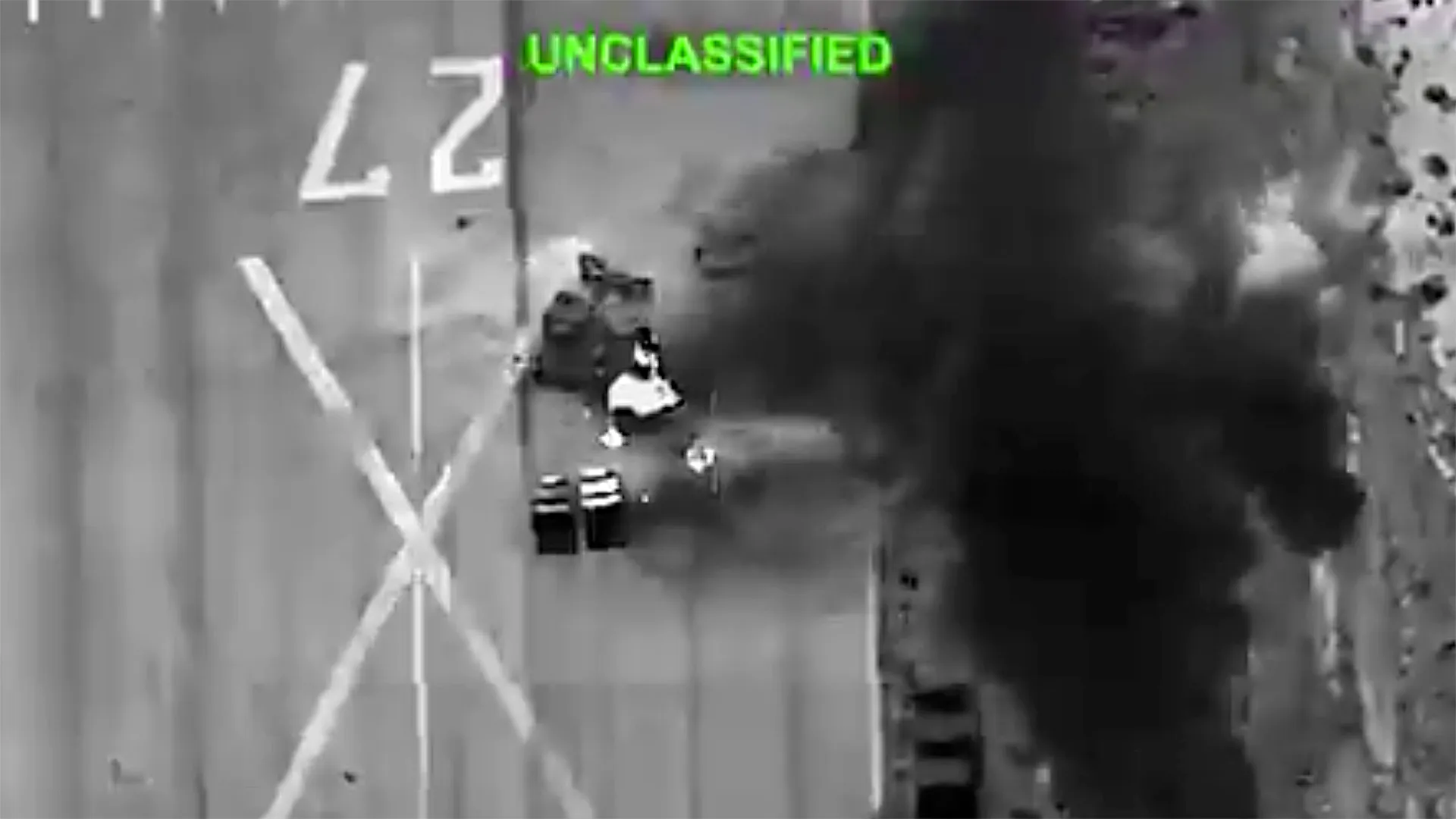
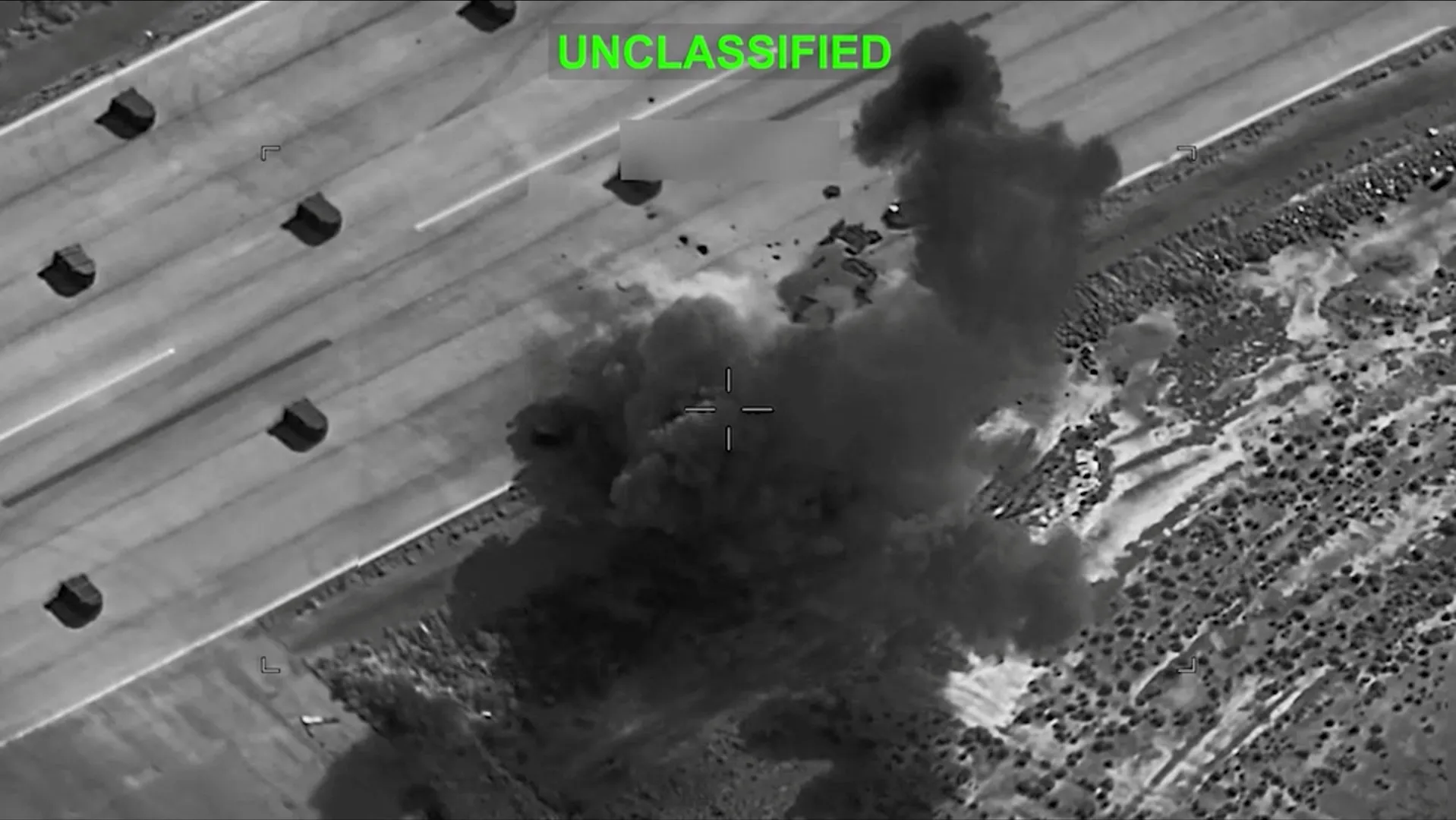
The United States has attacked Iran for a ninth consecutive night after the US military’s Central Command (CENTCOM) announced a US soldier had died in northern Iraq in a controlled detonation of unexploded ordnance from a downed Iranian drone.
Here is what happened over Sunday night and Monday morning and what officials on both sides have said:
Where was Iran attacked?
CENTCOM announced in a statement on X that it completed the ninth wave of attacks against Iran at 02:00 GMT on Monday.
It said it “targeted Iranian military command centers, air defense and coastal surveillance sites, maritime capabilities, missile and drone launch sites, and communications networks to further diminish Iran’s ability to attack commercial vessels and civilian mariners transiting the Strait of Hormuz”.
The US military did not provide details about the actual sites hit in Iran.
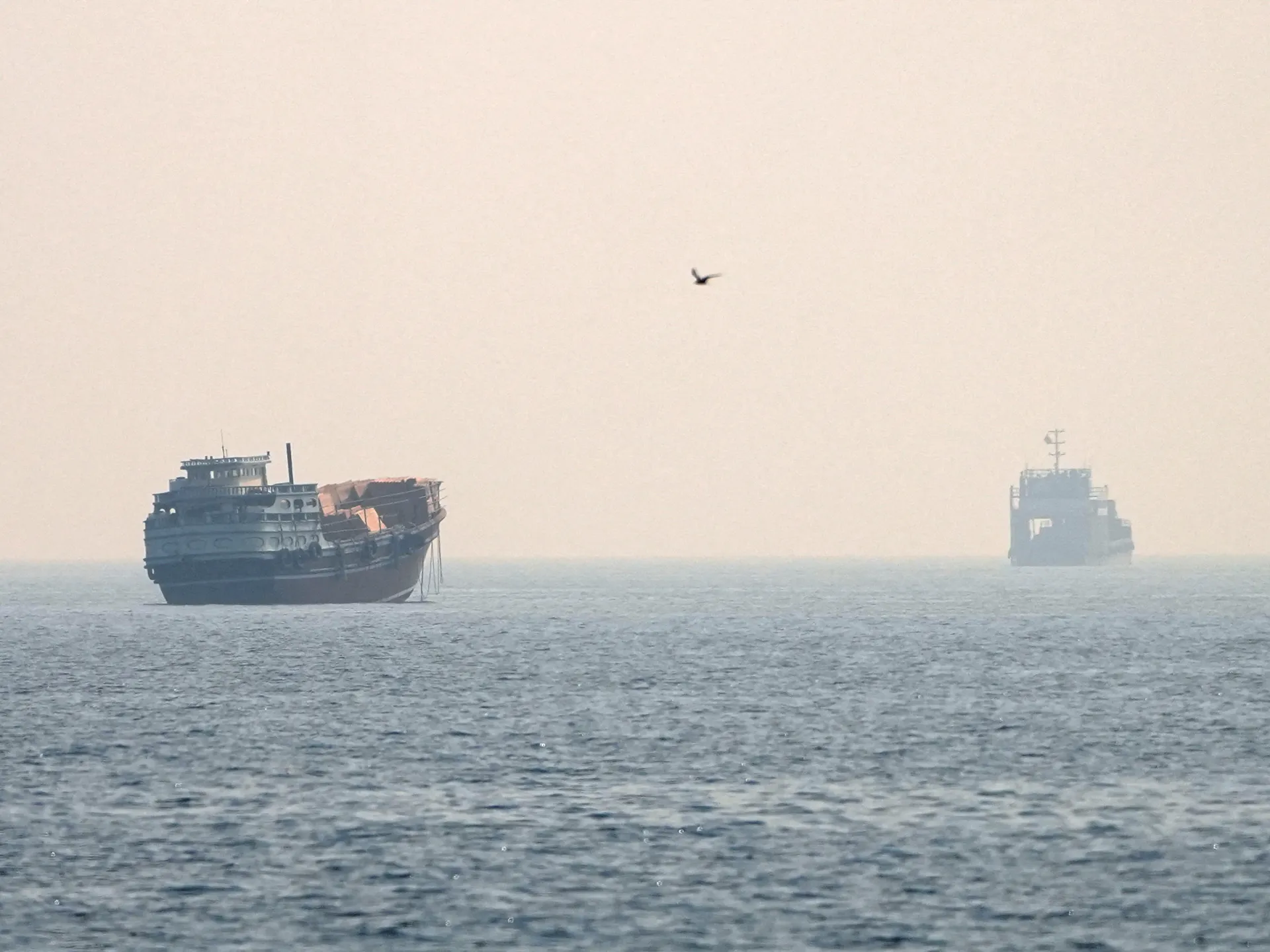
Iran’s Islamic Revolutionary Guard Corps (IRGC) said two oil tankers “exploded” and were halted in the southern Strait of Hormuz late on Sunday, according to a report by the semiofficial Tasnim News Agency on Monday.
The IRGC stated the vessels were trying to transit through the strategic waterway under what it described as US coercion.
“This passage is unsafe for the transport of chemical fertiliser or even a single drop of oil and gas,” the group warned, adding that the corridor would remain unsafe as long as US military operations in the region continue.
An MQ-9 drone was intercepted and shot down over Eslamabad-e Gharb in western Iran’s Kermanshah province, according to the Mehr News Agency on Monday.
Mehr said the drone was targeted by an advanced air defence system operated by the IRGC aerospace force.
Iran’s semiofficial Tasnim News Agency reported on Monday that US strikes targeted an area in the town of Khormoj in southwestern Iran. It quoted a local official.
Where did Iran strike, and where were warnings issued?
Jordan: The IRGC said on Monday that it launched ballistic missiles at US C-17 transport planes and P-8 aircraft at Aqaba airport, claiming several were heavily damaged. In a statement carried by the state-controlled IRIB broadcaster, the IRGC also said 20 hangars housing US forces in the Muwaffaq Salti Air Base in Azraq were destroyed.
Bahrain: The US embassy in Bahrain said it has information suggesting Iran may seek to target unspecified locations in central Manama. It urged Americans to remain vigilant, follow instructions from local authorities and immediately seek shelter if warning sirens sound or explosions are heard.
US soldier in Iraq: A US service member was killed in northern Iraq on Saturday during the controlled detonation of unexploded ordnance from an Iranian drone, CENTCOM said.
What happened in the Strait of Hormuz?
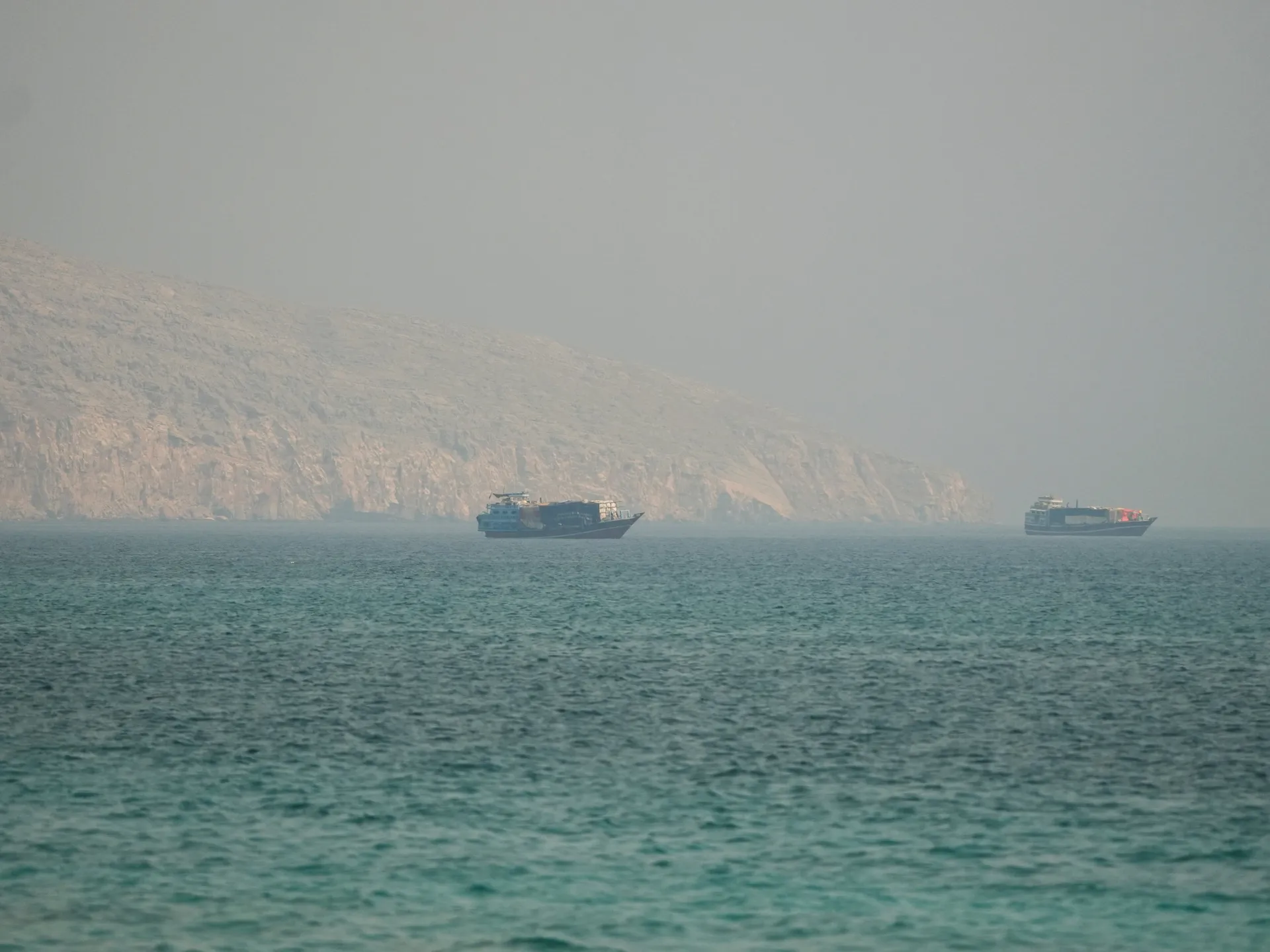
The United Kingdom Maritime Trade Operations (UKMTO) agency reported late on Sunday that a vessel about 8 nautical miles (15km) northwest of Kumzar, Oman, had caught fire.
It is unclear whether this happened due to an attack by Iran. The UKMTO said the cause of the fire had not been verified and advised vessels in the area to transit with caution and report any suspicious activity while authorities investigate.
What have Iranian and American leaders said?
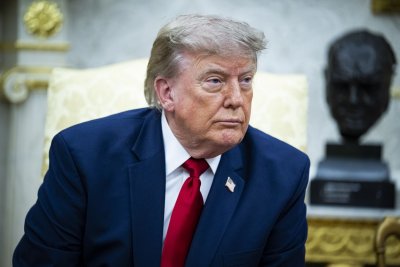
US President Donald Trump said on Sunday that the US is hitting Iran to honour American service members who have been killed.
“We hit them very hard again tonight, and we did that in honour of the, probably three, it’s probably three great patriots,” Trump told reporters as he returned to Washington, DC, after the World Cup final in New Jersey. At least two US soldiers were killed in Jordan last week after Iranian missiles struck a US base there, and the third soldier Trump referred to was killed in Iraq during the detonation of the Iranian drone.
“We feel very badly,” he said when asked about the military fatalities, adding that those who died were fighting so “Iran cannot have a nuclear weapon.”
Iranian Foreign Minister Abbas Araghchi said in an interview with state media that Tehran would end the war with the US when it had “the upper hand in the field”, local news reported on Monday.
Talking with the IRNA news agency, Araghchi said the most critical decision in crisis management was identifying the precise moment to halt hostilities and begin negotiations.
“The end of the war is possible either through absolute military victory or through negotiations. The right time to negotiate is precisely when you have achieved a reliable field and strategic achievement on the military front,” Araghchi said.
“You cannot take risks with the lives of the people and the fate of the entire country. Decisions must be made based on accurate and complete calculations,” Araghchi said.
Mojtaba Khamenei says Trump’s signature is ‘worthless’ and that ‘bullying’ is a core element of US foreign policy.
Published On 18 Jul 202618 Jul 2026
Iran’s supreme leader has warned that the United States will suffer “unforgettable lessons” at the hands of Tehran and its regional allies, accusing the US of repeatedly violating the memorandum of understanding (MoU) between the two countries.
A written statement attributed to Mojtaba Khamenei was read out on state television on Saturday, in which the supreme leader said Washington’s breaches of last month’s MoU showed that President Donald Trump’s signature was “utterly worthless and invalid”.
Recommended Stories
list of 3 itemsend of list
“The repeated breach of agreements by the Great Satan vis-a-vis the accord has once again proven to all that the signature of the President of America is now utterly worthless and invalid, and that bullying, hegemonism and savagery are inseparable components of the American creed and doctrine,” the statement read.
“Now that the American enemy is seeking to foment war and suffer heavier costs and further humiliation, it should know that the dear nation of Iran and the Resistance Front hold unforgettable lessons for it,” it added.
The US dramatically escalated its attacks on Iran this week by targeting civilian infrastructure, including bridges, railway lines and water desalination plants.
Tehran has responded by successfully striking civilian infrastructure in Kuwait, with authorities there urging everyone to ration electricity.
The US-Israeli war on Iran, which began in February, is seen as existential by the country’s senior leadership.
Tehran has shown no sign of caving to the increasing demands from the Trump administration, as regional countries continue to push for an end to the conflict behind the scenes.
Khamenei said the US has “revealed its true face,” exposing its “deceitfulness, irrationality, unreliability and wickedness”.
He called on Iranians to trust the leadership to protect the country, urging people to remain “vigilant” and “active” as the fighting grinds on.
Reports have surfaced in recent days that the Houthis in Yemen could close the Bab al-Mandeb gateway to the Red Sea in support of their crucial ally Iran. That would further destabilise global energy markets, increase inflation and apply additional pressure on Trump to halt attacks.
The war is deeply unpopular in the US and has inflicted economic harm on Americans.
The MoU mediated by Qatar and Pakistan and signed last month aimed to create the conditions to bring the war to a permanent end.
However, Tehran and Washington have since declared the accord “over” after accusing each other of violating it.
Weekly insights and analysis on the latest developments in military technology, strategy, and foreign policy.
U.S. Central Command (CENTCOM) on Wednesday unleashed a new wave of strikes on Iranian targets. The attacks, on Iran’s Greater Tunb Island, came as the newly restored blockade on Iranian ports entered its first full day and the command began ordering ships headed to Iran to turn around. Meanwhile, Iran claims it damaged several U.S. military facilities in new rounds of missile and drone attacks in the region.
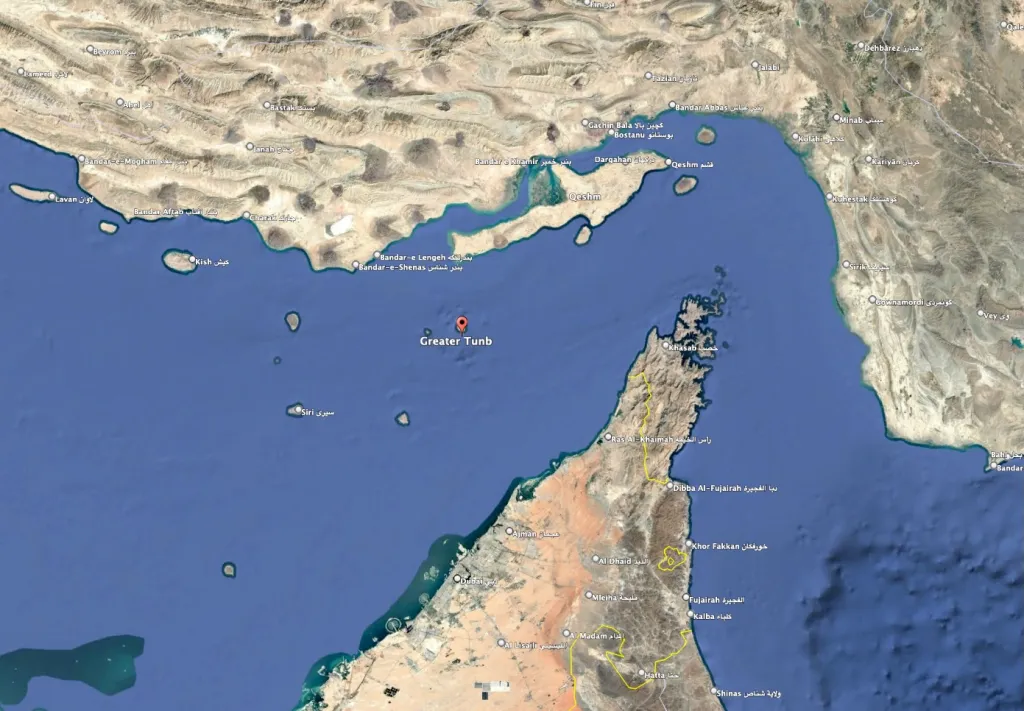
“CENTCOM launched precision munitions against coastal defense systems and cruise missile storage and launch sites on Greater Tunb Island during the 90-minute wave,” the command stated on X. “The strikes further degraded Iran’s ability to attack commercial shipping in the Strait of Hormuz.” The island, located at the western mouth of the Strait, sits about 30 miles south of the Iranian coast and about 50 miles northwest of the United Arab Emirates (UAE), which also lays claim to it, along with the Abu Musa and Lesser Tunb islands that Iran seized in 1971.
US Central Command carried out a 90-minute wave of strikes against coastal defense systems and cruise missile storage and launch sites on Greater Tunb Island on Wednesday, further degrading Iran’s ability to attack commercial shipping in the Strait of Hormuz, CENTCOM said. pic.twitter.com/8GpPtZKAIW
— Iran International English (@IranIntl_En) July 15, 2026
Greater Tunb Island was a frequent target during Operation Epic Fury. A little more than two miles across at its widest point, it hosts a “vast network of underground bunkers,” created by the Islamic Revolutionary Guard Corps (IRGC), according to the Israeli Alma Research and Education Center think tank. “These underground facilities are believed to be storing anti-ship missiles and other weapons threatening freedom of navigation and commerce through the Strait of Hormuz.”
Greater Tunb Island. (Google Earth)
In a subsequent X post, CENTCOM stated that since “restarting the naval blockade against Iranian ports 17 hours ago, U.S. forces have redirected 2 commercial vessels attempting to run the blockade. The U.S. military remains vigilant and prepared to ensure full compliance.”
Since restarting the naval blockade against Iranian ports 17 hours ago, U.S. forces have redirected 2 commercial vessels attempting to run the blockade. The U.S. military remains vigilant and prepared to ensure full compliance. pic.twitter.com/E00JAlmBua
In its announcement on Tuesday that the blockade had been reimposed, CENTCOM stated that there are “currently more than 20 U.S. Navy warships and hundreds of military aircraft operating across the Middle East. American forces remain vigilant, lethal, and ready.”
U.S. forces resumed the naval blockade against vessels transiting to and from Iranian ports and coastal areas today at 4 p.m. ET.
There are currently more than 20 U.S. Navy warships and hundreds of military aircraft operating across the Middle East. American forces remain… pic.twitter.com/ATRJHlLQNo
Control over the Strait has been at the center of most of the flare-ups of violence that have taken place after a shaky ceasefire was agreed to by the U.S. and Iran on April 8. They’ve often involved Iranian attacks on commercial shipping in the Strait followed by U.S. kinetic responses. However, these kinetic encounters have been intensifying over the past five days, leading President Donald Trump to order the resumption of the naval blockade on Iranian ports. It went into effect at 11:30 PM local time on Tuesday.
President Trump on the blockade on the Hormuz Strait: “I don’t think anybody should be able to charge a fee for the Strait or for any other Strait-relationship in terms of other sections of the world… but we were doing it as a reimbursement.” pic.twitter.com/ZNAdSa7wSl
As we have frequently noted, the blockade was lifted on June 17 when the U.S. and Iran signed a 14-point Memorandum of Understanding (MoU). The MoU provided a 60-day extension of the ceasefire to iron out an agreement to end fighting throughout the region, including Lebanon, prevent Iran from seeking nuclear weapons, end U.S. sanctions and resume the flow of traffic through the Strait of Hormuz, among other points.
Iran, as we noted earlier in this story, said it carried out a number of retaliatory strikes on Kuwait, Bahrain and Jordan as it has over the past five days. All three nations host an array of U.S. military facilities.
The Iranian Army’s public relations office said it “launched a seventh wave of drone strikes on U.S. bases in the region on Wednesday, targeting F-18 facilities and support infrastructure at al-Azraq in Jordan,” Iran’s official Mehr news outlet stated on Wednesday. The strikes “were part of ‘Operation Thunderbolt’ and followed six earlier waves of drone attacks on U.S. positions since the American violation of the ceasefire and the start of ‘brutal attacks’ on Iranian territory.”
The Iranian army launched a seventh wave of drone strikes on U.S. bases in the region on Wednesday, targeting F-18 facilities and support infrastructure at al-Azraq in Jordan.https://t.co/hpqsv0WImA
TWZ cannot independently confirm Iran’s claims and CENTCOM declined comment.
“Jordan’s military intercepted three Iranian missiles,” The New York Times reported, citing a statement carried by the official Petra news agency. “The Kuwait Army said earlier that its air defenses were intercepting hostile targets, while Bahrain’s interior ministry said warning sirens had been activated. None of the countries have reported damage or casualties from strikes on Wednesday.”
However, images and videos have emerged online purporting to show damage at several installations in the wake of Iranian attacks over the past several days.
The following post on X uses satellite imagery from Iranian state media to claim damage to an anti-drone radar system at Prince Hassan Air Base in Jordan; however, its low resolution makes it hard to confirm that claim.
Video shared on social media and verified by The New York Timesshowed an Iranian drone hitting the area surrounding an already burning warehouse in Kuwait late on Tuesday night local time.
“The IRGC claimed that the warehouse in Mina Abdulla was a logistics and supply hub for U.S. forces in the region,” the publication noted.
Iranian officials also claimed that “seven members of the 388th Iranshahr Brigade, including permanent personnel and conscripts, were killed during a U.S. strike on one of the Iranian Army Ground Force bases in Bampur early on Wednesday,” according to the IRGC-connected Tasnim news outlet.
Located in southern Iran, Bampur is about 120 miles north of the Gulf of Oman. TWZ cannot verify these claims either.
Seven personnel of Iran’s Army Ground Force were martyred after the US military launched a missile attack on an Army base in Bampur, in the southeastern province of Sistan and Baluchestan, the Army said, vowing a decisive response to the “heinous crime.”https://t.co/v8v7DwAps3pic.twitter.com/kED98QGljV
This latest wave of strikes came after Trump on Tuesday warned that the U.S. would strike bridges and power plants in Iran “next week” unless Tehran returns to the negotiating table.
“We’re going to hit them very hard tomorrow night,” Trump proclaimed in an interview with Fox News. “We’re going to hit them very hard the night after, and then next week it gets really bad for them, because next week comes the power plants. Next week comes the bridges. We’re going to knock out all their power plants. We’re going to knock out all their bridges unless they get to the table and negotiate.”
PRESIDENT TRUMP: “Ultimately, we’ll hit energy targets in Iran. Next week comes the bridges. We’re going to knock out all of their power plants. We’ll knock out all of their bridges unless they get to the table and negotiate” pic.twitter.com/CwbiDxHcwx
The U.S. leader also rescinded his threat to impose a 20% toll on Strait of Hormuz transits.
“I was called by different people, different countries, kings and emirs,” Trump said Tuesday, shortly after announcing the fee reversal. “And they’ve said, ‘We’d love to do it a different way. We’d love to invest in the United States with billions and billions of dollars. I like that actually because I don’t think anybody should be able to charge a fee for the Strait or for any other strait.”
President Trump said Tuesday he changed his mind on charging 20% Strait of Hormuz cargo fees after many countries called him.
“I was called by different people, different countries, kings and emirs,” Trump said shortly after announcing the fee reversal. “And they’ve said, ‘We’d… pic.twitter.com/8IaHfltzKT
Pickaxe Mountain is Iran’s hardest-to-reach facility and Trump saying he may take a “shot right in the front door” wasn’t likely just small talk.https://t.co/SsDnvtAGXZ
Iranian officials on Wednesday reacted to Trump’s statement about attacks on bridges and power plants, saying that: “Wherever the Americans strike, our Armed Forces will respond in the same manner.”
In addition, the Islamic Republic has no intention of returning to the bargaining table, Foreign Ministry spokesperson Esmaeil Baghaei told Iranian media on Wednesday.
“We currently have no plans for negotiations and remain focused on defending the country,” Baghaei told reporters.
⚡️BREAKING
Iran’s Deputy Foreign Minister on the U.S. striking Power Plants and Bridges:
“Wherever the Americans strike, our Armed Forces will Respond in the same Manner
While Trump and Iran are ramping up the rhetoric, there is also tremendous global and domestic pressure on the American leader to refrain from expanding the fighting. In just one example of that playing out, the per barrel price of Brent crude jumped from a recent low of just over $75 a barrel on July 13 to more than $84 a barrel this morning as the attacks are intensifying.
Meanwhile, the MarineTraffic maritime tracking organization reported a slight uptick in Strait of Hormuz transits yesterday. However, the outlook for future traffic is grim given the unfolding security situation, including the renewed blockade, the organization posited.
Strait of Hormuz risks deepen despite slight rise in crossings
Vessel activity through the Strait of Hormuz increased slightly on 14 July, with 21 confirmed crossings recorded, according to #MarineTraffic data. Commercial traffic accounted for most movements, including vessels… pic.twitter.com/oIkrtu2kGl
Trump also faces domestic headwinds, with the November mid-term elections fast approaching and the conflict is unpopular among American voters.
Still, the fighting rages on, and the fact that the U.S. Navy is once again forcing ships away from Iran is a significant step back up the escalation ladder given that the now tattered MoU called for the blockade to end. We will continue to monitor this situation and provide updates when warranted.
UPDATE: 3:22 PM EDT –
CENTCOM announced new strikes against Iranian targets.
“At 3 p.m. ET, U.S. forces launched operations for a second wave of strikes today against Iran,” the command stated on X. “The strikes are targeting Iranian military capabilities used to threaten vessels freely transiting through the Strait of Hormuz, an international waterway vital to global commerce. The U.S. military is holding Iran accountable at the Commander in Chief’s direction.”
At 3 p.m. ET, U.S. forces launched operations for a second wave of strikes today against Iran. The strikes are targeting Iranian military capabilities used to threaten vessels freely transiting through the Strait of Hormuz, an international waterway vital to global commerce. The…
For the first time since resuming the blockade, U.S. forces today fired on a ship trying to run it, CENTCOM stated on X. The Curacao-flagged M/T Belma, an unladen oil tanker, was transiting international waters, headed toward Iran’s Kharg Island terminal, when it “ignored multiple warnings as it attempted to violate the U.S. blockade,” according to the command. “A U.S. aircraft disabled the vessel after firing Hellfire missiles into the ship’s smokestack. The ship is no longer transiting to Iran.”
U.S. Central Command says it disabled the Curaçao-flagged tanker M/T Belma as it sailed toward Iran’s Kharg Island earlier today.
CENTCOM said the unladen vessel ignored repeated warnings before a U.S. aircraft fired Hellfire missiles into its smokestack, stopping it from… pic.twitter.com/zLFHGAOsn7
“U.S. forces struck Iranian command centers, air defense sites, missile and drone capabilities, and coastal surveillance facilities to further degrade Iran’s ability to threaten innocent mariners crewing commercial vessels transiting the Strait of Hormuz,” CENTCOM explained, adding that its forces “used precision munitions to hit targets in multiple locations including Bandar Abbas.”
U.S. military:
“U.S. Central Command (CENTCOM) ended an evening wave of strikes against Iran at 9 p.m. ET on July 15.
U.S. forces struck Iranian command centers, air defense sites, missile and drone capabilities, and coastal surveillance facilities to further degrade Iran’s… pic.twitter.com/6Bx5YZtAoP
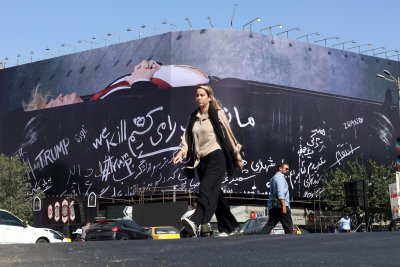
1 of 2 | An Iranian woman on Wednesday walks next to a huge anti-U.S. billboard featuring U.S. President Donald Trump in a coffin, accompanied by a sentence in Persian that reads, “We kill Trump.” It is displayed at the Enghelab Square in Tehran, Iran. Photo by Abedin Taherkennareh/EPA
July 15 (UPI) — The United States attacked Iran on Wednesday, and Iran struck U.S. assets across the region into Thursday morning, marking the fifth straight day of strikes between the two nations as they fight over the Strait of Hormuz.
U.S. Central Command launched two waves of attacks seeking to degrade Iran’s ability to threaten vessels transiting the vital chokepoint between Iran and Oman.
“Once again, we remind the honorable people of Kuwait that the United States is committing these crimes against Muslim Iran from your soil,” the elite military unit responsible for protecting Iran’s Islamic regime said in a statement.
The IRGC-aligned Fars News Agency reported early Thursday that U.S. bases and facilities in Bahrain, as well as in Kuwait, were being struck. It separately said it was attacking U.S. assets at the Al-Azraq Base in Jordan.
The extent of potential damage could not be independently verified. However, the Kuwait Army said its air defenses were confronting drone attacks, and the Jordanian Armed Forces said they downed eight Iranian missiles early Thursday. Bahrain’s Ministry of Interior urged residents to find shelter as sirens blared, suggesting an incoming attack.
CENTCOM said in a statement that its second wave ended at 9 p.m. EDT, hitting command centers, air defense sites, coastal surveillance facilities and missile ad drone capabilities.
In announcing the strikes hours earlier, CENTCOM had said they were “targeting Iranian military capabilities used to threaten vessels freely transiting through the Strait of Hormuz.”
“The U.S. military is holding Iran accountable at the commander in chief’s direction,” the post said.
The U.S. attacks followed earlier strikes on Greater Tunb Island in the Strait of Hormuz, a key site for Iran’s coastal defenses and missile storage, during a 90-minute wave. The U.S. military also said it fired on the Curacao-flagged Belma vessel transiting international waters toward Iran.
CENTCOM accused it of violating a military blockade of Iran’s coast that Trump reimposed Tuesday afternoon to deny Iran maritime trade.
The IRGC said Ahvaz, a southwestern Iranian city, had come under U.S. attack, with missiles reportedly hitting near Baghaei Hospital, which treats children with cancer, requiring all but the most ill patients to be transferred to another medical facility.
Iran’s Parliament Speaker Bagher Ghalibaf told state media that Iran had “no reason” to abide by any deal with the United States if it did not benefit from it, but he left the door open for possible diplomacy, stating: “We must utilize diplomacy and negotiation to achieve and stabilize our national interests.”
While the war began in late February with President Donald Trump seeking to dismantle Iran’s nuclear and conventional weapons programs while encouraging regime change, the current chapter of the war is over the Strait of Hormuz. U.S. President Donald Trump is fighting to restore freedom of navigation through the waterway, down which about one-fifth of global energy supplies flow. Tehran is fighting to preserve its ability to restrict passage through the chokepoint as leverage and has previously suggested it could charge vessels that transit it.
The U.S. attacks came as Trump told reporters that Iran’s leaders “better behave” on Wednesday, one day after he threatened that the United States would strike bridges and power plants if Iran did not return to the negotiating table.
“They want to settle so badly,” Trump said later Wednesday at a defense summit in Pennsylvania. “They don’t like what we’re doing, and they do want to settle. We’ll find out whether or not we settle with them or we just finish it off.”
Iran’s top negotiator, Mohammed Bagher Ghalibaf, has declared that the country’s armed forces have “complete freedom of action” against the “enemy’s aggression”, after a day of attacks by the United States killed seven Iranian troops.
The attacks on Wednesday were the latest in days of escalating hostilities between Washington and Tehran that appear to have doomed an interim peace deal they agreed to on June 17.
Recommended Stories
list of 3 itemsend of list
The US announced several rounds of air strikes on Iran overnight on Tuesday and again on Wednesday, saying its forces hit military targets in Iranian coastal areas near the Strait of Hormuz and on the Greater Tunb island.
Iran’s army said one attack struck a barracks in Bampour in the country’s southeast, killing seven personnel from the 388th Brigade and injuring several others. It pledged to deliver “a decisive response… at the appropriate time”.
Iranian media also reported that an overnight US attack hit a wheat storage facility in the western Khuzestan province, which the US military denied.
The US announced its latest wave of strikes on Wednesday had begun at 10:30pm Iranian time (19:00 GMT), as Iranian media reported explosions in or near Bandar Abbas, Chabahar and Ahvaz.
Earlier, the US military also said it had redirected two commercial vessels as part of a renewed blockade on Iranian ports, which it began enforcing the night before.
Return to negotiations ‘extremely difficult’
Tehran said the repeated waves of US attacks had voided the memorandum of understanding with Washington that had underpinned the fragile ceasefire. Ghalibaf said Iran was “in an essential and existential war with America” and had no reason to continue adhering to the terms of the peace agreement.
Ministry of Foreign Affairs spokesman Esmaeil Baghaei said Iran had abandoned its commitments under the memorandum because the US had reneged on its side of the deal.
“Our commitments remain in effect only as long as the other side fulfils its pledges,” Baghaei said.
He said Tehran had no plans to engage in further talks with Washington and was focused solely on defending the country.
Reporting from Tehran, Al Jazeera’s Resul Serdar said the latest escalation made a return to negotiations “extremely difficult”.
“There’s now a low-intensity war, new sanctions are back on Iran, and there’s a US blockade again,” Serdar said.
However, he said, “if the Americans commit to the articles of the memorandum of understanding, then the Iranians say they’re open to engaging diplomatically”.
Iran renews attacks on Gulf neighbours
On Wednesday morning, Iran’s Islamic Revolutionary Guard Corps said it targeted the US Fifth Fleet in Bahrain as part of a “crushing response”. It said it also targeted a major US military logistics hub in Mina Abdullah, Kuwait.
Kuwait’s Ministry of Defence said later on Wednesday that it had downed at least four cruise missiles and 21 drones from Iran throughout the day.
Jordan’s military said it had downed three missiles from Iran.
Gulf Cooperation Council Secretary-General Jasem AlBudaiwi condemned the latest “treacherous” Iranian attacks on Bahrain, Kuwait and Jordan, saying they “reveal Iran’s determination to drag the region into further chaos and instability”.
Zeidon Alkinani, founding director of the Arab Perspectives Institute, said that Iran’s continuing attacks on its neighbours had tested the patience of Gulf states, who oppose the US-Israel war on Iran and have staunchly advocated for diplomacy.
“The patience within the Gulf and the view of Iran may fall apart very soon,” Alkinani told Al Jazeera.
Trump says Iran ‘better behave’
US President Donald Trump warned on Tuesday that US attacks against Iran would intensify if the country’s leaders did not return to negotiations, even threatening to “knock out” Iran’s power plants and bridges.
But Trump declined to give Iran a firm deadline when asked on Wednesday, saying: “I don’t like giving deadlines, but they pretty much know; they know the story… they better behave.”
Ghalibaf said Iran was still balancing diplomacy with military action in pursuit of its national interest.
While Iran has “never welcomed war… we must always be prepared for battle and stand firm to protect our national security and interests”, Ghalibaf said.
“We must also use the tools of diplomacy and negotiation to achieve and solidify our national interests.”
July 15 (UPI) — The United States and Iran traded attacks Tuesday night and into Wednesday morning as their war over the Strait of Hormuz continued to spiral, with President Donald Trump renewing threats to target civilian infrastructure.
The two nations have been trading nearly nightly strikes since last week, when Iran struck commercial shipping transiting the vital energy route.
While the broader war began in late February with the United States seeking to dismantle Iran’s military and nuclear programs and encourage the overthrow of its government, the current chapter is centered on control of the Strait of Hormuz. Washington is fighting to restore freedom of navigation through the chokepoint, while Tehran is fighting to preserve its ability to restrict passage as leverage.
Iranian government spokesperson Fatemeh Mohajerani said in a statement Wednesday that more than 30 civilians were killed in southern Iran in the U.S. strikes.
Iran’s Islamic Revolutionary Guard Corps early Wednesday claimed to have hit U.S. military assets in Jordan, Kuwait and Bahrain, as U.S. Central Command said late Tuesday that it had completed a seven-hour wave of strikes, hitting Iranian naval capabilities, coastal defense systems and missile and drone sites near the Strait of Hormuz and elsewhere along Iran’s coast.
CENTCOM said the strikes were intended to “degrade Iran’s ability to threaten commercial shipping and civilian crews” within the Strait of Hormuz. CENTCOM earlier said that in the last seven days, Iran attacked seven commercial ships, resulting in nearly a dozen civilian casualties. An Indian national was killed in a strike on a ship on Monday.
The IRGC said in separate statements carried by its official Sepah News that it had “destroyed” shelters housing F-15, F-16 and F-35 fighter jets at Al Azraq Air Base in Jordan; and “destroyed” a satellite communications center, missile and air defense radar, a Patriot air defense complex and logistical facilities at a U.S. base in Kuwait.
The Fars News Agency reported that at least one Iranian drone struck U.S. assets in Kuwait.
The extent of any of the damage was unknown.
The Kuwait Army said its air defenses were confronting drone attacks, and Jordan’s Armed Forces said it had intercepted and shot down three missiles launched from Iranian territory. Bahrain’s Ministry of Interior said sirens had been activated.
Trump earlier Tuesday told Fox News that the U.S. military was going to hit Iran “very hard tonight” and again on Wednesday and Thursday, with civilian targets to be struck next week, a potential violation of international humanitarian law.
“Next week comes the power plants. Next week comes the bridges,” he said. “We’re gonna knock out all their power plants. We’re going to knock out all their bridges unless they get to the table and negotiate.”
Trump has, since his first administration, tried to coerce Iran to the negotiating table on a new agreement aimed at preventing Iran from securing a nuclear weapon. Last month, a fragile cease-fire was agreed to for the purpose of implementing a memorandum that could lead to ending the war, but the Strait of Hormuz has been a sticking point.
On Tuesday, the U.S. military reimposed a blockade of Iranian ports that Trump removed after the MOU was reached.
CENTCOM said its round of strikes against Iran began at 3 p.m. EDT Tuesday, an hour before the naval blockade resumed operations.
Ukraine says drones hit 11 Russian vessels in the Azov Sea, targeting tankers, dry cargo ships, and a tugboat overnight.
Published On 14 Jul 202614 Jul 2026
Russia says it is working to reroute grain shipments from the Sea of Azov after its vessels came under Ukrainian attacks in the sea, as Kyiv claimed it hit 11 more Russian vessels in overnight strikes.
Russia was preparing to use “alternative shipping routes” and may redirect cargo “to other modes of transport”, Russia’s Ministry of Agriculture said in a statement on Tuesday.
Recommended Stories
list of 3 itemsend of list
The ministry added that “the situation in the Azov Sea will not affect the domestic market’s food supply or our country’s export capabilities.”
Ukrainian military commander Robert Brovdi said on Telegram on Tuesday that drone attacks hit 11 Russian vessels in the Azov Sea overnight. The targets included five tankers, five dry cargo vessels and a tugboat, bringing the total number of vessels struck in the past nine days to 116, he said.
Russia’s Foreign Minister Sergei Lavrov accused Ukraine of carrying out “acts of terrorism”.
“What the Ukrainian regime is doing goes beyond even piracy. Pirates, at least, plunder and keep the spoils for themselves. But here, it benefits neither them nor anyone else – the goal is simply to cause damage and intimidate. It is terrorism, pure and simple,” Lavrov said.
The attacks come as Ukraine steps up long-range strikes on Russian oil refineries and other energy infrastructure, triggering a fuel crisis in Russia.
Russia’s Ministry of Defence said its air defences intercepted 288 Ukrainian drones across the country overnight. Russian authorities said falling debris from a drone attack injured one person and damaged houses in several villages.
One attack sparked a fire at the Afipsky oil refinery, authorities in Russia’s Krasnodar region reported.
Ukraine also struck another oil refinery in the republic of Bashkortostan, which had been hit twice in September 2025. Governor Radiy Khabirov said on Telegram that the attack hit an industrial area in the city of Salavat.
Ukrainian strikes on Russian oil refineries have contributed to a fuel crisis, leading Moscow to ban some fuel exports amid a global surge in energy prices.
Russia’s Defence Ministry also said it hit targets in Kyiv, port infrastructure in Ukraine’s Odesa region, and fuel storage facilities for Ukrainian forces in the port of Yuzhny.
Ukrainian navy spokesman Dmytro Pletenchuk said Russian forces struck a civilian vessel near Ukraine’s Black Sea port of Odesa. Pletenchuk reported no casualties in the attack.
Meanwhile, Ukrainian military officials said their forces shot down seven missiles and 108 drones across the country.
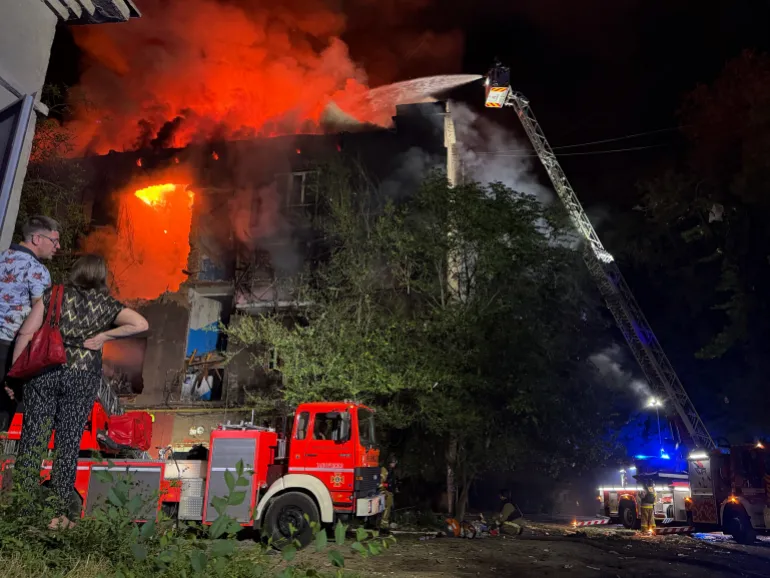
Ukrainian rescuers work to extinguish a fire at a damaged residential building following a Russian drone strike late night in Zaporizhzhia on July 12, 2026, amid the Russian invasion of Ukraine [File: Darya Nazarova/AFP]
Iran’s Islamic Revolutionary Guard Corps (IRGC) has targeted US military facilities in Bahrain, claimed it has destroyed radar systems in Oman and hit Jordan and Kuwait in its latest round of overnight retaliatory strikes against the United States.
Tehran’s attacks on Monday came as a response to Washington’s escalating strikes as prospects of peace between the two countries recede.
Here is a recap of the latest attacks:
Where were the latest Iran attacks?
Oman: The IRGC said it attacked Oman as part of its latest phase of retaliation. It said it targeted “the FPS long-range aerial radar and the vessel detection radar in Oman”, adding that these radar systems were destroyed.
Bahrain: The IRGC also said it launched missile and drone attacks targeting “installations and infrastructure of the aggressive US army” in Juffair, Bahrain.
Bahrain’s Ministry of Interior said on Monday that sirens had been sounded in the country as it warned people to remain calm and head to the nearest safe place.
The IRGC earlier said it targeted several facilities at the Sheikh Isa Air Base in Bahrain.
Jordan: Jordan’s military said on Monday that it intercepted and downed “four missiles that entered Jordanian airspace” and came from Iranian territory.
Earlier, the IRGC said it targeted Jordan’s Prince Hassan Air Base with missiles and drones and set fire to several fuel depots and ammunition storage facilities.
Kuwait: The IRGC said on Monday that it also targeted a US surface-to-surface missile base in Kuwait, “setting fire to two HIMARS missile launchers and missile-packed warehouses, completely destroying them”.
HIMARS stands for high mobility artillery rocket systems, which are mobile rocket launchers manufactured by the US.
Earlier, the General Staff of Kuwait’s Army said air defence systems were engaging “hostile aerial targets” inside the country’s airspace.
It said any explosions heard were the result of air defence systems intercepting the attacks and urged the public to follow safety and security instructions.
Where was Iran hit?
The US military’s Central Command (CENTCOM) earlier said it hit “dozens of targets at multiple locations with precision munitions to degrade Iran’s ability to continue attacking international shipping flowing through the Strait of Hormuz”.
These targets included “Iranian military air-defense systems, coastal radar sites, missile and drone capabilities, and small boats”, it said.
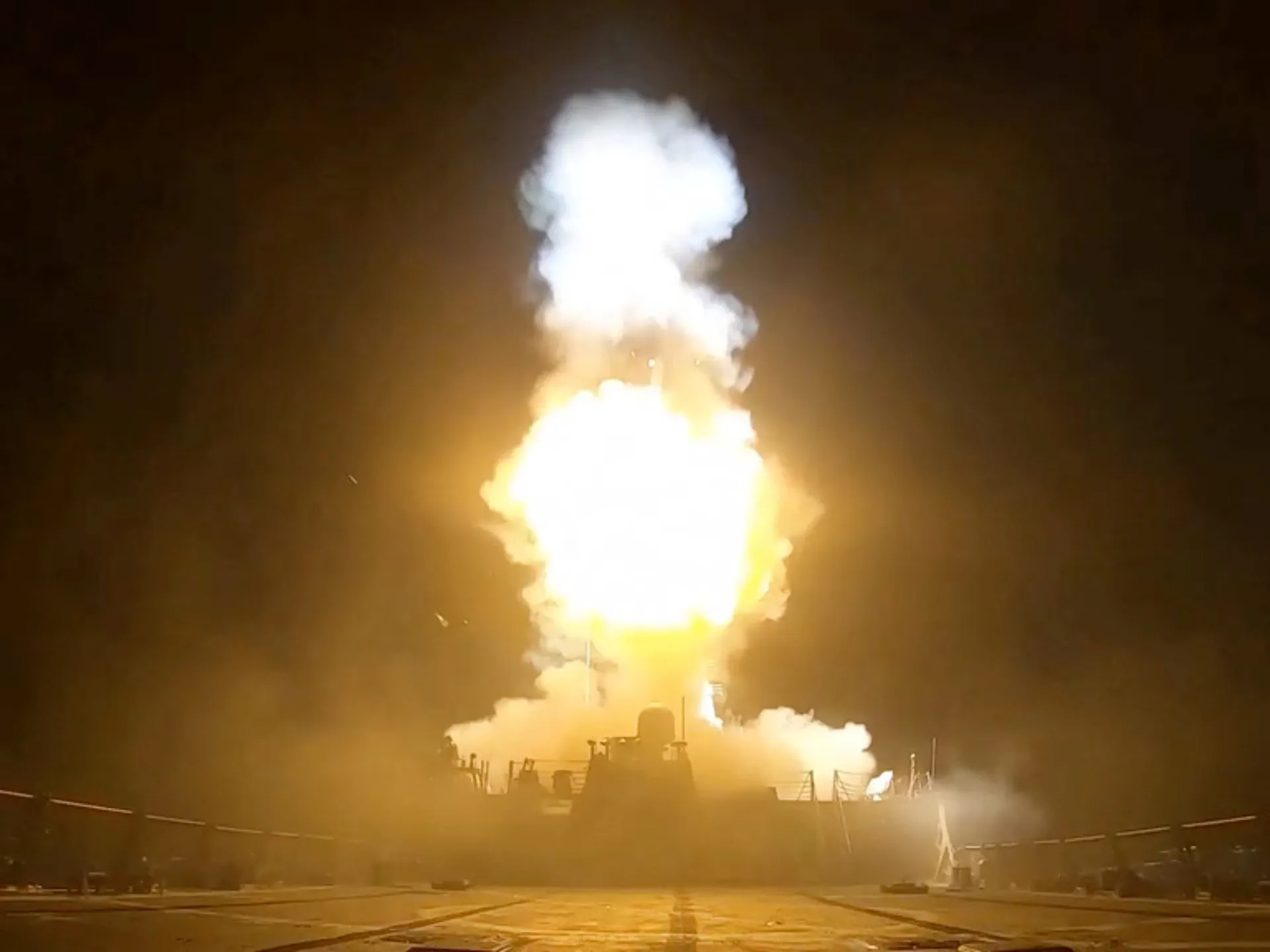
CENTCOM said it deployed “US fighter aircraft, naval vessels, one-way attack aerial drones, and one-way attack sea drones for the first time”.
Valiollah Hayati, the deputy governor for security and law enforcement in western Iran’s Khuzestan province, told the semiofficial ISNA news agency on Monday that US forces attacked at least eight locations across Khuzestan overnight.
Hayati also said one person was killed and four were injured when a projectile hit an agricultural water-pumping station in Mahshahr, according to the IRNA news agency.
Iran’s Tasnim News Agency reported on Monday that a US-manufactured LUCAS (low-cost uncrewed combat attack system) suicide drone was “accurately hit and shot down” in Bandar Abbas, a city on the Strait of Hormuz.
What has each side said?
The Iranian Ministry of Foreign Affairs released a statement on Monday condemning the US strikes on targets in Iran.
US President Donald Trump insisted that the Strait of Hormuz was open during an appearance on the NBC TV network’s Meet the Press programme on Sunday.
“They’re very, very evil and sick people. We had meetings with them. They agreed to a deal yesterday, a perfect deal for us. No nuclear, no this, no that, no nothing. They gave up everything. And then after that, they left the room. And then within an hour, they launched a drone at a ship,” Trump said.
When did the conflict reignite?
On July 6, the IRGC struck three commercial vessels, including a Qatari liquefied natural gas tanker, off Oman. Iran accused the ships of trying to pass through the Strait of Hormuz without its permission. Tehran’s interpretation of a key clause in the June memorandum of understanding (MoU) with the US gives it the authority to manage traffic through the waterway.
The following day, the US said it carried out strikes on Iranian military targets. Tehran in turn responded with missile and drone attacks on military bases across the Gulf where US forces are deployed.
On Wednesday, Trump told reporters the MoU was over, and on Saturday, the IRGC said the Strait of Hormuz was closed yet again.
How has this impacted the Strait of Hormuz and shipping?
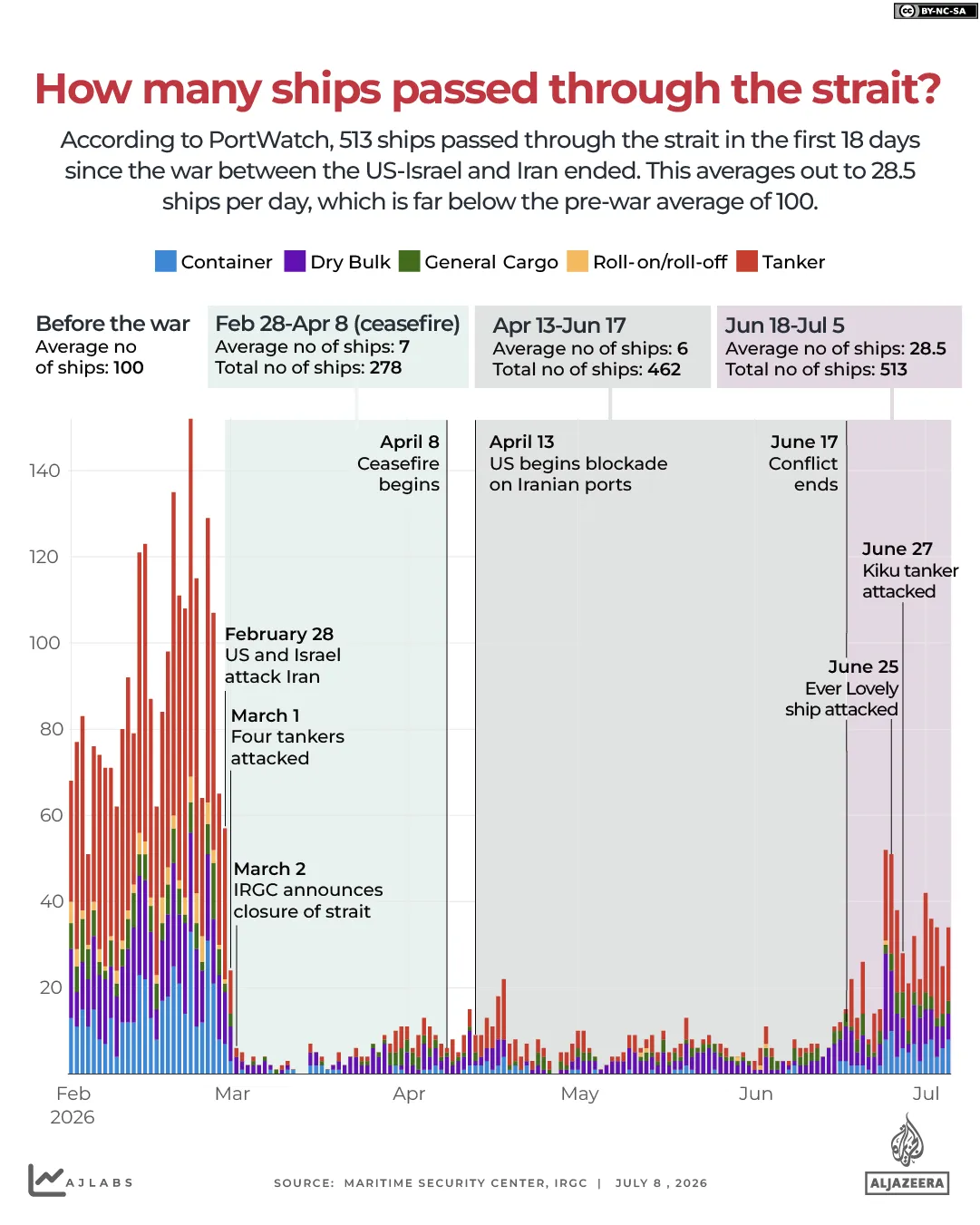
The number of vessels transiting the Strait of Hormuz has fallen to its lowest level in five weeks, according to shipping data.
Six ships sailed through the strait on Sunday, according to data from the trade intelligence firm Kpler, including the Humanity and the Capetan Andreas, transporting 2 million barrels of Iranian oil and 500,000 barrels of Kuwaiti petroleum products, respectively.
Three empty tankers also entered the Gulf to load oil, according to the data.
Oil prices have jumped amid the latest outbreak of hostilities between the United States and Iran over the Strait of Hormuz.
Brent crude, the main international benchmark, rose more than 4 percent on Monday as Washington and Tehran traded attacks amid their escalating standoff over control of the critical waterway.
Recommended Stories
list of 4 itemsend of list
Brent futures for September delivery stood at $79.26 a barrel as of 05:00 GMT, the highest since June 22.
US Central Command (CENTCOM) said on Sunday that it had carried out dozens of strikes on Iran to degrade its ability to attack vessels in the strait, hours after striking hundreds of targets in the country.
US forces launched the earlier round of strikes after accusing Iranian forces of “blatantly” attacking a Cyprus-flagged container ship, the MV GFS Galaxy, as it was transiting the strait.
“The Strait of Hormuz is a vital maritime corridor for global trade. Iran does not control it,” CENTCOM said in a statement late on Sunday.
“US forces are postured and prepared to ensure that freedom of navigation remains available to commercial shipping despite Iran’s continued unwarranted aggression, harassment, threats, and arbitrary declarations.”
Iranian forces on Sunday launched a wave of missile and drone attacks against the United Arab Emirates, Qatar, Kuwait, Oman and Bahrain in response to the US strikes.
Iran’s Persian Gulf Strait Authority, which claims the right to control traffic through the Strait of Hormuz, earlier reiterated that vessels attempting to cross the waterway without using its preferred route would “not be covered by safe passage guarantees”.
“The consequences arising from transit through unauthorized routes shall be the responsibility of the owner, operator, and vessel commander,” the authority said.
After ticking up following Washington and Tehran’s signing of a memorandum of understanding on ending the war last month, maritime traffic in the Strait of Hormuz has declined sharply amid the renewed fighting between the sides.
Just six vessels were tracked crossing the strait between 18:00 GMT on Thursday and 06:00 GMT on Friday, compared with 18-22 daily crossings earlier this month, according to maritime intelligence platform Windward.
Nine vessels were tracked in the waterway between 18:00 GMT on Saturday and 06:00 GMT on Sunday, four of which were flying the Iranian flag, according to Windward.
Roughly 130 vessels transited the strait, a conduit for one-fifth of the global oil trade in peacetime, each day before the start of the war.
Oil prices, which had returned to pre-conflict levels following the signing of the memorandum on June 17, are now about 9 percent higher than before the US and Israel launched their initial strikes on Iran in late February.
Mukesh Sahdev, founder and chief oil analyst at XAnalysts in Sydney, Australia, said he expects the per-barrel price of Brent to remain in the upper $70s during August and September amid the heightened geopolitical uncertainty.
“There could be occasional spikes and dips outside that range,” Sahdev said in a note to clients on Saturday.
“Long-haul procurement forces refiners to make supply decisions weeks in advance,” Sahdev added.
“Those decisions have already reduced immediate reliance on the Middle East, and the latest escalation is likely to reinforce rather than reverse that trend.”
Fabien Yip, a market analyst at IG in Sydney, Australia, said prices are unlikely to approach the much higher levels seen earlier in the war despite the latest turmoil.
“Oil’s return towards pre-war levels in June reflected markets pricing in a best-case outcome for the fragile US-Iran arrangement; last week’s re-escalation exposes how fragile that assumption was,” Yip said in a note to clients on Monday.
“Near-term, the risk premium should keep prices supported, though a repeat of the earlier spike appears unlikely, as demand remains slow to recover while stranded-tanker releases and OPEC+ output quota expansion continue to add barrels to an already oversupplied outlook.”
Major Asian stock markets fell on Monday amid the renewed fighting in the Middle East.
Japan’s benchmark Nikkei 225 fell more than 2 percent in afternoon trading, while South Korea’s Kospi plunged more than 8 percent.
Hong Kong’s benchmark Hang Seng Index dipped about 0.2 percent.
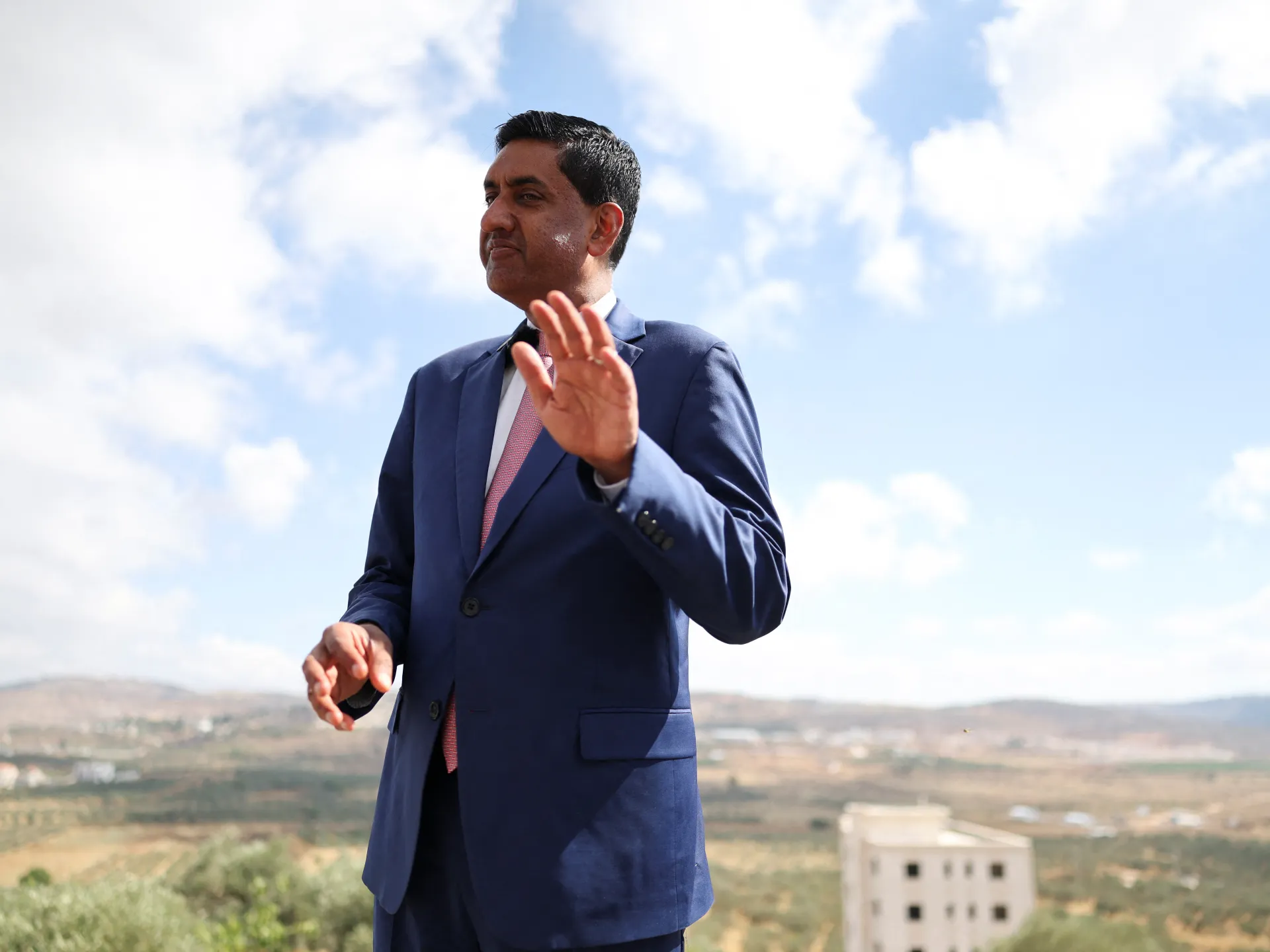
As rights advocates decry the detention of United States Congressman Ro Khanna by armed Israeli settlers, Israel and its allies are launching political attacks to discredit the progressive legislator.
Israeli officials have already ruled out apologising to Khanna or holding the settlers accountable. Instead, several have gone on the offensive against the congressman.
Recommended Stories
list of 3 itemsend of list
Khanna said he was travelling to a Palestinian village in the occupied West Bank on Wednesday when armed settlers stopped his van for 20 minutes. The settlers were later joined by Israeli soldiers who continued to block the road.
The whole ordeal lasted more than an hour, according to Khanna, and was only resolved after he reached out to the US embassy in Israel.
On Sunday, Michael Leiter, Israel’s ambassador to the US, appeared to blame Khanna for the mistreatment he received, saying that the California Democrat had failed to coordinate his trip with the Israeli government.
“He decided to coordinate his trip not with Israel, but with Palestinian activists and with J Street,” Leiter told CBS News, referencing a Jewish nonprofit.
Leiter went on to claim, without evidence, that Khanna may have waited to release his video of Wednesday’s incident to distract from his support for politician Graham Platner.
Platner dropped out of the Senate race in Maine on Friday amid sexual misconduct allegations. Khanna published his video on Saturday.
“Maybe this had more something to do with his support of Graham Platner beforehand and the difficulties he had with that, and trying to shift the focus to something else. Perhaps? I’m asking a question,” Leiter said.
Khanna is not backing down, however. He said he did inform Israel of his travel and has called for the arrest of settlers who held up his van.
Khanna responds
The Israeli military has disputed Khanna’s version of the events, saying that it “dispersed” civilians who were blocking the road. But in an appearance on Sunday with NBC News, Khanna refuted that account.
“The [Israeli military] is lying,” Khanna said.
“What happened was unprecedented. They had violent settlers detain American citizens, including an American government official. You had these settlers brandishing M4s [rifles], kicking the tyres of our van, laughing at us, mocking at us, videotaping us.”
He added that the Israeli military participated in blocking their path and detaining them.
“How dare they mistreat people with an American passport that way?” Khanna said.
Pro-Israel politicians, however, claimed that Khanna provoked his own detention by carrying out a political stunt.
“Sounds like another plea for publicity. Anything to get in front of the camera. Why else would you be there? It isn’t your country,” Republican Congressman Greg Murphy wrote in a social media post.
Critics were quick to point out that Murphy’s first trip as part of a congressional delegation was to Israel.
Khanna also responded to Murphy, urging him to be on “Team America” and join the push for any settlers and soldiers who mistreat US citizens to face consequences.
“I would be calling for that if you had been in our shoes,” Khanna said.
Conservative commentator Tucker Carlson was among those who came to Khanna’s defence. He criticised Mike Huckabee, the US ambassador to Israel, for failing to speak out about the incident.
“An American member of congress is threatened by foreign terrorists carrying American rifles, backed by a foreign military paid for by American taxpayers, and the US ambassador to that country says not a word in defense of his own countryman,” Carlson wrote on the social media platform X.
“It’s too much, too insulting and humiliating to America.”
Still, many pro-Israel figures in the US expressed scepticism about Khanna’s experience. David Friedman, a former US envoy to Israel, accused Khanna of “self-victimization”.
Friedman argued, without evidence, that Khanna had purposely entered a restricted zone to provoke the incident.
“As was entirely predictable, he was asked a few questions and sent on his way. But he got the photo op and all he needed for his pre-conceived false narrative,” Friedman said in a social media post. “Well played Ro.”
Several other pro-Israel advocates echoed that take.
Attacks on US citizens
Israel’s military and settler presence in the occupied West Bank is illegal under international law.
The International Court of Justice (ICJ) ruled in 2024 that the Israeli occupation of the Palestinian territory, including Gaza, is unlawful.
“Israeli settlements in the West Bank and East Jerusalem, and the regime associated with them, have been established and are being maintained in violation of international law,” the top United Nations tribunal said.
Israeli settlers – often under the protection of the Israeli military – regularly attack Palestinian communities in the West Bank, ransacking farms and property and assaulting people who come in their way. That includes Americans.
One year ago, for instance, Israeli settlers beat 20-year-old US citizen Sayfollah Musallet to death.
Three weeks later, another American citizen, a father of five from Chicago named Khamis Ayyad, was also killed in a settler attack.
No suspects have been charged with crimes after the two attacks.
Despite well-documented abuses against US citizens, Israel was added to the US visa waiver programme in 2023, allowing Israelis to travel visa-free to the US.
Israel is the largest cumulative recipient of US military aid in history, having received more than $21bn in the last two years alone.
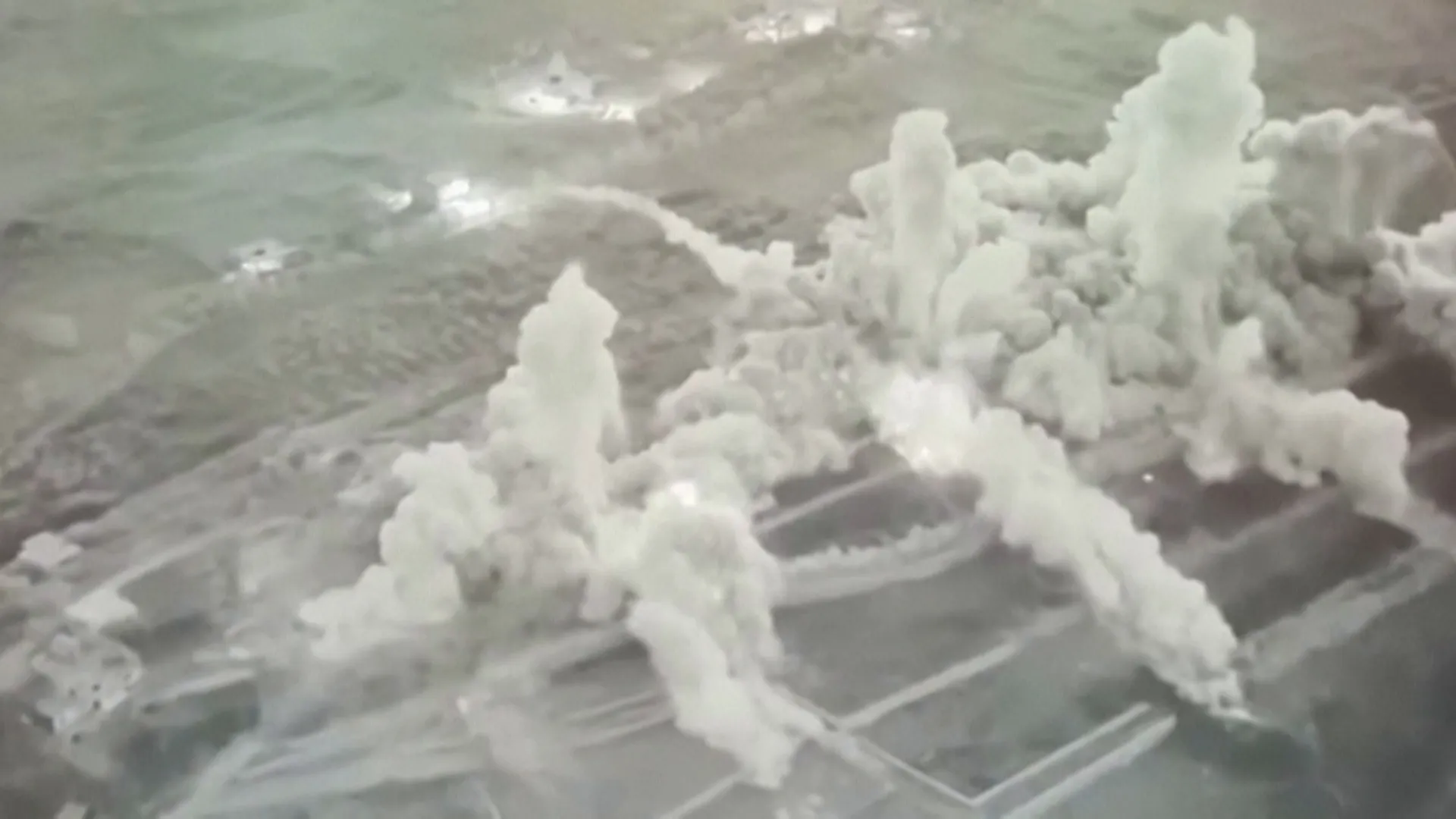
The Israeli military has released video showing huge explosions and detonations in villages in southern Lebanon. Israel says they were targeting Hezbollah infrastructure and tunnels. Meanwhile a US military delegation has met with Lebanon’s army in Beirut to discuss Israel’s planned withdrawal from a ‘pilot zone’ in occupied territory.
Tehran, Iran – Several days of military attacks by the United States across Iran have marked the most intense rounds of bombardment since the two sides reached a vague memorandum of understanding last month.
US fighter jets and warships have hit hundreds of military targets and a number of civilian ones in nearly a week of strikes, with Iranian authorities reporting attacks in at least 10 provinces, mainly in southern Iran near the strategically important Strait of Hormuz.
In Tehran, life for more than 10 million people has carried on mostly as usual since the capital has not been recently attacked. But the economy is in the doldrums and the outlook is increasingly uncertain, more than four months after the US and Israel began their aerial campaign.
“Everything is too chaotic right now to guess what will happen next but it doesn’t look good,” Farshad, a 21-year-old resident of eastern Tehran, said on Sunday.
“I just really hope all-out war doesn’t start again because I don’t have the nerve for daily bombing on top of everything else,” he told Al Jazeera.
The Islamic Revolutionary Guard Corps (IRGC) said overnight into Sunday that the Strait of Hormuz was once again considered closed due to US military intervention. Two vessels opting to transit using the Western-backed southern route near Oman, rather than Iran’s designated path to the north of the strait, had been struck, the IRGC added.
Iran said it had also attacked US interests across the region, including in Bahrain, Kuwait, Jordan, Qatar and Oman, in response to US strikes, as prospects for negotiations to replace military escalation remained slim.
Another Tehran citizen, Nastaran, said the overnight escalation felt more serious than previous attacks.
“I didn’t expect it would be this bad when I picked up my phone this morning to check the news,” she said. “I think there will be more attacks soon.”
Growing US aggression
The US military has been expanding its attacks over the past week.
US Central Command said more than 300 military targets were hit during three waves, including coastal surveillance, logistics, communications, as well as missile, drone and naval assets. It has not acknowledged striking civilian objectives.
As with other flare-ups over recent weeks, numerous attacks were launched on the province of Hormozgan, including the major port city of Bandar Abbas, as well as on Siri, Qeshm and Jask overlooking the strait. Port, fishing, coastal-control infrastructure and air defences were extensively bombed, reportedly killing a soldier and leaving multiple fishermen dead or wounded in separate strikes.
US projectiles have also targeted multiple areas in Bushehr province, with one attack impacting the perimeter of Iran’s only nuclear power plant without damaging it.
Provincial authorities in the southwestern province of Khuzestan said three areas were hit, but not the capital, Ahvaz. Local authorities in the provinces of Kohgiluyeh, Boyer-Ahmad and Lorestan also reported projectile attacks.
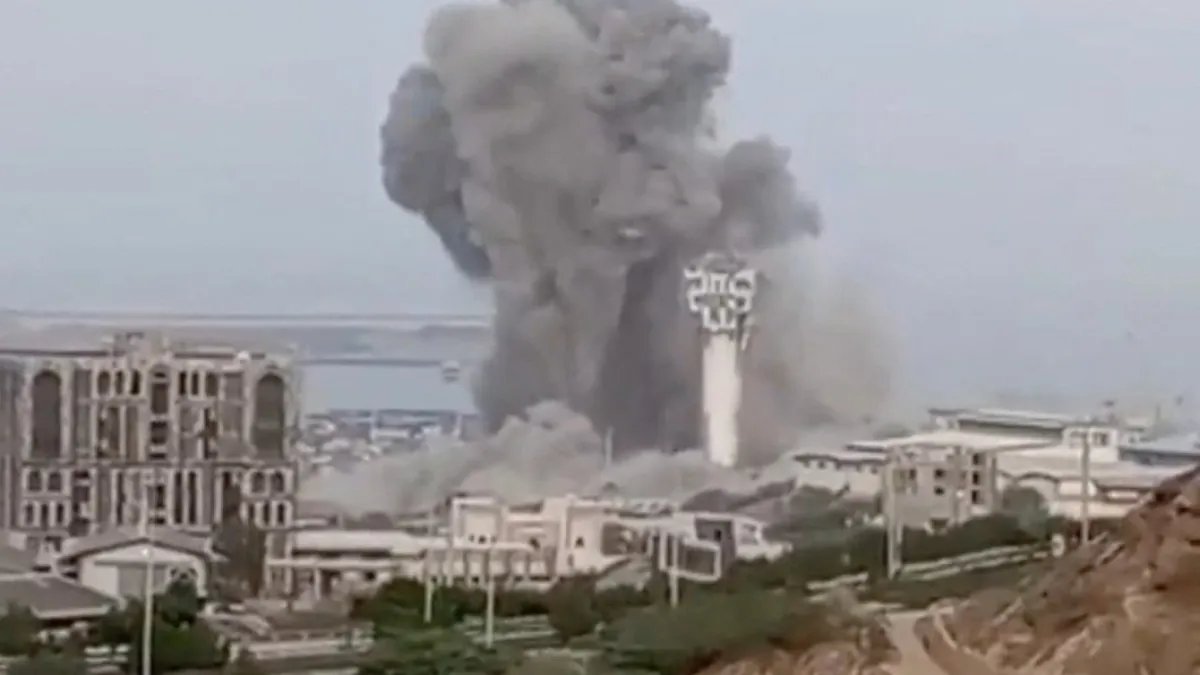
In Sistan and Baluchestan to the southeast, attacks were reported in Chabahar, Konarak and Iranshahr, where a strike on airport facilities killed a firefighter. Video recorded by a local from Chabahar and shared online showed the destruction of the city’s renowned maritime control tower.
Over the past week, the US military has launched some of its deepest strikes into Iranian territory since full-scale military operations were suspended by the “ceasefire” agreed in April.
One of them was in the northern province of Golestan, where the Aq Tekeh Khan railway bridge was struck on the Gorgan-Incheh Borun line.
Authorities said the bridge, which carries both passengers and cargo, was repaired and services resumed quickly. However, the attack showed that inland corridors could also become targets to increase pressure on Iran by limiting its trade, including imports of essential goods.
The transit route connects Iran to Turkmenistan and onwards to Kazakhstan, Russia, China as well as Eurasian rail networks. Crucially, during the US naval blockade of Iran’s southern ports, it provided an overland alternative to the Strait of Hormuz.
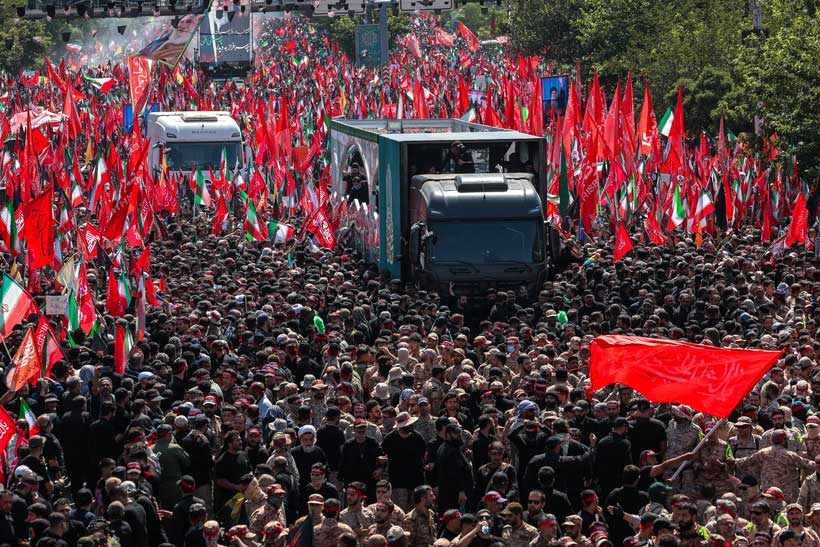
Last week, when assassinated Supreme Leader Ayatollah Ali Khamenei was being buried in his hometown of Mashhad in northeastern Iran, authorities said the US struck a bridge about 55km (34 miles) from the city, disrupting passenger journeys to the funeral procession.
Iranian authorities say electricity infrastructure – which Trump has repeatedly threatened with more strikes – has also been significantly impacted since the start of the war, worsening the long-running energy crisis.
The attacks have reduced Iran’s capacity for electricity generation by about 4,200 megawatts, just as summer temperatures reached 40 degrees Celsius (104 Fahrenheit) this week, Mohammad Allahdad, head of Tavanir, the government-owned parent company for the operation of Iran’s power grid, said on Sunday.
After the conclusion of the funeral ceremonies for Ali Khamenei, a statement from new Supreme Leader Mojtaba Khamenei, who has not been seen public since succeeding his father, emphasised the necessity for revenge.
Similar messages continue to be broadcast by state media and hardline religion-backed factions supporting the Islamic Republic, who on Sunday also cheered the death of US Republican Senator Lindsey Graham. State television hailed what it called the “dispatching to hell” of a pro-war hawkish politician.
For its part, Israel has effectively undermined the MoU signed between Iran and the US on June 17 by pushing deeper into southern Lebanon and signalling readiness to return to military strikes in Iran.
Speaking to an Israeli programme on Saturday night, Defence Minister Israel Katz, who has threatened to assassinate Mojtaba Khamenei, said “southern Lebanon would become Gaza” and that the Israeli army will “apply the Rafah model” of conquest there.
Since a US-brokered truce in October, Israeli attacks have killed more than 1,098 Palestinians in Gaza.
Published On 12 Jul 202612 Jul 2026
An Israeli drone attack and gunfire in Gaza have killed at least five people, including a nine-year-old girl, according to Gaza’s Health Ministry.
Tala Abu Matar died when Israeli gunfire targeted an encampment on the eastern side of the Al-Bureij refugee camp in central Gaza, medics said.
Recommended Stories
list of 4 itemsend of list
Also on Sunday, a drone attack on a blacksmith’s shop in the Sabra neighbourhood of Gaza City killed at least four Palestinians and wounded another, according to officials at al-Shifa hospital where the casualties were taken.
The Israeli military acknowledged striking the area, saying without elaborating that it targeted “terrorist infrastructure”.
Following shooting on Friday, a Palestinian man died of wounds sustained from Israeli fire near Al-Bureij camp, said a health official. Another Palestinian succumbed to injuries from an Israeli drone strike east of Khan Younis in southern Gaza.
The continued attacks in Gaza are in violation of the ceasefire agreed last October by Israel and Hamas. While fighting on the ground has mostly stopped since then, Israel has continued carrying out air strikes in Gaza, killing at least 1,098 Palestinians and wounding 3,535 during the so-called ceasefire, health ministry data shows.
Since October, Israel has expanded its control over the enclave beyond the so-called “Yellow Line”, which demarcates territory occupied by Israel from the rest of Gaza under the ceasefire agreement. Last week, Gaza’s Government Media Office said Israeli forces now control about 80 percent of Gaza.
The latest violence comes as Hamas leaders visited Cairo for further talks on implementing the second phase of US President Donald Trump’s Gaza peace plan.
The discussions include Hamas disarmament and Israeli army withdrawals, according to sources close to the talks, who said no breakthrough has been achieved.
Since the beginning of Israel’s genocidal war on Gaza in October 2023, the health ministry said at least 73,118 Palestinians have been killed.
Iran has mounted attacks on Gulf states and declared the Strait of Hormuz closed after the United States conducted its third round of strikes in a week, in a serious escalation as the ongoing conflict spirals.
Tehran on Sunday claimed attacks on Bahrain, Kuwait, Jordan, Qatar and Oman, calling them its response to renewed US bombings on cities along its southern coast.
Recommended Stories
list of 4 itemsend of list
The widescale US strikes came after Iran shut the Strait of Hormuz — a critical waterway and one of the biggest flashpoints in the conflict — accusing Washington of violating a memorandum of understanding (MoU) signed between the two sides last month.
So, where is the conflict headed? Here is everything we know.
Why has Iran attacked Gulf states and closed Hormuz?
Iran launched missile and drone attacks targeting US military bases and facilities in several Gulf states, while the US Central Command (CENTCOM) carried out a third round of strikes targeting radar, missile, and drone sites across southern Iran last week.
The US attacks came after Iran opened fire on commercial vessels in the Strait of Hormuz and announced the closure of the strategic waterway until further notice, with one crew member missing, according to CENTCOM.
Iran’s powerful parliament speaker and key peace negotiator, Mohammad Bagher Ghalibaf, said on Sunday, “The era of one-sided deals is over.”
“We told you: keep your word or pay the price. Reality is knocking,” Ghalibaf posted on X with an image of Article 5 of the MoU, which relates to the reopening of the Strait of Hormuz.
On Wednesday, US President Donald Trump announced that the ceasefire with Iran was over. His statement was followed by Iran’s Supreme Leader Mojtaba Khamenei pledging to avenge his father’s killing.
How did we reach here?
The fragile MoU reached between the US and Iran had several glaring gaps, keeping the door to escalation ajar.
The tensions spilled over into the Strait of Hormuz again last Monday, when Iran’s Islamic Revolutionary Guard Corps (IRGC) struck three commercial vessels, including a Qatari liquefied natural gas (LNG) tanker off the coast of Oman.
The next day, the US carried out strikes on Iranian military targets, and Tehran responded with missile and drone attacks on US bases across the Gulf, prompting Trump to call off the ceasefire.
The tit-for-tat attacks continued. On Saturday night, the IRGC announced the closure of the Strait of Hormuz until further notice after attacking a container ship using what it called an unapproved route. On Sunday, a second vessel on the strait was hit.
Where did the latest US strikes hit?
CENTCOM said its third round of strikes on Iran last week was “holding Iranian forces accountable” for their recent attack on a Cyprus-flagged ship in the Strait of Hormuz.
It said it hit about 140 military targets that “included Iranian missile and drone sites, naval capabilities, ammunition storage facilities, communication networks, and coastal surveillance locations”.
It added that more than 300 targets were struck over the course of three nights throughout the week “to degrade Iran’s ability to attack civilian mariners and commercial vessels freely transiting the strait”.
Iran’s state broadcaster IRIB said the US launched air attacks on the outskirts of the city of Veysian, in the western Lorestan province, while another strike hit a military base in Iran’s Khondab.
Officials from Bushehr, on Iran’s southern coast, told local media that US forces attacked five cities in the province, including Asaluyeh, Dir, Bushehr, Dashti and Tangestan.
Tehran has said the loss of lives and the extent of damage are under review.
Where did Iran hit back overnight?
Since the start of the ongoing conflict in late February, Tehran has accused the Gulf Cooperation Council (GCC) countries of actively supporting US military operations by hosting its bases and allowing it to use their airspace.
Oman
The IRGC claimed a “heavy and surprise” attack on logistics support centres and refuelling platforms used by US aircraft carriers at the port of Duqm in Oman, according to IRIB.
The IRGC’s public relations office told IRIB the sites were “destroyed” in the attack.
Qatar
The IRGC said it also targeted Qatar’s Al Udeid airbase with ballistic missiles and claimed to have destroyed a fighter plane maintenance centre, as well as a command-and-control centre at the base.
Qatar’s Ministry of Defence said it intercepted incoming Iranian fire. Three people, including a child, were wounded as a result of falling shrapnel from the interception of Iranian attacks, Qatar’s Ministry of Interior said.
Kuwait
Iran’s army said it used explosive drones to target a Patriot air defence system, an ammunition depot and a radar site belonging to the US military in Kuwait.
Bahrain
In another wave of drone attacks, Tehran targeted a US communications system and radar site in Bahrain.
Jordan
The IRGC said it targeted US military facilities at Prince Hassan airbase in Jordan with several ballistic missiles, and claimed to have destroyed a command-and-control centre at the base, as well as hangars housing MQ-9 drones.
What’s happening in the Strait of Hormuz?
Iran has closed down the strait after firing a warning shot that struck a vessel travelling on an unapproved route, and said on Sunday it had disabled a second vessel.
The strait will remain closed until “the end of US interference in this region”, the IRGC said.
Iranian officials told state media the US military has been trying to create an “illegal route” through the Strait of Hormuz, causing insecurity in the area.
The narrow-yet-vital waterway — touted as the artery of global trade, hosting 20 percent of energy flow — has been at the centre of tensions between the US and Iran since the preliminary deal was signed.
Tehran has consistently insisted that only routes approved by Iran shall be taken up during transit through the strait. It says it is open to managing the strait only with Oman, the other coastal country.
The US and the GCC countries have rejected Iran’s claim on the strait and demanded that navigation be freed of interference or any sort of fees.
On Saturday, Iranian Foreign Minister Abbas Araghchi landed in Oman, where the leaders discussed the shipping and management of the Strait of Hormuz, the Ministry of Foreign Affairs said.
Tankers and cargo vessels in the Gulf of Oman, along shipping routes linking the Strait of Hormuz and the Arabian Sea, June 16, 2026 [AP Photo]
How have Gulf countries reacted?
Some countries had sirens blaring on Sunday afternoon, with governments asking residents to stay indoors.
Oman condemned Iran’s attacks and said it is taking “all necessary measures to deal with the developments to preserve the safety of the country and its residents”.
In Qatar, the Interior Ministry said the country’s security threat level is high and urged everyone to remain in safe places and avoid unnecessary movement.
The Kuwaiti army said its forces were responding to “hostile aerial targets” in the country’s airspace, adding that the sounds of explosions are the result of its defence systems intercepting the attacks.
Bahrain’s Interior Ministry said air raid sirens were activated, urging residents to remain calm.
The IRGC has promised a “crushing response” to any further US attacks on its territory. It follows a third round of US strikes on Iran in a week, which was met with retaliatory strikes from Iran on US military targets across the region.
Al Jazeera’s Tohid Asadi shares the latest details from Doha.
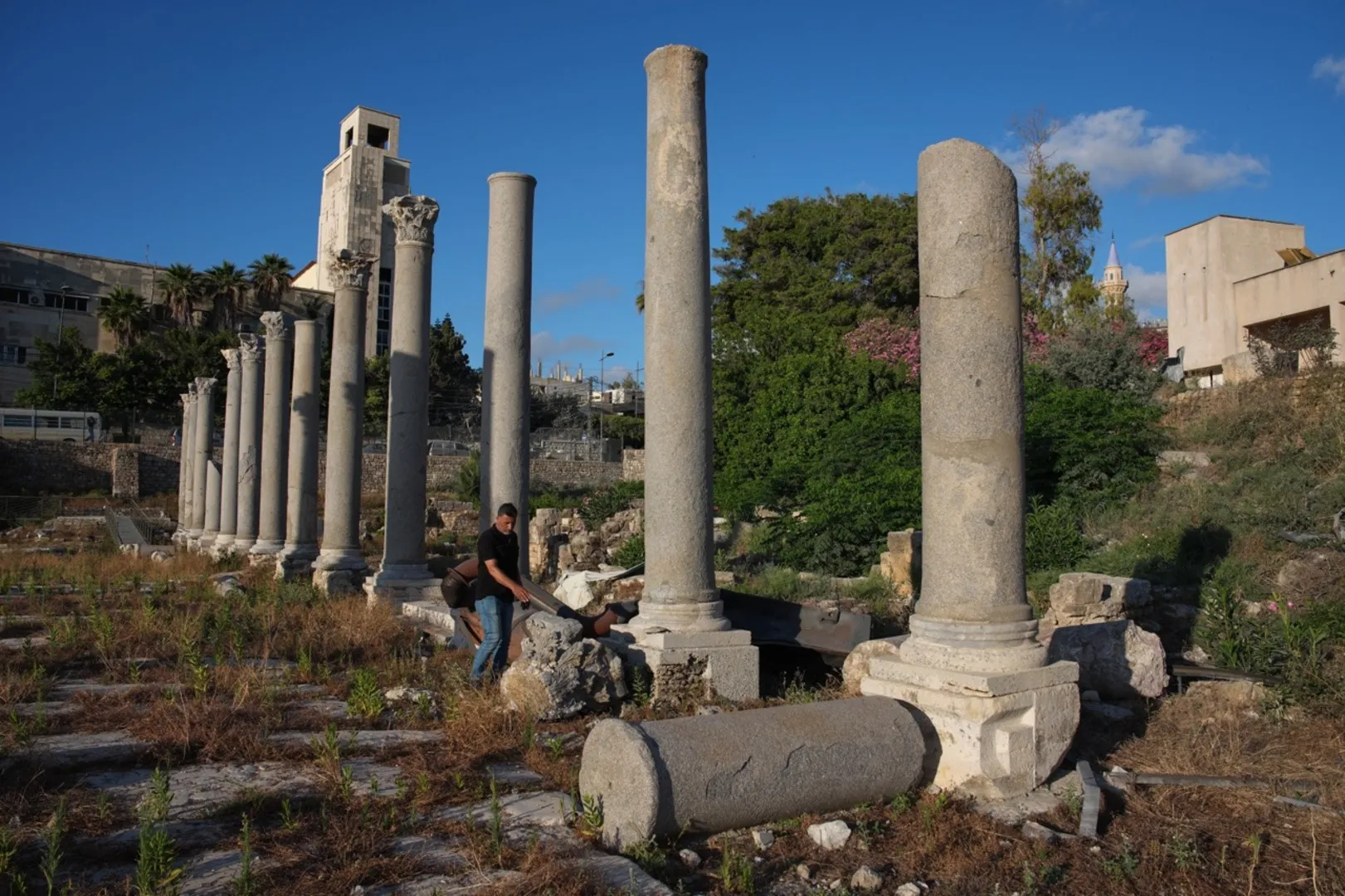
Israeli air strikes on southern Lebanon have caused catastrophic destruction and damaged historic landmarks, including the ancient city of Tyre, one of the world’s oldest continuously inhabited settlements. Rob McBride visited the UNESCO World Heritage site to see the impact first hand.
“Seek overhead cover and shelter in place immediately,” the U.S. Embassy in Jordan cautioned this morning. “Remain indoors and pay attention to local announcements and alerts. The U.S. Embassy in Jordan will continue to review the situation and provide additional information as needed.”
Security Alert: U.S. Embassy Jordan – July 9, 2026
Location: Jordan, countrywide
Event: Reports indicate missiles, drones, or rockets are in Jordanian airspace. Seek overhead cover and shelter in place immediately. Remain indoors and pay attention to local announcements and… pic.twitter.com/QOpNpKLXTA
— U.S. Embassy Amman (@USEmbassyJordan) July 9, 2026
The Jordan Armed Forces-Arab Army (JAF) General Command said the country’s air defense systems “intercepted and shot down eight missiles launched from Iran toward Jordanian territory on Thursday. The interception operations resulted in the fall of missile debris, but no casualties or property damage were reported.”
“JAF is closely monitoring regional developments and remains at the highest level of operational readiness to safeguard the Kingdom’s airspace and defend its sovereignty and territorial integrity,” the command added. “JAF will not allow any party to violate Jordanian airspace under any circumstances.”
The Islamic Revolutionary Guard Corps (IRGC)-connected Tasnim media outlet claimed “that multiple explosions occurred at the Muwaffaq Salti Air Base in Jordan,” and that “Iranian forces also targeted American ships stationed off the coast of Bahrain with cruise missiles.” However, no visual proof of that has emerged. U.S. Central Command declined to provide any new operational details.
Muwaffaq Salti, as we have previously reported, has come under attack numerous times. The air base has long been a major regional hub for U.S. operations, and is being very actively utilized in the current conflict. It hosts the greatest concentration of U.S. tactical aircraft in the region, and thus is an extremely important target, where even one ballistic missile landing on an apron could destroy multiple prized fighter aircraft and take the lives of U.S. service members.
Scenes from IRGC Navy and Aerospace retaliatory strikes on Thursday answering the American terrorist army’s aggression and disloyalty. pic.twitter.com/qwKo0SkLE2
Iranian officials also claimed the U.S. carried out new strikes in southern Iran, including on the perimeter of the Bushehr nuclear power plant.
“According to the deputy governor of Bushehr Province, a U.S. projectile hit the perimeter area of the facility, which had already been hit several times during the current conflict prior to the April 8 ceasefire,” the Jerusalem Post reported Thursday.
🚨 Iran reports that a few minutes ago, additional explosions were heard near the Bushehr nuclear power plant. https://t.co/zVJczmOpb5
Today’s attacks follow a series of strikes carried out on Wednesday by U.S. Central Command (CENTCOM). The U.S. attacked scores of targets across Iran after President Donald Trump warned on Wednesday that “we’ll probably hit them hard again tonight.”
“U.S. forces struck approximately 90 Iranian military targets including air defense systems, coastal surveillance assets, missile and drone storage sites, naval capabilities, and military logistics infrastructure along Iran’s coastline,” the command said in a statement on X. “The latest strikes follow successful execution of offensive strikes in Iran the night before.”
🚨 CENTCOM RELEASES THE HIGHLIGHT REEL U.S. Central Command says American forces completed another round of strikes against Iran on July 8, hitting approximately 90 Iranian military targets along the coastline. Targets included air defense systems, coastal surveillance assets,… pic.twitter.com/y2HiEMNWdy
Iran, however, claims the attacks took place further inland, including on a railway bridge for a line linking the cities of Tehran and Mashhad, where former Supreme Leader Ayatollah Ali Khamenei is scheduled to be laid to rest. He was killed on the first day of the U.S.-Israeli attacks on Iran. The official Iranian IRIB media outlet claimed on X that the bridge attack interrupted rail service.
Passengers on the Tehran-Mashhad train, stranded due to the U.S. striking the railway, are chanting: “Iranians do not accept humiliation, even at the cost of their own lives.” pic.twitter.com/9NhlUQqidr
— IRIB (Islamic Republic of Iran Broadcasting) (@iribnews_irib) July 9, 2026
There were also unconfirmed reports from official Iranian media, an independent media outlet and eyewitnesses that another bridge in that region was attacked. The Agh Tekeh Khan Bridge in Iran’s northern Golestan province is a key link in a railway line running to Central Asia and ultimately Russia and China. The line has reportedly been an important means of trade between Iran, China and Russia during the now paused U.S. naval blockade on Iranian ports.
Eyewitness video shows damage to the Aq Taqeh Khan railway bridge in Iran’s northern Golestan province following overnight US strikes. The bridge is a key trade link connecting Tehran with its strategic partners, China and Russia.#US#Iranpic.twitter.com/0k5y50w79V
— Al Arabiya English (@AlArabiya_Eng) July 9, 2026
According to local reports, several enemy projectiles have struck the “Aq-Tekeh Khan” bridge on the railway line in the western area of Aq Qala, Golestan province. pic.twitter.com/eMO5todo2i
— IRIB (Islamic Republic of Iran Broadcasting) (@iribnews_irib) July 8, 2026
Where all this leaves the ongoing negotiations between the U.S. and Iran remains unclear. As we have frequently noted, the two sides signed a 14-point Memorandum of Understanding (MoU) on June 17. The MoU provided a 60-day extension of the ceasefire to iron out an agreement to end fighting throughout the region, including Lebanon, prevent Iran from seeking nuclear weapons, end U.S. sanctions and resume the flow of traffic through the Strait of Hormuz among other points.
Control over the Strait has proven to be the biggest flashpoint, as evidenced by the aforementioned flare-up of fighting sparked by Iranian attacks on shipping there.
As we mentioned earlier in this story, both sides have declared the ceasefire over.
Speaking to reporters aboard Air Force One yesterday after departing the NATO Summit in Ankara, Turkey, Trump claimed Iran still wants a peaceful solution.
“They called a little while ago,” the president proclaimed. “They want to make a deal so badly — I just don’t know if they’re worthy of making a deal. I don’t know that they’re going to honor the deal. That’s the problem.”
.@POTUS on Iran: “They called a little while ago. They want to make a deal so badly — I just don’t know if they’re worthy of making a deal. I don’t know that they’re going to honor the deal. That’s the problem.” pic.twitter.com/jQTENvyRGM
— Rapid Response 47 (@RapidResponse47) July 9, 2026
The American leader also called the Iranians “cuckoo.”
.@POTUS on Iran: “We hit them very hard last night — very, very hard — and we’ll probably hit them hard again tonight… They’re cuckoo. There’s something wrong with these people. For 47 years, they’ve been the bully of the Middle East… It’s very simple: they can’t have a… pic.twitter.com/FtZH8l1f8L
— Rapid Response 47 (@RapidResponse47) July 8, 2026
Given all this, the future of diplomacy is an open question.
UPDATE: 2:50 PM EDT –
The official Iranian Mehr news outlet is reporting on Telegram that new explosions in Iran’s southern port city of Bandar Abbas, Bushehr and Choghadak. TWZ cannot independently confirm this and CENTCOM declined comment.
UPDATE: 3:13 PM EDT-
A U.S. official told the Jerusalem Post that the explosions in Iran are not a U.S. airstrike.
UPDATE: 3:49 PM EDT –
The official Iranian IRNA news outlet stated on X that the source of the explosions could be the armed forces’ defense systems, enemy fire or a downed drone.
After confirming residents in Bushehr and Choghadak heard the noise, the local governor stated that it is still unknown whether it stemmed from armed forces’ defense systems, enemy fire, or a downed enemy drone, and no final conclusion has been reached.
Iran said on Thursday it had targeted U.S. military infrastructure across the Gulf in retaliation for fresh American strikes on Iranian territory, marking the latest escalation in a conflict that is increasingly testing a fragile ceasefire brokered just weeks ago.
The renewed exchange of attacks came as Iran prepared to bury its late Supreme Leader Ayatollah Ali Khamenei at the holy city of Mashhad following a week of nationwide funeral processions.
Although oil prices eased after surging on fears of wider disruption, investors and governments remained focused on whether the latest violence represented a temporary escalation or the beginning of a broader collapse of efforts to end the conflict.
Iran retaliates after U.S. strikes
Iranian armed forces said they targeted U.S. military facilities in neighbouring Gulf states after American forces struck military infrastructure across Iran’s southern coast and eastern provinces.
Stay ahead of the geopolitical week.
MD Briefing delivers expert analysis across five global fronts — the Indo-Pacific, energy, geoeconomics, European security, and the Middle East — every Monday morning. Free.
According to Iranian officials quoted by state media, the latest U.S. attacks killed 14 people and wounded 78 others across five provinces on July 8 and 9.
The semi-official Fars news agency reported that one strike hit a railway bridge used for trade links with Russia and China.
Explosions were also reported on Thursday morning in Bushehr province, home to Iran’s only operational nuclear power plant, though authorities did not immediately provide details on the cause.
Gulf military installations targeted
Iran’s military said it launched drone and missile attacks against several U.S.-linked military facilities across the Gulf region.
According to Iranian state media, the targets included:
U.S. Patriot missile systems in Kuwait
An early-warning installation in Qatar
A U.S. military fuel storage facility in Bahrain
Kuwaiti authorities said their air defences intercepted a cruise missile, three ballistic missiles and ten drones. Officials reported one person was injured by falling debris.
Qatar, which hosts the largest U.S. military base in the Middle East, called for restraint and urged all sides to return to diplomatic negotiations.
During a phone call with Iranian Foreign Minister Abbas Araqchi, Qatari Prime Minister Sheikh Mohammed bin Abdulrahman al-Thani also condemned attacks on commercial shipping in the Strait of Hormuz.
Strait of Hormuz remains at the centre of tensions
The latest military confrontation follows attacks on commercial tankers in the Strait of Hormuz, one of the world’s most important energy shipping routes.
The U.S. military said Wednesday’s strikes were designed to protect international navigation after blaming Iran for attacks on three commercial vessels.
Although Tehran has not officially claimed responsibility for those attacks, analysts say Iran has increasingly used pressure around the Strait of Hormuz as leverage in negotiations with Washington.
Before the war began in late February, roughly one-fifth of global oil supplies passed through the narrow waterway.
Iran has since exercised significant control over maritime traffic in the strait, giving it considerable strategic influence over global energy markets.
The U.S. Central Command (CENTCOM) said American forces struck around 90 Iranian military targets.
According to CENTCOM, the operation targeted:
Air defence systems
Coastal surveillance infrastructure
Missile and drone storage facilities
Naval assets
Military logistics centres along Iran’s coastline
“The United States is holding Iran accountable for recent unjustified aggression against commercial shipping and civilian crews freely navigating a vital international waterway,” CENTCOM said.
President Donald Trump defended the operation on Wednesday, writing on Truth Social: “This is in retribution for yesterday’s bombing of ships by Iran. If it happens again, it will get much worse.”
Trump says ceasefire agreement is effectively over
While attending the NATO summit in Ankara, Trump said he believed the memorandum of understanding signed with Iran to halt the fighting had effectively collapsed.
Asked whether the agreement remained in force, Trump replied:”It’s a very interesting question. To me, I think it’s over. I don’t want to deal with them.”
He later added that even if another agreement were reached, he doubted Tehran would honour it.
Despite the renewed military exchanges, Trump said he did not expect the confrontation to develop into another prolonged war.
“Anything that happens is going to be over very quickly… and will only make it safer, including for oil,” he told reporters.
Iran vows continued retaliation
Iranian officials condemned the latest U.S. military operation as another breach of understandings reached after the ceasefire.
Parliament Speaker Mohammad Baqer Qalibaf warned Washington that future attacks would receive a military response.
“The U.S. has yet to learn that bullying and breaking its commitments no longer come without a cost,” he wrote on social media.
“The Strait of Hormuz will be reopened only under Iranian arrangements, not through U.S. threats.”
Oil markets remain on edge
Oil prices retreated on Thursday after jumping sharply a day earlier, as traders assessed whether the latest fighting would significantly disrupt Gulf energy exports.
Shipping also remains under close watch.
One of the vessels struck this week the Qatari LNG tanker Al Rekayyat remains stranded off Oman after suffering an engine-room fire following a projectile strike.
Industry sources said its liquefied natural gas cargo appears secure and that the immediate risk of explosion remains low.
Future outlook
The latest exchange of strikes has significantly weakened confidence in the U.S.-Iran ceasefire, even if neither side appears ready for a return to full-scale war.
Attention is now focused on whether further attacks occur around the Strait of Hormuz, where any prolonged disruption could quickly tighten global energy supplies and drive oil prices higher.
Diplomatic efforts led by Gulf states are likely to intensify, but Trump’s declaration that the interim agreement is “over” and Iran’s vow to continue retaliating have raised doubts over whether negotiations can still produce a lasting settlement.
The US military says it has struck 90 targets across Iran, hitting ports and infrastructure along the Strait of Hormuz. Iran says at least 14 people have been killed in two nights of attacks, and that it has responded with drone strikes on US-linked sites in the Gulf region.
The United States and Iran have traded attacks for a second day, straining their fragile ceasefire further after US President Donald Trump said the truce was “over”.
The US military said late on Wednesday that the attacks were aimed at Iran’s “ability to threaten the freedom of navigation in the Strait of Hormuz”.
Recommended Stories
list of 3 itemsend of list
The US struck approximately 90 military targets, including missile and drone storage as well as logistics sites along Iran’s coastline, said the Central Command (CENTCOM), which oversees US military operations in the Middle East.
In a post on his Truth Social platform, Trump called the US attacks “retribution for yesterday’s bombing of ships by Iran. If it happens again, it will get much worse!”
The latest attacks come a day after the US said it hit more than 80 targets in Iran in response to Iranian attacks on commercial vessels in the Strait of Hormuz.
Iran’s Islamic Revolutionary Guard Corps (IRGC) said on Thursday it carried out attacks on “key infrastructure and facilities” at bases used by the US military in Arifjan and Ali Al Salem in Kuwait, and Juffair and Sheikh Isa in Bahrain in response to the latest US bombardment.
The Iranian army later said its forces targeted a Patriot missile system in Kuwait, a satellite antenna in Qatar and US military fuel depots in Bahrain.
Kuwait’s Ministry of Defence said it was intercepting missiles and drones, while Qatar issued an “elevated security threat” alert.
The renewed fighting threatens to undermine a memorandum of understanding (MoU) the two sides agreed last month to extend an April ceasefire and gradually reopen the Strait of Hormuz to shipping.
The attacks come a day after Trump said the ceasefire with Iran was “over” and criticised the Iranian leadership. However, he left the door open to more talks and suggested that any strikes would end quickly.
Speaking to reporters on board Air Force One as he travelled back to the US after attending the NATO summit in Turkiye, Trump said the Iranian side had “called a little while ago” and that they wanted “to make a deal so badly”.
US attacks across Iran
US strikes hit a railway bridge in Iran’s northeast, according to several official media, and the news agency IRNA reported strikes on a military base in coastal Bushehr, which hosts the nation’s only civilian nuclear power plant.
The Iranian railway (IRIR) said the train service on the Tehran-Mashhad line had been temporarily suspended as a result.
It said technical teams were on site to repair the damaged section so that the rail service could resume as soon as possible, adding that buses had been arranged to transport affected passengers.
Warplanes hovered over Iran’s Kish Island, and explosions rocked the port cities of Bandar Abbas, Konarak and Chabahar, part of which lost electricity, IRNA reported.
At least three people were killed in an attack on the outskirts of Ahvaz, capital of the southwestern province of Khuzestan, IRNA reported, citing the deputy governor of the region.
At least one firefighter was killed in an attack on an airport facility in Iranshahr, IRNA reported.
Iran’s Health Ministry said at least 14 people were killed and 78 others injured over the past two days.
Calls for diplomacy
In mid-June, the US and Iran signed an MoU to extend their ceasefire. It also led to the lifting of the US naval blockade of Iran and the gradual reopening of the Strait of Hormuz.
The MoU came following mediation by Pakistan and Qatar, which served as a launch point for 60 days of talks on more intractable issues, including the future of Iran’s nuclear programme, the administration of the Strait of Hormuz and access to billions of dollars in frozen Iranian funds.
Since US-Israeli strikes triggered war in February, Tehran has effectively blocked the strait, threatening to hit vessels that deviate from its authorised route.
Reporting from Tehran, Al Jazeera’s Resul Serdar Atas said the US and Iran are “stuck in an equation – almost a deadlock” over the Strait of Hormuz.
“For the Americans, they say that Iran will not have control over the Strait of Hormuz. For the Iranians, control of the strait is indispensable.”
He said Iran sees control over the strait as the “ultimate deterrent, and if it gives that up, then it loses its negotiating position” with the US.
The US hopes that by targeting infrastructure that affects Iran’s ability to control the strait, including maritime traffic control centres, it will be forced to “return to the MoU”, Scott Uehlinger, a former senior CIA officer, told Al Jazeera.
United Nations chief Antonio Guterres called “on all parties to exercise maximum restraint”, as did Pakistan.
Qatari Prime Minister Sheikh Mohammed bin Abdulrahman bin Jassim Al Thani told Iranian Foreign Minister Abbas Araghchi in a phone call on Thursday that Iran and the US should commit to diplomacy.
Sheikh Mohammed, who is also the foreign minister, said Washington and Tehran should implement the MoU to end the war.
Iran said the two officials had spoken over the phone and “underscored the importance of using diplomatic means to resolve regional issues”.