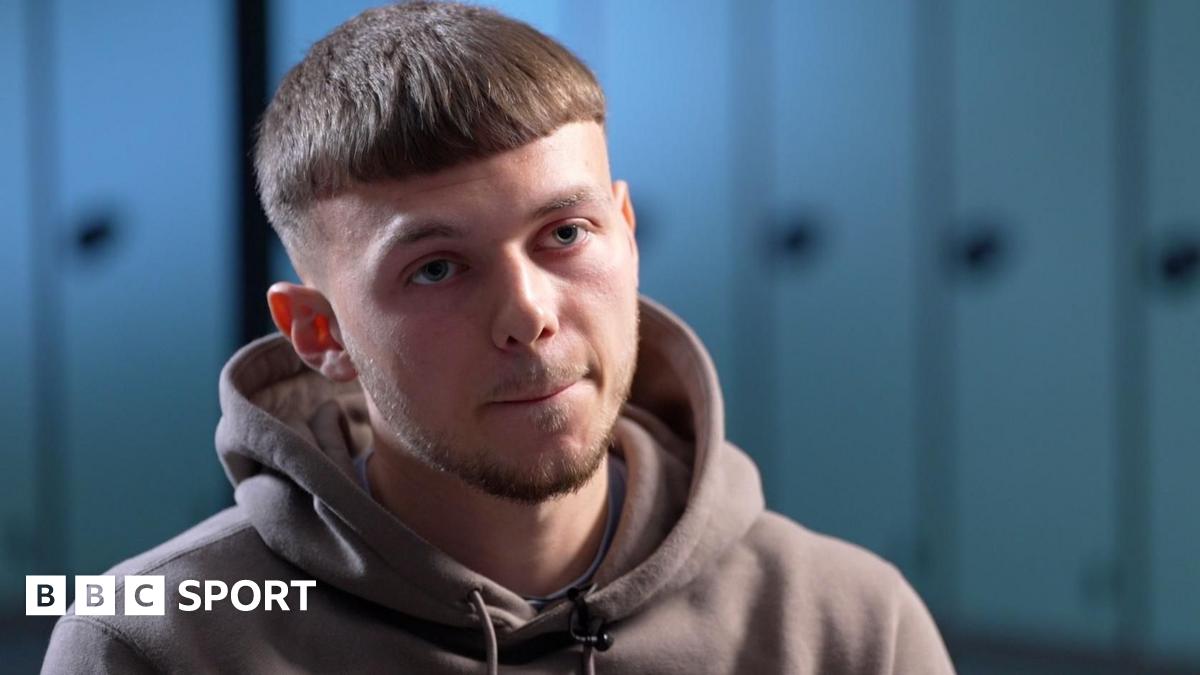
“I got stabbed on the shoulder first”, he tells BBC Sport.
“I remember jumping over the table, jumping over the chairs. I was just running down the corridor, telling people, ‘there’s a guy with a knife, run, I’ve been stabbed, run, run, run’. I was screaming. I think I was the first person that got stabbed. I felt the pain. But adrenaline kicked in.
“That split second, me jumping over the table, saved me. All I thought about was just running for my life, getting off that train. As I got down to the first or second carriage, I pulled the alarm, and was just drenched with blood.”
“I was thinking I wasn’t going to see my family again, if I died, and that was the main worry for me”, he says. “Normally I would drive back down to London. That was the first time I got on a train to go back. What’s the chance of that happening? It’s crazy.”
The train made an emergency stop at Huntingdon where it was met by armed police. Having been given first aid by a fellow passenger, Gjoshe managed to get himself out to the station car park, from where paramedics rushed him to hospital.
It was only after surgery that he learned he had sustained seven wounds to his bicep, shoulder and arm.
The knife, he was told by the medics, “had gone through my muscles” coming fractionally close to hitting a nerve in his arm.
When asked if he feared his footballing career could be over, he says, “I was very worried. Just thinking, ‘what damage has happened to me?’ I didn’t have a clue until I had the surgery. They said, ‘It’s not much from the nerve. You’re very lucky’.”
In the days that followed, Gjoshe recalls: “They had to move me from ward to ward because of the media that were coming there looking for me.”
Having been released from hospital, Gjoshe faced several months of rehab, only returning to full training in March, something he describes as “a big relief. I started to get the movement of my arm, day by day it was getting better. It was an amazing feeling”.
Despite handling what he has been through with impressive stoicism, Gjoshe has not been on a train since the mass stabbing.
“I wouldn’t want to now. You just never know know. It’s best to be safe. I just can’t trust anything now”, he says.
NEW YORK — President Trump won’t have to pay an $83-million defamation award to a longtime advice columnist until the U.S. Supreme Court gets a chance to review the case or reject an appeal, according to a court entry Tuesday.
The 2nd U.S. Circuit Court of Appeals agreed to a request by one of Trump’s lawyers to let the president delay the payment to E. Jean Carroll, though it required that Trump post a $7.4-million bond to cover any additional interest costs, a request Carroll’s attorney had made.
The appeals court late last month refused Trump’s request for a rare meeting of the full 2nd Circuit to hear an appeal of a three-judge panel’s affirmation of the January 2024 verdict.
Afterward, Trump attorney Justin D. Smith asked the 2nd Circuit to stay the effect of its decision upholding the award so that the president would not be forced to pay the judgment before the high court has a chance to consider an appeal.
Smith said last week there was a “fair prospect” that the Supreme Court will find in favor of Trump, who has called Carroll’s claims — first made publicly in 2019 — that she was sexually attacked by Trump in a Manhattan luxury department store dressing room in the spring of 1996, a “made-up scam.”
The $83-million award to Carroll, 82, came from a jury that briefly heard Trump testify and observed his animated behavior for several days.
In upholding the verdict, a 2nd Circuit panel wrote in September 2025 that Trump continued his attacks against Carroll for at least five years, making them “more extreme and frequent as the trial approached.”
“He also continued these same attacks during the trial itself,” the appeals court said. “In one such statement, issued two days into the trial, Trump proclaimed that he would continue to defame Carroll ‘a thousand times.’ ”
The jury had been instructed to accept the findings of a jury that in May 2023 awarded Carroll $5 million after concluding Trump sexually abused her in the department store and then defamed her after she published her account of it in a 2019 memoir.
Trump is challenging the $83-million award on several grounds, asserting “absolute immunity” for comments he made while president as he disavowed knowing Carroll and attacked her motivations, saying they were politically driven or arose from a desire to promote her memoir.
Sisak and Neumeister write for the Associated Press.
The referee blew the whistle a few minutes before 5 p.m., on April 26, to kick off the second half of a football game. The players re-emerged on the field, and the spectators once again gathered to witness the second round of the Guyaku Local Championship Football League in the Sabon Gari area of Guyaku, a small community in the Gombi Local Government Area (LGA) of Adamawa State, northeastern Nigeria.
Just minutes into the match, another sound pierced the air across the football pitch, but it wasn’t the referee’s whistle this time. It was sporadic gunshots that alerted the players and the spectators that something terrible was about to unfold.
The gunshots continued from different directions, their sound drawing closer. As the confused crowd tried to make sense of the situation, some armed men arrived at the football field on motorcycles. They opened fire on the crowd, and in that instant, people scrambled for safety, while others fell dead on the pitch.
Within minutes, Istifanus Hassan, an eyewitness who narrowly survived the attack, said that everywhere was thrown into chaos as screams and smoke filled the air.
“We ran into the bushes, but they [terrorists] followed people with their motorcycles and were shooting them in the bush,” he recalled. Although he survived, Istifanus said what he witnessed while hiding in a nearby bush that evening may haunt him forever.
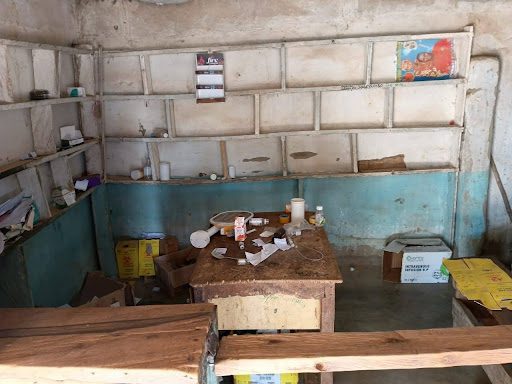
The terrorists burnt down houses, motorcycles, shops, and a church. They also looted at least three grocery shops and a chemist. “They used motorcycles to pack the items after killing the shop owners. They packed all the items and burnt the shops down,” he said, adding that they made away with medicines as well.
The terrorists looted a chemist and left with all the medicines, leaving behind an empty store. Photo: Hamman Basmani.
“I watched my community members and relatives fall dead to the ground. The men were targeted and shot in the head, and the women were spared,” Istifanus said.
But not every woman survived the attack. Other residents told HumAngle that all the women captured by the terrorists were left unharmed, but two women lost their lives in the incident. Their deaths were attributed to stray bullets.
One of the deceased was 28-year-old Sintiki Dimas, who went to the football pitch to sell snacks to spectators. As a petty trader, Sintiki relied on selling local snacks like kuli-kuli to support herself and her younger siblings.
Her mother, Bata Dimas, said Sintiki was killed while trying to flee, adding that her daughter’s trade was a great source of support to her eight younger siblings and the rest of the family.
The other woman, who also lost her life in the attack, was fleeing with her toddler strapped to her back when a bullet hit and killed her. “The baby was also shot on his leg, but he’s currently receiving treatment,” an eyewitness, who asked not to be named, told HumAngle.
The attack continued for hours.
By the following day, the Islamic State West African Province (ISWAP), a Boko Haram breakaway, had claimed responsibility for the assault. The attack, which killed at least 33 residents and injured seven others, happened barely two months after ISWAP attacked a military base in Hong, a nearby local government area.
Residents say it exposed longstanding security gaps in the border community, triggered fresh displacement, and revived fears of a return to the deadly years of insurgent violence that have devastated the region.
The first attack in a decade
It is not the first time terrorists have invaded Guyaku, but it is the first time since 2015, when the Boko Haram insurgency was at its peak in Adamawa. Then, “they burnt almost the entire village to the ground that year, but luckily, we all fled, and no one was harmed,” said Hamman Basmani, the Wakili (community leader) of Guyaku.
By 2016, most residents who had fled the area had returned and resumed their usual activities.
Guyaku is an agrarian community, and residents – over a thousand of them, according to Hamman – mainly rely on farming for survival. Since the 2015 attack, he said, the residents had lived peacefully until the recent incident.
Guyaku sits near the border between Borno and Adamawa states. Map illustrated by Mansir Muhammed/HumAngle.
While other residents returned to Guyaku after the 2015 incident, Barnabas Benaiah was among those who did not. He relocated to Hong with his nuclear family, while his extended family remained in Guyaku.
“I’m not currently staying in Guyaku, but I’m always there,” he said, meaning that he visits regularly. He added that he feels attached to his hometown, which is why he stayed in a neighbouring town.
When ISWAP attacked Guyaku in April, Barnabas lost three family members. Two were his brothers, and the other was his niece. “They [his brothers] all had families and had left behind pregnant wives,” he told HumAngle.
Get our in-depth, creative coverage of conflict and development delivered to you every weekend.
Subscribe now to our newsletter!
Barnabas noted that the attack in Guyaku was tactical.
“They were after men,” he said, echoing testimonies from other residents. “Mostly young men, so they targeted spots where these men could be found, such as the football pitch, local joints, and front yards. They shot the men in the head, and when they encountered women, they told them to walk away because they had nothing to do with them. The women who died were hit by flying bullets.”
A recent academic study on gendercide in the Lake Chad insurgency found that such patterns have appeared in previous ISWAP and Boko Haram attacks, where adult men are often perceived as potential fighters, vigilantes, informants, or collaborators with the state.
Residents say the terrorists pursued residents who ran towards neighbouring communities and killed them, while also looting valuables, such as motorcycles. “They went to a commercial charging store and packed all the phones from there. They were still looting shops when soldiers from Garkida town arrived, so they abandoned some of the items and ran,” Barnabas said.
Tela Bala, Kwari, Kwana, and other communities within Guyaku were also affected. “[Several] people from these communities have now fled to urban centres,” he added.
Istifanus remained in the bush until the gunshots ceased. He came out and joined other residents in recovering dead bodies. Most of the corpses were found at the football pitch, while some were recovered in front of houses and across the street.
“The corpses I saw and counted that day were up to 28, but I couldn’t stay to continue identifying the bodies,” he recounted. “I became emotional and left.”
Hamman, the community leader, told HumAngle that other bodies were recovered in the bushes and roads leading to other villages days afterwards. He said that 33 bodies were found; 30 of them were men, and most were young.
Map showing hotspots of terror activities in towns neighbouring Guyaku. Illustrated by Mansir Muhammed/HumAngle.
Guyaku sits in Adamawa’s northwestern region. It is about 20 km from the border with Borno State and less than 15 kilometres from Kwapre, Banga, Larh, and Dabnz Kinging communities, each of which has been abandoned due to Boko Haram attacks over the years.
Guyaku, along with these border communities, falls within known terror hotspots, including forests like Alagarno and towns like Mandaragairu, where terrorists often operate and move through to attack surrounding hinterland communities along the southern Borno-Adamawa border.
In April, HumAngle reported how these abandoned agrarian communities fall within the direct line of influence of terror groups from major enclaves like Sambisa Forest and the other forests connecting local bushes in Adamawa State to those across the border in Borno, allowing them to remain geographically threatened by these groups.
Tale of terror
For residents in these communities, nowhere is safe anymore. During the April 26 attack, 39-year-old Alheri Gabriel was sitting outside his house, playing cards with his friends, when the terrorists rode towards them on motorcycles.
“At first, I was confused, and I thought they were trying to catch a thief because someone was running in front of them. I thought he was a thief, and had I tried to help them catch him, but I noticed they had guns,” Alheri recounted.
Suddenly, the terrorists ordered him to come forward, but he hesitated, and when they pointed a gun at him, he immediately started running as fast as his legs could carry him.
“While I was running, they shot me in the left shoulder, but I didn’t stop. I continued running, and they pursued me with their motorcycles, but I fled into a house and hid there until they lost track of me,” he told HumAngle.
Alheri sustained a gunshot wound to his left shoulder. He underwent surgery but is still unable to move it without pain. Photo: Alheri Gabriel.
He remained hidden while blood continued to gush from his injured shoulder. When the shooting ceased, he staggered into the street and was assisted by other residents. Alheri was first rushed to a hospital in Gombi town, along with other injured people, before being transferred to the Modibbo Adama University Teaching Hospital in Yola, the Adamawa State capital, for further treatment.
Later, he learnt the men he had been playing cards with were all shot and their bodies set ablaze by the terrorists in the front yard.
He underwent surgery on May 1 and is still recovering, but he fears his life will never be the same. “I have a wife and young children. I’m a skilled photographer and a barber, and I don’t think I’ll be able to recover soon or resume work,” he said.
With a family to feed, Alheri hopes to recover soon so he can return to his business. However, something has changed. “I don’t think I’ll return to Guyaku,” he said.
His wife and children have fled to another town, where they are living with relatives.
Empty streets
More than a week after the ISWAP attack, residents – especially women and children – have continued to flee Guyaku despite assurances from the Adamawa State government that security would be strengthened in the area and that justice would be served.
“Only the men are left here, and we are not more than 20,” Hamman said, adding that residents are worried about the security gaps that exist in the area.
During an assessment visit two days after the attack, Ahmadu Fintiri, the Governor of Adamawa State, said, “We are intensifying security operations immediately to restore peace and ensure every resident feels safe in their home again. We will rebuild, and we will remain resilient.”
Grocery shops were looted and then set ablaze by the terrorists who invaded Guyaku. Photo: Hamman Basmani.
Despite those assurances, residents say the security presence in the community has remained inadequate. Although a group of soldiers, local vigilantes, and hunters were stationed there in the early days after the attack, the military officers have since withdrawn.
“The local security team goes round the community, but there is no security post or unit we can report to during emergencies,” Hamman said.
For many residents, however, the absence of formal security is not new. Guyaku has long relied on the local vigilante group for security, but they are poorly equipped to repel major terror attacks. The nearest police stations are in Gombi and Garkida, about a 30- to 40-minute drive away.
The lingering insecurity has also disrupted efforts to bury some of the victims. Barnabas said some of the corpses are yet to be buried as their family members have since fled the area. “A mass burial was scheduled, but no agreement was reached, so individuals began burying their dead, and those whose relatives fled were paired with other victims,” he said. “At the cemetery, we got a call that the terrorists had just been spotted, and that was how the burial rites were abandoned. Everyone fled,” he stated.
Hamman, who continues to lead the community during the crisis, said residents are pleading with the government to deploy more security personnel to the area.
“[They should] send soldiers to join hands with the vigilantes and protect us. If people see security personnel patrolling the area, they will want to come home. But if there are no security personnel, even if the people want to come back home, they will be discouraged.”
WASHINGTON — A man accused of storming the White House Correspondents’ Association dinner while armed with guns and knives pleaded not guilty on Monday to charges that he attempted to kill President Trump and fired a shotgun at a Secret Service officer who tried to stop the attack.
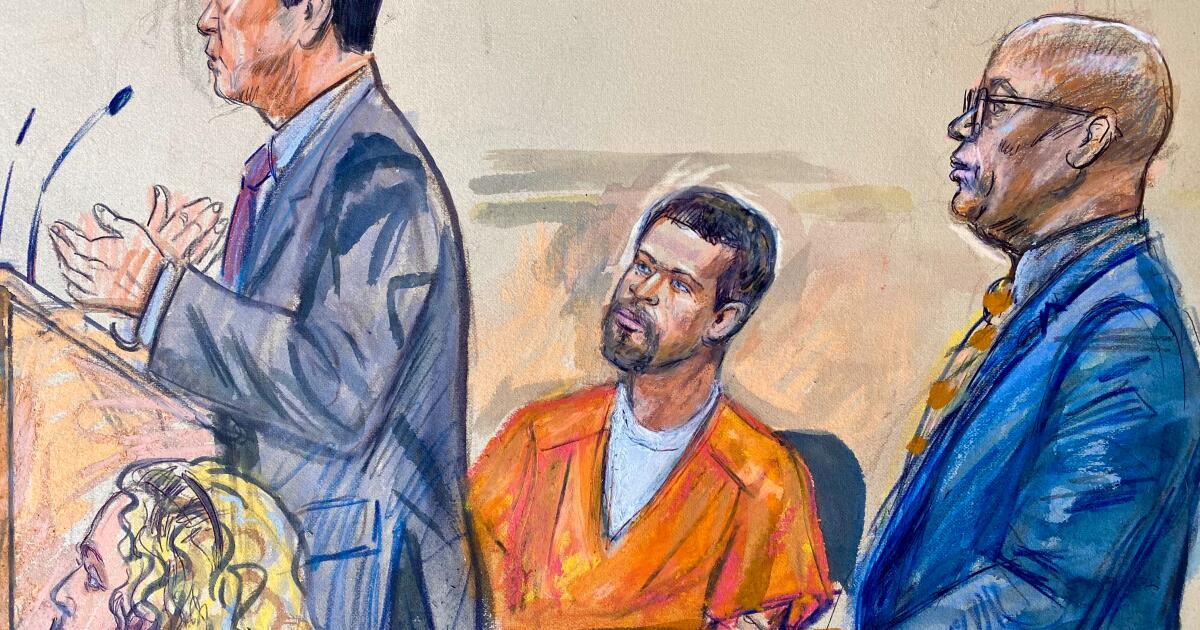
Cole Tomas Allen was handcuffed and shackled and wearing an orange jail uniform when he appeared in federal court for his arraignment. Allen didn’t speak during the brief hearing. One of his attorneys entered the plea on his behalf.
Allen’s lawyers are asking U.S. District Judge Trevor McFadden to disqualify at least two top Justice Department officials from direct involvement in prosecuting him because they could be considered victims or witnesses in the case, creating a potential conflict of interest.
Acting Atty. Gen. Todd Blanche and U.S. Atty. Jeanine Pirro were attending the event when Allen ran through a security checkpoint and fired a shotgun at a Secret Service officer, authorities said. In a court filing last week, Allen’s attorneys argued that it creates at least the appearance of a conflict of interest for Blanche and Pirro to be making any prosecutorial decisions in the case.
McFadden, a Trump nominee, didn’t rule from the bench on that question but asked Allen’s attorneys to elaborate on the possible scope of their recusal request. Defense attorney Eugene Ohm said the defense likely would seek to disqualify Pirro’s entire office from involvement in the case. Ohm acknowledged that a bid to disqualify the entire Justice Department would be unlikely.
“That would be quite a request,” the judge said.
McFadden gave prosecutors until May 22 to respond in writing to the defense’s request. The judge asked the government to specify whether it believes Pirro and Blanche could be considered victims in the case.
“That might add some clarity here,” McFadden said.
In their filing, Allen’s attorneys suggested that the appointment of a special prosecutor might be warranted.
Allen is scheduled to return to court on June 29.
A Secret Service officer was shot once in a bullet-resistant vest during the April 25 attack at the Washington Hilton hotel, which disrupted and ultimately prompted an early end to one of the highest-profile annual events in the nation’s capital. The officer fired five shots but didn’t hit anybody, authorities said.
Allen, 31, of Torrance, was injured but was not shot.
Besides the attempted-assassination count, Allen also is charged with assaulting a federal officer with a deadly weapon and two additional firearms counts. He faces a maximum sentence of life in prison if convicted of the attempted assassination charge alone.
Allen was placed on suicide watch after his arrest, but jail officials removed him from that status after several days. Allen’s attorneys complained that he had been unnecessarily confined in a padded room with constant lighting, repeatedly strip searched and placed in restraints outside his cell.
Allen told FBI agents that he didn’t expect to survive the attack, which could help explain why he was deemed to be a possible suicide risk, a Justice Department prosecutor has said.
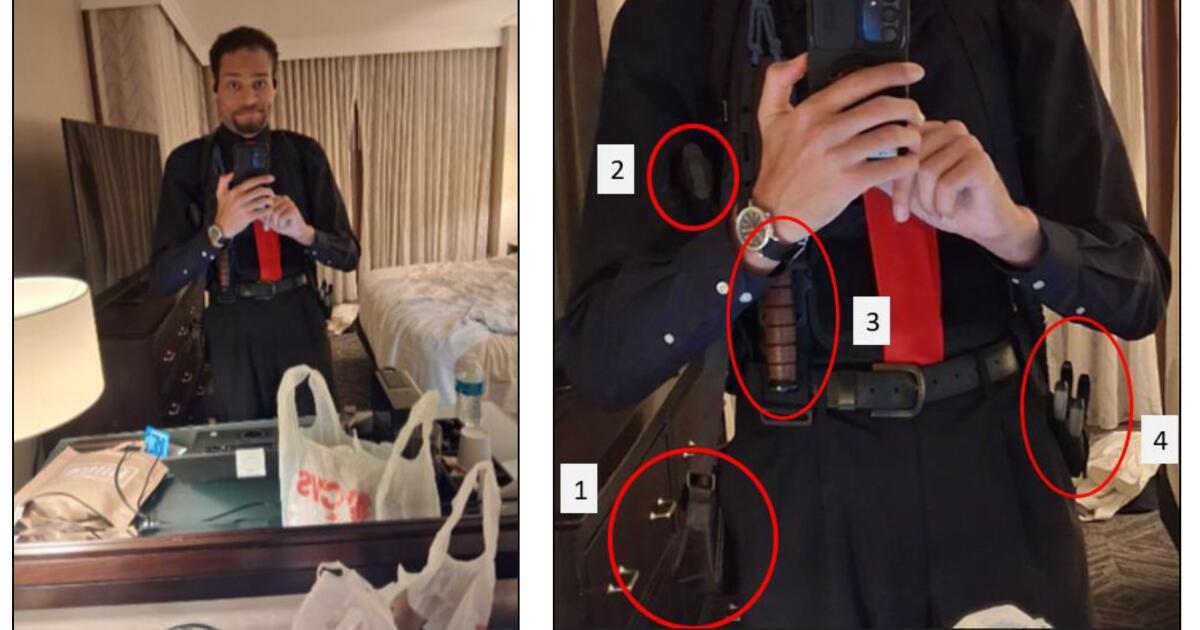
Allen was outfitted with an ammunition bag, a shoulder gun holster and a sheathed knife when he took a photo of himself in his room at the hotel just minutes before the attack, according to prosecutors. In a message that authorities say sheds light on his motive, Allen referred to himself as a “Friendly Federal Assassin” and alluded obliquely to grievances over a range of actions by Trump’s Republican administration.
Authorities have alleged that Allen on April 6 reserved a room for himself at the Hilton where the event would be held weeks later under its typical tight security. He traveled by train cross-country from California, checking himself into the hotel a day before the dinner with a room reserved for the weekend.
Trump was rushed off the stage by his security team at the Saturday night event and appeared at the White House two hours later, still in his tuxedo, to talk about the attack and the suspect.
“When you’re impactful, they go after you. When you’re not impactful, they leave you alone,” the president said. “They seem to think he was a lone wolf.”
Bomber and several fighters detonate explosives-laden vehicle near security post in Bannu, Khyber Pakhtunkhwa, near Afghanistan.
Published On 9 May 20269 May 2026
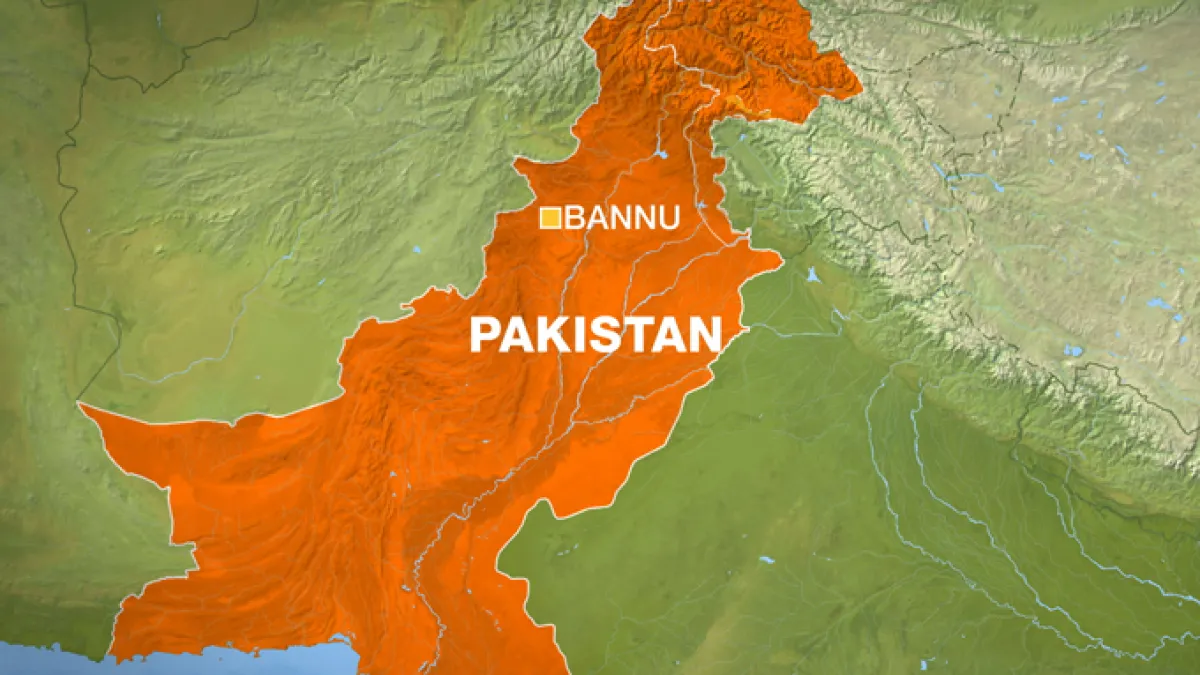
A car bombing at a police post followed by an intense firefight has killed at least three officers in northwestern Pakistan, according to police and security sources.
The attack took place in Bannu, a district in Khyber Pakhtunkhwa province bordering Afghanistan, late on Saturday.
Recommended Stories
list of 3 itemsend of list
Police official Zahid Khan told The Associated Press that a suicide bomber and several fighters detonated an explosives-laden vehicle near a security post. Shortly after, multiple explosions were heard and the security post collapsed from the impact of the blast, he said.
Pakistan’s Dawn reported that nearby civilian areas also suffered severe damage due to the blasts, and two civilians were injured.
The Reuters news agency, citing security officials, reported that after the bombing, there was an ambush on police personnel rushing to the scene to provide backup.
Police official Sajjad Khan told Reuters that more casualties were feared. He added that fighting was ongoing and the extent of the damage would only be known once the operation was over.
Police sources told Reuters the aggressors also used drones in the attack.
Ambulances from rescue agencies and civil hospitals were dispatched to the scene, with officials saying a state of emergency has been declared in government hospitals in Bannu.
No group immediately claimed responsibility. However, such attacks have the potential to reignite fighting along Pakistan’s border with Afghanistan.
The worst fighting in years erupted between the allies-turned-foes in February, with Pakistani air strikes inside Afghanistan that Islamabad said targeted fighters’ strongholds.
Fighting has since eased, with occasional skirmishes breaking out along the border, but no official ceasefire has been brokered.
Islamabad blames Kabul for harbouring armed groups who use Afghan soil to plot attacks in Pakistan. The Taliban has denied the allegations and said militancy in Pakistan is an internal problem.
The Pakistan Taliban, known as Tehrik-e-Taliban Pakistan (TTP), and allied fighter groups have carried out similar attacks in the past. The Pakistan Taliban is a separate group but is often aligned with the Afghan Taliban, who seized power in Afghanistan in 2021.
WASHINGTON — A man charged with attacking the White House Correspondents’ Assn. dinner is seeking to disqualify top Justice Department officials from direct involvement in prosecuting him because they could be considered victims or witnesses in the case, creating a potential conflict of interest.
Acting Atty. Gen. Todd Blanche and U.S. Atty. Jeanine Pirro were attending the April 25 event at the Washington Hilton when Cole Tomas Allen allegedly ran through a security checkpoint and fired a shotgun at a Secret Service officer.
In a court filing late Thursday, Allen’s attorneys argued that it creates at least the appearance of a conflict of interest for Blanche and Pirro to be making any prosecutorial decisions in the case.
“As this case proceeds closer to trial, the country and the world will continue to wonder — how can the American justice system permit a victim to prosecute a criminal defendant in a case involving them?” defense attorneys Eugene Ohm and Tezira Abe wrote.
Ohm and Abe, who are assistant federal public defenders, suggested that the appointment of a special prosecutor might be warranted. They urged U.S. District Judge Trevor McFadden, a Trump nominee assigned to Allen’s case, to disqualify Pirro, Blanche and possibly other Justice Department officials from direct involvement in the investigation and prosecution.
“Both heard gunshots, which presumably forced them to duck below the tables with the rest of the occupants. They were quickly evacuated. Shortly thereafter, they learned that law enforcement believed the target was certain administration officials,” Ohm and Abe wrote.
Pirro said her office will respond to the defense lawyers’ arguments in its own court filing.
“We will not tolerate people who come to the District of Columbia to engage in antidemocratic acts of political violence; and we will prosecute all such acts to the fullest extent of the law,” Pirro said in a statement.
Allen is scheduled to be arraigned Monday on charges in an indictment handed up Tuesday by a grand jury in Washington.
The charges include attempting to assassinate President Trump, who is a longtime friend of Pirro’s. Blanche served as a personal attorney for Trump before joining the Justice Department last year.
Blanche, through a spokesperson, referred a request for comment to Pirro’s office.
Allen also is charged with assaulting a federal officer with a deadly weapon and two additional firearms counts. He faces a maximum sentence of life in prison if convicted of the attempted assassination charge alone.
The Secret Service officer who was shot once in a bullet-resistant vest fired his own weapon five times without hitting anybody. Allen, 31, of Torrance, was injured but was not shot.
Tim Martin has spoken out after Ryanair boss Michael O’Leary claimed drinking booze at UK airports, such as London Heathrow, should be banned before a certain time
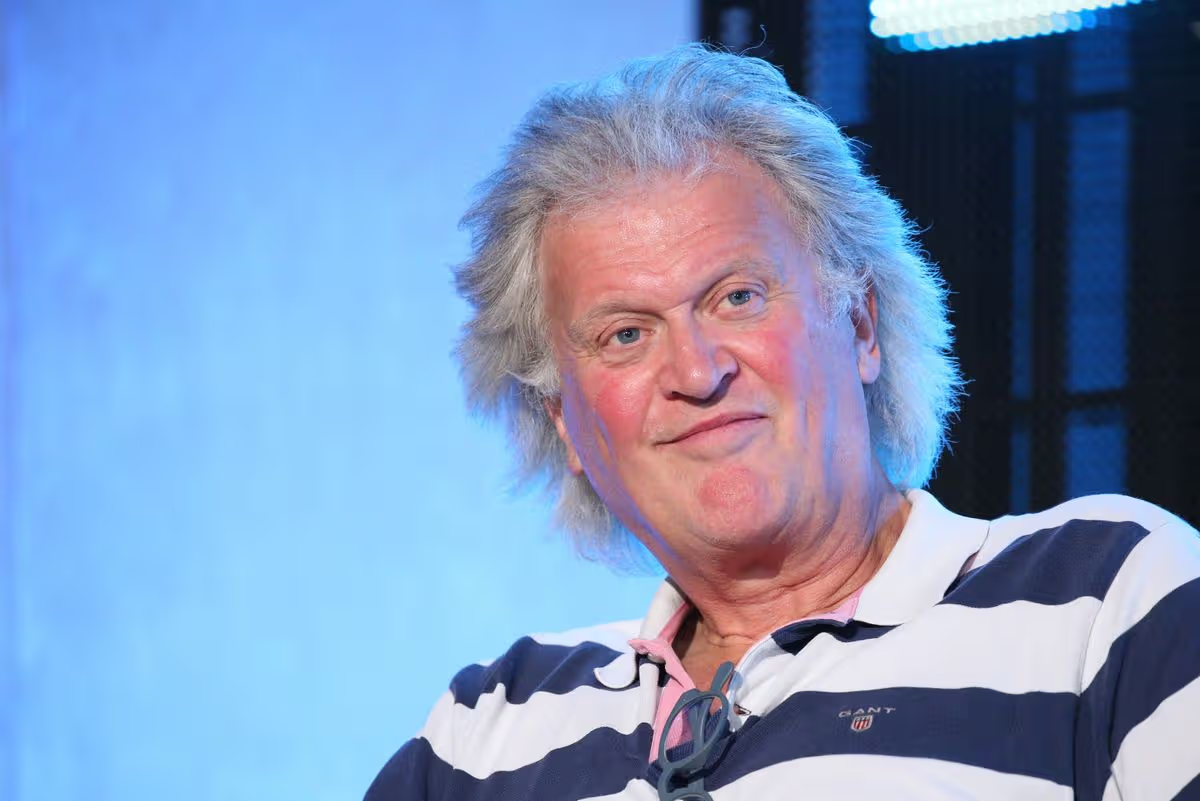
Tim Martin, the Wetherspoons boss, has argued against a early-morning ban of booze at airports(Image: PA)
The boss of JD Wetherspoons has hit back at the Ryanair CEO’s claims alcohol shouldn’t be served at UK airports in the early hours of the morning.
Tim Martin, who founded his pub chain in 1979, said Michael O’Leary’s suggestion would require passengers being breathalysed at airports. He described the plan as “an overreaction”.
But Mr O’Leary, boss of the budget airline, had claimed an average of nearly one flight every day is diverted due to disruptive passengers fuelled by booze. The 65-year-old businessman said these tourists often drink in bars at airports for hours before they board their planes, and called on a ban on serving booze at airport bars in the early hours of the morning and a two-drink limit thereafter.
Mr Martin, though, has said: “A two-drink limit would be extraordinarily difficult to implement, short of breathalysing passengers, and would, in our opinion, be an overreaction — especially since many of the problems stem from incoming flights. It is in everyone’s interests to have good behaviour at airports and on flights.”
Mr Martin, 71, also told The Times it had “never been suggested” its customers cause disruption on flights. JD Wetherspoon told the newspaper that pubs in airports were “highly supervised” with strict policies preventing excessive alcohol consumption.
Airside bars in the UK are not required to follow restrictions on opening hours which apply to other venues selling alcohol. Being drunk on a plane is a criminal offence in the UK and can be punished by a fine of up to £5,000 and two years’ imprisonment.
But alcohol can be served on flights, including those of Ryanair, and there have been no calls on this practice. This, coupled with alcohol consumption at airports, has led to a number of incidents of disruption recently.
And, on Thursday, Ryanair welcomed the decision by a court in France which it said found two passengers guilty of causing disruption onboard a flight from Stansted to Ibiza that was diverted to Toulouse in May last year. The pair received a combined penalty of more than 10,000 euros (£8,640) and received suspended prison sentences of up to 10 months, according to the airline.
Speaking earlier this week, Mr O’Leary shared his plans. The father of four had said: “I fail to understand why anybody in airport bars is serving people at five or six o’clock in the morning. Who needs to be drinking beer at that time? There should be no alcohol served at airports outside [those] licensing hours.”
Champions League analysts Stephen Warnock, Nedum Onuoha and Guillem Balague explain how Arsenal were able to “make life difficult” with the use of a man-to-man press high up the pitch to force Atletico Madrid to play the ball long in their semi-final second leg at the Emirates Stadium.
The ceasefire between the US and Iran has been in place for nearly four weeks. The Strait of Hormuz has not been at peace for a single day.
This week pushed that contradiction to its most dangerous point yet. The United States launched Project Freedom, a naval escort operation designed to guide roughly 2,000 ships stranded on either side of the Strait through to open water. Iran said any ship attempting passage without IRGC permission would be fired on. Within hours, both sides were claiming to have hit the other, the UAE was scrambling missile alerts for the first time since the ceasefire began, an oil refinery in Fujairah was on fire, and commercial aircraft bound for Dubai were turning around mid-air.
As of Tuesday evening, Trump announced Project Freedom would be paused “for a short period of time” to see if an agreement with Iran could be reached. Secretary of State Rubio told reporters the US was now in a “defensive” posture. Twenty-four hours earlier, both sides had been shooting and denying it simultaneously.
Here is what we know, what is contested, and what it means.
What Is Project Freedom and Why Did the US Launch It?
Trump announced the operation on Sunday, framing it in humanitarian terms, an effort to free the seafarers and cargo companies that had done nothing wrong and were caught between two governments fighting a war neither had formally ended. About 2,000 ships have been stranded on either side of the Strait since late February, unable to move without IRGC permission, which Iran began requiring and charging for after the ceasefire took effect.
The US had already begun a naval blockade of Iranian ports on April 13. Project Freedom was the next escalation — a direct challenge to Iran’s assertion that the Strait was now under its operational control. Trump described it as a “humanitarian gesture.” Iran described it as a violation of the ceasefire and an act of military aggression in a sensitive oil region that affects the economies of countries around the world.
Two American-flagged merchant ships successfully transited the Strait on Monday with US Navy escort. A Danish shipping company confirmed one of its vessels crossed with US military protection. But the transit did not go smoothly.
Did Iran Attack a US Warship? What the Claims Say
By Monday afternoon, the competing narratives had become almost impossible to untangle, which is itself part of the story.
Iran’s Fars News Agency reported a US warship had been hit by two Iranian drones after refusing to turn back from the Strait. CENTCOM denied any warship had been hit. US Admiral Brad Cooper said CENTCOM forces had sunk six IRGC vessels that tried to interfere with Project Freedom. Trump later said seven. Iran’s state broadcaster then reported that Tehran had launched an investigation and its preliminary conclusion was that the vessels the US claimed to have sunk were not IRGC boats at all, they were two small civilian craft carrying passengers from Oman to the Iranian coast, and five civilian passengers had been killed. The US has not commented on that claim and it has not been independently verified.
Why Iran Attacked the UAE in 2026: The Fujairah Strike Explained
The UAE’s Ministry of Defense said its air defenses engaged 15 ballistic missiles, three cruise missiles, and four drones launched from Iran on Monday, the first Iranian attacks on the UAE since the ceasefire took effect on April 8. One drone struck an oil refinery in Fujairah, wounding three Indian nationals and setting the facility ablaze. Four missile alerts were issued across the country, sending residents to shelter. Commercial aircraft bound for Dubai and Abu Dhabi turned around in mid-flight.
Iran’s position was that the Fujairah attack was not a premeditated strike on the UAE but a consequence of what it called US military adventurism in the Strait. An Iranian military official said the Islamic Republic had no preplanned programme to attack UAE facilities, and that what happened resulted from the US attempt to create an illegal passage through restricted waters. The UAE’s Foreign Ministry rejected that framing entirely, condemning what it called renewed terrorist and unprovoked Iranian attacks on civilian sites, and warning it reserves the full right to respond.
Why the Attack Claims Cannot Be Independently Verified
One detail worth noting is the shifting count of Iranian vessels supposedly sunk. Admiral Cooper said six. Trump said seven. No independent observer has confirmed either figure, and Iran has denied any IRGC boats were hit at all. This pattern: each side claiming damage inflicted while denying damage received, with no neutral verification , has run throughout the conflict and is not unique to this week’s exchange. What is different now is that the Strait is supposed to be under a ceasefire, and the exchanges are happening in a waterway where 2,000 civilian ships are anchored and waiting to see who wins the argument.
How the Hormuz Escalation Is Threatening Iran Ceasefire Talks in 2026
Trump’s decision to pause Project Freedom on Tuesday is significant precisely because of how quickly it followed the launch. The operation began Sunday. By Tuesday, with the UAE under attack, Iranian drones targeting ships in the Strait, and competing claims circulating with no resolution, the White House stepped back. Rubio reframed the entire mission as defensive rather than offensive, and a new UN Security Council resolution on freedom of navigation was announced, co-authored by Bahrain, Saudi Arabia, the UAE, Kuwait, and Qatar. A previous similar resolution was vetoed by China and Russia, and the outlook for this one is no clearer.
The pause does not resolve the underlying problem. The Strait remains contested. Iran still insists ships must seek IRGC permission and pay for transit. The US still insists the Strait is international water under international law. Two thousand ships are still stranded. And the ceasefire that is supposed to govern all of this is being tested in ways its text was never designed to handle.
The attacks this week did not happen in isolation from the negotiations still technically underway. Pakistan has been trying to bring the US and Iran back to a second round of talks after the Islamabad discussions collapsed on the nuclear question in April. Every exchange of fire, every competing claim, every missile alert in Abu Dhabi makes that second round harder to convene and harder to trust once convened.
As Shahram Akbarzadeh, a professor in Middle East and Central Asian politics at Deakin University, told Al Jazeera: “We see escalation after escalation against the backdrop of shuttle diplomacy. Such attacks, even if they are aimed to be contained, risk exploding into another major combat.” Neither the Americans nor the Iranians want a return to full-scale war, Akbarzadeh said, but neither is prepared to show weakness. “This dynamic has locked them in a perpetual conflict and in desperate need of a circuit breaker.”
The circuit breaker Pakistan offered in April produced a ceasefire. That ceasefire is now generating its own escalation cycle, in twenty-one miles of water, over a question neither side has answered: who controls the Strait of Hormuz, and on what terms does the world’s most important waterway reopen.