attack

Ukraine claims attack on Russian warships in occupied Crimea | Russia-Ukraine war News

Ukraine’s military intelligence says it struck two large landing ships in Sevastopol Bay in Russian-occupied Crimea.

Ukraine and Russia have attacked each other overnight, with Ukrainian drones striking Russian assets in Black Sea ports and Russia hitting several regions across Ukraine, including the capital Kyiv.

Ukraine’s GUR military intelligence unit claimed attacks on two Russian landing ⁠ships and a radar station in Sevastopol Bay in Russian-occupied Crimea. It says the $150m vessels were successfully hit and radar equipment destroyed.

Recommended Stories

list of 3 itemsend of list

In Russia, Ukrainian drones targeted the port of Tuapse, killing at least one person, injuring another and damaging transport infrastructure, according to regional governor Veniamin Kondratiev.

The strike was the second on the port in three days, hours after a fire from a previous attack was extinguished.

Russia’s Defence Ministry said air defences destroyed 112 Ukrainian drones overnight.

INTERACTIVE-WHO CONTROLS WHAT IN UKRAINE-1776241851
(Al Jazeera)

Ukraine reported a series of Russian attacks on Ukrainian territory overnight, including in Kyiv, Kharkiv, Kherson, Sumy and Zaporizhia regions.

Drones hit a car in the city of Putyvl in Ukraine’s border region of Sumy, injuring three women, as well as two homes in Kyiv’s Brovary district, damaging them and injuring one person, according to Ukrainian officials.

“Tonight, the enemy is again attacking the Kyiv region with drones. Under the sights are peaceful people, homes,” said Kyiv regional military administration head Mykola Kalashnyk.

Russian attacks also damaged railway infrastructure in the northeastern city of Kharkiv, according to the Interfax-Ukraine news agency.

Over the past 24 hours, Russian attacks in the Kherson region killed one person and injured seven, while injuring four others in the Zaporizhia region, Ukrainian officials said.

Moscow’s forces have hit civilian areas almost daily since the all-out invasion of its neighbour more than four years ago, with the regular assaults occasionally punctuated by massive attacks.

More than 15,000 Ukrainian civilians have died in the strikes, according to the United Nations.

There have been several rounds of United States-brokered negotiations in recent months, but they have failed to reach an agreement to stop the fighting, with the process further stalled since the outbreak of the US-Israel war on Iran.

Even before the war on Iran, progress towards a peace deal in Ukraine had been slow, due to differences over territorial issues.

Ukraine has proposed freezing the conflict along current front lines. Russia rejects that, saying it wants the whole of the Donetsk region, despite it being partly controlled by Ukraine – a demand Kyiv says is unacceptable.

Source link

US forces attack and seize Iranian ship Touska near Strait of Hormuz | US-Israel war on Iran

NewsFeed

US Central Command has published a video said to show a guided-missile destroyer firing at an Iranian-flagged cargo ship near the Strait of Hormuz. The USS Spruance fired several rounds into the Touska’s engine room for ‘violating the US blockade’, before marines boarded it.

Source link

France arrests suspect over 1982 attack on Jewish restaurant | Crime News

Mahmoud Khader Abed Adra, sought for over four decades, was surrendered by Palestinian authorities

A man suspected of organising a deadly attack on a Jewish restaurant in Paris has been arrested and placed in custody in France after being handed over by Palestinian authorities.

Mahmoud Khader Abed Adra, also known as Hicham Harb, arrived in France on Thursday after Palestinian officials surrendered him to French authorities, a handover that French President Emmanuel Macron linked directly to France’s recent recognition of Palestinian statehood.

Recommended Stories

list of 3 itemsend of list

On August 9, 1982, three to five men threw a grenade into Jo Goldenberg, a Jewish-owned restaurant in the Rue des Rosiers, in Paris’s historic Marais district, before opening fire on the street outside.

Six people were killed and 22 wounded in the incident.

The attack was blamed on the Fatah-Revolutionary Council, a Palestinian armed faction that had split from the mainstream Palestine Liberation Organization (PLO).

Adra was arrested in the West Bank by Palestinian security forces in September last year.

French antiterrorism prosecutors filed an extradition request days later, and he was flown to the Villacoublay military airbase outside Paris on Thursday, where he was taken into custody.

His lawyer described the extradition as “a serious violation of Palestinian fundamental law”.

“Forty-four years is too long,” said David Pere, a lawyer representing several families.

Two other suspects are already in French custody, and in February, France’s highest court confirmed that a trial will proceed, a ruling that had been challenged by the defendants.

Macron praised the Palestinian Authority’s cooperation, saying it reflected a commitment by President Mahmoud Abbas to work with France on counterterrorism.

Abbas had told French newspaper Le Figaro late last year that France’s recognition of Palestinian statehood in September 2025 had “created an appropriate framework” for the extradition request.

Source link

Russian attack on Ukraine’s Kyiv kills 12-year-old child, wounds 10 | Russia-Ukraine war News

BREAKING,

Kyiv’s mayor says the attacks hit Podilskyi and Obolonsky districts, causing large fires and damage to residential buildings.

Russian forces have bombed the Ukrainian capital, Kyiv, killing a 12-year-old child and wounding at least 10 people, including several doctors, according to the city’s mayor.

The child was killed early on Thursday in Kyiv’s Podilskyi district, where rocket fragments hit a 16-storey building and caused a fire at a residential building, Mayor Vitaliy Klitschko wrote in a post on Telegram.

Recommended Stories

list of 4 itemsend of list

He said rescuers have pulled another child and her mother were pulled from the rubble in Podilskyi.

The attack also hit Kyiv’s Obolonsky district, with falling rocket debris causing a large fire at a non-residential building. “Cars are also on fire,” Klitschko wrote.

More soon…

Source link

Man charged with attempted murder after attack on OpenAI CEO Altman’s home | Technology News

A 20-year-old Texan faces potential life imprisonment after an arson attack on Sam Altman’s San Francisco residence.

Authorities in the United States have charged a 20-year-old Texas man with attempted murder and arson after he allegedly threw a Molotov cocktail at the home of OpenAI CEO Sam Altman.

Daniel Moreno-Gama faces two counts of attempted murder and nine other charges following last week’s arson attack on Altman’s residence in San Francisco, District Attorney of San Francisco Brooke Jenkins said on Monday.

Recommended Stories

list of 4 itemsend of list

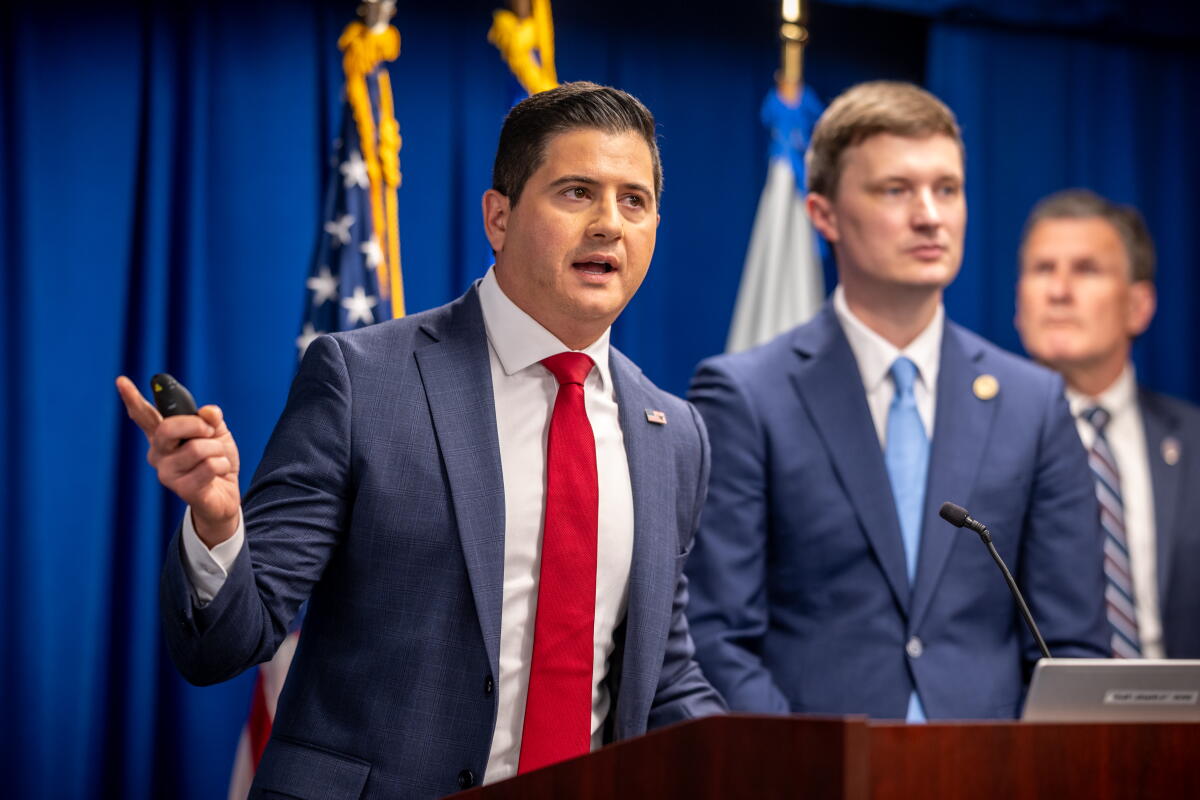
“We interpret this behaviour for just what it is: An attempt on Mr Altman’s life and an extreme danger to those around him and those who work for his company,” Jenkins said at a news conference.

“As the DA, my office will prosecute this case to the fullest extent of the law.”

Moreno-Gama is also separately facing federal charges of attempted damage and destruction of property by means of explosives, and possession of an unregistered firearm.

Moreno-Gama faces the possibility of life in prison under the charges.

BJ
San Francisco District Attorney Brooke Jenkins speaks during a news conference on Monday in San Francisco [Jeff Chiu/AP]

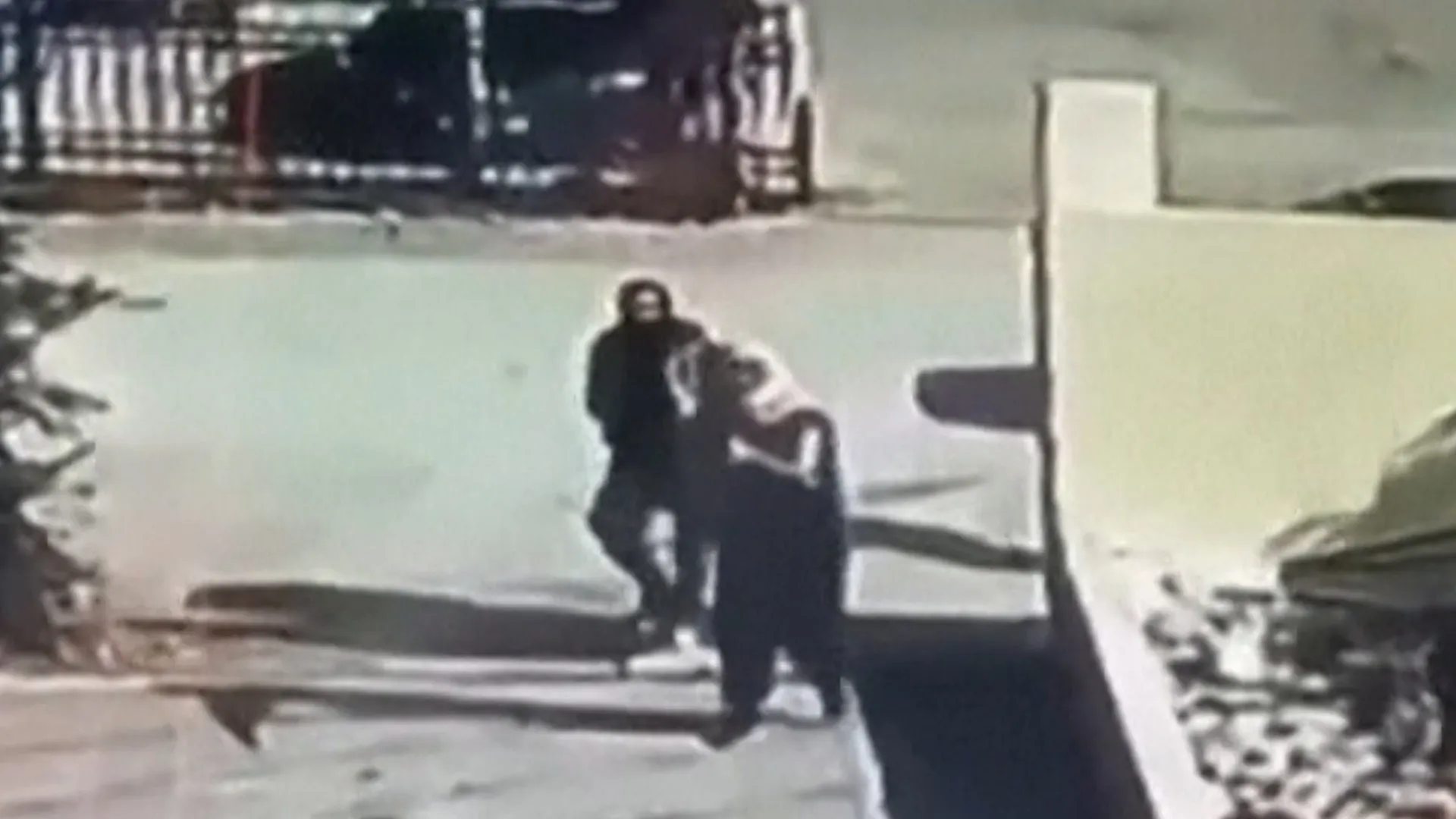
Moreno-Gama, from Houston, Texas, was captured on a security camera hurling an incendiary device at Altman’s home shortly after 3:30am local time on Friday, according to an FBI affidavit.

The suspect then travelled to OpenAI’s San Francisco headquarters, where he struck the building’s glass doors with a chair and stated his intention to “burn it down and kill anyone inside”, according to the affidavit filed in US District Court for the Northern District of California.

After arresting Moreno-Gama at the scene, police recovered incendiary devices, a container of kerosene, a lighter, and a document espousing opposition to artificial intelligence and tech executives, including Altman, according to the affidavit.

The document recovered at the scene stated that Moreno-Gama had killed or attempted to kill Altman, and that he “must lead by example and show that I am fully sincere in my message”, according to the filing.

Altman, whose company’s release of ChatGPT in 2022 marked a watershed in the rollout of AI, has become a lightning rod for heated discussion about the potential risks and benefits of the rapidly advancing technology.

In a blog post after Friday’s arson attack, Altman said that while much criticism of the tech industry was driven by sincere concerns about the “incredibly high stakes” of AI, it was time to turn down the heat of the public debate.

“While we have that debate, we should de-escalate the rhetoric and tactics and try to have fewer explosions in fewer homes, figuratively and literally,” Altman said.

In her news conference, Jenkins criticised what she described as “incendiary rhetoric” about the potential impact of AI on society.

“In no way should we be at the point where a man could have lost his life over differences of opinion and concerns,” she said.

Source link

Navy Calls It Quits On Attack Submarine USS Boise’s Never Ending Overhaul

The U.S. Navy has abandoned plans to return the Los Angeles class attack submarine USS Boise to active duty. This brings an end to the saga of a still-incomplete major overhaul of the boat, which has lasted more than a decade now. In that time, it has become a poster child for the Navy’s worrisome struggles to tackle huge maintenance backlogs, as well as larger concerns about the availability, or lack thereof, of naval shipyard capacity in the United States.

The Navy announced its decision to inactivate Boise, which was first commissioned into service in 1992, earlier today.

“After a rigorous, data-driven analysis, we’ve made the tough but necessary decision to inactivate the USS Boise,” Navy Adm. Daryl Caudle, Chief of Naval Operations, the service’s top officer, said in a statement. “This strategic move allows us to reallocate America’s highly-skilled workforce to our highest priorities: delivering new Virginia and Columbia class submarines and improving the readiness of the current fleet. We owe it to our Sailors and the nation to make these tough calls to build a more capable and ready Navy.”

A picture of USS Boise sitting idle in Norfolk, Virginia, in the late 2010s. USN

“The move is part of the Navy’s broader, data-driven initiative to optimize the fleet’s composition, ensuring that every dollar is invested in capabilities that directly contribute to maintaining a decisive warfighting advantage,” the service also said in a press release. “Funds and personnel associated with the planned overhaul of USS Boise will be redirected to support other Navy priorities, including the timely delivery of America’s submarine capability.”

To date, the Navy has spent approximately $800 million on Boise’s overhaul, which is still only 22 percent complete, the service separately told Semafor. The total estimated cost to complete the overhaul had risen to $3 billion, according to Fox News.

“At some point, you just cut your losses and move on,” Secretary of the Navy John Phelan also told Fox News in an interview ahead of today’s announcement. “The Boise represents 65% of the cost of a new Virginia class submarine, yet it only delivers 20% of the remaining service life.”

The Navy had originally planned for Boise to begin its overhaul in 2013, but the timetable was repeatedly delayed, primarily due to a lack of shipyard availability. The submarine has not been to sea since it returned from its last cruise in January 2015. The boat was deemed unable to conduct normal operations by 2016, and it formally lost its dive certification the following year.

The Navy moved Boise from its home port in Norfolk, Virginia, to Newport News Shipbuilding’s facilities in 2018. Newport News Shipbuilding is a division of Huntington Ingalls Industries (HII).

The submarine returned to Norfolk the following year amid competing funding priorities. It went back to Newport News in 2020, but did not actually enter a dry dock there until 2021, after which limited maintenance work began. The full overhaul was then further set back due to budgetary issues, with a formal contract only signed in 2024.

The USS Boise seen arriving at the Newport News Shipbuilding yard in 2018. HII

As of last year, the Navy was still pushing to complete Boise‘s overhaul and return it to the fleet, which was expected to occur in 2029. By that point, the submarine would have spent more than a third of its service life in port.

The overall size of the Navy’s Los Angeles attack submarine force has been steadily declining for years now already, as the service has acquired more modern and capable Virginia class types. The Navy commissioned 62 Los Angeles class boats between 1976 and 1996, and 23 remain in service today.

As noted, the Navy’s struggles with Boise are reflective of larger and more serious issues that have long challenged the service’s ability to meet even its peacetime operational demands. Back in 2018, the Government Accountability Office (GAO) published a report saying that the Navy had more than two decades’ worth of operational time across its submarine fleets due to maintenance shortfalls.

The Los Angeles class attack submarine USS Helena arrives at Norfolk Naval Shipyard for major maintenance in 2015. USN

These are concerns that would only be magnified if a large-scale conflict, especially one with China in the Pacific, were to break out. For years now, TWZ has also been sounding the alarm on the interrelated issue of dwindling U.S. naval shipbuilding capacity, in general, where the disparity with Chinese state-run enterprises has become enormous.

The Navy, with support from Congress, has been trying to take steps in recent years to reverse these trends, including moving to increasingly leverage foreign shipyard capacity. The second Trump administration, through Navy Secretary Phelan, has been particularly open about its efforts to shake up how the service acquires and maintains ships, and otherwise does business across the board. This has notably already included the cancellation of the Constellation class frigate program, which had become beset by huge delays and ballooning costs, as you can read more about in detail here. The Navy has been touting efforts to try to avoid similar pitfalls with new shipbuilding programs like the FF(X) frigate and Medium Landing Ship.

“I think, by killing these programs, it’s sending a message that we’re not going to continue to send good money after bad investments, and that we’re going to try to make prudent economic decisions that are in the best interest of the fleet and the force,” Phelan said, speaking generally around today’s anouncement about Boise, according to Semafor.

How the Navy fares in its broader efforts to turn things around when it comes to shipbuilding and maintenance remains to be seen, but the USS Boise‘s increasingly sad story is now coming to an end.

UPDATE: 2:10 PM EDT –

Todd Corillo, an HII spokesperson for the Newport News Shipbuilding division, has now provided TWZ with the following statement:

“We have been notified of the U.S. Navy’s decision to discontinue engineered overhaul (EOH) work on USS Boise (SSN 764). We will work with the Navy to execute this decision in an efficient, cost-effective way. We anticipate there will be no impact to our workforce and will transition shipbuilders currently assigned to USS Boise to other work underway at Newport News Shipbuilding.”

“We understand the importance of a strong submarine force to our national security. While our work on USS Boise will end, our commitment to ensuring our nation maintains our undersea maritime supremacy will not.”

Contact the author: joe@twz.com

Joseph has been a member of The War Zone team since early 2017. Prior to that, he was an Associate Editor at War Is Boring, and his byline has appeared in other publications, including Small Arms Review, Small Arms Defense Journal, Reuters, We Are the Mighty, and Task & Purpose.


Source link

OpenAI CEO Sam Altman’s home targeted in Molotov cocktail attack | Crime News

Police said the suspect targeted Altman’s San Francisco residence before dawn and fled the scene on foot.

A 20-year-old man has been arrested by San Francisco Police Department (SFPD) after a Molotov cocktail was thrown at the home of OpenAI CEO Sam Altman early on Friday morning.

Police in the United States said the suspect targeted the property at about 4am local time (11:00 GMT), allegedly throwing an improvised incendiary device that ignited part of an exterior gate before fleeing the scene on foot.

Recommended Stories

list of 3 itemsend of list

Authorities did not publicly identify the suspect or confirm the address where the attack took place.

Instead, in a post on the social media platform X, the police department said that a residence in the North Beach neighbourhood was affected.

However, a spokesperson for OpenAI confirmed the incident took place at Altman’s residence.

“Thankfully, no one was hurt. We deeply appreciate how quickly SFPD responded and the support from the city in helping keep our employees safe,” an OpenAI spokesperson said.

Police have not indicated a possible motive behind the attack. The suspect was ultimately located about an hour later near OpenAI’s headquarters, roughly 4.8 kilometres (three miles) away, where he was allegedly threatening to set the building on fire.

OpenAI said it is cooperating with law enforcement as the investigation continues.

Security concerns around OpenAI

The incident comes amid heightened security concerns around OpenAI’s offices, which have faced threats and protests in recent months.

Just last November, a man making violent threats to its San Francisco headquarters briefly prompted an office lockdown.

Altman and the company have increasingly become targets for activists who warn about the risks artificial intelligence could pose to society.

Critics have also raised alarm over OpenAI’s decision to collaborate with the US Department of Defense, a move that has intensified scrutiny of the company’s role in military technology.

Public sentiment towards AI remains mixed. A recent NBC News poll found that the technology is viewed even less favourably than US Immigration and Customs Enforcement (ICE), a federal agency responsible for violent immigration raids under President Donald Trump.

Despite the criticism, OpenAI’s growth has accelerated rapidly. The company said last month it was valued at $852bn, following a major funding round that raised $122bn.

Companies like OpenAI, however, face lingering questions about whether they can generate sufficient revenue to cover their high expenses.

One of OpenAI’s signature products, ChatGPT, continues to dominate the consumer AI market, with more than 900 million weekly active users and about 50 million subscribers.

The company also said usage of its search features has tripled over the past year.

Source link

Iran ceasefire deal frays as attacks continue; peace terms are unclear

A day after the United States and Iran agreed to a two-week ceasefire, the truce showed signs of strain Wednesday as Iranian leaders accused Americans of violating the agreement and reports emerged that Tehran had moved to restrict traffic through the Strait of Hormuz.

The developments tested President Trump’s ability to parlay a fragile pause in fighting into a lasting peace deal with a country he has spent weeks threatening to destroy, and raised questions about whether the Trump administration had the diplomatic leverage to hold the deal together.

The White House sought to project confidence about the ceasefire, but the fragile deal grew shakier after Israel carried out its largest attack against Hezbollah in Lebanon since the conflict began. Iran said the strikes by the U.S. ally amounted to a breach of the ceasefire terms, even as Trump and Israeli Prime Minister Benajmin Netanyahu maintained that Lebanon was not subject to the agreement.

The big issue seems to be that the two sides can’t agree on what the agreement is,” said Michael Rubin, an expert on Iran at the American Enterprise Institute. At best, he said, the two sides had secured a “tactical pause.”

Iranian Foreign Minister Abbas Araghchi said the United States must choose between a ceasefire or “continued war via Israel.

“It cannot have both,” Araghchi wrote on X. “The world sees the massacres in Lebanon. The ball is in the U.S. court, and the world is watching whether it will act on its commitments.”

Whether Iran will draw a red line over Lebanon could become a key question. The Wednesday back-and-forth represented “threshold-testing” of Iran and whether it will be willing to reengage the United States in conflict over the issue, said Ross Harrison, senior fellow at the Middle East Institute.

The parties’ prospects for reaching an agreement — and what Trump’s options become for declaring success — will depend on how the ceasefire goes in the coming days, Harrison said.

“There’s some room here … if [the Iranians] see that negotiations are real and not a pretext for further attacks,” he said. “A lot of what the United States can get depends on what the United States is willing to give — not just in terms of the points of their plan, but also in terms of the signaling that they too have an interest in de-escalating.”

Reports that Iran had moved to restrict traffic through the Strait of Hormuz, a crucial waterway whose opening was central to the truce negotiations, further complicated the ceasefire.

“Any vessel trying to travel into the sea … will be targeted and destroyed,” the Iranian navy told shipping vessels, Fars News reported. The news agency is aligned with the Islamic Revolutionary Guard Corps.

At a news briefing Wednesday, White House Press Secretary Karoline Leavitt said Trump was aware of reports that the Strait of Hormuz had been closed, a move she called both “completely unacceptable” and “false.” She added that the president expects the waterway will be “reopened immediately, quickly and safely” during the ceasefire.

Leavitt sidestepped questions about who currently controls the oil route.

Earlier in the day, at a Pentagon briefing, Defense Secretary Pete Hegseth told reporters that “commerce will flow” through the strait, but did not say whether U.S. warships would be escorting vessels through the waterway. Joint Chiefs of Staff Chairman Gen. Dan Caine, who stood next to Hegseth, was asked whether the strait was open. He said: “I believe so.”

Hegseth emphasized that Iran should keep its end of the bargain or face the consequences.

He said the U.S. military plans to maintain a presence in the region to ensure Iranian compliance, saying American troops are ready to “go on offense and restart operations at a moment’s notice” if the truce broke down.

“We’ll be hanging around,” Hegseth said. “We are going to make sure Iran complies with this ceasefire and then ultimately comes to the table and makes a deal.”

The warning came as several Persian Gulf nations reported Iranian missile and drone attacks on their territories despite the ceasefire. Kuwait said its air defenses intercepted drones, while Bahrain reported that an Iranian attack has sparked a fire at one of its facilities.

Hegseth downplayed the continued Iranian attacks in the region, saying that “it takes time sometimes” for ceasefires to take hold, but advised Iran to “find a way to get a carrier pigeon to their troops in remote locations” and ensure compliance moving forward.

Israel, meanwhile, carried out its largest strike against Hezbollah since the militant group began launching rockets in solidarity with Iran last month. Lebanese health authorities said hundreds were killed and wounded in the Israeli strikes.

Trump and Israeli Prime Minister Benjamin Netanyahu have maintained that Lebanon is not subject to the ceasefire agreement. Leavitt reiterated that stance, telling reporters that “Lebanon was not part of the ceasefire” and that it had been relayed to all parties.

Asked whether Trump would want to add Lebanon to the agreement in the future, Leavitt said that the matter “will continue to be discussed but that “at this point in time they are not included.”

More than a dozen European heads of state called on “all sides” to cease fire, including in Lebanon. In a Wednesday statement, they urged the parties to move quickly in diplomatic talks.

“The goal must now be to negotiate a swift and lasting end to the war within the coming days,” they said in the statement, which was signed by French President Emmanuel Macron, Italian Prime Minister Giorgia Meloni and German Chancellor Friedrich Merz, along with Japanese Prime Minister Sanae Takaichi as well as other European leaders.

Pakistani Prime Minister Shehbaz Sharif, who helped broker the ceasefire, wrote on X that ceasefire violations had been reported at “a few places across the conflict zone” and urged all parties to exercise restraint. He did not detail the violations but said the attacks “undermine the spirit of the peace process.”

The situation in the Strait of Hormuz underscores how much remains uncertain about the agreement between the United States and Iran. The full terms of the ceasefire have not been publicly disclosed, and Trump wrote on his social media website that the “only group of meaningful ‘POINTS’ that are acceptable to the United States” will be discussed behind closed doors.

Trump also seemed to take issue with the 10-point peace plan that Iran publicly released Wednesday. He said that there are terms being floated by people who have “absolutely nothing to do” with the negotiations between the United States and Iran. He said that “in many cases, they are total Fraudsters, Charlatans, and WORSE.”

Leavitt declined to offer details about the working proposal being negotiated, saying the talks will take place privately. Both Leavitt and Hegseth, however, mentioned that the U.S. wants to ensure Iran does not have stockpiles of enriched uranium, the fissile material that is key in developing nuclear weapons.

“This is on the top of the priority list for the president and his negotiating team as they head into the next round of discussions,” Leavitt said.

Hegseth told reporters earlier in the day that Iran may “hand it over.” If they don’t, he said, “we will take it out, or if we have to do something else ourselves like we did [with] Midnight Hammer or something like that, we reserve that opportunity.” He was referring to the 12-day war against Iran in June.

Leavitt reiterated that administration officials “hope it will be through diplomacy,” but left open the possibility that the uranium could be retrieved through ground operations.

There is probably negotiating room over enrichment, said Harrison of the Middle East Institue, while Iran may be less flexible on the Strait of Hormuz. The United States needs a resolution more quickly than Iran, he added.

“Time is their friend, not a friend of Donald Trump’s,” Harrison said.

Source link

Top university says US-Israel attack targeted Iran’s progress, AI learning | US-Israel war on Iran News

Tehran, Iran – The head of Iran’s top science and engineering university believes that the United States and Israel are targeting symbols of Iran’s progress as a nation, and not merely hitting the governing establishment.

The Sharif University of Technology in Tehran was bombed on Monday, destroying and damaging multiple buildings, including what was described by the authorities as an artificial intelligence centre housing critical databases. The university’s website and other online services went dark.

Recommended Stories

list of 3 itemsend of list

“We believe the reason the enemy targeted these buildings and destroyed the entire infrastructure is that it did not want us to achieve AI technology,” university President Masoud Tajrishi said, adding that the higher education facility had been working on training AI models in Persian for two years and provided services to hundreds of companies.

“The enemy does not want us to succeed or have development and progress, but all our universities are united now by these attacks,” he said at the site of the bombing on Tuesday. Minutes later, another attack targeted the capital, with low-flying cruise missiles visible over downtown Tehran and air defence guns activated.

Tajrishi also said that no country had been prepared to provide Iran with the knowledge and know-how to work on AI technology due to US sanctions and competitive advantages, so all of the research was done domestically.

The US and Israel have not provided an official reason for targeting Iran’s main higher education hubs or cultural heritage sites, which are considered civilian infrastructure. No casualties were reported inside Sharif since all school and university classes are being taken online, but more than 2,000 people have been killed during the war.

The strike on the top university, which was founded six decades ago, came after a string of similar air raids targeting research centres inside other prominent facilities, including the century-old Pasteur Institute, a photonics lab at Shahid Beheshti University and a satellite development lab at the Science and Technology University.

More than 30 universities have been affected by US and Israeli attacks since the start of the war on February 28, Iran’s minister of science, research and technology, Hossein Simaei Saraf, told Al Jazeera last week.

The attacks prompted the Islamic Revolutionary Guard Corps (IRGC) to declare US and Israeli-affiliated universities “legitimate targets”.

Mohammad Hossein Omid, president of Tehran University, wrote a letter on behalf of 15 top university heads last week, urging the IRGC to refrain from attacking other universities in order to show that Tehran is committed to safeguarding higher education facilities anywhere as “human and global heritage” entities.

However, he has since shifted his position and demanded retaliatory attacks in kind after a huge backlash from local hardline media.

The US and Israel have continued to attack across Iran, targeting the country’s infrastructure, hours ahead of US President Donald Trump’s deadline for Iran to capitulate to his demands. The Israeli military has already on Tuesday hit Iran’s railway network, but Trump has threatened to bomb critical civilian infrastructure, such as the country’s main power plants and bridges, which would constitute a violation of international law.

Trump said “a whole civilisation will die tonight” in Iran, with the comment coming days after the country’s steel factories and petrochemical manufacturers were extensively targeted in another move that will affect all of Iran’s population of more than 90 million. He boasted that it would take 20 years for Iran to rebuild if Washington were to withdraw today, but it could take 100 years to rebuild if the war continues.

Destroyed building
A sign in front of Tehran’s damaged Sharif University says ‘Trump’s help has arrived’ [Maziar Motamedi/Al Jazeera]

Hitting Iran or the Islamic Republic?

Inside the Sharif University on Tuesday, a mathematics professor held an online class inside the remains of a bombed building as a show of defiance and continuity.

Placards placed nearby by the authorities read, “Trump’s help has arrived.”

This was in reference to repeated claims by the US president and Israeli Prime Minister Benjamin Netanyahu that they wish to “help” the Iranian people overthrow the Islamic Republic, which came to power after a 1979 revolution but has faced nationwide protests in recent years.

But the increasing systematic targeting of civilian infrastructure has caused deep concerns among many Iranians, especially since the country was already dealing with a host of issues before the war, including economic woes and an energy crisis.

“It was a strange feeling waking up in the morning and seeing your university attacked, not to mention the terror of feeling you might not have electricity to check anything tomorrow,” said a Shahid Beheshti student, who asked to remain anonymous.

“If you can justify attacks on power plants, steel, petrochemicals, bridges, universities and science institutes, you can justify anything,” he told Al Jazeera.

The civilian infrastructure attacks have also prompted local media to lash out against foreign-based Iranians, some of whom have supported US and Israeli attacks in the hope that they would lead to the toppling of the governing establishment of military, political, and theocratic leaders.

The Fars news agency, affiliated with the IRGC, claimed on Tuesday that the attack on Sharif University could not have been possible without “betrayal” from dissidents abroad. It accused Ali Sharifi Zarchi, a top former professor-turned-dissident at Sharif, of leaking the coordinates of the bombed centre, without providing evidence.

Sharifi Zarchi pointed out in a tweet in response that the centre was marked on Google Maps, and said that while he unequivocally condemns the targeting of universities and other civilian sites, “the aim of any attacks should be the overthrow of the Islamic Republic regime, which has held the Iranian people hostage through repression, mass killings, and internet shutdowns.”

The professor circulated a letter published in a number of nongovernment student groups on Tuesday, which also condemned the US and Israeli attacks but said that the establishment was responsible for pursuing policies that put it on a collision course with the two countries and their allies.

“Our people want to work, to study, to breathe, to have access to the internet, and to build their own future,” the students wrote. “Minds that leave do not return. A girl who is detained no longer studies. A child whose school is bombed does not grow up. The cost of these losses will be paid by all of our futures – including those who benefit from this divide today.”

Source link

Women’s Six Nations: Lleucu George hoping to add spark to Wales attack

Wales open their campaign against Scotland, who crushed their World Cup hopes last summer in a sobering opening match.

In fact, Wales have not tasted victory over their Celtic rivals in more than three years, but George says Saturday will be far from a grudge match.

“It doesn’t matter who we’re coming up against in the first week, it’s the first game, so we really want to try and put a stamp down,” she said.

“It’s a fresh start, we’ve got new coaches coming in and a different style of playing.

“It’s the same for them, they’ve got new coaches. We don’t really know what they’re going to bring, but we’re concentrating on ourselves as much as we can. Obviously we’ll look a little bit at them, but the onus is on us.”

Source link

Fourth person arrested in London arson attack on Jewish ambulance service

A fourth man has been arrested in the arson of several Jewish ambulances parked in front of a synagogue that belonged to a volunteer service. Three that have already been charged will next appear in court in late April. File by Andy Rain/EPA

April 4 (UPI) — A fourth man suspected of being involved in an attack on a Jewish volunteer ambulance service was arrested when he attended a hearing for three of his alleged accomplices.

On March 26, four ambulances that belong to a Jewish community organization were torched in the Golders Green area of North London in an attack that police said was aimed at terrorizing the Jewish community there.

Police on Saturday arrested a fourth suspect in the attack during a hearing for three people — two British citizens, Hamza Iqbal, 20, and Rehan Khan, 19, as well as a 17-year-old with dual British-Pakistani citizenship — who had already been charged in the crime, The BBC reported.

Officers, who already were aware that four people were responsible for the arson, recognized a 19-year-old man who was suspected of participating and arrested him at Westminster Magistrates’ Court.

Golders Green has a large Jewish population and the four people are suspected for being responsible for oxygen cylinders in four ambulances parked outside a synagogue there that exploded on March 23, The New York Times reported.

All four were arrested, although the 19-year-old arrested while entering the courthouse has not formally been charged, while the other three face an April 24 court date.

Two other men also had been arrested and released on bail, but also will be expected in court in April.

The four ambulances were operated by Hatzolah, an organization that was started in 1973 in New York by a group of Orthodox Jews trained in First Aid and CPR looking to assist their local community, according to the group’s website.

Court records show well over $1 million in damage in what prosecutors called a “premeditated and targeted attack against the Jewish community.”

Since its founding, volunteer ambulance groups associated with the organization have been established across the United States, United Kingdom, Canada, Mexico, South Africa and Australia, among other places.

Violence against Jewish people and organizations has increased over the course of the past year globally, including in London.

The Metropolitan Police said it has deployed “highly visible armed police patrols” to areas with larger Jewish populations because of a series of fires and attacks across Europe and the United States that have been blamed on doing business with Jewish people.

Metropolitan Police Commissioner Mark Rowley said at the beginning of the week that a claim of responsibility by a group with links to Iran was being investigated but stopped short of officially placing blame.

“Whoever was responsible, the impact is serious,” Rowley said.

Masked Palestinians hold knives and axes as they celebrate an attack on a Jerusalem synagogue while standing in front of a poster of the attackers,Ghassan and Uday Abu Jamal, during a rally in Rafah in the southern Gaza Strip November 18, 2014. Two Palestinians armed with a meat cleaver and a gun killed fiver people in a Jerusalem synagogue on Tuesday before being shot dead by police, the deadliest such incident in six years in the holy city amid a surge in religious conflict. UPI/Ismael Mohamad | License Photo

Source link

Russian attack on Ukrainian market kills 5

A Russian strike on a market in Nikopol, Ukraine, killed five people and injured at least 19 others. Photo courtesy Ukraine’s prosecutor’s office

April 4 (UPI) — A Russian drone attack on a market in Nikopol, Ukraine, killed five people and injured at least 19 others Saturday, local officials said.

The strike hit the town in southeastern Ukraine, just across the Dnipro river from Ukrainian land now occupied by Russia, the BBC reported. Nikopol faces regular attacks from Russia due to its proximity.

Oleksandr Hanzha, the head of the regional military administration, said there were three women and two men among the dead. The injured included a 14-year-old girl, Sky News reported.

The Ukrainian prosecutor general’s office described the attack as “yet another war crime by Russia.”

The nearby city of Sumy was also targeted by strikes overnight, with 11 people injured, the national police said. Among the damaged buildings were residential areas and utility networks.

The country’s State Emergency Service also reported strikes at a three-story office building in Kyiv, causing a fire on the first floor.

All told, the Ukrainian military said it down 260 of the 286 drone strikes launched toward its airspace overnight.

President Donald Trump meets with Ukrainian President Volodymyr Zelensky inside the Oval Office of the White House in Washington on February 28, 2025. Photo by Jim Lo Scalzo/UPI | License Photo

uk

Source link

Three suspects ordered to stay in UK custody over Jewish charity attack | Courts News

The Metropolitan police said the three men were charged with arson ‘being reckless as to whether life would be endangered’. 

Two British nationals and one UK-Pakistani national have been remanded in custody after they appeared in a court charged with arson in relation to four ambulances owned by a Jewish charity in London that were torched.

The March 23 attack in Golders Green, an area of North London with a large Jewish community, destroyed four ambulances belonging to the volunteer organisation Hatzola.

Recommended Stories

list of 3 itemsend of list

Two of the suspects were identified by police on Saturday as British nationals, Hamza Iqbal, 20, and Rehan Khan, 19. The third suspect, a 17-year-old UK-Pakistani dual national, cannnot be named for legal reasons.

According to a statement by the Metropolitan Police, the three suspects, who had been arrested at different locations in East London on Wednesday, were charged with arson and “being reckless as to whether life would be endangered”.

The suspects did not enter a plea in a 45-minute appearance at the Westminster Magistrates Court.

The court heard that British police also arrested a fourth person in connection with the arson attack.

‘Deeply shocking’

The ambulances that were set on fire were run by Hatzola, a volunteer organisation which provides free medical transportation and emergency response primarily for the Orthodox Jewish community.

According to the London Fire Brigade, the explosions from cylinders on the vehicles had shattered nearby windows, but no one was injured.

Since the fire, the police have promised to increase security around Jewish community sites across the capital.

British Prime Minister Keir Starmer described the incident as a “deeply shocking antisemitic arson attack”.

The police have said they are treating the incident as an anti-Semitic hate crime. So far, the incident has not been declared a “terror offence”, but counterterrorism officers are leading the investigation.

The three defendants are set to appear at London’s Central Criminal Court, better known as the Old Bailey, on April 24.

The Iran-aligned Harakat Ashab al-Yamin al-Islamiya (HAYI) group claimed responsibility for the attack. It has also previously claimed responsibility for similar attacks in Belgium and the Netherlands.

Source link

Driver arrested after Hollywood road rage attack on reality TV stars

The L.A. man who was filmed punching and kicking the Mercedes-Benz of “Gown and Out in Beverly Hills” stars Patrik Simpson and Pol’ Atteu in Hollywood was arrested this week and booked on felony vandalism.

The reality stars shared the dramatic video of the incident on social media with the caption, “Emergency! We need your help! We were just attacked at an intersection.”

“This man just blocked the intersection of our car at Melrose and Vine and then kicked our door in attacking us. Police were called and the license plate is on the video. If you know who this is, call the police immediately and send me a DM. He is dangerous and the police are looking for him!”

In the video, a man wearing a Cheech & Chong tee that reads “Don’t Panic, It’s Organic” blocked the Melrose Avenue and Vine Street intersection Sunday around 9:20 a.m. and hopped out of his Toyota 4Runner.

Contrary to instructions on the man’s shirt, the married co-stars of the Amazon Prime reality series did begin to panic as the man, who has been identified as Los Angeles resident Kevin Antonio Hernandez, approached their vehicle and punched the driver’s side window and kicked the driver’s side door. “Lock the door!” Simpson is heard saying in the video. “Call the police!”

Hernandez continued to yell at the fashionistas as he returned to his vehicle, but it’s unclear what he was saying because the techno music playing on the radio in Simpson and Atteu’s Benz drowned out any outside noise. Hernandez climbed into the driver’s side of his Toyota and pointed at the couple, yelling one last time, before speeding off.

“Go get him!” Simpson is heard yelling as they continue to film, while chasing the Toyota through the streets of Hollywood and calling 911. The reality stars’ exchange with the emergency dispatcher played out in the video, with the dispatcher urging the couple to stop following the car.

According to Simpson and Atteu, Hernandez had a baby in the car during the heated exchange and ran stop signs and ignored traffic lights as he sped away.

“This is it, I’m going to die here,” Atteu told KTLA of his headspace during the ordeal. “I’ve never been faced with that kind of fear in my life on the streets of L.A.”

The Los Angeles Police Department told The Times that Hernandez was arrested Wednesday. He has since been released.


Source link

Democracy at risk, California needs new voting protections, poll shows

Strong majorities of California voters believe American democracy is under attack and, in the wake of U.S. Supreme Court rulings narrowing federal protections, support enacting a new state Voting Rights Act to prohibit discrimination and efforts to suppress the ability to cast a ballot, a new poll showed.

The survey showed a sharp partisan divide over increasing voting rights protections, with Democrats and political independents overwhelmingly in favor and a majority of Republicans opposed. Fears that American democracy was either under attack, or at the very least being “tested,” were shared across political allegiances, according to a new poll released Thursday by the UC Berkeley Institute of Governmental Studies.

“I think that it suggests that the California voters, especially Democrats and independents, are very worried about some of what they’ve seen going on in Washington, both the court decisions and the Trump administration,” said Eric Schickler, the institute’s co-director. “They see it as threatening kind of core American values.”

That anxiety comes after years of baseless claims by President Trump that the 2020 election was stolen from him, as well as Republican-led efforts to restrict the use of mail-in ballots and impose new requirements for voters to show identification and proof of citizenship.

Trump earlier this week signed an executive order to place new federal controls on voting by mail in states such as California, an action that Democrats called unconstitutional and vowed to challenge in court.

Schickler said Republican concerns about the fate of American democracy may stem in large part from allegations about voter fraud hyped by Trump and his supporters, including unfounded claims that droves of undocumented immigrants are swaying elections.

The survey found that 67% of California voters believe American democracy is under attack, including 84% of Democrats, 40% of Republicans and 64% of voters registered as “no party preference” or with other political parties. An almost equal number of Republicans, 38%, believed democracy was being “tested” but not under attack, compared with 13% of Democrats and 26% of independents. The remainder of those surveyed said American democracy is in no danger.

The partisan divide was more pronounced when voters were asked if they wanted California to enact its own Voting Rights Act after decisions by the Supreme Court limited federal protections against discrimination and unequal access to ballots, the poll found.

Overall, 66% of California registered voters backed adopting new state voter protections, with 88% of Democrats supporting new laws compared with 25% of Republicans and 66% of voters who are political independents or belong to other parties. Support for new state laws was strongest among Black voters — 72% — who historically have been targeted with discriminatory voting policies, including Jim Crow-era laws such as literacy tests and poll taxes.

The federal Voting Rights Act of 1965 banned those policies, ensuring that the right to vote cannot be denied because of race. The law also ensured that Black Americans and other communities of color had the opportunity to participate in all parts of the political system and elect the leaders of their choosing, influencing how political districts are drawn. The act was reauthorized by Congress in 2006 by an overwhelming bipartisan majority.

“Now it has come to the point where the president has tried to convince people that somehow equal voting rights is bad, because, in his words, ‘The wrong people are voting right,’” said Matt Barreto, faculty director of the UCLA Voting Rights Project, referring to Trump. “You have super majorities, very large percentages of Californians, who want the state to do more to protect voting rights, I think, because of the very tenuous climate right now, with the president constantly going after states for vote by mail and trying to get their voter rolls and these other sorts of things.”

Recent rulings by the conservative-leaning Supreme Court also have rolled back federal protections under the Voting Rights Act. A pending case, Louisiana vs. Callais, which involves the drawing of congressional districts, may overturn some of the remaining protections, Barreto said.

“I think people should be extremely nervous this court has not shown a lot of support for voting rights, and that’s the reason why California has an opportunity to pass its own state laws,” he said.

Among the laws California legislators could adopt, Barreto said, would be protections for early voting, banning onerous requirements on voters to prove citizenship and provide identification, and ensuring that congressional and other political districts are created to allow minority groups to elect representatives of their choice.

The Berkeley poll also found widespread support among California voters for requiring that the top three financial backers supporting and opposing ballot measures be listed in official ballot voter guides. A majority of Californians also supported expanding access to translation and interpreter assistance for populations that make up at least 5% or 5,000 voters in a county.

The Berkeley IGS poll surveyed 5,109 California registered voters online in English and Spanish from March 9 to 15. The results are estimated to have a margin of error of 2.5 percentage points in either direction in the overall sample, and larger numbers for subgroups.

Funding for the poll was provided to IGS by the Evelyn and Walter Haas, Jr. Fund, a private foundation based in San Francisco that aims to increase civic participation and improve the state’s democratic processes.

Source link

The attack on the right to protest in the UK is not just about Palestine | Protests

On April 1, a British court is set to rule in an important trial that could define the limits of mass protest in Britain. Ben Jamal, director of the Palestine Solidarity Campaign, and Chris Nineham, vice chair of Stop the War Coalition, were both charged with breaching the Public Order Act 1986 for organising a pro-Palestine demonstration in London on January 18, 2025, on which the police had imposed conditions.

Last week, Judge Daniel Sternberg refused to dismiss the case, despite evidence provided by defence barrister Mark Summers that protesters did not break the conditions, nor had any intention to do so. The trial is seen as yet another indication of the rapidly shrinking space for the free expression of dissent in Britain.

Politicised policing

The proceedings in the trial against Jamal and Nineham have revealed the extraordinarily close relationship between the Metropolitan Police and Zionist groups. This includes the police accepting recommendations from these groups about the Palestine movement’s demonstration routes.

In negotiations between protest leaders and the police ahead of the January 18 demonstration, the police had agreed in principle to a demonstration forming up outside the BBC headquarters in central London, which is close to the Central Synagogue. Protesters had assembled there before and were keen to do so again in order to highlight the BBC’s pro-Israel bias.

During the trial, it was revealed that police commander Adam Slonecki received a letter from the Jewish Leadership Council (JLC), which threatened a judicial review if he failed to impose conditions on the protest. Slonecki had also had a series of meetings with various pro-Israeli groups after receiving the letter.

On December 20, he met with protest organisers and explained – without offering evidence or mentioning the meetings that had taken place – that the demonstrations were producing a “cumulative impact” in the form of serious disruption to the Jewish way of life, and that protesters were to be banned from marching in the vicinity of the BBC.

Ultimately, the police allowed only a static protest on January 18, at Whitehall. In a carefully worded speech on the day, Jamal announced from the stage that a small delegation of protesters would walk towards the BBC to lay flowers in memory of those killed in Gaza. If prevented, they would lay the flowers at the feet of the police and disperse. The police allege that Jamal’s speech constituted incitement to breach the conditions.

In fact, as protesters waited for the police to decide where the flowers could be laid, Nineham was violently arrested.

The defence argued that the police were unduly influenced by pro-Israeli pressure in the run-up to the demonstration and failed to facilitate the right to protest. That the police commander did not make any effort to meet with sections of the Jewish community that are pro-Palestine validates the suggestion of police bias.

Growing restrictions on protest

The trial of Jamal and Nineham should be seen within the context of growing efforts by successive British governments to limit the rights to freedom of expression and assembly.

In 2022, the British Parliament approved the Police, Crime, Sentencing and Courts Act, which expanded police powers to impose conditions based on the location and size of protests, and noise levels. It has been considered an affront to civil liberties, in part because it follows a logic that relies on police perception of risk rather than actual harm.

In 2023, the Conservatives introduced amendments to strengthen Public Order Act 1986, which remains the primary legislation for policing protests in the country. Public Order Act 2023 provides police with greater powers to prevent protests that are deemed disruptive – with vague definitions of what constitutes disruption – and includes pre-emptive restrictions around freedoms of assembly and association.

Both acts are widely criticised for having a chilling effect on people seeking to exercise the legitimate democratic right to protest.

Also in 2023, then-Home Secretary Suella Braverman attempted to push through regulations to lower the threshold for what is considered “serious disruption”, but this was struck down by the Court of Appeal in 2025, which ruled that the government had exceeded its powers.

Now the Labour government – in lockstep with the Conservatives – is seeking to further expand police discretion over the regulation of protest through the Crime and Policing Bill, one element of which is managing “cumulative impact”.

Over 100 MPs have expressed opposition to it, in addition to campaigning groups, because it would restrict protests based on frequency, not behaviour, and make protests more conditional and subject to police discretion.

In parallel, the government is trying to push through a bill that would cut in half the number of trials that go to jury. If this legislation passes, fewer protest-related cases may reach juries, reducing resistance to unpopular laws.

This is on top of the amendments made last year to The Terrorism Act 2000 to proscribe Palestine Action, making it a criminal offence to belong to or support the organisation, punishable by up to 14 years in prison. These came after a group of Palestine Action activists – known as the Filton 24 – broke into the Elbit Systems drone factory in Bristol to protest Israel’s genocide in Gaza. They were arrested and held on remand, many for over 18 months.

Although they were recently cleared of the most serious charges, and the organisation was successful in pleading for a judicial review that ruled that the home secretary’s decision to proscribe Palestine Action as a “terrorist” organisation was unlawful, the police have already made 2,700 arrests and will continue arrests pending the outcome of an appeal.

Already, one of the Filton 24, Qesser Zuhrah, was rearrested on March 30 for a social media post calling for “direct action”.

Cumulative impact

The imposition of tougher legislation was introduced in response to climate protesters and anti-monarchy protesters. Now it is being reinforced over Palestine protest. But it is clear that it won’t stop there.

If implemented, the proposed legislation around cumulative impact could be used against any group of people exercising democratic rights, whether trade unionists or anti-war campaigners, curbing their ability to organise freely.

It could also serve to reinforce division in society, as measures are increasingly deployed at police discretion. Recently, for example, the police have not given protest organisers permission to march on their proposed route for the annual Nakba Day demonstration on May 16, while they have granted Tommy Robinson, a notorious fascist, the whole of central London to do its far-right march.

Whatever the outcome of Jamal and Nineham’s trial on April 1, there needs to be a society-wide mobilisation to defend the rights to free speech and assembly. This is no longer just about the Palestinian cause, but about British democracy.

The views expressed in this article are the author’s own and do not necessarily reflect Al Jazeera’s editorial stance.

Source link